




Abstract
The challenges of IT adoption in the healthcare sector have generated much interest across a range of research communities, including Information Systems (IS) and Health Informatics (HI). Given their long-standing interest in IT design, development, implementation, and adoption to improve productivity and support organisational transformation, the IS and HI fields are highly correlated in their research interests. Nevertheless, the two fields serve different academic audiences, have different research foci, and theorise IT artifacts differently. We investigate the dyadic relationship between health information systems (HIS) research in IS and HI through the communication patterns between the two fields. We present the citation analysis results of HIS research published in IS and HI journals between 2000 and 2020. The results revealed that despite the two fields sharing a common interest, communication between them is limited and only about specific topics. Potentially relevant ideas and theories generated in IS have not yet been sufficiently recognised by HI scholars and incorporated into the HI literature. However, the upward trend of HIS publications in IS indicates that IS has the potential to contribute more to HI.
Keywords
Introduction
Health informatics (HI) emerged as a research field in response to a growing interest in adopting and using healthcare information systems (HIS) in the healthcare sector. It focuses on designing, developing, adopting and applying IT-based innovations in healthcare services delivery, management, and planning. According to the UK’s National Health Service (NHS), HI is an academic field specialising in the application of information technology, information processing, and the engineering of information systems to provide better patient care. It is interdisciplinary, incorporating knowledge from various fields, including information, computer, social, behavioural, and management science. 1 HIS research has also become a subset of IS research, having coherent themes and attracting research interest.2–4
HI and HIS research in IS (be abbreviated HIS-IS hereafter) have a shared interest in using information systems to improve productivity and efficiency and support organisational transformation to provide quality healthcare. 5 The research by the two fields is growingly important because the healthcare sector is currently undergoing digital transformation in which HIS plays a critical role. Chen et al. 6 described the importance of HIS and argued, “while the diversity and volume of health information is drastically increasing, the value of the information is greatly diminished if it is not available in usable form when and where it is needed” (p1043). Hence, scholarly communication between the two fields will help accelerate and diversify HIS research. Given the long research tradition in the IS field, Haried et al. 5 argued that IS researchers are uniquely positioned to contribute to HIS research; HI scholars and practitioners have opportunities to learn and apply the IS concepts to HIS research in the HI field. Likewise, HIS-IS scholars can build on HI research to form a better understanding of the unfamiliar context, e.g. the healthcare sector.6,7
We present a study motivated by a need to examine the dyadic relationship between the HI and HIS-IS fields to advance HIS research. We observed this need when compiling a reading list for the Information Systems in Healthcare module taken by postgraduate students. One of the authors noticed that issues such as the challenges encountered by healthcare professionals and management during the design, development, implementation, and adoption of information systems in healthcare organisations had been discussed extensively in different contexts in the IS literature. Nevertheless, the selected HI references cited few or none of the IS literature. Hence, the questions arose: Are HI scholars aware that the issues have been studied in depth in the IS field? Can HI scholars build on the existing IS literature for their research? How much influence does HIS-IS have on HI? How can HIS-IS contribute to HI and vice versa?
There have been systematic reviews of (a) research trends and intellectual structure of the HIS-IS, (b) the direction of HIS research, and (c) the contributions of IS research to the HI field.2,5–8 These reviews shed light on HIS-IS’s development and future direction. Yet, little is known about how HIS-IS and HI have contributed to each other. Given the increasing importance of HIS in research and practice, we argue that there is a need for a better understanding of scholarly communication patterns between HI (i.e. a reference discipline of HIS-IS research) and HIS-IS. To achieve this, this study addresses the following research questions: (1) What does the pattern of scholarly communication between the HIS-IS and HI look like? (2) How might IS and HI researchers leverage the research in both fields to advance HI research?
An analysis of the communication between the HI and HIS-IS fields will offer a systematic examination of possible contributions of the two fields made to each other. To achieve this, a citation analysis of selected HIS-IS and HI articles was conducted. The results confirmed our initial observation. The limited communication between HIS-IS and HI presents research and collaboration opportunities. Hence, based on the results, we discussed implications for practice. As far as we are aware, at the time this study was conducted, there was a lack of comprehensive examination of scholarly communication between the two fields. Therefore, the study has a significant contribution to HIS research agenda-setting in the IS and HI fields.
Related work
IS research vs. HIS-IS.
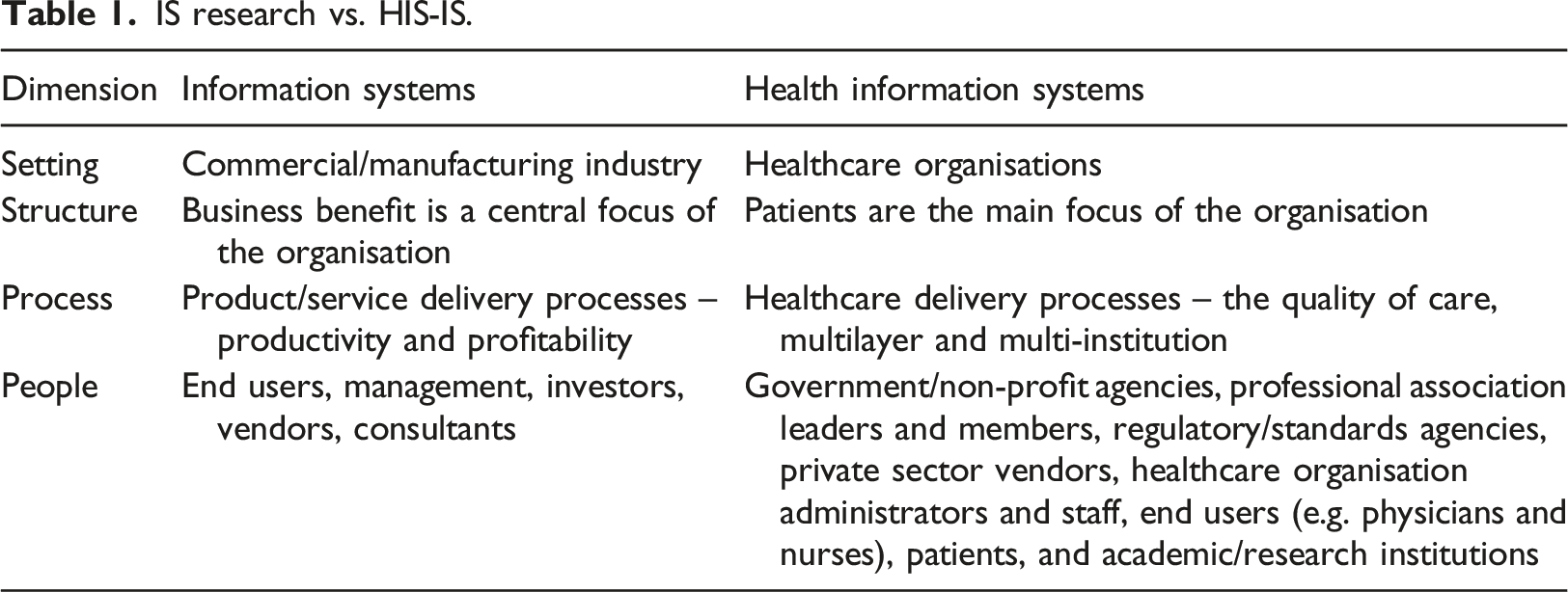
Chiasson et al. 11 offered a comprehensive comparison between HIS-IS and HI. They noticed that HIS-IS and HI share the same interest in outcomes of IT adoption, but their research scopes and emphases differ. HIS-IS focuses on explanations for the outcomes of IT adoption to generate theoretically informed insights into organisational behaviours. HI, on the other hand, focuses more on reporting the effects of IT on organisations or healthcare professionals without providing social, organisational or psychological explanations or theorising these effects. Moreover, HIS-IS concerns technology use in various social, technical, and organisational settings and uses various research methods commonly deployed in social science disciplines. HI research concentrates more on technology use in healthcare settings and is more inclined to adopt positivist research approaches.
To examine HIS-IS research more closely, Haried et al. 5 conducted a meta-analysis of 126 HIS-IS articles published in eight major IS journals between 2000 and 2015 and identified six prominent HIS-IS topics, including Healthcare emerging technology and delivery (28 papers), Healthcare performance (quality, cost and efficiency) (35 papers), Healthcare coordination and acceptance (39 papers), Data-driven healthcare management (6 papers), National health (7 papers), and Healthcare privacy, ethics and security (11 papers). Healthcare coordination and acceptance, Healthcare emerging technology and delivery, and Healthcare performance are the dominant topics. The former two focus on evaluating user adoption and studying systems implementation whereas Healthcare performance focuses on assessing and measuring the outcomes of the systems adoption and implementation. These dominant topics somewhat coincide with the tradition in IS research (e.g. technology and IS use, acceptance, and performance).
Chen et al. 6 examined the evolution of the intellectual structure of HIS-IS from 1990 to 2017. They analysed 571 health IS papers from 22 journals and identified five overarching theme categories, including (1) Health IS Implementation and Investment, (2) Health IS Management, (3) Clinical Health IS, (4) Administrative Health IS, and (5) Consumer Health IS. Chen et al. further analysed the citation relationships between themes and uncovered the most frequently cited themes: (1) Health IS Acceptance, (2) Health IS Implementation, (3) Health IS Outsourcing, Performance, and Investment, and (4) EMR and EHR. According to the study, much of the core HIS-IS focuses on how healthcare organisations invest in and adopt HIS, such as EMRs and EHRs (p.1042).
Haried et al.’s and Chen et al.’s studies highlight that technology acceptance and adoption, typical IS research topics, are also the dominant topics in HIS-IS. Given that these topics are also of interest in HI, there has been a call for the IS community to take an opportunity to shape the research in HI in these areas through its theoretical and empirical contributions.11–15 Chen et al. 6 had a different view and argued that since there is little room for novel and significant contributions to the well-established and dominant HIS topics, HIS-IS scholars should consider contributing to non-traditional IS topics but of HI’s interest. These topics are peripheral areas in HIS-IS, including information or data ethics, privacy and security, online health communities and digital services, and health information exchange. Some IS scholars saw that studying HIS can expand the scope of the IS field. Chiasson and Davidson 1 argued that the characteristics of the healthcare sector provide an opportunity for IS researchers to “push the contextual envelope” of IS theory by confronting theoretical assumptions embedded in current IS theory that has been primarily developed in other institutional settings and by developing contextually nuanced theory meaningful for multidisciplinary HISR” (p. 158). LeRouge et al. 14 echoed Chiasson and Davidson’s statement and argued that healthcare contexts provide high complexity and nuance, encouraging IS researchers to develop new and extend existing IS theories.
Methodology
We assessed scholarly communication between the two fields by analysing citations to HIS-IS journal articles from HI journal articles between 2000-2020 and vice versa. Figure 1 illustrates the research design. The diagram shows the data collection, selection, and analysis procedures. The search was conducted in the summer of 2021. Research design.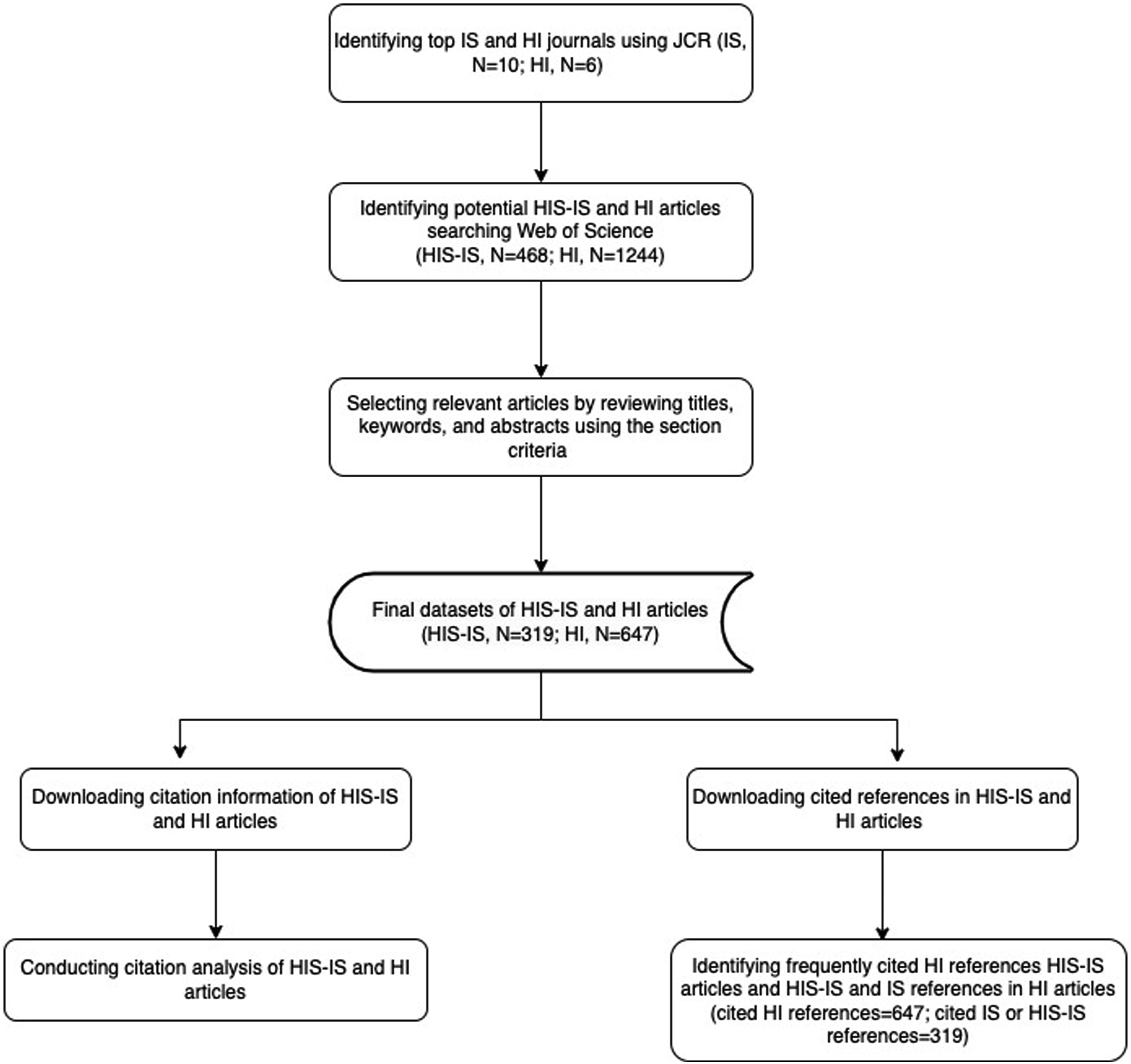
We used Web of Science (WoS) to collect citation data for the following reasons. First, WoS is an established and widely used leading scientific citation search and analytical database, and its impact on the academic community has been evaluated and confirmed.16,17 Second, there is more research in medical science than in Library and Information Science on the productivity of using WoS or at least mentioning its name. 17 Third, it covers a range of indexes, including the Social Sciences Citation Index, CAB abstract and Global Health, and Medline. Scopus is a competing bibliometric database with a larger collection and easier to operate than WoS. Nevertheless, coverage depth, especially citations, is better in WoS. 18
Journal selection
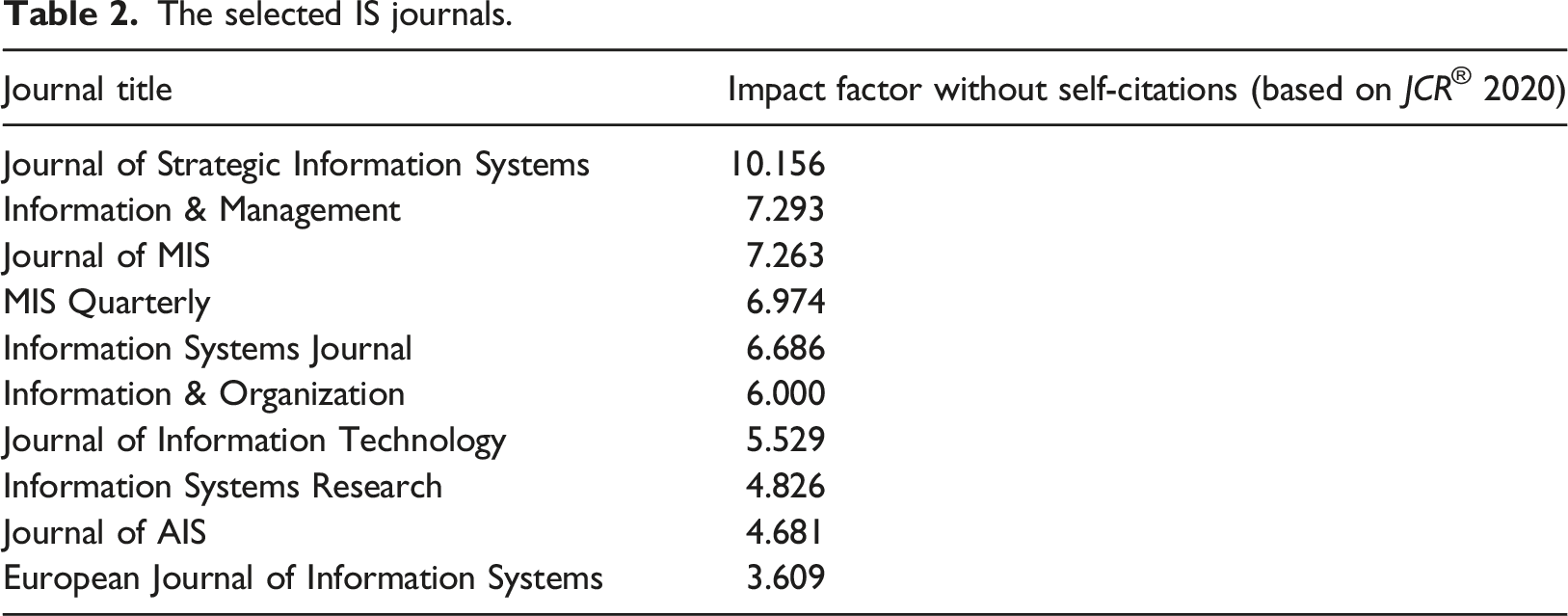
The selected IS journals.
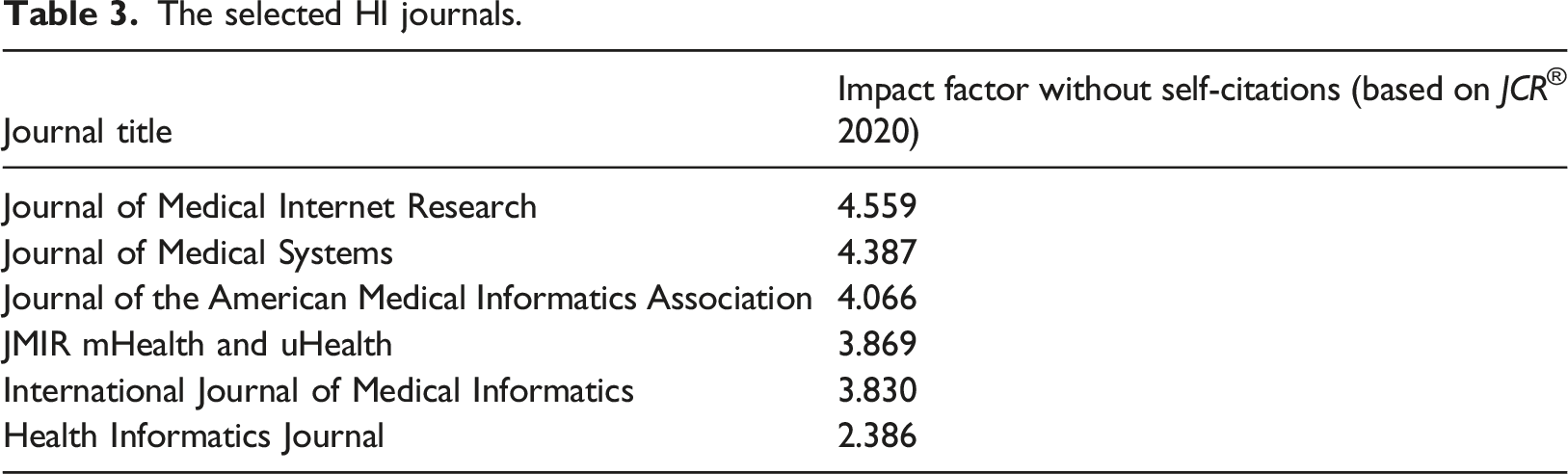
The selected HI journals.
Article selection
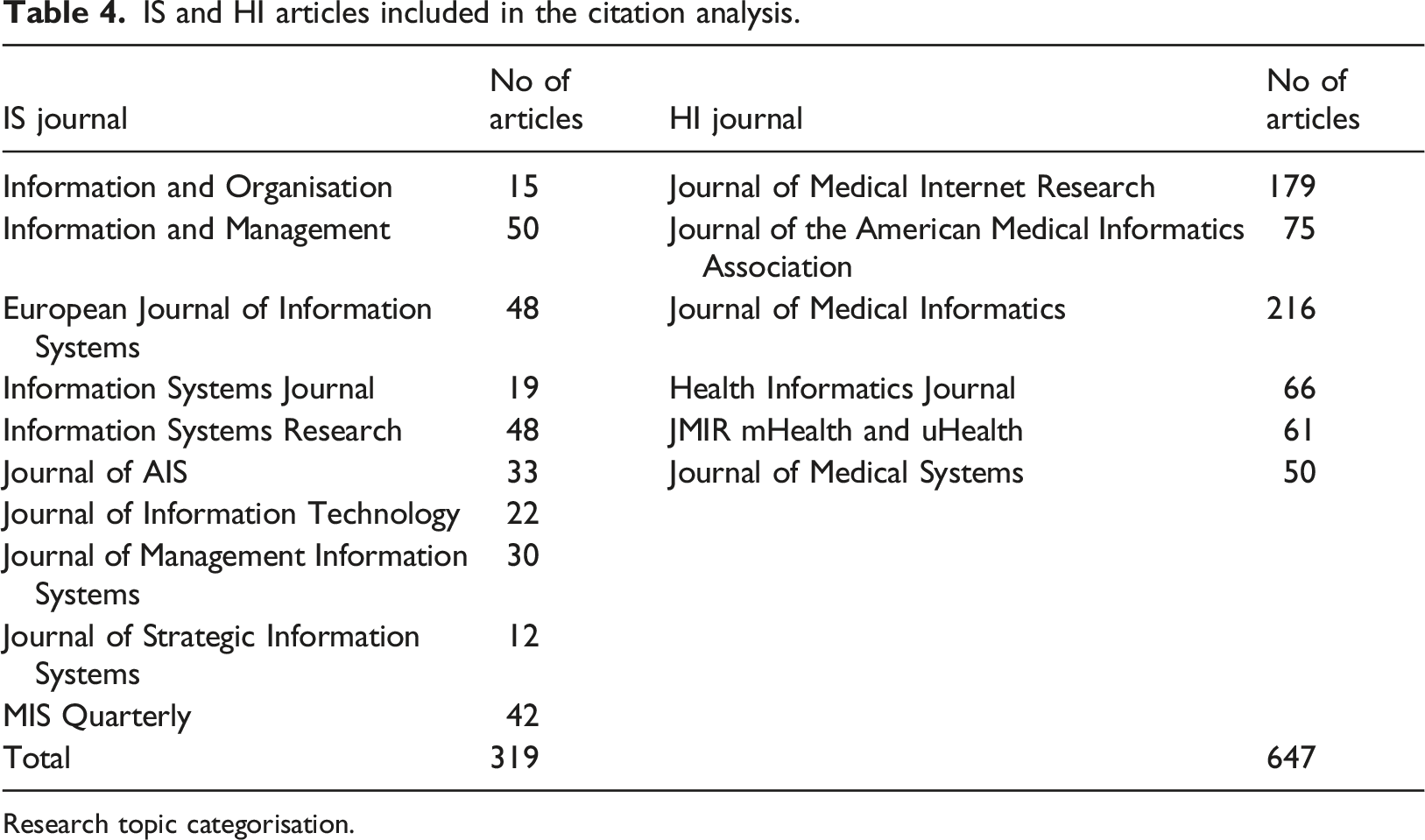
IS and HI articles included in the citation analysis.
Research topic categorisation.
We considered and adapted the classification schemes developed by Agarwal et al. 2 and Haried et al. 5 to define the research topics in HIS-IS and HI. The former was derived from a review of HIS research in HI journals, whereas the latter emerged from a review in IS journals. After carefully reading the abstracts, objectives, and author-stated research implications, we assigned the articles to the appropriate categories. Each article was assigned to one category to avoid double counting.
Data analysis
We used descriptive statistics to summarise and describe the citation data. Descriptive static enabled us to depict the communication patterns between the two research fields. We also used a one-way analysis of variance (ANOVA) to determine if there are any statistically significant differences between the two fields. The analysis was used to decide if the disciplines of authors’ affiliations influenced citation behaviour. The study can reveal differences in communication patterns between scholars in HIS-IS and HI.
Results
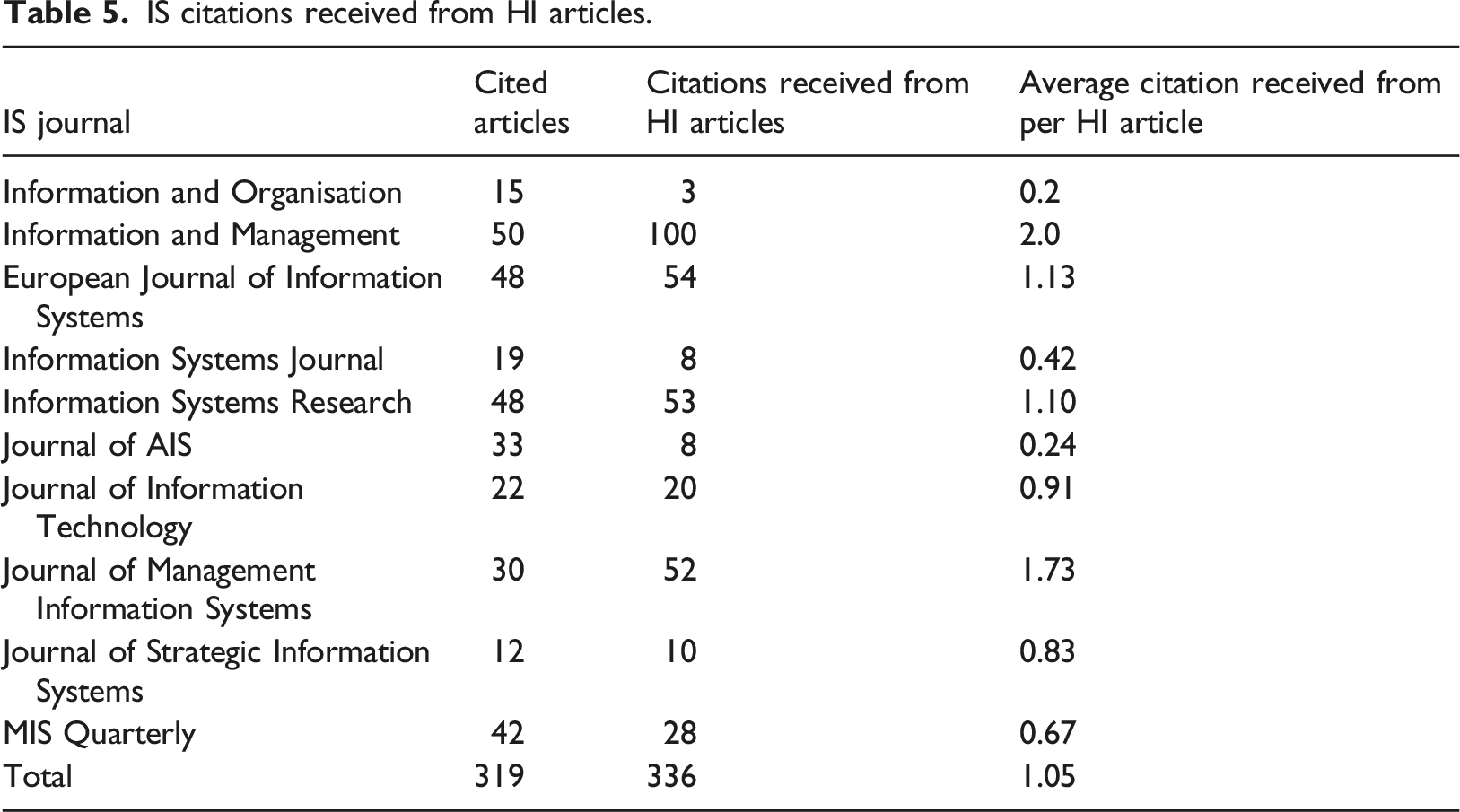
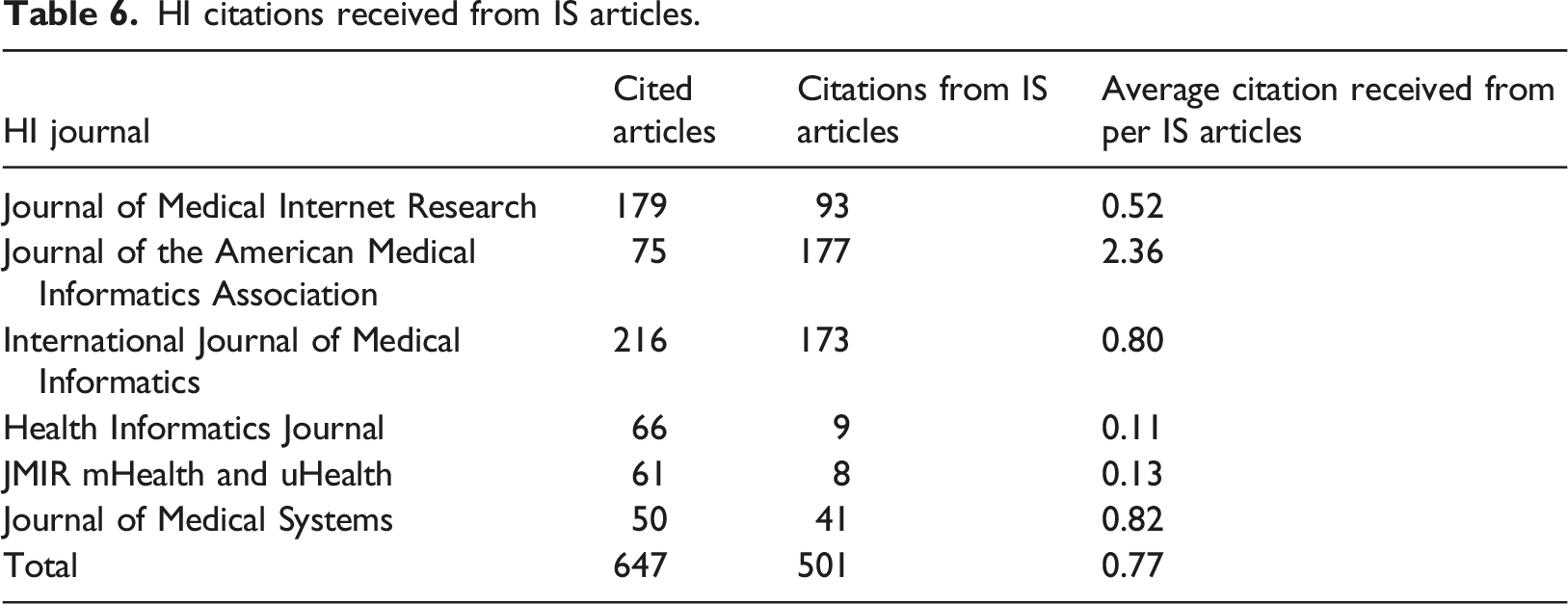
The data has shown a steady increase in scholarly communication between IS and HI, not limited to HIS-IS and HI. The growth in IS citations in HI research appears to be faster than HI citations in IS research (Figure 2). The growth trajectories of IS and HI citations are similar, but the gap in the number of citations has gotten wider since 2007. On average, IS articles received more citations than HI articles (1.05 vs. 0.77). Some IS journals received more citations from the HI articles, including Information and Management, European Journal of Information Systems, Information Systems Research, and Journal of Management Information Systems (Table 5). As for HI, the Journal of the American Medical Informatics Association received the most citations from HIS-IS, followed by the Journal of Medical Systems and International Journal of Medical Informatics (Table 6). Citation patterns of IS and HI. Note: IS citing articles referred to IS articles cited HI articles, and vice versa. IS citations received from HI articles. HI citations received from IS articles.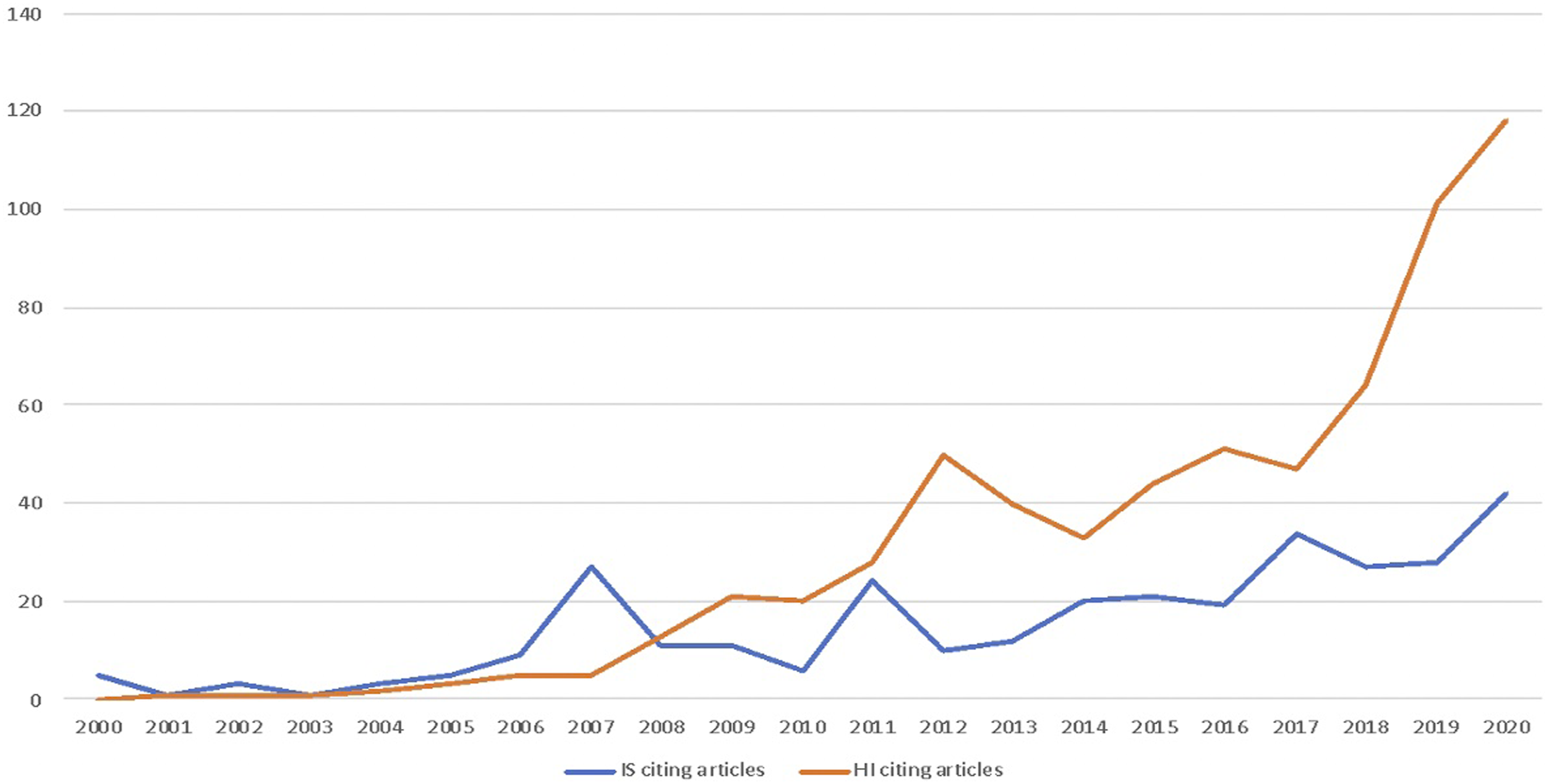
Distribution of research topics in HIS-IS and HI citation.
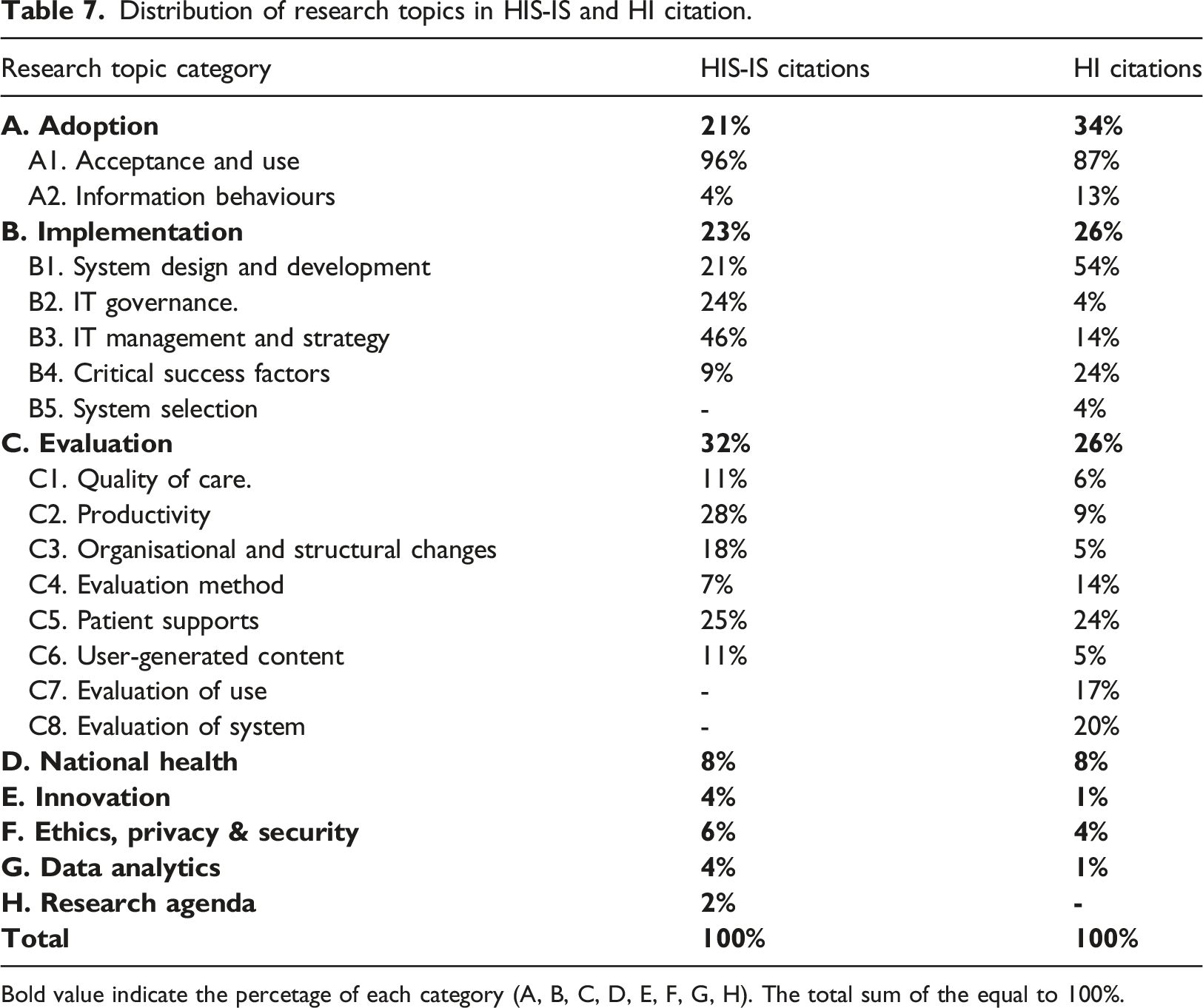
Bold value indicate the percetage of each category (A, B, C, D, E, F, G, H). The total sum of the equal to 100%.
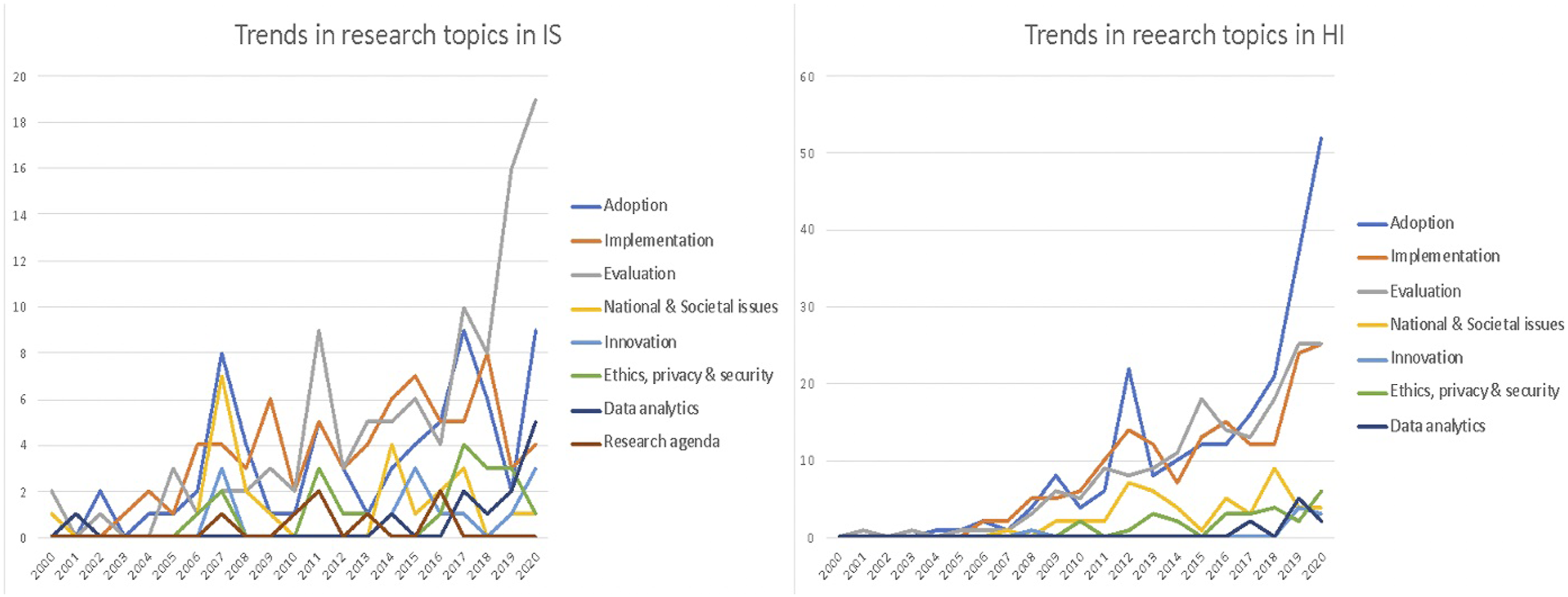
Trends in research topics.
In contrast, the number of HI articles on adoption has increased steadily since 2013, and there has been a sharp rise since 2018. The number of articles published on adoption, implementation, and evaluation steadily increased over the years in HI, but the same pattern is not observed in HIS-IS. About 23% of HIS-IS and 26% of HI articles are interested in the topic of implementation. A close examination found that the HIS-IS articles focus more on IT management and strategy (46%) and only 21% on systems design and development.
In contrast, 54% of HI are on system design and implementation, and 24% are on critical successful factors for HIS. Interestingly, only 4% of HI papers are on ethics, privacy and security, compared to 6% of HIS-IS. Similarly, only 1% of HI papers focus on data analytics compared to 4% of HIS-IS papers published in this area.
The top 2 highly cited IS articles concerning user acceptance models received 290 and 204 citations from HI, respectively (Appendix B). This is followed by DeLone and McLean’s 19 model of information systems success, which received 83 citations from HI. On the contrary, the most cited HI article in the HIS-IS literature received only 32 citations (Appendix C). These results suggest HI cites classic IS research more than like-to-like HIS-IS. HI received fewer citations because HIS-IS research is still low in publication numbers in IS.
The analysis shows that the authors of the HIS-IS articles were typically from business economics and management and information systems disciplines. In contrast, the authors of HI articles were from diverse fields, including medicine, engineering, business economics, public health, etc. (Figure 4). Subject areas of authors of highly cited HI articles.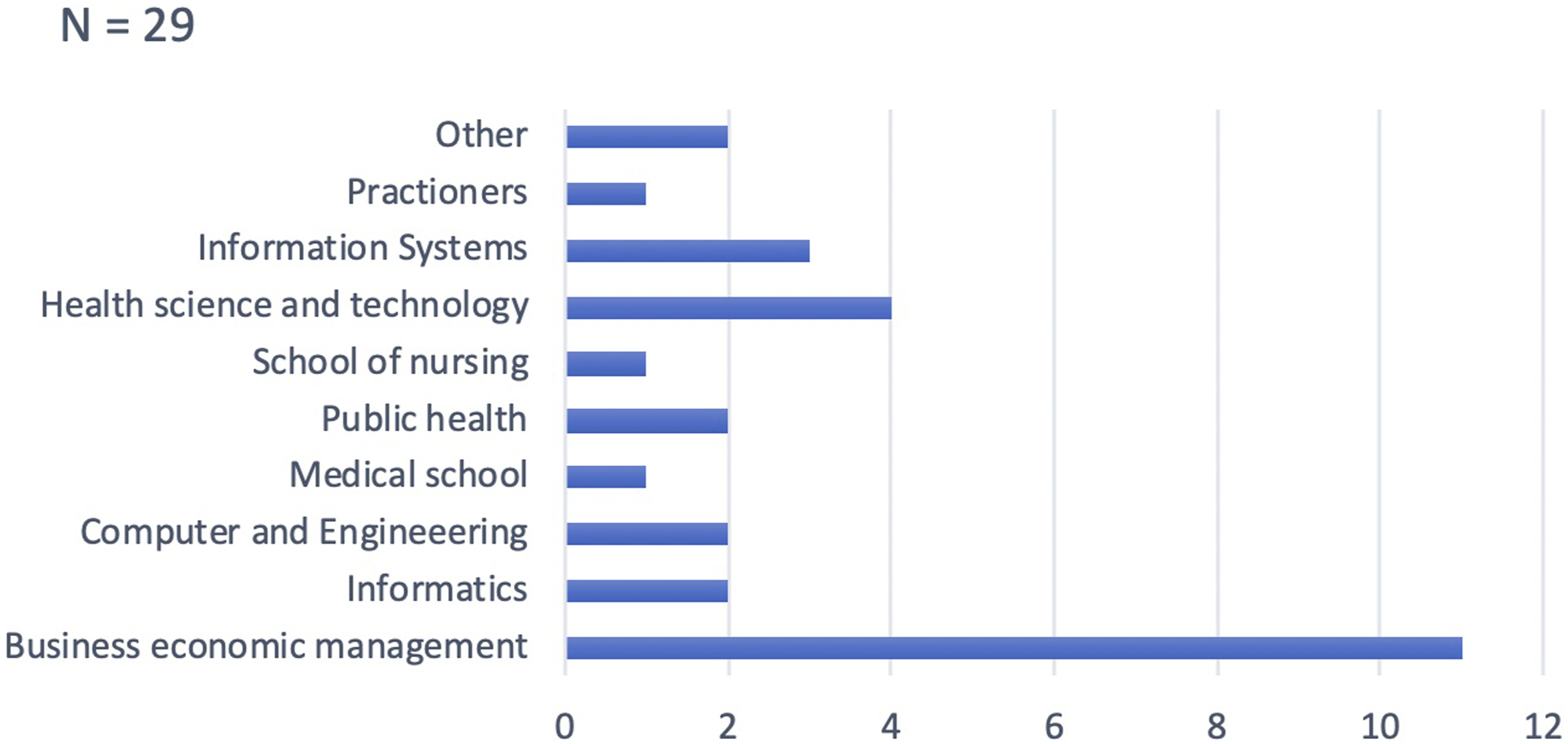
A comparison of citations between authors from different subject areas.
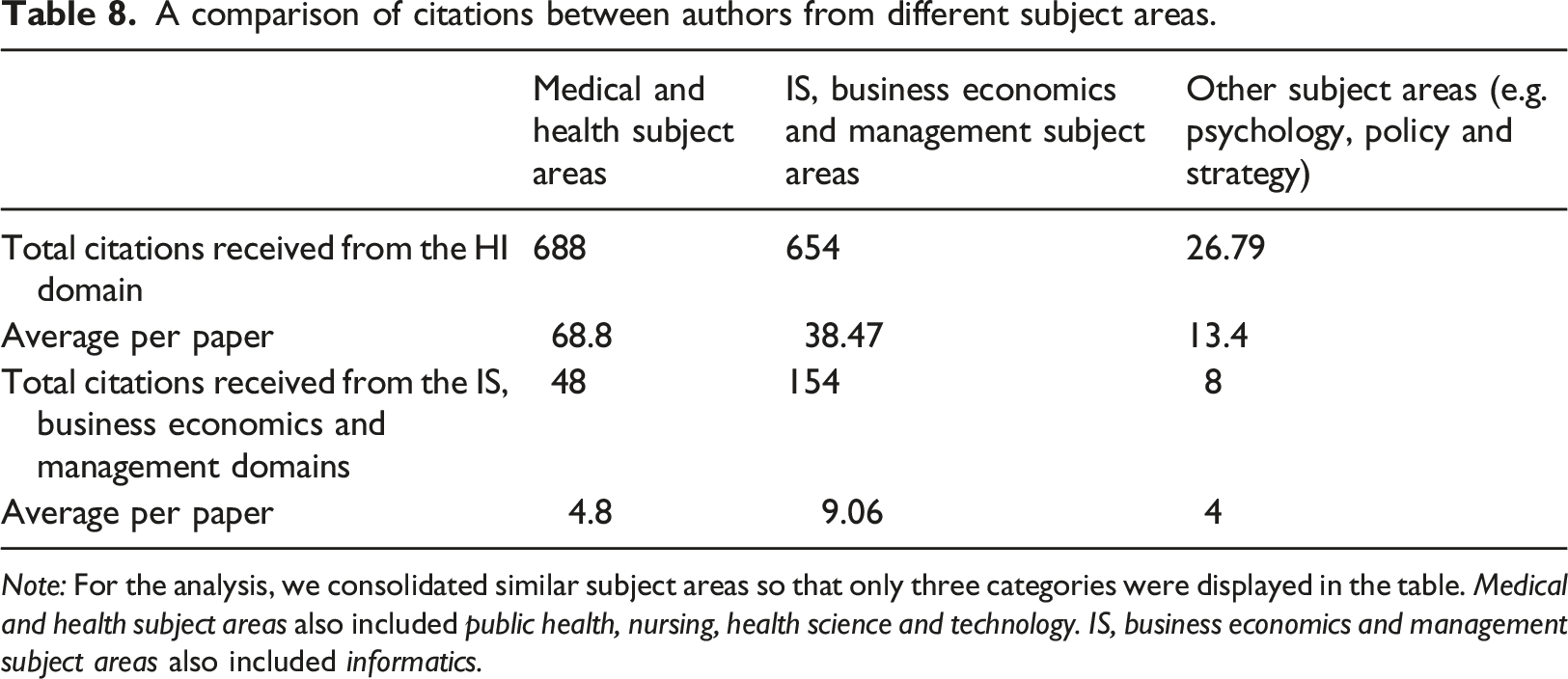
Note: For the analysis, we consolidated similar subject areas so that only three categories were displayed in the table. Medical and health subject areas also included public health, nursing, health science and technology. IS, business economics and management subject areas also included informatics.
Discussion
The results offer some illumination of the pattern of scholarly communication that exists between the two fields (research question 1), confirming our initial observation of limited communication between HIS-IS and HI.
First, the results show that HI cites and adopts classic IS research more than like-to-like HIS-IS to test hypotheses and develop conceptual models. For example, TAM 20 and UTAUT 21 have been widely cited and applied in HI to study system acceptance and adoption, and DeLone and McLean 19 ’s information systems success model has been used to evaluate the outcomes of HIS implementation, particularly productivity and financial gains (e.g. efficiency and cost saving) and delivery of quality care achieved through HIS. This citation pattern matches the emphasis of HI research (Table 7). Second, HIS-IS relies on IS literature more for theoretical arguments and HI literature for background information about the healthcare sector.
Third, the results show that subject fields inhibit cross-disciplinary scholarly communication. In this study, scholars in the same field are more likely to cite each other’s work and the work published in the field. For example, HIS-IS papers published in HI journals receive fewer citations from HI scholars but more from IS and business economics and management scholars. Chiasson and Davidson 22 explained that this may be because HIS-IS scholars from business schools can be perceived as less credible and authoritative than medical and public health administration scholars. Other possible explanations for this phenomenon could be the lack of exposure of the scholars to the other field and the alignment of the research focus (Table 7).
The above leads to limited communication between HIS-IS and HI, which then can lead to a loss of opportunity to advance knowledge because of overlooking and unawareness of research development in each other’s field. So how might researchers in both fields better leverage each other’s work to advance HI research (research question 2)?
To increase communication, HIS-IS and HI scholars are encouraged to explore and utilise each other’s literature more for their research in their home field. For example, HI scholars can consider adopting and applying other well-established theoretical frameworks in IS. HIS-IS scholars can develop tools that can easily be operationalised to address key research concerns in HI. Moreover, HIS-IS and HI scholars are encouraged to publish or collaborate with scholars in each other’s field. This will increase the exposure and awareness of their work in each other’s field, ultimately increasing their communication. Alternatively, to raise awareness of their work, scholars can cite the work of the other field more. Doing so can improve the chances of their work being picked up by search engines.
Authorship in HI is more diversified than in IS. Scholars publish in the HI journals from a wide range of research fields, whereas almost all HIS-IS papers in the IS journals are by IS researchers. Chiasson and Davidson 22 argued that publishing in HI journals can disadvantage scholars’ opportunities for academic tenure and cases for promotion in business school. These journals are not considered as prestigious as those ranked as “A” and “B” IS journals. Intuitional bias, as such, cannot be resolved immediately. Still, HIS-IS scholars and senior editors of major IS journals can create forums for HIS research by organising special issues and conference themes to boost research interest in the community and publication numbers. The special calls for papers potentially engage HI scholars in dialogues of collaboration between the two fields. HIS-IS and IS scholars should consider publishing their research in HI journals, which are multidisciplinary and whose readership and authorship are heterogeneous.
HIS-IS and HI are both interested in evaluating the outcomes and impacts of HIS but with different focuses. For example, coming from the business information systems tradition, HIS-IS focuses more on systems’ and professionals’ productivity, IT governance (including investment), and organisational change. Whereas coming from the healthcare tradition, HI focuses more on patient support (through online communities, mobile and Internet intervention, and remote monitoring), user satisfaction and use, and system evaluation (e.g. feasibility, accessibility, and usability evaluation). HI’s research interest aligns with the government’s initiative to invest in information systems in healthcare. Our dataset suggests that while HI is highly interested in the evaluation of use and systems, none of HIS-IS under the evaluation category focuses on the evaluation of use and evaluation of systems even though there is much research on the topics in IS. IS and HIS-IS scholars can contribute to these areas to increase their influence in HI. IS and HIS-IS scholars can also contribute to system design and development research since it is a key IS research area with many publications in HI.
Conclusion
We present a study motivated by the need to explore scholarly communication patterns between the HIS-IS and HI fields. The results show a dyadic relationship between HIS-IS and HI because they share a common interest in healthcare information systems. Nevertheless, the communication between them is limited. HI relies on IS literature more than HIS-IS for developing models, and HIS-IS also relies on IS literature for its theoretical arguments. HIS-IS and HI scholars are inclined to cite the work of the scholars in their home disciplines more. Furthermore, influenced by their disciplinary tradition, the topics of interest of HIS-IS and HI differ.
As far as we know, this study is one of only a few that have systematically investigated HIS-IS and other disciplines, especially HI.5–7,11 Previous research focuses either on IS citations or HI citations. In contrast, the current study examined the reciprocal relationship between the two communities spanned two decades. The study extended previous work by analysing not only HI citations in the selected IS journals and articles but also IS citations in the selected HI journals and articles. The results present opportunities for interdisciplinary collaboration to advance the research on healthcare information systems. Future research can build on this study by conducting citation content analysis to gain a more precise picture of how scholars receive the work of the other field through understanding how and for what purposes the references are cited.
Footnotes
Declaration of conflicting interests
The author(s) declared no potential conflicts of interest with respect to the research, authorship, and/or publication of this article.
Funding
The author(s) disclosed receipt of the following financial support for the research, authorship, and/or publication of this article: This study is supported by University of Sheffield Institutional Open Access Fund

Appendix A Exclusion criteria.
Criterion
Justification
Systematic review
Systematic reviews usually draw on a large volume of literature; therefore, they do not exhibit the usual citation patterns observed in empirical research
Articles focusing on technical details of cyber security
These articles tend to draw on work from computing and engineering disciplines
Articles related to health information search
Information search has been a research topic in information science rather than the IS domain. Therefore, our analysis did not include articles related to health information search
Appendix B Top 5 most cited IS articles by HI articles.
Ranking
Title
Author(s)
Source
Citations received from 6 HI journals
1
Perceived usefulness, perceived ease of use, and user acceptance of information technology
Davis, F. D
MIS quarterly, 1989, 13 (3)
290
2
User acceptance of information technology: Toward a unified view
Venkatesh, V., morris, M., davis, G., & davis, F
MIS quarterly, 2003, 27 (3)
204
3
The DeLone and McLean model of information systems success: A ten-year update
DeLone, W. & McLean, E
Journal of management information systems, 2003, 19 (4)
83
4
Information systems success: The quest for the dependent variable
DeLone, W. & McLean, E
Information systems research, 1992, 3 (1)
49
5
Consumer acceptance and use of information technology: Extending the unified theory of acceptance and use of technology
Venkatesh, V., thong, J., & xu, X
MIS quarterly, 2012, 36 (1), 157–178
41
Appendix C Top 5 most cited HI articles by IS articles.
Ranking
Cited HI article
Author(s)
Source
Citations received from IS journals
1
Explaining physicians’ use of EMR systems and performance in the shakedown phase
Sykes, T., venkatesh, V., & rai, A
Journal of the american medical informatics association: JAMIA, 2011, 18 (2)
32
2
Infrastructures in healthcare: The interplay between generativity and standardization
Grisot, M. & vassilakopoulou, P
International journal of medical informatics, 2012, 82 (5), e170–e179
22
3
Predicting the adoption of electronic health records by physicians: When will health care be paperless?
Ford, E., menachemi, N., & phillips, M
Journal of the american medical informatics association: JAMIA, 2006, 13 (1)
19
4
Antecedents of open source software adoption in health care organizations: A qualitative survey of experts in Canada
Marsan, J. & paré, G
International journal of medical informatics, 2013, 82 (8)
17
5
Technological viewpoints (frames) about electronic prescribing in physician practices
Agarwal, R., angst, C., DesRoches, C., & fischer, M
Journal of the american medical informatics association: JAMIA, 2010, 17 (4)
17