



Abstract
The communication of e-Health has been transformed with the advancement of information technologies, therefore it is feasible to carry out studies in the context of health professionals’ interactions.
Introduction
In most clinic cases, the factors associated with the health condition of hospitalized patients, the lack of information, and how it is provided represent a source of uncertainty for their relatives. The lack of clarity and the ambiguity caused by the poor communication of the health personnel is a serious problem. 1 Thus, improving the communication between health personnel and the relatives of hospitalized patients may help the relatives to develop effective mechanisms and reduce negative feelings. 2 Therefore, effective communication in this scenario is essential in the modern care of hospitalized patients.3,4
In this sense, Information Technologies (IT) contribute significantly to critical levels of medical attention by reducing the communication barriers between health professionals and relatives of hospitalized patients. 5
In this sense, the literature evidences the studies conducted on the topic. However, the research mainly focused on evaluations of implementations of communications solutions with IT,6–8and there are studies of the necessities of the relatives of patients in different health areas.9–14
To study the context of the interactions of health professionals with the relatives of hospitalized patients through information technologies, considering the use of information technologies in the provision of the service, the information needs, and their willingness to carry out the interactions through new forms of communication guides developers and researchers to design, develop and implement eHealth15,16 services in hospitals. However, no similar instrument was found for this in the public literature consulted.
Therefore, this paper aims to develop and validate a questionnaire that allows studying the context of health professionals’ interactions using Information Technologies from significant dimensions: information technologies, information needs, and interactions.
We carried out a pilot project simulating health professionals to conduct its validation.
Methodology
Study design
We conducted a two-stage descriptive transversal study. 17 In the first stage, the design and generation of the questionnaire were realized on Hernández-Sampieri. 18 In the second stage, the questionnaire was applied in a pilot study to a sample that simulated health professionals19–21 for your validation (data analysis) of the internal consistency in general, and each one of the dimensions was carried out using Cronbach’s alpha coefficient 22 ; the adequacy of the factor analysis was evaluated using the Kaiser-Meyer-Olkin (KMO) and Bartlett’s sphericity tests 23 ; and for the construct validity of the questionnaire, an exploratory factorial analysis was carried out24–27 using the extraction method of principal component analysis 28 with orthogonal rotation through the varimax method.29,30
The design and generation of the questionnaire consist of the following phases:
Phase 1: Fundamental Redefinitions
Notably, the study was conducted during the severe acute respiratory syndrome Coronavirus 2 (SARS-CoV2) pandemic. 31 Therefore, the pandemic aroused several issues related to psychological distress, Personal Protection Equipment (PPE) shortage, social stigmatization, and poor coordination and management provided by health professionals.32–34 Likewise, the pandemic caused health professionals to be inaccessible. 35 Furthermore, in its practice, the medics also experienced poor communication and stressful situations. 36 Thus, all these factors were considered to conduct the study in investigation projects. 37 In this sense, the study focuses on the following variables: the use of Information Technologies, information needs, and the interactions of health professionals, which are affined to contextualizing the interactions.
Previously, without an available sampling frame, we decided to simulate health professionals to analyze the behavior of the data that throws off the application of the tool. 38 In this regard, a successful simulation of users was based on the compromise of the participants in their roles and the proper connection among those involved with the searched purpose, 19 and with a simulation inspired on Sir William Osler (1849-1919) widely considered as the ideal medic for the humanism that contributed to the exercise of the medicine. 20
Phase 2: Revision focused of the literature
Thus, a bibliographic search was carried out on the databases: ACM, IEEE, PubMed, Elsevier, Springer, and Web of Science. The English terms employed in the investigation were: Interaction or communication, Information Technologies, relatives or parents, and hospitalized patients in the published papers from January 2016 to June 6th, 2021.
The results of the search yielded works that counted with a measurement instrument to the defined variables in the study, such as the case of the work entitled, Use of information and communication technologies by Argentine pediatricians conducted by Dr Guillermo Goldfarba, 39 of information needs of the relatives of patients in base to the article The Needs Questionnaire of Relatives of Intensive Care Patients (CCFNI) brief version: adaptation and validation in the Spanish population13,14 and for the interactions, the work that places as manifest the evolution of information technologies in medicine that probably will incorporate too quick changes positively affecting the actual condition of the communication among the health professionals, the patient, and the family. 15
Phase 3: Identification of the variables to measure and its indicators
Based on the reviewed papers, a questionnaire was created to assess demographic data (sex, age, residency area, work area), followed by IT use (devices connected to the internet), information needs (information provided to the relatives of hospitalized patients) and interactions (willingness to interact it an IT system).
Phase 4: Key decision makingSince there is not an appropriate questionnaire in the existing literature, a new instrument was created to fit the variables of this study.
Phase 5: Construction of the instrument
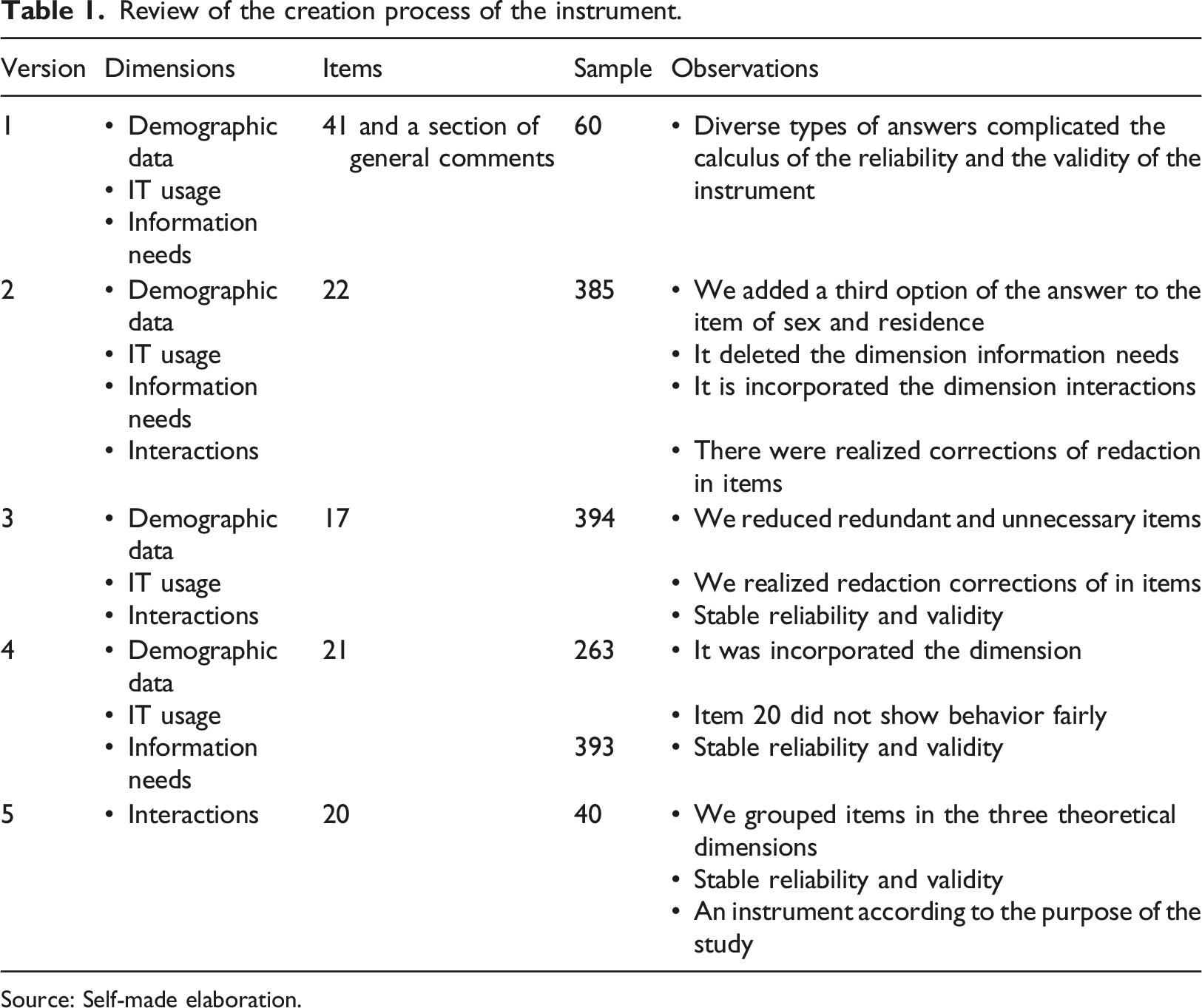
Review of the creation process of the instrument.
Source: Self-made elaboration.
Finally, the instrument consists of an initial question (in which the participant decides whether to participate in the interview) and four sections: Demographic Data with five questions, IT Use with four questions, Information Needs with four questions, and Interactions with seven questions. The answer was consistent with the Likert scale, which provides five possible answers (5 = Always, 4 = Almost every time, 3 = Most of the time, 2 = Only sometimes, 1 = Never) (see Table 6 in Appendix 1).
Phase 6: Pilot study
The instrument was applied to a sample of 40 simulated health professionals,19,20 via internet 38 through Google Forms.
Phase 7: Elaboration of the final version of the instrument or system and its application and interpretation process.
Finally, the clarity of the vocabulary was revised and adjusted to fit a simple and understandable language. The final version includes the title, identification, abbreviations, objectives, questions, and acknowledgments.
Data collection
It was carried out a pilot study, to validate the questionnaire in June 2022. Fifty information technology engineering students from the Polytechnic University of Victoria were invited by email to do this, where the study was explained to them and what they would answer simulating19,20,40 the role of “health professionals” with the situation “communication with relatives of hospitalized patients considering information technologies used, the information provided and willingness to interact through a new information system.” Seven students decided not to participate. The survey was applied online to increase its accessibility.38,41
Demographics of participants.

Source: Self-made elaboration.
Data analysis
The reliability of the instrument and subscales were evaluated through Cronbach’s alpha18,22,42–44. In addition, the paper classifies the results of the latter method. 45 Thus, Cronbach’s alpha minor or equal to 0.4 reveals weak reliability, from 0.41- 0.59 regular, 0.60 - 0.74 good, and equal or higher than o.75 means excellent reliability. 46
The Kaiser-Meyer-Olkin (KMO) test was employed to measure the adequacy of the data 47 cited in 48 to validate the construction of the questionnaire. The results indicate different results with the following guidelines: 0.00 - 0.49, there is no factor, 0.50 - 0.59 is Miserable, from 0.60 - 0.69 is Mediocre, from 0.70 - 0.79 is Regular, from 0.80 - 0.89 is Meritorious, and finally from 0.90 – 1.00 is Excelent49,50 referred to in. 16 Likewise, it was used the Bartlett test of sphericity.
Therefore, an exploratory factorial analysis was conducted24–27 to the data using the method of extraction of analysis of principal components 28 cited in 51 with orthogonal rotation through the varimax method.29,30
The factorial loads over 0.3 are considered moderately high, but the value is preferred to be superior to 0.4, and those higher or equal to 0.6 are considered significantly high. 52
Ethics
Ethical approval was received from [details omitted for double-anonymized peer review] and [details omitted for double-anonymized peer review] of the [details omitted for double-anonymized peer review] before conducting the interviews. The potential participants were informed verbally that the questionnaire did not consider personal information or sensitive aspects of the behavior and that we emphasized that the participation was voluntary and that the participant was free to leave the research at any moment. The questionnaire was applied to the volunteers who gave their verbal approval.
Results
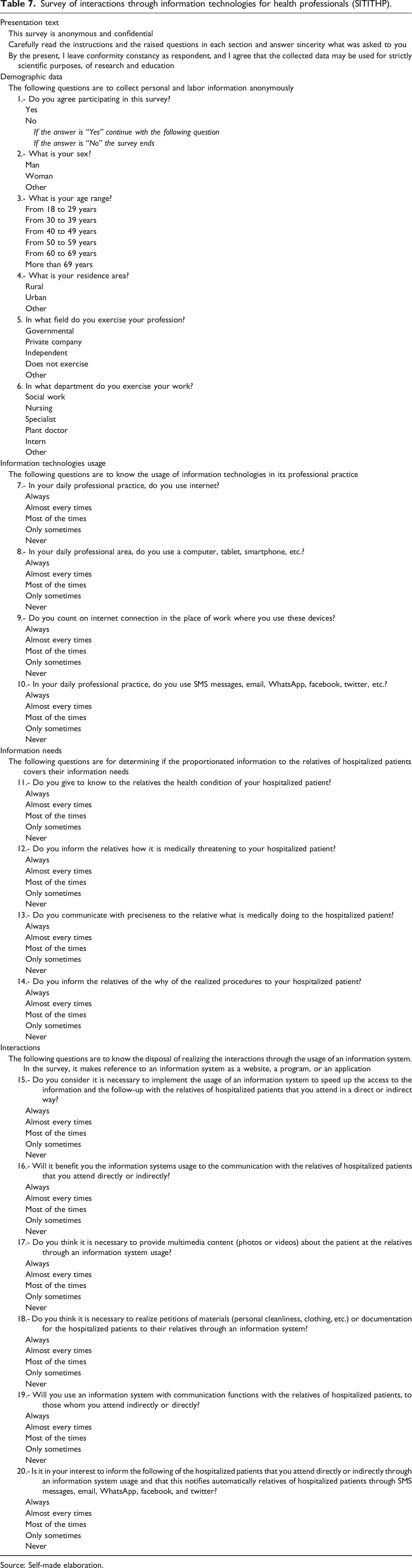
The questionnaire was entitled “Survey of Interactions Through Information Technologies for Health Professionals” and abbreviated as SITITHP, followed by the presentation and instructions on how to fill the document. Then, the demographic data is described briefly. Likewise, information technologies, information needs, and interactions are also displayed (see Table 7 in Appendix 1).
The Cronbach’s alpha of 0.848 shows excellent reliability for the questionnaire 45 and increases to 0.889 after eliminating item 20. The trustworthiness of the dimension obtained a Cronbach’s alpha of 0.812 for the use of IT, 0.916 for information needs, and 0.743 for interactions. After eliminating item 20 interactions, the result is 0.810.
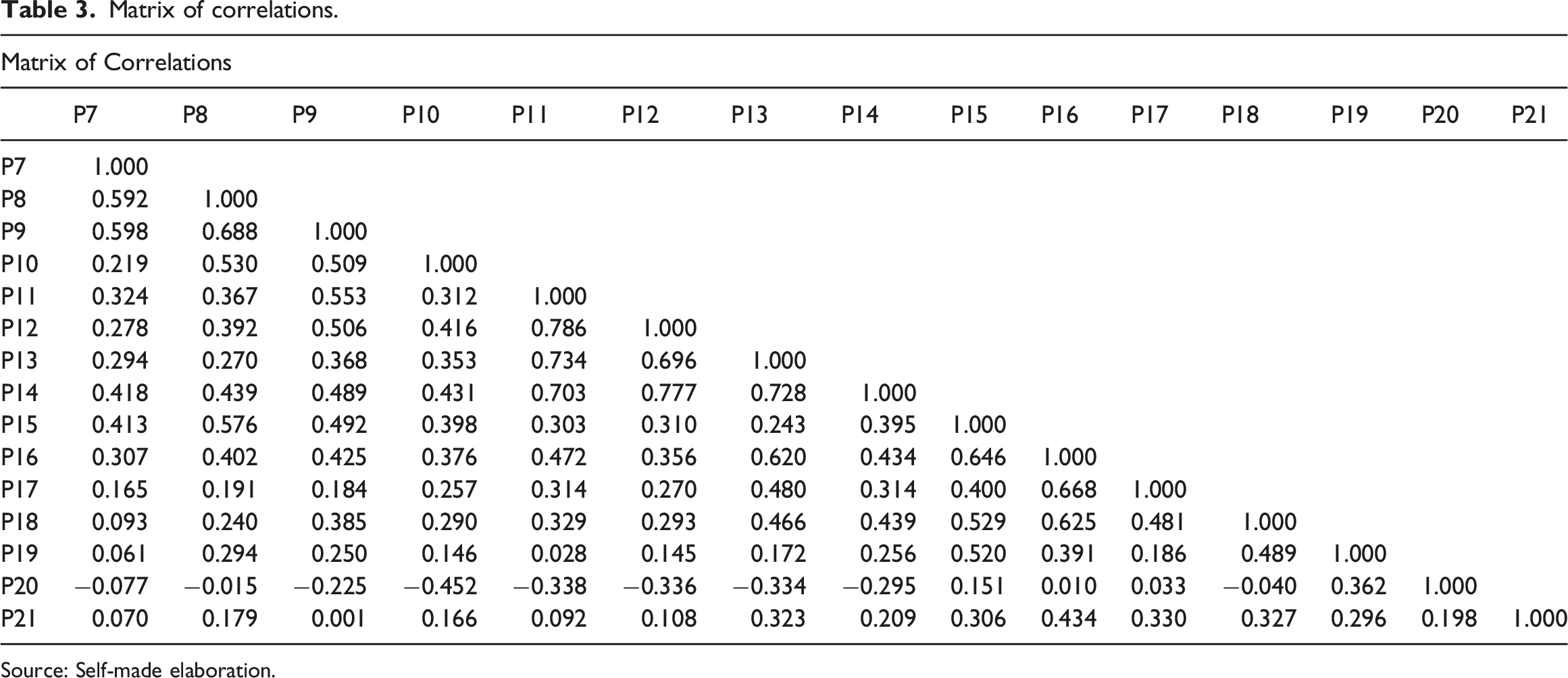
Matrix of correlations.
Source: Self-made elaboration.
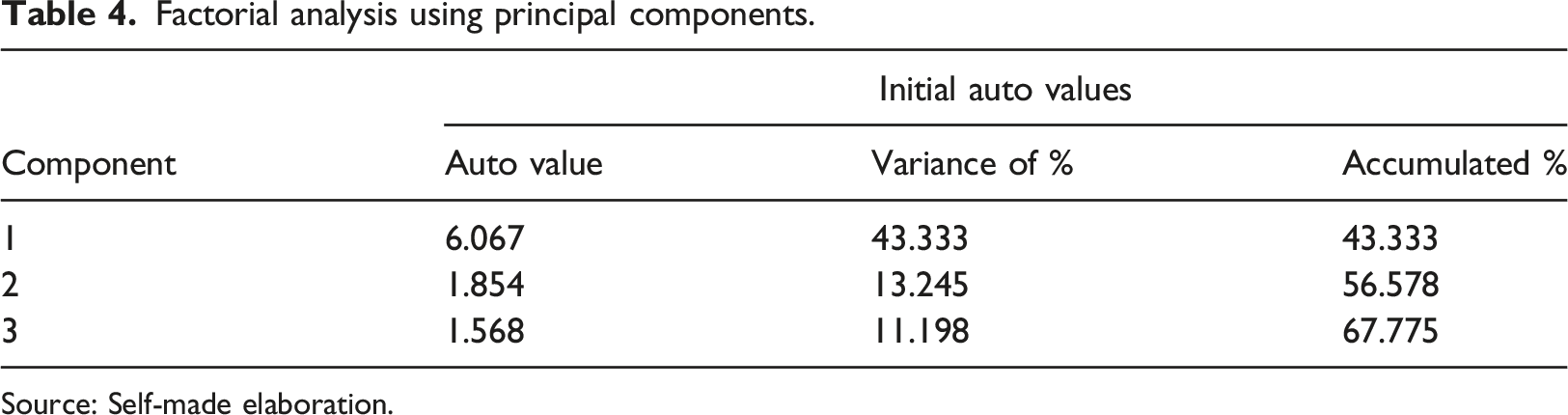
Factorial analysis using principal components.
Source: Self-made elaboration.
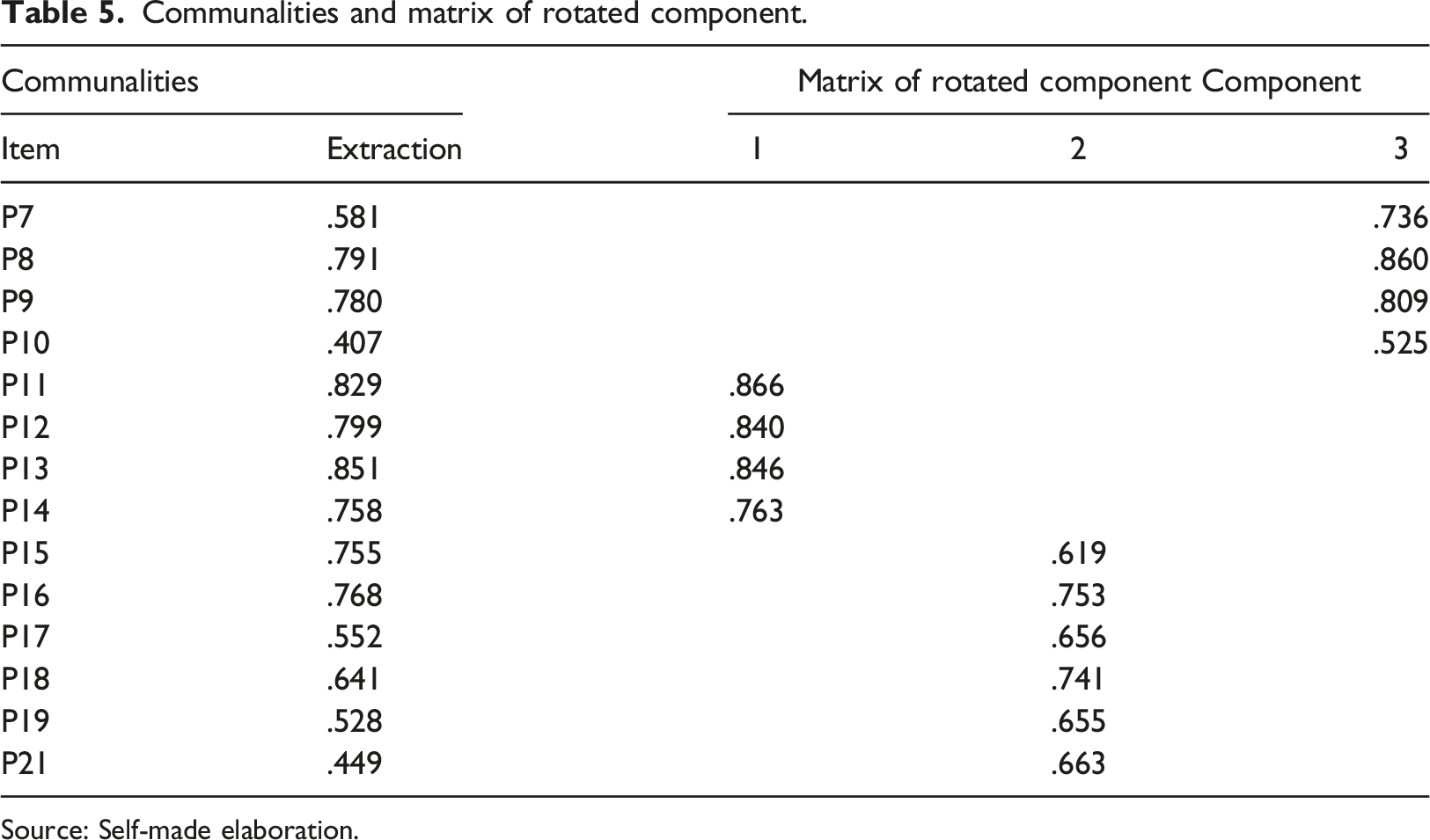
Communalities and matrix of rotated component.
Source: Self-made elaboration.
Discussion
In this study, a preliminary questionnaire has been designed and validated as a tool to investigate the context of interactions using information technologies of health professionals with relatives of patients in the hospital based on the dimensions of the use of information technologies, information needs, and interactions. Next, the findings according to the statistical analysis of the data were discussed.
The internal consistency of the proposed questionnaire was above 0.809 in general and for each of the dimensions that make up the instrument; however, it was necessary to delete one item because it was ungrouped from the theoretical approach, as was done in works related to the proposal and validation of questionnaires respectively.54,55
In the use of information technology dimension, the weakest relationship with 0.219 was found between items 7 and 10; For its part, the first item refers to whether the health professional uses the Internet in their professional practice, while the second item questions whether they use SMS messages, email, WhatsApp, Facebook, Twitter, etc. In their daily professional practice. However, in the interaction dimension, item 20, associated with whether the health professional would have difficulties adapting to new technologies, presenting problems for their use, and not knowing how to deal with change, disagrees with the rest of the items of the dimension and of the questionnaire, since it is not positively related and since it is ungrouped from the theoretical approach, the above could be due to the negative form of the question’s approach, giving the possibility of writing the question in a positive way.56,57
Two identified factors agreed with the proposed dimensions; Factor 1: Use of Information Technologies, made up of four items [7,8,9 and 10]; Factor 2: Information needs, groups 4 items [11, 12, 13 and 14] and finally, Factor 3: Interactions, was made up of items [15, 16, 17,18, 19 and 21]. This behavior of theoretical coherence between the items that integrate the factors is similar to that reported in the study completed in 2019 of the (TAQPH), Spanish version. 54
The total variance explained in this study is 67.775%, slightly above works that propose designing or developing of questionnaires related to the health sector.58–61 Similarly, the number three dimension was identified, stated in the article on the tool for studying nurse-patient therapeutic communication was created and validated. 62
However, the size of the variance explained and the number of components obtained were smaller than the pilot research carried out in China, considering 25 students to adapt (S-EBPQ). 63
While it is true that the results revealed excellent reliability in internal consistency with a value of 0.848 Cronbach’s alpha in general,22,45 a regular value of 0.781 for the KMO and Bartlett’s test of sphericity was significant,49,50 it is necessary to highlight that the results participants simulated19,20 health professionals, when the published literature evidences the use of simulation in the health sector in different ways in order to gather scientific evidence and where the objectives of projects can be extremely diverse, 21 for example, simulated profiles of health professionals in social networks, 64 in questionnaires it has been used to generate exams, 65 validation of questionnaires through mock consultations 66 and simulation data 67 ; and in patient simulation 68 where a participant simulates a role and a situation, 40 in our case it was a role of “health professional” and the situation communication with relatives of hospitalized patients considering information technologies used, information provided and willingness to interact through a new information system.
Finally, it was shown that it is feasible to validate instruments in adverse conditions17,32–37 by simulating19,20,64 health professionals, which is necessary before applying the questionnaires in a study with real health professionals, based on where a participant simulated a role (patient) and a described situation. 40
Limitations
Limitations of the research include a small sample size of demographic characteristics that were drawn from a homogeneous population, although the validation results were satisfactory. A second limitation of the study was the simulation of the sample, and participants possibly needed to give precise and socially desirable answers, even having surveyed the severe acute respiratory syndrome coronavirus 2 (SARS-CoV2) pandemic could have influenced their responses causing a memory or adaptation bias. Due to the above, caution is recommended since the results shown here were not definitive and should not be generalized.
Conclusion
We conclude that the preliminary questionnaire to study the interactions of health professionals with relatives of hospitalized patients is a valid and reliable instrument for this purpose; however, it is necessary to continue work for its validation with new confirmatory studies in hospitals.
Footnotes
Declaration of conflicting interests
The author(s) declared no potential conflicts of interest with respect to the research, authorship, and/or publication of this article.
Funding
The author(s) received no financial support for the research, authorship, and/or publication of this article.
Ethical statement
ORCID iDs

Appendix
Survey of interactions through information technologies for health professionals (SITITHP).
| Presentation text |
| This survey is anonymous and confidential |
| Carefully read the instructions and the raised questions in each section and answer sincerity what was asked to you |
| By the present, I leave conformity constancy as respondent, and I agree that the collected data may be used for strictly scientific purposes, of research and education |
| Demographic data |
| The following questions are to collect personal and labor information anonymously |
| 1.- Do you agree participating in this survey? |
| Yes |
| No |
| If the answer is “Yes” continue with the following question |
| If the answer is “No” the survey ends |
| 2.- What is your sex? |
| Man |
| Woman |
| Other |
| 3.- What is your age range? |
| From 18 to 29 years |
| From 30 to 39 years |
| From 40 to 49 years |
| From 50 to 59 years |
| From 60 to 69 years |
| More than 69 years |
| 4.- What is your residence area? |
| Rural |
| Urban |
| Other |
| 5. In what field do you exercise your profession? |
| Governmental |
| Private company |
| Independent |
| Does not exercise |
| Other |
| 6. In what department do you exercise your work? |
| Social work |
| Nursing |
| Specialist |
| Plant doctor |
| Intern |
| Other |
| Information technologies usage |
| The following questions are to know the usage of information technologies in its professional practice |
| 7.- In your daily professional practice, do you use internet? |
| Always |
| Almost every times |
| Most of the times |
| Only sometimes |
| Never |
| 8.- In your daily professional area, do you use a computer, tablet, smartphone, etc.? |
| Always |
| Almost every times |
| Most of the times |
| Only sometimes |
| Never |
| 9.- Do you count on internet connection in the place of work where you use these devices? |
| Always |
| Almost every times |
| Most of the times |
| Only sometimes |
| Never |
| 10.- In your daily professional practice, do you use SMS messages, email, WhatsApp, facebook, twitter, etc.? |
| Always |
| Almost every times |
| Most of the times |
| Only sometimes |
| Never |
| Information needs |
| The following questions are for determining if the proportionated information to the relatives of hospitalized patients covers their information needs |
| 11.- Do you give to know to the relatives the health condition of your hospitalized patient? |
| Always |
| Almost every times |
| Most of the times |
| Only sometimes |
| Never |
| 12.- Do you inform the relatives how it is medically threatening to your hospitalized patient? |
| Always |
| Almost every times |
| Most of the times |
| Only sometimes |
| Never |
| 13.- Do you communicate with preciseness to the relative what is medically doing to the hospitalized patient? |
| Always |
| Almost every times |
| Most of the times |
| Only sometimes |
| Never |
| 14.- Do you inform the relatives of the why of the realized procedures to your hospitalized patient? |
| Always |
| Almost every times |
| Most of the times |
| Only sometimes |
| Never |
| Interactions |
| The following questions are to know the disposal of realizing the interactions through the usage of an information system. In the survey, it makes reference to an information system as a website, a program, or an application |
| 15.- Do you consider it is necessary to implement the usage of an information system to speed up the access to the information and the follow-up with the relatives of hospitalized patients that you attend in a direct or indirect way? |
| Always |
| Almost every times |
| Most of the times |
| Only sometimes |
| Never |
| 16.- Will it benefit you the information systems usage to the communication with the relatives of hospitalized patients that you attend directly or indirectly? |
| Always |
| Almost every times |
| Most of the times |
| Only sometimes |
| Never |
| 17.- Do you think it is necessary to provide multimedia content (photos or videos) about the patient at the relatives through an information system usage? |
| Always |
| Almost every times |
| Most of the times |
| Only sometimes |
| Never |
| 18.- Do you think it is necessary to realize petitions of materials (personal cleanliness, clothing, etc.) or documentation for the hospitalized patients to their relatives through an information system? |
| Always |
| Almost every times |
| Most of the times |
| Only sometimes |
| Never |
| 19.- Will you use an information system with communication functions with the relatives of hospitalized patients, to those whom you attend indirectly or directly? |
| Always |
| Almost every times |
| Most of the times |
| Only sometimes |
| Never |
| 20.- Is it in your interest to inform the following of the hospitalized patients that you attend directly or indirectly through an information system usage and that this notifies automatically relatives of hospitalized patients through SMS messages, email, WhatsApp, facebook, and twitter? |
| Always |
| Almost every times |
| Most of the times |
| Only sometimes |
| Never |
Source: Self-made elaboration.