



Abstract
Participation of main users in identifying key performance indicators (KPIs) for management dashboards contributes to their success. The aim of this study was to identify and prioritize the KPIs of hospital management dashboards from the viewpoint of hospital managers. This study was conducted on managers of public hospitals at a national level in Iran in 2020. Data were collected using a self-administrated questionnaire. The KPIs were classified into five categories, namely financial, operational, human resources, safety and quality of care, services provided to patients. A total of 234 hospital managers participated in this study. Totally, 25 KPIs were determined for the hospital management dashboard, including the patient falls rate, waiting time for patients in the emergency department, patient satisfaction, total hospital revenue, financial balance, bed occupancy rate, patients’ discharge with own agreement, average length of stay, and personnel satisfaction. For designing hospital management dashboards, the domains of services provided to patients, safety and quality of care, financial resources, human resources, and operational are important from the hospital managers’ viewpoint, respectively. The results of this study can be helpful for developers of business intelligence tools, such as hospital management dashboards, to visualize the most important indicators for managers.
Keywords
Backgrounds
Managers need reports for monitoring of their organization, better management of resources, and informed decision-making.1–3 Decision-making is one of the most important duties of leaders and managers that needs to be based on information and evidence about the organization’s activities.2,4 Poor decisions can lead to loss of resources and even threaten the organization’s survival. 2 Today, health managers are faced with a large amount of data from all parts of their organizations. This needs to be understood, interpreted, and responded to in a timely manner. Tools and aids that summarize and present current information are essential for managers too.4,5
Business intelligence (BI) is a type of technology, tools, and methods developed to retrieve, analyze, and convert large amounts of data into visual information for business purposes.6,7 BI in healthcare contains an integrated set of health informatics tools that allow users to convert data into meaningful information. 8 BI tools can improve decision-making processes within an organization. An effective BI tool should present actionable information in alignment with organizational strategic plan of health institutions, such as hospitals.8,9
Dashboards can display key performance indicators (KPIs) in various formats such as tables, charts, graphs, or even augmented reality and virtual reality. 10 Management dashboards are one of the most important BI tools that can be used by managers in evidence-based decision-making. 11 Dashboards are computer interfaces that summarize the key information of an organization for managers.12,13 These tools help measure the quality of services provided, manage time, resources and expenses of the organization, and monitor and control the organization’s performance.11,14–16
Hospitals are increasingly complex institutions whose managers face challenges on a day-to-day basis. Besides concerns about patient safety and quality of healthcare services, hospital managers try to monitor various resources of the institution, including financial, physical, and human resources. 17 Management dashboards can help improve quality of care, patient outcomes, efficiency, effectiveness, and utilization of hospital resources.11,18–21
One of the most important points to consider in the development of information systems is utilizing end-users’ opinions and their real requirements in the design phase. This is a type of participatory design methodology that is derived from participatory action research. 22 This method helps users have a better understanding of the target system, consider their information needs, and after implementation they use it easily and therefore have greater satisfaction.23–25 On the other hand, if the design of an information system does not address the end-users’ opinions, the extent of the users’ acceptance and satisfaction may decrease. 23 Reduced users’ acceptance and satisfaction may lead to reduced benefits, fail implementation of high-cost information systems, and drive to acquisition of an alternative solution. 24 Therefore, developing management dashboards requires considering the managers’ viewpoints in the design phase. 13 Moreover, the successful implementation of dashboards requires identifying and prioritizing KPIs as one of the most essential steps in this phase.11,26,27
Data visualization is an essential technique in building dashboards. Managers are able to visualize KPIs on the management dashboards, generate specific and customized reports, find required information quickly, compare results appropriately, and use drill down capability to access more detailed information. 28 Also, these functionalities help to present a visual view of the overall business performance, provide performance feedback, reduce cognitive burden of managers, and improve cognitive data processing.29,30
Various clinical dashboards have so far been developed in healthcare and implemented in different departments such as pathology, radiology, intensive care unit, nursing, and emergency care.12,27,31–35 These studies have shown that dashboards have been able to improve the quality of nursing care, increase efficiency, accelerate decision-making, reduce workload, and decrease clinical errors. To the best of our knowledge, no studies have yet been conducted on the design of dashboards specifically for hospital management. This study was aimed to determine and prioritize KPIs from the viewpoint of hospital managers to use in hospital management dashboards.
Methods
Study design and setting
This analytical study was conducted in 2020. The study participants were the managers of public hospitals in Iran. We surveyed the participants in the capacity building program held by the Ministry of Health and Medical Education of Iran program. This survey was a part of this educational program, and all the participants should have participated in this study.
Data collection
Data were collected by a questionnaire designed using the indicators extracted from scientific literature12,32,34–46 and the current reports and accreditation documents of Iranian hospitals.47,48 Then, in two focus group sessions with the participation of five specialists in health information management (n = 3), medical informatics (n = 1), and healthcare service management (n = 1), the indicators were finalized and classified into five domains. The KPIs that were approved by at least three specialists were included in the questionnaire. The questionnaire consisted of two main parts. The first part contained demographic information about the hospital manager and the relevant hospital, i.e. gender, age, education, field of education, type of education (clinical, non-clinical), work experience as hospital manager, and type of hospital (general, specialized). The second part included 51 KPIs categorized in five domains i.e. financial resources (10 indicators included total hospital revenue, hospital financial balance, insurance claims), operational (22 indicators, e.g. bed occupancy ratio by wards, mean length of stay, patients discharge with own agreement), human resources (six indicators, e.g. personnel satisfaction, number of personnel, and workforce planning), safety and quality of care (10 indicators included patient fall rate, mean waiting time in the emergency department, successful and unsuccessful cardiopulmonary resuscitation (CPR) rates), and services provided to patients (three indicators, i.e. hospitalized and emergency patients’ satisfaction and patients’ complaints). The importance of the KPIs included in the questionnaire was scored based on a 10-point Likert scale, where one represented the lowest and 10 the highest importance. In addition to the 10 previous choices, a “Not Applicable” choice was also considered in the case of inapplicable KPIs for hospital management dashboard (Attachment 1). The validity of the questionnaire was verified by three health information management specialists, three health service management specialists, and two medical informatics specialists.
In order to collect the data, one of the researchers attended the capacity building program held by the Ministry of Health and Medical Education of Iran, in collaboration with the World Health Organization (WHO), in 10 major medical sciences universities (i.e. Tehran, Iran, Mashhad, Isfahan, Tabriz, Shiraz, Kerman, Ahvaz, Mazandaran, and Kermanshah) for the managers of public Iranian hospitals. 49 After explaining the study objectives and obtaining the hospital managers’ consent, the researcher distributed the questionnaires.
Statistical analysis
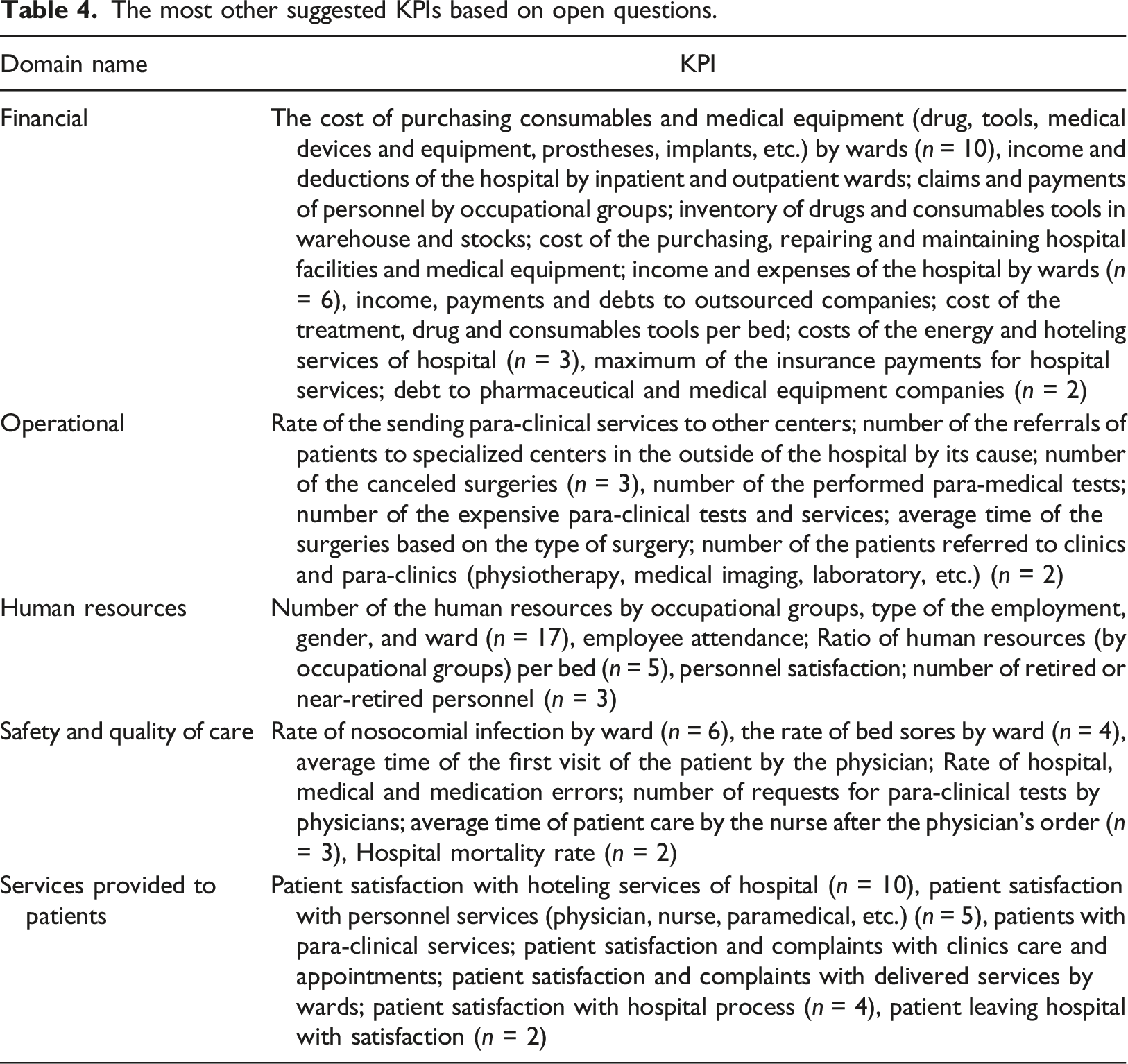
In order to determine the priority of the five domains in hospital management dashboard, the mean total score of individual indicators and the mean total score of each domain were calculated and sorted. Participants’ views on prioritizing the KPIs were classified in five categories, namely first-priority (mean 8 ≤ 10), second-priority (mean 6 ≤ 8), third-priority (mean 4 ≤ 6), fourth-priority (mean 2 ≤ 4), and fifth-priority (mean 0 ≤ 2). Moreover, the KPIs from the open-ended questions emphasized by more than two participants were included.
Data were analyzed in SPSS 22 (IBM SPSS Statistics, IBM Corporation, Armonk, NY, USA). After checking the normality of data, the Mann Whitney U test was used to examine the difference between the mean total score of each domain and the managers’ gender, domain of study (i.e. clinical and non-clinical), and type of hospital (i.e. general and specialized). The Kruskal-Wallis test was also used to examine the difference between the mean total score of each domain and education level (BSc, MSc, MD, and PhD), field of study (medicine, nursing, health sciences and nutrition, para-medical, HIM/HCM/HM, accounting and management, and other), and hospital information system (HIS) companies (A, B, C, D, E, F, G, H, J, K, and others). As well as, to examine the relationship between mean total score of each domain and age and work experience, the Spearman test was used.
Characteristics of the participants
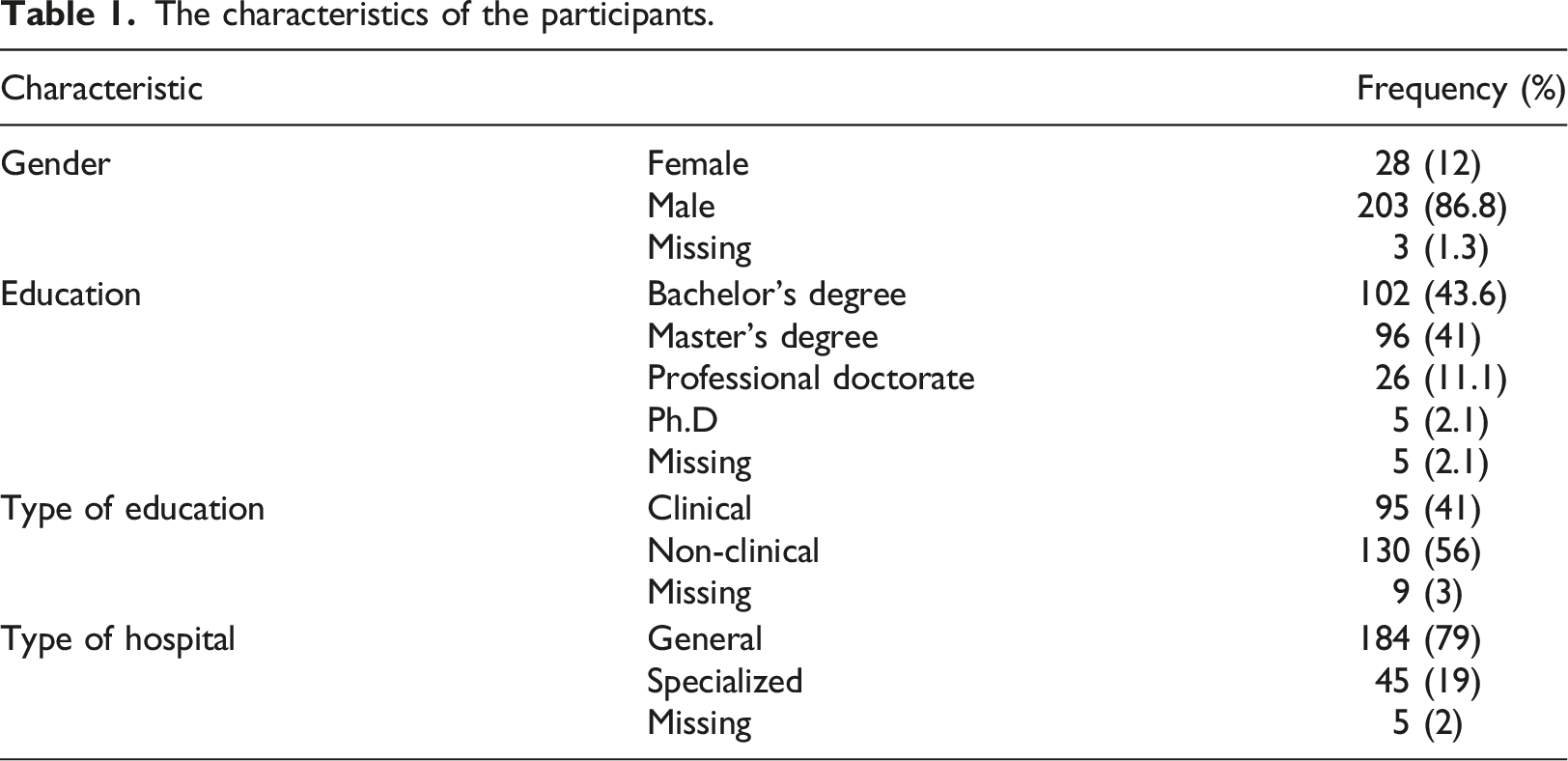
The questionnaire was distributed to managers with bachelors, masters, professional doctorate, and Ph.D. degrees in fields related to management, hospital management, and health sciences. The managers’ domain of study was divided into two main categories: clinical (medicine and nursing) and non-clinical (other disciplines related to health sciences and non-medical fields).
The characteristics of the participants.
Results
Prioritizing the subject domains of the indicators
Figure 1 shows the mean score of each domain based on the total score of its indicators and based on the type of hospitals. From the viewpoint of the hospital managers, the priority of the domains (from most to least important) was as follows: services provided to patients (mean = 8.62 ± 2.12), safety and quality of care (8.35 ± 1.34), financial resources (8.3 ± 1.23), human resources (7.91 ± 1.44) and operational (7.24 ± 1.42). The mean score of the domains related to the hospital management dashboard.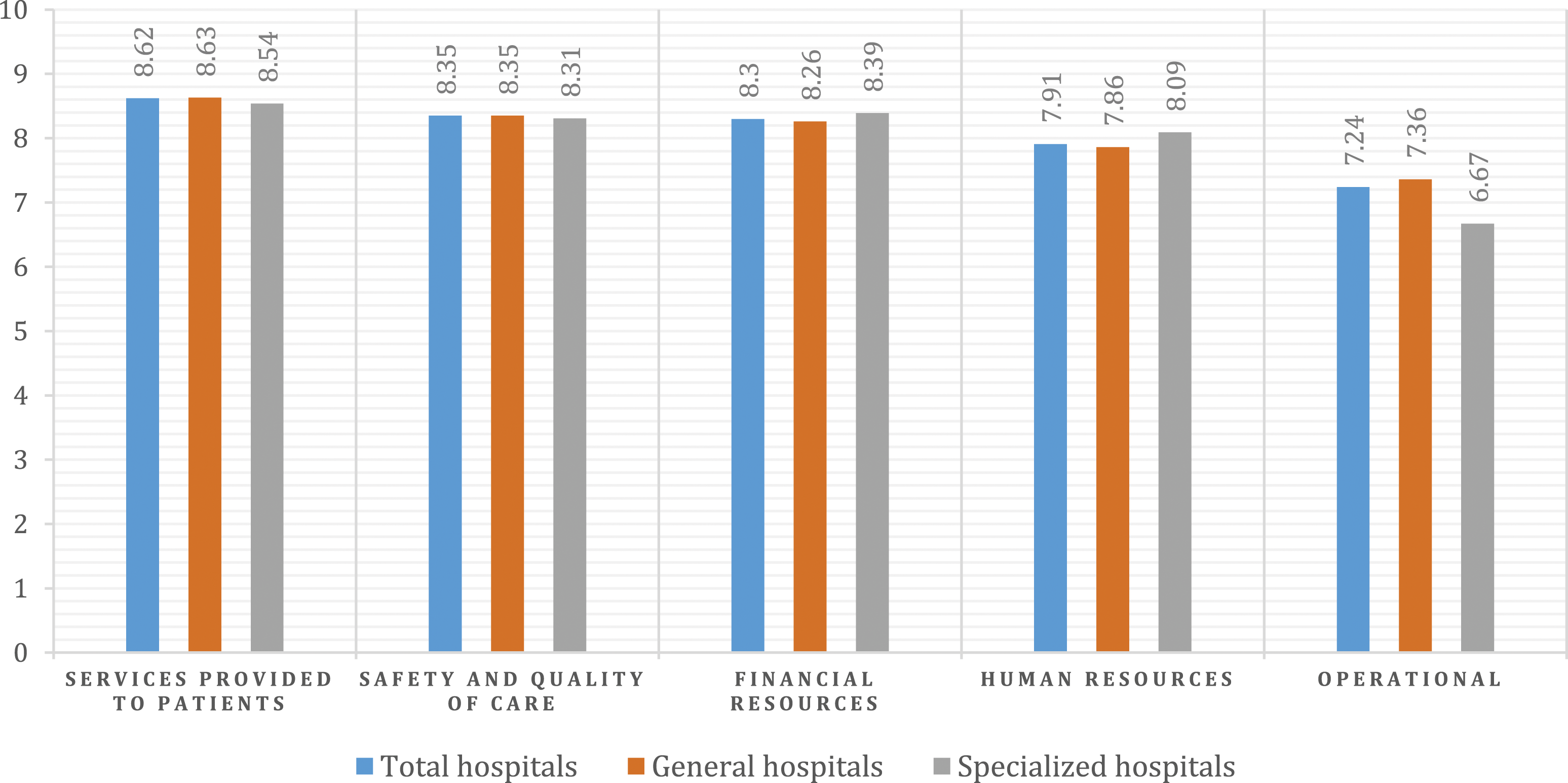
The mean total score of each domain based on characteristics of the participants.
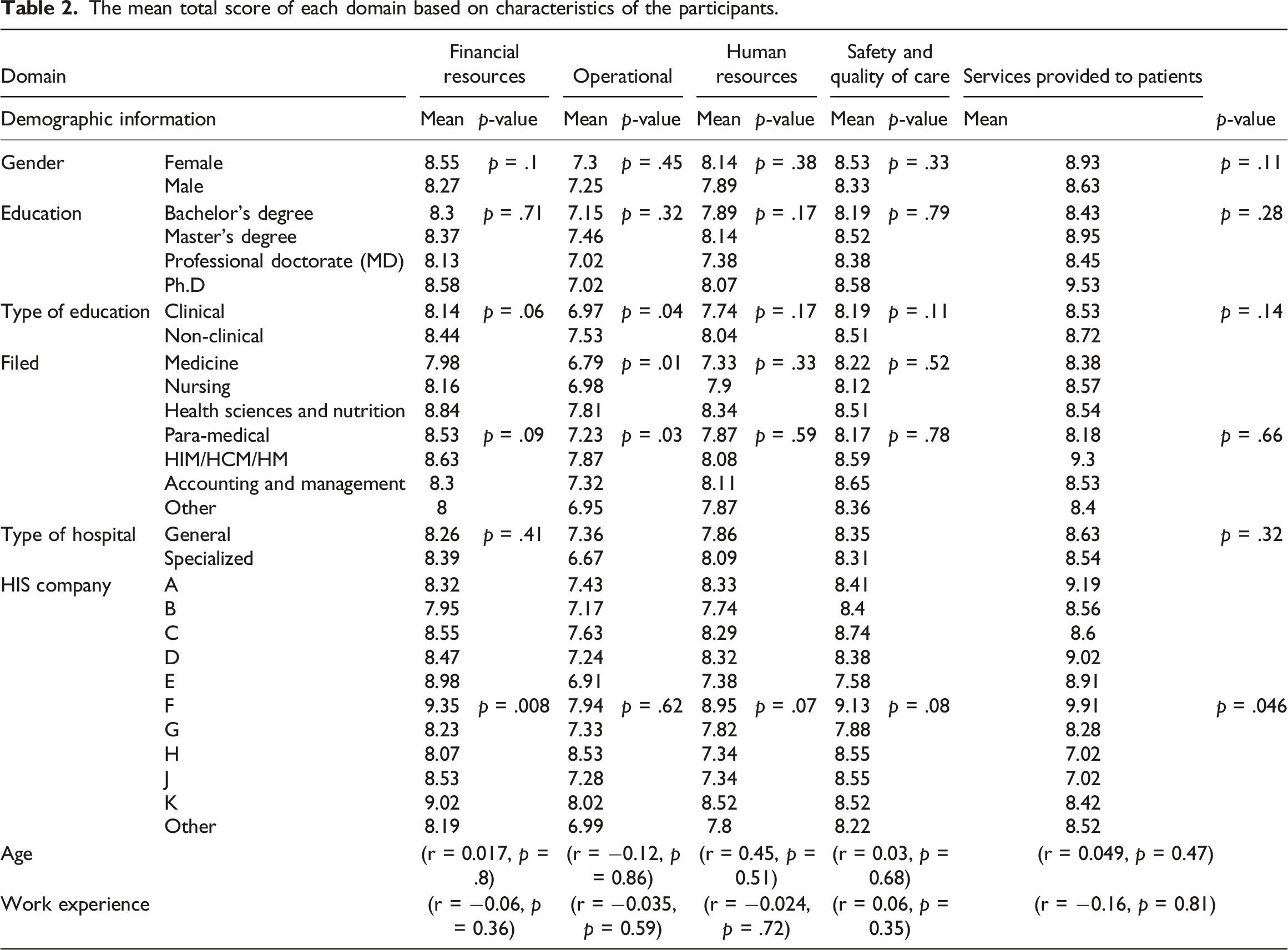
The Kruskal-Wallis test showed managers with various educational fields had not significant difference in the mean total score of financial resources, human resources, safety and quality of care, and services provided to patients' domains (p > .05). However, the mean total score of operational domain had significant difference in the managers with various educational fields. The mean total score of operational domain in managers with background in health information management (HIM), health care management (HCM), and hospital management (HM) was significantly higher than other hospital managers (p = .01). The managers that used “F” HIS have the higher mean total score of each domain (except in operational domain). These differences were significant in financial resources domain (p < .046). The Spearman test showed no significant difference in the managers with different age and work experience and the mean total score of each domain (p > .05).
The selected key performance indicators
The selected KPIs for hospital management dashboard.
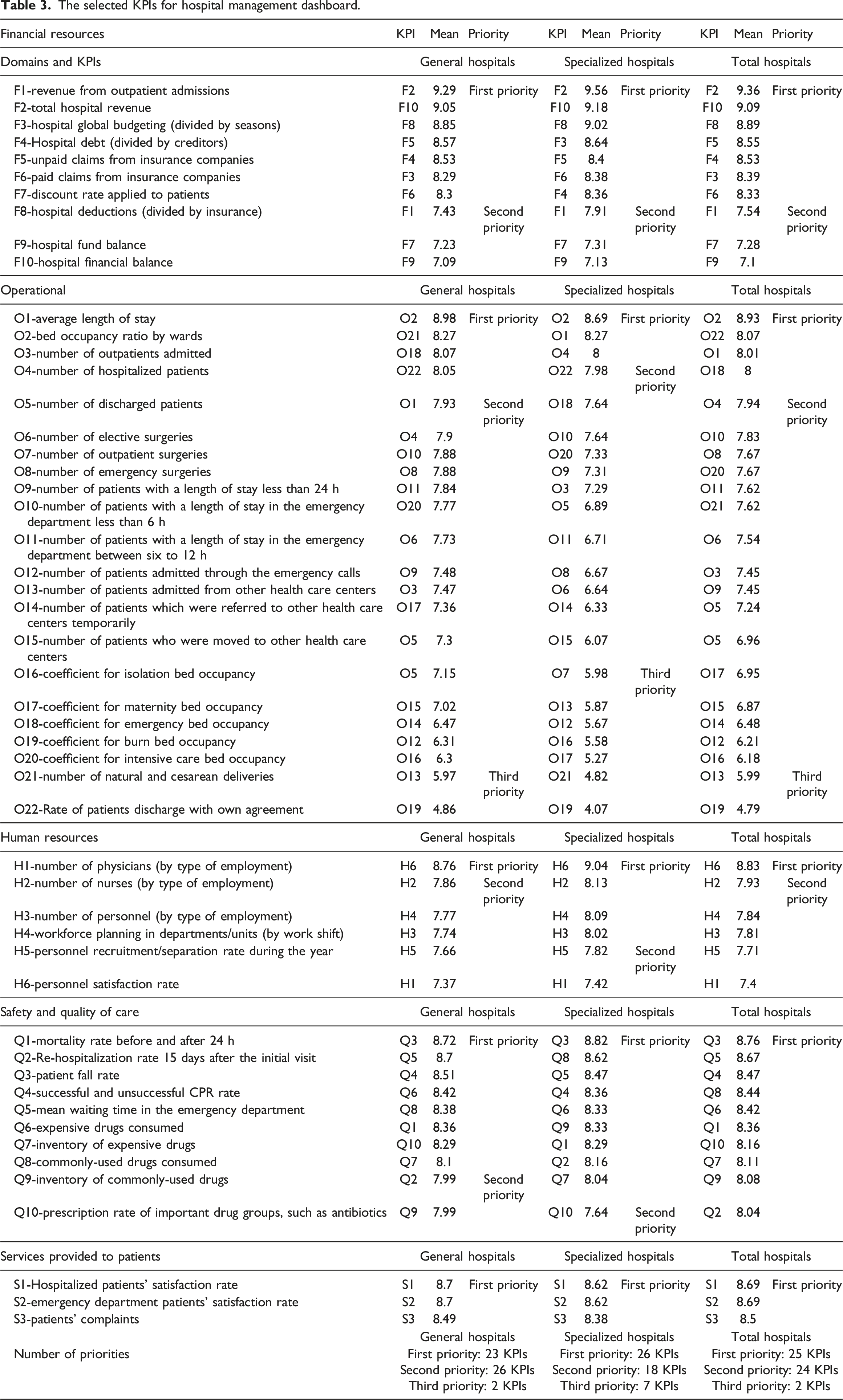
In total, the patient fall rate (mean = 8.76) was selected as the most important indicator in “safety and quality of care” domain. The patients’ satisfaction rate (mean = 8.69) was the most important KPI in “services provided to patients” domain. The total hospital revenue (mean = 9.36) had the highest score among the 10 KPIs in “financial resources” domain. According to the hospital managers, personnel satisfaction rate (mean = 8.83) was the most important indicator in “human resources” domain. The bed occupancy ratio by wards (mean = 8.93) was selected as the most important indicator in operational domain.
The most other suggested KPIs based on open questions.
Discussion
Principal findings
Based on the results obtained, out of a total of 51 indicators examined in five domains, half of KPIs (25 KPIs) obtained the highest scores and were selected for hospital management dashboards. According to the managers of public Iranian hospitals and the mean scores obtained, the order of priority given to the five domains was as follows: services provided to patients, safety and quality of care, financial resources, human resources, and operational domain.
Comparisons with existing literature
Services provided to patients
In this domain, the patients’ complaints and satisfaction were the most important indicators for the hospital managers. Patients’ satisfaction is a very important indicator of the quality of services provided by hospitals.50,51 Patients’ satisfaction assessment should be a top priority for healthcare managers and providers, as it can bring a good reputation for healthcare institutions, increase the number of customers, increase the profitability compared to competitors and is one of the most important factors contributing to a manager’s success. 52 Mendonça et al. 39 described patients' satisfaction with the services provided as one of the six KPIs in pharmaceutical service management dashboards. Three other studies38,40,41 also used indicators related to the patients' satisfaction as well as their complaints of the services provided as KPIs. In one systematic review study, Si et al. (2005) also suggested patients’ satisfaction and complaints as the most important KPIs. 41
Safety and quality of care
In the domain of safety and quality of care, the patient fall rate and waiting time in the emergency department were the most important indicators for the hospital managers. Falling from the bed is one of the most serious threats to patient safety in hospitals,53–55 which in many cases, results in patient injury, followed by an increase in the length of stay, the medical costs and the patient's complaint from the healthcare organization.56–60 In a study by Pemberton et al., 36 similarly patient fall rate was included in the dental services’ dashboard. Long waiting times for patients increase the likelihood of adverse outcomes for patients with critical conditions in the emergency department, as well as the decreased quality of care, leaving the hospital without receiving services and ultimately reduced patient satisfaction with the hospital.61–69 Using this KPI in hospital dashboards was also proposed in two other studies.37,38
Financial resources
In this study, indicators such as the financial balance of the hospital and total hospital revenue were found to be of great importance. As Latham quotes: “Cash is king, so cash flow is the lifeblood of the kingdom”. 70 Awareness about budget, revenue, expenses, and debts is an effective factor for managers’ decision-making. 1 Although financial performance is not a main indicator of the success of healthcare institutions, it is not possible to achieve the healthcare goals without considering financial aspects. 71 Investigating financial indicators enables hospital managers to specify the financial trend of the hospital in a given period of time and even compare it with other hospitals. 71 Hospital managers therefore need key financial indicators for monitoring their institution’s financial situation. Saharia 43 proposed the organization revenue, the accounts receivable from Medicare, and the organization debt as the three most important financial indicators. Levin 42 also recommended profit, gross revenue, total expenditure and expenses received as KPIs in dental practice. Taylor 44 also proposed the net and gross revenue and the profit from patient admission as the most important KPIs in the financial domain and used them for designing a dashboard.
Human resources
Personnel satisfaction was the most important KPI in the human resource domain for the hospital managers. The personnel satisfaction affects their loyalty to the organization, prevents absenteeism, and saves costs. 72 Another reason for the importance of personnel’s satisfaction for managers may be competition among hospitals for recruiting and keeping qualified personnel. Personnel dissatisfaction can make them leave the organization. Recruiting and training qualified personnel for hospitals may cost a lot of time and money. Moreover, new and inexperienced personnel may not be able to provide patients with high-quality services, 73 which may lead to the patients’ dissatisfaction and no return to the hospital. Hospital managers know that the personnel’s satisfaction impacts patients’ satisfaction with the services received. 74 In line with these results, in two other studies,38,41 personnel satisfaction and workflow were used as indicators for evaluating the performance of healthcare organizations.
Operational domain
Based on the results of this study, the bed occupancy ratio by wards, patients’ discharge with own agreement, and average length of stay were some of the operational indicators that were highly important to the hospital managers. The bed occupancy ratio by wards and length of stay are some main criteria used for evaluating the efficiency and productivity of hospitals. The bed occupancy ratio by wards helps decide whether to increase the number of beds in the hospital and indicates the appropriate use of hospital resources and facilities.75,76 The length of stay is associated with many factors, such as the chance of repeated infections, readmission rate, medical expense burdens on patients and their families, and also patient satisfaction.77–80 Regarding the limited resources in healthcare, knowing about the bed occupancy ratio and average length of stay helps hospital managers' better plan for and manage their hospital resources. In line with the present findings, Martinez et al. 46 also found that indicators including the length of stay, bed occupancy rate and hospital discharge as well as the number of patients in the emergency department were the most important indicators. Elliot et al. 37 proposed the hospital bed occupancy rate, the emergency department bed occupancy rate, the length of stay and the rate of patients’ discharge contrary to the recommendations (i.e. with personal consent) as the major KPIs for pediatric hospitals.
According to this study, the managers of general hospitals prioritized operational KPIs significantly more than managers of specialized ones. In a general hospital, most of the treatment procedures for almost all types of diseases may be performed, while a specialized hospital specializes in the treatment of a particular or a group of related diseases. Thus, it seems rational that some operational KPIs such as bed occupancy ratio by wards, coefficient for emergency bed occupancy, and rate of patients discharge with own agreement be important for general hospital managers.
Strengths and limitations
This study used a participatory design method to identify and prioritize the KPIs for hospital management dashboard. According to this methodology, if the users and stakeholders of management and clinical dashboards are involved in determining the KPIs, more relevant and reliable indicators can be obtained. 18 Therefore, since hospital managers are the main users of hospitals’ management dashboards, this study investigated the views of a proper sample of managers in public Iranian hospitals. To the best of the researchers’ knowledge, no studies have yet been conducted to determine the KPIs of hospital management dashboards.
This study used the views of experts in this field and the participation of hospital managers for developing hospital management dashboards. Although this study presents evidence of the selected KPIs based on the viewpoint of hospital managers, the results should be cautiously interpreted due to its limitations. Firstly, there are many evidences81,82 about the importance of medical equipment in the performance and the costs of healthcare institutions. Ignoring the KPIs related to HITs was one of the limitations of our study. Secondly, the results of analyzing open-ended questions showed some of the important KPIs might be ignored by the researchers. Thirdly, the identified KPIs may not have been based on the specific conditions of certain other hospitals or they may have less use or importance in other settings, such as private, military, and charity (non-profit) hospitals.
Generally, this study suggests that the hospital managers consider the impact of management dashboards in decision-making and the necessity of identifying essential KPIs. This study carried out with the participation of the managers of Iranian hospitals at a national level, so the generalization of the results to hospitals in countries with different health systems should therefore be pursued with caution. The prioritized KPIs in this study may be helpful for future studies to identify other required KPIs of management dashboards in the health care domain.
Future studies are recommended to investigate and compare KPIs with consideration for specific hospital variables, such as the type and specialties available in the hospital as well as the healthcare system in place or the geographical region. Given the time, financial, and executive limitations in the design, implementation, and use of hospital management dashboards in this study, the impact of the determined indicators on the hospital business was not investigated. The researchers recommend that, after the implementation of the management dashboards, further studies investigate the impact of their use on the outcomes, processes, and management of resources in hospitals.
It is essential to use management dashboards in hospitals to avoid confusion in decision-making. The indicators determined in this study can help designers and developers of business intelligence tools, such as hospital management dashboards, to visualize the most important needs of managers. The results of this study demonstrate the common and general needs as a primary step and provide a basis for their complementation in future studies. The health managers can use these indicators to formulate strategic and operational plans for relevant organizations.
Conclusion
The results of this study showed that awareness about the services provided to patients and safety and quality of care is more important than any other domain for hospital managers. The KPIs identified in this study can be used as a basis for the development of hospital management dashboards. Hospital managers and administrators can use these indicators to monitor the status and performance of their organization in time and have a better control over their institution by adopting plans and making decisions.
Footnotes
Acknowledgements
This work was supported by Health Information Management Research Center, Kashan University of Medical Sciences (97119). The authors thank the hospitals’ managers participated in this study.
Author contributions
E.N, R.F, M.S, R.K and R.A contributed to the conception and design of the study, acquisition and interpretation of the data, and drafting the paper. E.N and R.A was primarily responsible for the statistical analysis of the data. All 5 authors read and approved the final version of the article submitted.
Declaration of conflicting interests
The author(s) declared no potential conflicts of interest with respect to the research, authorship, and/or publication of this article.
Funding
The author(s) received no financial support for the research, authorship, and/or publication of this article.
Ethical statement

Data Availability Statement
The data generated and analyzed during this study are available from the corresponding author on reasonable request.