




Abstract
Over the past 20 years, the identification of interventions related to healthcare management has been greatly facilitated by improvements in the well-being and health of the entire population. However, regardless of the positive developments in smart health applications and e-health research, there are two important gaps, (1) the role of gamification variables in the continued use of eHealth applications has not been adequately assessed, and (2) the extent to which people’s perception of the continued use of e-health applications is encouraged through habit. Customers and companies can derive considerable value from exploring E-Health applications’ health self-management services. Accordingly, estimating such services’ ongoing adoption by customers is aimed for in this research, with habits, intrinsic and extrinsic variables incorporated into a study model which is then tested. This paper examined perceived autonomy, perceived competence, perceived relatedness has positively related to enjoyment and habit. Reward has positively related to perceived autonomy and continued to use. Enjoyment and Habit have positively associated with the decision to continue to use in e-Health Apps. 269 individuals who have used Chinese e-health applications comprised the data collection sample, being reached via an online questionnaire. Data analysis was undertaken using Partial Least Squares Structural Equation Modelling (PLS-SEM). It was found that the ongoing adoption of e-health self-management services was perpetuated to a greater extent by intrinsic variables; in terms of strategizing for companies’ e-services, the results can inform this process.
Introduction
The popular requirement for health-associated knowledge is significant, with this knowledge increasingly being derived online as a crucial conduit. Health monitoring, control, dietary changes and live chat e-services are expanding in adoption alongside the internet’s more pervasive use. 1 Nguyen, Jiang 2 note that applications’ adoption is stimulated if they incorporate relevant components and characteristics, offering the prospect of health management by fit and unwell people, with the continuation of a person’s health being an aim reflected by the online health apps. Furthermore, during an application’s adoption, different aims and purposes are held by individuals. Thus, the facilitation of their use will be significantly influenced by the services’ customisation to address specific health problems of users Saleh, Alameddine. 3
E-health applications’ ongoing adoption for self-management and the variables underlying this are significant to comprehend. The topic has received growing research attention as so late.4–6 As Sardi, Idri 7 research shows, the most attention health subjects received in previous literature have been exercise, chronic disease control and self-care management. For instance, Priesterroth, Grammes 8 investigate how diabetes self-management conduct may be altered by gamification; Miller, Cafazzo 9 explore how chronic non-communicable disease self-management could be strengthened through gamification, while Farmer, Williams 4 and Sezgin, Weiler 10 assess how chronic ailment self-care and control may be enhanced through digital applications.
The individual tailoring of health care and equitable availability of customer-focused medical care provision at a reasonable price is an objective of e-health to which Gao and Xu 11 have contributed significantly. During the past two decades, it has seen a significant expansion in health service investment in China Ling, Liu. 12 Nevertheless, Lv, Jiang 13 observe that per 1000 individuals, just 2.21 qualified assistant doctors are available, while health service investment varies across locations. Saleh, Alameddine 3 posit that the identification of health care management-related interventions is significantly promoted through the aim of population-wide welfare and health improvements. However, the resolution of two significant gaps is necessary, regardless of positive developments with smart health applications and research into e-health. One gap is that the role that gamification variables play in perpetuating a population’s health self-manage has been insufficiently assessed. For instance, Sardi, Idri 7 note that chronic disease self-management has been under-researched in relation to enjoyment, reward and other gamification variables. The further gap is that despite studies such as Uysal and Yildirim 14 identifying that e-health adoption is influenced by relatedness, proficiency and independence as intrinsic variables, the extent to which e-health applications’ ongoing adoption for self-management is encouraged through the habit variable is poorly understood. Accordingly, this study defined mobile health apps as health-related mobile applications that are used by patients or healthcare professionals for the management of disease, treatment, and/or prevention. The apps included in the study were those that were available in English in either the Apple App Store or the Google Play Store. Under this scenario, the comprehension of ongoing health application-based self-management and its associated impetus factors is improved in three ways by this research. One contribution is that the psychological variables influencing e-health applications’ ongoing use are more effectively comprehended through the research model’s combination of intrinsic and extrinsic variables. A further contribution is that Self Determination Theory (SDT) theory’s relevance is increased through the research finding that extrinsic variables are less important than intrinsic variables. The final main contribution is that the phenomenon of ongoing customer behaviour can be more successfully understood by companies. Thus, their strategizing for self-management services may be shaped by the application of these research results.
Theoretical background and hypothesis development
Health self-management services may improve users’ welfare and diminish the costs entailed in their health care. As Shim, Kim 15 explain, this is because self-care and the health service infrastructure are harmonised, while individuals’ self-care proficiency is increased, through self-management. Kumaresan, Srinivas 16 point to numerous hospitals’ implementation of self-care management activities being perpetuated by their interest in the management of mental health issues, alongside other chronic ailments, as part of different self-management aims of medical facilities. Furthermore, hospitals’ introduction of self-management has expanded in the wake of diagnostic, smart apparatus and medicine markets’ globalisation, alongside swift online technology and other relevant technology developments. Qasim, Ahmad 17 outline how, if particular health aims’ attainment is sought through specific lifestyle changes implemented by unfit and fit individuals, the prospects for this can be assisted through the health care infrastructure. The paradox between limiting medical resource inputs and delivering high standard services has been a fundamental impetus behind health care facilities’ greater implementation of health self-management. Nevertheless, the variables providing impetus to the ongoing use of e-health applications for self-management, are necessary to comprehend, given that the market for appropriate applications continues to expand.
Common elements that may be included in such a model include awareness and perceived usefulness of the app,18,19 perceived ease of use, 20 which were mainly derived from the TAM model (Technology Acceptance Model). TAM model is a user-centred model that helps to identify the factors that affect the user’s intention to use a technology. The TAM model has been found to be a valid and reliable model for predicting user adoption of health apps.21,22 Additionally, social, and psychological factors such as self-efficacy, social influence, and perceived norms may also play a role in adoption.23,24 Ultimately, it is important to tailor the model to the specific app and population under consideration.
Self-determination theory
As Deci and Ryan 25 and Ryan and Deci 26 note, self-determination theory is the most commonly applied theory for examining human motivational behaviour, which has been effective in explaining motivational dynamics and human motivational behaviour. Deci, Olafsen 27 clarify, studies into extrinsic and intrinsic impetuses resulted in the emergence of SDT as a human impetus macro theory. There are two basic types, namely intrinsic and extrinsic motivation. 28 Intrinsic motivation refers to doing an activity for its own sake. Intrinsic motivation leads to behaviour that inherently generated towards inherent enjoyment or challenge. In the case of using an E-health app, users may believe they use the app as a result of their own initiative. For example, the enjoyment from the visual or auditory contents from the app makes these users keep using it.
Intrinsic motivation
Determinants of intrinsic motivation
Niemiec and Ryan 29 suggest intrinsic motivation is closely facilitated with three basic human psychological needs: autonomy, competence and relatedness. According to Ajzen, 30 multiple studies have suggest that the psychological needs of autonomy, competence and relatedness determine the underlying motivational mechanisms that direct individual behaviour intention, such as in the health field,31,32 banking analysis,33,34 education context35–37 and exercise.38,39 For example, Ryan, Rigby 40 identify that a predilection for entertainment-focused games and positive effect on users’ enjoyment both stemmed from relatedness, proficiency and independence requirements; this has been a recurrent result of such studies. Peng, Lin 41 discover that fulfilment of this trio of requirements affected personal conduct and perspectives, in relation to engaging in work-associated actions and other activity-focused circumstances. The SDT theory suggests that the experience of autonomy takes place when people feel the freedom of choice and volition. 26 Many apps, including E-health apps, push too many notifications to their users, and this may stimulate the loss of autonomous feeling. Empirical studies also confirm the positive impact of the number of notifications on users’ negative emotions. 42
Additionally, Ryan and Deci 26 and Kim, Schmierbach 43 determine that the enjoyment and satisfaction derived from particular activities may be understood in relation to the sense of independence that accompanies them. The study further identified that enjoyment and fulfilment of requirements are both encouraged through the sense of control derived from computer games. Ryan 44 and Ryan and Deci 26 also suggest that the intensity of a habit and previous conduct will have a stronger correlation with the degree of autonomy control, with an estimation of habit intensity possible according to previous conduct and self-control. 45 The experience of autonomy is often accompanied by greater effort and persistence. 46 Persistence can also boost the process of habit creation.47–49 Further research such as Colapietro 50 investigation found that people’s sense of independence can lead to habit formation, with strong habits commonly being produced by self-directed actions. The sense of control within a specific context that a person feels is linked to independence within SDT. Thus, we hypothesise,
Perceived Autonomy positively related to enjoyment in E-Health apps
Perceived Autonomy positively related to habit in E-Health apps. Perceived competence is defined as the capacity of a person to assume responsibility for each procedure stems from the capability to transcend apparent difficulties.
26
Kudale, Trikande
51
clarify that in the healthcare field, the capacity to transcend all health difficulties is linked to a feeling of competence, with self-management infrastructure particularly relevant. When a game is engaged with by an individual, a greater proportion of the population’s commitment to pursuing competence can be encouraged if that individual uses social media to post about their health achievements, as a form of interaction. SDT theory proposes that competence experiences can enhance the enjoyment of a particular activity.
52
Multiple studies in various social settings also confirm the positive relationship between perceived competence and enjoyment.53–56 For example, Frederick and Ryan
56
report a positive correlation between enjoyment and competence motivation in a primary physical activity. Perceived competence can also encourage habit creation because perceived competence can encourage people to feel productive, and this feeling can increase the engagement open the possibility of habit creation.
57
Thus,
Perceived competence positively related to enjoyment in E-Health apps.
Perceived competence positively related to habit in E-Health apps Perceived relatedness is another essential trigger of intrinsic motivation. As Ryan and Deci
26
and Lee, Lee
58
describe when bonds are established between people this can provide impetus, in the form of a psychological requirement for a feeling of relatedness, as explained by SDT. If an activity is being engaged in by more than a single person, this can inspire the attainment of particular health goals. People’s perception of how they fit into the social environment can influence enjoyment.
59
Nelson and DeBacker
59
note that adolescents who perceived relatedness are more likely to report greater motivation and enjoyment. The positive relationship between perceived relatedness and habit formation has also been confirmed by previous studies.60–62 For instance, Willey, Paik
63
identify social isolation as a barrier for older people, specifically those who have less than three friends, to create physical activity habits.
Perceived relatedness positively related to enjoyment in E-Health apps.
Perceived relatedness positively related to habit in E-Health apps.
Enjoyment
Praveena and Thomas 64 clarify how the satisfaction and contentment linked to a system’s adoption is conveyed through the intrinsic impetus of enjoyment, with the usage procedure being stressed. Davis, Bagozzi 65 and Igbaria, Guimaraes 66 are indicative of existing research that identified how usage willingness is significantly affected by a website’s related sense of enjoyment. Moon and Kim 67 evidence that the intention of adopting a particular resource is positively connected to the sense of enjoyment. One instance provided by Joo, Park 68 relates to how middle school learners’ ongoing willingness to adopt e-textbooks was affected to a non-significant level by the associated sense of enjoyment. Nguyen, Jiang 2 posit that the adoption of smartphone e-health applications will be encouraged among individuals through gamification as a crucial dynamic, because engagement in healthy conduct by those who are fit, and healthy activity overall is promoted through the gaming variable. Improved health will be derived from an individuals’ continued engagement with a game because the enjoyment and satisfaction it offers underpin the gaming variable. Welfare and health will be perpetuated because ongoing involvement in a game will be promoted by the enjoyment derived, due to the e-health application’s game component. 16 Moreover, beneficial health outcomes may be an outcome for people who use the application merely due to the enjoyment derived from it—which is possible through the e-health application’s gamification factor—even when individuals are reluctant to use the application for health management because they consider themselves to be fit. Resultantly, if the adoption of such applications by a greater number of individuals is the aim, then including pleasurable aspects should be a significant consideration for e-health application designers. Thus,
Enjoyments positively related to continuance usage in E-Health apps.
Habit
A habit is a learned set of behaviours that manifests automatically in response to particular cues, and which focuses on attaining a specific goal or state.69,70 In the field of IS, the habit construct refers to an unconscious, automatic behaviour that affects IS intention and usage. IS studies have observed a connection between continuance intention and habit.71,72 As a case in point, Limayem and Cheung 71 extend the IS continuance model devised by 73 Bhattacherjee, incorporating a moderating effect (specifically, IS habit) to IS continued usage and IS continuance intention. The researchers also posited a direct relationship between IS continued usage and satisfaction, and also between IS continued usage and previous behaviour. Additionally, the later study conducted by Limayem and Cheung 74 assesses continuance intention with respect to Internet-based learning technologies, noting a link between habit, prior behaviour, and continuance use. In Chen, Lai 75 study, the researchers reported that habit was the motivation for continuing to use teaching blogs. In view of these findings, it is reasonable to suggest that habit directly affects continuous intention rather than moderates it. Hence, the following hypothesis was established:
Habit is positively associated with the decision to continue using E-Health apps.
Extrinsic motivation: Reward
Ryan and Deci 26 refer extrinsic motivation to doing an activity for a consequence separable from the activity itself, such as rewards. Houlfort, Koestner 76 find that continued autonomous decision making, self-declared enjoyment and a feeling of independence were linked to performance-related rewards. During the involvement in a game, the attainment of particular aims will be pursued, with such activity as part of healthcare deriving from game characteristics’ incorporation. If rewards were absent, continued engagement in an activity may cease, whereas such engagement if facilitated when users can derive a feeling of achievement through their accomplishment of aims being recognised, for instance through badges or scores.
The pursuit of rewards can enhance a person’s enhanced welfare and health. Increasing rewards has been a traditional “rational” approach to evoke higher quality work for a long history. 77 In the case of E-health apps, associated rewards can be the fitness of individuals. The sense of fit self-image can encourage users to continue to use the app.
External rewards can also influence the perceived autonomy of users. As Houlfort, Koestner 76 note, a feeling of independence is significantly and positively affected by performance-related rewards, with the encouragement of intrinsic impetuses being crucially arbitrated by the factor of a feeling of autonomy. Thus,
Reward positively related to Perceived Autonomy in E-Health apps.
Reward positively related to continue to use in E-Health apps.
Methods
Sample and procedure
In this research project, the selected applications included mobile health apps (e.g., Pingan doctor apps that diagnose health problems and distribute health information). An online questionnaire was designed and disseminated to community members who had previously used mobile health apps, and http://wejuanxing.com was used as the distribution platform. To incentivise the participants to provide data for the research, a summary of their responses to each item in the questionnaire was presented in a clearly readable format after they submitted their questionnaire. 19 of the questionnaires were incomplete, and so these were excluded, leaving 269 questionnaires that were eligible for inclusion in the data analysis process and the average response rate is 93.5%. The majority of the participants (51.3%) were between the ages of 21 and 30 and had a university degree (84.2%). There were 59.7% of male and 40.3% of female, respectively. Since the sample was relatively homogenous, the decision was made not to control for these demographic variables while analysing the data. Non-response bias was calculated using Armstrong and Overton 78 extrapolation process, which initially posits that the groupings of actual participants according to an identified standard is comparable to theoretical non-participants. Independent sample t-tests were also undertaken to comparatively examine the means of the demographic variables in the early, middle, and late participants, and because no statistically significant differences were detected, non-response bias was not considered notable.
Measures
Scale items and convergent validity.
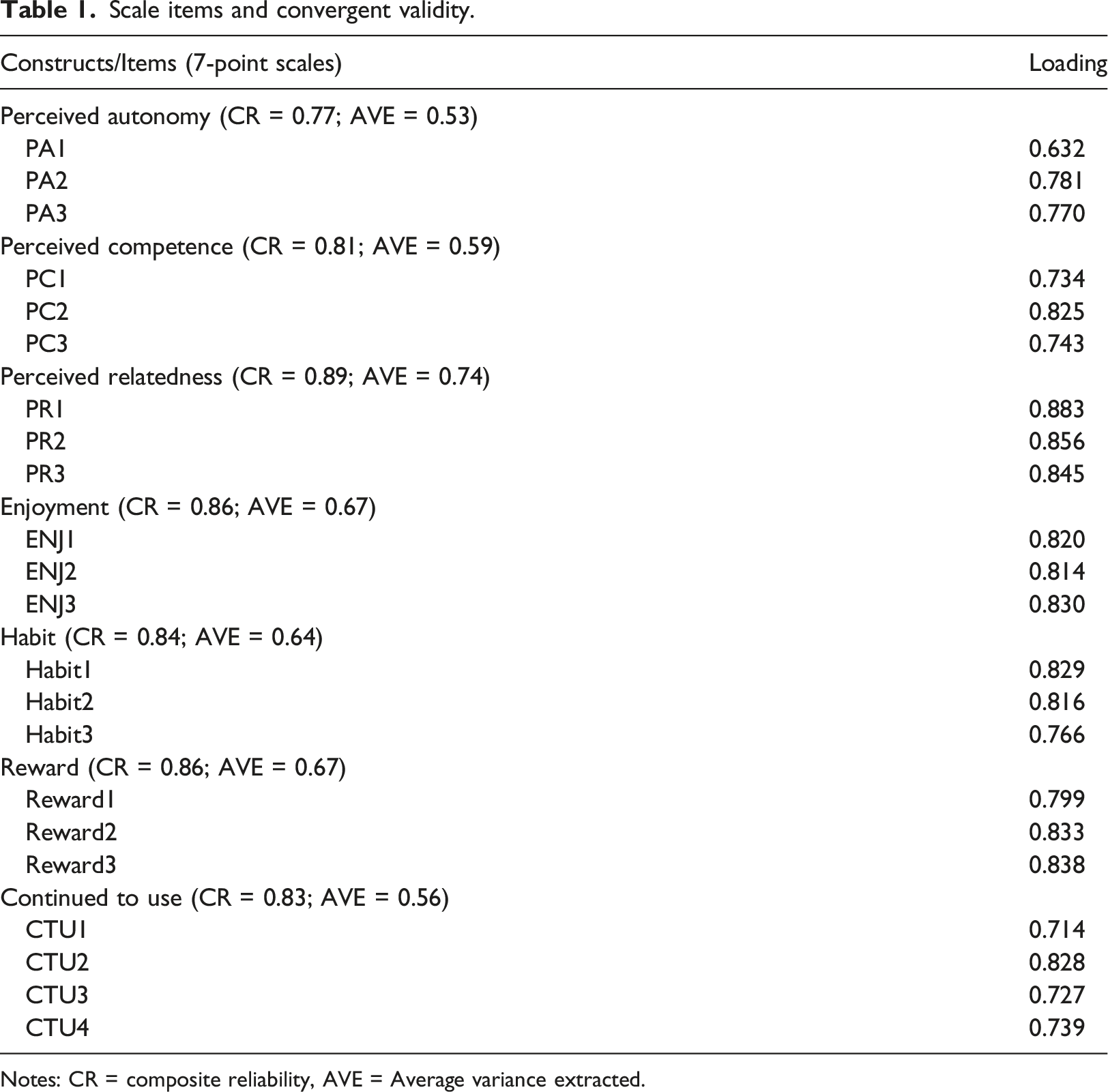
Notes: CR = composite reliability, AVE = Average variance extracted.
Result
Model validation was undertaken using partial least square (PLS) structural equation modelling (SEM), also referred to as PLS-SEM. The rationale for using PLS stemmed from its suitability for exploratory research, as well as studies that aim to make predictions or analyse complex models or relationships. 87 Additionally, PLS allows for a broad range of measurement scales, and no specific distribution is needed for the measured variables. 88 In terms of the objective of PLS, it is noteworthy that the technique is frequently applied in the context of business and marketing research. For this reason, its aim is typically to maximise the explained variance of the latent dependent variables. 89 PLS-SEM is suited for this study because it is not assumed that there exist normal distributions of the scales or populations. SmartPLS v. 3.2.9 was used for data analysis, 90 and t-statistics were calculated using 5,000 bootstrap samples. 89 Furthermore, a two-phase strategy was used for model estimation, which involves both measurement models and the structural model.
Evaluation of measurement model
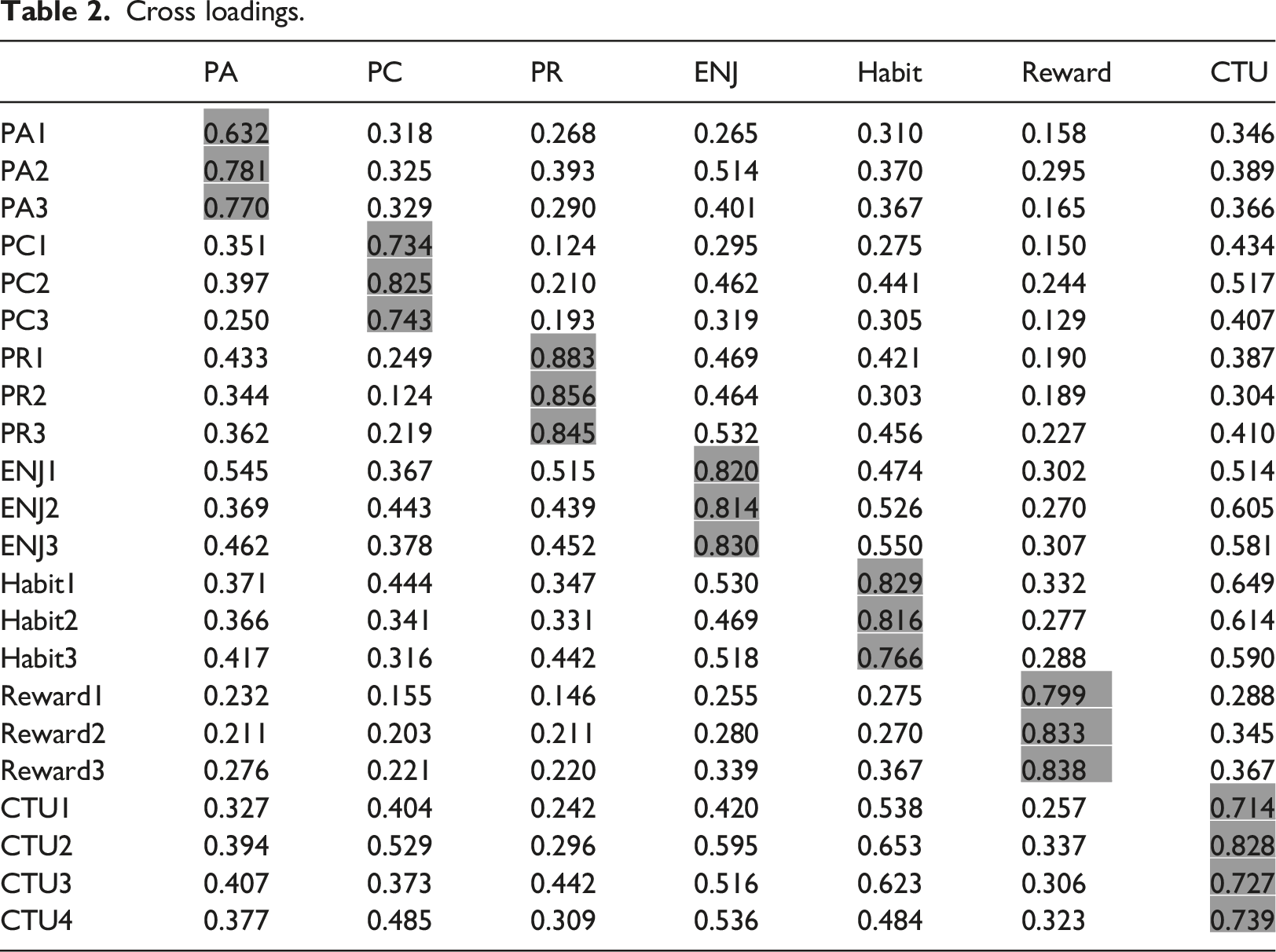
Cross loadings.
Construct correlations and square roots of AVE.
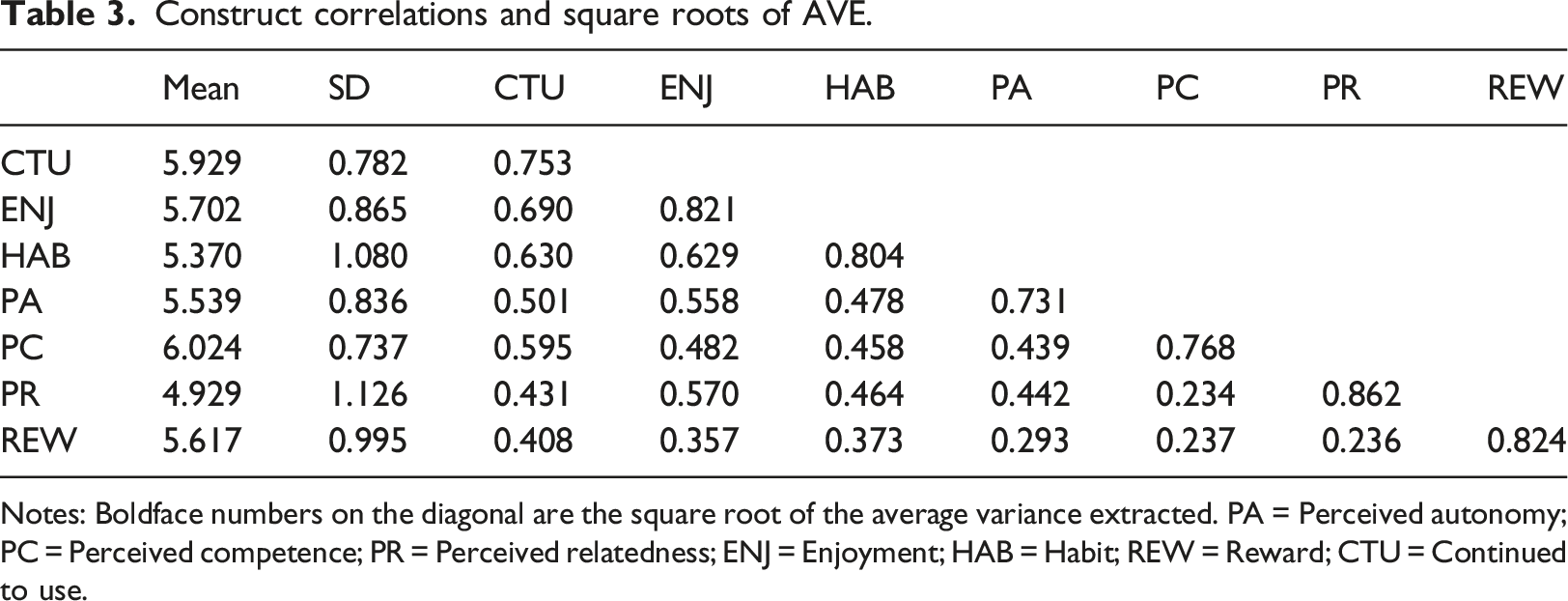
Notes: Boldface numbers on the diagonal are the square root of the average variance extracted. PA = Perceived autonomy; PC = Perceived competence; PR = Perceived relatedness; ENJ = Enjoyment; HAB = Habit; REW = Reward; CTU = Continued to use.
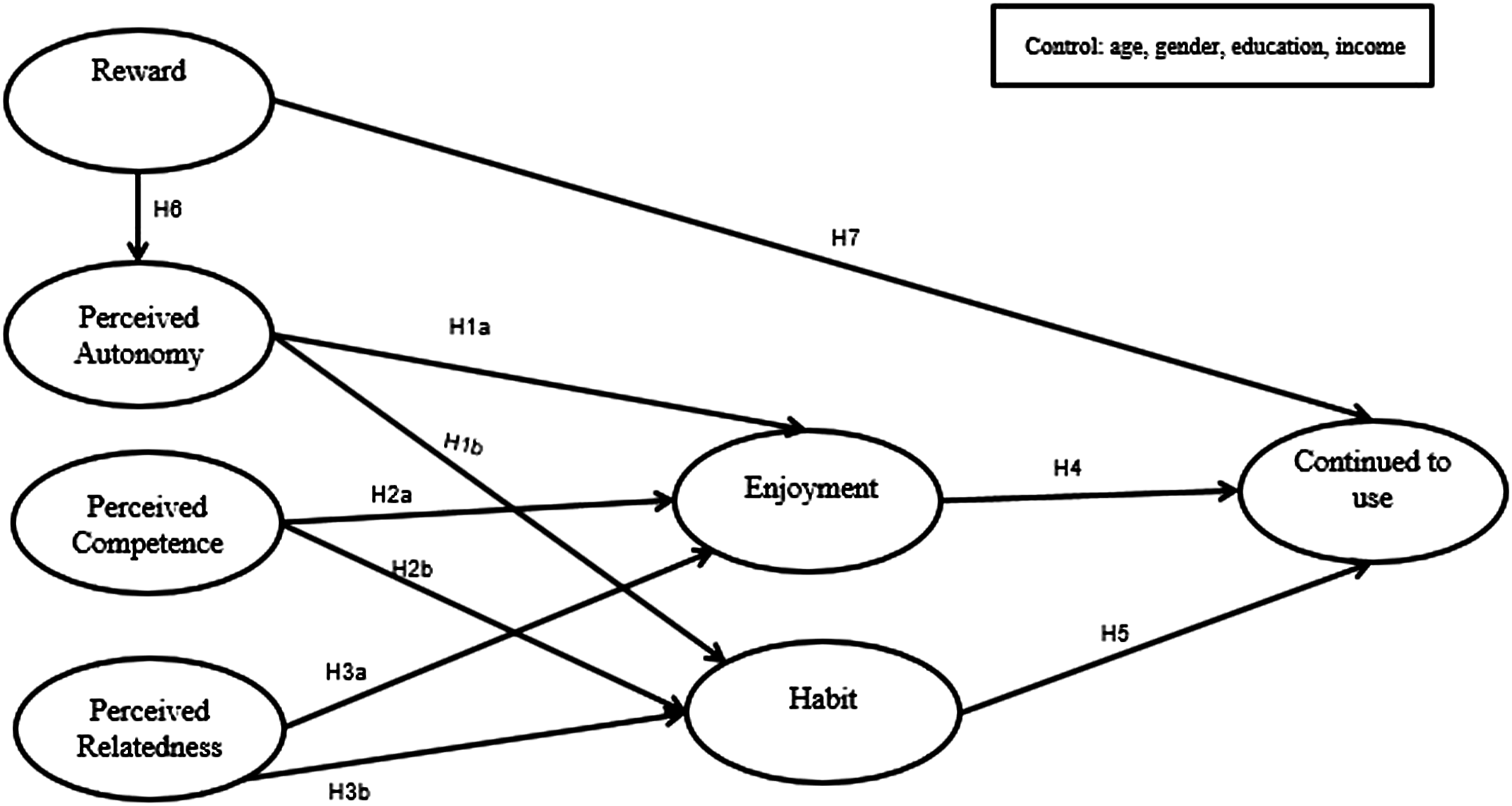
Summarises the conceptual model with hypotheses.
Hypothesis testing
The path results of theoretical model are presented in Figure 2. After controlling for demographic variables, such as gender, age, income, and education level, it is found that R square values for perceived autonomy, habit, enjoyment, and continued use, these were 0.086, 0.377, 0.503, and 0.669, respectively. These results were reflective of the adequate explanatory power of the model.
92
Results of the Structural Model. T-Values are in the Parentheses.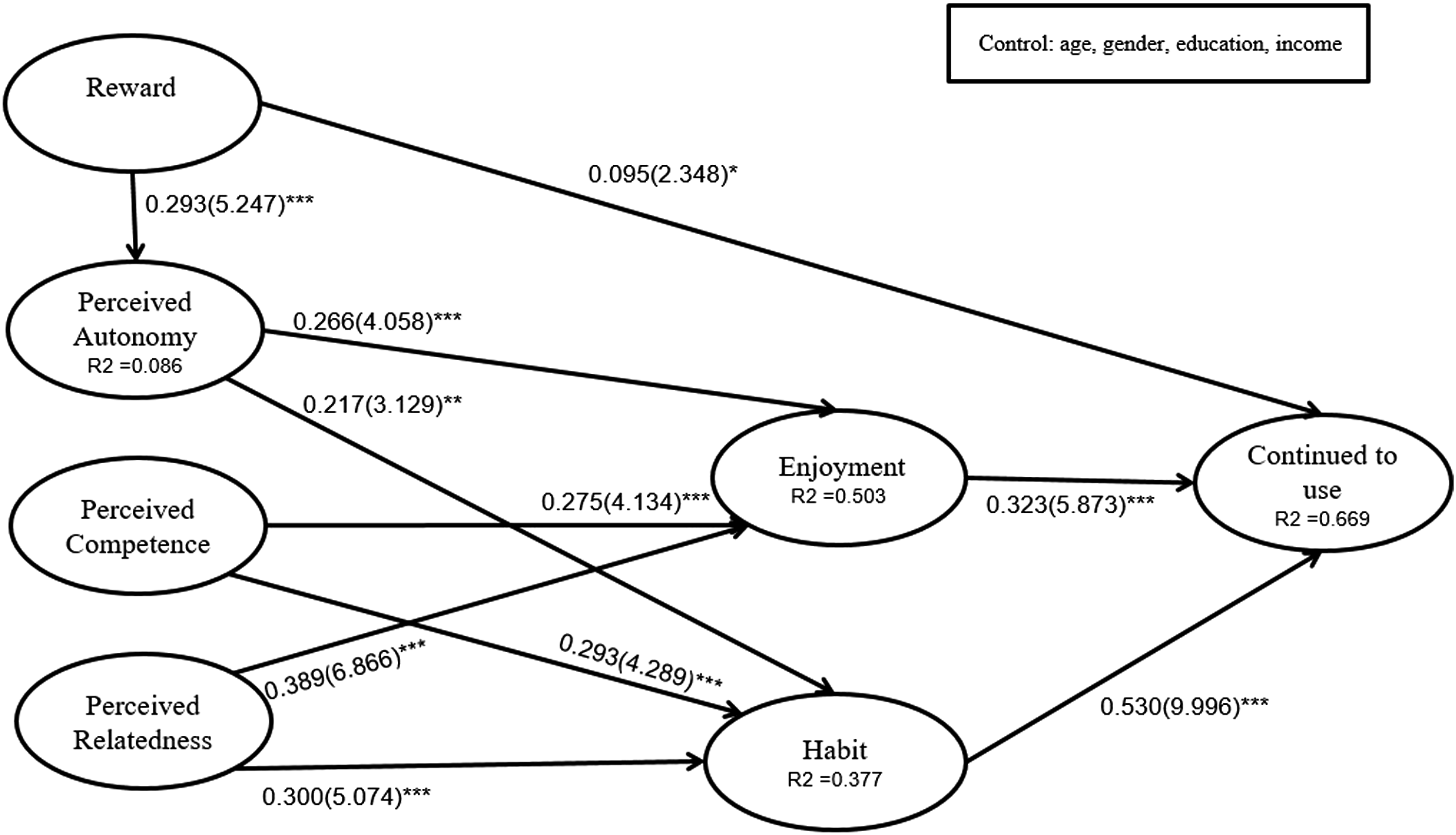
Bootstrapping was involved in the hypothesis testing to examine the statistical significance of each path coefficient, and in line with the recommendations of Chin, 88 t-tests were used. H1a and H1b, the purposes of which were to test the connections between perceived autonomy and enjoyment and habit, respectively, were confirmed. Additionally, confirmation of H2a and H2b also took place, specifically regarding the positive relationship between perceived competence and enjoyment and habit, respectively. As for H3a and H3b, these hypotheses were both confirmed, where relationships were identified between perceived relatedness and enjoyment and habit. As for H4, this was supported, and it measured the link between continued use and enjoyment, while H5, which addressed the positive connection between continued use and habit, was confirmed. H6 was confirmed based on the strong impact of reward on perceived autonomy, while H7 confirmed the relationship between reward and continued use.
Discussion and conclusion
In this study, we applied self-Determination theory (Ryan & Deci, 2000) to assess the internal mechanisms of how intrinsic and extrinsic variables may affect continued to using e-health apps. The results show that reward, enjoyment, and habit were found to influence continued to using e-health apps. Perceived autonomy, perceived competence and perceived relatedness were influence enjoyment and habit. The study has both important theoretical and practical implications.
Theoretical implications
This study sought to account for the gap in the literature relating to the intrinsic, extrinsic, and habit-related factors that drive consumers continued use of E-Health apps. The survey results, which gathered data from Chinese participants, offer valuable data that will augment our theoretical knowledge of how these diverse factors influence consumer decisions and self-management. Consistent with SDT theories, the results indicate that perceived relatedness, perceived competence, and perceived autonomy are positively related to the continuance use of health self-management in E-Health apps.
Previous studies have tended to focus on either intrinsic or extrinsic factors rather than both, and the findings accord with initial expectations, namely that intrinsic factors will play a more prominent role when compared to extrinsic factors. According to Hanen, Kechaou 1 and Duggal, Brindle, 5 opinion leaders will affect market trends in mobile health communities and applications, and this study’s results lend additional weight to those of Limayem and Cheung 71 regarding the importance of habit in informing consumers’ continuance use of health self-management applications. The results also support the hypothesis that enjoyment has a direct effect on continuance use in this context, and they suggest that reward is positively correlated with continuance use and perceived autonomy.
Another critical finding revealed by the present study is the findings support the notion that intrinsic factors have a more substantial effect than extrinsic factors, which expands the application of SDT theory.
Managerial implications
Firstly, this study’s findings will support companies’ self-management service strategies by allowing these organisations to understand consumer continuance behaviour, as well as the factors that drive the decision to continue using a product or service. At the same time, organisations can cooperate with the health self-management community to increase the accuracy of services and lower operating costs. The measures outlined here will also promote self-management in consumers, which is relevant because, in most cases, the use of E-Health apps is voluntary. A key implication of this study for managers is that persisting at goals while using the right system (i.e., one that aligns with users’ needs) can set the stage for long-term use, thereby promoting more favourable health outcomes.
Limitations and further study
The limitations of this study should be identified to promote opportunities for further study. As the present study is one of the first in the literature to integrate extrinsic, intrinsic, and habit-related factors into one model to explain continuance use decisions in self-management for E-Health applications, the available data that the researcher could draw on were limited, particularly those pertaining to the Chinese context. Therefore, future studies could broaden the samples included in the investigation, potentially using a multi-city or multi-national sample. This would also present an opportunity to explore the significance of social, cultural, and economic factors on the research issue. Additionally, future research is expected to generate useful insights by integrating predictors with Big Data techniques (e.g., focusing on consumption reviews and emotions such as excitement, positive, negative, and regret).
Footnotes
Declaration of conflicting interests
The author(s) declared no potential conflicts of interest with respect to the research, authorship, and/or publication of this article.
Funding
The author(s) received no financial support for the research, authorship, and/or publication of this article.
Ethical approval
This article does not contain any studies with human participants or animals performed by any of the authors.
Informed consent
I confirm that any participants (or their guardians if unable to give informed consent, or next of kin, if deceased) who may be identifiable through the manuscript (such as a case report), have been given an opportunity to review the final manuscript and have provided consent to publish.
Data availability
This research used a self-structured survey data collected by means of questionnaires from 273 individuals who have used Chinese health self-management applications comprised the data collection sample, being reached via an online questionnaire. Data will be provided on personal request.

Appendix
Constructs/Items (7-point scales)
Perceived autonomy
1 I feel a sense of choice and freedom while participating in the E-health apps
2 The E-health apps provide me with interesting options and choice
3 When I am in this user’s E-health apps, I feel that my choices are based on my true interests and values
Perceived competence
1 I think I am pretty good at the E-health apps
2 After working at the E-health apps for a while, I felt pretty competent
3 The E-health apps was an activity that I couldn’t do very well
Perceived relatedness
1 I have the opportunity to be close to others when I participate in the E-health apps
2 I feel connected with other users and when I participate in the E-health apps
3 When I am in E-health apps, I feel loved and cared about
Enjoyment
1 Using E-health apps provides me with a lot of enjoyment
2 I have fun using E-health apps
3 I use E-health apps because it is entertaining
Habit
1 the use of E-health apps has become a habit for me
2 I keep us E-health apps whatever figure out or at home
3 I always use E-health apps to make my diet plan
Reward
1 I always use E-health apps to make my diet plan
2 when I search for E-health information (exercise, diet), I can get vouchers
3 it will motivate me to keep exercise
Continued to use
1 I intend to use E-health apps in the future
2 I plan to use E-health apps frequently
3 I will continue to use E-health apps to make diet plan or exercise plan
4 I will continue to search health information through E-health apps