



Abstract
Until now most of the studies concerning eHealth in Saudi Arabia are about the exploration of the national benefits from eHealth and the technical and infrastructural challenges in implementing eHealth rather than finding the factors influencing the users in adopting eHealth services. Further, the eHealth adoption rate in Saudi Arabia is low despite the scope of potential growth for the eHealth market. In this study, the authors added Trust, Privacy and System Quality factors to Technology Acceptance Model by considering the research context to examine the factors influencing eHealth services adoption. The proposed model was empirically tested based on the data collected, through survey questionnaire from 314 responses in Saudi Arabia. Structural Equation Modelling was followed to analysis and validates the proposed model based on partial least squares method using SmartPLS. Based on the findings, Perceived Usefulness in addition to Privacy significantly affect eHealth adoption. Moreover, Perceived Ease of Use factor has indirect effect on people perception toward eHealth services. Furthermore, the results show that System Quality and Trust are not influencing factors. This study is important for the healthcare policymakers for getting direction for future studies to avail the maximum benefits of eHealth in Saudi Arabia.
Introduction
eHealth not only entails the provision of healthcare services but also solutions and medical informatics using digital technology. From the viewpoint of healthcare solutions, the scopes of eHealth mainly include telemedicine solutions, electronic health, and medical records, medical and chronic care management apps, clinical decision support systems, and e-prescribing software. 1 On the other hand, from the viewpoint of healthcare service, the scopes mostly include the remote provision of medical consultation, monitoring, diagnosis, and treatment services. With versatile types of services and solutions, eHealth is now deemed as a means of the innovative, reliable, and efficient way of providing healthcare. Worldwide, the eHealth market size is forecasted to be more than USD 206 billion by 2022. 2 However, the eHealth market growth potentially depends on various types of enablers and barriers in the area of legislation, culture, economic condition, and technology. 3
As reported by the World Health Organization (WHO) in 2016, about 58% of its member states have eHealth strategy. 4 Although every developed country has outlined eHealth strategy a long time ago, Saudi Arabia is relatively late in this matter. 5 Therefore, the Minister of Health in Saudi Arabia has recently framed a 5 year roadmap in 2018 for ensuring equal opportunity of availing patient-centric healthcare for everyone through the wide-spread integration of eHealth in the country. 6 The roadmap also aligns with the healthcare-related objectives in the Vision 2030. In Saudi Arabia context, the implementation and adoption of eHealth are assumed to be very useful to reduce the issue of unequal distribution of healthcare, facilitate chronic disease treatment, and overcome the barriers of providing healthcare in remote areas with difficult terrain.7,8 A global healthcare market survey reported that Saudi Arabia is an emerging and significant market for eHealth business. 9 The increase of use of eHealth is considered as a necessary diversification of development strategy for the overall healthcare system in Saudi Arabia. 10
With regard to that, the government of Saudi Arabia has been undertaking various initiatives such as budget allocation and signing memorandum of understanding with various parties for the last decade for the general development of eHealth programs. The government is keen to start a new age of ICT-based e-health services. The Saudi government established a committee for health reform. This committee conducted a comprehensive review of healthcare and recommended the formation of a special taskforce. The special taskforce developed an information technology (IT) strategic plan for healthcare and deployed e-health applications within the country. 11 Notable progress has been made in fields where technology is widely in use, such as statistical applications, communications amongst staff, human resources and integration of health systems under central supervision. 12 Examples of the available applications for public are Treatment Orders Inquiry, Pre-Marital Screening, E-Prescription, the Central Appointment System (Mawid), Prediabetes Risk Test, Visual Acuity Test. 13
However, the number of studies regarding eHealth in Saudi Arabia is limited and doesn’t reflect the breadth of the potential of eHealth services market. 14 Most of these studies are related to the exploration of the national benefits from eHealth and the technical and infrastructural challenges in implementing eHealth 7 rather than finding the factors influencing people in adopting eHealth. When it comes to the factors affecting public adoption, previous studies showed that the eHealth adoption can significantly be hindered by lower degree of Perceived Usefulness (PU) in addition to lower degree of Perceived Ease of Use (PEOU), and high degree of trust and privacy concerns. 15 Taken from the TAM, the PU and PEOU factors have shown considerable influence on public behavioral intention and the subsequent use of eHealth in many studies.16–18 In the context of eHealth adoption, 19 used an extended TAM by integrating Privacy and Trust factors into TAM to explain the patients’ adoption of eHealth more evidently. However, their study was not in Saudi Arabia context and only from patients’ perspective instead of general people. Moreover, globally the issue of the low rate of using eHealth services was reported as confirmed by a recent study by 20 Thus, this research aims at empirically investigating the factors contributing to the public behavioral intention to use eHealth in Saudi Arabia by extending TAM model with considering the related literature and the context. This may eventually increase the actual use of eHealth and reap the benefits of eHealth programmers in Saudi Arabia at a larger scale.
Literature review
In the past decade, a substantial amount of literature focused on various aspects of eHealth to cater the ever-rising needs in health services. The demand for healthcare services is expected to increase every year in Saudi Arabia due to rise in population. 7 Therefore, it has also been emphasized 15 that more research is required to come out with a comprehensive view for aligning innovative technologies for healthcare services and accept eHealth services by the public.
Alshammari 7 explored the perceptions, preferences and experience about eHealth service among Saudi people. He found that there exists an issue of inadequate awareness about eHealth services among Saudi people yet. It was recommended that in order to promote the acceptance of eHealth services, people trust of eHealth systems should be enhanced by increasing people awareness of the potential advantages of eHealth systems.
Uluc, Ferman, 21 investigated the challenges of eHealth development in developing countries from professionals’ perspective. A comparative study was conducted by proposing a model and collecting data from Saudi Arabia, United Arab Emirates, Egypt, and Turkey. Findings indicated that IT infrastructure, regulations, cultural, cost, supply chain management, trust and patient privacy are some major challenges.
On the other hand, Alshahrani, Stewart 22 in their study shows that research on the adoption of eHealth services from multiple stakeholders perspectives is not enough. They identified 39 factors that affect the eHealth acceptance in Saudi Arabia. Among these factors; privacy, trust and willingness of use eHealth services influencing the acceptance of eHealth services from the viewpoint of patiants and public. There is still a need to conduct more investigation on the precievness of public towards eHealth.
In another study, Alanazi and Soh 23 show the factors affecting the acceptance of using IoT for eHealth in Saudi Arabia. A TAM based theoretical model was proposed. TAM was extended by including four new factors; connectedness, convenience, privacy and cost. The empirical test resulted in supporting cost, privacy concerns, and PU as the strong determinants of behavioral intention to use IoT (Internet of Things) based healthcare techonology.
Similarly, AlBar and Hoque 11 examined the factors affecting the eHealth services adoption in Saudi Arabia. An integrated framwork by combining TAM with Theory of Planned Behavior (TPB) was proposed to investigate what affect the acceptance of eHealth by patients. Their study shows that PU and PEOU significantly affect patients attitude for adopting eHealth services. In addition, subjective norm along with attitude have been reported as strong determinants of patients’ behavioral intention to use eHealth services.
Further, studies have investigated eHealth adoption from various prespectives including professionals, 15 patients14,23 and public. 24 However, a literature search by authors has shown thate there is emperical and recent study to test which factors affect user adoption of eHealth services in Saudi context. 22 Additionally, since eHealth is in the initial phase of implementaion in Saudi Arabia, until now mainly TAM model has been applied14,23 for theoretical investigation of the factors that might influence eHealth adoption.
Theoretical model and hypothesis
To examine the intention to use as well as acceptance of any technology, many theory based models have been applied, including TAM, 25 TAM2, TAM3, Diffusion of Innovations Theory, 26 Theory of Reasoned Action, 27 Social Cognitive Theory, 28 Theory of Planned Behavior (TPB), 29 as well as Unified Theory of Acceptance and Use of Technology (UTAUT). 30 Amongst all those theories, TAM has been a very widely applied model for studying information system adoption in general, and specifically in the domain of eHealth system adoption. 31 It is a well-established model which provides a tool for the assessment of eHealth systems acceptance. 32 A number of researches have tested TAM and demonstrated that it increasingly becomes as a suitable model to investigate the adoption of eHealth applications. 33
TAM model basically explains that PU and PEOU affect the users’ decision or behavioral intention about the adoption of any a technology. In the original TAM by Devis, both the PU and PEOU were defined as “the degree to which a person believes that using a particular system would enhance his or her job performance” and as “the degree to which a person believes that using a particular system would be free of effort” respectively. 25 Since then the TAM has been repeatedly used in many extended version for explaining the effects of major factors in technology acceptance in many technology research in many contexts.34–37
Many studies reported PU and PEOU as two strong factors of the behavioral intention for eHealth adoption.31,38–40 In the context of post-discharge stroke patients’, the study by Davoody and Hägglund found that PU influences the use of eHealth.
41
Also, in the context of community dwelling older,
42
used modified version of TAM and reported that both PU and PEOU affect intention of using eHealth. However, a study by Tao, Shao
43
showed that PU does not affect the Behavioral Intention, and PEOU has an indirect relationship with Behavioral Intention through attitude. In a study by AlBar and Hoque,
14
it was reported that PU and PEOU indirectly affect e-Health acceptance in Saudi Arabia. On the other hand, studies reported that PEOU not only has direct influence on the Behavioral Intention significantly but also the PU, which also directly influences Behavioral Intention.24,31,40,44 Therefore, by aligning with the previous TAM-based studies, the authors propose the first three hypotheses for this study as below.
Apart from the original factors in TAM, other factors can also influence public Behavioral Intention to adopt and accept a technology. For instance, literature show 45 System Quality is a strong determinant of Behavioral Intention in the Lebanese context. System Quality takes into account the availability, efficiency, reliability, security, and usability dimensions of quality with regard to the functions and processes involving in a system for providing any service. 46 System quality was proven in previous studies to have considerable influence on individuals’ behavioral intention to use and reuse information systems. 47
In the technology adoption research domain, System Quality is generally measured by speed, accurateness and interaction capability of eHealth services in Saudi Arabia. Prior studies found that System Quality had significant relationship with human behavioral intentions to use technologies (e-learning and e-commerce systems 48 ). On the other hand, researchers use extended versions of TAM for gaining more context-specific insights. For example, Hoque, Bao 19 integrated Trust and Privacy factors in TAM and found that both these factors have an important effect on Behavioral Intention for eHealth adoption in Bangladesh. In addition, privacy concern was reported as a strong factor of Behavioral intention to use eHealth technologies in hospitals in China context, while trust showed negligible influence on Behavioral intention in the same study. 31
However, in some other studies, trust showed positive influence on the patients’ behavioral intention towards eHealth system.39,49,50 In technology adoption domain, Trust and Privacy are defined as “a person’s practical expectation that another party possesses the characteristics of trustworthiness, which in turn, guides decision making” and “the regulation of how personal digital information is being observed by the self or distributed to other observers” respectively.51,52 Therefore, in addition to the core factors in TAM as shown in Figure 1, the System Quality, Privacy, and Trust factors are added in this study to find their influence on Behavioral Intention in Saudi Arabia context. Subsequently, the authors conceptualize and propose the following hypotheses.
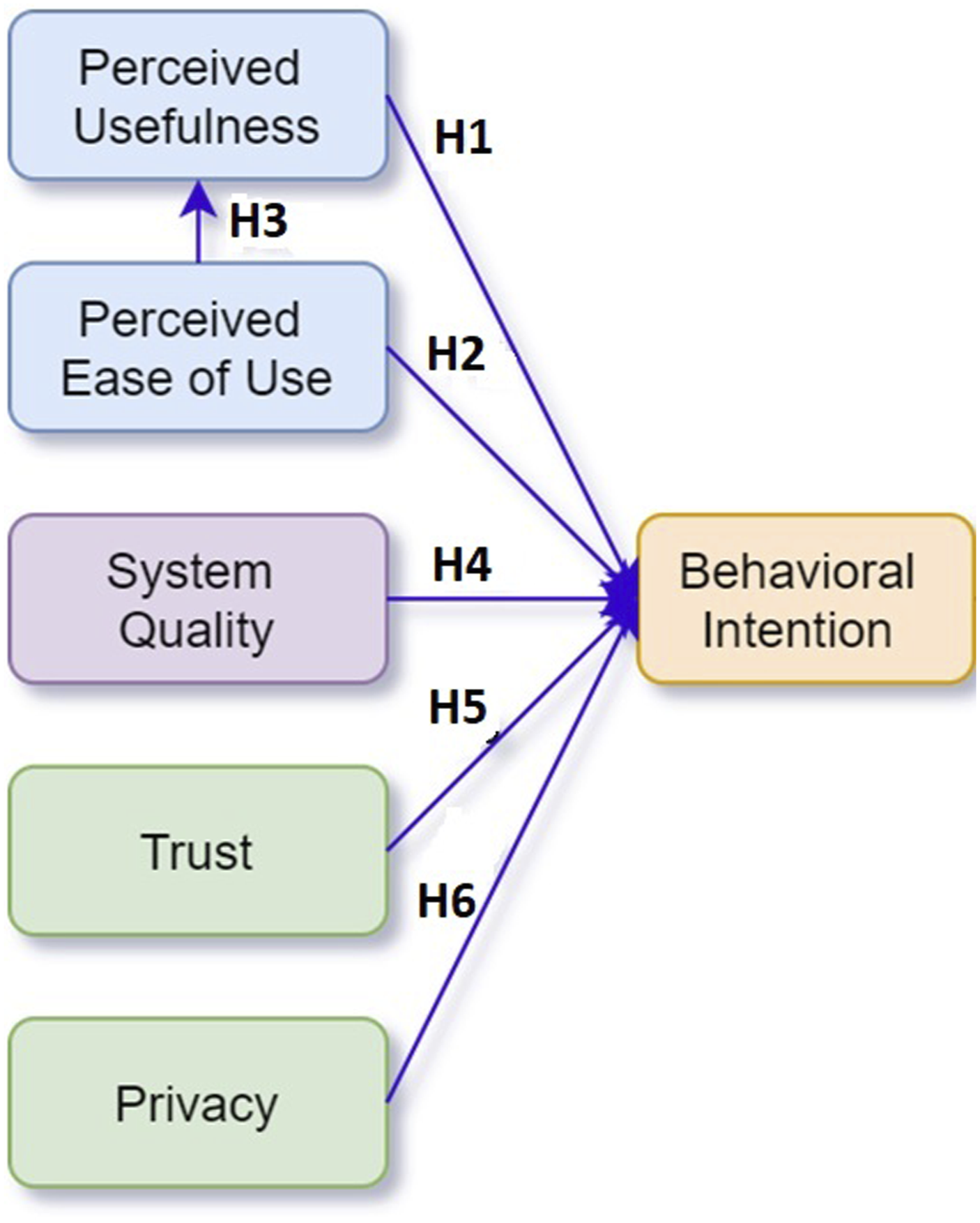
Conceptual model.
Instrument development and data collection
While collecting data, an instrument was formed based on the items adopted from different sources. In addition to the use of the items for measuring the core TAM factors; the PU, PEOU, and Behavioral Intention, the items for measuring Trust, Privacy, and System Quality were adopted from different studies. The core TAM factors were adopted from the study by Davis. 25 The items for Trust and Privacy were adopted from the study by Hoque, Bao, and Sorwar. 24 And, for measuring System Quality, the items were adopted from the study by Goo, Hyoung and Law. 53 In total, the questionnaire was consisted of 20 items, apart from the demographic related questions such as Gender, Age, Academic Qualification, and Experience. The Likert scale of five points was used for the measurement items.
The instrument was reviewed by independent experts to ensure validity of the constructs and relevance of the measurements. The scale was confirmed as it was derived from well-established measurements and only some wording issues were commented to make the items clear and fit with the context of the current study. Further, as the language of the questionnaire was in English (the language of the sources from where the items were adopted), the whole questionnaire was translated to Arabic (the main language of targeted population) to ensure the highest reliability and validity. After questionnaire development, a pilot study was followed to improve the content and structure of the questionnaire based on the feedback from 15 participants. Reliability test showed that Cronbach’s Alpha values were satisfied with more than 0.7. Furthermore, clarification was required on some items in Arabic version, thus the wording was improved to make the questions easy to understand. To test our theoretical model and hypothesis, a survey of citizens and residents in Jeddah, Saudi Arabia was conducted. Mainly, universities’ communities where Internet penetration is high, and respondents have good information about the available eHealth services were targeted. This indicates that the targeted sampling area is appropriate for data collection. The participants were approached following a random sampling technique which widely applied in information systems research. A face-to-face, personally administered, active recruitment strategy was applied to recruit potential participants to this study. There were 314 respondents participated in the survey. However, because of the presence of missing data in the dataset, the data of six participants were excluded before analysis in the data preparation phase. For data analysis, the PLS method was followed for testing the proposed model using SmartPLS software.
Results
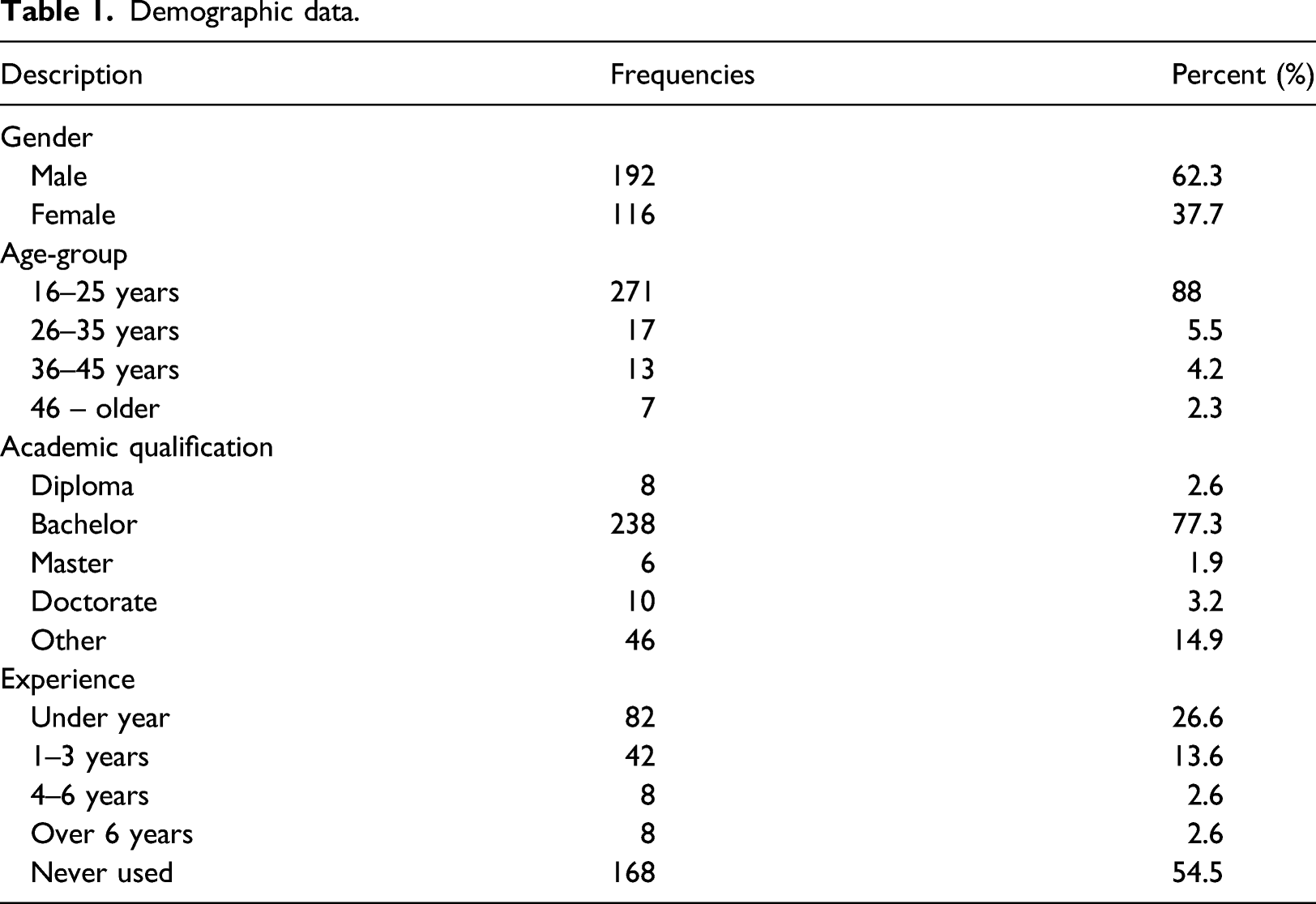
Demographic information
Demographic data.
Measurement model
Reliability and convergent validity measures.
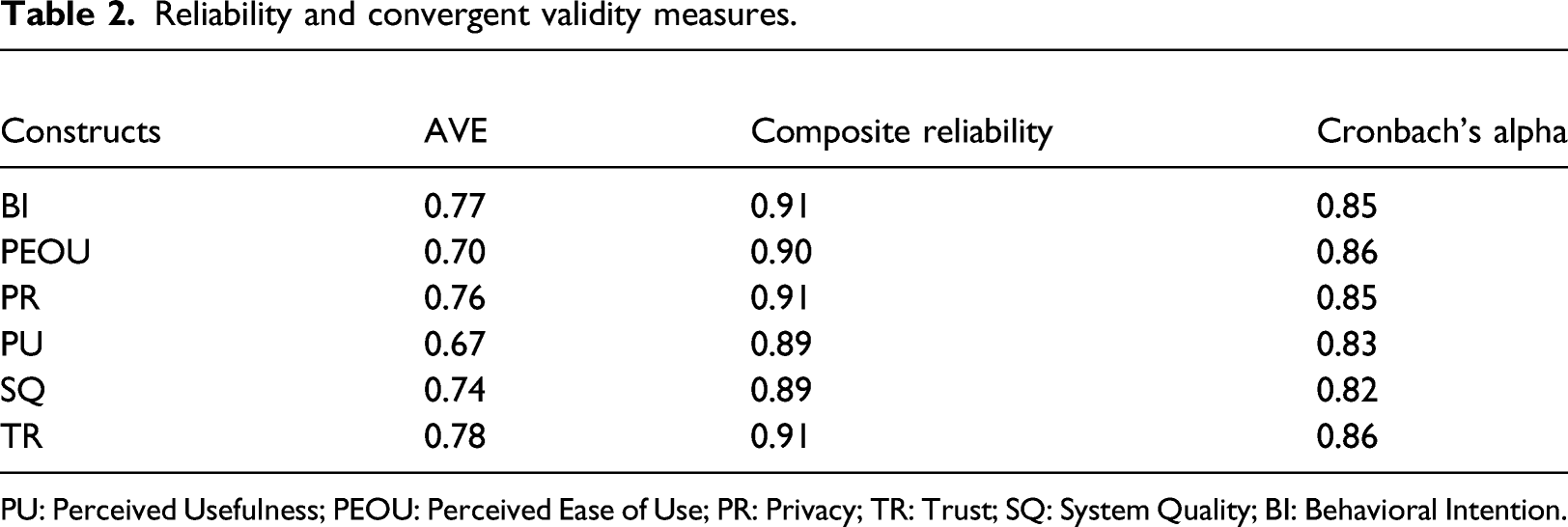
PU: Perceived Usefulness; PEOU: Perceived Ease of Use; PR: Privacy; TR: Trust; SQ: System Quality; BI: Behavioral Intention.
Table 2 shows the AVE values for each construct that are important to test convergent validity of constructs. Convergent validity informs about whether the items used in measuring a construct have a high correlation with each other. For AVE, the convergent validity can be measured by knowing the average percentage of variation shown by all items used to measure a factor. Table 2 shows the AVE values for every construct were above the recommended value of 0.5. 54 On the other hand, the values of the composite reliability for all the respective constructs were close to the value of 0.9 which is more than the recommended value of 0.7. 55 Furthermore, the Cronbach’s Alpha for each construct was above 0.80, which is more than the recommended value of 0.70. 56 Therefore, all the values in Table 2 are indicating high internal consistency.
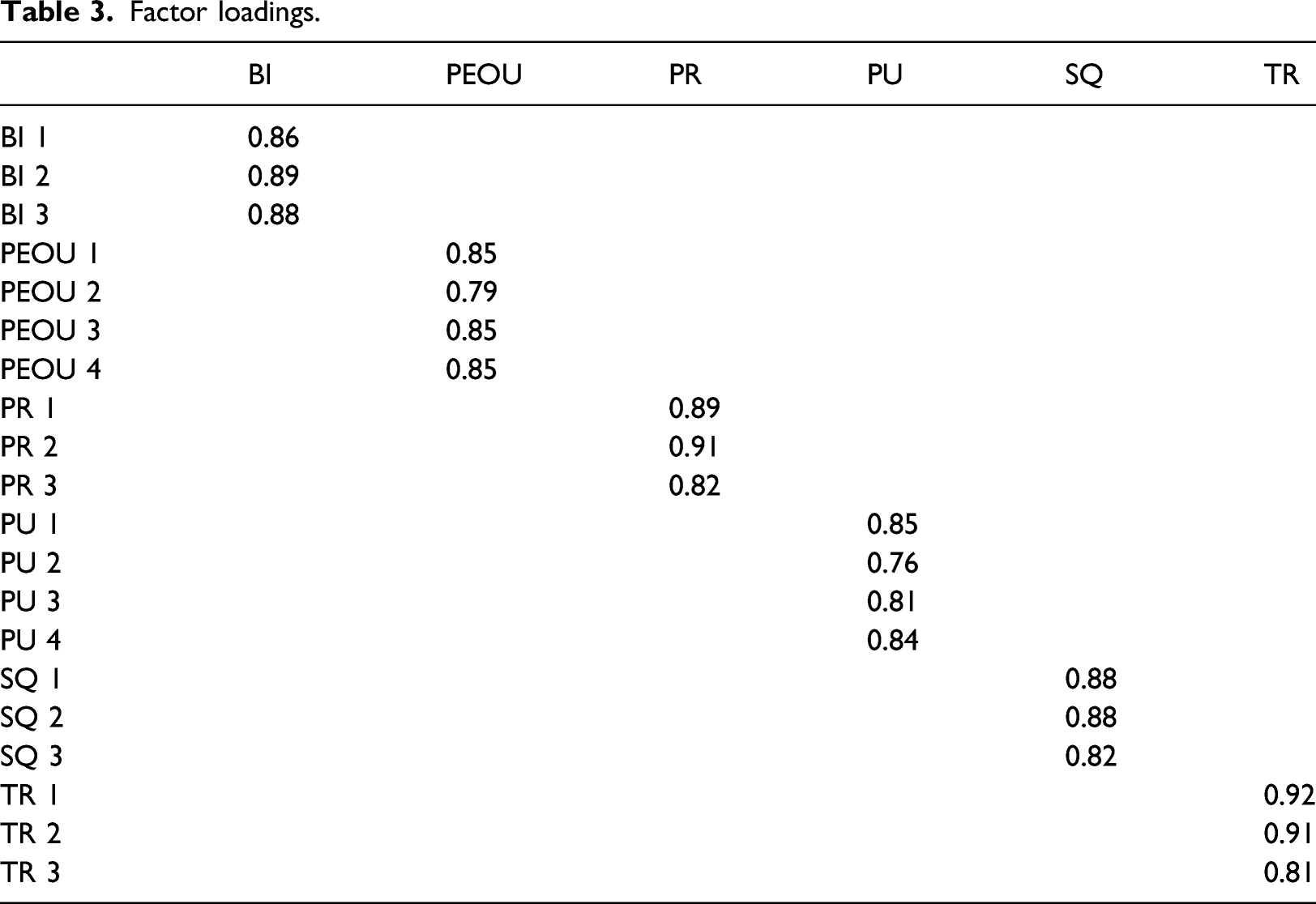
Factor loadings.
Correlation matrix and square root of the average variance extracted.
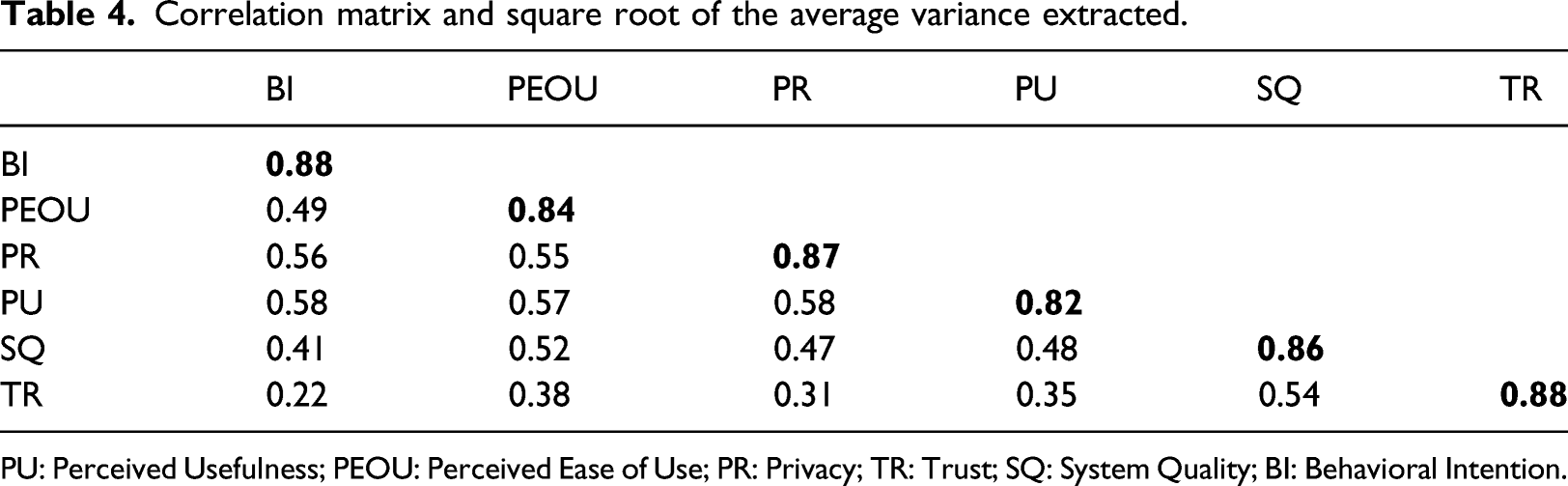
PU: Perceived Usefulness; PEOU: Perceived Ease of Use; PR: Privacy; TR: Trust; SQ: System Quality; BI: Behavioral Intention.
Moreover, we have tested multicollinearity and Standardized Root Mean Square Residual (SRMR). Multicollinearity occurs when two or more independent variables are highly correlated with one another. Variance Inflation Factors (VIFs) score of an independent variable represents how well the variable is explained by other independent variables. If the VIFs results are less than 5, there is no multicollinearity. The VIFs (Appendix A) results are lower than 5 which indicates that multicollinearity is not an issue in this study. Henseler et al. 54 introduce the Standardized Root Mean Square Residual (SRMR) as a goodness of fit measure for PLS-SEM to avoid model misspecification. A value less than 0.10 is considered a good fit. Our model fits the data very well with SRMR = 0.060.
The structural model
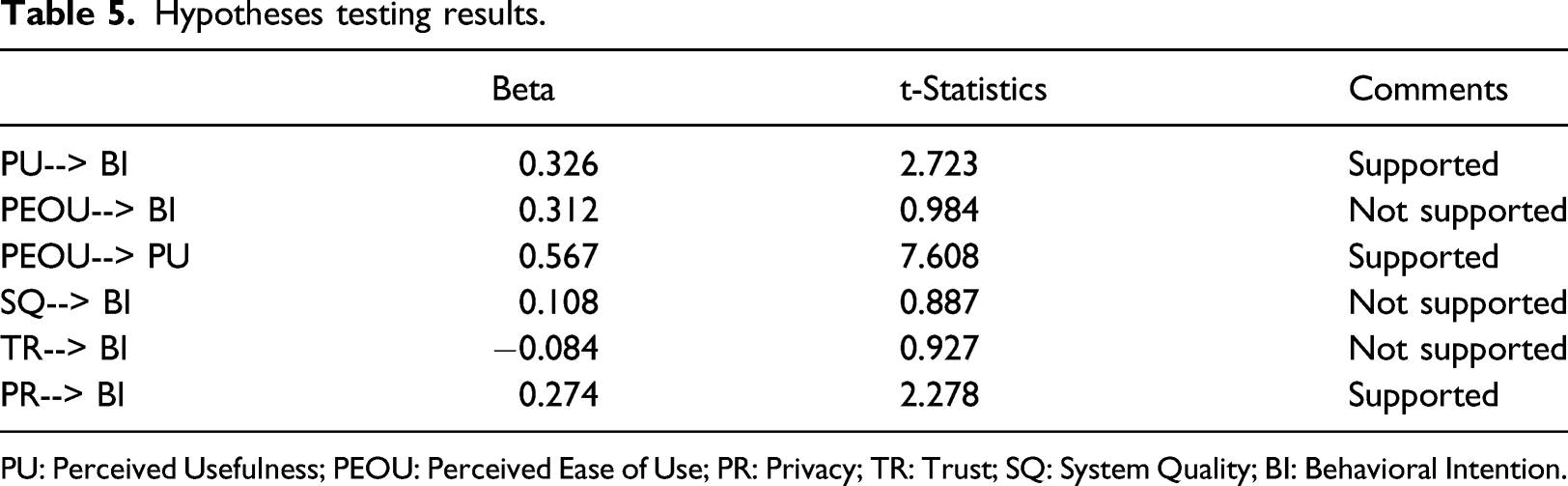
The structural model analysis informs about the hypotheses and variance in dependent variables by measuring goodness of fit of the conceptual research model. Figure 2 depicts the structural path after applying the bootstrap method in SmartPLS, the path coefficient (β) as well as t-statistics calculated as Table 5 demonstrates. The path coefficients and t-statistics for the correlations between PU and Behavioral Intention (t = 2.723, β = 0.326), PEOU and PU (t = 7.608, β = 0.567), and Privacy and Behavioral Intention (t = 2.278, β = 0.274) were significant. Thereby, Structural path. Hypotheses testing results. PU: Perceived Usefulness; PEOU: Perceived Ease of Use; PR: Privacy; TR: Trust; SQ: System Quality; BI: Behavioral Intention.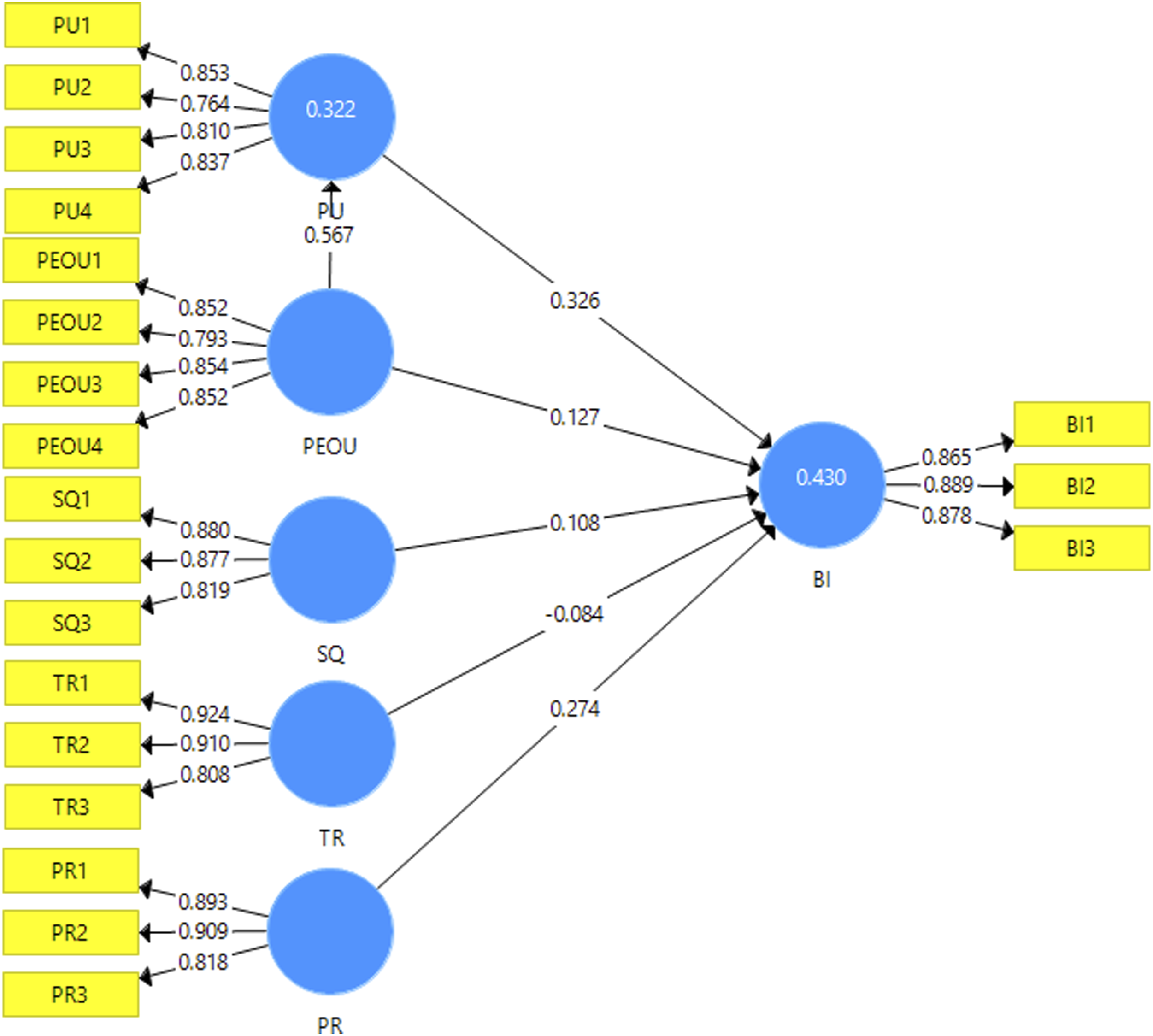
Discussion
The study results show that three out of six hypotheses were supported including the relationship between Perceived Usefulness with Behavioral Intention, Perceived Ease of Use and Perceived Usefulness, and Privacy with Behavioral Intention. Accordingly, the original TAM is supported by revealing that Perceived Usefulness is a significant factor of people Behavioral Intention to adopt eHealth services, which in turn is strongly influenced by Perceived Ease of Use. This indicates that Perceived Ease of Use affects the behavioral intention indirectly through Perceived Usefulness. These findings are confirmed by many TAM-based studies.24,59–64 Therefore, the authors stress that overall, Perceived Ease of Use influences the Perceived Usefulness which significantly affects the Behavioral Intention of citizen in the Saudi Arabia to use eHealth services. Besides, considering Privacy as an external factor to the original TAM, the related hypothesis is supported in this study. This finding is consistent with the results of the study by Wilkowska and Ziefle 65 and Khan, Saleh 66 which confirmed the influence of privacy and security perceptions on e-health systems acceptance. It also confirm the results of a study by Alanazi and Soh 23 which support the influence of privacy concerns when using new healthcare technology based services in Saudi Arabia. This finding reflects that privacy is an important factor of eHealth system acceptance, as people in Saudi Arabia are highly concerned regarding their health data privacy. This strong determining factor should be addressed by healthcare providers by allowing users to be anonymous while generating data.
The study results also show that three out of six hypotheses were not supported. The rejection of the hypothesized positive affect of Perceived Ease of Use on Behavioral Intention to use eHealth services is much unexpected considering the fact that this relationship was confirmed in many TAM-based studies. Such findings might indicate that the users (88% of the participants were aged between 16 and 25 years) are well-accustomed with the use of modern technologies and do not perceive difficulty or barrier in using any eHealth service. Moreover, the findings show that the relationship between Service Quality and Behavioral Intention is not supported which indicates that System Quality is not an important factor of Behavioral Intention in eHealth adoption in Saudi Arabia context. This result conforms the findings of the study by Fathema, Shannon. 48 An explanation of no relationship between System Quality and Behavioral Intention can be, if people believe that eHealth system quality is really high and they have high self-efficacy then they do not care as much about the system quality. This may be applied to the context of this study as the quality of eHealth systems in Saudi Arabia is relatively high7,21 and the 77.3% of the participants have a bachelor’s degree which implies that most participants were highly educated.
Furthermore, the finding indicates that Trust has no strong influence on Behavioral Intention to use eHealth services. Such finding does not conform with the findings of previous studies.19,45,67 According to Matysiewicz and Smyczek 68 introducing of e-healthcare services can be successful if customers have trust in services providers. However, this findings of this study is supported by the study by Khan, Xitong 31 which indicted that there is no relationship between trust and adoption of eHealth. In a survey by Alshammari 7 in 2019 shows that 71% of Saudi citizens do not consider lack of trust as any barrier in the use of eHealth. Such findings of this study may reflect the fact that Saudi users deem trust as insignificant factors and they might share personal health information with doctors.
Implications of the study
For the theoretical implications, this study validated TAM constructs in the context of eHealth adoption in Saudi Arabia. Even if TAM is a widely used in examining of technology adoption, few studies have tested its constructs validity in the context of eHealth in Saudi Arabia. Furthermore, this study extended the base model of TAM by including additional constructs, which are trust, privacy and system quality in the area of eHealth acceptance in Saudi Arabia.
For the practical implications, this study empirical findings provide information for proposing guidelines towards successful implementation of eHealth systems in Saudi Arabia. The results reveal that PU positively influences the Behavioral Intention of public in the Saudi Arabia to use eHealth applications. Therefore, PU of eHealth services is important for their acceptance at large scale. Further, though that PEOU does not affect the Behavior Intention, it affects their perception of eHealth systems Usefulness. Accordingly, user-friendly interfaces can ensure achieving a wider acceptance of these applications. Also, service providers need to maintain the high quality of their eHealth systems.
In addition, the findings demonstrate privacy and the intention of individuals to use eHealth are significantly connected. This is critical as the privacy of personal health information is considered as a personal’s basic right in Saudi Arabia, and thus adequate privacy policies and legislations should be implemented. Although a strong relationship between Privacy and Behavioral Intention towards eHealth is found, this research surprisingly shows that Trust and System Quality have weak effect on public Behavioral Intention to use eHealth systems. Such results bear important implications for policymakers, and suggest that even though users show willingness in sharing their own health information with doctors when using eHealth systems, lack of legislation regarding privacy might create issues.
Limitations and future research direction
As the change in technology in the area of eHealth is very fast, such as the emergence of new innovative eHealth solutions like Artificial Intelligence-enabled disease diagnosis app, the level of perceived usefulness and acceptance by the users might change over the time. Therefore, more studies will be worthwhile considering the raising young and educated population as well as the eHealth market in Saudi Arabia. The largest portion of the participants in this study are young. To avail the maximum benefits of eHealth, future study should consider age, education level, and type of eHealth service as the perceived usefulness and other influencing factors might be significantly different for different levels of users (i.e., young and old population) for various types of eHealth services. Moreover, others adoption models such as UTAUT can be applied to investigate the influencing factors of eHealth adoption. This study is significant for healthcare policymakers in Saudi Arabia as well as for getting direction for future studies.
Conclusion
This study was initiated by understanding the research gap in Saudi Arabia context where the eHealth adoption rate is low despite the potential growth for eHealth market. The authors reasonably used TAM which is one of the most used theoretical frameworks for explaining the factors of technology adoption. Based on previous studies and the study context, the authors extended TAM and effectuate the research accordingly. The proposed conceptual framework can explain about 43% of variation in behavioral intention to use eHealth by citizen in Saudi Arabia.
The rejection of hypotheses about Trust and System Quality might indicate a change in the Saudi users’ overall change in Behavioral Intention. However, low R-squared value might indicate that there are other factors that may affect the eHealth adoption in Saudi Arabia. Therefore, future studies should extend the TAM further to identify the additional factors such as cultural that might influence eHealth adoption in Saudi Arabia. As a whole, the results provide multiple useful insights about the acceptance behavior of eHealth services by the users in Saudi Arabia.
Footnotes
Declaration of conflicting interests
The author(s) declared no potential conflicts of interest with respect to the research, authorship, and/or publication of this article.
Funding
The author(s) received no financial support for the research, authorship, and/or publication of this article.

Variance inflation factors
PU: Perceived Usefulness; PEOU: Perceived Ease of Use; PR: Privacy; TR: Trust; SQ: System Quality; BI: Behavioral Intention.
Variance inflation factors
BI1
2.124
BI2
2.287
BI3
1.924
PEOU1
2.122
PEOU2
1.761
PEOU3
2.274
PEOU4
2.043
PR1
2.223
PR2
2.530
PR3
1.761
PU1
2.087
PU2
1.616
PU3
1.774
PU4
1.823
SQ1
2.115
SQ2
2.113
SQ3
1.593
TR1
2.294
TR2
2.757
TR3
1.968