




Abstract
Keywords
Introduction
The annual incidence of head and neck cancers (HNC) (thyroid, lip, oral cavity, larynx, nasopharynx, oropharynx, hypopharynx and salivary glands) worldwide is more than 1,400,000 with a high burden of morbidity and around 500,000 deaths each year, with more men than women diagnosed with and dying from the disease. 1 Increasing accessibility of the World Wide Web has resulted in patients using it to obtain patient education materials (PEM). Online PEM refers to provision of material catered to the needs of patients who suffer from a disease delivered via the internet. 2
There are numerous benefits of online PEM from the patient perspective. 3 Several studies have demonstrated improved health outcomes in patients who received tailored online PEM.4,5 Provision of the right education materials to patients is associated with well-prepared and knowledgeable health consumers, which could improve health outcomes and improve knowledge about their disease and prognosis.6,7 A patients’ emotional distress can be alleviated by online PEM increasing self-efficacy through controlling their own access to information and reducing anxiety.8,9 Patients are likely to be more proactive in managing their illness if they are well-informed about their illness. 10
Financial and logistical benefits may be derived through online provision of PEM. Having PEM on the web reduces costs in providing information and increases the currency of information. Benefits of online PEM include time and cost-effectiveness, reduced hospitalisations, easier access to educational material and improved social support. 3 It may be cost effective as it reduces patient transport costs, travel time and time spent in a clinical consultation.11,12 When a patient is diagnosed with a new, potentially life-threatening disease, such as HNC, information may not be absorbed at the time of diagnosis and important quality of life issues such as impact of treatment on swallowing ability may need to revisited.9,13 Thus, there is a role for healthcare providers to provide online PEM to assist patients in accessing health information at their convenience and when they are more able to process it.
From the clinician perspective, HNC healthcare providers have expressed a need for access to high-quality, current HNC information deliverable via multiple formats including internet-based platforms. They noted particular need for information about the psychological effects of treatment. 14 Producing tailored online HNC PEM is a challenge, as lower levels of health and computer literacy impact patient engagement. There are also challenges with patient preference for traditional written formats, as well as complex user interfaces, navigation and technical designs common across web-based resources.
The definition of usability by the International Organization for Standardization (ISO) is the extent to which users can achieve desired tasks with effectiveness (completeness and accuracy of the task), efficiency (time per task) and satisfaction (user feedback) within a website. 15 Usability testing of PEM allows designers to evaluate how patients interact with information and navigate through the website. Usability testing commonly involves two key approaches: Cognitive Walkthrough and Think-Aloud Analysis. 16 Cognitive Walkthrough refers to a technique requiring participants to complete tasks from a user perspective. Think-Aloud Analysis requires participants verbally expressing their thoughts as they are performing a set of specified tasks, that is, ‘thinking aloud’. This allows insight into the participants’ cognitive processes enabling observers to track how users perceive and use a website.
We developed and implemented the Comprehensive Head and Neck Cancer Patient Education and Support Needs (CHANCES) programme. The core feature of this program is a comprehensive patient education website for HNC patients, Head and Neck Cancer Australia website (http://www.headandneckcancer.org.au). This website is free to access and was determined to be the most effective method of implementing the PEM across patient groups, healthcare institutions, states and nations. The aim of this study was to assess patient usability of the Head and Neck Cancer Australia website.
Methods
We used an exploratory, usability testing design incorporating Cognitive Walkthrough and Think-Aloud Analysis methods. Ethical approval was obtained from Sydney Local Health District Research Ethics Committee – RPAH zone (Protocol No X16-0486 & HREC/16/RPAH/696).
Participants
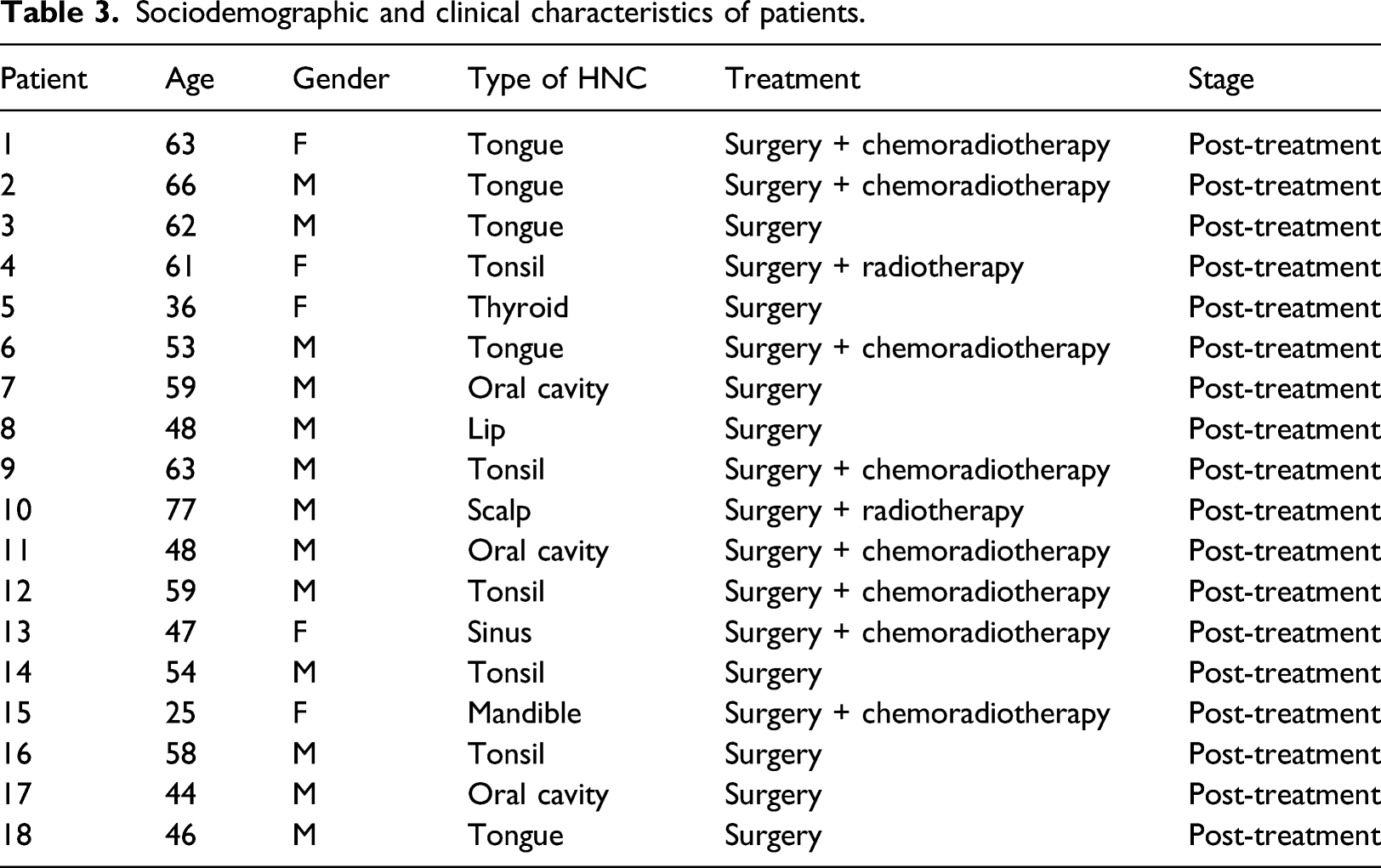
Participants were recruited between November 2018 and March 2019 at HNC outpatient clinics at a Chris O'Brien Lifehouse. Consecutively selected HNC patients attending the clinic were approached to take part. Participants had to meet the following eligibility criteria: age older than 18 years, post-HNC treatment and able to speak English sufficiently well to complete the study without the aid of an interpreter. Cognitive impairment was an exclusion criterion. Participants provided written consent.
Data collection
Patient age, sex, type of HNC and treatment received were recorded on the demographic form. Prior to user testing, the researcher (JJ) provided patients’ with instructions to access the website and usability testing procedures (including explaining the Think-Aloud method). The Head and Neck Cancer Australia website was loaded onto a laptop computer at the homepage (Figure 1). Participants were assigned nine tasks to complete and reminded they could stop the tasks at any point if they were tired. The tasks participants completed and the features tested are listed in Table 1. The Beyond Five website home page. Renamed Head & Neck Cancer Australia. Available from: http://headandneckcancer.org.au [Accessed September 2021]. Think-Aloud website features, content assessed, tasks and participant feedback.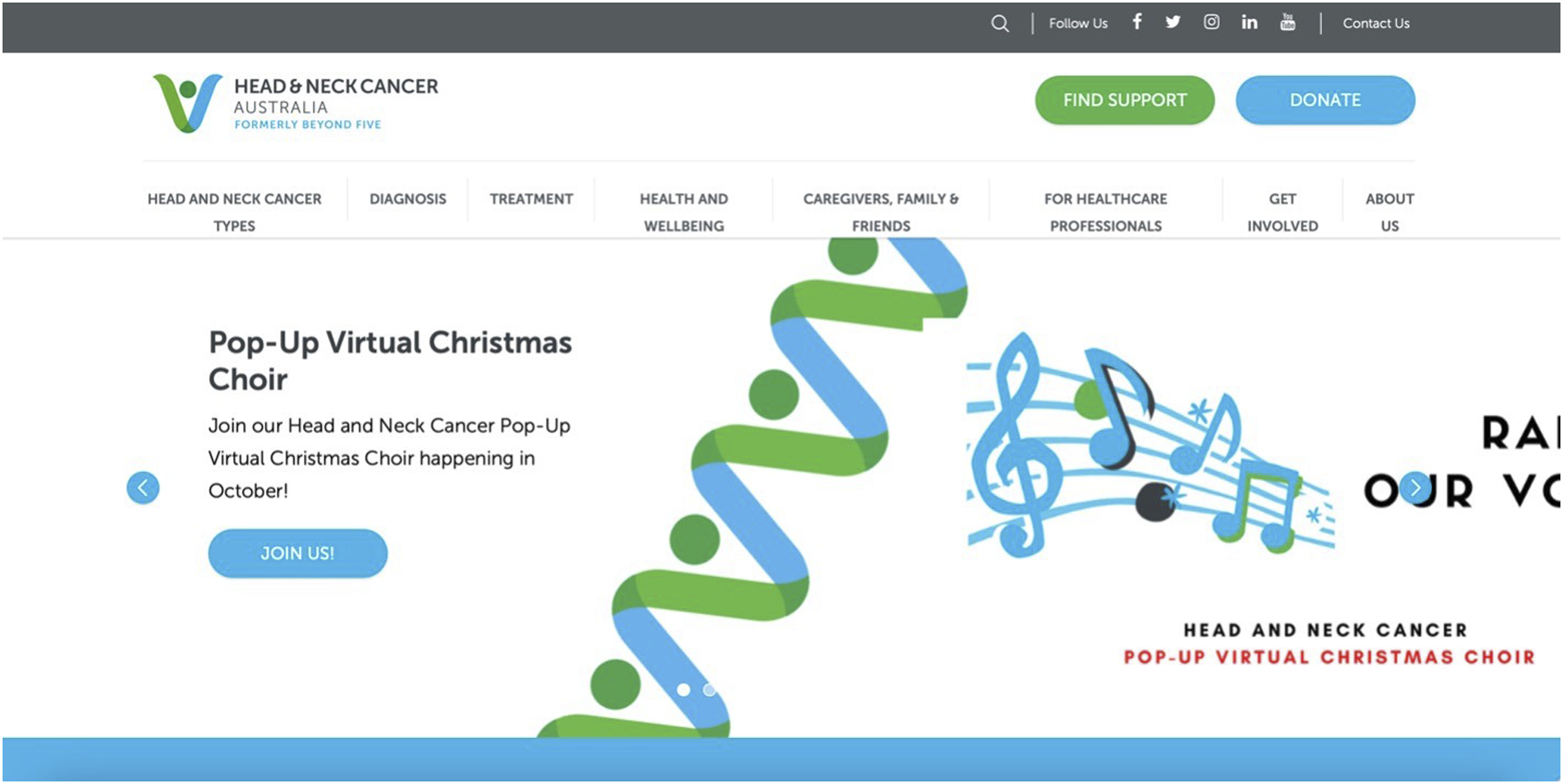
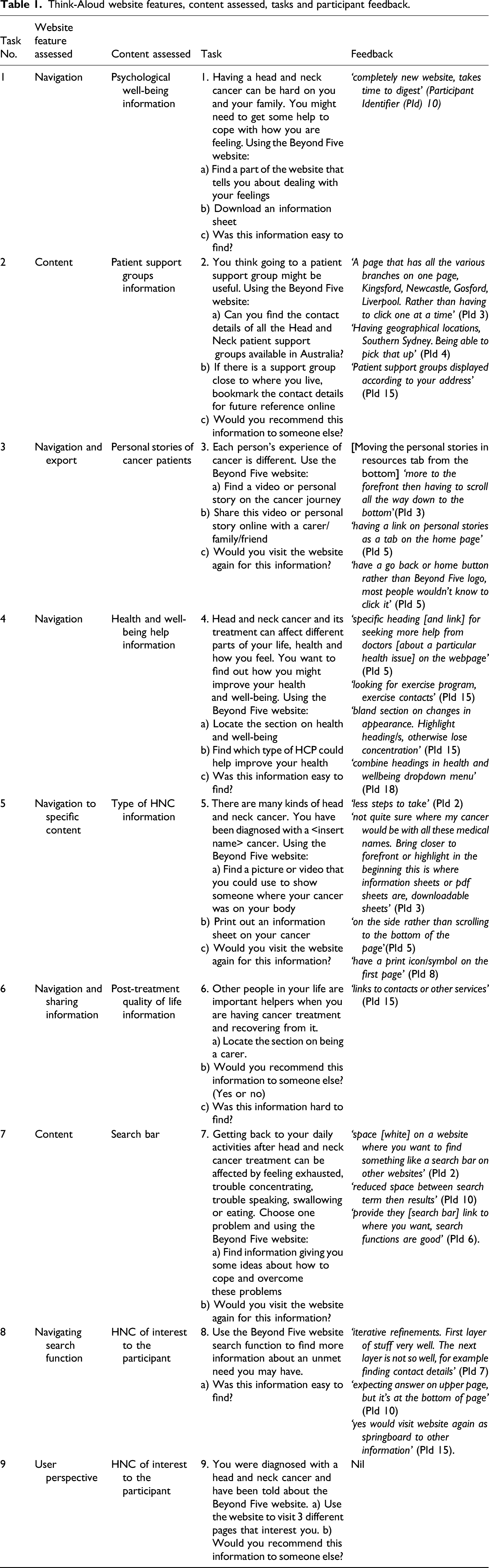
During the task analysis of the programme, participants were instructed to think aloud while they were being recorded using software, Free Cam 8 (https://www.freescreenrecording.com/). The software recorded the screen activity and vocalisations of participants. Once verbalising of thoughts ceased, they were prompted by the researcher to answer the following questions: ‘What do you think about this Web page?’; and, ‘How can we improve this feature(s)?’. Whilst the participants were undertaking the task, a researcher observed their performance.
Data analysis
Expert rating of difficulty for each task.
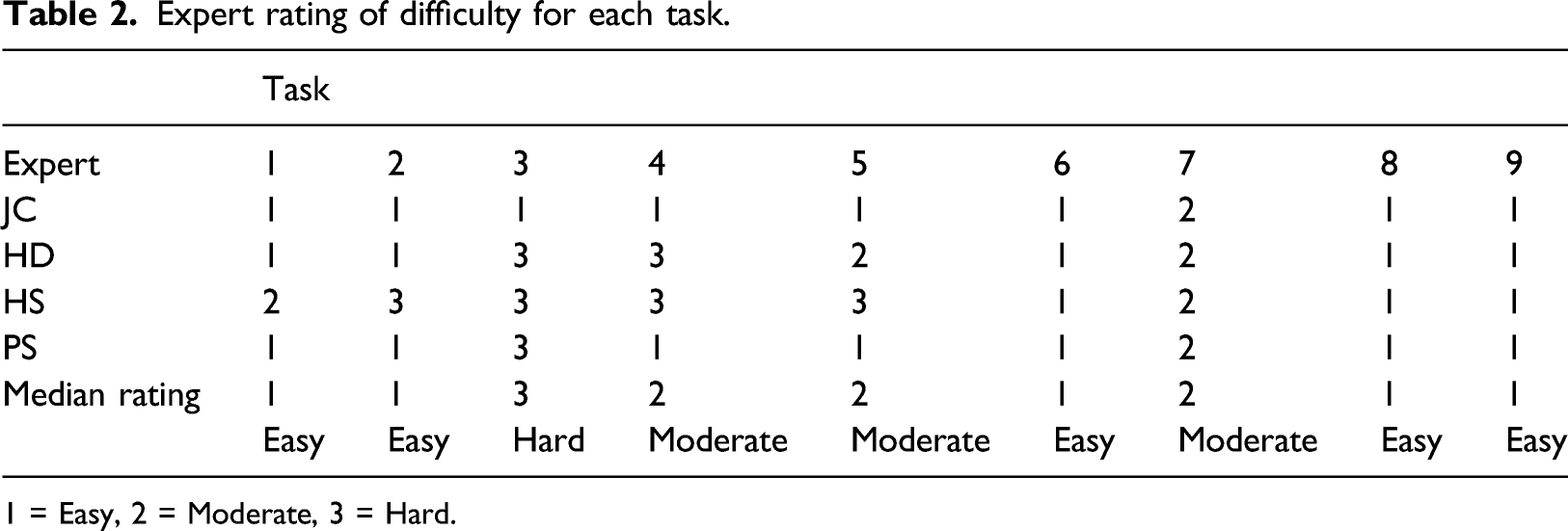
1 = Easy, 2 = Moderate, 3 = Hard.
Results
Sociodemographic characteristics
Sociodemographic and clinical characteristics of patients.
Think aloud task results
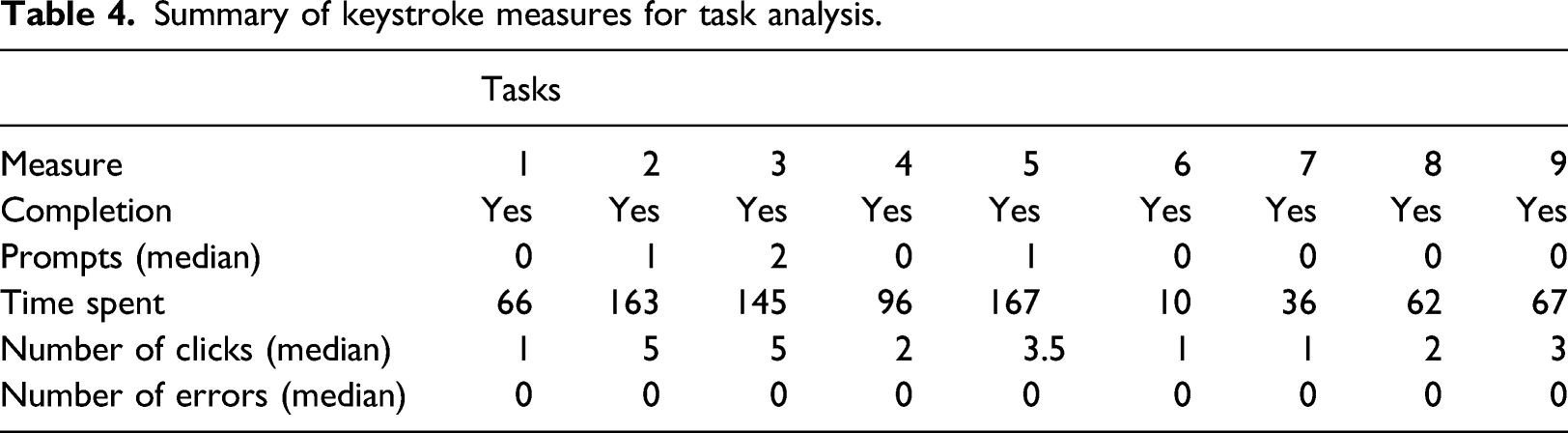
All participants were able to complete all of the nine assigned tasks, and the number of prompts required was low but varied between zero and five. Examples of prompts included ‘Please scroll back to the top of the page to find menu bar and make a selection’ or ‘Click the Head and Neck Cancer Australia Logo on the top left of the screen to return to home page’ to re-orientate before continuing task. Details of each task and each metric are summarised in Figure 2 and Table 4. Mean time spent on each task. Summary of keystroke measures for task analysis.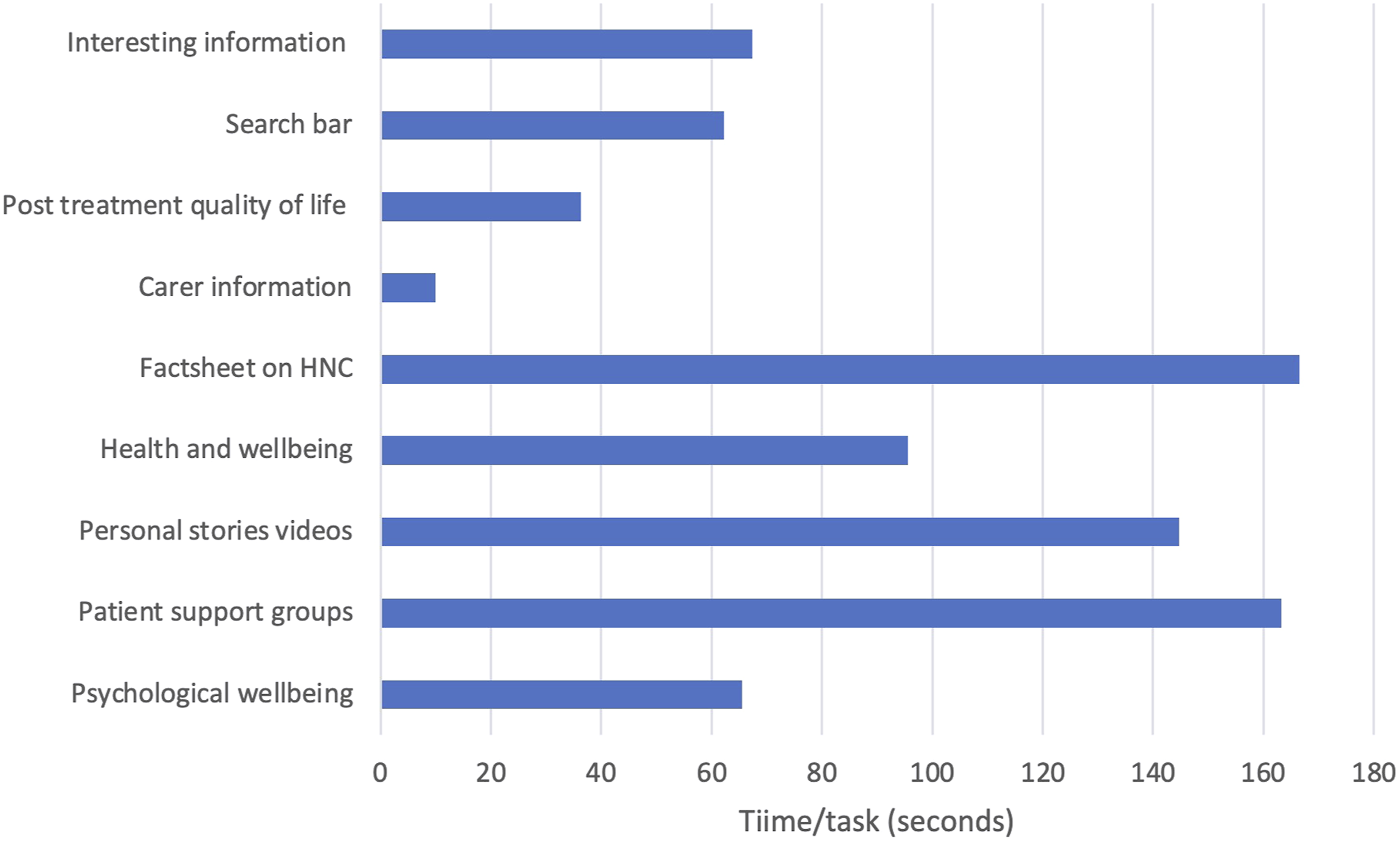
The tasks rated easiest by all participants were the following: finding information on health and well-being, finding three web pages that interested them and finding information on being a carer (Figure 3). The two hardest tasks were using the search bar and accessing videos of personal stories. In some tasks, participants did not rate the difficulty due to choice and thus the total may not be n = 18. In comparison, the experts (radiation oncologists, surgeon and academic researcher) rated the same previous tasks as easy and moderate including finding information about patient support groups (Table 2). All feedback from participants is presented in Table 1. Participant rating of difficulty for each task.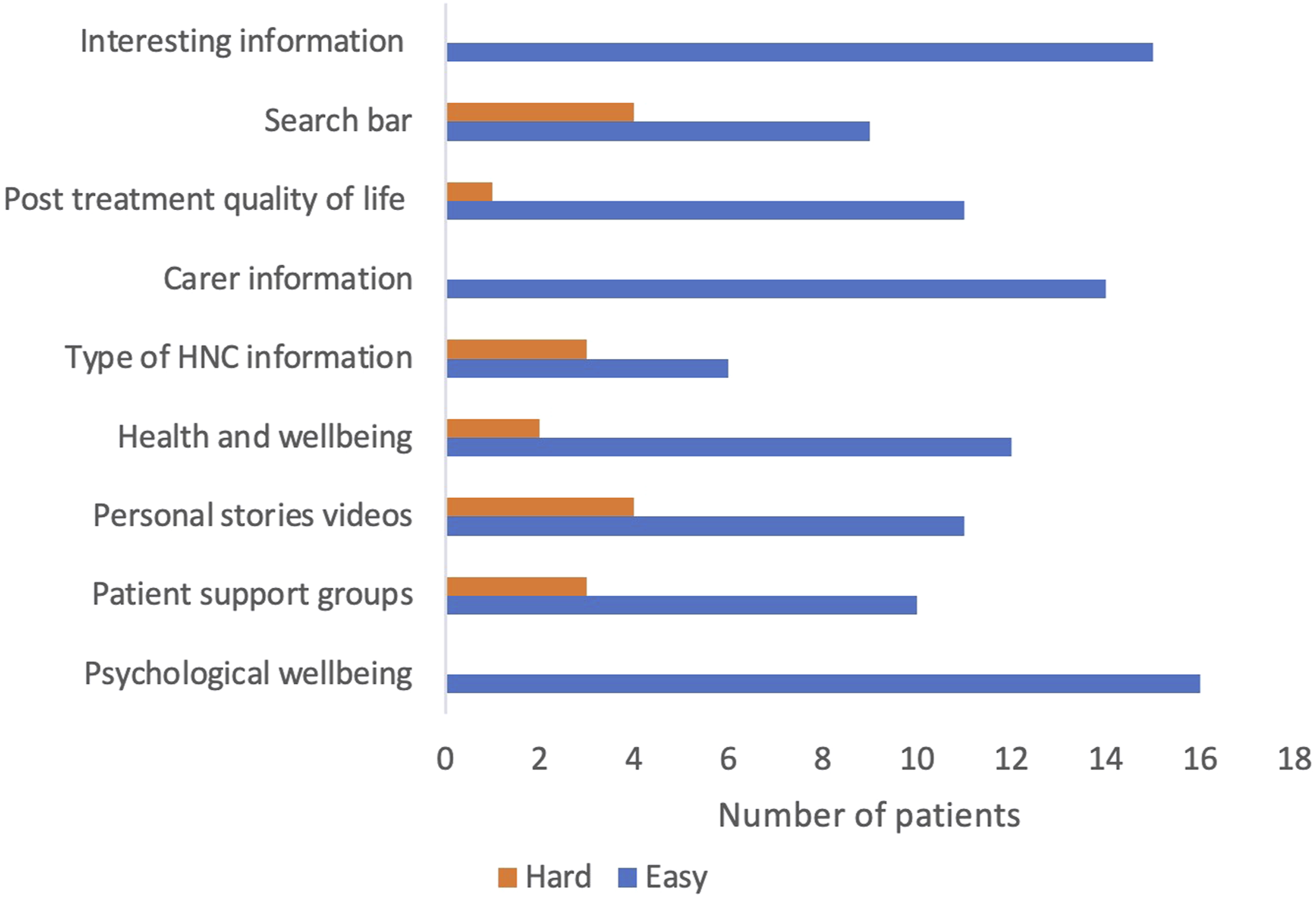
Task 1 – Psychological well-being information
All participants rated this task as easy (n = 18). Feedback from participants indicated the need for additional information about other healthcare professionals (HCPs) and the time they required to process new information (Table 1).
Task 2 – Patient support groups information
Participant ratings for this task varied with 10 (77%) indicating it was easy and hard for three (23%). Finding the closest geographical patient support group was difficult on the website due to the layout and appearance of large local health districts rather than individual suburbs (Table 1).
Task 3 – Personal stories of cancer patients
The task was rated as easy by 11 (73%) and hard by four (27%). Navigating to access the personal stories videos was complex with few visible shortcuts on the top of the webpage to guide patients to the multimedia resources (Table 1).
Task 4 – Health and well-being help information
The participants rated this task as easy in 12 (86%) and hard in two (14%). The appearance of headings needed to be clearer to help them navigate to and obtain contact details for further support from a relevant HCP. Currently, there is a long dropdown tab with multiple health and well-being topics without specific contact details for support located nearby (Table 1).
Task 5 – Type of HNC information
The participant rating for this task was easy in six (67%) participants and hard in three (33%). Finding a specific fact sheet on a particular type of HNC was challenging with participants not always knowing the scientific name, for example, throat cancer patients would not recognise this as oropharyngeal carcinoma. Moreover, the layout and navigation to download an exportable fact sheet were complex involving multiple steps and having to scroll to the end of the webpage. Suggestions included cutting the number of clicks and having a symbol/icon of a printer or portable document file (PDF) on the top of the screen rather than the bottom (Table 1).
Task 6 – Carer information
The participant rating for this task was easy for all patients. All patients would recommend this information to a carer.
Task 7 – Post-treatment quality of life information
The participant rating for this task was easy in 11 participants (92%) and hard in one (8%). Participants suggested access to local contacts if they required support with a particular quality of life issue (Table 1).
Task 8 – Search bar
The participant rating for this task was easy in nine participants (69%) and hard in four (31%). Two terms were searched more than once: recurrence (searched three times) and tiredness (searched two times). The remaining terms were ‘swallowing’, ‘financial’, ‘throat cancer’, ‘secondary cancers’, ‘pain in neck’, ‘sleep’, ‘speech’, ‘tonsil cancer’ and ‘osteosarcoma’. The search bar was not obvious and required patients to search for the magnifying glass symbol before entering a term. Moreover, once the search bar was used, search results were not specific to the search term and the majority of the participants did not find their search query:
Task 9 – Interest HNC information
All patients found this task easy. Refinements were suggested on the website to ensure information appears easily and is layered in a succinct manner to allow navigation to the required destination. Shortcuts on the top of the webpage may assist navigation to reach specific content.
Discussion
This study evaluated the usability of the Head and Neck Cancer Australia website (www.beyondfive.org.au), a website designed for patients and HCPs information needs and support. In brief, the participants in this study were able to complete all the tasks assigned with a differing degree of difficulty, although most reported the tasks were easy to complete. They provided insightful comments and suggestions regarding potential refinements to the website to improve navigation and usability. It is important to test HNC websites with end users to make improvements.
Completion of cognitive walkthroughs requires participants to rapidly develop familiarity with material under investigation. 17 In our study, the majority of patients completed the task with minimal prompts and, while completion times varied, most did so relatively quickly. The more users of a website access it, the more familiar they become with it, increasing their knowledge of the navigation and increasing their efficiency over time.18,19 The most common usability issues in our study were navigation, design and learnability which are consistent with the literature.20,21
Navigation is important to manoeuvre through multifaceted information on a website with accessing support groups and psychological well-being an easy task for participants. Although, locating further information content such as contact details was challenging. Navigation was challenging in the Head and Neck Cancer Australia website. Some elements of navigation were easy such as the clear menu options and link recognition to effectively complete a task. The challenges could be explained by lack of orientation, as after clicking several links participants may not have recognise where they were on the website, for example, trying to find a personal story video and ending up in the health and well-being section. Moreover, there needs to be a clear ‘home’ icon or ‘back’ button to take patients back to the previous page if they get lost within the site. Support groups offer patients the opportunity to be empowered through connection with others who have had similar experiences and sharing their stories and coping strategies to help improving their outcomes and maintaining an engagement in treatment and recovery.22,23 In the Head and Neck Cancer Australia website, the navigation to patient support groups or HNC services was highlighted with a ‘Find support’ button on the top right hand corner of the page. While participants could locate the support access point, they were unsure about the geographically closest patient support group due to poor presentation of the geographical locations, this information was provided as a list rather than an interactive map. Having contact details accessible on an interactive map or presented via regions or suburbs may alleviate the confusion and increase accessibility and efficiency of the task. 15
Design of a website allows for easy visibility and recognition of multiple media resources. Videos are important learning tools and assist patients in understanding and processing information. 24 However, in our website, the ‘Personal Story’ video task required the most prompting and clicks for participants to access the correct video. The increased prompts and clicking may be due to the architecture and technical design of the website. 3 To effectively engage users, a simplistic design and obvious navigation require fewer clicks and greater visibility via buttons or obvious links to the ‘Personal Stories’ section. One suggestion of moving the ‘resources’ tab to the top of the page, above the major headings may make it more visible and thus increase accessibility. 15
The efficiency per task (learnability) was variable with no improvement in subsequent tasks once participants became familiar with the website. This variability in our website over time could be due to 8 heading on the menu bar and multiple options on the drop down menu, for example, Health and Well-being has 16 options in the dropdown menu. However, ensuring simplicity of the Head and Neck Cancer Australia website may compensate for the variable efficiency through the inclusion of simple subject headings, transparency of information, uncluttered layout, consistency of design throughout and removing redundant features. 15
The academic experts rated the majority of tasks easy or moderate when compared to the patient ratings. Navigation to personal story videos was rated as hard both by patients and experts. This may suggest the need to alter the website user interface by having aids for navigation (visible links at the top of page), simple and easily identifiable search bar and specific search results to the query and easy access to pages (multiple pathways with limited number of clicking and backtracking). 15 Increasing patient involvement in their healthcare can increase the efficiency of communication between them and HCP. 25 Having an academic expert or HCP introduces or orients the patient to a website may assist in learnability (ability to easily learn how to use a website) and efficiency in obtaining information.2,26
To increase the use of a PEM Web website, it must be perceived as usable and credible by the target group, people diagnosed with HNC as well as information providers who include general practitioners as well as specialists and allied health professionals.27,28 Training the trainer workshops are recommended to familiarise healthcare professionals to important aspects of website usability and content so they may educate patients during their clinical interaction. Modifications that may contribute to making a website usable include the following: 1. Simple design and layout; 2. feedback from website to assist patients in completing a task such as ‘please enter your suburb to obtain the closest support group’; (3) consistent format on each page, for example, having an icon for a PDF or print symbol at the top of each page; (4) instructions on how to navigate to a destination such as ‘click here to get factsheets on my cancer’; (5) navigation with clear menus and links, (6) terminology familiar to patients, for example, tonsil cancer rather than oropharyngeal cancer; and, (7) learnability making it easy to learn about the website, for example, a video orientation to the website. 27
The main limitations of this study were potential selection bias with the consenting patients’ likely having a bias towards being high information seekers and users, prior information provided to patients potentially contributing to topic search bias and being post-treatment skewing information towards survivorship compared to treatment. However, as few as five people are needed to achieve a representative sample of end users using the cognitive walkthrough approach. 29 The perspective of culturally and linguistically diverse people who make up a proportion of the Australian population was excluded from the study as the website is only available in English. Moreover, there was no orientation to the website prior to usability testing which may have affected keystroke measures on each task. Some participants may be uncomfortable sharing their opinions whilst being prompted and recorded, although Think-Aloud has been shown to be a robust method in other studies.30,31
Future research repeating the current study could assess the pre-and post-participant user experience with education level as covariate. Regardless, incorporating user testing of enhancements to the website architecture, design and content should be a routine part of the website maintenance. A randomised controlled trial evaluating the effect of the Head and Neck Cancer Australia website (once revised) on more clinically relevant outcomes such as adherence with medical advice, severity of side effects and swallowing ability would provide definitive evidence of the value of this approach to patient support. Accessibility may be further enhanced through training of HCP in use of the website and how best to introduce and orient their patients to the website.
Conclusion
The Head and Neck Cancer Australia website is accessible to patients, carers and HCPs for multi-media HNC information on a range of relevant topics including cancer information, health and well-being and support groups. Support and information obtained via the website can be maximised if people are orientated to it by the HCP during the face-to-face consultation. Iterative refinements are needed to improve the website appearance and navigation. Future studies are needed to ensure continuous quality improvement for all aspects of the site.
Footnotes
Declaration of conflicting interests
The author(s) declared no potential conflicts of interest with respect to the research, authorship, and/or publication of this article.
Funding
The author(s) received no financial support for the research, authorship, and/or publication of this article.
