




Abstract
This study evaluated the behavior of Internet users from seven countries through the analysis of the monthly variation of the Relative Search Volume (RSV) for queries related to early childhood caries (ECC), retrieved by Google Trends application programming interface between January 2004 to December 2020. The association of RSV with years lived with disability (YLDs) for untreated dental caries in deciduous teeth and Internet penetration were tested by regression models. Forecasting models were developed to predict the interests until December 2021. Relevant topics linked to searches were assessed qualitatively. Increasing levels of interests were observed in most countries, regarding the comparison of periods 2004–2012 and 2013–2021, without influence of seasonality. These results were associated with YLDs only in France and with the Internet penetration in Mexico and France. Searches were mostly related to the definition, risk factors, and preventive care of ECC. The interests of Internet users in ECC-related information increased in the last years in all seven countries, although it was maintained low over time. It might indicate a lack of awareness about the negative consequences of the disease in the early stages of life. Specific policies should be developed toward the dissemination of oral health information and the prevention of the disease.
Introduction
Early childhood caries (ECC) is defined as a biofilm‐mediated, sugar‐driven, multifactorial dynamic disease that results in the phasic demineralization and remineralization of dental hard tissues of primary teeth of a child under 6 years old. 1 It affects 532 million infants, being 48.1% of cases concentrated in low-middle-income countries, portraying a challenging scenario for the public healthcare system worldwide. 2
Since the perception of risk of a disease is a significant determinant of health information seeking behavior, hypothetically, the burden caused by ECC could motivate parents and caregivers to engage into online searches, especially considering the context of the almost ubiquitous availability of digital sources in daily lives. 3 Indeed, it has been reported that nine out of 10 parents or caregivers are interested in health information regarding their children’s conditions, employing Google Search as the first choice for their consultations. 4 Although this outcome indicates a positive trend of the development of a sense of independence toward self-care and health experiences, the low level of quality of information 5 and common difficulties of laypeople in retrieving, analyzing, and using digital contents could not have a beneficial effect for aiding parents or caregivers in improving children’s health status.6,7 Actually, it could have significant negative repercussions on the ability of people in making adequate treatment choices, affecting their confidence during clinical conversation and their relationship with professionals. 4
According to the American Academy of Pediatric Dentistry, research focused on the use of digital technology for monitoring people’s health behaviors is fundamental to the better understanding of community needs, contributing to the reduction of oral health disparities observed in distinct populations.8,9 Recently, the analysis of Big Data related to the activity of Internet users have already been proved to be suitable for elucidating oral health experiences and specific interests of populations.10–13
In this sense, the present study aimed to assess the levels of interest of Google user’s regarding ECC-related information in different countries, regarding possible associations with the burden of the disease and the Internet penetration.
Methods
This report followed the STrengthening the Reporting of OBservational Studies in Epidemiology checklist for cross-sectional studies. 14
Study design
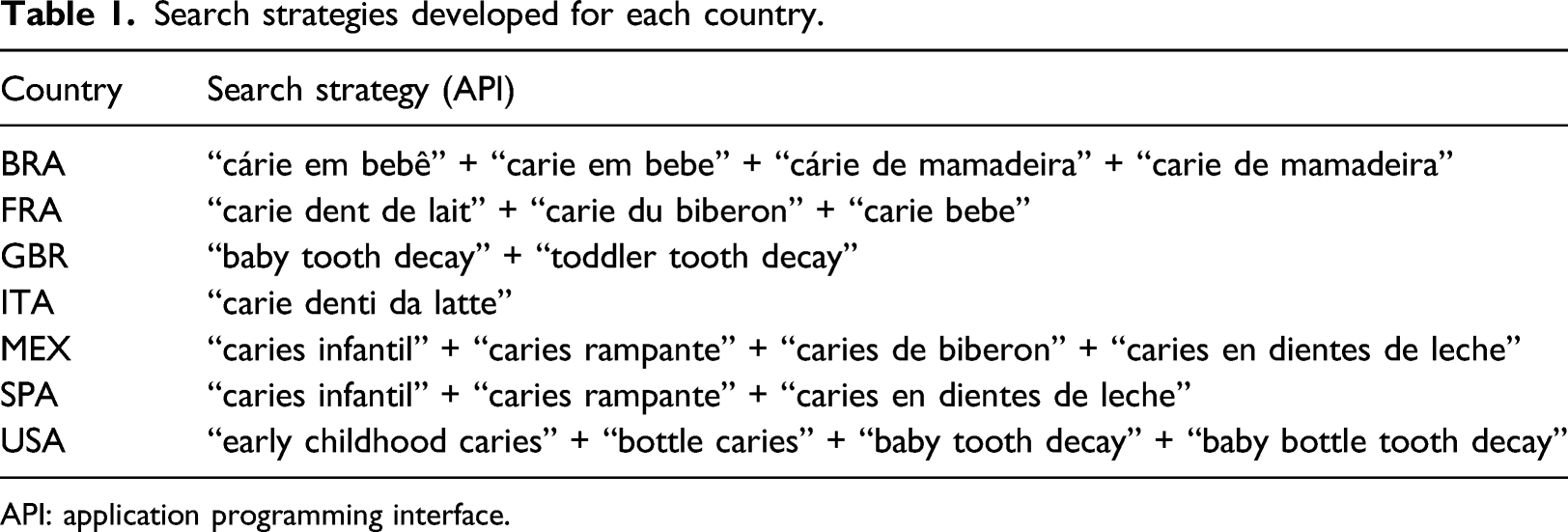
A cross-sectional study was designed to analyze metadata derived from ECC-related searches performed by Google users from seven countries between January 2004 and December 2020. The monthly variation of Relative Search Volume (RSV) for queries linked to ECC was collected using Google Trends application programming interface (API), from search strategies developed by the combination of specific terms in the native language of each country. To elucidate a possible influence of the burden of the disease and the availability of the Internet on the health information seeking behavior, years lived with disability (YLDs) for untreated dental caries in deciduous teeth in children under 5 years old and Internet penetration were collected for each country over time. Data analysis was conducted to assess (a) search volume trends; (b) seasonality; (c) the association between RSV, YLDs, and Internet penetration; (d) forecasting models; and (e) the main Google users’ interests in ECC.
Ethics
Since federal regulations consider that research using publicly available data does not involve human subjects, this study did not require institutional review board approval from the Council of Ethics in Human Research of the Bauru School of Dentistry, University of Sao Paulo.
Search volume trends and data collection
Google Trends is a free online tool that calculates the weekly or monthly variation of the RSV values for queries performed in Google Search. These values are normalized, scaled from 0 to 100, with RSV = 100 representing the maximum volume rate in relation to total searches performed in a specific time range and location. In this study, we collected the metadata through the Google Trends API, using the Google Colaboratory (Colab) notebook (https://colab.research.google.com/platform). The API was programmed in Python 3, applying the PyTrends and Pandas libraries.
Search strategies developed for each country.
API: application programming interface.
Years lived with disability
The Global Burden Disease (GBD) study analyzed the burden estimates of 291 diseases and injuries including untreated caries in deciduous teeth. The metric used for analysis is disability-adjusted life years (DALYs) that represents the sum of estimates of years of life lost due to premature mortality and YLDs. Nevertheless, as untreated caries would rarely lead to direct death, one DALY is represented by YLDs for all oral conditions. 2 The variation of YLDs for untreated caries in deciduous teeth of children under 5 years old between 2004 and 2019 was retrieved from the Institute for Health Metrics and Evaluation (http://vizhub.healthdata.org/gbd-compare/) database, regarding both genders and selected countries.
Internet penetration
The percentage of people with access to Internet of each country was obtained in The World Bank database (https://data.worldbank.org/indicator/IT.NET.USER.ZS) for the available time between 2004 and 2019.
Data analysis
Collected data was analyzed using the Statistical Package for Social Sciences (SPSS v. 25.0; Chicago, IL, USA), considering the following aspects10,11: 1. Forecasting models and search volume trends: 12-month predictive models were developed for RSV values from collected data. The best-fitted models were provided by the Expert Modeler based on the lowest values of normalized Bayesian information criteria (normalized BIC). The trends of time series were heuristically evaluated by the observation of curves of the collected values. Also, the generalized additive model (GAM) was applied to detect significant variations of RSV values between 2004 and 2020. Finally, the activity of Google users in the periods 2004–2012 and 2013–2021 were compared using the Mann–Whitney U test. 2. Association of RSV with YLDs and Internet penetration: the annual means of RSV were calculated between the years 2004 and 2019 (period with available data for the three indicators). Linear regression models were conducted to analyze the association of RSV with YLDs and Internet penetration of different countries. The Durbin–Watson (DW) test was applied to detect the influence of autocorrelation over time. According to significance tables, the critical values of the DW test for one predictor (YLDs or Internet penetration) and a sample size of 16 (2004–2019), DW values <0.844 indicate a significant influence of autocorrelation, values between 0.844 and 1.086 are inconclusive, and values >1.086 indicate no influence of autocorrelation on time series. The Ljung–Box test was used to detect a significant autocorrelation on time series with inconclusive DW values. Linear regressions serially correlated over time were adjusted by Cochrane–Orcutt estimation since all models satisfied the following assumptions: their residuals were found to be a stationary first-order autoregressive structure with the errors being white noise.
15
When no influence of autocorrelation was observed, the association was evaluated by linear regression models. The variable time was used as a confounding factor in all cases. 3. Seasonality: the influence of seasonality on time series was evaluated by the GAM. It consisted in a previous detrending of each long‐term curve by its lag‐1 difference and subsequently the application of two distinct generalized linear models on these differences, to evaluate separately the effect of monthly and quarterly seasonality on time series. 4. Main topics: the most popular ECC-related topics were defined for each country for subsequent qualitative analysis.
For all analyses, p values <.05 were considered significant.
Results
Among all geographic regions available in Google Trends, only seven countries had sufficient volume of data for analysis: Brazil (BRA), France (FRA), United Kingdom (GBR), Italy (ITA), Mexico (MEX), Spain (SPA), and United States (USA).
Forecasting models and search volume trends
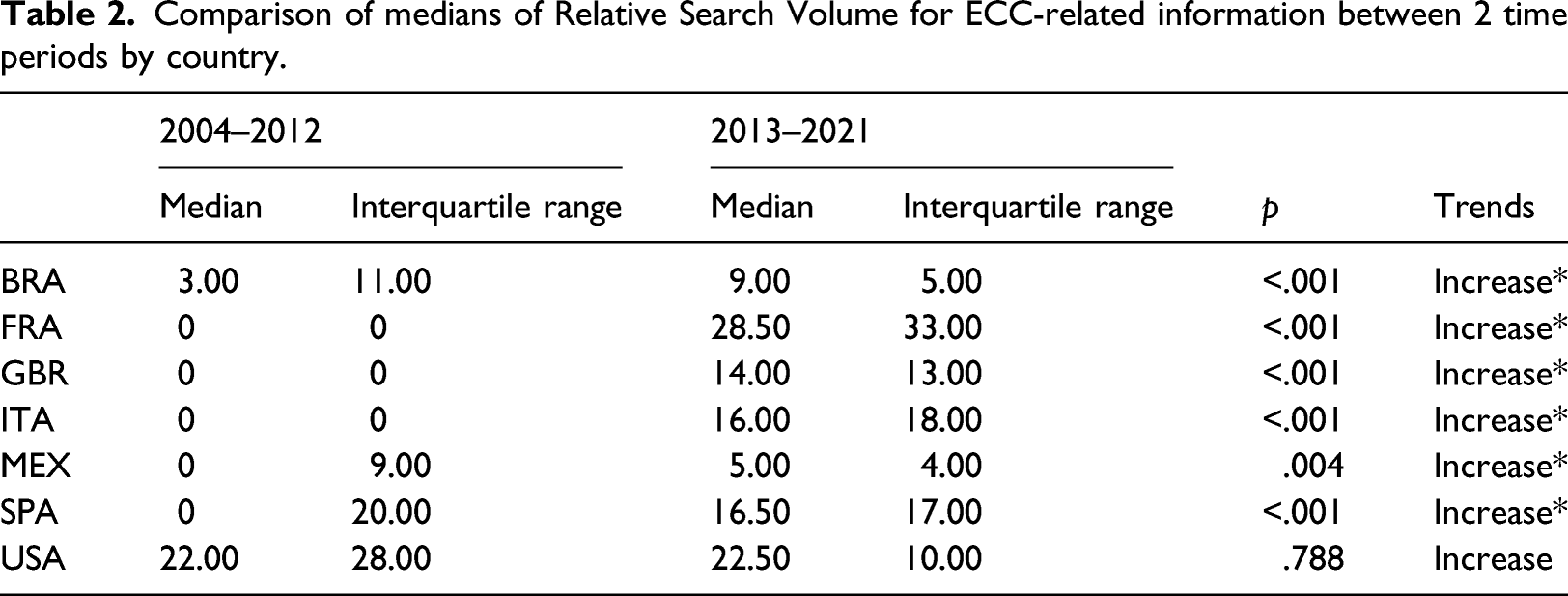
Figure 1 demonstrates the trends of the variation of the interests in ECC-related information for each country over time. In most countries, the heuristic analysis of curves indicates a slightly increasing trend of RSV values, being more evident in FRA and GBR. Nevertheless, GAM analysis confirmed this trend only in FRA by the observation of a significant increase of RSV between 2004 and 2020. The fit statistics for predictive models for each country are presented as a supplemental file. When comparing the periods 2004–2012 and 2013–2021 (including 12-month forecasts), a significant increase in the interests in ECC-related information was observed for all countries, except for the USA (Table 2). Predictive charts of RSV values for ECC-related searches performed in Brazil, France, United Kingdom, Italy, Mexico, Spain, and United States. The curves of observed values (blue lines), fit and forecast values (purple lines), and upper and lower bound of confidence intervals (green lines) are depicted from January 2004 through December 2020. RSV values presented after December 2020 (black line) represent 12-month forecasts. RSV: Relative Search Volume. Comparison of medians of Relative Search Volume for ECC-related information between 2 time periods by country.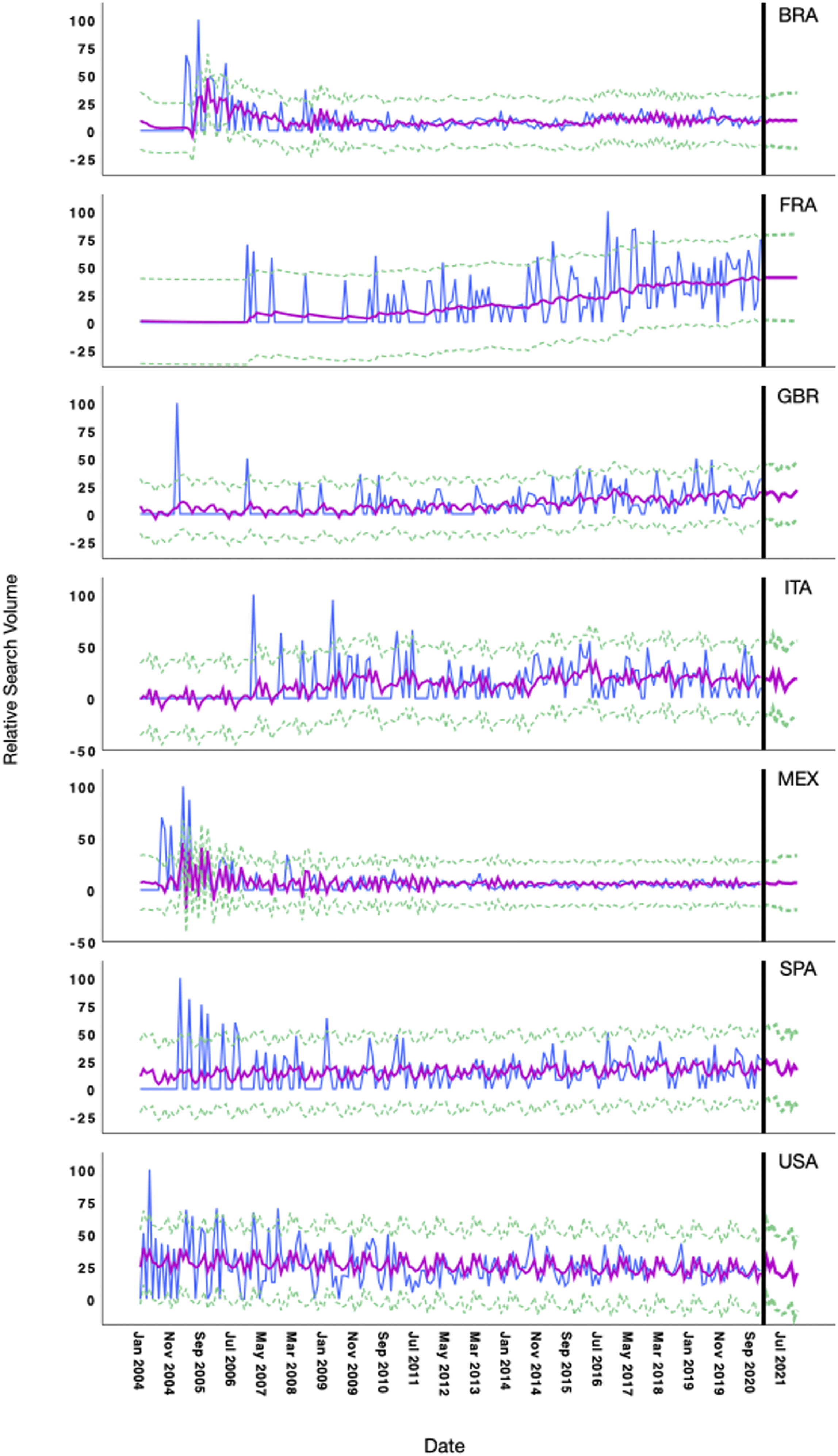
Association of Relative Search Volume with years lived with disability and Internet penetration
Regression models for the association of Relative Search Volume for ECC-related information with years lived with disability and Internet penetration in different countries, regarding total population, females, and males.
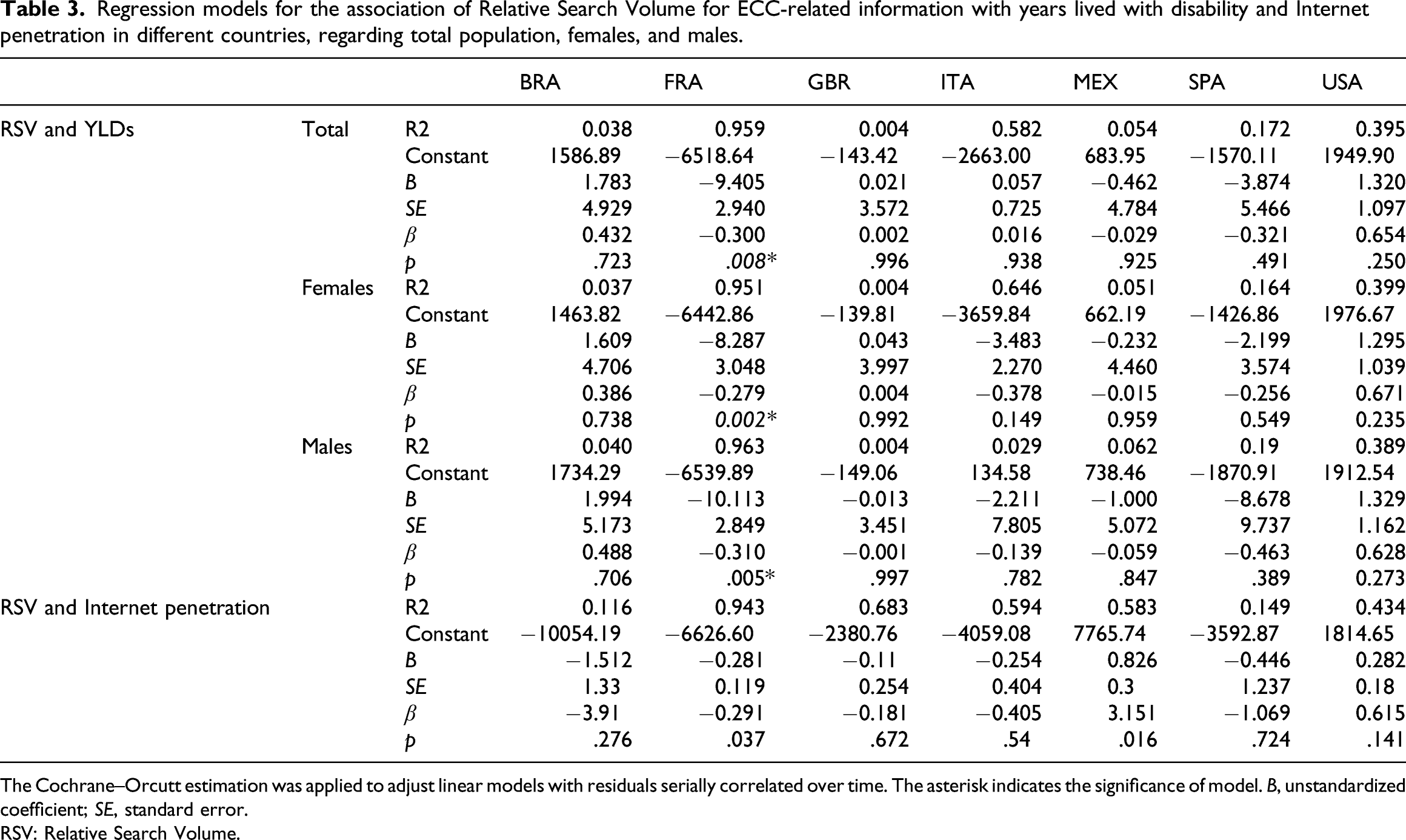
The Cochrane–Orcutt estimation was applied to adjust linear models with residuals serially correlated over time. The asterisk indicates the significance of model. B, unstandardized coefficient; SE, standard error.
RSV: Relative Search Volume.
Seasonality
Figure 2 depicts the heat map that represents the monthly variation of the predictive GAM values for ECC-related interests in all countries. It was noted a significant monthly seasonality only in the USA, with the highest and lowest levels of interest observed in February and November, respectively. Heat map of monthly variation of the predictive generalized additive model values for ECC-related interest in all countries.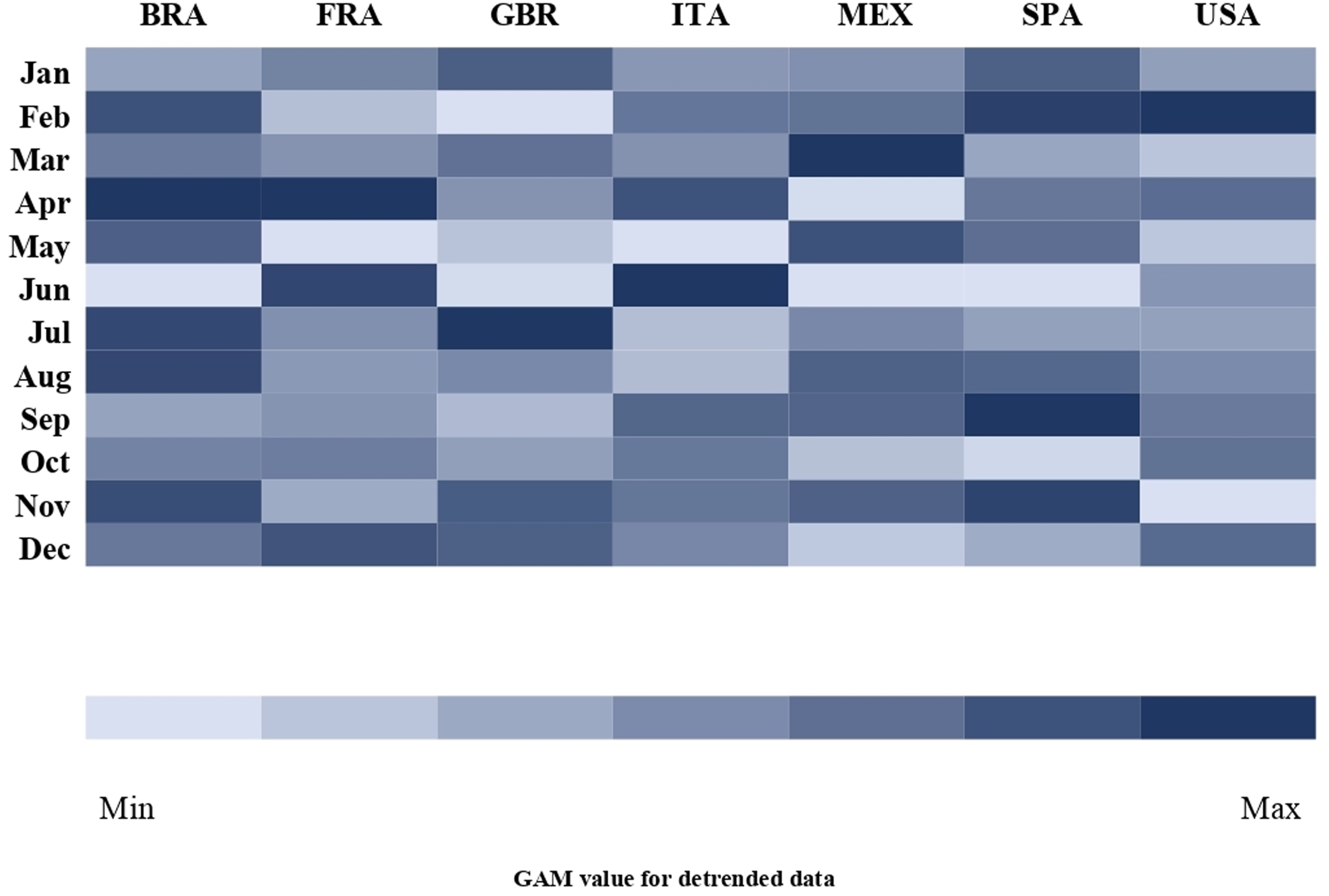
Main topics
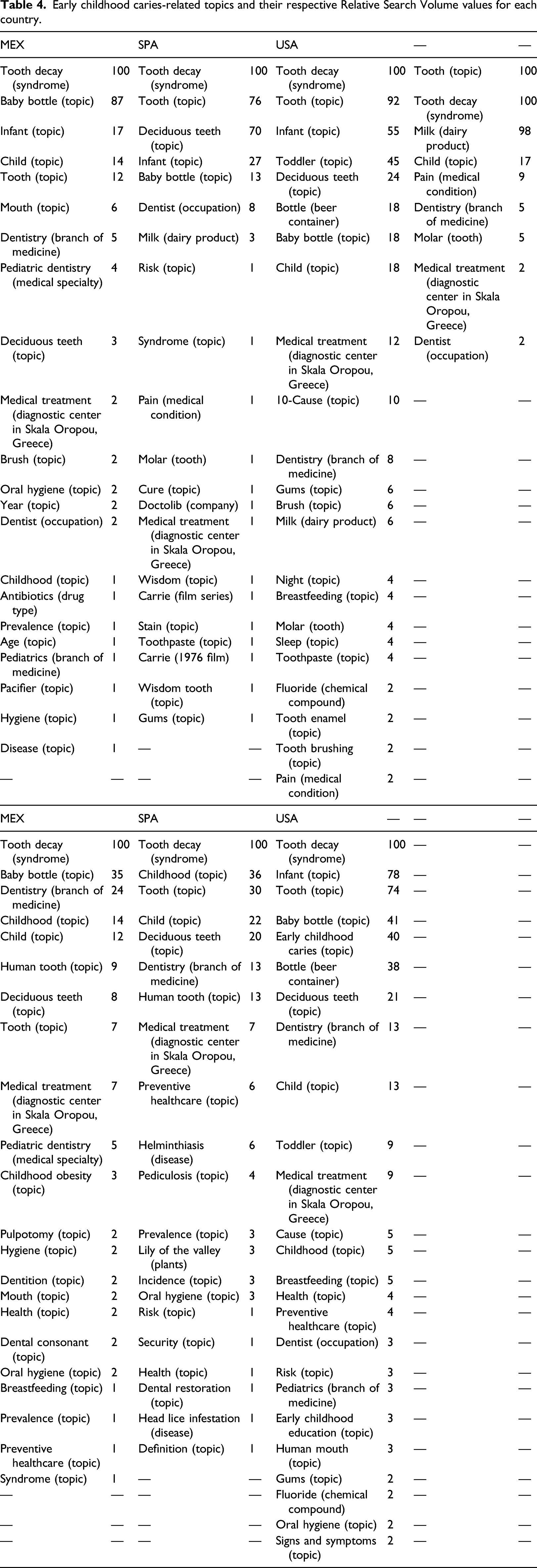
Early childhood caries-related topics and their respective Relative Search Volume values for each country.
Discussion
In general, these findings indicate increasing trends in the interest of people in ECC-related digital information, although the unequivocal identification of low search activity of Google users over time. The main queries were usually linked to the definition, risk factors, and preventive care of the disease. This information seeking behavior was not influenced by the effects of quarterly and monthly seasonality, and also it was not associated with the burden of untreated dental caries in children under 5 years old and the Internet penetration in most countries.
There are some possible explanations for these outcomes. The small search volume associated with the large percentage of queries on the definition of the disease could indicate a low level of population awareness on the impact of ECC. 16 It is quite common the observance of negligent parental behaviors in relation to the maintenance of a healthy primary dentition by the misperception of irrelevance derived from the temporary nature of deciduous teeth. 17 Consequently, parents and caregivers usually seek treatment for babies and toddlers only after the recognition of symptoms as dental pain, which appear only in specific situations as the final stage of dental caries.18,19 In this sense, the hypothesis of a significant positive association between RSV (digital activity/interest) and YLDs for untreated caries (burden of disease determined as dental pain) seemed plausible; however, only in France, those indicators were associated negatively. It might represent a greater engagement of people in consuming information for the maintenance of good oral health conditions, which can contribute to the low burden of the disease observed over time, and vice versa. The slightly increase in the interest in ECC-related topics observed in the last years could be associated with the growth of initiatives to the management of dental caries in early stages of life.20,21 On the other hand, the activity of parents and caregivers to seek information might be reduced to their perception of unsatisfactory digital contents. 3 Indeed, the quality of Websites from distinct countries containing ECC-related information was considered invariably very poor in our recent publication. 5
Additionally, the availability of the Web could influence the increment of health information seeking behaviors over the years, 3 as supported by the positive association with RSV found in Mexico, the country with the highest raise of Internet penetration since 2004 (397.2%). 22 The digital divide still represents a great challenge worldwide, widening the disparities in healthcare. 23 Socioeconomic-related barriers as insufficient technology skills, health literacy, and self-efficacy could prevent people with health information needs to make online searches, even when they have access to the Internet. 6 Furthermore, YLDs for untreated caries in deciduous teeth in children under 5 years old are notably lower in high-income countries (0.02 million YLDs) in comparison to lower middle-income ones (0.06 million YLDs) according to the GBD study 2 ; that is, populations under higher risk of the disease have lower access to digital sources,2,6,24 also justifying the slow increase of searches in both developed and developing countries among the countries analyzed in this study.
Health information consumers are usually interested in discussing their findings for further professional support but rarely initiate conversations when detect a possible environment of disinterest in relation to their demands. Then, dental professionals must be prepared to guide parents and caregivers in searching online health information toward good quality digital content, addressing parental concerns and doubts regarding their children’s conditions, through the implementation of personalized strategies for the management of the disease.25–27 This attitude is able to create a great opportunity to develop health literacy and construct an evidence-based parental criticism, aiding in the combat of pernicious effects of digital misinformation and disinformation. 28
Two inherent limitations of infodemiological studies must be considered in the interpretation of these outcomes. First, the present analysis was based on data retrieved and compiled through secret algorithms of Google, which makes difficult the analysis of terms according to inclusion and exclusion criteria; however, ECC-related topics depicted in Table 4 clearly support the quality and soundness of these methods and analyses. Second, it is not possible to define a profile of Internet users who seek for ECC-related digital information using this approach, because RSV is determined from the registration of IPs (Internet protocols) linked to specific computers.
In conclusion, the interests of Google users in ECC-related information is increasing slowly in all seven countries over the years, and it is not being associated with the burden of untreated dental caries in children under 5 years old and the Internet penetration in most countries, except for France and Mexico. It might indicate a lack of awareness about the negative consequences of the disease in the early stages of life, and also the parental distrust on the quality and the usefulness of online information. In this sense, specific policies should be developed toward the dissemination of oral health information and the prevention of the disease. Additionally, dental professionals must be aware of their patient’s needs, producing good quality digital materials and promoting the informational counseling during clinical appointments.
Supplemental Material
sj-pdf-1-jhi-10.1177_14604582211073057 – Supplemental Material for Digital surveillance: Monitoring the activity of Internet users searching for information related to early childhood caries
Supplemental Material, sj-pdf-1-jhi-10.1177_14604582211073057 for Digital surveillance: Monitoring the activity of Internet users searching for information related to early childhood caries by Patricia Estefanía A Aguirre, Matheus Lotto, Anna Paola Strieder and Thiago Cruvinel in Health Informatics Journal
Supplemental Material
sj-pdf-2-jhi-10.1177_14604582211073057 – Supplemental Material for Digital surveillance: Monitoring the activity of Internet users searching for information related to early childhood caries
Supplemental Material, sj-pdf-2-jhi-10.1177_14604582211073057 for Digital surveillance: Monitoring the activity of Internet users searching for information related to early childhood caries by Patricia Estefanía A Aguirre, Matheus Lotto, Anna Paola Strieder and Thiago Cruvinel in Health Informatics Journal
Footnotes
Author contributions
Conceived and designed the study: PEAA and TC; acquired the data: PEAA and ML; analyzed and interpreted the data: PEAA and TC; and drafted and critically revised the manuscript: PEEA, APS, ML, and TC.
Declaration of conflicting interests
The author(s) declared no potential conflicts of interest with respect to the research, authorship, and/or publication of this article.
Funding
The author(s) disclosed receipt of the following financial support for the research, authorship, and/or publication of this article: This research was funded by the São Paulo Research Foundation (#2018/02563-6). The funder had no role in the study design, data collection and analysis, decision to publish, or preparation of the manuscript.

Supplemental material
Supplement material for this article is available online.
References
Supplementary Material
Please find the following supplemental material available below.
For Open Access articles published under a Creative Commons License, all supplemental material carries the same license as the article it is associated with.
For non-Open Access articles published, all supplemental material carries a non-exclusive license, and permission requests for re-use of supplemental material or any part of supplemental material shall be sent directly to the copyright owner as specified in the copyright notice associated with the article.
