




Abstract
The use of mobile technology and mobile apps has become pervasive in our daily lives for completing a variety of daily tasks. Mobile health (mHealth) apps can provide an accessible platform for self-management among breast cancer (BC) survivors, as they recover from not just the intensive cancer treatments, but also their associated side-effects. They also offer a means to learn about survivorship topics and connect with peer survivors online, irrespective of their geographical location. This study is an attempt to assess the availability and characterize the self-management features of free mobile apps for breast cancer survivors on the Google Play (Android) and Apple App Store (iOS). Out of 249 such apps for the Android, only eight satisfied initial criteria, while only one of 174 iOS apps that met inclusion criteria was included for further analysis. A content analysis of the nine apps that met inclusion criteria was conducted to assess the inclusion of the following mHealth self-management features derived from the Chronic Care Model: symptom tracking; survivorship education; information-sharing with family and/or caregivers; scheduling follow-up visits; personal alerts and reminders; and social networking. Survivorship education was found to be the most common self-management feature among the apps reviewed, followed by social networking. The results of this study highlight the dearth of available mHealth resources for BC survivors. Future efforts in app development should involve survivors and healthcare providers to ensure comprehensive resources that address their unmet needs are made more accessible.
Keywords
Introduction
Modern smartphones, equipped with increasingly faster and efficient microprocessors, rival the processing power of conventional computer devices (such as desktops and laptops). They provide a more accessible, affordable, and portable means to the mass population to stay connected, without requiring a conventional computer device with a dedicated Internet connection. Smartphone applications (apps) have been rapidly gaining popularity in lifestyle, health, and self-management of chronic conditions. Furthermore, recent advances in the development of mobile health (mHealth) apps are consistent with the rapid evolution of smartphone features. Therefore, maximizing the utilization of advanced smartphone functionalities has paved the way for the delivery of health care services such as mobile patient portals, 1 online face-to-face visits and consultations with physicians,2–4 remote monitoring, imaging and diagnosis of injuries (via in-built cameras),5,6 and linguistic and respiratory evaluation (via in-built microphone). 7 All these functionalities together have created a digital platform for health care providers to penetrate remote or rural areas, making health services accessible to those habiting in these locations.
The rapid development and availability of new mHealth apps in the market is consistent with their rising popularity. Given the plethora of options to choose from, it can be daunting for patients to select an application that is most beneficial and effective for their condition. Clinicians may also want to prescribe useful apps for their patients, and monitor their impact on patient outcomes. 8 However, there is a dearth in the availability of unbiased and scientific assessment of mHealth apps, preventing physicians from prescribing them with confidence to their patients. While the majority of publicly reviews of apps tend to be personal opinions of an individual’s own experience with an app, informed clinical decision-making requires access to more evidence-based assessment of the characteristics and features of the currently available mHealth apps. While prior systematic reviews of mHealth apps for conditions such as diabetes,9,10 mental health,11–13 asthma, 14 and dermatology 15 have provided much-needed information on the current state of mHealth apps available, there is extremely limited evidence on the availability of such tools for breast cancer survivors. Previous apps have largely focused on resources for breast cancer awareness, screening, diagnosis, and treatment. 16 However, there is very limited evidence on the availability of apps with features that support the needs of breast cancer survivors as they deal with post-treatment after-effects.
Ranking as the most common form of cancer for women, 17 breast cancer (BC) accounts for 22% of all survivors nationally. 18 Owing to the success of BC awareness and screening programs, coupled with significant improvements in cancer treatment therapies, BC survivors today are experiencing better prognosis and survival rates than ever in the history of BC. The 5-year survival rate for localized and regional BC is 90%, 19 which is the highest among all cancer types. Death rates for BC have also significantly and consistently decreased in the United States. While this is great news, the availability of accessible tools and resources to support this ever-growing population of BC survivors has not kept up with the rapid advancement in treatment options, resulting in unmet supportive care needs.20,21 Thus, there is an impending need for more tools and resources to support this ever-growing population of BC survivors over the entire survivorship continuum, starting from time of diagnosis, during treatment, and finally, for long-term survival.
The weight of survivorship is daunting indeed. Survivors face a wide spectrum of physiological and psychosocial challenges, often with late and long-term, treatment-related after-effects from intensive treatment therapies, including radiology, chemotherapy, surgery and endocrine therapy. 22 However, despite these challenges, BC survivors do indeed want to play an active role in managing their own health.23–26 Survivors as well as their caregivers also report positive attitudes and willingness towards the use of online health information and tools for survivorship support.25,27–29
mHealth apps can play a key role in filling this gap by providing patients a dynamic platform to continually monitor and track symptoms over time; interact with peer survivors for support and discussion on survivorship topics; provide resources for caregivers; receive reminders for medication or follow-up; and educate themselves on the self-management of survivorship related health concerns at the relevant times. Guided by the Chronic Care Model 26 for patients living with cancer as a chronic illness; and descriptions of mHealth app functionalities from prior reviews,30,31 we identified six mHealth based basic self-management features (Figure 1): (a) symptom tracking; (b) survivorship education; (c) information-sharing with family and/or caregivers; (d) scheduling follow-up visits; (e) personal alerts and reminders; and (f) social networking.
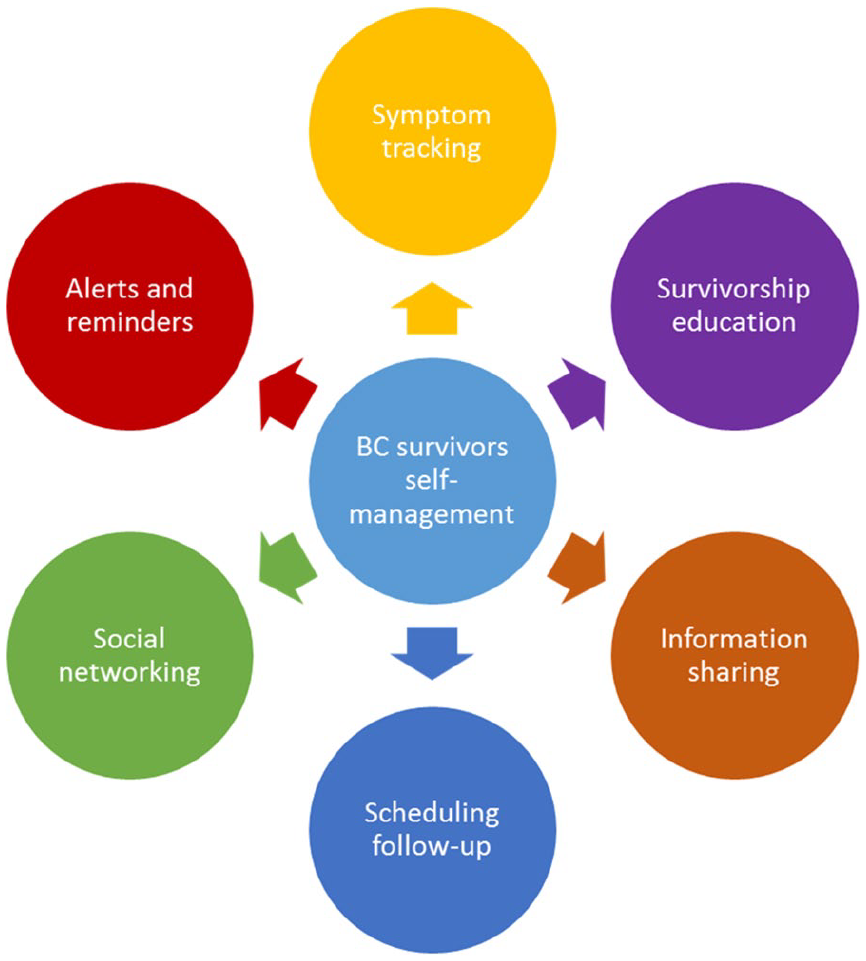
Self-management mHealth resources for BC survivors.
Objective
The objective of this study is to answer the following research questions:
RQ1: Which of the freely available mobile apps for breast cancer survivors provide basic self-management features?
RQ2: What are the characteristics of the identified mobile apps for self-management of breast cancer survivors?
Methods
Guided by the Preferred Reporting Items for Systematic reviews and Meta-Analyses (PRISMA), 32 a comprehensive review of mHealth apps for supporting BC survivors was conducted. For the final presentation, we used the PRISMA flow diagram, depicting the sequence of events during the systematic review.
Search strategy
The PICO (Population/Intervention/Control/Outcome) 33 framework was applied to define the scope for this study and formulate an effective search strategy. The population for the study was smartphone users who are breast cancer survivors. The intervention was freely available mobile apps to aid self-management among breast cancer survivors. The systematic review precludes a comparison group. The outcome was all available BC survivorship apps meeting our criteria. In order to maximize the coverage of our search, we used “breast cancer” as the search keywords.
We performed our search on two mobile app stores: (i) Google Play, which caters to Android devices, and (ii) Apple App Store, which hosts mobile apps for iOS devices. These two stores collectively represent 97.43% of the total market share of mobile operating systems worldwide as of the first quarter, 2019. 34
A comprehensive search, followed by a review were performed on the Google Play and the Apple App Store between 14 April 2018 and 25 June 2018 and another incremental search between May 04, 2020 and May 14, 2020 to identify all available apps for breast cancer survivors.
Selection criteria
A preliminary screening was conducted using each app’s title and description available on the mobile app store. Inclusion criteria for the mobile apps to be included in the review were (i) availability in English language; (ii) free of any cost to the user; and (iii) have an available numerical user rating on the corresponding mobile app store. A secondary screening was performed following the installation of resulting apps meeting primary screening criteria. The secondary screening was conducted to identify apps that offered at least one of the six identified self-management resources for breast cancer survivors. Apps purely about breast cancer awareness, fund raising, and general information were not included if they did not provide any other resources specifically for survivors. Any apps that failed installation or did not function as expected were also excluded.
All apps retrieved by the initial search were screened independently for inclusion by two reviewers with expertise in the areas of breast cancer self-management and the evaluation of personal health apps. Any differences were resolved through a process of discussion and reconciliation to reach consensus.
Content analysis
Pursuant to methods outlined by Jake-Shoffman et al., 35 we conducted a content analysis of the included apps to gather information on their functional characteristics and supported features in the context of self-management, and their usability, as assessed by their current users.
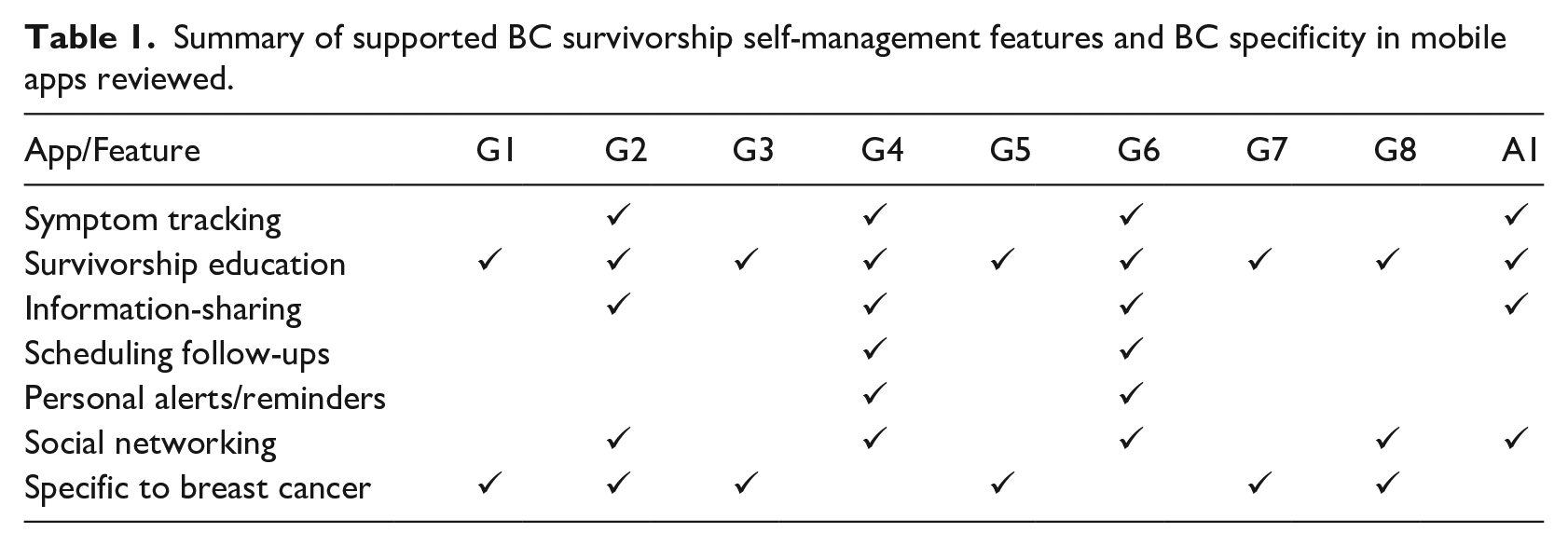
To perform the subjective evaluation of the included apps, each app was downloaded from the Google Play and Apple App Store mobile app stores and subsequently installed on an Android based mobile phone (version 8.0, Oreo) or an iPhone (version iOS 11). Data regarding each individual app’s functional characteristics were extracted using a standardized template constructed in a Microsoft Excel spreadsheet, which is presented in Table 1.
Summary of supported BC survivorship self-management features and BC specificity in mobile apps reviewed.
In order to assess the overall usability of the included apps, we extracted each individual app’s overall user rating, as indicated on their corresponding mobile app store. Assessed by its end users, an app’s user rating has been shown to be a reliable measure of usability 35 for mHealth apps. Both the Google Play store and the Apple App Store utilize a scale of 1 to 5 for user ratings, where one is the least favorable rating, and five is considered most favorable.
Results
Search results
The initial search on the two mobile app stores using the search term “breast cancer” generated a total of 424 apps (250 on the Google Play store and 174 on the Apple app Store). Preliminary screening was performed on the app’s title and description on the mobile app store. Apps were identified that did not pertain to breast cancer, were only accessible after payment of the app’s purchase amount, or not available in the English language (70 for Google Play and 47 for Apple App Store). Another set of apps that did not have any available user ratings were not included (126 for Google Play and 114 for apple App Store). Possible reasons for non-availability of scores could be attributed to either a low-popularity or a recent release on the mobile app store. For instance, in order to prevent bias among future potential users, the Apple App Store does not provide user ratings for apps representing a very small sample (less than five available user ratings).
Following the initial screening by two independent reviewers, resulting apps (54 from Google Play and 13 from Apple App Store) were downloaded and installed on corresponding mobile devices to ascertain further eligibility criteria, including availability of self-management features. Several apps were identified that did not include any self-management resources for BC survivors, or failed installation (46 on Google Play and 12 on Apple App Store). These also included general apps on breast cancer awareness, or fundraising apps that did not provide any self-management resources for BC survivorship. A total of nine apps (eight from Google Play and one from Apple App Store) met all criteria and were included in the final review (Table 2). This elimination process is further presented using the individual PRISMA 32 flow diagrams for the Google Play (Figure 2) and the Apple App Store (Figure 3).
Basic information of reviewed apps.
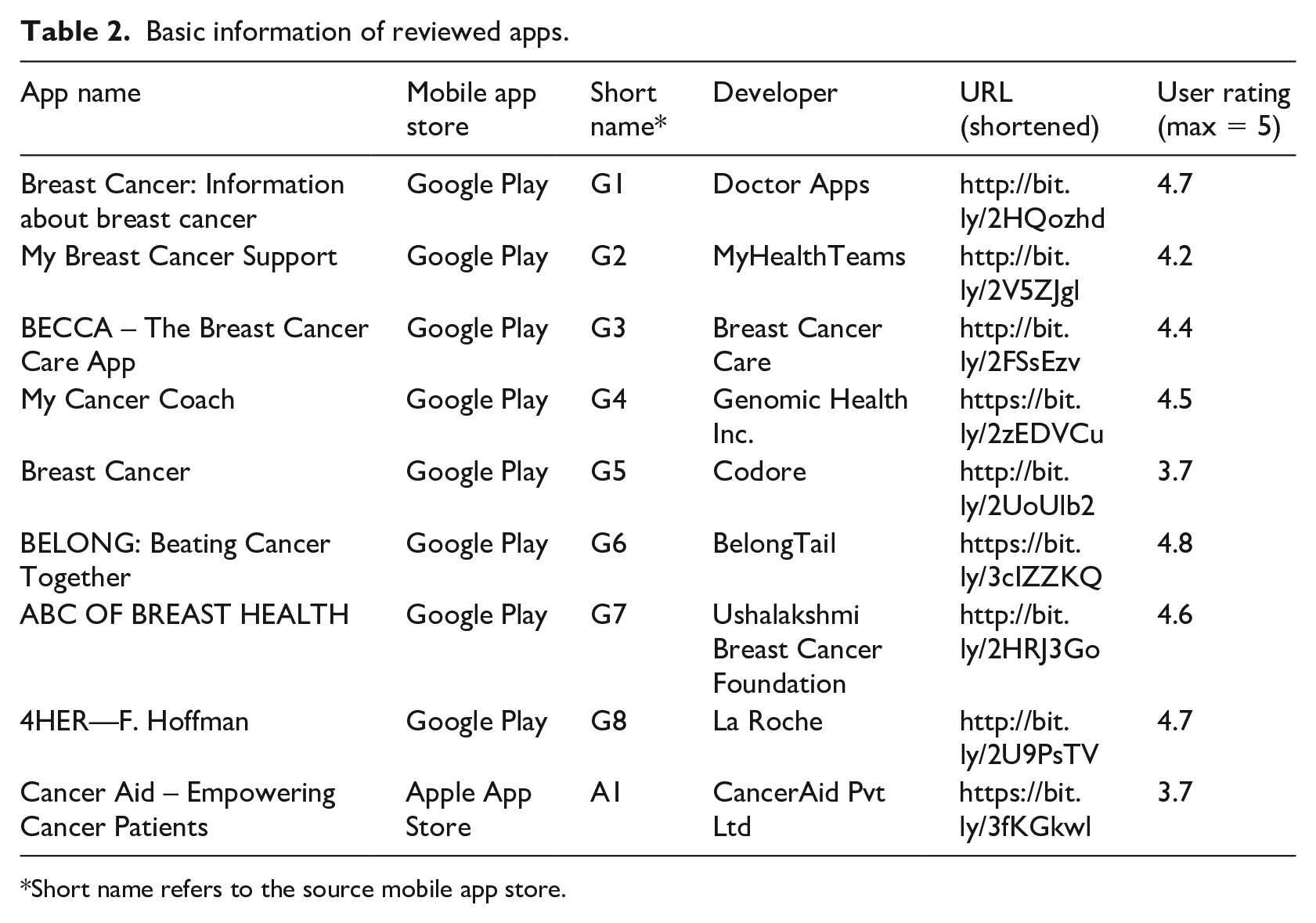
Short name refers to the source mobile app store.
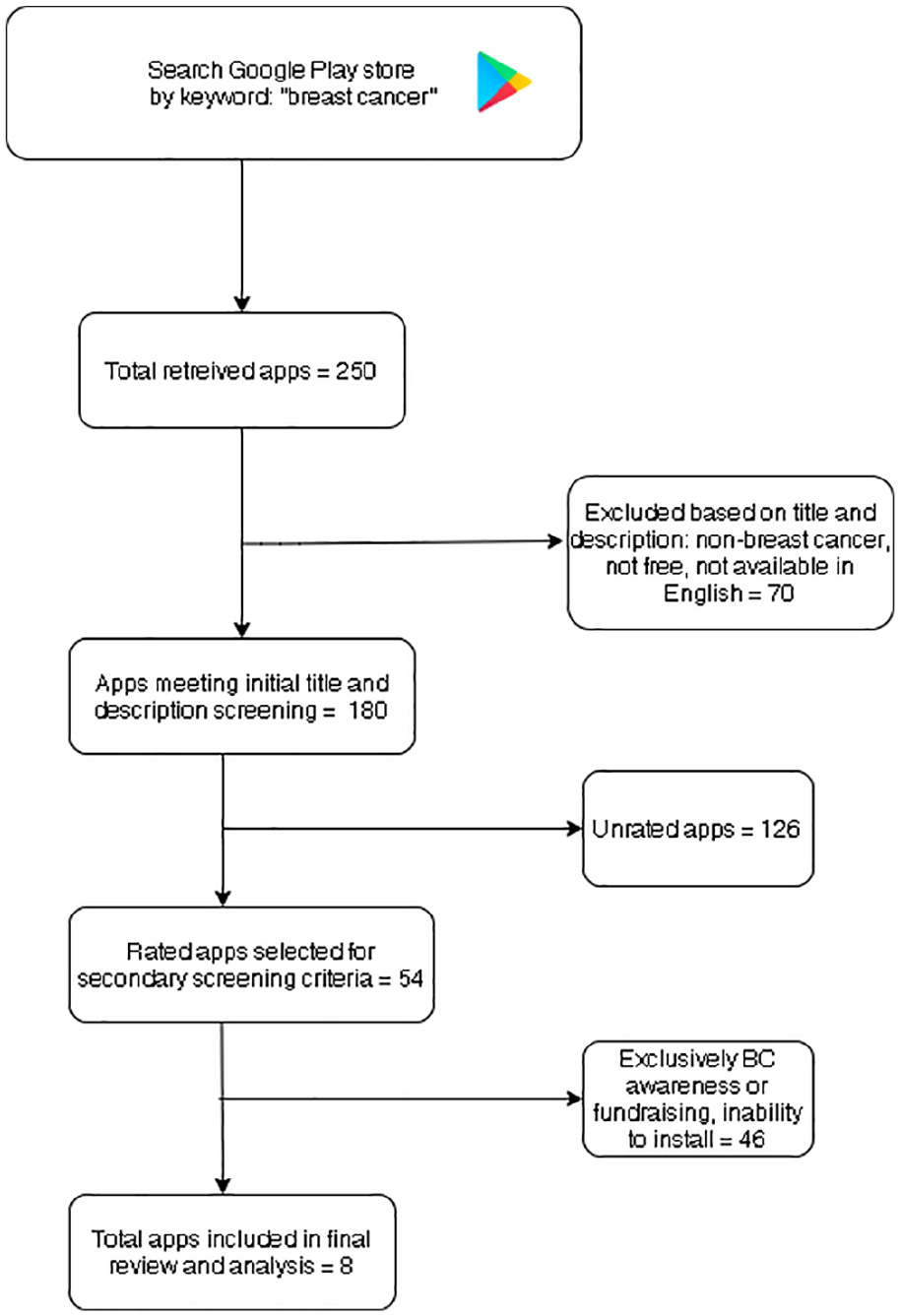
PRISMA flow diagram for BC survivorship self-management mobile apps on the Google Play mobile app store.
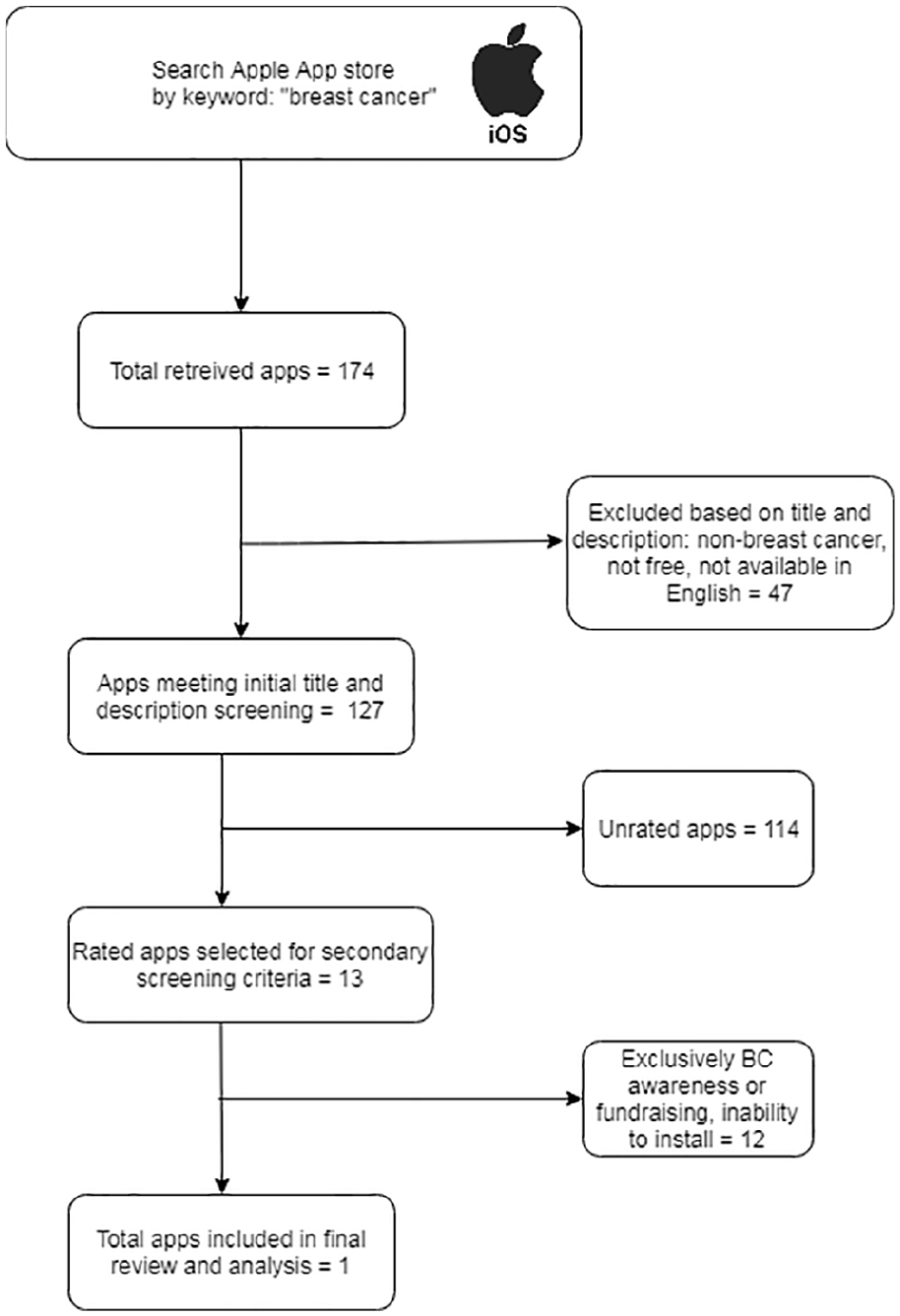
PRISMA flow diagram for BC survivorship self-management mobile apps on the Apple App Store.
Content analysis
The functional characteristics determined by the content analysis of the included apps are described in this section. Not all apps reviewed in this study dealt solely with breast cancer. G4, G6, and A1 all deal with multiple forms of cancer, of which breast cancer is only one type. None of the included apps had a section specifically labeled as self-management, however all of them included one or more self-management tools aiding in the management of post-treatment symptoms and social networks for peer-support and guidance on managing breast cancer. Survivorship was labeled explicitly as a dedicated section within A1, G1, and G4. None of the nine apps provided the user with the ability to construct a comprehensive survivorship care plan in the sense of a formal structured document 36 filled with information highly customized to the user. While the information from a given app could potentially be used to manually construct such a document derived from various sections of an app, the functionality to generate such a document within the app itself was absent, leaving the user with the complex task of weaving together disparate pieces of information and make sense of what is provided.
Of the nine apps that met our criteria, six apps were specifically for breast cancer, whereas the remaining also offered resources for other forms of cancer. All the nine apps included educational or informational resources for breast cancer survivors, making it the most common self-management feature, followed by social networking features (five apps), and information sharing ability (four apps). Among the least popular features, receiving personal alerts and reminders; and scheduling follow-up visits were featured in just two of the nine mobile apps (G4 and G6). A description of the BC self-management features of each individual app is provided in Table 1. In terms of the breadth of self-management features, G4 and G6 were found to be the most comprehensive survivorship apps and included all the six self-management features assessed.
Discussion
This section summarizes the results of this study and provides recommendations for future developers of mHealth apps for BC survivors.
Let us return to the two research questions proposed by this study:
RQ1: Which of the freely available mobile apps for breast cancer survivors provide basic self-management features: (a) symptom tracking; (b) survivorship education; (c) information-sharing with family and/or caregivers; (d) scheduling follow-up visits, (e) personal alerts and reminders; and (f) social networking?
This is an interesting question to answer, as even among the apps on the PRISMA diagram, only two of the apps answered yes to all these questions (G4 and G6). These two do not solely focus on breast cancer, but they are also the only ones that rigorously answer every one of the BC self-management categories. A1, the only iPhone app reviewed, is close to perfect, however, it lacks any scheduling or reminder capabilities. In Figure 4, all other mobile apps fall short in some way, particularly in the reminders and scheduling categories.
RQ2: What are the characteristics of the identified mobile apps for self-management of breast cancer survivors?
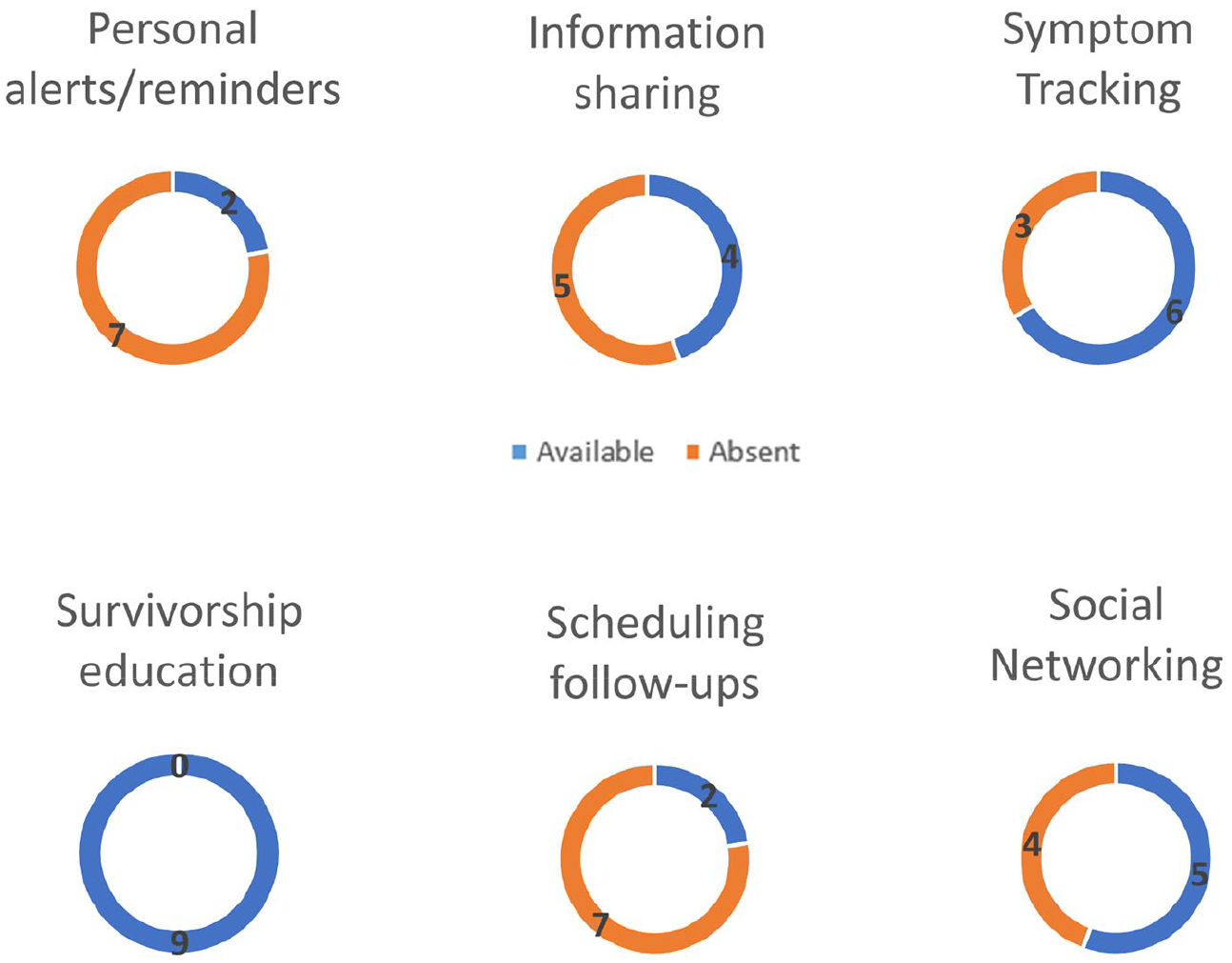
Frequencies for availability of each BC survivor self-management resource among reviewed mobile apps.
This question is relatively easier to answer. The single most common feature of the apps found by this study was educational resources, followed by social networking. We describe below the characteristics in further detail, in the context of BC survivorship self-management tools and resources used in the assessment of the mobile apps.
Symptom tracking
Symptom tracking is a means to record health observations at home, in real time, either on a regular, or sporadic basis. Monitoring of health indicators over time has been shown to be not only vital in the self-management of cancer treatment-related symptoms, but also beneficial to clinicians in understanding their patients’ needs, and improve patient-provider communication. 37 Multiple apps provided the ability to record BC treatment-related symptoms (G2, G4, G6, and A1). However, not every app had the ability to create graphs of the information inserted, which provide a bigger picture of one’s health, and its changes, over time. Data entry of various kinds was possible, but there were no standardized formats within the apps to organize even chronological information, thus providing little benefit over recording observations as text entries in a diary.
Scheduling and alerts/reminders
Data gathering and entry in and of itself does not automatically transform into information, knowledge, or wisdom (Health Information Management: Concepts, Principles, and Practice: 9781584265146: Medicine & Health Science Books). 38 These, as actionable items, scheduling post-treatment follow-up and personal alerts are separate, but related concepts. Among the apps reviewed in this study, only two had scheduling capabilities (G4 and G6). While they are related, scheduling does not automatically imply reminding. It is important to note that both mobile apps also included the reminder ability within them. Alerts and reminders are an effective means to improve the uptake of clinical guidelines for BC survivors, for instance, a reminder each month to perform a post-treatment breast self-examination, as recommended by the American Society of Clinical Oncology. 39 There is no one way to treat breast cancer, so it is logical that there need to be personalized alerts and reminders, tailored to an individual, based on their own BC treatment history. G4 and G6 were unique in their ability to achieve this functionality.
Survivorship education
All the apps provided at least some information about breast cancer survivorship and post-treatment resources. While some apps focused on more than one form of cancer, some others focused on one particular type of breast cancer, such as the G8 app, which deals entirely with HER2+ breast cancer. Some apps were focused on delivering multilingual information, such as G7, translated in at least 10 regional languages found in India. Most of the evidence for self-management and survivorship resources determination in this study came from the information available for consultation within each app. Some of the apps available were nigh unto magazines in a fancy electronic format, as G7 demonstrates. It did provide educational information but lacked any other self-management functionalities.
Sharing ability with caregivers and family
Several BC survivors rely on caregivers to manage their health information and related tasks. Being able to help a family member who is recovering after cancer treatment can be beneficial for the caregiver itself, primarily, in terms of the psycho-social benefits. 40 However, several caregivers are often burdened with the task of having to assume the additional responsibility.41–43 Therefore, it is crucial to provide additional tools and resources in the form of mHealth apps, to make the caregiving experience more seamless and less stressful for caregivers. Sharing here is explicitly defined as ability to either (i) send information through the app, using a smartphone, to another user, or (ii) the ability to create an additional profile to provide access to information for another individual, who may be a caregiver, friend or family of the BC survivor. This was the third most common ability among the apps (G2, G4, G6, and A1), followed by survivorship education and social networking. G2 was unique in its ability to add fellow friends to your ‘team’ of caretakers, survivors, and caregivers.
Social networking
Online platforms have been shown to play a supportive role among cancer survivors, by enabling them to not only interact with their peers, but also provide them a means to offer and receive psycho-social support.44–47 Represented among the reviewed apps in the form of discussion groups, blog posts and direct messaging; social networking was the second most common functionality among the apps reviewed (G2, G4, G6, G8, and A1). G2 was almost entirely a blog and social network-based app, providing a rich platform to network with fellow survivors.
Monetary focus
Not all apps focused solely on serving cancer survivors alone. A few had the commercial objective of promoting their product or service as their goal or relied on support from online marketing. G1 had advertisements spaced between pages, such that, when clicking a link to go from one page to another, an advertisement for a given treatment or pharmaceutical would appear. Such an advertisement had to be dismissed before going onto whatever page chosen by the app user, which could potentially disrupt their workflow, or prove to be a barrier in their adoption of the mobile app. When going back to an earlier page, the app user was first asked to rate how they liked the app they were using. G4 was more direct, promoting its gene therapy process as a means of helping a user’s breast cancer. G8 was developed by the company that manufactures one of the treatments used for HER2+ breast cancer, so its own treatments are promoted, however there was no prominently displayed disclaimer about the potential conflict of interest. Commercialization of this type is not unknown in breast cancer apps. 48 The ethics of commercialization of breast cancer survivorship in app form are not discussed in this study.
Limitations
Our study did not focus on the validity of the educational information available within each app. Other studies in the past have discussed concerns on the validity of advice and health information contained in mHealth apps;.48,49 This primarily stems from the lack of regulations governing mHealth apps and the non-involvement of clinical personnel in their development.
As mobile apps stores revise their policies that approve the availability of a specific mobile app on their online store, it is possible that some of the apps reviewed in this study may or may not be available for future perusal.
This study used the availability of the mobile app in the English language as one of the inclusion criteria. However, the inclusion criterion was not limited by the apps’ country of origin. This meant that some apps originated from other English-speaking countries, such as the United Kingdom or India, which are known to have different healthcare systems than the United States, may use different standardized or non-standardized terminologies to describe various concepts, and follow varying clinical guidelines issued by their own health agencies. Breast cancer itself, however, is prevalent across all countries, and not limited by geographical boundaries, thus it may be beneficial to include a global reach.
Conclusion
Four hundred twenty-three apps were whittled down to nine apps after applying the PICO and PRISMA frameworks to the inclusion criteria. This is a rather disappointing number, indicating the dearth of comprehensive tools to support BC survivors. While several tools and apps exist for awareness, screening, and education about available treatments, very few relevant resources are available in app form that specifically address the needs of breast cancer survivors. With better awareness programs, screening and treatment options available, there needs to be a conscious shift towards providing more tools and resources for survivors, as their population and life-expectancy continue to grow.
Moreover, availability of oncologists and clinical resources for follow-up care of survivors have not kept up with the growth in the population of survivors. This is further aggravated by survivors’ preference to continue to see a specialist for follow-up care, rather than self-management, or primary care. 50 In addition to burdening specialists, this also results in increased health care costs for the survivors from unnecessary clinic visits. 51
mHealth apps can not only play a key role towards alleviating this burden, but also provide an accessible source of self-management tools and resources for BC survivors. Future development and evaluation of mHealth apps for BC survivors should involve patients, caregivers as well as clinicians to ensure they meet their intended goals to serve survivors, and provide quality and accurate health information, consistent with the most recent clinical guidelines. Moreover, extensive reviews of the quality and accuracy of the health information contained in mHealth apps for BC survivors are needed.
Footnotes
Declaration of conflicting interests
The author(s) declared no potential conflicts of interest with respect to the research, authorship, and/or publication of this article.
Ethical approval
This article does not contain any studies with human participants or animals performed by any of the authors.
Funding
The author(s) received no financial support for the research, authorship, and/or publication of this article.
