




Abstract
In recent years, there has been a great development of software technology in the field of psychogeriatric research, helping to improve the quality of life of the elderly and preventing cognitive deterioration associated with aging, and thus decrease the possible dependence. The main objective of the present study is to evaluate the usability of the Long Lasting Memories program in elderly people with or without cognitive impairment in a region of Spain. For the study, users were classified into three groups: subjects with no cognitive impairment, with mild cognitive impairment and mild dementia, and they were given a usability questionnaire covering different variables. Of the 157 Spanish participants in the study, 84.1 percent answered the usability questionnaire, obtaining wide acceptance in all study groups regarding the usability of the Long Lasting Memories program. Current research begins to mark a new perspective that recognizes the need to establish a preventive strategy for degenerative diseases.
Introduction
Our society considers elders to people over 65 years old. In Europe, the number of people over that age is increasing and will continue to increase in the next decade. In 2020, the largest population will represent 20.1 percent and in 2040, it is expected to be 26.9 percent. 1 In Spain, as of January 2015, there were 8,572,779 elderly people, 18.4 percent of the total population (46,600,949), 2 of which up to 2014, there were 818,347 people with dementia disorders. 3
At the same time that the population is aging, information and communication technologies (ICT) have become elements of daily use. They are being rapidly integrated into most aspects of life, changing the nature of work, the form and scope of personal communication, education and health care.4,5
In recent years, progress has been made in the development of software applied to the field of psychogeriatric research. The aim is to improve the quality of life of the elderly, prevent the cognitive deterioration characteristic of aging and, as a consequence, decrease the possible dependence. 6
Thanks to all these advances, it is possible to apply technology to help. In this way, they can perform tasks easily on the computer, regardless of whether they have knowledge or not of the tool, their age and their visual or motor ability. Usability, according to ISO/IEC 9126 (2001), 7 refers to the ability of a software to be understood, learned, used and attractive to the user, under specific conditions of use. Usability helps to make this possible, analyzing human behavior and showing the steps so that these tasks are carried out with simplicity. 8
With age, there is a degeneration of the nervous system that directly affects the correct functioning of the senses. For the design of a software program, it is necessary to take into account the sense of sight, touch and hearing. They are the ones that allow the user to receive information from the computer to interact. 9
Numerous studies have shown that cognitive training can stimulate mnemonic abilities, 10 attention 11 and planning. 12 These considerations suggest that the combination of physical and cognitive training could have a synergistic effect that leads to faster and more consistent outcomes, including benefits in quality of life. 13 People who throughout their lives perform physical and cognitive activities, such as reading, games or hobbies, could reduce the risk of Alzheimer’s disease. 14 This suggests that physical and intellectual stimulations are important in the preservation of mental function in the elderly.
BEDMOND (2009/2012), 15 an ICT-based system for the early detection of Alzheimer’s disease and other neurodegenerative diseases, allows the recording and coding of behavioral changes that occur in the daily life of older people through low-level sensors in the home. Through the use of interactive technology and virtual reality, physical interventions have been successfully applied to the elderly.
Currently in Spain, care policies for the elderly with the first signs of cognitive impairment are mainly based on pharmacological aids or partial attention in day centers. However, limitations in pharmacological treatments and the high risk of progression among healthy elderly people with signs of mild cognitive impairment (MCI) to neurodegenerative diseases 16 evidence the need of the development of effective psychosocial methods for this particular population.17,18
The European project Long Lasting Memories (LLM) is a technological solution that has its origin in the need to address current problems related to the care of elderly people such as the aging of the population, the increase in certain diseases linked to a greater hope of life, the consequent increase in the costs of social-health care, isolation and social exclusion of the elderly. Hence, the main objective of our study is to evaluate the usability of the LLM program in elderly people with cognitive impairment and healthy people in a region of Spain. The methodology used in this study is described below. Afterward, the results obtained, the discussion of them and the conclusion of this research work will be finalized.
Materials and methods
The study included people over 60 years of age. They can be subjects of (1) no cognitive impairment (NCI), (2) MCI and (3) mild dementia (MD). Participants were given a usability questionnaire covering different variables. Next, we describe the applied methodology.
Databases
The sample of users of the LLM program is made up of 157 Spanish participants. They come from 11 centers in different provinces of Spain: Zamora, Barcelona, Pontevedra, Valladolid and Madrid. A total of 114 (72.6%) are women. They are the majority, with p < 0.01 (Chi2 = 32.108; 1 gl; p = 0.000), compared to 43 men (27.4%). All are over 60 years old. The average age of the sample is 79.71 ± 8.40 years (95% CI: 78.38–81.03) in a range of 60–99 years. They present a distribution with a certain tendency toward the normal model of the Gaussian bell, with p > 0.05 in the Kolmogorov–Smirnov goodness of fit test (p = 0.346) despite presenting a very slight negative asymmetry (As =−0.420). In addition to the variables of gender and age, other variables were taken into account: civil status, family life, number of children, years of study, alcohol and tobacco consumption and group to which they belong (see Table 1).
Descriptions of the composition of the sample of users who have participated. N=157
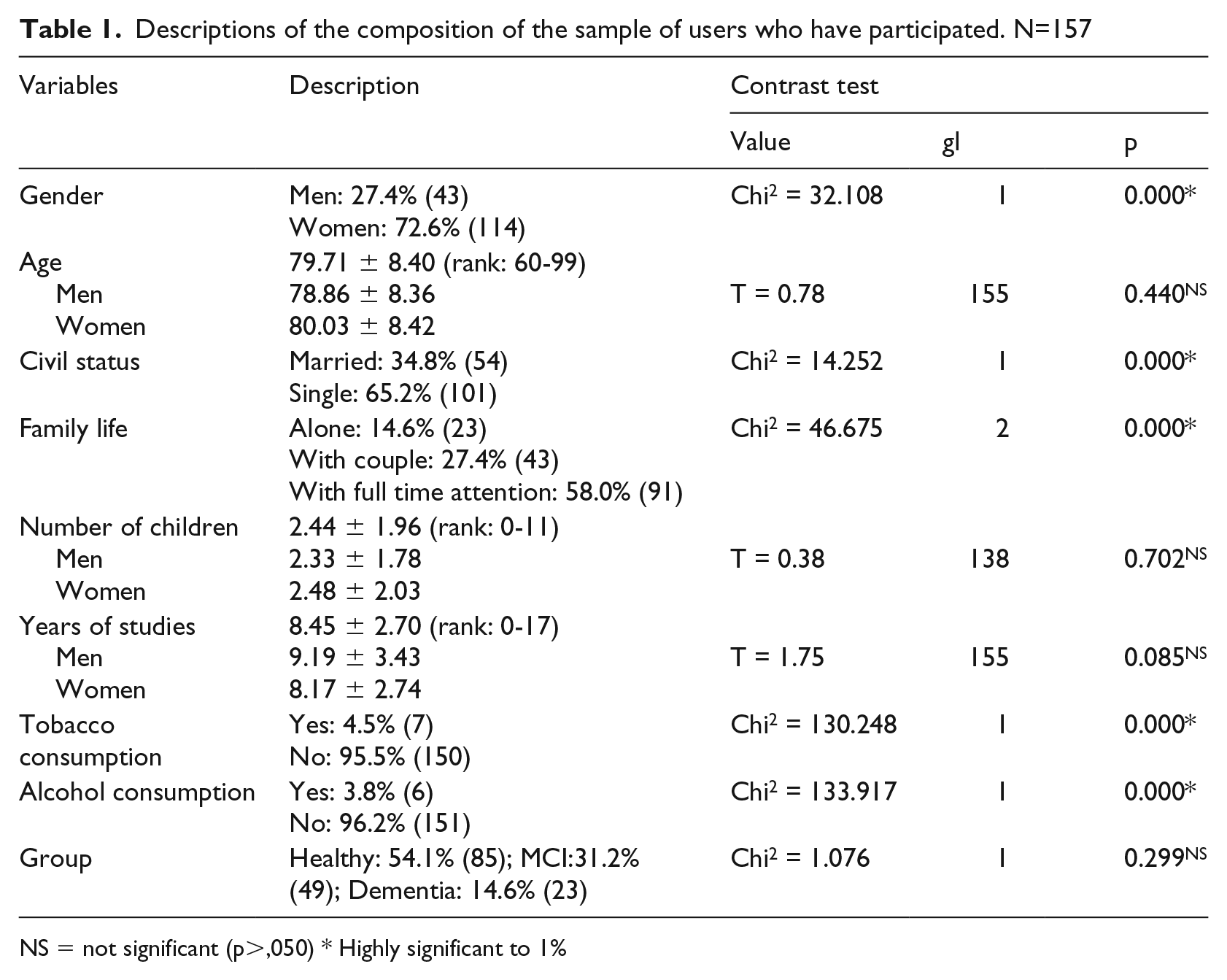
NS = not significant (p>,050) * Highly significant to 1%
Of the 157 subjects included in the study, 85 had no signs of cognitive impairment, 49 subjects were diagnosed with MCI and 23 subjects had MD. For the development of the study, different inclusion and exclusion criteria were taken into account. The inclusion criteria were (1) greater than 60 years, (2) have a correct and fluent language, (3) sign the informed consent document, (4) consent of the family doctor for the participation of the person in the study and (5) score higher than 17 points in the Mini Cognitive test. The exclusion criteria were (1) parallel participation in other research studies, (2) serious depression or relevant psychiatric diagnosis, (3) serious physical disorders or disability that prevents the user from using all components of the program and (4) frequent change of medication.
Three months before the end of the LLM program, 32 people abandoned the full treatment (20.38%) and 7 the physical treatment (4.46%). The reasons were (1) physical problems or diseases (35.9%), (2) poorly motivating treatment (12.82%), (3) demanding treatment (10.26%), (4) physical injury caused outside of treatment (5.13%), (5) treatment too long (2.56%) and (6) other reasons (33.3%) such as holidays, family causes, and change of residence. Of the 32 people who left the treatment had (1) NCI (n = 24 (61.53%)), (2) MCI (n = 7 (17.95%)), and (3) MD (n = 8 (20.52%)). Of this group that abandoned, 30 belonged to residential centers (76.92%) and 9 to community population (23.08%).
Materials
For the selection of the participants in the study, the subjects completed a series of tests and an interview. Based on these data, the work team was able to estimate whether the subjects were suitable according to the inclusion and exclusion criteria defined in the study. Personal and sociodemographic data were collected. The Cognocitive Mini-Test 19 and Geriatric Depression Scale (GDS) 20 were used.
After verifying that the participants met the inclusion and exclusion criteria, they carried out the intervention with the LLM. At the end, participants were asked to complete a usability questionnaire. Applied in the study is a tool that allows measuring the ease of use and sustainability of the LLM intervention, as well as the satisfaction of the users. The purpose is to collect data and information in relation to key aspects: satisfaction with the LLM program, degree of acceptance, usability and ease of access.
Statistic analysis
Using IBM SPSS Statistics 20, the collected information was analyzed. This statistical software allows us to extract results from the opinion of the users regarding the usability of the LLM. An analysis of sociodemographic characteristics was performed, using frequency and percentage, for qualitative or categorical variables. For the quantitative variables, average value and standard deviation were used.
Then, from a Likert-type scale with different response alternatives, the results obtained by the sample of participants are described and the percentage of response for each of the existing options is analyzed. A descriptive and exploratory factor analysis (EFA) of the variables of the questionnaire is carried out, with the chi-square goodness of fit test to the normal Gaussian model and box diagrams for the detection of atypical cases. The EFA is usually used to identify and explore factors for an instrument and find associations between them. 21 Hence, in our study, it is used in order to know the internal factorial structure of questionnaire and obtain the determining factors that influence the assessment of the technological usability of the LLM program.
Using the Pearson’s correlation coefficient formula, the level of association between the different sections of the questionnaire and the sociodemographic variables was verified: age, years of education, training sessions and group. For the rest of the variables, the multivariate analysis of variance (MANOVA) was used to analyze data that involve more than one dependent variable at a time. Finally, to know the most important factors on technological usability, for older people, we proceed to a factorial analysis of the main components with VARIMAX rotation, grouping the items into factors.
Results
A total of 157 users started the LLM program. The usability questionnaire, after abandonment due to causes indicated in the previous section, was answered by 132 users (84.1%). The results are presented based on six sections of the questionnaire: (1) affectivity, (2) ease of use, (3) satisfaction, (4) sustainability, (5) independent living and (6) social integration.
Affective evaluation and use ease of LLM
Participants were asked to indicate the emotional responses about LLM training. Table 2 shows the items: percentage of each response, average value and standard deviation. The questions were oriented both positively and negatively. The items in negative have been recorded numerically to the contrary so that the average, in scale 1–7, represents from lowest to highest degree of agreement in all of them.
Affective evaluation of LLM.
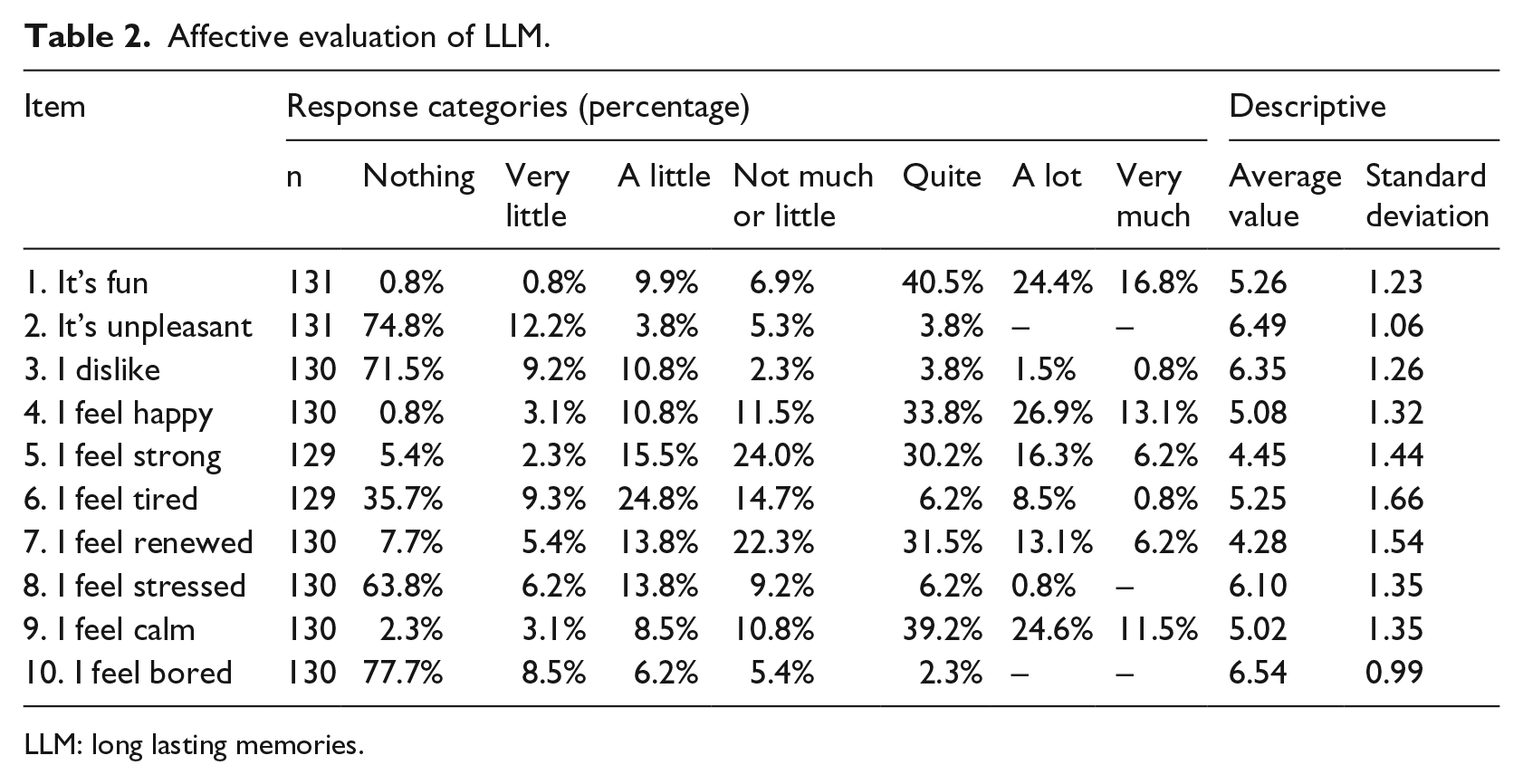
LLM: long lasting memories.
In general, the results show that the training carried out by the participants with the LLM program caused positive feelings in them. As shown in Table 2, the items formulated in a negative way obtained a greater degree of agreement. They are “I feel bored” (average 6.54), “it’s unpleasant” (6.49) and “I dislike” (6.35). In these items, the majority response was nothing, with percentages above 70 percent. On the contrary, in the items formulated in a positive way, a lower degree of agreement has been manifested. They are “I feel refreshed” (4.28) and “I feel strong” (4.45). The majority response obtained percentages higher than 30 percent.
The evaluation questions related to the ease of use are focused on knowing the interactions of the users with the technical system LLM. It consists of 14 closed and quantitative questions and 2 open and qualitative questions. Five of the items are a Likert-type scale of 1 to 5 points. The rest of the questions have been analyzed separately since the answers provided were bimodal (See Table 3).
Assessment of use case.
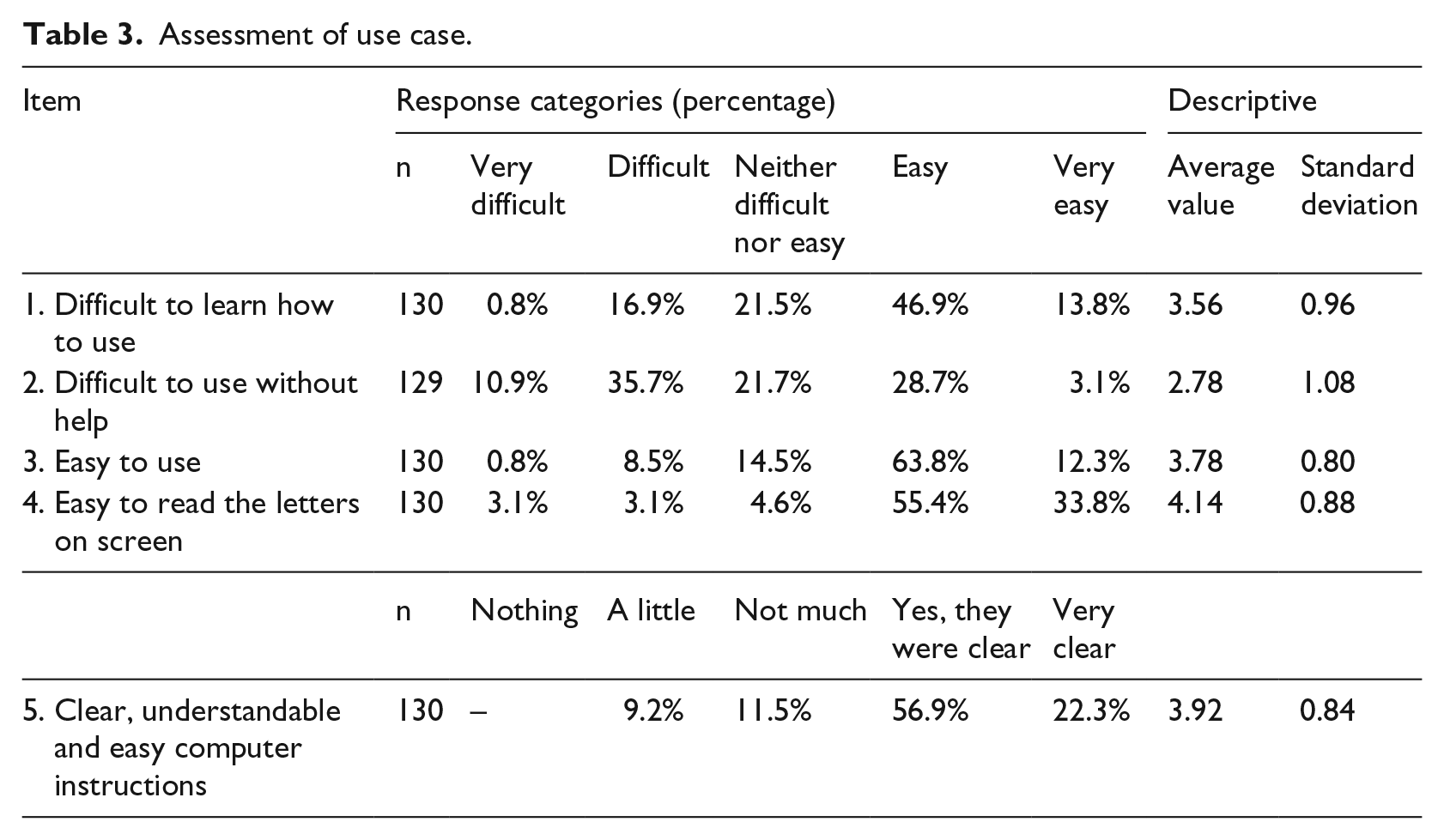
For a more simplified assessment of the percentages of opinion of the users, the response data have been grouped into positive (easy–very easy) and negative (difficult–very difficult) (see Figure 1).
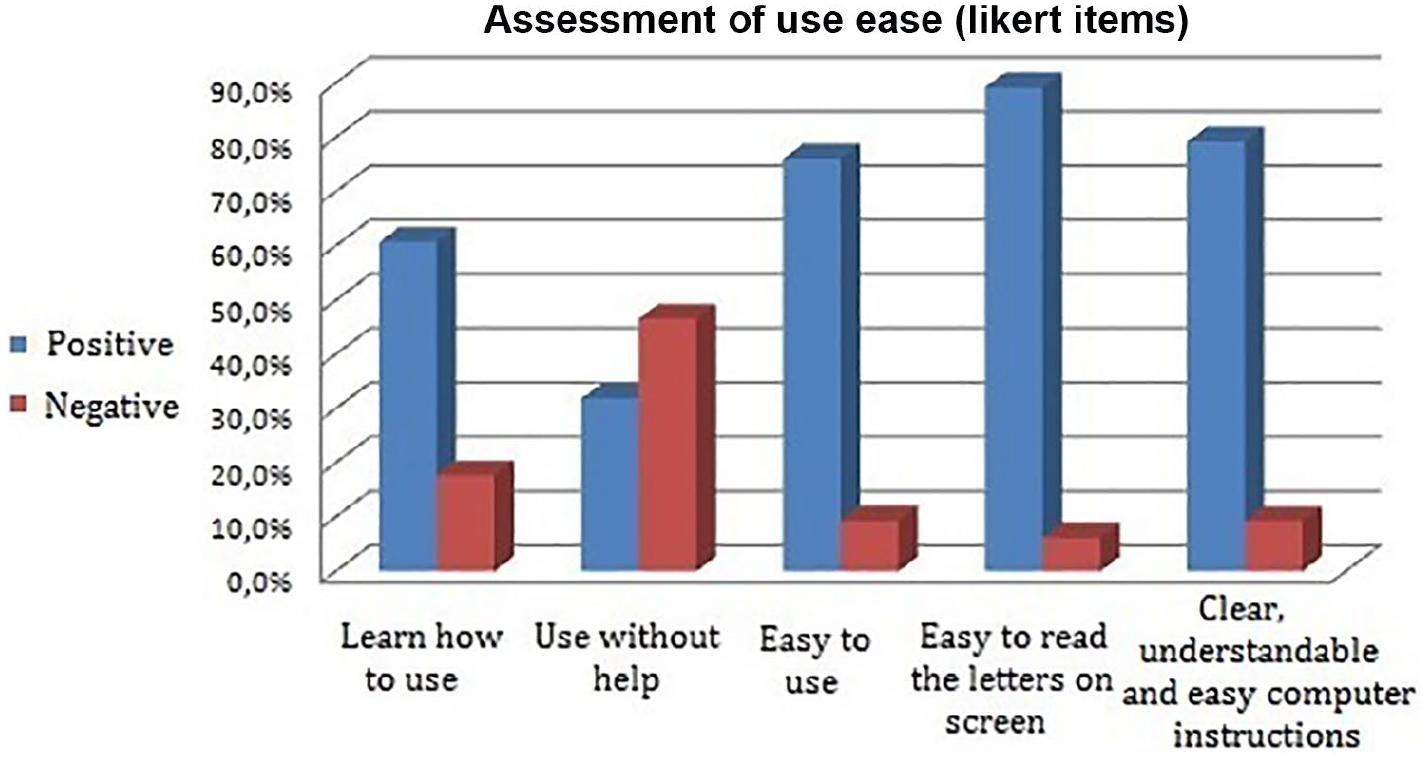
Assessment of use ease.
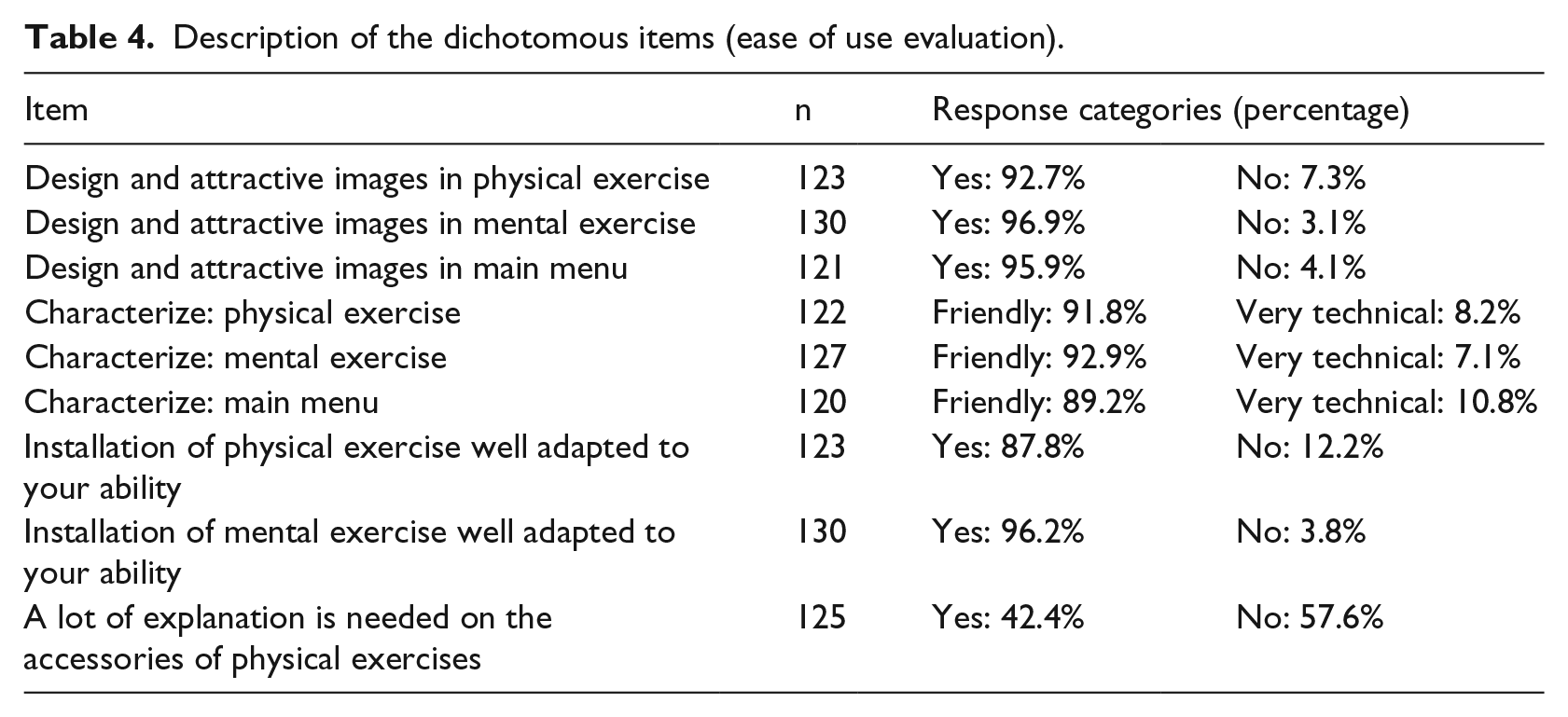
Table 4 summarizes the results of items of a dichotomous type. In general, the positive responses to the good usability of the program stand out, with values above 87 percent in all the items. The only exception is the need for instructions on the accessories of physical exercise. It has only been positively rated by 42.4 percent of users.
Description of the dichotomous items (ease of use evaluation).
Evaluation of satisfaction and sustainability
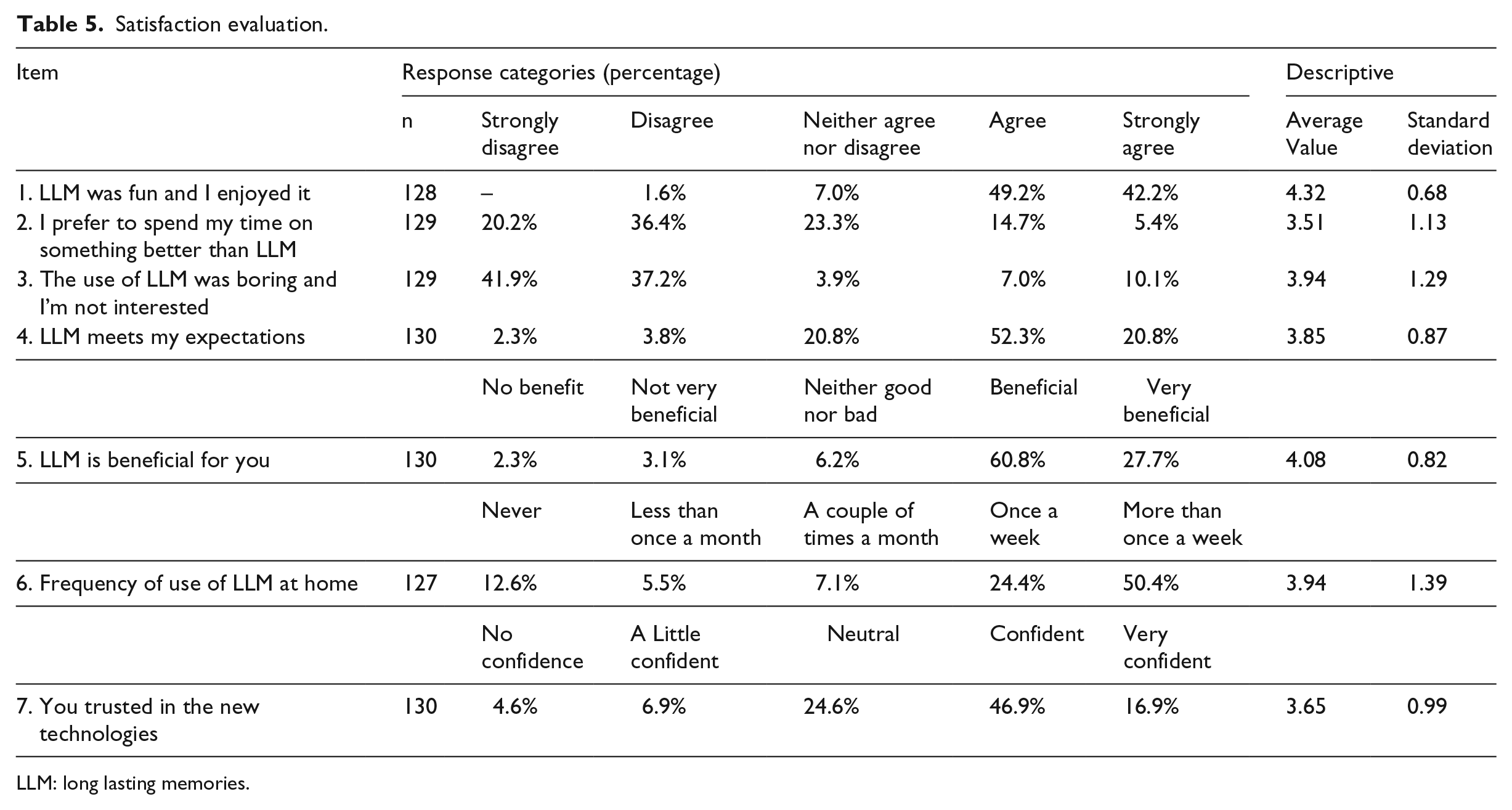
The questions were asked to know the satisfaction and desire to use the LLM system. It consists of seven items with a Likert-type scale of 1 to 5 points. The items formulated with negative content have been recorded in inverse scale. Table 5 summarizes these results. No item has been assessed negatively.
Satisfaction evaluation.
LLM: long lasting memories.
For a more simplified assessment of the percentages of opinion of the users, the data of the responses have been grouped into positive and negative. We eliminate the intermediate answers (see Figure 2).
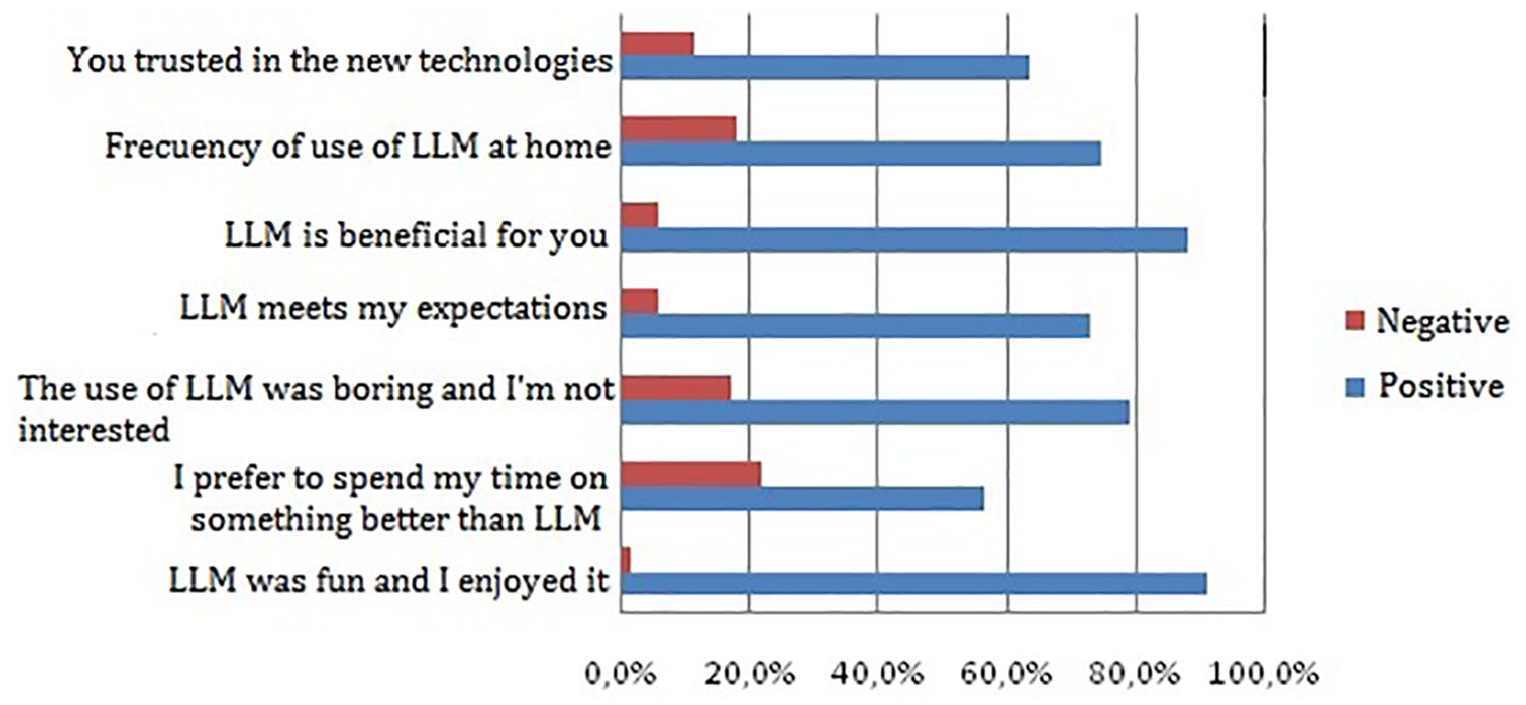
Satisfaction evaluation.
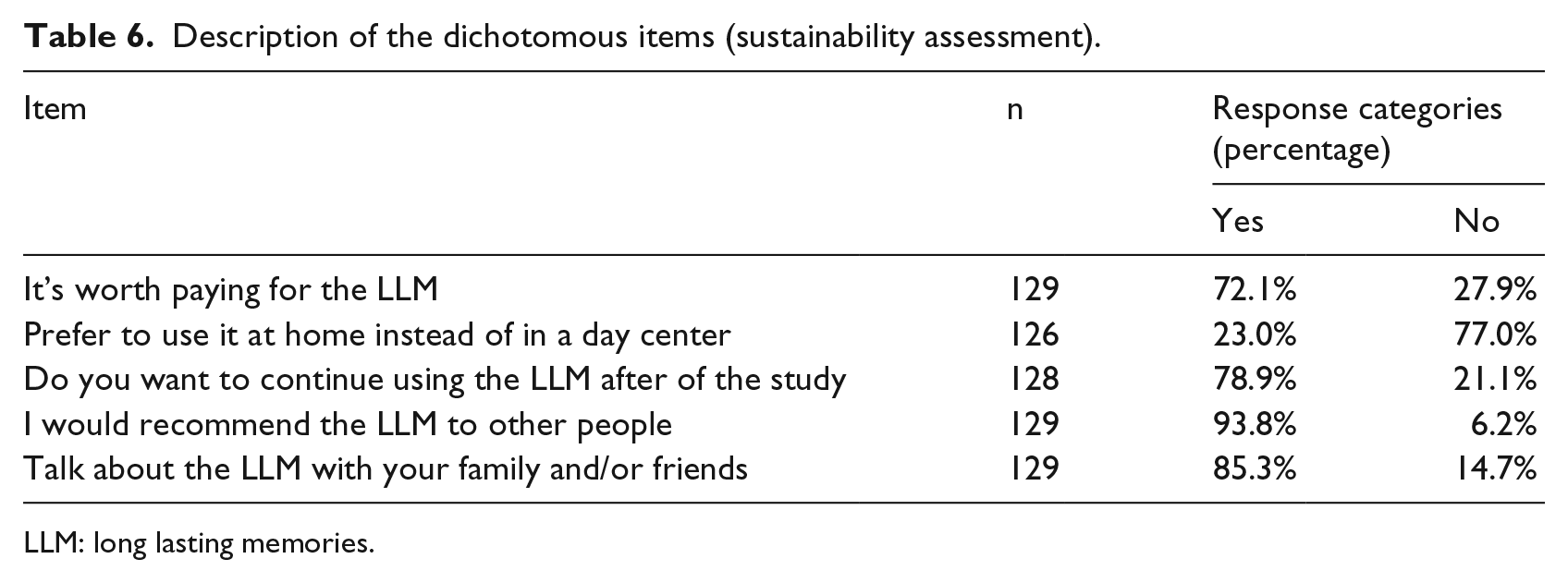
Sustainability is evaluated with questions oriented to the commercialization of the program. It includes the possibility of charging for the LLM service to users, if they wish to continue using the program after the end of the tests and if they have recommended it. There are five dichotomous items: yes or no. The results are shown in Table 6. They indicate a clear predisposition to continue using the LLM and even to pay for it with rates higher than 72 percent. The only question that received a lower positive rating (23%) is related to the use of LLM at home.
Description of the dichotomous items (sustainability assessment).
LLM: long lasting memories.
Evaluation of independent living and social integration
To evaluate the section on independent living, three items are used: two with a Likert-type scale with five response options and a dichotomous one (see Table 7). The positive assessment of the answers to the questions with Likert-type scale is high. However, 37.4 percent believe that they could use it at home without help.
Description of the items (evaluation of the independent living section).
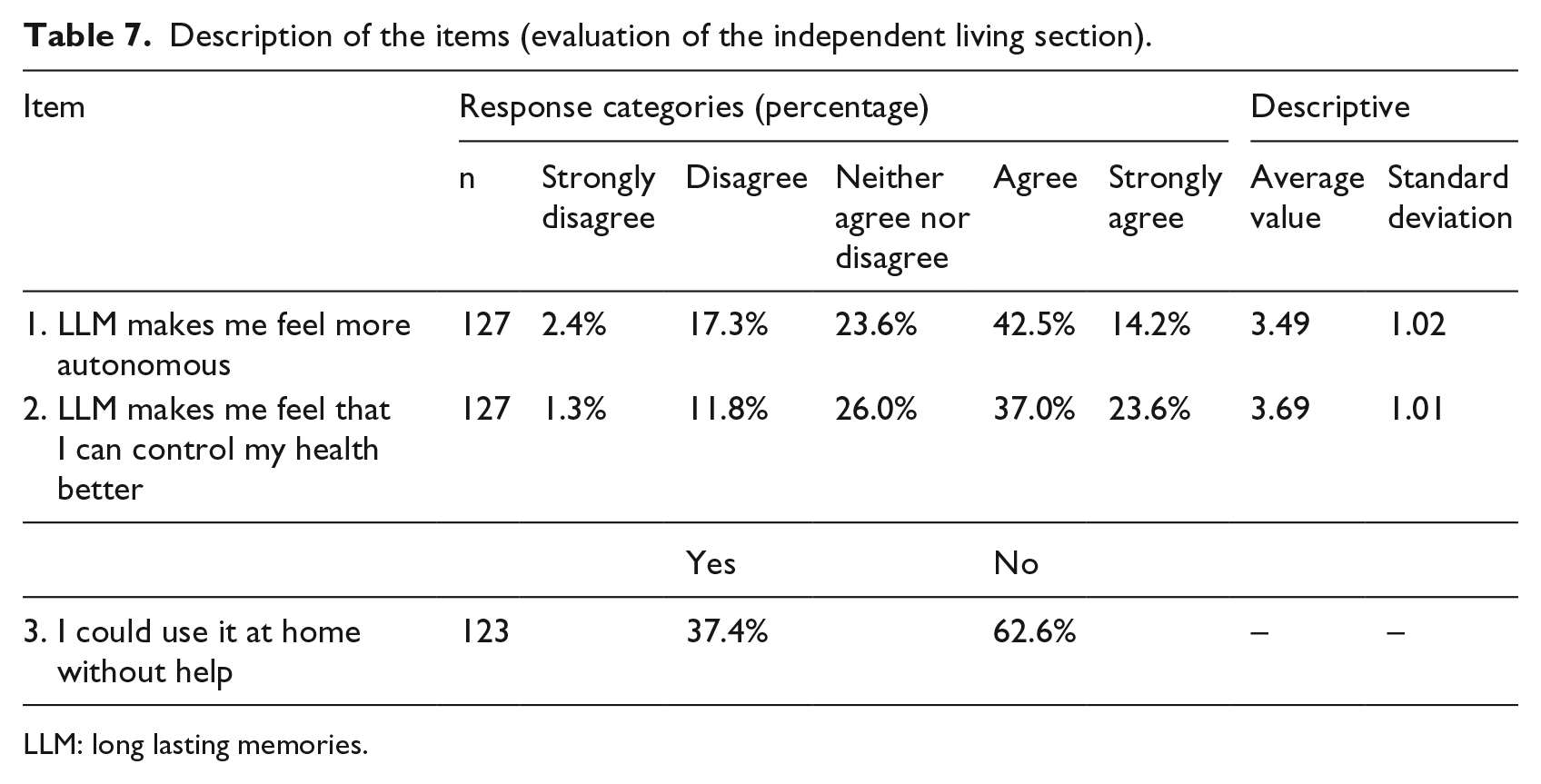
LLM: long lasting memories.
For a more simplified assessment of the percentages of user opinions, the data of positive and negative responses have been grouped (see Figure 3).
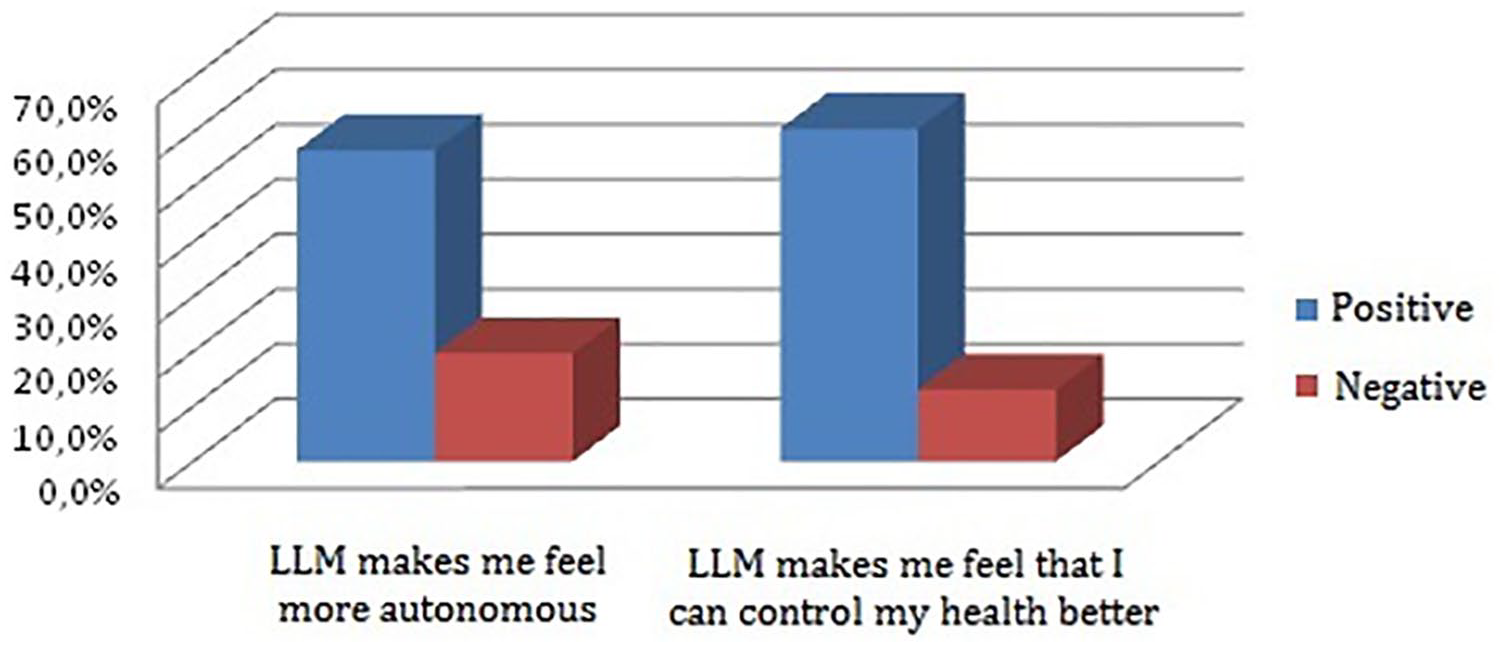
Evaluation of the independent living section.
To assess social integration, the questionnaire includes three items with Likert-type scale with five response options. The results, in Table 8, indicate a medium degree of agreement. Especially, the improvement in social life (3.65) and in the enrichment of the way in which the patient communicates (3.61) is valued.
Description of the items (evaluation of social integration).
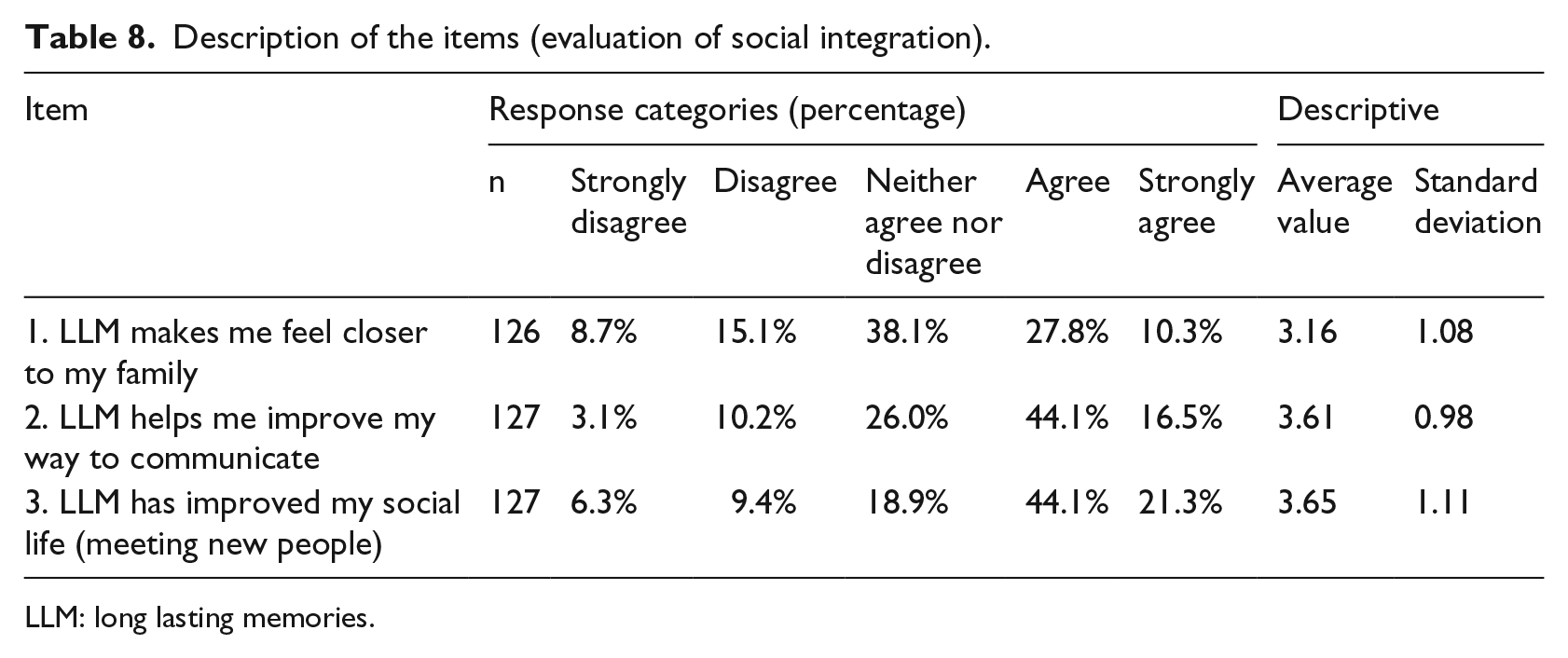
LLM: long lasting memories.
As shown in Figure 4, for a more simplified assessment of the percentages of user opinions, the responses have been grouped into positive and negative.
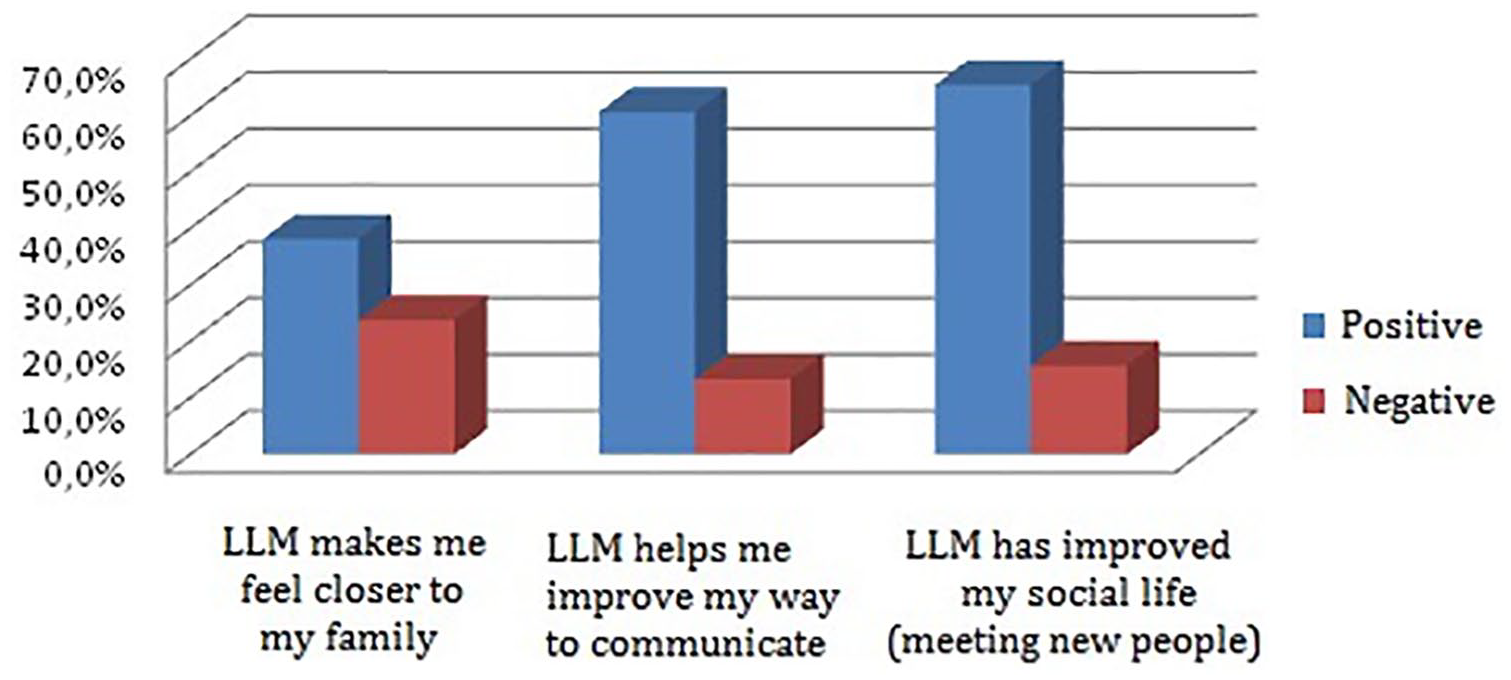
Evaluation of social integration.
Once the descriptive analysis of the quantitative questions was carried out, the analysis of open questions was carried out in order to identify limitations that may be relevant for the use of the LLM program during the usual practice.
Results of the EFA
The objective of a factorial analysis of the questionnaire is to know the internal consistency and factorial structure. The items measured on the Likert-type scale were selected. No dichotomous variables were included because they need a different statistical analysis. The items included according to the theoretical dimension are as follows:
Dimension 1: affective evaluation: Items from 1 to 10 (all);
Dimension 2: evaluation of the ease of use: Items 1, 2, 4, 5 and 6;
Dimension 3: evaluation of satisfaction: Items from 1 to 7 (all);
Dimension 4: sustainability: (none);
Dimension 5: independent living: Items 1 and 2;
Dimension 6: social integration: Items 1, 2 and 3 (all).
The main components were analyzed, with VARIMAX rotation, without predetermining the number of factors to be extracted. With n = 116, the preconditions are satisfactorily adjusted: good sample adequacy (Kaiser–Meyer–Olkin (KMO) = 0.835) and significance in Bartlett’s sphericity test that allow us to reject the unit matrix (p = 0.000; Chi2 = 1405.662) of lack of intercorrelations that prevent the existence of factors. 22
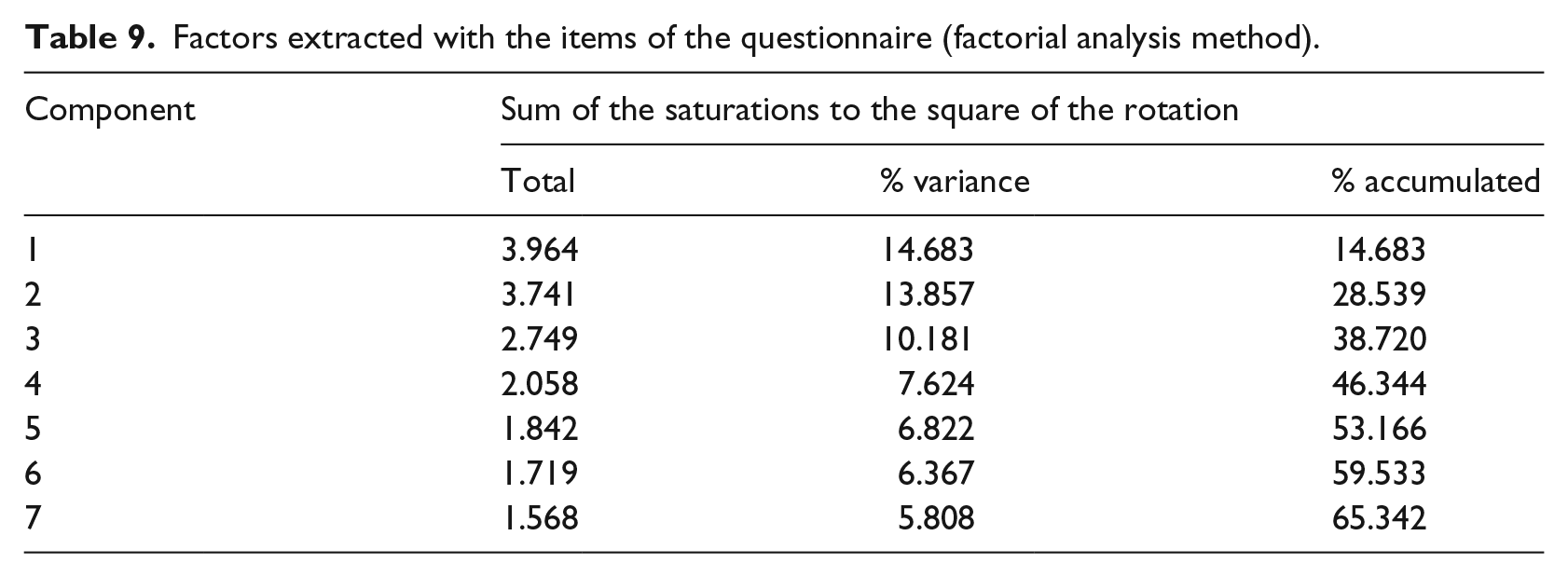
The extraction by principal component analysis method indicates the existence of seven factors or dimensions that reaches 65.34 percent of the total variance explained, with percentages of each of them ranging from 14.68 percent of the first to the 5.80 percent of the last 23 (see Table 9).
Factors extracted with the items of the questionnaire (factorial analysis method).
Discussion and conclusion
The LLM project is based on the need to investigate effective integral solutions aimed at the prevention and treatment of cognitive deterioration in the elderly European population. The difficulty faced by health systems is taken into account due to the growing demand of this population group. 24
Although several programs have previously studied the impact of computer-based applications on cognitive functions,25–28 few have analyzed the solutions in terms of accessibility and the real possibilities of use by their end users. 29 The modification of functional capacities in the elderly is one of the main difficulties they have to assume. This supposes that they have cognitive problems (alteration of memory, difficulty in assessing situations and making decisions, etc.) and physical-motor problems (which affect mobility, strength and precision) and therefore learning and manipulation is different.
The general objective is focused on studying the usability of the LLM program, both among the elderly Spanish population with cognitive impairment and in healthy people. We consider that the sample analyzed during this study was adequate for evaluating the clinical viability and acceptability of the platform. It also included participants with and without cognitive impairment. The usability evaluation was carried out by the users through a questionnaire related to the platform. The issues raise aspects of ease of use and user experience, focusing on the positive and negative aspects of the program that will help identify the deficiencies of the system.
Regarding the interaction of users with the LLM technical system, 53.5 percent of the sample considered that it was easy to use without help while 46.5 percent of participants needed help to use the program. In general, the positive responses to the good usability of the LLM program stand out.
Regarding independent living and social integration, the results show an increase in the activity, both physical and cognitive. It produces an improvement in their functional capabilities perception which results in greater autonomy and social integration. In this way, it contributes to the prevention of certain pathologies and physical limitations, with a motivating effect and a improvement feeling.
Considering the sociodemographic variables, in all the study groups, there has been a wide acceptance regarding the usability of the LLM program. Based on the results obtained, the main conclusion is presented. There are limitations, associated with peripheral devices for physical training, that hinder the autonomous use of the program. Age is a differentiating factor, younger people have fewer problems adopting any technology and the management of the program is not an exception. In the future, this difference will be reduced. The educational level and the lack of experience in the use of technology do not influence. Neither the gender (man/woman) influences the use.
The dependent subjects perceived a lower degree of usability, and their experience was less satisfactory than the subjects who lived alone or as a couple. In this case, it is advisable to follow the LLM program in day centers or at the user’s home address. Regarding the number of sessions, when a program is easy to use and learn, increasing the number of training sessions does not affect the usability results. People who completed the program were more favorable toward the usability of the program than those who left the physical program or the complete program. Therefore, one of the factors that includes in regard to continuity and adherence to treatment is the acceptance and usability of the intervention. The level of cognitive impairment influenced the perception of usability of the program.
An important contribution of this research is to have included a series of factors such as affectivity, autonomy and effort. These factors are not usually contemplated in valuation instruments. We consider necessary for measuring the usability of this type of technology in the elderly. Consequently, this questionnaire may be very useful for future developments in this area of mental health. Hence, an optimal line to follow is related to use of virtual reality systems such as Kinect, software program development collecting ideas from gaming, which allows the patient to exercise without need to carry any device.
Footnotes
Acknowledgements
Thanks to Service of Psiquiatry of the Provincial Hospital of Zamora, Spain, for the collaboration in this work.
Author contributions
PhD Student S.G.A., J.M.T.G. and B.S.A. participated in the conception of the study and article writing. I.T.D., J.L.M.S. and M.F.M. participated in the review and article writing. All authors write, read and approved the final article.
Declaration of conflicting interests
The author(s) declared no potential conflicts of interest with respect to the research, authorship, and/or publication of this article.
Funding
The author(s) disclosed receipt of the following financial support for the research, authorship, and/or publication of this article: This research has been partially supported by European Commission and the Ministry of Industry, Energy and Tourism under the project AAL-20125036 named “Wetake Care: ICT-based Solution for (Self-) Management of Daily Living.”
