



Abstract
This study used the regulatory focus/fit framework to compare the impact of text message wording on college students’ drinking behaviors. In this 2 × 3 × 2 pre-test/post-test experiment, participants (N = 279) were randomly assigned to one of the three groups: messages matching regulatory focus (congruent group), messages mismatching regulatory focus (incongruent group), and general health messages (control group). Messages were tailored by regulatory fit (prevention-oriented or promotion-oriented). Mixed factorial analyses of covariance revealed that prevention-oriented individuals who received text messages incongruent with their regulatory focus reported drinking alcohol for more hours and were more likely to consume a higher quantity of drinks than participants in the congruent or control group. These findings suggest that health messages mismatched to a receiver’s regulatory focus might exacerbate unhealthy behavior.
Health messages need to do more than convey information to audiences. 1 They also must make audiences feel engaged and motivated to take action in the face of a health threat. 2 Even more importantly, they must target specific audiences within a population and have content tailored to audience needs and preferences. 3 If health messages fail to make the case for why a recommended behavior change is feasible and worthwhile, then recipients are unlikely to comply with it. 4 Strategically manipulating the linguistic features of a health message is one method for enhancing message persuasiveness. 5 This study uses the regulatory focus/fit framework6,7 to test the impact of tailored text messages about managing alcohol consumption on the drinking behavior of college students.
Regulatory focus and fit
Regulatory focus is a theoretical framework used to explain how individuals make decisions about engaging in goal-oriented behaviors.8–10 Regulatory focus has been used to explain how and why individuals are motivated to pursue goals and rests on the assumption that individuals are either promotion-oriented (i.e. focused on obtaining positive outcomes) or prevention-oriented (i.e. focused on avoiding negative outcomes).6–11 Regulatory focus asserts that messages can be framed as either prevention-oriented (e.g. “Inactivity may lead to poor health.”) or promotion-oriented (e.g. “Being physically active may improve your health.”). Promoters engage in behaviors because they are driven to pursue goals that lead to positive outcomes, whereas preventers pursue goals that protect against the occurrence of negative outcomes.12,13 Furthermore, promotion-focused individuals tend to be more concerned with accomplishments and advancements, while prevention-focused individuals are more concerned about protection, safety, and responsibilities. 14 Regulatory fit has been used as a framework for comparing prevention and promotion messaging in a variety of health contexts and have produced findings indicating that when messages are tailored by one’s regulatory focus, they are more likely to increase engagement in physical activity, 12 create positive attitudes toward advertisements promoting dieting, 15 sustain weight loss, 16 enhance the persuasiveness of messages about sunscreen use, 17 encourage more visits with one’s doctor, 18 and influence attitudes toward human papillomavirus (HPV) vaccinations. 19 Keller and Bless 20 also found a relationship between regulatory focus, efficacy, and health messages, such that more attention was given to the self-efficacy associated with engaging in a health behavior when promotion-focused language was used, whereas more attention was given to the response efficacy associated with engaging in a health behavior when prevention-focused language was used. Thus, there is reason to believe that message processing fluency is enhanced when the language that is used fits with one’s regulatory focus. 17
Higgins’9,10 work on regulatory focus theory sought to refine explanations for why some individuals are more motivated to approach positive outcomes and others to avoid negative ones. Self-regulation plays a key role when individuals are confronted with having to make decisions. 9 Unlike previous self-regulatory models that relied on regulatory anticipation (expectations of pleasure or pain 21 ) and regulatory reference (perceptions of positive outcomes and negative outcomes 22 ), regulatory focus theory attempts to account for the roles that emotion and persuasion play in motivational messages. 9 This conceptualization of regulatory focus is conducive to health communication studies in which researchers want to elicit long-term behavior change because it relies on the premise that goal orientations are formed early on, which shapes how an individual goes about accomplishing a goal. In addition, to the extent that a message fits one’s focus, it is more likely to encourage persistence of the recommended behavior 23 .
Originally, work on regulatory focus had addressed how promotion and prevention orientations as individual differences influence decision-making.7,10 Higgins 6 later explained that regulatory “fit” occurs when individuals pursue goals in ways that are in accordance (or congruent) with their regulatory focus. Value from fit not only transfers to the value of goal pursuit, it also contributes to one’s perceived quality of life.6,11 Messages appeal to recipients to the extent that they fit (are congruent) with an individual’s regulatory orientation. 24 Preference for either type of message (promotion-oriented or prevention-oriented) is determined by the attitudes and values of the message recipient; people react to messages in ways that are consistent with their current goal orientations.11,25,26 Therefore, messages can be manipulated to fit a promotion- or prevention-oriented individual’s regulatory focus. This is useful for health messages seeking to enhance self-efficacy and response efficacy. 20
Because regulatory fit is rooted in self-regulatory systems and has been described as a key factor in explaining motivation, 10 it lends itself to messages about self-regulation and avoidance of excessive or potentially harmful behaviors (e.g. high-risk drinking). Regulatory fit also relies on the principle of message congruence. Therefore, a true test of regulatory fit should assess the effects of both congruent messages (those aligned with an individual’s regulatory focus) and incongruent messages (those misaligned with an individual’s regulatory focus). Testing matched and mismatched promotion-oriented and prevention-oriented messages allows for a more thorough evaluation of regulatory fit, specifically with regard to its impact on message tailoring. 27 This serves as the basis for the design of this study. Applying regulatory fit to messages about alcohol consumption will not only extend the literature on this model, but also contribute to an understanding of effective message strategies for combating problematic drinking behaviors. 28 Further, regulatory fit serves as an appropriate framework for a tailored text message health intervention because there is strong evidence indicating that messages targeting an individual’s goal orientation can lead to behavior change.16,25 There is also ample evidence to suggest that text messaging interventions can be effective for changing drinking behaviors.29,30 However, a much smaller body of research has been conducted to test regulatory fit as a framework for a text messaging intervention.15,31
Alcohol misuse on college campuses
Although multiple campaigns have been implemented to curb high-risk drinking behaviors on college campuses, alcohol consumption in these areas continues to occur at alarming rates. 32 According to the National Institute on Alcohol Abuse and Alcoholism (NIAAA), 33 the consequences of risky drinking are far-reaching. Nearly all college students, whether they drink or not, are impacted by the effects of alcohol because of the problematic consequences resulting from high-risk alcohol consumption. The NIAAA 33 reports that approximately 80 percent of college students consume alcohol, about half of whom do so through binge drinking. High-risk drinking is defined as more than three drinks per day and more than seven drinks per week for women, and more than four drinks per day or more than 14 drinks per week for men. 34 Binge drinking is defined as a blood alcohol concentration (BAC) level of 0.08 g/dL or higher, which typically means four drinks for women and five drinks for men, within the span of 2 h. 35
Over 97,000 cases of sexual assault or rape are reported per year because of alcohol, and more than 690,000 college students have been physically assaulted by other students consuming alcohol. 35 Alcohol-related injuries are also responsible for the death of 18,000 college students each year. In addition to the bodily harm inflicted on college students, alcohol has played a role in vandalism and in the academic decline of nearly 25 percent of college students. 33 Although there are high rates of alcohol misuse and abuse reported on college campuses, students often fail to recognize that they have a drinking problem 36 . Therefore, intervention efforts need to get at the root of what motivates students to partake in or abstain from drinking. 37
There have been multiple efforts to implement successful interventions that aim to reduce high-risk drinking on college campuses38–40 However, many of these programs fall short of accomplishing long-term changes in drinking behavior. One of the reasons why many of the campaigns against drinking on college campuses struggle to take hold is because they rely on standardized, global messages rather than sending messages tailored to individual attitudes. 41 In their meta-analytic review of college student drinking interventions, Carey et al. 42 found that interventions that provided personalized feedback were the most successful at reducing rates of alcohol consumption. Educating students about the risks of alcohol is not enough. 43 Students need to be persuaded that high-risk drinking is a real threat (Witte, 1993),44,45 that they can take action in the face of this threat46,47 and that there are alternatives to engaging in the threatening behavior. 48 Rather than telling students to stop drinking completely, it is more helpful to provide them with information about self-protective strategies (i.e. drinking water while drinking alcohol, eating food before drinking) because doing so helps students recognize that they can still drink, but in ways that are safe and less likely to result in negative consequences49,50.
Tailored health messaging
Many of the campus-wide efforts to prevent alcohol misuse have relied on social norms approaches, which have been shown to be ineffective because their messages are often perceived as irrelevant or not credible 51 , fail to produce prolonged changes in attitudes 52 and drinking behaviors 53 , and can result in misinterpretation of the messages 54 . This is not surprising considering the NIAAA’s 55 explanation that social norms approaches, which seek to fix misperceptions of peer alcohol consumption, are most effective when applied at the individual level when they provide customized feedback. Using a one-size-fits-all approach when disseminating messages about alcohol norms is less likely to elicit behavior change than when the delivery of those messages is tailored to individual’s orientations toward drinking. 42 Recent work has attempted to address this issue by using mobile devices as tools for providing customized feedback to college students who drink. Kuntsche and Labhart 56 sent frequent text messages to college students asking about their weekend drinking habits, Bernhardt et al. 57 used mobile phones to gather self-reports of daily drinking habits, and Mason et al. 58 sent tailored text messages to college students that led to changes in drinking behavior. Other researchers have also implemented text messaging programs aimed at providing feedback based on individual responses 59 and alcohol consumption levels 60 . All of these are examples of programs that have been effective at targeting college student drinking, but much of the work in this area neglects to consider the effects that variations in wording may have on message effects.
One reason some health campaigns and interventions fall short of reaching their goals is that they fail to segment or target specific audiences within a larger population. 3 Disseminating health messages too broadly can backfire because recipients are more likely to attend to a message if they perceive that it speaks to their specific needs or values. 61 Recent work has shown that the most persuasive health messages are those that go beyond targeting at the group level by tailoring their content for individual receivers. 62 Tailored messages are defined as those that focus on individual-level characteristics, which are used to design messages that are meaningful for individuals, rather than groups. 63 Studies examining the effects of tailoring on health behavior change have used messages tailored by such variables as race 64 self-efficacy, 65 and perceived barriers to change. 66
Although tailoring shows a lot of promise, sometimes audiences fail to see how supposedly tailored materials are applicable to their lifestyles. 67 This suggests the need for messages to not only be engaging and informative, but persuasive as well. 68 If the linguistic features of a health message fail to persuade, then the message will fail to motivate the recipient to take action. 69 Updegraff et al. 70 concluded that manipulating message frame (gain or loss) and motivational orientation (approach or avoidance) can enhance the effects of message tailoring. Thus, there is some evidence to suggest that communication frameworks can serve as a viable means for improving tailored messages. While there has been a growing body of work evaluating the effectiveness of tailored print messages on health behavior change, a smaller body of work has evaluated the effectiveness of tailored text messages, and an even smaller one has assessed tailoring with the use of a communication framework. 3 Therefore, the goal of this study is to evaluate the effectiveness of a text message intervention, tailored by regulatory fit, aimed at reducing high-risk drinking among college students.
Text message health interventions
Mobile health (mHealth) devices have been growing in popularity in healthcare. 71 These technologies promote greater health efficacy by their ability to send reminders about treatment adherence and encourage physical activity and healthy eating habits, as well as store, log, and track crucial health statistics. 72 Wei et al.’s 73 review on text messaging health interventions illustrates that medication adherence, type 2 diabetes care, weight management, smoking cessation, and healthy eating are some of the most common health behaviors studied in text messaging studies. Fewer studies have looked at the potential text messaging interventions have on alcohol consumption. Those on this topic have found that text messaging is a viable medium for encouraging positive changes in drinking behavior. 29
Although there is ample evidence that mHealth technologies can help individuals become more proactive with their healthcare, 74 a smaller body of work has examined message design features that facilitate health. A better understanding of how message content affects message impact would allow professionals to increase the efficacy of these interventions. 75 Furthermore, increased attention has been given to the message composition features that enhance the persuasiveness of printed health materials in recent years,2,76 but this movement has failed to take a prominent hold in the mHealth domain.
Hypotheses
This study aims to optimize construction of messages about alcohol consumption delivered to college students who drink by applying a theoretical framework (regulatory fit) to the design of text messages about alcohol. Providing students with tailored messages about their drinking that align with their goal orientations (promotion-focused or prevention-focused) can be an effective way to combat excessive alcohol consumption on college campuses 77 . This study will extend existing work on regulatory fit by evaluating the potential impact of messages that are incongruent (mismatched) with an individual’s goal orientation. Given that (a) there is evidence to suggest that tailored health messages are more effective at eliciting behavior change than non-tailored messages, 78 (b) text message interventions have been successful at decreasing alcohol consumption among college students, 30 and (c) regulatory fit enhances the persuasiveness of health messages,24,26 the following hypotheses are proposed:
Hypothesis 1a. Participants in the congruent group will report drinking for a fewer number of hours than participants in the incongruent and control groups.
Hypothesis 1b. Participants in the congruent group will report consuming a fewer number of drinks than participants in the incongruent and control groups.
Hypothesis 1c. Participants in the congruent group will report fewer incidences of consuming five or more drinks in one sitting than participants in the incongruent and control groups.
Hypothesis 2. Participants in the congruent group will report fewer high-risk drinking behaviors than participants in the incongruent and control groups.
Hypothesis 3. Participants in the congruent group will perceive the messages as more persuasive than participants in the incongruent and control groups.
Method
This study used a 2 (between-subjects factor) × 3 (between-subjects factor) × 2 (within-subjects factor) mixed factorial experimental design to evaluate the effects of regulatory focus orientation and treatment group assignment on pre-test/post-test measures of alcohol consumption. Message persuasiveness was measured with post-test scores only. All data were collected online using Qualtrics software and analyzed with SPSS software.
Participants
Participants (N = 279) were enrolled in a university-sponsored text message program that sends information to undergraduate student subscribers about health-related campus events, resources, and tips for engaging in healthy behaviors. 79 The message topics cover sleeping, mental health, stress, nutrition, physical activity, drinking, and safe sex. The participants in this study were a subset of the larger participant pool and had the option to participate if they met the eligibility criteria. They were undergraduate students with ages ranging from 18 to 26 (M = 19.40, standard deviation (SD) = 1.17). Sixty-eight percent were female and self-reported racial identities included White (n = 140), Hispanic or Latino/a (n = 57), Asian or Pacific Islander (n = 57), biracial or multiracial (n = 13), Black (n = 6), and “other” (n = 4). Sixteen percent (n = 44) indicated that they were members of a fraternity or sorority. Participants were also asked to report on their typical text messaging behavior (treated as a covariate). The majority (n = 159) reported sending and receiving 50 or fewer text messages per day, while the remaining 43 percent of the participants (n = 118) reported sending and receiving more than 50 messages per day. Fifty-eight percent of the participants (n = 162) reported exchanging text messages with five or fewer people per day and the remaining 42 percent of the sample (n = 115) reported exchanging text messages with six or more people per day.
Procedure
Program subscribers received an initial text message asking whether they would be interested in participating in a special study. If subscribers responded “yes,” they were sent the link to the screening survey via text message. If they responded “no,” they continued to remain in the subscriber pool. As an incentive for retention in the study, those who were eligible to participate were told they would receive two Amazon gift cards upon completion of the study; a US$10 gift card for completing the pre-test questionnaire and a US$20 gift card for completing the post-test questionnaire. Study protocols and materials were approved by the Institutional Review Board.
Assignment to treatment and messaging groups
Because our goal was to measure changes in alcohol use, only students who reported drinking on the screening survey were eligible for participation. The screening survey also contained the Regulatory Focus Questionnaire 7 so that participants could be randomly assigned to treatment groups (congruent, incongruent, and control) prior to the intervention. To ensure that participants in this study were randomly assigned to each of the three treatment groups, the following process was used: (a) removed participants who did not complete the screening survey (did not enter phone number to respond to the regulatory focus assessment); (b) sorted by responses to the drinking criterion question so that non-drinkers would not be included in this study; (c) calculated the participants’ prevention/promotion scores to identify who was promotion-focused and who was prevention-focused; (d) moved the data to a “treatment group” Excel workbook, inserted a column with a list of randomly generated numbers, sorted by the random numbers, and moved participants with numbers 1–160 to the congruent group (n = 160), 161–320 to the incongruent group (n = 160), and 321–479 to the control group (n = 159); and (e) sorted by prevention/promotion orientation so that the number of participants in each group could be determined.
The final step in the process involved creating another Excel workbook for the messaging groups, which was sent to the text messaging service provider. All of the prevention-focused participants from the congruent treatment group were assigned to the prevention-messaging group, and all of the promotion-focused participants from the incongruent treatment group were assigned to the prevention-messaging group. All of the promotion-focused participants from the congruent treatment group were assigned to the promotion-messaging group, and all of the prevention-focused participants from the incongruent treatment group were assigned to the promotion-messaging group. All of the “control” participants from the treatment groups were moved to the control-messaging group. In sum, participants first completed the screening survey asking about alcohol use and regulatory focus orientation, were then randomly assigned to one of the treatment groups (congruent messages, incongruent messages, or control), and then received messages that either matched or mismatched their orientation depending on what treatment group they were in (those in the control group received general health messages throughout the study). Figure 1 illustrates the assignment of participants to their respective treatment and messaging groups.
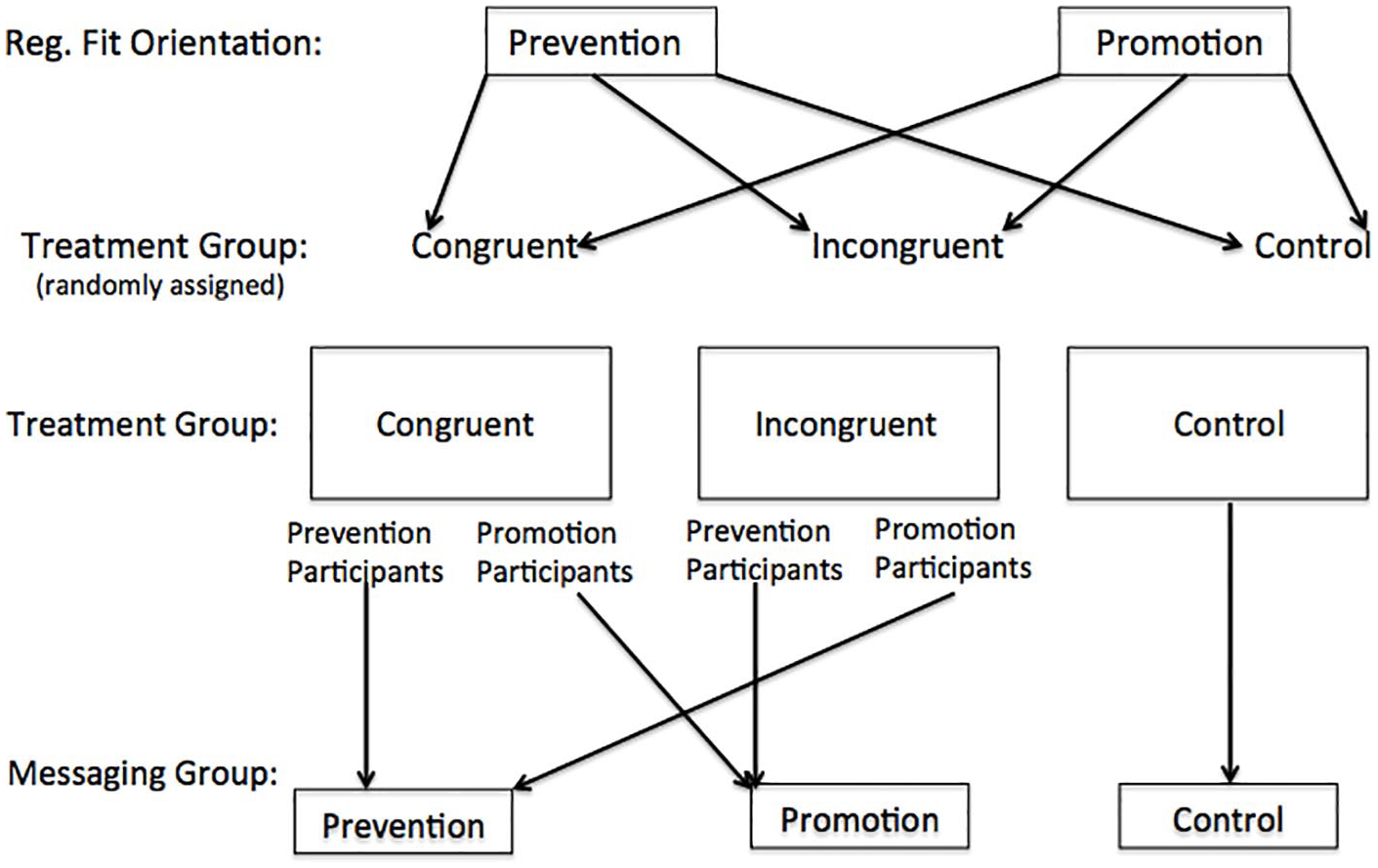
Assignment of participants to treatment and messaging groups.
Baseline and post-test assessments
After participants had been assigned to their corresponding messaging groups, they received a text message with a link to the pre-test questionnaire. Those in all three treatment groups received the same questionnaire, and every participant was asked to provide a unique code, which was used to connect pre-test responses with post-test responses. The text message intervention lasted for a total of 8 weeks. Text messages were sent on Monday, Thursday, and Friday. All three groups received the same messages on Mondays, which were about health topics other than alcohol. Given this, this study included a control condition in which participants still received messages from the program about general health topics (e.g. physical activity, safe sex, and nutrition). The decision to send messages about topics other than alcohol was made based on existing health text message intervention studies in which the researchers send either no messages to members of the control group or send messages about topics other than the one under investigation. 29 For the Thursday and Friday text messages, those in the experimental groups received messages about alcohol and those in the control group received general health messages. All text messages were sent at 4:00 p.m. (CST).
At the end of the 8 weeks, a post-test assessment was administered to all of the groups. The post-test questionnaire contained the same items as the pre-test questionnaire, but also contained additional items asking about the extent to which they were persuaded by the messages they received.
Experimental design and stimulus messages
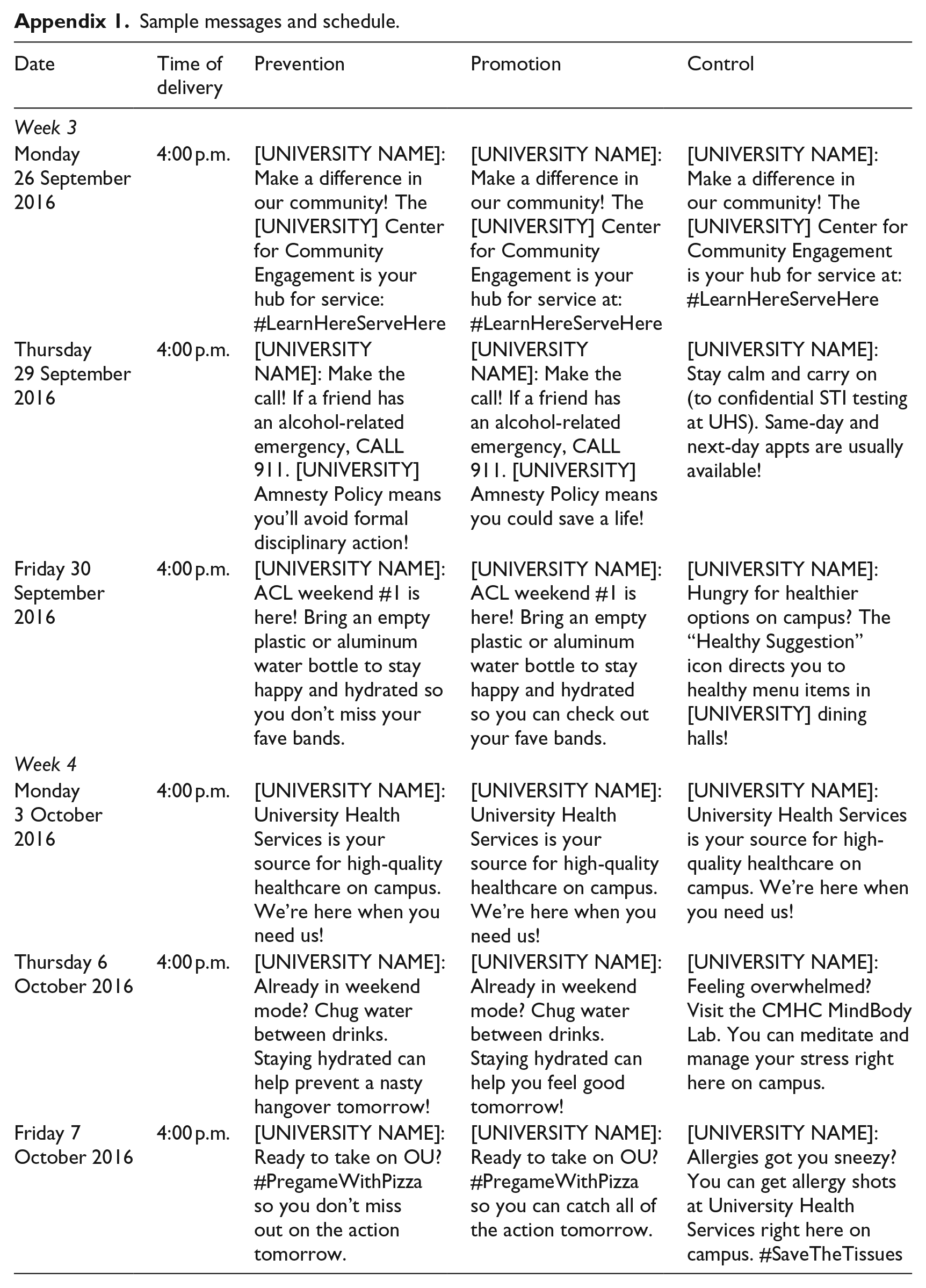
The lead author created all of the messages, some of which were adapted from the existing program’s message library. Two independent raters coded all of the intervention messages as a manipulation check. The raters were given the definitions of prevention-focused and promotion-focused orientations and were then asked to view all of the messages (one at a time). The raters were instructed to identify each message as a prevention message or promotion message. The raters were in 100 percent agreement with the researcher in identifying each message’s intended focus. A linguistic expert with prior experience in working with regulatory fit also reviewed the messages. Appendix 1 contains a sample of the messages used in the study, as well as the schedule of delivery dates and times.
Measures
We used the Regulatory Focus Questionnaire7,80 to measure participants’ regulatory focus, the National College Health Assessment (NCHA) and the Alcohol Use Disorders Identification Test (AUDIT) 81 to measure participants’ drinking behaviors on the pre-test and post-test, and items from Cesario et al. 26 to measure perceptions of message persuasiveness.
Regulatory Focus Questionnaire
This instrument was developed by Higgins et al. 7 and has been validated by Cesario et al. 26 The scale is intended to capture goal pursuit through either vigilant means or eager means. It is a 5-point (1 = “rarely” and 5 = “very often”), 11-item, Likert-type scale and contains such items as “Compared to most people, I typically get what I want out of life,” “I feel like I have made progress toward being successful in my life,” and “As a child, I obeyed rules and regulations established by my parents.” Regulatory focus orientation scores were determined by, first, adding together scores on the prevention items, adding together scores on the promotion items, and then subtracting the prevention score from the promotion score. Thus, a lower score on this scale is indicative of a prevention-focused orientation and a higher score is representative of a promotion-focused orientation. In accordance with the study of Cesario et al. 26 and Higgins et al. 80 , a median split was used to create a categorical variable that classified participants as either prevention-focused or promotion-focused. Table 1 contains the means, SDs, Cronbach’s alphas, and answer ranges for each measure.
Ranges, means, standard deviations, and Cronbach’s alphas.
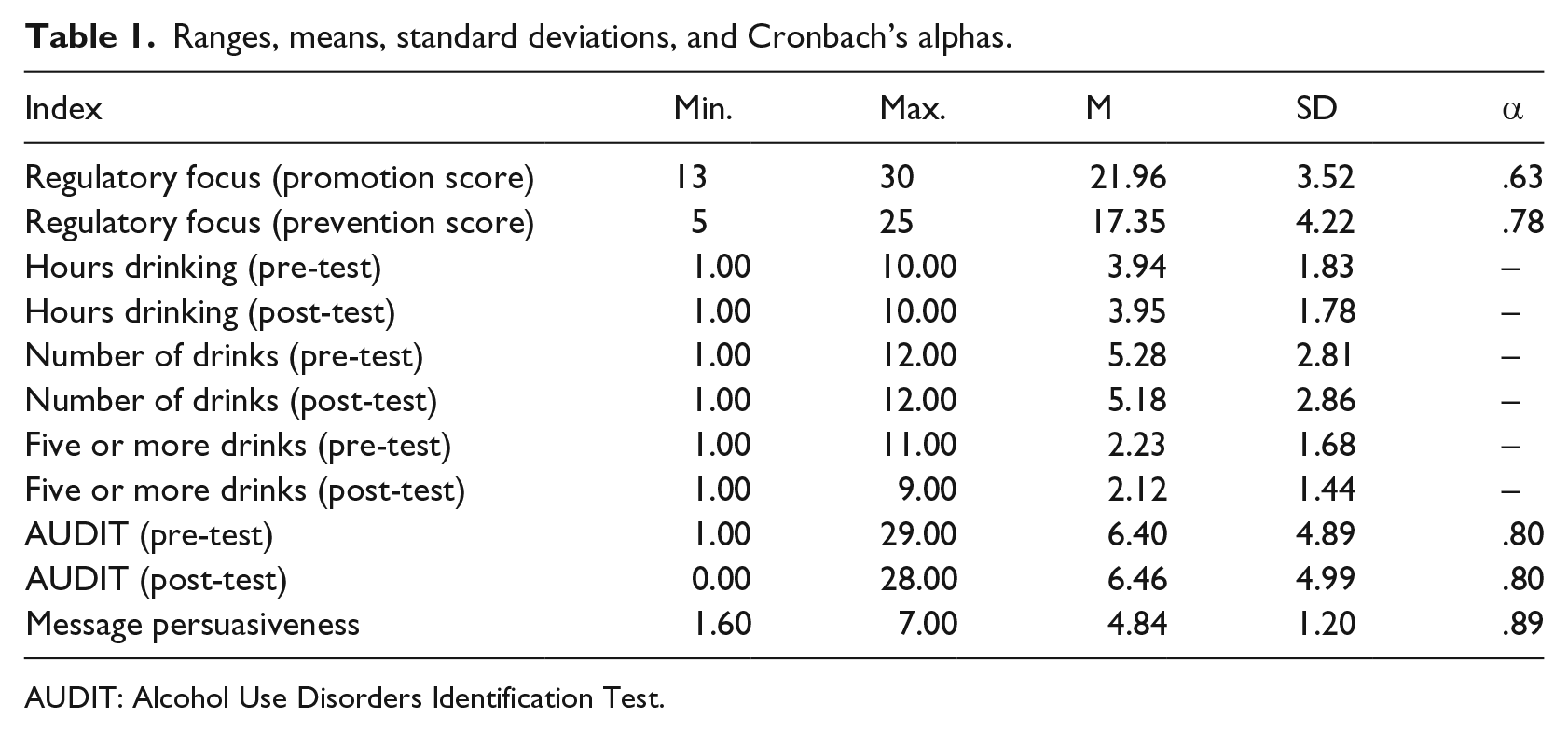
AUDIT: Alcohol Use Disorders Identification Test.
NCHA
The NCHA was used to measure the number of hours spent drinking (H1a), quantity of drinks consumed (H1b), and number of times consuming five or more drinks in one sitting (H1c). Responses for the first question ranged from 1 (0 h) to 10 (8 h or more). Responses for the second question ranged from 1 (0 drinks) to 12 (10 or more drinks). Responses for the third question ranged from 1 (0 times) to 11 (10 or more times). The following questions were included to measure the three outcome variables associated with current drinking behavior: “How many hours did you drink alcohol during the last time you partied/socialized?” “How many drinks of alcohol did you have the last time you partied/socialized?” and “Over the last 2 weeks, how many times have you had five or more drinks of alcohol in one sitting?” Each question was treated as a single-item measure for evaluating the three dimensions of current drinking behavior.
AUDIT
The AUDIT 81 is a 10-item scale used to collect information about high-risk drinking behaviors (H2). The AUDIT assesses whether or not an individual has a drinking disorder, but can also provide an assessment of less severe levels of alcohol consumption. Sample items include the following: “How often do you have six or more drinks on one occasion?” and “How often during the last year have you found that you were not able to stop drinking once you had started?” Responses were scored in accordance with the Saunders et al. 61 study, which treats the scale as a sum score ranging from 0 to 40. A higher score on this scale is indicative of alcohol abuse, and a score higher than an 8 “indicates a strong likelihood of hazardous or harmful alcohol consumption” (p. 804).
Message persuasiveness
Cesario et al. 26 measured the extent to which participants were persuaded by the messages they received (H3). The 5-item, Likert-type scale used in this study included such items as: “The text messages I received were convincing” and “The text messages I received influenced my health behaviors.” Participants selected an answer from 1 (“not at all”) to 7 (“very”).
Power analysis
The choice of the sample size was based on statistical power considerations, with a goal of having power (1 − β) = 0.85 for detecting predicted effects that would account for 5 percent of the explained variance, applying two-tailed tests with a non-directional alpha of .05. 82 In this experimental design, critical hypotheses oriented around single degree of freedom contrasts. 83 The sample size recruited provided an approximate power of 0.88 under the aforementioned assumptions.
Results
Randomization check
Associations between the manipulated treatment group factor and the demographic characteristics (regulatory focus, sex, race, age, year in school, residence, and Greek life affiliation) of the sample were examined. There were no significant associations between the manipulated factor and these variables (p > .09 in all cases).
Tests of hypotheses
To test hypotheses, 2 × 3 × 2 repeated-measures (mixed factorial) analyses of covariance (ANCOVA) were conducted with regulatory focus (prevention or promotion) and message group (congruent, incongruent, or control) as between-participant factors, measurement time (pre- or post-intervention) as a within-participants factor, and participant sex (male or female), Greek affiliation (residing in a Greek organization or not), and pre-intervention text messaging behavior (an index of participants’ self-reported frequency of sending/receiving texts and number of contacts) as covariates. These covariates were chosen because prior research has demonstrated robust moderation effects of all three on the drinking and text messaging behaviors of college students. 84 The dependent variables were number of hours drinking, quantity of drinks consumed, number of times having five or more drinks in one sitting, high-risk drinking, and message persuasiveness. The alpha level for reaching statistical significance was set to .05 for all analyses.
Number of hours drinking
Hypothesis 1a predicted a main effect of treatment group on reported drinking behavior, such that participants in the congruent group would report drinking for a fewer number of hours than participants in the incongruent and control groups. Repeated-measures ANCOVA results did not find this main effect to be significant, F(2, 269) = 2.67, p = .07.
However, there was an interaction of regulatory focus and treatment group on number of hours drinking, F(2, 266) = 3.59, p = .029, Cohen’s d = 0.39. Planned comparisons indicated that the mean for the incongruent group (M = 4.64, SD = 1.97) was significantly different from the means for the congruent group (M = 3.60, SD = 1.61) and the control group (M = 3.80, SD = 1.82) for prevention-focused participants, F(1, 266) = 7.75, p =.005; means did not differ significantly in the incongruent group (M = 3.86, SD = 1.58), congruent group (M = 3.81, SD = 1.45), or control group (M = 4.08, SD = 2.09) for promotion-focused participants, F(1266) = .19, p > .05. Thus, Hypothesis 1a was partially supported. Prevention-focused participants in the incongruent group reported drinking for more hours than prevention-focused participants in the congruent and control groups. Table 2 illustrates the mean hours drinking (along with the other outcome variables) by treatment group and regulatory focus.
Means and standard deviations within treatment groups by regulatory focus.
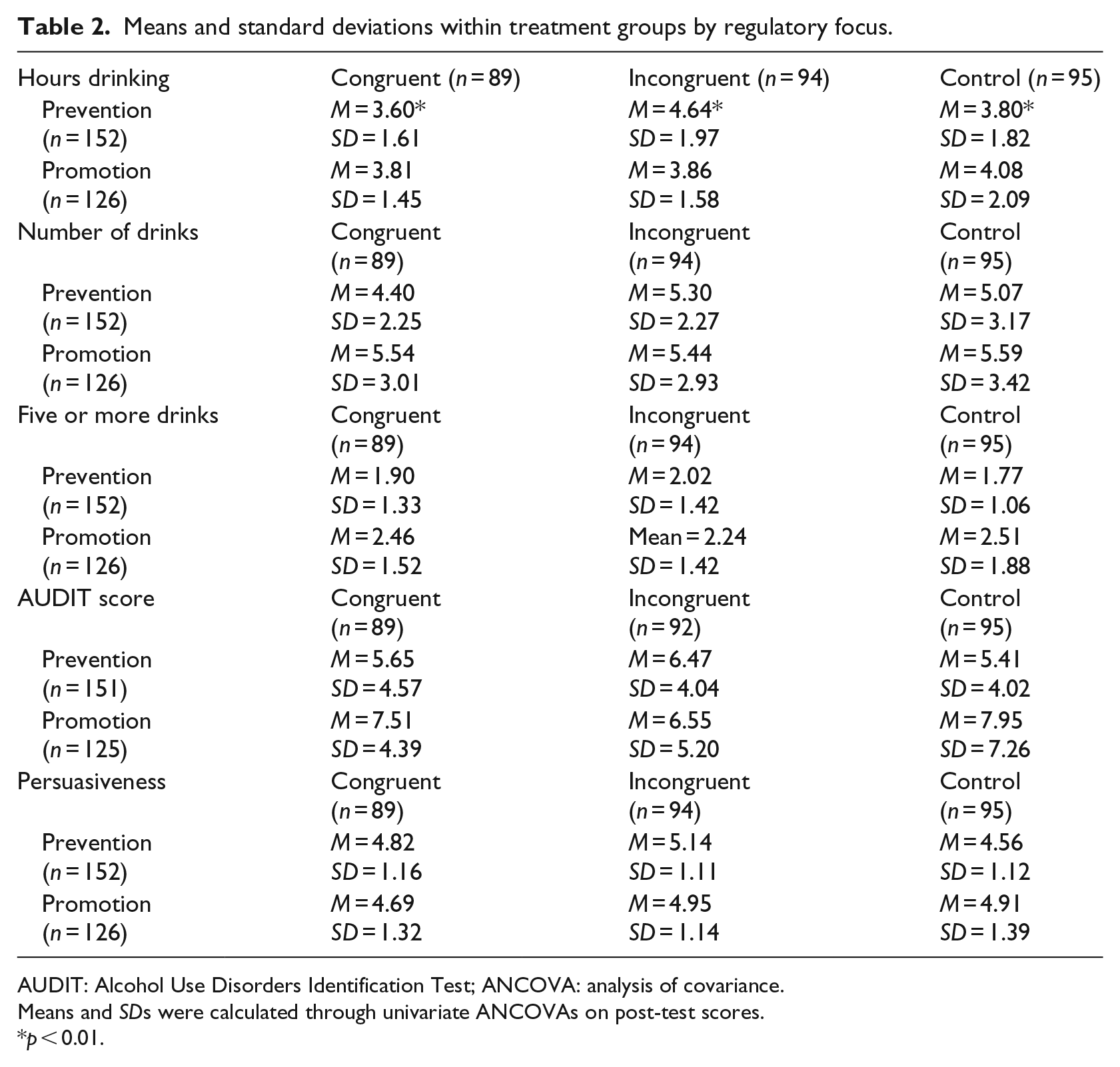
AUDIT: Alcohol Use Disorders Identification Test; ANCOVA: analysis of covariance.
Means and SDs were calculated through univariate ANCOVAs on post-test scores.
p < 0.01.
Quantity of drinks
Hypothesis 1b predicted a main effect of treatment group on reported drinking behavior, such that participants in the congruent group would report consuming a fewer number of drinks than participants in the incongruent and control groups. Repeated-measures ANCOVA results did not find this main effect to be significant, F(2, 269) = .84, p = .44.
However, there was an interaction of regulatory focus and treatment group on quantity of drinks consumed, F(2, 266) = 3.29, p = .039, d = 0.38. An examination of the univariate analysis suggested that the main effect for number of drinks did not significantly differ between treatment groups or regulatory focus groups, F(2, 266) = 1.62, p = .200. Thus, there was no support for Hypothesis 1b. Although the differences between groups were not statistically significant, the means followed the same pattern as those in Hypothesis 1a. For prevention-focused participants, those in the incongruent group reported consuming a higher number of drinks (M = 5.30, SD = 2.27) than those in the congruent group (M = 4.40, SD = 2.25) and control group (M = 5.07, SD = 3.17). Also, as was the case with Hypothesis 1a, this pattern held only for the prevention group.
Five or more drinks
Similarly, Hypothesis 1c predicted a main effect of treatment group on reported drinking behavior, such that participants in the congruent group would report fewer incidences of having five or more alcoholic drinks in one sitting during the past 2 weeks than participants in the incongruent and control groups. Repeated-measures ANCOVA results did not find this main effect to be significant, F(2, 269) = .16, p = .85
However, there was a significant interaction of regulatory focus and treatment group for this dependent variable, F(2, 266) = 3.43, p = .034, Cohen’s d = 0.39. A follow-up univariate ANCOVA failed to identify significant differences between treatment and regulatory focus groups, F(2, 266) = 1.73,p = .180. These findings suggest no support for Hypothesis 1c. However, like Hypotheses 1a and 1b, the mean scores illustrate a similar pattern such that prevention-focused participants in the incongruent group reported more instances of drinking five or more drinks of alcohol in one sitting (M = 2.02, SD = 1.42) than those in the congruent group (M = 1.90, SD = 1.33) or control group (M = 1.77, SD = 1.06).
High-risk drinking
Hypothesis 2 predicted a main effect of treatment group on reported drinking behavior, such that participants in the congruent group would report fewer high-risk drinking behaviors (as measured by the AUDIT) than participants in the incongruent and control groups. Repeated-measures ANCOVA results did not find this main effect to be significant, F(2, 267) = 0.15, p = .86.
There was an interaction of regulatory focus and treatment group, though, on high-risk drinking scores, F(2, 264) = 3.79, p = .024, d = 0.40. The subsequent univariate analysis indicated the difference between groups was close to reaching significance, F(2, 264) = 2.61, p = .076. A planned comparison indicated that prevention-focused participants who received incongruent text messages reported marginally higher scores on the high-risk drinking assessment (M = 6.47, SD = 4.04) than others who received congruent (M = 5.65, SD = 4.57) or control (M = 5.41, SD = 4.02) text messages, F(1, 264) = 3.68, p = .056, which aligns with the findings for Hypotheses 1a–1c. In contrast, promotion-focused participants who received incongruent texts reported lower high-risk drinking scores (M = 6.55, SD = 5.20) than others who received congruent (M = 7.51, SD = 4.39) or control (M = 7.95, SD = 5.26) texts, F(1, 264) = 4.10, p = .043. Thus, Hypothesis 2 was partially supported.
Message persuasiveness
Finally, Hypothesis 3 predicted a main effect of treatment group on message persuasiveness, such that participants in the congruent group would perceive the messages as more persuasive (H3) than participants in the incongruent and control groups. ANCOVA results did not find a main effect for message persuasiveness, F(2, 269) = 1.96, p = .14. Furthermore, there was no significant interaction of regulatory focus and treatment group on message persuasiveness, F(2, 266) = 2.43, p = .09. Thus, Hypothesis 3 was not supported.
Secondary analyses
After testing for main effects, another analysis was conducted to determine whether there were significant interactions between regulatory focus orientation and messaging group. This allowed for conclusions to be made about whether the type of message received (prevention or promotion) contributes to differences in scores between prevention-focused and promotion-focused participants on the dependent variables. The same covariates were included (sex, Greek life affiliation, text messaging behavior). Mixed factorial ANCOVAs revealed no significant interactions between regulatory focus orientation and messaging groups for: number of hours drinking, F(2, 266) = 1.78, p = .171; number of drinks, F(2, 266) = 0.50, p = .605; number of times having five or more drinks in one sitting, F(2, 266) = 0.57, p = .568; and high-risk drinking, F(2, 264) = 1.73, p = .180. Univariate ANCOVAs for message attitudes, F(2, 266) = .78, p = .458, and message persuasiveness, F(2, 266) = 0.78, p = .459, also failed to produce significant findings. Therefore, there was no evidence to suggest significant main effects of messaging group and regulatory focus on scores for any of the dependent variables.
Discussion
Three primary conclusions can be drawn from this study’s findings: incongruent messages were more harmful than congruent messages were helpful; prevention-focused individuals were more sensitive to incongruent messages than promotion-focused individuals were; and a larger message dose would be beneficial for producing more robust differences between treatment groups. These conclusions have important implications for advancing theory and informing practice. Specifically, the findings of the impact of incongruent messaging on number of hours spent drinking extend the regulatory fit framework. The study’s design might also be informative for future alcohol text messaging interventions. Theoretical implications and limitations are discussed in the subsequent sections.
Theoretical implications
Although the finding for Hypothesis 1a (number of hours drinking) was the only one to reach statistical significance, the findings for Hypothesis 1b (number of drinks), Hypothesis 1c (number of times having five or more drinks in one sitting), and Hypothesis 2 (high-risk drinking) approached significance in the hypothesized direction and followed the same pattern as illustrated by a comparison of the mean scores; prevention-focused individuals who received incongruent messages reported engaging in more negative drinking behaviors. Therefore, there is evidence to suggest that incongruent messages might be more harmful than congruent messages are helpful for prevention-focused individuals. Although there is a large amount of evidence documenting the value of fit for message effectiveness,6,16 a less extensive body of work has evaluated the effects of message “misfit.” Worthy et al. 85 evaluated the phenomenon of a regulatory mismatch and found that participants in the mismatched group behaved more poorly than participants in the fit group when having to make decisions about card selections, which was later bolstered by Grimm et al.’s 86 findings that individuals in a mismatched condition performed worse on a learning task than did individuals in a fit condition. Like these past studies, this study found some support for the notion that messages incongruent with one’s regulatory focus can negatively affect self-reported behavior. This study is one of the first to look at the effects of incongruent, or mismatched, messages that are sent via text messaging and that attempt to influence a health behavior.
This study found significant main effects for prevention-focused participants. Given that promotion-focused and prevention-focused individuals have different needs in terms of goal pursuit and motivation, one might expect that these individuals respond to messages about responsible drinking differently. If promotion-focused people are driven primarily by nurturance and accomplishment and prevention-focused people are driven more by security and protection, 6 then it might be that the text messages in this study spoke more to a need for safety, vigilance, and what one “ought” to do (the definition of a prevention orientation) in the face of high-risk drinking, than to a need for succeeding, advancement, and one’s “ideals” (the definition of a promotion orientation). The majority of the text messages sent in this study used language that referred to what one “should” do in order to prevent negative outcomes, which is more aligned with a prevention-focused individual’s attempts to self-regulate through vigilant and avoidant means, than with a promotion-focused individual’s attempts to self-regulate through eager means. 13
In general, much of the messaging surrounding alcohol tends to use language that is traditionally prevention-oriented (e.g. “drink responsibly” and “high-risk drinking”). Individuals who tend to identify more with language centered on accomplishment and advancement might not be as engaged with topics and messages that are rooted in prevention. The findings from this study can also be interpreted through the lens of reactance theory. This theory posits that messages impair behavior when they are perceived as too threatening or too imposing on one’s freedom. 87 If message recipients believe that they are unable to engage in the recommended behavior due to a lack of resources or self-efficacy, then they are more likely to tune out the message or, in some cases, do the opposite of the suggested behavior 88 . The prevention-focused participants in this study who received incongruent messages might have perceived that their decisions to drink alcohol in the manner that they chose was threatened and, therefore, responded by drinking for even longer periods of time. Multiple researchers 2 have looked at this boomerang effect and warn that public health and health promotion professionals need to take this into consideration when designing alcohol interventions.
Regarding the lack of significant effects for the promotion-focused individuals, Leder et al. 89 also found evidence suggesting that a prevention-focused orientation is more likely to be associated with engaging in protective health behaviors and reasoned that “individuals with a chronic inclination for prevention-focused self-regulation should be more likely to apply means to avoid negative events with the goal of protecting their health and well-being” (p. 185). Uskul et al. 90 found a similar outcome; prevention-fit messages were more likely to be associated with detection behaviors and taking care of one’s health. They reasoned that prevention-focused individuals are, in general, more worried about health, whereas promotion-focused individuals are more drawn to thrill-seeking behaviors. A final consideration for this study’s findings has to do with the text message content. The promotion-focused language used in this study’s text messages may not have been “strong” enough to convey clearly the outcomes associated with a promotion-focused orientation (e.g. advancement, accomplishment).
This study found strong support for the phenomenon of regulatory focus. Even in cases where there were no significant main effects or significant interactions between treatment group and regulatory focus on the dependent variable, regulatory focus was still statistically significant in these models. There was reason to believe regulatory focus accounted for significant variance in the drinking behaviors; however, there was still only mixed evidence supporting regulatory fit. This implies that the design of the intervention, or some component of it (likely message dose), is suspect and should be considered when interpreting the contributions to the regulatory focus and fit frameworks.
Recent work on regulatory focus and fit has challenged initial assumptions that regulatory focus orientation is a sustained trait by asserting that regulatory focus orientation might vary depending on the situation13,91 This is relevant to this study because it suggests that some health issues might lend themselves more to either prevention-focused reactions or promotion-focused ones. For instance, efforts to regulate alcohol consumption and high-risk drinking are often associated with safety concerns. Thus, the majority of messages about alcohol use are already inherently prevention-focused (i.e. focused on avoidance, responsibility, and vigilance). Comparing regulatory fit message interventions across health topics that are aligned with either promotion-focused or prevention-focused strategies can provide a more nuanced understanding about whether regulatory focus varies by context—for instance, comparing the effects of congruency between messages targeting high-risk drinking (avoidance-focused) and messages targeting physical activity (approach-focused).
Finally, it is helpful to consider this study’s findings in light of gain–loss message framing. Gain–loss framing serves as a useful framework for assessing the impact that messages have on behavioral intentions and decision-making in specific instances or contexts. Gain-framed and loss-framed messages have been tested to evaluate changes in a variety of health behaviors including oral hygiene, 92 breast self-examinations, 93 pap tests, 94 smoking cessation, 95 and measles, mumps, and rubella (MMR) vaccinations. 96 It is also clear that gain–loss framing and regulatory focus/fit share some common ground. Both frameworks conceive of goal attainment and decision-making as a two-pronged process: avoiding losses and preventing negative outcomes, or acquiring gains and obtaining positive outcomes. A recent study 14 combined the regulatory focus and gain–loss frameworks to evaluate perceptions of healthy diet advertisements and dieting behavior. They found that participants were better able to comprehend the advertisement when the messaging spoke to one’s regulatory focus and had greater intentions to diet when the message was gain-framed. Similarly, Park 18 also used both gain–loss framing and regulatory focus to evaluate attitudes toward HPV vaccination and found that perceptions of vaccination effectiveness increased when messages emphasized the risks associated with not enacting the recommended behavior. Thus, there is reason to believe that combining both of these frameworks can enhance audiences’ awareness of and receptiveness to healthy messages.
Practical implications
This study’s findings have important implications for alcohol text message interventions, namely that individuals who drink might not benefit from receiving messages that are misaligned with their regulatory focus. Furthermore, the study design points to opportunities for improvement in future college health text messaging programs. Future alcohol text message interventions could benefit from asking participants to report on their behaviors (consequences, use of protective strategies, drinking, etc.) as they are occurring, rather than asking them to recall at a later time during a post-test assessment. Prompts could be texted to recipients at times when it is likely that they are drinking and could ask these individuals to simply reply with a “yes” or “no” in response to questions about current behaviors.
In terms of the timing of the intervention (4 September 2016 through 4 November 2016), there might have been external factors that influenced participants’ drinking behaviors above and beyond the study’s intervention. These could include events like football games, exam periods, and music festivals. Health practitioners should take measures to account for campus and local events when designing their interventions because even if the messages are designed adequately, there might be other reasons for a lack of change in drinking behaviors over time.
Limitations and future directions
Although this study has important implications for health messaging, there are limitations that should be noted. Participants only received two text messages per week about alcohol. Past text message interventions found significant changes in health behaviors after sending daily messages to recipients. 97 A dose of three to four messages about alcohol might have led to larger effect sizes. In addition, the current study used the traditional Regulatory Focus Questionnaire, 7 but future studies might benefit from using the health regulatory focus assessment 17 instead. This instrument might be more effective at detecting differences between messaging groups given that it measures regulatory focus specific to health contexts. Future studies would also benefit from assessing the long-term effects of text messaging interventions aimed at changing drinking behavior. The post-test assessment in this study did not measure long-term changes, but this information could be helpful for informing more robust interventions on college campuses.
Finally, it is important to consider that unlike past regulatory fit studies that used fliers or passages as their stimulus materials, 8 this study’s manipulation relied on messages that were 160 characters long. The “value from fit” phenomenon may be more difficult to test with shorter messages, especially when those messages are only sent twice a week for a period of 8 weeks. Shaw et al. 31 found that text messages tailored by regulatory focus were effective at stimulating weight loss. However, the participants in their study were actively trying to change their weight-related behaviors. This was not necessarily the case for the participants in this study. Text messaging interventions that rely on regulatory fit might be more effective if they target a sample in which members are intentionally trying to change a behavior. Alcohol interventions that want to test message effectiveness should aim for an audience that misuses or abuses alcohol in an effort to capture a wider range of responses to recommended drinking behaviors. This could also provide a better test of regulatory fit because the recommendations for safe drinking practices would be sent to individuals who actually need them. The results from this intervention might have been different if attempts had been made to recruit actively individuals representing diverse health backgrounds and attitudes toward health.
Future studies would also benefit from including measures of depression and stress, which were not controlled for in this study. There is evidence to suggest that depression and stress are related to alcohol use among college students 98 and that regular exercise is associated with reductions in heavy drinking. 99 Therefore, including these variables can lead to more refined conclusions about what facilitates and impedes excessive drinking on college campuses. The transtheoretical (stages of change) model could serve as an additional framework for constructing a text messaging intervention designed to reduce harmful drinking. This model assumes that behavior change occurs over time as an individual progresses through a series of stages and has been applied to multiple health contexts including alcohol use. 100 A tailored text messaging program could be used to send customized messages to an individual based on the specific stage he or she is in and can also be helpful for sending multiple tips or reminders to the individual over a long period of time. 62
Conclusion
The two primary goals of this study were to assess the impact of text messages tailored by regulatory focus on drinking behavior and to test further the concept of “value from fit” by evaluating incongruent messages. There was no evidence to suggest that participants in the congruent messaging group were more likely to be persuaded by the messages they received than participants in the incongruent and control groups. The findings do suggest, though, that incongruent messages can lead to more alcohol consumption for prevention-focused individuals than congruent and control messages. This was illustrated by a significant difference in mean scores for number of hours drinking and by differences in mean scores that were approaching statistical significance for quantity of drinks consumed and number of times having five or more drinks in one sitting.
These findings extend existing work on regulatory fit and have important implications for text messaging interventions aimed at reducing high-risk drinking among college students. Accounting for variables like regulatory focus orientation when designing a text messaging intervention can enhance message effectiveness. This study provided strong support for regulatory focus theory; regulatory focus remained significant in nearly every analysis. Follow-up studies would benefit from a larger message dose, but overall this study’s findings depict the harm that sending messages incongruent with one’s regulatory focus can have on drinking behavior.
Footnotes
Appendix
Sample messages and schedule.
| Date | Time of delivery | Prevention | Promotion | Control |
|---|---|---|---|---|
| Week 3 | ||||
| Monday 26 September 2016 |
4:00 p.m. | [UNIVERSITY NAME]: Make a difference in our community! The [UNIVERSITY] Center for Community Engagement is your hub for service: #LearnHereServeHere | [UNIVERSITY NAME]: Make a difference in our community! The [UNIVERSITY] Center for Community Engagement is your hub for service at: #LearnHereServeHere | [UNIVERSITY NAME]: Make a difference in our community! The [UNIVERSITY] Center for Community Engagement is your hub for service at: #LearnHereServeHere |
| Thursday 29 September 2016 |
4:00 p.m. | [UNIVERSITY NAME]: Make the call! If a friend has an alcohol-related emergency, CALL 911. [UNIVERSITY] Amnesty Policy means you’ll avoid formal disciplinary action! | [UNIVERSITY NAME]: Make the call! If a friend has an alcohol-related emergency, CALL 911. [UNIVERSITY] Amnesty Policy means you could save a life! | [UNIVERSITY NAME]: Stay calm and carry on (to confidential STI testing at UHS). Same-day and next-day appts are usually available! |
| Friday 30 September 2016 |
4:00 p.m. | [UNIVERSITY NAME]: ACL weekend #1 is here! Bring an empty plastic or aluminum water bottle to stay happy and hydrated so you don’t miss your fave bands. | [UNIVERSITY NAME]: ACL weekend #1 is here! Bring an empty plastic or aluminum water bottle to stay happy and hydrated so you can check out your fave bands. | [UNIVERSITY NAME]: Hungry for healthier options on campus? The “Healthy Suggestion” icon directs you to healthy menu items in [UNIVERSITY] dining halls! |
| Week 4 | ||||
| Monday 3 October 2016 |
4:00 p.m. | [UNIVERSITY NAME]: University Health Services is your source for high-quality healthcare on campus. We’re here when you need us! | [UNIVERSITY NAME]: University Health Services is your source for high-quality healthcare on campus. We’re here when you need us! | [UNIVERSITY NAME]: University Health Services is your source for high-quality healthcare on campus. We’re here when you need us! |
| Thursday 6 October 2016 |
4:00 p.m. | [UNIVERSITY NAME]: Already in weekend mode? Chug water between drinks. Staying hydrated can help prevent a nasty hangover tomorrow! | [UNIVERSITY NAME]: Already in weekend mode? Chug water between drinks. Staying hydrated can help you feel good tomorrow! | [UNIVERSITY NAME]: Feeling overwhelmed? Visit the CMHC MindBody Lab. You can meditate and manage your stress right here on campus. |
| Friday 7 October 2016 |
4:00 p.m. | [UNIVERSITY NAME]: Ready to take on OU? #PregameWithPizza so you don’t miss out on the action tomorrow. | [UNIVERSITY NAME]: Ready to take on OU? #PregameWithPizza so you can catch all of the action tomorrow. | [UNIVERSITY NAME]: Allergies got you sneezy? You can get allergy shots at University Health Services right here on campus. #SaveTheTissues |
Declaration of conflicting interests
The author(s) declared no potential conflicts of interest with respect to the research, authorship, and/or publication of this article.
Funding
The author(s) disclosed receipt of the following financial support for the research, authorship, and/or publication of this article: This work was supported by the University of Texas at Austin/Portugal International Collaboration for Emerging Technologies (CoLab), Portuguese Foundation of Science and Technology (FCT).
