




Abstract
This study aimed to explore experiences with online information regarding food, weight management, and health in a group of adolescents in treatment for obesity. Individual semi-structured interviews with 20 adolescents were conducted. Participants used a screen-recorded laptop to demonstrate their search procedures and online information sources. The transcribed interviews were categorized using qualitative content analysis. The adolescents described both encouraging and discouraging experiences. On one hand, they said that online forums could provide nutritious meal ideas and inspiration as well as social support for behavior change. On the other hand, they mentioned that there was a confusing amount of misleading commercial content online and also experiences of peer-facilitated food marketing in online networks. An overarching theme was generated: social media might be a resource for health inspiration, health information, and social support, but requires awareness and competencies. Implications for clinical practice are discussed in light of these findings.
Introduction
The prevalence of obesity in adolescents has increased radically in the past several decades, leading to increased risks of metabolic comorbidities in young adulthood.1,2 This calls attention to strategies emphasizing skill-building for healthy nutrition and weight management. Current pediatric obesity treatments display a move to more patient-centered skills models. 3 This change in treatment emphasizes the increased need to enhance patient participation in treatment and to foster common goals and understandings. An important prerequisite is to better understand the patients’ experiences and subjective perspectives of their condition and treatment.
Digital media and online networks are ubiquitous in the everyday lives of adolescents,4,5 who increasingly search for health-related information online. In Sweden, 31 percent of adolescents aged 12–15 years and 61 percent of those aged 16–19 years search for health-related information online, 6 with similar numbers in the United States.7,8 Previous studies show that food and nutrition information, as well as weight management information, is prevalent online, 9 from weight loss videos on YouTube 8 to countless social media platforms and forums.10–13 Adolescents might evaluate the reliability and credibility of health information differently in social media compared to traditional websites, for example, by looking for social indicators such as the number of “likes.” 14 It is, therefore, necessary to explore online health information-seeking in this present complex digital media landscape from the perspective of adolescent patients with obesity.
The health-related information that adolescents seek encompasses a range of topics including sexual health, mental health, and food and nutrition. 15 With the widespread use of the Internet, adolescents’ engagement with online health information is increasingly studied across the world.15–17 Studies that explore social media with regard to food and nutrition often focus on its practical use in relation to the usability of specific platforms (e.g. for recruiting participants to nutrition programs) or evaluating the effect of social media on behavior change outcomes (e.g. weight loss).18–20 Less research exists regarding adolescents’ nutrition information needs and their perceptions of using online sources for this purpose. 21 Househ et al. 22 argued that if social media is to be used successfully in a clinical setting, it is important to understand how patients currently use and experience available online health information and content. Therefore, in line with James, 5 it is increasingly important for healthcare services to understand adolescents’ views of online engagement in relation to health issues to better empower them to safely and effectively navigate this landscape.
As adolescents are exposed to a vast amount of online health-related content, their ability to find and decipher reliable health information is increasingly put to the test. Research suggests that adolescents generally trust health information found online 23 and do not evaluate the source of the content. 24 For adolescents to use health information productively, it is important that they find factually correct and reliable information corresponding to their health information needs. Critical evaluation of health information is important, as adolescents who can identify the persuasive intent of commercial food messages in media might be more critical toward advertisements by developing counter arguments that contradict claims offered by the fast-food industry. 25 Studies suggest that health communication is more effective when it has both an intellectual appeal and an emotional appeal.26,27 Therefore, besides promoting the necessary critical skills, an understanding of adolescents’ feelings and perceptions while searching, encountering, and evaluating health information is important. More importantly, adolescents might be vulnerable to the content they encounter.
Adolescents in treatment for obesity might be particularly susceptible and prone to searching for health information online. Experiential health information models suggest that the diagnosis of an illness and the presentation of treatment options from a healthcare provider create a health information need. 28 Studies have shown that weight stigma can have a significant effect on the lives of adolescents with obesity, 29 which might lead them to turn to non-critical or anonymous online sources for weight-related information. However, the introduction of social media also allows patients to find anecdotal information from social media sites and patients in similar situations. 28
Much of the literature around the use of information and communications technologies in healthcare has a focus on surveys, and more exploratory work using qualitative methods is warranted. 30 This study aimed to explore why and how adolescents in treatment for obesity search for and select online information regarding food, weight management and health, and how they experience and evaluate this information.
Method
To enable adolescents to share their perceptions and experiences, this study used a qualitative study design by means of individual interviews. An interpretative approach was used, based on the assumption that the adolescents’ experiences are constructed and contextual, and while they are complex, they also accommodate shared realities. 31 The research also involved screen-captured search activities of patients to assist the interpretation and understanding of their experiences. The regional ethical committee in Gothenburg approved the study protocol (DNR: 035-15). Informed written and verbal consent from both the participants and their parents were obtained.
Participants
During a 2-month period in the spring of 2015, all patients between the ages 13 and 16 years with an appointment at the pediatric obesity clinic received information and an invitation to participate in the study. Initial analysis of the interview material was conducted in parallel with the recruitment. This allowed the interviewer to adapt the interview questions based on previous interviews and determine when additional interviews did not result in any new or significant information. The initial analysis showed that a sample size of 20 was adequate, in such a way that a broad range of aspects and perspectives were represented in the material, and that the final interviews did not generate new categories, but rather reinforced existing ones. This approach ensured that there was enough data to cover significant variations among the issues presented. 32
Data collection
Semi-structured interviews lasting 30–65 min were conducted in an interview room at the clinic and audio recorded. Interviews followed a thematic interview guide with questions about the adolescents’ experiences of engaging with online information and content regarding food, weight management, and health. The semi-structured and flexible interview guide consisted of open-ended questions with prompts to facilitate further exploration when suitable. Using the guide ensured that the interviews were consistent and comparable, but also gave the interviewer flexibility to adjust the order of questions and follow the participants’ search approach allowing the participant’s personal strategies to emerge.
First, general questions were asked regarding the adolescents’ use of the Internet and social media. This initial probing was important as “health” and other key concepts in this study were not necessarily understood in the same way for everyone. The interviewer initially aimed to reach a shared understanding of central concepts such as “health,” “nutrition,” “information,” and “social media.” For this purpose and to help respondents focus on social media, an image sheet was used depicting different commonly used social media platforms.
As the interview progressed, it was possible to explore why and how the participants searched for and selected online information regarding food, weight management, and health, as well as how they experienced and evaluated this information. The information was contrasted with questions about information they received from other sources such as the obesity clinic. Central to this process was the adolescents’ feelings, views, and interpretation of the health information they encountered online. Therefore, follow-up questions such as “What does that mean to you?,” “What did you think then?,” and “How did that make you feel?” were used.
During the interviews, the adolescents used a laptop to show the social media and online resources that they used, which allowed the interviewer to ask questions about the content and influences that they searched for, as well as the content they were exposed to online. The search activities were screen-captured using Camtasia Studio 8.5 software (TechSmith). Examples of online food images from a recent study 33 were also used to facilitate conversation about the type of food content that the adolescents were exposed to online.
Data analysis
The interview material was transcribed verbatim and analyzed through qualitative content analysis, as described by Graneheim and Lundman. 34 An inductive analysis was conducted, and the following research questions were formulated to guide the analysis and categorization:
Why did the adolescents search for or avoid searching for information regarding food, weight management, and health information online?
How did the adolescents evaluate and select food, weight management, and health information online?
How did the adolescents perceive and experience finding and using online food, weight management, and health information?
First, the recordings were played several times to appreciate nuances and ambiguity, and the transcribed text was read several times to fully understand the material. Next, meaning units were highlighted from sentences and paragraphs in the transcripts that related to the same central meaning and that were significant to the research questions. To capture the social context in which the meaning units were captured, contextual cues, such as descriptions of what participants showed on the screen in relation to the transcripts, were also included. Then, the meaning units were condensed and coded to facilitate reflection and abstraction. Examples of codes include “Diets to lose weight” and “Exercise to lose weight.” Finally, groups of codes with similar characteristics were combined into categories such as “Diets and exercises for weight management.” This was done to contrast and compare them against other categories by separating them into subcategories or merging them into broader categories. The screen-captured search activities assisted the interpretation and data categorization, as they provided additional and clarifying information and details, complementing the audio recordings.
The initial analysis was undertaken by the first author and the coding and categorization were repeatedly discussed in relation to the tentative categories by members of the research group. This enhanced trustworthiness by letting researchers with different backgrounds provides their perspective of the material. Some categories were modified and refined after these discussions. The final categories were comprehensive and mutually exclusive, and a theme was generated that intersected with all the categories. Graneheim and Lundman 34 argued that the theme reflects the content on a latent level and is a way to connect the underlying meanings from the categories.
In line with Creswell and Miller’s 35 suggestions, the validity of the analysis was tested by seeking confirmation from individuals external to the study and by means of member checking. Study findings were presented to the staff at the obesity clinic where participants were recruited, and the staff provided input and commented on the categorization and our understanding of data. However, this discussion did not result in revisions of categorization, but rather confirmed the findings. Emails that summarized study findings were also sent to the participants to enable them to comment on the study results, but no one did.
Results
In total, 20 of 24 invited patients participated, comprising 11 girls and 9 boys, aged 13–16 years (median = 15), who were enrolled at the obesity clinic between 3 and 98 months (median = 25 months). According to age- and sex-specific body mass index (BMI) criteria, 36 11 participants were classified as having morbid obesity, 8 as having obesity, and 1 as having overweight.
Based on our interpretation of why and how the participants described searching for online health information, an overarching theme was generated that unified all categories: social media might be a resource for health inspiration, health information, and social support, but requires awareness and competencies.
The findings from the interviews are presented according to the categories guided by the three research questions. When quoted material is presented, “P” stands for participant, “I” for interviewer, “#/M” is for males’ ages in years, and “#/F” for females’ ages. Tables are used to present these three categorizations and examples of quotes are included to illustrate the categories. The in-text discussions explore and describe the key findings.
Why the adolescents searched or did not search for information online
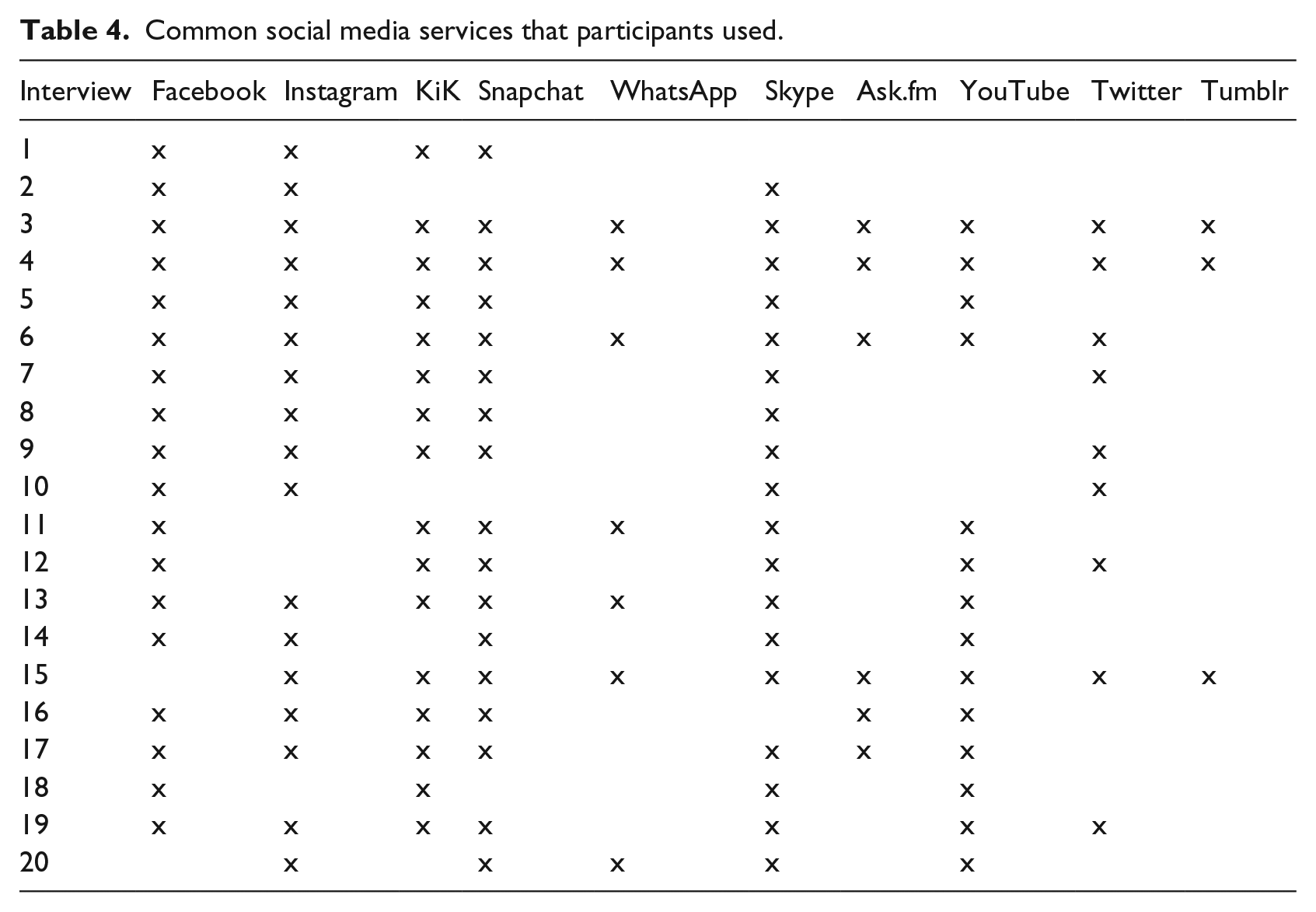
All of the participants were active on several social media platforms (see Appendix 1). Most said that they searched for information about food, weight management, and health information online. Four said that they did not actively search for this type of information online and described three primary reasons why they were reluctant to do so. They did not trust online health information, and they felt confused by it, or they did not experience a need because other sources, such as their parents, provided the health information they needed. For example, “one has heard a lot … that this diet works … and then after a month it does not work … one is easily fooled online” (16/F), and “one site says this, and the other site says something else … therefore I chose not to look … it just makes me confused” (15/F).
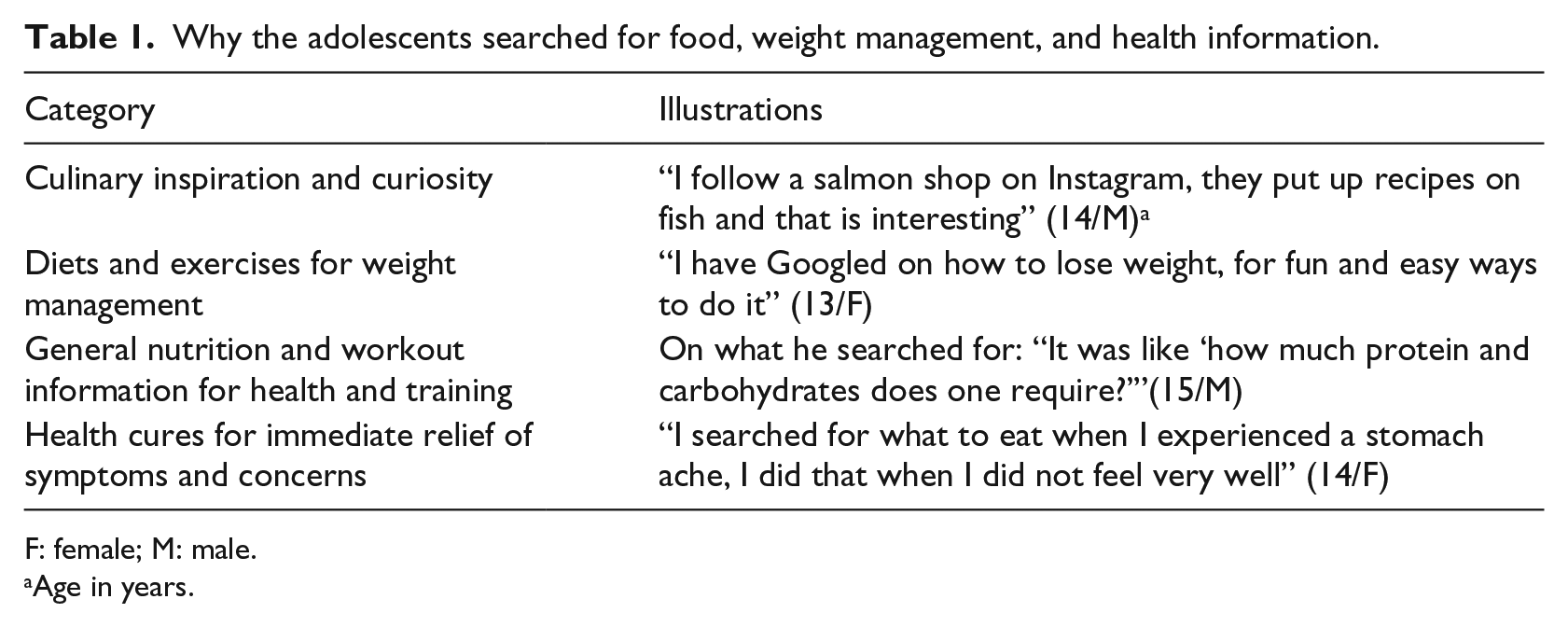
The participants engaged online with information about food, weight, and health in four ways, as described below and illustrated in Table 1.
Why the adolescents searched for food, weight management, and health information.
F: female; M: male.
Age in years.
Culinary inspiration and curiosity referred to casual searches conducted to find information about everyday foods and meals, such as recipes for making pancakes, or to find information about a dish before making it. These searches were initiated from a general curiosity and interest in cooking rather than emphasizing weight or health aspects.
Diets and exercises for weight management were searches that concerned diets to lose weight such as the low-carb high-fat diet (LCHF) or the intermittent fasting 5:2 diet. Participants said that they had tried these diets as they wanted to lose weight quickly. This category also covered searches for the caloric content of specific foods when contemplating whether to buy and eat them. Searches were also directed toward general exercise routines to lose weight or more specific exercises such as how to remove belly fat. The most commonly expressed reason was that the adolescents wanted to find fun and easy strategies to implement into their everyday lives, such as fun ways to exercise or daily strategies to decrease cravings for sweets.
General nutrition and workout information for health and training represented searches directed toward specific dietary information needs (e.g. “how much protein do you need every day?”) or recipes on healthy, easily made snacks like smoothies after workouts. This was not related to weight management, but rather to general aspects of health. Participants said that they were searching for ways to adopt healthy eating habits and lead healthy lives to feel better about themselves. The participants said that information and suggestions from parents and healthcare personnel often initiated these searches.
Health cures for immediate relief of symptoms and concerns related to more acute and specific kind of needs such as when the adolescents experienced negative news from the clinic about their weight management. The adolescents said that these searches were usually motivated by fear and anxiety regarding potential causes for their present symptoms, including sudden pain or health risks associated with obesity (Table 1).
Thus, the participants described that the searches were casual and non-directional, as they had no specific health goal in mind, but also that they were contingent and situational.
Grounds for evaluating and selecting online information
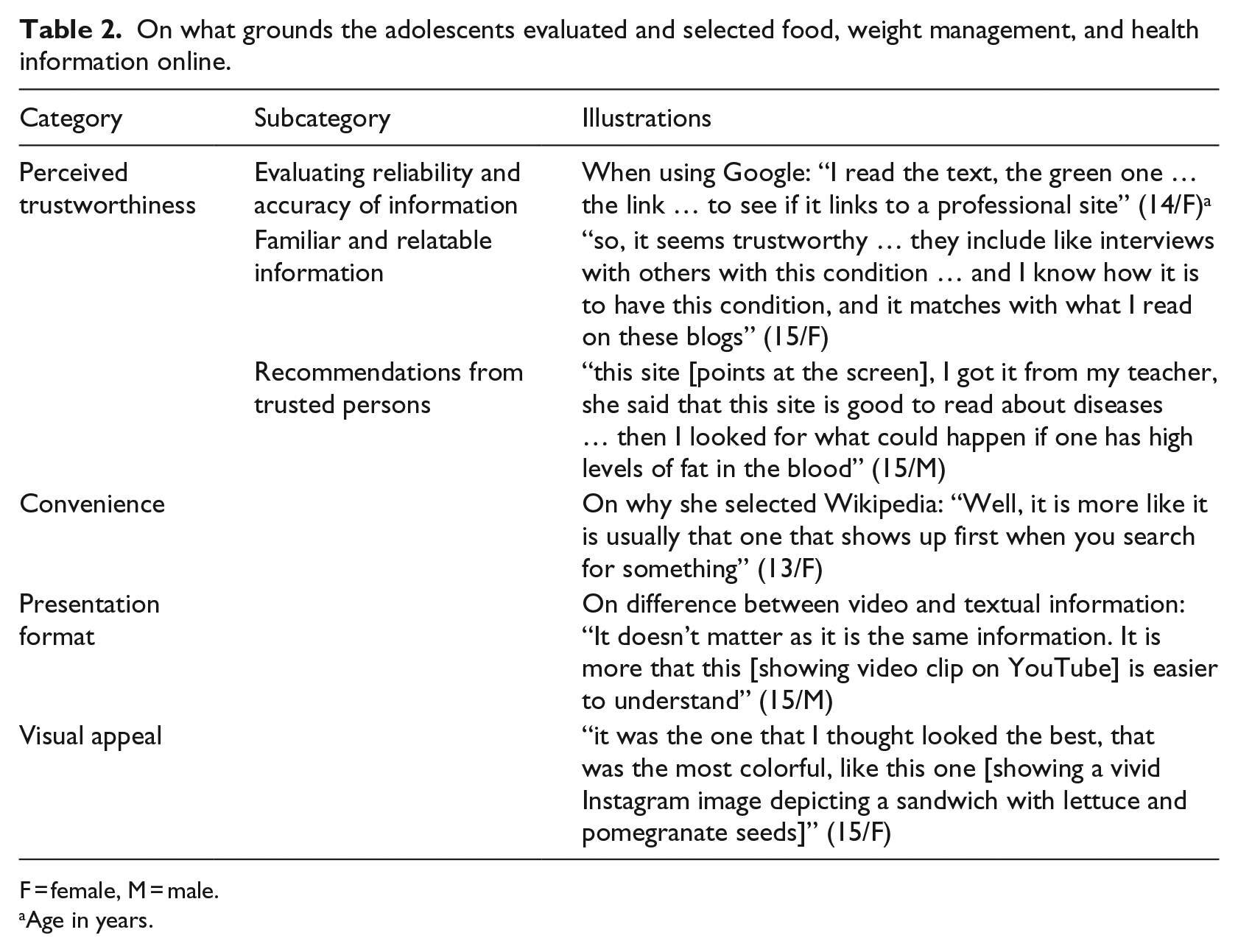
As shown in Table 2, four main categories were created to describe the grounds on which the adolescents evaluated and selected food, weight management, and health information online.
On what grounds the adolescents evaluated and selected food, weight management, and health information online.
F = female, M = male.
Age in years.
The adolescents evaluated the reliability of information based on the information’s perceived trustworthiness. They did so in three different ways. First, they evaluated the reliability and accuracy of information, which refers to rational and cognitive approaches that they used. They selected the search results that best matched the search query; avoiding advertisements; selecting sources that had been “liked” by others; considering whether the source was perceived as professional and well crafted; and by comparing information from several sources. Second, they trusted information when they could identify and relate to it and when the source was familiar. For example, one participant selected a dairy company’s website for recipes, since her family used their brand at home. Another participant followed Instagram accounts that concerned her particular endocrine disorder (Table 2). The participants described this as evoking trust as they were otherwise skeptical of online content. Third, the participants relied on information and sources recommended by people they trusted, including parents, family, friends, and staff from the clinic.
The adolescents, however, did not always evaluate the trustworthiness and sometimes selected sources and information based on convenience. In those cases, they were not particularly engaged in searching for health information and prioritized time over trustworthiness. For example, this could mean that the adolescents selected the first result of a search engine query or that they responded to links and material presented via social media “push,” such as a weight loss video in the “suggestions” window on YouTube.
Another category was presentation format, which refers to choosing information based on whether the format and content was easy to access and understand. For example, one participant favored Instagram for diet information because it contained images of the dishes and captions describing the recipes.
The final category was the visual appeal of the information or information source. The participants gave examples like selecting YouTube videos based on the attractiveness of the thumbnail image or choosing food Instagram accounts based on how colorful and visually appealing their food images were (Table 2).
Overall, the participants described and displayed a variety of motivations and abilities to select and evaluate the reliability of health information online. While some said that they were confident in evaluating online information and could demonstrate this by comparing Internet search results, others described that they did not know how to evaluate reliability or did not consider perceived reliability to be an important factor when selecting online health sources.
Feelings elicited and experiences gained
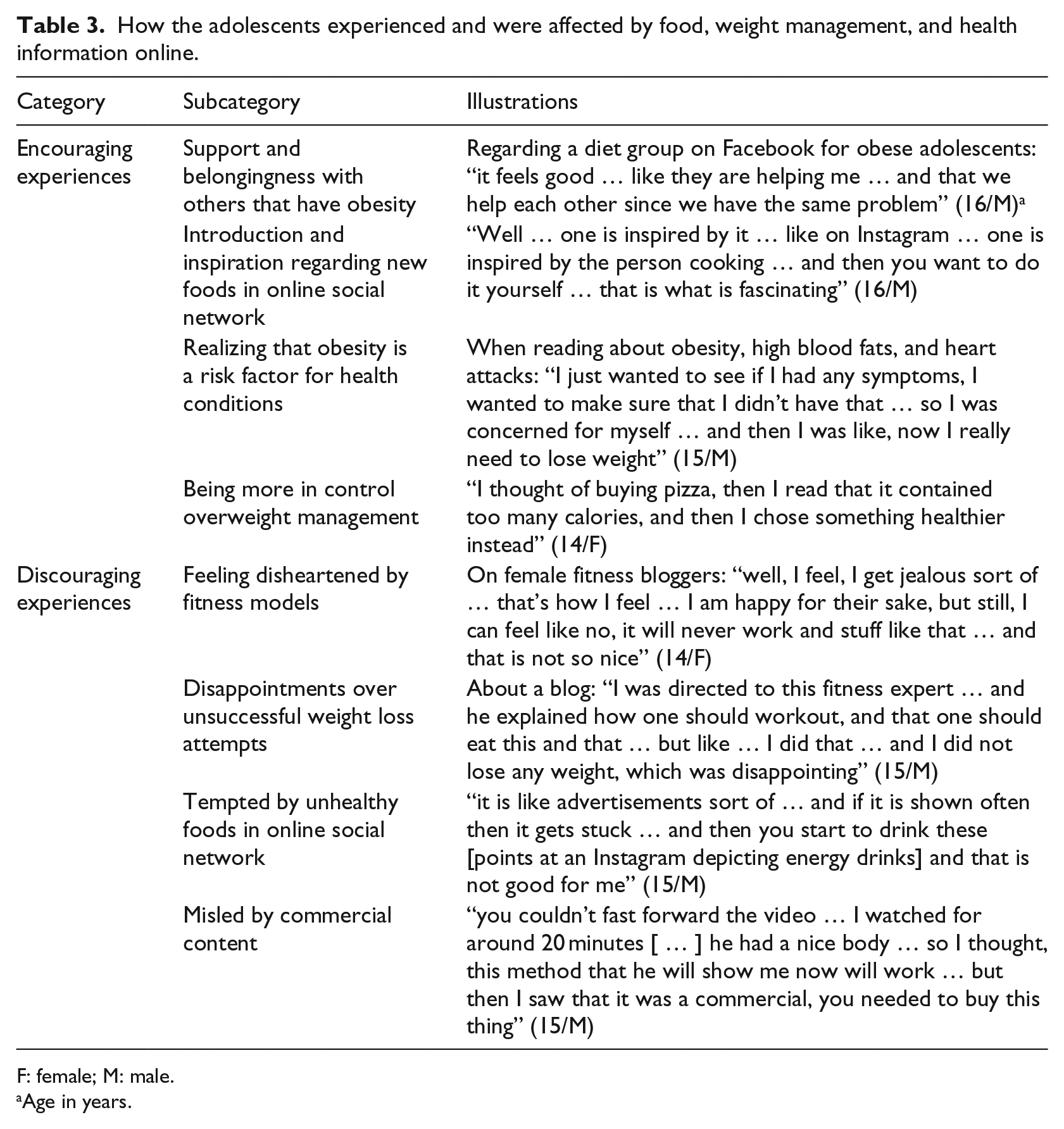
As shown in Table 3, participants expressed both encouraging and discouraging experiences when using online information for food, weight management, and health. This concerned not only information that the participants actively sought out but also information that they found in their online social networks and online advertisements.
How the adolescents experienced and were affected by food, weight management, and health information online.
F: female; M: male.
Age in years.
When interacting online with others with obesity, the participants experienced support and belongingness. For example, participants described experiences of online interaction in diet groups on social media platforms. They described positive experiences when interacting with other adolescents who were also struggling to lose weight, who were suffering from the same medical syndromes, or who had been obese but had lost weight. The adolescents said that they felt less lonely and isolated, and more secure about themselves, when they could identify with others in a similar situation.
The adolescents also talked about positive experiences when encountering food messages in their online social networks. They were introduced to new foods and inspired to try them. This reflected food-related content that they followed, such as diet accounts on Instagram and food groups on Facebook, as well as content that they did not actively seek out but that was presented online by peers, family, and relatives. Seeing what other people cooked and posted online provided a wider selection of food and meal ideas that prompted their culinary curiosity.
Moreover, participants described that online information sources affected their understanding of their health and living with obesity. As shown in Table 3, this reflected information that they found about the negative health impacts of obesity. For example, one participant made the connection between blood lipids and cardiovascular disease. This new understanding was described by the adolescents as alarming and made them take their health more seriously. Even if cardiovascular disease and other risks frightened them, participants said that this understanding encouraged them and made them take action like cycling to school or exercising to lose weight.
Participants also described that they could handle their weight management better and make more informed decisions about their diets after gaining information. Some used recipe apps from known manufacturers and meal planners to track energy balance, but no one reported using wearable devices such as pedometers or activity bracelets.
The participants also described discouraging experiences. They felt disheartened by fitness models if the model was too successful and made it look too easy to lose weight. Indeed, such comparisons could raise negative and critical feelings. One female said that she was jealous of female fitness bloggers and that she became demotivated because she didn’t think she would be able to achieve the same results. Many participants expressed ambivalence; reading and watching successful weight loss profiles could be inspiring but also difficult to relate to in a way that created more distress.
Participants also expressed disappointment over unsuccessful weight loss attempts that they initiated after finding information from online sources. This category characterized experiences when they were disappointed after diets or exercises they found online did not give the anticipated effect. These disappointments could also make them less motivated to continue searching for online information about weight management.
Furthermore, the participants described experiences with the temptation of unhealthy foods shared in their online social networks. Participants described the online presentation of food such as candy, ice cream, and chocolates as tempting and negative for weight management. Some experienced a need to consume foods that they were exposed to in this way and that it could make them feel hungry. One participant described his friends’ images of energy drinks in his Instagram feed as advertisements (Table 3). The participants described different examples and were able to identify aspects of the presentation like the lighting that made the food images look more appetizing.
Participants also described experiences of misleading commercial content online. They felt disengaged and frustrated when they encountered commercial content that they originally perceived as reliable health information. This left them frustrated and discouraged them from continuing to search for online information. The commercial content was also described as pervasive and interwoven with reliable information, which made difficult to decipher it from other content.
Discussion
The adolescent participants in this study reported searching for food and workout information not just to lose weight, but out of culinary interest, to feel healthy, and to perform better in their daily lives. This indicates that the adolescents also value these more integrated aspects of health and well-being, not just losing weight. The adolescents described both encouraging and discouraging experiences using online information regarding food, weight management, and health. On one hand, they noted that online forums could provide nutritious meal ideas, inspiration, and social support for behavior change. On the other hand, they noted a confusing amount of misleading commercial content online and experiences of peer-facilitated food marketing in online networks. They were also disappointed when weight loss methods did not have the anticipated effect.
The participants had a broad range of information needs satisfied by participating in social media and demonstrated search skills and knowledge of the Internet that helped them locate information. User-generated content in social media appeared to be valued by the participants as a helpful, if not always reliable, source for experiential health information and content.
From observation to theory
The adolescents in this study described and demonstrated varying abilities and motivations when searching for and selecting online health information. This indicates a variation with regards to their eHealth literacy, which can be described as the ability to find and understand health information from online sources. 37 Some adolescents hesitated to use online health information because they did not trust their own ability to scrutinize online information and described being confused by or mistrusting online content. On the other end of the spectrum, one participant showed how he used the PubMed search engine to find information in the MEDLINE database. This large individual variation of information-seeking abilities among patients has implications for creating patient-centered obesity treatments. It is important to understand the various health information needs of adolescent patients as well as their ability to look for online information to satisfy this need.
eHealth literacy consists of dynamic, process-oriented skills that change depending on the online and social environments. Engaging with health information in social media requires additional skill sets, or literacies, 37 as well as a set of Internet social skills. The adolescents in this study described social influences such as obtaining diet information in online groups and using social indicators such as number of “likes” to evaluate trustworthiness of information, similar to findings in other studies. 14 These social aspects of eHealth literacy are important to consider, as Neter and Brainin 38 argued that the more interactive and sophisticated use of digital sources and social media might create additional inequalities in the domain of online health information.
Another component of eHealth literacy is media literacy. 37 The three-domain model of “Authors and Audiences,” “Reality and Representation,” and “Messages and Meanings” developed by Primack and colleagues39,40 can be used to understand adolescents’ digital media literacy. Using their domains, it is clear that this adolescent group was able to partly deconstruct health messages. They were aware of the authors of the messages they encountered and could comment on the authors’ intentions with these messages, showing an understanding of what Primack refers to as “Authors and Audiences.” They were also aware of the extent to which the messages on social media contained health and nutrition information, illustrating an understanding of the second concept of “Reality and Representation.” The values contained within the messages, however, were not referred to spontaneously, which may indicate that the third element of analysis of “Messages and Meanings” is a less well-developed analytic technique. This could be an area for intervention to develop comprehensive media literacy skill sets.
Clinical implications and future research directions
The integrated aspects to health that the adolescents demonstrated, such as engaging with culinary content out of a general interest and not just related to weight, and behavior changes with the aim to feel better and perform well, and not just to lose weight, might be encouraged in treatment. Studies suggest that obesity treatment in the pediatric clinical setting often focuses on weight loss in relation to social aspects like looking good for others. 41 The stigma that can be associated with weight and the positive effects when eating behaviors are normalized indicate that it might be preferable to focus more on positive inspiration for behavior changes and well-being. 42
Participants reported searching online resources for fun and easy ways to lose weight. For this purpose, they primarily used information materials in the form of images and short videos on visual-based platforms (e.g. YouTube). Clinicians could be inspired to update pediatric health communication methods using a greater variety of distribution methods and refer to reliable websites, YouTube videos, and image-based media. Previous studies suggest that health consumers that were assisted in finding credible health information online reported increased confidence and skills searching for reliable health information. 43 This is important because several participants said they selected health information out of convenience such as choosing the first result returned by the search engine. Studies have shown that adolescents generally consider Google rankings as an indicator for reliability 44 and often select the first site in the search results. 8 However, Fahy et al. 45 found that Google rankings are not an indicator of quality health information.
The participants described positive experiences using social media to look for information about weight management and find online weight loss role models. Conventional obesity treatment in adolescents often indicates modest improvements and is of questionable benefit for patients with severe obesity. 42 Thus, in light of these findings and experiential health information models, 28 one way to update treatment might be to incorporate social media, as offering personal stories and narratives from other patients could facilitate a broader understanding of obesity treatment. This is significant, as Reece et al. 46 reported that adolescents with obesity had a general awareness of treatment options, but only a limited awareness of what the treatments entailed.
Another encouraging experience that the participants mentioned was that they received social support, for example, in Facebook diet groups directed toward adolescents with obesity. Studies on the impact of traditional peer support on behavior found that involvement in peer networks helps maintain positive behavior among adolescents with obesity,47,48 but online support groups were only briefly explored in this study. Future studies could address this in more detail. Some of the adolescents said they did not need to go online to look for health information as their parents provided information. Future studies could include parents, as previous studies have identified a relationship between parental and adolescent eHealth literacy and their online health information-seeking. 49 Other issues pertinent to adolescents’ engagement with online health information not within the scope of this article, such as ethical dimensions of adolescents’ online activities, 5 for instance, most notably for adolescents with obesity, issues regarding weight stigma, and cyberbullying 50 could be further explored.
Strengths and limitations
This study design possessed certain strengths and limitations. Using a computer during the interviews allowed the adolescents to illustrate what they described and allowed the interviewer to verify their self-reported data. The study also offered concrete and personal examples for focusing the interviews, which facilitated the conversations. Kirk 51 argued that it is important for adult interviewers to adopt a “reflexive” approach when interviewing adolescents and that interviewers must be aware of their pre-assumptions about adolescence and how this may influence their understanding of study participants. The use of screen recordings during the interviews facilitated this reflexive approach, as it allowed the interviewer to point to specific examples that the participant presented and ask questions to gauge the accuracy of their understanding and interpretation.
As the adolescents were only interviewed once, it might be difficult to separate habitual search behavior from behavior related to the observational event of the interview. This study is socio-culturally and linguistically bound to Sweden, which has a very high rate of smartphone usage among adolescents, 97 percent of 13- to 16-year olds, and robust, high-speed Internet infrastructure. 52 This might influence the transferability32,34 from this study’s findings to contexts where digital technology is less ubiquitous. Many of the online health information practices described in this study, however, have been identified in international literature (cf. Fergie et al. 14 and Larsen and Martey 21 ). Social media services like Facebook and Instagram also have a global reach and popularity, which is another reason to believe that these findings can provide relevant insights for adolescents with obesity in other countries.
Conclusion
This interview study explored adolescents’ engagement with online sources for their health information needs. It provides a broader understanding of adolescents’ perceptions and experiences of living with obesity, as it explored their underlying motives for searching for this type of health-related information. An overarching theme was generated that unified all categories: social media might be a resource for health inspiration, health information, and social support, but requires awareness and competencies. The participants’ descriptions of strategies for evaluating trustworthiness were presented as a means of cautiously negotiating this potentially risky online environment, similar to findings in other studies. 14
Boyd 4 argued that due to the apparent novelty of these digital technologies, researchers tend to focus on the health risks associated with adolescents’ use of social media. This has also been observed in a systematic review by Yonker et al., 53 which found that studies focusing on using social media to interact with adolescents for health purposes tends to focus on the adolescents’ risk behaviors, like drug use and Internet safety. The current findings suggest that while the participants described negative experiences such as encountering misleading information, the positive aspect of engaging with online health content was also apparent.
Human health is a social matter and the widespread use of social media means that it necessarily plays an important role in the health promotion process in adolescents. The combination of mobile technology and social media means that health recommendations are available from other users, blogs, and health professionals, but they can be delivered increasingly in real time. While there is enormous potential to use this technology to learn about patient behaviors and daily habits, the interventions that take place via social media may not be those recommended by health professionals. There is tremendous potential for health services to intervene with relevant and timely messaging, coaching, and interventions, but this is not being exploited and requires changes in the way the health services provide information. Health information via social media must be provided as close to the individual level as possible and continuous so that it is always current within those social media platforms.
Footnotes
Appendix 1
Common social media services that participants used.
| Interview | KiK | Snapchat | Skype | Ask.fm | YouTube | Tumblr | ||||
|---|---|---|---|---|---|---|---|---|---|---|
| 1 | x | x | x | x | ||||||
| 2 | x | x | x | |||||||
| 3 | x | x | x | x | x | x | x | x | x | x |
| 4 | x | x | x | x | x | x | x | x | x | x |
| 5 | x | x | x | x | x | x | ||||
| 6 | x | x | x | x | x | x | x | x | x | |
| 7 | x | x | x | x | x | x | ||||
| 8 | x | x | x | x | x | |||||
| 9 | x | x | x | x | x | x | ||||
| 10 | x | x | x | x | ||||||
| 11 | x | x | x | x | x | x | ||||
| 12 | x | x | x | x | x | x | ||||
| 13 | x | x | x | x | x | x | x | |||
| 14 | x | x | x | x | x | |||||
| 15 | x | x | x | x | x | x | x | x | x | |
| 16 | x | x | x | x | x | x | ||||
| 17 | x | x | x | x | x | x | x | |||
| 18 | x | x | x | x | ||||||
| 19 | x | x | x | x | x | x | x | |||
| 20 | x | x | x | x | x |
Acknowledgements
The authors thank participants and their families, the clinic staff at the Obesity unit at Queen Silvia Children’s Hospital, and Masako Watanabe-Ito at Tokyo Women’s Medical University.
Declaration of conflicting interests
The author(s) declared no potential conflicts of interest with respect to the research, authorship, and/or publication of this article.
Funding
The author(s) disclosed receipt of the following financial support for the research, authorship, and/or publication of this article: This study was supported by Formas, the Swedish Research Council for Environment, Agricultural Sciences and Spatial Planning (#259-2012-38), and EpiLife, Gothenburg’s center for epidemiologic studies (Forte 2006-1506).
