




Abstract
Given the importance of the health-care industry and the promise of health information systems, researchers are encouraged to build on the shoulders of giants as the saying goes. The health information systems field has a unique opportunity to learn from and extend the work that has already been done by the highly correlated information systems field. As a result, this research article presents a past, present and future meta-analysis of health information systems research in information systems journals over the 2000–2015 time period. Our analysis reviewed 126 articles on a variety of topics related to health information systems research published in the “Senior Scholars” list of the top eight ranked information systems academic journals. Across the selected information systems academic journals, our findings compare research methodologies applied, health information systems topic areas investigated and research trends. Interesting results emerge in the range and evolution of health information systems research and opportunities for health information systems researchers and practitioners to consider moving forward.
Keywords
Introduction
Developments in information technology (IT) and information systems (IS) fields are changing the health-care industry. 1 Health-care leaders, practitioners and researchers alike have been in search of ways to improve health-care delivery and health-care economics. IT and IS have been proposed as an essential piece to help solve the health-care puzzle. Specifically, even though the adoption of IT use in health care has traditionally lagged behind other industries and to date many practices have failed to adopt health-care information systems (HIS), 2 HIS is viewed as a key enabler for improving health-care quality and managing costs.3,4 Significant increases in IT spending in recent years 5 has generated great interest in its effects on the health-care industry cost structure, health-care quality and patient privacy (e.g. the US Health Insurance Portability and Privacy Act). From a research perspective, IS researchers are uniquely positioned to assess how information can be captured, stored, processed and communicated to decision makers for better coordination of health care at both the individual and population levels. As a result of treating HIS as a subtopic area of the IS field, unique opportunities exist for HIS researchers and practitioners to learn and apply concepts previously studied in the IS field to HIS.
The field of IS, by design, applies IT to real-world, business-oriented problems. It seeks to use IT to improve effectiveness and efficiency. Clearly, health-care organizations have sought out the benefits and opportunities presented through technology developments. 6 As a result, the needs of the health-care industry and the ambitions of IS researchers coincide. Health-care organizations face multiple future hurdles that IS researchers are well equipped to study and have studied.7,8 Prominent among these hurdles are applying IT to improve the quality of health-care processes and reduce medical errors; developing e-services to connect health-care stakeholders, including government, insurers, health-care administrators, clinical staff and patients; identifying obstacles to acceptance and continued use of HIS; adapting user-centered design principles to health-care settings; assessing financial and other organizational impacts of IT in health care; and managing HIS effectively.
In total, two related needs provide the motivation for this article. First, with the increased recognition and importance assigned to HIS, there is a need to review what has been done in the corresponding IS research area and share those findings with HIS professionals. Second, in order for HIS research to advance, from both an IS and HIS perspective, there is a need for researchers to periodically review methods used by researchers and provide insights to which methods have been and should be utilized in a given research field. 9 Historically, meta-analysis served as a valuable tool in determining where we have been and where we are headed as researchers. 10 As a result, this research study provides the opportunity for both IS and HIS researchers to review what has been done in the field and suggests future research efforts.
Before reviewing the literature, we need to highlight the importance of HIS, not only for academics but also for the society as a whole since health-care delivery has ramifications for us all. The stakes are high for health-care organizations to utilize HIS to improve health-care delivery. First, health-care spending is a topic that has received widespread attention. Health-care spending has been increasing exponentially. According to the Centers for Medicare and Medicaid Services 11 in 2015, US health care spending increased 5.8 percent to reach 3.2 trillion, or $9,990 per person. Additionally, health spending was at 17.8 percent of US gross domestic product (GDP). The United States has continued to outspend all other Organisation for Economic Co-operation and Development (OECD) countries by a wide margin, with spending on health per capita of US$8233, or 17.9 percent of GDP, compared to the overall OECD average of US$3268. Overall, health-care spending accounts for a substantial portion of GDP in many countries (e.g. 17.91% of American GDP; 10.1% of Japan GDP; Germany 11.3%, China, France 11.7%). In addition, the health-care industry faces major institutional and regulatory pressures that are different from other industries. Health-care organizations have to find ways to improve efficiency to drive down the cost of their services to remain financially viable. All nations, including developed and developing nations, are facing pressures to control costs but at the same time increase outcome quality and access to health care.
The importance of health care to individuals and governments and its growing costs to the economy have contributed to the emergence of health care as an important area of research for scholars in business and other disciplines. 12 HIS directly influences a diverse set of stakeholders, including patients, people working in the health care and IS industries, as well as nations or regions struggling to deliver efficient health care. From an academic perspective, evidence of the increased interest and significance of HIS is demonstrated by the proliferation of health-care tracks at IS conferences, special interest groups, the sheer number of research articles directly addressing HIS, along with entire special issues from top tier journals dedicated to the topic (European Journal of Information Systems, 2007; Journal of the AIS, 2011; and Information Systems Research, 2011). This increased interest confirmed in recent years has contributed to our interest in investigating and reflecting on what is known about HIS. Clearly, with the growing reliance and predicted growth in HIS, there is a significant need for HIS researchers to learn from past research, assess the present state of HIS research and plan future research directions to support the anticipated importance of HIS.
The maturity of the HIS field along with the increased number of publications dedicated to HIS in recent years contributed to our motivation to investigate and reflect on the HIS field. As a result of the growing academic, social and practitioner interest in the field of HIS, there is a significant need to do a comprehensive assessment of HIS research activities. Regardless of the stakeholder perspective considered, it can be argued that HIS is a noteworthy global phenomenon that demands researcher attention and a greater understanding. The article at hand seeks to meet this need by systematically reviewing and analyzing prior IS academic literature on HIS. Based on a review of top-ranked IS journals, we compile an exhaustive review of 126 publications focused solely on HIS during the 2000–2015 time period. This article seeks to answer questions such as “What research methods are commonly used to study HIS?” “What are the dominant topics addressed by HIS research?” and “What are trends in HIS research?” As a result, the goal of this article is to review the literature with the goal of identifying significant knowledge gaps and motivate researchers to aim to close the gaps. Thus, this research reviews extant literature and proposes an agenda for future research. The remainder of this article is organized as follows: The next section discusses our methods for collecting and analyzing HIS articles. Next, we discuss the results describing the research methodologies applied, subject matters addressed and HIS research trends. We conclude with discussions on implications and future research directions.
Method
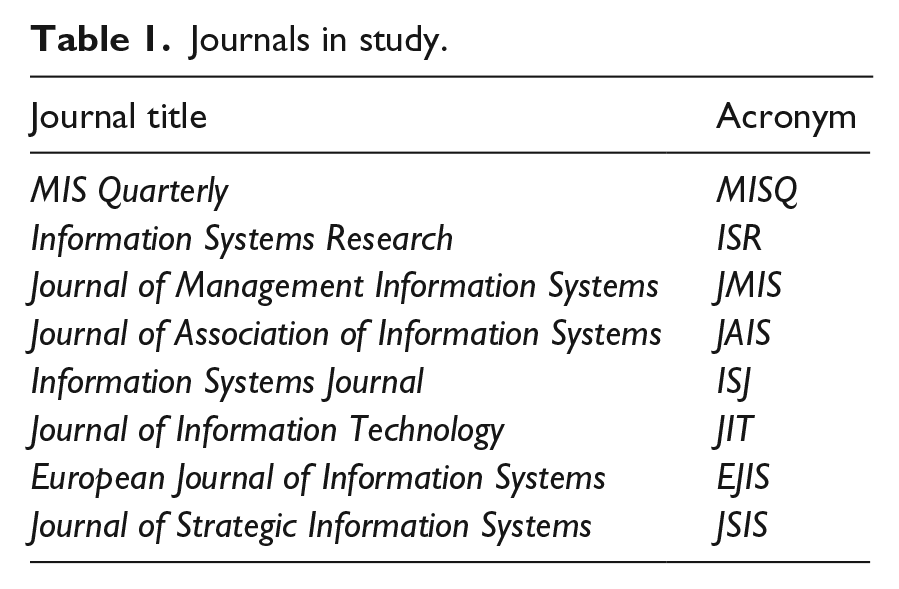
Our approach to this analysis of HIS research conducted by IS researchers was to first review the IS literature. Specifically, our goals were to capture the trends associated with (1) the number and distribution of HIS articles published in the leading IS journals, (2) identify methodologies employed in HIS research, and (3) highlight the HIS research topics being published in IS journals. Cumbie et al. 13 provided a three-step method for meta-analysis including journal selection, article classification, and data assessment/synthesis. We adapted this method and followed a structured approach to conduct this meta-analysis. First, in order to limit the review to the most influential IS articles, the “Senior Scholars” basket of eight journals (see Table 1) was selected. 14 The Senior Scholars list encourages colleagues, deans and department chairs to treat the basket of eight as the top journals in the IS field. The list is limited to those in the “IS field” and omits both multidisciplinary and specialty areas. We searched through the 2000–2015 time frame and accumulated a pool of HIS articles from the leading IS journals using the ABI/INFORM database and associated journal websites. We searched the titles and abstracts of each of the eight journals using phrases such as “health care,” “health,” “health care,” “EHR,” “electronic health record,” “patient” and “e-health” in order to cover the range of potential health-related topics.
Journals in study.
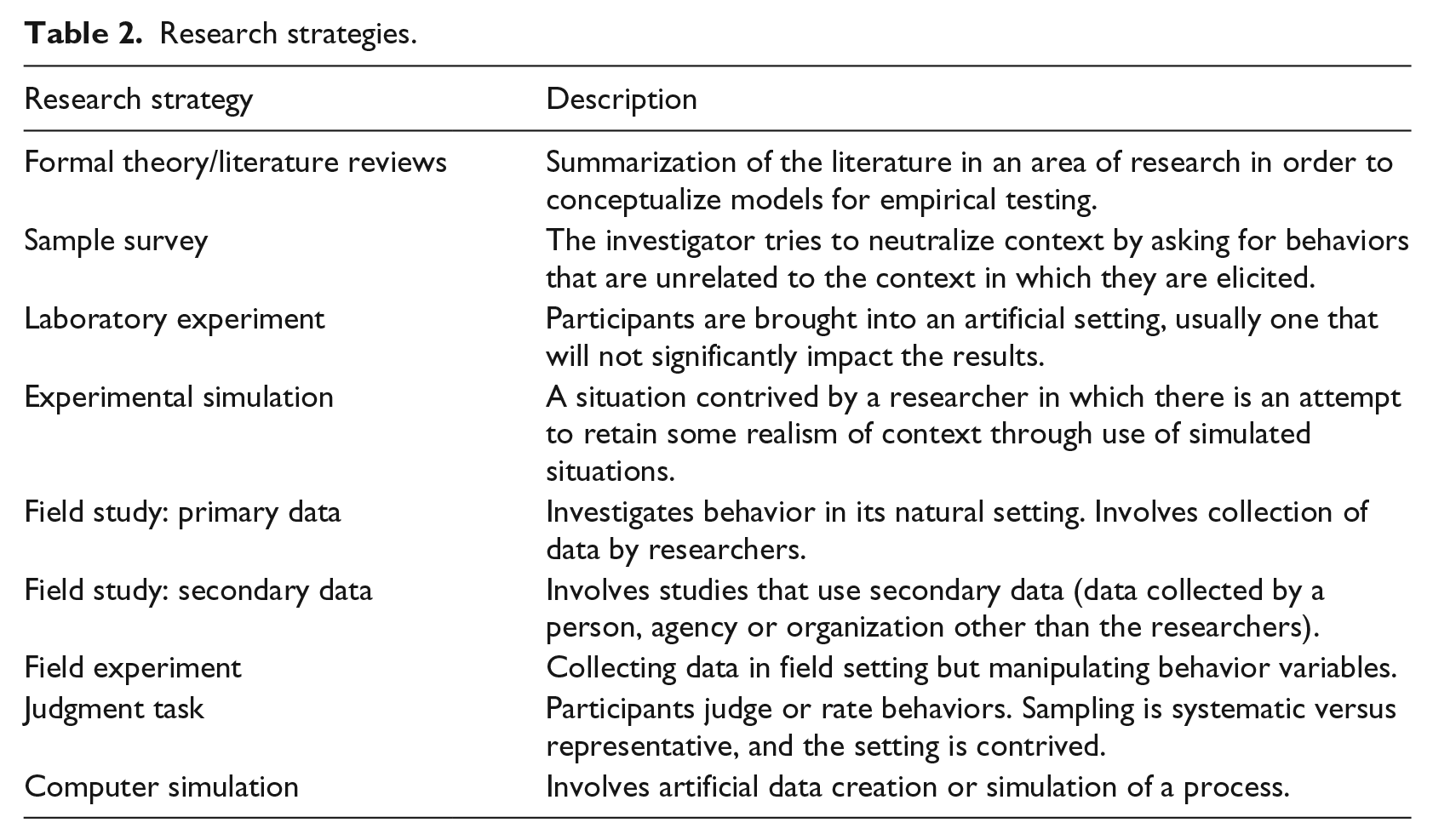
Next, after all articles were identified and collected, we examined and categorized each article based on the research strategy applied. Each article was categorized based on the research categories (see Table 2) presented in Scandura and Williams. 9 The nine research strategies included formal theory/literature reviews, sample survey, laboratory experiment, experimental simulations, field study (primary data), field study (secondary data), field experiment, judgment task and computer simulation. These research strategies are the most common approaches in the business discipline where IS sits. 9 In order to normalize the categorization process, 15 we performed a pilot on unused articles to discuss the results and refine the definitions.
Research strategies.
Each research strategy (see Table 3) by design and definition is associated with certain trade-offs that researchers must make when designing a study. The trade-offs are inherent flaws that limit the conclusions that can be drawn from a particular research strategy. The trade-offs include the generalizability from the sample to the target population (external validity), precision in measurement and control of behavioral variables (internal and construct validity), and the issue of realism of context. 9
Trade-offs of research strategies.
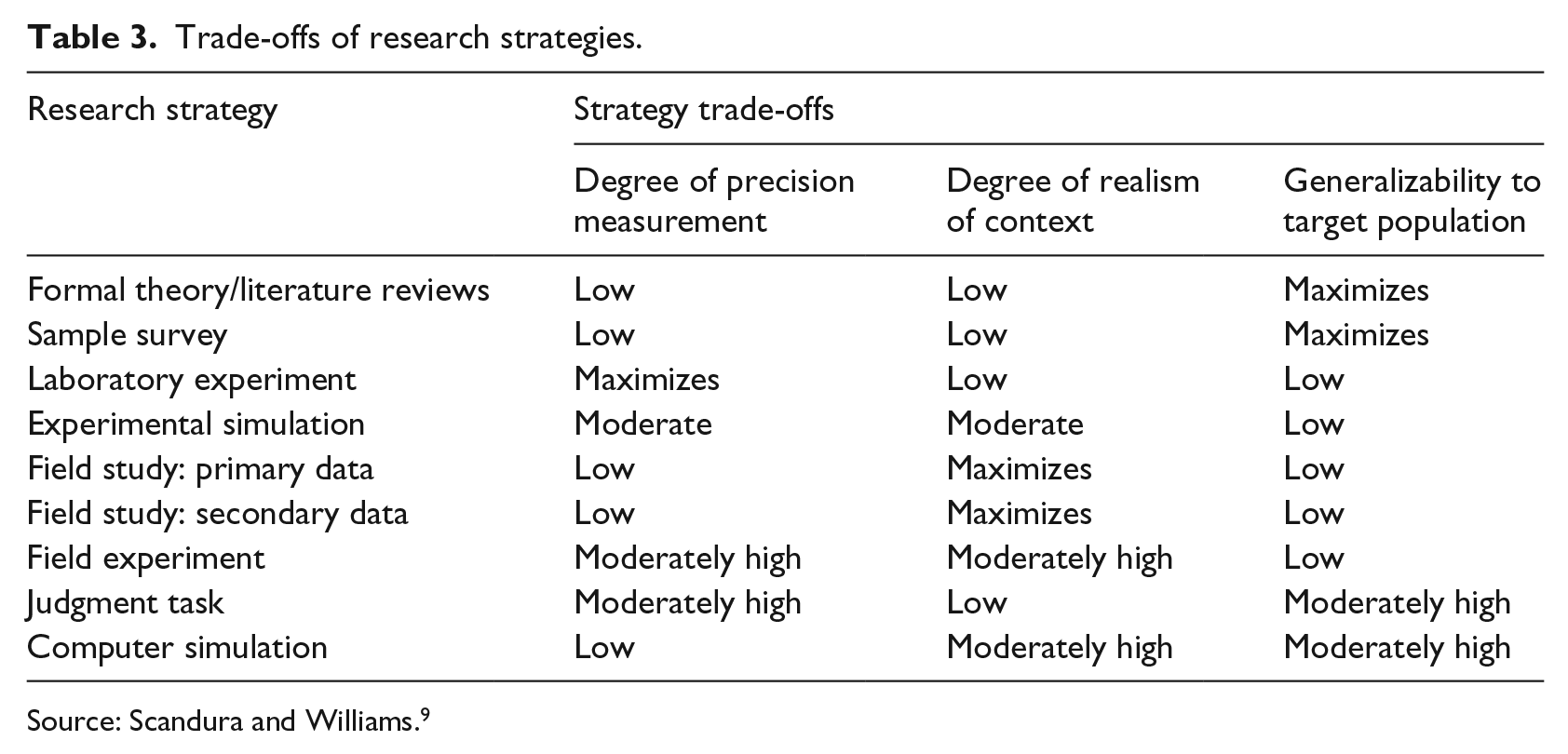
Source: Scandura and Williams. 9
Third, we classified the articles by research topic. In order to classify the articles by research topic, we held several brainstorming and discussion sessions. In the discussion sessions, our goal was to synthesize the literature and provide a better understanding of the current state of HIS research in traditional IS journals. Once the category definitions were established, we categorized only a few articles at a time to minimize coder fatigue and protect intercoder reliability. 15
Results
Our analysis resulted in a collection of 126 journal articles from the 2000–2015 time period. For a complete list of the articles, see Appendix 1. Based on the articles in our pool, we analyzed the articles based on year of publication, journal and research topic. Our findings from this study revealed that IS researchers are starting to provide some attention to HIS topics. Table 4 highlights the number of HIS articles by year across all journals included in the sample. We can see that with HIS issues becoming more important to IS researchers and practitioners that an increasing trend in the number of articles is a result. A spike in the number of articles in 2011 corresponds with passage of the Affordable Care Act in 2010 or the fact that this was near the first year of incentive payouts for meaningful use per the HITECH act of 2009. An encouraging sign is that in the last 2 years in our study 2014 and 2015, we see increased attention given by IS researchers to HIS topics.
Number of HIS articles per year.
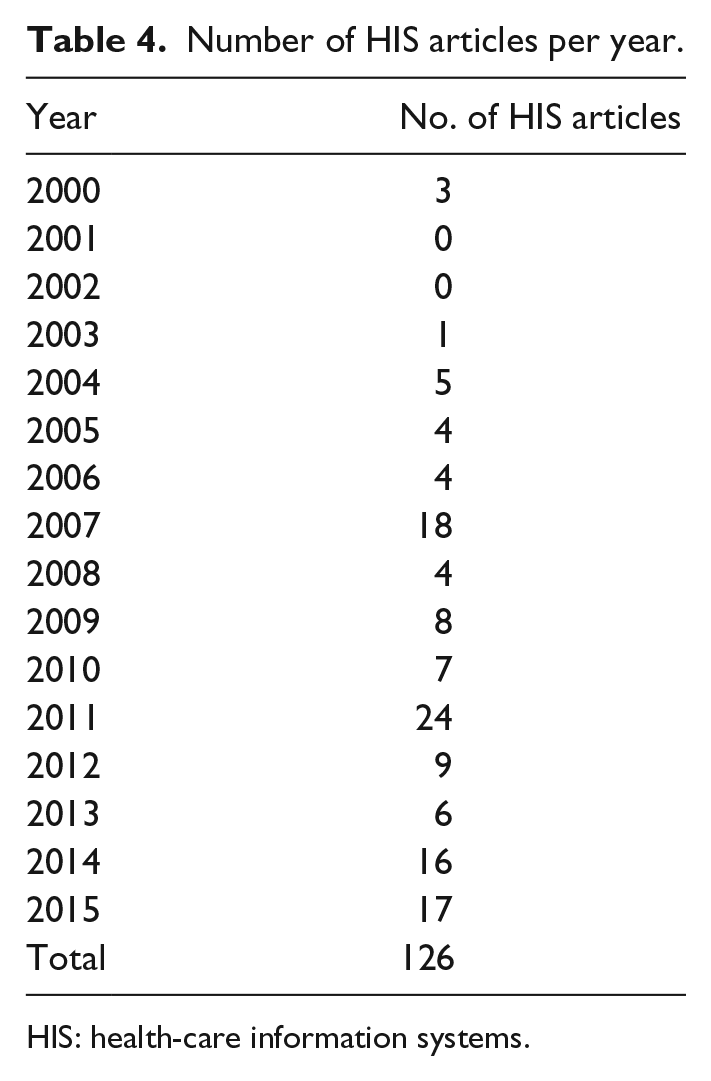
HIS: health-care information systems.
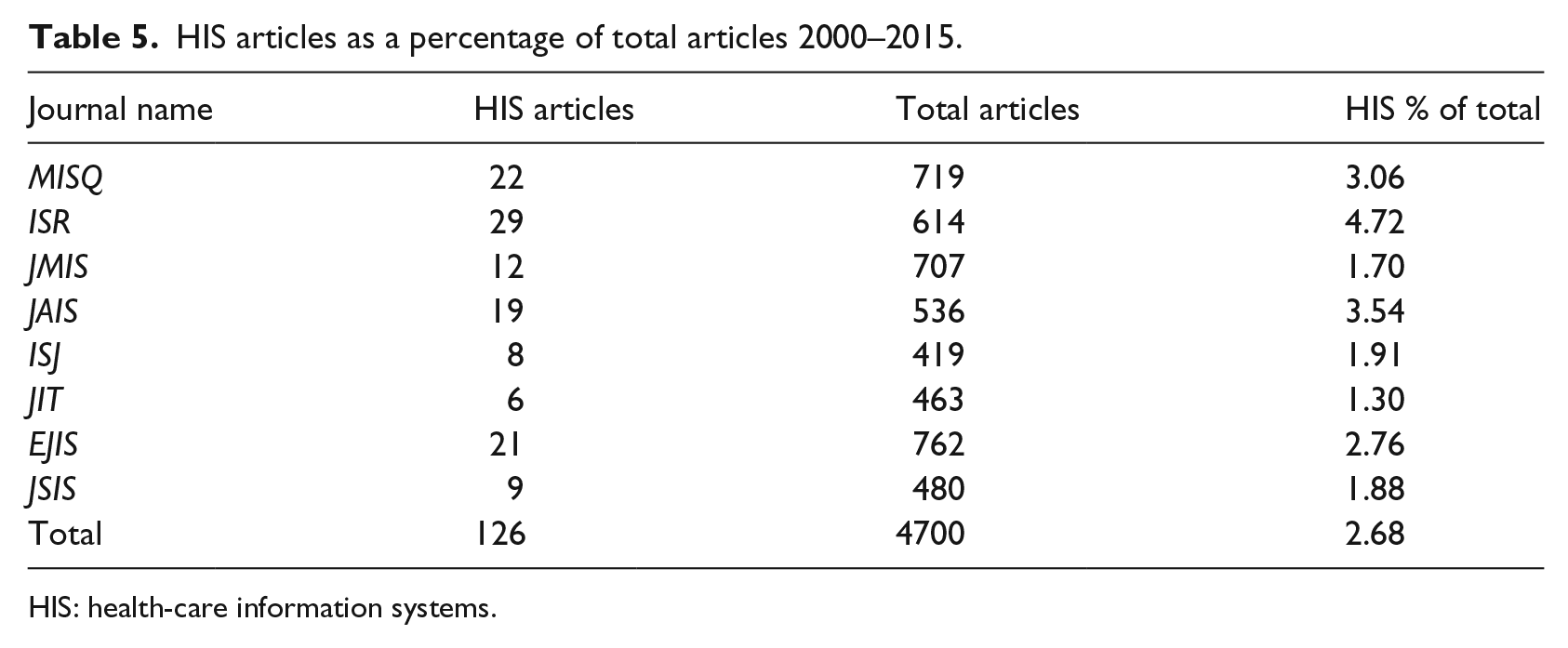
Another area of investigation was to examine the degree to which articles from leading IS journals are focused on HIS topics. Our review revealed that HIS research in IS journals is steadily increasing but is not a dominant topic area for IS researchers. We calculated the percentage of HIS articles based on the total number of articles published in each journal over the 2000–2015 time period. As shown in Table 5, none of the top tier IS journals publish over 5 percent of their articles on HIS topic areas. It appears that the top tier IS journals do not devote a substantial amount in total to HIS research. The fact that top tier IS journals published between 1.30 and 4.72 percent of their publications on HIS topic areas should not be particularly alarming since IS is a broad field, but it does highlight opportunities for additional IS research focused on emerging HIS issues.
HIS articles as a percentage of total articles 2000–2015.
HIS: health-care information systems.
Analysis of research strategies in HIS research
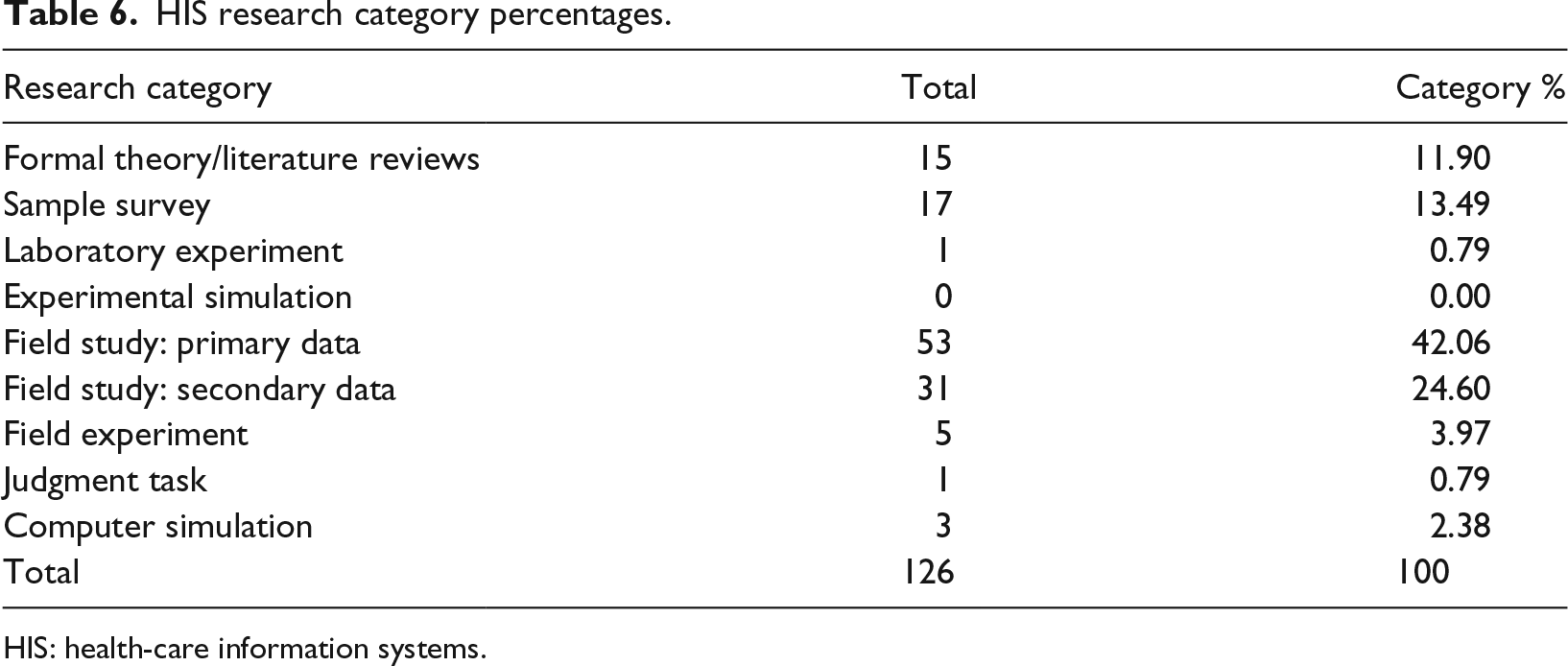
Our categorization of the 126 articles into the research categories produced the following results (see Table 6). In total, 53 articles were classified as field study: primary data making it by far the most prevalent research strategy with 42.06 percent of all articles utilizing that research method. Field study: secondary data (24.60%), sample survey (13.49%) and formal theory/literature reviews (11.90%) were the only other categories garnering over 10 percent of the total. No articles were classified experimental simulation, and only one article each was classified as laboratory experiment and judgment task. Overall, the top three research strategies made up over 80 percent of all research strategies applied (field study: primary data, field study: secondary data and sample survey). An analysis of the research strategies over the 2000–2015 time period demonstrates that field study: primary data, field study: secondary data, formal theory/literature reviews and sample survey were represented in almost every year of the selected time frame (see Table 7).
HIS research category percentages.
HIS: health-care information systems.
Research strategy versus year.
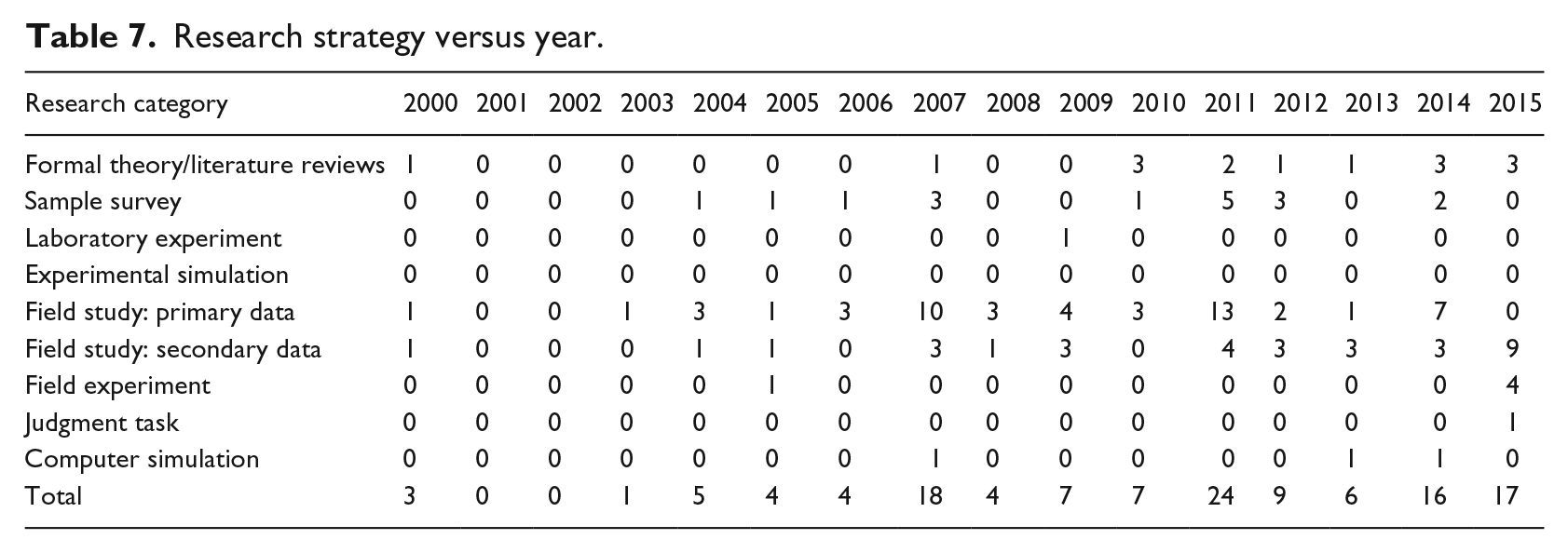
Our findings present inquiry into why these research strategies have dominated the IS research on HIS topics. The use of these research strategies may be explained by the fact that these research strategies tend to be more exploratory in nature and indicate the beginnings of a body of research. 9 Given the small percentage of articles dedicated to HIS topics, one could consider HIS research performed by IS researchers to be in its relative infancy. Other studies investigating a segment of IS research (business intelligence) found similar results when comparing research strategies applied in building a body of knowledge at the early stages. 16 Interestingly, our findings revealed a very low usage of experiments in HIS research. One of the reasons for such a low usage of experiments could be the sensitive data involved with many HIS studies. Based on our findings, it is apparent that numerous research opportunities to apply alternative research strategies are available to both IS and HIS researchers. HIS researchers are encouraged to broaden the usage of alternative research methodologies as the HIS field matures.
Analysis of research topic categories in HIS research
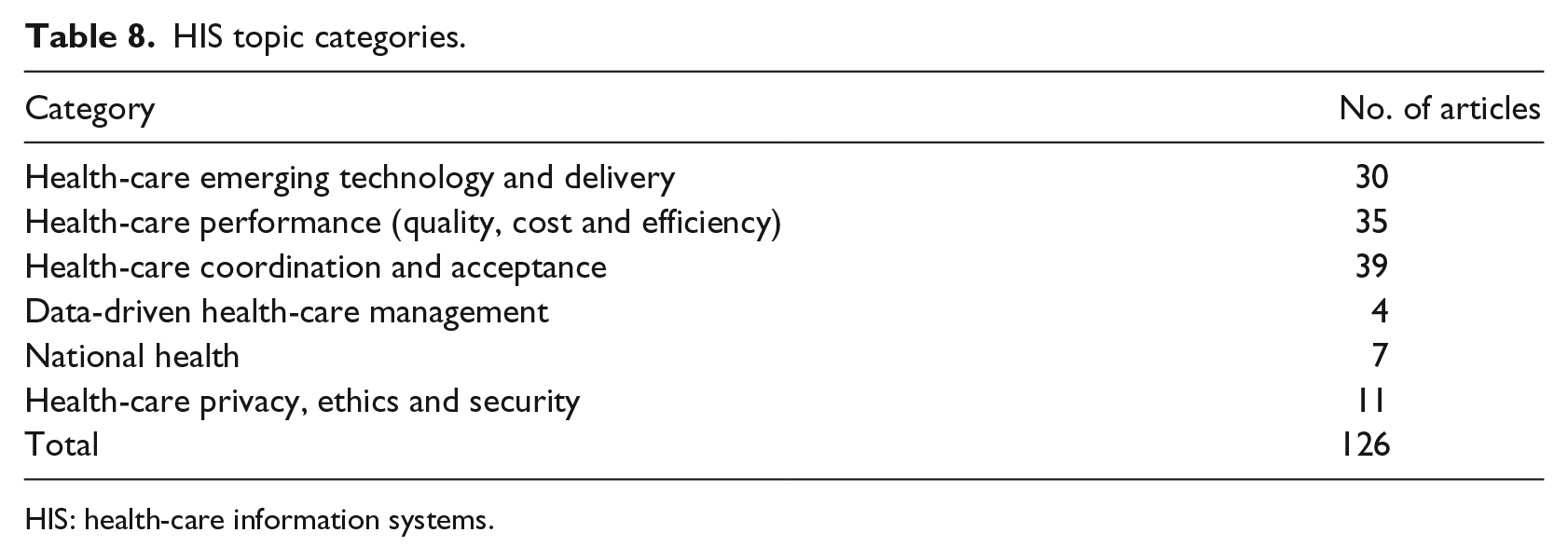
During our analysis, six relatively distinct research topic categories emerged (see Table 8). The health-care emerging technology and delivery category consists of research dedicated at investigating the implementation of the latest health-care technologies. The health-care performance (quality, cost and efficiency) category contains articles focused on evaluating health-care performance resulting from the application of HIS. The health-care coordination and acceptance category details the evaluation of HIS implementations from a stakeholder point of view. The data-driven health-care management category consists of research focused on how data analysis was applied to make changes to improve health-care operations, patient treatment and/or predictive medicine. The national health category reviews the role that HIS has played in improving national health systems. The health-care privacy, ethics and security category focuses on issues surrounding patient data from a privacy, ethical or security management concerns. These six topic categories provided a classification scheme for all of the 126 articles identified in our research pool. Based on our classification, 39 articles were classified in the health-care coordination and acceptance category making it the most prevalent HIS category. A close second was the health-care performance (quality, cost and efficiency) category with 35 articles. This category was followed by the health-care emerging technology and delivery category with 30 articles. These results should not be overly surprising since technology and IS use, acceptance and performance have been traditional IS research areas. After those topic categories, we see a substantial drop-off with regard to the other research categories: health-care privacy, ethics and security (11), national health (7) and data-driven health-care management (4). These numbers help illustrate the amount of attention that IS journals have given to the various HIS research categories and identify areas where IS researchers can build on their experiences to extend into HIS topic areas in need.
HIS topic categories.
HIS: health-care information systems.
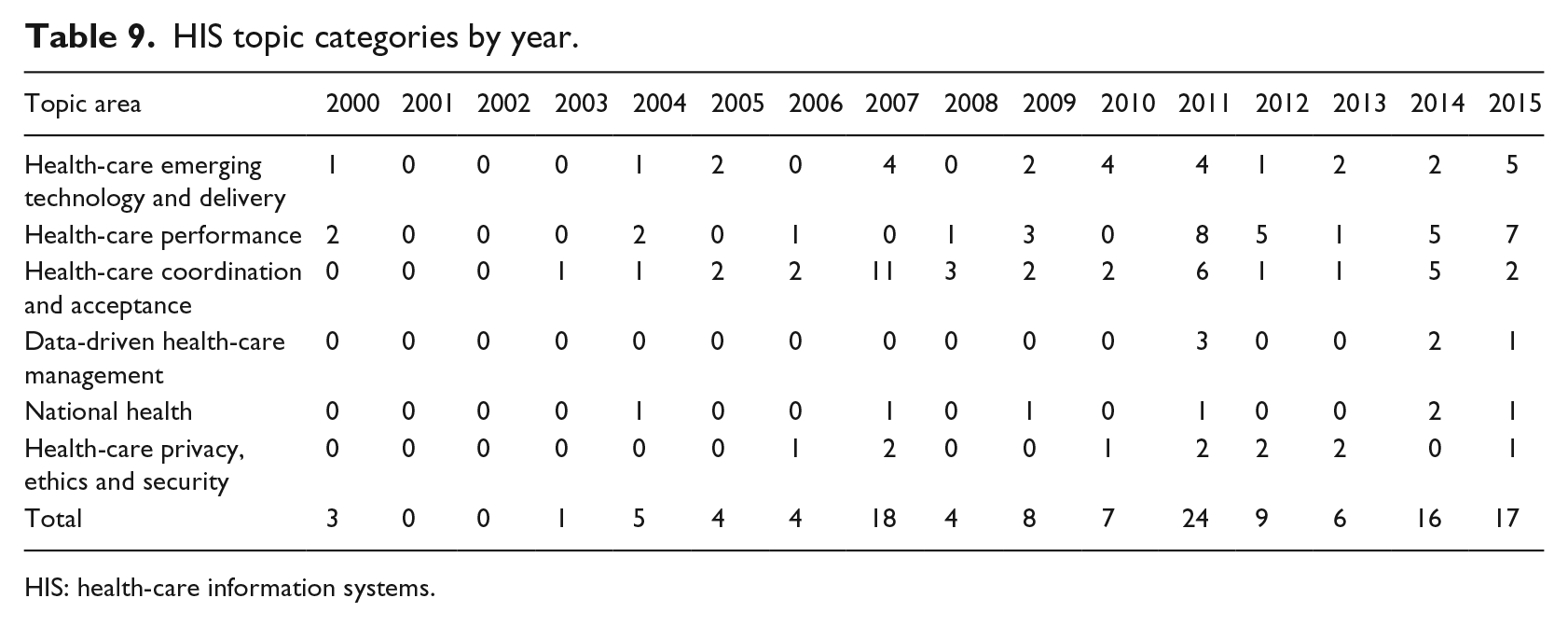
An examination of the research topic categories over the years (see Table 9) reveals a few interesting results. We can see that in the early 2000–2005 time period that very little research was published on emerging health-care technologies and the acceptance of health technology. However, later in the final years of our study 2011–2015, we can see a growing emphasis by IS journals on the HIS topic areas of health-care performance, health-care coordination and acceptance and health-care emerging technology and delivery. The rationale for these findings could be driven by the fact that in the year 2000, we were in the infancy of modern HIS. With the passage of the Affordable Care Act in 2010, which placed a higher emphasis on utilizing technology in managing health data, and the HITECH act of 2009, which incentivized payouts for meaningful use, we can see a greater number of HIS articles focused on emerging technologies, acceptance and performance. IS researchers may be attempting to evaluate how the government directives are impacting the performance, delivery and acceptance of HIS now that HIS is highly encouraged across health-care agencies. HIS research published in the leading IS journals appear to be following industry’s introduction and acceptance of HIS. One would expect that moving forward as HIS is widely implemented and accepted by industry that IS academics will shift research interests to security, national health and data-driven topic areas.
HIS topic categories by year.
HIS: health-care information systems.
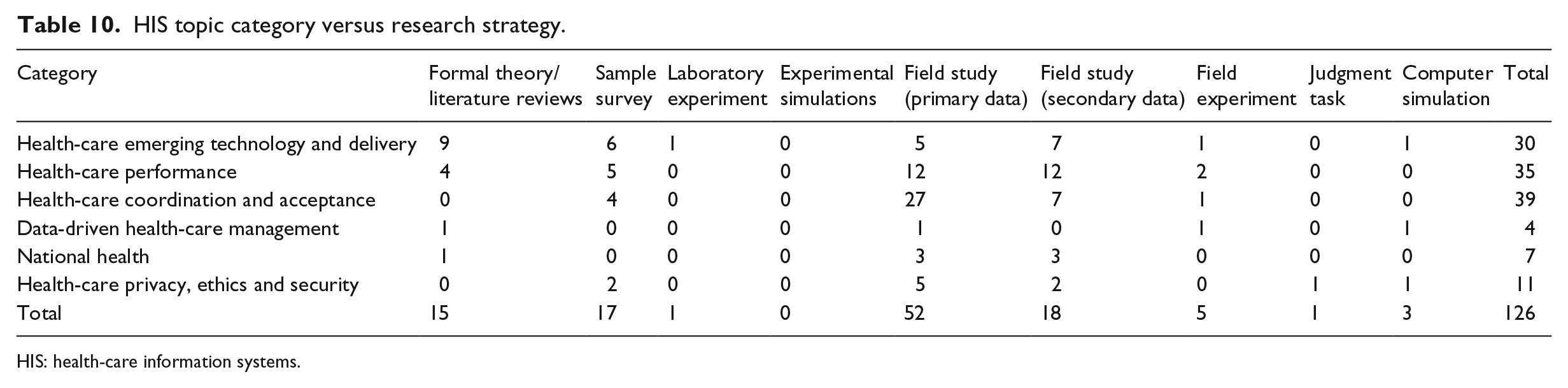
An analysis of HIS topic categories versus research strategies (see Table 10) reveals the research strategies applied in the IS journals on the various HIS topic areas. Overall, many of the research categories utilized the field study method with primary data collection as their research strategy. Specifically, health-care performance, health-care coordination and acceptance, national health and health-care privacy, ethics and security category areas all utilized field study with primary data collection as the research strategy applied for a large percentage of their publications. In particular, we see the health-care coordination and acceptance category utilizing field study with primary data collection for close to 70 percent of the articles published.
HIS topic category versus research strategy.
HIS: health-care information systems.
When looking across topic areas and research strategies, we see zero articles on experimental simulation and only one publication each applying laboratory experiments and judgment task. The rationale for these findings is as follows: First, the HIS topic areas themselves may not fit with experimental or judgment task research methods. Second, the researchers conducting the HIS research from an IS perspective are many times located in a business college where surveys are far more common and accepted in comparison to experimental studies or judgment tasks. Third, HIS in many cases involves private patient data. Organizations may not be open to having patients exposed to experimental studies or judgment tasks. These findings are not limitations but opportunities for future researchers to explore when selecting an appropriate research strategy for HIS topic areas.
Discussion
Given the importance of the health-care industry and the promise of HIS, researchers are encouraged to build on the shoulders of giants as the saying goes. The HIS field has a unique opportunity to build on and leverage the work that has already been done by the highly correlated IS field. HIS researchers are encouraged to review and build off of the findings published in the leading IS journals as presented in our article. Our findings discussed above provide a strong overview of what has been done in the IS field and identify areas for future areas for HIS research.
As our results demonstrate, there is an opportunity for researchers to continue to address important HIS questions by applying a variety of research strategies. Scandura and Williams 9 stated that looking at research strategies employed over time by triangulation in a given subject area can provide useful insights into how theories are developing. We encourage HIS researchers to review methodologies applied and search for gaps within the HIS area. Our results demonstrate that little triangulation has occurred during our selected time frame, which in itself offers multiple research opportunities. The absence of coordinated theory development causes the research in HIS to appear haphazard and unfocused. An opportunity exists to expand on the categories and research strategies applied through future research studies. We also see opportunities for IS researchers to contribute to the growing trend of data-driven health-care and security/privacy/ethics topic areas. Very few IS articles have addressed these topics, and the IS field can contribute significantly to these HIS topic areas. We hope that this research has laid the foundation for such efforts that will enhance the body of knowledge and theoretical progression relative to HIS.
A major contribution of this article is to show the trends of HIS coverage in the journals covered. Tables 4 and 5 illustrate how the topic of health care has received limited attention by IS scholars. Although recent years have seen an increase in coverage, this article shows that more coverage can clearly be done. While innovative technologies have been introduced to support health care, it does not appear that IS scholars have studied the context to the same extent it has expanded. The expansion of HIS has become a mandatory part of the industry’s operation, and IS literature should be making a larger contribution.
As in all research articles, our article is not without limitations. The primary limitation of this study is that we did not review all journals in IS or the HIS field. Reviewing the entire spectrum of journals is virtually impossible and was not deemed the goal of this article. However, we did review a strong subset of the top IS journals to provide insight into the state of HIS research in the IS field. Our data are from those ranked as the top journals in the IS field and represent a sample of arguably the best practices in IS research that should be of value to HIS researchers. We encourage both HIS and IS researchers to consider our findings and embark on research to address the many HIS research opportunities.
Conclusion
In this study, we examined the overall HIS research strategies and topic areas published in leading IS academic journals over the 2000–2015 time period. HIS researchers are encouraged to build on our reported IS research findings. In this article, we provided a strong overview of HIS topics addressed by IS researchers and areas of research opportunities with regard to both topic and methodology for both HIS and IS researchers to consider. Overall, our analysis has shown that the study of HIS in top tier IS academic journals has steadily increased over the 2000–2015 time period, which is encouraging given the overreaching impact of health care. Overall, the HIS field continues to develop with technology innovations, and HIS researchers are in a unique position to leverage IS research findings. It is essential that future studies and discussions on HIS recognize and review the accumulated IS knowledge. In conclusion, our article has identified significant implications for researchers and provided a status report of HIS research published in the top IS journals. HIS is clearly a topic that will not disappear in the foreseeable future and is garnering increased attention across disciplines. Most importantly, our analysis clearly points to the need for further research on HIS, and we encourage both HIS and IS researchers to continue this work to improve worldwide health-care delivery.
Footnotes
Appendix 1
Complete list of health-care information systems articles
Declaration of Conflicting Interests
The author(s) declared no potential conflicts of interest with respect to the research, authorship, and/or publication of this article.
Funding
The author(s) received no financial support for the research, authorship and/or publication of this article.