




Abstract
Mobile health (m-health) apps can bring health prevention and promotion to the general population. The main purpose of this article is to analyze different m-health apps for a broad spectrum of consumers by means of three different experiences. This goal was defined following the strategic documents generated by the main prospective observatories of Information and Communications Technology for health. After a general exploration of the app markets, we analyze the entries of three specific themes focused in this article: type 2 diabetes, obesity, and breast-feeding. The user experiences reported in this study mostly cover the segments of (1) chronically monitored consumers through a Web mobile app for predicting type 2 diabetes (Diab_Alert app), (2) information seekers through a mobile app for maternity (Lactation app) and partially (3) the motivated healthy consumers through a mobile app for a dietetic monitoring and assessment (SapoFit app). These apps were developed by the authors of this work.
Introduction
Mobile health or m-health can be defined as “the use of wireless technology to deliver health services and information on mobile communication devices such as mobile phones, PDAs, Smartphones, monitoring devices, e-book readers, and iPods.” At the end of 2011, there were being sold worldwide more smartphones than personal computers. 1 M-health applications include the use of mobile devices in the collection of community health and clinical data, the delivery of health information for professionals, researchers, and patients; real-time monitoring of vital signs; and the direct care provision. 2 Mobile devices are attractive platforms for delivering remote patient health monitoring services. 3 In recent years, many researches have employed mobile phones as tools for symptom monitoring in heart disease, diabetes, and other chronic diseases, and for a range of different health problems. 4 Thanks to the quickly increasing number of m-health applications in Apple’s AppStore, many m-health application developers have chosen Apple’s iOS mobile devices. 5 According to Gartner press release, worldwide mobile application store downloads are forecast to reach 17.7 billion last year, and in 2015, about 500 million people will use mobile health applications. 6
Empowerment links the individual and his or her well-being to the wider social and political environment in which he or she functions. 7 It fits with the new perspective of health promotion. In different health promotion approaches, empowerment is understood as an essentially relational phenomenon. Empowerment is a popular concept in theory and presents health-care professionals with numerous opportunities. 8 It is recognized as an outcome by itself and as an intermediate step to long-term health status. 9 Patient empowerment in health-care systems has used different instruments for implementation. According to Monteagudo and Moreno, 10 the classification of the mechanisms for patient empowerment are the following: consumer communication with health agents and carriers, consumer health information access, consumer health education process, consumer decision-making aids, consumer self-care support, and chronic care integrated services support. 10 E-health may enable the empowerment process for patients. 11 Mobile wellness applications can have a positive impact on health. 12 Mobile phones are very useful tools in health communication, self-management of disease, and health promotion. M-health apps can contribute to bringing health care to underserved or unserved populations, reducing the cost of health-care delivery, preventing illness, managing and treating chronic diseases, keeping people out of hospital, and so on. 13 At least 75 percent of participating member states from each World Health Organization (WHO) region reported the presence of one m-health initiative in the country. 14
Related to technology information for health, there are three major potential markets in developed countries: motivated healthy, information seekers and chronically monitored. 15 Between motivated healthy and information seekers groups, obesity control and dietetic monitoring can be included. WHO declared obesity as a global epidemic of the 21st century, and the US National Health and Nutrition Examination Survey (NHANES) indicated that an estimated 17 percent of children and adolescents between ages 2 and 19 years are obese. 6 As an example of information seekers, 6 million of American women are pregnated in a year and an increasingly large percentage decides to breast-feed their infants. 16 Besides, diabetes accounts for 366 million patients worldwide in 2011 are archetype of the chronically monitored consumers group. 17 The analysis of the Apple’s AppStore carried out by MobiHealthNews Research pointed out that women health apps are the 7.1 percent of the app market, while chronic condition apps are the 5.3 percent and Diet apps are the 14.1 percent. 18 Partially in the motivated healthy group, obesity is a disease with an important risk factor for development and worsening of other diseases such as diabetes, hypertension, and so on. Rodrigues et al. 6 presented a mobile application for a dietetic monitoring and assessment, namely, SapoFit. 6 This app was customized per user to keep a daily personal health record (PHR) of his or her food intake and daily exercise. It can be used to control obesity and also to malnutrition problems.
One of the most active information seekers are women or couples who want to have a baby, will have a baby, or have recently had a baby. During this period of life, first-time parents seek for information relative to the pregnancy, delivery, and breast-feeding and health conditions of the baby and the mother. Health systems and nonprofit organizations usually provide information and training for parents. Nevertheless, questions arise everyday due to curiosity or doubt about their new responsibility and family condition.
Parents and general practitioners usually have doubts about the compatibility of breast-feeding with medical prescriptions, physiotherapy products, lifestyle habits, food, cosmetics, alternative treatments, parapharmacy, and diseases in the mom or the baby. Lactation is designed to bring the specific knowledge of the compatibility of breast-feeding. The goal function of Lactation app is to inform of the risk of consuming a product during breast-feeding. It is an app for clinical professionals and families about breast-feeding compatibility with medical prescriptions, environment contaminants, diseases, and herbal substances.
In the chronically monitored group, type 2 diabetes prevention is possible thanks to some healthy lifestyle habits and paying attention to detailed preventable diabetes complications associated with this disease.19,20 Physicians recommend screening for type 2 diabetes at age 30 among people at risk, such as those who are overweight or those with a family history of diabetes. People should be concerned about the fact that type 2 diabetes can be prevented. Health promotion in this field is very important to make people aware of this disease. Barreda-Pérez et al. 21 published a mobile compatible Web-based tool to estimate the risk of suffering from type 2 diabetes named Diab_Alert. 21 This tool can help users become more aware of their risk of diabetes and initiate lifestyle changes to prevent this disease.
The main objective of this work is the analysis of mobile health applications for a broad spectrum of consumers by means of three experiences in obesity, type 2 diabetes, and breast-feeding. These three experiences mostly cover the segments of chronically monitored consumers, information seekers, and partially, the motivated healthy consumers.
The remainder of this article is structured as follows: the next section describes the methodology to make this work. In the following section, we show the experiences of use in obesity with SapoFit, type 2 diabetes with Diab_Alert, and maternity with Lactation. After that, a discussion is presented. Finally, we extract the main conclusions of this study.
Methods
A systematic approach has been followed to perform the analysis carried out in this study. Our objective was defined following the strategic documents generated by the IBM Institute for Business Value, Cientifica Ltd, Accenture, and McKinsey Global Institute. All of them point out the need of accessing health care to a bigger spectrum of consumers, and the use of information and communication technology as the way to do that. It was of particular relevance to the segmentation of the market in motivating information seekers and healthy consumers. 15 Afterward, we explored the online vendor markets (online stores for Google Android, BlackBerry, Apple iPhone, and Nokia Symbian) to group the mobile health apps into general groups. It was of special interest the study made by MobiHealthNews Research to document this segmentation. Using the keywords that define the groups included in the MobiHealthNews Research report, we search in the Google Play market the entries of the Women’s health, diet, and chronic condition applications. Moreover, we restricted the search and the analysis of the three specific themes focused in this work: type 2 diabetes, obesity, and breast-feeding. The user experiences to exemplify the availability of apps for a broad spectrum of health consumers were SapoFit, Diab_Alert, and Lactation because they were apps developed and deployed by the authors of this work.
Results
Experience of use in obesity
SapoFit app controls the user’s weight, even running in the background and alerting the user whenever necessary. This app was deployed in three different devices with four different screen sizes such as Sony Ericsson ×10 mini, HTC Magic, TMN a1 and Samsung Galaxy Tab. Some screenshots of the application can be seen in Figures 1 and 2. More information about SapoFit can be consulted in Rodrigues et al. 6
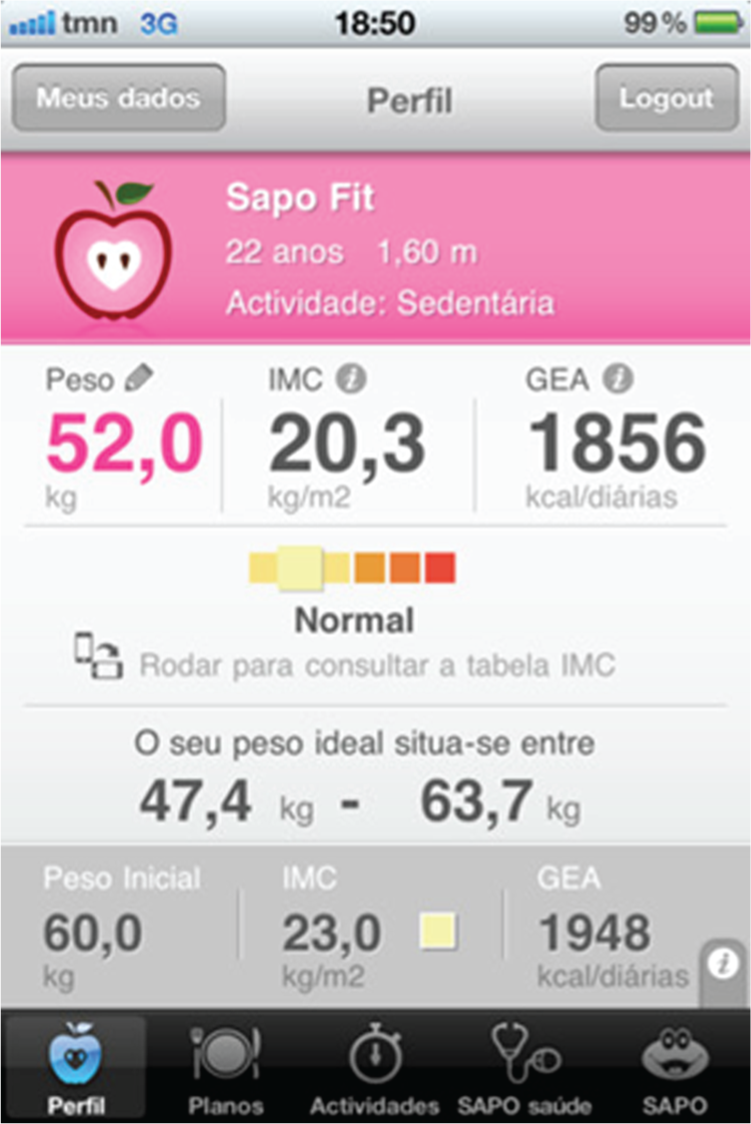
iPhone screen for women.
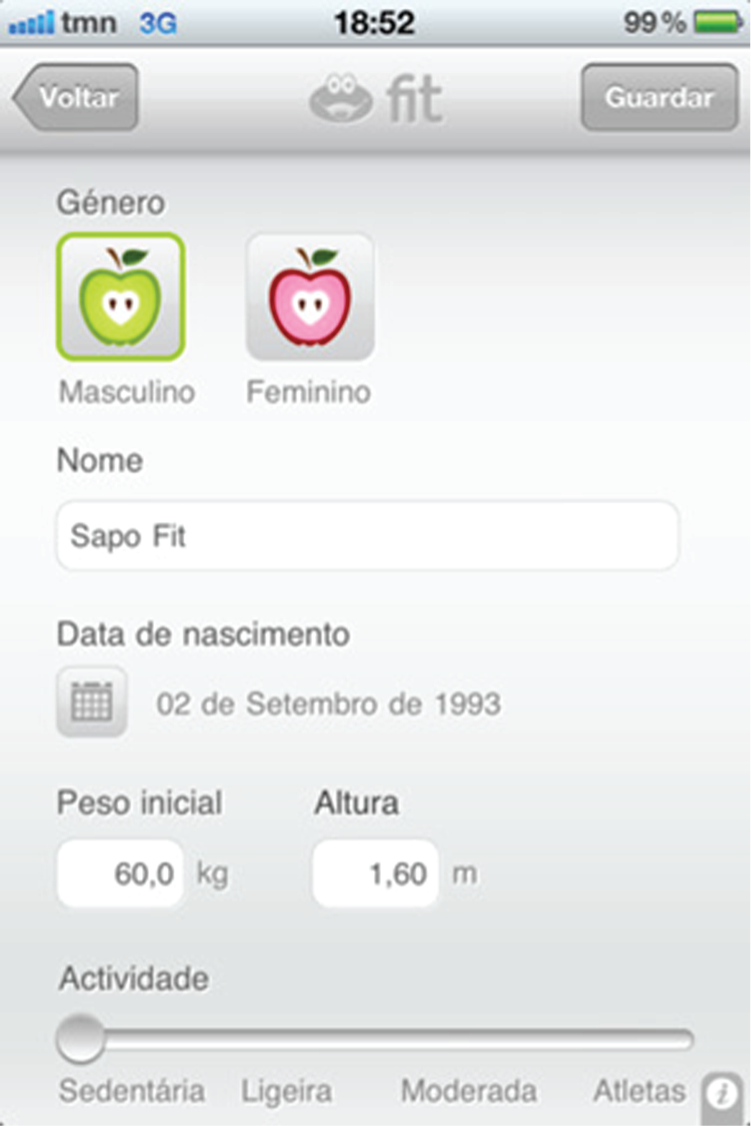
Menu in SapoFit.
In June 2011, 106 users from the University of Beira Interior, Portugal, evaluated the application. Most of the users strongly agree that platform has an attractive design, and a friendly and intuitive user interface. SapoFit is available in the AppStore. It accounts for more than 6000 installs since October 2011.
Experience of use in diabetes
Diab_Alert performance and user evaluation were done in Barreda-Pérez et al. 21 Nowadays, the questionnaire has been completed by 200 people, among which there are 101 men and 99 women. Most of the users (130) have used the Spanish language, whereas 20 have chosen Portuguese, 40 English, and 10 French. Moreover, 40 of them have used a mobile device. In Figure 3, Diab_Alert application for mobile version is presented. The Web site for mobile version is organized into two sections: home and questionnaire. The questionnaire presents 15 questions that allow the calculation of the diabetes risk.
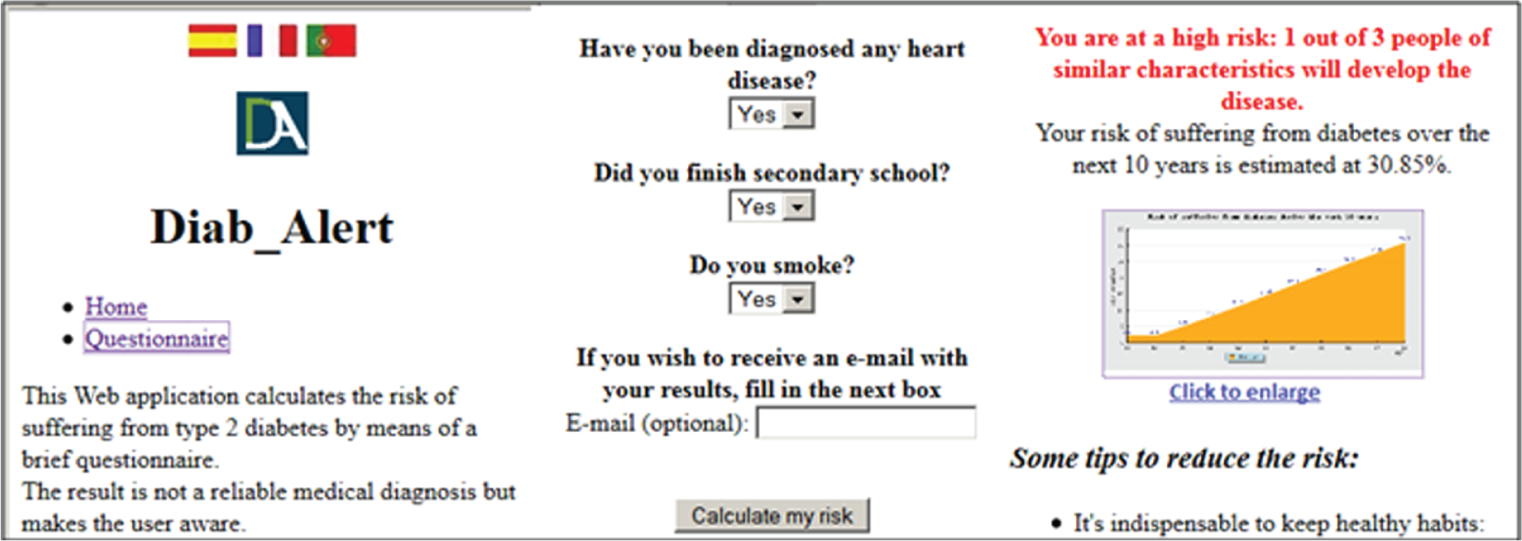
Diab_Alert application (home, questionnaire, and graphs).
When the user completes the test and sends her or his petition, the PHP server evaluates the answers to the questionnaire and shows a message with the overall risk according to the total score. A graph that represents the probability of developing the disease in the next 10 years appears in Figure 3. At the bottom of the page, some tips to reduce type 2 diabetes risk are shown, for example, if the body mass index (BMI) is over 25 kg/m2, a message appears and suggests losing weight. 21
Experience of use in maternity
Lactation is a multilanguage application for smartphones and tablets for moms and health professionals to get information about breast-feeding compatibility with more than 1600 products or conditions categorized into four main groups: medical prescriptions, environment contaminants, diseases, and herbal substances. This information is endorsed by the Pediatric Service staff of Hospital de Denia (Spain) and provided by a dedicated Web service accessed by the app at the moment of the query. In its current version, Lactation is implemented as an Android application. The main functionality of Lactation is carried out by means of three screens: the search engine, the compatibility information, and the bibliographic references.
The action required by a user consists in a simple search of the product or condition in the sorted list of more than 1600 entries that can be filtered by the prefix introduced by the user in the search engine shown in Figure 4. Once the user selects the entry, the compatibility information screen (see Figure 5) shows the name of the entry, the risk level (from 0 to 3), the group where the entry is included, relevant remarks and alternatives, if available, when risk is higher than 0.
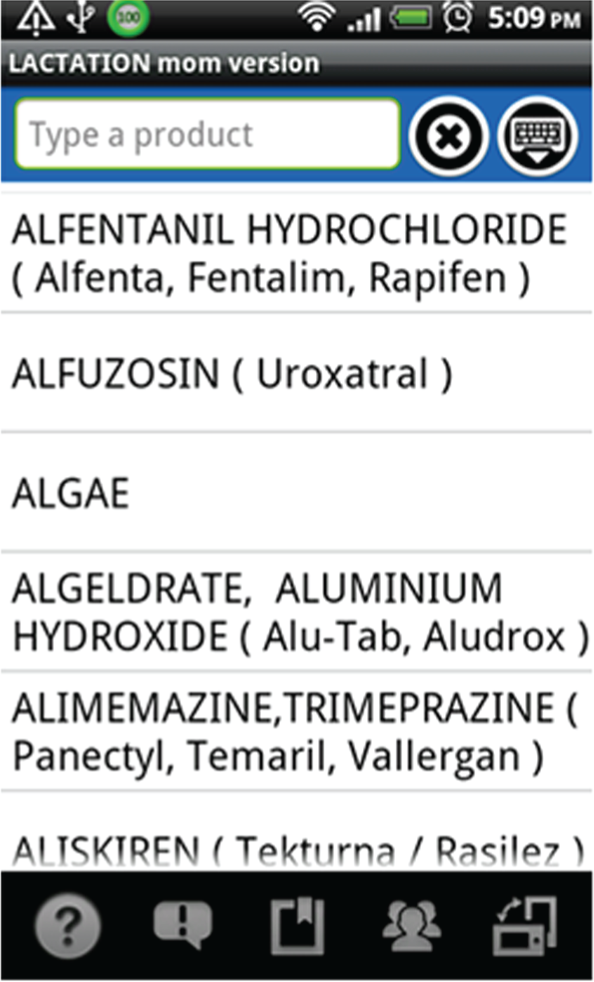
Screen of the search engine.
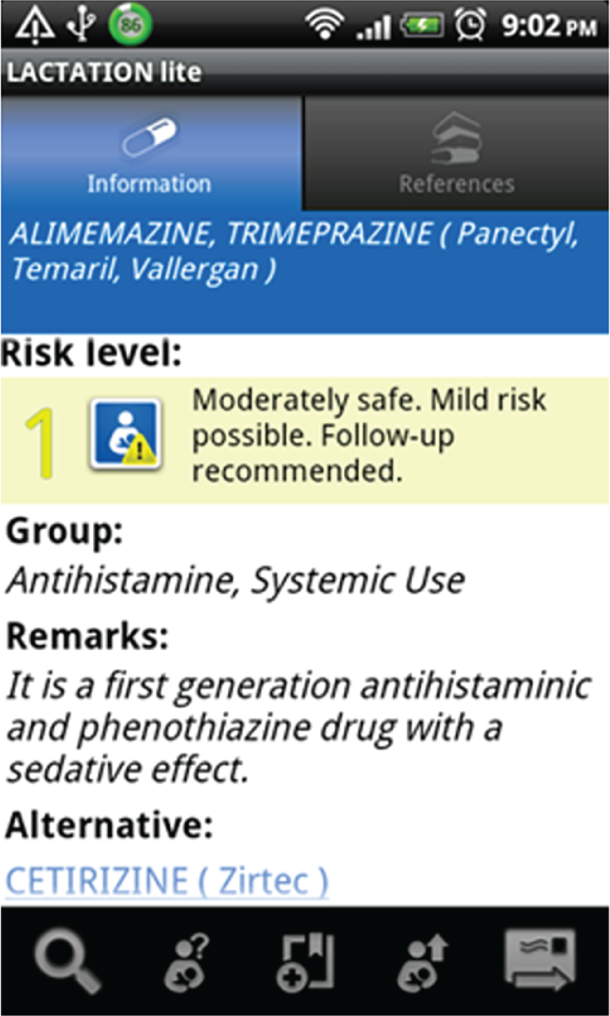
Screen of the compatibility information.
If users are interested in the medical evidence that supports the compatibility information, they can review their bibliographic references as shown in Figure 6. In September 2012, Lactation was available in the Google Play distribution service. It accounts for 6374 installs since October 2011. The 103 user reviews give Lactation an average rating of 4.4 out of 5, similar to those in the recommended list by Google Play.
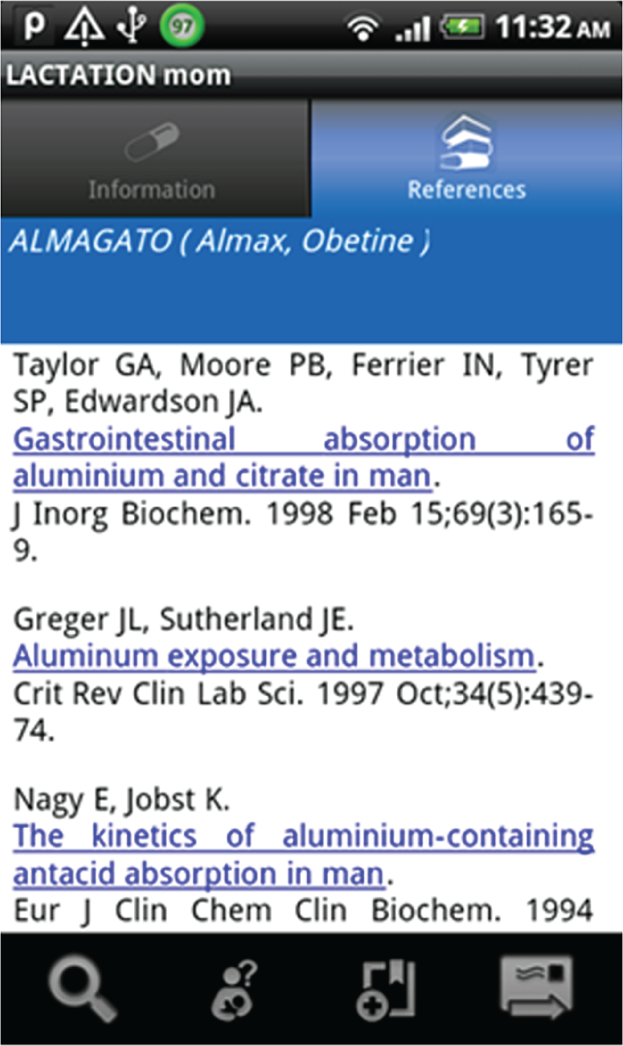
Screen of bibliographic reference.
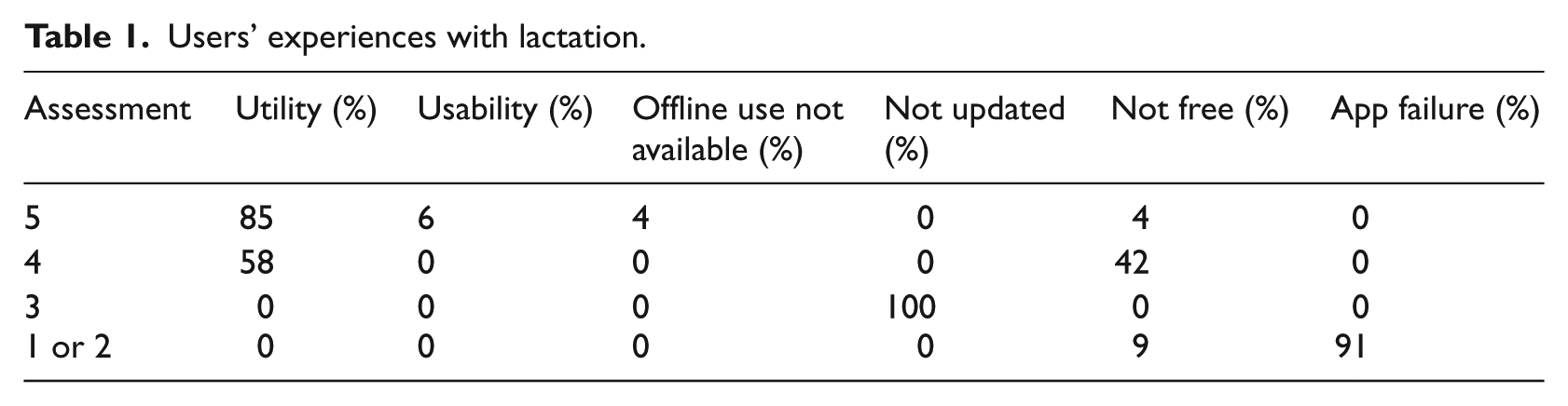
An analysis of the users that commented Lactation on Google Play has been included. Our analysis includes the 103 reviews available in the system, from which none of them was discarded. The main opinions expressed in the comments were categorized into six topics: Utility, Usability, Offline use not available, Not updated, Not free, and App failure.
The result of the analysis with the users’ experiences using Lactation is summarized in Table 1. Each row of the table corresponds to the summary of comments provided by users who valued the app from 1 to 5, where 5 is the best value and 1 is the worst. For each topic, the relative frequency of each assessment value was calculated. Users, who gave the best value to Lactation and commend the application, highlighted its utility (85%), demonstrating the usefulness of the application for this segment of potential consumers. Some of them also liked its usability. Users who valued the app with a 4 highlighted the utility, but 42 percent would have preferred a not totally free application (now Lactation Lite is free only for a week). Some of them suggested adding banners to the application in exchange for free. The only user who valued the app with 3 asked for more frequent updates of the knowledge base. Nowadays, Lactation is incrementally updated to have a complete upgrade every 5 years. Finally, 91 percent of the users that complained of the application commented they were not available to run it in their mobile. Lactation is a good example of a light application, based on medical knowledge that can give useful information to a highly motivated segment of information seekers.
Users’ experiences with lactation.
Discussion
The mobile health market is expected to increase in value to $11.8 billion by 2018. 22 This is due to the expected added value to health care and consumers and given the growth rate at 39 percent during this year. In the three specific fields of the broad spectrum segments, thousands of apps are available in the market. Some of the most popular apps for obesity control are CardioTrainer, MyFitnessPal, and CalorieCounter. These applications are basically dietary assessment tools, and their main goal is the same: weight loss. However, they complement each other with different functionalities. MyFitnessPal and CalorieCounter are similar applications, but they do not have a suggestion of a diet or exercise plan. 6 SapoFit complements all the above approaches and intends to be a more complete solution for weight control concerning obesity prevention and treatment.
Type 2 diabetes can be efficiently prevented by lifestyle variation in high-risk individuals. People with pre-diabetes can be helped to prevent the progression to type 2 diabetes by lifestyle changes and medication.23,24 Both Google Play and AppStore markets have more than 900 applications relative to diabetes. We can make a classification according to different features such as self-monitoring, education, disease-related alerts and reminders, integration of social media functions, diet, insulin and medication, blood pressure, disease-related data export and communication, and synchronization with electronic health record (EHR) systems. There are other m-health apps to calculate type 2 diabetes risk such as Beat Diabetes Calculator. It is a simple algorithm to calculate how much weight a patient needs to lose to achieve a BMI that avoids excess diabetes risk. 25 This tool also calculates the resulting reduction in risk for developing diabetes in the next 10 years. 26 Diabetes Risk Calculator from Android Market allows calculation of type 2 diabetes. 27 Based on a clinically validated questionnaire, the user will be asked 10 simple questions about your diet, lifestyle, and current health. Diabetes Risk is a simple calculator that contains a menu with different activities. In addition, the application enables you to determine your recommended daily food based on the given birth of date and the gender. Diabetes risk for Blackberry enables you to determine your individual risk of contracting the condition and shows preventative measures. Diab_Alert predicts the risk of type 2 diabetes that raises the public awareness of this disease. It is available in English, Spanish, Portuguese, and French. It includes both a standard version for computers and a simpler version for mobile devices, which make it different from other existing tools. 21
Related to maternity, both Google Play and AppStore markets have more than 3000 applications. Most of these apps are for tracking pregnancy giving the parent information about daily information on the fetal development. For example, My Pregnancy Today by BabyCenter provides an expert guide for each day of pregnancy based on multimedia content. BabyBump Pregnancy Pro by ALT12 APPS is an alternative to the previous one. Focusing on breast-feeding, 77 apps are available in the Google Play market. They can be grouped into several categories: (1) Breast-feeding Tracker such as Breast Feeding Tabulator by CCW, Breast-feeding by Whisper Arts, Breastfeeding log by ERIK WESTLUND, Feed Baby Tracker Monitor by PENGUIN APPS and Breastmilk Counts by SHERRY MATTHEWS ADVOCACY MARKETING. (2) Breast-feeding guides for moms, such as Baby ESP by LEANMEANTECH, Medical resource, such as Medscape by WEBMD, and iTriage Mobile Health by ITRIAGE, LLC. (3) General baby guide and trackers, such as Baby ESP by LEANMEANTECH, and Baby Care—track baby growth! by BREET.JIA. (4) General drug information, such as Micromedex Drug Information and FDA Drugs Free by sigmaphone.com. (5) Breast-feeding compatibility information, such as LACTATION by Veratech for Health, LactMed by National Library of Medicine at NIH and Infant Risk Center HCP Resource, from Texas Tech University Health Sciences.
LactMed offers detailed information about breast-feeding compatibility with medical prescriptions oriented to professionals. Bibliography and descriptions are written in technical language that makes more suitable to those users with background experience in pharmacology, chemistry, and medicine. Infant Risk Center HCP Resource offers detailed information about medical prescriptions oriented to the general public by showing a level of risk associated with each product. Although it offers information on more than 20,000 drugs, this app does not count with a great amount of installations due to its elevated price both in Play and in AppStore. Lactation has been designed to offer information easy to understand by nonprofessional users and is the first m-health app, to our knowledge, that offers information not only about medical prescriptions but also on environmental contaminants and herbal substances.
Conclusion
Governments consider empowerment as a new tool to bring health services to the majority of the population. Mobile health is positioned as one of the main platforms to provide this new paradigm of ubiquitous health care. As a result, mobile health care widens the potential market of health-care services to a broad spectrum of consumers, from motivated healthy consumers to chronically monitored patients, with a large market of information seekers in the middle.
As examples of the apps prepared to cover this broad spectrum, we have analyzed the user experiences of three applications of different segments. SapoFit is a good example in the middle of two segments: healthy motivated people and information seekers. It is the unique app designed to be a complete solution for weight control concerning obesity prevention and treatment. Diab_Alert is an arquetyping m-health app for chronic diseases that offers complementary interfaces via the Internet or mobile and multilanguage. Lactation is a clear example of app for information seekers, given specific information based on medical evidences to the specific situation of the users and general practitioners.
After this analysis, our further work is related to how the multiple technologies historically studied by medical informatics, such as clinical decision support systems, biomedical image and signal analysis, interoperability with EHRs, and emotional interfaces, should complement the current approach of mobile health.
Footnotes
Acknowledgements
We thank Veratech for Health for providing technical information about the Lactation Lite app. The authors thank Dr Jose Maria Paricio for the invaluable compilation of information about breast-feeding compatibility during several years that constitutes the knowledge base of the Lactation app.
Declaration of conflicting interest
No author has a conflict of interest with the contents of this article.
Funding
This research has been partially supported by the Spanish Social Security Administration Body (IMSERSO) under the project 85/2010, by the Instituto de Telecomunicações, Next Generation Networks and Applications Group (NetGNA), Portugal, and by National Funding from the FCT—Fundação para a Ciência e a Tecnologia through the Pest-OE/EEI/LA0008/2011 Project.