



Abstract
Social media influencers (SMIs) are powerful role models that can effectively shape followers’ intentions towards prosocial causes and contribute to social good. Drawing on social comparison theories, followers engage in upward (comparison with more advantaged others) and downward (comparison with less advantaged others) social comparisons in response to SMIs’ attractiveness, which in turn evoke emotional and motivational reactions such as envy. This study examines how SMI attractiveness triggers benign and malicious envy as the two forms of envy, and how these emotional reactions translate into prosocial intentions. Across three experimental studies, the findings confirm that feelings of envy towards SMIs can be powerful motivators for positive behaviour, effectively enhancing followers’ involvement in prosocial causes. This research highlights the significance of SMI attractiveness and the concepts of wishful identification and envy among followers, along with the subsequent impacts on prosocial behaviour and gender differences. The results yield clear theoretical and managerial implications for leveraging influences to support social causes.
Keywords
Introduction
Social media influencers (SMIs) have grown exponentially over the past 5 years, not only in their online presence but also in their roles, such as opinion leaders, brand ambassadors and social advocates (Insider Intelligence, 2022; Kapitan et al., 2022; Weismueller et al., 2020). As a result, influencer marketing, wherein SMIs endorse products and brands to their followers through posts platforms such as Instagram and TikTok has become increasingly prominent (Lou et al., 2023). This rise is driven in part by the widespread adoption of social networking sites (SNSs), with around 60% of world’s population using them regularly (Statista, 2022). Reflecting this trend, 75% of marketing managers now integrate social media influencers in their communication strategies (Influencer Marketing Hub, 2021), indicating that influencer marketing has become a well-established advertising practice (Lou & Yuan, 2019).
The attractiveness of role models and media personalities leads to more positive attitudes towards brands (Kamins, 1990) and can shape consumers’ purchase intentions (Kahle & Homer, 1985). This persuasive effect is often explained by the ‘halo effect’, whereby n attractiveness in one domain spills over into positive evaluations in others (Erdogan, 1999). However, attractiveness can also trigger social comparison processes that lead to adverse psychological outcomes. Numerous studies show that exposure to idealised highlight the SMI content marketing can elicit depressive symptoms (Matthes et al., 2020) and body image concerns (Su et al., 2021). A possible explanation is that such content often portrays inauthentic and idealised representations of the real world, which can lead to envy (Van de Ven, 2015; 2016).
Many users engage in comparing themselves to SMIs through SNS content (Su et al., 2021), fostering envy due to the perceived superiority of others’ lives portrayed in such content (Chae, 2017b; Filieri et al., 2023). However, there is conflicting evidence regarding the impact of types of envy on consumers and the social comparison conditions under which they are most likely to manifest. Specifically, while some research suggests that envy triggered by SMIs may lead to aspirational attributes and increased engagement with promoted products or content (Belk, 2011), other studies propose that envy can have detrimental effects on consumer attitudes and behaviours, such as reduced brand trust and purchase intentions (Shimul et al., 2021). This contradiction underscores the complexity of the relationship between envy and consumer responses to influencer marketing efforts. The inconsistent findings from previous studies also create challenges for marketers in selecting suitable influencers to endorse their campaigns and in developing effective marketing strategies. Given that envy is an inherent aspect of human nature, marketers must understand how to channel it positively to drive favourable consumer outcomes.
The potentially inconsistent findings on consumer envy towards SMIs may come from the main focus on conventional consumerism and materialism by existing research, which emphasises product and service promotion to the broader audience (e.g., Chae, 2017b; Djafarova & Rushworth, 2017; Sung & Phau, 2019). This narrow framing overlooks the broader societal influence of SMIs, who increasingly advocate for social causes, charitable initiatives, and public welfare campaigns. The literature on SMIs and consumer envy has largely neglected their potential applications in the non-profit sector, despite growing calls for influencer marketing to be leveraged for social goods (Li et al., 2022; Septianto & Soegianto, 2017). Given that prosocial behaviours (e.g., volunteering, donating, helping), which refers to ‘any action that benefits another’ (Pfattheicher et al., 2022), represent essential forms of moral and collective action, examining whether and how SMIs can motivate such intentions advances both theoretical understanding of envy as an emotion and practical knowledge on mobilising followers towards social causes. Addressing this issue represents a meaningful research gap that our study tackles.
Additionally, there is limited insight into how the boundary conditions of wishful identification, wherein consumers aspire to be like the influencers they follow (C. Hoffner & Buchanan, 2005). The relationship between the perceived attractiveness of social media influencers, driven by consumers’ wishful identification, and its influence on envy remains poorly understood, particularly in the context of social comparison dynamics. These factors affect the effectiveness of SMIs when promoting prosocial causes and behaviours. Addressing this gap, our research explores the interplay between attractiveness and wishful identification, contributing to the evolving field of online persuasion in consumer-influencer relationships.
Addressing this gap, our research explores the interplay between attractiveness and wishful identification, contributing to the evolving field of online persuasion in consumer-influencer relationships. Furthermore, another research gap is how SMIs support environmental and prosocial causes (Labroo et al., 2023). However, very few studies currently seek to understand how these SMIs actively get involved in promoting sustainability and social initiatives (Kapoor et al., 2023; Pittman & Abell, 2021), and there is a lack of knowledge about the specific strategies they use as well as the underlying mechanism (Boerman et al., 2022; Hudders et al., 2021). This knowledge gap limits our understanding of how SMIs contribute to these important societal issues.
Our research examines how SMIs can contribute to social goods. Given the increasing influence of SMIs, it is vital to address ethical concerns about their role in driving prosocial change. This emphasizes the urgency for establishing guidelines that govern the use of SMIs in supporting societal causes, ensuring the impactful application of influencer marketing for prosocial outcomes. Drawing from Social Comparison Theory (Festinger, 1954), this research aims to achieve the following objectives: (1) assess the relevance of attractiveness and wishful identification and subsequently affect intentions to volunteer for prosocial causes; and (2) the moderating effect of the types of consumer envy (benign and malicious) between influencer attractiveness and wishful identification in shaping the prosocial behaviour of social media users. This research is significant as it deepens our understanding of the psychological mechanisms underlying consumer behaviour in the context of influencer marketing, particularly when promoting social goods. Underpinning social comparison theory, the study offers valuable insights into the interplay between consumer emotions, influencer characteristics, and behavioural outcomes. Such an exploration provides a nuanced understanding of how consumer envy, often viewed negatively, can be harnessed to inspire constructive behaviours like volunteering for social causes. By offering a framework for leveraging attractiveness, wishful identification and envy constructively, the findings can help marketers and non-profit organisations design campaigns that inspire positive emotions and drive meaningful consumer engagement.
The subsequent sections provide a theoretical background, hypotheses development, detailed research design, results and a comprehensive discussion. The paper concludes with theoretical and practical implications, limitations and directions for future research.
Theoretical background and hypotheses development
Social comparison theory, parasocial relationships and social media influence
Social Comparison Theory (SCT) has long been a central framework for understanding how individuals evaluate themselves in relation to others (Festinger, 1954). SCT explains how consumers compare themselves to others to determine their self-worth and, by doing so, internalise some of their behaviours and attributes (Beer, 2012; Festinger, 1954). As such, Wood (1989) delineated social comparison into downward and upward perspectives. Downward comparison involves gauging oneself against those seemingly less successful, bolstering self-confidence (Taylor & Strutton, 2016). Interestingly, downward comparisons have been found to increase consumption (Karlsson et al., 2004) and satisfaction (Novemsky & Schweitzer, 2004). Conversely, upward comparison leads to diminished self-esteem, though it can catalyse personal growth (Sung & Phau, 2019).
With the proliferation of social media platforms in contemporary society, the role of social comparison in shaping behaviour and attitudes has garnered significant attention. This evaluation involves influencers, friends and online acquaintances (Tandon et al., 2021), tapping into a deeply ingrained human instinct (Wood, 1989). Social media provides individuals with abundant opportunities for comparison, as they can easily observe and compare their lives, achievements and possessions with those of their peers and influencers (Chae, 2017b; Filieri et al., 2023).
Followers develop deep social-emotional relationships with SMIs, often referred to as parasocial relationships (C. A. Hoffner & Bond, 2022). Parasocial relationships are quite similar to those developed with genuine friends, romantic partners or family, but they are mediated via social-media platforms and mostly non-reciprocal. Scholars have further distinguished parasocial interactions from parasocial relationships, noting that the latter typically persist over an extended period rather than being limited to brief or immediate exposure, and they may function as a more powerful driver of social influence (Sheng et al., 2025). Prolonged and consistent interaction deepens these connections, positioning influencers as prominent points of comparison and amplifying emotional reactions such as envy and aspirational identification. Prior research shows that such enduring parasocial ties increase followers’ susceptibility to influencers’ values, behaviours and social cues (Shoenberger & Kim, 2019). Accordingly, portraying influencers as long-term followed figures reflects realistic engagement patterns and strengthens the psychological validity of social comparison and envy-based manipulations.
This constant exposure to curated and often idealised representations of others’ lives on social media platforms can elicit feelings of envy, inadequacy, or aspiration in users (Lee & Eastin, 2021). There is an increasing body of work focusing on the application of the SCT (see Table 1) in analysing the implications of body comparisons with media personalities and their many problematic outcomes, such as eating disorders and low body satisfaction (Richins, 1991). Marketers have long taken advantage of upward attractiveness-related comparisons to enhance the consumption of beauty-related products (Martin & Kennedy, 1994). Moreover, the pervasive nature of social media allows the rapid dissemination of norms and values, making influencers particularly powerful in shaping individuals’ perceptions and behaviours (Ilicic & Webster, 2016). As a result, understanding the social media influence through the SCT lens has become increasingly crucial in elucidating the mechanisms underlying online behaviour and its impact on individuals’ lives.
Studies on Social Media Influencers and Social Comparison Theory.
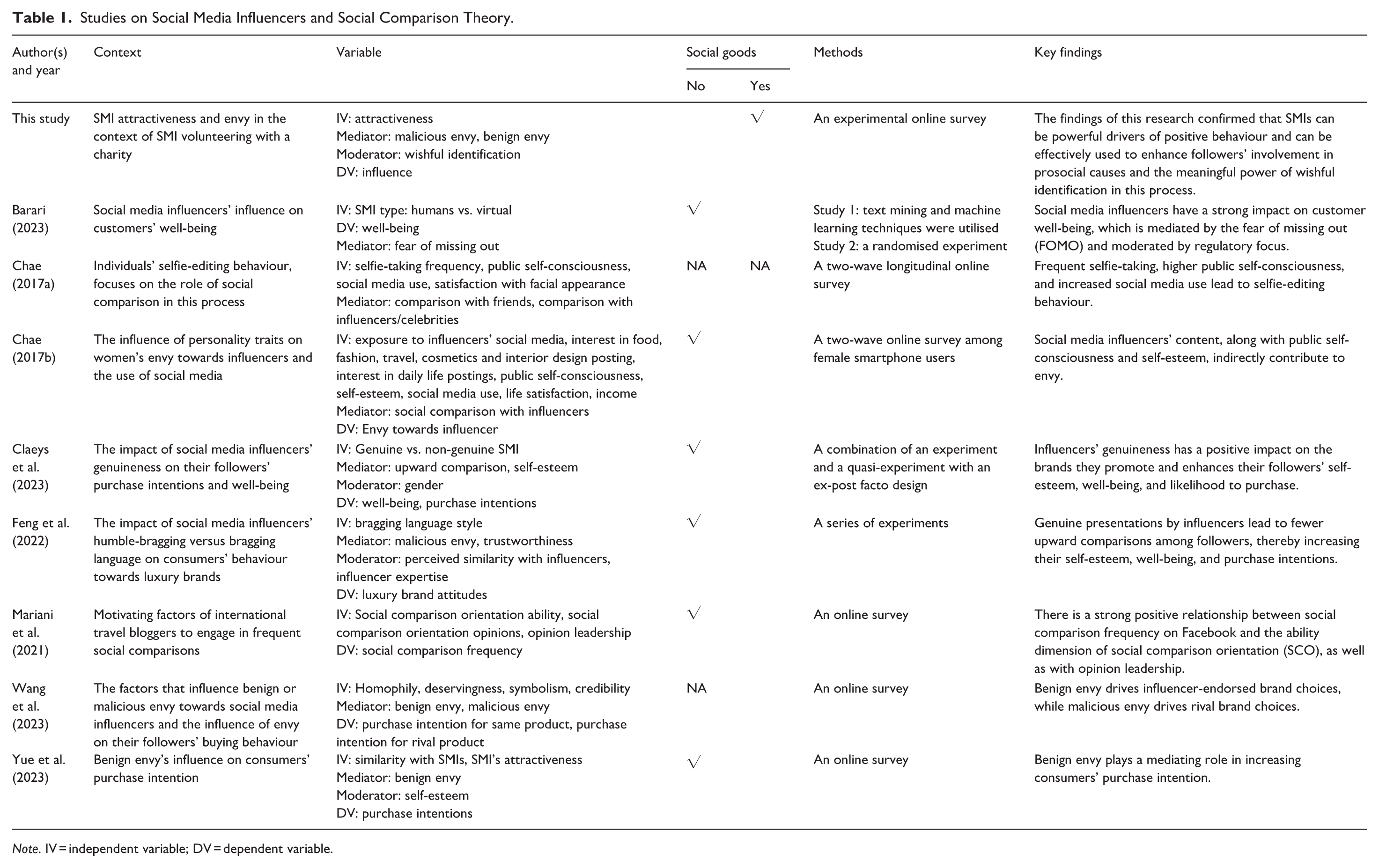
Note. IV = independent variable; DV = dependent variable.
SMI attractiveness as a meaning transfer vehicle for prosocial behavioural intention
Celebrities’ physical features play an important role in the effectiveness of a source (Kahle & Homer, 1985; Kamins, 1990). Attractiveness, the perceived physical beauty of a source, is one of the key constructs of the source credibility model (Ohanian, 1990) and has been extensively studied in the celebrity endorsement literature. Attractiveness is a powerful SMIs attribute (Wiedmann & Von Mettenheim, 2020), as it has been linked to an increase in online engagement (Hudders & Lou, 2022) and trust (Lou & Yuan, 2019). According to SCT, in upward social comparison, individuals typically compare themselves to others who possess qualities, achievements, or traits that they aspire to have or achieve themselves (Festinger, 1954); this can make them feel inspired to improve or, if they feel inferior, it can lower their self-esteem (Chae, 2017a). Furthermore, this type of upward social comparison often involves wanting to be seen as socially superior to those they admire (Sung & Phau, 2019). When consumers compare themselves to an SMI they see as highly attractive, the SMI's positive qualities can inspire admiration and a sincere desire to mirror their success positively (Van de Ven, 2015, 2016). For example, the constant exposure to curated images of attractive SMIs on social media can foster feelings of inadequacy and envy among viewers who compare their own personal attributes unfavourably.
Prosocial behaviour is distinguished by individuals who give precedence to the well-being of others over their self-interests (Pfattheicher et al., 2022). Prosocial behaviour plays a pivotal role in the advancement and functioning of society (Penner et al., 2005). For example, charity and donation behaviour is a type of prosocial behaviour that refers to helping others without a defined goal and offering tangible or intangible property to specific organisations or individuals without asking for any return (Taute & Sierra, 2015). In this study, we propose that prosocial behaviour is a central part of morality (De Groot & Steg, 2009), highlighting that moral emotion, judgment, and identity, which constitute moral decision-making, can influence consumer intention to engage in prosocial behaviour (Septianto & Soegianto, 2017).
The outcomes of upward social comparisons with attractive media personalities are believed to lead to a ‘frustration of unfulfilled desires’ (Higgins, 1987, p. 322), and the physical attractiveness of these personalities is particularly relevant in this process, mainly generating negative outcomes, such as lower body satisfaction (Knobloch-Westerwick & Crane, 2012), and negative feelings, such as envy (Singh & Ang, 2020). However, these comparisons also motivate compensatory behaviours aimed at reducing the perceived gap between self and comparison target. According to the parasocial relationship framework (Chung & Cho, 2017), it explains how consumers develop one-sided emotional bonds with influencers, often seeking to emulate their behaviours and values. When attractive influencers promote prosocial causes, followers experience ‘moral elevation’ (Winterich et al., 2013), an emotional response that inspires individuals to become better people and help others.
This effect is amplified through the meaning transfer model (McCracken, 1989), whereby the positive attributes associated with attractive influencers, for instance, status, success and social approval, transfer to the prosocial causes they champion. The meaning transfer process occurs in three stages: meaning formation within the SMI’s attractiveness attributes, meaning transfer from SMI to the prosocial cause and meaning extraction by consumers who subsequently develop volunteering intentions. Attractive influencers possess greater perceived credibility and persuasive power (Djafarova & Rushworth, 2017), thus enhancing their ability to motivate followers towards volunteering behaviours. As followers seek to strengthen their parasocial bonds with these influencers, they would also adopt similar values and activities. Therefore, we propose the following hypothesis:
H1: Highly attractive SMIs lead to a stronger consumer’s intention to volunteer for a prosocial cause.
Mediating role of wishful identification
C. Hoffner and Buchanan (2005) introduced the concept of wishful identification, which can be defined as ‘a psychological process through which an individual desires or attempts to become like another person’ (p. 327). This empirical study demonstrates that the alignment between individuals’ ideal selves and the characteristics of a television persona plays a pivotal role in fostering wishful identification. When viewers perceive a strong congruence between their aspirational self-image and the traits embodied by the character, they are more likely to engage in identification processes that go beyond mere admiration (Shoenberger & Kim, 2019). This psychological mechanism is particularly significant in the context of upward attractiveness-related comparisons, where individuals compare themselves to figures they perceive as superior in terms of physical appeal or social desirability.
According to SCT, wishful identification involves the process through which individuals adjust their behaviours, emotions, and thoughts to align with those of someone they admire or aspire to emulate. This phenomenon is often described as a ‘process of psychological matching’, (Shoenberger & Kim, 2019, pp. 51–52) where individuals, through social comparison, identify with and internalise the characteristics, attitudes, or behaviours of a role model or influencer. The comparison serves as a motivational mechanism, driving individuals to bridge the perceived gap between their current self and their ideal self by adopting traits or behaviours of the admired figure. Furthermore, strong beliefs about the possible outcomes of imitating the behaviour of the role model are necessary for wishful identification to occur (Shoenberger & Kim, 2019).
Physical attractiveness is a salient characteristic of SMIs that plays a substantial role in the process of wishful identification (C. Hoffner & Buchanan, 2005). This concept refers to the tendency of individuals to aspire to resemble or emulate admired figures, and attractiveness often serves as a catalyst for such aspirations. Prior research highlights that attractiveness not only fosters illusionary attachments, where audiences feel a pseudo-social bond with the media figure, but also shapes interpersonal-related judgements, such as perceived credibility and likability (Shoenberger & Kim, 2019). In addition, prior research has identified a relationship between followers’ wishful identification and purchase intentions (Duan & Brechman, 2025). Building on this, our study posits that when consumers strive to enhance their own physical appearance to align with that of a social media influencer (SMI), wishful identification acts as a positive mediator. Specifically, it strengthens the link between the influencer’s perceived attractiveness and the consumer’s intention to engage in prosocial behaviour, such as volunteering for a charitable cause. This suggests that attractiveness-driven identification can extend beyond self-image aspirations to influence socially responsible actions. Accordingly, we propose the following hypothesis:
H2: Wishful identification mediates the positive relationship between highly attractive SMIs and consumers’ intention to volunteer for a prosocial cause.
The role of envy in consumers’ relationships with SMIs
Numerous studies (e.g., Gawronski et al., 2018; Strohminger et al., 2011; Valdesolo & DeSteno, 2006) have examined basic emotions such as happiness, sadness and anger. However, envy, a feeling often associated with immoral motivations, has been largely overlooked in terms of its influence on moral decision-making (Gino & Pierce, 2009). From an SCT perspective, envy is a feeling of discontentment when someone sees others having things they desire, such as wealth or status (Tai et al., 2012), and often leads to negative feelings such as hostility and inferiority (Appel et al., 2015; Van de Ven et al., 2012). There are two distinct types of envy: benign and malicious envy (Belk, 2011; Van de Ven et al., 2009, 2011a, 2011b). Benign envy arises when the subject of comparison is perceived as deserving of their success and status, fostering self-improvement motivations in the observer (Belk, 2011; Van de Ven et al., 2009, 2011a, 2011b). In contrast, malicious envy occurs when the envied individual is seen as undeserving of their achievements, leading to a desire to undermine or harm them; such types of relationships may be particularly useful when understanding the attachments consumers develop towards role models, such as influencers (Moraes et al., 2019).
According to SCT, social comparison motivates individuals to be better than others (Shao & Li, 2021). Envy arises when individuals perceive unfavourable social comparisons and perceive external threats, indicating its association with various negative behaviours (Festinger, 1954). For example, multiple studies have revealed that envy leads to a greater willingness to undermine one’s achievements to diminish others’ relative advantages (Parks et al., 2002), engage in destructive behaviours detrimental to interpersonal relationships, and demonstrates increased moral disengagement and reduced accountability (Warner et al., 2024), aligned with a malign type of envy. However, such a negative evaluation is dependent on an incomplete understanding of envy’s complex emotional nature. A few perspectives diverged from the common view and emphasized that envy can also foster non-hostile, acceptable behaviours (e.g., Van de Ven, 2016) or even valuable (e.g., Caze, 2001; Thomason, 2015); these outcomes are aligned with a benign type of envy.
The effect of attractiveness-related upward social comparisons on influencer envy and prosocial intentions
During cognitive processing, consumers rely heavily on intuitive, emotional reasoning in their moral decision-making (Blunden et al., 2022; Warner et al., 2024), potentially experiencing envy towards the SMI. These emotional reactions may encourage consumers to engage in prosocial actions, such as volunteering for a cause, while motivated by envy (Ilicic & Webster, 2016).
According to SCT, the effect of followers’ envy towards SMIs who display prosocial behaviours can lead to positive outcomes. Previous studies (e.g., Claeys et al., 2023) have found that genuine (vs. nongenuine) influencers induce fewer upward comparisons, which, in turn, increases followers’ self-esteem, well-being, and purchase intention. We proposed that when individuals engage in upward social comparisons and experience benign envy, they may be inspired by the achievements or possessions of others (Belk, 2011). This admiration can motivate them to emulate the behaviour of those they envy, including engaging in prosocial activities, such as volunteering. Benign envy may serve as a positive force driving individuals to contribute to the betterment of society as they aspire to attain similar levels of success or recognition (Parks et al., 2002; Van de Ven, 2015; 2016).
At the same time, when individuals engage in upwards social comparisons, they may experience malicious envy, which harbours feelings of resentment or hostility towards those they perceive as superior (Appel et al., 2015; Van de Ven et al., 2012). In the context of volunteering for a prosocial cause, this negative emotion can also serve as a motivator for action (De Groot & Steg, 2009). According to SCT, individuals experiencing malicious envy may seek opportunities to assert their own competence or worthiness, thereby alleviating their feelings of inferiority or inadequacy. This competitive drive, fuelled by malicious envy, could lead individuals to actively participate in activities that benefit others, as a means of proving themselves or gaining validation. Thus, we propose the following hypotheses:
H3a: Consumers’ benign envy moderates (enhances) the mediating impact of wishful identification on the relationship between highly attractive SMIs and consumers’ intention to volunteer for a prosocial cause.
H3b: Consumers’ malicious envy moderates (enhances) the mediating impact of wishful identification on the relationship between highly attractive SMIs and consumers’ intention to volunteer for a prosocial cause.
We summarise our predictions regarding how perceived influencer’s attractiveness influences prosocial behaviour with the conceptual framework depicted in Figure 1.
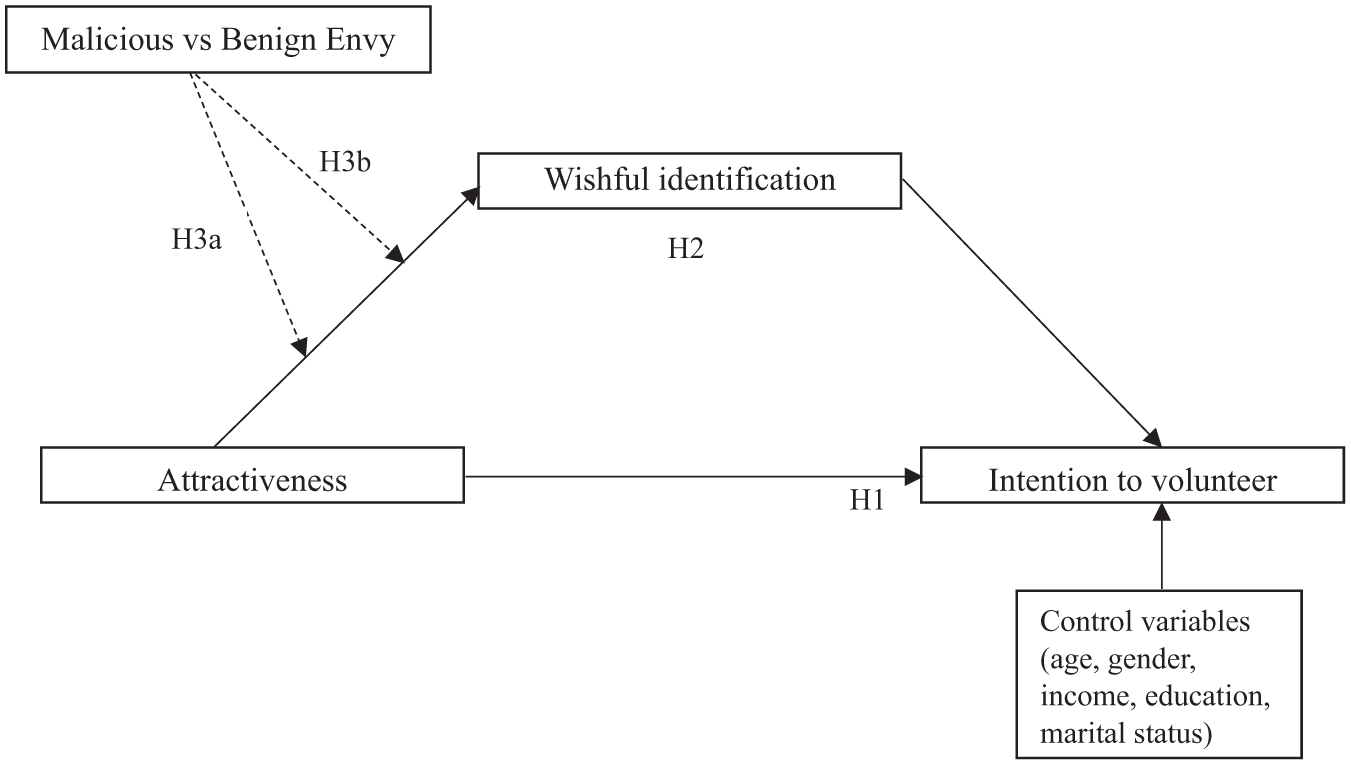
Conceptual framework.
Methods
Overview of studies
We conducted three studies to investigate the relationships depicted in our proposed model (see Figure 1). The first study aimed to establish the mediating role of wishful identification in the relationship between influencer attractiveness and followers’ prosocial intentions. Additionally, we examined the moderating effects of benign and malicious envy in two demographic groups, with Study 2 focusing on females and Study 3 on males. A pilot test (N = 20) was conducted for the selection of SMIs based on their perceived attractiveness. The participants were displayed ten Instagram images of gender-congruent influencers, and they scored the attractiveness of the influencers using Ohanian’s attractiveness scale. Based on the pilot study, one highly attractive SMI and one less attractive SMI were selected for the three studies to increase data variance. Participants were presented with gender-congruent influencers that scored high or low in the pilot test, as individuals constantly compare their appearances to those of others of the same sex (Buunk & Dijkstra, 2011; Posavac et al., 2001). The SMIs images were accompanied by a description of the influencer’s volunteering experience with a fictional charity titled ‘Australian Humanitarian Aid Foundation (AHAF)’. A fictional name was also created for the male (Frank) and female (Hannah) influencers. The scenario also mentioned that the respondents have followed the influencer for a period longer than 10 years to encourage the participants to relate to the scenario as they would to SMIs they have been following for some period. The text description of the scenario consisted of: As usual, you log into your Instagram account to get in touch with your social life. While you are navigating the recent news feed and updates, you suddenly see a selfie of Hannah/Frank volunteering for the Australian Humanitarian Aid Foundation (AHAF). You have followed Hanna/Frank for over 10 years, and you feel you know her/him very well. You read their posts from time to time but rarely respond to her/his wall.
Study 1
The main purpose of Study 1 was to assess the mediating role of wishful identification in the relationship between an influencer’s perceived attractiveness and follower’s intention to volunteer. The participants for this study were sourced through a professional market research agency operating in Australia, which ensured access to a diverse and representative sample of respondents. Data was collected from 334 Australian residents, with 91.3% of respondents below 45 years of age and balanced gender distribution (53% male) who were randomly assigned to one of the gender congruent influencers through an online questionnaire platform (Qualtrics). The dataset was cleaned by excluding flatliners and incomplete submissions. Wishful Identification was measured using 4 items from C. Hoffner (1996), a widely used and validated scale to measure such construct and were adapted to reflect SMIs (e.g., I wish I could be more like this influencer) SMIs perceived attractiveness was measured through 3 items adapted from Ohanian (1990) (e.g., I think this influencer is attractive). Intention to volunteer was measured through the question ‘How likely is it that you might pursue similar voluntary activities in the future?’. The reliability of the latent variables was assessed through Cronbach’s Alpha (CA) and Composite Reliability (CR) scores. The average variance explained (AVE) was used to establish the convergent validity of the measures (see Table 2). Discriminant validity was established through (Fornell & Larcker, 1981) guidelines, which establish that the square root of the correlations with other constructs should always be lower than the squared root of the AVE.
Study 1 Mean (M), Standard Deviation (SD), Cronbach’s Alpha (CA), Composite Reliability (CR), Correlations and Squared Root of the AVE.
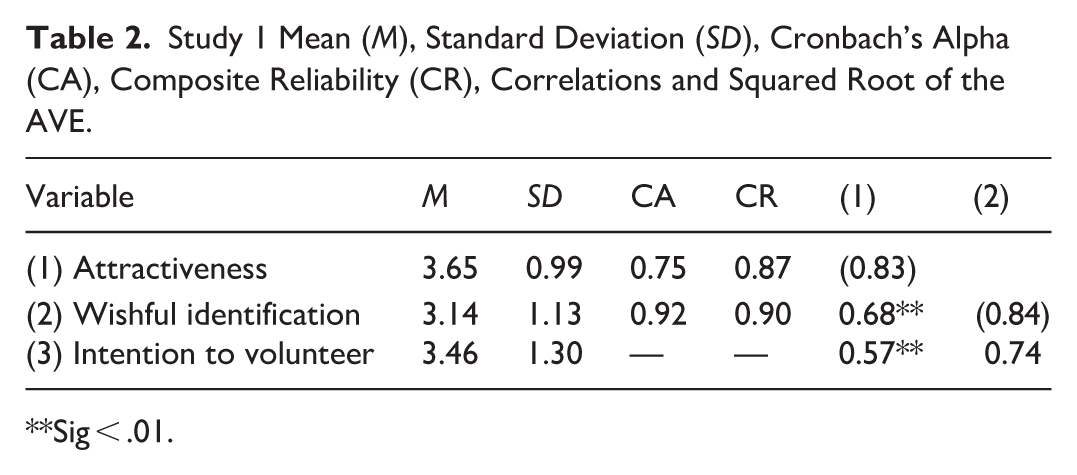
Sig < .01.
Analysis and results
We tested hypotheses H1 and H2 using Hayes (2022) PROCESS macro Model 4 to test the model using a simple parallel mediation. We report 5000 bootstrap samples and 95% confidence level. The model confirmed the partial mediation of wishful identification in the relationship between attractiveness and intention to volunteer in prosocial causes (see Table 3). An SMI’s attractiveness had a strong relationship with participants’ wishful identification (β = .77, p < .01) and a weak but significant relationship with participants’ intentions to volunteer for a pro-social cause (β = .16, p < .05). The model accounted for substantial variance in wishful identification (
Study 1 Direct and Indirect Effects.
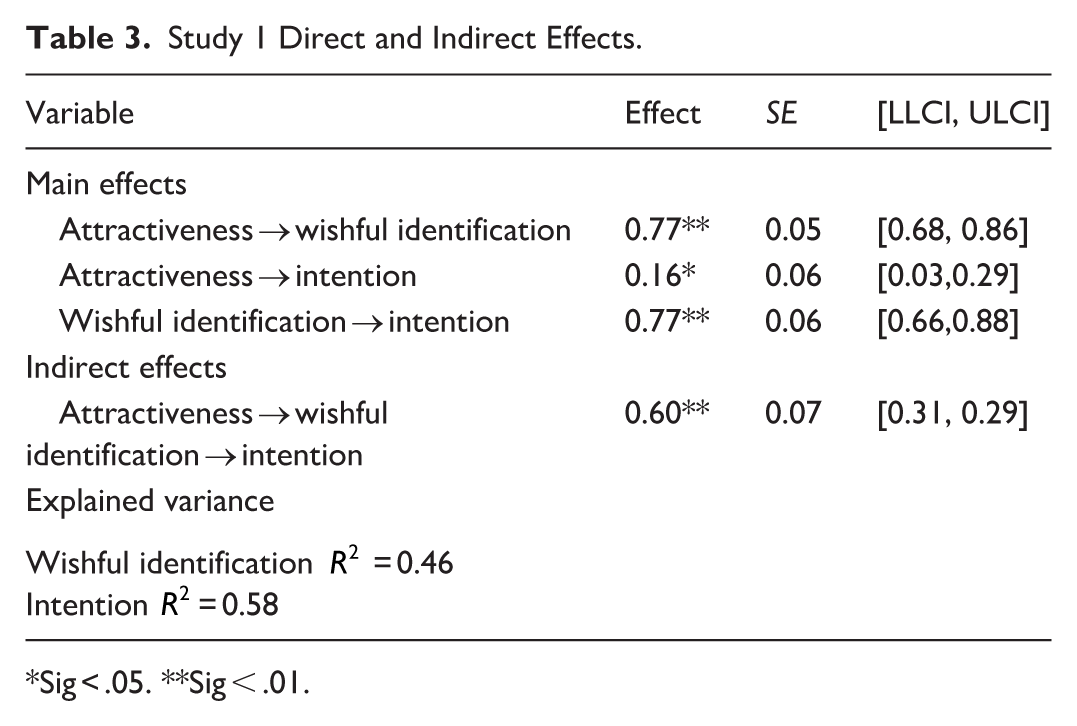
*Sig < .05. **Sig < .01.
Study 2
In Study 2, we incorporated benign envy (H3a) and malicious envy (H3b) as moderators, focusing on the female segments, given that research supports female and male followers engage differently with SMIs (Hudders & Lou, 2022). The data collection procedure and instrument were conducted as in Study 1. Benign envy (e.g., when I observe this influencer, I focus on how I can become equally successful in the future) and malicious envy (e.g., envious feelings cause me to dislike this influencer) was measured through 10 items adapted from Lange and Crusius (2015), which identifies that dispositional envy comprises two separate dimensions, each linked to distinct motivational processes and behavioural outcomes.
The study’s participants were recruited through an Australian market research agency, ensuring a broad and representative sample. Data was collected from 325 female Australian residents, with 90.8% of respondents below 45 years of age. The dataset was cleaned by excluding flatliners, incomplete submissions and participants who completed the survey in under 10 min, as these were considered indicators of low-quality responses. The data displayed adequate levels of reliability and validity (see Table 4).
Study 2 Mean (M), Standard Deviation (SD), Cronbach’s Alpha (CA), Composite Reliability (CR), Correlations and Squared Root of the AVE.
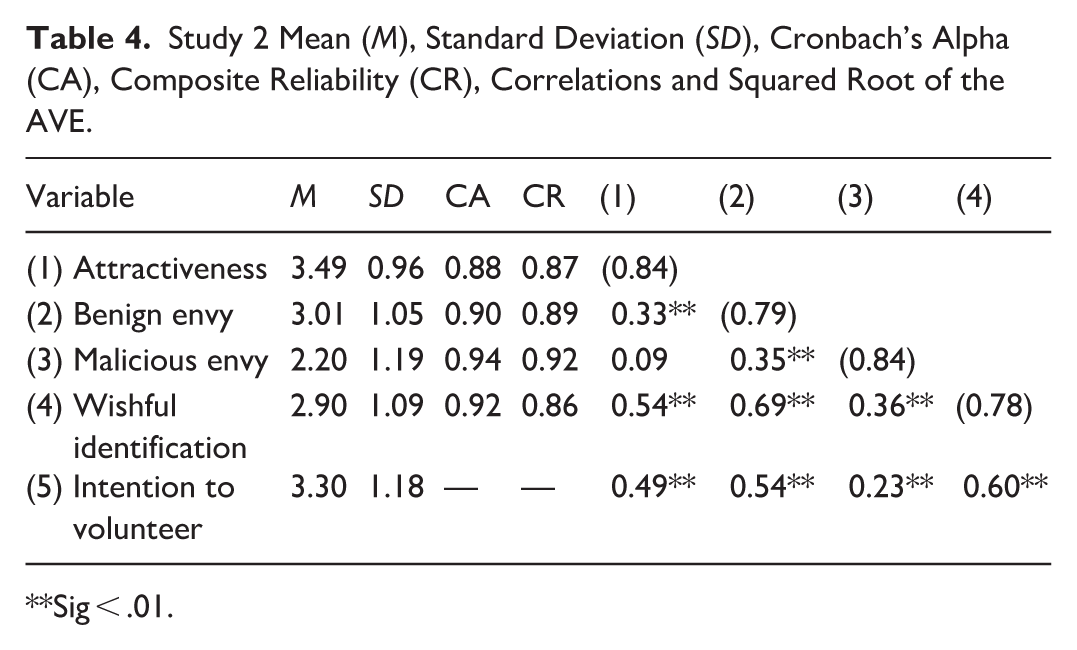
Sig < .01.
Analysis and results
We used Hayes (2022) PROCESS macro Model 9 to test the moderating role of benign envy (H3a) and malicious envy (H3b) on the relationship between attractiveness and wishful identification among a female audience. We report 5000 bootstrap samples and 95% confidence level. Table 5 reports the direct and indirect effects. The model showed that benign envy significantly moderated the effect (β = .11, p < .01), while malicious envy did not play a significant role for female respondents. Thus, female followers who feel benign envy towards an attractive influencer are more likely to experience wishful identification. These findings align with previous research outlined in the literature review, which suggests that benign envy can foster aspirational motivation and identification, whereas malicious envy often lacks such constructive effects, particularly in the context of social media influence among women (Arnocky et al., 2016) (Figure 2).
Study 2 Direct and Indirect Effects.
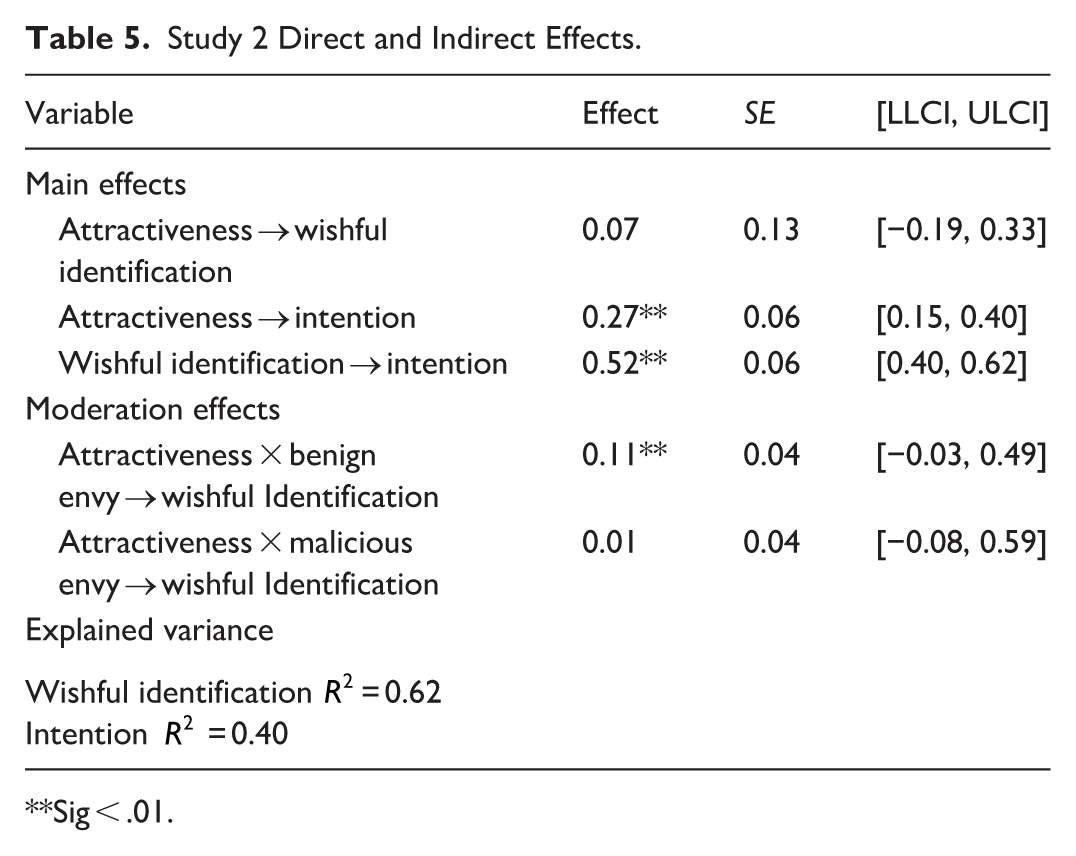
Sig < .01.
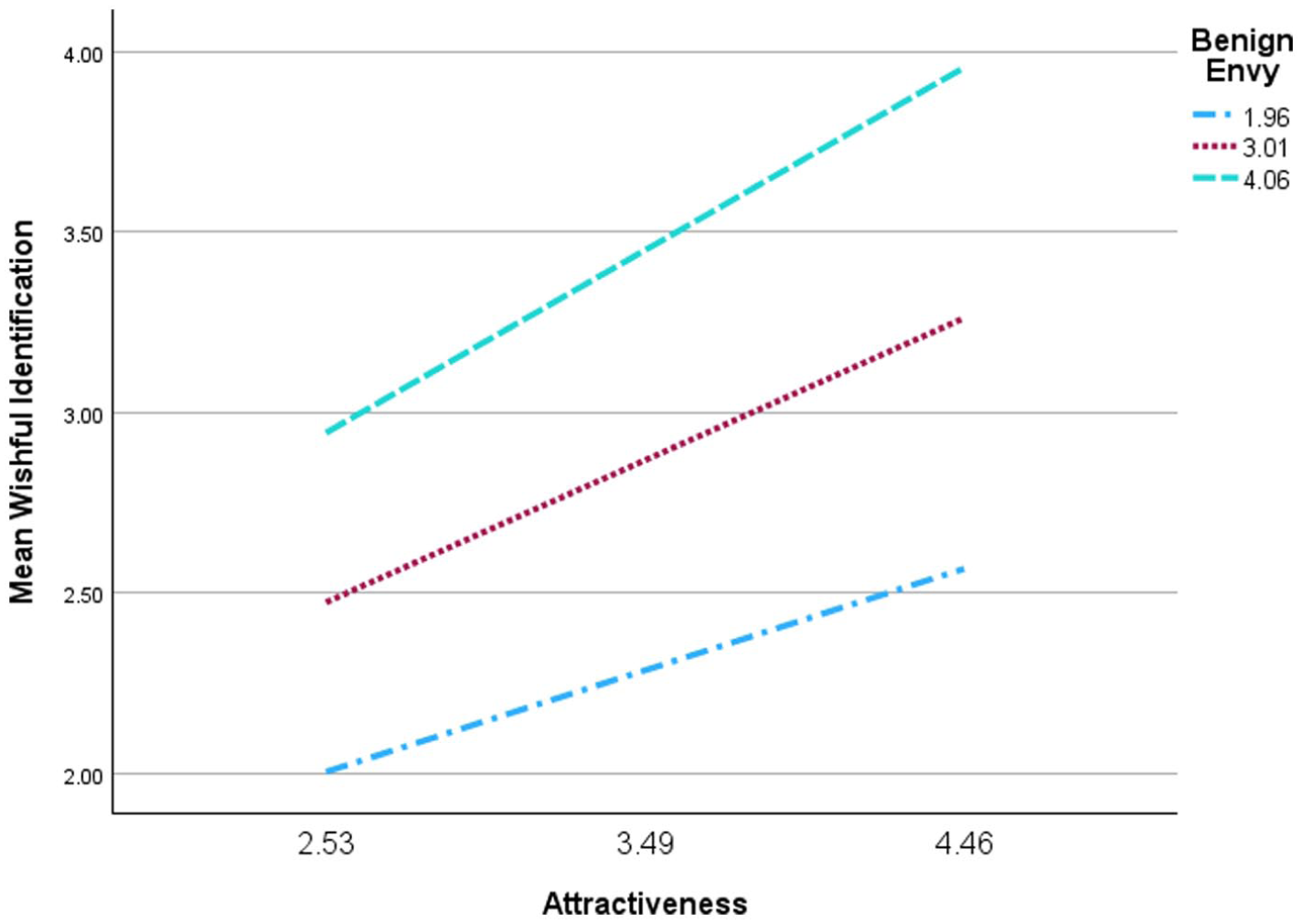
Study 2 benign envy moderating effect.
Study 3
Study 3 tested the same model as in Study 2, but now focusing on male participants. Data was collected from 238 male Australian residents with 96.2% of respondents below 45 years of age via an Australian market research company. The dataset was cleaned by excluding flatliners and incomplete submissions, and participants who completed the survey in under 10 minutes, as these were considered indicators of low-quality responses. Once again, the data displayed adequate levels of reliability and validity (see Table 6).
Study 3 Mean (M), Standard Deviation (SD), Cronbach’s Alpha (CA), Composite Reliability (CR), Correlations and Squared Root of the AVE.
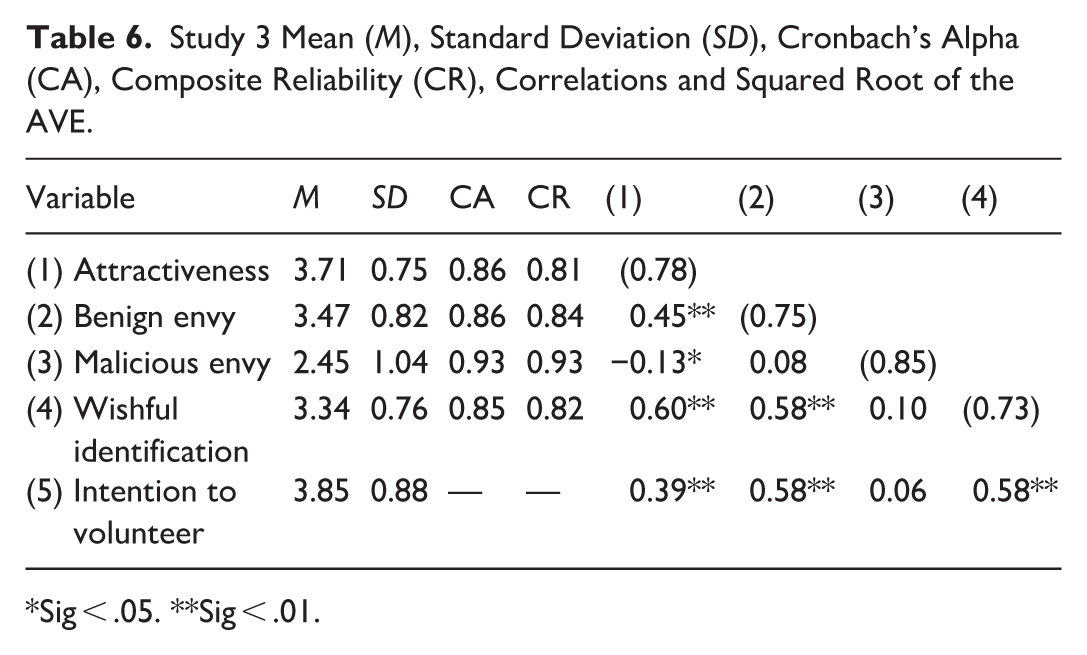
Sig < .05. **Sig < .01.
Analysis and results
We used Hayes (2022) PROCESS macro Model 9 to test the moderating role of benign envy (H3a) and malicious envy (H3b) on the relationship between attractiveness and wishful identification among a male audience. Even though attractiveness did not exhibit a significant direct relationship with wishful identification, the findings reveal that the interplay of envy types plays a crucial moderating role. Specifically, benign envy demonstrated a significant positive moderating effect (β = .12, p < .05), suggesting that when individuals experience benign envy, the association between attractiveness and wishful identification strengthens. Conversely, malicious envy showed a significant negative moderating effect (β = −.09, p < .01), indicating that higher levels of malicious envy weaken or even reverse the relationship between attractiveness and wishful identification (see Table 7). Prior studies have suggested that wishful identification with attractive others is not merely a function of perceived attractiveness but is also shaped by the observer’s emotional responses, particularly envy. For example, Van de Ven et al. (2009) showed that benign envy can motivate individuals to emulate attractive role models, whereas malicious envy may lead to derogation or distancing from those perceived as superior. Our findings support this theoretical distinction (Figures 3 and 4).
Study 3 Direct and Indirect Effects.
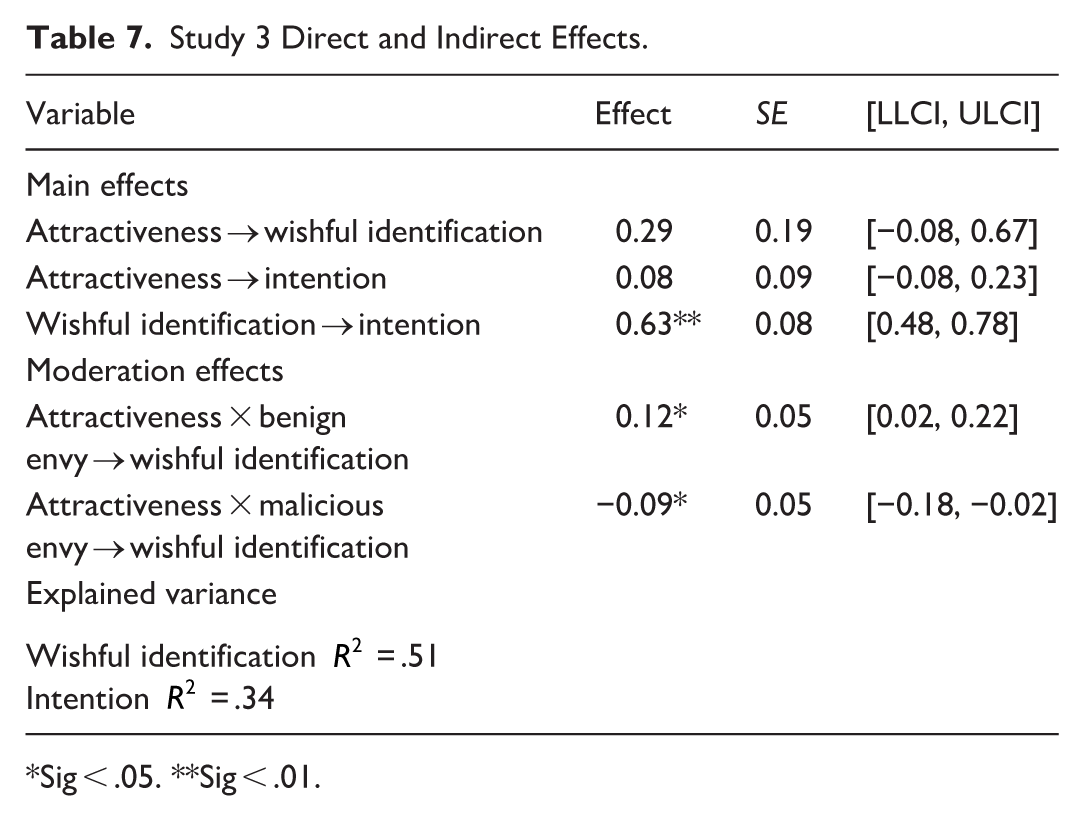
Sig < .05. **Sig < .01.
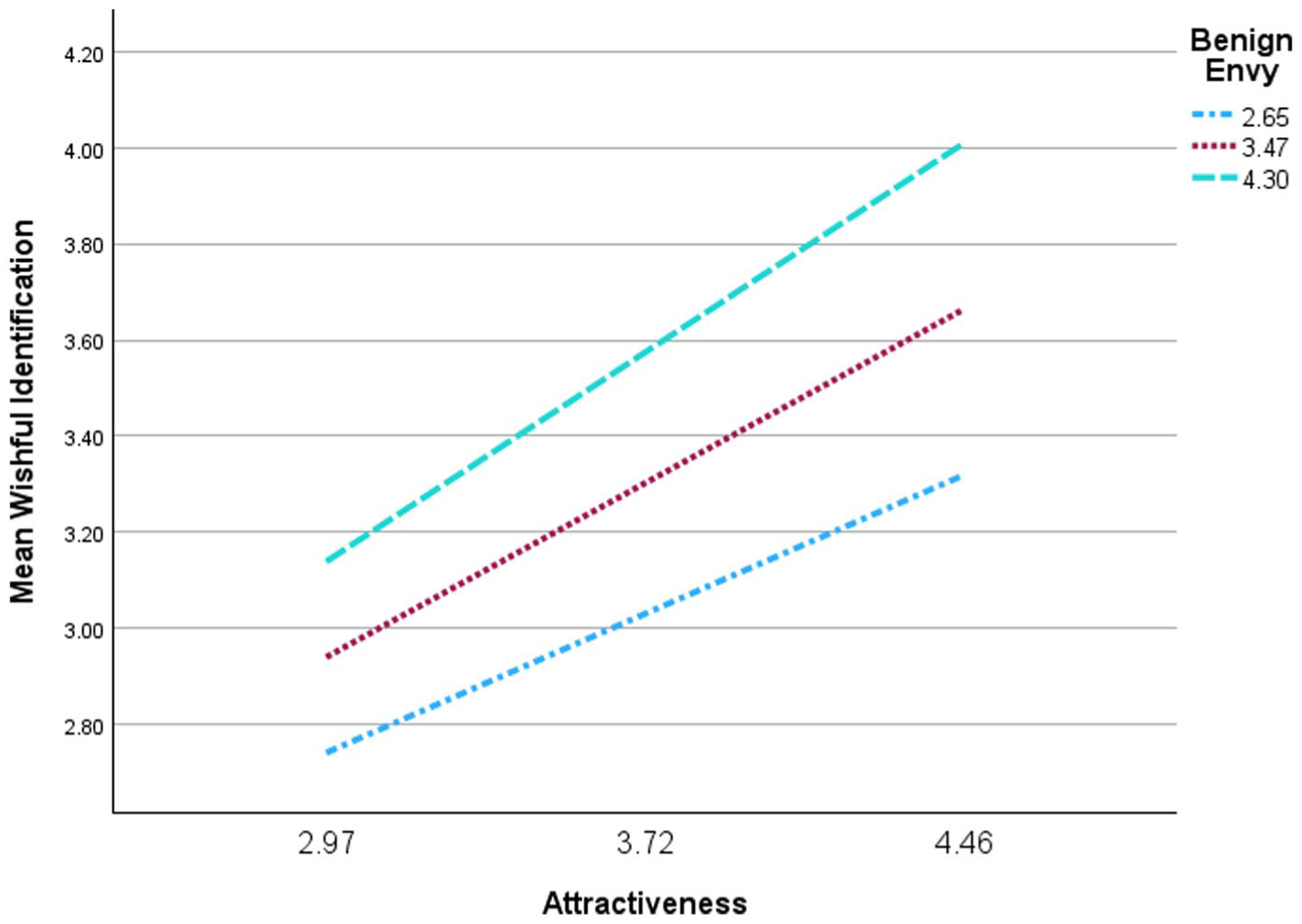
Study 3 benign envy moderating effect.
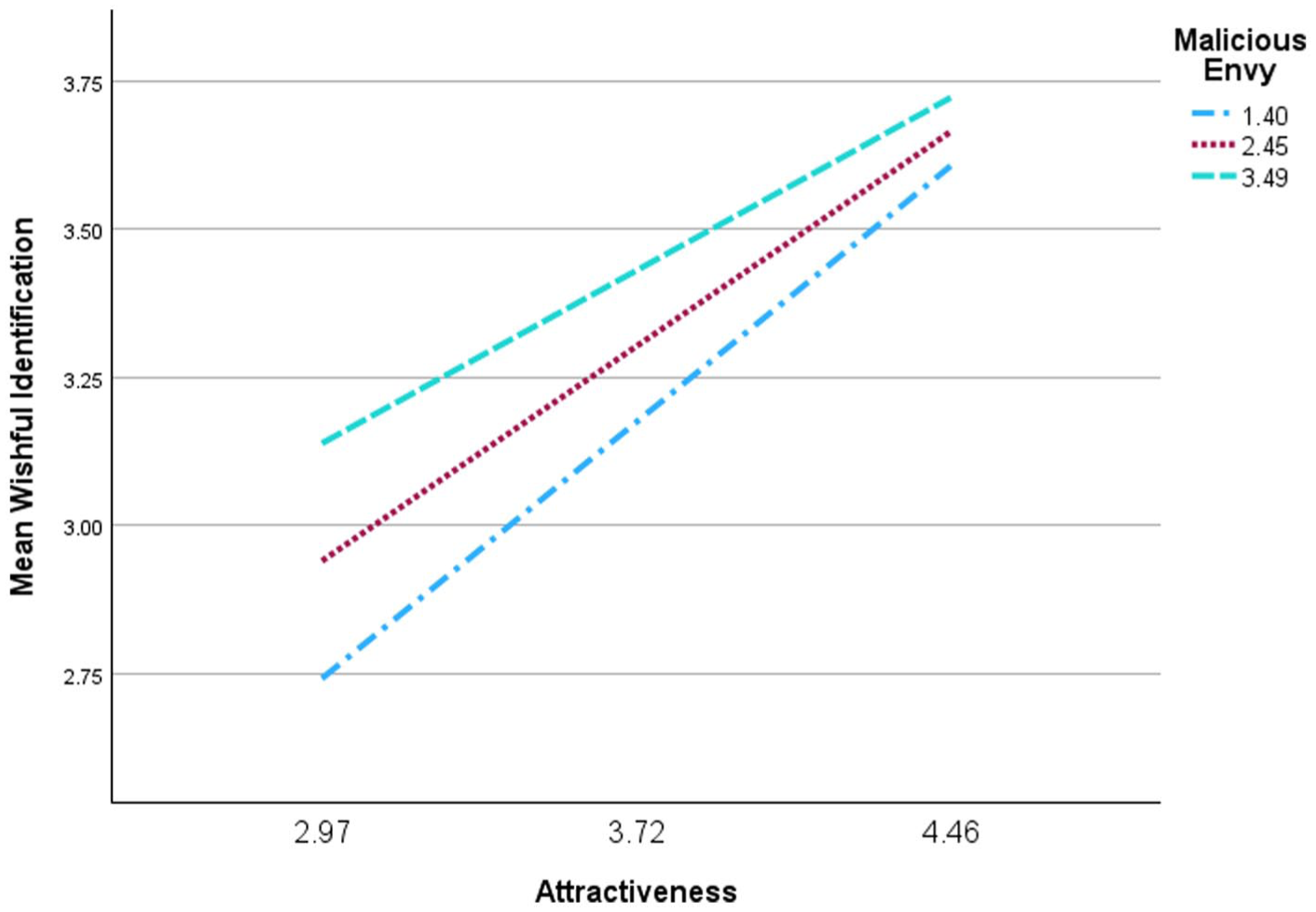
Study 3 malicious envy moderating effect.
General discussion
The findings of this research confirmed that SMIs can be powerful drivers of positive behaviour and can be effectively used to enhance followers’ involvement in prosocial causes. While the literature highlights the importance of various SMI characteristics in influencing consumer intentions (Jun & Yi, 2020; Lee & Eastin, 2021), this research, underpinning SCT, explores how attractiveness evokes wishful identification and impacts followers' intentions to engage in prosocial causes in three different studies. The meaningful role of envy in comparisons against SMIs that fit into beauty standards was evident. By examining the interplay between attractiveness, envy and identification across three studies, the research provides evidence for the significant role that SMIs can play in motivating positive behavioural change and supporting social causes. This directly addresses the paper’s objective of understanding the psychological mechanisms through which SMIs influence their followers, especially in the context of promoting prosocial actions.
In Study 1, results showed that SMIs’ perceived attractiveness is powerful in evoking wishful identification, which can be effectively leveraged in marketing communication messages (Shoenberger & Kim, 2019). These findings provide empirical support for the hypothesis that SMI attractiveness significantly increases followers’ wishful identification, aligning with the study’s proposed theoretical framework.
Wishful identification creates a desire to emulate the SMIs’ success and attributes, and this also becomes evident when it comes to a pro-social cause. The hypothesis posits that SMIs’ attractiveness leads to increased wishful identification among followers, which in turn enhances their intention to engage in prosocial behaviours. This relationship is empirically supported in Study 1, where it was found that followers are more likely to aspire to be like attractive SMIs, and this aspiration motivates them to participate in positive social actions promoted by those influencers. The findings suggest that wishful identification acts as a mediating mechanism, translating the perceived attractiveness of SMIs into tangible prosocial intentions among their followers. Thus, the selected statement aligns closely with the hypothesis by highlighting the pathway through which SMI characteristics influence follower behaviour in support of social causes.
In Study 2, we incorporated benign and malicious envy as moderators of the relationship between attractiveness and wishful identification, focusing on a female demographic. This directly addresses our aim of understanding the psychological processes through which SMIs influence prosocial intentions among followers. The findings showed that when female followers feel benign envy towards an attractive SMI, they are significantly more likely to experience wishful identification. Hence, the more attractive the SMI is, the stronger the effect of benign envy on their desire to be more similar to the SMI. However, for female followers, whether someone is attractive or not does not change the effect of malicious envy on the desire to identify with them, and this has a positive effect on consumers’ desire to volunteer for a pro-social cause.
Conversely, in Study 3, the model displayed some interesting differences when tested among male respondents, aligned with the study’s objective of uncovering gender-based variations in SMI influence. The relationship between attractiveness and wishful identification is conditionally moderated by benign and malicious envy, despite no main effect of attractiveness on wishful identification. When male followers experience benign envy, they are more likely to identify with attractive SMIs. However, when male social media followers experience malicious envy, the relationship between attractiveness and wishful identification becomes weaker. Hence, when male followers experience malicious envy, they are less likely to identify with attractive SMIs. A possible explanation for such a finding is that malicious envy triggers feelings of hostility and injustice rather than wishful identification.
These findings highlight key gender-based differences in how followers respond to attractive SMIs, with female followers being more consistently inspired by attractive SMIs, while male followers are more reactive to the emotional tone of their envy, with malicious envy having a more substantial and negative role in the model. Such differences highlight that consumers from different gender groups do relate differently with SMIs and, as a result, marketers need to be aware of these differences to maximise the effectiveness of marketing communication messages.
Implications
Theoretical implications
This research extends theoretical implications in several key domains. Firstly, it expands the applicability of the SCT with a specific focus on interactions involving SMIs (Audrezet et al., 2020; Lee & Eastin, 2021) in the prosocial context. Examining the interplay between SMIs' attractiveness and followers’ envy when wishful identification is present addresses the research question of whether there has been inconclusive evidence about the impact of negative and positive emotions towards the target of comparison, as well as positive behavioural outcomes. Our study suggests that wishful identification (i.e., an extension of identification) partially mediates the impact of attractiveness on consumer responses to SMIs, supporting the multifaceted nature of social modelling from prior works (Bandura, 1986; C. Hoffner & Buchanan, 2005) and providing a pathway for future exploration.
Our research demonstrates how attractiveness serves as a crucial cultural meaning embedded within SMIs that transfers to prosocial causes. These findings extended SCT as they explain how the symbolic properties associated with attractive SMIs (credibility, trustworthiness and expertise) transfer to the prosocial causes they promote, thus enhancing followers’ volunteering intentions. This theoretical integration provides a strong conceptual basis showing that SMI attractiveness works beyond simple visual appeal, and thus serves as a symbolic carrier that transfers cultural meanings which validate prosocial behaviours.
Furthermore, incorporating Chung and Cho’s (2017) parasocial relationship framework, our study reveals how repeated exposure to attractive SMIs cultivates illusions of intimacy and friendship, which strengthens the mediating role of wishful identification in translating attractiveness into behavioural intentions. Our findings suggest parasocial relationships serve as the relational infrastructure in which wishful identification and envy operate to influence prosocial behaviours. Furthermore, underpinning SCT and drawing on the moral decision-making literature (Blunden et al., 2022; Greene et al., 2009; Warner et al., 2024; Yang & Guo, 2023), this study examines the complex terrain of social response as the underlying mechanism in SMI interactions. Specifically, the research contributes a better understanding of how different types of online social comparisons may be used to explain followers’ and SMIs’ relationships and how these relationships may shape followers’ intentions to have prosocial behaviour. These findings are aligned with previous studies (e.g., Park et al., 2021; Shoenberger & Kim, 2019) to support an understanding of how these one-sided relationships intensify both benign and malicious envy’s moderating effects.
Lastly, this research provides significant insights into the utilisation of SMIs in a prosocial context. Our study reveals how benign and malicious envy types can shape followers’ intentions to volunteer for prosocial causes. This highlights the potential of SMIs to garner support for social and environmental issues, and the relevance of consumers’ emotional responses towards SMIs in the process to influence their respective followers. Specifically, this study underscores how influential figures like SMIs can shape consumers’ social learning regarding prosocial messages, which is increasingly critical in addressing today’s complex social and environmental challenges. This aligns with prior research showing that moral emotions can meaningfully shape prosocial motivation (Septianto & Soegianto, 2017), who demonstrated that moral emotion pathways are central in driving prosocial behaviour. By extending these insights to envy in an influencer-driven context, our study broadens the emotional scope through which prosocial behaviour can be stimulated. Furthermore, through our research, we have established that the perception of attractiveness in SMIs plays a pivotal role in driving prosocial behaviour, especially in supporting social causes through volunteering initiatives.
Practical implications
The current research provides several important practical implications. First, this study highlights the critical role of social comparisons in shaping followers’ perceptions of SMIs’ attributes, such as attractiveness, and their subsequent emotional reactions (benign and malicious envy). Marketing managers and organisations can leverage these insights by selecting SMIs whose attractiveness aligns with traditional beauty standards, thus inspiring positive emulation among followers. Our findings suggest that attractiveness functions as a designable lever that can activate benign envy and motivate followers to ‘close the gap’ through prosocial engagement rather than material consumption. This strategy is particularly effective for campaigns supporting social or environmental causes, where influencers with aspirational qualities can drive engagement and action. For instance, SMIs encourage followers to participate in a ‘Gratitude Challenge’, where they share what they are thankful for regularly. This initiative aims to shift focus from comparison to appreciation, reducing envy and enhancing well-being online. For other example, organisations could design social media initiatives, such as a ‘30-Day Volunteer Challenge’, led by SMIs to capitalise on followers’ desire for self-improvement. These challenges leverage benign envy to foster active participation in prosocial activities, creating a ripple effect of positive social behaviour. Encouraging upward social comparisons inspires followers to emulate an SMI’s positive attributes, thus boosting support for initiatives such as volunteering or donations. Nonetheless, this research also displays how marketing messages need to me aware of the dangers of malicious envy when targeting a male demographic. However, our results also highlight the need for guardrails: when targeting male audiences, content showcasing high attractiveness may unintentionally elicit malicious envy, increasing resentment rather than prosocial motivation. Campaign designers should therefore calibrate attractiveness intensity and message framing to avoid backlash or disengagement.
Furthermore, organisations and brands should prioritise collaborations with SMIs who possess strong aspirational appeal while aligning with the organisation’s mission. The current research demonstrates that attractiveness plays a pivotal role in evoking benign envy, which motivates followers to emulate the influencer’s desirable attributes. To maximise impact, campaigns should incorporate wishful identification cues that allow followers to envision themselves as capable of adopting the influencer’s prosocial behaviours, thereby converting aspiration into intention. For example, visual storytelling that highlights SMIs engaging in accessible, impactful activities such as volunteering or promoting eco-friendly behaviours can help audiences connect with and aspire to emulate the SMI’s actions. This approach not only enhances engagement but also bridges the gap between aspiration and behaviour, driving tangible prosocial outcomes. Additionally, brands can implement segment-specific strategies, recognizing that different audience groups respond variably to social comparisons. For audiences motivated by upward comparisons, highly attractive SMIs can serve as aspirational figures, inspiring positive behavioural change. Thus, we suggest that not-for-profit organizations focus on showcasing SMIs as role models who combine aspirational qualities and behaviours to emphasise their attractiveness.
Conclusion, limitations and future research
This research has shed light on the role of SMI attractiveness and the follower’s wishful identification, the moderating role of envy (benign and malicious), and subsequent prosocial behaviour intention. Our findings highlight SMIs attractiveness perception as a significant determinant of prosocial behaviour, such as volunteering for a social cause. These results highlight the need to carefully consider the physical appearance of SMIs in relation to social comparison when crafting persuasive messages and engaging in influencer marketing strategies.
While this study displayed the implications of how followers compare themselves to SMIs, some limitations need to be acknowledged. Firstly, the data were collected mostly from Australian citizens ages 18 to 45, which limits the generalisability of our results. Future research could use a broader sample and explore additional SNS platforms, such as TikTok Now or Facebook, to extend our findings. Research could also examine how platforms emphasising relatability or diverse representations of attractiveness such as ‘BeReal’ impact follower well-being and address issues such as body dissatisfaction arising from SNS consumption (Claeys et al., 2023). Building upon this, future research could also investigate whether users with certain traits are more susceptible to experiencing specific types of SNS envy and how this affects different envy-induced outcomes.
Another limitation lies in the study’s focus on SMIs’ attractiveness and the use of scenarios based primarily on traditional beauty standards. Future research could explore scenarios involving SMIs representing non-traditional beauty standards to understand their appeal to audiences whose attributes may also deviate from conventional norms (Baker & Walsh, 2018). This approach could reveal new insights into how diverse representations of attractiveness influence social comparisons and audience engagement. Finally, future research could explore other SMI attributes and their potential to evoke various types of envy and responses. For example, recent discourse on ‘deinfluencing’, positioning SMIs as moral agents who encourage reduced consumption and greater social responsibility, suggests that follower perceptions of SMIs’ attractiveness could also shape engagement with anti-consumption or social change content, not just volunteering (Michaelidou et al., 2026). Examining these outcomes would enrich current knowledge of the emotional and motivational pathways through which SMIs influence behaviour across domains. Additionally, investigating whether certain follower traits such as self-esteem or body image concerns would make individuals more susceptible to envy in specific contexts would enhance understanding of envy-induced outcomes and inform more inclusive and effective influencer marketing strategies.
Overall, we propose a broader research agenda aimed at replicating and extending our framework, and at clarifying when and how SMIs can channel envy towards desirable social outcomes. Future research could consider questions such as:
How do different SMI attributes (e.g., attractiveness, authenticity, morality, competence, lifestyle) differentially trigger benign versus malicious envy, and how do these responses shape behavioural intentions?
Under what conditions does envy towards SMIs extend beyond consumption and aspiration to motivate prosocial behaviours (e.g., volunteering, advocacy, anti-consumption or social responsibility)?
How do platform affordances (e.g., visibility, self-presentation constraints, relatability) influence social comparison and envy responses towards SMIs across TikTok, Instagram, BeReal or emerging platforms?
To what extent do demographic factors (e.g., gender, age, culture) or individual differences (e.g., social comparison orientation, self-esteem, moral identity) moderate the envy–behaviour pathway?
Can non-traditional or diverse beauty standards evoke benign envy and prosocial intentions to the same extent as traditional attractiveness norms, or do different mechanisms operate for different groups?
How stable and generalisable are envy-induced prosocial outcomes across campaign types (e.g., environmental, charitable, political, educational), and do certain cause domains amplify or attenuate the effect?
Footnotes
Declaration of conflicting interests
The authors declared no potential conflicts of interest with respect to the research, authorship, and/or publication of this article.
Funding
The authors received no financial support for the research, authorship, and/or publication of this article.
