



Abstract
This paper presents findings based on a novel approach to researching identity and inequality in the workplace. Our research results from a large survey of camera department employees in the Australian screen industry. Workers were invited to self-nominate various personal identifications, but also to tell us how they thought they were perceived by others. With this information we analysed workplace discrimination in terms of the various possible interconnections between identity self-perception and meta-perception (what people believe other people think about them). We found a clear link between specific forms of discrimination in camera departments and discordant experiences of identity in which workers did not feel there was an alignment between the way they self-identify and the meta-perception of these identities by colleagues. This link was particularly pronounced for people experiencing homophobia and/or ableism. We also found that ignorance of workplace discrimination was highest among cohorts with highly aligned self- and identity meta-perceptions.
Keywords
Introduction
I am not who you think I am; I am not who I think I am; I am who I think you think I am
Charles Horton Cooley (widely attributed)
What do you expect, one is what one is, partly at least
Samuel Beckett (2009: 72)
Our awareness of how we are perceived matters – at both an individual and a socio-political level. This is especially true in locations that are heavily invested in image-making and circulation. The screen industries create complex symbolic products in which representations of personality, visual presentation and social relations are inextricably intertwined (Cover, 2000; Hall, 1991). It is not surprising then that questions of identity, visibility and scrutiny occur as much behind the camera as in front of it. Cultural employees collaborate in workplaces where tight scheduling and other production imperatives generate considerable pressure for co-workers to get along, despite obvious power imbalances (Banks et al., 2013). In such a symbolically rich, but experientially difficult environment, cultural workers face significant personal challenges in the way they present themselves to colleagues and managers and in how they understand those presentations to be received.
This study sought to understand people's efforts to position their sense of self in the workplace, efforts that have previously been described by the term ‘identity work’ (Snow & Anderson, 1987). We analysed the results of a national screen industry survey, in particular examining the connections between identity self-perception and identity meta-perception (IMP; what we believe other people think about us) in Australian camera departments. In particular we were interested in the tendency for members of marginalised groups to experience their workplace identities as somehow mischaracterised or misperceived.
We found that marginalised camera crew members experienced their professional selves in different ways, through a multitude of contingent relationships, which also included their perception of how they were understood by those around them. The experience of individuals who do not believe that they are ‘seen’ at work, whose understanding of how others perceive them does not align with how they self-identify, is referred to as ‘identity mismatch’ (Nunez, 2019). This phenomenon can occur without intent (Stryker & Serpe, 1994). But it can also arise when some people, understanding they are being surveilled, wish to conceal or shield their identity, resulting in a laboured process variously described as ‘the workplace closet’ (Willis, 2011), ‘workplace dishonesty’ (Leavitt & Sluss, 2015), ‘passing’ (Reid, 2015) and ‘camouflage identities’ (Demeter, 2020).
Surveys, social sciences and self-identification
For researchers interested in understanding social inequality in the workplace, self-identification is an important tool that has had the effect of revealing marginalised cohorts where they may otherwise have been structurally erased. This is particularly the case when there is a significant domination of one social group over others, such as in Australian screen industry camera departments (see Coate et al., 2023). However, survey-based research investigating social inequality typically relies on the application of a controlled set of identity categories that simultaneously assume and ascribe analytical stability. Population surveys, almost by reflex, require answers to pre-established checklists describing gender, sexuality, race and ethnicity that suppose widespread agreement and understanding about the definition of the nominated categories, their relevance and utility for the research. Similarly, policies designed to facilitate equity depend on these same seemingly immutable categorisations of individuals that are explicitly designed to enable data to tally across different settings, rather than capture the complexity of human sociality.
Nowhere are these limitations more apparent than in research that uses gender categories. Lindqvist and co-authors (2018) note that, both on a theoretical and linguistic level, the terms ‘sex’ (speciously represented in binary pairs as male/female) and ‘gender’ (men/women) are typically conflated by research instruments such as population censuses, which both result from, and create, confusion about the research objectives. This correspondence of categories also relies on widespread agreement that there exists a binary gender system, with only a small number of countries allowing the assignation of more than two legal genders. For example, the Australian census asks only about ‘sex’, represented in most Australian Bureau of Statistics publications as a simple binary (Australian Bureau of Statistics, 2022).
Within the social sciences, scholars from diverse fields including feminists, critical race theorists, Indigenous studies scholars, and queer theorists have addressed the spatio-temporal situatedness of knowledge structures and terminologies used to describe the subject (Blackman et al., 2008; McCann, 2016; Clark, 2015). A growing body of critique (Duff & Harris, 2002) has not translated into renewed practices but has instead focussed on the addition of ever more precise categories. However, rather than establishing greater ‘accuracy’, the addition of new identity categories has served only to multiply the number of choices for individuals to ‘identify with’. Tick-box identification in surveys has meant that people can ascribe more than one identity label to themselves, but these still have the effect of accruing value through their attachment to individuals who can then be ‘counted’ from a wider range of categorical vantages. However, for analytical purposes, this multiplicity of identity labels within thinly populated or minority categories has had the inverse effect of reducing sample sizes, often below meaningful thresholds. As Waite and Denier (2019) note, sexual minorities form a small percentage of overall populations and accounting for gendered, ethnic and racial diversity within these populations can present ethical as well as statistical challenges (p. 95). This applies to the myriad ways of analysing intersectional power across a multitude of identity ascriptions.
This checklist approach to questions of identity in research surveys relies on asking how closely someone believes they conform to a categorical model. In gender equity research, for example, this has the effect of creating a kind of ‘identity prominence’, in which survey questions about the respondent's identity are understood to be asking about whether the answerer is the ‘kind of person’ who conforms to the norm (Brenner & DeLamater, 2016). As Leavitt and Sluss observe however, identities only have meaning via social interactions; ‘individuals make sense of themselves (as social objects) based on their ability to enact identities in the company of others’ (2015, p. 590). But rather than propose questions based on ‘what I do’ or ‘what I have experienced’, emphasis in survey-based research is typically placed on ‘who I am’. (Brenner & DeLamater, 2016). Identity then is either expressed by, or ascribed to, individuals who are understood to collectively constitute a coherent social group. This approach conflates the question of ‘who’ (the people included in a research study) with ‘what’ (man/woman/non-binary) individuals can be described as.
J. B. Davis notes how this approach to the social categorisation of people lacks a theory of ‘identity apart from others’ (2007, p. 351). We would rather suggest, that it also bypasses the possibility that there is a structuring ‘incoherence’ for many people who experience their identities as a dynamic, contingent and sometimes contradictory interaction between personal, perceived and institutionally demarcated identities. This dislocation between identity as a categorical norm, and identity as the outcome of complex lived and social practices, presents challenges to research focussed on discrimination. This is particularly so when demographic data is reliant on self-identification alone. For example, when someone indicates they identify as ‘queer’, that does not necessarily mean they are perceived as such in their workplace. Such a person may hypothetically live in circumstances that outwardly suggest heterosexual privilege. Without asking direct questions about how decision makers in the workplace perceive their employees, it is difficult to evaluate the full impact of identity on discrimination. We sought to partially solve this conundrum by asking survey respondents to tell us not just how they self-identify, but whether they felt their nominated identity is recognised in their workplace by others (in other words, their IMP). We then analysed the relationship between self-identity (SI), IMP and discrimination in our analysis.
Our motivation for this line of questioning is not to advance the psychological well-being of individuals (see Lopes & Calapez, 2012). We do not mean to suggest the aim of identity work, or research about it, is the production of coherent, validated identities (see Caza et al., 2018). Instead, we have observed that for many camera workers, identity itself is contextually formed, de-formed, re-formed and per-formed as composite and complex and interactive. Our observation of interactive perceptions of personal identity in the Australian screen industry is analysed in order to contribute to a revised understanding of workplace experiences of discrimination. Our study goes some small way to redressing the deficit of research exploring IMPs in workplace literature outlined by Grutterink and Meister (2022) in their comprehensive survey ranging across multiple disciplines.
Theoretical approaches to identity meta-perception
The importance of ‘meta-perception’ to theorisations of identity is long-standing. In Charles Horton Cooley's classic idea of the ‘looking-glass self’, he argued that the dynamic of self-creation is similar to a mirror in that, As we see our face, figure, and dress in the glass and are interested in them because they are ours … so in imagination we perceive in another's mind some thought of our appearance, manner, aims, deeds, character, friends, and so on, and are variously affected by it (Cooley, 1902: 152).
Another conceptualisation of IMP arises in the sociological concept of passing. Racial passing (for instance, as white) has been discussed at length in a rich Black American literature (Larsen, 1929; Baldwin, 1956; Gates, 1996). Goffman's classic definition of the term describes passing as ‘the management of undisclosed discrediting information about self’, particularly in social settings, and is closely related to his arguments about stigma (Goffman, 1963: 42).
Drawing on Louis Althusser, James Martel advances the idea of misinterpellation, which, he argues, constitutes ‘a continual feature of subjectification and hence a potential source of radical outcomes’. Althusser's influential theorisation of subjectivity in ‘Ideology and the State’ proposed a concept of interpellation, defined as, the most commonplace everyday police (or other) hailing: ‘Hey, you there!’ Assuming that the theoretical scene I have imagined takes place in the street, the hailed individual will turn around. By this mere one-hundred-and-eighty-degree physical conversion, he becomes a subject (Althusser, 1971: 118).
Methods and measures
This paper explores the prevalence of misalignment between SI and IMP amongst a group of cultural workers in the Australian screen industry. The data draws from a survey of camera crews employed on film and television sets across a range of Australian screen workplaces. The analysis we present is based on data collected from a comprehensive workforce survey that was commissioned by the Australian Cinematographers Society (ACS). Survey questions were developed by an interdisciplinary team of academic researchers in association with a select committee of ACS members (see Coles et al., 2022). The survey was launched in late December 2020 and closed in mid-February 2021. Both current and former members of the ACS were invited to participate. The survey was undertaken by 1192 people with 640 completing it in full. Our analysis is based on data derived from the 640 completed surveys by screen camera department members who were either currently or had been working in the industry in the 12 months prior to the disruptions caused by the COVID-19 pandemic.
The survey requested demographic information on a series of variables relating to age, gender, sexuality, ability and ethnicity. Gender identity was measured with the following question: ‘Which of the following gender identities best describes how you currently think about yourself?’ Participants were able to select as many identities as they felt applied from the list of nine possible options: (1) non-binary, (2) genderfluid, (3) gender nonconforming, (4) genderqueer, (5) transgender, (6) woman, (7) man, (8) unsure/prefer not to say, (9) not listed (please specify). As the number of responses for non-binary, genderfluid, gender nonconforming, genderqueer and transgender was only four across the entire sample, these were merged within the analysis and are represented in the non-binary gender category. Sexuality was measured from the question ‘Which of the following best describes how you think about yourself?’ where again participants were able to select as many responses as they felt applied. The eight response options included: (1) asexual, (2) bisexual, (3) heterosexual, (4) pansexual, (5) lesbian/gay, (6) queer, (7) other (please specify), (8) unsure/prefer not to say. Within the analysis the categories for lesbian/gay and queer were merged, as in all cases where respondents selected queer, they also selected lesbian/gay. In instances where more than one distinct sexual identity was selected, these have been reported as ‘multiple sexualities’.
Cultural and ethnic identity was surveyed. These variables were based on the Australian Human Rights Commission (AHRC) classifications of cultural and ethnic ancestry (2018). Respondents were asked to select up to two cultural identities from the AHRC schema with which they strongly identified: (1) Indigenous, (2) Anglo-Celtic, (3) European, (4) non-European or (5) unsure/prefer not to say. The survey explained: ‘Indigenous’ designates those who have an Aboriginal or Torres Strait Islander cultural background. ‘Anglo-Celtic’ describes those cultural backgrounds that are English, Scottish, Welsh and Irish. ‘European’ includes all European backgrounds other than Anglo-Celtic – including North-West European (e.g. German, French, Dutch) and Southern and Eastern European (e.g. Italian, Greek, Polish). ‘Non-European’ encompasses all other cultural backgrounds, including South-East Asian (e.g. Vietnamese, Malaysian), North-East Asian (e.g. Chinese, Japanese, Korean), Southern and Central Asian (e.g. Indian, Sri-Lankan, Afghani), Latin American (e.g. Mexican, Colombian), Middle Eastern and North African (e.g. Egyptian, Turkish), Sub-Saharan African (e.g. Nigerian, Zimbabwean) and Oceanic and Pacific Islander (e.g. Māori, Tongan).
In this paper, we present evidence related to respondents’ SI in relation to gender, sexual orientation, racial/ethnic identity, age and disability status as well as their IMP in each of these categories. Additionally, we interrogate questions about participants’ experiences of various forms of discrimination linked to identity, namely their experiences of sexism, homophobia, racism, ageism and ableism. Questions about participants’ experiences of various forms of discrimination (e.g. homophobia) were measured in the survey using a five-point Likert scale to obtain quantitative measures that provided weighted responses with the following values: never (0), cannot recall (1), rarely (2), sometimes (3) and frequently (4).
Additional questions were asked in relation to whether participants had witnessed discrimination. These were included as a way to understand whether (or not) experiencing discrimination correlated with an acknowledgement that discrimination exists within the workforce. For example, the extent to which discrimination may be evident to participants, not only through how they themselves are treated, but also how they observe others being treated, is another way we investigated identity dissonance within the workplace. We also developed a variable we called ‘discrimination ignorance’, to indicate participants who denied witnessing discrimination and/or failed to acknowledge the presence of discrimination experienced by others within their workplace. This value was created when a survey participant responded with the option ‘Never’ in relation to witnessing a particular form of discrimination, despite evidence suggesting widespread discrimination experienced across the sample on every category we investigated.
Summary of quantitative results
Table 1 summarises the sample of respondents in terms of key self-reported identity characteristics and provides some key features of the Australian camera department workforce. Firstly, the dominance of men was overwhelming, accounting for just over 80% of the sample. This imbalance is consistent with other evidence that suggests there has been little to no progress towards gender equity in camera departments over time (Jones et al., 2024). Figure 1 presents an analysis of camera department credits and found that across a 9-year period (2011–2019), more than 83% of camera roles on Australian feature film sets were occupied by men, and just under 80% in television. The survey we analysed here broadly aligns to this quantitative breakdown. This highly gender-skewed workforce is also consistent with Australian census data. According to Australian Bureau of Statistics census microdata obtained from the ‘TableBuilder’ online data tool, there were 9190 workers in the ‘Broadcasting, Film and Recorded Media Equipment Operators’ category at the 2021 census. Of these, 7791 or 85% were male (Australian Bureau of Statistics, 2024).
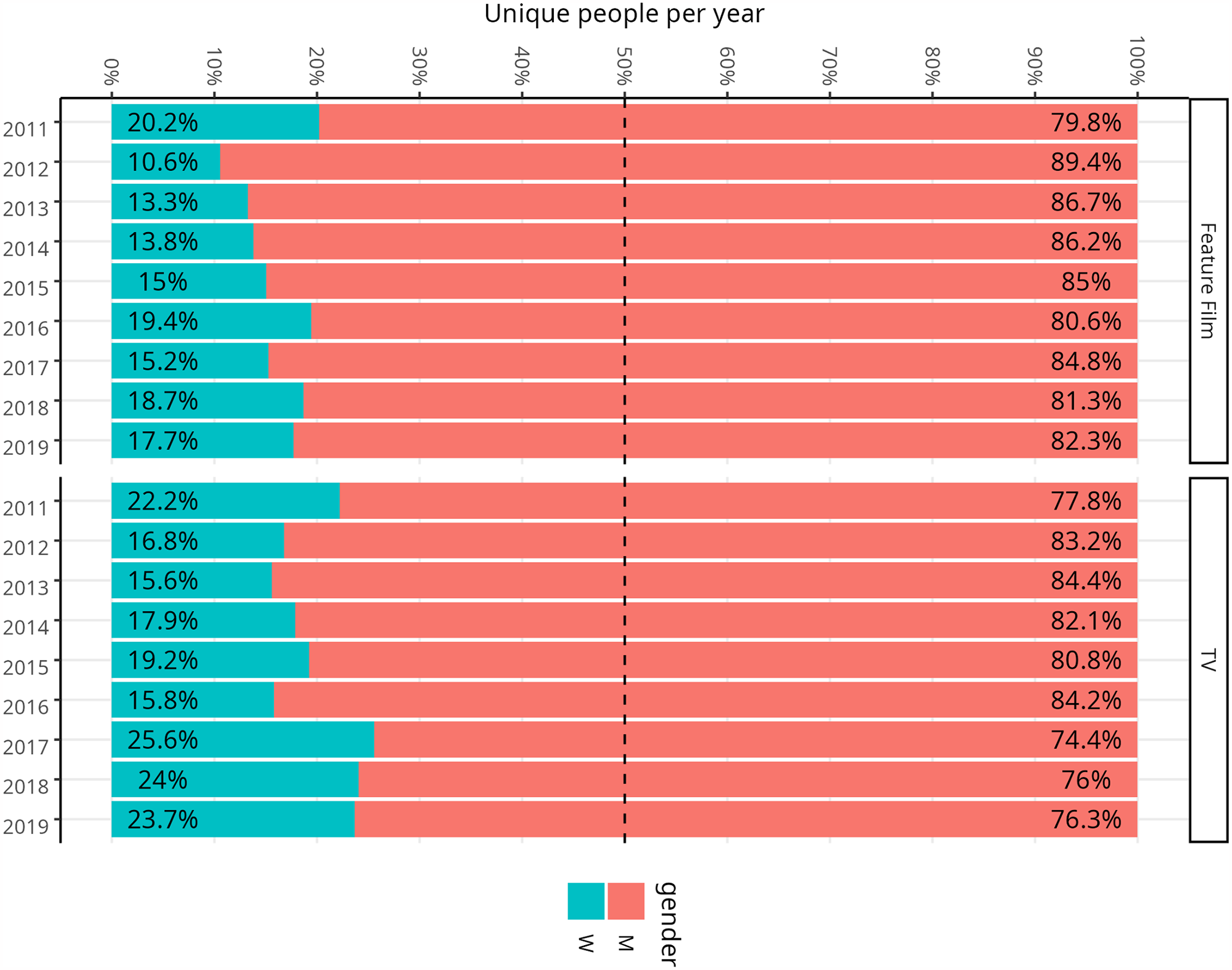
Annual summary of people occupying camera department roles in Australian feature film and television departments by binary gender, 2011–2019. Data visualisation by Pete Jones.
Descriptive summary of selected characteristics including gender, sexuality, racial/ethnic identity, age, disability and highest educational qualification for Australian camera department workforce survey respondents.
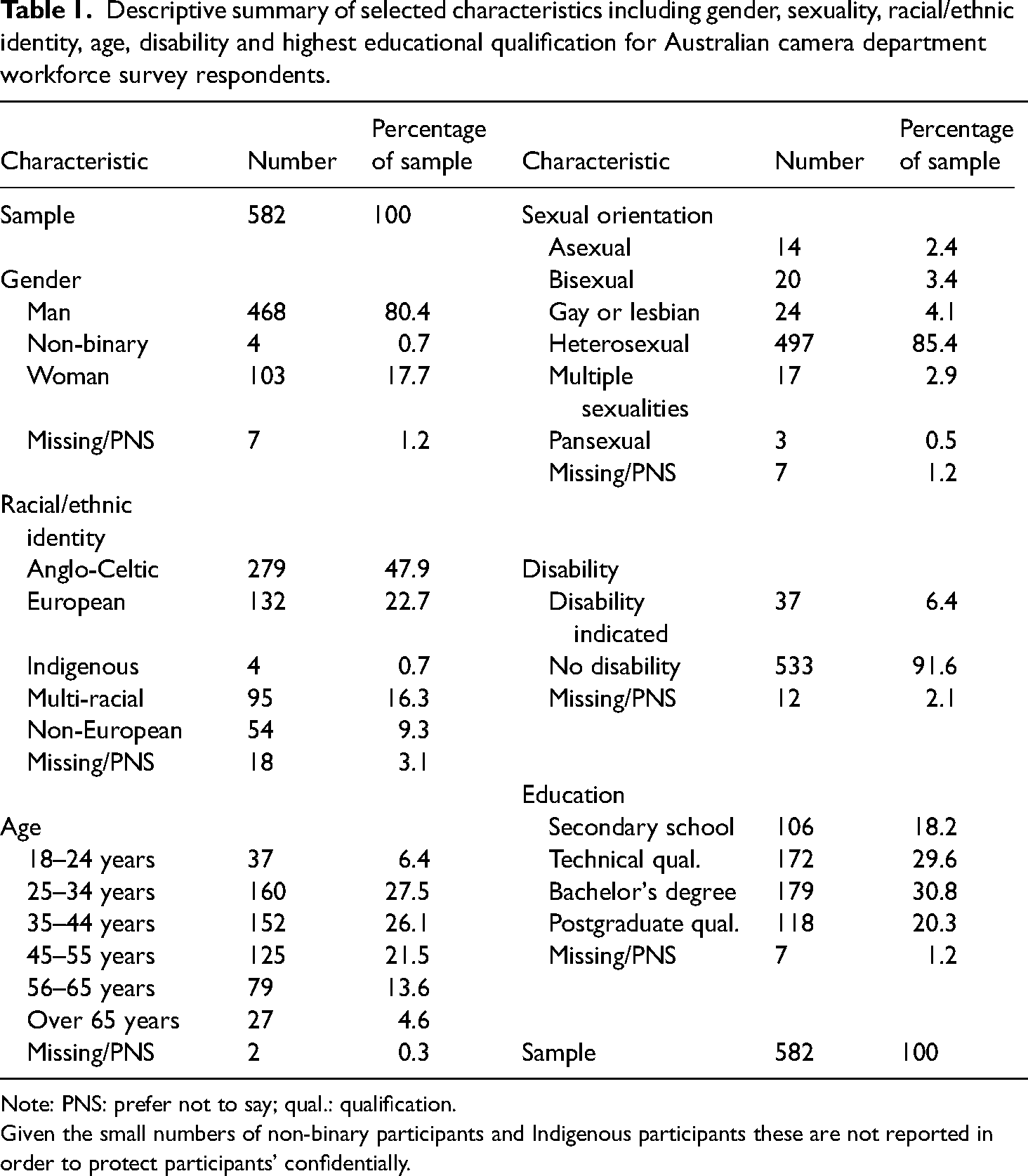
Note: PNS: prefer not to say; qual.: qualification.
Given the small numbers of non-binary participants and Indigenous participants these are not reported in order to protect participants’ confidentially.
A crucial feature of our survey design was to ask respondents not only to self-identify aspects of their identity – including gender, sexual orientation, racial/ethnic identity, disability status and age – but also to ask them how they believed their workplace peers saw them in terms of these same aspects of identity. Figure 2 shows that, across the sample, there were 521 cases of identity mismatch, experienced by 392 individuals. Some 283 individuals experienced mismatch on a single characteristic such as age, while 93 individuals experienced two mismatches, 13 individuals experienced three mismatches, two individuals reported four mismatches and one individual experienced mismatch on all five characteristics.
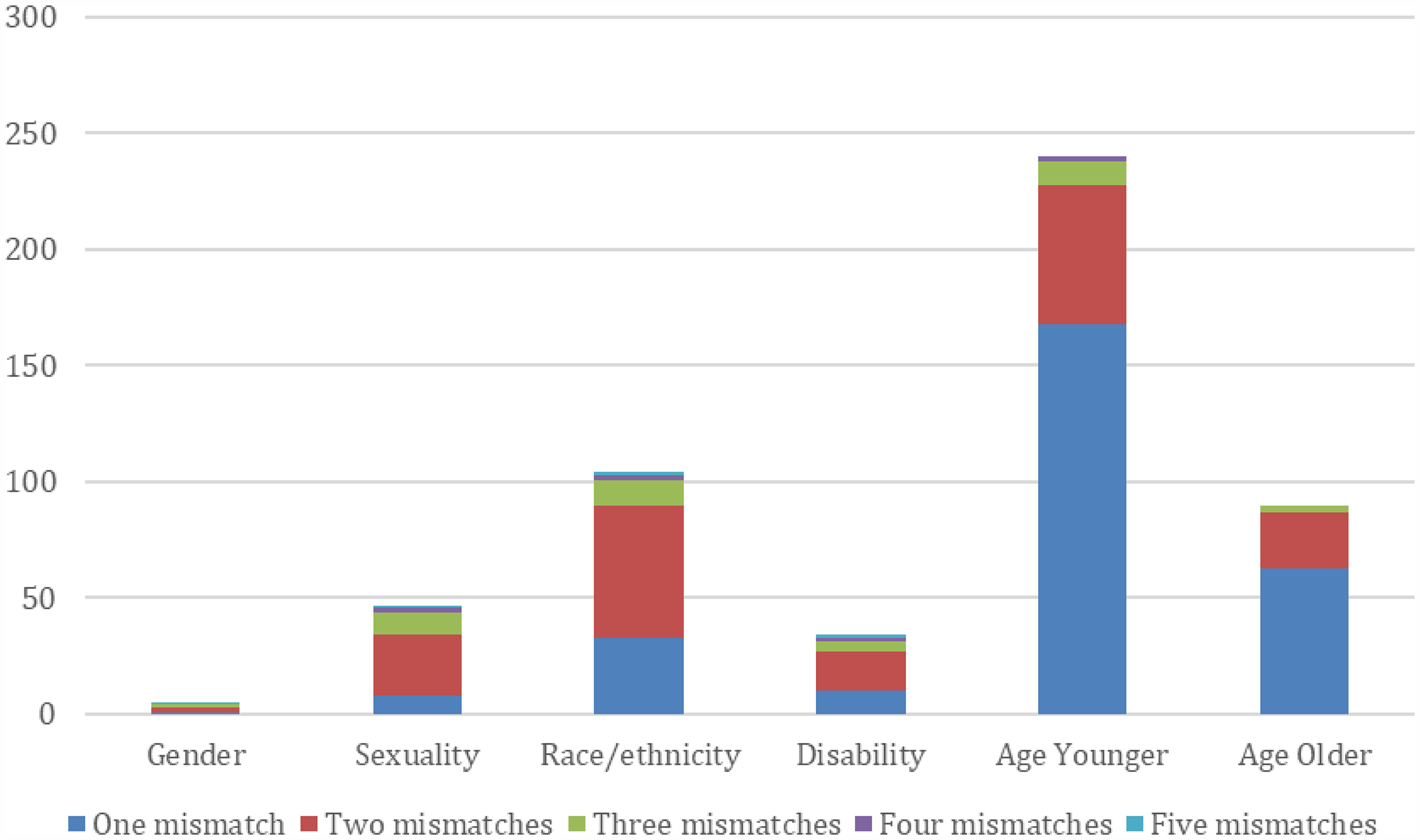
Incidence of identity mismatch by gender, sexuality, race/ethnicity, disability and age.
Gender did not figure highly as a source of identity mismatch. Of the largely gender-recognised camera department workers, the vast majority identified as men and as heterosexual – perhaps unsurprisingly, given that heterosexual men comprised 91.5% of all men in our survey sample and 73.5% of our entire survey. For straight people, we found no significant difference between their SI and their meta-perception of how their sexuality was viewed by colleagues.
Age misrecognition on the other hand was the characteristic that respondents most frequently believed their colleagues mistook. We broke down age misperceptions to distinguish between the respondents who believed they were perceived to be younger by their colleagues and those who believed they were perceived to be older. Age alone was responsible for 63% of all incidences of SI and IMP misalignment (SI–IMP M) across the sample. Figure 2 illustrates that age had a much higher prevalence of single mismatches amongst respondents (70% of all mismatches on age were the only type of mismatch respondents reported). (As Table 8 demonstrates, however, this high level of reported age misalignment does not necessarily mean that age is the most significant category for understanding the relationship between SI, IMP and discrimination.)
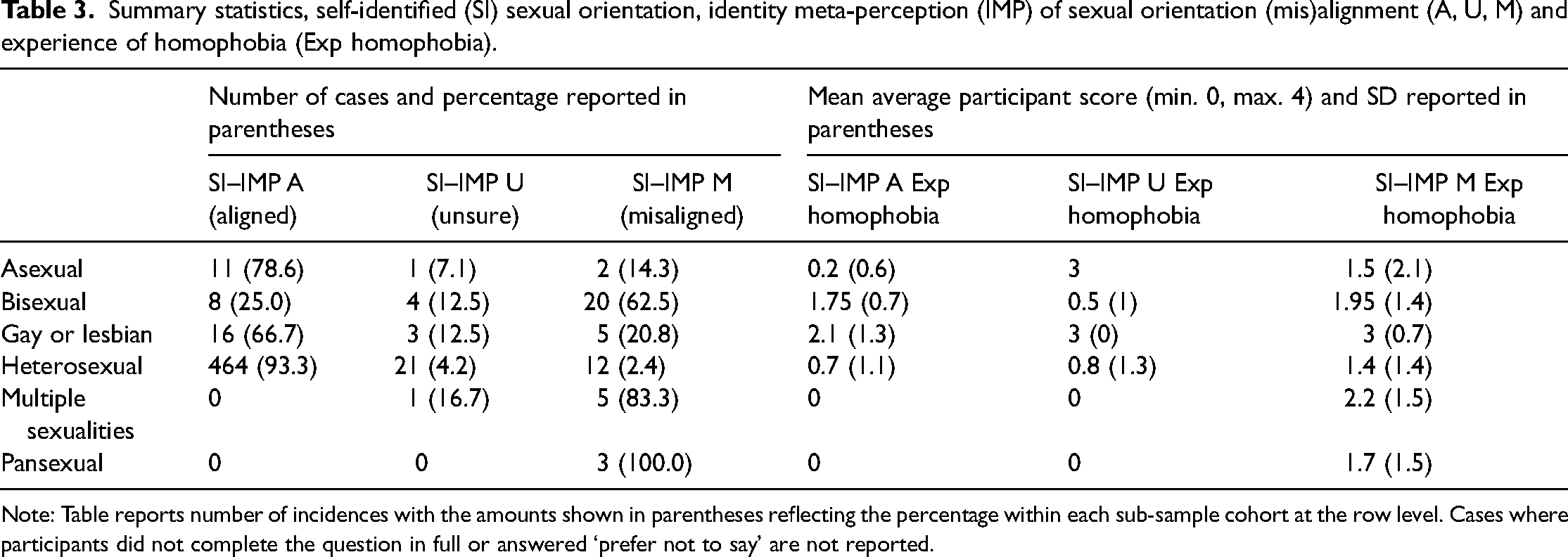
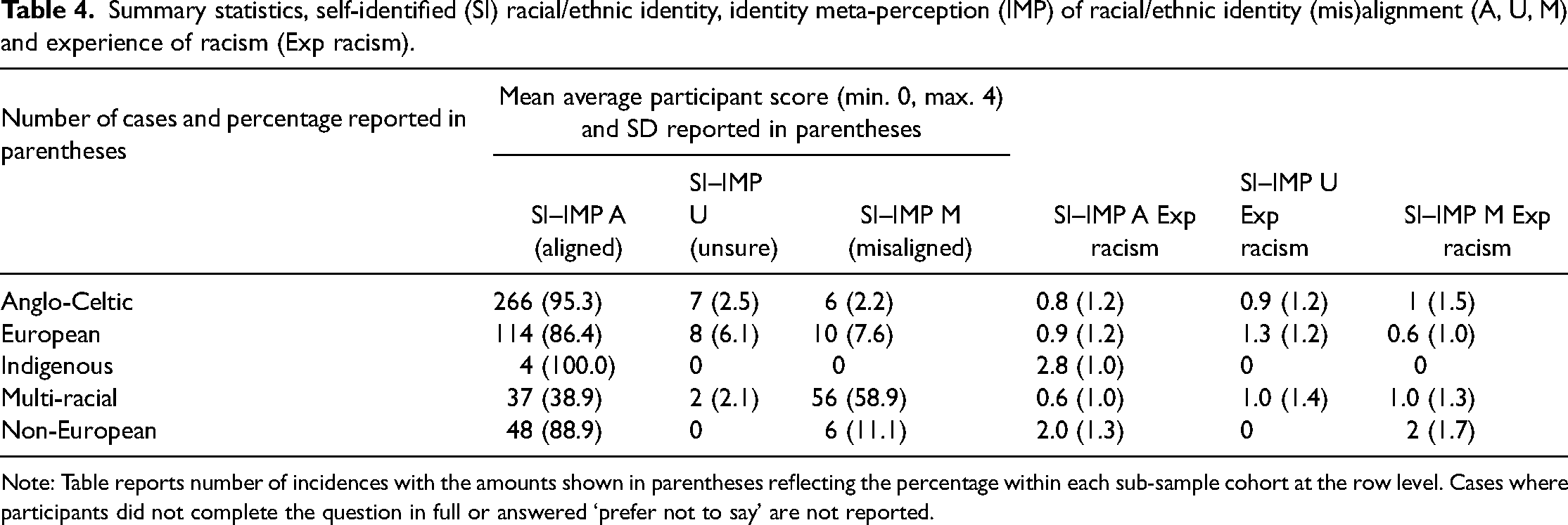
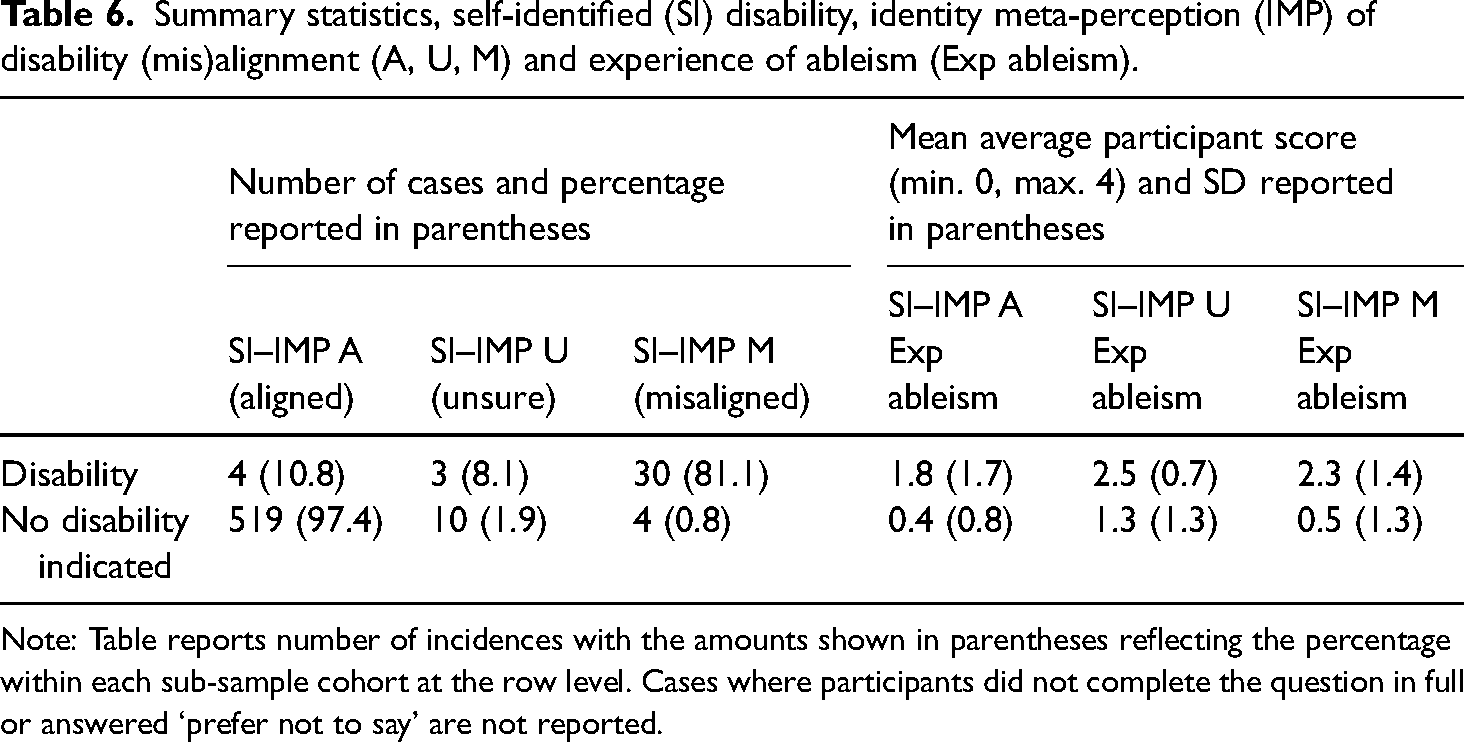
We were able to use the survey data to explore whether and how identity congruence (i.e. when SI and IMP are the same) and identity misalignment (i.e. when SI and IMP differ) were related to respondents’ experiences of discrimination at work. To begin this exploration, Tables 2 to 6 present descriptive summaries of the sample respondents in relation to key SI characteristics and IMP. In particular, Tables 2 to 6 draw attention to differences in cases where SI and IMP are ‘aligned’ (A) and ‘misaligned’ (M); we additionally report instances where participants were ‘unsure’ (U) about how they perceive their work colleagues’ understanding of their identity. Across each of the three possible states (aligned, misaligned and unsure) in relation to SI and IMP, we then report each respective sub-sample cohort’s mean average weighted score in relation to the experienced type of discrimination most commonly linked with that category. A low score indicates that respondents within the sub-sample cohort experience less discrimination on average, while a higher score indicates a greater average prevalence of discrimination being reported as experienced. In each table, the rows enumerate the cohorts within the example (such as men, women, age bracket), while the columns report the numbers of cases, proportions, and average respondent scores for the experience of discrimination (with standard deviations reported in parentheses).
Summary statistics, self-identified (SI) gender, identity meta-perception (IMP) of gender (mis)alignment (A, U, M) and experience of sexism (Exp sexism).
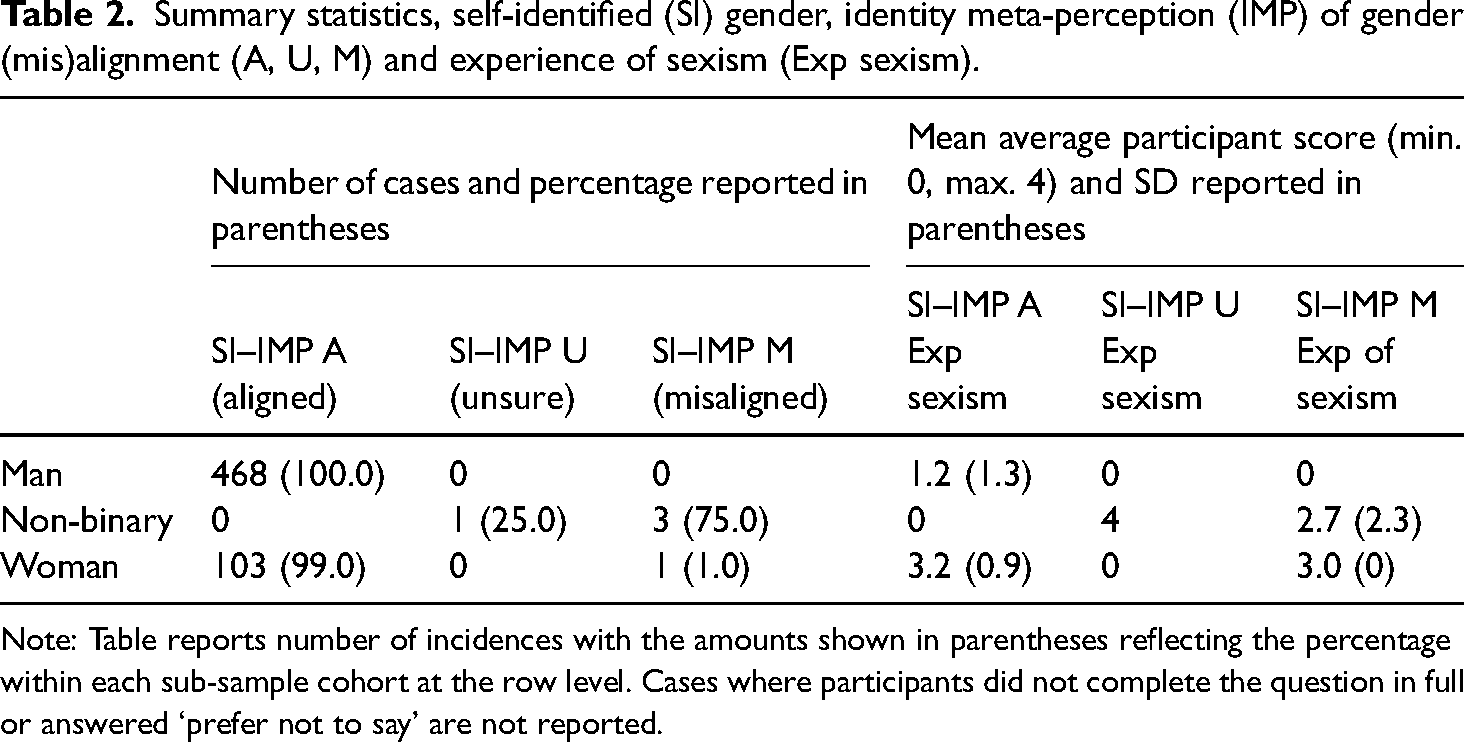
Note: Table reports number of incidences with the amounts shown in parentheses reflecting the percentage within each sub-sample cohort at the row level. Cases where participants did not complete the question in full or answered ‘prefer not to say’ are not reported.
Summary statistics, self-identified (SI) sexual orientation, identity meta-perception (IMP) of sexual orientation (mis)alignment (A, U, M) and experience of homophobia (Exp homophobia).
Note: Table reports number of incidences with the amounts shown in parentheses reflecting the percentage within each sub-sample cohort at the row level. Cases where participants did not complete the question in full or answered ‘prefer not to say’ are not reported.
Summary statistics, self-identified (SI) racial/ethnic identity, identity meta-perception (IMP) of racial/ethnic identity (mis)alignment (A, U, M) and experience of racism (Exp racism).
Note: Table reports number of incidences with the amounts shown in parentheses reflecting the percentage within each sub-sample cohort at the row level. Cases where participants did not complete the question in full or answered ‘prefer not to say’ are not reported.
Summary statistics self-identified (SI) age, identity meta-perception (IMP) of age (mis)alignment (A, MY, MO) and experience of ageism (Exp ageism).
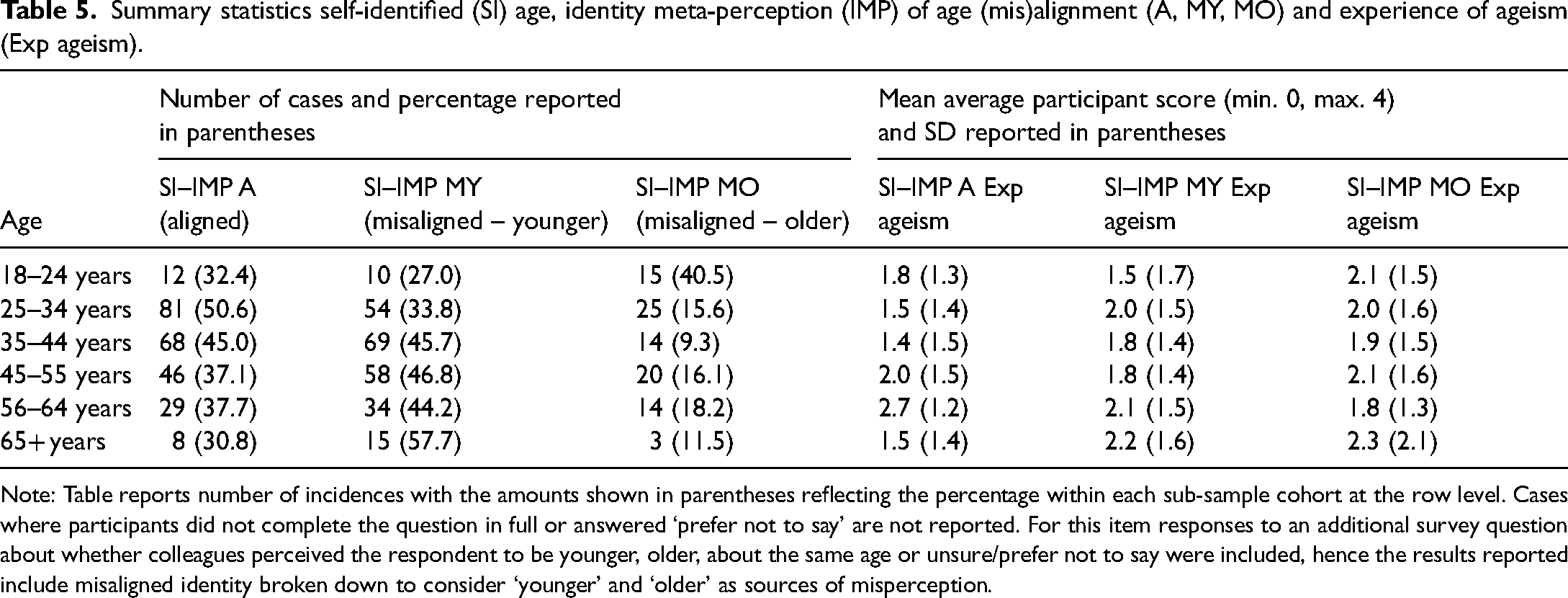
Note: Table reports number of incidences with the amounts shown in parentheses reflecting the percentage within each sub-sample cohort at the row level. Cases where participants did not complete the question in full or answered ‘prefer not to say’ are not reported. For this item responses to an additional survey question about whether colleagues perceived the respondent to be younger, older, about the same age or unsure/prefer not to say were included, hence the results reported include misaligned identity broken down to consider ‘younger’ and ‘older’ as sources of misperception.
Summary statistics, self-identified (SI) disability, identity meta-perception (IMP) of disability (mis)alignment (A, U, M) and experience of ableism (Exp ableism).
Note: Table reports number of incidences with the amounts shown in parentheses reflecting the percentage within each sub-sample cohort at the row level. Cases where participants did not complete the question in full or answered ‘prefer not to say’ are not reported.
Looking specifically at Table 3 for instance, we can see that non-heterosexual respondents reported very low rates of alignment between their SI and IMP. It is also worth noting that of all the identity areas we focussed on (gender, sexuality, age, ability and race/ethnicity), sexual orientation received the highest level of ‘unsure’ responses concerning respondents’ views on how they believed their sexuality was perceived in the workplace. At one level we might expect this result, given that sexuality should have little bearing on workplace success in a camera department, and many prefer not to be overt about their sexuality for a myriad of reasons (Ragins et al., 2007; Ragins & Cornwell, 2001). However, as shown in Table 3, it is interesting that the rate of ‘unsure’ responses was notably higher for all non-heterosexual respondents. This could indicate that in a heterosexually dominated workforce, members of sexual minorities may feel their sexuality is functionally invisible where heteronormativity is simply assumed. Another possible explanation may be that these respondents actively conceal their nominal identity in order to better ‘fit in’, escape discrimination in the workplace, and gain access to networks (Willis, 2011). Both explanations were supported by the survey's open text responses.
While Tables 2 to 6 provide insights into the work-related perceptions of the sample respondents, and present evidence of identity congruence, misalignment and discrimination, we were also interested in understanding the prevalence of being ignorant to the presence of discrimination. Table 7 reports the prevalence of discrimination ignorance across the sample, with results reported on all forms of discrimination by the sub-sample cohort, comparing the prevalence of discrimination ignorance against various cohorts within the sample population. In this way, we can demonstrate a connection between self-reiteration, for example heterosexism, and sexual discrimination, in the form of homophobia for instance (for an elaboration of this distinction, see Ragins & Wiethoff, 2013).
Summary statistics, the prevalence of discrimination ignorance, number of cases and percentage of sub-sample cohort respondents in parentheses.
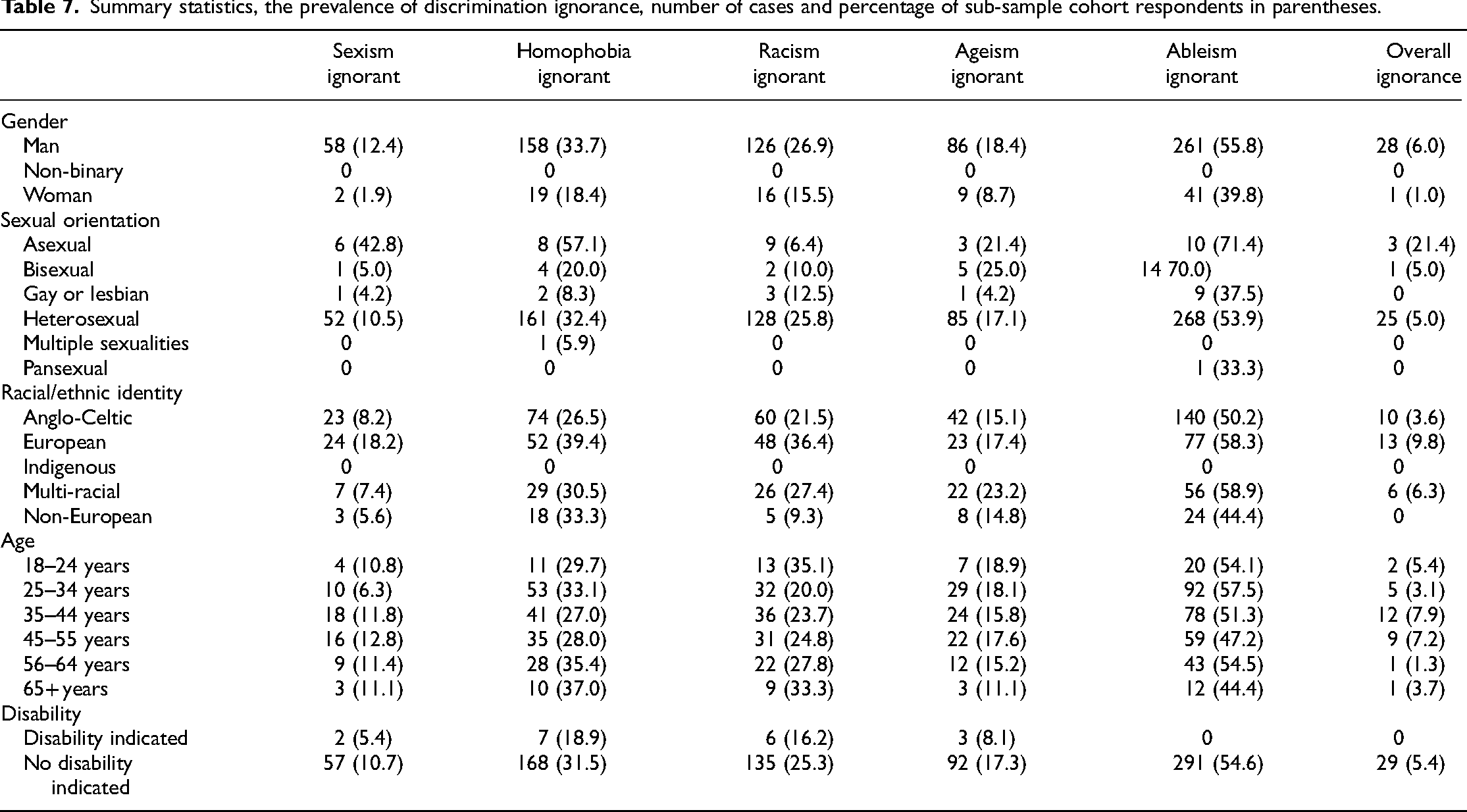
Using this analysis to examine discrimination ignorance yielded several important observations. Firstly, self-identified men overwhelmingly did not acknowledge sexism, perhaps because they do not experience it themselves. Interestingly, it was not solely sexism that men were found to be ignorant of more than other genders. Across all the forms of discrimination ignorance we examined, men were consistently more oblivious. The overall discrimination ignorance reported in the last column of Table 7 indicates the numbers and percentages of respondents who reported being ignorant of sexism, homophobia, racism, ageism and ableism, despite evidence to the contrary. All but one of these cases were attributable to men. For sexual identity, heterosexuals were considerably less aware of homophobia within their workplace. The findings for racism ignorance showed that Europeans were more likely on average to be ignorant of discrimination, compared to the dominant cohort of Anglo-Celtic respondents. Across all age brackets, the levels of ageism ignorance were lowest, which is consistent with the data showing ageism was the form of discrimination most frequently reported across the sample. The level of ableism ignorance was especially high: over half the sample cohort was completely ignorant of ableism.
In the next stage of our analysis, we checked whether the experience of various forms of discrimination was linked to a discrepancy between SI and IMP in relation to the characteristic commonly linked to the form of discrimination in question. Table 8 reports the correlation between SI–IMP M and different types of discrimination. Analysis of these results revealed a significant incidence of discrimination for people experiencing a misaligned identity in terms of (dis)ability and sexuality, followed by gender. This finding suggests that discrimination in the form of ableism and heterosexism was experienced even when these identities were not necessarily recognised by others in the workplace.
Correlation matrix between self-identity (SI) and identity meta-perception (IMP) misalignment and the experience of discrimination.
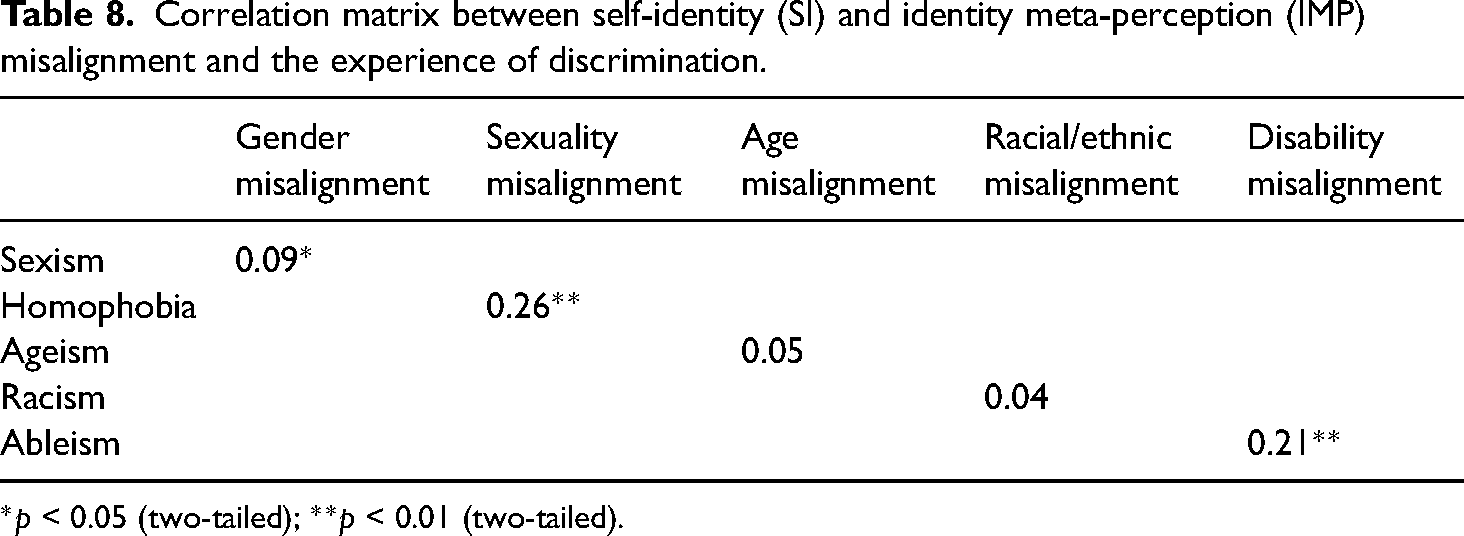
*p < 0.05 (two-tailed); **p < 0.01 (two-tailed).
One possible explanation for this counterintuitive result is that workplace discrimination is directed at identity misalignment itself, that is, at people who do not appear to present clear or coherent identity positions to their colleagues. Another explanation lies in the proposition that people engaged in forms of identity labour (i.e. managing a distinction between their SI and IMP) are also likely to have a heightened awareness of discrimination and/or increased exposure to it. Anecdotal accounts of discrimination in camera teams suggest that when minorities are ‘invisible’ in the workplace, hostile and toxic behaviours are emboldened. Australian cinematographer Michael Filocamo, speaking at an Equity, Diversity and Inclulsion (EDI) panel hosted by the International Federation of Cinematographers explains the impact of heteronormativity on set: One of the other sides of having a lack of visibility as a queer person is that you actually see what people think when they think you’re not around. You hear the comments about queer people, about women. When I was an assistant, I once had another camera assistant turn to me and say, ‘Thank god it's Friday and we don’t have to be around these pink people anymore’, referring to the people who were shooting on the shoot, not realising that I was queer (cited in IMAGO, 2020).
Fit for purpose? The Australian film production workplace
In our survey, many members of camera departments who occupied hiring roles spoke of the importance of creating ‘harmonious teams’ as the basis for their recruitment decisions. Framed as the need to find crew who are a ‘good fit’, many decision makers described their employment strategies as driven by on-set team dynamics, rather than diversity checklists, for instance, which are viewed as interfering with best practice: I believe in choosing the right person for the job. That will be the most skilled person who fits well with the team at hand, whether that be male or female and of any race or religion (European heterosexual man, aged 25–34). As a high pressure field you want the best person who fits in with the team (Non-European heterosexual man, aged 56–64). I have always chosen my camera team without any thought of gender, colour or anything else but ability, talent & ‘fit’ (European heterosexual man, aged 65+). We hire the best person for the job, male or female, based on recommendation and cultural fit (Anglo-Celtic heterosexual man, aged 35–44). I always want to hire the best fit for the job, not hire based on trying to be deliberately diverse (Anglo-Celtic heterosexual man, aged 35–44). One (or more) crew member who does not ‘fit’ will stand out, and sometimes can be picked on by other crew members. When this is discovered, it has to be stopped ASAP. That is a very difficult situation and not acceptable behaviour by the rest of the crew. This usually happens to junior members of the crew who are less experienced. They need not to come to the DOP as they feel they have to ‘suck it up’. This is not the correct thinking (Anglo-Celtic gay man, aged 65+). This is definitely an industry for the ‘thick skinned’. It is brutal, money focussed and anyone who can’t ‘fit in’ is generally excluded, especially amongst the technical ranks (Anglo-Celtic multiple sexualities man, aged 35–44). I find in the film industry I have witnessed the most frequent number of distressed and bullied colleagues of any workplace environment. As it's often a very close-knit community and no HR support. Reporting to a HOD isn’t often a choice because in a lot of cases the HOD is part of the bullying. Also, producers are too busy to deal with complaints. For those reasons I have witnessed many people leave the industry they love simply because it's one that hires friends and if you don’t fit a certain personality mould at times regardless of your professionalism and skill set, there is no safety net or no guarantee of mediation. This has not been my experience entirely but I have mentored and lost lots of colleagues due to this issue (Multiple racial/ethnic identities woman, aged 25–34). I have missed out on jobs because I was not seen as being physically strong enough to cope with the gear. I have often been treated as invisible on a job when there is a camera ‘man’ in sight on set as an operator even when I have been the DOP – when people arrive on set, they just assume the bloke was the lead, before checking (Anglo-Celtic heterosexual woman, aged 45–55). It's sexist to assume that I’m not the camera assistant and in hair and makeup or costuming when I have a slate and roll of tape in my hands (European pansexual woman, aged 18–24). When my partner became ill & was unable to work, it became very challenging. To have a career I had to hide my challenges and pretend everything was ‘normal’. I would essentially have to lie and say I was booked during the week so people thought I was busy … it was the only way to play the system. To make up for it I would then read and spend hours at rental companies learning about and using any new equipment so I didn’t fall behind. People who saw me assumed I was there on work related to pay … so I let them believe that. But the ability to build industry connections was essentially impossible (Anglo-Celtic heterosexual woman, aged 45–55). Employers love to label staff. Especially long serving staff. Stick you with that label and you can only lose it by leaving (Anglo-Celtic heterosexual non-binary person, aged 45–55). There is a myopia that exists with how people perceive you and whom they want to hire (Indigenous heterosexual man, aged 45–55). The discrimination I have witnessed is often in the form of trying to cast diverse talent and clients knocking back any choices that don’t fit a standard stereotype (Anglo-Celtic heterosexual man, aged 45–55). I was referred to in a professional setting as ‘Exotica’ and introduced to other professionals as ‘Exotica’ not my name, because to them I looked Exotic (Multiple racial/ethnic identities, heterosexual woman, aged 45–55). To be honest I haven’t really experienced any of those things. However, I am a straight white male with no physical or mental disabilities so I feel like I may not be the best at providing insight into this area (Anglo-Celtic heterosexual man, aged 25–34).
Perhaps the most notable dimension of discrimination we measured was ableism. The prevalence of ableism in this survey of film workers was very high, but so was the ignorance of disability discrimination, with a highly significant correlation (p < 0.01, two-tailed significance) between our measures of ableisim and disability identity misalignment. This finding appears to be consistent with commentaries from recent literature. For instance, O’Meara and co-authors (2023, p. 26) report that disabled screen workers overwhelmingly emphasise the dangers of choosing to share their disability status with colleagues. While acknowledging that sometimes disclosure is crucial for their own safety and well-being, many respondents explain that they have witnessed mistreatment or been personally mistreated when disability status is shared. The very high levels of ignorance of ableism in our data strongly suggest that workers with a disability may be ‘masking’ or concealing their status, in order to minimise potentially negative social and occupational consequences.
These accounts of the complex experience of identity in the workplace point to the significance of how screen workers link discrimination to the way their identities are perceived by others. As a result, some camera department workers disproportionately endure an additional labour of negotiating the multiple conflicting demands arising from their identities at work.
Conclusion: identity-based discrimination in the film industry
I find image too important in this industry (Anglo-Celtic heterosexual woman, aged 56–64).
In this paper we sought to open an empirical exploration of the way that the categories typically used to define social belonging, such as ethnicity, age, gender, ability and sexual orientation, are experienced in terms of dynamic processes of formation and transformation at the level of individual identity. We linked observations of a dissonance between SI and IMP to workplace discrimination, marginalisation and exclusion. However, we recognise that this identity discordance can also be a source of resistance and a renegotiation of gatekeeping and other forms of domination.
Our research also has a bearing on how industry-driven equity research is conducted. Survey designers would do well to consider how systems of classification affect self-knowledge and identity formation. Changing how we do research can create new opportunities for bringing our work into ‘good relation’ (Tallbear, 2019) with the peoples and communities we are yet to understand. Researchers might consider how to hold identity schemas lightly, even casually, and learn to be attentive to practices of concealment and creativity, of silence and resilience, of misalignment and maintenance in the workplace. Reconsidering identity research in this way will also have ramifications for equity advocates and policymakers in the screen industry.
Most film industry equity policies rely on the measurement of simplistic, predetermined identity categories. These are either self-selected by industry members during surveys or captured through the industry's copious compliance procedures. Many of these policies presume that workplace inequality is primarily driven by psychological obstructions (a lack of self-belief, for instance), rather than persistent employment injustice. More broadly, they posit that strategies premised on self-improvement and self-actualisation will result in industrywide change. Interventions that promote self-belief sound appealing, but rarely acknowledge the way that workplace identities and belonging are shaped by structures of power, including the very limited definition of ‘self’ typically contained within these policies. Furthermore, screen industry equity strategies based on notions of ‘self-improvement’ serve to reiterate the higher levels of ‘identity work’ demanded of marginalised and equity-seeking groups in camera departments and fail to acknowledge the variable (and sometimes valuable) experience of identity dissonance.
This paper extends our previous work examining how career outcomes, as well as reported levels of day-to-day discrimination in camera crews, vary according to participants’ self-identified characteristics relating to gender, sexuality and race/ethnicity (Coate et al., 2023). We contribute an overdue broadening of the discussion of identity in the screen industries, by proposing that identity itself is experienced ‘perspectivally’ by some camera crew members through a multitude of contingent and sometimes discordant lenses, including insights on how they are seen by their colleagues. Our research does not seek to undermine the critical importance of reporting and analysing self-identification in work environments that would otherwise erase diverse collective existences. However, we argue that to understand workplace discrimination more acutely, it is also necessary to propose complex and relational definitions of workplace identities. Additional research might carry these considerations further, and explicitly ask respondents who report differences between SI and IMP to describe this experience in more detail.
Footnotes
Declaration of conflicting interests
The authors declared no potential conflicts of interest with respect to the research, authorship, and/or publication of this article.
Funding
The authors received no financial support for the research, authorship, and/or publication of this article.
