




Abstract
Concerns about online political advertising often focus on the techniques used to engage the intended audience. This article assesses the communicative strategies used in online political advertising and their reception by the public by analysing 2272 Facebook ads during the 2019 UK general election. By examining the prominence, tone, and source of six communicative strategies, we find that different communicative strategies are not used to the same extent. While positive tones are predominantly used by all actors, negative tones are more prevalent in several strategies, especially when mobilised by satellite campaign groups. Moreover, ads with negative strategies are deemed less acceptable compared to those employing targeting or positive strategies. However, when negative and positive strategies are combined, adverts can be deemed more acceptable. This study contributes new empirical evidence regarding the communicative strategies deployed in online political ads and offers insights for campaigners about public perceptions.
Keywords
Online political advertising has become a prominent feature of election campaigns in many countries, evident on social media platforms, search advertising, and pre-rolls on video-streaming platforms (Barnard and Kreiss, 2013). Digital media has been widely utilised by campaigners seeking to communicate with voters in different ways. In efforts to understand this new medium, many scholars have devoted attention to the study of online political advertising, exploring the meaning (Dommett and Zhu, 2023; Jaursch, 2020; Sosnovik and Goga, 2021), usage (Dommett et al., 2023; Kirk and Teeling, 2022; Ridout et al., 2021), and impact (Coppock et al., 2020; Hager, 2019; Kruikemeier et al., 2016) of this tool. Concurrently, attention has focused on the need to regulate this activity (Dobber et al., 2019). Concerns about privacy, divisive messaging, and data analytics have led to a raft of research seeking to test the impact of efforts to increase transparency (Binder et al., 2022; Dobber et al., 2023; Jost et al., 2023), with policy makers acting to implement such interventions (European Commission, 2021). These lines of inquiry have offered important insight into the mechanics and content of online political advertising, but there remain many questions about how this media is used by campaigners and how it is perceived by citizens.
Within this article, we take a step back from debates about problematic or misleading content, such as fake news, misinformation, or emotionally charged messaging (Zeng et al., 2021), to simply ask how political campaigners choose to frame or present the arguments in online political ads. Offering an empirical investigation of the communicative strategies used within online political ads, we shed more light on the type of appeal advertisers believe to be effective in achieving desired goals (Ademilokun and Taiwo, 2013). We are interested in the prominence and variation of communicative strategies deployed by different actors within modern election campaigns, seeking to determine whether distinct communicative styles can be discerned from parties, political leaders, and satellite campaign groups (non-party groups promoting a particular partisan agenda). Specifically, we conceptualise and explore six communicative strategies, namely, ‘evidence’, ‘reputation’, ‘community’, ‘targeting’, ‘outcome’, and ‘other’ strategies. We are also interested in the tone of different appeals, recognising the potential for each strategy to be deployed in positive, negative, or neutral ways (Pattie et al., 2011). Gathering this insight, our aim is first to offer a descriptive overview of the character of online political advertising during the 2019 UK General Election. Subsequently, by combining this data with responses from a public opinion survey, we evaluate respondents’ reaction to the very same ads, allowing us to investigate whether ads containing different (combinations of) strategies are viewed as more or less acceptable by the public. With this approach, our aim is to respond to the European Commission’s (2019: 59) call for ‘more research cooperation between cyber-and political scientists’ to develop ‘theoretically informed empirical research about the risks and opportunities for democracy in the present and future’. To present empirical evidence on political campaigning, we employ computational methods to gather data on the practice of online political advertising and subject this data to analysis inspired by work within political science and communication studies. Our goal is to explore whether certain types of communicative appeal – such as those that are more negative or that appeal to targeted communities – are deemed more or less acceptable to citizens than others.
Our findings reveal a predominant use of appeals to ‘outcomes’ by political parties, leaders, and satellite campaign groups, contrasting with other strategies. In addition, contrary to expectations, we find that positive tones prevail, despite negative strategies being more commonly employed by satellite campaign groups. Regarding public opinion on these strategies, we find that many ads in election campaigns deploy communicative strategies that were widely seen as acceptable. Specifically, ads using positive communicative strategies are deemed more acceptable than those using negative or targeting strategies. However, when combined, positive and negative strategies are not always viewed more negatively. Interestingly, the addition of targeting turns out to increase perceived acceptability.
Cumulatively, these findings suggest that campaigners should exercise caution when using negative campaign strategies, but indicate that certain combinations of strategy may be deemed more acceptable than others. These insights are likely to be of value to campaigners themselves, but also for those seeking to create codes of conduct (IDEA, 2021) to tackle concerning practice. Using an original survey design, this article also contributes to a new dataset, offering reproducible and replicable data for future analysis.
Literature review
Political advertising has long been a focus of interest in electoral politics, but to date research has largely focused on the US and other advanced western democracies (Kruschinski et al., 2022; Ridout et al., 2021; Zuiderveen Borgesius et al., 2018), with little analysis beyond these contexts. With the rise of digital technology and the widespread adoption of online political advertising (Fowler et al., 2021), which is less regulated than its offline counterpart, new concerns have been voiced about this form of content. Emphasis has been placed on its capacity to target specific groups, with assertions that this could lead to potentially contradictory messaging and a focus on particular identities and communities (Zarouali et al., 2022). Gorton, for example, has argued that targeted messaging online makes it easier for campaigners to ‘mislead and misinform viewers with impunity. Indeed, a campaign or a third party could potentially provide different categories of voters with plainly contradictory messages and elude detection’ (Gorton, 2016: 71). Such trends are seen to fuel polarisation (Kim, 2016), encourage redlining where certain groups are ignored (Howard, 2006; Kreiss, 2012), and undermine pluralistic debate (in ‘t Veld, 2017: 3) via ‘fragmentation of the marketplace of ideas’ (Zuiderveen Borgesius et al., 2018: 89). There have been claims of manipulation and subversive practices (Zeng et al., 2021), with concerns that political actors are engaged in a ‘campaign of information manipulation’ (Diamond, 2019: 22).
While experimental studies have found online political advertising to have a small to negligible impact on candidate evaluation, favourability, and vote choice (Broockman and Green, 2014; Coppock et al., 2020; Hager, 2019), interest in tackling public concerns via regulation has been acute. As evidenced by the Digital Services Act in the European Union (European Commission, 2022), new requirements for transparency information and limitations on targeting parameters have been imposed in efforts to address many of these concerns. There are, however, unanswered questions about the degree to which these interventions address public concerns about current practice. In this article, we therefore explore a new aspect of the content of online political advertising (i.e. communicative strategies) and ask how different types of content are perceived by the public.
In studying the content of online political advertising, we note two prevailing approaches that have built on established modes of inquiry. One prominent approach has been to examine the tone of campaign messaging. Building on previous work on negative campaigning (Lau and Rovner, 2009; Maier and Nai, 2023; Walter, 2014), several studies have examined the use of negative campaigning as a campaign strategy on Facebook (Auter and Fine, 2016; Baranowski et al., 2023; Rossini et al., 2023), often examining the impact of negativity on voter engagement. Previous studies have also explored public perceptions of positive or negative strategies, with Pattie et al. (2011) finding that when people perceived a party’s campaign as negative they reported lower propensity to vote for that party. Such analysis has not yet been conducted for studies of online political advertising, making it interesting to investigate the extent to which positive or negative tones are used, and public perceptions of these alternative approaches.
In addition to analyses of tone, a second tradition of content analysis has classified the goals or topics of campaign materials. Previous analyses have, for example, classified whether communications sought to mobilise, fundraise, inform, or persuade an audience (Ballard et al., 2016; Ridout et al., 2021; Zhang et al., 2017) or the topics covered in specific ads, such as those related to health, welfare, and immigration (Bene and Kruschinski, 2021). Some studies compared ads’ focus on policies as opposed to candidate traits (Borah et al., 2018; Geer, 2008), while others have classified variations in timing, functionality, issue priorities, and negative campaigning in the organic posts, sponsored posts, and paid ads placed by political parties on Facebook (Kruschinski et al., 2022; see also Bene and Kruschinski, 2021). This approach provides more detail on the objectives or focus of the ad, helping to build up understanding of the prevalence of different types of appeal.
What have been less common to date are studies of the types of argumentation or communicative appeal made within individual political adverts. A wider scholarship on advertising strategies had explored the potential for advertisers to use emotional (Brader, 2005; Gerstlé and Nai, 2019) or group appeals (Dolinsky, 2022; Huber, 2022), reasoning (Fetzer, 2007), or information, identity, or personality appeals within adverts (Van den Putte, 2008). This suggests that different forms of appeal can be made to an audience, seeking to activate different associations or deploy different communicative strategies. At present, however, it remains largely unknown which communicative appeals political actors deploy through paid media on digital platforms. Given that some of the concerns voiced around online political advertising relate to group appeals and the (mis)use of evidence, we suggest that an exploration of the prevalence and perceptions of these tactics is particularly valuable.
Drawing on existing frameworks and following an iterative code development process informed by our data, we identified six communicative strategies, namely, ‘evidence’, ‘reputation’, ‘community’, ‘targeting’, ‘outcome’, and ‘other’ strategies (described in detail in Appendix 1). These codes mirrored key ideas within existing frameworks but were designed to explicitly allow us to examine how evidence and external information is used in adverts, whether personal appeals or attacks are mobilised, whether appeals are made to specific communities, whether there are overt references to target communities, and whether particular outcomes or pledges are emphasised. As outlined in Table 1, we ensured that each of our codes covered discrete topics, ensuring we avoided double coding the same features under different codes. Drawing on the insights from scholarship on negative campaigning, we followed Scammell and Langer’s exploration of the use of both positive and/or negative messaging (Scammell and Langer’s, 2006: 7; see also Benoit, 2000; Motta and Fowler, 2016) to examine whether each of these communicative strategies was used in a positive or negative way. This approach allows us to generate empirical evidence on the type of appeal being made within adverts.
Codes and their definitions.
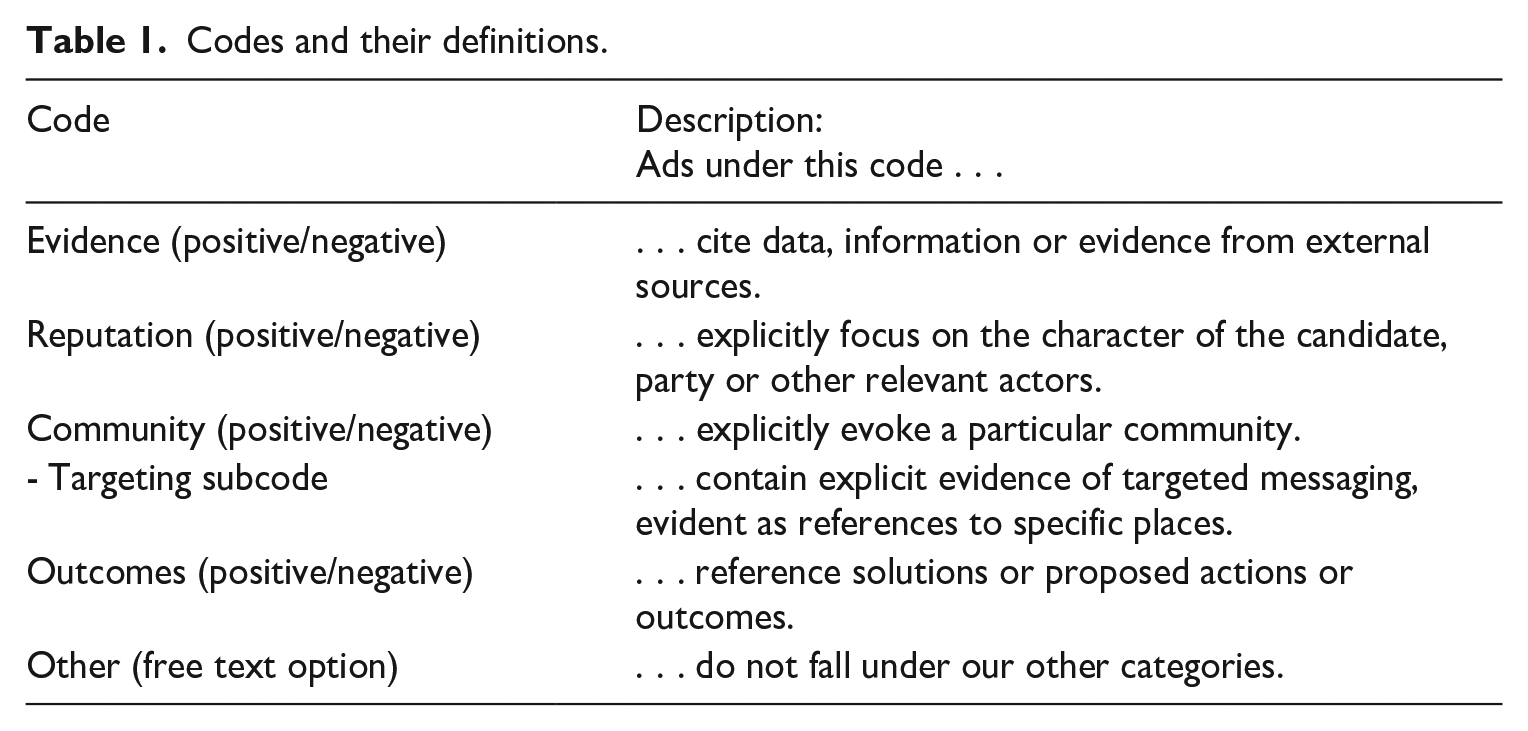
Rather than pre-defining certain communicative appeals to be indicative of concerning practices, in this article we examine how the public perceives these strategies, particularly in the UK context. Integrating public opinion data from an original survey on perceptions of ad acceptability, we assess citizens’ responses to these ads to investigate whether certain techniques are deemed more or less acceptable. In doing so, we contribute new empirical evidence about the perceived acceptability of a hitherto understudied aspect of online political advertising, contributing findings with the potential to inform regulation and policymaking.
Research questions
Building on existing research in this way, our analysis poses exploratory research questions and tests hypotheses derived from existing research. First, to gain a basic understanding of the usage and prominence of the different communicative strategies employed by political actors, our first research question simply explores the prevalence of our different strategies, asking:
RQ1. To what extent is each communicative strategy mobilised in online political advertisements?
Subsequently we ask a further question to apply and interrogate previous work. Research by Kruikemeier et al. (2022), for example, has demonstrated how major political actors in the United States employ issue-based persuasive strategies. In their study, which examined online-sponsored Facebook ads placed by political parties, organisations, political candidates, Political Action Committees (PACs), public figures, and non-profit organisations, they discovered that while different actors exhibited some of the same behaviours in terms of message and targeting, there were also differences dependent on the type of account. Building on this finding, we would expect to see different actors, including parties, leaders, and non-party campaign organisations (Temple and Langer, 2023), employing different communicative strategies. However, when examining our codes, it is not clear which strategies will be more or less prominent when used by different actors. Accordingly, we conduct an exploratory analysis, asking:
RQ2. Do parties, party leaders, and non-party groups use different communicative strategies to the same degree?
In addition, previous work has suggested that certain types of actor will be more or less likely to deploy negative messaging. Rossini et al.’s (2023) study is particularly informative here. Classifying Facebook posts at the 2017 and 2019 election, they found that parties were more likely to post attack messages overall when compared to party leaders. As such we expect to observe material differences in the degree of negativity exhibited by parties and leaders. Extending Rossini’s study, we build on previous work suggesting that non-party campaign groups can also be used to engage in more negative campaigning (Johnson et al., 2011; Painter, 2014). For instance, Votta et al. (2023) found that during the 2020 US election, outside groups, such as Super PACs and non-profit organisations, were more inclined to place toxic ads on Facebook and Instagram compared to the political campaigns conducted by political parties and candidates. Therefore, we expect to see substantive differences in the tone of strategies used by each of our actors, with leaders displaying the least negative tones, followed by party accounts, with non-party campaign groups, or, in our case, satellite campaign groups, using negative messaging most frequently. This leads us to hypothesise:
H1. Political ads placed by party leaders will contain fewer negative communicative strategies compared to those placed by party or satellite campaign accounts.
In addition to scholarship on the content of political ads, we also build on work examining public perceptions of advertising. Within advertising scholarship, there is a long history of studying citizens’ scepticism, avoidance, and perceived irritation of ads, as well as their perception of personalisation (Baek and Morimoto, 2012). However, when it comes to online political advertising, less research has been done. While some efforts have been made by organisations such as Pew Research (Auxier, 2020) to examine attitudes towards political advertising, findings have focused on responses to political ads in general rather than to specific, real-world examples of online political advertising.
Our analysis focuses on the particular (combinations of) communicative strategies used in specific ads. This approach builds on the idea that the different types of appeal we examine may be viewed as more or less acceptable. Reviewing our categories, attention has, for example, been paid to public concern around targeting, with research finding evidence of public concern around the use of personal data for political advertising (Auxier, 2020; Kozyreva et al., 2020). Accordingly, we might expect that ads featuring targeting appeals may be viewed as less acceptable. Evidence around our other categories is less extensive, but we suggest that certain categories of communicative strategy are less acceptable than others. Work by Meirick (2002), for example, has found that political ads using negative comparisons to other candidates results in less favourable responses than ads featuring negative and positive messages. Such findings suggest that when communicative strategies are evoked with a negative tone, they may be deemed less acceptable to citizens. In a similar manner, we expect that negative appeals to ‘outcomes’, ‘evidence’, ‘reputation’, and ‘community’ are likely to be deemed less acceptable than their positive variants. There is, however, a need for further research that explores how ‘the British public perceives negative campaigns’ (Duggan and Milazzo, 2023: 8). Accordingly, we hypothesise:
H2. Ads containing negative communicative strategies or references to targeting will be deemed less acceptable than ads containing positive communicative strategies.
In posing this hypothesis, we recognise that citizens’ responses may be influenced by other factors beyond the particular content of the ad being considered. Previous research has shown that demographic and attitudinal factors (such as age, gender, and partisan affiliation) can affect judgements of political adverts (Turow et al., 2012). Therefore, we take into account people’s demographic and political attitudes when exploring their reactions to ad content, and we test this using regression analysis. Similarly, we would expect that contextual factors – such as events in the news when a particular advert was published and viewed – may affect response. As our study was conducted after the election, we are unable to examine such effects – a point we reflect on further in the limitations section.
Methods
To address our research questions, we used version 12.0 of the Meta Ad Library API (the latest version available at the time) to collect political ads published on Facebook during the official electoral period, 6 November and 12 December 2019. We relied on a list of registered political parties, party leaders, and our own hand coded list of satellite campaign groups to identify accounts in the archive (see Appendix 2). The Ad Library requires a keyword for searching archives. Users must provide a search term, such as a keyword or an advertiser’s name. Consequently, obtaining the complete range of political ads without a comprehensive list of keywords may not be feasible (Edelson et al., 2020). In line with guidance from Mozilla (n.d.) that a full stop (.) returns more ads than other search terms because this punctuation commonly features in ad text or captions, we utilised a full stop to enhance the likelihood of capturing as many ads as possible. We acknowledge that this method may not guarantee uncovering all ads in the archive. This is one of the limitations of the Ad Library.
Our dataset comprises online political ads that feature a diverse array of meta-data fields. Within these fields, we identified two that are particularly relevant to our research: the ‘ad snapshot URL’, which provides a link to the ad’s online hosting location, and the ‘ad creative body’, which contains the main textual content of the ads, including any communicative strategies employed. As our objective was to analyse the communicative strategies used in the ads, we captured snapshots of both image ads and video ad thumbnails to display to coders for analysis. Figure 1 shows an example of the ads featured in our dataset.
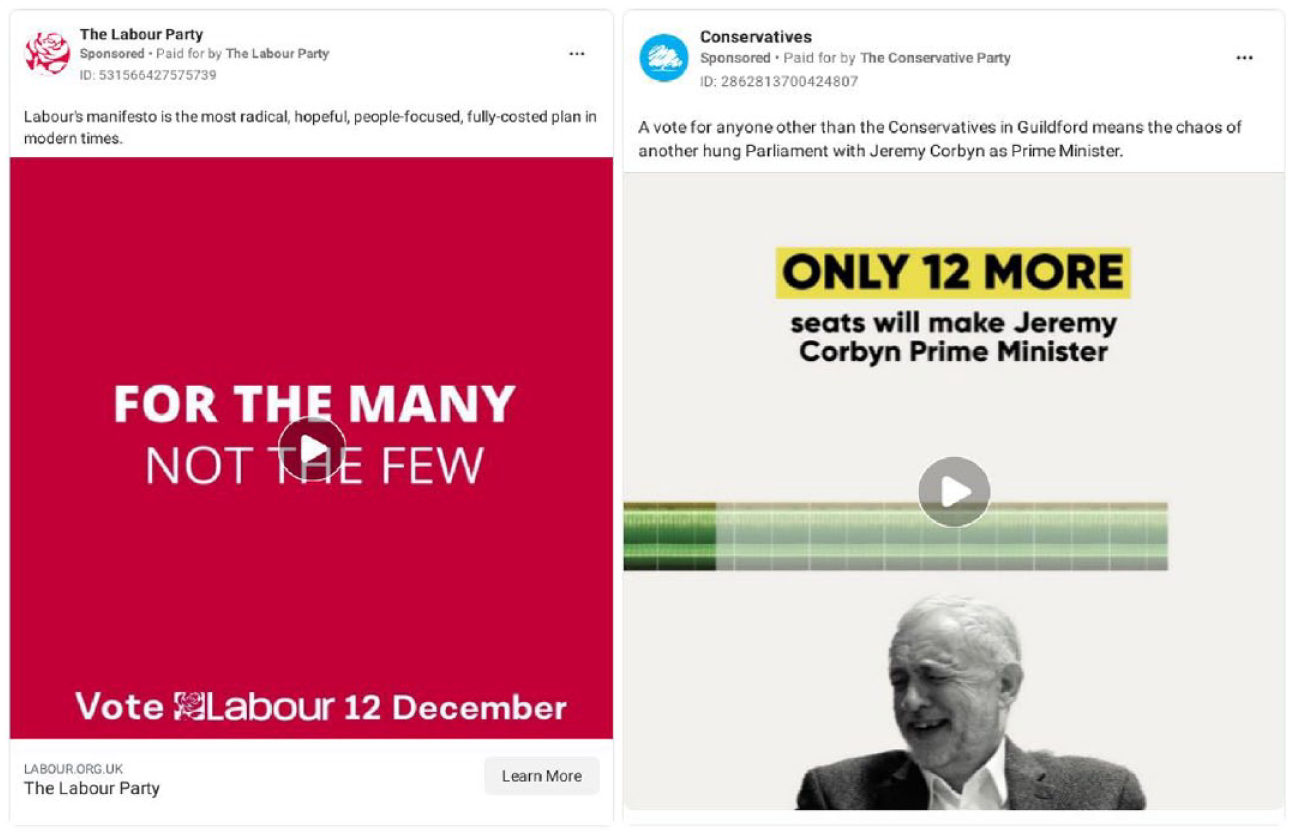
Examples of online political ads within our dataset.
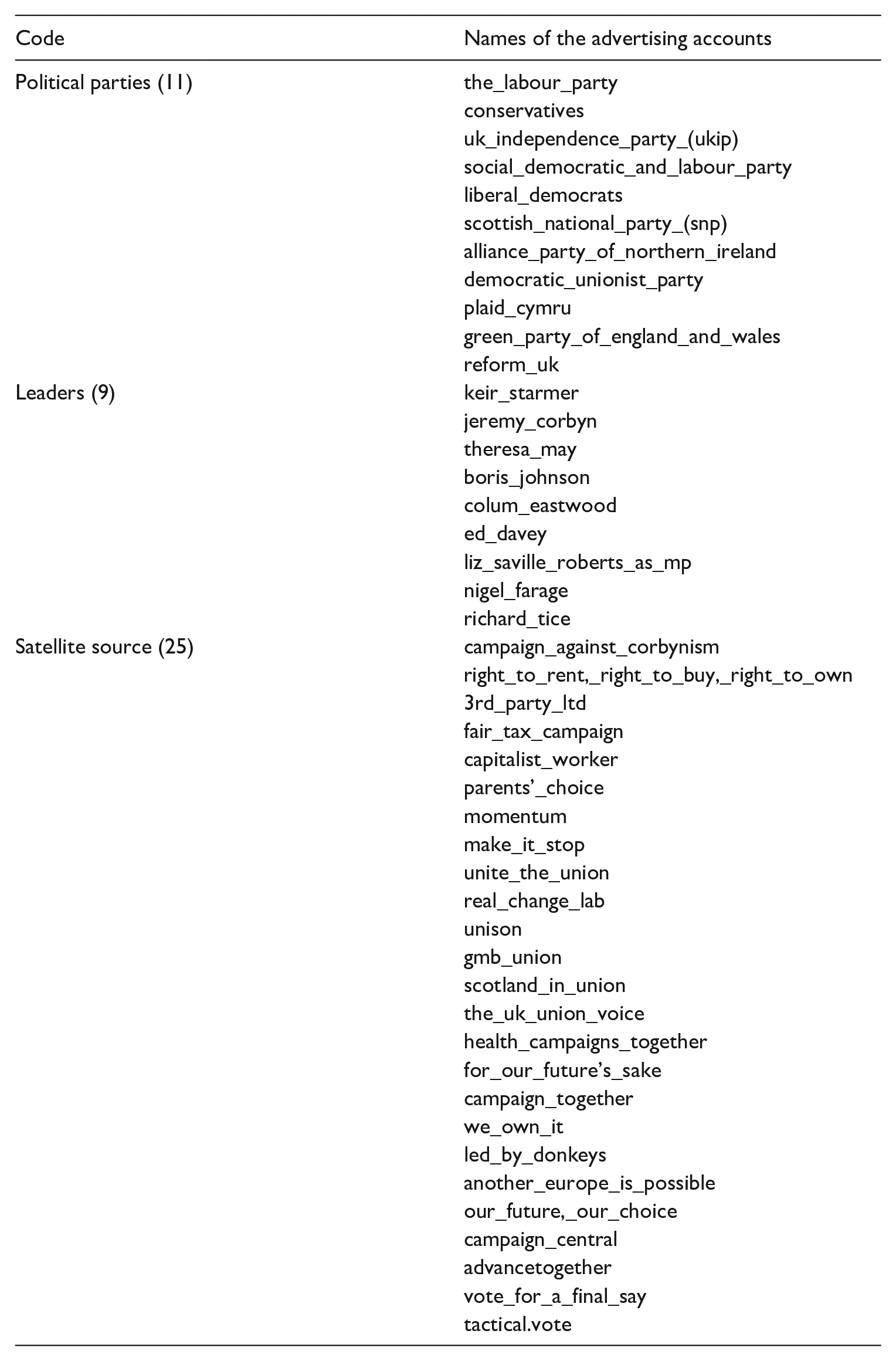
Given that advertisers often repeatedly place the same ads over a period of time, there were many duplicates. Our initial dataset consisted of 34,744 ads from 45 advertisers. To remove these duplicates, we used the ‘ad creative body’ as the identifier, as it contains the ad’s primary communicative text. After deduplication, we obtained a subset of 2506 unique ads from 45 advertisers, including 1022 ads from 11 political parties, 344 ads from 9 party leaders, and 1140 ads from 25 satellite campaigners (see Appendix 2 for the names of the advertising accounts).
Drawing on our review of existing literature (Dimitrov et al., 2021; Van den Putte, 2008) and stimuli, we developed our codebook outlining indicators of appeals to ‘evidence’, ‘reputation’, ‘community’, ‘targeting’, ‘outcome’, and ‘other’ strategies (see Table 1) and how each code (bar targeting) would be exhibited in positive or negative tone. While these codes may not capture the full range of possible communicative strategies, they allow us to explore several key themes that are likely to influence public attitudes. Specifically, they allow us to observe the degree to which politicians used appeals to facts and evidence, reputation and personality politics, appeals to specific (polarised) communities, targeting and pledges, and promises and attacks on record.
Furthermore, we included an ‘other’ code to acknowledge the possibility that an ad may contain a strategy we had not identified (see an example in Figure 2). We also recognised the possibility that no discernible strategy of any kind may be evident and hence allowed for the possibility of assigning ‘no code’ (see an example in Figure 3).
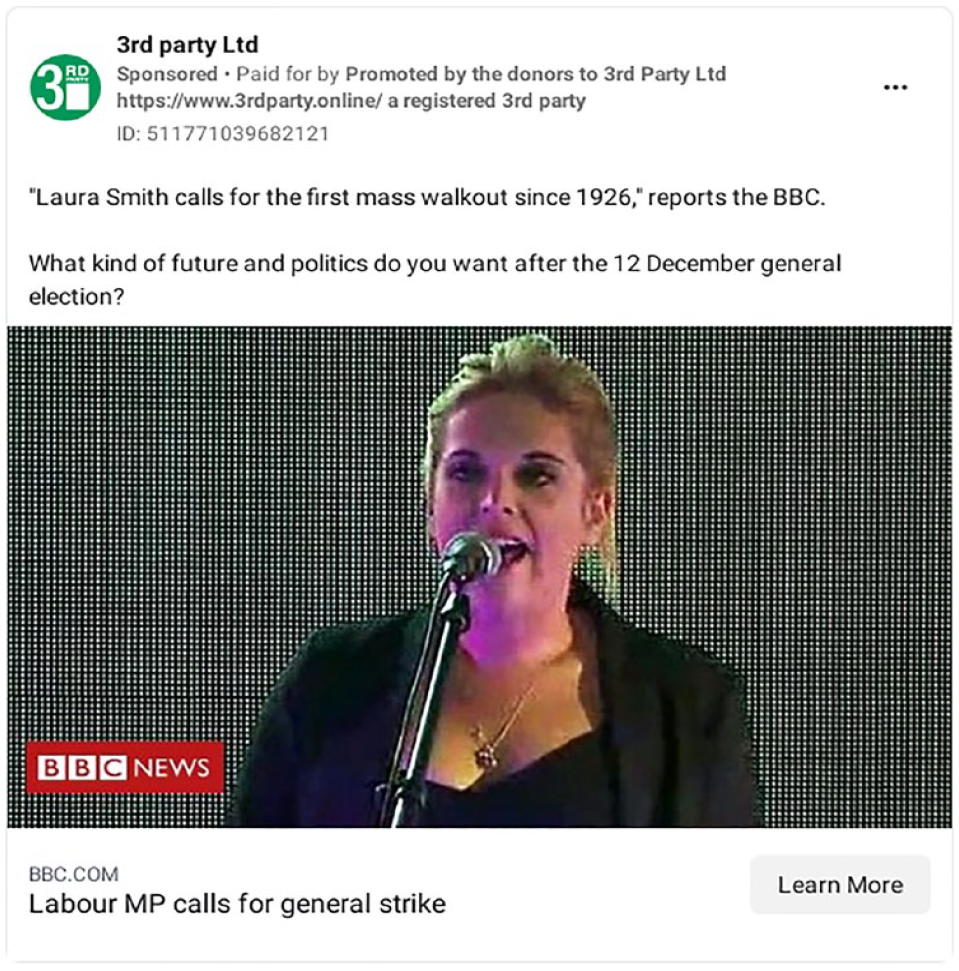
An example ad that was coded under ‘other’.
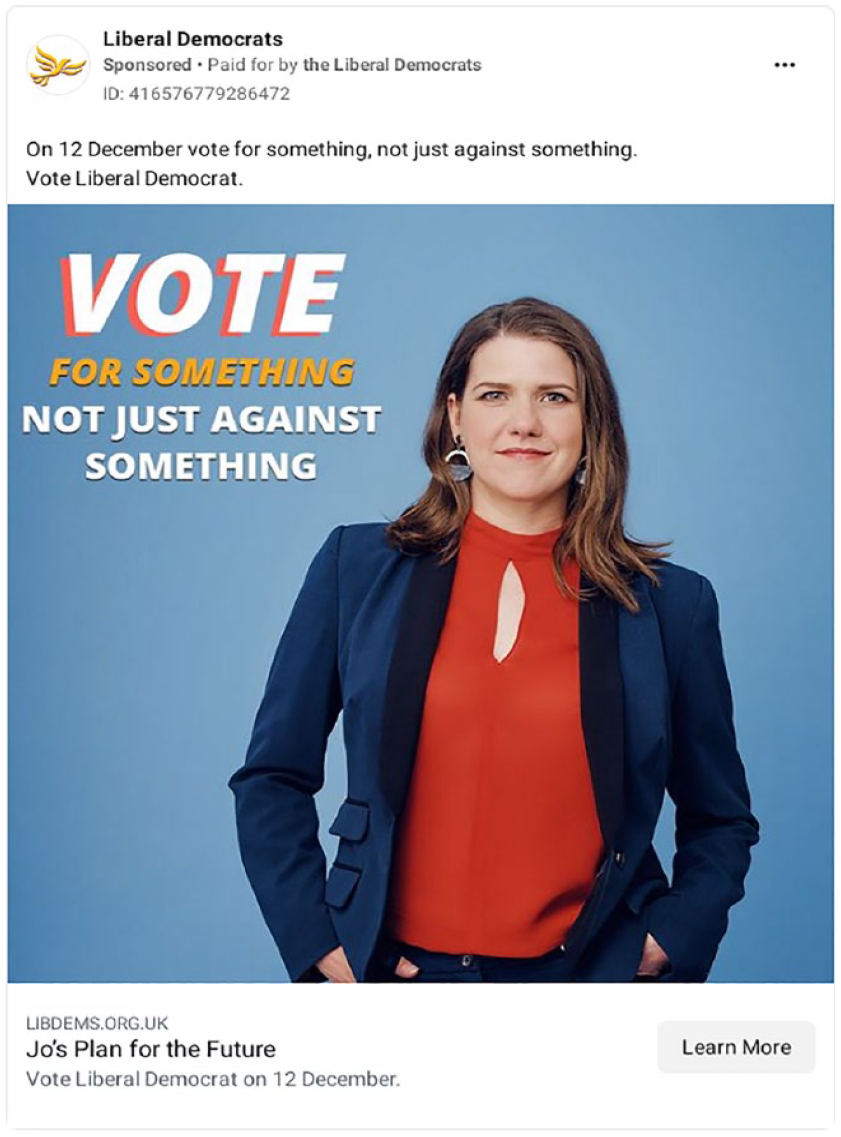
An example ad that was coded under ‘no code’.
To code our dataset, we recruited 6 student coders to code a total of 2506 ads. To ensure the accuracy of their coding, we conducted a training session where we clarified inconsistencies and made final alterations to the coding scheme. A comprehensive description of the coding framework, along with illustrative examples provided to student coders, can be found in Appendix 1. Across the entire dataset, the Cohen’s kappa score across all coder pairs was 0.82, suggesting a strong level of agreement between coders (McHugh, 2012). During the coding exercise, we identified 234 ads that did not fall under any of our six codes. For the purposes of our analysis, we excluded these examples and reported analysis on the remaining 2272 ads that exhibit communicative strategies.
To extend the analysis to address H2, we integrated a separate dataset composed of public opinion concerning the exact same set of online political ads placed during the 2019 general election. The survey was conducted on Prolific on 20 August 2022, with a sample size of 1881 participants, who were UK nationals over 18 years of age. The survey began with each participant being shown a screenshot of an ad (see examples in Figure 1). Ads were chosen randomly out of 2506 political ads, and we ensured that each participant saw four unique ads and had no chance of seeing a repeat. After viewing each ad, participants were asked a question: ‘Do you find the content of this ad acceptable?’ Responses were given on a 6-point Likert-type scale ranging from 1 ‘definitely no’ to 6 ‘definitely yes’. We inquired about perceptions of the ad as a whole (e.g. we did not differentiate between text and visuals). Other survey questions were asked following the acceptability questions and therefore had no influence over participants’ answering behaviour regarding acceptability. This data was gathered as part of a multi-item survey conducted as part of a larger project (see funding details); for the purposes of this study, we only used responses to the ad acceptability questions.
Integrating these two datasets, we were able to identify the degree to which ads containing each of our codes were deemed acceptable or unacceptable. It is worth noting that 119 ads were classified as ‘uncoded’ (not coded as either acceptable or unacceptable). This was due to the use of random sampling to select ads for responses in the public perception survey, resulting in a small number of ads being left unexamined.
Findings
In answer to our first question: ‘To what extent are our different communicative strategies being mobilised within online political advertisements?’, we began by measuring the prevalence of each of our coded strategies. When delving into our data, it is important to note that multiple coding strategies could be assigned to each ad. This means that across our 2272 ads, a total of 4141 codes were assigned. As depicted in Figure 4, our ads were judged to contain an average of two strategies, with the most common combination being positive outcomes and targeting (evident 498 times). The vast majority (81.9%) exhibited just one or two distinct strategies.
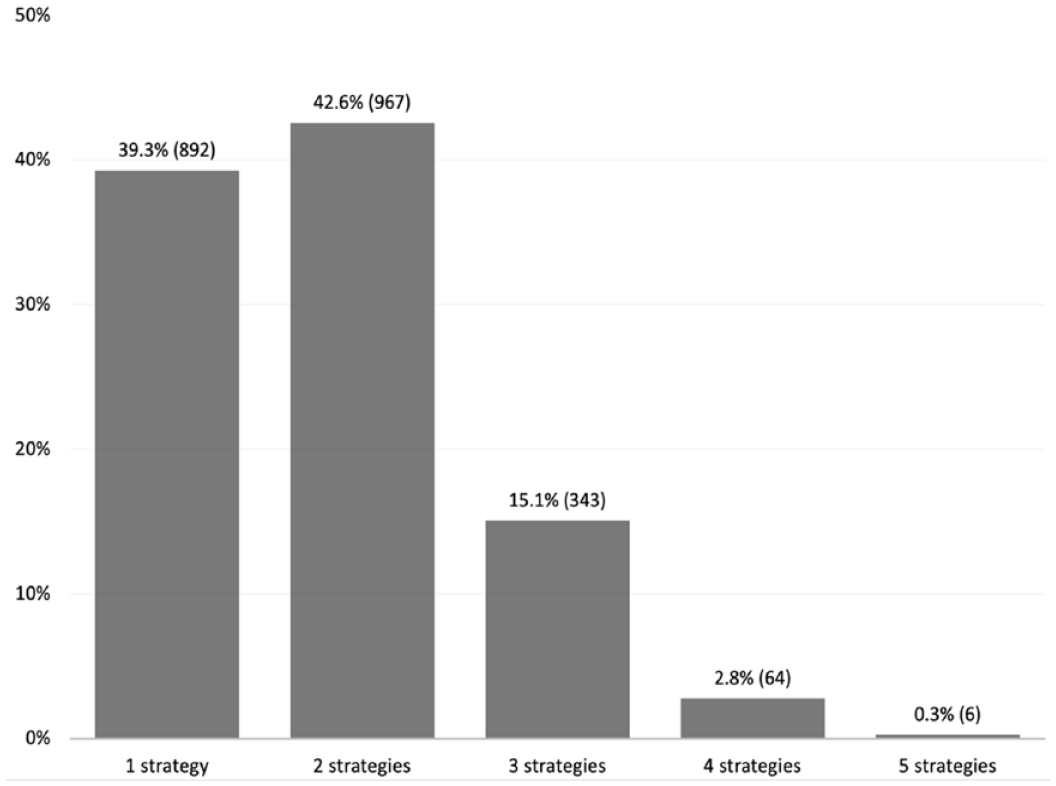
Number of communicative strategies identified within each ad, reported as a percentage of ads.
Table 2 shows the number of ads in which each one of our codes was present. As each ad could be assigned more than one code, the total percentage does not add up to 100. However, by examining each code, we can see the percentage of ads in which a code was used. Looking first across all ads, we observe that 90.4% (2054) of our ads used an ‘outcome’ strategy. The next most commonly selected code was ‘targeting’, which appeared in 43.3% of our ads, often manifested as references to specific locations or electoral constituencies. The remaining codes were far less prevalent, with ‘evidence’ only apparent in 15.0% ads, and ‘reputation’ and ‘community’ in only 13.0% and 5.9% ads, respectively. There were only 1.3% ads when an ‘other’ strategy was detected.
Number of ads under different codes for political parties, party leaders, and satellite campaign groups and the overall count.
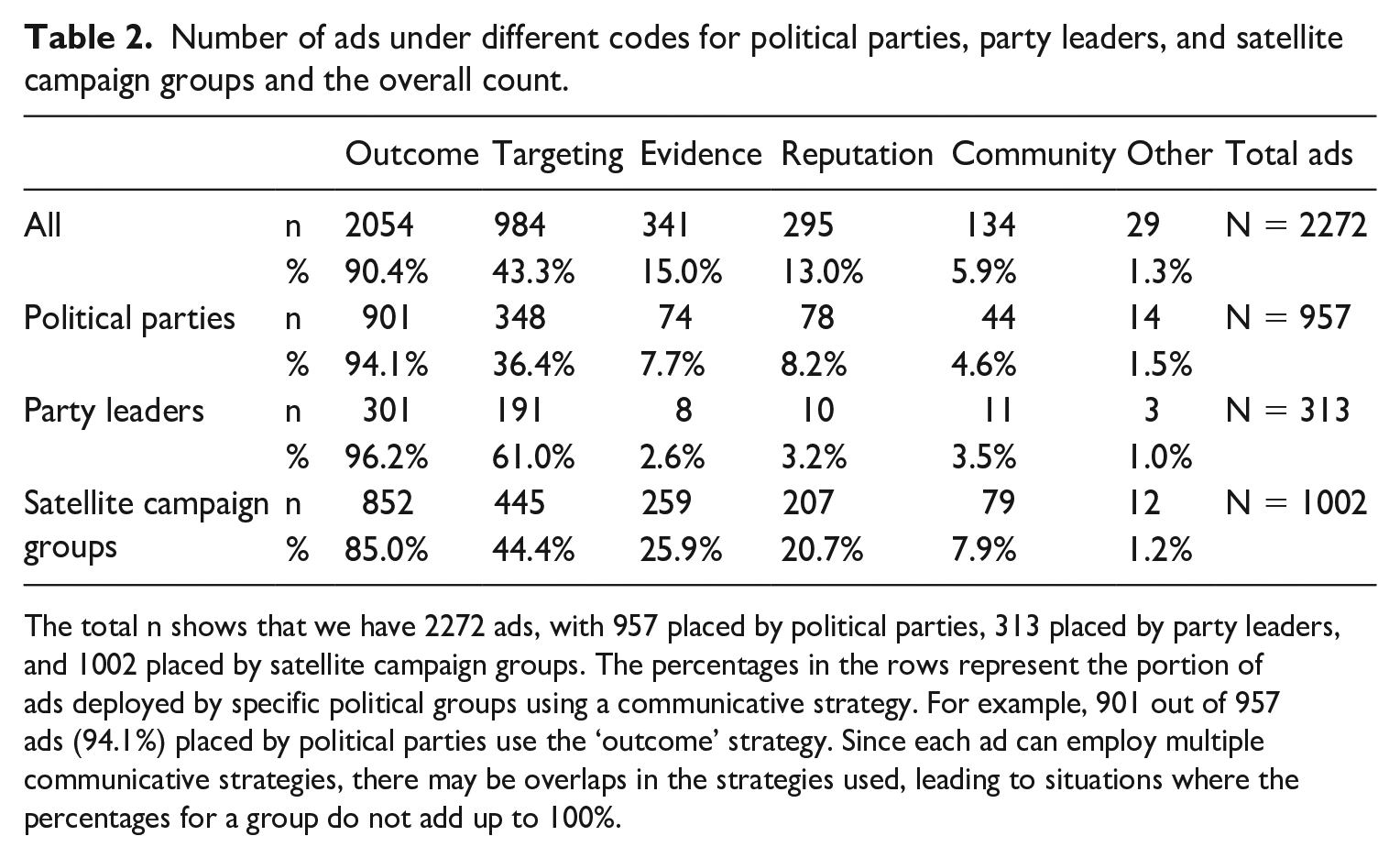
The total n shows that we have 2272 ads, with 957 placed by political parties, 313 placed by party leaders, and 1002 placed by satellite campaign groups. The percentages in the rows represent the portion of ads deployed by specific political groups using a communicative strategy. For example, 901 out of 957 ads (94.1%) placed by political parties use the ‘outcome’ strategy. Since each ad can employ multiple communicative strategies, there may be overlaps in the strategies used, leading to situations where the percentages for a group do not add up to 100%.
Turning to RQ2, we asked ‘Do parties, party leaders and non-party groups use different communicative strategies to the same degree?’ Table 2 shows some variation in the use of different strategies by actor. While the percentage of ads containing an ‘outcome’ strategy remains consistently high across actors, the utilisation of other strategies varies. For example, ads from party leaders contain a higher percentage of ‘targeting’ (61.0%) compared to ads placed by political parties (36.4%) and satellite campaign groups (44.4%). Similarly, satellite campaign groups place a higher percentage of ads containing communicative strategies focused on ‘evidence’, ‘reputation’, and ‘community’ compared to political parties and leaders. Based on this evidence, it appears that communicative strategies deployed by different actors are not uniform.
To address H1, we explored whether ads placed by party leaders contained fewer negative communicative strategies than ads placed by party or non-party campaign accounts. We began by examining the tone of strategies used by all actors, focusing on each of the 4141 coding selections. Of these, 1737 instances (41.9%) exhibited positive communicative strategies, which is slightly higher than the 1391 negative codes (33.6%). The remaining 1013 (24.5%) strategies were categorised as neutral, including 984 examples of ‘targeting’ (23.8%) and 29 ‘other’ codes (0.7%). Figure 5 shows that positive tones were commonly used in relation to ‘outcome’, while the tone was predominantly negative when communicative strategies focused on ‘evidence’, ‘reputation’ and, to a lesser extent, ‘community’.
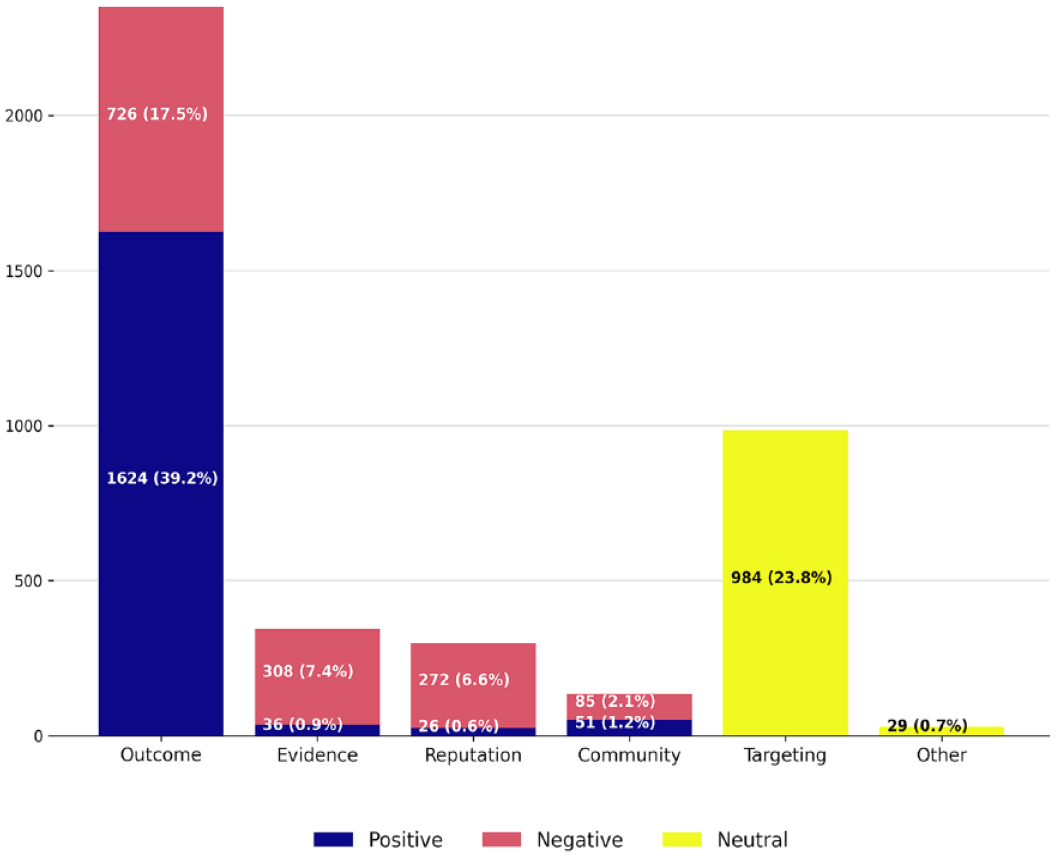
Prominence of each code by positive, negative, and neutral tone.
Moving back to consider what this means at an ad level, we again focus on the number of ads containing either a positive or negative variant of each code. As outlined in Table 3, looking first at all ads, we can see that 71.5% of ads contained positive ‘outcome’ messages, while just 32.0% contained negative. When it came to negative ‘evidence’ and ‘reputation’ codes, these featured in 13.6% and 12.0% of ads, respectively, with their positive variants only apparent in just over 1% of ads. Finally, we found positive or negative references to ‘community’ in just 2% to 4% of ads.
Presence of each code in the number of ads and their percentages.
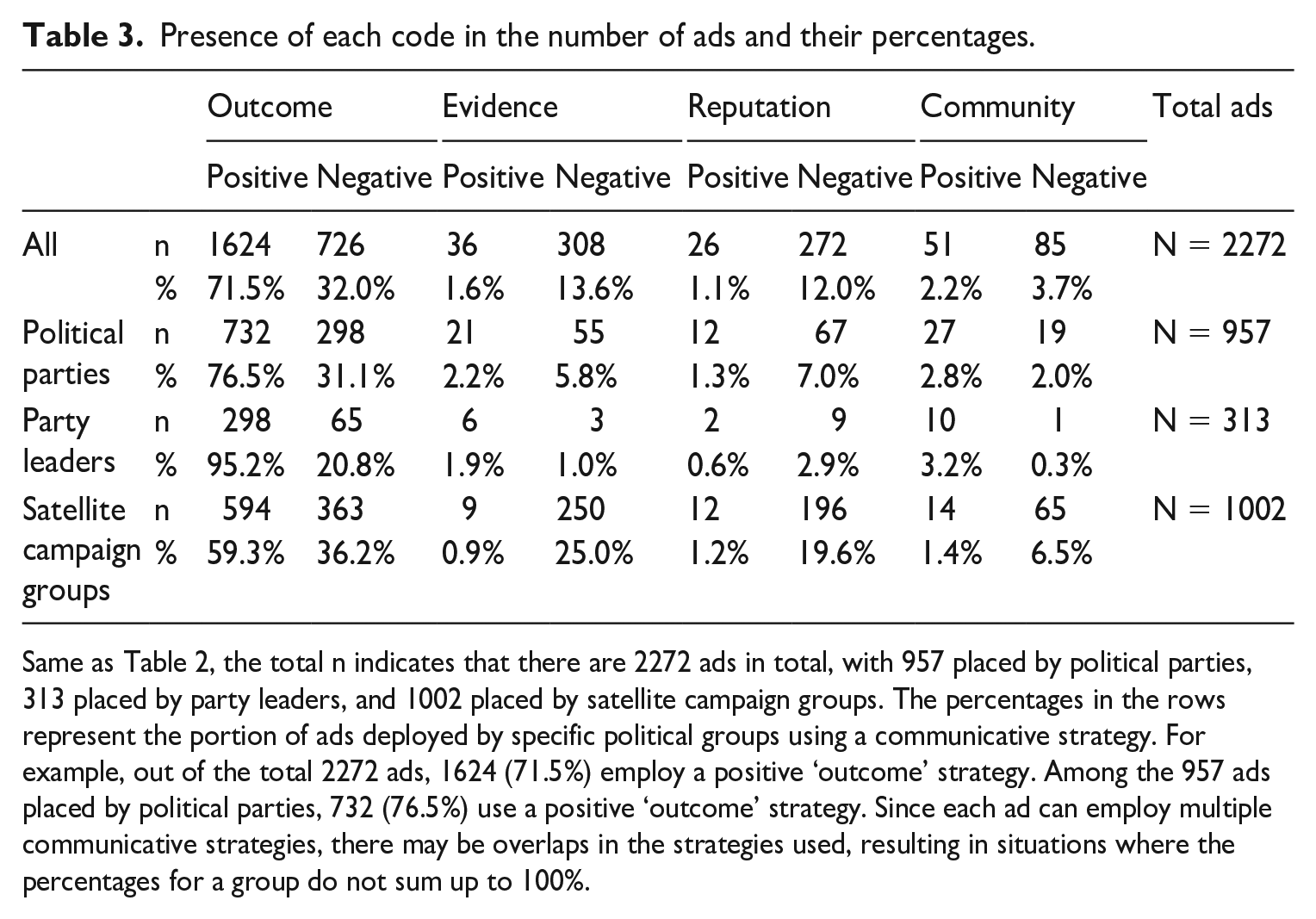
Same as Table 2, the total n indicates that there are 2272 ads in total, with 957 placed by political parties, 313 placed by party leaders, and 1002 placed by satellite campaign groups. The percentages in the rows represent the portion of ads deployed by specific political groups using a communicative strategy. For example, out of the total 2272 ads, 1624 (71.5%) employ a positive ‘outcome’ strategy. Among the 957 ads placed by political parties, 732 (76.5%) use a positive ‘outcome’ strategy. Since each ad can employ multiple communicative strategies, there may be overlaps in the strategies used, resulting in situations where the percentages for a group do not sum up to 100%.
To test our H1, we looked at variance by actor. Table 3 provides a breakdown of those codes with positive and negative variants (data on targeting and other codes is in Table 2). Table 3 shows that, while all actors primarily use positive ‘outcome’ messaging, this tendency is significantly more pronounced in ads placed by leaders than in those placed by parties and satellite campaign groups, supporting findings from pre-existing work (Rossini et al., 2023). Indeed, just over 95.2% of ads placed by party leaders were coded as focusing on positive ‘outcomes’, whereas just 76.5% of party ads and 59.3% of ads by satellite campaign groups were assigned this code. In line with our other expectations, satellite campaign groups deployed more negative strategies, followed by parties and then leaders. Looking at ‘evidence’, for example, satellite campaign groups used this strategy in 25.0% of their ads, compared to parties (5.8%) and leaders (1.0%). Similarly, they evoked negative ‘reputation’ codes in 19.6% of ads, compared to 7.0% of party ads and 2.9% of those placed by leaders. Our findings therefore support H1, showing that party leaders’ ads do contain fewer negative communicative strategies than parties or satellite campaign accounts.
The acceptability of communicative strategy
Turning to H2 and our second dataset, H2 outlined the expectation that ads containing negative communication strategies or references to targeting would be deemed less acceptable than ads containing positive strategies. To test this idea, we reported data for each of our codes, differentiating between positive, negative, and neutral communicative strategies. The number of ads falling under each category is normalised to enable comparability. To address the first part of this question, we looked first at the use of ‘outcome’, ‘evidence’, ‘reputation’, and ‘community’ codes which display positive and negative variants. For each of these codes, we can see that ads containing positive codes are viewed more positively than their negative counterparts (see Figure 6). While 76.9% of ads utilising the positive ‘reputation’ strategy (exclusively or in combination with other strategies) were considered acceptable, only 47.1% using the negative variant of the same code received the same judgement. Similarly, while 75.0% of ads employing positive ‘evidence’ strategy were deemed acceptable, just 44.8% containing the same negative appeal were viewed this way. Indeed, ads containing the negative variant of each of these four codes were deemed less acceptable, supporting H2.
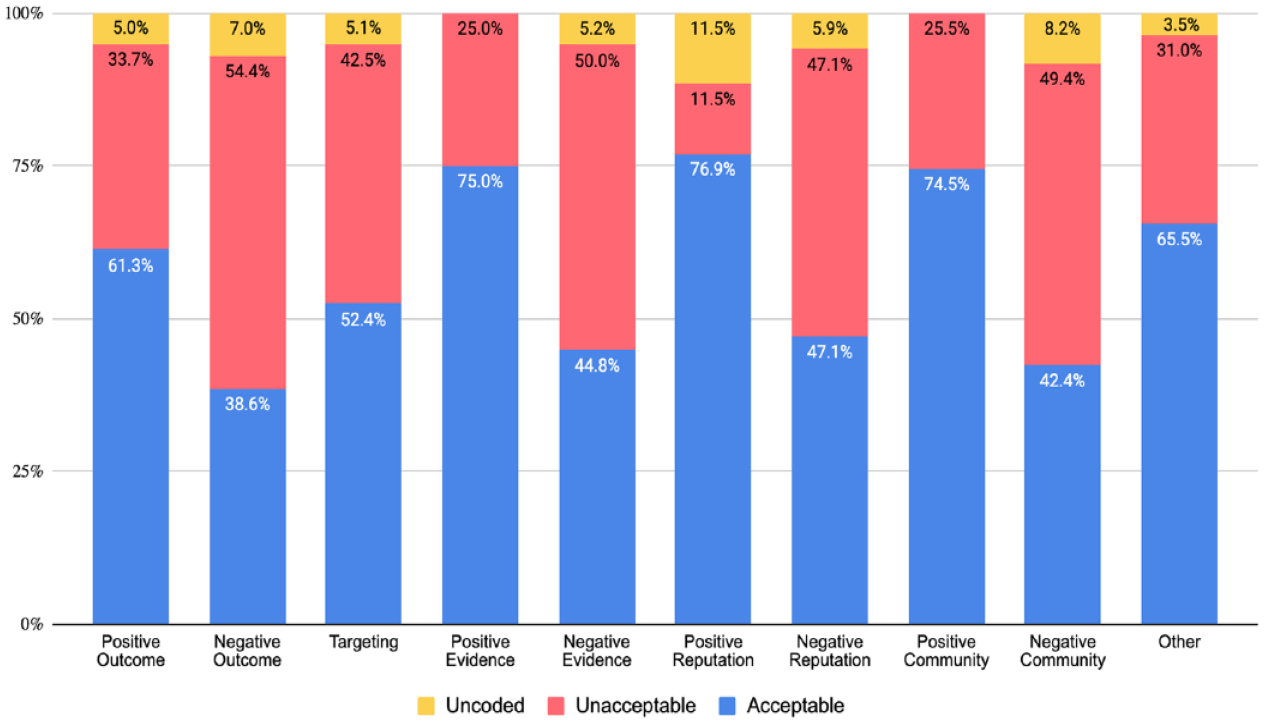
Perceived acceptability of ads containing each (all source types).
Turning to consider responses to ads containing targeting, we also expected that ads containing explicit references to the use of targeting would be viewed more negatively. Looking at Figure 6, we can see that 52.4% of respondents viewed ads containing targeting as acceptable. Comparing this to ads coded as containing positive strategies, we can see lower levels of acceptability. And yet it is interesting that ads containing targeting are viewed as more acceptable than those containing negative strategies.
To assess attitudes towards political ads containing positive, negative, or neutral strategies, we conducted a regression analysis on demographics and attitudes, taking into consideration variables that may impact reactions to the ads, using our public opinion dataset. The dependent variable in the regression analysis is the individual’s rating of the acceptability of an ad. We find that ads deploying positive strategies are rated significantly more positively than ads using negative strategies, targeting, or a combination of these with other strategies, offering support for H2 (see Table 4).
Assessing ad acceptability by demographic and attitudinal factors.
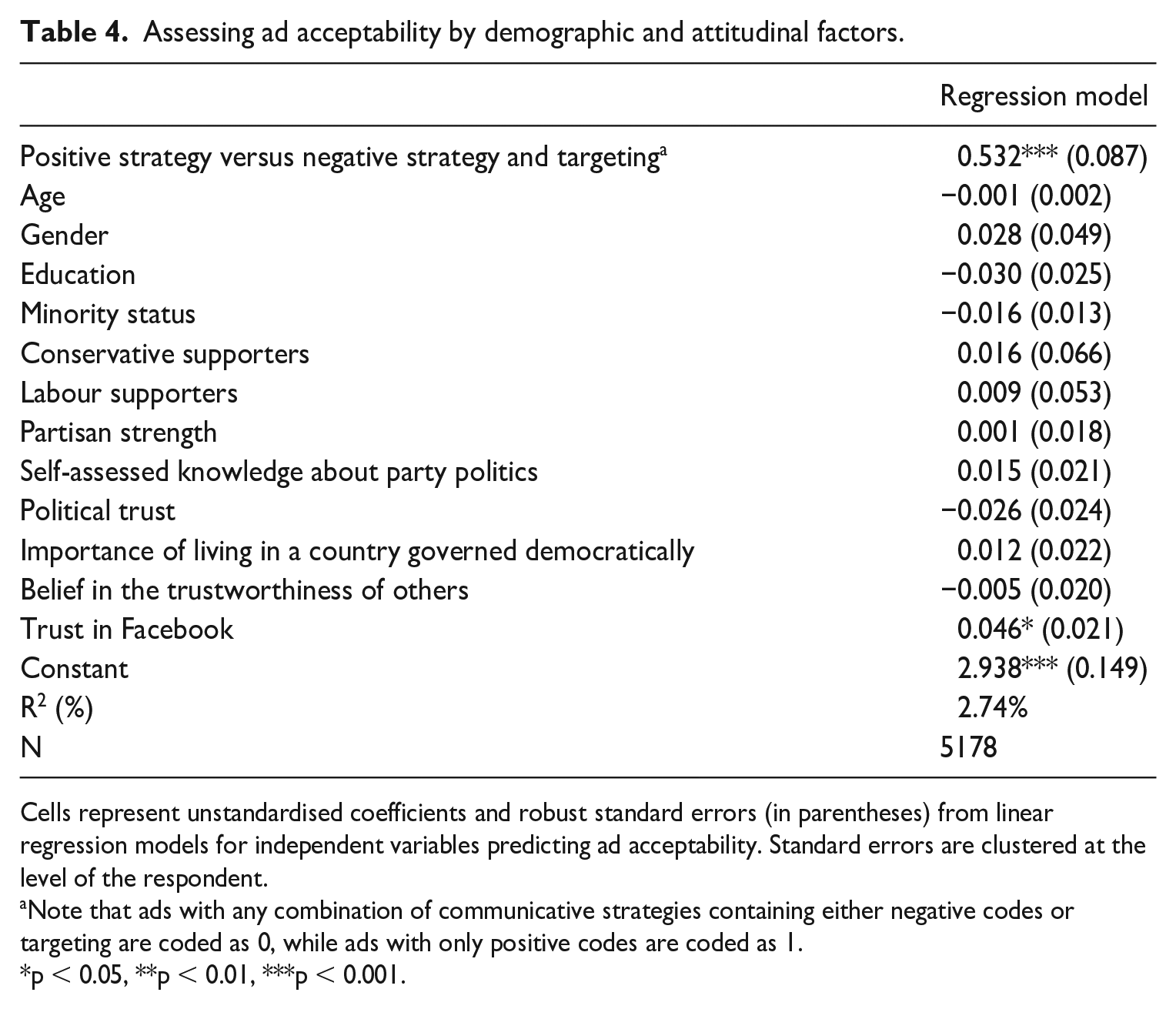
Cells represent unstandardised coefficients and robust standard errors (in parentheses) from linear regression models for independent variables predicting ad acceptability. Standard errors are clustered at the level of the respondent.
Note that ads with any combination of communicative strategies containing either negative codes or targeting are coded as 0, while ads with only positive codes are coded as 1.
p < 0.05, **p < 0.01, ***p < 0.001.
There are no statistically significant relationships between demographic and most attitudinal factors and acceptability, except that those with greater trust in Facebook are more likely than others to consider ads acceptable.
As each of our ads can contain multiple codes, it may be that ads containing solely positive codes are viewed more favourably than those containing both negative and positive codes. To test this idea, we looked in more detail at responses to ads coded as containing positive ‘outcomes’, identifying instances when the positive outcome strategy was used in combination with negative or targeting codes. Extracting examples of the most common code combinations and arranging these from most to least positive (starting with ads that contained one or more positive codes and ending with those containing a majority of negative codes), the list of codes is presented in Table 5.
List of combinations of codes for ads containing positive outcome.
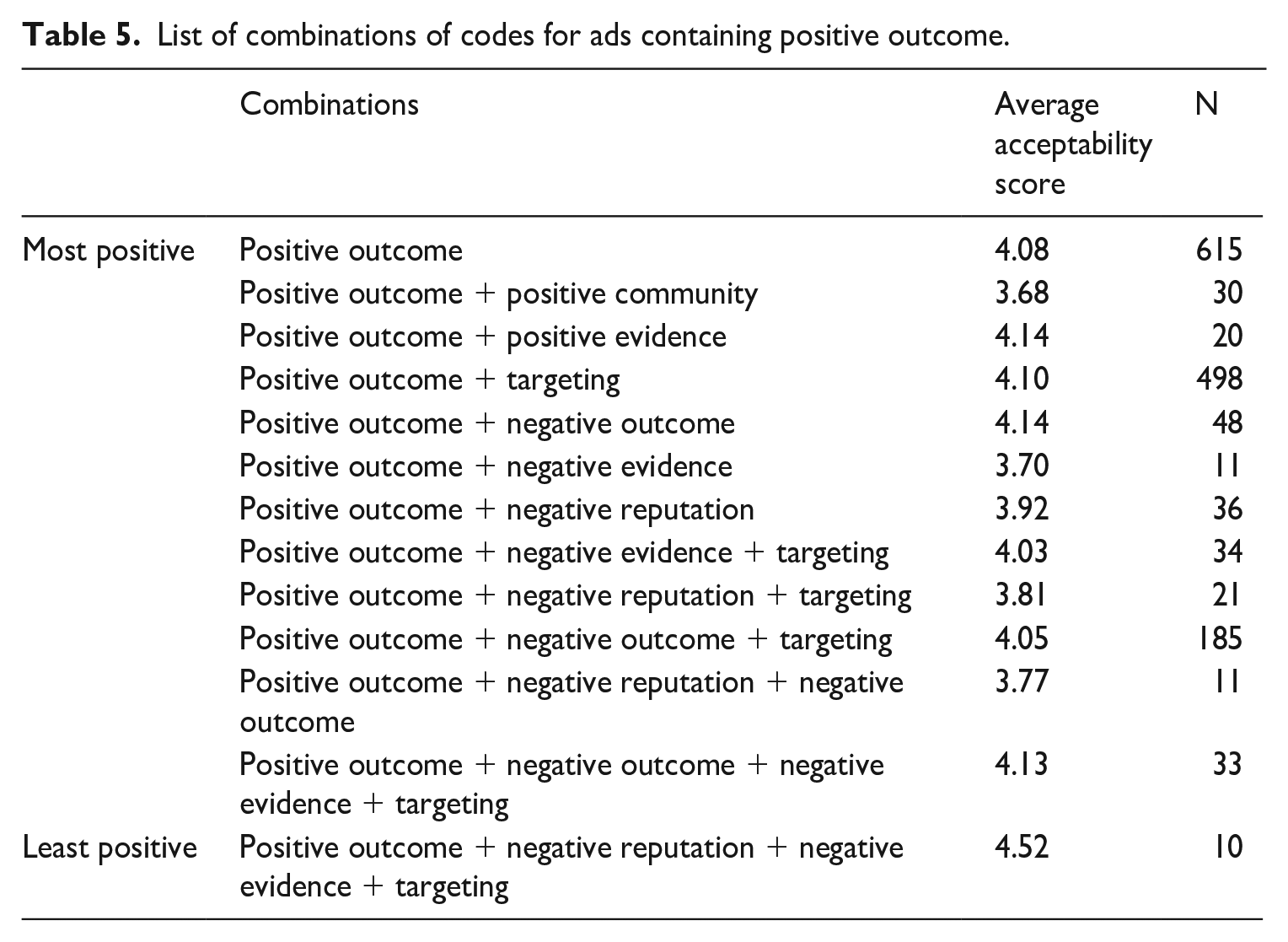
Interestingly, these findings do not show a consistent decline in acceptability when negative or targeting codes were added. Although ads containing only positive strategies tend to be more highly rated than ads containing positive and negative strategies, we also saw instances where those containing two positive strategies were judged less acceptable (i.e. positive ‘outcome’ and positive ‘community’ scored 3.68 compared to the 4.08 obtained by ads solely coded as containing positive ‘outcome’). We also saw some combinations containing negative strategies deemed slightly more acceptable than those solely containing positive ‘outcome’ messages (i.e. positive ‘outcome’ + negative ‘outcome’, which scored 4.14 compared to 4.08 for positive ‘outcome’ alone). Interestingly, the addition of a ‘targeting’ strategy tended to increase acceptability, with positive ‘outcome’ + negative ‘evidence’ scoring 3.70 and positive ‘outcome’ + negative ‘evidence’ + ‘targeting’ scoring 4.03. Although the differences here are small, this may suggest that the addition of a negative strategy does not always affect perceived acceptability, and that targeting can sometimes have a positive effect on acceptability – perhaps making the ad seem more relevant. Overall, we find evidence in support of H2, as it appears that ads containing negative communication strategies are generally deemed less acceptable, although responses to ads containing multiple strategies are not always uniform.
Discussion
In this article, we set out to generate new empirical evidence on the communicative strategies being deployed within online political advertising. In contrast to much previous work that has highlighted concerns about the capacities of online political advertising or sought to reveal the presence and impact of concerning practice, this study aims to generate new empirical insights into the type, source, and tone of the communicative strategies deployed in online political ads and test the perceived acceptability of these strategies. In doing so, we aimed to enhance our understanding of the tactics used within online political advertising and provide insight into the degree to which different approaches raise concern – contributing knowledge of likely interest to campaigners and/or those seeking to develop codes of conduct to tackle concerning practice.
At an empirical level, our study reveals that the online political ads we examined most commonly contain references to ‘outcomes’, with this code used in just over 90% of our sampled ads. Notably, this practice was consistent across the three types of actor we examined. This code captured ads containing solutions, proposed actions or outcomes, and often had an if-then format such as ‘if you vote for me, you will get this positive outcome’ or ‘if you vote for them, you’ll get a negative outcome’. In some ways, this suggests that online political advertising is being used to engage in what Mansbridge (2003) terms ‘promissory representation’, and yet relatively few of these ads contained specific policy pledges but tended instead to articulate a broad vision of the future. As our study is not comparative, we cannot draw conclusions about the degree to which this represents a communicative style unique to online political advertising, suggesting the value of future comparative analysis.
Across our dataset, we also found widespread use of ‘targeting’ (43.3%), but far less use of ‘evidence’ (15.0%), ‘reputation’ (13.0%), or ‘community’ (5.9%) appeals. Interestingly, party leaders were more likely to use targeting strategies, suggesting that these accounts may be particularly being deployed to make localised appeals in target seats. Further analysis is needed of the actual targeting parameters being used for each of our ads (analysis beyond the scope of the present study) to verify this idea, but it appears to suggest that party accounts may be being used for more general, nation-wide messaging, while the leader is deployed more in specific locations. Despite concerns that online political advertising could focus on particular identities and communities (Zarouali et al., 2022), we found little evidence of appeals to specific groups. We also found that the ads placed by satellite campaigns groups made greater reference to ‘evidence’, ‘reputation’ and, to a lesser extent, ‘community’ than other actors. This suggests that non-party campaign groups deploy a wider range of communicative strategies than other actors, perhaps suggesting that they are less constrained by conventional discourse.
Our analysis also confirmed previous analysis which suggests that actors differ in their willingness to use negative tones in their messaging. Across all ads, we found positive strategies to outweigh negative (41.9% compared to 33.6% negative and 24.5% neutral), but it appeared that leaders deployed positive messages, and particularly positive ‘outcome’ messages more extensively than our other actors. Political party ads were more likely to be coded as containing a negative ‘outcome’ messaging, with satellite campaign groups most likely to deploy this tactic. Looking at our other codes, it was notable that satellite campaign groups employed more references to negative ‘evidence’ and ‘reputation’ and, to a lesser extent, ‘community’ than our other two actors. This aligns with previous research suggesting that negative campaigning tactics are more often used by non-party groups (Votta et al., 2023), with leaders being the least likely to use such appeals. Future research could usefully integrate data on impressions and audience reactions to examine whether advertisements using negative communicative strategies reach a wider audience or attract more engagement compared to others.
In addition to these substantive insights about the utilisation of online political ads, we also explored the connections between these strategies and public perceptions of the acceptability of each ad. In line with our expectations (Meirick, 2002), negative and targeting strategies were deemed less acceptable to respondents than more positive variants, but targeting was deemed more acceptable than negative strategies. While conforming to our expectations in general terms, existing research on the level of public concern may have suggested lower levels of acceptability. One possible explanation lies in the specific type of targeting we identify within this framework. Our analysis focuses on explicit references to geographic locations and hence does not highlight targeting based on the most personal forms of data. It may be that respondents find this type of targeting less problematic than, for example, demographic targeting (which is often challenging, if not possible, for respondents to observe). Another explanation is that there is a difference in how respondents view targeting in the abstract as opposed to in practice, raising interesting questions for future research.
Cumulatively, these findings not only provide the empirical insight called for by Duggan and Milazzo (2023) in relation to perceptions of negative campaigning, but more broadly, they help reveal the different strategies that actors employ within election campaigns. These insights are likely to be of interest to campaigners, in that they suggest that negative messaging is deemed less acceptable than more positive messaging, potentially disincentivising the use of such tactics. We cannot, however, draw conclusive conclusions about perceptions of the way in which positive and negative communicative strategies are combined. While we find some evidence that combinations of positive and negative strategies are viewed less positively, this was not uniformly the case – indeed the combination of ‘positive outcome + negative reputation + negative evidence + targeting’ was viewed the most acceptable among ads containing ‘positive outcome’ (Table 4). This suggests that respondents do not always view negative strategies or overt targeting to be unacceptable and that other factors are likely at play in ad response.
This conclusion is relevant to wider debates about concern with online political advertising, and particularly for those seeking to produce codes of conduct for campaign practice. Our research does not suggest that any use of negative campaigning or overtly targeted messaging is unacceptable and should be outlawed – rather we show that this strategy can be acceptable, especially when combined with a more positive communicative strategy. This suggests a more complex response to ads and indicates that efforts to ban negative campaigning will not necessarily improve the perceived acceptability of online advertising. This in turn suggests the value of further research that teases apart citizens’ responses to the strategy, tone, and the particular ad stimulus being viewed if developing future codes of conduct.
Limitations
As with any study, there are important limitations to our work. Our analysis developed a new coding framework that sought to identify different communicative strategies and recognise that these could be employed in positive or negative ways. While this approach allowed us to interrogate specific aspects of communication within this article, it requires application to other cases to verify its utility.
It should also be noted that our measure of acceptability to test public attitudes deviates from measures such as favourability (Jin et al., 2009) or likability (Zeng et al., 2021) used in prior studies. This decision was taken to focus more acutely on the notion of public concern as opposed to individual responses to ad content (and the degree to which the individual agreed with that content). There may be variations in how respondents interpret ‘acceptable’ and ‘unacceptable’ practice, which would require further investigation, as our analysis of acceptability focuses solely on variations in communicative strategy.
We also note that our study examined perceptions of acceptability in relation to content, but we acknowledge other factors, such as the wider personal and political context in which the ad was viewed, may also play an important role. Our study occurred after the election was over and, as such, we were unable to examine how political context and contemporaneous events may affect how advertising is perceived and viewed. We also did not ask respondents how they felt at the time they viewed the ad. Future studies should attempt to capture the wider influences upon perceptions of advertising to judge how context affects our findings. As our study design showed respondents multiple ads at once these influences could not be examined, so future studies should take a longitudinal approach to test how political and personal contexts affect judgements of ad content.
Finally, it should be noted that our focus on the 2019 election represents somewhat of an unusual case. This was a snap election, called at short notice by the Conservatives (Parliament, 2019) and, as such, the tone and content of this campaign may not be indicative of all elections, suggesting the need for future comparative study to test whether similar trends are replicated in other elections. We also acknowledge there is a 3-year gap between the placement of those ads in the 2019 general election and their assessment by respondents in the 2022 survey. It is possible that some aspects of the campaign material, such as the prominence of issues, may differ from those observed during the ongoing election campaign. However, as we measure the acceptability of the communicative strategies used in those ads, the perception of which is not time-sensitive, we believe that the timing gap does not have much influence on our outcome variable or the validity of our findings.
Conclusion
In this article, our aim was to examine the communicative strategies used in online political ads and public perceptions of their acceptability. To address these research questions, we developed a coding framework to analyse the ads placed on Facebook by political parties, leaders, and satellite campaigners during the 2019 UK General Election. Our findings indicate that ‘outcome’ was the most commonly used strategy, followed by ‘targeting’, with ‘evidence’, ‘reputation’, and ‘community’ codes being used to a lesser extent. Most ads used one or two strategies, while only a small percentage used more than two strategies. In terms of tone, the majority of ads used either solely positive or positive in combination with neutral codes. Positive strategies were generally considered more acceptable than negative and targeting strategies. Overall, this article provides new empirical evidence and insights into political campaign practices, offering insights for campaign practitioners about contemporary practice and highlighting for those interested in developing codes of campaigning practice that negative messaging is not always deemed unacceptable.
Footnotes
Appendix 1
Appendix 2. Summary of advertising accounts
| Code | Names of the advertising accounts |
|---|---|
| Political parties (11) | the_labour_party |
| conservatives | |
| uk_independence_party_(ukip) | |
| social_democratic_and_labour_party | |
| liberal_democrats | |
| scottish_national_party_(snp) | |
| alliance_party_of_northern_ireland | |
| democratic_unionist_party | |
| plaid_cymru | |
| green_party_of_england_and_wales | |
| reform_uk | |
| Leaders (9) | keir_starmer |
| jeremy_corbyn | |
| theresa_may | |
| boris_johnson | |
| colum_eastwood | |
| ed_davey | |
| liz_saville_roberts_as_mp | |
| nigel_farage | |
| richard_tice | |
| Satellite source (25) | campaign_against_corbynism |
| right_to_rent,_right_to_buy,_right_to_own | |
| 3rd_party_ltd | |
| fair_tax_campaign | |
| capitalist_worker | |
| parents’_choice | |
| momentum | |
| make_it_stop | |
| unite_the_union | |
| real_change_lab | |
| unison | |
| gmb_union | |
| scotland_in_union | |
| the_uk_union_voice | |
| health_campaigns_together | |
| for_our_future’s_sake | |
| campaign_together | |
| we_own_it | |
| led_by_donkeys | |
| another_europe_is_possible | |
| our_future,_our_choice | |
| campaign_central | |
| advancetogether | |
| vote_for_a_final_say | |
| tactical.vote |
Funding
The author(s) disclosed receipt of the following financial support for the research, authorship, and/or publication of this article: This work was supported by the Leverhulme Trust under Grant Number: RPG-2020-148.

Data availability statement
The data that support the findings of this study are openly available in a public repository. The link will be provided once the paper has been accepted.