




Abstract
This article analyses how and when institutional actors can shape overlap with other international organisations. Growing overlap either poses the threat of marginalisation to the incumbent organisation or offers opportunities for cooperation. Institutional actors should therefore be expected to try shape the relations with the overlapping organisation to protect their own. The article theorises that institutional actors can shape overlap if they possess sufficient institutional capacity and face a favourable opportunity structure. Whether institutional actors embrace or resist overlap, in turn, depends on their perception of the nature of the domain expansion of the other international organisation. Relying on 20 interviews with senior officials, the article probes the argument against the case of the growing overlap between the North Atlantic Treaty Organization and the European Union resulting from the latter’s recent security and defence initiatives. Contrary to most expectations, it finds that the North Atlantic Treaty Organization actors played a consequential role in restructuring the relationship with the European Union.
Keywords
Introduction
Institutional overlap is an increasingly common phenomenon in global governance. The growing complexity of transnational problems has led to the proliferation of new institutions, the expansion of existing institutions’ domains, and increasing linkages between the policy issues they address (Alter and Meunier, 2009; Alter and Raustiala, 2018; Eilstrup-Sangiovanni and Westerwinter 2021; Panke and Stapel, 2018). As a result, inter-organisational interactions have increased significantly over the past decades with the result that international organisations (IOs) frequently overlap in terms of mandate, membership, and geographic realm of operation. Notwithstanding its significant consequences for inter-organisational relationships and thus the wider provision of global public goods, our understanding of overlap, however, remains incomplete.
The bulk of the existing literature analyses institutional overlap through the perspectives of the member states. These accounts explore the role of states in creating overlap as well as the implication of overlap for state behaviour (Alter and Meunier, 2009; Clark, 2021; Gehring and Faude, 2014; Morse and Keohane, 2014; Pratt, 2018). In that reading, the organisations themselves merely constitute functional sites in which states pursue their interests. While member states inevitably play a crucial role in shaping institutional overlap, such a narrow focus neglects other potentially important players: the institutional actors such as executive heads and senior officials. Indeed, it is well established that institutional actors not only develop independent preferences (e.g. Barnett and Finnemore, 2004; Ege, 2020) but that they can exert influence in all three stages of the policy-making process, that is, institutional design, policy formulation, and policy implementation (see Bayerlein et al., 2020; Biermann and Siebenhüner, 2009; Eckhard and Ege, 2016; Hall and Woods, 2018; Johnson, 2014). Beyond ordinary policy-making, scholars have recently found that amid the wider crisis of multilateralism, institutional actors can strategically respond to existential challenges (Debre and Dijkstra, 2021; Dijkstra et al., 2021; Gray, 2018; Schuette, 2021a, 2021b). Given that increased overlap may threaten the continued existence of the incumbent IO or offer opportunities to bolster its position, institutional actors should therefore be expected to also try to shape overlap to protect the organisation (Margulis, 2021).
This article therefore sets out to fill this lacuna by theorising how and under what conditions institutional actors shape the nature of overlap. Subsequently, it applies the model to the case of how senior North Atlantic Treaty Organization (NATO) actors shaped the growing overlap with the EU since 2014, the annus horribilis for European security. The confluence of the Russian annexation of Crimea and invasion of Eastern Ukraine, the emergence of the Islamic State in Iraq and Syria, and the incipience of the so-called Refugee Crisis caused a seismic geopolitical shock to the European system. This chain of events invigorated the EU’s hitherto dormant security and defence ambitions. The European Union’s (EU) quest to develop into a ‘European Defence Union’ (Juncker, 2017) would not unfold in a vacuum, however, but carry significant consequences for the European security architecture. Above all, the expansion of the EU into the realm of defence and security could pose a serious challenge to NATO as the incumbent dominant security organisation in Europe.
The article posits that institutional actors can shape overlap if they possess sufficient institutional capacity and face a favourable opportunity structure. Whether institutional actors embrace or resist overlap, in turn, depends on their perception of the nature of the domain expansion of the other IO. To probe this argument empirically, the article relies on 20 interviews with senior officials from NATO, the EU, and national delegations (see Appendix 1). Contrary to most expectations, it finds that the Secretary General Stoltenberg and other senior officials played a consequential role in restructuring the relationship with the EU. While any account of the complex relationship between NATO and the EU is necessarily multi-causal, the omission in the literature justifies the narrow focus on NATO institutional actors to distil its importance as one factor among several in shaping the relationship with the EU.
Senior NATO actors proved instrumental in reaching the Joint Declaration, helped steer debates about EU defence initiatives, and maintained an amicable diplomatic relationship with the EU, with the result that the debate about European decoupling has lost heat. In the first phase (2014–2016), NATO actors embraced greater overlap with the EU. Both organisations realised that their respective security and defence instruments were inadequate to address the new security challenges and set out to create greater synergies between them, which culminated in the Joint Declaration of July 2016. In the second phase (2016–2020), NATO’s institutional actors employed a strategy of selective embrace and resistance. They continued to work for greater political dialogue and produce practical results, but Secretary General Stoltenberg and other key officials pushed back against elements of EU defence initiatives they considered as efforts to decouple the EU from NATO. This variation in responses across the two phases rooted in different perceptions. NATO actors perceived the overlap following the events of 2014 in largely positive sum terms and thus acted to deepen cooperation. Conversely, they viewed the political symbolism, more than the substance, of EU defence initiatives in zero-sum terms and pushed back against them.
The article develops as follows. After introducing the theoretical model, the second section analyses NATO’s responses to the geopolitical shocks of 2014, culminating in the Joint Declaration of 2016. Finally, the third section examines NATO’s responses to EU defence initiatives from 2016 onward.
Shaping institutional overlap
This section develops a heuristic theoretical model to explain under what conditions and how institutional actors can shape overlap. It concentrates on functional overlap, whereby two or more IOs ‘pursue the same or very similar tasks and mandates’ (Biermann and Koops, 2017a: 17). More than geographical overlap (when two or more IOs operate in the same regions) or membership overlap (when two or more IOs share substantial part of their membership), functional overlap implies that decisions in one IO bear consequences for the other and thus renders it more likely that institutional actors will seek to shape it. Figure 1 below visualises the theoretical argument.
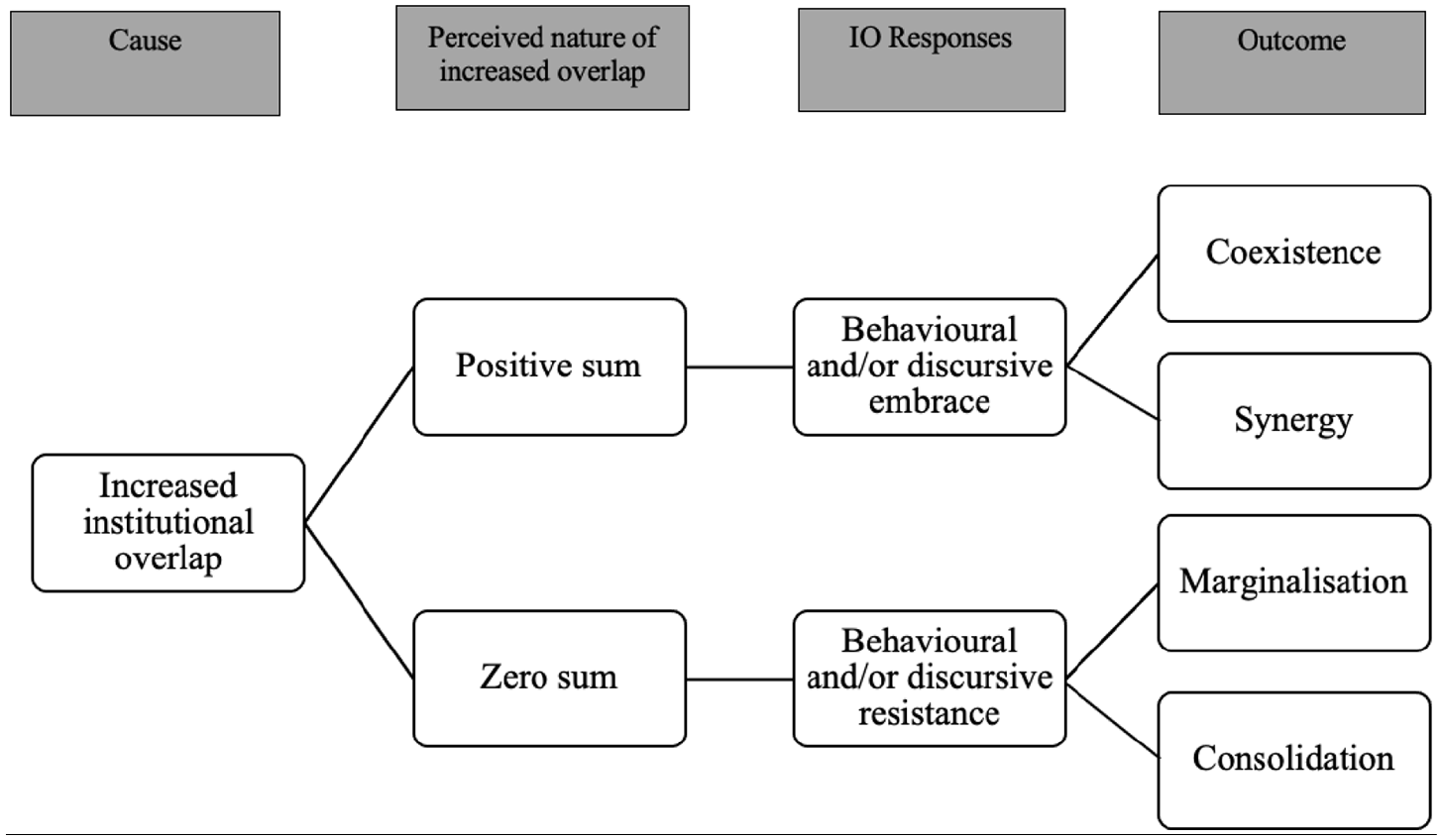
Theoretical model of institutional actors’ responses to overlap.
The point of departure of the model is that either the domain expansion of an existing organisation or the creation of a new organisation increases the functional overlap with the incumbent organisation, which is often a response to a critical event that renders the institutional status quo no longer viable. These processes that lead to increased overlap can assume the following two natures: they can either be coordinated or unilateral (Biermann and Koops, 2017b: 7–8). States may create new institutions or expand the domains of existing ones to strengthen the incumbent IO. Likewise, entrepreneurial institutional actors of two organisations may coordinate domain expansions for mutual benefits. The incumbent IO may alone be unable to overcome a collective action problem or require resources held by another organisation to fulfil its existing tasks (Clark, 2021). Institutional overlap then implies functional benefits and more effective provision of public goods. Moreover, institutional actors may also view the cooperation with the other IO as morally desirable, given that IO staff often conceive of themselves as moral vanguards and defenders of the multilateral order (Von Billerbeck, 2020).
Second, states may create new institutions or expand existing ones without either coordinating with the incumbent or the intention to strengthen it. States may consider existing IOs as ineffectual, illegitimate, or intend to spur competition (Jupille et al., 2013). Alternatively, institutional actors can seek to expand their domain at the expense of the incumbent organisation in a quest to increase their bureaucratic power and creep their missions (Ege, 2020). Brosig (2011) adds that overlap is most likely a challenge to the incumbent if it pertains to core rather than peripheral fields of competence. The resulting domain challenge threatens the relevance of the incumbent and risks prompting conflicts over resources and influences.
However, in many cases, the nature of the overlap is not objectively given. After all, it is unlikely that a challenging IO will overtly advocate that it intends to replace the incumbent IO or that overlap will clearly fall in one or the other category. Instead, the nature of overlap is subject to interpretation of those institutional actors who can most likely shape relations with the other IO (i.e. secretary-generals, deputies secretary-generals, or other senior officials like unit directors or members of the secretary-general’s private office). If these key actors within the IO perceive overlap in positive sum terms, they will embrace cooperation with the other IO. Vice versa, if they perceive the domain expansion of another IO in zero-sum terms, they will seek to consolidate its position and try to resist the challenger IO’s expansion (Bayerlein et al., 2020: 36ff.). While perceptions in practice will not likely be neatly dichotomous or consensual among officials, these ideal types serve as an analytical illustration of the argument. Potentially infinite institutional and personal factors may shape perceptions, including historical relations between the IOs, bureaucratic cultures, familiarity between senior officials from the two IOs, or national backgrounds of officials. As such, perceptions are best treated as an open empirical question that should by explored by analysing public positions and, if plausible, private views through interviews.
To shape overlap, institutional actors have both behavioural and discursive means at their disposal (Tallberg and Zuern, 2019). Institutional actors can use behavioural means to embrace overlap by working the diplomatic backchannels to foster close personal connections with their counterparts to coordinate policies and strategies. In order to overcome potential resistance from member states (or other actors), institutional actors can also shield inter-organisational cooperation by keeping a low public profile, using procedural tricks to minimise the input from member states, or using drafting powers to lay out the tracks of proceedings (Beach and Smeets, 2019). Finally, institutional actors can also broker compromises among member states in a way that furthers their preferences. They can, for example, convene member states to negotiate, establish backchannels, or offer compromise texts (Tallberg, 2010). Discursively, institutional actors can exploit the prominent public position of their executive heads to set the public agenda in their favour and make the public case for greater cooperation with the other organisation. The ultimate objectives of these means of embracing overlap are thus to persuade or circumvent sceptical actors and manage the bureaucratic machineries.
Resisting domain expansion or the creation of a new institution is difficult for the incumbent IO, since it has no direct influence over the other organisation’s decisions. Thus, institutional actors rely on a repertoire of behavioural and discursive means that can indirectly resist the challenging IO. Behaviourally, institutional actors can build coalitions with supportive member states by colluding with them or orchestrating opposition to the domain challenger (Dijkstra, 2017). They may also try to regain the initiative and launch a counter-domain expansion aimed at the challenging IO. On a discursive level, institutional actors can try to legitimise their incumbency by defending their policies and processes or publicly criticise the challenger IO. The ambition of these resistance strategies is to either directly intervene in the decision-making processes of the challenger IO (Margulis, 2021), or, if this proves impossible, at least win the approval of the member states so that they can internally limit the challenger IO’s domain expansion.
Depending on whether institutional actors successfully embrace or resist the increased overlap, there are two potential outcomes for each pathway. If institutional actors successfully embrace overlap, it will produce greater synergies with the other organisation and improve mutual effectiveness and public goods provisions, which may be manifest in joint declarations, sharing of resources, or coordinated decision-making. Should institutional actors fail to overcome roadblocks to greater cooperation, the organisations will merely coexist without synergetic effects. In turn, if institutional actors succeed in resisting the domain expansion of the challenger IO, it will consolidate its position as incumbent organisation and maintain its resources, delegated authority, mandate, and membership. Conversely, if they fail to resist, the incumbent IO will lose competences and risks being marginalised or, in the most extreme cases, replaced.
Whether institutional actors fail or succeed to act on their perceptions of increased overlap depends on two factors. First, the repertoire of available responses to the institutional actors depends on the organisation’s institutional capacity. Any IO which intends to respond to challenges needs to have the capacity to undertake strategic action including the intellectual firepower to craft a strategic response and formal or informal powers to subsequently implement it. Otherwise, the IO would not be more than a toothless administrative body. Indeed, IO secretariats vary significantly in their institutional capacity (Debre and Dijkstra, 2021). Previous accounts show that NATO possesses a sizable secretariat with a designated policy planning unit, a public communications department to better promote the strategy, and influential agenda-setting powers as the Secretary General acts as the alliance’s spokesperson, organiser of summits, and chair of the North Atlantic Council, the main decision-making body (Hendrickson, 2014). Moreover, the emerging norm to appoint former heads of state or government to the position as Secretary General has buttressed the diplomatic influence of the office. Indeed, the incumbent Jens Stoltenberg, a former Norwegian Prime Minister, stands out for his diplomatic skill and networks in Washington and European capitals, which he put to good use when protecting NATO from US President Trump (Schuette, 2021a).
Second, the external opportunity structure enables or constrains the success of the chosen responses. IOs operate in a complex environment where they are rarely the most powerful actor, and this is particularly pertinent in the field of security. Indeed, NATO is an intergovernmental organisation, which takes decisions by unanimity. There is ample literature on the influence powerful states directly exert in IOs (e.g. Mearsheimer, 1995) and that institutional actors anticipate the preferences of the key member states and act accordingly (Clark and Dolan, 2021). Indeed, formally shaping relations among IOs is subject to dual consensus requirements within and between the IOs and thus involves manifold potential veto players (Biermann, 2015). It should therefore not be expected that institutional actors in intergovernmental organisations would and could overtly contradict core interests of veto players. For example, Turkey and Cyprus have long-prevented formalising the relationship between the EU and NATO, while in the past, the United States opposed granting the EU a greater role in European security (see Hofmann, 2009, 2019). When preference constellations are more diffuse, however, institutional actors face opportunities to use their available responses to act on their perceptions. As such, the degree of preference centrality among veto players – that is, how salient an issue and how clearly defined a government’s preference is – delineates the opportunities for agency of institutional actors.
In sum, institutional actors will likely seek to shape institutional overlap with another organisation. They have a strong interest in defending their incumbent position or maximising opportunities to increase the functional provision of public goods respectively. Depending on their perception, institutional actors will respond to either try embrace or resist overlap. Whether they can do so successfully depends on the IO’s institution capacity that delineates the available repertoire of discursive and behavioural responses, whose effectiveness in turn is shaped by the opportunities offered by the respective member states.
The purpose of the ensuing empirical section is to illustrate the plausibility of the theoretical claim that institutional actors will, depending on their perception, choose varying strategies to shape functional overlap with another organisation. The case selection follows three logics. First, the case of NATO–EU overlap constitutes a hard case for the theoretical model. While NATO meets the scope condition of possessing some institutional capacity, it lacks the authority that other IOs like the EU have. Crucially, NATO is also heavily intergovernmental and operates in the sovereignty-sensitive sphere of security policy, which should increase the preference centrality among allies. Thus, if NATO actors can shape overlap, institutional actors from other IOs should do too. Second, the case exhibits variation on the perceived nature of the overlap and thus allows for exploring both pathways of the model. As demonstrated below, between 2014 and 2016, NATO actors perceived overlap with the EU in positive sum terms, while from 2016 onwards, these perceptions gradually gave in to more zero-sum dynamics as EU defence initiatives gathered momentum.
And third, there is a striking gap in the literature. Extant accounts of the relationship tend to analyse the NATO–EU relationship through the prism of either the key member states (Aggestam and Hyde-Price, 2019; Çelik, 2020; Ewers-Peters, 2021; Simon, 2013) or the EU (Béraud-Sudreau and Pannier, 2021; Tocci, 2018). Indeed, the vast majority of academic literature considers NATO a weak or even irrelevant institution which serves at the behest of the member states (Bayerlein et al., 2020; Schimmelfennig, 2016; Walt, 1997). As the next sections show, however, this conception of NATO neglects its agential qualities. (see also Johnston 2017; Mayer 2014).
Towards the NATO–EU Joint Declaration (2014–2016)
This section analyses how NATO actors sought to shape relations with the EU between 2014 and the Joint Declaration signed in July 2016. It demonstrates that NATO actors perceived coordinated domain expansions with the EU in positive sum terms and astutely exploited a favourable opportunity structure among the member states to recast the relationship with the EU.
Geopolitical shocks of 2014: Positive sum perceptions
The relationship between NATO and the EU had long been characterised by minimal cooperation and reflexive ideological opposition to one another. While the two organisations increasingly overlapped in crisis management from the 1990s onward when both moved towards a ‘collective security middle ground’ (Smith and Gebhard, 2017), they had failed to effectively harmonise their activities (Duke and Vanhoonacker, 2016; Koops 2017). The enduring antagonism between Cyprus and Turkey – the so-called participation problem – prevented meaningful cooperation between the two organisations, with Turkey vetoing information sharing or allowing Cyprus partaking in EU–NATO meetings and Cyprus consequently resorting to denying any formal EU engagement with NATO beyond the limited Berlin Plus arrangement (Acikmese and Triantaphyllou, 2012). Bureaucratic rivalries on both sides of the town and lukewarm support in many capitals, including Washington, did little to change the fortunes of the relationship.
However, the seismic geopolitical events in Ukraine and the Middle East shook the foundations of the European security architecture and created a critical juncture in the inter-organisational relationship. The crises of 2014 generated strong functional pressures to adopt an expanded notion of what constitutes security in the 21st century, which NATO had already had to recognise during its missions in Iraq and Afghanistan. In particular, there was a need to create synergies between NATO’s primarily military instruments and the EU’s mix of largely civilian instruments. Russian hybrid warfare and disinformation campaigns as well as the causal links between conflicts in the Middle East and refugee movements towards Europe highlighted the inadequacy of existing instruments of both NATO and the EU. Neither organisation could cope alone with the increasingly complex security challenges.
Jens Stoltenberg became NATO’s Secretary General in March 2014. A practical-minded former Prime Minister of Norway, he quickly started making the case for closer relations with the EU (Interviews #12, 17). Among NATO’s senior officials, there was a common realisation that the multi-dimensionality of, for example, Russian hybrid warfare functionally required a comprehensive response that was only achievable in better partnership with the EU, while it was also important to demonstrate the unity of the West (Interviews #1, 3, 6, 12, 17). In other words, NATO senior staff perceived potentially closer relations with the EU largely as a positive sum game, which Stoltenberg’s public interventions also testify to, as shown below. In a fortunate turn of events, a new EU leadership also came into office in late 2014. Stoltenberg knew both Tusk and Juncker from prime ministerial meetings in the past, and he had known Mogherini, a fellow social democrat, for a long time (see Græger, 2016: 484). Close observers report of a particular strong personal chemistry among the leadership quartet (Interviews #11, 12, 17, 8).
Thus, the deterioration of the security environment in 2014 created a window of opportunity to overcome the deadlock in the inter-organisational relationship. The leadership of both organisations arrived in Brussels with the political will to revamp the NATO–EU relationship. NATO actors perceived greater cooperation with the EU in positive sum terms and should thus be expected to use their discursive and behavioural levers to embrace greater overlap.
NATO institutional actors’ discursive and behavioural responses to the shocks of 2014
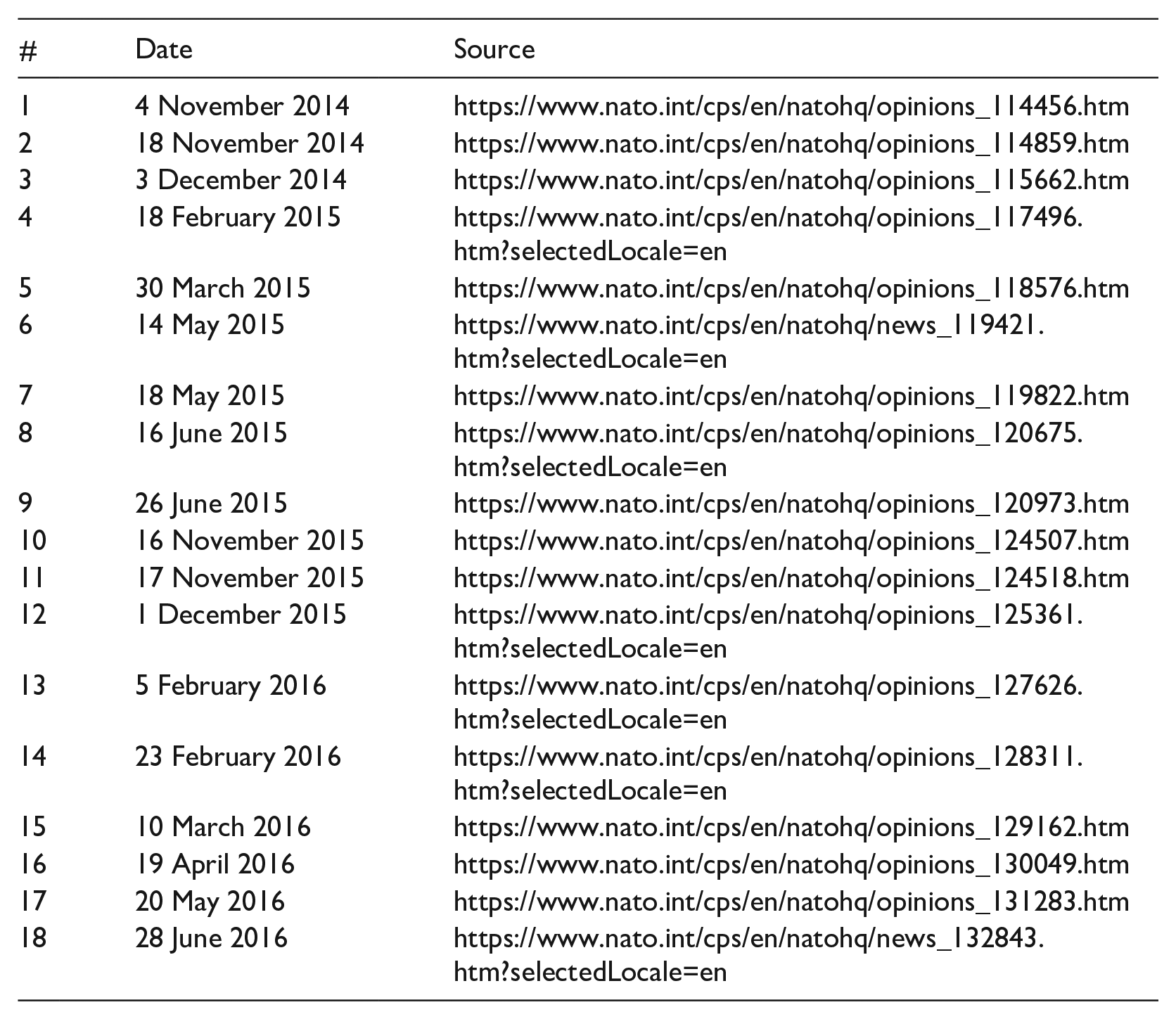
The discursive evidence of Secretary General Stoltenberg’s interventions between coming into office and the signing of the Joint Declaration affirms both the positive sum perceptions among NATO officials and, consequently, the expectation that he would use his prominent position to try shape the agenda in favour of closer EU–NATO relations. Between March 2014 and July 2016, Stoltenberg made 18 public interventions in the presence of various EU actors (see Appendix 2). A close reading of the relevant speeches and remarks shows that Stoltenberg’s message was strikingly coherent and characterised by the leitmotif of complementary and mutually beneficial relations between the two organisations.
In every single intervention, he emphasised the pressing urgency to intensify the inter-organisational cooperation given the complementarity of the two organisations, citing that ‘each organisation brings its own unique blend of expertise, experience and capabilities’ (#14). He also always invoked functional and ideational justifications for closer relations, repeatedly referring to ‘common security challenges in the east and south’ (#2), ‘a dangerous world’ (#3) that the two organisations operate in, and ‘common values of open free democratic societies’ (#5). In an attempt to shape the agenda for the Joint Declaration, he became gradually more concrete in calling for three specific realms for further cooperation: hybrid threats, stabilisation of the common neighbourhood, and defence capabilities and industry (#10).
Throughout, he made clear that NATO was driving an ambitious agenda, declaring that there was ‘a strong wish within NATO to do more’ (#12) and that he himself ‘had made a special effort to bring NATO and the EU closer together’ (#14). Thus, Stoltenberg’s string of interventions displayed the inter-organisational relationship in harmonious terms, rarely expressing a cautionary tone on the perils of duplication between the organisations (which was to change after the Joint Declaration, as shown below). In other words, and in line with theoretical expectations, NATO actors discursively embraced institutional overlap with the EU.
Deeds followed words. NATO institutional actors set out to overcome the inherent constraints imposed by the Berlin Plus framework and the participation problem to forge greater practical cooperation. There was a widespread disillusionment on both sides of the town with the ineffectiveness of existing formats (see Græger, 2016; Smith et al., 2017). The agenda of formal meetings between NATO’s North Atlantic Council (NAC) and the EU’s Political and Security Committee (PSC) had been ritualistic and in their substance limited to operational cooperation only, and thus rarely produced tangible results (Interviews #6, 7, 9, 10). Instead, NATO and EU actors circumvented the formal channels with the result that both cross briefings (with Stoltenberg regularly attending EU defence ministerials and Mogherini partaking in NATO meetings) and bilateral meetings between Stoltenberg and EU leaders increased significantly and improved atmospherically (Interviews #6, 10, 12; Græger, 2016: 483). Stoltenberg met Mogherini on her second day and Tusk on his third day in office, affirming the importance mutually attributed to the NATO–EU relationship.
Informal political meetings between institutional leaders created a better political atmosphere and paved the way for a gradual improvement of the inter-organisational relationship beyond the gaze of the member states (Interview #7). Stoltenberg and Tusk, in particular, shared a common concern about the Russian threat and were committed to synergising NATO and EU efforts. Indeed, it was a bilateral meeting between the two leaders in 2015 that gave birth to the idea to agree on a new political framework for the EU–NATO relationship, which later gained Juncker’s support (Interview #11).
The process leading up the Joint Declaration was nonetheless fraught with political difficulties and required substantial leadership on behalf of Stoltenberg and Tusk, Juncker, and to a lesser extent Mogherini. It was a balancing act for institutional actors. On one hand, the political salience and intergovernmental nature of NATO rendered it imperative for Stoltenberg to retain close support of key allies and not cross their red lines. In particular, he needed to keep the main non-EU allies on board for whom the benefits of closer relations with the EU were not immediately obvious – the United States, Turkey, Canada, and Norway (Interviews #12, 17). On the other hand, negotiations would have to remain sufficiently distant from the member states to avoid bilateral conflicts and the general difficulties of bargaining among delegations from 36 countries 1 derailing progress (Interviews #17, 12, 11, 6).
To manage this balancing act, Stoltenberg used largely subtle leadership mechanisms. First, the NATO and EU leadership shielded the negotiations from the member states. They agreed on a common procedure to control the negotiations. A core group of only five negotiators from the respective cabinets would conduct the initial negotiations. Only upon agreement would the core group exchange complete drafts with national ambassadors, which ensured a stronger bargaining position. Moreover, by tabling complete drafts rather than allowing line-by-line discussions of the text, institutional actors limited the input from national delegates. Ambassadors were also not allowed to take drafts outside the meeting room so that institutional actors would remain in control of the negotiations. The shielding strategy culminated in the decision to have the three institutional leaders sign the Joint Declaration rather than the national leaders to avoid the risk of them wanting to reopen the negotiations (Interviews #17, 11).
In addition, Stoltenberg, Tusk, and Juncker sought to lay out the tracks of the negotiation. By holding the pen and presenting draft versions of the declaration, the institutional actors could frame the debate in terms favourable to their objectives. For example, some delegates made the case for a more technical declaration, but the leadership trio preferred the Joint Declaration to be principally a political statement (Interview #11). The debates with the national delegates thus always took place on the institutional leaders’ terms. It were also the cabinets that came up with creative fixes for protracted problems. The enduring participation problem loomed large over the negotiations, and at various points, both Turkey and Cyprus objected to parts of presented drafts. The main sticking point was the characterisation of the existing relationship between the two organisations. The Cypriot delegation insisted on not referring to the Berlin Plus framework, from which it has been excluded by Turkish vetoes, in any shape or form, while Turkey called for precisely that. After tough negotiations that lasted until the very morning of the Warsaw summit, the parties eventually agreed on a compromise solution proposed by the cabinets (Interviews #17, 11).
Outcome: More synergetic NATO–EU relationship
NATO actors around the Secretary General Stoltenberg thus used their discursive and behavioural sources of influence to reach the Joint Declaration with the EU, which was a manifestation of willingness on both sides of the town to relaunch their relationship. The declaration called for ‘a new level of ambition’ and pledged to intensify cooperation on hybrid threats, operations, cyber security, capacity-building, defence capabilities, industry and research, and exercises. These were later translated into 74 concrete actions. The implementation of these actions was delegated to NATO’s International Staff and the European External Action Service (EEAS). While some dismiss these 74 actions as mere ‘publicity’ (Interview #1, 7), others point to some concrete deliverables that resulted from the joint cooperation such as the establishment of the European Centre of Excellence for Countering Hybrid Threats in Helsinki in 2017 (Koenig, 2018). Beyond specific policies, the Joint Declaration reinforced the previous trend of trying to circumvent political blockades by further informalising the inter-organisational relationship (Tardy and Lundstrom, 2019: 7–8). The political dialogue in bilateral meetings between the institutional leaders on both sides of the town as well as cross briefings have become normal practice. Furthermore, staff-to-staff level contacts have significantly expanded with the result of more comprehensive informal information exchanges and greater flexibility between the two organisations (Interviews #4, 6, 17).
While the Joint Declaration has not revolutionised the relationship between NATO and the EU, it set into motion unprecedented cooperative dynamics and created greater synergies between the two organisations. This section demonstrated that NATO institutional actors proved instrumental in managing the process of arriving at the agreement with the EU. Stoltenberg’s discursive responses set the public agenda; his diplomatic skills and experience allowed him to establish close relations with Tusk, Juncker, and Mogherini; and both NATO and EU actors’ astute usage of shielding protected the declaration from destructive interference from the member states and ensured unanimous approval in Warsaw in July 2016.
Despite the difficulty of convincing Turkey of the merits of the Joint Declaration, NATO actors benefitted from a relatively favourable opportunity structure among member states and changes to the preference centrality among key veto players. Close observers noted that Turkey exhibited greater pragmatism and willingness to discard its past categorical opposition towards closer relations with the EU (Interviews #7, 15). The intensified relations between the EU and Turkey in the context of the so-called Refugee Crisis, which culminated in the EU–Turkey Deal in March 2016, also helped improve the diplomatic atmosphere (Interview #6). Beyond the Turkey–Cyprus issue, the United States also tangibly changed its position vis-à-vis NATO–EU cooperation. While under the Bush Administration, the United States harboured scepticism towards the EU, the Obama Administration pushed for closer cooperation between the two organisations and viewed it as one possibility to achieve more equitable transatlantic burden-sharing (Interviews #14, 17). The waning of Turkish and US opposition was thus the key enabling factor that allowed NATO actors to forge closer relations with the EU.
NATO amid EU defence integration (2016–2020)
This section analyses how NATO actors responded to the emerging dynamics in European defence integration from the summer of 2016 onward. After the signing of the Joint Declaration in July 2016, the relationship between the EU and NATO entered a new, more difficult phase as the EU launched several defence initiatives, which raised the spectre of zero-sum institutional overlap. This section shows that NATO institutional actors used discursive agenda-setting powers to encourage the EU where preferable and push back against unwanted domain expansions where necessary. On the behavioural dimension, NATO actors fostered the political dialogue with the EU to display harmony and produce practical results, while building coalitions to push back against elements of the Permanent Structured Cooperation (PESCO) and launch own initiatives to legitimate its incumbency.
The EU’s quest for strategic autonomy: Mixed perceptions
For the EU, closer relations with NATO were only ever one of several necessary steps to cope with the new security environment (Interviews #4, 8). The EU’s Global Strategy, published in June 2016, called for the EU to develop ‘strategic autonomy’, while the European Council declared ambitions of developing autonomous defence and deterrence capabilities of its member states (Council of the EU, 2016).
Enabled by Brexit removing one of the key obstacles to deeper defence integration and unprecedented willingness by the Commission to drive the agenda (see Béraud-Sudreau and Pannier, 2021), these rhetorical commitments would soon yield results. In December 2016, the EU agreed to establish the Military Planning and Conduct Capability (MPCC), a military headquarter that the United Kingdom had long blocked out of fear of duplicating NATO structures. In May 2017, the Council endorsed the Coordinated Annual Review on Defence (CARD) to promote transparency and coordination in national defence spending plans to facilitate joint capability developments and procurement. Defence integration gathered further momentum following the election of President Macron in France in May 2017 and the subsequently re-energised German–Franco tandem. The EU launched the European Defence Fund (EDF) in June 2017 to finance joint research and development of defence capabilities and established PESCO in December 2017, which aims foster the joint development of capabilities co-financed by the EDF where possible. Finally in June 2020, EU defence ministers agreed to develop a Strategic Compass to translate the EU’s 2016 Global Strategy into tangible operational goals, identify capabilities needs, and support shared threat assessments.
These initiatives mark a conceptual shift in European security. While the division of labour between hard and soft security provision had been diluting since the 1990s, the EU’s pursuit to become a defence actor risked creating significantly greater functional overlap with NATO. As one senior NATO official points out, during the fruitful negotiations over the Joint Declaration, there was no talk about PESCO (Interview #17). NATO has long maintained that EU defence initiatives should pass the tests of avoiding the (in)famous three ‘Ds’ popularised by former US Secretary of State Madeleine Albright: no duplication NATO structures, no decoupling from NATO, and no discrimination against non-EU NATO allies (see Sloan, 2016: 166). Among NATO officials, the perception of whether the recent EU initiatives passed these tests was mixed and not always unanimous. Some were cautiously optimistic that EU defence cooperation will largely complement NATO. They argued that both PESCO and the EDF are capabilities-driven initiatives that should benefit NATO. They also pointed to the recent agreement that allows for third-party participation in PESCO thereby ensuring non-discrimination, as well as the fact that 38 out of 47 earmarked PESCO projects align with NATO priorities (Interviews #17, 6; Council of the EU, 2020). Others were more pessimistic about the prospects of EU defence initiatives actually yielding any tangible benefit to NATO, given that the size of the EDF’s budget of €8 billion is small in comparison to national defence budgets and costs of modern armaments (Interviews # 1, 3). The pessimistic voices also viewed both the MPCC and CARD as duplicating NATO structures and putting added strains on scarce human resources of defence planners.
In striking contradistinction to the public discourse, however, none of the NATO officials interviewed expressed a fear that the specific EU initiatives posed a veritable threat to the primacy of NATO as European security provider. Yet, there was an aggravating concern about the symbolic decoupling these initiatives may imply. Discourse emanating from France and other parts of the EU, which painted the EU defence initiatives as part of a wider quest to become strategically autonomous from the United States as an end in itself, fuelled concerns about the return of ideological opposition towards NATO. US President Trump’s reflexive opposition towards the founding ideals of the EU also buoyed the politicisation of the inter-organisational relationship (Interview #12). Thus, perceptions among NATO officials on European defence initiatives, which were also reflected in Stoltenberg’s public communications, were mixed on the specific policies and zero-sum on their political symbolism.
In sum, NATO actors faced a complex situation. While EU defence initiatives were perceived to carry some potential for strengthening the EU–NATO relationship, their political implications risked fostering existing patterns of strategic divergences between the United States and EU. Thus, NATO actors set out to selectively support aspects of EU defence integration to avoid rifts between the two organisations and ‘avoid a beauty contest’ (Interview #1), while asserting NATO’s primacy in European security.
NATO institutional actors’ discursive and behavioural responses to EU defence initiatives
Unlike on the Joint Declaration, NATO actors had no direct levers to shape EU defence initiatives, given that the two organisations operate on the principle of decision-making autonomy. They therefore placed much emphasis on public agenda-setting to encourage the EU where possible and caution where necessary, while working to achieve tangible cooperation results, maintain close diplomatic relations with EU leaders, and launching its own initiatives to legitimate NATO’s primacy in European security (Interview #3).
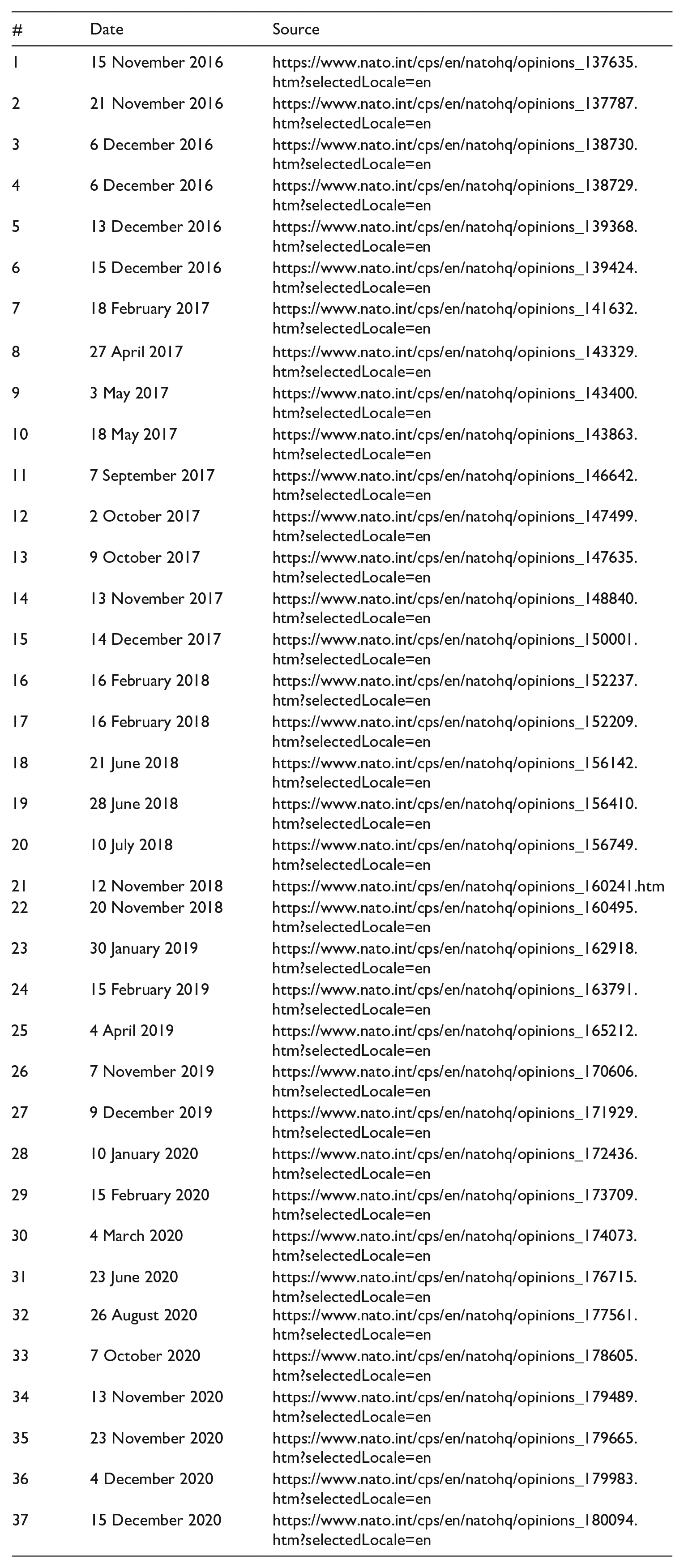
Between the summer of 2016 and the end of 2020, the Secretary General made 37 relevant interventions (see Appendix 3). A thorough analysis of these public sources demonstrates that a gradual, but discernible discursive shift took place. Public communications in the aftermath of the Joint Declaration were largely focussed on first results of the new practical cooperation. Stoltenberg frequently invoked the unprecedented cooperation between the EU and NATO and that ‘cooperation was now the norm, not the exception like in the past’ (#8). As the EU’s defence initiatives gained traction, Stoltenberg increasingly addressed them. He repeatedly welcomed initiatives such as PESCO as long as EU capability developments were complementary to NATO, coherent with NATO developments, and made available to NATO (#12). This subtle messaging gave way to more direct cautions. At the Munich Security Conference in February 2018, he gave a comparatively confrontational speech, stating that with opportunity comes risk. The risk of weakening the transatlantic bond, the risk of duplicating what NATO is already doing and the risk of discriminating against non-EU members of the NATO Alliance [. . .] the European Union cannot protect Europe by itself. (#17)
In the following interventions, he echoed his forthright cautions, regularly reminding listeners that ‘after Brexit, 80% of NATO’s defence spending will come from non-EU Allies’ and that ‘three out of four NATO battlegroups are led by non-EU allies’ (#28). He also warned against attempts to ‘divide North America from Europe’ (#28). Reflecting the aforementioned concerns among NATO officials that the politics more than the substance of EU initiatives were concerning, Stoltenberg explicitly criticised the notion of strategic autonomy, among others espoused in the EU’s Global Strategy, noting that ‘Strategic Autonomy’, it’s not totally clear what that means, but it sounds a bit like they’re going to do these big strategic things alone, and I don’t think that’s wise. (#21)
Compared to Stoltenberg’s discourse until the Joint Declaration, his public interventions thereafter differed in both tone and substance. He gradually moved from emphasising practical cooperation, to the mixed message of welcoming EU defence efforts while cautioning against them undermining NATO, to outright warnings and assertions of NATO’s primacy (this shift was noted by several officials, see interviews #8, 9, 16). Throughout, he made clear that he saw the potential for practical benefits from EU defence initiatives for NATO but expressed his opposition towards political distancing of the EU from NATO (and the United States). In other words, his discursive embrace pre-summer of 2016 gave way to a more ambivalent position on the institutional overlap with the EU and explicit legitimations of NATO’s primacy in European security.
NATO actors had no direct behavioural means to influence EU defence initiatives. Instead, they used diplomatic means and agenda-setting initiatives to shape NATO’s relationship with the EU and maintain its position as primary security provider in Europe. First, NATO actors continued to embrace cooperation with the EU by working on intensifying the political dialogue with the EU and producing practical deliverables (Interview #1). Political contacts between NATO and the EU have grown; since the signing of the Joint Declaration in 2016, more than 120 cross briefings between EU and NATO officials took place (Interview #5). Stoltenberg also continued his close liaison with the EU leaders Juncker, Tusk, and Mogherini. They coordinated relevant speeches (Interview #3), maintained the regular bilateral meetings (see NATO, 2020a), and published joint press statements. In July 2018, NATO and the EU renewed their commitment to furthering practical cooperation by signing another Joint Declaration. Nearing the end of his term in office (before the allies extended his tenure), for Stoltenberg, this was an important political sign and served to lock in the new framework of inter-organisational relations in light of opposition from US President Trump (Interviews #11, 17).
The implementation of the 74 areas of cooperation identified in the two joint communications has been running relatively smoothly, according to involved officials (Interviews #4, 5, 6). Concrete results hitherto achieved include the establishment of the aforementioned European Centre of Excellence for Countering Hybrid Threats in Helsinki; the creation of a Structured Dialogue on Military Mobility to advance cooperation on military requirements, transport infrastructure, transport of dangerous goods, customs, and cross border movement permissions (Interview #17); and close cooperation between NATO’s Public Diplomacy Division and the EEAS’ Strategic Communications Divisions on fighting disinformation (Interview #3; NATO, 2020a). Reflecting the shielding practices in the run-up to the 2016 Joint Declaration, these activities take place on the institutional staff-to-staff level, which effectively insulate the practical cooperation from conflict among member states but places a natural ceiling on the level of ambitions (Interviews #7, 15).
Second, NATO actors lobbied behind the scenes to steer the EU towards a compromise solution on PESCO allowing third parties to participate (Interview #17). Stoltenberg used his close contacts with the EU leadership to make the case behind closed doors. He also built coalitions with those member states critical of what they saw as protectionist elements of PESCO like the United States or the Netherlands to coordinate their diplomatic initiatives (Interviews #14, 17). Third-party access was an important issue for non-EU allies and in November 2020 the EU under the stewardship of the German Council Presidency eventually agreed on conditions under which non-EU states may be invited to participate in PESCO projects (Interviews #18, 19, 20).
Third, NATO actors also took two initiatives to resist the EU’s domain expansion and thereby legitimate its primary position in European security. At the London Summit in December 2019, NATO agreed to a forward-looking reflection process to foster allied unity and increase political consultation. This was a direct response to President Macron’s criticism of a strategic void in the alliance (Interview #1), which had allegedly become ‘braindead’. Aimed at shaping the debates around strategic autonomy and NATO’s future role, the process entailed appointing an expert working group, which produced a report in November 2020 calling among other things for the ‘recognition that NATO remains the transatlantic framework for strong collective defence and the essential forum for security consultations and decisions among Allies’ (NATO, 2020b: 56). Secretary General Stoltenberg seized the opportunity to set the strategic agenda by enlarging the reflection process into a wider NATO 2030 agenda and driving the process of revising NATO’s Strategic Concept by the summer of 2022 (Ringsmose and Rynning, 2021). In doing so, he made clear that the priority for NATO is to define its own role before discussing further reforms of the inter-organisational relationship with the EU (Interview #16).
Outcome: Consolidation, for now
NATO institutional actors employed their discursive and limited behavioural means to resist what they perceived ideological elements of EU defence integration (where strategic autonomy was an end in itself), shape PESCO, and encourage practical cooperation and a publicly harmonious relationship. In doing so, NATO appears to have managed to consolidate its primary position in the European security architecture. After a period of transatlantic tensions over the EU’s initiatives, tempers on both sides of the pond have cooled. Compared to the process of reaching the Joint Declaration, the causal impact of institutional actors is more difficult to ascertain. With the exception of PESCO, the EU’s defence initiatives went ahead as planned despite the concerns among non-EU allies. Yet, NATO actors successfully contributed to taking the sting out of debates surrounding strategic autonomy by helping to reach a compromise on PESCO, not allowing the heated debates to drive a wedge between the two organisations and shifting attention to both the practical achievements of the inter-organisational relationship and NATO’s own initiatives.
The scope for agency by institutional actors was more curtailed than in the previous period as preferences among allies vis-à-vis NATO–EU relations became more salient. This was a result, among others, of the elections of two presidents who were sceptical of closer NATO–EU relations: President Trump in January 2017 and President Macron in May 2017. The departure of the United Kingdom from the EU, which in the past had acted as a transatlantic bridge between the two organisations, exacerbated the growing tensions (Ewers-Peters, 2021). Thus, beyond continuing informal and practical cooperation on the staff-to-staff level, institutional actors could not advance closer cooperation. However, it offered opportunities for NATO actors to find willing veto players to resist elements of EU initiatives they perceived as threatening.
Conclusion
Cooperation between NATO and the EU has reached unprecedented heights, but the inter-organisational relationship continues to be plagued by bilateral conflicts on the level of the member states and ambiguous European aspirations. This article inquired into the perceptions and responses of NATO actors to the growing overlap with the EU since 2014. It shows that NATO actors initially viewed closer relations with the EU as necessary consequence of the geopolitical shocks of 2014 and hence employed their discursive and behavioural levers to push for the Joint Declaration. However, the EU’s subsequent defence initiatives harboured the risk of symbolising strategic decoupling from NATO. In response, NATO actors pursued the dual strategy of encouraging cooperative elements while pushing back against those perceived as unilateral and threatening. Overall, the article suggests that NATO actors made an independent contribution to the restructuring of the relationship with the EU by creating greater synergies while consolidating its primary position in the European security architecture. While institutional actors did not act in overt opposition to the expressed interests of the most important allies, the article finds ample evidence for institutional actors’ strategic behaviour, which demonstrably affected the outcome of the overlap with the EU.
By 2021, the debates about whether European ambitions of strategic autonomy threatened the existence of NATO have calmed. The arrival of Joe Biden in the White House certainly helped taming anti-American instincts in many parts of Europe and the COVID pandemic has shifted attention elsewhere. Nonetheless, NATO actors helped de-dramatising the debate by facilitating a compromise on PESCO, maintaining a harmonious relationship with the EU throughout, and launching own initiatives to assert the continued relevance of the Atlantic Alliance. This is not to suggest that the fundamental debate about the future transatlantic relationship is over. The rise of China, the withdrawal from Afghanistan, democratic decay across the West, or new security challenges to name but a few will raise question about the relevance of NATO. The debates in US foreign policy circles between ‘restrainers’ and ‘engagers’ shows no sign of abating, and the debate about European strategic autonomy is likely to garner momentum again during the French presidency of the Council of the EU in the first half of 2022. Hence, the spectre of marginalisation will continue looming over NATO. But as this article shows, the alliance can wield substantial influence and will not be a passive pawn in the game.
The findings vindicate the theoretical contention that IO institutional actors have the ability to shape overlap when preferences among member states are diffuse, and that their choice of strategies depends on their perceptions of the nature of the overlap. Of course, the evolution of the inter-organisational relationship was enabled by systemic shocks and concomitant changes on the member state level, but these forces required the agency and individual leadership of institutional actors to materialise. The overlap between NATO and the EU constitutes a hard case for the theoretical model. Consequently, other international organisations that have substantial institutional capacity and are likely to possess greater autonomy should be expected to also be able to shape institutional overlap. Further research could test the validity of these claims by analysing for instance the overlap between the World Bank and the Asian Infrastructure and Investment Bank or between the International Energy Agency and the International Renewable Energy Agency.
Footnotes
Appendix 1
Appendix 2. Stoltenberg’s public interventions (November 2014 to June 2016).
Appendix 3. Stoltenberg’s public interventions (November 2016 to December 2020).
Acknowledgements
The author very much appreciates the constructive guidance and comments on earlier drafts offered by Hylke Dijkstra, Sophie Vanhoonacker, Yf Reykers, and Nele Ewers-Peters. He is also grateful to the anonymous reviewers, editors of BJPIR, and officials who generously took the time to share their insights.
Funding
The author(s) disclosed receipt of the following financial support for the research, authorship, and/or publication of this article: This article is part of a project that has received funding from the European Research Council (ERC) under the European Union’s Horizon 2020 research and innovation programme (grant agreement no 802568).
