




Abstract
Contact between politicians and their constituents is the cornerstone of democracies globally but an area of scholarship that remains relatively underdeveloped. Political contact can help convey authority, provide legitimacy and facilitate governance. This article goes beyond the assumption that representatives need to communicate more with the public and suggests, instead, that the quality of contact matters. Focusing on four processes by which citizens can contact their representatives (face-to-face, by letter, email or social media), we employ an experimental vignette methodology to test whether the character and timeliness of politicians’ responses to citizen communication affects two indicators of democratic health: (a) the latter’s satisfaction with political contact and (b) their likelihood to re-contact representatives. Our findings provide evidence that personalised communication and to a smaller extent, speed of response, can influence citizen satisfaction and their likelihood of re-engagement. This suggests politicians can improve these indicators of democratic health by adjusting the style of political contact and communication.
Introduction
Political contact is an inherent feature of many democratic systems around the globe and describes the interaction between representatives and citizens. An enduring feature of democracy, political contact helps to convey authority, provide legitimacy and facilitate governance. Evident in a variety of different forms, from casual encounters on the street to formal consultation processes, representatives and those they represent can interact in different ways and mediums. And yet, while an essential feature of many representative systems, we currently know little about the conditions in which such contact is viewed favourably (or not), and whether the content and media of said contact actually matters. In the context of growing evidence of political discontent and negative public views about representatives and representative processes (Grayling, 2017; Hay, 2007; Norris, 2011; Runciman, 2018; Seyd, 2015), this is a significant gap in our understanding of democratic representation. At the same time, this is one aspect of politics where representatives have a degree of control. They can, to some extent, orchestrate the way political contact is conducted, suggesting that information on what citizens’ think about conduct could be of value to politicians.
In this article, we go beyond the assumption that representatives need to communicate more with the public to consider the significance of the quality of contact between governors and governed. We undertake a micro-level analysis of political representation by exploring the significance of variations in the style and format of political contact for two measures of democratic health: citizens’ satisfaction with political contact and their likelihood of re-engaging with a representative about substantive policy issues. On the one hand, this matters for our collective understanding of when, why and how specific interpersonal elements of politics might ameliorate the mutual withdrawal of state and citizens from one another. On the other hand, we believe this study has direct practical applicability for politicians, who are the subject of public criticisms and seek potential remedies in a job where control is fleeting but the stresses and strains are many. By studying the micro-dynamics of everyday political contact, we unite supply- and demand-side explanations of representation to address these aims.
Looking in detail at four processes by which citizens can contact their representatives (face-to-face, by letter, email or social media), we use an experimental vignette methodology (EVM) to test whether the character and timeliness of politicians’ responses affected citizens views. Using a diverse sample of 1500 members of the UK public, we find that politicians can alter and adjust their political communications to (a) improve public satisfaction and (b) increase the likelihood of future contact between politicians and the public. These results hold even after controlling for contextual and socio-demographic variables. We also find that personalised and interactive styles of political communication may mitigate the negative impact of pre-existing anti-political sentiment on participants’ satisfaction with politicians. These findings mark an important contribution to our understanding of political conduct and representation, but also provide specific recommendations to politicians on how to improve constituent communication and satisfaction.
Political contact in existing research
The idea of democratic representation is ancient and complex (Pitkin, 1967). As Mansbridge (2003: 515) noted, ‘there is more than one way to be represented legitimately in a democracy’, a truism that has fostered wide-ranging debate about the relationships between citizens and those who seek to represent. Operating as a ‘principal-agent relationship’ (Castiglione and Warren, 2006: 1), it is widely recognised that representatives face formidable challenges in attempting to channel the wishes of a diverse and often capricious public into politics (Kölln, 2015: 610; Urbinati and Warren, 2008: 389). In addressing this dilemma, many scholars have explored the importance of interactions between representatives and the represented. Dobson (2014: 3), for example, has stressed the importance of listening by arguing that: the mechanics of responsiveness become extremely important . . . [because] for there to be any chance of [my will being represented by my representative] . . . my representative needs to know what my will is. This implies listening, in its broadest sense.
In turn, this entails forms of political contact whereby interaction can occur.
In seeking to understand representation, Hofstetter and Stokoe (2015) argue that not enough attention has been given to the form and processes of interaction between constituents and representatives. While a small literature does attempt to do this, attention has focused on identifying different representative dynamics. Fenno’s (1978) Home Style, for example, offers a detailed ethnographic insight into the myriad ways that US Congressmen engaged with their districts, identifying different representative styles and procedures. Other scholars have categorised representatives’ use of specific communication tools, tracing the use of representatives’ websites (Gibson et al., 2003; Lilleker et al., 2011), blogs (Davis, 2009), emails (Jackson, 2003; Vaccari, 2014) and social media (Jackson and Lilleker, 2011; Joshi and Rosenfield, 2013; Tromble, 2016). A different strand of work has also analysed the degree to which representatives’ behaviour accords with constituents’ demands (Linde and Peters, 2018). Common to much of this analysis is a focus on citizens’ representative preferences (Bengtsson and Wass, 2010; Carman, 2006; Jewell, 1983; Vivyan and Wagner, 2015), and yet little work to date has looked at political contact and specifically its potential to induce positive democratic outcomes.
This lacuna is surprising given the amount of attention that has been devoted to evidencing a crisis in citizens’ faith in democracy generally and politicians in particular. With successive surveys showing evidence of negative views of politics, many academics have sought to offer meso- and macro-level explanations for this trend (Boswell and Corbett, 2015; Clarke et al., 2018), but relatively little research has taken a solutions-focused approach to democratic malaise (cf. Flinders, 2012). Furthermore, little to no empirical research has been conducted on the potential for positive experiences of political contact to affect public views of politicians and political institutions. Where analyses of political contact have occurred, they focus on the variables that explain which citizens interact with their representatives and why, highlighting the significance of citizens’ gender, education and social capital (Rosenstone and Hansen, 1993; Verba et al., 1978). Alternatively, they have offered insights about the presence or absence (as opposed to the form) of political conduct, finding that interactivity between citizens and politicians in any format catalyses a range of positive effects such as increases in citizens’ political efficacy (Tedesco, 2006), increasingly favourable candidate evaluations (Sundar et al., 2003), greater identification with politicians (Landler, 2007) and even possibly electoral turnout (Kleinnijenhuis et al., 2001).
Noting these trends, we build on these literatures to explore the significance of politicians’ strategic approaches to political contact for two measures that we believe to be indicative of positive democratic health. Specifically, we explore the extent to which variations in political contact affect citizens’ reported satisfaction with the experience of contact itself, and the likelihood that they will contact their politician again about substantive policy concerns. This allows us to explore whether changes in the style and form of representatives’ responses to citizen communications can have positive attitudinal and action-based effects. Given recent evidence about representatives’ increasing interest in testing and responding to similar data – with many political actors using A/B message testing to refine communication and achieve desirable results (Kreiss, 2016) – we argue that there is an incentive to explore if and how the dynamics of political contact can affect political participation.
Political contact in the United Kingdom
In this article, we focus on one particular context, the United Kingdom. The United Kingdom presents an ideal case study because, as the locus of the Westminster Parliamentary system, its procedures and practices have been replicated widely around the world. While representation can occur at local, regional, national and international levels, our analysis focuses on national constituency representation. The British system is renowned for developing close links between representatives and their constituents (Dobson, 2014: 171). For example, individual representatives are elected to ‘speak for’ specific geographical areas termed constituencies. With an average of 72,000 individuals within each constituency in England, the potential demand for contact is extensive.
Since 1969, Members of Parliament (MPs) have been granted funds to travel to and from their constituency, and to maintain a staff that help the MP manage constituent correspondence and administration, as well as an office (that can be situated in their constituency and/or London) (Crewe, 2015; Flynn, 2012). They are also able to draw parliamentary allowances to fund communications with their constituents such as postage, telephone calls, newsletter printing and website development (Gay, 2005: 64). These dynamics mean that MPs can be contacted in many different ways (Cain et al., 1987; Gay, 2005; King, 1974; McAllister, 2015; Wood and Norton, 1992). Every British representative is required to provide a physical address in addition to a phone number and an email address, so that they are available to anyone and everyone within their constituency. For example, 90% of MPs hold constituency surgeries (Auel and Umit, 2018: 732; Gay, 2005: 58) whereby they ‘return to their constituencies’ to meet voters face-to-face (Dobson, 2014: 170). Most if not all MPs also have public websites, social media profiles and are available to contact at local and national events. Political contact is therefore an established feature of the UK system, making it an ideal case in which to study its impact on measures of democratic health.
In addition, the United Kingdom offers an interesting case because of evidence of a growing demand for contact with MPs. Recent analyses have shown that MPs are experiencing increasing levels of communication (Gandy, 2018; Lusoli et al, 2006; Norton and Wood, 1993: 42). Between the 1920s and 1960s, MPs were found to reply to around 50 constituent letters a week, with the number of letters received increasing 10-fold between 1950 and 1980 (Gay, 2005; Norris, 1997; Norton and Wood, 1993; Radice et al., 1987). This has increased even more radically since. In the first ten months of the 2010 Parliament, newly elected MPs received over 39,400 pieces of communication, of which 24,000 were emails, 9600 letters and 4800 telephone calls (Hansard Society, 2015). This suggests that MPs are facing increasing demand and are potentially incentivised to engage in more cursory forms of political contact. This case therefore provides an interesting context in which to explore whether the quality of political contact matters for democracy.
Hypotheses
In setting out to study political contact, we are interested in exploring how the quality of contact between governor and governed can affect two behavioural and attitudinal indicators of democratic health:
a. citizens’ satisfaction with their experience of political contact;
b. the likelihood that they will pursue future contact with a representative.
These dependent variables were chosen to assess the extent to which MPs might alter political contact to (a) improve satisfaction, (b) encourage increased communication with their electorate and (c) act as a fillip to broader political participation among the public. As such, we argue that in subsequent combination, these two indicators contribute to better democratic health. On the one hand, we use outcome (a) to capture public attitudes towards the representative process itself, and political contact in particular. On the other hand, we use outcome (b) to assess the impact of enhanced political contact on levels of participation. In both cases, we seek to offer increased clarity about the link between politicians’ input and civic outcomes. Existing research in political science as well as marketing suggests that a range of different factors may influence these outcomes. In particular, we expect that the quality of an MPs’ response to constituency communications, the time taken to respond and citizens’ pre-existing anti-political sentiments may affect their evaluations of political contact.
Quality of response
A number of studies have suggested that citizens’ views of political contact can be affected by the nature of the response they receive from a representative. As Livingstone (2004) shows, citizens are not always guaranteed a consistent response to the communications that they send to politicians. One interviewee in Livingstone’s (2004: 7) study neatly captures this dilemma: ‘You can email [the MP]. But is he going to listen?’ Vaccari’s (2014) study of politicians in Australia, France, Germany, Italy, Spain and the United Kingdom also indicates that representatives often fail to respond to their emails. It is clear, then, that politicians’ responses to citizens’ communications are not necessarily uniform or even commonplace.
While recognising the potential for variation in politicians’ attitudes to communication, more recent research about online political content has shown that personalisation and interactivity can improve citizens’ feelings of connectedness with politicians and politics (Kruikemeier et al., 2013). Unlike the classical use of personalisation in campaign literature as referring to a focus on individual politicians, we take personalisation to denote a specific communication practice. Personalisation here refers to politicians interacting with particular aspects of a citizen’s communication to provide a bespoke response, thus facilitating a direct and personal link closely resembling interpersonal communication (Fortin and Dholakia, 2005). In essence, when people feel they are engaged in a personalised way, it evokes a sense of connectedness similar to personal two-way communication exchanges. In light of these insights, we expect that the nature and content of an MPs’ response to citizens’ communications will matter for the latter’s democratic attitudes and actions. In particular, we hypothesise the following:
H1. More bespoke and detailed responses will result in heightened citizen satisfaction and engagement.
Role of time
Second, we focus on the temporality of political contact and specifically the amount of time that a politician takes to respond to citizens’ communication. Extensive research in marketing has found that lower waiting times are a strong determinant of overall satisfaction with services and customer loyalty (Pruyn and Smidts, 1998; Taylor, 1994; Hui and Tse, 1996). Exporting these insights to politics, we note that time spent waiting is a prevalent and often inevitable part of communicating with representatives. With responsibilities to balance across Parliament, constituency and party, along with the volume of correspondence MPs receive, citizens can wait a relatively long time for a considered (or even perfunctory) response. Given the importance of listening to representation (Dobson, 2014), we argue that delayed responses are likely to fuel unfavourable views. We therefore hypothesise the following:
H2. The longer a citizen waits for an MP to reply, the less satisfied and likely to engage in political contact they will be.
General anti-politics sentiment
Finally, we engage with existing scholarship on anti-politics, which we define as the increasing apathy citizens feel towards politics, resulting in what Corbett (2015) terms as ‘corrosive cynicism’. The anti-politics sentiment has been identified as an important contemporary phenomenon across parts of Europe, North America, Australasia and elsewhere (e.g. see Boswell and Corbett, 2015; Dalton, 2004; McDowell et al., 2014; Müller, 2016; Saunders, 2014). An Ipsos MORI (2018) survey of 25 countries published in 2018 indicates that 63% of people believe that politicians do not care for the average person, while 59% feel that their traditional parties and representatives do not care about them. 1 Studies of public attitudes towards politicians in the United Kingdom have also evidenced a vernacular of vitriolic distaste and distrust (Allen and Birch, 2015b; Clarke et al., 2018; Corbett, 2015; Stoker et al., 2016), with a growing body of research demonstrating that those displaying anti-political traits and disaffection are more likely to report negative views about politics and lower levels of engagement (Allen and Birch, 2015a). Therefore, while we believe that politicians can tailor their political contact with citizens to improve democratic satisfaction and engagement, we also believe that these effects will be mitigated by strong anti-politics sentiments. We therefore hypothesise the following:
H3. Strong anti-political sentiments about politicians will reduce the positive effects of tailored political contact on citizens’ satisfaction and anticipated future engagement.
Methods
Research design
To test these hypotheses, we conducted an EVM study of political contact in the United Kingdom. Understanding causal relationships – such as those underpinning our hypotheses – requires the use of quasi-experimental or experimental designs that afford more control over the inclusion or exclusion of confounding factors than traditional observational data (Grant and Wall, 2009; Spector, 1981). EVM is particularly well tested as one such approach that both enhances experimental realism and maintains strong internal and external validity (Atzmüller and Steiner, 2010; Hox et al., 1991; Ludwick and Zeller, 2001). In this study, we use a ‘paper people’ EVM design (Aguinis and Bradley, 2014) in which participants were presented with written vignettes that described a hypothetical experience of political contact with their local MP. After reading the vignette, participants were asked to respond on two measures: their satisfaction with the interaction and their likelihood of re-contacting the MP following this interaction.
An EVM study allows for the controlled manipulation of relevant variables while retaining contextual realism. Given that experiences of political contact are extremely difficult to research in real time, the use of EVM allowed us to manipulate the time it took for the MP to respond and the style of that response. We also check the effects of these manipulations across multiple EVMs in which the medium of political contact is varied. In turn, we could then trace the causal effects of these independent variables on our outcome measures (above). Informed by a pilot study conducted with a diverse UK sample of 270 participants via the online platform Prolific Academic (a quality-controlled survey platform of 45,000+ participants), we designed four experiments based on four broadly equally rated and salient public concerns (plastic pollution, homelessness, train fares and NHS waiting times; Figure 1). Although participants were slightly less worried about rising train fares (Mean = 5.8, SD = 2.6) than the other substantive issues, these differences did not manifest in noticeable differences within subsequent analyses of the effects of the treatments in the pilot sample (pilot data available upon request). As such, all four issues were retained as substantive hooks for our treatments in the main study.
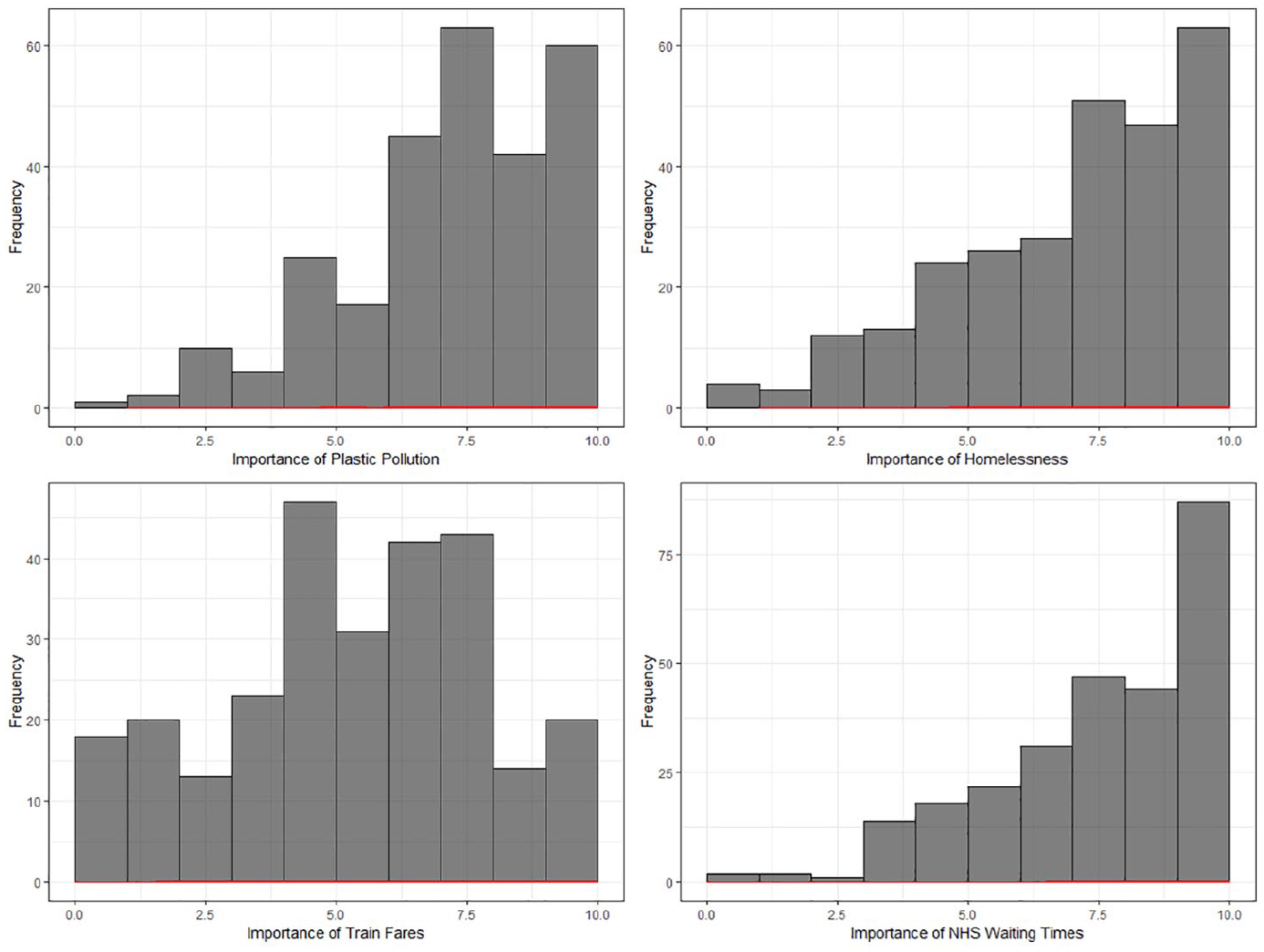
On a scale of 0–10 (where 10 = extremely important), how much do the following issues matter to you? (Pilot data, N = 270, January 2019).
Each substantive topic (above) was randomly matched a priori with one predefined medium of political contact (by letter, email, social media and face-to-face) and therefore standardised for all participants. However, the order in which participants engaged with each topic (and associated medium of political contact) was randomised. This was done purposefully to mitigate against order effects in our data and, specifically, counterbalance learning effects as well. Following best practice for paper people EVM studies (see, for example, Raaijmakers et al., 2015), each experiment was prefaced by a short contextual description of the substantive issue underpinning the subsequent hypothetical interaction between participant and MP. For example: Plastic is a man-made material that we all depend upon. However, less than a fifth of all plastic gets recycled globally and this waste is having a devastating impact on the planet. Each year, one million sea birds and 100,000 marine mammals are killed from plastic waste in our oceans. You write a letter to your local Member of Parliament about the issue of plastic waste to express your opinions.
Within each experiment, we manipulated the time taken for the MP to respond to the participant (1–2 days, 2 weeks, 1 month) and the style of that response (automated, personalised or an invitation for further discussions). These independent variables were specifically selected to represent realistic variations in our chosen manipulations. This produced four three-by-three experiments with a between-subjects design within each substantive experiment and a within-subjects design across all four. This mixed design was used to avoid the pitfalls of between-person-only designs in which participants’ responses may not accurately reflect true judgements of a scenario without additional vignettes as reference points (Aguinis and Bradley, 2014; Atzmüller and Steiner, 2010). After reading each introductory description, participants were randomly assigned to one of nine treatment conditions and asked to respond to two standard questions about each experience: How satisfied are you about this interaction with your MP? (0–10, where 10 = extremely satisfied); How likely would you be to contact your MP again after this interaction? (very unlikely to very likely). Examples of the nine treatment conditions can be seen in Table 1. It should be noted that we purposefully did not include the party affiliation of hypothetical representatives in each EVM. As per above, this decision was made in order to isolate voter preferences for political contact (on the Left and Right) without the confounding influence of an MP’s partisanship (and by implication, the connotations these labels carry for partisans and non-partisans alike).
Experimental interaction #1 about plastic waste via letter.
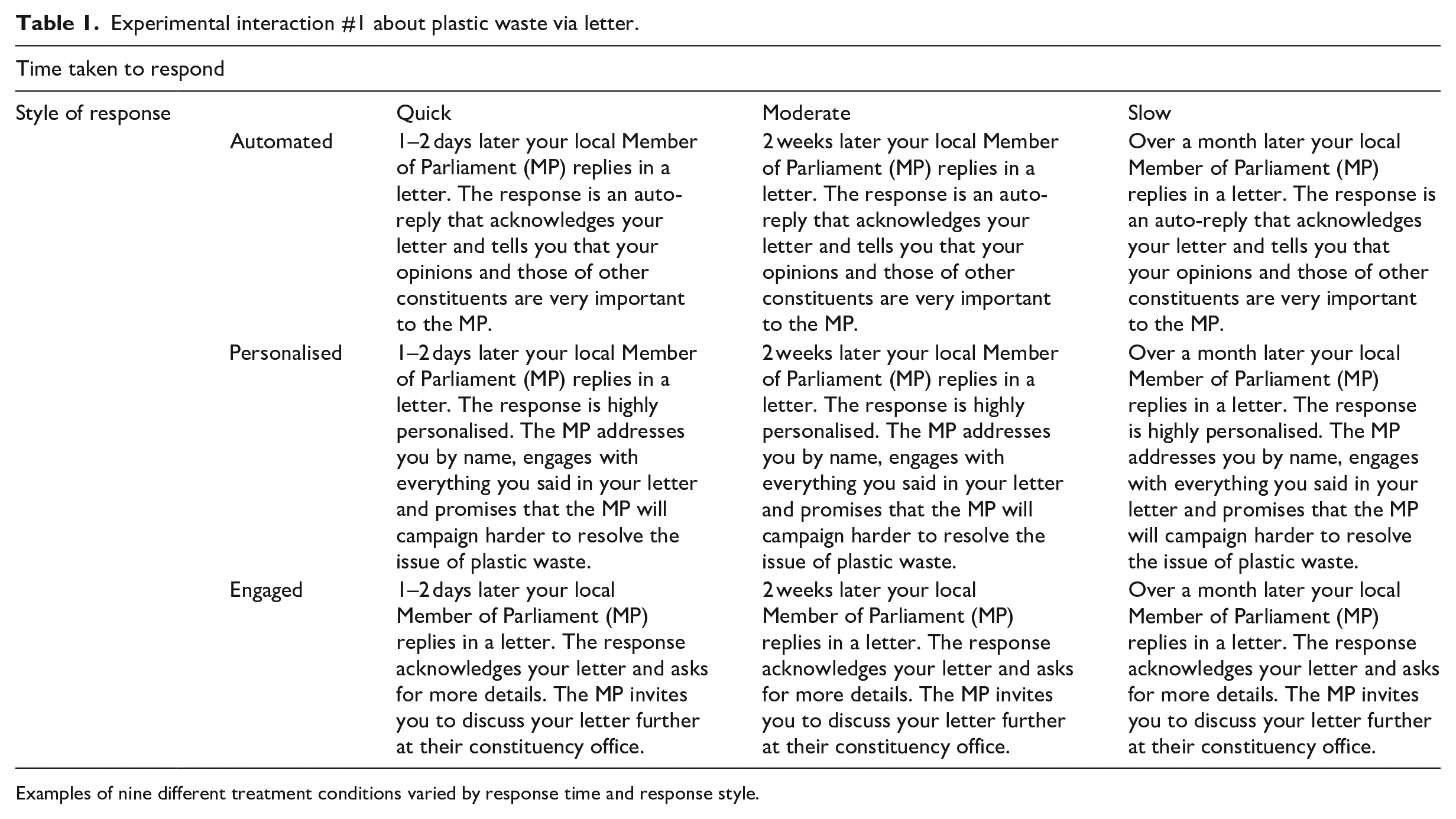
Examples of nine different treatment conditions varied by response time and response style.
Data collection
We conducted our EVM study of political contact and democratic engagement in March 2019. Our survey was fielded electronically by Qualtrics, a professional polling company with a large global panel population. The survey was initially soft launched to ensure treatment validity post-pilot, and participants were filtered out of the sample population based on quality control checks such as attention filters and completion times. In total, a nationally diverse sample of 1500 members of the British public satisfactorily completed our EVM survey. 2
The survey comprised three sections. First, participants worked their way through the four EVM experiments. In each case, they read a brief introductory description of a salient substantive topic on which they (hypothetically) had contacted their local MP. They were then randomly assigned to one of nine treatment topics for each experiment and asked to respond to two outcome variables in each case (see above). The number of participants responding to any one treatment in each EVM experiment was no less than 164 and no more than 168, thus ensuring equality of coverage across our manipulations. At the end of the four EVM experiments, participants were asked to reflect on the factors that had influenced their responses to each EVM scenario they experienced. This open-text question was used as an additional robustness check for the saliency of our treatments.
Looking at this open-text data, overall frequencies of terms show that participants most commonly referenced the term ‘response’ (Figure 2, above). To check the contextual meaning of these frequent terms, we ran a key word in context (KWIC) search using the Quanteda package in R, which supports searching for individual words within a given distance from one another in a text. The results support the initial observation that both the timeliness and character of political contact mentioned by respondents were influential in affecting their answers. For example: If the response was personal and invited me to discuss or meet with the MP I was very satisfied. If the response was automated or a standard response, then I feel as if I was being fobbed off and my opinions not listened to (Participant No. 29). How long I had to wait for a response, whether they addressed me by name and if they asked me to go into further detail and pursue the issue (Participant No. 201).
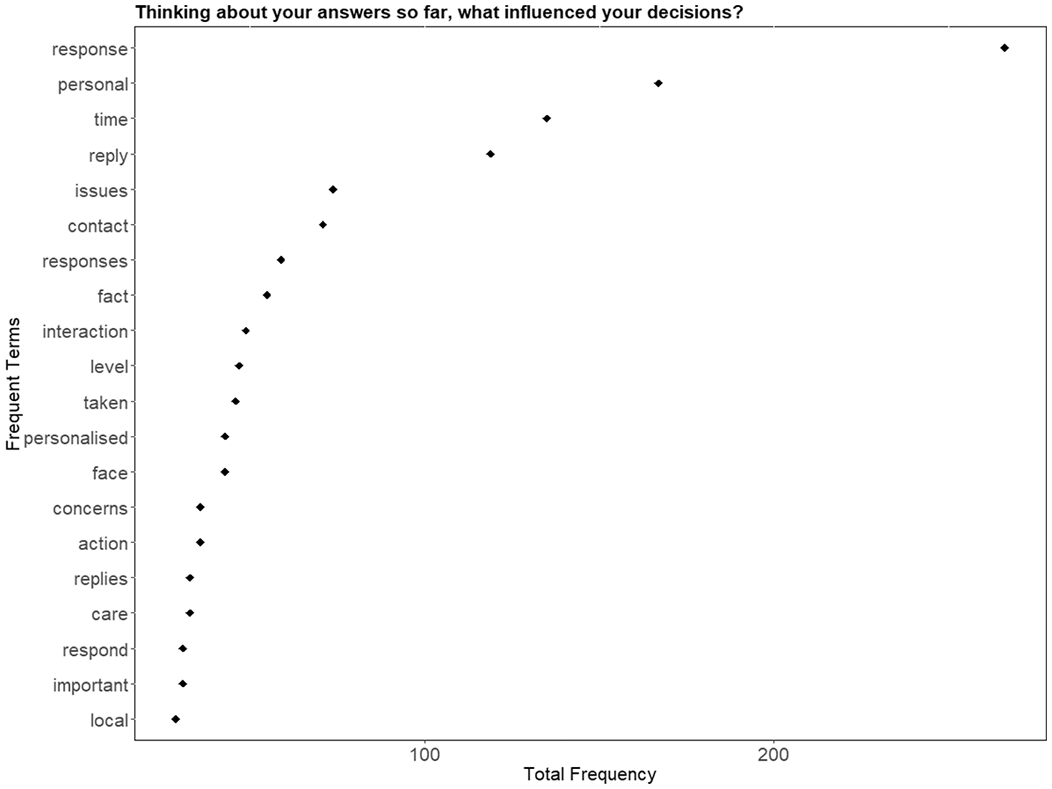
Thinking about your answers so far, what influenced your decisions?
Participants were then asked to complete two batteries of attitudinal questions taken from the British Election Study panel survey: this included six statements about politicians designed to elicit participants’ prior opinions on their elected representatives, and six statements testing participants’ political knowledge. Spearman rank correlations between the least/most ‘responsive’ treatment conditions in each EVM and participants’ anti-politics scores are extremely weak and non-significant, suggesting that the latter were not prejudiced by participants’ exposure to particular treatments. In the final section of the survey, participants were asked basic demographic and socioeconomic questions, as well as items measuring their political ideologies and voting intentions. Participants were also asked to report how likely they would be to contact their local MP using one of the four mediums employed in our EVM experiments (0–10, where 10 = extremely likely). Responses showed that email remains the contact medium of choice (Mean = 8.0, SD = 2.1), while letters (Mean = 4.6, SD = 3.1) and face-to-face communications (Mean = 5.1, SD = 3.2) were less popular. Despite a growing research base on the importance of social media for political participation, participants in our study also remained significantly less likely to use it as a way of contacting their local MP (Mean = 5.7, SD = 3.0).
Analysis
In this study, we set out to assess the impact of political contact upon indicators of democratic health, specifically citizen satisfaction and re-engagement with MPs. Our EVM manipulated the time and quality of responses to MPs’ communications with citizens. 3 Mean scores and standard deviations for our nine treatment conditions are reported in Table 2. These data reveal initial observations that support hypotheses 1 and 2. For example, personalised and engaged responses from MPs result in substantially higher rates of self-reported satisfaction among participants and higher likelihoods of re-contacting an MP. This result holds across all vignettes regardless of topic or medium. Within categories of response quality, response time also seems to have an effect. Where participants received a response from their MP in 1–2 days or within 2 weeks, they were universally more satisfied with that experience than where they received a response after 1 month. These effects do not, however, appear to be as large as those exerted by response quality. Participants appear to be more satisfied with their experience of political contact, and more likely to re-engage, in the final face-to-face vignette. Although the inter-treatment effects outlined above still hold in this vignette, these results may say something about the unique experience of meeting an MP in person. It is, however, impossible – and not the focus of this study – to disentangle this potentially confounding effect from the topic of that vignette (NHS waiting times).
Sample means and standard deviations for citizen satisfaction and likelihood of re-engagement across nine treatment conditions.
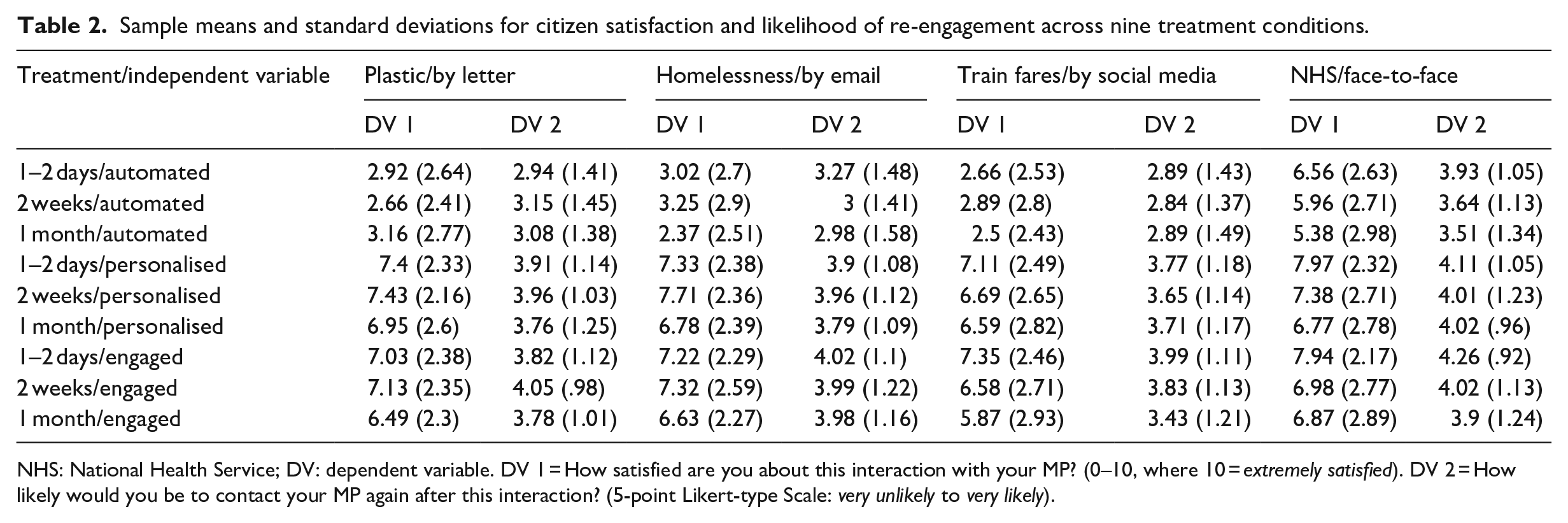
NHS: National Health Service; DV: dependent variable. DV 1 = How satisfied are you about this interaction with your MP? (0–10, where 10 = extremely satisfied). DV 2 = How likely would you be to contact your MP again after this interaction? (5-point Likert-type Scale: very unlikely to very likely).
As clarified in the previous section, we set out to establish if political contact could be used to improve indicators of democratic health. It is possible that the results we report may be affected by the corresponding ideology and/or partisanship of both citizen and MP. While the mitigating impact of these two-way effects should form the basis of future research, we now test for variations in our dependent variables according to participant ideology before proceeding. To assess whether our treatments affect citizens of opposing ideologies differently, we report a series of two-way analyses of variance (ANOVAs). In each instance, two-way ANOVAs are used to assess the mean differences between participants by ideology (Left or Right) and treatment condition (1 month/automated or 2 days/engaged). These treatment conditions were selected to compare polar combinations of our EVM manipulations. Participants were asked to report their ideology on two ten-point Left-Right scales for economic and social issues. An aggregate score was calculated for each participant and then a binary variable was created for those scoring above and below the scale midpoint of 5 (Mean = 4.96, SD = 2.04, range = 10). Assuming that any differences between participants by ideology will be most pronounced in the least and most responsive treatment conditions, we focus on that subsample of participants who were randomly allocated to these treatments, respectively, for each EVM.
The results of these two-way ANOVAs are reported graphically in Figure 3. In each instance, the main effects of our treatment conditions are highly statistically significant, but neither the main effects of ideology nor the interaction effects between ideology and our treatment conditions reach statistical significance. The only exception is a relatively weak interaction effect on participant satisfaction in the NHS/In Person EVM (F(1, 216) = 4.512, P < 0.05). This suggests that it made a difference to be both on the Left ideologically and assigned to the least responsive treatment condition. Subject to future research, it is possible that highly politicised subject domains such as the NHS – traditionally a policy arena dominated by political parties on the Left – can aggravate or ameliorate the effects of tailored political contact. However, the majority of results reported here indicate that the impact of political contact (as varied by the timeliness and style of an MPs’ communications) on our chosen indicators of democratic health is overwhelmingly comparable for citizens on the Left and Right of politics. 4
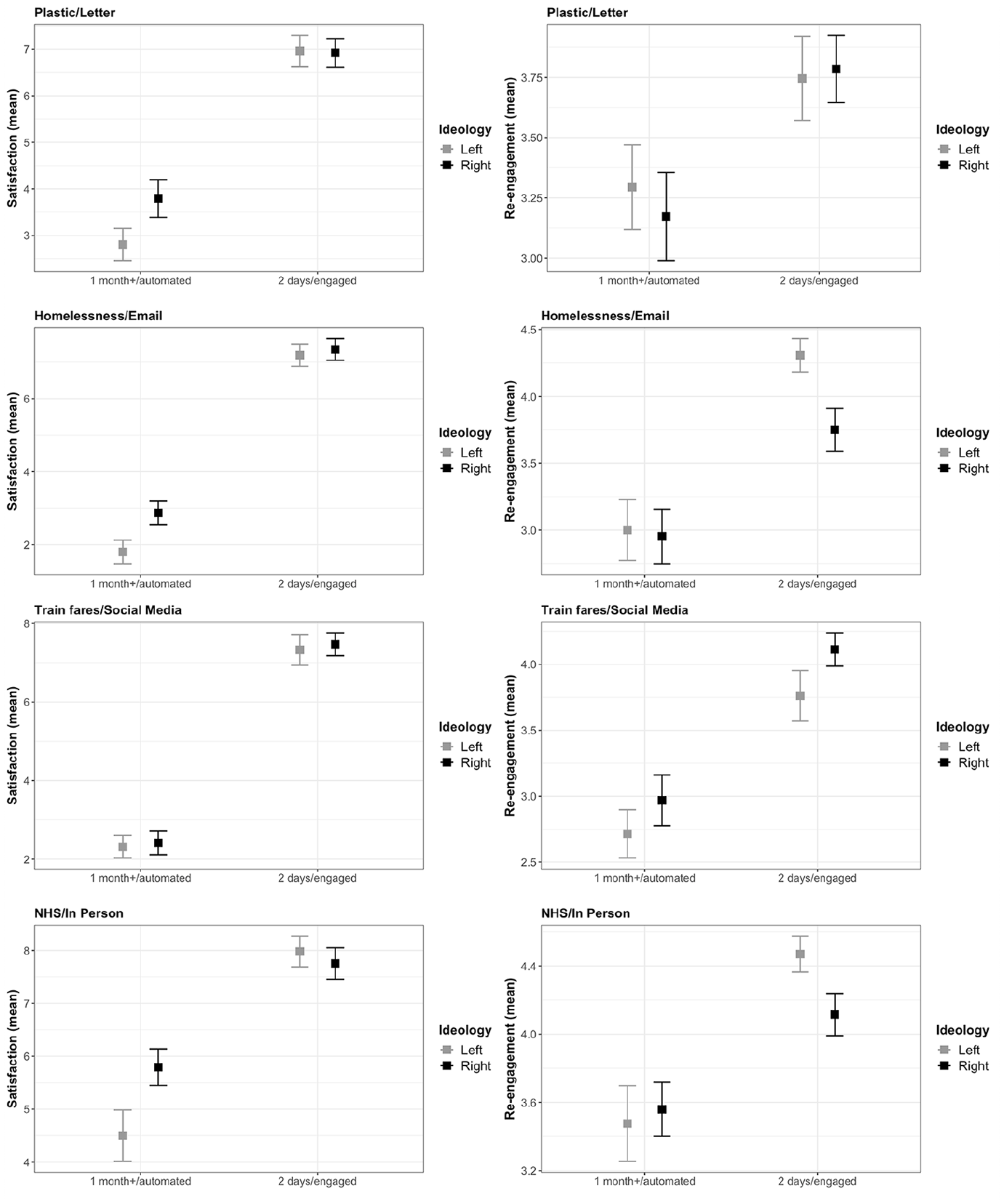
A series of two-way ANOVAs to assess the effects of ideology and treatment conditions upon citizen satisfaction and engagement with political contact.
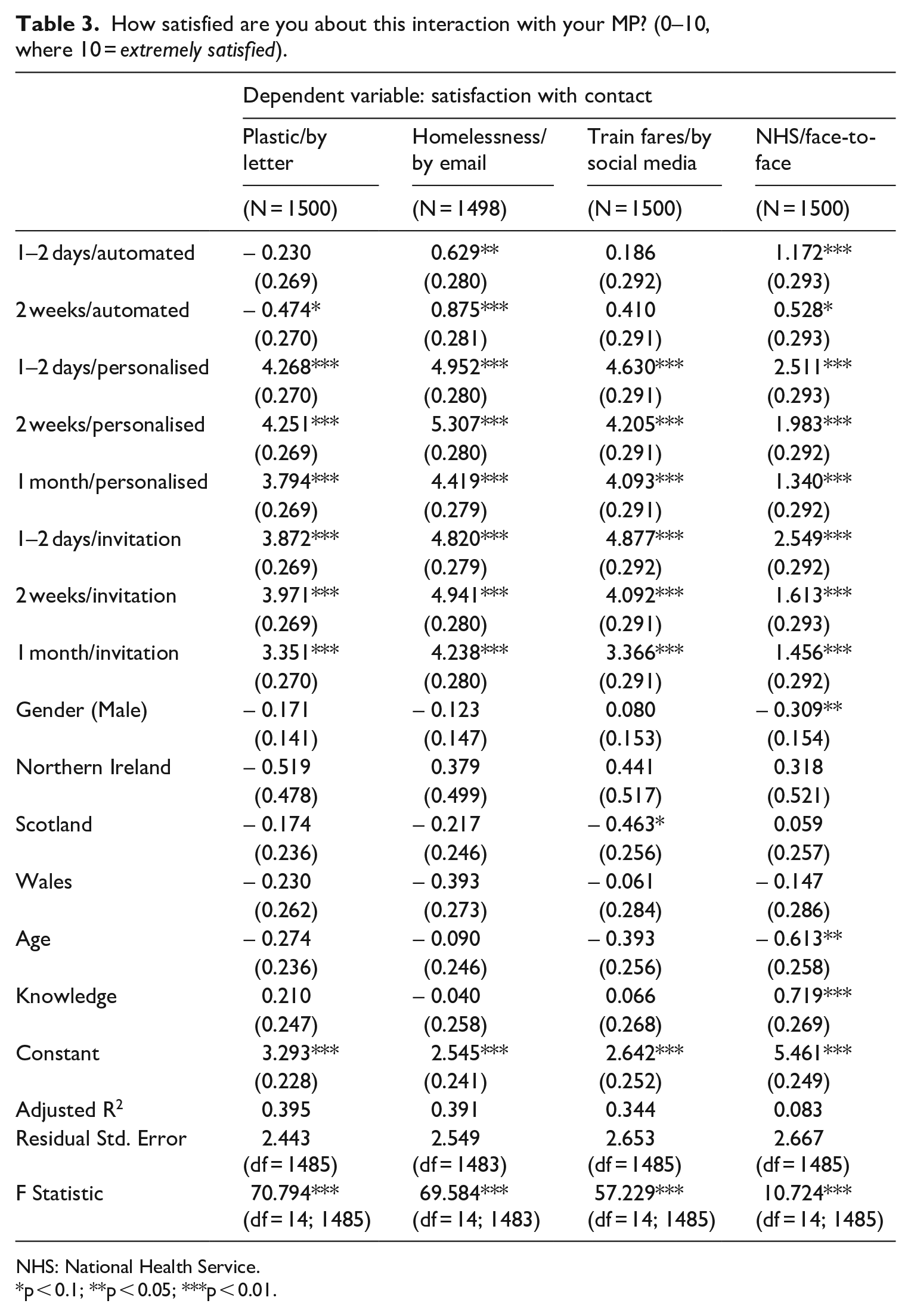
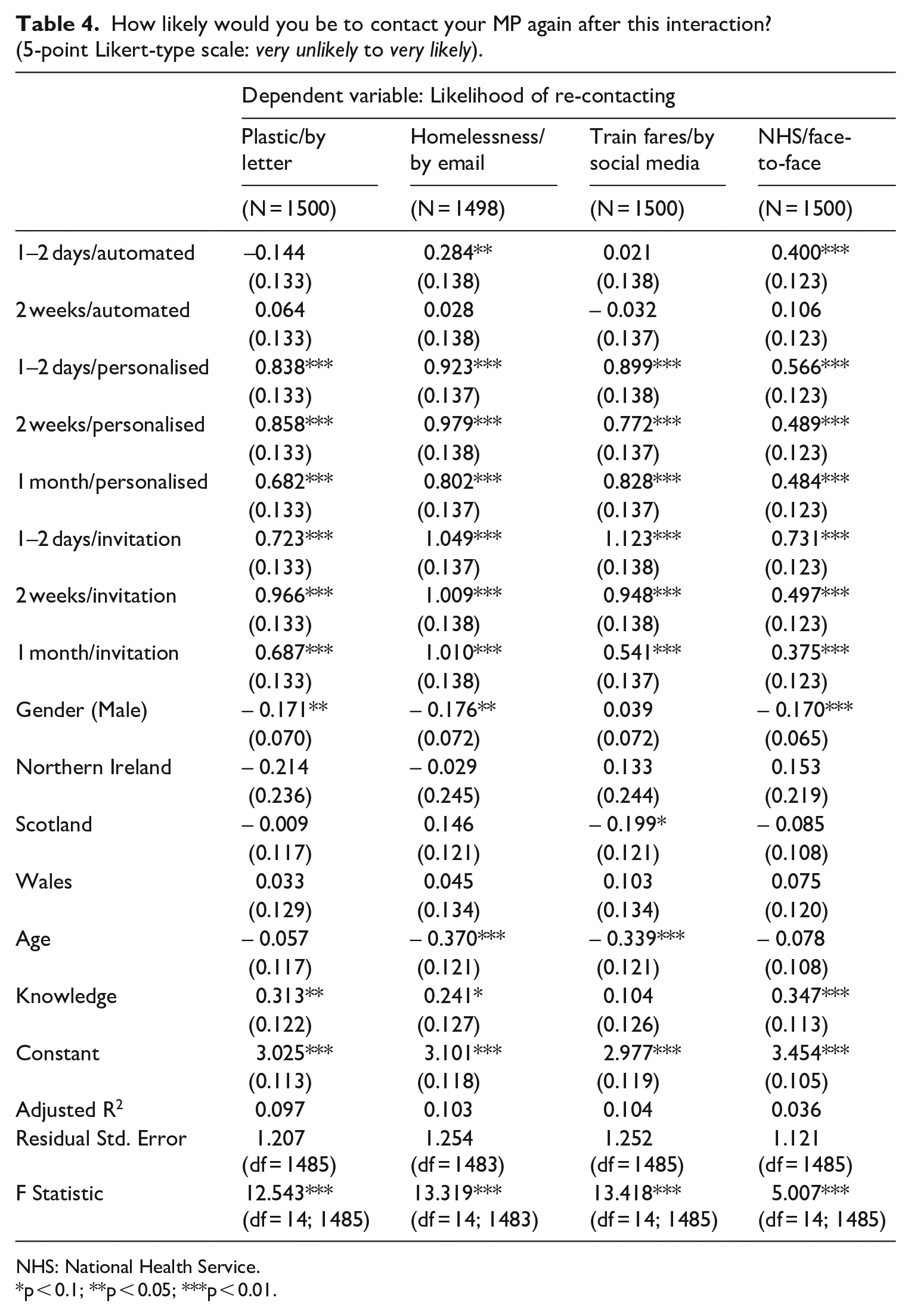
We now test hypotheses 1 and 2 using a series of ordinary least squares (OLS) regressions that measure the effect of our EVM treatments (response time and response style) upon both of our dependent variables: participants’ satisfaction with their hypothetical experience of political contact and their likelihood of re-contacting their MP as a result of that contact. The results of these OLS models are presented in Tables 3 and 4. In each case, the unstandardized regression coefficients are shown for eight of our treatment conditions with the ninth (an automated response after 1 month) as the reference category. This was selected on the basis that it should represent the least responsive mode of political contact in terms of our key variables of interest: time and style. Controls were also included in these regressions for gender (1 = male), age (rescaled 0–1 across six categories), region (reference category = England) and political knowledge (measured as a composite score from responses to six true/false statements about British politics, rescaled 0–1).
How satisfied are you about this interaction with your MP? (0–10, where 10 = extremely satisfied).
NHS: National Health Service.
*p < 0.1; **p < 0.05; ***p < 0.01.
How likely would you be to contact your MP again after this interaction? (5-point Likert-type scale: very unlikely to very likely).
NHS: National Health Service.
*p < 0.1; **p < 0.05; ***p < 0.01.
Table 3 shows the results for participants’ satisfaction with their experience of political contact in each EVM experiment. The results demonstrate strong effects across the majority of our treatment conditions. In particular, it appears that response style had a greater impact on participant satisfaction than response time. For example, personalised or engaged responses caused a four- to five-point increase in satisfaction across an 11-point scale regardless of the time it took for the MP to respond (H1). By contrast, automated responses that were received in less than a month only caused a marginal improvement of less than one point in participant satisfaction (H2). Given the volume of communications fielded by MPs’ offices, this may be a positive finding. It suggests that MPs can boost their constituency image by improving the content of their responses, even if they are unable to respond immediately. The adjusted R2 scores in Table 3 are also indicative. Three of these models (plastic waste by letter; homelessness by email; and train fares by social media) are accounting for more than a third of the variance in participant satisfaction. This is an impressive result for an EVM study targeting specific variables. However, the variance explained by the fourth model, in which political contact occurred face-to-face, is much lower (just 8%). The increases in satisfaction across the treatment conditions are also much more modest (one to two points).
Table 4 presents the results for our second dependent variable of interest: participants’ likelihood of re-contacting their MP. Unlike participant satisfaction, the coefficients in Table 4 illustrate a more muted story. The effects of our treatment conditions are still highly significant and response style still appears to have a greater impact than response time. However, the increase in the likelihood of a participant re-contacting their MP following any of our manipulations is, at best, one point on a five-point scale by comparison to our reference treatment. This implies MPs may be able to increase the likelihood that constituents feel willing to contact them by improving the content of their communications (H1), but the returns will not be as great as the immediate impact on citizen satisfaction seen in Table 3. The variance explained by these models is also considerably lower than those testing participant satisfaction, suggesting that there may be any number of additional confounding variables that counter or reinforce the positive effects of tailored political contact when it comes to action-oriented outcomes. Age, gender and political knowledge also exert moderate and statistically significant effects upon this dependent variable across most of our EVMs. It appears men and older citizens are less likely to re-contact their MP, while those with high levels of knowledge about politics are more likely to do so.
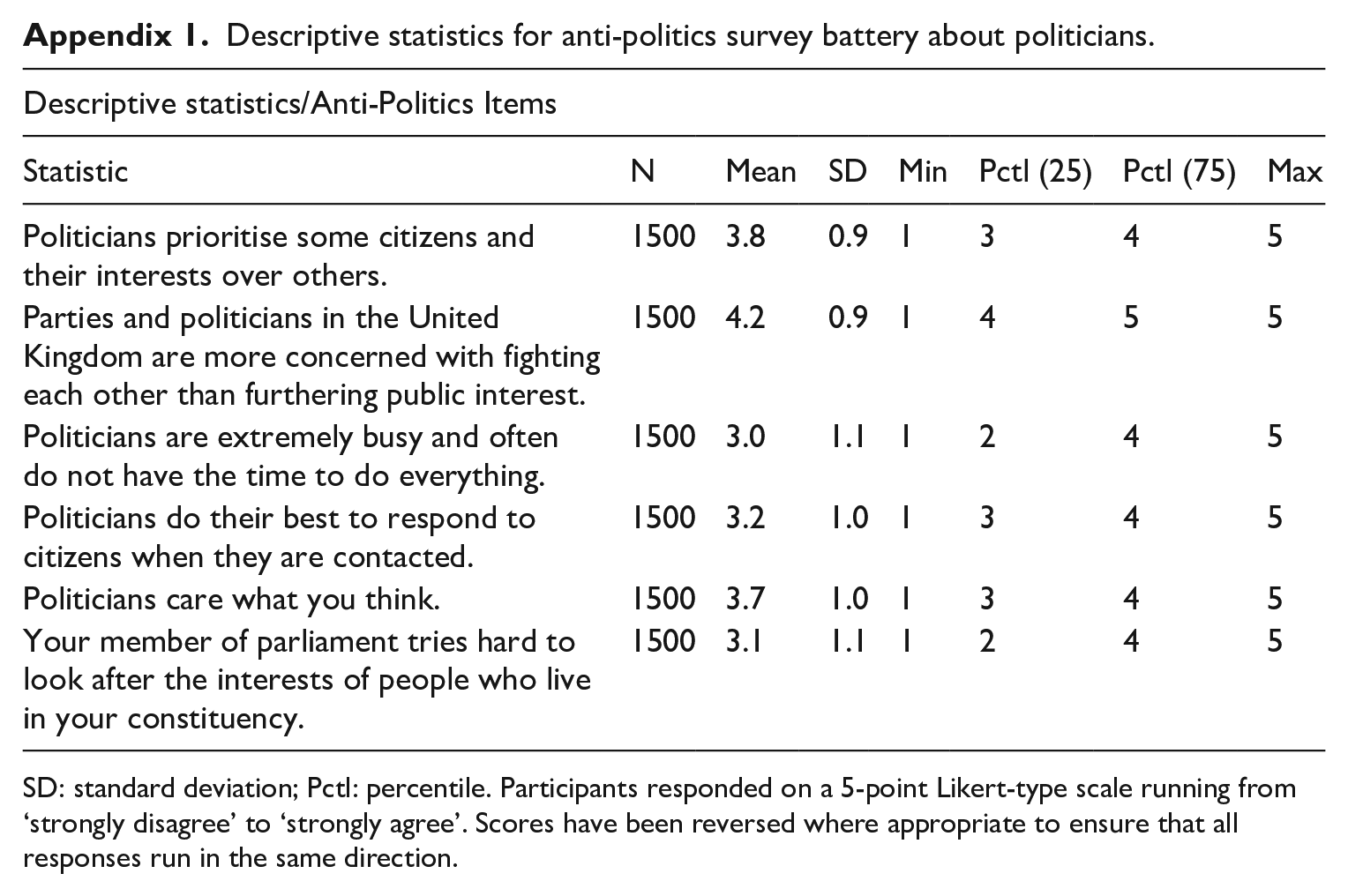
We also hypothesised (H3) that the impact of tailored political contact would be weaker where it came up against significant political apathy and generalised anti-political sentiments about politicians. To test this, we re-ran our analyses to include interaction terms between each of our treatment conditions and participants’ exogenous attitudes towards politicians. These attitudes were measured using six statements that participants were asked to rate on a five point Likert scale running from ‘strongly disagree’ to ‘strongly agree’ (Appendix 1). Participant responses were then aggregated into a single score on a ten-point scale (0–10, where 10 = most anti-political) and rescaled 0–1. Figure 4 illustrates a selection of marginal effects for statistically significant (p < 0.05) interaction effects between our experimental manipulations and anti-political sentiment upon our ‘satisfaction’ dependent variable (see supplemental material). In each plot, the intercept represents the main effect of the selected treatment on the dependent variable and the regression line shows the additional effects within that treatment condition across our anti-politics scale. Confidence levels and underlying distributions of the anti-politics scale have been included for reference. Contra to our hypothesis, we find that MPs can counteract negative public sentiments by improving the style of their constituent communications. Put another way, participants with the strongest negative attitudes towards politicians were an additional 2–3 points more satisfied with their MPs’ contact (when the style of that communication was bespoke) than participants who already had more positive opinions about politicians.
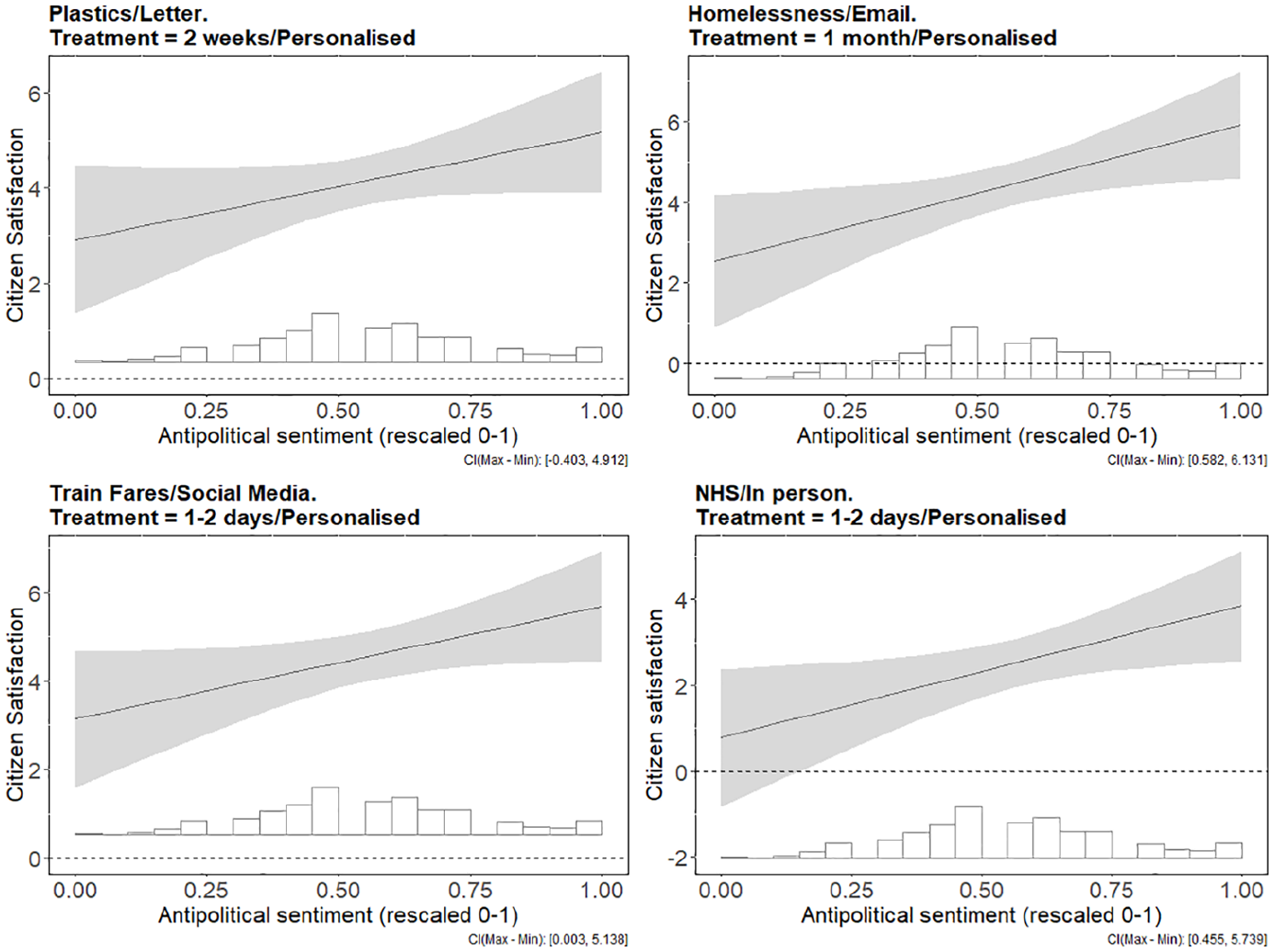
Interaction plots showing the combined effects of response time/response style and anti-political sentiment upon citizen satisfaction with political contact (Reference = 1 month/automated).
We then re-ran these interaction models for our second dependent variable: participants’ likelihood of re-contacting their MP. The trends in the results ran in the opposite direction to those presented above; only two of these interactions were statistically significant (Figure 5). It appears that far from mitigating the effects of anti-politics, the positive impact of our EVM treatments on the outcome variable was reversed when interacted with participants’ attitudes towards politicians. For example, participants with the most negative opinions of politicians were equally likely (or unlikely) to re-contact their MP regardless of whether they had received quick, moderate or slow responses in the hypothetical EVM, or whether those responses were automated, personalised or engaged. This suggests, contrary to other studies, that there are conditions under which those with anti-political sentiments will engage.
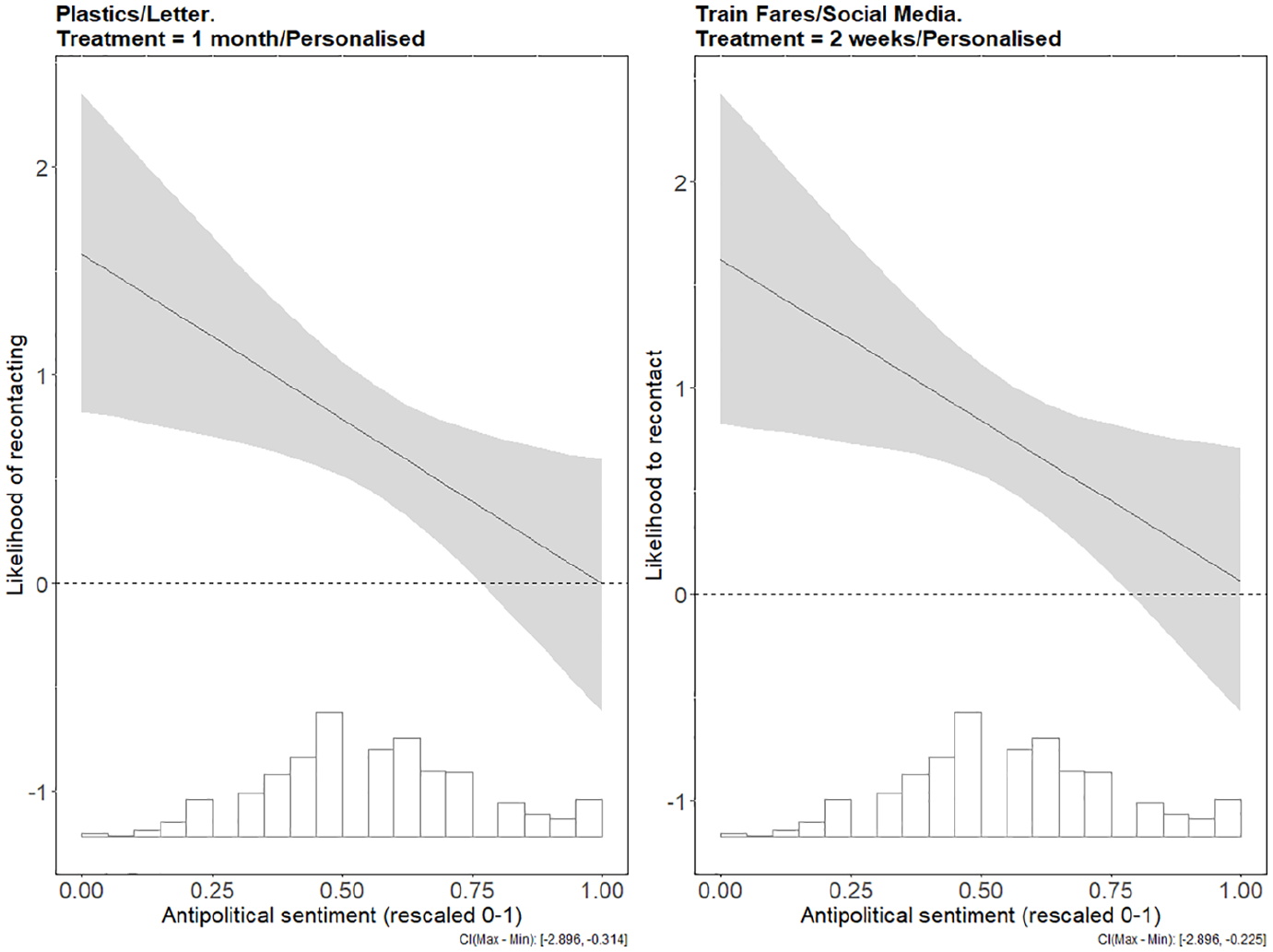
Interaction plots showing the combined effects of response time/response style and anti-political sentiment upon citizens’ likelihood of re-contacting their local MP after initial experience of contact (Reference = 1 month/automated).
Discussion
In conducting this study, we were interested in exploring the extent to which representatives could tailor their political contact with the public to affect citizens’ satisfaction and anticipated future engagement. Specifically, we explored whether variations in the content and timeliness of MPs’ responses to citizens’ communications across varying media precipitated differences in these outcome variables. We find that:
a. personalised responses can significantly improve citizens’ satisfaction with political communication and moderately improve the likelihood of re-engagement (H1 supported);
b. quick responses to communication can marginally improve citizens’ satisfaction and rates of anticipated political contact (H2 partially supported);
c. politicians can overturn pre-existing anti-political sentiments by personalising their public communications, insofar as they can catalyse higher levels of positive satisfaction with political contact among those who are most disenchanted (H3 unsupported).
Our findings offer evidence that the style of political contact does matter for measures of democratic health. The results are not, however, always as we expected. With regard to H1, we predicted that more bespoke and detailed responses would cultivate greater citizen satisfaction and political engagement. In line with our expectations, we find that personalised or engaged responses from MPs – that either addressed the participant by name, responded in detail to specific questions or invited the participant for further discussions about a policy issue – caused a substantial increase in participant satisfaction (as well as moderate increases in the likelihood of re-engaging). These results hold regardless of the time it took for the MP to respond. Some of our participants’ open-text reflections point to the importance of this human connection: I knew I could contact the MP again when they replied so personally as they also were concerned about the issues. However, if the MP had sent an automated reply to me, that meant they didn’t care (Participant No. 796). Personal acknowledgement shows that the MP has taken on board my views and so it is worth my while persevering with the matter (Participant No. 936).
By contrast, we only find marginal support for our second hypothesis, in which we predicted that the longer a citizen has to wait for an MP to respond to them, the less satisfied and likely to engage in politics they will be (H2). Contrary to our expectation, we find that it made very little positive difference whether an MP responded to a participant within one–two days or one month.
These results demonstrate the importance of quality as opposed to speed when it comes to effective political contact between governor and governed. Possibly more striking is the unexpected interaction uncovered here between the quality of political contact (as measured by content and timeliness) and anti-political sentiment. The results of our experiments suggest that even those who are currently most disengaged with politics, and express the most negative opinions about politicians, can exhibit positive changes in relation to our indicators of democratic health following political contact with their representatives (H3). A review of open-text reflections from participants with above-average scores for anti-political attitudes suggests two nascent themes: a sensitivity to the authenticity of an MP and a desire to be heard or given credence. These inferences are captured by the comments of such cynically minded participants: The personal and engaged responses made me feel my MP was taking me and their role seriously (Participant No. 191). If your local MP actually acknowledges you and doesn’t just use auto-generated responses, you are much more likely to be satisfied that they are actually listening to you (Participant No. 307).
These findings are not only pertinent for scholars of political contact and anti-politics, but they also offer important insights for political representatives themselves. Future studies should seek to replicate these results and interrogate the psychological foundations of our qualitative suppositions.
These findings are likely to be of interest to political representatives as they suggest it is possible to make small adjustments to current communication practices that may result in positive constituent outcomes as well as enhanced civic engagement. However, in drawing this conclusion, we argue that some caution is needed. The relationship between political satisfaction and the form of contact is likely to be affected by additional variables that we have not considered here. Existing research on partisanship effects suggests that the congruence between an MP’s partisan position and voters’ own ideology may affect judgements. It is possible, for example, that ideological bias might mean that (a) citizens are more/less likely to contact an MP of a similar/different partisan or ideological persuasion in the first place and (b) their judgement on the quality of that experience may be distorted accordingly (in either a positive or negative direction). Similarly, it may be that the outcome of any interaction between governor and governed, and the degree to which citizens feel that their issues and views have been resolved and acted upon, may also have a strong retroactive impact. Put another way, citizens might be satisfied with an MP’s initial response, but may be equally or more disappointed if that MP’s efforts do not produce a positive outcome. In addition, perceptions may vary dependent on whether it is an MP themselves that responds to citizen contact or a member of an MP’s staff. Our study has not disaggregated this possibility, but Crewe’s (2015) work has shown that MPs working styles vary from highly to minimally involved. Hence variations in practice may exist that could affect citizens’ views. These possibilities suggest that, in practice, it may be difficult for MPs to achieve the results we have highlighted in this experimental survey, raising additional lines of inquiry for future research.
Insofar as these results are generalisable to other countries where anti-politics is prominent, we believe that these findings will be of special interest to scholars of comparative majoritarian political systems in the Anglosphere (e.g. Australia, New Zealand, Canada, the United States). With similar norms of political contact derived from the Westminster model, these practices may be generalisable to representatives and practitioners. At the same time, further analysis is required to explore the extent to which these findings are replicated in other democratic contexts and, in particular, in countries which operate under different representative systems (i.e. proportional or multi-member constituency electoral systems).
Our findings are equally important in the context of a wider scholarship on political practice that has emphasised the constraints on representatives’ ability to act as citizens may desire. Clarke et al. (2018)’s book The Good Politician, for example, has demonstrated how the dynamics of contemporary politics shape the way that politicians can behave – resulting, at present, in shorter and often poorer, less authentic performances by politicians. Even if the results that we have produced hold up to further analysis and scrutiny, it is important to note that MPs may not be in a position to respond. As Flinders et al. (2020) have noted, politicians face extreme workloads and confront a range of stresses in navigating the vocation of politics. It may, therefore, not be feasible to expect politicians to respond in great detail and with invitations for further engagement. In this light, we note the UK Parliament’s recent calls for the parliamentary digital service to ‘identify tools to help increase the volume and quality of interaction between MPs and their constituents’ (UK Parliament, 2015: 10). Mirroring this call, we suggest it would also be fruitful for institutions to consider how they can support representatives in meeting citizens’ expectations about the style of their political communications. This could be done by creating a code of best practice for MPs’ communication, led by political parties or parliamentary bodies such as the Independent Parliamentary Standards Authority (IPSA), that establishes clear benchmarks and realistic expectations of the form political contact should take.
Although not a primary focus of this article, we also explored the effects of political contact across different media. Here, we build on analyses by Bimber (1999), Dahlberg (2001) and Stromer-Galley et al. (2015), who have all demonstrated that the channels of interaction and the different affordances of tools can impact upon civic engagement. By contrast, we find very little variation across remote forms of media (email, letter and social media), with aggregate levels of satisfaction and anticipated engagement no different across these media regardless of our treatment conditions. As a result, we suggest that representatives may be better placed to focus their energies on the content of their public communications rather than expending too much time mastering any one medium. We do find, however, that increases in the quality of political contact (content and timeliness) have significantly lower positive effects when that contact occurs face-to-face. We intuit this may say something specific about the experience of meeting an MP in person, particularly the heightened expectations and connectedness that may occur as a result. This supplements previous research that shows face-to-face interactions, as opposed to online communication methods, can yield bolder and more sustained political discussions and deliberations (Stromer-Galley et al., 2015). Unlike other forms of detached communication, citizens may expect their MPs to take more immediate action following direct political contact. This is likely because the experience of being listened to in person raises expectations of subsequent action, making it harder for politicians to exceed expectations and hence induce higher levels of satisfaction. Gender, age and political knowledge also exerted small but statistically significant effects in the face-to-face EVMs, suggesting that older men and those with low levels of knowledge about politics may be less satisfied with their MPs’ response following face-to-face contact irrespective of how quick or bespoke that response was.
In conducting this research, we argue that these findings mark an important advance in our understanding of the dynamics of political contact and representation. They also help to demonstrate the value of the experimental method for studies of this type. EVM allows scholars to explore the impact of different response types on different dependent variables, building up a rich picture of the influences upon and outcomes of different forms of political contact. For scholars of representation, this approach could be applied to studies of representative style (trustee, delegate, partisan, for example), or to examine responses to different governing outcomes. Common in other disciplines, we therefore argue that experiments have the potential to offer valuable insights for scholars of political science. And yet, we also need to acknowledge the limitations that future research into this topic may want to consider. EVM forces participants to respond to hypothetical scenarios that cannot necessarily replicate the same contextual experience encountered in ‘real life’ (e.g. Lohrke et al., 2010). This is particularly challenging when it comes to studying political contact, given the difficulty of reproducing the contextual details and decision-making pressures of a scenario that is relatively rare, unfamiliar to most members of the public and often bespoke where it does occur (especially when contact occurs face-to-face). In relation to H3, for example, it is possible that citizens with strong anti-political sentiments might be highly unlikely to engage in the type of citizen-initiated contact with MPs we outline in our EVMs. We cannot say with certainty, therefore, that results we report here would replicate in natural settings. To improve the external validity of our results, we recognise that future iterations of this study should seek to enhance the level of realism and improve participant immersion in the EVM by using audio, pictures, video or interactive technologies (see also Hughes and Huby, 2002). There is also a case for refining the sample to include only participants who have already contacted an MP in real life. By studying people who are familiar with a situation, researchers using experimental methodologies are less likely to elicit artificial results (e.g. Aiman-Smith et al., 2002), although this would, by implication, limit the generalisability of the findings.
In conclusion, we argue that this article marks an important development in our understanding of the micro-level aspects of political contact. Offering new insights into citizens’ reactions to different forms of political contact, we have sought to develop our understanding of the dynamics of representation. In particular, we argue that these insights have practical implications for our understanding of representation, highlighting the importance of the form of political contact for citizen views. In addition, our findings provide valuable evidence that politicians seeking to promote citizen satisfaction and engagement may want to (and need support to) pay attention to the quality of their responses to contact – making personalised responses, even if this takes additional time. Quality, not speed, is what citizens appear to want.
Supplemental Material
Soo_Weinberg_Dommett_Supplementary_Appendix – Supplemental material for One moment, please: Can the speed and quality of political contact affect democratic health?
Supplemental material, Soo_Weinberg_Dommett_Supplementary_Appendix for One moment, please: Can the speed and quality of political contact affect democratic health? by Nikki Soo, James Weinberg and Katharine Dommett in The British Journal of Politics and International Relations
Footnotes
Appendix
Descriptive statistics for anti-politics survey battery about politicians.
| Descriptive statistics/Anti-Politics Items | |||||||
|---|---|---|---|---|---|---|---|
| Statistic | N | Mean | SD | Min | Pctl (25) | Pctl (75) | Max |
| Politicians prioritise some citizens and their interests over others. | 1500 | 3.8 | 0.9 | 1 | 3 | 4 | 5 |
| Parties and politicians in the United Kingdom are more concerned with fighting each other than furthering public interest. | 1500 | 4.2 | 0.9 | 1 | 4 | 5 | 5 |
| Politicians are extremely busy and often do not have the time to do everything. | 1500 | 3.0 | 1.1 | 1 | 2 | 4 | 5 |
| Politicians do their best to respond to citizens when they are contacted. | 1500 | 3.2 | 1.0 | 1 | 3 | 4 | 5 |
| Politicians care what you think. | 1500 | 3.7 | 1.0 | 1 | 3 | 4 | 5 |
| Your member of parliament tries hard to look after the interests of people who live in your constituency. | 1500 | 3.1 | 1.1 | 1 | 2 | 4 | 5 |
SD: standard deviation; Pctl: percentile. Participants responded on a 5-point Likert-type scale running from ‘strongly disagree’ to ‘strongly agree’. Scores have been reversed where appropriate to ensure that all responses run in the same direction.
Funding
The author(s) received no financial support for the research, authorship and/or publication of this article.

Supplemental material
Additional supplementary information may be found with the online version of this article.
Notes
References
Supplementary Material
Please find the following supplemental material available below.
For Open Access articles published under a Creative Commons License, all supplemental material carries the same license as the article it is associated with.
For non-Open Access articles published, all supplemental material carries a non-exclusive license, and permission requests for re-use of supplemental material or any part of supplemental material shall be sent directly to the copyright owner as specified in the copyright notice associated with the article.
