



Abstract
Across two experimental studies, we explored whether exposure to intergroup conspiracy theories can increase violent reactions towards targeted groups. We also examined how ideological attitudes may moderate the effect. In Study 1 (N = 160, preregistered), we found that exposure to immigrant conspiracy theories (vs. control) increased the willingness to use violence for those who reported higher social dominance orientation (SDO) and right-wing authoritarianism (RWA). Study 2 (N = 211, preregistered) sought to extend these results by focusing on a specific target: Muslim immigrants. Exposure to Muslim immigrant conspiracy theories (vs. control) increased motivation and willingness to use violence for those with higher SDO (but not RWA). These findings showcase how exposure to intergroup conspiracy theories and violent reactions are conditional on specific ideological attitudes. Thus, when considering interventions, we argue that it is crucial to consider the role of ideological worldviews when seeking to combat conspiracy-inspired violence.
A conspiracy theory alleging that Europe is secretly undergoing “Islamification” proposes that a malevolent Muslim agenda exists to impose Sharia law upon Western society, thereby replacing Western culture with Islamic domination (Fekete, 2012). This conspiracy theory, sometimes called Eurabia, has existed on the fringe for some time (e.g., Bat Ye’or, 1985) but has gained popularity since the 9/11 terror attacks (Uenal, 2016). Anders Breivik, who identified as a counter-jihadist and opposed multiculturism in Norway, referred to Eurabia in his manifesto entitled “2083: A European Declaration of Independence” before embarking on a July 22, 2011 deadly terror attack in Norway (Fekete, 2012). Seven years later, the perpetrator of the Christchurch mosque attacks in New Zealand also compiled a manifesto declaring inspiration from Breivik (Macklin & Bjorgo, 2021). Although such events can be viewed as rare and extreme violent occurrences perpetrated by “lone wolf” attackers, the associated conspiracy-driven ideology thrives within the communities that endorse extreme political views (Hebel-Sela et al., 2022; Kaplan, 2021; Rousis et al., 2022; van Prooijen et al., 2015). It is imperative, therefore, for researchers to understand how conspiracy beliefs contribute to violent extremism. In the current research, employing an experimental design, we sought to investigate the role of intergroup conspiracy theories in provoking violent responses towards immigrants who are the target of conspiracy theories.
Consequences of Conspiracy Theories
Conspiracy theories are universal across social and cultural environments and can impact the smooth running of societies (Jolley et al., 2022; van Prooijen & Douglas, 2018). More recently, conspiracy theories related to the COVID-19 pandemic have drawn the spotlight upon the damaging societal effects of conspiracy beliefs on public health issues (see meta-analysis by Bierwiaczonek et al., 2022). However, the consequences of conspiracy theories are broader than health and can range from politics and the environment to crime (for a review, see Jolley et al., 2022). For example, exposure to conspiracy theories about climate change science decreased intentions to engage in eco-friendly behaviour (Jolley & Douglas, 2014b; see also Biddlestone et al., 2022 for a meta-analysis). Jolley et al. (2019) also demonstrated that exposure to conspiracy theories about significant events (e.g., 9/11) led to stronger intentions to engage in everyday crimes (e.g., accepting cash for items sold to avoid tax). This relationship was explained by increased feelings of anomie, which refers to dissatisfaction with society and the perception that the fabric of society is crumbling.
The consequences of conspiracy beliefs can also have an intergroup focus. As described by van Prooijen and Douglas (2018), conspiracy theories as a social occurrence share attributes with intergroup conflict—strong ingroup identity coupled with the perception of outgroup threat. Intergroup conflict can be defined as “the perceived incompatibility of goals or values between two or more individuals, which emerges because these individuals classify themselves as members of different social groups” (Böhm et al., 2020, p. 4), and it influences attitudes (e.g., prejudice), emotions (e.g., fear), and behaviour (e.g., discrimination). Intergroup conflict has been described as the social psychology “problem of the century” by Fiske (2002), and has seen extensive investigation resulting in several theories. For instance, realistic group conflict (Sherif, 1966) and social identity theory (Tajfel & Turner, 1979) consider the environmental factors that arouse prejudice and discrimination, resulting in intergroup conflict.
Realistic group conflict (Sherif, 1966) proposes that intergroup conflict arises due to competition for resources that are perceived to be limited, such as money, power, or status. However, following social identity principles (Tajfel & Turner, 1979), a positive social identity directly affects self-esteem and is acquired through the ingroup’s stature; therefore, simply classifying others as belonging to an outgroup, automatically seemingly arouses prejudice and discrimination. Combining aspects of both realistic group conflict and social identity, intergroup threat theory (Stephan et al., 2016) proposes that a perceived threat to the ingroup can present in the form of a realistic threat relating to material resources (e.g., status and money) or a symbolic threat to abstract commodities, such as morals, norms, esteem. Whether or not a real threat exists, these perceptions of outgroup threat against the ingroup have real consequences (Stephan et al., 2016).
Uenal (2016) applied the framework of ıntergroup threat theory to test the relationship between German ingroup identification and Islamophobic conspiracy stereotypes (e.g., “German norms and values are threatened by the presence of Muslims”). The “clash of civilisations” concept (a thesis arguing that religious and cultural identities would be the central motivation of post-Cold War conflict; Huntington, 1993) was applied as a form of symbolic threat (e.g., “Islam is not compatible with democracy and human rights”). This symbolic threat mediated the association between German ingroup identification and Islamic conspiracy stereotypes (Uenal, 2016). When considering how intergroup conflict is associated with the perceived threat by an outgroup (Schmid et al., 2014), it is plausible that intergroup conspiracy beliefs, in conjunction with the perceived threat posed by the outgroup (e.g., immigrants), may contribute to intergroup conflict.
It is perhaps unsurprising that conspiracy theories proliferate between groups involved in conflict (Pipes, 1997), since they share common social motivations towards intergroup conflict, specifically to maintain a positive ingroup identity and safeguard against outgroup threat. When ingroup identity is threatened, is perceived to be disadvantaged, or the ingroup image is undermined, then conspiracy theories about the outgroup may be formed (Abalakina-Paap et al., 1999). Similarly, collective narcissism—the concept that ingroup greatness depends on the recognition of others—was a predictor of belief in conspiracy theories about outgroups (Cichocka et al., 2016). Further, Jewish conspiracy theories in Poland were found to be the strongest predictor of anti-Semitic behavioural intentions, including not voting for a Jewish candidate or not being within close proximity of a Jewish person (Bilewicz et al., 2013). Moreover, conspiracy theories about minority groups exacerbate prejudice towards that group, such as Jewish people, and conspiracy theorising about one group affects feelings towards unrelated groups, such as immigrants (Jolley et al., 2020). These studies demonstrate how the endorsement of intergroup conspiracy theories is utilised to defend the ingroup and can result in harmful conduct toward the outgroup. This social, intergroup factor forms the basis of the current research.
Conspiracy Theories and Violence
A review by Bartlett and Miller (2010) analysed various extremist groups’ literature, propaganda, and ideologies, and found evidence of widespread conspiracy beliefs. The findings indicated that far-right groups tend to believe in Jewish cabals controlling world governments, far-left groups believe in international elite financiers funding a “new world order,” and Islamist groups subscribe to ideas of Judeo-Christian-capitalist groups waging war against Islam. Bartlett and Miller argue that the frequency of conspiracies within extremist groups indicates a possible social function, perhaps promoting cohesion and the internalisation of group ideology. Although conspiracy theories may not be a prerequisite for extremism, they may serve as a “radicalising multiplier,” promoting group cohesion and pushing the group towards more extreme and violent behaviour (Bartlett & Miller, 2010).
Violent incidents involving immigrants, their affiliates, or people perceived as immigrants have increased (McDonald, 2018). Examples include the Tree of Life synagogue shooting in Pittsburgh, US in October 2018; multiple mosque shootings in Christchurch, New Zealand in March 2019; and the Walmart shooting in El Paso, US in August 2019 (e.g., Ahmed & Murphy, 2018; Bogel-Burroughs, 2019; Kirkpatrick, 2019). The shooters posted manifestos online in all three occurrences, which indicated membership to right-wing extremist ideology and targeting immigrants or their affiliates. In a statement to the U.S. House of Representatives hearing (116th Congress) regarding global terrorist threats, Soufan (2019) highlighted how much of right-wing extremist ideology is based on the assertion of the “great replacement theory.” This conspiracy theory claims that Western culture is threatened by a pernicious (mainly Jewish) cabal shifting demographics towards non-White immigrants. This suggests that conspiracy beliefs may motivate violent behaviour aimed at those perceived to be conspiring. Empirical evidence supports this notion.
Early work by Uscinski and Parent (2014) found that people high in conspiracy beliefs are twice as likely to oppose gun law reform and defend political violence. Moreover, an enhanced conspiracy worldview increased the willingness to engage in illegal, nonnormative political behaviour (Imhoff et al., 2021). Of interest is the conditional effect of individual differences on the relationship between conspiracy beliefs and violence. Rottweiler and Gill (2020) demonstrated that conspiracy beliefs were positively correlated with intentions towards violent extremism. However, this relationship was conditional on individual differences such as lower self-control, higher self-efficacy, and weaker law-relevant morality. Similarly, during the global COVID-19 pandemic, conspiracy theories about the connection between 5G towers and COVID-19 became widespread (Jolley & Paterson, 2020). Jolley and Paterson (2020) provide correlational evidence that belief in 5G COVID-19 conspiracy theories was positively associated with justified use of real-world and hypothetical violence, alongside intent to engage in similar future behaviours. Anger was found to mediate the relationship, with the relationship between anger and violent reactions being strongest for those high in paranoia.
Emerging work is uncovering links between conspiracy beliefs and violent reactions. However, the link may be conditional on individual differences (e.g., self-control, paranoia), which indicates the possibility that other key variables could be essential to explore when considering levers for intervention. However, there has been a dearth of experimental work or a focus on the links between intergroup conspiracy beliefs and violence towards a target group. Indeed, Jolley et al. (2022) highlight how experimental work on the psychology of conspiracy theories is in short supply, limiting the casual claims that can be made. This point also rings true for work on extremism and conspiracy beliefs. Therefore, a chief novelty of our work is manipulating conspiracy beliefs and exploring how such exposure may impact violent reactions. We also sought to address other gaps in the literature by focusing on intergroup conspiracy theories about immigrants and exploring how individual difference variables may strengthen (or weaken) the proposed link between conspiracy beliefs and violent reactions.
The Moderating Effects of Individual Differences: Aggression, SDO, and RWA
When considering when the link between intergroup conspiracy beliefs and violent reactions could be more pronounced, social dominance orientation (SDO) is an important candidate. SDO is a personality factor that refers to how much a person favours a hierarchical group-based social system (Pratto et al., 2006). A person with high SDO would support the dominance of one group over another (e.g., race, class, gender) despite the inequality (Ho et al., 2012). SDO is a powerful predictor of intergroup attitudes and behaviour (Ho et al., 2012). Pratto et al. (2013) also argue that SDO encompasses multiple perspectives of intergroup conflict, such as cultural and political ideologies, realistic group conflict, and social identity theories. A review of group aggression literature suggests SDO contributes to intergroup aggression, such as extremism and gang-related violence (Densley & Peterson, 2018).
Another relevant factor is right-wing authoritarianism (RWA), which is rooted in the theory of the authoritarian personality first proposed by Adorno et al. (1950) following the rise of fascism in the 1930s. RWA predicts an individual’s level of deference to authority and how strictly they adhere to social conventions (e.g., Altemeyer, 1998). High RWA can result in the oppression of subordinates and aggression towards groups that are negatively labelled by authorities (Altemeyer, 2003). Furthermore, high RWA is related to ethnocentrism, nationalism, politically right-wing ideology, adherence to strict law and order, support of punitive social control, benevolent and hostile sexism, and prejudice (Altemeyer, 2003; Asbrock et al., 2010; Austin & Jackson, 2019; Bizumic & Duckitt, 2018; Roy et al., 2021).
Although RWA and SDO are independent individual difference measures, they are positively correlated with each other (Perry et al., 2013). The dual-process motivation model (Duckitt & Sibley, 2010) proposed that RWA and SDO offer two dimensions of ideological attitudes and express different motivational goals and values. Once these motivational goals and values are activated, social, intergroup, and situational factors may influence them, resulting in outcomes such as prejudice and violence (Thomsen et al., 2008). Furthermore, RWA and SDO were moderate, positive predictors of conspiracy beliefs (Bruder et al., 2013; Dyrendal et al., 2021; Imhoff & Bruder, 2014). Interestingly, in a study investigating Jewish conspiracy beliefs in Malaysia, RWA and SDO emerged as strong predictors of Jewish conspiracy beliefs (Swami, 2012). This seems to suggest that conspiracy theories regarding specific groups may serve an ideological need, and that individual differences (e.g., SDO and RWA) may increase the effects of such conspiracy theories. As these two personality factors have been associated with conspiracy beliefs (e.g., Abalakina-Paap et al., 1999; Imhoff & Bruder, 2014; Swami, 2012), it is plausible that people with higher SDO and RWA may be more likely to justify the use of violence, particularly towards (disadvantaged) groups who are perceived to be conspiring, and thus perceived as a threat to the (advantaged) ingroup.
In addition to political factors, such as RWA and SDO, it is important to acknowledge that multiple elements contribute to aggression. The general aggression model (GAM) is a framework for understanding aggression that accounts for the role of various factors (e.g., social, cognitive, and personality) in aggression and considers various outcomes, including intergroup violence (Allen et al., 2018). The GAM is comprised of three stages (input, route, outcome), which account for how individual differences, such as trait aggression, converge with situational factors to either increase or decrease aggression, which, in turn, results in either nonaggressive or aggressive outcomes (i.e., violent behaviour).
Trait aggression, a personality factor that exhibits a stable predisposition to engage in interpersonal aggression, is commonly measured with the Brief Aggression Questionnaire and subdivided into physical aggression, verbal aggression, anger, and hostility (Buss & Perry, 1992). Research indicates that trait aggression wanes with age (Huesmann et al., 1984), and men tend to exhibit higher levels than women (Eagly & Steffen, 1986). Trait aggression has been shown to be an effective predictor of aggressive behaviour (Anderson et al., 2008) in addition to acting as a moderator of the association between media violence and aggressive behaviour (e.g., people who were higher in trait aggression were more likely to demonstrate violent behaviour after consuming media violence). Moreover, trait aggression has been positively associated with support for political violence (Kalmoe, 2014), with aggression also being linked with conspiracy beliefs (e.g., Jolley & Paterson, 2020). It is plausible that alongside SDO and RWA, higher levels of trait aggression may also moderate the link between conspiracy beliefs and violent reactions towards outgroups.
Present Research
Across two experimental studies, we investigated the role played by intergroup conspiracy theories in inspiring violent reactions towards immigrants in general (Study 1) and Muslim immigrants (Study 2). In both studies, an experimental design was employed to examine whether exposure to intergroup conspiracy theories can increase violent responses. Such a design allows for the exploration of causality to be uniquely examined, addressing the need for more experimental research in the study of conspiracy beliefs and violent reactions. Importantly, however, to better understand who may be most susceptible to respond violently to exposure to immigrant conspiracy theories, measures of SDO, RWA, and trait aggression were also included as moderators. We expected the links between conspiracy exposure and violent reactions to be conditional on those specific individual variables. Materials and data for the two studies can be found at the Open Science Framework (OSF; https://osf.io/cq68z/).
Study 1
Study 1 focused broadly on immigrants, as in previous research (e.g., Jolley et al. 2020). Furthermore, research has shown that exposure to conspiracy theories about immigrants increased prejudice towards that target group (Jolley et al., 2020). Therefore, we sought to extend this work and explore whether exposure to immigrant conspiracy beliefs also increased violent reactions towards that target group. However, we expected those links to be conditional on worldviews, specifically RWA and SDO. We also included a measure of trait physical aggression, which is a specific type of trait aggression. Our primary preregistered prediction (https://osf.io/7thb5) was that those who score higher on RWA, SDO, and trait physical aggression, when exposed to conspiracy theories (vs. control), will report greater willingness to use violence towards immigrants and also will find violence towards immigrants to be more acceptable.
Method
Participants and design
One hundred and sixty-eight participants (Mage = 30.62, SDage = 11.87; 43 men, 119 women, one gender-fluid, three nonbinary, two “prefer not to say”) were recruited via a university student online recruitment platform (SONA), as well as Facebook and Twitter, and received no remuneration. All participants were above the age of 18, U.K. citizens, and were randomly assigned to one of two conditions (conspiracy theory article relating to immigrants in the UK [n = 78] vs. control [n = 82]). At the end of the questionnaire, participants were asked if they devoted their full attention to the study and if there were any distractions present during the study. Eight participants, who scored 4 and above (out of 5, with 5 indicating no attention and many distractions) on the attention check questions, were removed from the analyses. The final sample size was 160 (Mage = 30.61, SDage = 11.91; 38 men, 118 women, one gender-fluid, and three nonbinary). Our minimum preregistered target sample size was 140 participants, determined by a power analysis with a power set at 0.8 and alpha of .05, using a medium effect size derived from previous research (e.g., Jolley & Douglas, 2014a, 2014b) and overrecruiting 10% anticipating participant dropouts. However, due to the snowball sampling method employed, our final sample size exceeded our target. The independent variable (IV) was conspiracy condition (exposure vs. control), with violent reactions (willingness towards and acceptance of violence) being the dependent variable (DV). SDO, RWA, and trait physical aggression were included as moderator variables.
Materials and procedure
Participants provided informed consent and a range of demographic information (age, gender identity, nationality, income, education level, and political orientation) before completing three potential moderating measures. Firstly, a three-item trait physical aggression measure adapted from the Brief Aggression Questionnaire (Webster et al., 2015; e.g., “If I have to resort to violence to protect my rights, I will”; α = .83). The second measure consisted of the 16-item SDO measure (Ho et al., 2012; e.g., “Group equality should not be our primary goal”; α = .92). The final moderator variable was a six-item measure of RWA (Bizumic & Duckitt, 2018; e.g., “What our country needs most is discipline, with everyone following our leaders in unity”; α = .74). Participants indicated their agreement on a 7-point scale (1-7) in all cases, and presentation of these scales was counterbalanced.
Participants then read an article about immigrant conspiracy theories or nothing (control). The conspiracy article raised questions about immigrants within the UK and whether or not they might be involved in importing terrorism. The term “conspiracy theory” was not used in the article. An extract of the article is as follows:
Specifically, after investigations in other countries, immigrants have been discovered working for secret terrorist organisations. For example, in recent attacks in Europe, officials discovered new immigrants amongst the terrorists . . . Evidence is therefore mounting that immigrants arriving in European countries are embedded within, or somehow involved with, terrorist groups.
Next, participants completed a four-item measure of conspiracy beliefs about immigrants (Jolley et al., 2019; e.g., “Immigrants are working within secret networks on behalf of ISIS”; α = .90). Participants indicated their level of agreement using a 7-point scale (1 = strongly disagree, 7 = strongly agree).
Finally, participants completed two DV measures related to violent reactions towards immigrants. Firstly, one item measuring willingness to use violence against immigrants, adapted from Doosje et al. (2012; “I am prepared to use violence against immigrants to achieve something I consider very important”), was completed by participants. Secondly, a six-item Acceptance of Violence Scale adapted from the Maudsley Violence Questionnaire (Walker, 2005) was used to measure acceptance of violence. (e.g., “If an immigrant cuts you up in traffic, it’s OK to swear at them”; α = .89). Again, participants indicated their agreement on 7-point, counterbalanced scales. Participants were then thoroughly debriefed on completing the study, particularly to counteract exposure to the fictitious immigrant article. This included support information and academic evidence to refute claims of importation of terrorism by immigrants and refugees.
Results and Discussion
Data checks
Data checks were first completed to explore if demographic variables were linked with the measured outcomes. First, gender differences between men and women were analysed using a Mann–Whitney U test of difference (participants who identified as gender-fluid [n = 1] and nonbinary [n = 3] were omitted). Men scored significantly higher than women concerning physical aggression (men: M = 3.42; women: M = 2.71; Z = −2.13, p = .033) and willingness to use violence (men: M = 2.34; women: M = 1.69; Z = −2.86, p = .004). As shown in Table 1, age was also significantly positively correlated with immigrant conspiracy beliefs, RWA, physical aggression, and violence acceptance. Those who were more politically right-leaning reported higher levels of conspiracy beliefs, RWA, SDO, physical aggression, and violence. Further, it is also worth noting that significant and positive correlations were found between immigrant conspiracy beliefs and violent reactions. Conspiracy beliefs were also positively correlated with RWA, SDO, and trait physical aggression.
Means, standard deviations, and Pearson product-moment correlations for all variables: Study 1.
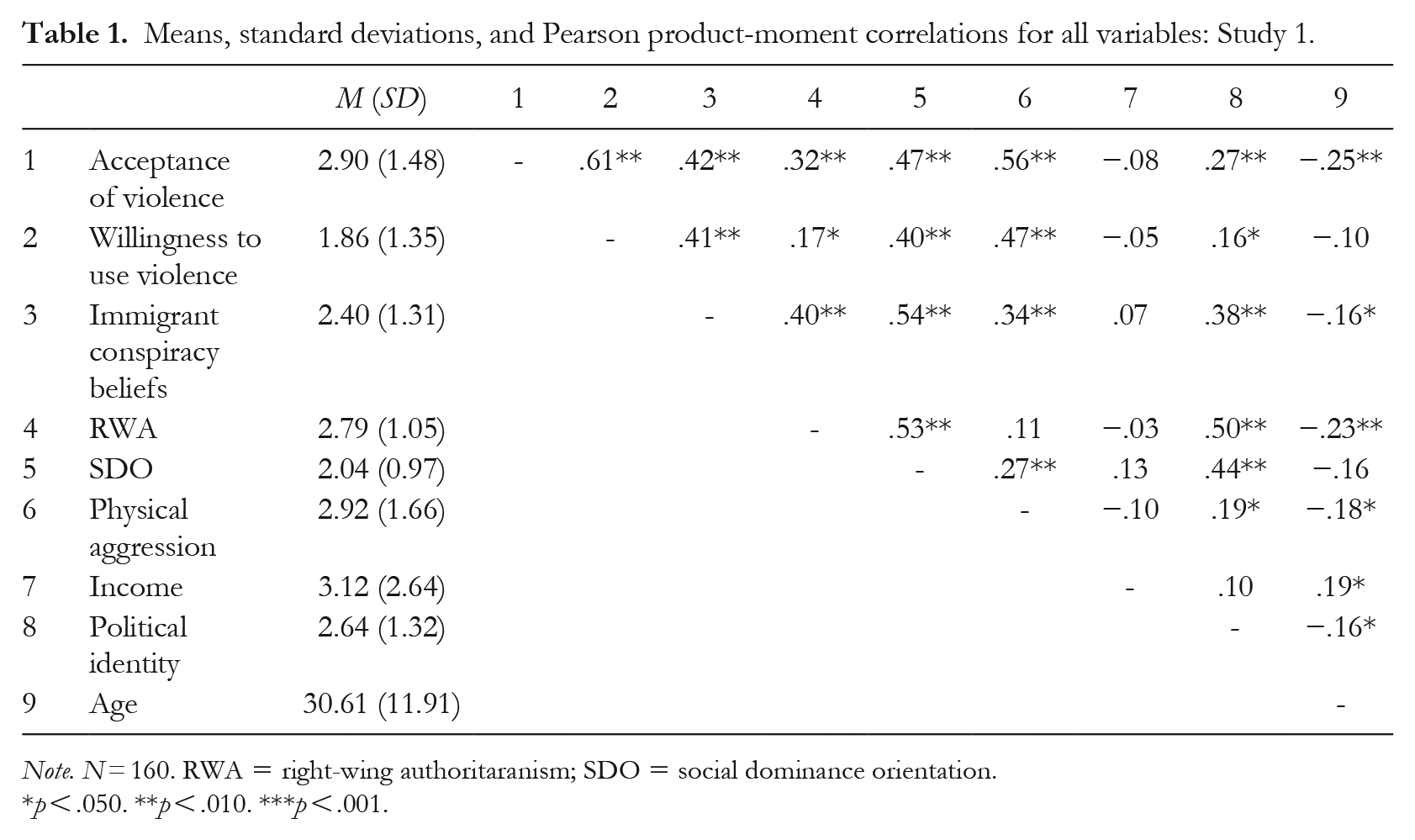
Note. N = 160. RWA = right-wing authoritaranism; SDO = social dominance orientation.
p < .050. **p < .010. ***p < .001.
We also explored whether there were any demographic differences between the experimental groups (i.e., confirming that the groups are comparable). Surprisingly, we uncovered that level of income did differ between conditions; participants in the control condition reported lower income (M = 2.64, SD = 2.08) compared to those in the conspiracy condition (M = 3.57, SD = 3.02), t(144.43) = −2.29, p = .012, d = 0.06. There were no other demographic differences. This analysis does suggest that there is an income disparity between conditions and, thus, could be a confound when interpreting the results. Although the moderator variables were completed before the manipulation, we also checked to ensure there were no differences between experimental groups. To do so, we ran a MANOVA, and the overall Pillai’s trace was nonsignificant, F(2, 157) = 0.65, p = .585; and, as expected and shown in Table 2, physical aggression, RAW, and SDO were nonsignificant.
One-way MANOVA and descriptive statistics for the experimental conditions on moderator measures: Study 1.
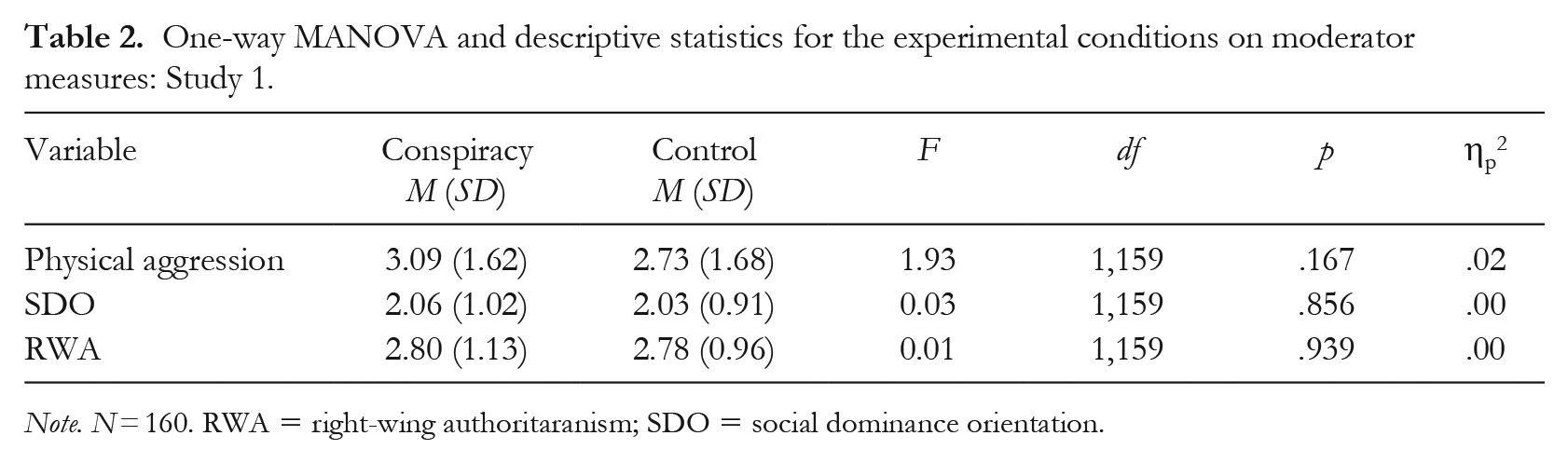
Note. N = 160. RWA = right-wing authoritaranism; SDO = social dominance orientation.
We then examined whether the manipulation had successfully increased conspiracy beliefs, as a manipulation check. We uncovered no significant difference in conspiracy belief scores between the control (M = 2.30, SD = 1.32) and conspiracy conditions (M = 2.50, SD = 1.31), t(158) = −0.94, p = .174, d = 0.15. This was unexpected, as the manipulation was used unchanged from previous research that had found a difference (Jolley et al., 2020). 1
Finally, we examined whether the violent reaction measures (dependent variables) differed between experimental conditions. As with the moderator variables, we ran a MANOVA, and the overall Pillai’s trace was nonsignificant, F(2, 157) = 0.04, p = .958; and, as expected and shown in Table 3, we found no significant differences between conditions on any of the violent outcomes. Although the manipulation check was not successful, we still sought to cautiously examine our predictions, as it was theorised that moderation analysis could reveal conditional effects related to the moderator variables trait physical aggression, SDO, and RWA between conspiracy exposure and violent reactions.
One-way MANOVA and descriptive statistics for the experimental conditions on political violence measures: Study 1.
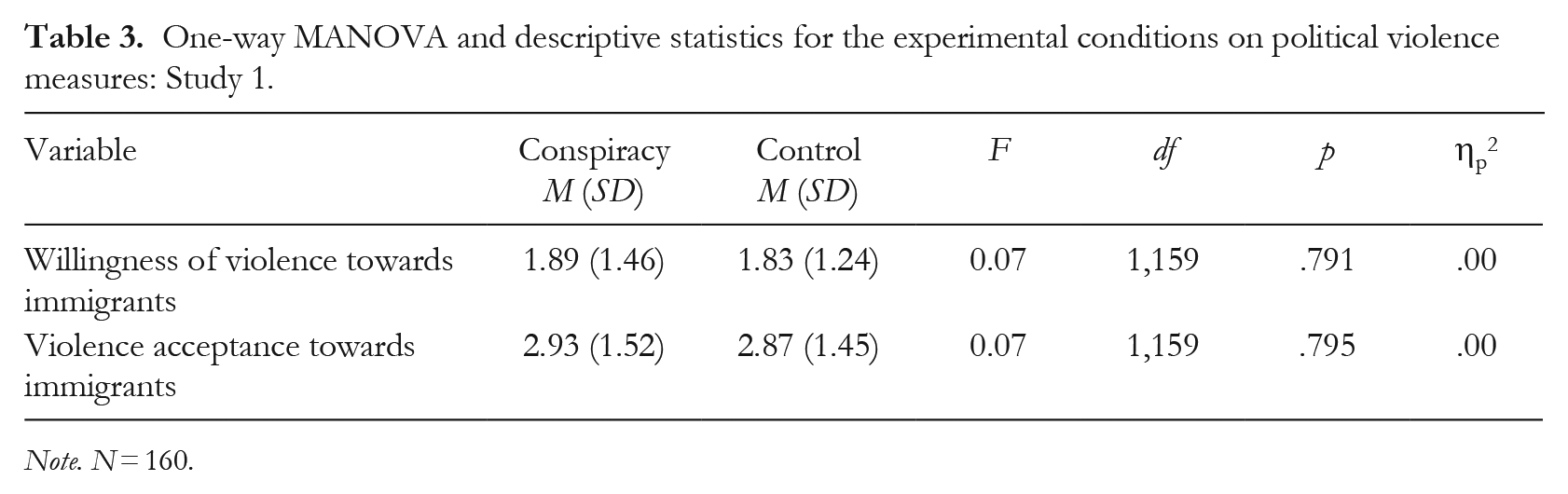
Note. N = 160.
Hypothesis testing
To better understand how individual differences influence the effects of conspiracy beliefs, moderation analyses were conducted to test the hypothesis that exposure to conspiracy theories about immigrants may influence violent reactions towards that targeted group as a product of differences in SDO, RWA, and trait physical aggression. Moderation analysis was undertaken using the PROCESS macro for SPSS, Model 1, using 5,000 bootstrapped samples (Hayes, 2015). Each level of the moderator was generated by the pick-a-point method (Hayes, 2013): low (standardised variable −1 SD), moderate (standardised variable: 0), and high (standardised variable: +1 SD).
The first DV to be tested was acceptance of violence towards immigrants. Age, gender (male vs. female), and political identity were linked with the outcome variables, so they were controlled for (see Table 1). Income was also controlled for since it differed between experimental conditions. However, no significant moderation effects were found between experimental condition and acceptance of violence for trait physical aggression (b = −.06, p9 = .629, 95% CI [−0.287, 0.17]), SDO 2 (b = .36, p6 = .090, 95% CI [−0.057, −0.78]), or RWA (b = .31, p1 = .149, 95% CI [−0.113, −0.74]), thus, our predictions were not supported.
Secondly, willingness to use violence against immigrants was tested while controlling for the same demographic variables as before (see Figure 1). As with acceptance of violence, trait physical aggression was not a significant moderator (b = −0.12, p = .300, 95% CI [−0.36, 0.11]). However, a significant interaction effect between SDO and experimental condition on willingness to use violence was uncovered (b = 0.94, p < .001, 95% CI [0.56, 1.33]). The interaction effect accounted for 11% of the overall variance in willingness to use violence, F(1, 152) = 23.41, p < .001. A simple slope test revealed that when SDO was at a high level, the effect of experimental condition on willingness to use violence was significant in a positive direction (b = 1.02, p < .001, 95% CI [0.49, 1.55]). When SDO was at a low level, the effect was significant in a negative direction (b = −0.80, p = .003, 95% CI [−1.31, −0.28]). However, when SDO was at a moderate level, the effect was nonsignificant (b = 0.11, p = .558, 95% CI [−0.26, 0.48]).
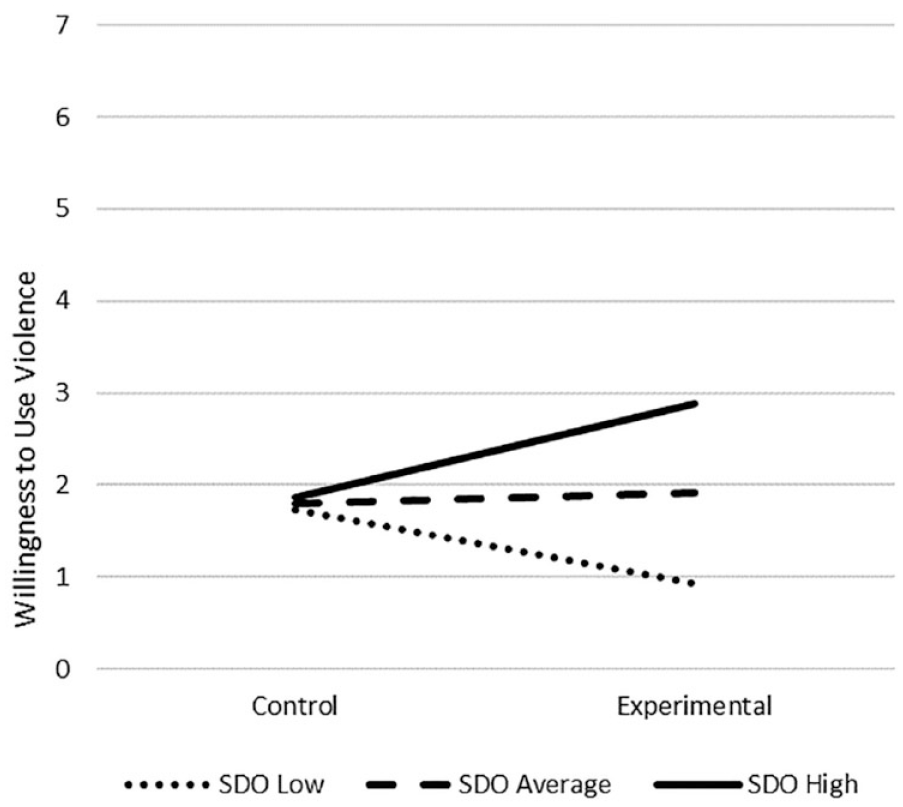
Simple slope moderator effects of SDO on willingness to use violence between conspiracy exposure conditions: Study 1.
Similarly (see Figure 2), a significant interaction between experimental condition and RWA on willingness to use violence was uncovered (b = 0.80, p = .001, 95% CI [0.28, 1.09]). The interaction effect accounted for 7% of the overall variance in RWA, F(1, 153) = 11.62, p = .001. As with SDO, a simple slope test revealed that when RWA was at a high level, the effect of experimental condition on willingness to use violence was significant in a positive direction (b = 0.80, p = .009, 95% CI [0.20, 1.39]). When RWA was at a low level, the effect was significant in a negative direction (b = −0.64, p = .033, 95% CI [−1.22, −0.05]). Again, at moderate RWA levels, the effect was nonsignificant (b = 0.08, p = .711, 95% CI [−0.33, 0.49]).
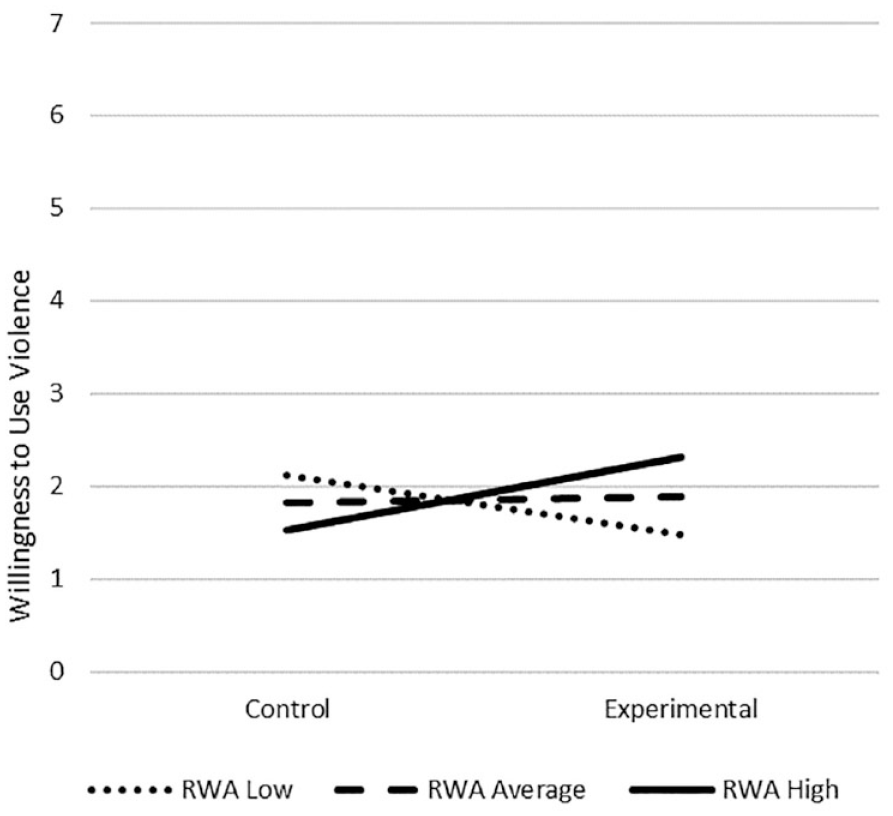
Simple slope moderator effects of RWA on willingness to use violence between conspiracy exposure conditions: Study 1.
These results support the prediction that exposure to immigrant conspiracy theories would increase the willingness to use violence towards immigrants. Importantly, however, this link is conditional on high levels of SDO and RWA. That is, whilst there was no direct link between conspiracy exposure and willingness to use violence, when exploring the interaction between SDO and RWA, respectively, those with high levels of SDO and RWA and exposure to conspiracy theories (vs. control) reported a higher willingness to use violence toward immigrants. However, we did not uncover the same pattern for acceptance of violence towards immigrants. This unexpected finding suggested a mismatch between the willingness to use violence and acceptance of violence. It might be that the acceptance items were a little too unrelated to the conspiracy theory (plots and schemes) and the desire to change things (i.e., justifications for violence due to immigrants’ “bad driving,” which is unrelated to perceiving the group as conspiring).
Nonetheless, while these results appear promising, they should be viewed cautiously since the conspiracy manipulation was unsuccessful in increasing conspiracy beliefs. This is puzzling since previous research has found that this manipulation does increase conspiracy beliefs (Jolley et al., 2020), and we used the manipulation unchanged. However, during our data checks, we did uncover income disparity between conditions. Participants in the control condition reported lower income than those in the conspiracy condition. A growing evidence base links economic inequality and conspiracy beliefs (for a review, see Salvador Casara et al., 2022). It is plausible that participants who happened to be in the control condition had higher baseline conspiracy beliefs, thus rendering the manipulation check testing the success of conspiracy exposure, ineffective. As such, building on the findings of Study 1, Study 2 sought to replicate and extend this work, thus providing confidence in our conclusions.
Study 2
In Study 2, we first sought to replicate the effect that exposure to conspiracy theories about immigrants predicted willingness to use violence towards immigrants, but that this effect was conditional on higher levels of SDO and RWA. However, we also sought to address the limitations of Study 1. First, Study 1 focused broadly on immigrants, which, whilst extending previous work (Jolley et al., 2020), is limited in that immigrants are a very broad group, and participants might have been thinking about a specific group when completing the measures. To increase the robustness of our findings, we focused on a specific group, Muslim immigrants, a group that has been the target of conspiracy theories for many years. For instance, beliefs about Islamic domination of the West (Fekete, 2012) and the infiltration of terrorists among refugees from Islamic countries (Marchlewska et al., 2018). These conspiracy beliefs have gained popularity since the 9/11 terror attacks and are common in far-right political ideology (Jedinger et al., 2023; Uenal, 2016). Understanding the links between conspiracy beliefs and violent reactions towards Muslim immigrants is timely.
Second, we made some other methodological improvements. In Study 1, we utilised a one-item measure of willingness to use violence, which we amended to include four items in Study 2. Further, we replaced the measure of violence acceptance (i.e., “If an immigrant cuts you up in traffic, it’s OK to swear at them”) with a measure that is more focused on a desire to bring about change through violence (i.e., “Unfortunately, you have to resort to violence against Muslims sometimes because this is the only way you to get things to change”). Third, instead of measuring trait physical aggression as in Study 1 (which resulted in no effects), we employed another component of trait aggression: anger. According to the Brief Aggression Questionnaire’s submeasures, physical aggression is behavioural, and anger is an emotion (Webster et al., 2015). Arguably, anger is the physiological arousal preceding, but not necessarily resulting in, physical aggression (Buss & Perry, 1992), and has previously been associated with conspiracy beliefs (Jolley & Paterson, 2020; Šrol et al., 2022). Therefore, focusing on anger (rather than physical aggression) suits our predictions better. Finally, we also took greater care with our participant recruitment. In Study 1, we used snowball sampling and a variety of platforms (e.g., Facebook, student recruitment). In Study 2, we used one recruitment platform (Prolific) to recruit our participants.
In sum, Study 2 sought to investigate how exposure to Muslim immigrant conspiracy theories might increase the motivation and willingness to use violence against Muslim immigrants, and also to find such violence justified. We hypothesised (preregistered: https://osf.io/9un2t) that exposure to conspiracy theories about Muslim immigrants would increase violent responses, but that these effects could be moderated by SDO, RWA, and trait anger.
Method
Participants and design
Two hundred and eleven participants (Mage = 34.62, SDage = 13.28; 63 men, 146 women, one nonbinary, one undisclosed) were recruited online via Prolific. All participants were above 18, U.K. citizens, and did not identify as Muslim. Participants were randomly assigned to one of two conditions (conspiracy theory article relating to Muslim immigrants in the UK [n = 105] vs. control [n = 106]). As in Study 1, at the end of the questionnaire, participants were asked if they devoted their full attention to the study and if any distractions were present. No participants scored below 3 (out of 5, with 1 indicating no attention and many distractions) on the attention check questions, therefore none were removed. Our initial target sample size was 210 participants, based on the recommended sample size for comparing two groups (N = 200; Brysbaert, 2019) and recruiting with potential exclusions on a priori criteria. More specifically, the desired sample size (N = 200) would enable 80% power to detect a difference corresponding to Cohen’s d ⩾ 0.40 (with α = .05). Again, as in Study 1, the IV was an experimental condition (conspiracy vs. control), and justified use of violence towards Muslim immigrants (motivation and willingness to use violence) was the DV. Trait anger, SDO, and RWA were moderator variables.
Materials and procedure
As in Study 1, participants provided informed consent and demographic information before completing three potential moderating measures. The first moderator variable comprised a six-item scale of RWA (Bizumic & Duckitt, 2018; e.g., “The facts on crime and the recent public disorders show we have to crack down harder on troublemakers if we are going to preserve law and order”; α = .74). The second measure consisted of the eight-item SDO measure (Ho et al., 2015; e.g., “An ideal society requires some groups to be on top and others to be on the bottom”; α = .85). The final potential moderator was a three-item measure adapted from the Brief Aggression Questionnaire (Webster et al., 2015) and comprised of three items relating to trait anger (e.g., “I have trouble controlling my temper”; α = .82). The presentation of the scales was counterbalanced, and participants indicated their agreement on 7-point scales (1-7).
As in Study 1 but with the amendment of the target group from immigrants to Muslim immigrants, participants then either read the conspiracy article (adapted from Jolley et al., 2020) or nothing (control). The term “conspiracy theory” was not used in the article. An extract of the article is as follows:
Specifically, after investigations in other countries, Muslim immigrants have been discovered working for secret terrorist organisations. For example, in recent attacks in Europe, officials discovered new Muslim immigrants amongst the terrorists . . . Evidence is therefore mounting that Muslim immigrants arriving in European countries are embedded within, or somehow involved with, terrorist groups.
Participants then completed a six-item measure of conspiracy beliefs about Muslim immigrants (adapted from Jolley et al., 2020; e.g., “Muslim immigrants are often involved in secret plots and schemes intended to disrupt British society”; α = .93). Participants indicated their level of agreement using a 7-point scale (1 = strongly disagree, 7 = strongly agree).
Finally, participants completed two dependent variable measures of violence towards Muslim immigrants. First, the motivation to use violence measure was comprised of three items sourced from unpublished work by Lamberty and Leiser (2019; e.g., “Unfortunately, you have to resort to violence against Muslim immigrants sometimes because this is the only way you get things to change”; α = .92). Second, four items were completed to measure willingness to use violence towards Muslim immigrants, adapted from Doosje et al. (2012) and Lamberty and Leiser (2019; e.g., “In general, I would be willing to use physical violence to fight Muslim immigrants”; α = .81). After the manipulation, the presentation of the 7-point scales was counterbalanced. Once completed, participants were debriefed with the same detailed information presented in Study 1.
Results and Discussion
Data checking
First, gender differences between men and women were analysed using Mann–Whitney U tests of difference (participants who identified as nonbinary [N = 1] and undisclosed [N = 1] were omitted). Men scored significantly higher than women concerning SDO (men: M = 2.71; women: M = 2.36; Z = −2.36, p = .018). As shown in Table 4, age was positively correlated with conspiracy beliefs and RWA. Those who were politically right-leaning, reported higher conspiracy beliefs, SDO, RWA, and violent reactions. Higher levels of income were associated with SDO. Also to note, conspiracy beliefs, SDO, and RWA were all positively correlated with each other.
Means, standard deviations, and Pearson product-moment correlations for all variables: Study 2.
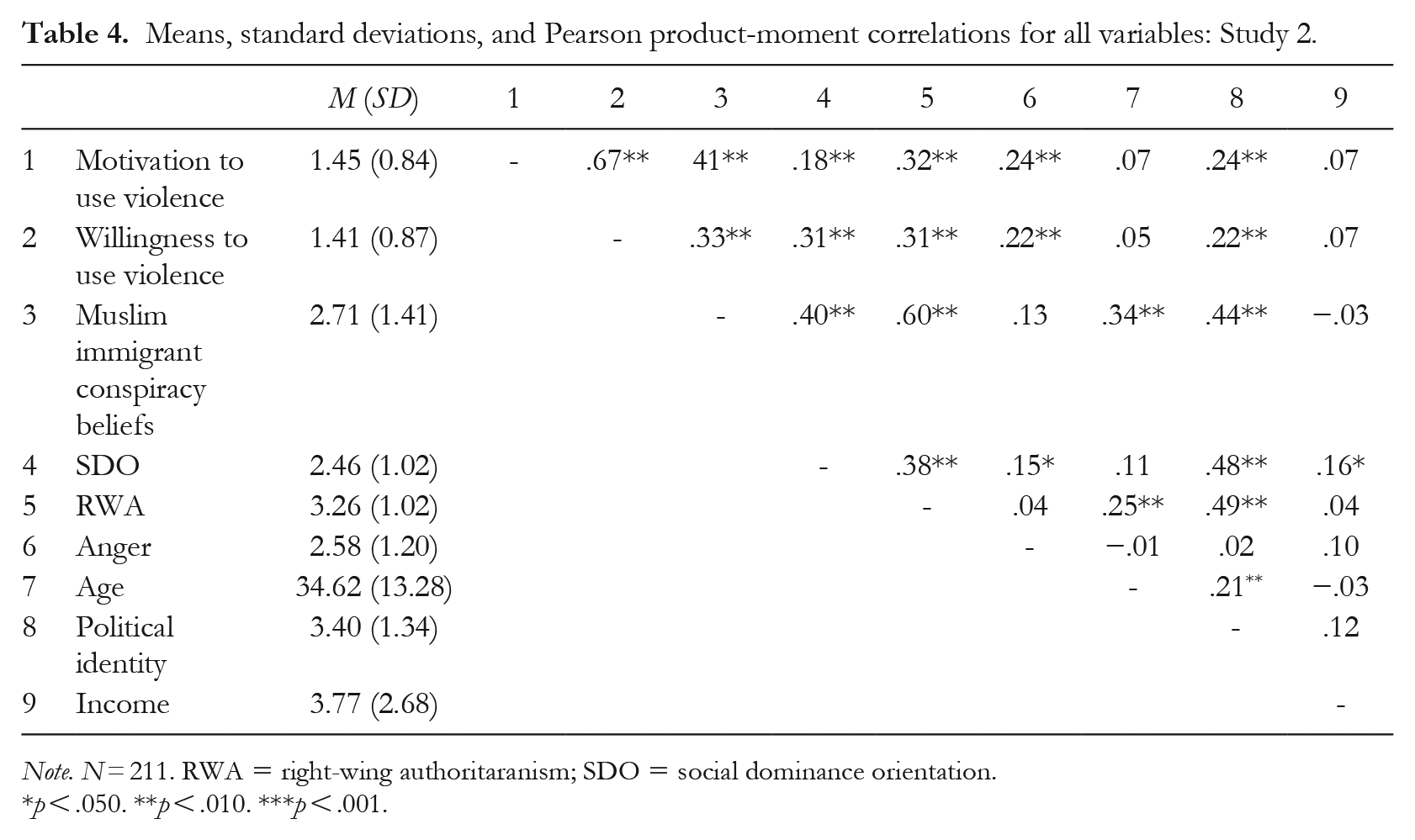
Note. N = 211. RWA = right-wing authoritaranism; SDO = social dominance orientation.
p < .050. **p < .010. ***p < .001.
Next, as in Study 1, we again checked for differences in demographics between conditions, and found no significant differences (p > .05). Again, we examined whether there were any differences between conditions on the moderator variables using a MANOVA. As expected, the overall Pillai’s trace was nonsignificant, F(2, 208) = 1.17, p = .311; and as shown in Table 5, there were no significant differences between conditions across the three moderator variables. Then, the difference in conspiracy beliefs between experimental conditions was explored as a test of whether the manipulation was successful. The mean scores recorded between the control (M = 2.45, SD = 1.28) and conspiracy (M = 2.96, SD = 0.12) conditions significantly differed, indicating that the manipulation successfully increased Muslim immigrant conspiracy beliefs, t(209) = −2.67, p = .004, d = 0.37.
One-way MANOVA and descriptive statistics for the experimental conditions on moderator measures: Study 2.
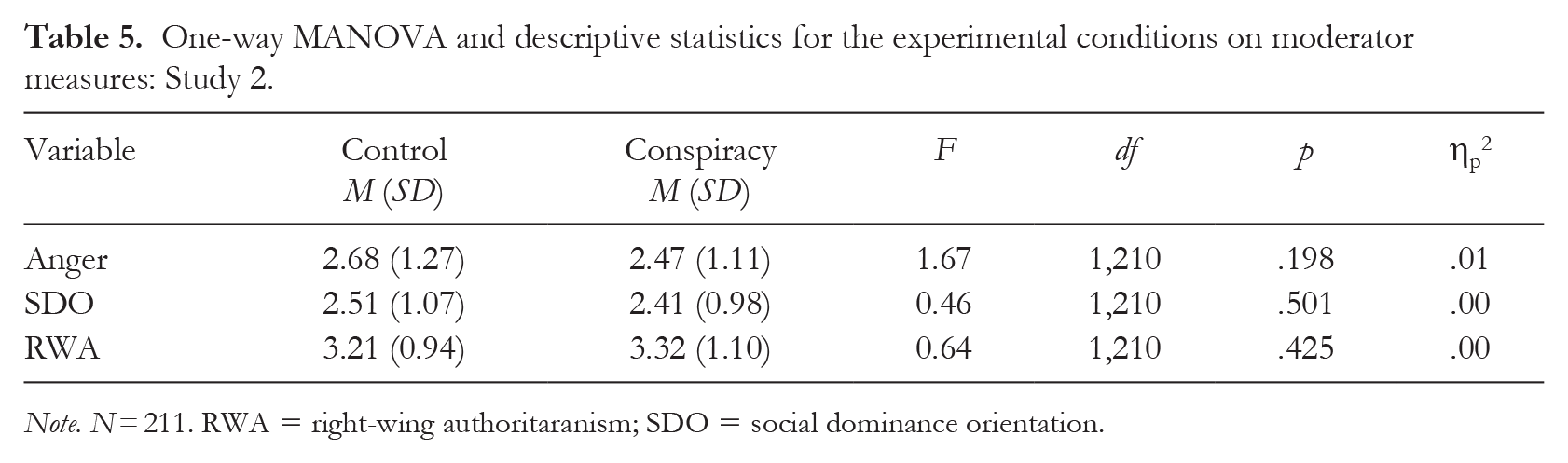
Note. N = 211. RWA = right-wing authoritaranism; SDO = social dominance orientation.
As in Study 1, we ran a MANOVA on the violent outcome measure and, again, found the overall Pillai’s trace was nonsignificant, F(2, 208) = 1.17, p = .310. As shown in Table 6, and as expected, we uncovered no significant differences between conditions on any of the violent outcomes. As in Study 1, we then sought to examine our predictions, as it was theorised that moderation analysis would reveal conditional effects between exposure and violent reactions related to moderator variables anger, SDO, and RWA.
One-way MANOVA and descriptive statistics for the experimental conditions in Study 2 on political violence measures.
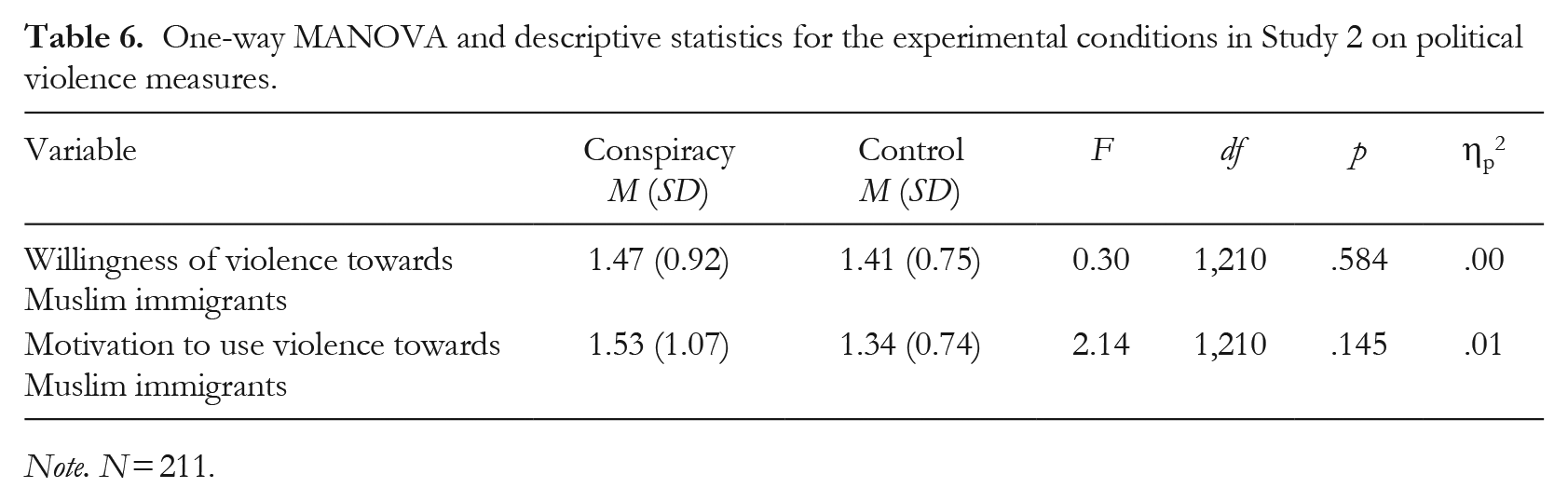
Note. N = 211.
Moderation analysis
Motivated use of violence towards Muslim immigrants was the first dependent variable to test the effects of trait anger, SDO, and RWA. As in Study 1, we controlled for age, gender, and differences in political identification due to associations with variables of interest (see Table 4). Firstly, a significant, positive interaction was found between trait anger and experimental condition on the motivated use of violence (b = 0.26, p = .014, 95% CI [0.05, 0.46]), which accounted for 3% of the overall variance, F(1, 204) = 6.18, p = .014. When trait anger levels were high, simple slope analysis demonstrated that the effect of conspiracy exposure on motivated use of violence was significant in a positive direction (b = 0.50, p = .005, 95% CI [0.16, 0.85]. Results were nonsignificant when trait anger was at moderate (b = 0.19, p = .113, 95% CI [−0.05, 0.43]) and low levels (b = −0.11, p = .512, 95% CI [−0.45, 0.23]), see Figure 3.
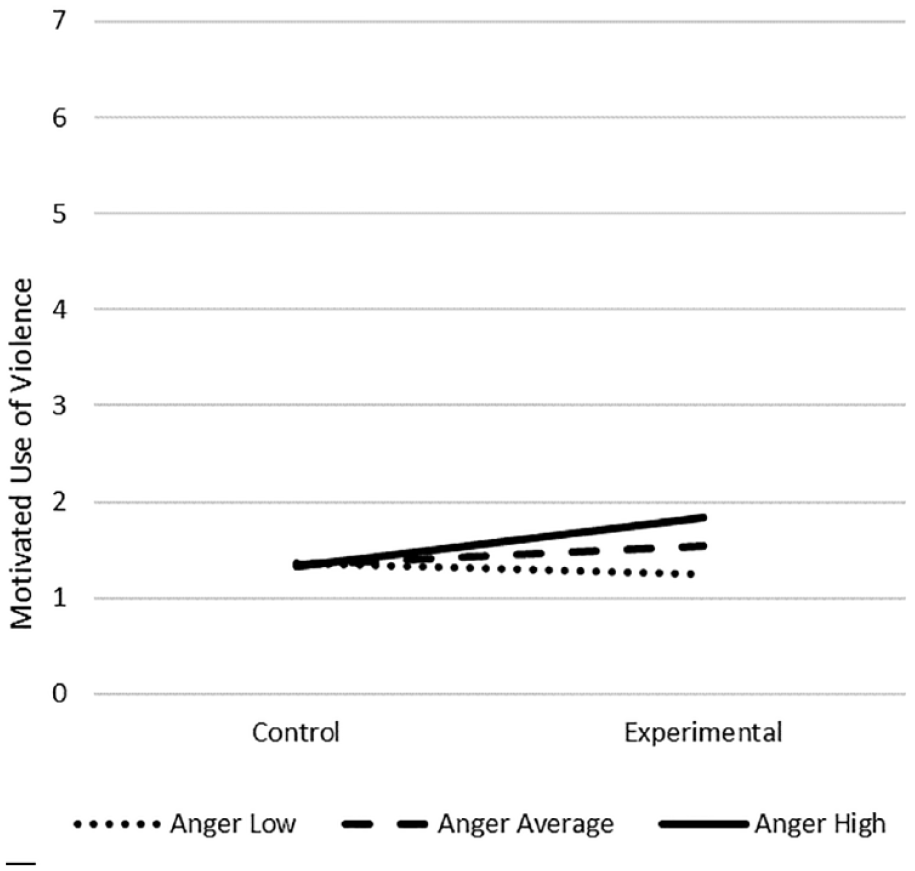
Simple slope moderator effects of trait anger on motivation to use violence between conspiracy exposure conditions: Study 2.
A significant, positive interaction effect was also found between SDO and experimental condition on motivation to use violence against Muslim immigrants (b = 0.31, p = .008, 95% CI [0.08, 0.54]), which accounted for 3% of the overall variance, F(1, 204) = 7.22, p = .008. A simple slope test revealed that when SDO was at a high level, the effect of exposure to conspiracy theories on the motivation to use violence was significant in a positive direction (b = 0.52, p = .002, 95% CI [0.20, 0.85]). However, when SDO was at moderate and low levels, the effect was nonsignificant (b = 0.21, p = .080, 95% CI [−0.03, 0.44]) and (b = −0.11, p = .506, 95% CI [−0.44, 0.22]), respectively (see Figure 4). No significant interactions were found between experimental condition and RWA on the motivated use of violence (b = −0.07, p = .594, 95% CI [−0.31, 0.18]).
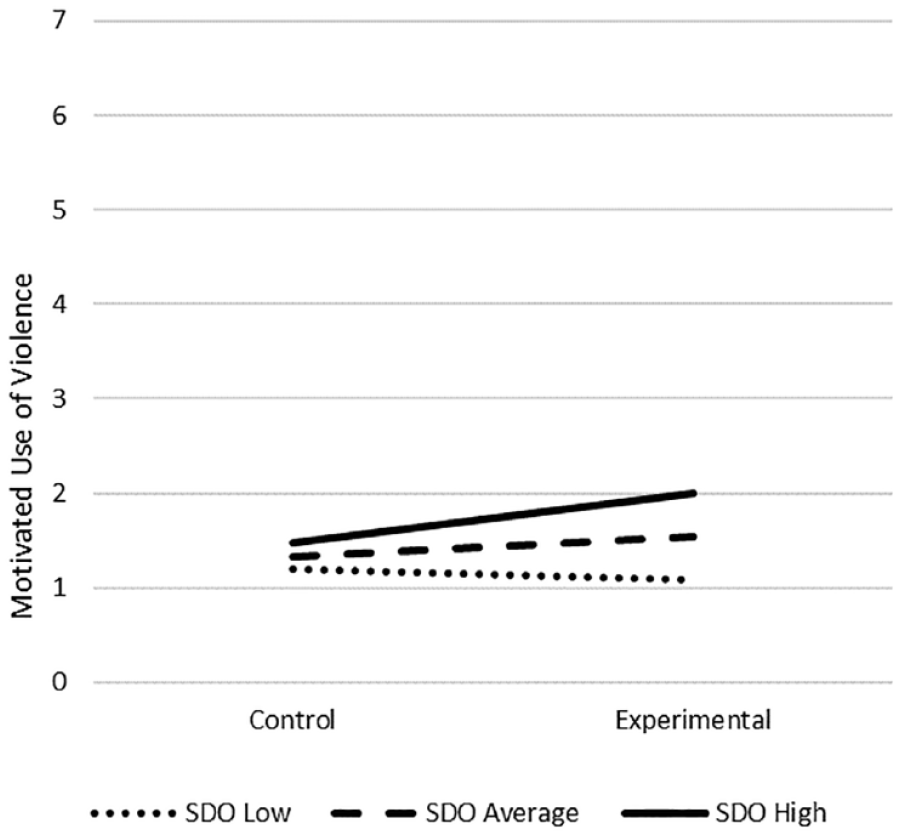
Simple slope moderator effects of SDO on motivation to use violence between conspiracy exposure conditions 2.
The second dependent variable, willingness to use violence towards Muslim immigrants, was the next dependent variable to test whether trait anger, SDO, and RWA were moderators between exposure to conspiracy theory and willingness to use violence. As with motivation to use violence, a significant, positive interaction effect was also found between SDO and experimental condition on willingness to use violence (b = 0.30, p = .006, 95% CI [0.09, 0.51]), which accounted for 3% of the overall variance in willingness to use violence, F(1, 204) = 7.73, p = .006. A simple slope test demonstrated that, when SDO was at a high level, the effect of conspiracy exposure on willingness to use violence was significant in a positive direction (b = 0.38, p = .015, 95% CI [0.08, 0.69]). As with motivation to use violence, SDO was non-significant at moderate (b = 0.08, p = .489, 95% CI [−0.14, 0.29]) and low levels (b = −0.23, p = .139, 95% CI [−0.54, 0.08]), see Figure 5. No significant interactions were found between experimental condition and RWA on willingness to use violence (b = −0.31, p = .780, 95% CI [−0.25, 0.19]) or trait anger (b = 0.10, p = .286, 95% CI [−0.09, 0.29]).
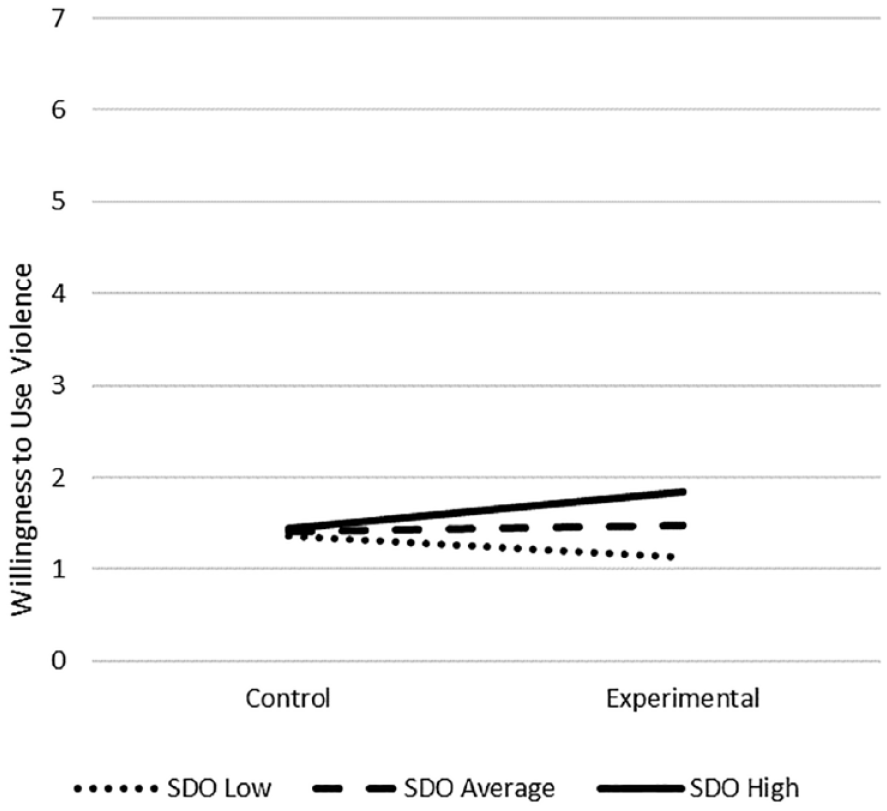
Simple slope moderator effects of SDO on willingness to use violence between conspiracy exposure conditions: Study 2.
In summary, Study 2 replicated and extended the findings of Study 1 by again demonstrating that exposure to conspiracy theories has the potential to increase the motivation and willingness to use violence against Muslim immigrants, but only for people who are high in SDO. RWA was not associated with either violent outcome. Additionally, we found that in the motivation to use violence towards Muslim immigrants, trait anger was a significant moderator between conspiracy exposure and motivated violence. For the most part, therefore, Study 2 replicates the findings from Study 1 in another group, Muslim immigrants, with some nuances for RWA and anger that we discuss in the General Discussion section.
General Discussion
Across two experimental studies, this work established that exposure to intergroup conspiracy theories increased the willingness to use violence towards the targets of conspiracy theories, but only for specific individuals. Specifically, Study 1 found that exposure to immigrant conspiracy theories increased violent reactions towards immigrants, but only for those with higher SDO and RWA. Study 2 then sought to replicate and extend these results. We found that exposure to Muslim conspiracy theories increased violent reactions towards Muslim immigrants, but only for those who reported higher levels of SDO (regarding motivated violence and willingness to use violence) and trait anger (regarding motivated violence). RWA did not act as a moderator. Together, our results provide compelling evidence of the interactional effects of individual difference factors (e.g., upholding social hierarchies, SDO) and exposure to intergroup conspiracy theories on violence towards the target of the conspiracy theory.
Our findings make numerous advances on previous research. First, previous work has focused on uncovering links between conspiracy beliefs and (political) extremist intentions (e.g., Rottweiler & Gill, 2020). To our knowledge, we are among the first to spotlight the empirical links between intergroup conspiracy theories and violent reactions towards those targeted by conspiracy theories—(Muslim) immigrants. Secondly, we also employed an experimental design exploring how exposure to immigrant (Study 1) and Mulism immigrant (Study 2) conspiracy theories impacted violent reactions. There is a dearth of experimental designs in the study of conspiracy theories, even more so in the context of violent extremism, so this methodological advancement is notable. In both studies, however, we found that simple exposure does not increase violent extremism. However, this was as predicted and offers reassurance that simple conspiracy exposure is unlikely to make the general consumer extremist.
Thirdly, and perhaps most importantly, we also examined how conspiracy exposure interacts with measures of ideological attitudes (i.e., RWA and SDO) and levels of trait anger on violent reactions. Again, to our knowledge, we are the first to demonstrate that higher levels of SDO and conspiracy exposure (vs. control) result in greater reported willingness to use violence towards (Muslim) immigrants. Notably, the work extends the psychological work examining SDO and conspiracy beliefs by supporting the assertion that conspiracy theories, combined with factors such as SDO, may increase perceived outgroup threat (van Prooijen & Douglas, 2018). SDO is a powerful predictor of intergroup attitudes and behaviour (Ho et al., 2012) and captures multiple perspectives of intergroup conflicts, such as realistic group conflict, social identity, and cultural and political ideologies. As Swami (2012) demonstrated with anti-Semitic conspiracy beliefs in Malaysia, the enhancing effect of SDO in this work suggests that conspiracy theories regarding specific groups may serve an ideological need and that individual differences (such as SDO) may increase the effects of such conspiracy theories. Considering that the links between conspiracy theories and violence appear conditional on individual differences (e.g., Rottweiler & Gill, 2020), our work notably extends our understanding of the links between broader worldviews and intergroup conspiracy exposure to violence.
However, we did find inconsistent evidence of RWA moderating the link between intergroup conspiracy theories and violent reactions. RWA did not emerge as a moderating factor in Study 2 despite demonstrating a conditional effect between immigrant conspiracy theories and willingness to use violence in Study 1. The divergence may be due to the change in focus from immigrants in general (Study 1) to the more specified group focus of Muslim immigrants (Study 2). Such a change is important since SDO and RWA can demonstrate different effects depending on the target group (Cohrs & Asbrock, 2009). Indeed, research has also shown that the impact of RWA can vary depending on immigrant origin (Peresman et al., 2021). It may be that because a specific target immigrant group was not stated in Study 1, such a broad “immigrant” definition appealed to those with higher RWA. Future research could pinpoint the boundary conditions of RWA interacting with conspiracy beliefs.
Furthermore, trait aggression was also inconsistent between the studies and measures of violence. Trait aggression was measured in both studies but focussed on different aspects. In Study 1, physical aggression was not a moderator between conspiracy exposure and violent reactions. However, in Study 2, anger had a conditional effect between exposure and motivation to use violence (but not willingness). This is interesting since it suggests that anger, being the emotional aspect of trait aggression (Buss & Perry, 1992), reacts with conspiracy theories to arouse a motivation to use violence towards Muslim immigrants. Future research might investigate this affective aspect of trait aggression to understand how conspiracy beliefs influence this, and when such emotions are linked with violent reactions.
While the study has several strengths, limitations need to be acknowledged. For example, whilst the findings in Study 1 supported our predictions, the manipulation of conspiracy exposure did not directly increase conspiracy beliefs. Therefore, the results should be interpreted with caution. However, our conclusions are strengthened by a successful exposure manipulation in Study 2, which replicated the core finding. We believe that the inconsistencies of the manipulation check can be explained by income disparity in Study 1, as opposed to differences in the target group. This because the manipulation has worked successfully in previous work focusing solely on immigrants (e.g., Jolley et al. 2020). Our work underscores the importance of ensuring that the participant makeup of experimental groups is comparable.
In addition, participants were asked about their willingness to use violence towards immigrants (Study 1) or Muslim immigrants (Study 2). Such behaviour is illegal and socially unacceptable; therefore, social desirability might have influenced the honesty of the answers. However, participants were assured anonymity, which may have mitigated this. Yet, whilst measuring willingness allowed us to explore a sensitive area, as including a behavioural outcome is challenging for an online experiment, it should be highlighted that willingness or intentions do not necessarily evolve into behaviour (Sheeran & Webb, 2016). Future research could employ (online) experimental tasks that tap into aggression towards others. For instance, instead of using self-report violent reaction measures, participants could be instructed to allocate varying degrees of noise blasts (Denson et al., 2011) or measures of hot sauce (McGregor et al., 1998) to assess aggressive behaviour towards a target group member.
Furthermore, exploring the role of perceived threat in the context of cultural and political ideology may offer ideas for intervention. Reducing feelings of threat may, in turn, reduce violent reactions. Moreover, investigating ways to sever the link between SDO and conspiracy beliefs could, in turn, reduce the willingness to use violence against Muslim immigrants. Indeed, as demonstrated in Study 1, individuals who reported lower SDO and were exposed to conspiracy theories (vs. control) reported lower violent reactions (although this effect was not significant in Study 2). Nonetheless, exploring how to reduce SDO is timely. Interestingly, associations between SDO and empathy have been established (Sidanius et al., 2013), with empathy mediating the relationship between SDO and prejudice (Nicol & Rounding, 2013). Future work might investigate the role of empathy within the framework of exposure to conspiracy theories and willingness to use violence, and how reductions in SDO might weaken the relationship.
Future research might also investigate if these findings are generalisable towards other minority groups (e.g., Jewish or LGBTQ+), and if the same political ideological moderators play a role with these groups. Finally, it would also be worth exploring conspiracy beliefs from a different cultural perspective, such as how Muslims endorse Western conspiracy theories and how this might translate into behavioural outcomes. Such an investigation would foster a more holistic understanding of the role of conspiracy theories from opposing perspectives of the same intergroup conflict.
Conclusion
This research demonstrates how exposure to conspiracy theories targeting immigrants (Study 1) or Muslim immigrants (Study 2) can increase violence towards those groups. Importantly, however, these effects are conditional on higher levels of SDO and, when concerning immigrants broadly (Study 1), also RWA. There is also some evidence of trait anger playing a role in motivated violent reactions towards Muslim immigrants (Study 2). Our findings build upon previous work that has demonstrated the effect of individual differences on the pathway between conspiracy beliefs and violence (e.g., Jolley & Paterson, 2020; Rottweiler & Gill, 2020), where our work further highlights the potential risks associated with conspiracy beliefs when directed at targeted groups for specific individuals. Therefore, we argue that when considering levers for intervention, it is also vital to consider worldviews when seeking to break the conspiracy–violence link.
Footnotes
Declaration of Conflicting Interests
The author(s) declared no potential conflicts of interest with respect to the research, authorship, and/or publication of this article.
Funding
The author(s) received no financial support for the research, authorship, and/or publication of this article.
