




Abstract
We investigate the relationship between vaccination hesitancy and the way people feel about their national groups. Antivaccination attitudes are associated with conspiracy beliefs, which have been linked to group-based defensiveness. Thus, we hypothesized that defensiveness about one’s national identity, operationalized as collective narcissism measured in relation to one’s national group, might be related to antivaccination attitudes. We found that national narcissism, but not national identification, predicted support for a voluntary vaccination policy both in a general population sample (N = 361) and among visitors of antivaccination discussion forums (N = 178). In two further studies involving national quota samples, national narcissism was also related to vaccination conspiracy beliefs (N = 1,048), and these beliefs mediated its association with support for a voluntary vaccination policy (N = 811). By highlighting the link between antiscience attitudes and collective narcissism, we demonstrate that group defensiveness can be linked to support for decisions that may undermine the health and well-being of present and future ingroup members.
Keywords
Vaccination saves the lives of millions of people every year (World Health Organization [WHO], 2020). Despite the scientific consensus about the many health advantages of vaccination, the antivaccination movement has been rising again in many countries, just as in the 19th and early 20th centuries (Wolfe, 2002). One consequence of the growing vaccination hesitancy is the recent increase in incidences of communicable diseases, such as mumps or measles, which had been considered eradicated by modern medicine (Gangarosa et al., 1998; McBrien et al., 2003; Phadke et al., 2016). Vaccination policies adopted by countries vary. In some countries (e.g., Eastern European countries, France, Italy), vaccination is mandatory usually for children, but there is variation in the lists of mandatory vaccines and sanctions for not vaccinating. Other countries offer a variety of nonmedical exemptions (e.g., religious, philosophical). Finally, some countries adopt a voluntary vaccination policy, that is, they allow individuals to make their own decision as to whether vaccinate themselves and their children, without the state mandating vaccination and sanctioning nonvaccination (Vaz et al., 2020; Walkinshaw, 2011).
Within states that have introduced mandatory vaccination policies, most citizens seem to support it, but there is still considerable variability in attitudes toward compulsory vaccination (Gualano et al., 2019). Some of the “antivaxx” groups actively contest it and strive to introduce a voluntary vaccination policy, because they believe that vaccinations might create health hazards. Examples include the #stopnop movement in Poland or the “anti-vaxxers” movement in Italy supported by the Italian Health Minister Giulia Grillo (de Benedetti, 2018). Importantly, social support for antivaccination policies may affect legislation (de Benedetti, 2018; Komisja Zdrowia oraz Komisja Polityki Społecznej i Rodziny, 2018) and only too easily translate into unstable or delayed vaccination programs (Vrdelja et al., 2020), which would eventually undermine public health. As such, the antivaccination movement was listed by the World Health Organization (2019) as one of the top 10 world health threats.
Psychological Antecedents of Antiscience Attitudes
Here, we aim to investigate antivaccination attitudes as an example of antiscience orientation with potentially grave real-world consequences. Scientists have been trying to understand the reluctance toward vaccinating children and adults, in hope of increasing immunization (Brewer et al., 2017; Larson et al., 2014). Since the time vaccines were first applied, their use has only too frequently been accompanied by protests and antivaccination movements in various societies and communities (Wolfe, 2002). Interventions based on offering scientific evidence proved not only to be ineffective but sometimes even counterproductive, ultimately reducing vaccination intentions (Nyhan et al., 2014). This is because antiscience attitudes are not merely an effect of misinformation—they have motivational underpinnings (Hornsey et al., 2018a; Nyhan et al., 2014). Hence, antivaccination attitudes cannot be easily explained by informational deficits—those who hold antivaccination attitudes are neither less educated (Larson et al., 2014) nor do they spend less time seeking information about vaccines (A. M. Jones et al., 2012).
A report of the SAGE strategic advisory group of experts on immunization (The SAGE Working Group, 2014) highlights safety concerns, perceived lack of vaccine benefits, science denialism, and lack of trust in health authorities and providers as the motives behind support for the antivaccination movement. Antivaccination sentiments are effectively proliferated by prominent political figures, including the U.S. President Donald Trump (Hornsey et al., 2020). For instance, in 2014, he tweeted: “I am being proven right about massive vaccinations—the doctors lied. Save our children & their future” (Trump, 2014). Such messages might contribute to the spread of antivaccination conspiracy theories, which usually accuse pharmaceutical companies, governmental agencies, and scientists of withholding information about risks associated with vaccination from the public (e.g., Jolley & Douglas, 2014). In fact, holding conspiracy vaccination beliefs seems to be the psychological motive most strongly related to antivaccination attitudes (Hornsey et al., 2018a). Similarly, conspiracy beliefs were linked to other antiscience attitudes, such as climate change skepticism (Lewandowsky et al., 2013); although this effect seems to be robust only in the U.S. context (Hornsey et al., 2018b).
Summing up, past research showed that antiscience attitudes, including antivaccination ones, are associated with conspiracy beliefs. Conspiracy theories explain impactful events or circumstances as secret acts of powerful malevolent groups (Douglas et al., 2017; Douglas et al., 2019), and as such tend to be fueled by group-based defensiveness. Therefore, while past work on antivaccination attitudes has almost exclusively focused on individual-level factors (such as reactance, needle sensitivity, or individualistic worldviews; e.g., Hornsey et al., 2018a; Taddio et al., 2012), we focus on group processes associated with belief in antivaccination conspiracy theories and opposition to obligatory vaccination policies. We propose that national narcissism (capturing defensiveness about one’s national identity) can be a risk factor shaping antivaccination attitudes insofar as it is associated with endorsement of vaccination conspiracy theories.
National Narcissism and Vaccination Hesitancy
Feelings of group attachment as important manifestations of humans’ social life (Tajfel & Turner, 1986) may take different forms (Ashmore et al., 2004; Cameron, 2004; Luhtanen & Crocker, 1992). Classic theorizing and contemporary empirical research differentiated between secure and defensive forms of ingroup positivity (see Cichocka, 2016, for review). One particular instance of defensiveness, which is applicable to diverse group contexts, is collective narcissism: an attitudinal orientation capturing individuals’ belief in ingroup greatness associated with the need for external validation (Golec de Zavala et al., 2009). According to classic works by Adorno (1963/1998) and Fromm (1973), this idealization of the ingroup compensates for individual shortcomings. Indeed, research shows that collective narcissism is associated with generally low feelings of self-worth (Golec de Zavala et al., 2020), and it increases when personal control is threatened (Cichocka et al., 2018; see also Marchlewska et al., 2020). Importantly, collective narcissism was found to be a robust and unique predictor of political beliefs and decisions (Cislak et al., 2020; Federico & Golec de Zavala, 2018; Marchlewska et al., 2018) as well as intergroup outcomes, such as generalized intergroup hostility and sensitivity to intergroup threats (Cichocka, Marchlewska, Golec de Zavala, & Olechowski, 2016; Golec de Zavala et al., 2009; Golec de Zavala, Cichocka, & Bilewicz, 2013; Golec de Zavala, Cichocka, & Iskra-Golec, 2013).
Because collective narcissism assumes a positive evaluation of the ingroup, it was found to be also moderately positively correlated with conventional measures of ingroup identification (e.g., Cichocka, 2016; Golec de Zavala et al., 2009). However, once their overlap is covaried out, we can observe the effects of a more secure, nonnarcissistic identification. Past work showed that its effects are different from the effects of collective narcissism: after controlling for collective narcissism, ingroup identification predicted more favorable outgroup attitudes and lower sensitivity to threats (Cichocka et al., 2018; Golec de Zavala, Cichocka, & Bilewicz, 2013; Marchlewska et al., 2020).
We argue that group-based defensiveness, captured by collective narcissism, is associated with antiscience attitudes (such as antivaccination attitudes). We investigate this relationship in the context of national groups. Accordingly, we refer to collective narcissism measured in relation to one’s nation as national narcissism. There are several plausible reasons why national narcissism might be linked to vaccination hesitancy. The first potential mechanism could be that the belief in the nation’s greatness is associated with the conviction that the ingroup is invulnerable and, thus, may live and prosper even without additional medical protection. As an example, President of Brazil Jair Bolsonaro, in the midst of the Covid-19 pandemic, claimed that his compatriots “never catch anything” (Phillips, 2020, para. 5). Thus, any undesirable consequences of the antivaccination movements would be seen as impossible to happen, thereby fueling vaccination hesitancy. Challenging this potential mechanism, however, past work showed that collective narcissism is positively related to increased, rather than decreased, perceptions of threats to the ingroup (Golec de Zavala et al., 2009; Golec de Zavala et al., 2016).
Second, it is possible that because national narcissism is linked to increased support for populist leaders (Marchlewska et al., 2018), medical populist messages (Hornsey et al., 2020; Lasco & Curato, 2019) shape vaccination readiness of those high in national narcissism more strongly than of those low in national narcissism. Recent findings on the role of elite cues (e.g., in shaping climate change attitudes) show that, while providing scientific information has a limited impact on public concerns, elite cues and mobilizing public opinion through political advocacy groups are critical (Carmichael & Brulle, 2017). This might imply that high national narcissism in itself does not make people more prone to adopt antivaccination attitudes in a bottom-up process, but that this relationship reflects a top-down process where national narcissism becomes a risk factor when prominent political actors decide to propagate antivaccination attitudes. However, it is equally possible that populist leaders, rather than strive to set the agenda, prefer to propagate messages that are likely to resonate with their constituencies in hope of mobilizing political support. As an example, Polish President Andrzej Duda, in July 2020, famously proclaimed himself to be vaccine-hesitant (Kosc, 2020) during a critical stage of his presidential campaign, when his advantage over his main rival Rafał Trzaskowski was decreasing.
The third potential mechanism fueling vaccine hesitancy among those high in national narcissism could be image-threat sensitivity. Past work demonstrated that collective narcissism predicted hypersensitivity to ingroup criticism (Golec de Zavala et al., 2016), defensive reactions to threats (Golec de Zavala, Cichocka, & Iskra-Golec, 2013; Marchlewska et al., 2020), and high need to resist external pressures on the group (Cislak et al., 2020; Cislak et al., 2018). This threat sensitivity also means that collective narcissism is associated with predisposition to believe in conspiracy theories (Cichocka, Marchlewska, & Golec de Zavala, 2016). In the context of antivaccination conspiracies, resisting influence from high-status groups such as scientists, or wealthy groups such as pharmaceutical corporations may be a way of maintaining a strong ingroup image in the eyes of others. Overall, we predict that national narcissism is associated with vaccination hesitancy through conspiracy beliefs—one of the key factors associated with antivaccination attitudes (Hornsey et al., 2018a).
National Narcissism and Antivaccination Conspiracy Beliefs
Conspiracy beliefs often assume an intergroup dimension, indicating that a group of people outside or within one’s own group is conspiring against it (e.g., van Prooijen & van Lange, 2014). In this latter case, conspiracy theories identify a small group of wrongdoers who do not necessarily represent ingroup members but are thought to work for corrupt elites or corporations willing to undermine the ingroup to realize their own interests (Jolley et al., 2018). We argue that this is why antivaccination conspiracy theory beliefs are likely to be predicted by national narcissism.
Conspiracy beliefs can be motivated by attempts to restore feelings of self-worth and social status by blaming others for one’s misfortunes (Abalakina-Paap et al., 1999; Goertzel, 1994; Robins & Post, 1997). In line with this idea, conspiracy theories are fueled by both personal and group-based defensiveness (Biddlestone et al., 2020; Douglas et al., 2017), which can be operationalized as individual and collective narcissism, respectively. Cichocka, Marchlewska, and Golec de Zavala (2016) showed that individual narcissism positively predicted generic conspiracy beliefs (Brotherton et al., 2013), including the beliefs that scientists manipulate the public or that experiments involving new drugs are routinely carried out on the public without their knowledge.
Extensive research has also shown robust associations between conspiracy beliefs and collective narcissism (Cichocka, Marchlewska, Golec de Zavala, & Olechowski, 2016; Golec de Zavala & Cichocka, 2012; Golec de Zavala & Federico, 2018; Marchlewska et al., 2020; Marchlewska et al., 2019). For instance, research conducted in the context of religious identities showed that Catholic narcissism predicted a conviction that certain social movements and activists conspire to undermine traditional social arrangements (e.g., the so-called “gender conspiracy”; Marchlewska et al., 2019). Further, several studies focused on the role of national narcissism in predicting beliefs in various conspiracy theories, especially those implicating members of other (rather than own) groups (Cichocka, Marchlewska, Golec de Zavala, & Olechowski, 2016). National narcissism was associated with beliefs in conspiracy theories about other nationalities (e.g., Jews; Golec de Zavala & Cichocka, 2012), foreign governments (Cichocka, Marchlewska, Golec de Zavala, & Olechowski, 2016), or causes of important events (such as the fall of the Berlin Wall or the Smolensk catastrophe; Cichocka, Marchlewska, Golec de Zavala, & Olechowski, 2016). However, national narcissism also was found to predict beliefs that certain influential political groups conspire within the nation (Golec de Zavala & Federico, 2018). Importantly, in the public health context, national narcissism was found to be linked to both the endorsement and the dissemination of conspiracy beliefs regarding the COVID-19 pandemic, as opposed to the endorsement or dissemination of factual information on COVID-19 (Sternisko et al., 2020). Overall, for those high in collective narcissism, beliefs in conspiracies both outside and within their own groups seem to serve as an accessible explanation for the alleged disadvantage of their ingroup, thereby enabling them to maintain a positive ingroup image (Cichocka, Marchlewska, & Golec de Zavala, & Olechowski, 2016).
Overview
In a series of four studies, we investigate the relationship between vaccination hesitancy and the way people feel about their national groups. Our primary hypothesis is that national narcissism would be associated with antivaccination attitudes. First, we predicted a positive effect of national narcissism on support for introducing a voluntary vaccination policy. Second, we predicted that this effect should be mediated by vaccination conspiracy beliefs. We expected opposite effects for national identification.
We measured national narcissism and national identification as predictors in all of the studies. In Studies 1 and 2, we measured support for a voluntary vaccination policy as the dependent variable. In Study 3, conducted on a national quota sample of youth, we measured beliefs in vaccination conspiracy theories as the dependent variable. In Study 4, conducted on a general national quota sample, we tested the full model including national narcissism and national identification as predictors, beliefs in vaccination conspiracy theories as the mediator, and support for a voluntary vaccination policy as the dependent variable.
In Studies 2 and 3, we also measured individual narcissism. Individual narcissism tends to correlate positively with collective narcissism (e.g., Golec de Zavala et al., 2009), and has previously been linked to conspiracy beliefs (Cichocka, Marchlewska, & Golec de Zavala, 2016). Controlling for the effects of individual narcissism allowed us to examine the unique effects of group versus individual defensiveness.
As past work suggested that both antivaccination attitudes (Rabinowitz et al., 2016) and national narcissism (Cichocka et al., 2017; Golec de Zavala et al., 2009) are associated with right-wing political orientation, in all of the studies we also measured and controlled for political ideology. Data for all four studies are available at the Open Science Framework (https://osf.io/3kacz/?view_only=cb3437fb8b2c43148fcaf268d655e57f).
Study 1
Study 1 sought to examine the basic relationships between national narcissism versus identification and vaccination policy support.
Method
Participants and procedure
In Study 1, we recruited 361 Polish Internet users with the help of a research panel. The sample included 133 women (coded as 1) and 228 men (coded as 0), aged between 18 and 77 (M = 43.11, SD = 14.36). We measured national narcissism and national identification as predictors of support for a voluntary vaccination policy. We also measured political orientation as well as basic demographics. 1
Measures
National narcissism was measured with a short five-item version of the Collective Narcissism Scale (Golec de Zavala et al., 2009), measured in relation to the national group. Participants indicated to what extent they agreed with statements such as “I will never be satisfied until Poles get all they deserve,” “It really makes me angry when others criticize Poles,” “If Poles had a major say in the world, the world would be a much better place,” on a 7-point scale (1 = definitely not, 7 = definitely yes; α = .92, M = 4.45, SD = 1.55).
National identification was measured with a short five-item version (Cislak et al., 2018) of the Social Identification Scale (Cameron, 2004). Participants responded to items (e.g., “I have a lot in common with other Poles,” “I feel strong ties to other Polish people,” “In general, I’m glad to be Polish”) on 7-point scales (1 = definitely not, 7 = definitely yes; α = .85, M = 5.23, SD = 1.30).
Support for a voluntary vaccination policy was measured with three items: “I support the introduction of a law on voluntary vaccination in Poland,” “The law on voluntary vaccination is needed by our state,” “If I could vote today in a referendum regarding voluntary vaccination, I would support it.” Participants responded on a 7-point scale (1 = definitely not, 7 = definitely yes; α = .94, M = 2.83, SD = 2.01).
Political orientation was a single-item measure on a 7-point scale (1 = definitely left wing, 7 = definitely right wing; M = 4.00, SD = 1.41).
Results
Zero-order correlations
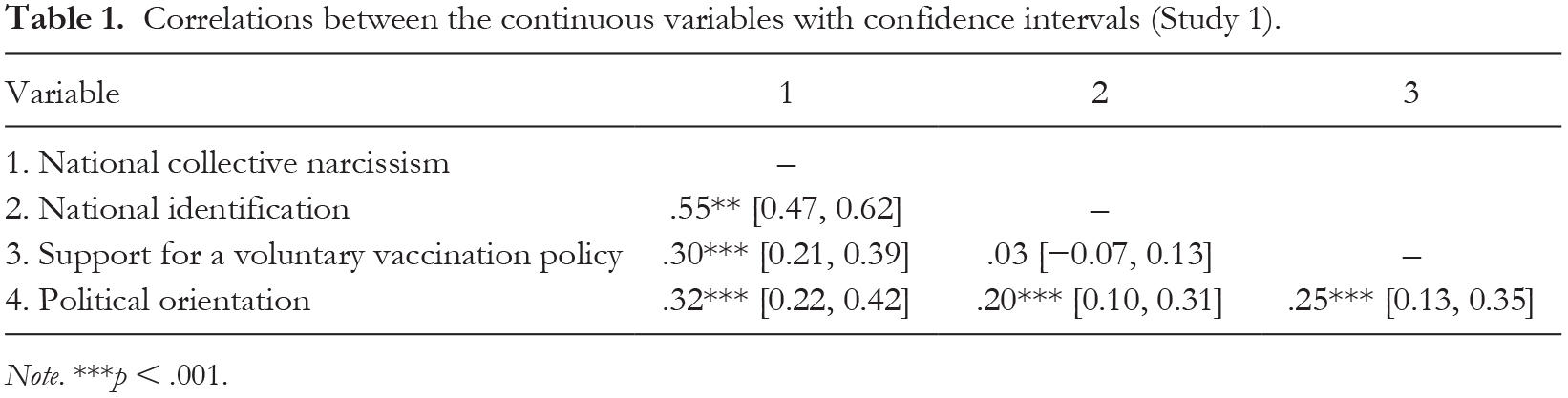
We first computed correlations between continuous variables. 2 National narcissism and national identification were significantly positively correlated with each other and with political orientation. Support for a voluntary vaccination policy was positively correlated with national collective narcissism, but uncorrelated with national identification (see Table 1).
Correlations between the continuous variables with confidence intervals (Study 1).
Note. ***p < .001.
Support for a voluntary vaccination policy
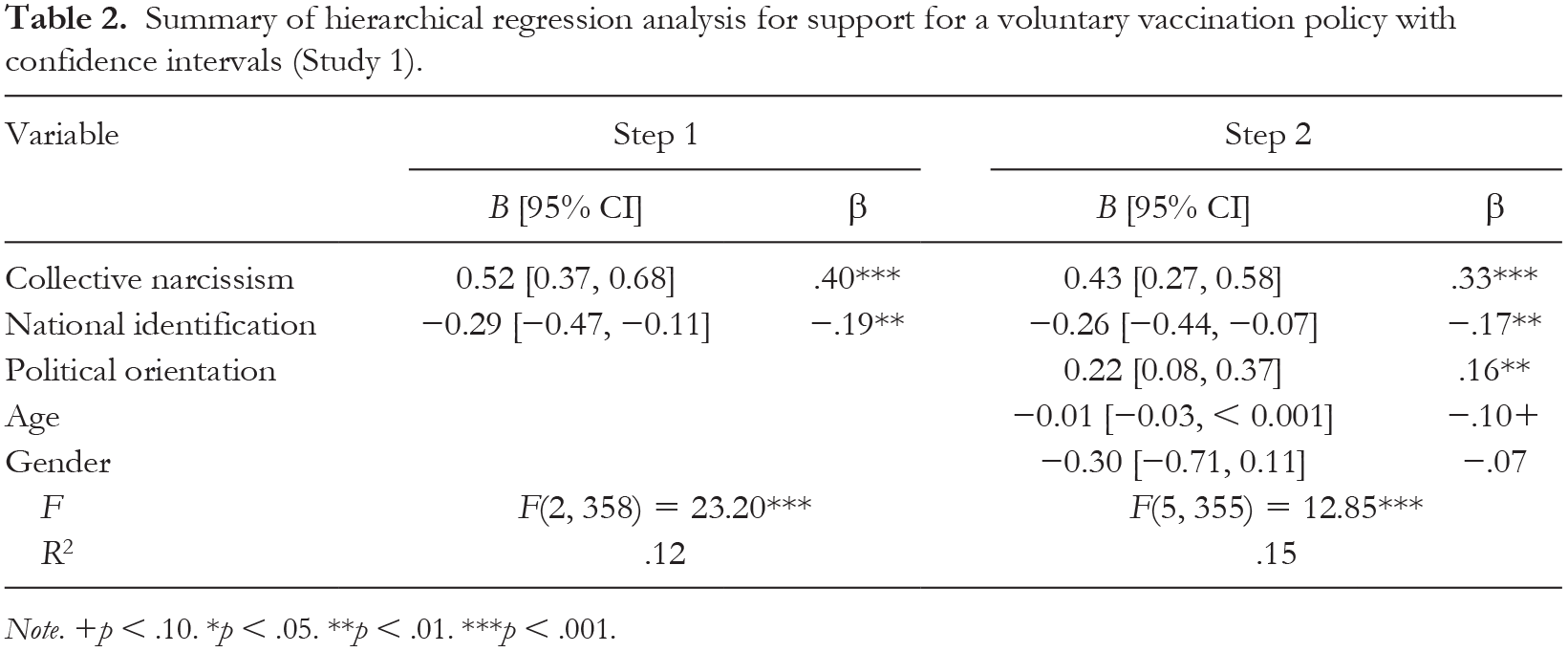
We were primarily interested in examining whether national collective narcissism and national identification were differently associated with support for a voluntary vaccination policy. Thus, we examined the regression model with national narcissism and national identification as predictors of support for introducing a voluntary vaccination policy. The model was significant. As predicted, individuals higher in national narcissism declared stronger support for a voluntary vaccination policy. After controlling for national narcissism, national identification was negatively associated with support for a voluntary vaccination policy. As illustrated in Table 2, the effect of national narcissism on support for a voluntary vaccination policy remained significant after controlling for demographics and political orientation.
Summary of hierarchical regression analysis for support for a voluntary vaccination policy with confidence intervals (Study 1).
Note. +p < .10. *p < .05. **p < .01. ***p < .001.
Discussion
Study 1 showed that national narcissism and national identification were positively correlated yet showed opposite effects: while national narcissism was positively associated with support for a voluntary vaccination policy, national identification negatively predicted this outcome. These effects were demonstrated over and above the effects of right-wing political orientation which, in line with past work (Rabinowitz et al., 2016), was positively related to antivaccination attitudes. This study provided the first evidence that national narcissism is related to support for changing a mandatory, state-financed vaccination program, thereby creating a hazard to both children’s well-being and public health more broadly. This implies that, in contrast to high ingroup identifiers, those high in collective narcissism are prone to support public policies that may ultimately undermine the well-being of their own group (see also Cichocka & Cislak, 2020; Cislak et al., 2018).
Study 2
The aim of Study 2 was twofold: we aimed to replicate the effects observed in Study 1 and to verify whether these effects operate over and above the effects of individual narcissism. This time, we recruited participants among users of private Polish Facebook discussion forums that featured antivaccination topics. We first prescreened forums looking for those whose descriptions fitted the antivaccination theme. One of the team members then requested to join these groups and distributed the link to the study among the users of four discussion groups that accepted the request: “Undesirable Vaccine Symptoms – True Stories,” “Awareness of Development, Development of Awareness,” “The World Has Woken Up,” and “Global Awareness.” We did not prescreen participants for their own vaccination attitudes. Study 2 also employed full, longer versions of the scales used in Study 1.
Method
Participants and procedure
Study 2 was an online survey. Following the recommendations of Vazire (2015), we aimed for a sample size that would provide 80% power to detect an r = .21 effect—a typical effect in social/personality psychology (Richard et al., 2003). Using G*Power, we estimated the target sample size to be at least 173 or larger. We asked only adults to participate but despite the direct instruction, six participants who completed the questionnaire declared to be underage. Because we could not use the data of these six participants, we had to top up the sample after the initial data collection was completed, in order to reach the 173 target sample. Final analyses included only those participants who provided responses to at least one item regarding the voluntary vaccination policy. The final sample consisted of 178 participants; 128 women and 48 men (two respondents declined to indicate their gender) aged between 18 and 69 (M = 24.87, SD = 8.48).
Measures
National narcissism was measured with all nine items of the Collective Narcissism Scale (Golec de Zavala et al., 2009; α = .82, M = 3.28, SD = 1.09).
National identification was measured with the full 12-item Social Identification Scale (Cameron, 2004; α = .93, M = 4.07, SD = 1.34).
Individual narcissism was measured with the six-item version of the Narcissistic Admiration and Rivalry Questionnaire (Back et al., 2013; e.g., “I deserve to be seen as a great personality” [Admiration Subscale]; α = .81, M = 3.27, SD = 1.46; or “I want my rivals to fail” [Rivalry Subscale]; α = .64, M = 3.01, SD = 1.40).
Support for a voluntary vaccination policy was measured with nine items, including those used in Study 1. Participants responded on 7-point scales (1 = definitely not, 7 = definitely yes; α = .95, M = 2.42, SD = 1.66).
Political orientation was the same single-item measure as in Study 1 (M = 3.55, SD = 1.20).
Results
Zero-order correlations
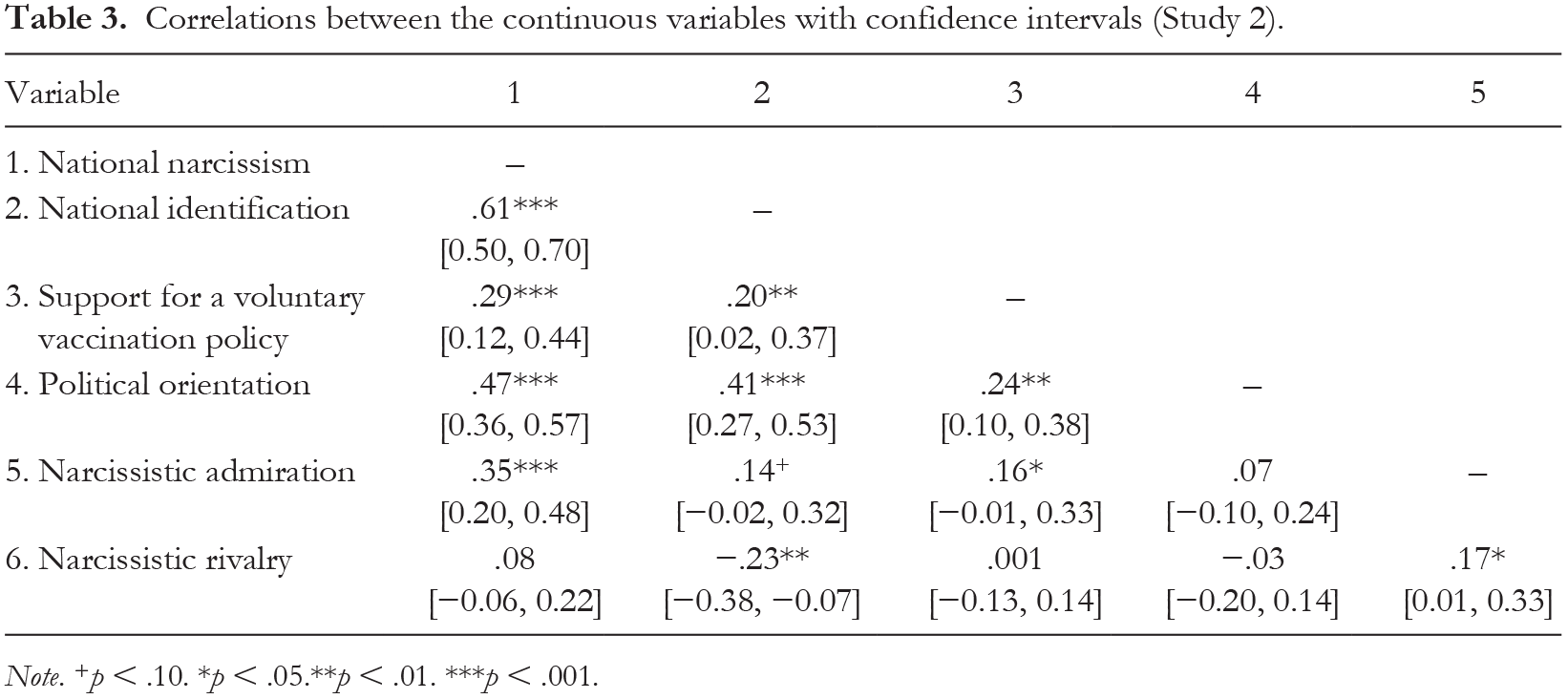
Again, we first computed correlations between continuous variables. National narcissism and national identification were significantly positively correlated with each other and with political orientation. Support for a voluntary vaccination policy was positively correlated with national narcissism, national identification, and right-wing political orientation (see Table 3).
Correlations between the continuous variables with confidence intervals (Study 2).
Note. +p < .10. *p < .05.**p < .01. ***p < .001.
Support for a voluntary vaccination policy
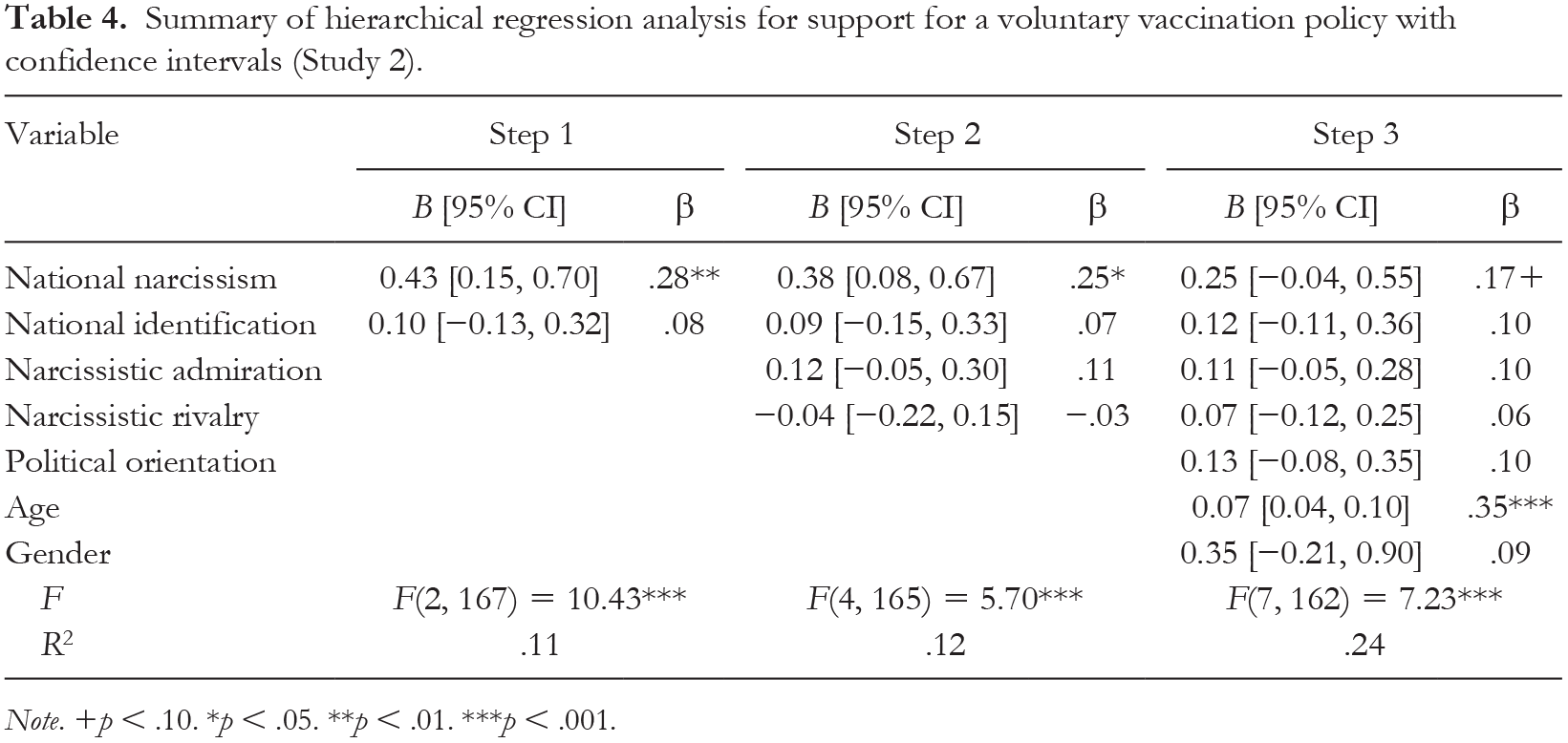
We then examined the regression model with support for introducing a voluntary vaccination policy as the dependent variable. In the first step, we introduced national narcissism and national identification as predictors. The model was significant. As predicted, individuals higher in national narcissism declared stronger support for a voluntary vaccination policy. After controlling for national narcissism, national identification was not significantly related to support for a voluntary vaccination policy. Importantly, the effect of national narcissism on support for a voluntary vaccination policy remained significant after controlling for individual narcissism, which was unrelated to the dependent variable. Neither narcissistic seeking for admiration nor narcissistic rivalry predicted antivaccination attitudes. As illustrated in Table 4, after additionally controlling for demographics and right-wing political orientation, the effect of national narcissism on support for a voluntary vaccination policy was marginally significant.
Summary of hierarchical regression analysis for support for a voluntary vaccination policy with confidence intervals (Study 2).
Note. +p < .10. *p < .05. **p < .01. ***p < .001.
Discussion
In Study 2, national narcissism, but not national identification, positively predicted support for a voluntary vaccination policy, although this effect was marginally significant after controlling for individual narcissism, political orientation, and demographics. Interestingly, contrary to past work (Hornsey et al., 2018a) showing the role of individualistic worldviews in shaping vaccination attitudes, we did not observe a significant relationship between individual narcissism and support for an antivaccination policy.
Study 3
In Study 3, we tested the hypothesis that national narcissism would positively predict vaccination conspiracy beliefs, while national identification would negatively predict this outcome. Additionally, we aimed to verify whether these effects would be observed even when we controlled for the effects of individual narcissism. Recent research showed that a growing number of young people feel that vaccines are unnecessary and harmful (Dickson, 2020). In fact, adolescents have little recollection of what the world was like when citizens were powerless against now rare (but reemerging) diseases such as pneumonia or measles. For this reason, in Study 3 we relied on a national quota sample of young Poles (balanced for gender, age, and size of the place of residence).
Method
Participants and procedure
Study 3 was conducted on a representative sample of young Poles via an online research panel. The final sample consisted of 1,048 participants; 547 women and 501 men aged between 18 and 25 (M = 22.35, SD = 2.16). We measured national narcissism and national identification as predictors, and vaccination conspiracy beliefs as the dependent variable. As previously, we also measured basic demographics and participants’ political orientation and individual narcissism. 3
Measures
National narcissism was measured with the short version of the Collective Narcissism Scale (Golec de Zavala, Cichocka, & Bilewicz, 2013). Participants responded on 5-point scales (1 = definitely disagree, 5 = definitely agree; α = .87, M = 2.86, SD = 0.86).
National identification was measured with a shortened three-item Social Identification Scale (Cameron, 2004; see also Górska et al., 2020). Participants responded on 5-point scales (1 = definitely disagree, 5 = definitely agree; α = .88, M = 3.29, SD = 0.87).
Individual narcissism was measured with a nine-item version of the Narcissism Subscale taken from the Short Dark Triad Scale (SD3; D. N. Jones & Paulhus, 2014; see also Rogoza & Cieciuch, 2019, for a Polish version). Examples of the items are, “I insist on getting the respect I deserve” and “I know that I am special because everyone keeps telling me so” (α = .68, M = 2.71, SD = 0.60).
Vaccination conspiracy beliefs were measured with five items previously used by Jolley and Douglas (2014): “Vaccines are harmful, and this fact is covered up”; “Tiny devices are placed in vaccines to track people”; “Pharmaceutical companies, scientists, and academics work together to cover up the dangers of vaccines”; “The government is trying to cover up the link between vaccines and autism”; “The flu vaccine allows the government to monitor the elderly through the implantation of tiny tracking devices.” Participants responded on 7-point scales (1 = definitely disagree, 7 = definitely agree; α = .94, M = 2.18, SD = 1.08).
Political orientation was the same single-item measure as in Study 1 (M = 3.93, SD = 1.40).
Results
Zero-order correlations
National narcissism and national identification were significantly positively correlated with each other and with individual narcissism and political orientation. Vaccination conspiracy beliefs were also positively correlated with national narcissism, individual narcissism, and political orientation (see Table 5).
Correlations between the continuous variables with confidence intervals (Study 3).
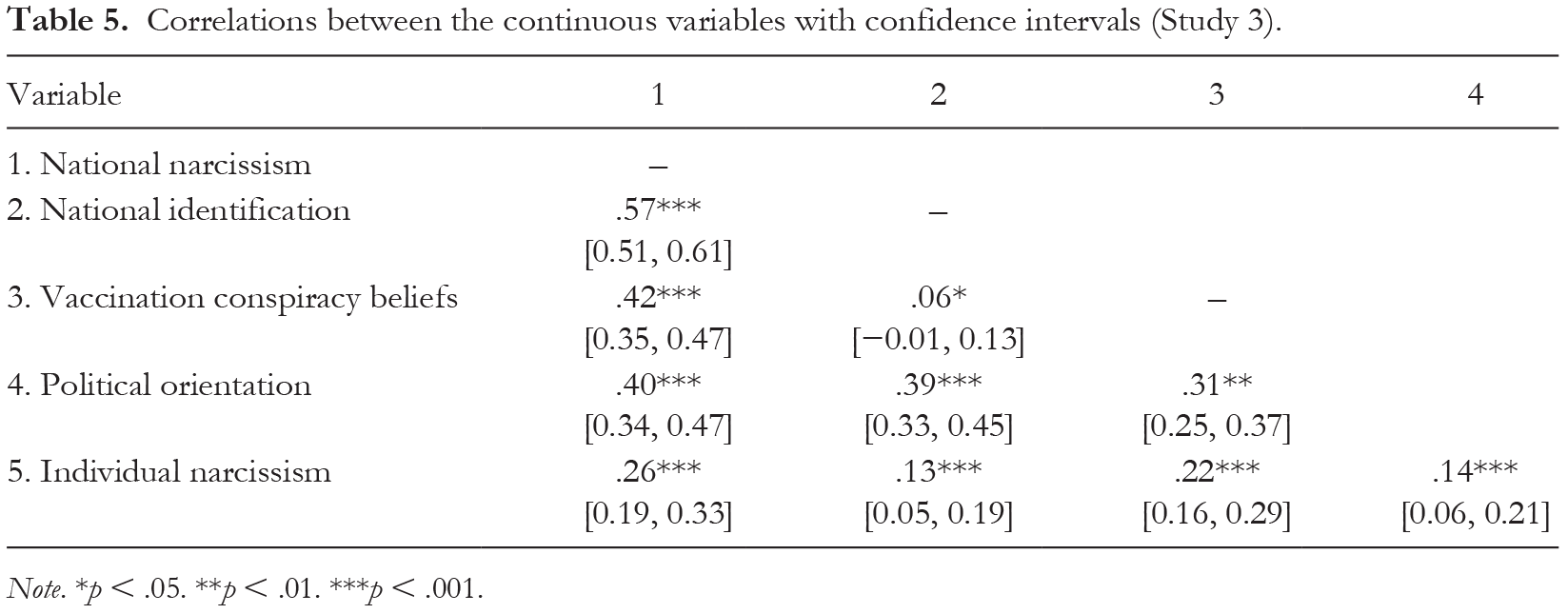
Note. *p < .05. **p < .01. ***p < .001.
Vaccination conspiracy beliefs
We aimed to examine whether high national narcissism and high national identification were differently associated with vaccination conspiracy beliefs when their overlap was controlled for. Thus, we examined the regression model with national narcissism and national identification as predictors of vaccination conspiracy beliefs. The model was significant. As predicted, individuals higher in national narcissism scored higher on vaccination conspiracy beliefs. After controlling for national narcissism, national identification was significantly negatively associated with vaccination conspiracy beliefs (see Table 6).
Summary of hierarchical regression analysis for vaccination conspiracy beliefs with confidence intervals (Study 3).
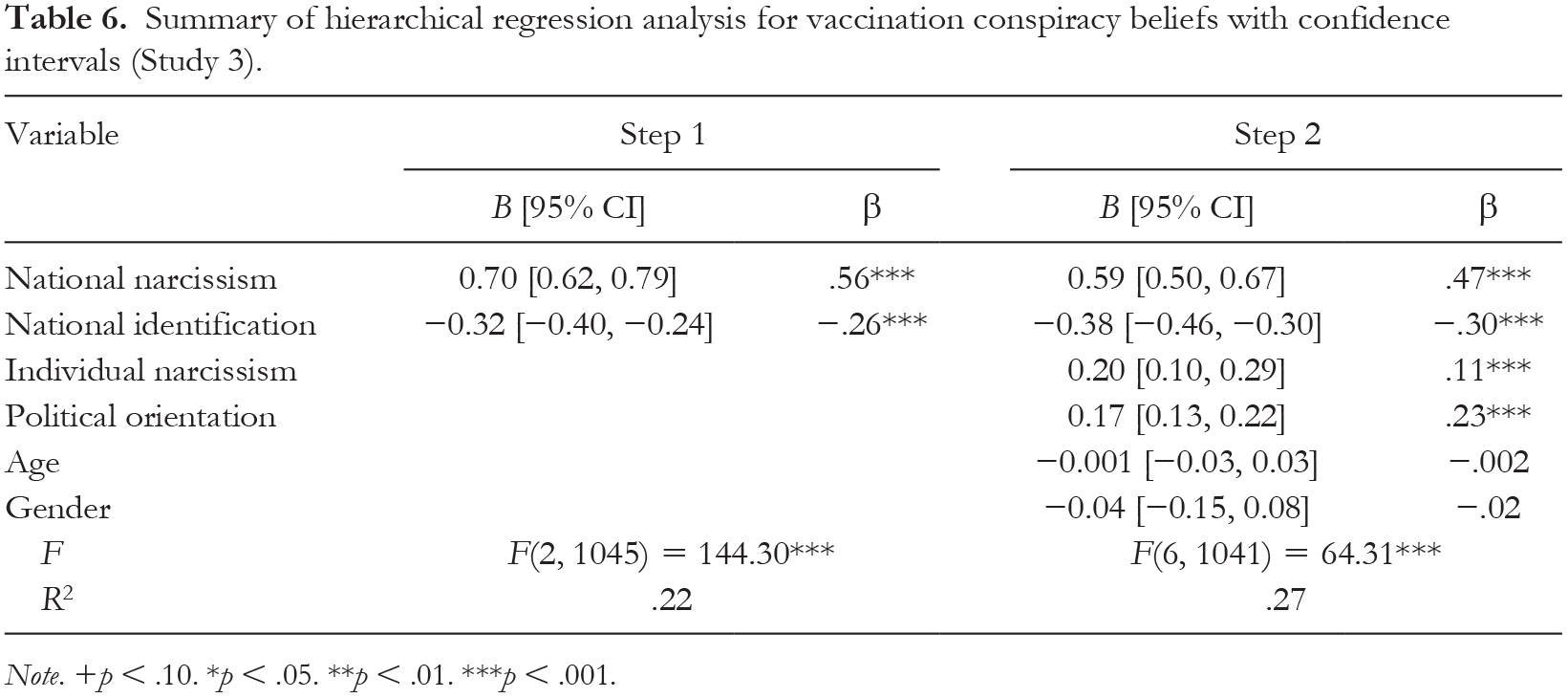
Note. +p < .10. *p < .05. **p < .01. ***p < .001.
These effects remained significant even after controlling for demographics, right-wing political orientation, and individual narcissism. 4
Discussion
Study 3 showed that national narcissism and national identification were positively correlated yet associated with vaccination conspiracy beliefs in opposite ways. Previous research showed that collective narcissism both national (e.g., Cichocka, Marchlewska, Golec de Zavala, & Olechowski, 2016; Sternisko et al., 2020) and religious (e.g., Marchlewska et al., 2019) served as a positive predictor of endorsement of conspiracy theories. In this study, we found that it is also positively related to vaccination conspiracy beliefs. In this case, it is possible that those scoring high on national narcissism see vaccination as imposed by enemies who might operate even within the nation (Jolley et al., 2018). National identification, on the other hand, was associated with lower vaccination conspiracy beliefs, which is in line with past research indicating that more secure forms of national identification are associated with a lower likelihood of endorsing conspiracy theories (Cichocka, Marchlewska, Golec de Zavala, & Olechowski, 2016).
These effects were observed even when we controlled for the effects of left-right political orientation and individual narcissism. Both of these variables were positively associated with endorsement of antivaccination conspiracy theories. These results are consistent with past work linking individual narcissism (Cichocka, Marchlewska, & Golec de Zavala, 2016) and political conservatism (van der Linden et al., 2020; cf. van Prooijen et al., 2015) to more generalized conspiracy beliefs, as well as with research showing that provaccination attitudes are less prevalent among conservatives (Hornsey et al., 2018a; Rabinowitz et al., 2016).
Study 4
In Study 4, we sought to replicate the effects observed in the previous studies and test the full model using a national quota sample balanced for gender, age, and education. We aimed to verify whether support for changing the vaccination policy is positively predicted by national narcissism and negatively predicted by national identification, and whether these effects are differentially mediated by vaccination conspiracy beliefs.
Method
Participants and procedure
Study 4 was an online survey. The final sample consisted of 811 participants; 418 women and 384 men (nine persons failed to indicate their gender) aged between 18 and 84 (M = 40.17, SD = 14.16). We measured national narcissism and national identification as predictors (counterbalanced). Vaccination conspiracy beliefs and support for a voluntary vaccination policy were measured as the mediator and the dependent variable, respectively. As previously, we also measured basic demographics and participants’ political orientation.
Measures
National narcissism was measured with the short version of the Collective Narcissism Scale (Golec de Zavala, Cichocka, & Bilewicz, 2013; α = .90, M = 4.30, SD = 1.50).
National identification was measured with the shortened five-item Social Identification Scale (Cameron, 2004; see also Cislak et al., 2020; Cislak et al., 2018; α = .88, M = 5.24, SD = 1.37).
Vaccination conspiracy beliefs were measured in the same way as in Study 3. Participants responded on 7-point scales (1 = definitely not, 7 = definitely yes; α = .92, M = 2.32, SD = 1.48).
Support for a voluntary vaccination policy was measured in the same way as in Study 1. Participants responded on 7-point scales (1 = definitely not, 7 = definitely yes; α = .96, M = 3.01, SD = 2.06).
Political orientation was measured with the same single-item measure as in the previous studies (M = 3.99, SD = 1.46).
Results
Zero-order correlations
Again, we first computed correlations between continuous variables. National narcissism and national identification were significantly positively correlated with each other and with political orientation. Vaccination conspiracy beliefs and support for a voluntary vaccination policy were also positively correlated with each other and with national narcissism, as well as with political orientation. Although national identification was not related to vaccination conspiracy beliefs, it was significantly positively related to support for a voluntary vaccination policy (see Table 7).
Correlations between the continuous variables with confidence intervals (Study 4).
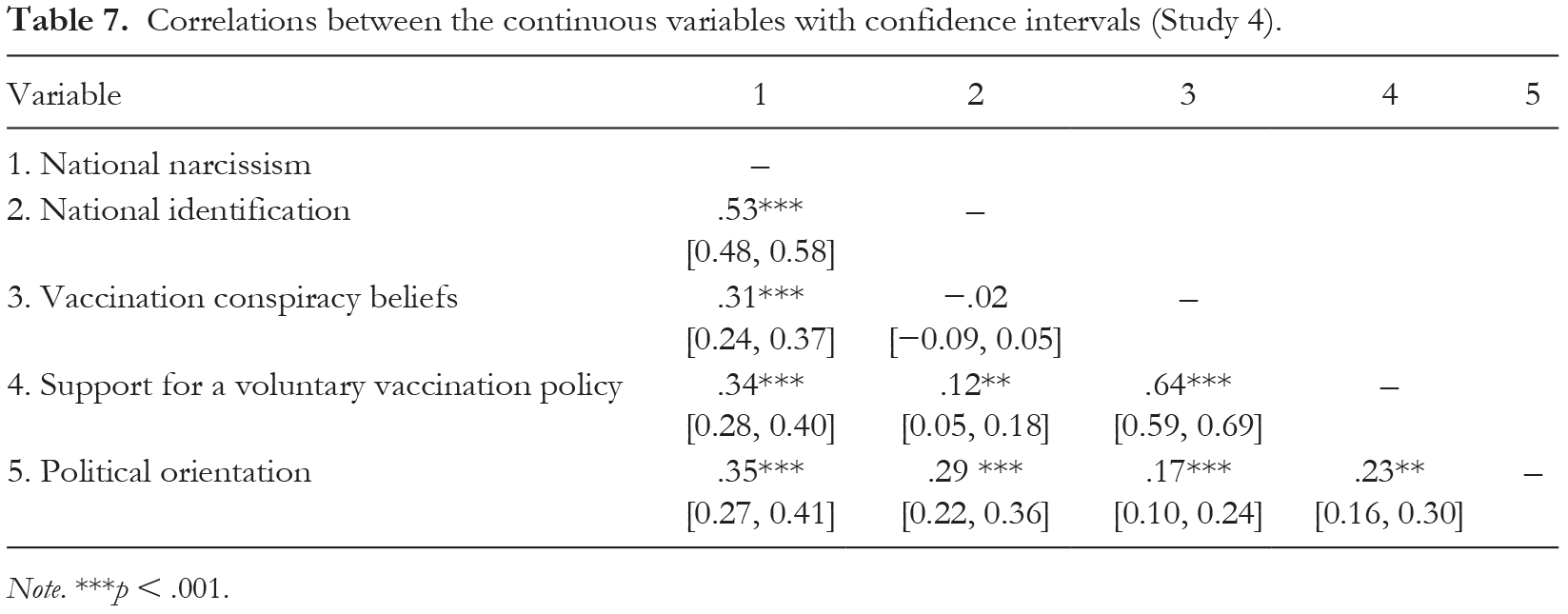
Note. ***p < .001.
Model Test
We then examined a path model using Mplus Version 8.4 (Muthén & Muthén, 2017) to verify whether national narcissism was associated with support for a voluntary vaccination policy through vaccination conspiracy beliefs. As illustrated in Figure 1, national narcissism predicted vaccination conspiracy beliefs significantly and positively, b = 0.43, 95% CI [0.35, 0.52], p < .001. However, when the overlap between national narcissism and national identification was controlled for, national identification was significantly negatively related to vaccination conspiracy beliefs, b = −0.27, 95% CI [−0.36, −0.19], p < .001. In turn, vaccination conspiracy beliefs significantly and positively predicted support for a voluntary vaccination policy, b = 0.84, 95% CI [0.76, 0.92], p < .001. The indirect effect of national narcissism on support for a voluntary vaccination policy via vaccination conspiracy beliefs was significant: estimate = 0.37, 95% CI [0.29, 0.44], p < .001. Similarly, the indirect effect of national identification on support for a voluntary vaccination policy via vaccination conspiracy beliefs was significant: estimate = −0.23, 95% CI [−0.30, −0.16], p < .001. After accounting for its significant indirect effect, national narcissism had a direct positive effect on support for a voluntary vaccination policy, b = 0.17, 95% CI [0.06, 0.28], p < .001, while the direct effect of national identification was only marginally significant, b = 0.09, 95% CI [−0.01, 0.20], p = .083. Crucially, when we adjusted for demographics and political orientation, the pattern of results for our focal predictors remained the same.
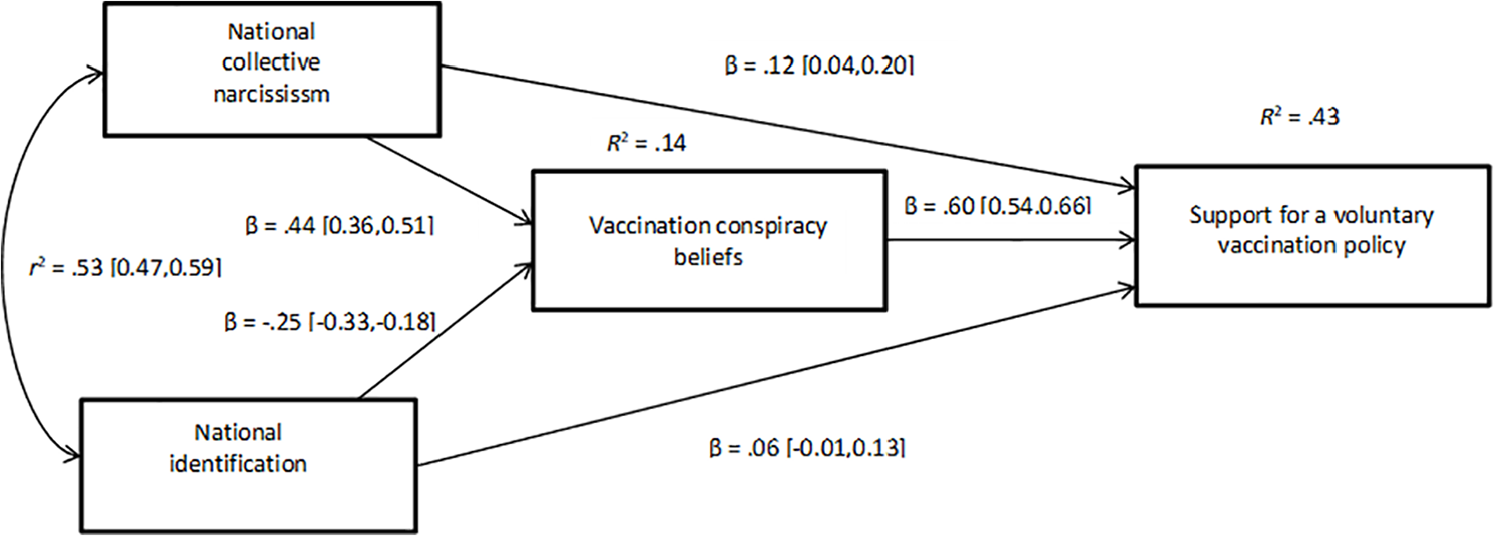
Vaccination conspiracy beliefs as a mediator of the effect of national narcissism and national identification on support for a voluntary vaccination policy (Study 4).
Discussion
In Study 4, we found that national narcissism was significantly related to vaccination conspiracy beliefs (replicating the results of Study 3) and to support for introducing a voluntary vaccination policy (replicating the results of Studies 1 and 2). Moreover, we found that endorsement of vaccination conspiracy theories mediated the effect of national narcissism on supporting a voluntary vaccination policy. National identification, in contrast, was negatively associated with beliefs in vaccination conspiracy theories and, in turn, predicted lower support for a voluntary vaccination policy. As in previous studies, these relationships were observed over and above the effects of right-wing political orientation.
General Discussion
In a series of four studies, we confirmed our prediction that national narcissism would be significantly related to support for a voluntary vaccination policy (Studies 1, 2, and 4) as well as to beliefs in conspiracy theories about vaccines (Studies 3 and 4). We further found that vaccination conspiracy beliefs mediated the effect of national narcissism on support for a voluntary vaccination policy (Study 4). Our studies involved different samples: a general community sample (Study 1), users of discussion forums featuring antivaccination topics (Study 2), a national quota sample of youth (Study 3), and a general national quota sample (Study 4). In this way, we sought to enhance credibility and allow for making inferences with respect to the society more broadly, rather than narrow groups within it. In all studies, national narcissism explained a considerable amount of variance within support for changing the current governmental vaccination policy.
The effects we observed were unique to national narcissism. National identification was negatively associated with vaccination conspiracy beliefs (Studies 3 and 4) and negatively (or nonsignificantly) associated with support for a voluntary vaccination policy (Studies 1, 2, and 4). Thus, we show that it is not the mere strength of ingroup positivity, but rather the group-based defensiveness that is linked to antivaccination attitudes. Moreover, the effects of national narcissism were observed over and above the effects of right-wing political orientation (Studies 1–4).In line with past work (Rabinowitz et al., 2016), right-wing political orientation was positively associated with support for a voluntary vaccination policy. Also, when we included individual narcissism in Study 2, we found that it was not related to antivaccination attitudes; although, in line with past work (Cichocka, Marchlewska, & Golec de Zavala, 2016), it was related to conspiracy beliefs in Study 3.
National Narcissism and Support for Policies
These results have important theoretical and practical implications. The antivaccination conspiracy theory endorsed by those high in national narcissism claims that large pharmaceutical companies, together with researchers and scientists, are covering up negative information about vaccines to execute their nefarious plans and take control over the world. Validating an ingroup image through resisting influence from high-status groups such as scientists, or wealthy groups such as pharmaceutical corporations, however, comes at a price: a potential deterioration of ingroup members’ health and well-being. Previous research showed that those who believe in vaccination conspiracy theories are prone to avoid vaccination themselves (Jolley & Douglas, 2014). Four years after the Global Health Security Agenda tapped Italy to lead world vaccination strategies, Italy’s Interior Minister Matteo Salvini, representing a populist government, followed Donald Trump in supporting the antivaccination movement. In the run up to the general election, he stated that “ten obligatory vaccinations are useless and, in many cases, dangerous, if not harmful” (Agenzia Nazionale Stampa Associata [ANSA], 2018, para. 3). As we suggested before, such messages might resonate especially well with those high in national narcissism—past worked identified national narcissism as a robust predictor of voting for populist parties (such as Law and Justice in Poland) and politicians (such as Donald Trump in the US; e.g., Marchlewska et al., 2018). Thus, undermining global health policies may be exploited politically if it is used to highlight the strength and independence of one’s own national group.
Past work shows that despite being related to a narrative of fighting for the recognition of one’s group’ greatness, collective narcissism is associated with support for policies that, in the long run, may turn against this same ingroup (Cichocka, 2016; Marchlewska et al., 2020). For example, those high in national narcissism show higher support for antienvironmental policies such as subsidizing the coal industry or logging a unique protected forest (Cislak et al., 2018). Introducing antienvironmental policies not only deteriorates the natural environment (e.g., due to increased air pollution), but also undermines citizens’ health (European Environment Agency, 2016). Support for such policies seems to stem from the narcissistic need to make decisions independently of external influences (Cislak et al., 2018). In a similar vein, the perceived disadvantage of one’s own nation (Marchlewska et al., 2018) or the belief that other nations gain more than one’s own group (Cislak et al., 2020) linked national narcissism to support for leaving supranational organizations such as the European Union, and thus to renouncing the benefits that these organizations offer. In the long term, such beliefs may also impact health-related behaviors, including those in times of a pandemic (such as the COVID-19 one; van Bavel et al., 2020). Together, past and current findings suggest that collective narcissism may be a risk factor that predicts support for policies that in the long run may undermine the ingroup and the well-being of its members.
Limitations and Future Directions
The studies presented here reveal group-based underpinnings of antiscience attitudes, using antivaccination attitudes as an example. Group-based defensiveness is a risk factor in maintaining public health: it is associated with the endorsement of conspiracy theories that, in turn, are linked to support for public policies, including health policies, with undesirable long-term national and global consequences. However, the research presented here is not without limitations. First, all of our studies were correlational, making our inferences about causality limited. Second, all of the studies were conducted within one sociopolitical context, among Polish participants. Poland is one of 11 (out of 31 for which data are available) European countries that have mandatory vaccines (European Centre for Disease Prevention and Control, 2020). There are as many as nine mandatory vaccines in Poland, some of which are imported, and some produced locally. Until recently, vaccination coverage had been consistently high. However, the number of vaccination avoidance cases has increased 16 times in the last 10 years (analysis based on the National Institute of Public Health data; Defratyka, 2020). Currently, a citizen-proposed bill introducing a voluntary vaccination policy is being reviewed by the Polish Parliament (Komisja Zdrowia oraz Komisja Polityki Społecznej i Rodziny, 2018). Thus, Poland is an example of a country that managed to keep high vaccine coverage and high levels of immunization until recently. However, this may soon change due to an active antivaccination movement and the wide social support it has gained. As such, Poland served as an interesting context to study these associations. Future research would do well to examine the generalizability of these effects to other contexts.
As we outlined in the introduction, there may be different explanations behind the observed pattern of results. To put it in a nutshell, the observed pattern may be due to image-management concerns associated with collective narcissism, to perceived nation’s impregnability, or to the appeal of populist elite cues to those high in national narcissism. Future research should disentangle these three theoretical mechanisms, especially because they might suggest different ways of counteracting antivaccination attitudes.
If these effects are driven by top-down populist cues, mimicking the style of populist communication (Jagers & Walgrave, 2007) in provaccination messages may be one way of counteracting the appeal of the antivaccination movement. This may be achieved either through appealing to motives characteristic of populism such as emphasizing people’s central position, criticizing the elites (e.g., for not taking enough care of people’s health), or proclaiming a serious crisis (e.g., Rooduijn, 2014). If perceived group invulnerability explains the effect of national narcissism on antivaccination attitudes, it would be tempting to put more emphasis on the seriousness of the threat to counteract these attitudes. However, if maintaining an image of being strong and independent is indeed the core motive behind antivaccination attitudes, then stronger pressures from global health organizations or authorities might backfire and increase the effect of national narcissism on support for antivaccination policies. In contrast, a so-called Jiu Jitsu approach (Hornsey & Fielding, 2017), relying on more complex social interventions aimed to satisfy people’s underlying needs through individual enhancement and self-affirmation, may prove more effective. We hope that future studies will be able to build on our findings to test these possibilities in an effort to combat antivaccination attitudes specifically, as well as antiscience attitudes more broadly.
Footnotes
Funding
The author(s) disclosed receipt of the following financial support for the research, authorship, and/or publication of this article: This work was supported by the National Science Center (Grant No. 2018/29/B/HS6/02826); the Polish Ministry of Science and Higher Education (DIALOG Grant No. 0013/2019); and the Nicolaus Copernicus University (IMSErt – University Centre of Excellence).
