



Abstract
Aims:
This research aims to examine cross-linguistic interaction and intra-linguistic variation in the Welsh and English of bilingual speakers in two areas of north Wales. Specifically, I present an analysis of fundamental frequency range (FFR) and examine both cross-linguistic and intra-linguistic differences in speech production between bilinguals from Welsh-speaking and English-speaking homes.
Design:
Data were collected from Welsh–English bilinguals aged 16–18 in the areas surrounding the Welsh-dominant town of Caernarfon (Gwynedd) and the English-dominant town of Mold (Flintshire). The sample was equally stratified by speaker gender and home language.
Data:
The data were elicited from a reading passage task and were analysed acoustically. Measures of level and span were taken. Data were analysed using conditional inference trees and random forests.
Findings:
The results of the analysis of FFR in Caernarfon and Mold revealed no significant differences between English and Welsh. In Mold, gender was the only significant predictor of FFR across all measures. In Caernarfon, home-language differences in level were found in female speakers’ data only, and gender differences in span were found in the speech of those from English-speaking homes.
Originality:
The study contributes to previous studies of traditional and new speakers in minority-language contexts by examining both languages in the speakers’ repertoires. Specifically, it is the first study to examine the regional and home-language variation in FFR of bilingual speakers.
Implications:
The results highlight (1) the importance of community-specific patterns in minority-language contexts and (2) the way in which linguistic background might interact with other social factors in situations of long-term language contact. The results imply that a more holistic approach to examinations of variation in such contexts will be fruitful.
Keywords
Introduction and background
Studies of cross-linguistic interactions at the level of phonetics have shown differences in speech production between monolingual and bilingual speakers (e.g., Elordieta & Calleja, 2005; Kehoe, 2002; Watson, 2007) as well as between bilinguals from different linguistic backgrounds (e.g., Guion et al., 2000; Simonet, 2010). Similarly, research on minority-language variation in bilingual communities have found differences in speech patterns between traditional and new speakers (Cortés et al., 2019; Nance, 2015; Tomé Lourido, 2018), and previous work on teenage Polish migrants to the United Kingdom has shown that the factors which influence the production of a particular feature may differ between these groups (Meyerhoff & Schleef, 2014; Schleef et al., 2011).
Studies of speech patterns in the Welsh and English of bilinguals in Welsh-medium education in Wales, however, provide a mixed picture. On one hand, data from male speakers in a community in south Wales point to a lack of phonetic differences between traditional and new speakers (i.e., those from Welsh-speaking and non-Welsh-speaking family backgrounds, respectively) in the production of monophthongs (Mayr et al., 2017) and the realisation of lexical stress (Mennen et al., 2020). These results have been attributed to both long-term language contact and the fact that traditional and new speakers of Welsh are taught together in Welsh-medium schools and that, in certain communities, a common peer-group identity might override any differences (see also Nance, 2020, for a similar result among younger speakers of Scottish Gaelic).
On the other hand, the findings of studies including communities in north-west Wales, where Welsh tends to be spoken by the majority of the local population, suggest phonetic differences between Welsh and English and intra-language variation which is influenced by both home-language differences and wider social factors. Specifically, speaker gender has been shown to influence the production of /r/ (Morris, 2013, 2021) and /l/ (Morris, 2017) among both traditional and new speakers aged 16–18 with female speakers also being more likely to differentiate between Welsh and English. This tendency has also been suggested in a study of fundamental frequency range (FFR) among older early acquirers of Welsh and English in north-west Wales (Ordin & Mennen, 2017), but it remains to be seen the extent to which home language and gender interact and whether there are regional differences in the production of FFR.
This paper builds on previous work to assess the importance of community-specific patterns in minority-language contexts and the way in which linguistic background might interact with other social factors in situations of long-term language contact. Taking a comparative sociolinguistics approach (Tagliamonte, 2002), I examine variation in the production of FFR in the speech of 32 Welsh–English bilinguals aged 16–18 from two areas in north Wales which differ in the extent to which Welsh is spoken by the wider population. The sample was equally stratified by speaker gender and home language in order to ascertain (1) whether there is cross-linguistic and intra-linguistic variation with respect to these features and (2) the extent to which extra-linguistic factors influence variation.
The remainder of this section presents an overview of Welsh–English bilingualism, and FFR. Following this, I present the methods used for data collection and outline the two communities under discussion. In the analysis of the results, I present the data for the two communities separately in order to examine both cross-linguistic and intra-linguistic variation. For each community, the results for level (minimum F0, maximum F0, and mean F0) and span (maximum F0 – minimum F0 expressed in Semitones) are presented. The final sections discuss the results with reference to the aims outlined above and report overall conclusions.
Welsh–English bilingualism
The sociocultural history of Welsh and English across Wales has resulted in geographical differences in the proportion of Welsh speakers (who are typically at least bilingual with English, see Binks & Thomas, 2019, p. 1022) in local communities (see R. O. Jones, 1993, for an overview). The areas with the highest proportions of Welsh speakers tend to be located in the western counties of Gwynedd, Anglesey, Carmarthenshire, and Ceredigion (Welsh Government, 2013).
Despite the tendency for family transmission of Welsh to be strongest in these counties (Welsh Government, 2017, p. 52), both traditional and new speakers exist in communities across Wales. This is due to both inward migration to ‘heartland’ areas on one hand, and the development of Welsh-medium education in other areas which had, to varying degrees, undergone language shift on the other hand (M. C. Jones, 1998, p. 17). Welsh-medium education 1 acts as both first-language education for those from Welsh-speaking homes and immersion education for those from non-Welsh-speaking homes. The proportion of speakers from either group varies according to the extent to which Welsh is a dominant community language (see the section ‘Areas’).
Language use and attitudes among young people
The daily use of Welsh by individuals is more likely in areas where over 60% of the local population also speak the language (H. M. Jones, 2008). Similarly, the use of Welsh as the usual medium of everyday face-to-face interaction (Morris, 2007) and on social media (Cunliffe et al., 2013) among young people appears to be more normalised in areas where Welsh is a majority language. Morris (2007) collected data on patterns of language use from 288 speakers across 12 locations in Wales. She found that the dominant language in the community (and the proportion of speakers from Welsh-speaking homes) was the most significant predictor of language use among young people.
Ethnographic analyses of young people in traditionally Welsh-speaking areas have shed further light on differences in language use between social networks within communities. Based on patterns of language use among young people in a predominantly Welsh-medium school, Musk (2006, pp. 399–400) differentiates between friendship groups who preferred speaking Welsh and came from Welsh-speaking homes, those who preferred English and came from English-speaking homes, and ‘floaters’ who were mixed both in terms of their language background and use of both languages. These groups were then found to differ not only in their language use but also their attitudes towards bilingualism (Musk, 2006, p. 384).
Similarly, previous work has shown that stereotypes may exist between social networks predominantly characterised by the language background of its members. In a study of two schools in south-west Wales, Selleck (2013, 2018) found that stereotypes were used to differentiate between Welsh speakers from Welsh-speaking families and those from monolingual English backgrounds, and also between traditional and new speakers of Welsh. Those from Welsh-speaking families were often referred to as ‘hambones’ (Welsh farmers) whereas those from English-speaking backgrounds were characterised as ‘Saeson’ English people (Selleck, 2013, p. 92). A similar distinction was made between traditional speakers of Welsh who were labelled ‘mamiaith’ mother tongue and new speakers who were referred to as ‘dysgwyr’ learners (see also Selleck, 2018, p. 58).
Language variation in the speech of Welsh–English bilinguals
Recent work has attempted to examine cross-linguistic and intra-linguistic variation in the context of Welsh–English bilingualism and considered possible home-language differences. Mayr et al. (2017) examined the production of monophthongs in a community in south-west Wales. They compared the Welsh and English speech of bilinguals from both Welsh-speaking and English-speaking homes and also the speech of monolinguals from the same area and found few differences. Using data from the same participants, Mennen et al. (2020) investigated lexical stress and compared the Welsh English data with data collected from speakers of Southern Standard British English (SSBE). They found that while there were differences between the realisation of lexical stress in Welsh, Welsh English, and SSBE, there were no significant differences between bilingual and monolingual Welsh–English speakers and no difference between Welsh and English home-language groups. The results of these studies have been attributed in part to the history of long-term language contact between Welsh and English and possibly to the nature of the community under investigation. In this community, both Welsh speakers and monolingual English speakers were part of the same peer group in a bilingual school which had separate Welsh-medium and English-medium streams. Their data were also based on male speakers only, and the results of a more recent perception study suggest that other features may be more susceptible to cross-linguistic influence. Mayr et al. (2020) asked participants to listen to English extracts of Welsh speakers and monolingual English speakers from Llanelli, south Wales, and decide whether or not the speakers were Welsh–English bilinguals. Subsequent analyses of the extracts by the authors found significant differences between Welsh speakers and monolinguals for a number of features. Specifically, Welsh speakers tended to produce, for example, more instances of the alveolar trill and postvocalic /r/, and significant differences were found for some measures of FFR (maximum f0 and span, see Mayr et al., 2020, p. 758).
Other studies of Welsh–English bilinguals’ speech production have found cross-linguistic differences which interact with extra-linguistic factors. Morris (2013, 2017, 2021) examined (r) variation and /l/-darkening in the Welsh and English of bilingual speakers in north Wales (using the same dataset as the current study). The results for /r/ in prevocalic and intervocalic positions showed that speakers from both Caernarfon (north-west Wales) and Mold (north-east Wales) transfer the alveolar approximant (traditionally associated with English) to their Welsh and that this was more likely in the speech of those from English-speaking homes. Transfer of the alveolar trill (expected in Welsh) was a feature of Caernarfon English only and was more likely in the speech of those from Welsh-speaking homes. In Caernarfon English, however, female speakers were more likely to style-shift and produce fewer approximant tokens in the wordlist task. In Welsh, female speakers from Caernarfon were also more likely to produce the alveolar approximant regardless of the task. The results for /l/-darkening showed no home-language or regional differences, but female speakers from Caernarfon were more likely to differentiate between Welsh and English and produce significantly lighter productions of /l/ in onset position in English. Similar results were found in a study of FFR in north-west Wales undertaken by Ordin and Mennen (2017) which is outlined in the next section following an overview of FFR.
FFR
FFR (often referred to as pitch range, see Mennen et al., 2012, p. 2249 for a discussion) describes the variation in f0 values used in speech (Mennen et al., 2014, pp. 304–305). It has previously been operationalised as the difference between maximum and minimum f0 although it is now recognised that both f0 level and f0 span constitute semi-independent indicators of overall FFR (e.g., Ladd, 2008; Patterson, 2000). Investigations of FFR therefore tend to include both measurements of f0 level (e.g., minimum f0, maximum f0, mean f0) and f0 span (e.g., the difference between minimum and maximum f0 in Semitones).
Previous studies have shown that FFR can be influenced by a number of linguistic and extra-linguistic factors. A number of cross-linguistic differences in FFR have been found between languages and attributed, at least in part, to differences in intonational phonology (e.g., Graham, 2014; Mennen et al., 2012). In their comparison of female speakers of SSBE and Northern Standard German (NSG), Mennen et al. (2012) used measures of FFR which were based on the f0 distribution for individual speakers (such as mean f0) and linguistic measures whereby distributional measures were linked to specific landmarks in the f0 contour (Mennen et al., 2012, p. 2250). They found that the differences in f0 range found between English and German were linked to cross-linguistic differences in the realisation of tones and the frequency of distribution of tones in each language (Mennen et al., 2012, p. 2258).
Differences in FFR ascribed to physiology are largely accounted for by differences in the size of the larynx (as well as height and weight, see Mennen et al., 2012, for an overview). This tends to be correlated with natal male speakers insofar as high levels of testosterone affect the size of the larynx (Titze, 1989). The relationship between testosterone and FFR has recently been attested in a study of transmasculine people undergoing hormone therapy, where speakers who had been receiving testosterone for a longer period of time tended to have lower mean f0 (Zimman, 2017, p. 353). As Zimman (2017, p. 345) states, however, ‘although physiology is clearly important, it seems that at least part of the observed gender differences in f0 derives from socially learned habits’.
Evidence for the role of sociocultural norms in FFR variation can be seen, for instance, in the gendered differences found in pre-pubescent children (Ferrand & Bloom, 1996). This provides evidence for gendered patterns of speech (in some cultures at least) which are partly acquired prior to physiological maturation. Further evidence for the influence of community-specific social norms on FFR can be further seen in studies of (perceived) sexuality and, in particular, those which focus on the speech of gay men in English-speaking communities (e.g., Levon, 2007) as well as in differences found between regional varieties of the same language (e.g., Deutsch et al., 2009).
There are a number of studies which investigate FFR in L2 learners and bilingual speakers (e.g., Mennen et al., 2014; Scharff-Rethfeldt et al., 2008). Similar to the results of other phonological features, characteristics of FFR can transfer between languages in a speaker’s repertoire. In a study of female German–English bilinguals, Scharff-Rethfeldt et al. (2008) found that the median f0 for bilingual speakers differed in their two languages but that their results were also different when compared to monolingual speakers of German and English (Scharff-Rethfeldt et al., 2008, p. 127). Mennen et al. (2014) investigated FFR in the speech of L2 English speakers from Germany and found that the L2 speakers tended to produce intermediate values (when compared to monolingual German and monolingual English speakers) for measures of FFR which differed substantially between the two languages (Mennen et al., 2014, p. 324).
Ordin and Mennen (2017) provide a recent analysis of FFR in the Welsh and English of bilingual speakers which focusses on cross-linguistic differences between the two varieties. They extracted a number of measurements for f0 level (minimum f0, maximum f0, and mean f0) and f0 span (the difference between minimum and maximum f0 in Semitones) from recorded sentences provided by 30 Welsh–English bilinguals from Gwynedd and Anglesey. They found that female speakers tended to have a significantly wider f0 span in their Welsh than in their English. They also found that minimum f0 was significantly higher in female speakers’ Welsh compared to their English. The speakers in Ordin and Mennen (2017) had acquired both languages in their early years and used both languages on a daily basis and in both formal and informal situations. The current study expands on Ordin and Mennen (2017) by examining FFR in both north-west and north-east Wales and by including home language as an independent variable.
Methodology
Areas
Data were collected in the areas around Caernarfon (Gwynedd) in north-west Wales and Mold (Flintshire) in north-east Wales as part of a wider project (Morris, 2013). These two towns were chosen primarily not only because they are both market towns (and therefore anchor towns for surrounding rural areas) which have comparable populations (around 10,000 people) but also because there are clear demolinguistic and accentual differences between the two areas (see Morris, 2017, for an overview of the accentual differences). Figure 1 shows the two areas under discussion.
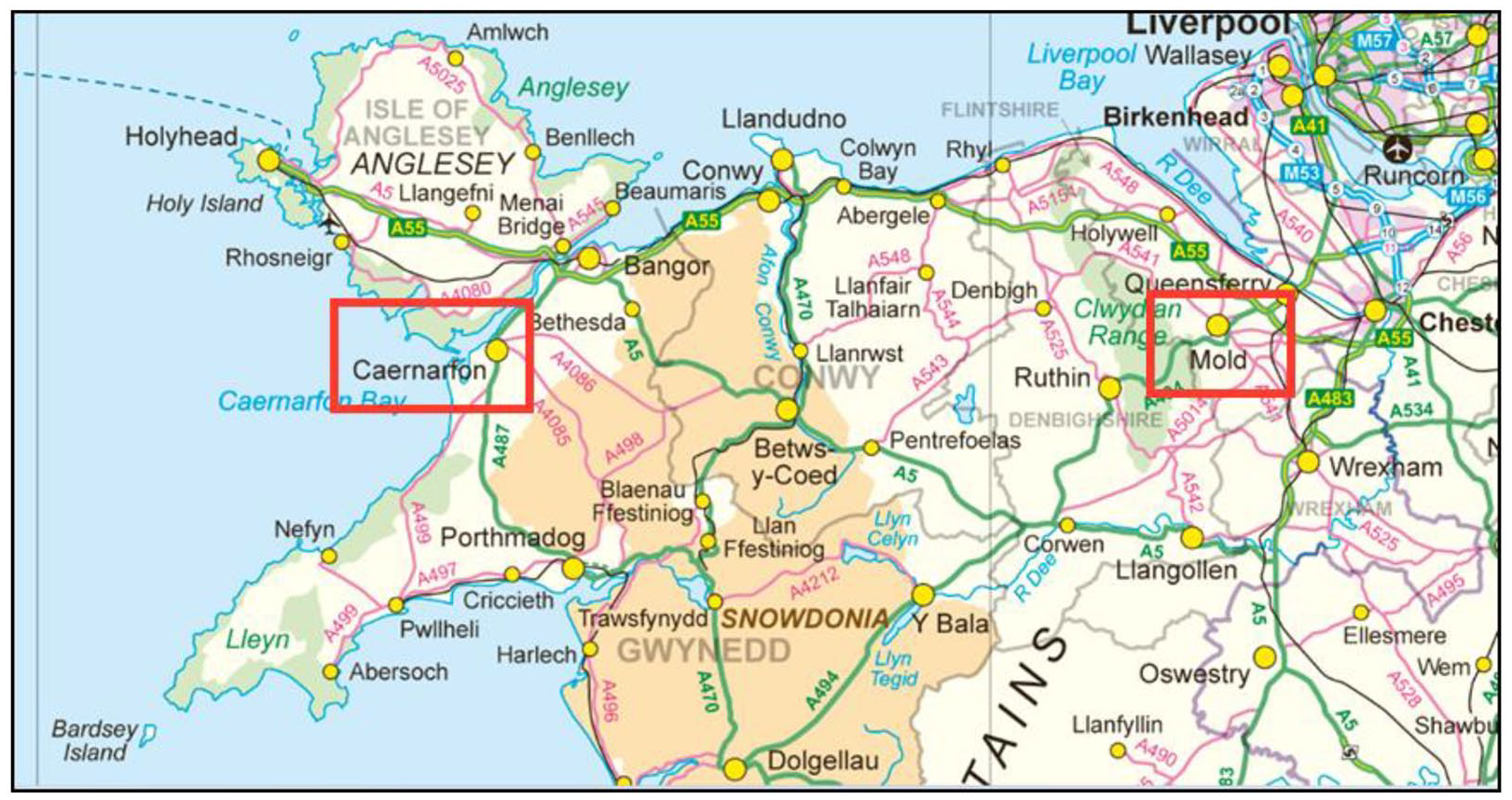
North Wales.
The most striking demolinguistic difference between the two areas can be seen in the percentage of the population who speak Welsh according to the 2011 Census. In Caernarfon and the surrounding area, 83.9% of the population are reported as being able to speak Welsh (Welsh Government, 2013). In Mold and the surrounding area, 22.18% of the population speak Welsh (Welsh Government, 2013).
Speakers
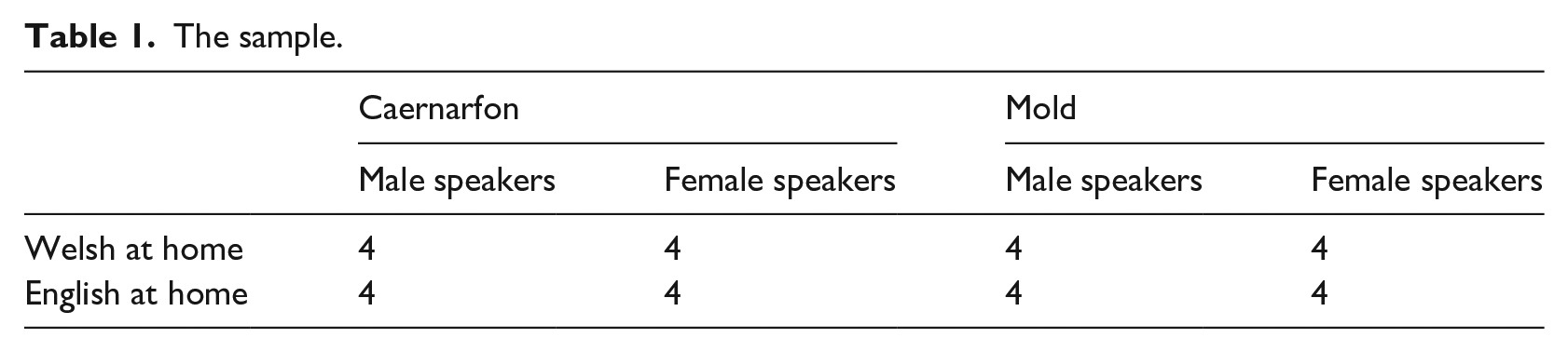
A total of 32 speakers were recruited from local schools where most subjects were delivered in Welsh. Further information pertaining to speaker background was obtained via written questionnaire and clarified during conversation. All speakers were aged between 16 and 18 at the time of data collection and identified as White and either Welsh, British, or both. All speakers had also been born in the local area (or moved to the area during infancy) and either acquired Welsh at home and/or had received all of their education through the medium of Welsh. The sample was further stratified by speaker gender and home language and is summarised in Table 1. All students indicated either a male or female gender identity.
The sample.
Speakers were designated a home language based on their responses to the written questionnaire. Speakers from Welsh-speaking homes include those who predominantly speak Welsh to either their only parent or both parents. Similarly, those from English-speaking homes include speakers who reported only speaking English to their only parent or both parents. The inclusion of a binary distinction is inherently problematic in bilingual contexts where language use contexts of acquisition may be more fluid and influenced by factors which evolve in situ (e.g., Creese & Blackledge, 2010; García, 2013). This decision was taken, however, in light of the aims of the study to examine broad differences between those who have acquired Welsh via parental transmission and those who have acquired Welsh through education.
It became clear during the data collection (from the responses to a written questionnaire, discussions in the sociolinguistic interview, and my own observations) that speakers were generally aware of the home-language background of their peers, despite not using the term ‘new speakers’, and that the significance of a speaker’s linguistic background differed between the two areas. In Caernarfon, the term dysgwyr ‘learners’ was used by some speakers from Welsh-speaking homes to refer to those from English-speaking backgrounds, and overtly negative attitudes towards the Welsh language were expressed by some speakers from English-speaking homes. Perhaps unsurprisingly, a distinction often arose between the two home-language groups in Caernarfon which was reflected in the peer groups, and which tended either to be Welsh-speaking or English-speaking (see Musk, 2006, for similar results from an ethnographic study). This distinction was not found in Mold where the language of all peer-group interaction was reported as being in English, and Welsh was reserved for some interactions outside of school between friends from Welsh-speaking homes (see Morris, 2014, for further analysis).
Data collection
Data for the current analysis were collected by a reading passage task in both languages (the Welsh and English recording sessions took place at different times). For the reading passage task, speakers were asked to read The North Wind and the Sun in English and Welsh (see Appendix 1).
Participants were first recorded in Welsh and then in English at a separate time. All interviews were recorded in WAV format with a sampling frequency of 44,100 KHz and 28 Bit quantization. An omnidirectional Audio-Technica Lavalier microphone with 50–18,000 Hz frequency response and –54 dB sensitivity was also used. Data were transferred to laptop computer and transcribed in ELAN (Sloetjes & Wittenburg, 2008).
Data coding and analysis
Data coding
Ladefoged (1993, p. 109) states that a tone unit is ‘the part of the sentence over which a particular pattern extends’. The reading passage data were separated into tone units based on both auditory (e.g., non-hesitation pauses) and prosodic cues such as a large pitch excursion at the end of the tone unit (Nance, 2013, p. 171). Any tokens which contained disfluencies (e.g., hesitations, false starts, or fillers) or reading errors (e.g., confusing words) were omitted from the final analysis. Table 2 shows the number of tokens included in the analysis for each language by speaker area, gender and home language.
Number of tokens included in the analysis of FFR.
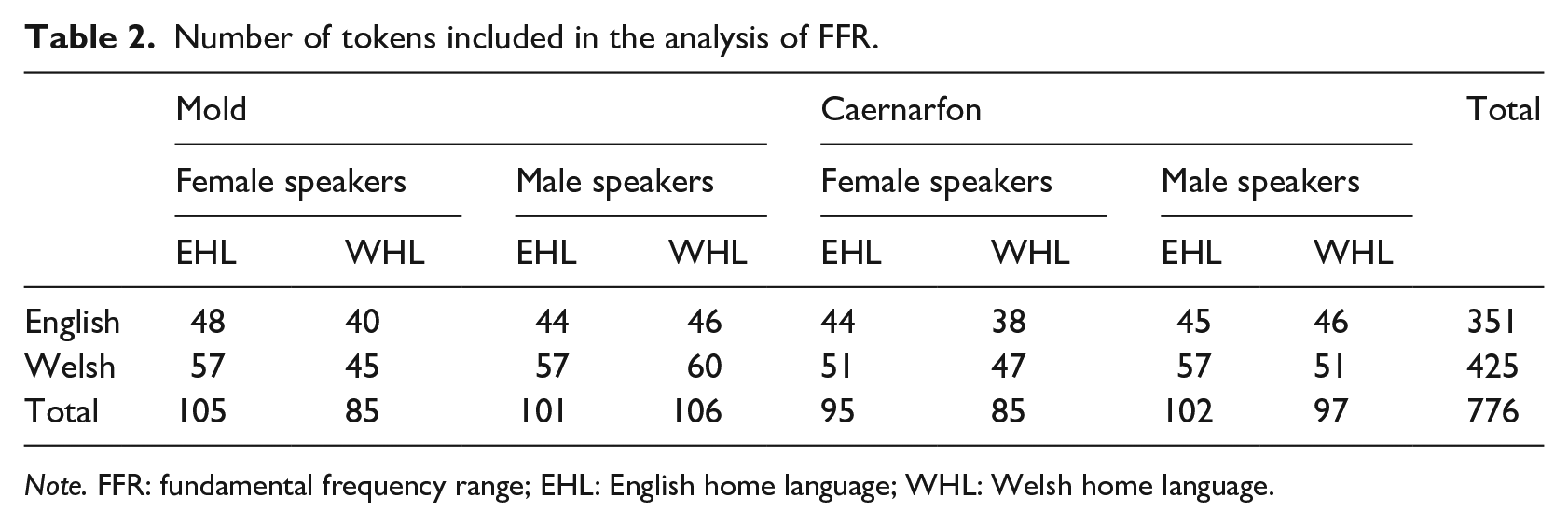
Note. FFR: fundamental frequency range; EHL: English home language; WHL: Welsh home language.
Each tone unit was analysed using Praat software (Boersma & Weenink, 2020). The measurements used in studies of FFR often vary (see Patterson, 2000, and Mennen et al., 2012, for overviews). Following both Ordin and Mennen (2017) and Passoni et al. (2018), the minimum and maximum f0 for each tone unit were identified manually, and the mean f0 was calculated using Praat’s autocorrelation algorithm with 0.01 time step. Span was calculated using the difference between maximum f0 and minimum f0 and was converted to semitones.
Statistical analysis
Initial linear mixed effects models conducted on the entire dataset proved to be unstable. In addition, relatively low token numbers can be problematic for regression models (Moore & Carter, 2015, p. 12). For this reason, the final statistical analyses of FFR were conducted using conditional inference trees and random forests using the partykit package (Hothorn et al., 2006) in R (R Core Team, 2019) and R Studio (RStudio Team, 2016). The use of conditional inference trees and random forests in linguistics research is explored fully in Tagliamonte and Baayen (2012).
The conditional inference tree tests the significance of each independent variable. The most important variable (i.e., the variable with the strongest association with the response, Levshina, 2015, p. 291) is then chosen, and a binary split is performed on the independent variable which divides the dataset. The process then repeats on the subsets of the data and tests the remaining independent variables (Kirkham & Moore, 2016, p. 93). The outcome of the test can be visualised graphically as a tree. The most important independent variable will be located at the top of the tree with further associations between independent variables shown lower down (Nance, 2020, p. 367).
To test the reliability of the data, random forests were also conducted. In a random forests analysis, a number of conditional inference trees (1,000 in this analysis) are applied to random subsets of the data and compared to ascertain the relative variable importance. The results of the random forests are variable importance measures which are numerical values showing how important the predictors included in the conditional inference trees are and, crucially, their hierarchical importance (Moore & Carter, 2015, p. 15). Variables which are not important to the analysis will show numerical values around zero and, as Levshina (2015, p. 298) notes, ‘the cut-off value is the absolute importance value of the variable with the smallest score’. The variable importance plots were made using the vip package (Greenwell et al., 2018) in R (R Core Team, 2019). They are referred to in the analysis below and can be found in the appendices.
Conditional inference trees were conducted using the indicators of level (minimum f0, maximum f0, and mean f0) and span (maximum f0 – minimum f0 expressed in Semitones) as separate response variables. Comparisons were made between raw measurements and z-scored measurements (e.g., Poiré & Kaminskaïa, 2004). The comparisons yielded no differences in the significant predictors of variation, and the following statistical models are based on raw f0 values for level and on Semitones for span. In all cases, language, gender, and home language were included in the model as predictor variables. As the analysis of FFR required multiple statistical analyses of the same data, Bonferroni correction was applied to the data (α = .0125). Following the analysis of each indicator, a random forests analysis was conducted to ascertain the relative importance of the independent variables. In the following results, conditional inference trees are used to visualise the results in cases where the random forests analysis has shown that the variables are important.
Results
In the following section, I present an analysis of the Mold and Caernarfon data separately. For each area, I first present the results for the level measures (minimum f0, maximum f0, and mean f0). I then present the results for span (maximum f0 – minimum f0 in ST). Figures 6–9 in Appendix 2 show the results for individual measures in Mold and Caernarfon by home language and gender. Figures 10 and 11 in Appendix 3 show the results of the random forest analyses for each measure in Mold and Caernarfon, respectively.
Mold
Level
A statistical analysis of minimum f0 in the Mold data (n = 397) was undertaken using conditional inference trees and random forests. The results indicated that speaker gender was the only significant predictor of minimum f0 (p < .001) with female speakers producing higher minimum f0. The mean minimum f0 for female speakers was 178.93 Hz (SD = 12.58). The mean minimum f0 for male speakers was 84.30 Hz (SD = 12.06).
Speaker gender was also the most important significant predictor of maximum f0 (p < .001). The mean maximum f0 for female speakers was 251.99 Hz (SD = 30.08). The mean maximum f0 for male speakers was 129.82 Hz (SD = 17.87).
The results for the mean f0 in the Mold dataset also follow the pattern noted above for minimum and maximum f0. The analyses indicated that gender was the only significant predictor of maximum f0 (p < .001). The mean f0 for female speakers was 202.17 Hz (SD = 17.37). The mean f0 for male speakers was 104.66 Hz (SD = 11.13).
Span
The results of the conditional inference tree and random forest analyses confirmed that speaker gender is the most important significant predictor of span in the Mold data (p < .001) with male speakers tending to have a greater span (M = 7.49 ST, SD = 2.49) than female speakers (M = 5.85 ST, SD = 1.99). Although the confidence interval tree showed that home language was a predictor in male speaker’s data, it was not significant in the random forest analysis (α = .0125).
Caernarfon
Level
The conditional inference tree, shown in Figure 2, shows that gender is a significant predictor of minimum f0 in the Caernarfon dataset (p < .001). The minimum f0 for female speakers (M = 194.61 Hz, SD = 21.91) was higher than for male speakers (M = 98.65 Hz, SD = 19.72). The importance of gender as a significant predictor of minimum f0 in Caernarfon is supported by the random forests analysis. Unlike in the Mold data, however, the conditional inference tree and subsequent random forests analysis also suggests that home language is a significant predictor of minimum f0 in the speech of female speakers (p < .001). As shown in Figure 2, female speakers from Welsh-speaking homes tended to have a higher minimum f0 (M = 205.73 Hz, SD = 20.29) than female speakers from English-speaking homes (M = 184.65 Hz, SD = 18.20).
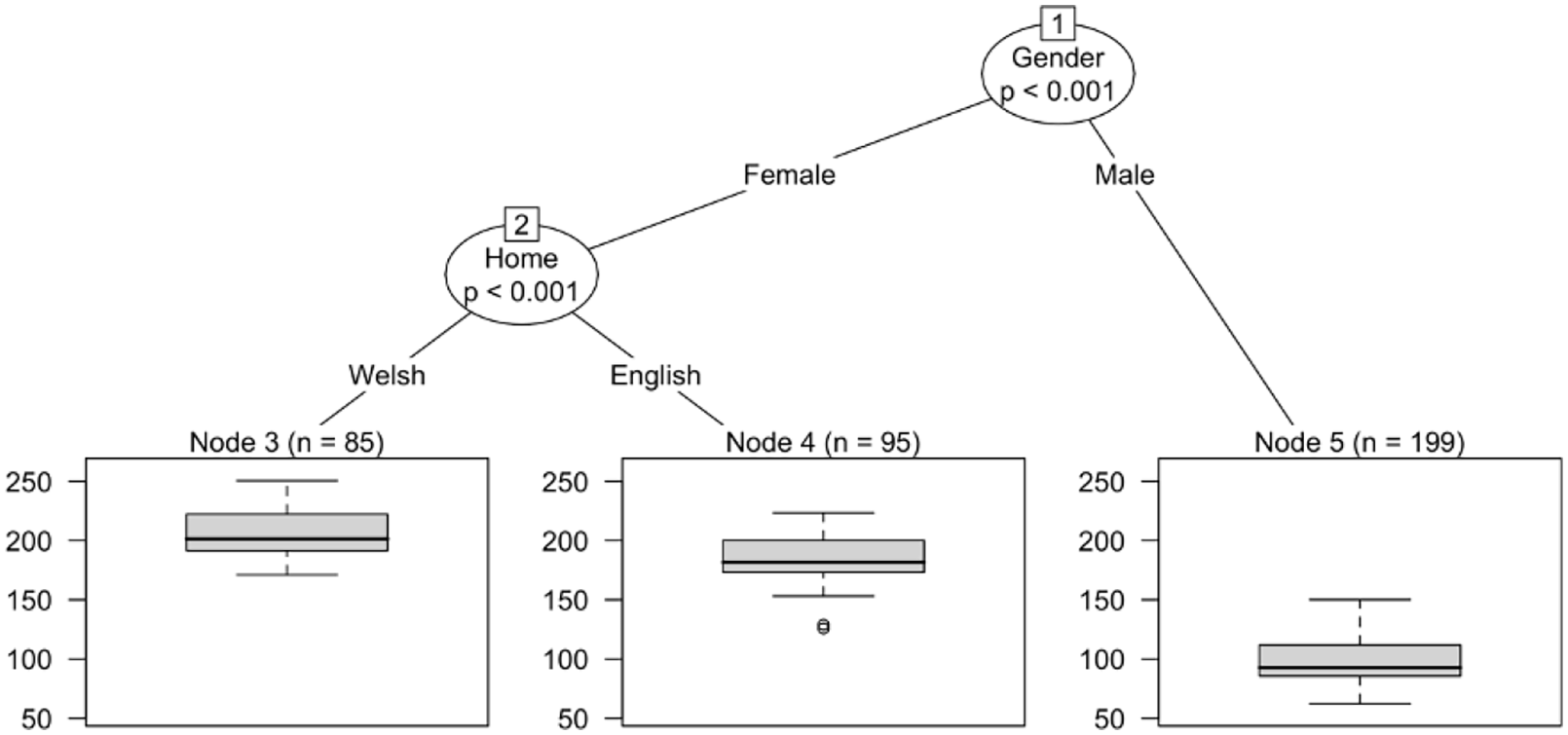
Conditional inference tree for minimum f0 (Hz) in Caernarfon (n = 379).
A similar result is found for maximum f0 in the Caernarfon data. As shown in Figure 3, speaker gender is the most important significant predictor of maximum f0 (p < .001). The maximum f0 tends to be higher for female speakers (M = 268.89 Hz, SD = 38.38) than for male speakers (M = 142.33 Hz, SD = 28.79). Home language is again a significant predictor of maximum f0 among female speakers in Caernarfon (p < .001) and those from Welsh-speaking homes tend to produce a higher maximum f0 (M = 294.92 Hz, SD = 30.73) than those from English-speaking homes (M = 245.60 Hz, SD = 28.23).
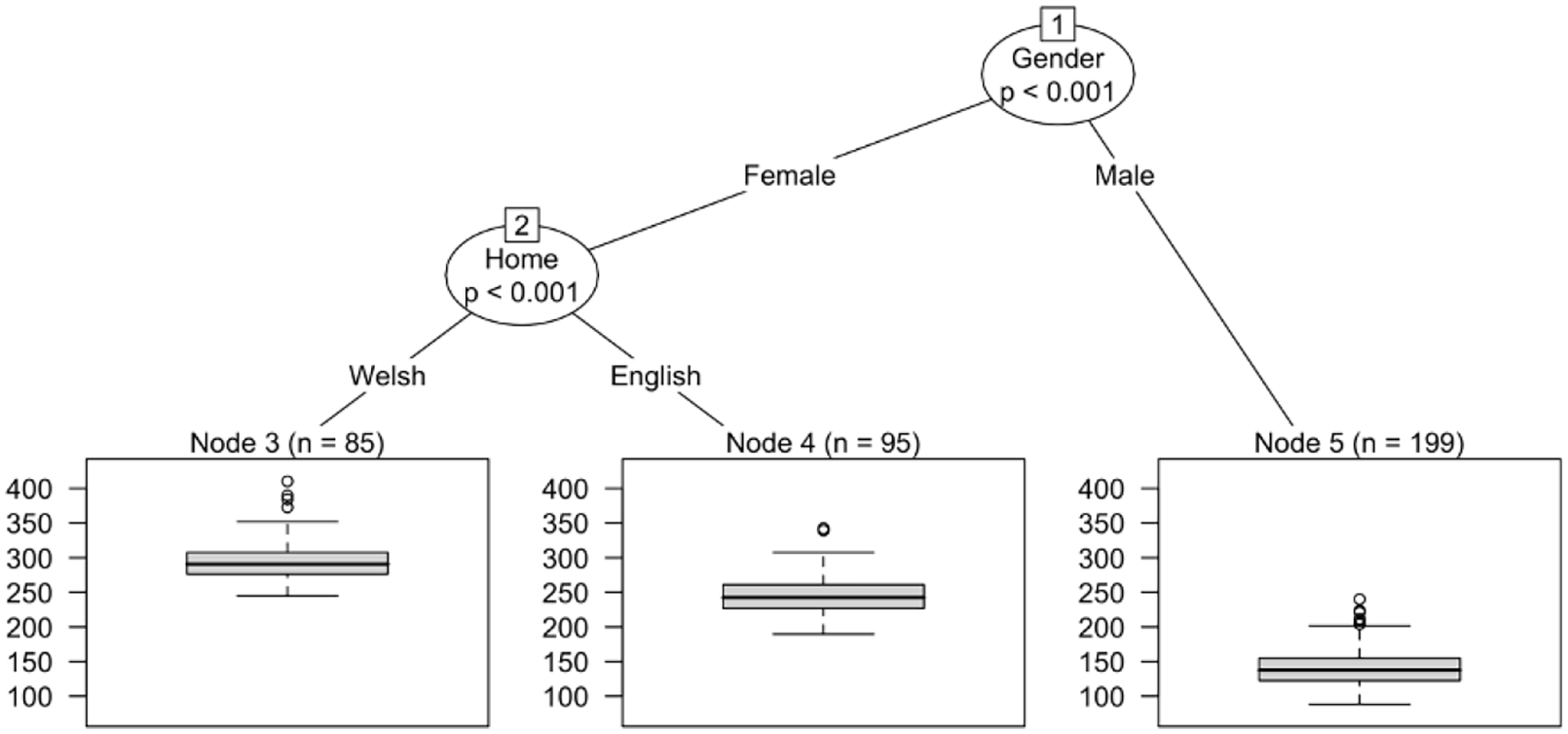
Conditional inference tree for maximum f0 (Hz) in Caernarfon (n = 379).
Figure 4 shows a conditional inference tree predicting the factors which influence the mean f0 in the Caernarfon data. The results show that gender is the most important predictor of mean f0 (p < .001). Female speakers tend to have a higher mean f0 (M = 221.71 Hz, SD = 22.98) than male speakers (M = 119.1 Hz, SD = 22.41).
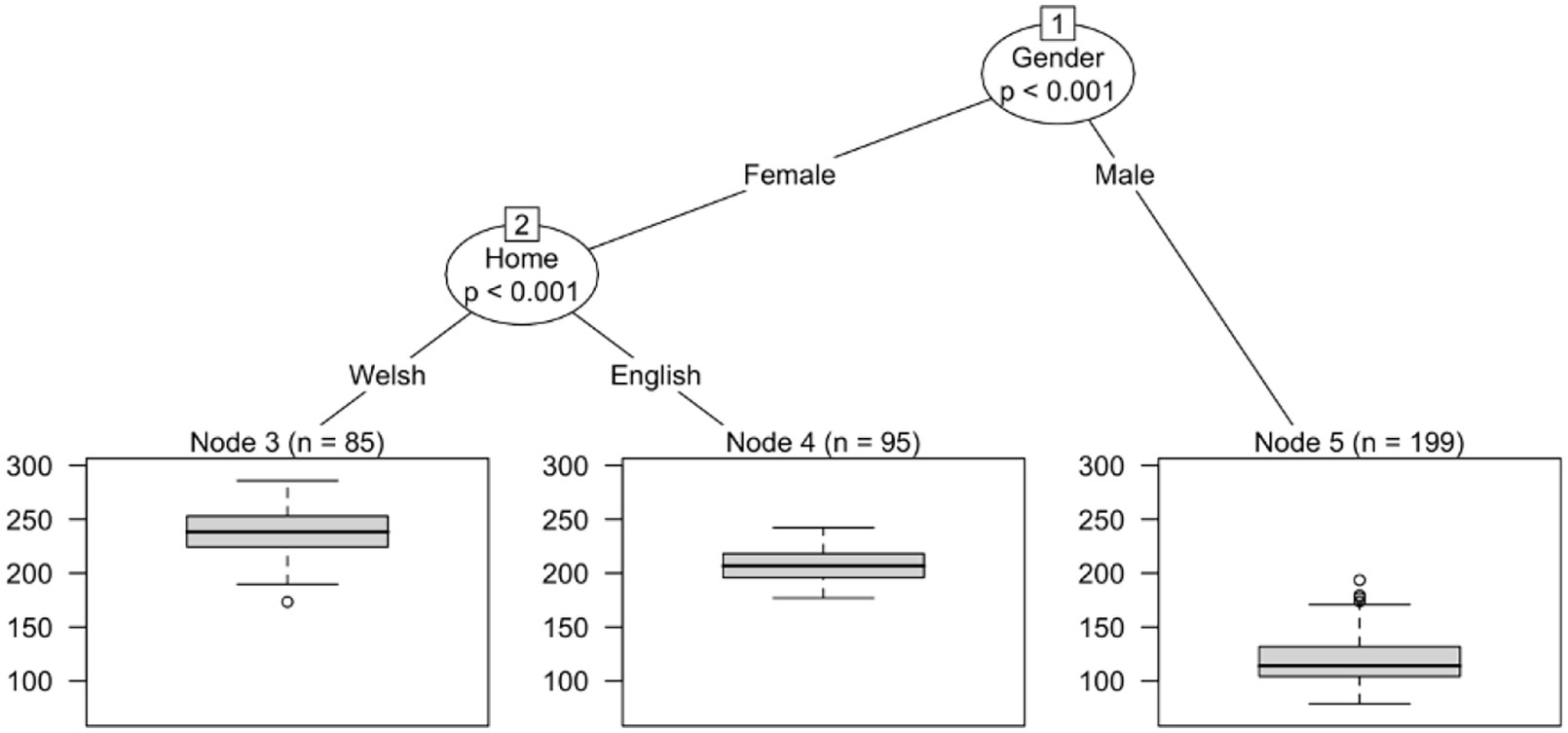
Conditional inference tree for mean f0 (Hz) in Caernarfon (n = 379).
Similar to the minimum and maximum f0 data for Caernarfon, Figure 4 shows that home language is a significant predictor in the female speakers’ data (p < .001) and that those from Welsh-speaking homes tend to have a higher mean f0 (M = 237.74 Hz, SD = 19.09) than those from English-speaking homes (M = 2.07.37 Hz, SD = 15.45).
Span
The random forests analysis of span in the Caernarfon data suggests that, contrary to the results shown hitherto, home language is the most important predictor of span followed by gender. Figure 5 shows a conditional inference tree for span (maximum f0 – minimum f0 expressed in Semitones) in Caernarfon.
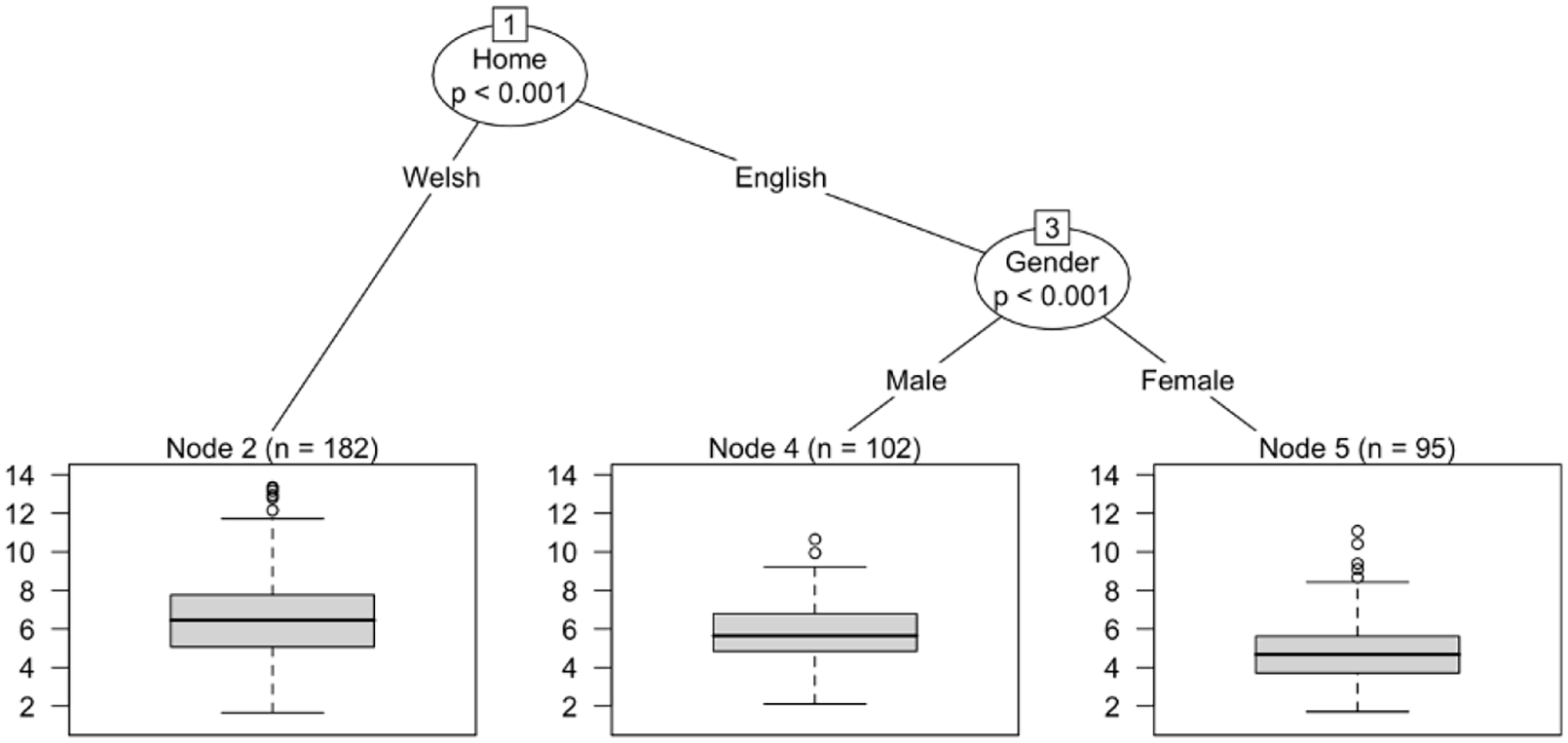
Conditional inference tree for span (maximum f0 – minimum f0 in Semitones) in Caernarfon (n = 379).
The conditional inference tree, shown in Figure 5, shows that home language is the most important significant predictor of span in Caernarfon (p < .001) with those from Welsh-speaking homes tending to have a greater span (M = 6.54 ST, SD = 2.13) than those from English-speaking homes (M = 5.42 ST, SD = 1.74). Among those from English-speaking homes, gender is a significant predictor (p < .001) with male speakers tending to have a greater span (M = 5.89 ST, SD = 1.56) than female speakers (M = 4.91 ST, SD = 1.79).
Discussion and conclusion
This study presented an analysis of FFR in the Welsh and English of 32 bilinguals aged 16–18 in north Wales. It aimed to examine (1) whether there is cross-linguistic and intra-linguistic variation with respect to this feature and (2) the extent to which extra-linguistic factors influence variation.
Similar to studies of phonetic variation in south-west Wales (Mayr et al., 2017; Mennen et al., 2020), no cross-linguistic differences were found in the data. This differs from the results of Ordin and Mennen (2017), who found that female speakers tended to have a wider f0 span and higher maximum f0 in Welsh than in English. In a study of /l/-darkening using the same dataset as the current study, Morris (2017) found that female speakers in Caernarfon were also more likely to differentiate between their two languages and produce a lighter /l/ in English.
Differences between the current study and the findings of Ordin and Mennen (2017) may be due to experimental design. It is also noteworthy that their sample contained older speakers (between 21 and 34 years old) who reported to using both English and Welsh in all aspects of their daily lives (Ordin & Mennen, 2017, p. 1496). This differs from the sample in the current study, who were still in adolescence and varied considerably in their use of Welsh in different domains and who also were part of the same wider peer group in their local areas (see ‘Speakers’ section). It is well known that such contextual and social factors may affect cross-linguistic interactions (cf. Language Mode, for example, Grosjean, 1989). One possible explanation is therefore that the different life stages of participants in the two studies, and their everyday lived experience as bilingual speakers, is reflected in the difference in the results for cross-linguistic differences for this feature (see also Mayr et al., 2017, p. 261).
The idea that speakers’ identities may change over the lifespan, and that this might also be reflected in their speech production is well attested in the variationist literature (e.g., Evans Wagner, 2012) but, I would argue, has hitherto been underexplored in bilingual speech. An explanation linked to age-grading would assume that speakers become more conservative in their linguistic behaviour as they grow older (Evans Wagner, 2012, p. 377). This may be the case for features which are above the level of speaker awareness and have a ‘strong social index’ (Pope et al., 2007 p. 623). It remains to be seen whether this is the case here, but further work should consider perceptions of pitch in both Welsh and English, particularly in light of perceptual work on Welsh English which has shown that particularly Welsh-accented English tend to be judged negatively by other Welsh English speakers (Williams et al., 1996, p. 202).
The influence of speaker gender on minimum f0, maximum f0, and mean f0 in both areas is arguably expected given the correlation between levels of testosterone, and the size of the larynx and pitch (see FFR). I acknowledge that this explanation is somewhat lacking given that physiological data were not collected. There are, however, results which appear to be gender specific and should not be solely attributed to physiology. The results in Mold showed that male speakers tended to have a greater span than female speakers which suggests that span may operate as a marker of gender identity. This supports previous work which suggests that gendered practices may also influence supra-segmental variation (Zimman, 2017, p. 345) and raises the need for further work to examine local gender differences in both Caernarfon and Mold.
The analysis of the Caernarfon data provides a somewhat more complicated picture. Although there were consistent results which showed that speaker gender was the most important significant predictor of minimum f0, maximum f0, and mean f0, home language was a significant predictor among females with those from Welsh-speaking homes tending to have a higher minimum f0, maximum f0, and mean f0. The results for span showed that speaker home language, rather than speaker gender, was the most important significant predictor. Those from Welsh-speaking homes tended to have a greater span than those from English-speaking homes. Gender was also a significant predictor in the data from those from English-speaking homes, with male speakers tending to have a greater span than female speakers.
The effects of home language (or lack thereof) in both communities allow us to assess the extent to which traditional and new speakers produce speech differently in the two communities. Previous work on more Welsh-dominant areas of Wales (such as Caernarfon) have shown clear differences in the language ideologies and practices of traditional and new speakers (e.g., Hornsby & Vigers, 2018, p. 425; Musk, 2006; Selleck, 2013, 2018; Morris, 2014) whereas studies of speech production in less Welsh-dominant areas (such as Mold) have suggested that home language is not a salient marker of peer-group identity and have found few home-language differences (Mayr et al., 2017; Mennen et al., 2020). This was also found to be the case in the current study and might explain why home-language differences were shown to affect FFR in Caernarfon, where local peer groups were mostly defined by language, and not in Mold where this was not the case (see ‘Speakers’ section).
The results highlight that traditional and new speaker variation will also be shaped by the communities and social networks in which the speakers are found as well as by the context in which minority-language maintenance or revitalisation is taking place (Kasstan, 2017; Nance, 2015). Further ethnographic work could also shed light on gendered practices and, particularly, the relationship between gender and home-language identities in Welsh-dominant areas.
Footnotes
Appendix 1
Appendix 2
Appendix 3
Acknowledgements
I would like to thank Laura Arman for her assistance with data transcription as well as the editors and reviewers for their insightful comments.
Declaration of conflicting interests
The author(s) declared no potential conflicts of interest with respect to the research, authorship, and/or publication of this article.
Funding
The author(s) received no financial support for the research, authorship, and/or publication of this article.
