




Abstract
Children and vulnerable adults can experience substantive barriers when engaging with justice systems. An intermediary is a trained professional who supports vulnerable individuals to participate fully in legal processes by facilitating communication between them and legal professionals. Challenges in the establishment of the role are evident, while perceptions of how stakeholders perceive the role are relatively under-explored. This review synthesises literature on stakeholders’ perspectives of the intermediary role in the justice system. A systematic search of electronic databases (n = 6) was undertaken alongside manual searches of the grey literature. Papers were independently screened for inclusion. Included papers were appraised for quality and qualitative content analysis was undertaken. The final sample (n = 26) included the perspective of vulnerable individuals and families, legal practitioners and intermediaries. Seven categories were identified: (1) unique knowledge with transformative impact; (2) relationship work; (3) evolving scope, clear boundaries; (4) low status, high demands; (5) outer strengths, inner conflicts; (6) fulfilment in the role and (7) out of sync. The findings suggest that the role of the intermediary is perceived positively across stakeholder groups. However, several challenges are evident in relation to successful implementation of this complex and nuanced role. Recommendations for research and policy are discussed.
Keywords
Introduction
Children and vulnerable adults such as those with communication disabilities and/or difficulties can experience substantive barriers to participation when engaged with the justice system (Edwards et al., 2012). Difficulties in understanding and responding to questions during police interviews (Gulati et al., 2021), accessing information about the legal process (Edwards et al., 2012) and giving evidence orally in court (O’Malley, 2020) are just some of challenges vulnerable individuals experience (Cusack, 2020; Smith et al., 2020). The introduction of special measures has been a policy priority in many jurisdictions in order to ensure equitable access to justice for such vulnerable individuals (White et al., 2021a). One special measure of particular policy and legislative importance has been the introduction of the role of the intermediary. Provided for in at least 13 countries (Access to Justice Knowledge Hub for Fair Participation, 2020), an intermediary is a trained professional who facilitates communication between vulnerable individuals and professionals in the justice system (National Disability Authority, 2020).
As a relatively new role (Plotnikoff and Woolfson, 2015), the legislative status and scope of the intermediary role varies between jurisdictions (Access to Justice Knowledge Hub for Fair Participation, 2020; Cooper and Mattison, 2017; Hoff et al., 2022; Kearns et al., 2023). In some countries, specific laws are in place that regulate the intermediary, while others apply general accessibility or non-discrimination acts in relation to use of the role. Intermediaries tend to have a professional background in health and social care, with speech and language therapists, psychologists and social workers more heavily represented amongst those who work in this capacity (Access to Justice Knowledge Hub for Fair Participation, 2020). Intermediaries can assist at any stage of the legal process, for example during police interviewing, at pre-trial hearings and/or in court (Access to Justice Knowledge Hub for Fair Participation, 2020). In some jurisdictions, the intermediary measure is limited to complainants and witnesses, while others afford intermediary assistance to defendants and suspects too (Access to Justice Knowledge Hub for Fair Participation, 2020).
The intermediary functions essentially as a ‘go-between’ (Plotnikoff and Woolfson, 2007) between the vulnerable person and professionals working in the justice system. Working closely with both the vulnerable individual and all legal stakeholders appears to be critical to the efficacy of the intermediary role (Plotnikoff and Woolfson, 2015). In some jurisdictions, intermediaries may intervene directly by rephrasing questions put to the vulnerable individual (Zaal and Matthias, 2011) or by relaying answers from the vulnerable person to the court (O’Mahony et al., 2015). Their role can also be more advisory, where they provide guidance to lawyers, judges or police officers on communication issues. For example, intermediaries are requested to provide a report on the communication needs of the vulnerable person (Ministry of Justice, 2020a) in which they provide recommendations for questioning (Hanna et al., 2013) or other suitable accommodations (White et al., 2021a). It is important to note that the intermediary supports the children and vulnerable adults to participate in the justice process, but they are not advocates (O’Malley, 2020). The duty of the intermediary is to remain a neutral officer of the courts (Taggart, 2022) and to support the court to obtain best evidence (O’Mahony et al., 2015).
An intermediary role, which involved accompanying the child witness in the live link room during the hearing relaying the questions and answers, has been operating in South Africa since 1993 (Cooper and Mattison, 2017). The role was first introduced in England and Wales with the development of the Witness Intermediary Scheme in 2004. Since this time, the measure has been implemented in at least 13 other countries. Some of these countries have established schemes based on the Witness Intermediary Scheme, while tailoring the role to fit the relevant legislation in that country. In many countries including England and Wales, New Zealand, Northern Ireland and Republic of Ireland, specific laws legislate for the role, while others apply general accessibility or non-discrimination acts (USA and Canada). In England and Wales, the role has continued to develop, albeit with several reported challenges and limitations (Henderson, 2015; O’Mahony, 2010), whereas in one jurisdiction (South Australia) implementation of the role has been abandoned (Hoff et al., 2022).
Several barriers to the establishment of the role have been identified in a growing body of literature in the last two decades. Some of these reported challenges include working conditions (Coughlan and Jarman, 2002; Henderson, 2015), professional identity issues (O’Mahony et al., 2016) and possible difficulties in maintaining neutrality (Taggart, 2021). Attitudinal barriers, such as resistance from and lack of awareness amongst some stakeholders have also been reported (Cashmore and Shackel, 2018; Henderson, 2015; Howard et al., 2020a). Other studies have suggested that practical challenges, such as delays in gaining funding for intermediaries (Victims’ Commissioner, 2018), can create complications.
Although the establishment of the intermediary has been a policy priority across several jurisdictions and a focus in the research literature now for over two decades, several barriers to integration of the role appears to remain in practice. The aims of this study were to conduct a comprehensive search of the literature related to stakeholder perspectives of the role of the intermediary and to synthesise the findings of the included papers in order to produce actionable knowledge for policy, practice and research as to the ways in which implementation of the role might be further supported. The study aimed to address the following research questions:
How is the role of the intermediary described by stakeholders in the literature? What obstacles appear to exist in relation to the role? How might the role of the intermediary be further advanced?
Method
Study design
A systematic review and qualitative synthesis was chosen as an appropriate method to address our research questions. This method allows for the development of a carefully designed and replicable search strategy, an in-depth description of the literature with the potential to generate a new understanding about a complex practice topic (Munn et al., 2018). The qualitative study was a ‘current situation’ exploration (Fixsen, 2005). Papers were analysed descriptively (Bradshaw et al., 2017), using inductive content analysis (Elo and Kyngäs, 2008). An inductive approach does not apply a priori theories or hypothesis to the data analysis process but rather takes a bottom-up approach. This ensures that new concepts and ideas are captured in the descriptive analysis. While themes are more abstract in nature, categories allow the organisation and classification of data into meaningful groups. This approach aligned with the research aim and questions of this review. The Enhancing transparency in reporting the synthesis of qualitative research (ENTREQ) statement was followed in preparing the paper (Tong et al., 2012). To avoid research waste, a preliminary search of prospective systematic review registers was undertaken. As no systematic reviews were identified, we proceeded with the study.
Search strategy
A comprehensive search strategy was developed with guidance from two academic librarians, one specialising in Education and Health Sciences literature, and the other in Law. As the use of multiple search methods has been shown to be more effective (Vassar et al., 2016), both manual and electronic searches were undertaken. Three elements of the CHIP (Context, How, Issues, Population) framework were used to develop the search strings (Shaw, 2010). Given descriptive titles used by many qualitative researchers can lead to inappropriate indexing of studies, we did not specify terms for qualitative methods, the How element of the strategy (Atkins et al., 2008). Regarding context, we included terms related to justice/judiciary systems, terms related to the issue included perspectives or attitudes towards the role of the intermediary, and terms related to population included both adults and children who are vulnerable witnesses or defendants.
Electronic search strings were trialled, refined and finalised by two authors (SOM, AK). Five electronic databases were searched: Scopus, LexisNexis, Westlaw.uk, ASSIA and Web of Science. These databases were chosen as they spanned the fields of law, criminal justice, psychology, health, science and sociology. The following search terms were used (justice OR judicial OR court*) AND (perspective* OR perception* OR experience* OR view* OR feeling OR observation* OR “lived experience”) AND (intermediary* OR “communication assistant” OR “facilitator” OR “facilitator of access to justice” OR “communication intermediary” OR “intermediary system” OR “Registered intermediaries” OR “communication support specialist” OR “justice facilitators”) AND (vulnerable OR child* OR witness* OR complainant* OR defendant* OR suspect* OR victim*). Final searches were completed in August 2023.
Manual searches were undertaken by three authors (AH, AMOG, LOR). The manual search strategy was informed by an international review report focused on the role of the intermediary across different jurisdictions (Access to Justice Knowledge Hub for Fair Participation, 2020). This report included a comprehensive list of websites of not-for profit organisations and government sites of all jurisdictions where the role of the intermediary has been established. Advanced Google searches were conducted using key search terms, to identify any relevant grey literature and the first 10 pages of these were reviewed for relevance (Haddaway et al., 2015).
Inclusion and exclusion criteria
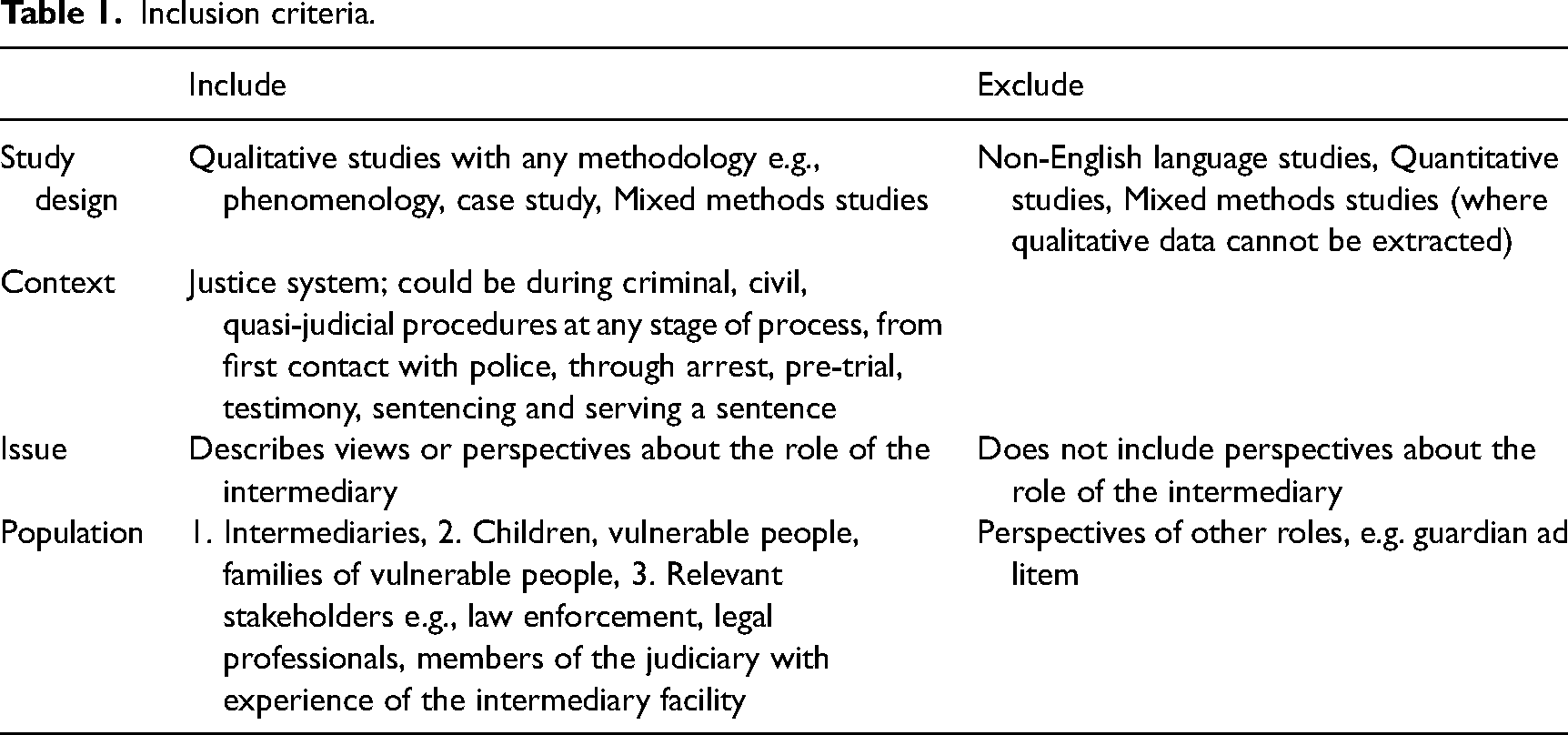
Papers were selected for inclusion if they met the appropriate criteria (see Table 1). All qualitative study designs were included. Mixed methods studies were included where qualitative data could be extracted from the findings. In relation to context, studies conducted in any element of the Justice System were included and at any stage of the legal process. Regarding population, studies were included if they related to perspectives of any stakeholders. Quantitative studies, and those that did not include views on the role of the intermediary were excluded. There were no limitations on publication dates or geographical locations; however, the search and subsequent synthesis were restricted to studies published in the English language.
Inclusion criteria.
Screening and selection
Papers from electronic and manual searches were imported to Endnote. Duplicates were removed, and the remaining studies were transferred to Rayyan for screening. Four reviewers (AH, AMOG, LOR, SOM) screened the studies’ titles and abstracts for relevance. The same authors screened the full texts of potentially relevant studies for inclusion. The titles/abstracts and full texts were double-screened; two reviewers independently appraised studies for inclusion to promote consistency and accuracy (Waffenschmidt et al., 2019). Any discrepancies between reviewers were resolved through group discussion.
Data extraction and quality screening of included studies
An extraction tool was developed and refined by three authors (AG, AH, SOM). Two authors (AH, SOM) undertook the data extraction process. Data extraction included: author(s), year, journal, country of publication, study setting, study design, stated aim, data capture, participant number, participant role, sampling technique and stated analytical methods.
All included empirical primary studies were screened for quality using Mixed Methods Appraisal Tool (MMAT) (Hong et al., 2018) by two authors (AH, SOM). The MMAT was chosen as it was designed to screen the methodological quality of qualitative and mixed-method study designs (Hong et al., 2018). The latest version of the MMAT includes two preliminary questions which are used to exclude non-empirical studies from the appraisal stage and 19 items for appraising the quality of five categories of studies. These include qualitative studies (4 items), RCTs (4 items), nonrandomised studies (4 items), quantitative descriptive studies (4 items) and mixed methods studies (3 items). Each item is rated on a categorical scale (yes, no and cannot tell), and the number of items rated ‘yes’ is counted to provide an overall score. Disagreements regarding appraisal decisions were resolved through discussion by two authors (AH, SOM), until consensus was reached. We did not exclude empirical papers based on quality.
Analysis
The included studies were imported into NVivo (QSR International PTY Ltd, 2020) for coding. NVivo is a qualitative database that allows for systematic recording of coding decisions and facilitates collaboration between coders (Johnson et al., 2020) due to its data management capacity (Maher et al., 2018). Three researchers (AG, AMOG, LOR) independently coded 10% of included papers to ensure consistency of approach. Once consistency was achieved, two authors (AMOG, LOR) commenced line by line coding of the results and discussion sections of the remaining papers. First- and second-order data were coded. Open codes were generated and refined through discussion. Once a final list of open codes was agreed, descriptive categories were generated. Analytical notes were kept during coding which allowed the beliefs and values of the coders to be interrogated in relation to decisions. This encouraged openness and transparency in discussing coding decisions throughout analysis, particularly important when undertaking inductive coding approach (Lu and Shulman, 2008).
Results
Included studies
A total of 1,264 papers were identified through electronic and manual searches. Electronic database search yielded 1,161 articles, 99 additional articles were identified through manual searches and a further four papers were identified through screening of reference lists. Once duplications were removed (n = 129), the remaining papers were screened for relevance by title and abstract (n = 1,131). Of the papers screened by title and abstract, 82 papers were assessed for full text eligibility. It was not possible to locate one paper, leaving 81 for full text review. Following full text review, 26 papers were included in the final analysis. Further details of the search process are presented in the Systematic Reviews and Meta-Analyses (PRISMA) flow chart in Figure 1 (Page et al., 2021).
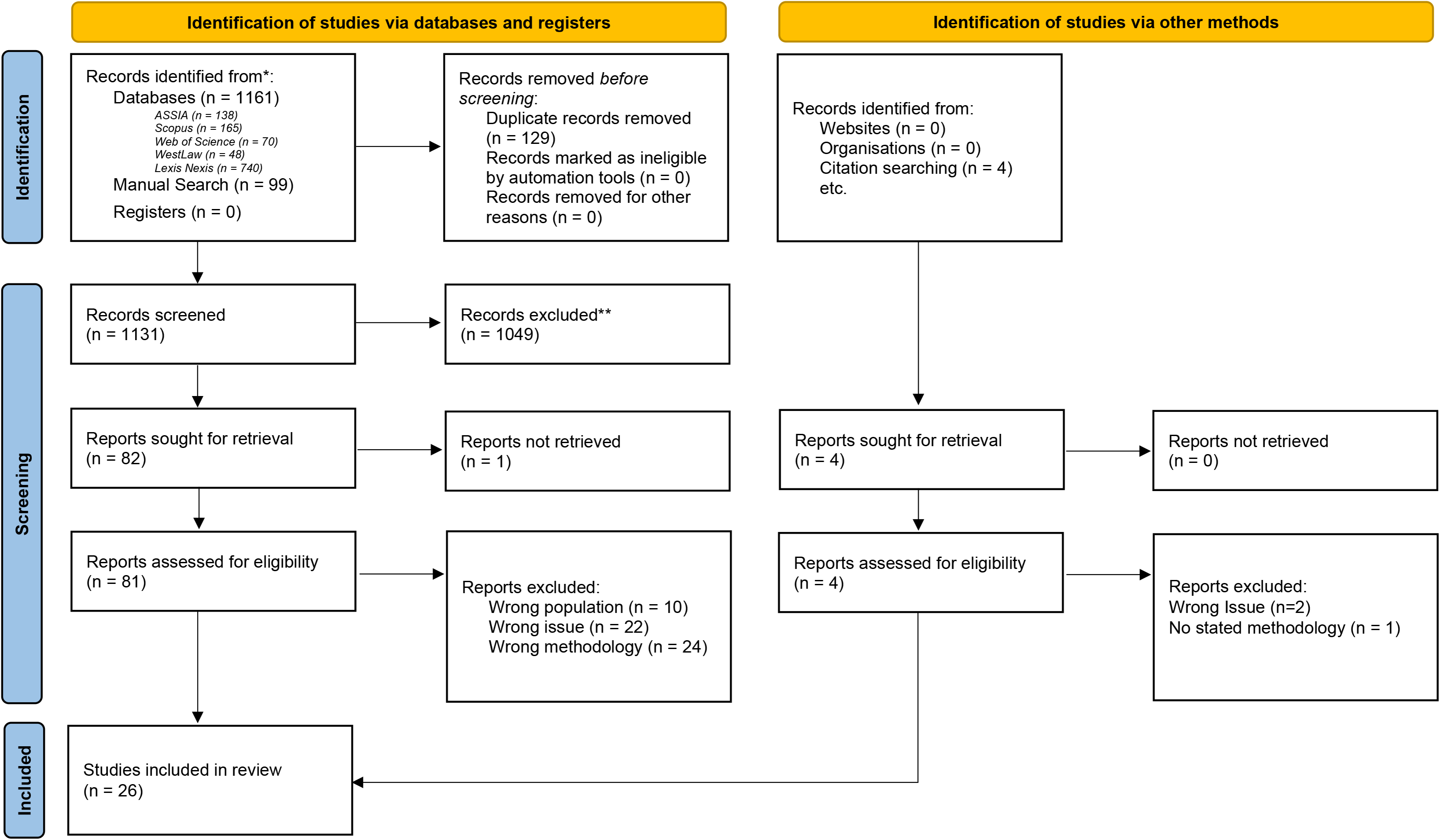
PRISMA flow diagram.
Characteristics of included studies
The 26 included studies were published over 20 years from 2002 to 2023. Just over two thirds of the sample were peer-reviewed empirical studies (n = 16) with eight published reports, one book chapter and one commentary paper. Of the empirical studies, the majority (n = 14) were qualitative in design, and the two remaining studies reported a mixed methods design. A total of 509 participants were included in the dataset across the empirical studies. The majority of these studies (n = 13) conducted semi-structured interviews with participants. Focus groups were used in three studies. Mixed methods studies used online surveys in addition to interviews or focus groups.
The included empirical studies were conducted in the UK (n = 8), New Zealand (n = 4), South Africa (n = 1), and Chile (n = 1). Two further studies included participants from more than one country. Hanna and Henderson (2018) recruited samples across New Zealand and UK and White et al. (2021b) recruited participants who practised in Court Systems in Australia, Canada, England, Germany, Israel, the USA and Zimbabwe. The perspective of the intermediaries was investigated in 24 of the 26 papers; the perspective of vulnerable people or their families in (n = 3) and the perspectives of relevant legal actors in (n = 19). Four studies reported the use of a purposive sampling strategy (O’Mahony et al., 2016; O’Mahony, 2010; Ulloa et al., 2022; White et al., 2021b). One study reported a convenience sample (Hanna and Henderson, 2018) and 11 studies did not explicitly report their sampling strategy. Participants were sought through the stakeholders’ place of work or using online advertisements, email and word of mouth/snowballing. Participant sample size ranged from four to 185 across studies. Age-range, gender and socio-economic status of participants was not often reported. Ethnicity of participants was not reported in most studies, with the exception of (Howard et al., 2021), which explored the perspectives of Māori young people and their families. See Table 2 for further details on the included peer-reviewed empirical studies.
Characteristics of included empirical papers.
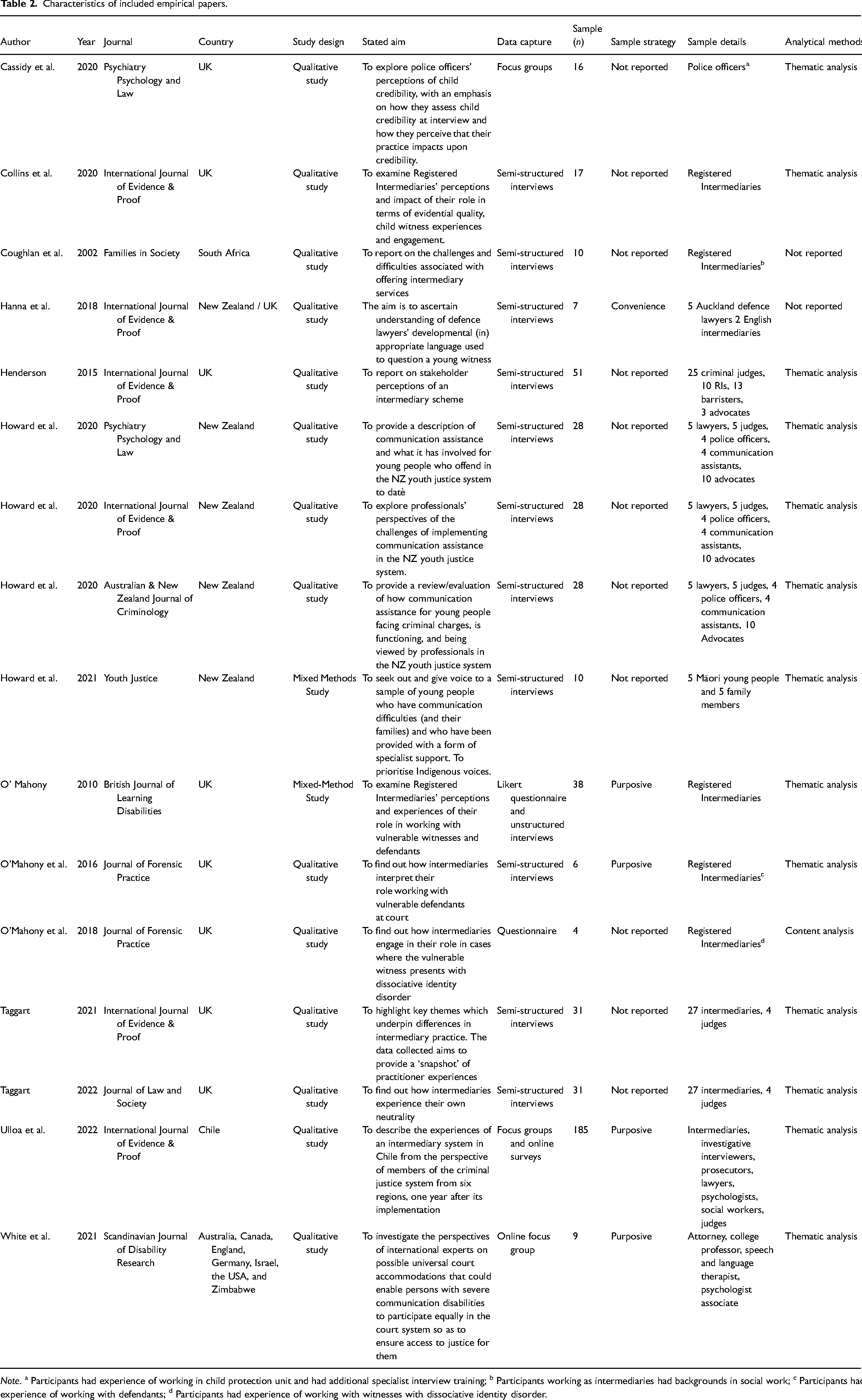
Note. a Participants had experience of working in child protection unit and had additional specialist interview training; b Participants working as intermediaries had backgrounds in social work; c Participants had experience of working with defendants; d Participants had experience of working with witnesses with dissociative identity disorder.
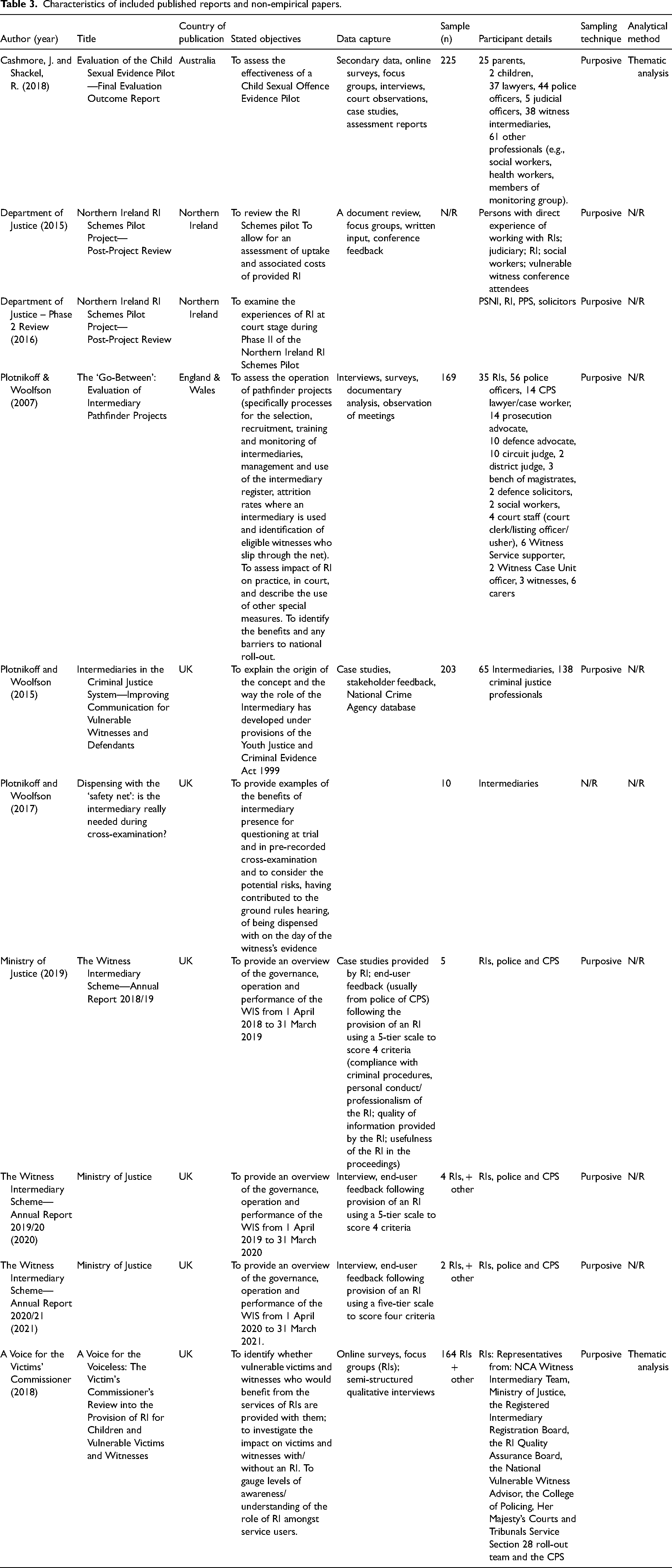
The sample for analysis also included published reports (n = 8), one book chapter and one commentary paper. The reports spanned the years 2007 to 2021 and were published in the UK including Northern Ireland (n = 9) and Australia (n = 1). See Table 3 for further details on the included published reports and non-empirical papers.
Characteristics of included published reports and non-empirical papers.
Quality of included studies
All empirical studies were screened for quality using the MMAT. All studies passed the preliminary screening phase of the tool as they reported a clear research question and described appropriate data collection methods. A small number of studies (n = 3) met all the methodological criteria. The majority of studies (n = 15) included clear research questions and reported appropriate data collection and analysis approaches related to the question. Ten studies were judged to include sufficient detail on the study context and how the findings relate to the context. Six studies were judged to consider how findings related to the researcher’s influence, e.g. reflexivity. Eleven studies did not report their sampling strategy, while four studies reported a purposive sampling strategy and one study reported a convenience sampling strategy.
Analysis
We identified seven categories across the dataset (see Figure 2). A description of each category is included in the figure. We present these categories in order of number of codes, from the most frequently coded category to the least coded.
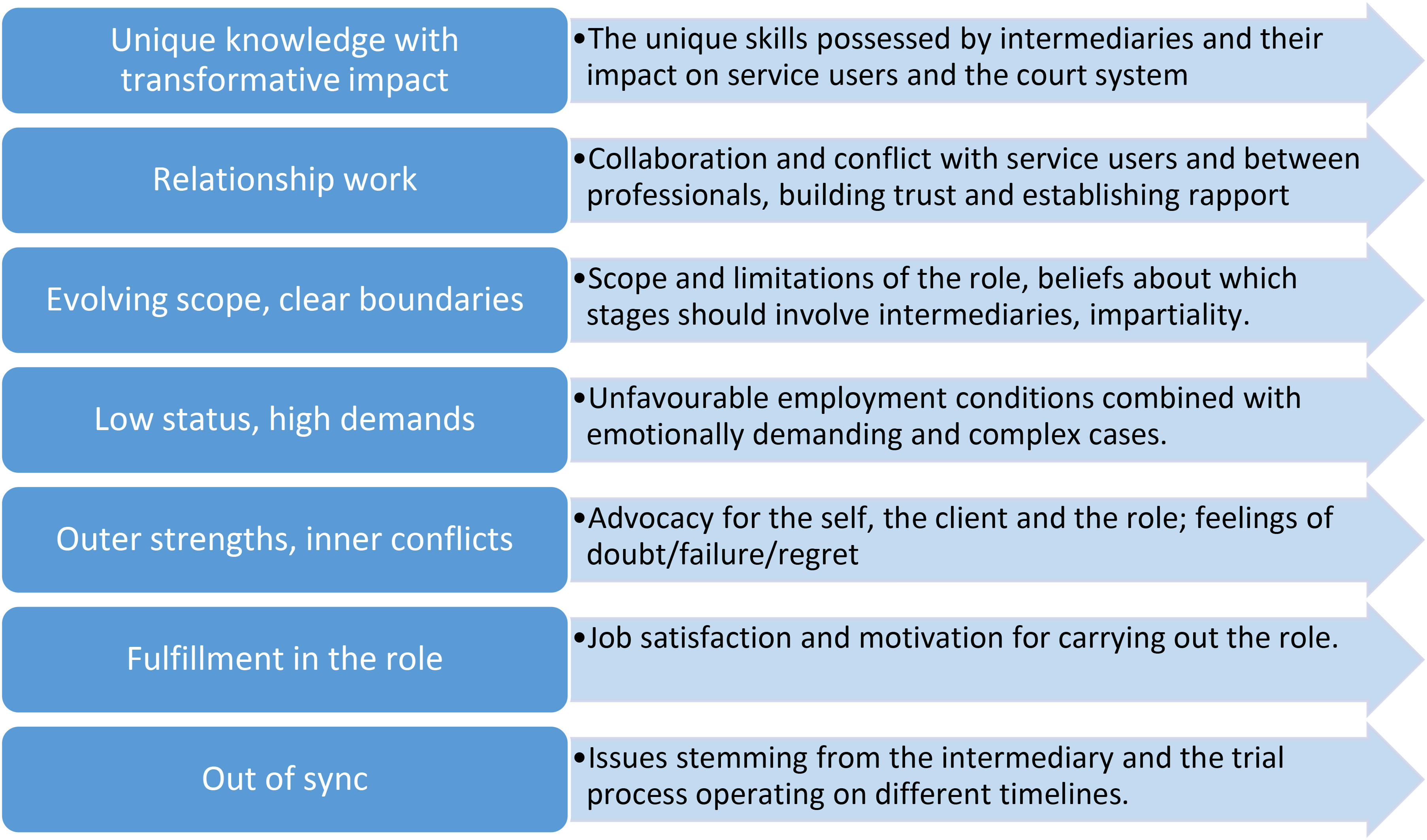
Description of categories.
Unique knowledge with transformative impact
This was the most heavily coded category (n = 426) coded across 24 papers. Stakeholders referred to the specialist knowledge of the intermediary, and the transformative impact of the role. The role is described as extremely complex as it is uniquely positioned at the intersection between the legal world and the therapy world. An example of the perception of this unique knowledge is: ‘participants considered that the provision of communication assistance was bringing a valuable new body of knowledge into the youth justice system’ (Howard et al., 2020b: 275).
Several papers (n = 17) refer to the transformative impact of the role and its benefits for the individual and the system as illustrated in this quote: ‘there were a number of reported emerging benefits, including the potential to: assist in bringing offenders to justice; increase access to justice; contribute to cost savings; assist in identifying witness needs; and inform appropriate interviewing and questioning techniques’ (Plotnikoff and Woolfson, 2007: vi).
Relationship work
With 25 papers coded to it, this was the second most heavily coded category (n = 423). There was strong evidence across the papers that effective relationships are central to the role of the intermediary. Relationships with other professionals were key, as illustrated by this quote: ‘The RIs stated that the best communication outcome for a child occurs when the RI and legal professionals work more cooperatively’ (Collins and Krahenbuhl, 2020: 390). Relationships with the service users were also highly significant, with one intermediary stating that they ‘built up a good rapport with the child and…enabled him to feel sufficiently comfortable when she accompanied him while giving evidence to the court’ (Victims’ Commissioner, 2018: 27). Conversely, there was also a number of papers (n = 15) that highlighted strained relationships with stakeholders who were not convinced of the benefits of the role, as illustrated by this quote from a police officer: ‘The witness intermediaries can at times be difficult to manage, in an already difficult situation… I would rather complete an interview without a witness intermediary’ (Cashmore and Shackel, 2018: 111).
Evolving scope and clear boundaries
The third most heavily coded category addressed issues around the scope of the role and the importance of boundaries (n = 326), coded across 23 papers. The need for the scope to evolve related to the ability to access an intermediary at all stages of the legal process (i.e., during police interviews rather than only at trial), and the issue of who receives support. There was considerable support for intermediary provision for defendants, for example ‘Over a third of the advocates and several judges were strongly concerned about vulnerable defendants’ lack of access to intermediaries compared to prosecution witnesses, calling it “short-sighted [and] … grossly unfair”’ (Henderson, 2015: 162). In relation to maintaining boundaries, the need to maintain impartiality or neutrality was a particular concern, as illustrated by an intermediary who stated ‘I am not beholden to anyone. I work to my standard … I am not working for a lawyer, I am not working for the police’ (Taggart, 2021: 7).
Low status, high demands
The next most heavily coded category (n = 285) describes the status and the demands of the role and was discussed in 19 papers. Intermediaries often experience difficult working conditions, as illustrated by this quote: ‘the intermediaries believed very strongly in the utility of their role, although most find it is difficult, time-consuming and poorly remunerated’ (Henderson, 2015: 159). In papers which include the intermediary perspective, the pressure of the role was discussed. Intermediaries reported that they find themselves being called upon at the last minute to work a high pressure and complex workload, for which they are poorly paid. The work is not secure and is usually on top of their role as a health and social care professionals. Another demanding aspect of the role is the complex and traumatic nature of cases, often involving children. This can cause anxiety and distress to the intermediary. This emotional heft associated with the role is referred to extensively throughout the literature, highlighted by Coughlan and Jarman (2002: 543): ‘They [the intermediaries] found that the children's trauma affected them more than they had anticipated’. As a result of all of this, there is a high attrition rate in the role. Overall, intermediaries feel as though they are underappreciated, and their contributions are not sufficiently valued, despite considerable demands from the justice system.
Outer strengths and inner conflicts
The third least coded category (n = 76), reported in 15 of the included papers, primarily reflects the perspectives of intermediaries. There was evidence of both the need for intermediaries to be strong advocates for communication and of the internal conflict they often experienced as part of the role. This advocacy work was particularly necessary when other stakeholders sought to influence the manner in which the intermediary carried out their role: ‘If judges ask intermediaries to keep interventions to an absolute minimum, many now respond along the following lines: “Your Honour, if my recommendations and the ground rules are followed, I will probably not need to intervene at all”’ (Plotnikoff and Woolfson, 2015: 117). Despite these outward displays of strength, many intermediaries reported privately feeling conflicted about aspects of their role, especially when it came to confidence in their own ability and skills: Most felt underprepared and were sure that they were not offering the best possible service to the child. A sense of inadequacy and uncertainty about their technical competence pervaded their work and they had no one with appropriate experience available to assist them (Coughlan and Jarman, 2002: 544).
Fulfilment in the role
This category (n = 21) encapsulates the feeling of fulfilment in the role from the perspective of the intermediary. For the intermediaries interviewed in six papers, the main incentive to carry out such complex work is the rewarding aspect of the role, ‘It has been the most challenging, frustrating and rewarding role of my professional life’ (Victims’ Commissioner, 2018: 24). In four of these papers, intermediaries referred to the impact that the role has on the court process and equitable proceedings: ‘Without an RI's support, a person might not be able to give their evidence or participate in the justice system at all. By providing that communication support, you know that you are giving people the opportunity to have a voice, which is very rewarding in itself’ (Ministry of Justice, 2020b: 57).
Out of sync
The least coded category (n = 17) is reflected across six papers with responses from 322 1 intermediaries. This category refers to the inconsistent management of time securing RI services and a perceived conflict between best interests of the child or vulnerable person and the trial process.
Police reported that securing the use of intermediaries can be associated with long delays and that they sometimes needed to weigh up whether to wait for an RI or to continue with the case without one: one police officer reported that the expected delay in achieving a match between client and RI puts them off requesting one…it is difficult to know what the true level of demand for RIs could be if the process was quicker (Victims’ Commissioner, 2018: 47). Even if the questions the child answers are restructured by the intermediary, the defence and prosecution can request that a question be asked in more than one way and thus cross-examination is no less rigorous or traumatizing. All intermediaries interviewed referred to the impact on children: the repetition of the details of the abuse is often required when giving evidence. Unfortunately, this process was highly traumatic for the involved children (Coughlan and Jarman, 2002: 545).
Discussion
A systematic search of five electronic databases, relevant non-profit organisations and government websites was carried out to explore the perspectives of different stakeholders about the role of the intermediary. This review aimed to address three research questions. Firstly, how is the role of the intermediary described by stakeholders in the available literature? What obstacles appear to exist in relation to the intermediary role? And, finally, how might the role be further advanced? Twenty-six papers were included in this qualitative synthesis. Papers included 16 peer-reviewed empirical studies and eight published reports, a book chapter and a commentary paper. The included sample of papers spanned from 2002 to 2023, and was representative of mainly UK, New Zealand, South Africa and Chile. Perspectives included legal professionals, intermediaries and, to a lesser extent, vulnerable witnesses and their families. This study was undertaken to provide a clear foundational understanding of the role and produce actionable knowledge for policy research and practice in relation to the role. In terms of the quality of included empirical studies, three met all the screening criteria. In the remaining studies, sufficient detail on study context was limited in six studies and 10 studies lacked evidence of reflexivity in the analytical process. Five of the 16 studies reported a sampling strategy.
Stakeholder views of the role
The views of stakeholders summarised in this study suggest that the intermediary brings a unique knowledge and understanding of the use of communication methods. In addition, their application of these communication methods in a legal context was viewed as enabling participation of vulnerable individuals engaged with the justice system. Stakeholders also perceived the role of the intermediary as having wider benefits for the justice system as a whole, such as improvements in interviewing and questioning practices. Stakeholders identified the need to extend the role to include defendants and broader jurisdictions. The relational aspect of the role is also highlighted. An alternative view of the intermediary was also evident, suggesting that not every stakeholder was convinced of the benefits of the role.
Challenges and obstacles
The findings suggest that the role of the intermediary is complex and nuanced with the need to appear confident and competent in practice, regardless of one's inner feelings of uncertainty about one's skills and abilities. Throughout the findings, tensions are surfaced which indicate that the role may be challenging in practice. For example, on the one hand, intermediaries are heavily reliant on their relationship with other professionals in order to be effective in their role yet predominantly work in isolation (Collins and Krahenbuhl, 2020). Stakeholders viewed the role as complex and highlighted the traumatic nature of the cases whilst acknowledging limited access to support and supervision. A further challenge is the poor remuneration of the role and for many intermediaries the work is completed in addition to clinical roles (Taggart, 2023). These findings are concerning from the point of view of recruitment and retention of intermediaries, in that people may be deterred from training as intermediaries, and/or staying in the role once qualified. There is some fulfilment in the role noted by intermediaries included in this study, but our findings suggest that action is required in order to sustain a workforce.
Advancing the intermediary role
One potential route forward is the professionalisation of the role. By professionalisation we mean the development of skills, identities, norms and values associated with becoming part of a professional group. This discussion has already emerged in the literature. Almost a decade ago in the first book about intermediary practice, Plotnikoff and Woolfson (2015) proposed the emergence of a new professional identity for the intermediary role and notably the terms ‘professional’ and ‘professionalism’ have been used in various government documents in both Northern Ireland and England and Wales. O’Mahony et al. (2016) had also explored the issue of professional identity among intermediaries working with defendants. More recently, Taggart (2023) has discussed the intermediary role through the sociological lens of the Abbot and Gieryn. Many of the key issues in our study include the complexity of the demand, the sporadic nature of the work, the stresses of working within the hierarchical system and not being able to meet the needs of the vulnerable person. These will not necessarily change with professionalisation of the role. We accept that this issue ultimately needs to be determined by those practising in the field itself.
At a systems level, the findings highlight an important discussion point in relation to access to the role of the intermediary in the justice system. Consistent with the broader literature (Access to Justice Knowledge Hub for Fair Participation, 2020; Giuffrida and Mackay, 2021), stakeholders in the included studies expressed the view that there is unequal access to the role in some jurisdictions, where by the intermediary facility is only afforded to the vulnerable witness or complainant and/or in certain offences and at certain stages of the process. Stakeholders indicated that access to the role should extend to both vulnerable witnesses and defendants, to all stages of the legal process, as well as to more jurisdictions. It is important to note that many of the included studies represent views of intermediaries in England and Wales, these views may not be reflective of those in other countries. In addition, the studies are published over a 20-year period and therefore do not necessarily reflect the most recent developments in relation to this access issue. Securing equal access to justice is a legal commitment under Article 13 of the United Nations Convention on the Rights of Persons with Disabilities. There is also imperatives under Article 3 and Article 6 of the European Convention on Human Rights. If we are to advance towards a more equitable justice system and ensure equal access to justice for all, as set out in the United Nations Strategic Development Goal 16, this would appear to be an essential focus of implementation (Kearns et al., 2023).
Including the vulnerable voice in intermediary research
A final issue of note is that only three documents in the sample included the voice of the vulnerable individual. Two reports include the views of children and/or family members of individuals who have accessed intermediaries (Cashmore and Shackel, 2018; Plotnikoff and Woolfson, 2007) and the third paper, an empirical study set in New Zealand, explores the perspective of young people and families (Howard et al., 2021). In this study, the majority of participants identified as New Zealand Māori, with one young person identifying as Pasifika. If we don’t seek to understand the views of those who have received intermediary support, both children and vulnerable adults, we don’t have a holistic understanding of the role or how it can be improved. Those engaged in future research of the role needs to ensure that the voice of the vulnerable individual is included this research. There is a plethora of frameworks and methods that can be used to facilitate such authentic participation (Hart, 1992; Lundy, 2007; Lyons et al., 2022).
Limitations
The findings of this study have to be seen in light of some limitations. Firstly, we only included studies published in the English language, therefore we are possibly missing the perspectives of stakeholders from non-English speaking countries where an intermediary scheme exists. However, by excluding these papers, we avoided a scenario where extracted data was misinterpreted due to language barriers. Secondly, although best efforts were made to ensure all relevant papers were included in the review, the nature of literature reviews means that there is a chance that some papers that should have been included in the review were not. Over half (9/16) of the included empirical research was conducted or partly conducted in the UK and all except one of the published reports and non-empirical papers were written about schemes within the UK (Northern Ireland and England and Wales). It is important to consider that issues of creditability and transferability arise due to the lack of reporting of sampling strategies in the included studies. Another limitation of this review is that only three of the included papers reported on the perspectives of vulnerable persons or their families. Including a wide range of stakeholder perspectives in our studies allowed us to get an overall picture of how the role of the intermediary was viewed. However, this might mean we have missed out on the specific nuances of perspectives between the different stakeholder groups. Finally, the professional background of the authors, all speech and language therapists, may have influenced the interpretation of findings but steps were taken, for example, during the analysis of the studies, to control for such bias.
Future directions
The role of the intermediary has been a recent development within the justice system, over the last two decades. There is still much work needed at practice, policy and research levels. Our findings identified that there is a paucity of evidence in relation to how vulnerable individuals and their families view the role. Future research should include these voices to ensure their perspectives are incorporated. Policy development in relation to the role of the intermediary should consider the need to create awareness of the benefits of intermediaries amongst stakeholders. It is also important to ensure that training of intermediaries is sufficient to prepare them for the demands of their role, as well as educating them on the scope and limitations of their role. Policy makers should also take steps to address the working conditions of intermediaries. This work is interdisciplinary and further effort is needed to define and refine implementation across the three levels (practice, policy and research). In addition, multi-stakeholder participation, including the voices of children and vulnerable adults who have experience of receiving intermediary support, is key in further work across practice, policy and research in this field.
Conclusion
The role of the intermediary is to facilitate communication between children and vulnerable adults engaged with professionals in the justice system. This systematic review synthesised qualitative findings from the international literature about stakeholders’ perspectives of the role of the intermediary. Findings from this review would suggest that the intermediary is perceived as a valued addition to the justice system, whose unique expertise of both the legal and therapy world can ensure the full participation of vulnerable individuals in the justice system. The role of the intermediary is complex and nuanced with many challenges. Multi-stakeholder participation, including the voices of children and vulnerable adults who have experience of receiving intermediary support, is key to progressing practice, policy and research in this field.
Footnotes
Declaration of conflicting interests
The authors declared no potential conflicts of interest with respect to the research, authorship, and/or publication of this article.
Funding
The authors received no financial support for the research, authorship, and/or publication of this article.
