




Abstract
This study investigates the manner in which two types of communication aids (wooden mannequins and line drawings) that are selected, introduced and managed in real intermediary-mediated police investigative interviews, improve the quality of evidence with vulnerable witnesses and victims with an intellectual disability. Multimodality interactional work carried out by the interviewing police officer, an intermediary and the vulnerable witness with limited verbal abilities to answer the open question, ‘What happened?’ is analysed. We demonstrate that low technology communication aids can successfully be utilised to elicit the same type of information from those with limited verbal abilities, as the verbal open question ‘What happened?’, in an unrehearsed and unbiased manner. Aids used in this manner retain the functionality of open questions while reducing their linguistic complexity. This validates the importance of adopting special measures such as the involvement of an intermediary and communication aids in investigative interviews to promote equal opportunities and a fair trial for all.
Keywords
Background and introduction
The goal of a police-witness
1
investigative interview is to elicit evidence ‘to ascertain the witness's account of the alleged event(s) and any other information that would assist the investigation’ (Ministry of Justice, 2011: 10). These interviews typically consist of a police interviewing officer (IO) asking a series of verbal questions with the interviewee verbally responding (Tracy and Robles, 2009). Research has consistently demonstrated that open questions that invite an unrestricted answer, typically led by TED (i.e.,
Traditionally, our criminal justice system, the adversarial system, has been grounded in speech and very often, particularly when there is no material evidence, the trial is dependent on whose verbal account is more persuasive to the jury. This ‘war of words’ immediately disadvantages interviewees, such as those discussed here, who may not have the linguistic competence to (fully) give their evidence through the aural-oral modality. Such interviewees typically find the complexity of verbal open questions challenging to understand (Perlman et al., 1994) and have problems paying attention, thereby losing track of the topic or question (Milne and Bull, 2006) resulting in a loss of intersubjectivity. As a coping strategy, VWs might well acquiesce with the interviewer (Gudjonsson, 1990). Similarly, VWs tend to have more limited verbal strategies to express complex ideas coherently (Brennan and Brennan, 1994; Kebbell and Hatton, 1999; Milne and Bull, 2001; Murphy and Clare, 2006), resulting in lack of ‘rich detail’ in answers to investigation relevant questions (Fisher and Geiselman, 2010; Milne and Bull, 2001, 2006). All these characteristics have the potential to negatively impact the quality of a VW's evidence in interview.
That does not mean, of course, that VWs have not experienced abuse nor that they cannot remember it; the issue may well be that they experience challenges in communicating what has happened and/or the IO experiences challenges in effectively adapting their approach to meet the communication needs of VWs. Acknowledging this inequality, the Youth Justice and Criminal Evidence Act was enacted. This Act made provision for a range of special measures (i.e., reasonable adjustments) that could enable vulnerable witnesses, such as VWs, equitable access within the criminal justice system in England and Wales. One measure (s. 30) is the use of communication aids, and another (s. 29) is the examination of a witness through an intermediary (INT). An intermediary is a communication specialist who, since 2004, has been allowed to legally enable communication between a VW and the police at investigative interviews and/or during a trial at court. Intermediaries first assess VWs to identify their communication strengths and challenges and, based on their detailed professional judgement, may then suggest alternative ways of communicating during the proceedings (Plotnikoff and Woolfson, 2015) such as using communication aids like wooden mannequins and line drawings.
The rationale for using communication aids to help VWs answer questions is that while their aural-oral communication difficulties are well reported, they typically present with better visual processing skills (Cherry et al., 2002; Dulaney and Ellis, 1991) and are often ‘concrete thinkers’. They thus respond well to non-verbal communication such as pointing to objects and pictures or reaching towards targeted items (Cascella, 2005), which are, of course, permanent and require less memory processing than transitory speech. Whereas speech disappears as soon as it has been delivered, objects and pictures remain in position for as long as they are allowed to be in place.
Thus, although the legal system is historically based on orality (Ewin, 2015), it is now possible for alternative and augmentative communication (AAC) such as communication aids (s. 30) to be considered for use in police investigative interviews with vulnerable witnesses including those who find it easier to demonstrate what has taken place rather than use words to explain (Ministry of Justice, 2011, 2022). Indeed, interviewing guidance lists a range of low technology communication aids that can be used in investigative interviews such as ‘drawings, pictures, photographs, symbols, dolls, figures and props’ (2011: 98;, 2022: 90), all of which should be carefully selected and based on a vulnerable person's specific communication requirements and difficulties. Those requirements need to be relevant to a forthcoming interview. It is ‘essential that an intermediary is recruited in circumstances where a witness uses an alternative method of communication instead of speech’ (Ministry of Justice, 2022: 41) and that these aids are introduced and managed by intermediaries (s. 29) who are recruited and selected by the Ministry of Justice and approved by the court (2011, 2022). If trained in the use of communication aids, the intermediary should be skilled in selecting, introducing and managing a range of AAC. They will also be familiar with the VW's communicative history and current language use before the police investigative interview is carried out.
More specifically, the INT will gather information on a VW's communication abilities in other contexts, meet with the VW ahead of the police interview to assess their linguistic abilities and current means of communicating, and will then advise the IO on questioning techniques appropriate for that particular witness (Cooper and Mattison, 2017; Ministry of Justice, 2020). If an INT's professional specialism includes aid use, they will also assess a VW's current communication aid usage and then, if relevant, recommend the manner in which aids might be introduced during the interview. Should the case proceed to trial, the INT will advise on appropriate language use in court and should also accompany the VW during the trial, to facilitate cross-examination (Plotnikoff and Woolfson, 2015; The Advocate’s Gateway, 2015a), continuing to use the aids as appropriate (The Advocate’s Gateway, 2015b).
Communication aid use was permitted as a special measure in, 1999 and has been practically supported by interviewing and practice guidelines (Ministry of Justice, 2011; The Advocate’s Gateway, 2015b; Ministry of Justice, 2022). Additionally, communication aids such as sketching have also been recommended by some researchers using mock witnesses (Dando et al., 2009; Mattisson and Dando, 2020). However, interviewing officers are still reluctant to use them. For example, Plotnikoff and Woolfson (2019: 189), found that INTs reported that IOs sometimes allow vulnerable witnesses to ‘fail first with words’ before permitting the introduction of aids and a report (2021) stated that 54% of court personnel ‘couldn't say’ if communication aids were effective or not. Our data also confirm that IOs overwhelmingly use spoken questions as their first course of action, irrespective of the witness's vulnerability but we note here that intervention of aids by the INT does supplement and enhance speech in evidentially useful ways. In brief, we show here that aids can be used to repair a conversation breakdown following verbal miscommunication but can also be the preferred means of communication to facilitate evidence giving in robust ways.
A communication aid such as an object or a picture is a sign, whose semiotic potential enables it to represent something else (Chandler, 2007; Peirce, 1893–1913). Such icons, i.e., Peircean ‘likenesses’, are able to symbolise a concept, because they are very similar to that specific concept. In this article, we focus on two representative 3D and 2D aids typically adopted in interviews: wooden mannequins (dolls with a clearly defined head, torso, arms, and legs which unambiguously simulate a person but not a specific person in particular) and line drawings (which depend on the ability of the creator to make unambiguous drawings, as well as on the interpretative competence of the user) to determine if they can elicit evidence from VWs beyond their talk.
Morris (1971) considers the likeness an icon demonstrates to its referent, a matter of degree, and this is especially relevant to mannequins and line drawings analysed here. Although a mannequin looks humanoid as it possesses discernible body parts that can be positioned, manoeuvred and manipulated by the user, it is unable to spontaneously change position or move, and does not possess corporeal features such as hair and skin texture.
In the same way, a 2D line drawing of a person, for example, iconically resembles a human: it will have defined limbs, a head, hands and feet. It also is clearly different to a line drawing of an animal or plant. However, it is not individualised to a specific person's facial features and is unable to move or speak. According to DeLoache (1995), the ease with which an icon is perceived to represent its referent is dependent on how closely it resembles that referent. Therefore personalising an icon to minimise ambiguity is of great relevance.
Aims
Although there is a large quantity of research on augmentative communication in the field of investigative psychology, and independently, there is another body of work relating to VWs, research on VWs using communication aids in real investigative interviews, to the best of our knowledge, is lacking. This research aims to contribute to and assist development of working knowledge in this area.
We aim to examine the way wooden mannequins and line drawings are used in intermediary-mediated investigative interviews with VWs limited by the aural-oral tradition, in answer to the open question ‘What happened?’
Methods and procedures
The data, part of a larger corpus, consist of eight excerpts from two real-life multi-modally transcribed, fully anonymised ABE video recorded police interviews with alleged VWs.
Two interviews were selected here because they involved the use of the two communication aids examined in this article and illustrated the findings effectively. The interviews in both cases had been conducted in 2014 but the cases were closed at the time of this research. Both interviews were carried out in line with the 2011 version of the England and Wales ABE interviewing guidelines (Ministry of Justice, 2011). This edition has now been superseded by a later one (Ministry of Justice, 2022).
These interviews investigated suspected sexual abuse and robbery but, at the time of the interview, there was no substantive evidence except the participants’ brief summaries collected during unrecorded police-witness informal meetings and thus gaining a full, unrehearsed and unbiased account from the VWs was pivotal for the cases continuing. Communication in the interviews was assisted by an INT and therefore each excerpt involved an IO, an adult VW and an INT.
The two interviews were sourced from the same police force; however, information on the degree of intellectual disability was not provided to us, as the force concerned reported that it did not collect data as specific as degree of disability. The VW in the first interview was 40 years old at the time of the interview and the VW in the second interview was 32 years old. The research was authorised by the University's and the relevant police force's ethical committees.
Sections of interview that involved the use of communication aids in response to an IO asking a VW what had happened during the allegation were selected. Although an IO may not have explicitly used those exact words, interview segments where it was clear that was their communicative intent were the ones selected. The criterion for identifying an IO's intent as such was determined by the way they phrased their question. Specifically, IOs who started their questions with ‘tell/show me…’, ‘explain…’ or ‘describe…’ were considered to be intending to ask what had happened during that allegation. Several such examples were examined in the larger corpus; however, the eight excerpts selected in this article were chosen here as representative examples of that feature of aid use.
Although we focus here on wooden mannequins and line drawings which were all introduced and/or managed by the INT, a variety of communication aids were used in all eight excerpts. As detailed in the transcripts, our participants spontaneously used gestures, mime and possibly Makaton signing to express themselves, showing their reliance on non-verbal communication, but these are unaided forms of communication and thus outside the scope of this analysis, which focuses solely on low technology-aided communication.
The interview participants, in the excerpts, were seated around a table, facing each other and were all engaged in asking or answering questions while using the aids to facilitate the evidence gathering as necessary. The interviews were video-recorded, and should the cases proceed to trial, they would be played in court as the VWs’ evidence-in-chief. In these interactions, speech was the first means of communication, typically introduced by the questioning IO, but when communication broke down, the low technology aids were introduced by the INT to repair the breakdown and trigger further information from the VW.
A conversation breakdown in this research was defined using the following criteria. Firstly, it was identified by silence in the next speaker's turn (Sacks et al., 1974; Schegloff et al., 1977). The second criterion involved a set of utterances where the next speaker's response did not semantically relate to the previous speaker's question or comment. According to Drew, this discrepancy indicates a ‘lack of fit’ between two utterances (Drew, 1997: 30). For example, the question, ‘Where are you going?’ should not elicit a response such as, ‘I’m five years old’. Lastly, a breakdown was identified as such when the next speaker directly indicated in some way, that there was a miscommunication, resulting in them being unable to progress that conversation e.g., ‘What do you mean?’
Conversation Analysis (CA) (Sacks et al., 1974; Jewitt, 2011; Mondada, 2014c) was used as the analytic framework as it identifies aspects of naturally occurring real interaction that participants of multimodality interactions themselves treat as meaningful (Jewitt, 2011). As an analytic tool, CA focuses on sequences of multimodality action, examining how sequences both shape upcoming talk and are shaped by preceding talk. This is especially relevant in examining the meanings the interview participants made of communication aids and their orientation to them as tools for talk, thus providing insight into the emic perspectives of the VWs, IOs and the INTs.
The data were transcribed using conventions used in CA (Jefferson, 2004), with Mondada’s (2014a) modifications for embodied interactions (see appendix for details of the transcription conventions used). A key factor Mondada details in her transcription convention is temporality, that is when an embodied physical action emerges (e.g., preparation of the action) in relation to other actions and talk, how long it is sustained for and when it starts to subside. Each of these three aspects of physical action are represented differently according to the Mondadian convention. The way aided physical actions are coordinated with speech and their temporality are crucial in this analysis. We demonstrate how, at times, aids are used as speech-substitutes and appreciating the timing of when they are selected, introduced and combined with spoken talk, permits us to fully understand how VWs perceive their relevance. The transcripts were fully anonymised; however, to maintain a sense of realism, in some of the excerpts, the letters ‘A’ and ‘D’ were used to denote the first letter of the names of an anonymised VW and suspect.
Results
The results section is divided into two parts. The first section (excerpts 1–3) focuses on wooden mannequins and examines the way the INT introduced and managed them to support the IO's spoken open question ‘what happened?’ In the second part (excerpts 4–8) we present the way ‘what happened’ is answered using two-dimensional line drawings.
The following excerpt is extracted from an interview in an allegation of historic sexual assault. The VW, INT and IO were seated around a table, facing one another. A second interviewing officer was also present in the room (IO2), which although uncommon, is acceptable within ABE guidelines. Earlier in the interview, the VW had alleged that a carer had ‘grabbed’
2
him and the IO's institutional goal, at this point in the interview, was to establish how the allegation had occurred i.e., the order in which events had transpired.
As was typical, the IO began this section (line 394) of the interview using speech (a TE
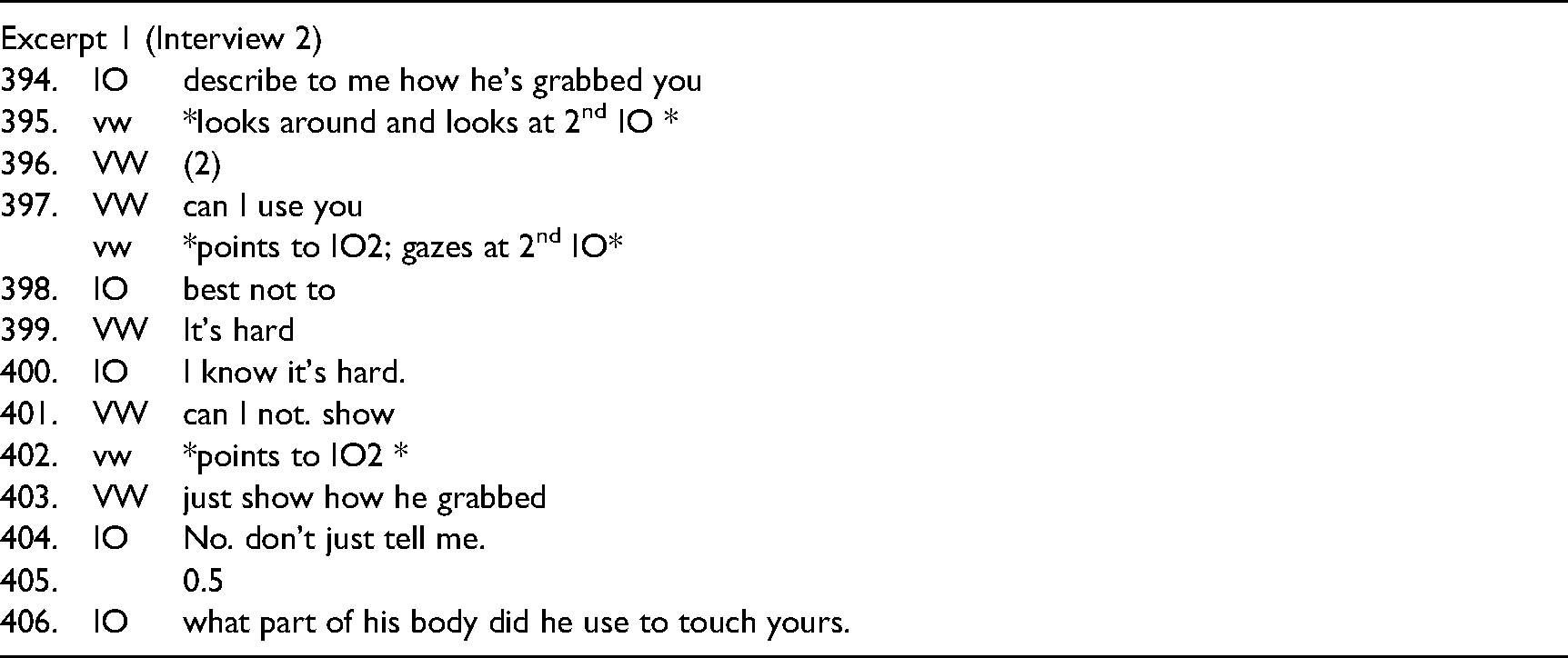
In addition to the VW clearly stating the presence of his difficulties using the spoken modality (lines 397, 399, 401, 403), the interaction consisted of a 2 second silence in line 396, clearly indicating a breakdown in communication. The floor was then taken by the INT who asserted her epistemic right to repair the breakdown and progress the interaction (excerpt 2). The IO whose deontic responsibilities related to verbally asking allegation-specific questions, relinquished his place as speaker. The INT abandoned the aural-oral modality, and in keeping with pre-interview assessment planning, began to facilitate evidence-giving through offering communication aids (line 409 ‘I have some dolls’), the purpose of which was to repair the communication breakdown.
Her initial action consisted of proposing an aid (lines 407) and beginning preparation for aid use (lines 408, 409, 413). Her contribution in line 410 ‘do you think you could show us with these’ was aligned with the VW's preference for showing (line 397 and 401). It was also in keeping with the interviewing guidelines in existence at the time (Ministry of Justice, 2011) which urged IOs to avoid asking interviewees to demonstrate sexual and other actions on their own body, because of the potential distress it could cause. The proposal to use aids i.e., the visuo-spatial modality, also received the VW's agreement (line 411) while acknowledging he could not answer through speech (line 411)
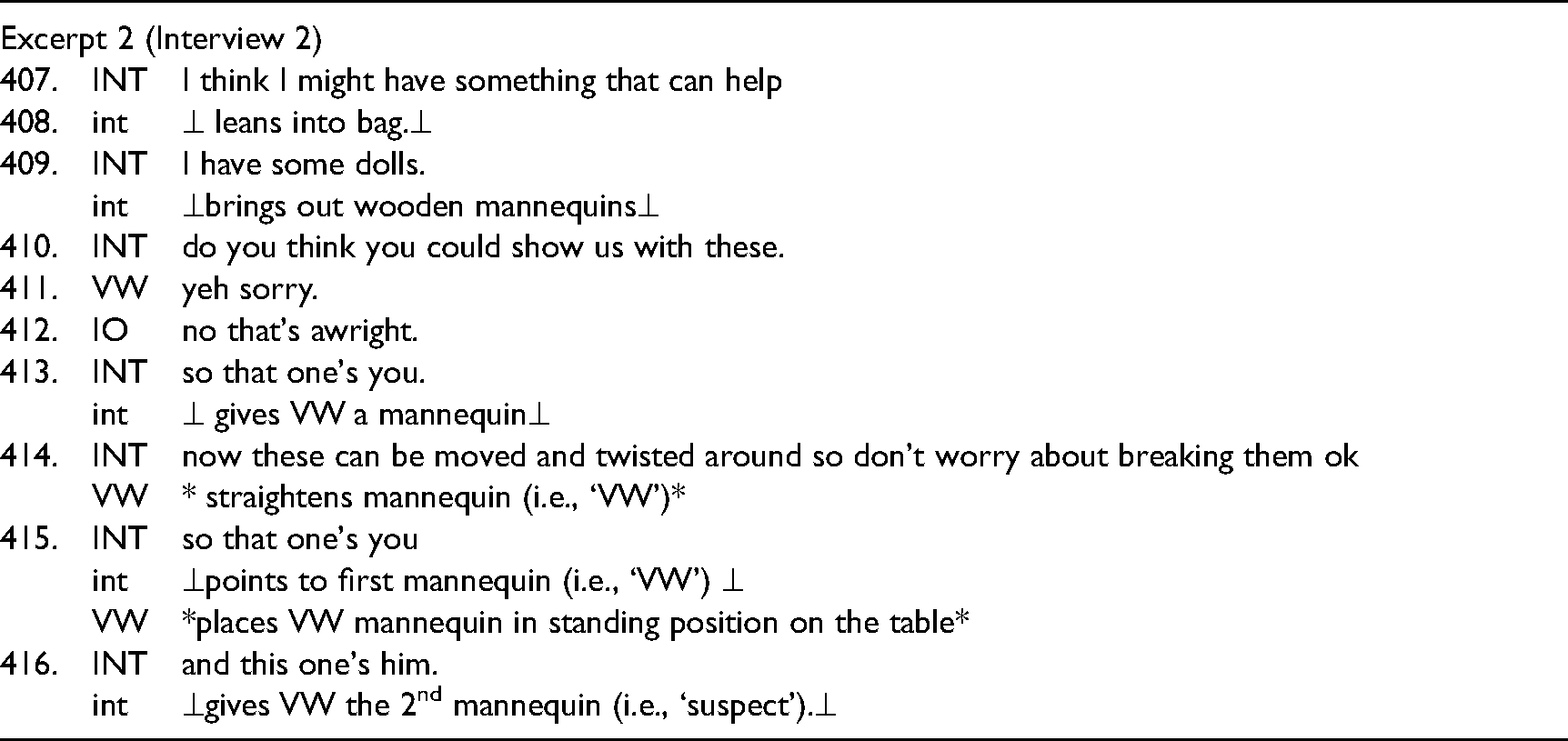
The mannequin's form resembles a person to most neurotypical individuals; however, the INT's epistemic responsibility lay firstly with ensuring that the VW understood its affordances, namely that it simultaneously represents an object and a person being discussed (cf. dual representation, DeLoache, 2000). Secondly, she was responsible for demonstrating the way it could be used to answer the IO's institutional question. To accomplish the former, the INT reinforced to the VW (and to unseen future observers such as the jury), which mannequins represented the suspect, and which signified the VW. She also explicated their specific affordances (lines 413, 415, 416) and manoeuvrability (line 414), so they could be utilised in a manner that simulated real-life orientation, position and movement, tapping into the visuo-spatial modality. Throughout her demonstration, both talk and embodied physical actions were mutually dependent. The INT's talk on its own would have been irrelevant without the associated accompanying physical actions, that co-occurred in conjunction with aid-demonstration. In brief, the temporality of the talk and the embodied physical aided actions were key in preparing the VW for upcoming aid use.
In addition to explaining the aid's affordances i.e., what could be done with the aid, the INT's physical demonstration served to demonstrate implicitly what should be done with it i.e., that it should be used to answer the IO's question. The IO's institutional question was about describing what happened in relation to the grabbing (line 394). The INT's further institutional goal was to demonstrate the way the answer should be provided as a response to that type of question. In other words, that the VW's response should relate to manipulating the aid in some manner. By providing a model herself spontaneously, ‘now these can be moved and twisted’ (line 414), she maximised the possibility of the aid being used to provide an answer that matched the intent of the question. In doing so, she also minimised the possibility of its affordances not being capitalised completely. Although the INT would have assessed their suitability prior to the interview as per intermediary guidelines (Ministry of Justice, 2012, 2022), she would be mindful that a VW might require a more immediate reminder of their affordances. Additionally, demonstrating their properties in this manner would enable those watching the ABE recording in the future (such as advocates, the jury etc), to understand their function and possibilities.
Once complete, the intermediary initiated the next phase of her institutional task (excerpt 3) to elicit details of ‘What happened?’ using the verb ‘show’ rather than a typical TED (tell, explain, describe) verbal verb used in open questions. She initiated her question (line 417) using the modal ‘can’, which typically treats compliance with such an utterance as contingent on the recipient's willingness or ability to comply (Craven and Potter, 2010). Such requests differ from instructions, which typically expect compliance (Curl and Drew, 2008). However, the VW oriented to it as an instruction to ‘do’ something, evidenced in lines 418–432 where he started to move the mannequins to show what happened. Here then, aid use became the primary way of eliciting the evidence, both replacing speech (line 427) as well as complementing it (lines 424, 426, 427, 431, 432).
More specifically, the VW's testimony of the physical positioning he and the suspect took in relation to each other and the directions they faced were elicited non-verbally. The VW first moulded the two mannequins in an upright position (excerpt 3 line 418) nonverbally, and then focused on breaking down complex directional information (further evidence) into two parts. He started by situating the ‘himself/VW’ mannequin in a location on the table in line 415 (excerpt 2). Then, holding the 1st mannequin still, he positioned the suspect mannequin behind ‘himself/the VW’ mannequin (excerpt 3 line 418) so that they were both physically oriented in the same direction, thereby conveying information relating to mutual orientation.
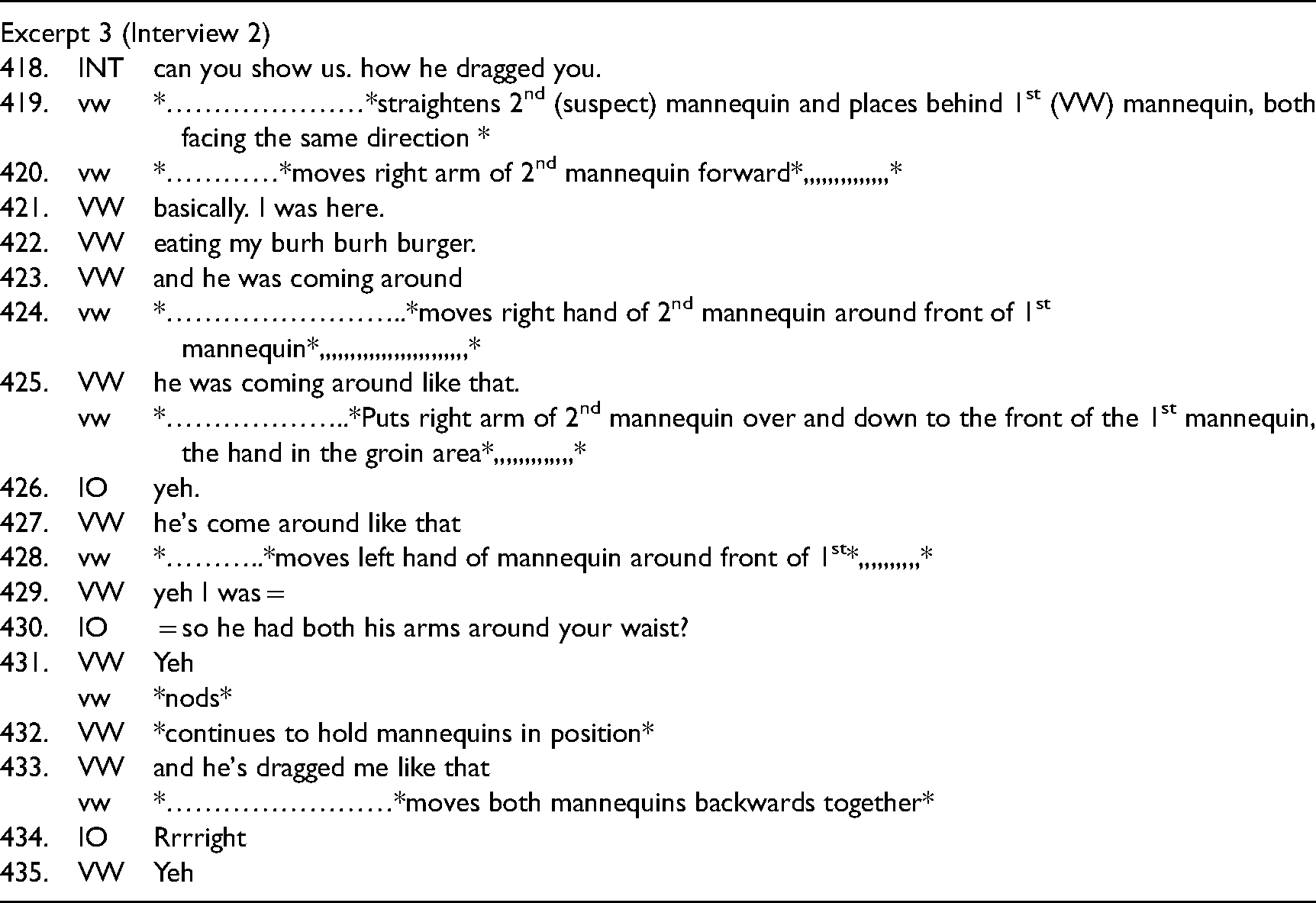
Secondly, again without speech, the VW fine-tuned his evidence-giving (their orientation and basic positional information) further, by manoeuvring the arms and hands of the 2nd (suspect) mannequin around the torso of ‘himself/the VW’ mannequin. Thereby he communicated evidentially relevant information on the relative positions of their body parts (Excerpt 3 lines 419, 423). The INT's spoken instruction (line 417) resulted in the VW's embodied compliance. Instruction giving and compliance were accomplished collaboratively, with mutual acknowledgement of the shared goal (eliciting new evidence). This highlights the point that such paired actions are situated in nature, contextual and incomplete on their own (Mondada, 2014b).
Thirdly, line 424 homed in on the allegation itself i.e., the sexual assault, which the VW communicated non-verbally, deliberately and in an unrehearsed manner, by guiding and manoeuvring the ‘suspect’ mannequin's hand over the VW mannequin's groin (see Figure 1). 3
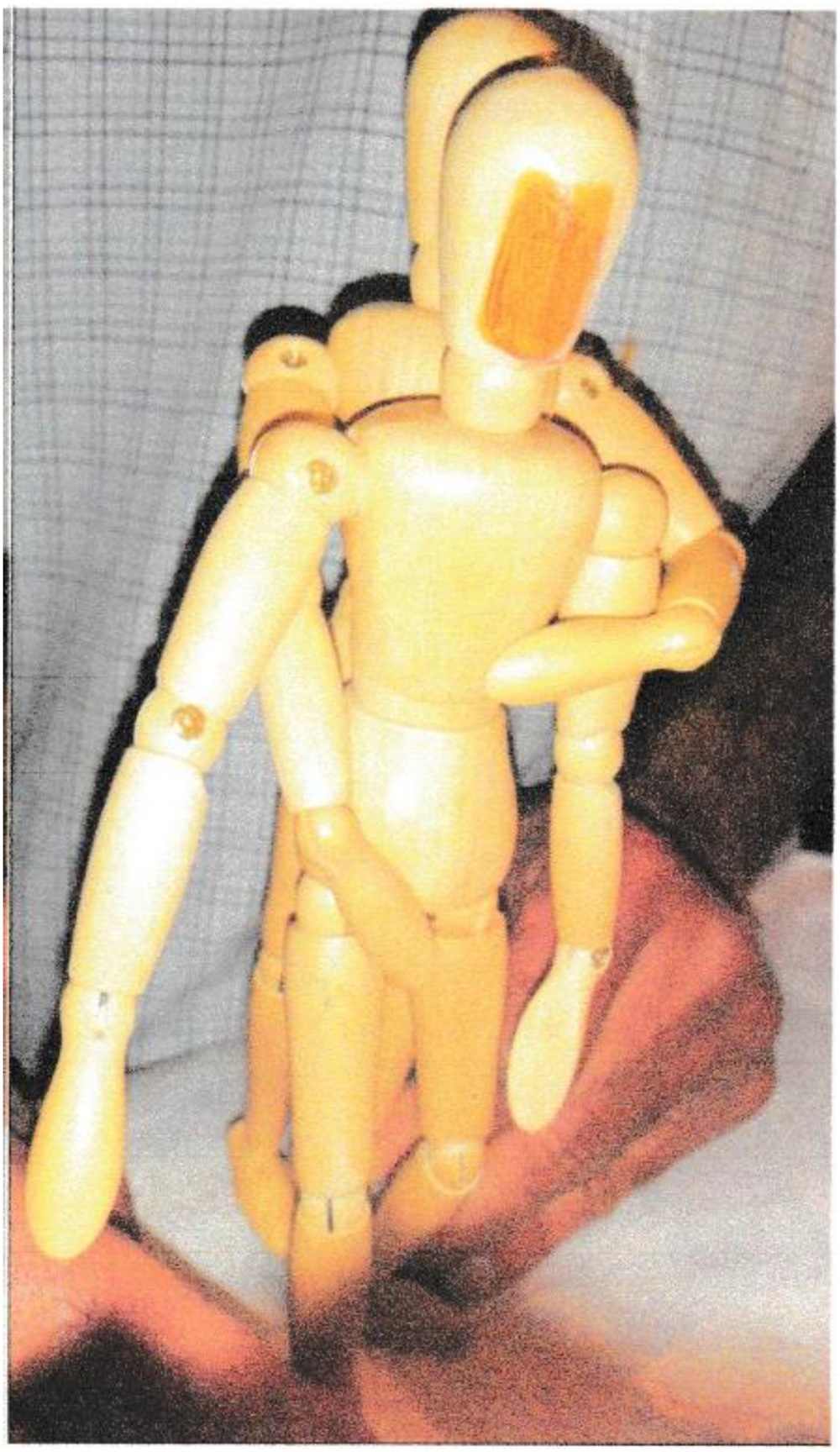
‘Suspect’ mannequin's hand in relation to VW mannequin (line 424).
The VW thus continued to manipulate the mannequins to complete the last event in the sequence, which was the direction of movement (line 432), that he and the suspect took after the grabbing occurred. The VW physically moved both mannequins away from their original position, in the same direction, but still physically oriented to each other as before.
The VW used speech as a framework (lines 420, 422, 424, 426) on which evidential content-rich material information (lines 418, 419, 423, 424, 427) was suspended. We note here how speech and aided actions complemented each other and the use of one was dependant on the occurrence of the other.
The next section of the results focuses on line drawings as a communication aid for augmenting and replacing speech in answering ‘What happened?’.
VWs typically find abstract concepts such as sequential and temporal factors difficult to articulate (Shepherd and Mortimer, 1996; Prosser and Bromley, 2012) and yet, of course, when an allegation took place, or the order in which events occurred are often essential information to establish in determining what happened. To overcome this difficulty (see excerpts 4–8), the INT will often introduce line drawings so a VW can show the order which something happened. Typically, a line drawing is initially created by the INT, sketching a key person or place previously mentioned by the VW, and then the floor is handed back to the VW, who indicates the order in which other events/people/places slot into that sequence in time. In so doing, the sequential passage of time, which is abstract, is made concrete, and thus these aids enable a VW to show temporal and sequential events when they do not have the capacity to tell. All line drawings used would typically represent a specific person- or place-related concept and all parties in the interaction would orient to them as such.
Although INTs (and IOs) understand the process involved in introducing and managing line drawings in timelines, this is not necessarily the case with VWs. Therefore, it is the INT who often sketches line drawings of people or locations and then instructs the VW how to use them to create a timeline. Excerpt 4 exemplifies the way INTs and IOs introduced and managed the use of a timeline. Instructions were used and delivered in a non-leading manner, to show a VW what was required of her in co-producing her evidence.
Excerpt 4 is taken from interview talk where answering the ‘What happened?’ question consisted of communicating the places that the suspect and VW had walked prior to the alleged sexual assault, in the right order. In other words, the IO's institutional goal related to understanding the sequence of events that led up to the location the allegation occurred. The excerpt starts when the IO, VW and INT were seated around a table, all looking at two sticky notes which had been placed on the table in front of them. Sticky notes are typically 7.5 cm square pieces of paper on which words can be written or simple pictures can be drawn. In talk prior to line 494, the VW had placed the two-line drawings in the above order (see Figure 2), on her own accord, to communicate that she and the suspect had walked from her house and then on to the pond (or pool as the VW named it). She had previously oriented to the 1st line drawing of a house with the letter A on it, as representing her own home and the 2nd line drawing as the pond.
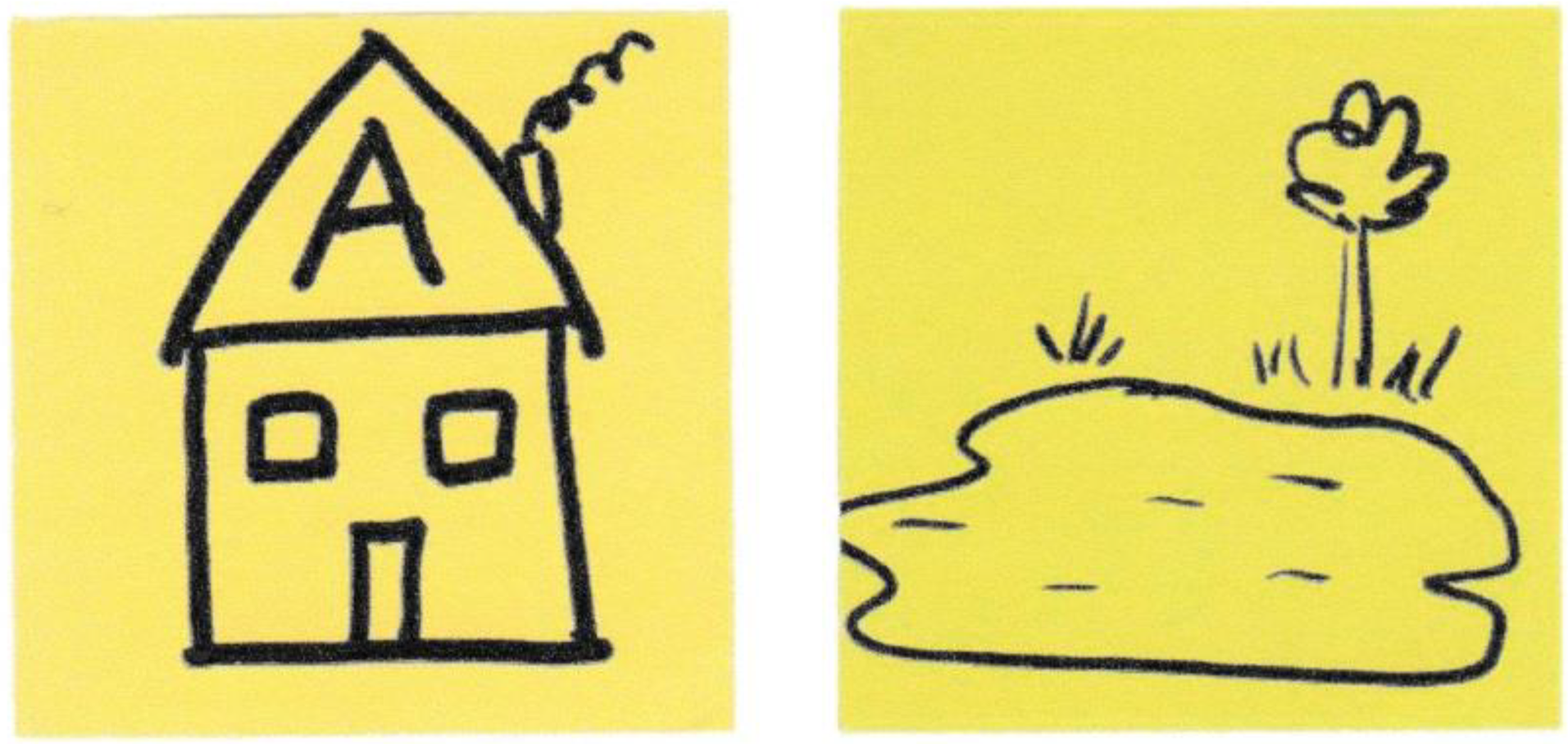
Line drawings of VW's house followed by pond/pool (line 494).
A 3rd sticky note lay apart from the house and pond, close to the VW, and had a line drawing on it that participants had oriented to as representing a ‘pub’ earlier in the interview. This line drawing had a mug of beer drawn on it, representative of what a pub is typically associated with. The VW’s immediate task consisted of placing the 3rd line drawing (‘pub’) somewhere in relation to the previous two sticky notes, the aim of which was to reflect the order in which their visit to the pub fell, in the context of the previous two locations (i.e., ‘house’ and ‘pond’).
Even though the VW had previously placed the 2nd line drawing (pond/pool) in second place after the line drawing of the house, she now began to demonstrate her uncertainty of the process (line 495) and what the IO was requiring of her, in response to his ‘where does that go?’ (line 494). The IO oriented to her embodied action of hesitating in positioning the 3rd line drawing definitively (line 495 and 496), as her needing clarification and more verbal direction. That direction was given verbally, using the word ‘tell’, implicitly instructing her to use the aural-oral modality, one that she oriented to as problematic. The VW further demonstrated her uncertainty of the amended question and direction by gazing at the line drawings (line 498) and then up again at him (line 499). These embodied signs of miscommunication triggered the IO replacing his original verbal instruction with one that contained two forced choice options, asking the VW, ‘Does it go BEFORE the pool or (0.5) after the pool?’ (Line 500). Once she had confirmed it was after the pool (line 501), he followed that with a second direction that was more focused on the visuo-spatial modality, one that she was able to comply with immediately. This resulted in her placing the line drawing of the pub in 3rd position on the table in front (line 503).
Once the IO drew parallels between what the line drawing represented, and its links in time in a simplified physical action-focused manner, the VW was able to unambiguously place the ‘pub’ drawing in 3rd position after the ‘pond’. See Figure 3.
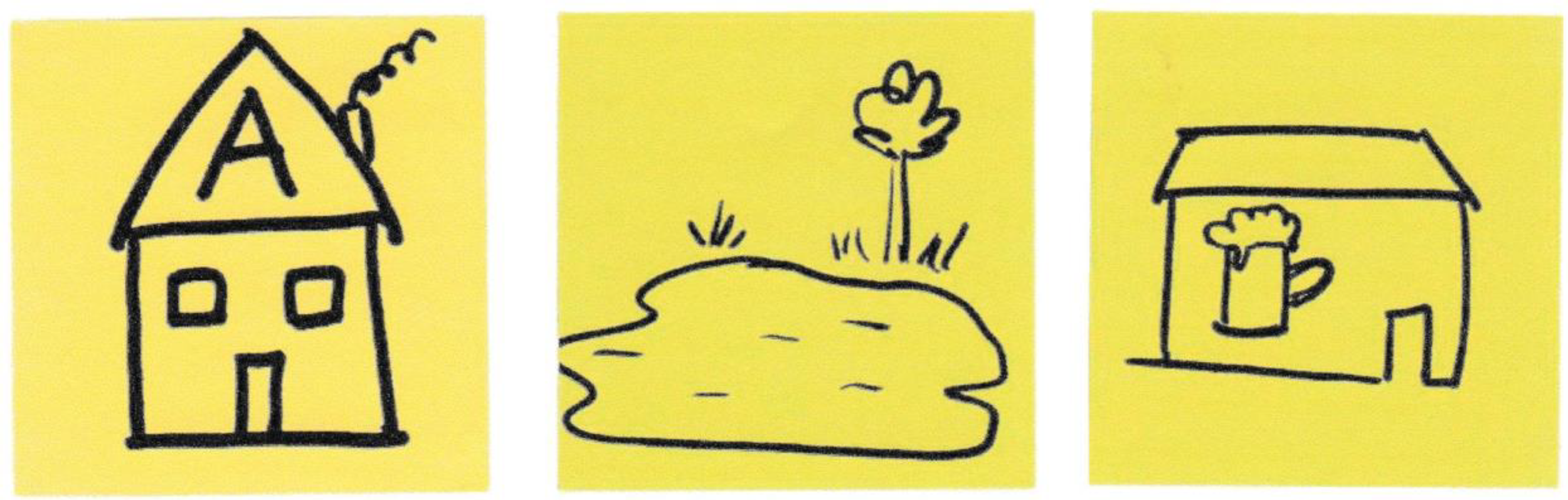
Sequence: line drawings of VW's house then pond/pool, lastly pub (line 503).
Having understood the process for using line drawings in excerpt 4 and subsequent interview talk not analysed here, the IO and INT oriented to there being lesser need to use directly worded instructions in later sections of the same interview. Although the way they formatted their talk was more egalitarian, the VW continued to orient to their less directly worded utterances as instructions and she used line drawings in the manner first demonstrated here.
Less directly worded utterances oriented to as instructions
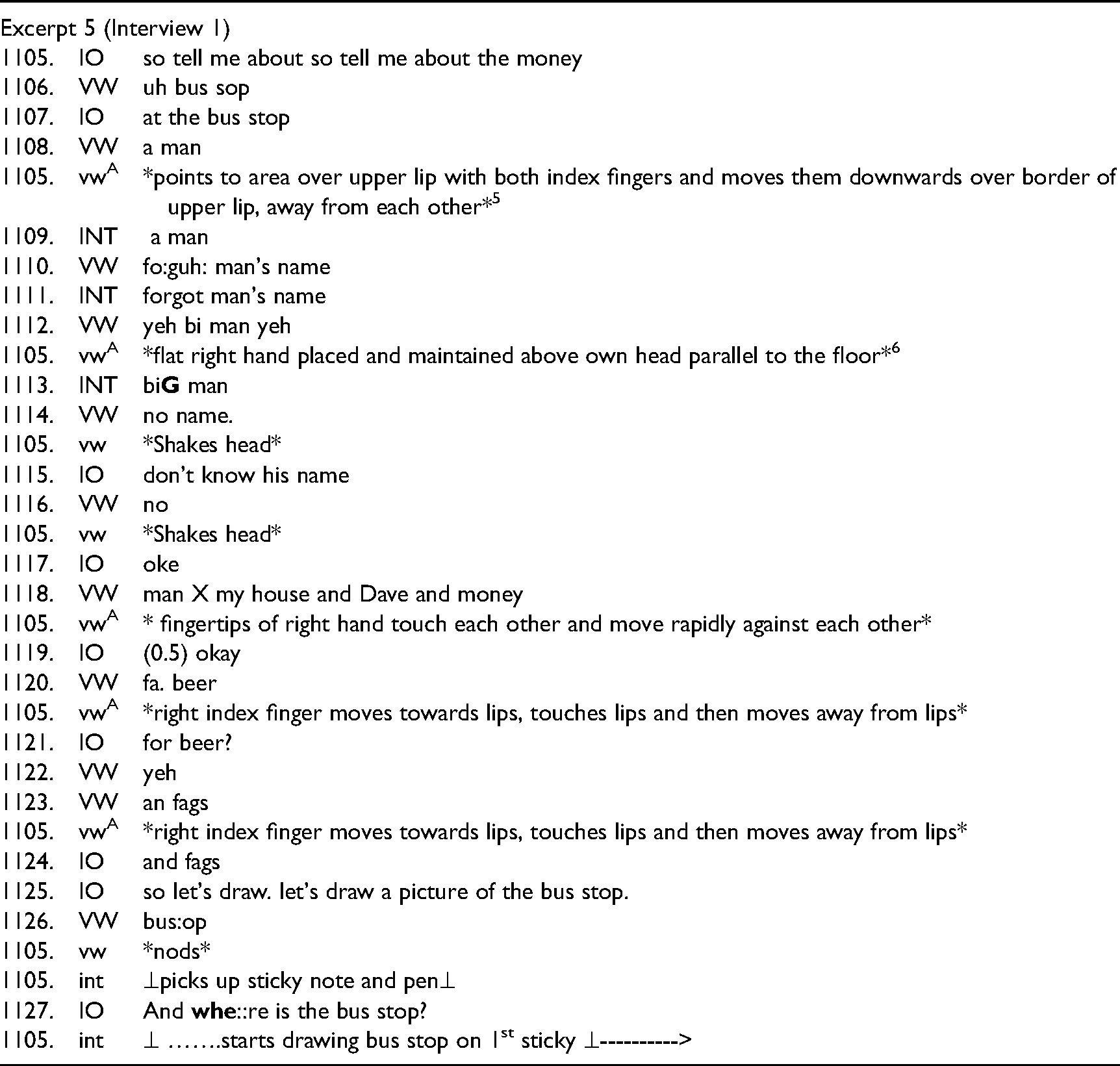
Excerpts 5–8 are from the same interview but the institutional question related to the IO needing evidence about an alleged robbery. The IO, INT and VW were seated around a table. The IO determined the agenda by announcing the overarching topic of money (line 1105) that the VW had previously raised herself. She then instigated her evidence-giving (line 1106) by identifying the place at which her account about ‘the money’ began (the bus stop). The VW's verbal account of the incident (lines 1106, 1107, 1111, 1117, 1120 and 1122) was agrammatic, comprising a series of labels (i.e., ‘bus stop’, ‘man’, ‘Dave’, ‘house’, ‘money’) which, although presented consecutively, did not express a coherent and logical order of events. It might have been possible to guess the order of events; however, in any police investigation where definitive facts are essential, putting words in the VW's mouth by guessing would not be an option. The VW linked some of these labels using ‘and’ (line 1118) but none expressed a clear cause and effect or temporal relationship. The IO did demonstrate that he had heard the VW's actual words by repeating back what she said and reinforcing her with active listening ‘okay’ responses (lines (1109, 1111, 1113, 1119, 1121, 1124). However, he showed a lack of understanding of her evidence through silence (line 1119) and by requesting clarification (line 1121). Line drawings had been used effectively in the same interview in earlier sections, while discussing other topics where sequential information was required. Therefore the IO proposed the use of these aids, to elicit temporal and sequential information, thereby filling in the grammatical gaps (line 1125). In alignment with the IO, the INT then immediately picked up the drawing materials (line 1126) and started to prepare the aid as before: she drew a bus stop (line 1127, Figure 4). Line 1127 then marks the start of this visual representation of the evidence which will link the labels together in an evidentially meaningful way.
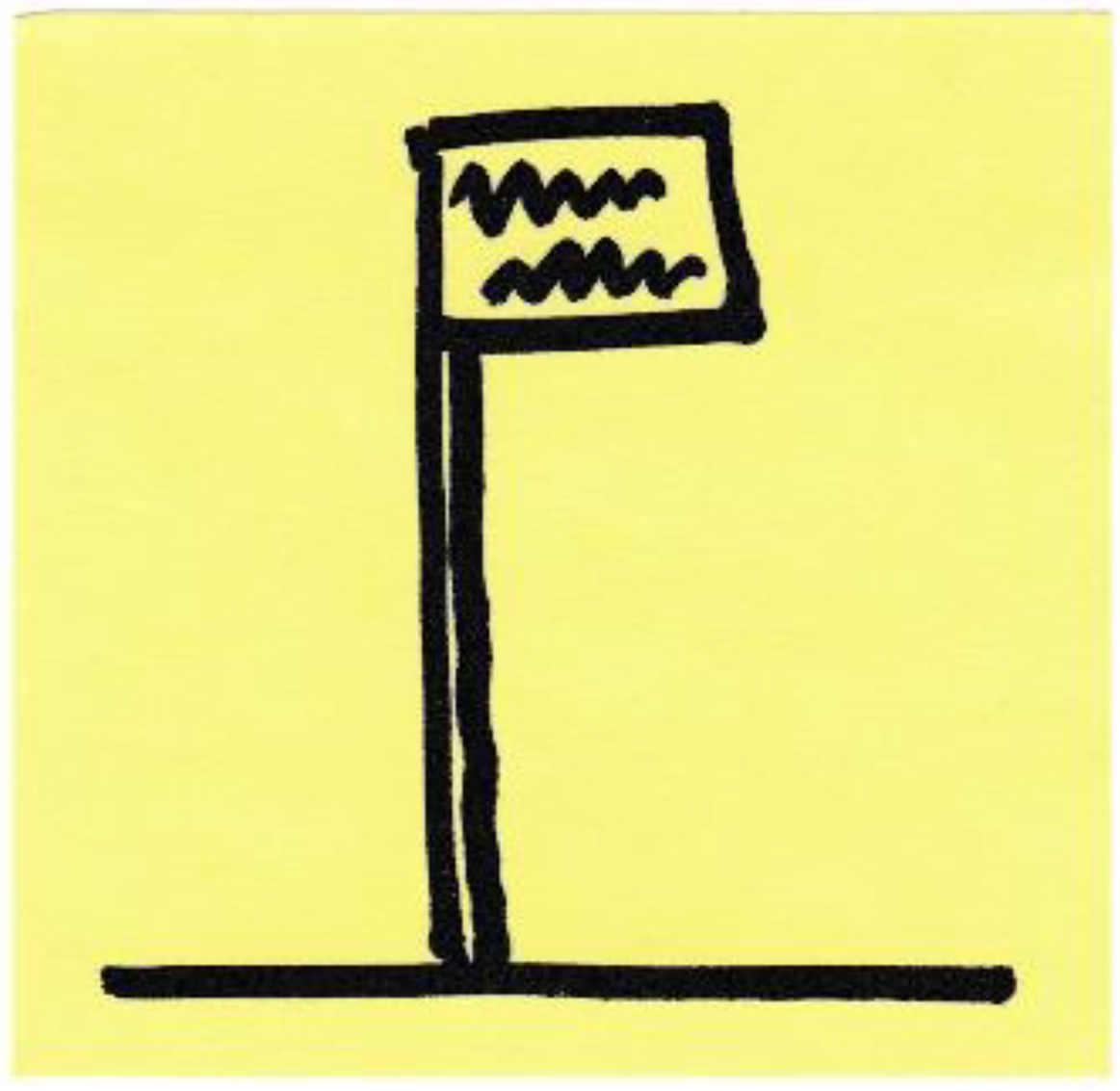
Bus stop (line 1127).
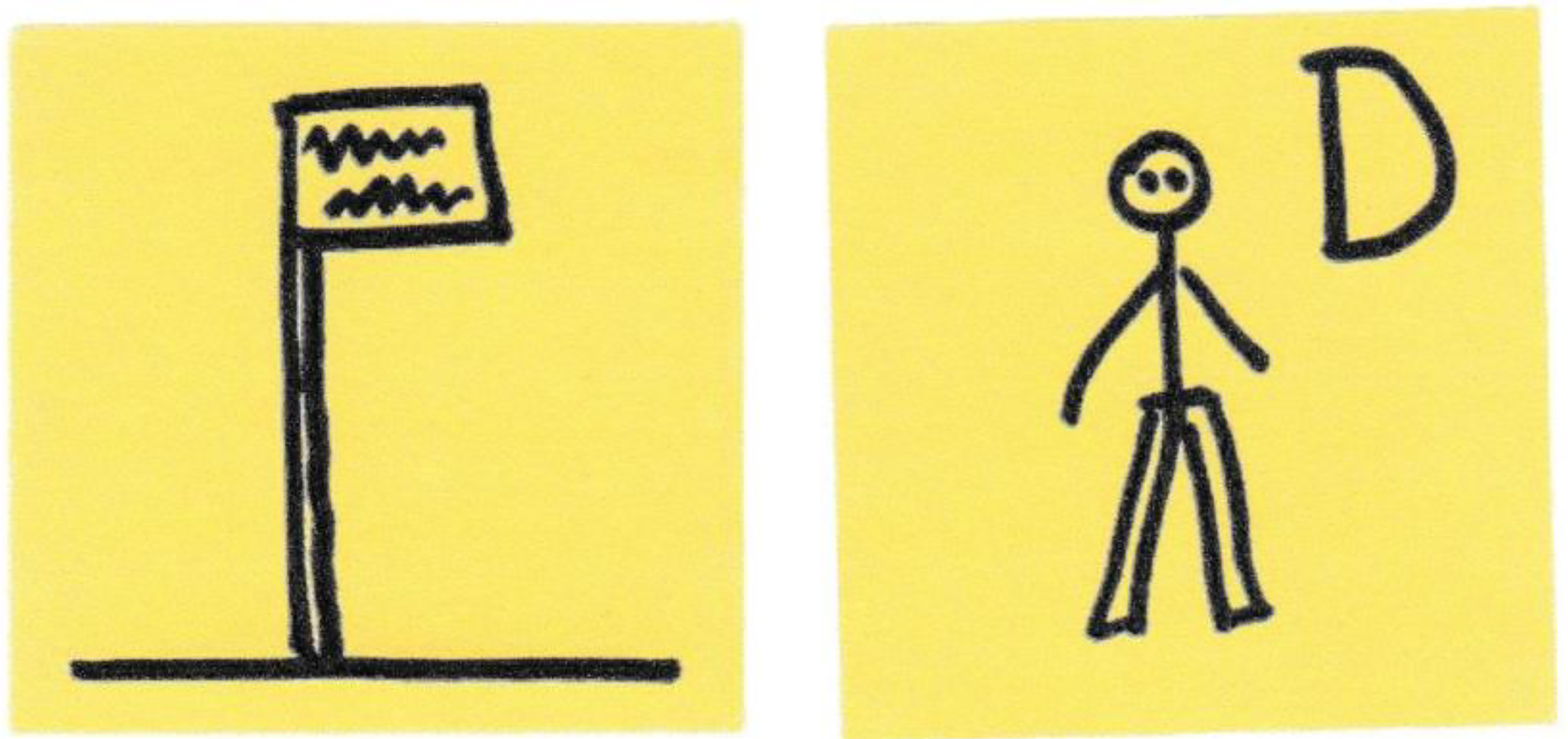
In excerpt 6, the INT first established that her line drawing of the bus stop corresponded with the VW's conceptual representation of the same (lines 1134–1137). The IO then began probing for more information about this event by asking who was there (line 1139), to facilitate further information on which to base subsequent line drawings. This question triggered the VW's response ‘Dave’ (line 1140), prompting the INT to draw a line drawing of a man, personalised by adding the letter ‘D’ for Dave (line 1142). Having obtained the VW's agreement that this second line drawing animation represented Dave, the INT relinquished the floor to the VW, to author the order of events. The INT did not use any spoken instructions but having understood and used the process before, the VW placed the ‘Dave’ line drawing adjacent to the first (bus stop), thereby communicating the sequential order in which those two events occurred (Figure 5, line 1146).
Sequence: VW at bus stop, then suspect Dave arrives (line 1146).
By placing the second line drawing of ‘Dave’ to the right of the ‘bus stop’ (line 1146), and in keeping with the physical process she had completed with other line drawings in previous sections of the interview the VW demonstrated her understanding that the line drawings were to be ‘read’ from left to right i.e., that the one on the left (bus stop) was present before the one on the right (Dave) arrived. All participants oriented to this sequence as being representative of what the VW meant to convey.
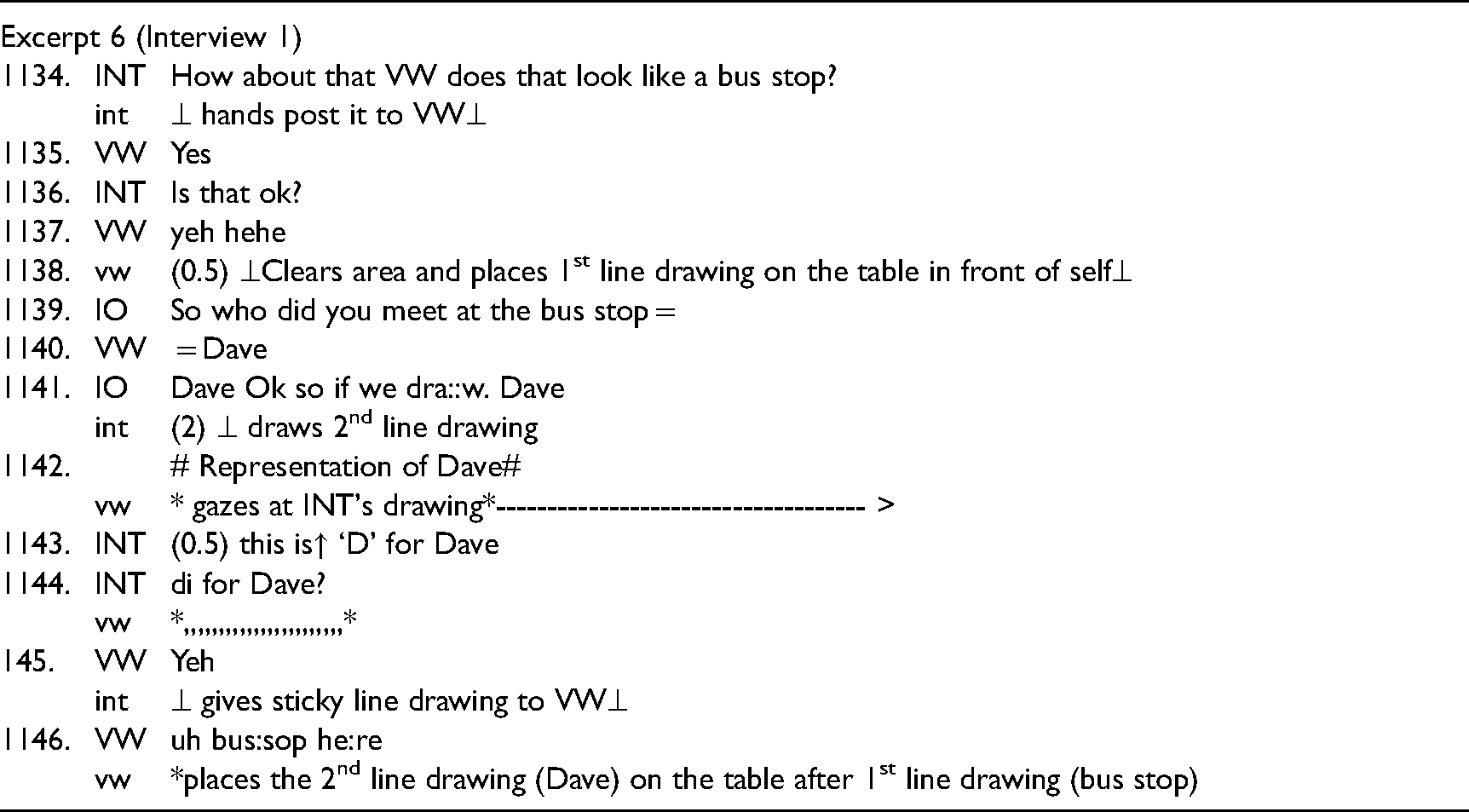
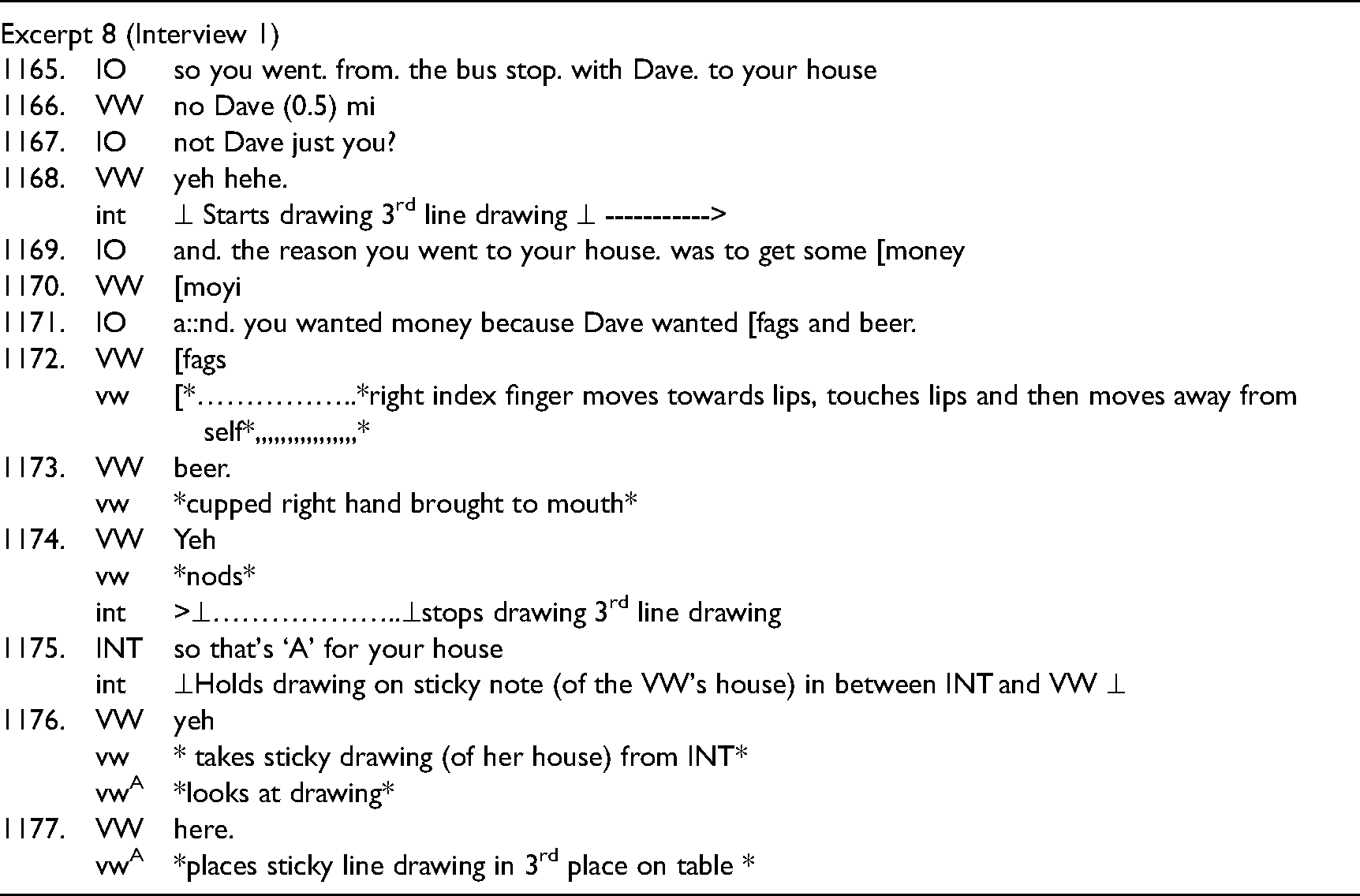
The VW then continued to introduce a series of object labels in excerpt 7, ‘money’ (line 1152), ‘house’ (line 1154), ‘fags’ (line 1158) but again the VW did not have the linguistic competence to link these labels in a grammatically coherent and evidentially relevant manner. Although the IO attempted to link the VW-originated object labels (lines 1153, 1157 and 1160), to make sense of her single-word utterances, the words were his interpretation of what she meant. His foremost institutional goal was to elicit the evidence completely from her as per guidance (Ministry of Justice, 2011, 2022), including disambiguating any unclear and unconfirmed associations and interconnections between her labels (carried out in excerpt 8), for the benefit not just of the investigation, but also of currently unseen ratified future overhearers such as the jury.
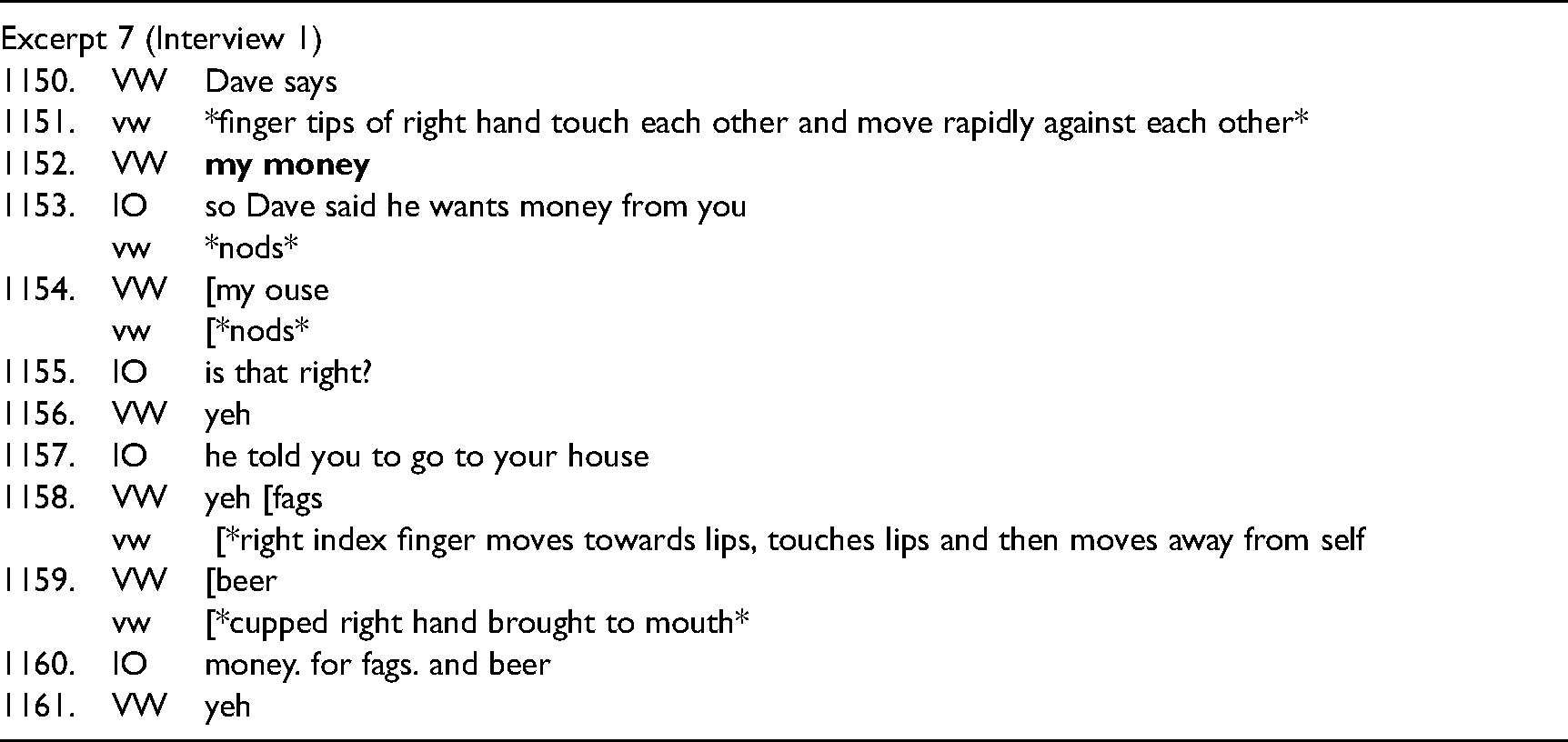
In excerpt 8, we note a miscommunication occurs when the IO tries to link the labels together (line 1165) based on his interpretation of the VW's agrammatical utterances, resulting in him getting the sequence incorrect (line 1166).
The INT demonstrated an awareness of both, this misunderstanding, as well as her epistemic responsibility for managing aids. She aligned with the IO's deontic right to determine the agenda of the interview which in this case was to establish the sequence of events (i.e., answering the ‘What happened?’ question), and commenced preparing an aid in line 1168. Where typically in speech-only investigative interviews, the interviewee animates their own message, it was essential that the INT personalise the aid (line 1175), to ensure that the representation she had selected was completely aligned with the VW's understanding of it. This process would benefit not just the interview participants but also unseen ratified future observers of the video recording such as the jury, judiciary and barristers. This was accomplished by the INT writing the letter ‘A’ on the line drawing of a house, which was the first letter of the VW's name. This indicated that the drawing symbolised the VW's house, thereby disambiguating the icon completely, as all agreed ‘A’ referred to VW. Therefore, although it was the INT who created the aid, it was the VW who ratified the animation (line 1176).
Furthermore, in keeping with the institutional goal of it being a VW who provides his or her own evidence (Ministry of Justice, 2011, 2022), it was the VW in this excerpt who again authored the sequence and placed the line drawing of a house in third position (line 1177), to the right of the previous one (Dave). Having created the expectation that newer elements of the sequence are placed to the right of the last line drawing in this, and earlier episodes in the same interview, the VW non-verbally communicated the order in which events took place (Figure 6).
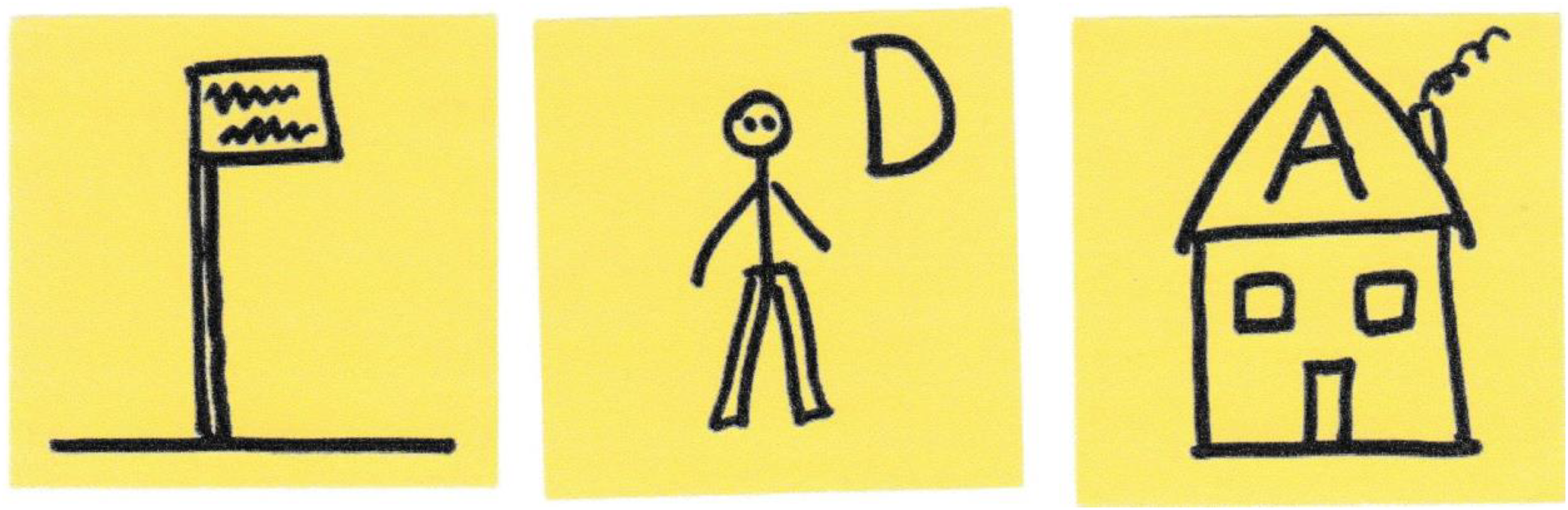
Sequence: VW at bus stop, suspect arrives, lastly both go to VW's home (line 1177).
Finally, the interview participants embarked on co-producing the final stage of this sequence (not analysed here), which involved the VW and suspect going to a newspaper shop to buy cigarettes and beer.
Through the process presented above, the VW was facilitated in communicating her account in a manner that was meaningful to her, using the non-verbal modality that best suited her preference and typical way of communicating as illustrated by the many examples of mime and gestures within her evidence giving (lines 1108, 1112, 1118, 1123, 1172) in addition to the communication aids. Where previously the VW's isolated and disjointed single spoken words had confused the IO, as had her use of the incongruous word ‘and’ (line 1118), resulting in a conversation breakdown, the acts of physically placing jointly agreed representative line drawings sequentially and consecutively allowed the VW to communicate sequential and temporal evidence coherently in a chronological order, thereby answering the ‘what happened?’ question in an unbiased and non-leading manner.
Discussion and implications
We have examined the way two types of low technology communication aids, namely wooden mannequins and line drawings, were used effectively in two separate police investigative interviews with VWs to elicit evidence relating to the investigation relevant open question ‘what happened?’
From a research perspective, this study has added to the body of evidence which contributes to the working practice of investigative interviews with this population. More specifically, it contributes to the literature on the use of open questions with VWs, where previously researchers had found limitations in their use with VWs (Brennan and Brennan, 1994; Kebbell et al., 2004; Perlman et al., 1994; Milne and Bull, 2001, 2006; Murphy and Clare, 2006). Instructions delivered in the manner examined above reduced the linguistic complexity of open questions but allowed their functionality to be retained. Linguistic difficulties typically associated with interviewing individuals with ID (Fisher and Geiselman, 1992; Shepherd and Mortimer, 1996; Prosser and Bromley, 2012) were thereby minimised.
We demonstrated that communication of this information was achieved in a non-leading and unbiased manner. Although it was the institutional professionals (i.e., typically the INT, but on occasion the IO emulating an INT's previous model) who recommended the type of animation to be used and it was s/he who instructed VWs on the manner in which aids should be used, it was the VWs who always authored their own unrehearsed and unbiased evidence. It was the VWs who applied the aids’ affordances to their own specific evidence. This embodied aid focused interaction allowed the VWs to author and animate their evidence independently, fulfilling institutional requirements.
More specifically in excerpts 1–3 from interview 2 for example, the VW received no coaching on the positions of the mannequins and the placement of their body parts in relation to each other. In doing so, the VW's verbal difficulties were eliminated, and otherwise unobtainable investigation-relevant evidence was elicited. Since the substance of a VW's evidence remained solely VW-generated, possible future accusations of coaching and resultant acquiescence would be unjustified. We are confident that the manoeuvres are a true representation of what happened in his own words, as recommended by interviewing guidance (Ministry of Justice, 2011, 2022).
Similarly, in interview 1 excerpts 4–8, while discussing the sequence of events leading up to the location of the allegation, we note that the IO and VW worked together with the aids to co-produce evidence that was not forthcoming through ‘tell’ alone. The IO's interaction did not indicate what the VW's answer should be, it solely related to how she should make known the answer that she herself had provided just prior. His involvement related to the manner of animation and not the content of the animation and thus remained non-leading and non-biased. The INT, on the other hand, was the institutional representative who personalised the animation. However, it was still the VW who retained the role of author, as per Goffman’s (1981) participation roles, but communicated the evidence in the modality more suited to her specific communication needs.
At times, the communication aids completely replaced speech but more frequently, they were used to augment the VWs’ spoken words. We posit, given the VWs’ reluctance and/or inability to wholly rely on speech in the interviews, that this detail could not have been expressed verbally by them. This indicates further the importance of the relevant special measures (ss. 29 & 30) in enabling VWs with limited verbal ability to give their evidence independently and without bias. Although research on the implementation of the intermediary special measure (s. 29 of the 1999 Youth Justice and Criminal Evidence Act) is on the increase (Cooper and Wurtzel, 2013; O’Mahony et al., 2016; Cooper and Mattison, 2017; Henry et al., 2017), we are not aware of any studies of intermediaries implementing section 30 in real interviews.
This study is innovative in that it has major operational implications for the workplace. The manner in which aids were selected, introduced and managed throughout the interactions was systematically and carefully accomplished. Firstly, the choice of aids and manner in which this was accomplished was planned and administered in an effective manner. In interview 2 for example, mannequins whose physical affordances and characteristics iconically replicated the human form were selected to elicit positional and orientational evidence. Additionally, their manoeuvrability mirrored the physical movements typically made by humans. As icons, they were personalised to unambiguously represent the VW and the suspect.
Secondly, we have demonstrated that the terminology ‘show me’ rather than ‘tell me’ in aided interviews (e.g., in lines 395–405 excerpt 1) predisposes VWs to using the visuo-spatial modality, which is more accessible, when the oral-aural modality is insufficient. Showing, in combination with speaking, renders difficulties giving allegation-specific information through the oral-aural modality inconsequential. Understanding that a slight modification in wording can impact the process of evidence elicitation is key to effective professional practice.
Furthermore, as we have demonstrated in excerpts 1–3, general all-purpose words consisting of deictic elements such as ‘here’ (line 420) and ‘that’ (lines 424, 426 and 432), indexing positions, places and actions, which typically require more specification in speech-only interviews (but which is problematic for VWs), were accepted unreservedly by the IO and INT. Such nonspecific talk would ordinarily result in IOs probing for verbal clarification; however, here, all participants oriented to those generic words as acceptable and unremarkable. This was because they were accompanied by objects and physical embodied actions, showing convincingly how additional evidence was provided through the aids when the victim was silenced by speech demands (line 405).
The training IOs currently receive in relation to ID, aid-use and the role of an intermediary is suboptimal (Victims’ Commissioner for England and Wales, 2018). While, typically, IOs are trained and experienced in policing matters and therefore are well-versed in focusing on the police agenda, INTs are specialists in communication, thereby enabling the police agenda to be advanced. Aided evidence elicitation is a collaborative process. In this analysis they were chosen, introduced and managed carefully and systematically by INTs. The purpose here is not to suggest that the skills of a highly skilled INT should be dispensed with, but rather to recommend that IOs’ training is broadened and contains aspects of aid use analysed in this article. The relevance of aids in eliciting rich detail in response to the open question ‘What happened?’ (albeit in a different manner), and their interactional relevance with VWs, should be emphasised in interviewing training. Over-reliance on spoken open questions (i.e., dependent on the oral-aural modality alone) can thereby be minimised.
However, we are not proposing that low technology communication aids are used by IOs in an indiscriminate and unplanned manner. This research demonstrates and confirms the importance of encouraging interviewing professionals to work alongside INTs in real-life interviews, thereby facilitating the process of INTs modelling (and IOs emulating) effective communication aid use in situ, which results in continuing professional development for both parties.
However, focusing on IOs alone would be short-sighted, in our view. Other justice professionals such as advocates, and judges would benefit from being advised of the advantages of aids. Research such as this should contribute towards reducing any further residual reluctance to use communication aids, as reported by Plotnikoff and Woolfson (2015, 2019). Furthermore, although this specific study relates to the police investigative interview context, the broad principles explicated in this analysis could be incorporated into other situations involving individuals with an ID where eliciting unknown information or investigating a matter that is unknown, is a requirement. Spoken open questions, which are usually used with individuals proficient in the oral-aural modality in a range of contexts (e.g., conflict resolution, job interviews, rehabilitation) are modifiable to match the communication needs of those who use the visuo-spatial modality to augment their verbal contribution or, at times, to replace specific aspects of talk entirely.
Additionally, since ‘one size does not fit all’ we join Plotnikoff and Woolfson (2015) in calling for a greater use of trained INTs, who are professionally skilled in tailoring questions to suit the individual and specific needs of a vulnerable interviewee. Moreover, individuals with an ID experience communication difficulty irrespective of whether they are a witness, alleged victim, suspect, defendant or respondent. We therefore agree with other researchers in advocating that INTs are used not just with VWs, but with vulnerable suspects and defendants (Cooper and Wurtzel, 2013; Gerry and Cooper, 2017; O’Mahony et al., 2016; Plotnikoff and Woolfson, 2019) and with respondents in Family Courts (Cooper, 2011).
We acknowledge that a limitation of this study is the lack of information we had available to us regarding the degree of intellectual disability that the VWs experienced. It is possible that VWs with differing cognitive profiles might respond and interact with aids differently. Additionally, the interviews were recorded by IOs whose institutional goal it was to solve a crime. Typical interview recording is not oriented to research and therefore recording of important finer embodied actions such as eye gaze and facial reactions were not captured well enough to be analysed. Lastly, we acknowledge that analysis of a greater number of aided interviews would be useful.
Conclusion
Historically, the aural-oral tradition is prioritised in investigative interviews and the visuo-spatial modality is given lesser importance. It is hoped that articles such as this will work towards giving professionals a different perspective on evidence elicitation. Intermediary training for those working with witnesses is currently provided by the Ministry of Justice. In light of the results from this research we call upon intermediary training programme leads to consider the outcomes of this research in their training of new intermediaries. Facilitating VWs with compromised verbal ability to communicate their evidence in a manner suited to their individual communication modality would enable them to have their ‘voice’ heard. Specifically, the syllabus should include a focus on aid selection, introduction and management, drawing on studies such as this to support teaching and learning.
Further research into aided real investigative interviews, incorporating other types of aids, with vulnerable individuals in the legal system, experiencing a range of cognitive abilities and vulnerabilities, would broaden our academic knowledge of non-verbal communication and vulnerability, and provide evidence for implementing operational changes in the workplace.
Footnotes
Declaration of conflicting interests
The author(s) declared no potential conflicts of interest with respect to the research, authorship, and/or publication of this article.
Funding
The author(s) received no financial support for the research, authorship, and/or publication of this article.

Notes
Appendix
. A full stop denotes a micro pause
(0.5) Denotes a timed pause in 0.5 s intervals.
[ Square brackets denote a point where overlapping speech occurs.
> < Arrows surrounding talk show that the pace of the speech has quickened
< > Arrows in this direction denote the pace of the speech has slowed down
(XXX) Denotes that the words spoken were too unclear to transcribe
°talk° Indicates quiet or whispered speech
↑ Upward arrow denotes a rise in intonation
↓ Downward arrow denotes a drop in intonation
= Denotes latched speech, a continuation of talk
:: Denotes elongated speech, a stretched sound
* * Descriptions of embodied actions are written between these symbols. These symbols represent physical embodied actions of a VW.
+ + Descriptions written between these symbols represent embodied physical actions of an IO.
⊥ ⊥ Descriptions written between these symbols represent embodied actions of an RI
*----> The physical action (e.g., by VW) continues across subsequent lines
---->* Physical action (e.g., by VW) ends at the point where the same symbol appears again.
*…..* Preparation of that physical action, here a VW's action
*----* Action's apex is reached and maintained.
*,,,,,* Action's retraction, e.g., retraction of VW's physical action
VW Participant speaking, here the witness with an Intellectual Disability (upper case)
vw Participant carrying out the embodied action, here the witness with an Intellectual Disability (lower case)
# # Representation of a visual aid is contained within these symbols