




Abstract
Play is a central feature of childhood and a fundamental right of all children. Currently, our understanding of autistic play is based on a deficit perspective, most often framed in comparison to neurotypical ‘norms’ and assumptions where the views of the players themselves have been overlooked. In moving towards a strengths-based neuroaffirmative understanding of autistic play, this study consulted with 19 autistic children (aged 5 to 13 years) using a series of semi-structured interviews and a range of creative and participatory methods. Reflexive thematic analysis generated three themes where children conceptualised: (1) enjoyment and pleasure as central to the definition of play, (2) social connections as fundamental to play and (3) play as engagement with meaningful materials and activities. Children’s autonomy and agency in play was important to all themes. These findings challenge long-standing deficit-oriented assumptions that have persisted throughout the literature for decades and have implications for future programmes of research, theory and practice, in particular on the importance of providing and facilitating authentic play experiences for autistic children in education and care contexts.
Lay abstract
Autistic play is generally described from a deficit perspective where the players themselves have been overlooked. It is important to consult with autistic children themselves about their understanding of play. We asked autistic children about their views on play using many different creative ways that were chosen by the children themselves. We analysed findings using reflexive thematic analysis. Autistic children in this research described play as involving feelings and emotions of pleasure and joy, autonomy and agency, playing by themselves and with others and engagement with materials and activities as meaningful. It is very important that we ask the players themselves what they think about play rather than relying on deficit framed, non-autistic definitions of autistic play. In this article, we will discuss how these findings will help develop future research, theory and practice in respecting children’s right to authentic play experiences.
Introduction
Play is a central feature of childhood and widely recognised as essential to children’s wellbeing and overall quality of life (Howard, 2019; Whitebread et al., 2017; Wood, 2013). Furthermore, play is fundamental for children’s learning and development including cognitive skills, social skills, emotional skills, physical skills and creativity (see Zosh et al., 2022 for review of empirical evidence in the field). Play is also a right in and of itself (UNCRC, 1989). However, defining play has proved challenging for researchers over the years with much contention dominating the field in ascertaining a universal understanding of play. Traditionally, play has been conceptualised according to observable characteristics and behaviours (Krasnor & Pepler, 1980), categories or types (e.g. physical play, symbolic play or games with rules; Piaget, 1962; Whitebread et al., 2017), level of social interaction (e.g. Parten, 1932; Vygotsky, 1978), degree of adult involvement (e.g. Weisberg et al., 2016) and most recently, according to dispositional or inward qualities of the player (Bundy et al., 2001).
Despite the lack of consensus surrounding our understanding of play, there is surprising consistency across research in viewing autistic play from a deficit perspective, most often in comparison to neurotypical ‘norms’ and assumptions (Pritchard-Rowe et al., 2024; Wolfberg & Woods, 2023). Autistic play has been described as ‘abnormal’ (Jarrold et al., 1993, p. 295), ‘impoverished’ (Riguet et al., 1982, p. 440), ‘inappropriate’ (Sigman et al., 1999, p. 75), ‘deficient or disordered’ (Conn, 2015, p. 1193) and pathologised as something ‘lacking’ (Theodorou & Nind, 2010, p. 102) or ‘to be ‘fixed’ or normalised’ (Pritchard-Rowe et al., 2024, p. 3) in order to ‘better align with more ‘typical’ play characteristics’ (Morris et al., 2024, p. 12). This view is also found in autism diagnostic criteria (Diagnostic and Statistical Manual of Mental Disorders, 5th ed.; DSM-V) where ‘deficits’ in play are regarded as a defining feature of autism (American Psychiatric Association [APA], 2013). Indeed, Conn (2015) has noted that play is widely used ‘in the construction of disability where they (children) can be judged as incompetent, unskilful and ‘not typical’ as players’ (p. 1193).
This deficit focused view has very much centred on describing autistic play in terms of observable categories or ‘based on non-autistic interpretation of observable autistic behaviours’ (Pritchard-Rowe et al., 2024, p. 2). For example, ‘deficits’ have often been reported in imaginative play (Hobson et al., 2009; Wing et al., 1977) and social play (Kossyvaki & Papoudi, 2016; Restall & Magill-Evans, 1994; Wolfberg & Woods, 2023) including autistic children’s reported preferences for solitary play (Holmes & Willoughby, 2005).
Recently, however, researchers have proposed a ‘distinctive autistic play culture’ (Conn, 2015, p. 1194) with calls for the consideration of the ‘unique strengths or potential diversity of play experiences for autistic individuals’ (Morris et al., 2024, p. 12) as opposed to comparisons to non-autistic norms (Conn & Drew, 2017). Instead, researchers have described unique features of autistic play according to engagement with sensory and physical materials (Conn, 2015; Fahy et al., 2021; Wolfberg & Woods, 2023) and repetitive play behaviours (Lantz et al., 2004; Williams et al., 2001). For example, Eisele and Howard (2012) examined ritualised or repetitive behaviours as play behaviours and found many commonalities between characteristics of playful engagement and repetitive behaviours such as a sense of fun and pleasure, active engagement, challenge and risk, and persistence. These findings reaffirm the conclusions of Gibson and McNally (2024) that ‘play activities that may appear ‘purposeless’ to non-autistic adult observers often have a meaning to the player and may fulfil important self-regulation needs’ (p. 150).
In investigating autistic play, research has especially overlooked the internal and dispositional qualities that are regarded as fundamental to play (Fahy et al., 2021; Kasari et al., 2013; Luckett et al., 2007), neglecting to examine ‘the child’s playfulness and perspective in play’ (Conn, 2015, p. 1193). This is especially concerning given the notable importance of ‘inward’ characteristics of play such as intrinsic motivation and a sense of pleasure (Bundy et al., 2001; O’Keeffe & McNally, 2024a, 2024b).
Therefore, our current understanding of autistic play is predominantly based on outward observations using neurotypical frames of reference where the autistic players’ perspectives have been overlooked: ‘as well as focusing on “deficits” then, understanding of autistic play have tended to neglect autistic perspectives’ (Pritchard-Rowe et al., 2024, p. 2). We need a clear understanding of autistic play, informed by the players themselves in ‘revealing purpose, form and meaning in relation to play’ (Conn, 2015, p. 1193). Exploring these inward and dispositional qualities of autistic play is further compounded by a narrative that autistic children lack motivation or drive to spontaneously engage in and sustain play experiences (Lantz et al., 2004). Eisele and Howard (2012) express significant concern surrounding this recurring narrative as to whether ‘autistic children play’ (p. 58).
Amid increasing calls to consult with the players themselves and in keeping with the wider neurodiversity paradigm, we need an understanding of autistic play from the players themselves in moving beyond deficit-oriented, non-autistic framed descriptions that continue to dominate the literature (Conn, 2015; Pritchard-Rowe et al., 2024). This will also help overcome gaps in understanding ‘what constitutes authentic play [and] validate what is meaningful for the players’ (Wolfberg & Woods, 2023, p. 219). Furthermore, this will contribute to gaps in knowledge on the role of play in supporting the learning and development of autistic children given that play is widely regarded as a fundamental pedagogical tool (Francis et al., 2022; Whitebread et al., 2017). Indeed, much literature has focused on evaluating the current evidence base on the impact of play on the learning and development of autistic children specifically with regard to social communication skills (Gibson et al., 2021; O’Keeffe & McNally, 2021), language (Deniz et al., 2024) and mental health and wellbeing (Francis et al., 2022). Although this research highlights the potential of play as a promising intervention for autistic children, there is limited evidence on how play supports autistic children’s learning and development more generally. Moreover, for any programme of research on the play of autistic children, we first need to understand what play means to autistic children and how play is conceptualised by autistic children.
Recently, Pritchard-Rowe et al. (2024) interviewed 22 autistic adults (aged 18 to 57 years) regarding their perspectives on play and how their experiences differ from non-autistic play. Participants described engagement in imaginative play and experiences of flow in play. Furthermore, they valued both social connections in play and sought solitary play for recuperation and oftentimes choice depending on internal factors (e.g. tiredness, mood). These findings challenge several deficit-based assumptions of autistic play within the literature (i.e. play as solitary, lack of symbolic or imaginative play). Similarly, Conn (2015) focused on autistic adults’ autobiographical accounts of play and friendship across published literature and highlighted preferences for sensory-based activities, nature, imagination and social connections, again contradicting several preconceived notions of autistic play (i.e. play as solitary, lack of imaginative play). Other researchers have sought autistic children’s play preferences. For example, Fahy and colleagues (2021) asked five autistic children (aged 6 to 9 years) about their play preferences and noted how children’s views varied across different contexts and included preferences for imaginative and group games, sense of challenge alongside observations of flow, as conceptualised by Csikszentmihalyi (1990) regarding a state of immersion or absorption within play. Other researchers have focused on understanding autistic individuals’ perspectives in relation to specific components of play. For example, Pavlopoulou et al. (2022) interviewed 12 autistic adolescent boys (aged 13 to 15 years) regarding their perspectives of online gaming and their motivations. Participants emphasised the sense of agency in play and valued online play as a source of social connection, creativity, emotional regulation (i.e. escapism) alongside experiences of flow.
This literature addresses important gaps in challenging long-standing deficit-based norms and assumptions surrounding autistic play. However, the current evidence base predominantly reflects the views of autistic adults with the views of children and non-speaking autistic people significantly overlooked (Hancock, 2020; Papoudi & Kossyvaki, 2018).
This study
Developing our understanding of autistic play is fundamental if we are to capitalise on the potential of play to support all children’s quality of life and wellbeing (Pritchard-Rowe et al., 2024; Wolfberg et al., 2015; Wolfberg & Woods, 2023). This is especially important given reports of poorer mental health outcomes among autistic people (Benevides et al., 2020; Crane et al., 2019) and associated stigma for autistic people surrounding a deficit-oriented view of autistic play (Pritchard-Rowe et al., 2024).
Understanding how autistic children view play is essential in meaningfully ‘cocreating play spaces and play activities with children’ (Danniels & Pyle, 2023, p. 1173) in ways that truly reflect authentic play experiences and respect ‘the right of all children to play in ways that they prefer’ (Gibson & McNally, 2024, p. 151). This is especially important given ambiguity among educators surrounding how best to support inclusion in play (Danniels & Pyle, 2023). Developing a neuro-affirmative understanding of play will also inform diagnostic criteria in response to calls by Pritchard-Rowe et al. (2024) surrounding a shift away from a deficit focused frame of play, as identified in their consultations with autistic adults, towards a strengths-based perspective of play across diagnostic assessments.
This study, therefore, aimed to develop a child-centred, strengths-based understanding of autistic play, through a systematic investigation of how autistic children conceptualise play. The study was guided by one research question: how do autistic children understand and conceptualise play? This study is part of a larger project investigating a child-centred understanding of play (see link https://osf.io/mj27s/).
Methods
Researcher positionality
The research team comprised of the first author, a non-autistic primary school teacher and doctoral researcher and the second author, a non-autistic academic in psychology and education. Both researchers are interested in all children’s play in inclusive educational contexts. The authors approach this research from a neurodiversity-informed perspective that recognises and values natural diversity in human neurocognitive styles and how our brains work with no single style deemed superior to the other (see Walker, 2023). In line with this positioning, we approach this research from a strengths-based understanding of autistic play with a view to optimising autistic children’s quality of life and wellbeing (Pellicano & den Houting, 2022) as opposed to the ‘normalisation of autistic people’ (den Houting, 2019, p. 271).
Participants
Two primary schools in the Republic of Ireland (RoI) were recruited through convenience sampling and were purposively selected using the following eligibility criteria: (1) co-educational settings involving the full continuum of classes catering for children from 4 to 13 years and (2) a minimum of three autism classes, as identified in Department of Education Directory (2022) to allow for consultations with a diverse range of autistic learners. A formal diagnosis of autism is needed to access an autism class provision within the RoI. No other eligibility criteria are required for enrolment in this type of provision. However, frequently, a recommendation for placement in an autism class is sought from a professional psychologist.
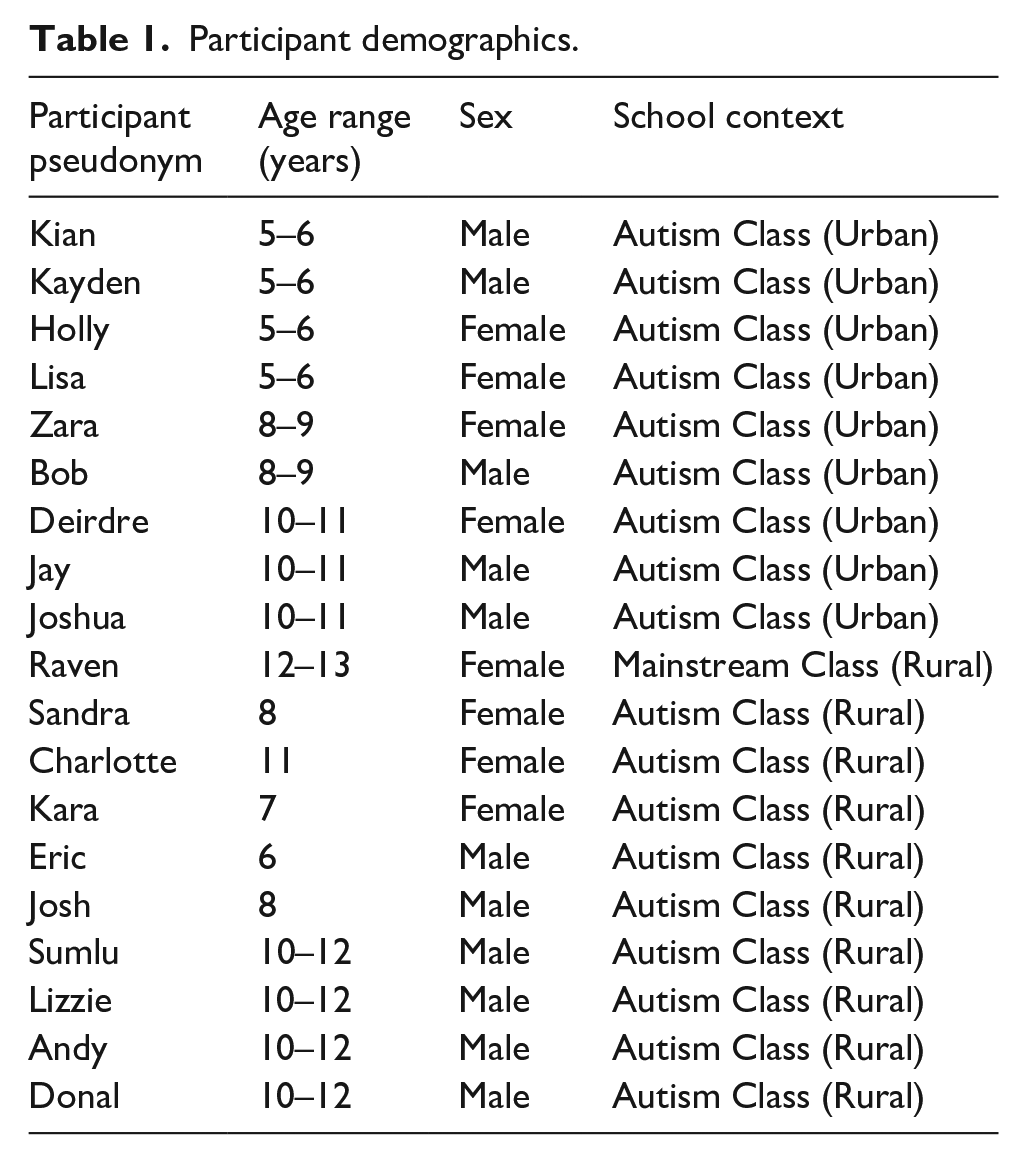
A sample of 20 participants (12 boys, 8 girls), unknown to the researchers, were recruited through their school contexts. Following parent consent and children’s assent, a total of 19 children (11 boys, 8 girls) between the ages of 5 and 12 years participated in the research. A summary of participant demographic information is presented in Table 1. Data were not collected on socioeconomic status or educational attainment levels. Furthermore, no formal data were gathered on participants’ language and cognitive levels or co-occurring conditions. The majority of participants were white-Irish with some children of African and Asian heritage. The only criterion for participation was that the child had received a formal diagnosis of autism. No other eligibility criteria were used in the selection of participants for this research. This is especially important given that children with co-occurring needs and younger children are often overlooked in participatory research (Lundy, 2007).
Participant demographics.
Data collection
A series of 62 qualitative semi-structured interviews were conducted by the first author, an experienced primary school teacher, between March and June 2023. Each learner engaged in a minimum of three consultation sessions and sessions were recorded for accuracy with parent consent and children’s assent. The length of interviews varied from a minimum of 5 min to a maximum of 1 h with an average duration of 25 min.
The interview questions followed a semi-structured format (see Supplemental material 1), and a toolkit of multiple creative and participatory-based methods were used to elicit children’s perspectives on play, for example, teddies and puppets, draw and tell approaches, book making, walking tours, adapted pots and beans exercise, sort and rank activities and photo elicitation. (See link https://osf.io/v2ua8/ for detailed protocols and procedures). The interview guide and associated methods were developed following a rigorous review of the literature surrounding children’s views on play (O’Keeffe & McNally, 2024b) and had been piloted and subsequently adapted as part of previous consultations with neurotypical and neurodivergent children by the authors (O’Keeffe & McNally, 2024b). Children also selected between individual or group interviews with autistic peers based on their preferences and prior consultations with their teachers (Lundy et al., 2011). Interviews were tailored to each participant’s strengths, interests and individual communication styles (Blaisdell et al., 2019) in order to facilitate all children to express their views in an accessible, comfortable and engaging manner and ensure opportunities for autonomy and agency regarding the selection of methods, as recommended in previous consultations with children (O’Keeffe & McNally, 2024a, 2024b). This was especially important given that we were consulting with young children and children with additional needs who are ‘the least likely to be given the opportunity to express their views about matters which are important to them’ (Lundy, 2007, p. 935). The researcher also adopted flexible questioning throughout in terms of reformulating and re-asking questions to ensure understanding as well as providing sufficient waiting time for participants.
Ethics
Ethical approval was granted from the Research Ethics Committee at the authors’ institution on 22nd September 2022. However, ethical considerations extended beyond procedural ethics to ethics of care (Heath et al., 2007) throughout our consultations with children. Informed assent was recorded before each interview using an interactive assent book (as used in previous research, e.g. O’Farrelly & Tatlow-Golden, 2022; Pyle & Danniels, 2016) to enable children to make an informed decision surrounding the purpose of this research and what their participation entailed (see link https://osf.io/v2ua8/). However, assent was ongoing and continually negotiated as part of a relational process (Arnott et al., 2020; Dockett et al., 2012). Researchers were vigilant to both verbal and non-verbal indicators of assent or dissent alongside signs of discomfort and engagement (Cocks, 2006; Gallagher et al., 2010).
Researchers also remained conscious of unequal power relations and attempted to offset this dynamic through developing trust and rapport with children (Spyrou, 2011) and consulting with children within a familiar, safe and inclusive space (Lundy, 2007) to help them to feel comfortable in expressing their views (Hennessy & Heary, 2005). Throughout each session, children were reminded of the voluntary nature of their participation in terms of their right to withdraw from the research, in addition to opting out of specific activities as well as providing opportunities to rehearse this process, for example, through the use of a stop/pass card as well as a physical speaking object that could be ‘passed’.
Data analysis
Interviews were transcribed verbatim and analysed using reflexive thematic analysis (Braun & Clarke, 2019) via NVivo software (Lumivero, 2023). Analysis was primarily inductive and centred on the construction of themes driven by the data themselves (Braun & Clarke, 2006) in response to the research question: how do autistic children conceptualise play? However, analysis was also deductive whereby existing research provided a further lens through which data were analysed and interpreted (Braun & Clare, 2022). Preliminary themes were actively generated following identification of semantic and latent codes, which were subsequently re-organised and finalised using thematic mapping. This process involved in-depth consultation and critical dialogue and reflection between both authors to enhance richness and meaning (Braun & Clarke, 2019; King et al., 2019).
Reflexivity
Reflexivity, that is, ‘the researchers’ insight into and articulation of their generative role in research’ (Braun & Clarke, 2022, p. 9), is fundamental to conducting rigorous reflexive thematic analysis. This involved acknowledging the researchers’ preformed assumptions and experiences surrounding play and autistic play and how this informed the interpretation and generation of findings (Braun & Clarke, 2022; Critical Appraisal Skills Programme [CASP], 2024). Indeed, given that the primary aim of this research project focused on ascertaining autistic children’s views, it is important to acknowledge the sensitivity required between authentically respecting and reflecting autistic children’s accounts of play while also recognising the active role of researchers in this process as non-autistic adult researchers and educators in shaping the interpretation of findings (Bradbury-Jones et al., 2018; Musgrave, 2019). This involved critically reflecting on processes used to elicit autistic children’s views and attending to the contextual nature of data and questions posed by the researcher (Spyrou, 2011) and the researcher’s role in shaping research (Nind, 2014). Other strategies included critical discussions between the researchers to add depth and richness of meaning (Braun & Clarke, 2019), taking time to distance ourselves from the process in order to offer insight and reflection upon revisiting the analysis (Braun & Clarke, 2021), maintaining a reflexivity journal (Braun & Clarke, 2023) as well as cross checking findings and initial themes against children’s accounts. This process was also enhanced through prolonged engagement with children as part of the process and use of repeated interviews (Berger, 2015).
Community involvement statement
Prior consultations with neurotypical and neurodivergent learners by the authors validated the worthwhile nature of this research and were used to inform the design of the interview guide and associated methods and materials (see link https://osf.io/v2ua8/ and Supplemental material 1). Informal conversations were also conducted with educators of the participants on how best to facilitate children’s expression of views and development of rapport (e.g. preferred modes of communication, strengths, interests, sensory needs, proposed desired environment and format) to ensure interview sessions were comfortable and engaging for all participants. Educators were also provided with personalised digital social narratives (see link https://osf.io/v2ua8/) outlining key information regarding the nature of the research, what participation entailed alongside researcher details to support children’s understanding of the research, as recommended by Tesfaye et al. (2019). Educators were asked to share this material with the parents of participants prior to the commencement of interviews.
This research was centred on the co-construction of knowledge with the autistic community in informing a strengths-based neuro-affirmative understanding of play from the perspectives of the players themselves. Participants were directly involved in the design of sessions, the format of which was child-led and adapted and amended based on individual preferences to express and record their views. This included providing multiple opportunities to contribute throughout the day in whatever means children desired. The researcher also provided opportunities for member-checking to summarise key points for children and in order to minimise the risk of ‘adulteration’ of the children’s viewpoints (Flynn, 2013). This involved reiterating the researcher’s interpretations of children’s accounts at multiple time points throughout individual interview sessions to confirm they were capturing children’s views as accurately and authentically as possible. Furthermore, during the final session, key dissemination points were elicited from children using flexible and accessible means (e.g. revisiting outputs from book making activities, examining photos of outputs created during the consultation process) to support the analysis and dissemination of knowledge surrounding children’s understanding of play and to ensure interpretations were consistent with children’s perceptions (Given & Saumure, 2008). Participation of all children was facilitated with careful planning around sensory breaks, use of a wide range of engaging materials and careful attention to children’s body language.
Results
As shown in Figure 1, three themes were generated based on children’s conceptualisations of play. Participant quotes that exemplify themes are reported in children’s own words and using pseudonyms for each participant. Some minor edits were made in relation to punctuation to facilitate reading. The interviewer also used the third person at times when referring to children in conversation with them (e.g. ‘what does Josh play’ when asking Josh about his preferred play). This was to avoid confusion surrounding first- and second-person terms (Smolik & Chroma, 2023) and was used more often with early communicators and children who were minimally speaking.
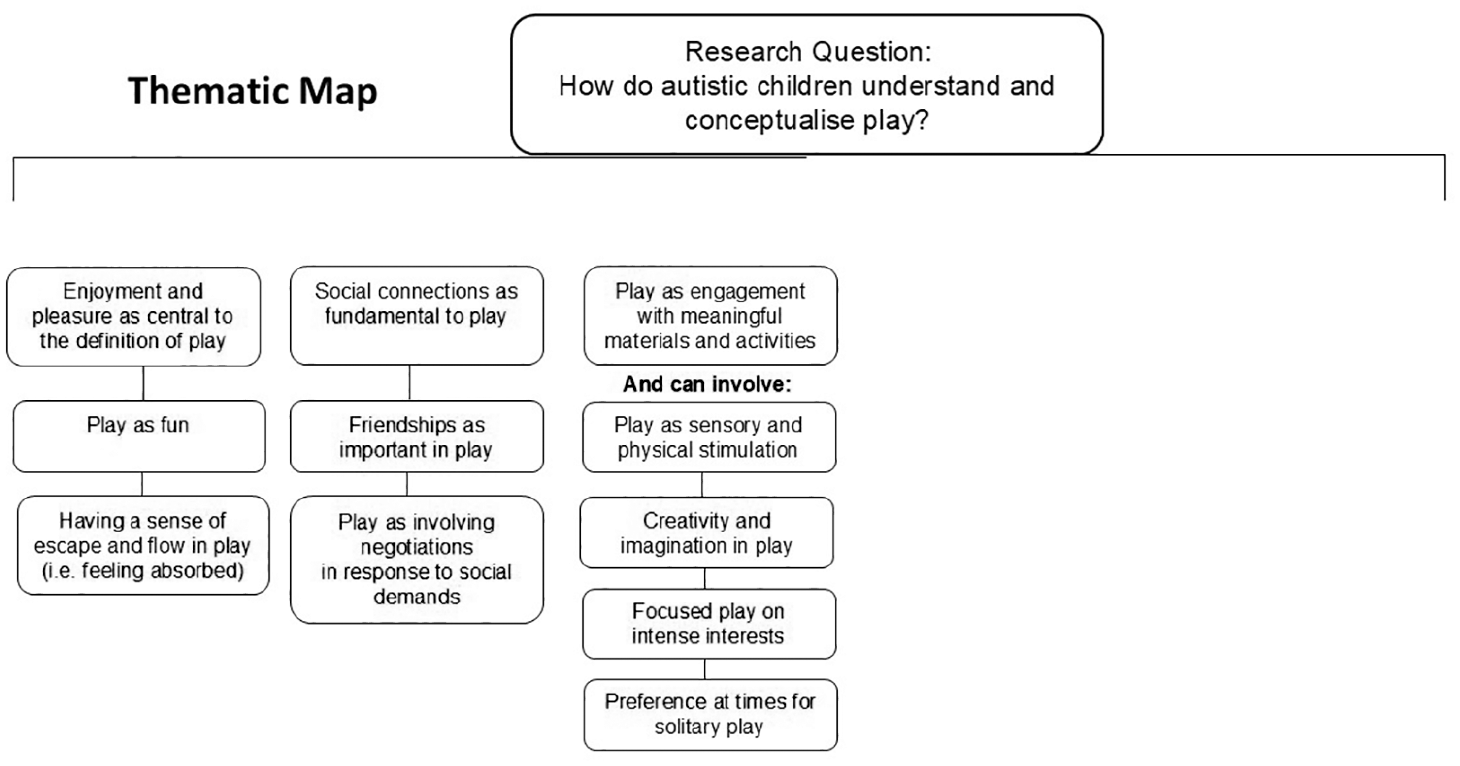
Thematic map of autistic children’s conceptualisations of play.
Theme 1: enjoyment and pleasure as central to the definition of play
Throughout their descriptions of play, children highlighted associated positive affect with Joshua (10–11 years) reporting that ‘it makes me have like a nice feeling’. Here, children described the overwhelming sense of enjoyment and pleasure in play where ‘it just makes people happy that’s all’ (Kayden, 5–6 years), as reiterated by Bob (8–9 years) who described that ‘people like playing cause it makes them happy’.
Subtheme 1.1. play as fun
Children consistently emphasised the overriding sense of fun in play where ‘what matters is you’re having fun’ (Kara, 7 years) and ‘it has to be fun (. . .) or else you won’t enjoy it’ (Donal, 10–12 years). Indeed, fun was often used by children to justify why certain activities were play, with Zara (8–9 years) describing ‘it’s fun when I [pause] play Minecraft (. . .) like building my house’, which was further emphasised by Charlotte (11 years):
Something else is [pause] the go kart
The go kart cool [pause] where do you play that?
At home
At home right so you like playing go kart at home.
Yeah
What makes the go kart play?
What? Em [pause] it’s fun
Subtheme 1.2. having a sense of escape and flow in play (i.e. feeling absorbed)
Some children referenced how play ‘might relieve stress’ (Joshua, 10–11 years) and associated feelings of ‘calm’ (Zara, 8–9 years) and ‘relax[ation]’ (Charlotte, 11 years) during play experiences. Indeed, several children reported a sense of ‘flow’ or feeling absorbed in play with Jay (10–11 years) describing their immersion in virtual reality play experiences where ‘I feel like it’s connected to me, like it’s making my heart run’. Sumlu (10–12 years) also recalled similar experiences describing:
because I like fiddling with things [clicks pen] which are fun (. . .) because it keeps me distracted even though there have been times we’re supposed to do work and I would do that for half an hour (. . .) pick up my pencil and I just twist it like that.
Theme 2: social connections as fundamental to play
Children emphasised social connections in play describing ‘all of us playing together’ (Charlotte, 11 years) and ‘everything is better with lots of people’ (Kara, 7 years), while also describing enjoying opportunities for solitary play with regards to meaningful materials and activities (see theme 3).
Children referenced seeking social connections with multiple play partners including adults (e.g. parents, grandparents, educators) where ‘I play with my Dad (. . .) it’s just fun’ (Donal, 10–12 years) while others such as Lisa (5–6 years) sought more adult involvement in play: ‘Mommy and Daddy do work and not play with me’. However, Sumlu (10–12 years) described the decreasing role of adults as co-players as they matured; ‘you don’t really play with grownups as you get older because you play with people around your age more than people who are like 30 years older than you’. Children also described social connections in play with siblings, cousins and pets.
Subtheme 2.1. friendships as important in play
Children emphasised connections with their friends in play and expressed ‘want[ing] to play with your friends or to make friends’ (Kayden, 5–6 years). Here, children referenced the importance of specific contexts in facilitating interactions with peers including the outdoors and ‘the yard’ (Josh, 8 years) where many children described playing structured games like ‘playing tag and cops and robbers’ (Kara, 7 years) as well as sports where ‘I adore football’ (Andy, 10–12 years) alongside interactions in the ‘digital world’ (Jay, 10–11 years). Indeed, Jay (10–11 years) emphasised the importance of social connections with friends in the context of the COVID-19 pandemic.
I like playing cops and robbers, cross the river. We actually used to do that, right Joshua? Until like we moved yard.
Okay
So we have a bigger yard to do it.
Okay, so you’ve more space. Do you like playing those games on yard?
And all of our friends, we were separated from them.
Oh, dear, why?
I don’t know.
During covid.
During covid?
Yes.
Awh [pause]
The next minute we were allowed to go to the yard. Although they’re just waiting for me and, me and Joshua-they were so happy to see us.
Awh [pause]
I will never forget that day.
Subtheme 2.2. play as involving negotiations in response to social demands
Some older children also talked about the need for negotiation and ‘compromise’ (Joshua, 10–11 years) in play with social partners: ‘Like when I’m playing stuff with friends and then they play, they want to play something which I don’t like but then they play stuff I like so it’s fun’ (Sumlu, 10–12 years) and how ‘we all kind of have a part in it [play]’ (Joshua, 10–11 years). However, success in negotiating desired play within social contexts may not always occur where ‘some people might have less success like me and Donal and Lizzie we’re not popular’ (Sumlu, 10–12 years).
Children also spoke of negotiations and constraints in play in response to social demands or rules, oftentimes which were imposed by the players, in relation to ‘play[ing] nicely (. . .) let’s say if we’re playing and someone was being rough then it, you might fall over and hurt yourself’ (Joshua, 10–11 years) and ‘sharing [with] your friends’ (Lisa, 5–6 years) and ‘rule[s] for no being mean’ (Zara, 8–9 years). Others highlighted rules surrounding inclusion where Joshua (10–11 years) described:
Ehm [pause] trying to include everybody.
Okay, you think that’s important?
Yeah, because let’s say if someone asks you to play and you say, no, they could get upset.
Okay.
And it’s not fair on that person because they might have nobody to play with.
Okay, so it’s important to feel included.
Yeah.
Here, some children described associated challenges surrounding inclusion in play and their desire for social connections in play where ‘sometimes on yard nobody plays with me’ (Kara, 7 years). Other children referenced associated frustrations surrounding players not following the rules where ‘some people who join my party [online] and they just kick me (. . .) until you get so angry that you don’t accept them anymore’ (Kayden, 5–6 years).
Theme 3: play as engagement with meaningful materials and activities
This theme captures children’s experiences of engaging with meaningful materials and activities whereby they described play as involving sensory and physical stimulation, creativity and imagination, focused play on intense interests and preferences at times for solitary play.
Subtheme 3.1. play as sensory and physical stimulation
Children described the importance of sensory stimulation in play where ‘I like it [water] shhhh [makes water sound] (. . .) cause I can touch it and it goes whooooo’ (Bob, 8–9 years). Sumlu (10–12 years) described sensory movements in play in relation to ‘this is also play [clicks pen] (. . .) it’s satisfying to click’. Others described connections with nature such as ‘saving woodlice (. . .) I’m a big fan’ (Jay, 10–11 years), ‘looking at beetles’ (Sumlu, 10–12 years) or ‘smelling [flowers]’ (Deirdre, 10–11 years). Many children also described physical stimulation in play such as ‘bouncing [on the trampoline]’ (Deirdre, 10–11 years), or ‘like I’m really good at doing stunts (. . .) I can throw myself off a wall like you know the yellow wall in the OT room (. . .) I can throw myself off that’ (Joshua, 10–11 years). However, Kara (7 years) emphasised the recuperative nature of play describing ‘I like sitting on my bed (. . .) and snuggling with teddies (. . .) I feel calm’.
Subtheme 3.2. creativity and imagination in play
Children emphasised elements of creativity and ‘get[ting] to use your imagination’ (Joshua, 10–11 years) in play, ‘pretending to be different characters’ (Bob, 8–9 years), as recounted by Kara (7 years):
I like to play [pause] dragons.
dragons.
Like I was talking about earlier.
Okay [pause] how do you play dragons in school?
So [pause] someone pretends to be a dragon and the other person is the owner and and one person.
okay the other person is the owner.
is the person that [pause] the dragon doesn’t like and then they try to jump on them (laughs).
Oh no!
and the owner tries to pull them away from them [laughs].
Oh no! [laughs] the dragon’s trying to get them!
Yeah.
Others described opportunities for ‘animation (. . .) I’ve a YouTube channel’ (Donal, 10–12 years) and Raven (12–13 years) highlighted that ‘we’ve made all sorts of movies over lockdown (. . .) em I have great fun like (. . .) listening to the different sound effects (. . .) and working out the order that we put the videos in’.
Subtheme 3.3. focused play on intense interests
Across the consultation sessions, many children consistently described play as engagement in focused play based on personalised intense interests. Here, many children attributed a high degree of meaning to specific materials and contexts including cartoons or movies such as ‘Rainbow Dash (. . .) in My Little Pony (. . .) it makes me super happy’ (Zara, 8–9 years). Others consistently ascribed significant meaning to materials with Sumlu (10–12 years) describing that ‘I like looking at bacteria (. . .) because I like science’. For Josh (8 years) this involved numbers:
Josh draw play for [interviewer name] [pause].
Yes
Play [pause], what does Josh play [pause].
This [pause] numbers.
Josh likes playing numbers [pause].
Yeah.
Josh likes playing numbers [pause].
10 [pause as draws], 20 [pause as draws], 30 [pause as draws], 40 [pause as draws], 50 [pause as draws], 60 [pause as draws], 70 [pause as draws], 80 [pause as draws], 90 [pause as draws], 100 [pause as draws].
Josh likes numbers.
Yes ‘eeeeeeeeeeee’
Subtheme 3.4. preference at times for solitary play
Despite seeking social connections in play, some children described pursuing solitary play in order to have opportunities to meaningfully engage with their favourite activities or materials in whatever way they desired. For example, Bob (8–9 years) described ‘I play Lego with myself’ and Zara (8–9 years) recalled:
Zara, who do you play baby dolls with [pause]?
my myself
yourself? [pause]. Zara likes playing by herself? [pause]
Yeah without [pause] people saying anything
without people saying anything
Yeah
Zara doesn’t like it
No [long pause as draws]
Zara likes playing by herself
Yeah, without getting bothered
without getting bothered okay Zara [pause]
Bothering is not fun
In this sense, solitary play appeared to serve a recuperative function for some children whereby ‘sometimes I want to play alone (. . .) to calm down’ (Kara, 7 years) as well as associated agency and freedom where ‘it’s a lot of fun when you’re playing by yourself (. . .) because you get to control the whole story’ (Donal, 10–12 years).
In sum, children consistently described play as involving fun, friendships and engagement with meaningful materials and activities. It was also clear that children deeply valued a sense of freedom and choice in play, and that children’s autonomy and agency in play was important to all themes, for example, ‘I can play whatever I want (. . .) or else play just isn’t play’ (Kara, 7 years) where ‘you can do whatever you want’ (Sumlu, 10–11 years). While we did not report autonomy and agency as a separate theme, it is important to note its centrality to children’s reports of play in this study as exemplified in this excerpt from an interview with Kara (7 years):
And what are you doing in the pictures [pause] What are you playing?
Dancing
You’re dancing? Do you like dancing Kara?
Yeah
Yeah, what makes dancing play?
It’s really fun
Really fun
And there’s nothing you can do wrong
Discussion
Overall, throughout the consultations, children emphasised the value and importance of play as a fundamental childhood experience. Indeed, many children contextualised their understanding of play using personal experiences and memories. In conceptualising play, children referenced a diverse range of dimensions including both observable aspects (e.g. engagement with play partners alongside a range of meaningful materials and activities) and inward features of play such as feeling enjoyment, as well as feelings of autonomy and agency. Children’s emphasis on the inward qualities of play is noteworthy given that our current understanding of autistic play is largely based on outward features of certain categories of play (i.e. solitary play and imaginative play) (Conn, 2015; Kasari et al., 2013). This is an important finding that reinforces earlier calls to reassess how we view autistic play: ‘For a child to be described as playing, the dispositional features of play should apply regardless of the type of activity he or she is engaged in’ (Luckett et al., 2007, p. 369).
In developing our understanding of play through direct consultations with the players themselves, this research challenges long-standing deficit-oriented assumptions that have persisted throughout the literature for decades. First, many children referenced the creative and imaginative nature of play. This is in direct contrast to reports of ‘deficits’ in symbolic or imaginative play (Hobson et al., 2009; Wing et al., 1977) but in keeping with the reports of autistic adults and adolescents (Conn, 2015; Fahy et al., 2021; Pavlopoulou et al., 2022). Second, many children described seeking social connections in play which again contrasts with dominant views in the literature (Restall & Magill-Evans, 1993). Although several children highlighted a desire for solitary play, this often emerged around the importance of meaningful opportunities to engage with preferred toys or in particular activities. Importantly, some children emphasised the recuperative function of ‘alone time’ in play, as identified by Pritchard-Rowe et al. (2024) alongside associated feelings of freedom. Furthermore, it is important to recognise the reported challenges surrounding playing with others expressed by some autistic children and children’s emphasis on the importance of inclusion in play which aligns with calls to extend our focus on autistic play beyond the autistic players to all play partners within the play experience in creating inclusive and respectful play environments (Wolfberg et al., 2015; Wolfberg & Woods, 2023), in line with a neurodiversity approach. Indeed, in emphasising the need for social connections in play, one participant identified the lasting impact of their segregation from mainstream peers as part of COVID-19 restrictive measures within the school environment. This finding raises important concerns surrounding the long-standing contention and international debate regarding the segregation of learners from their mainstream peers within specialist provisions (Leijen et al., 2021; Tiernan, 2022) and how educators can facilitate opportunities for meaningful peer interactions within the school environment. Third, children emphasised an intrinsic drive to play and enduring sense of fun and pleasure which again challenges accounts where ‘the autistic child is rarely depicted as playful’ (Eisele & Howard, 2012, p. 139).
Our findings also align with findings emerging from the autistic community based on adult retrospective accounts of play and the idea of a unique autistic play culture previously dismissed in favour of neurotypical ‘norms’ (Jordan, 2003; Wolfberg & Woods, 2023). For example, many children referenced uniquely personalised and sensory stimulating experiences (e.g. cartoons and digital materials, clicking pens, numbers, woodlice) in play similar to reports by autistic adults (Conn, 2015; Pritchard-Rowe et al., 2024), with some describing experiences of ‘flow’ and absorption in play (Csikszentmihalyi, 1990). This is especially important given links between play and children’s wellbeing, as noted by Pritchard-Rowe et al. (2024) and what is often a key aim of educators, namely to facilitate play in educational contexts to support children’s development and wellbeing. This finding reaffirms calls to acknowledge autistic children’s diverse and, at times, non-conventional play (Jordan, 2003) as opposed to pathologising or minimising autistic play in favour of neurotypical norms and assumptions.
In summary, these findings offer new insight into autistic children’s conceptualisations of play and reinforce the importance of ascertaining a strengths-based, neuro-affirmative understanding of play from the perspective of the players themselves. Indeed, Luckett and colleagues (2007) have cautioned that ‘some practitioners and researchers have lost sight of what play really is’ (p. 366) for autistic children.
Implications for practice
Our findings support the development of play-based curricula, pedagogies and policies by outlining key features of play that are necessary for creating and facilitating playful conditions and environments that truly respect authentic play experiences and children’s right to play in meaningful and desirable ways (Gibson & McNally, 2024). This is important amid criticism that educators ‘have often failed to recognise the intrinsic value of play when planning programmes (. . .) and neglect quality play’ for autistic children (Theodorou & Nind, 2010, p. 104). How autistic children conceptualised play in this study also has important implications for the role of educators in play. Of note, children highlighted the value of adults as co-players in play thus reaffirming calls for practitioners to get involved in children’s play (Danniels & Pyle, 2023). However, due consideration needs to be given to children’s level of autonomy and agency, as expressed by children in this study. This is critical in education as there are reports of uncertainty among practitioners surrounding their role in play (Danniels & Pyle, 2023; O’Keeffe & McNally, 2022). We need to provide empirical evidence that will help practitioners to support autistic children and ‘frame the play in ways that are meaningful to them and reflect their subjective experience’ (Wolfberg & Woods, 2023, p. 1202).
Our findings further support concerns expressed by many researchers that the authenticity of play across play-based interventions for autistic children is problematic in particular with regards to capturing inward and dispositional features of autistic play (Jordan, 2003; Kossyvaki & Papoudi, 2016; Luckett et al., 2007; Wolfberg & Woods, 2023) that truly reflect meaningful play for children (Papoudi & Kossyvaki, 2018). We need a clear definition of autistic play in order to develop more robust theories of autistic play based on the players’ perspectives. In doing so, we can systematically investigate the role of play in autistic children’s learning and development.
Finally, given the key role of play in Autism diagnostic criteria (APA, 2013), this research supports calls by Pritchard-Rowe et al. (2024) to move beyond deficit focused standards of play across diagnostic assessments and instead acknowledge strengths and differences in play in order to capture authentic play experiences and affective dimensions that are so often overlooked here.
Limitations and future directions
This research offers important insight into understanding autistic play, which is integral in supporting children’s quality of life (Howard, 2019) and in ensuring future research, policy and practice align with a neuro-affirmative understanding of play from the perspectives of the players themselves. However, there are some limitations to this study. First, findings reflect the views of a predominately white autistic sample of children across two educational contexts within the Republic of Ireland and who primarily communicate using speech and, therefore, may not represent the views of all autistic children. Furthermore, this research did not collect formal data on participants’ socioeconomic status, educational attainment as well as data pertaining to participants’ language and cognitive levels or co-occurring conditions. Future research is needed with a more diverse sample of children and, in particular, underrepresented groups including those with co-occurring needs and intellectual disabilities who remain underrepresented in the literature. Although the sample of participants involved relatively equal numbers of boys and girls, future research would benefit from investigating gender differences in autistic children’s understanding of play in particular given reports of masking in play among autistic girls (Pritchard-Rowe et al., 2024). Despite children playing an active role in the design of interviews, findings are reported and interpreted by the authors based on reflexive thematic analysis and thus were based on adult-mediated and non-autistic interpretations of autistic children’s views of play. Future research would benefit from direct involvement from autistic children and researchers at the analysis and reporting stages. There is a dearth of literature on autistic children’s play, which elucidates its role in their learning and development, as well as research that focuses on social connections in play for autistic children. Given its significance in our findings, more research is needed on the mechanisms and contexts that can support social play, while taking into account autistic children’s preferences and experiences around social connections in play. Finally, this research was conducted in educational contexts that may have influenced children’s perspectives on play although children did describe their views on play across a diverse range of environments such as the sensory room, classroom, playground and home.
Conclusion
This research reinforces the importance of consulting with the players themselves to gain an authentic understanding of autistic play and move beyond deficit-focused, non-autistic framed assumptions of autistic play that have persisted throughout the literature for decades. Children’s conceptualisations of play extended beyond observable behaviours and emphasised the inward qualities of play that have traditionally been overlooked within research and practice.
Our findings support calls for further consultations with the players themselves in understanding autistic play and in informing future programmes of research, policy and practice. Play is an important part of children’s lives, is critical for wellbeing and development and a fundamental right (UNCRC, 1989). This study extends our understanding of autistic play from the perspective of the players themselves and highlights key characteristics that must be recognised by educators and carers when facilitating autistic children’s rights to play.
Supplemental Material
sj-docx-1-aut-10.1177_13623613251315985 – Supplemental material for ‘Like it’s making my heart run’: A strengths-based understanding of the play of autistic children
Supplemental material, sj-docx-1-aut-10.1177_13623613251315985 for ‘Like it’s making my heart run’: A strengths-based understanding of the play of autistic children by Christina O’Keeffe and Sinead McNally in Autism
Footnotes
Acknowledgements
The authors wish to thank the autistic children who participated in this research, and the teachers and school principals who facilitated the consultations.
Author Contributions
Christina O’Keeffe: Conceptualisation; Data curation; Formal analysis; Investigation; Methodology; Project administration; Resources; Software; Validation; Visualisation; Writing – original draft; Writing – review & editing.
Sinead McNally: Conceptualisation; Methodology; Supervision; Validation; Visualisation; Writing – original draft; Writing – review & editing.
Declaration of conflicting interests
The author(s) declared no potential conflicts of interest with respect to the research, authorship, and/or publication of this article.
Funding
The authors disclosed receipt of the following financial support for the research, authorship, and/or publication of this article: The authors wish to thank the DCU Educational Trust who generously funded the data collection for this study through a doctoral scholarship to the first author.

Supplemental material
Supplemental material for this article is available online.
References
Supplementary Material
Please find the following supplemental material available below.
For Open Access articles published under a Creative Commons License, all supplemental material carries the same license as the article it is associated with.
For non-Open Access articles published, all supplemental material carries a non-exclusive license, and permission requests for re-use of supplemental material or any part of supplemental material shall be sent directly to the copyright owner as specified in the copyright notice associated with the article.
