



Abstract
This study investigates the challenges and pedagogical strategies in teaching Maltese as a second language (ML2) to international adults in Malta’s multilingual context. With both Maltese and English as official languages, the rise in migrant populations since 2014 has created a need for effective ML2 instruction, leading to the development of new teaching approaches and teacher training initiatives starting in 2018. Through qualitative research involving 36 experienced Maltese language teachers, the study examines the use of plurilingual approaches, the role of heritage languages in language transfer, and the challenges posed by the lack of digital resources, such as language-specific apps, films, and immersive technologies like virtual reality. Findings reveal the potential of leveraging learners’ first languages to aid comprehension, alongside the importance of inclusive strategies in multilingual classrooms. The study also identifies the urgent need for investment in digital tools and platforms to support learner engagement and autonomy. It concludes by emphasising the value of pedagogical innovation, enhanced digital access, and the strategic use of learners’ linguistic repertoires to strengthen outcomes in ML2 acquisition and integration.
Keywords
I Introduction
The Maltese language, a Semitic language with a rich linguistic history, represents a cornerstone of Malta’s cultural identity. Despite its official status alongside English, Maltese has encountered challenges in transmission and preservation, especially among international populations shaped by globalization and migration (Vella, 2012). Although Malta is officially bilingual, English dominates digital, educational, and professional spaces, placing Maltese at a disadvantage in terms of institutional investment and pedagogical resources. This imbalance is particularly visible in the lack of digital infrastructure and support for Maltese, which is rarely prioritised in policy, funding, or innovation agendas (Borg, 1988; Zammit, 2022b).
In response to increased migration since 2014, teaching Maltese as a second language (L2) to international adult learners has become a pressing educational priority (Zammit, 2021). Unlike Maltese as a first language, which benefits from long-established curricula, L2 instruction required new pedagogical models, teacher training, and policy reform (Zammit, 2024). However, little research has examined the specific challenges and strategies involved in teaching Maltese as an L2, making this study a timely and necessary contribution to the field. The distinct sociolinguistic and institutional conditions in Malta, particularly the dominance of English, have intensified these challenges, further limiting the accessibility and perceived value of Maltese for new learners.
A key challenge is the linguistic diversity of the learner population. Adult learners often come from multilingual or heritage-language backgrounds, including Arabic, Filipino, Somali, and Slavic languages. While this diversity can support language acquisition through positive transfer and intercomprehension, it also requires highly adaptive teaching strategies. Several studies (e.g., García & Wei, 2014; Vallejo & Dooly, 2019) suggest that plurilingual approaches can support cross-linguistic influence and foster inclusive learning environments in multilingual classrooms. Accordingly, teachers may benefit from adopting such approaches, particularly in contexts where linguistic diversity is pronounced. The need for such pedagogical flexibility is especially acute given that Maltese combines Semitic roots with Romance and English influences, creating a hybrid linguistic system that can be both an asset and a barrier depending on learners’ backgrounds.
Another major obstacle is the scarcity of digital and multimedia learning resources tailored to Maltese. Unlike widely spoken languages that benefit from immersive tools such as mobile apps, language-learning platforms, and augmented reality environments, Maltese remains severely under-represented in the digital space (Jones & Hafner, 2021; Tate & Warschauer, 2017). This digital scarcity is further compounded by Malta’s sociopolitical landscape, in which English enjoys preferential treatment in education, media, and business. As a result, incentives to develop Maltese-language tools remain low, and learners are left without access to the kinds of interactive resources that support engagement and self-directed learning in other language contexts.
While other minority languages such as Basque, Welsh, or Gaelic have benefited from institutional revitalisation efforts and targeted digital development (Duibhir, 2018; King, 2018), the case of Maltese is distinct. In Malta, English functions not only as a global lingua franca but also as a local language of prestige, governance, and opportunity. This dual status creates a sociolinguistic hierarchy in which Maltese is often perceived as informal, parochial, or less useful, especially among adult migrants prioritising integration and employment. These dynamics result in structural barriers that are often more intense than in other minoritized language contexts.
Different factors, such as socioeconomic status or home learning environment, undoubtedly influence L2 acquisition. However, this study focuses on digital scarcity and linguistic diversity as two of the most critical and underexplored dimensions in the context of Maltese L2 instruction. Prior research on minority language teaching has tended to emphasise either identity-based revitalisation (Crystal, 2000; Hinton et al., 2018) or policy frameworks, with limited focus on the intersection of digital infrastructure and adult learner diversity. This study addresses that gap by examining how these factors interact within Malta’s unique bilingual and sociotechnical environment to influence learner outcomes and pedagogical possibilities.
1 Study aims
This study sets out to examine the teaching of Maltese to international adult learners, with particular emphasis on the strategies and resources utilised in multilingual classroom settings. It is approached from the perspective of experienced Maltese language teachers, whose insights inform all stages of the analysis. The research explores several key areas, starting with an analysis of the pedagogical approaches employed by Maltese language educators in teaching Maltese as a second language (ML2). The study also investigates how learners’ heritage languages influence intercomprehension and facilitate positive transfer, enhancing their language acquisition process.
Additionally, the study addresses the challenges posed by resource limitations, especially the lack of digital and multimedia tools, and how these constraints affect learners’ progress. It further explores the potential of innovative strategies, such as a structured plurilingual approach that incorporates elements of translanguaging, to improve learning outcomes and celebrate linguistic diversity within the classroom.
Through this investigation, the study aims to provide practical insights to guide curriculum design, enhance teacher training, and foster resource development for teaching ML2. Beyond its practical implications, it also contributes to the broader discussion on multilingual education and supports efforts to preserve and promote minority languages like Maltese.
2 Research questions
To achieve its aims, this study was guided by the following research questions:
Research question 1: What pedagogical strategies are currently employed by ML2 educators in multilingual classrooms?
Research question 2: According to teachers, how do learners’ heritage languages influence the acquisition of Maltese, and how can these languages be leveraged to promote intercomprehension and positive transfer?
Research question 3: What are the main challenges that Maltese language teachers face when teaching international adult students, particularly regarding digital resource limitations and classroom diversity?
Through these questions, the study seeks to uncover the complexities of teaching Maltese in a globalised and linguistically diverse educational context. It emphasises the importance of addressing resource gaps, promoting innovative instructional strategies, and integrating learners’ linguistic backgrounds into the teaching process.
II Literature review
1 Multilingualism and second language acquisition
Theoretical frameworks such as translanguaging (García & Wei, 2014), scaffolding, and sociocultural theory (Vygotsky, 1978) provide critical insights into Maltese as a second language (ML2) instruction. In the Maltese context, these frameworks require targeted application. For instance, translanguaging is especially relevant as learners often navigate between Maltese, English, and their heritage languages in academic, social, and professional contexts (Camilleri Grima, 2013). This aligns with studies highlighting how translanguaging enables learners to draw on their full linguistic repertoires, thereby facilitating comprehension, identity expression, and engagement (García & Wei, 2014).
Similarly, scaffolding approaches must be adapted to account for the digital resource gaps that disproportionately affect ML2 learners (Zammit, 2022a). Limited access to digital tools in ML2 education hampers differentiated instruction, making scaffolded learning more challenging. This is particularly evident in studies on digital inclusion and multilingual learning (Zammit, 2025), which emphasise that without adequate digital support, ML2 learners struggle with language immersion and content comprehension. Research by Zammit (2022b) suggests that interactive digital tools can bridge these gaps, yet Maltese ML2 classrooms often lack the necessary infrastructure to implement such strategies effectively. As Figure 1 illustrates, the limited availability of digital tools for Maltese hampers the effectiveness of language learning compared to more widely spoken global languages.
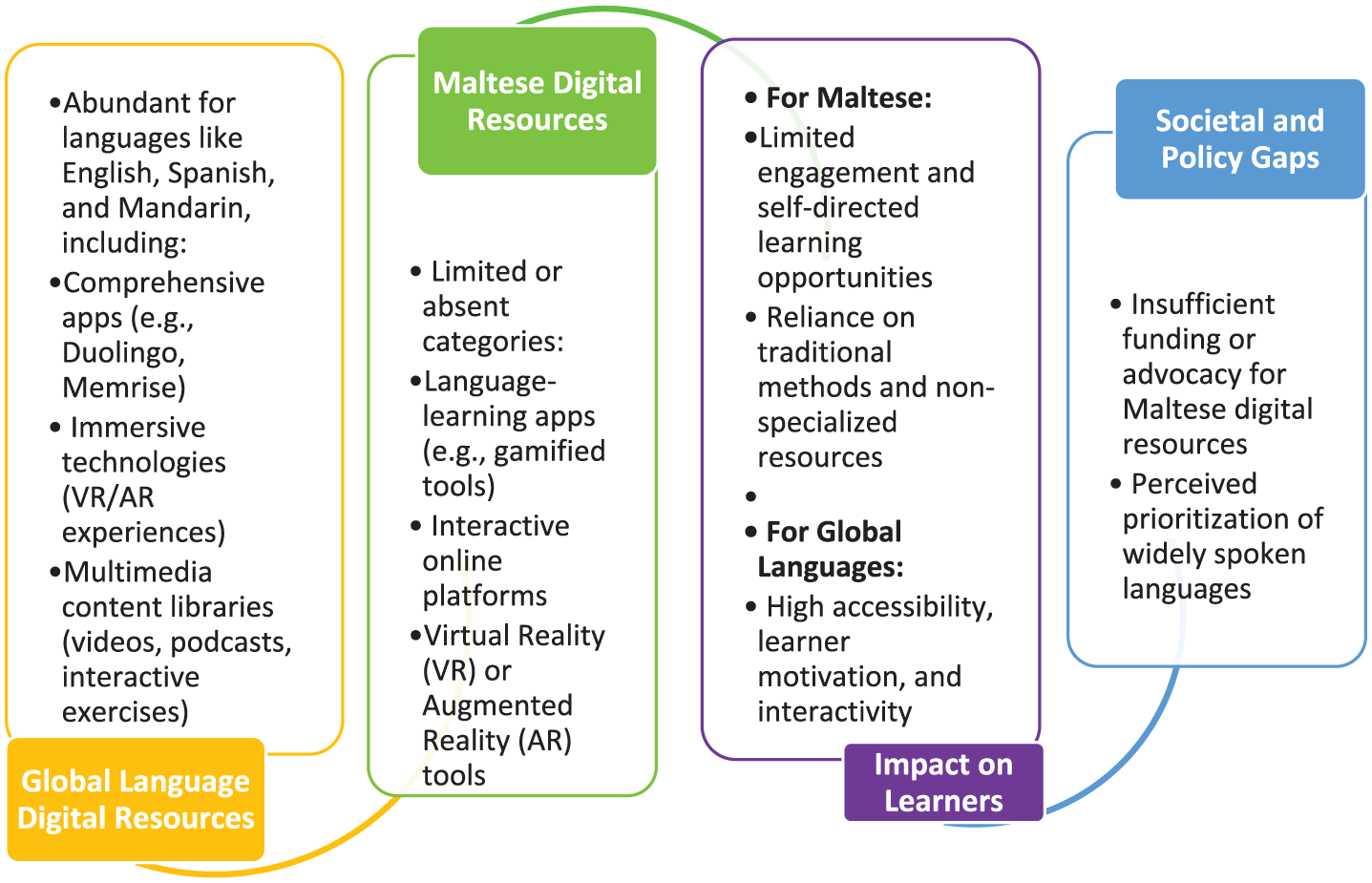
Digital divide in Maltese language learning.
Sociocultural theory emphasises the importance of interaction and mediated learning in language development. In ML2 instruction, particularly in Malta, sociocultural constraints such as English dominance in digital and professional spheres shape how learners engage with the Maltese language (Borg, 1988). This challenge is compounded by the limited availability of culturally relevant ML2 learning materials, as noted in recent studies on digital multilingual education (Zammit, 2025). These constraints indicate that students require culturally and contextually responsive materials and pedagogies to ensure equitable and meaningful language learning.
Creating a supportive and inclusive learning environment is another essential pedagogical strategy. Swain and Lapkin (2011) emphasise that emotionally supportive environments facilitate learners' engagement, especially in immersion contexts. For Maltese instruction, fostering a respectful and culturally sensitive classroom climate can enhance learners’ motivation and willingness to use Maltese. Integrating socio-emotional learning (SEL) frameworks further supports this goal (Huang & Lajoie, 2023).
Additionally, the Plurilingual and Intercultural Education framework promoted by the European Commission encourages the integration of learners’ heritage languages into the learning process. This approach supports cognitive connections and enhances language acquisition by validating students’ linguistic identities (Vallejo & Dooly, 2019). In Maltese ML2 classrooms, leveraging learners’ existing language skills can promote both linguistic and cognitive development. Bilingual education models in Spain and Scandinavia have shown that using related languages improves comprehension and academic outcomes (Pérez Cañado, 2020).
Moreover, a growing body of research underscores the role of cultural integration in fostering learner motivation, emotional engagement, and cognitive flexibility. Heritage-based instruction that incorporates elements such as folklore, music, storytelling, and traditions has been shown to strengthen both identity and comprehension in minority language contexts (Ortega, 2020; Trifonas & Aravossitas, 2018). For example, Welsh and Irish teaching practices demonstrate how cultural content not only promotes heritage pride but also enriches language acquisition outcomes (Baker, 2011). In the case of Maltese, drawing on culturally embedded materials can deepen learners’ emotional connection to the language and reinforce its relevance within diverse classroom contexts. Case studies from the Basque Country and Singapore further illustrate how integrating local culture into bilingual education leads to more inclusive and effective pedagogy (Gartziarena & Villabona, 2022).
The strategies of translanguaging, scaffolding, sociocultural responsiveness, inclusive environments, digital innovation, and cultural integration form a cohesive pedagogical foundation for effective ML2 instruction. Figure 2 illustrates this unified approach, highlighting how these practices interact to support learner engagement, cognitive development, and linguistic inclusion in multilingual Maltese classrooms.
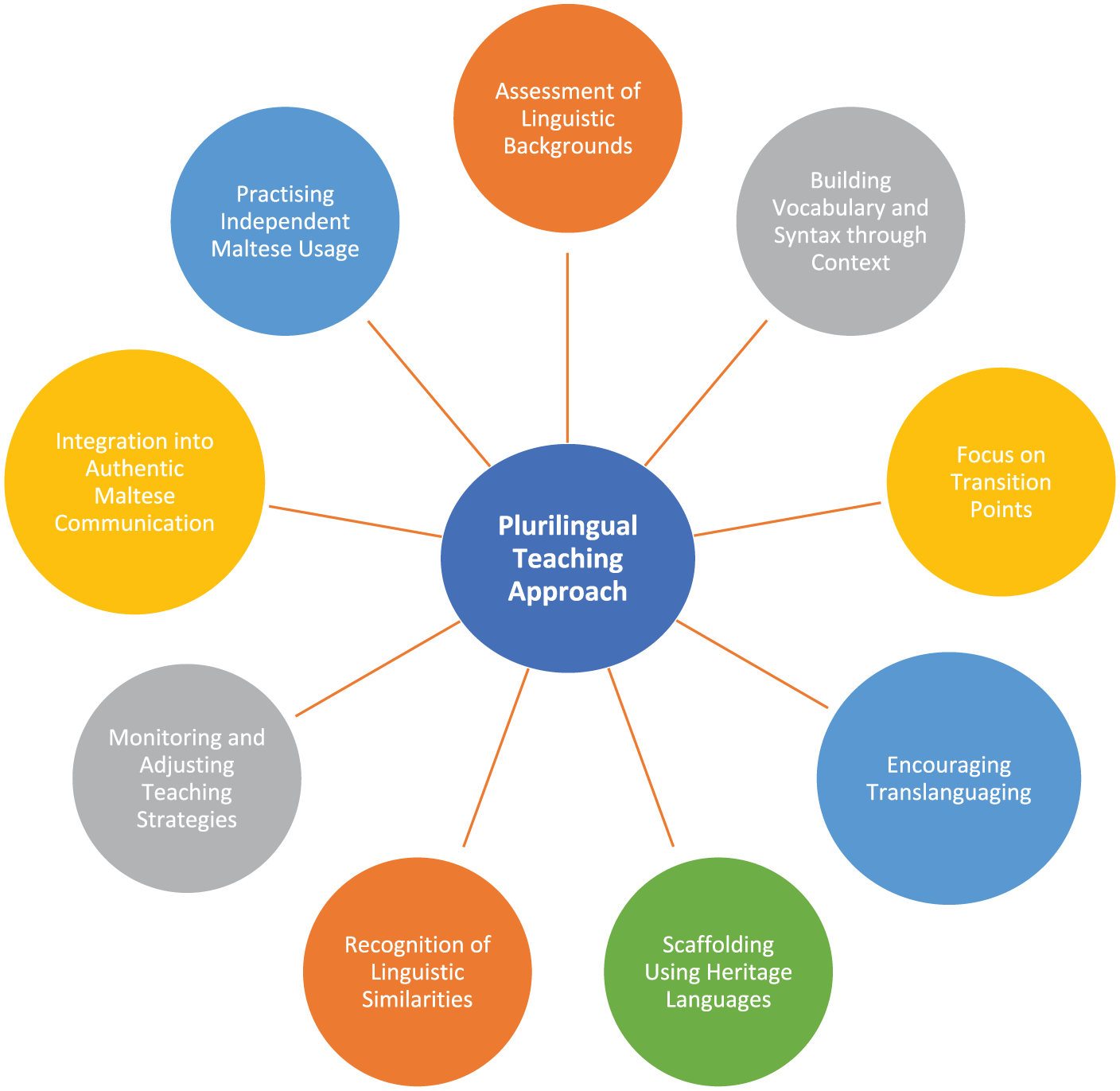
Integrated plurilingual pedagogical model for Maltese as a second language (ML2) instruction.
2 Challenges in teaching minority languages
ML2 learners in Malta face unique linguistic and pedagogical challenges due to the interaction of multiple languages in daily communication. Studies by Caruana (2007) and Borg and Grech (2014) emphasise that many ML2 learners struggle with linguistic insecurity, as Maltese is often perceived as a secondary language to English in educational and digital domains. This situation is further complicated by the sociopolitical dynamics of language status in Malta, where English dominance in digital and academic settings creates additional barriers to ML2 acquisition (Borg, 1988; Zammit, 2023).
Perceptions of minority languages as irrelevant or archaic further reduce learner motivation and societal support. For Irish, stigmatisation has hindered its visibility and uptake, necessitating advocacy for its cultural and intellectual value (Dragojevic et al., 2021). Similarly, Maltese struggles with societal perceptions of being a less significant language, compounded by the dominance of English in domains such as media, education, and business. This results in limited growth and status for Maltese and contributes to linguistic insecurity among learners.
Addressing these sociolinguistic attitudes is key to reversing marginalisation. As Caruana (2007) emphasised, public campaigns and supportive language policies are essential for elevating the cultural value of Maltese. Comparative research on Irish and Welsh reinforces this view, showing that public perception and institutional support play a crucial role in successful minority language acquisition (Baker, 2011; Dragojevic et al., 2021). Applying these insights to the Maltese context, a sociopolitical framework that values linguistic diversity is essential for long-term sustainability.
Global languages like English overshadow minority languages, reducing intergenerational transmission. For Maori, English dominance led to suppression, necessitating revitalisation programmes (King, 2018). Similarly, Welsh-medium education faces challenges from English’s prevalence in media and commerce (Baker, 2011). These global dynamics present parallel challenges for Maltese, as English continues to dominate educational and professional contexts.
3 Revitalisation strategies: Cultural and digital integration
Digital platforms, apps, and gamified tools increase accessibility and engagement for youth. For Maori, online resources and apps have enhanced visibility, while Irish initiatives use social media and gamified learning to boost interest (King, 2018; Lanvers, 2023). Grassroots initiatives, such as Maori language nests and Irish conversation groups, foster practical usage and intergenerational transmission. These community-driven efforts complement formal education. This model could also prove beneficial for Maltese, enhancing both intergenerational transmission and everyday use.
4 Refining the Maltese context
This subsection serves to contextualise general theories of multilingual education by anchoring them in the specific pedagogical and policy challenges of teaching Maltese as a second language. While earlier sections introduce the sociolinguistic background of Malta, this section refines the focus by examining how global concepts intersect with local realities in Maltese ML2 classrooms.
While the literature extensively discusses multilingual education in general, there is a need to refine its applicability to ML2 instruction by addressing the specific challenges Maltese learners face. Existing research (Caruana, 2007) underscores the distinction between broad multilingual education theories and the practical realities of ML2 acquisition in Malta, where linguistic policy, social integration, and educational access interact in complex ways. Moreover, studies by Borg and Grech (2014) and Zammit (2022b) emphasise that ML2 learners in Malta encounter unique socio-political factors, such as migration patterns and language policy debates, that further influence their educational experiences.
In addition to pedagogical concerns, the digital divide plays a critical role in ML2 education. According to recent studies on language learning and digital equity (Jones & Hafner, 2021), access to digital resources directly affects language acquisition and engagement levels. However, ML2 learners in Malta often lack targeted digital tools that facilitate bilingual or multilingual learning, further exacerbating these challenges (Borg & Grech, 2014; Zammit, 2022b). This localised analysis highlights how global digital equity issues take on distinct forms in Malta, underscoring the urgency of policy intervention and infrastructure development tailored to minority languages.
Teacher training is another vital area. Ticheloven et al. (2019) stressed the need for specialised training programmes that equip educators not only with linguistic skills but also with an understanding of plurilingual teaching methods suited for multilingual classrooms. Furthermore, integrating Malta’s cultural content, history, traditions, and social values into instruction can help learners see the practical and emotional relevance of the language. Together, these insights reinforce the need for context-sensitive pedagogical models that are rooted in Malta’s unique sociolinguistic landscape.
III Methodology
This study employed a qualitative research design to explore the challenges and strategies in teaching Maltese as a second language to international adult learners. The aim was to develop a comprehensive understanding of the pedagogical approaches, linguistic factors, and contextual elements involved in second language acquisition (SLA) in Malta. The research investigated how teachers navigated multilingual classrooms, utilised heritage languages, and addressed the lack of digital resources in Maltese. By drawing on data from experienced language teachers, the study provided insights into how the acquisition of Maltese could be facilitated despite resource constraints and sociolinguistic challenges.
1 Research design
The research design was qualitative, utilising a focus group approach to collect in-depth insights from experienced Maltese language teachers. While individual interviews or classroom observations could have been considered, the focus group method was chosen because it allowed for a dynamic exchange of ideas and uncovered shared experiences and perspectives that might not have emerged in one-on-one settings (Kitzinger, 1995). Furthermore, it facilitated a deeper understanding of collective challenges and strategies in multilingual classrooms.
Qualitative research was well-suited to exploring the complexities of second language teaching and learning, particularly in multilingual and multicultural contexts (Hong et al., 2010). Thematic analysis was selected because of its methodological flexibility and its wide applicability in analysing diverse qualitative data (Braun & Clarke, 2006). These sources explicitly describe thematic analysis as suitable for uncovering patterns across participant narratives, especially in educational and multilingual contexts. This approach supported the study’s aim of understanding how educators managed pedagogical, digital, and linguistic challenges in diverse ML2 settings.
2 Participants
The study involved 36 experienced Maltese language teachers who had taught Maltese as a second language to adult learners in various educational contexts. The participants were selected using purposive sampling to ensure they had relevant teaching experience and expertise in second language acquisition. ‘Relevant experience’ was defined as having at least three years of experience teaching ML2 learners in adult or multilingual settings, including exposure to culturally and linguistically diverse classrooms.
The teaching experience among the participants ranged from 3 to 20 years. The group represented a variety of linguistic backgrounds and teaching environments, including both formal and informal educational contexts. This range of experience enabled the study to explore teachers’ reported observations on how multilingual classroom contexts shaped their instructional strategies and perceptions of learner engagement with Maltese. Many participants had taught learners from diverse cultural and linguistic backgrounds, including Arabic, Somali, Filipino, and Eastern European languages.
3 Data collection
Data collection was conducted through a semi-structured focus group methodology, designed to encourage dynamic interaction and elicit rich qualitative data. The discussion was guided by the study’s three main research questions: how heritage languages influenced the acquisition of Maltese, the challenges faced by teachers in multilingual classrooms, and the role of digital resources in Maltese language instruction. However, the participants were also encouraged to share additional experiences beyond the scope of these questions.
Focus group sessions, held in groups of 6 to 8 participants, lasted between 60 to 90 minutes and were audio-recorded with the participants’ consent. All sessions were transcribed verbatim for analysis. To supplement the focus group data, field notes during classroom observations were conducted before and after the discussions. These field notes served three specific purposes: (1) enhancing data triangulation, (2) capturing contextual insights such as participant tone and setting, and (3) validating or clarifying emerging themes during the analysis.
4 Data analysis
Thematic analysis was employed following the six-phase approach described by Braun and Clarke (2006). The analysis began with transcription and repeated reading of the data to develop familiarity. The coding process was inductive; initial codes were generated directly from the raw data without relying on pre-existing categories or theoretical constructs. Codes were developed based on significant or frequently occurring patterns in participant responses.
Initial coding was conducted by the lead researcher. A second coder, a doctoral researcher with formal training in qualitative methods and familiarity with both thematic analysis and the theoretical framework used in this study, independently coded a subset of the data (25%). An inter-coder agreement rate of 87% was achieved, and any discrepancies were resolved through collaborative discussion. This process ensured that the coding was both transparent and reliable.
Following coding, the research team grouped codes into broader themes and refined them iteratively through comparison, feedback, and validation. Each theme was explicitly aligned with the study’s research questions and interpreted through the dual lenses of sociocultural theory and plurilingualism (Cummins, 2000; Vygotsky, 1978). These theoretical perspectives helped shape how themes were constructed and how learners’ linguistic repertoires, social positioning, and identity formation were interpreted.
To strengthen the credibility of the findings, participant quotes were used in Section V to illustrate how the data supported each theme. These excerpts grounded the analysis and allowed the reader to evaluate the thematic interpretations.
5 Ethics considerations
The study was conducted following ethical guidelines for educational research. Ethical approval was obtained from the relevant institutional review board before data collection. The participants were informed about the purpose of the study, their role, and the confidentiality of their contributions. Informed consent was obtained from all participants, who were assured that their anonymity would be preserved and that their participation would not affect their professional roles or standing.
The participants were free to withdraw at any time without consequence. All data were stored securely and were accessible only to the research team. The study findings were disseminated in a manner that respected the participants’ confidentiality and the integrity of their contributions.
IV Findings
The findings of this study, derived from focus group discussions with 36 experienced Maltese language teachers, are organised thematically in direct alignment with the three research questions. These findings provide insight into the pedagogical strategies employed, the role of heritage languages, and the perceived challenges in teaching Maltese as a second language to international adult learners.
1 Pedagogical strategies in multilingual classrooms
The participants reported employing a range of pedagogical strategies to address the diverse linguistic backgrounds of their students. Beyond translanguaging, teachers also emphasised differentiation, project-based learning, classroom interaction techniques, and culturally responsive teaching. Participant 9 (P9) explained, ‘Many of my students don’t see Maltese as essential because they can get by with English. But when I introduce them to cultural expressions and real-life situations, they become more interested.’ This reflects a recurring view among teachers that situating language instruction within a cultural context increases its perceived value and relevance, especially when English dominates functional communication.
Differentiation was commonly applied through tasks tailored to learners’ proficiency levels and language backgrounds. Participant 10 (P10) shared, ‘I try to offer tasks with multiple entry points, so whether they’re fluent in English or not, they can still access the material.’
This quote highlights the intentional scaffolding required to create equitable access for learners with differing language competencies. It also illustrates teachers’ awareness of how differentiation promotes inclusion.
Classroom management techniques also included grouping learners by complementary language strengths and incorporating visual aids, songs, and games to maintain engagement.
Participant 5 (P5) described, ‘I once had a mixed group, and we did a language mapping exercise where each student showed a word in their language, and we compared it with Maltese. It helped bridge that distance a bit.’ This strategy of mapping cross-linguistic links is consistent with plurilingual pedagogy and demonstrates teachers’ efforts to foster metalinguistic awareness and learner agency.
Other participants reinforced this idea, such as Participant 15 (P15), who shared, ‘Group work that draws on learners’ first languages makes them feel valued – and they start using Maltese more confidently, even if imperfectly.’ Such practices show that building on learners’ linguistic strengths can contribute to confidence, peer support, and risk-taking in L2 use.
2 Role of heritage languages in Maltese acquisition
The participants highlighted the perceived influence of learners’ heritage languages in facilitating or hindering Maltese acquisition. Teachers reported observing cross-linguistic transfer, intercomprehension, and phonological overlap for students from Romance and Semitic language backgrounds. Participant 27 (P27) explained, ‘My Arabic-speaking students often recognise Maltese words that sound similar to their own. Even if they don’t consciously connect them, it gives them a confidence boost.’ This underscores the subconscious role of linguistic familiarity in shaping learner confidence and receptiveness to new vocabulary.
However, the teachers also noted student resistance when learners felt their heritage languages were too distant. Participant 18 (P18) said, ‘I’ve had students from Southeast Asia who don’t see the point of using their heritage languages in class because they’re so different from Maltese.’ This suggests that perceived language distance can hinder learners’ willingness to engage in plurilingual strategies, even when those strategies might aid understanding.
Teachers employed scaffolding techniques to address this, often by building guided comparisons between languages and encouraging learners to reflect on similarities and differences. Participant 30 (P30) shared, ‘I had a Spanish-speaking learner who struggled with pronunciation, but when I framed it in terms of her heritage language, how Maltese uses similar vowel patterns, it clicked.’ This illustrates how targeted metalinguistic feedback can activate prior knowledge and improve learner performance.
Additionally, Participant 22 (P22) remarked, ‘Even when a learner doesn’t see the connection at first, once they notice shared grammar patterns or phonemes, they start participating more actively.’ This reinforces the importance of strategic guidance from teachers in helping learners reframe their initial assumptions about language compatibility.
3 Challenges in teaching Maltese to international adult learners
Teachers discussed several perceived challenges, which fell into three main areas: resource limitations, linguistic diversity and motivation, and institutional barriers.
a Lack of resources in teaching Maltese
A primary challenge was the scarcity of digital and instructional materials in Maltese. Participant 11 (P11) stated, ‘It’s really frustrating when students come in and ask for apps or games to help them learn Maltese. We just don’t have those kinds of resources like we do for English.’ This highlights the digital inequity that teachers frequently navigate, often improvising or repurposing non-Maltese content to support their learners. Participant 7 (P7) noted, ‘I often have to create my own flashcards or borrow materials from Italian or Arabic just to make things relatable.’
b Linguistic diversity and student motivation
Teachers encountered difficulty engaging learners from linguistically distant backgrounds, who often struggled to find relatable reference points. Participant 18 (P18) observed, ‘Some students, especially those from Southeast Asia, find Maltese completely unfamiliar. It’s hard to make connections, and that makes motivation a real issue.’ This challenge was echoed by several others, such as Participant 20 (P20), who said, ‘It’s hard for them to invest emotionally in the language when they don’t see themselves reflected in it.’
c Institutional and systemic barriers
Teachers expressed concerns about rigid curricula, limited professional development, and a lack of institutional support. Participant 13 (P13) noted, ‘Sometimes we want to use these plurilingual and tech-forward approaches, but the institution is rigid. We have fixed syllabi and little room for adaptation.’ Participant 28 (P28) added, ‘We need more institutional support – more training, more freedom in curriculum design. A shared repository of digital resources developed collaboratively could be a start.’ These reflections suggest that systemic constraints often inhibit the very innovations that teachers know would benefit their learners. The call for collaborative digital resource sharing points to a grassroots solution in the absence of national-level investment.
Consequently, the findings reveal that while teachers display high levels of adaptability and commitment, their effectiveness is often constrained by structural barriers. The interplay between linguistic diversity, learner identity, and institutional rigidity emerges as a central tension in the experience of teaching ML2. Strengthening digital resources, supporting teacher autonomy, and validating learners’ linguistic backgrounds are key priorities that arise from this analysis.
V Discussion
The findings of this study provided valuable insights into the challenges and strategies of teaching Maltese as a second language to international adult learners. These results, when analysed in relation to the existing literature, highlighted both alignment and areas of divergence with current scholarly perspectives on second language acquisition (SLA), multilingual education, and minority language teaching. This discussion explores these connections and the implications for future pedagogical practices.
1 Digital divide and the role of technology
The lack of digital resources for Maltese, a key challenge identified in this study, aligned with Tate and Warschauer’s (2017) observation of a digital divide in language education, where minority languages often lack the technological infrastructure available for global languages. This scarcity impeded learner engagement and limited opportunities for self-directed learning. The participants’ comments on the importance of integrating digital tools echoed findings by Stockwell (2022), who emphasised the transformative role of Mobile-Assisted Language Learning in SLA.
However, this study contributed a new dimension by linking the digital divide to broader power relations and language hierarchies in Malta, where English dominates educational and digital domains. Unlike efforts for other minority languages, such as Duolingo’s development of courses for Irish or Navajo (Ruckstuhl, 2017), Maltese lacked similar global initiatives. It is crucial to address this disparity, as studies have demonstrated that digital tools improve motivation and language retention, especially for adult learners who are juggling work and education.
Furthermore, to highlight the lack of digital tools, the study revealed how teachers attempted to compensate for this scarcity through creative strategies, which were explicitly reported in the findings. These included repurposing English-language resources, developing handmade flashcards, incorporating learners’ personal devices for vocabulary games, and encouraging peer-to-peer learning through platforms like WhatsApp or Telegram groups. Teachers also adopted project-based learning tasks that emphasised communication over technology. These examples, as cited by several participants in Section IV, reflect teachers’ resourcefulness in addressing the digital gap and grounding language use in practical, low-tech solutions.
Additionally, the study identified a missed opportunity in public-private collaborations, suggesting that partnerships between educational institutions and tech developers could serve as a sustainable model for minority language digitisation. This insight extends the literature by proposing systemic pathways to digital equity in low-resource language contexts.
2 Heritage languages and plurilingual approaches in teaching Maltese
The participants frequently highlighted the value of leveraging learners’ heritage languages as a bridge to Maltese, a strategy supported by Cummins’ (1979) Interdependence Hypothesis. This aligned with García and Wei’s (2014) research on translanguaging, which demonstrated how allowing learners to draw upon their linguistic repertoires fosters deeper comprehension and engagement. Similar findings were noted by Cenoz and Gorter (2011) in Catalonia and the Basque Country.
However, this study added complexity by revealing instances where learners resisted using their first languages, viewing them as barriers rather than assets. This reluctance represented a challenge to existing SLA theories, suggesting that learner beliefs, identity investment, and emotional distance from their heritage language may mediate the effectiveness of translanguaging. Such findings point to the need for explicit pedagogical interventions that raise awareness of cross-linguistic strategies. Teachers may need to model translanguaging practices and actively demonstrate how heritage language use can scaffold Maltese acquisition, especially for learners from linguistically distant backgrounds.
The study expanded theoretical understanding by proposing that resistance to plurilingual strategies can result from identity tensions, assimilation pressures, or a lack of familiarity with positive transfer mechanisms. In response, teachers in the study employed guided comparisons, metalinguistic discussions, and differentiated scaffolding techniques to bridge these gaps.
The findings suggest that SLA theories must more fully incorporate affective and ideological dimensions of language learning, recognising that linguistic assets may be symbolically disempowered by learners themselves. This insight advances translanguaging theory by foregrounding the internalised sociopolitical constraints learners may carry into the classroom, especially in postcolonial or multilingual societies.
3 Linguistic proximity and language transfer
The role of linguistic proximity in facilitating positive transfer was another prominent theme. The participants noted that learners whose heritage languages shared structural or lexical similarities with Maltese, such as Arabic or Romance languages, demonstrated faster acquisition of grammar and vocabulary. This finding was consistent with Vallejo and Dooly (2019).
Conversely, learners from linguistically distant backgrounds, such as Southeast Asia, faced greater challenges. This suggested a need for differentiated instructional strategies tailored to diverse linguistic profiles. While García and Wei’s (2014) work supported translanguaging, this study demonstrated that one-size-fits-all strategies are insufficient and that customization based on language distance and learner perception is crucial.
Furthermore, the study emphasised the need for teacher training that includes sociolinguistic profiling and strategy adaptation. Examples such as multilingual vocabulary webs, visual translation charts, and learner-generated glossaries provided targeted solutions for low-transfer learners. These findings also contribute to the growing literature on equitable language pedagogy by advocating for resource-responsive instruction. They suggest that linguistic distance should not be viewed as a fixed deficit but as an impetus for dynamic, learner-specific scaffolding strategies, challenging deficit-oriented narratives often found in SLA discourse.
4 Cultural integration and learner motivation
A key emerging theme was the role of cultural integration in fostering learner motivation. Several participants emphasised that incorporating Maltese cultural elements created stronger emotional and cognitive connections. This supported Kramsch’s (1993) and Norton’s (2013) claims about the role of identity and culture in SLA, and echoed Xuereb and Avellino’s (2019) argument that cultural heritage and routes in Malta provide significant platforms for intercultural dialogue and identity formation.
However, this study also revealed a tension directly reported by participants,between cultural immersion and functional language acquisition. Some learners, especially those pursuing employment or residency, prioritised communicative competence over cultural depth. As noted in the findings, teachers observed that certain learners were more motivated by immediate, transactional language needs rather than the symbolic or heritage-based dimensions of Maltese. This finding indicated a need for a dual-track curricular design that balances cultural enrichment with practical language use.
Furthermore, the study did not ignore power relations shaping cultural inclusion. Teachers reported that English’s dominant position often undermined learners’ perception of Maltese relevance, reflecting broader language ideologies and status differentials. This dimension extended sociocultural theory by illustrating how macro-level language hierarchies manifest in classroom practice.
In expanding this theoretical framing, the study argues that language motivation should be reconceptualised as context-contingent and materially grounded. Learner investment in Maltese, for example, may hinge less on intrinsic interest than on legal, economic, or affective factors tied to local integration. This intersection of cultural motivation and pragmatic utility, now better evidenced in Section IV, adds nuance to our understanding of adult language learning in multilingual societies.
VI Implications and recommendations for further research
This study contributes to the existing body of literature by offering a nuanced and contextually rich exploration of the challenges and pedagogical strategies involved in teaching Maltese as a second language to adult international learners. Unlike studies that have traditionally focused either on the structure of the Maltese language or on general language policy issues, this research situates its findings within the specific sociolinguistic and technological context of Malta today. It engages with both local realities and broader theoretical frameworks to offer fresh insights into how issues of learner resistance, linguistic distance, and institutional limitations shape the teaching and learning experience. In doing so, the study provides a foundation for more targeted, inclusive, and forward-looking educational practices.
One of the key implications emerging from this research is the urgent need to ground the development of digital resources in teacher-reported classroom experiences and needs. Teachers, as the primary agents of curriculum delivery, possess firsthand insights into the specific challenges their students face, as well as the types of support that would be most effective. This implies that rather than Rather than implementing a universal approach, the creation of digital tools for Maltese language learning should prioritise flexibility, user-driven design, and adaptability to diverse learner profiles. For instance, gamified applications, interactive multimedia platforms, and culturally contextualised learning materials could cater to diverse learning styles and preferences. These tools make learning more engaging and create opportunities for learners to practise language skills in ways that mirror real-life scenarios, thereby promoting deeper learning and retention.
Another significant implication relates to the use of plurilingual strategies in the classroom. The study finds that successful language acquisition is influenced not solely by linguistic proximity between Maltese and the learner’s native language, but also by factors such as identity, motivation, and learner attitudes. While many learners may be multilingual or have prior exposure to Romance or Semitic languages, their willingness to draw on this linguistic repertoire can be shaped by emotional or ideological considerations. In some cases, the use of a heritage language, especially one associated with colonial history or low prestige, can be met with resistance, both internally by the learner and externally by peers or institutions. As such, effective pedagogical strategies must acknowledge and address the psychological and social dimensions of plurilingualism, encouraging learners to view their full linguistic repertoire as a valuable resource rather than a liability.
The findings also underscore the importance of incorporating reflective tools and training modules into teacher education programmes. Given the complex power dynamics that often surface in multicultural language classrooms, teachers must be equipped not only with linguistic and methodological expertise but also with a critical understanding of issues such as heritage language stigma, identity politics, and social inequality. Reflective practice, including guided self-assessment and peer discussion, can help educators become more aware of their own assumptions and biases while also developing strategies to navigate sensitive classroom dynamics. Training modules that address differentiated instruction, inclusive pedagogies, and culturally sustaining curricula can further enhance teachers’ ability to meet the diverse needs of their students.
Curricular design also emerges as a key area for reconsideration. The study recommends the creation of immersive and culturally responsive curricula that strike a balance between practical communication skills and meaningful cultural content. This approach recognises that language learning is not simply about acquiring grammatical rules or vocabulary lists but about engaging with the social and cultural life of the target community. By incorporating Maltese traditions, idioms, historical contexts, and contemporary societal issues into the curriculum, educators can foster a richer, more holistic form of learning. This not only supports the development of language proficiency but also promotes social integration, cultural awareness, and mutual respect among learners from diverse backgrounds.
At the institutional level, the research calls for greater support for curricular flexibility, teacher autonomy, and access to shared repositories of open-source resources. Rigid curricular mandates can limit teachers’ ability to respond creatively and effectively to the specific needs of their students. In contrast, policies that allow for local adaptations and teacher-led innovations can result in more relevant and impactful learning experiences. Additionally, creating centralised repositories of teaching materials, particularly those that are freely accessible and collaboratively developed, can promote resource-sharing, reduce redundancy, and raise the overall quality of instruction across institutions.
Several directions for further research emerge from the study. One pressing recommendation is to evaluate the effectiveness of digital innovations specifically designed for Maltese language learning. While theoretical arguments and anecdotal evidence point to the potential benefits of digital tools, systematic pilot studies and classroom-based trials are needed to assess their actual impact. Such research could examine user engagement, learning outcomes, and teacher perceptions, providing valuable data to guide future development.
Another important avenue for research involves the long-term effects of heritage language integration on learner motivation, retention, and identity investment. Longitudinal studies that follow learners over several months or years can shed light on how their attitudes and abilities evolve and how the inclusion of their heritage language affects their engagement with Maltese. This is particularly relevant in a multicultural society like Malta, where learners often have complex linguistic backgrounds and shifting identity affiliations.
Further investigation is also needed into strategies for supporting learners from linguistically distant backgrounds, such as speakers of East Asian or Slavic languages, who may face greater challenges in acquiring Maltese. Research should explore how differentiated instructional approaches can be designed to address both the linguistic and affective barriers these learners encounter. For example, visual aids, translanguaging techniques, and culturally relevant analogies might be particularly effective in helping these students build confidence and competence.
Finally, there is a need to explore how language hierarchies and social capital play out within the classroom. The coexistence of Maltese and English in Malta creates a unique bilingual environment where power dynamics can influence both teaching practices and learner experiences. Research in this area could investigate how language preferences, status perceptions, and institutional norms shape the classroom atmosphere and affect learner engagement. Understanding these dynamics could help educators design more equitable and empowering learning environments that recognise the value of all languages and cultures present.
In conclusion, the findings of this study provide a valuable starting point for reimagining how Maltese is taught as a second language to international adults. By attending to the linguistic, cultural, psychological, and institutional factors at play, educators and policymakers can work toward creating a more inclusive, effective, and responsive language education system. Further research in the recommended areas will not only enhance our theoretical understanding of second language acquisition in the Maltese context but also contribute to the preservation of Malta’s linguistic heritage and the promotion of social cohesion in an increasingly diverse society.
VI Study limitations
This study acknowledged that it was based solely on teacher perspectives. While teachers offered rich and contextually informed observations, they could not speak directly to learners’ internal motivations, attitudes, or lived experiences. Therefore, claims about learner resistance, engagement, or identity investment were interpreted as perceived patterns rather than empirically measured outcomes.
This reliance on educator reports may limit the generalisability of the findings, as they reflect subjective interpretations rather than triangulated data from learners themselves. Future research could address this gap by incorporating learner interviews or longitudinal tracking of language acquisition outcomes.
Additionally, the use of focus group discussions, while effective for generating shared insights, may have limited the expression of dissenting or minority viewpoints that could have emerged in individual interviews. Furthermore, the study focused on the perspectives of experienced teachers; the views of novice educators or institutional stakeholders may offer different insights into ML2 challenges and strategies.
Together, these limitations suggest that while the findings provide meaningful contributions, they should be interpreted with consideration of the methodological scope and the absence of direct learner data.
VII Conclusions
This study provided a nuanced account of the pedagogical, cultural, and systemic dimensions of Maltese language instruction. It showed that teachers employed plurilingual and creative strategies but faced significant barriers due to linguistic hierarchies, limited resources, and institutional rigidity.
The study extended existing theories by highlighting how learner resistance, cultural identity, and language status intersect with classroom practice. Recommendations were tailored to these insights, emphasising context-specific teacher training, learner-profile-based pedagogy, and power-sensitive curriculum design.
This study advanced the field by combining theoretical critique, practical insight, and sociopolitical awareness to inform a more equitable and effective approach to minority language education in multilingual settings.
Footnotes
Acknowledgements
The author extends sincere gratitude to the Maltese language educators who participated in this study, sharing their invaluable experiences and insights. Special thanks to the University of Malta for its institutional support, and to colleagues and peers for their constructive feedback throughout the research process
Data Availability Statement
Due to the sensitive nature of the data and to protect participant confidentiality, the underlying research materials (e.g., interview transcripts) are not publicly available. However, should a valid and ethically justified request be made, anonymised excerpts may be made available upon request and subject to approval by the author’s institutional ethics committee.
Funding
The authors disclosed receipt of the following financial support for the research, authorship, and/or publication of this article: Publishing funding was provided by the University of Malta to make it open access.
