



Abstract
Second language acquisition is a complex process that involves numerous challenges and is influenced by various factors, including linguistic competence and classroom settings. This study examines the concerns and emotions experienced by 43 adult international students learning Maltese as a second language. By employing a mixed-methods approach, the research collected both qualitative and quantitative data through questionnaires and interviews. The results reveal a spectrum of positive and negative emotions experienced by students during a Maltese language learning session that incorporated digital resources. The evidence presented in this research shows that students have both personal and practical goals concerning second language acquisition. The use of non-traditional technological interventions aligned with the learners’ beliefs and motivations, makes the learning process more effective, particularly by eliciting positive emotions. This study underscores the importance of addressing students’ concerns and emotions in second language acquisition and the benefits of integrating technology into language learning. Pedagogically, this study advocates for a nuanced approach to address learners’ emotional concerns, emphasizing the imperative for language instructors to be trained in emotion regulation strategies to help students manage their emotions during the learning process. Moreover, integrating cultural components into language pedagogy can serve as a compass, guiding students through social norms and intricacies, thereby fostering a sense of belonging within the local community. Furthermore, the study highlights the pedagogical merit of immediate feedback mechanisms and the implementation of diverse, inclusive teaching methods and resources tailored to accommodate various learning styles and paces. These pedagogical implications advocate for a holistic and adaptive language teaching paradigm, aiming to foster a more inclusive and emotionally supportive learning environment for international students.
Keywords
I Introduction
Language acquisition, particularly in multicultural and multilingual contexts, presents numerous cognitive and emotional challenges, especially for adult learners. This study focuses on the emotional and psychological concerns of international adult students learning Maltese as a second language (ML2). Despite the growing number of international students in Malta, there remains a significant gap in research addressing the emotional, cultural, and linguistic difficulties they face. This study aims to fill this gap by offering insights into the unique challenges of ML2 learning, shedding light on the intersection between emotions, beliefs, and motivations in the language acquisition process.
Malta, a small but historically rich island in the Mediterranean, offers a unique linguistic and cultural environment. The Maltese language, shaped by centuries of interactions with various civilizations, is a blend of Semitic roots and Romance language influences, with Italian and English also playing significant roles (Mifsud, 1995). While this linguistic heritage makes Maltese distinct, it also creates a complex learning environment for those unfamiliar with its intricacies (Żammit, 2021). For international learners, the process of acquiring ML2 can be particularly demanding due to this unique combination of linguistic features and cultural subtleties. Despite its official status and cultural importance, research on learning Maltese as a second language has been limited, particularly in understanding the emotional experiences of learners.
Proficiency in Maltese is not only crucial for social integration but also for professional opportunities within the local community. International students, especially those seeking to live and work in Malta, face cultural and linguistic barriers that complicate their language acquisition journey (Camilleri Grima, 2012). These barriers often include unfamiliar social norms, subtle cultural nuances, and the challenge of navigating a language that combines elements from diverse linguistic families. Additionally, the coexistence of English as an official language can sometimes reduce the necessity or motivation to acquire Maltese fluency, further complicating the learning process (Żammit, 2021).
One of the key challenges for international learners of Maltese is the cultural sensitivity required to navigate social and linguistic contexts. International students may struggle with unfamiliar cultural norms and social practices, making it difficult to fully engage in language learning. Such cultural obstacles can lead to frustration, alienation, and emotional strain, further hindering progress (Żammit, 2021). These challenges are compounded by the complexity of Maltese grammar and vocabulary, which can be particularly daunting for students whose first languages bear no resemblance to Maltese (Mifsud, 1995).
Despite the pressing need for research in this area, studies focusing on the emotional and psychological challenges of learning ML2 are scarce. Furthermore, instructional strategies tailored to the specific needs of international adult learners are often lacking. This research seeks to fill this gap by examining how the emotional and cultural challenges of learning Maltese impact learners’ motivations, beliefs, and overall experiences.
1 Research gap and significance
Research on second language acquisition (SLA) highlights the critical role that emotions play in shaping learners’ experiences and outcomes. Emotions such as anxiety, frustration, and fear can profoundly influence language learning success, particularly in adult learners navigating unfamiliar linguistic and cultural terrains (Shao et al., 2019). However, studies on SLA have traditionally overlooked the emotional dimension in the context of ML2 learning, especially among adult international students. This lack of research is particularly evident in the Maltese context, where the coexistence of English and Maltese and the country’s unique cultural landscape create a distinctive learning environment (Camilleri Grima, 2012).
Recent studies have begun to explore the complexities of learning Maltese in Malta’s bilingual environment. For example, Gauci and Vella (2022) examine the challenges faced by international adult learners participating in the ‘I Belong’ language integration program. Their research highlights how factors such as locality, type of employment, and reliance on English affect learners’ motivation and progress in acquiring Maltese. Similarly, Żammit (2021, 2022) has emphasized the importance of teaching strategies that account for both the linguistic and emotional challenges faced by ML2 learners. However, a comprehensive understanding of how emotional factors, cultural challenges, and instructional practices intersect in ML2 learning remains underexplored.
2 Research objective
The current study aims to bridge the gap between digital innovation and emotional resonance in ML2 learning by focusing on students’ beliefs and motivations. The objective of the research work presented in this article is to investigate both students’ beliefs and emotional responses to digital tools in ML2 learning, thereby contributing to a more comprehensive understanding of how these factors interact to influence language acquisition.
Research highlights that students’ beliefs about technological tools and their motivations significantly impact their learning experiences (Pekrun & Stephens, 2012). By investigating the specific challenges they face, including cultural, emotional, and linguistic barriers, this research intends to inform more effective instructional practices that can better support these learners in their language acquisition journey.
Moreover, this study seeks to extend previous research by providing a localized exploration of ML2 learning within Malta’s distinctive historical and linguistic environment. The interaction of Maltese as a Semitic-Romance language with English as an official language creates a unique bilingual context, adding complexity to the language learning experience. This research aims to address these complexities by focusing on the beliefs and motivations of international students, while also considering how their emotional responses to cultural and linguistic challenges influence their learning outcomes. Through this approach, the study contributes to the broader field of SLA, advocating for an emotionally aware and culturally sensitive approach to language instruction in Malta.
II Literature review
1 Educational challenges in second language acquisition
Multiple academic studies have explored the complexities of SLA. Wilczewski and Alon (2023) and Gong and Lai (2024) emphasize the significance of language proficiency and cultural adaptation in SLA, while Wilczewski and Alon (2023) focus on international students in higher education institutions and Gong and Lai (2024) focus on learning Chinese as a second language (L2). Other studies, such as those by Hein et al. (2021), Kang et al. (2021), and Aguasvivas and Carreiras (2022), broaden the scope by examining the role of immersive technologies, learning conditions, and practical challenges in SLA.
Hein et al. (2021) conduct a literature review on the use of immersive technologies, Kang et al. (2021) explore the correlation of learning success across multiple languages, and Aguasvivas and Carreiras (2022) investigate the impact of bilingual and monolingual experiences on SLA. Castro et al. (2022) focus on the linguistic experiences of monolingual individuals, while Ferjan Ramírez et al. (2020) study the language learning timeline of bilingual infants. These studies collectively contribute to our understanding of language learning from various perspectives and highlight the importance of considering diverse factors in developing effective language-learning strategies and contexts.
The classroom environment and teaching methods can significantly impact students’ emotional experiences during class (Closs et al., 2022). Adult students with outside responsibilities may arrive at class feeling stressed or unfocused (Pointon-Haas et al., 2024). The perceived classroom setting, whether inviting or daunting, can influence emotions even before the lesson begins (Blazar & Kraft, 2017). Students’ perception of teaching methods as monotonous or engaging can affect their pre-lesson emotions, which in turn impact their learning and interactions with peers and teachers (Frenzel et al., 2021). After a lesson, emotions can reflect certain factors such as classroom comfort and teaching method effectiveness. A comfortable classroom and engaging teaching methods lead to satisfaction and excitement, while an uncomfortable classroom or unengaging methods result in frustration or discouragement (Bieg et al., 2017; Closs et al., 2022).
Despite the increasing demand for ML2 programs, there is a lack of linguistic research on teaching and learning ML2 (Żammit, 2021). The current influx of immigrants to Malta since 2014 has required a shift in teaching approaches, but many educators lack formal pedagogical training on how to effectively teach ML2 (Gauci & Vella, 2022; Żammit, 2022). A postgraduate training program was introduced in 2018 to address this, but ML2 teaching methods are still relatively new (Żammit, 2021). These challenges form the main problem statement of the study, which aims to enhance the effectiveness of teaching approaches and interventions by investigating adult students’ emotions and concerns in the ML2 learning process.
2 Contextual challenges in SLA
Aguilar and Rebolla (2024) investigated the contextual challenges of SLA in the Philippines, focusing on the cultural, social, and educational context. Their localized approach distinguishes their work from more generalized studies by Hein et al. (2021) and Kang et al. (2021). The research of Aguilar and Rebolla (2024) reveals several critical challenges impacting SLA.
Cultural barriers, for instance, play a significant role in shaping learners’ motivation and engagement, as local cultural norms and values can either support or hinder the language learning process. Social dynamics are also crucial, as the level of community support and the nature of social interactions can significantly affect language acquisition. Furthermore, the educational context, including the availability of resources and the quality of teaching methodologies, greatly influences learners’ outcomes.
These findings set Aguilar and Rebolla’s study apart from broader investigations such as those by Hein et al. (2021) and Kang et al. (2021), which offer more generalized insights. The localized perspective provided by Aguilar and Rebolla is particularly valuable for informing language teaching practices and policies in the Philippines and similar settings.
Supporting the need for context-specific approaches, Ferstl (2021) emphasizes that understanding local conditions is essential for effective language education. This current study aims to extend these insights to improve Maltese language teaching practices and policies, addressing analogous challenges in Malta and comparable contexts.
3 Students’ emotions, concerns, and impact on learning
To understand the role of emotions in students’ learning, it is essential to define emotions, with a focus on cognitive processes and concerns. According to the Component Process Model (CPM) (Scherer, 2005), emotions comprise multiple components: cognitive appraisal, subjective feeling, action tendencies, motor expressions, and physiological responses. The appraisal component, central to this model, involves evaluating the significance of stimuli for well-being (Frijda, 1988). This appraisal interacts with other components, influencing emotional responses.
During cognitive appraisal, stimuli such as new digital resources are assessed based on their relevance, implications, and normative significance concerning the individual’s concerns. Concerns – encompassing personal needs, values, goals, and beliefs (Moors et al., 2013) – are crucial in determining the emotional response to an event. This process helps elucidate variations in emotional experiences among students exposed to similar stimuli, such as digital tools in the classroom.
Emotions significantly impact educational contexts (Pekrun & Stephens, 2012), influencing motivation (C. Kim & Pekrun, 2014) and academic performance (Camacho-Morles et al., 2021). The term ‘academic emotions’ (Pekrun et al., 2002) refers to emotions experienced during studying, attending classes, and taking exams. Recent research has underscored the importance of positive emotions, such as enjoyment, which are linked to higher academic performance (Carmona-Halty et al., 2021; Tan et al., 2021), and has recognized that negative emotions, such as anxiety and anger, can sometimes facilitate achievement (Johnson & Connelly, 2014; Marcos-Llinás & Garau, 2009).
Research on emotions in SLA has primarily focused on joy and anxiety (Yu, 2022). Recent studies have increasingly focused on positive emotions, particularly enjoyment and hope (Dewaele et al., 2019), highlighting their beneficial impact on learning and academic engagement (Botes et al., 2022; Yang, 2021). This study aims to extend these findings by exploring how both beliefs and emotional factors influence ML2 learning, advocating for an emotionally aware approach to SLA.
III The present study
Dewaele et al. (2019) contend that emotions are pivotal in the processes of language learning and teaching, yet they have been significantly neglected in applied linguistic research. The literature reviewed in this study shows a growing body of research on the emotions experienced by L2 students and their impact on factors such as enjoyment, performance, and willingness to communicate. However, literature primarily focuses on emotions such as joy, anxiety, and hope neglecting a wider range of emotions (e.g. pride, shame, hopelessness, etc.) experienced by students in educational settings (Pekrun & Stephens, 2012; Richards, 2022). The significance of emotions in learning environments is underscored by the development and validation of various self-report instruments designed to measure the diverse emotional experiences of students. Instruments such as the Epistemic Emotions Scales (Pekrun et al., 2017) and the Achievement Emotions Questionnaire (Pekrun et al., 2011) provide robust evidence of the critical role emotions play in educational contexts. Therefore, this article adopts a self-report instrument to comprehensively assess the range and intensity of emotions experienced by ML2 adult students.
Another limitation shared by many studies is that these consider the relation between emotions and learning effects. While this approach provides some interesting results, the underlying processes through which emotions are elicited from students learning an L2 tend to be overlooked. To address this limitation, our research adopts the Component Process Model (CPM) (Scherer, 2001), with a particular emphasis on the appraisal component. In particular, our research focuses on the role of concerns representing an individual’s needs, attachments, values, current goals, and beliefs (Frijda, 1988; Scherer, 2004). These concerns are analogous to criteria, which may vary from one person to another, and are influential in determining the type of emotion elicited through cognitive appraisal. Concerning this, a second objective of the research is to investigate the concerns students have when learning ML2.
To address these limitations, the empirical study aims to address the following research questions:
• Research question 1: What are the predominant concerns of students learning Maltese as a second language?
• Research question 2: What are the predominant emotions experienced by students learning Maltese as a second language in relation to use of innovative teaching methods and digital resources?
To thoroughly address these research questions, a mixed-methods approach was deliberately chosen, integrating the use of a questionnaire for quantitative data and semi-structured interviews for the qualitative part. This approach was selected for its ability to produce comprehensive and nuanced inferences (Riazi & Candlin, 2014). By leveraging the strengths of triangulation (Mackey & Bryfonski, 2018) and complementarity (Riazi & Farsani, 2024), mixed-methods research allows for a deeper and more holistic understanding of the research problem. These attributes make it particularly well-suited for investigating the concerns and emotions of adult students learning Maltese as a second language.
1 Participants
A total of 43 adults participated in a mixed method empirical study. The participants were selected using a purposive sampling method to ensure that they represented international students at an intermediate level of Maltese proficiency (Level B1). The participants came from various linguistic and cultural backgrounds, including India, Pakistan, Libya, Italy, Lebanon, Colombia, Venezuela, Russia, Ukraine, and Syria. This diversity provided a rich context for exploring the process of learning ML2 from multiple perspectives. The participants’ different first languages and their familiarity with other languages could have influenced their beliefs, goals, expectations, and emotional states during the ML2 learning process. It could also have affected their engagement with the teaching methods and technological interventions used in this study.
2 Quantitative method
a Participants and scheduling
For the quantitative part of the empirical study, a questionnaire (see Appendix A) was developed and administered to students. The questionnaire was divided into three sections, with section 1 used to collect participant data such as age, gender and nationality.
In the second part of the questionnaire, the students were presented with 17 statements, hereafter referred to as concerns (Cs). These statements were previously identified through class observations and subsequent discussions among the authors. These Cs represented a range of beliefs, goals and expectations related to learning ML2. Participants were asked to rank 7 of these Cs based on their relative importance. In addition, students were also asked to indicate 3 statements they considered to be the most irrelevant to them. In this respect, this second part of the questionnaire would contribute to address research question 1.
The third and final section of the questionnaire included two versions of the Geneva Emotions Wheel (GEW) (Scherer, 2005) used to assess participants’ emotional state before and after the ML2 lesson Desmet (2002) classifies emotion measurement instruments into three broad categories. The first category comprises methods for capturing changes in facial expressions (González-Rodríguez et al., 2020; Terzis et al., 2013) or voice (Kamiloğlu et al., 2020). The second category relies on the detection of physiological changes such as heart rate (Shi et al., 2017) or skin conductivity (Christopoulos et al., 2019). The third category comprises methods such as the Self-Assessment Manikin (Bradley & Lang, 1994), Achievement Emotions Questionnaire (Pekrun et al., 2011) and the Geneva Emotions Wheel (Scherer, 2005) which rely on participants’ self-report. A main disadvantage of self-report instruments in relation to the other two categories, is that these are susceptible to distortion (Scherer, 1986), since these rely on the participants’ ability to reflect their emotions onto scales presented by the instruments. Despite these limitations, Pekrun (2016) argues that the inherent ability of these instruments to capture a wide range of emotions coupled with low technical requirements (Desmet, 2002), render these instruments particularly suited to be used in the context of educational research. Capturing a wide array of emotions through self-report was deemed to be important especially in the context of research in SLA. This is in view of the fact that much of the research work on student emotions in SLA focused on few emotions (Yu, 2022). Meanwhile, Dewaele et al. (2019) underscored the importance of a more nuanced understanding of the role which both positive and negative emotions play in second language acquisition.
The Geneva Emotions Wheel (GEW) (Scherer, 2005) was used in this study to capture a wide array of negative and positive emotions using a numerical scale. An ulterior advantage of this instrument is that the layout of emotions follows a logical structure and the instrument itself can be easily deployed. Students reported the emotions elicited using a scale ranging from 0, if the student was not experiencing the emotion, to 5 if the emotion was being experienced with very high intensity.
b Procedure
After obtaining the necessary consent forms, the researchers administered the first and second parts of the questionnaire before the ML2 language learning session. Participants were also asked to report their emotions at the beginning of the lesson by completing the first of two emotion surveys. The teacher incorporated various teaching methods and technology tools during the lesson, such as Maltese podcasts, vocabulary apps, the Ġabra online dictionary, and the Google Translation tool. Additionally, students utilized the interactive game-based learning platform Kahoot!™. These tools were used to increase engagement and motivation in learning Maltese, creating a positive learning environment and promoting active participation (Alfaruqy & Setyawan, 2021). The technology interventions aimed to provide a comprehensive and flexible learning experience that catered to different learning styles and paces (Bernacki et al., 2021). At the end of the ML2 language learning lesson, participants were asked to complete the second emotion survey mentioned in section 3 of the questionnaire.
3 Qualitative method
a Participants and scheduling
The qualitative data involved conducting online interviews with the same 43 participants. The 43 interviews were scheduled a week after the participants had completed the ML2 language learning session to allow them time to reflect on their experiences. Each interview lasted approximately 40–45 minutes, resulting in a total of around 30 hours of recorded data.
b Interview structure and questions
The interviews were conducted by one of the researchers and were semi-structured to maintain a balance between flexibility and consistency. This format allowed the interviewer to explore topics in depth while ensuring that all key areas of interest were addressed. The questions used were open-ended, encouraging participants to provide detailed responses and share personal anecdotes, facilitating a richer and more nuanced understanding of their experiences (Magaldi & Berler, 2020; Weller et al., 2018).
The interview questions were categorized to cover various aspects relevant to the study, including:
• beliefs about learning Maltese;
• perceptions of the intervention;
• changes in attitudes;
• impact on learning strategies;
• perceived effectiveness of the intervention;
• behavioural changes;
• reflections on prior beliefs;
• applicability to future learning;
• feedback on the technological intervention.
The detailed list of interview questions is provided in Appendix B. The use of two GEWs in conjunction with the interview questions collectively enabled the authors to shed light on the emotions elicited from students learning Maltese as a second language.
c Data collection and consent
With the participants’ consent, all interviews were recorded to ensure accuracy in capturing their responses. The recordings were subsequently transcribed verbatim. Obtaining consent was crucial for ethical considerations and ensuring participants were comfortable with the data being collected and analysed.
d Data analysis
The transcribed interviews were analysed using thematic analysis, a method well-suited for identifying, analysing, and reporting patterns (themes) within qualitative data (Naeem et al., 2023). NVivo software was utilized to facilitate this process, reflecting its importance in qualitative studies for managing and analysing large volumes of text (Allsop et al., 2022). The analysis began with a thorough reading of the transcripts multiple times to ensure familiarity with the content. Initial codes were generated to highlight significant features of the data, and these codes were organized into meaningful groups using NVivo. The codes were then examined to identify potential themes, which were reviewed and refined to ensure an accurate representation of the data. Each theme was clearly defined and named to encapsulate its essence and relevance to the research questions (Allsop et al., 2022). This systematic approach enabled the identification and interpretation of common themes and patterns in the participants’ responses, providing a deep understanding of their beliefs, behaviours, and attitudes towards ML2 learning following the technological intervention.
4 Ethical considerations
This study was conducted following the guidelines provided by the Faculty of Education’s Research Ethics Committee (FREC) at the University of Malta. The study received ethical approval from FREC, with the application ID: EDUC-2023-01100. All participants were informed about the purpose of the study and their participation was entirely voluntary (Cuschieri, 2022). They were assured of their right to withdraw from the study at any time without any negative consequences (Drolet et al., 2023). Before the data collection, informed consent was obtained from all participants. The confidentiality and anonymity of the participants were strictly maintained throughout the study. The key results emerging from the qualitative and quantitative aspects of the investigation are presented in the next section.
IV Results
1 Questionnaire
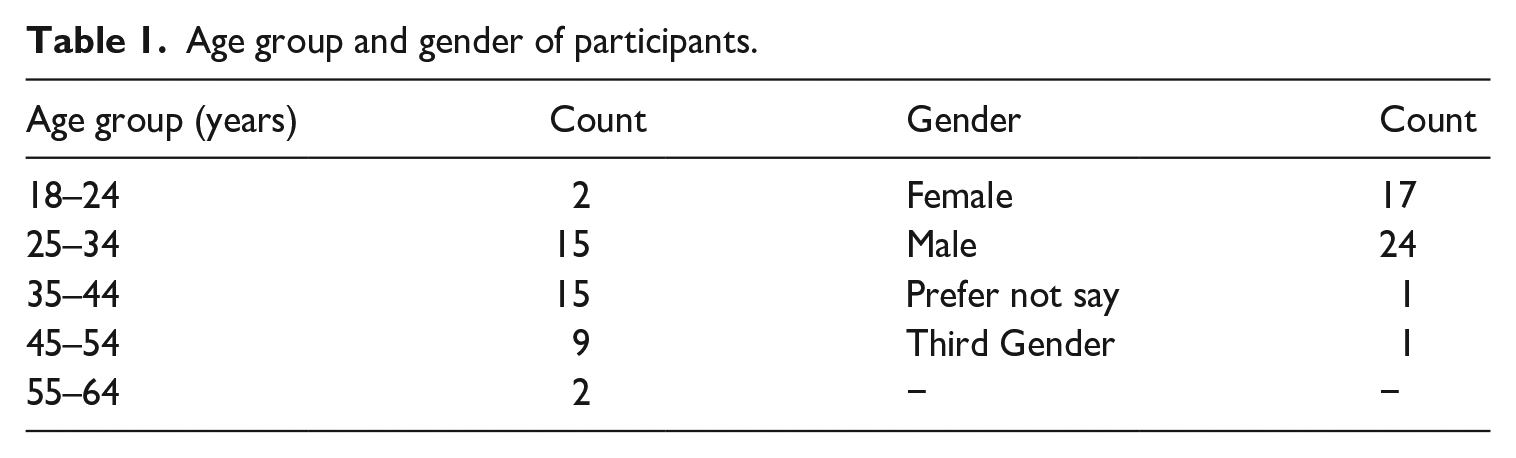
The quantitative data was analysed using Python programming language with the assistance of OpenAI ChatGPT 4 (OpenAI, 2024). Descriptive statistics of participants’ age and gender are summarized in Table 1.
Age group and gender of participants.
a ML2 students’ concerns
The descriptive statistics for the ranking of the concerns are disclosed in Table 2. The mean score denotes the importance of a particular statement Cs, where a high mean score indicates that the statement was ranked highly. The final ranking of the statements Cs is disclosed in the fourth column of Table 2. The results show that according to most participants, learning Maltese is important because it gives them a sense of belonging and that the acquisition of ML2 enables them to build meaningful relationships (C6). An interesting result is that concern C6 was ranked higher than C5, where the latter represents a pragmatic goal related to the use of Maltese to communicate in practical situations. Participants were also concerned with learning the basics of the Maltese language quickly while ensuring they had a solid linguistic foundation (C4). Interestingly, the fourth highest-rated concern (C9) was related to the learning experience, specifically the use of technological resources and visual aids to enhance the learning experience. This result underscores the relevance of research question 2, which focuses on the use of innovative technology and teaching methods.
Mean score, concern statement and overall ranking of concerns.
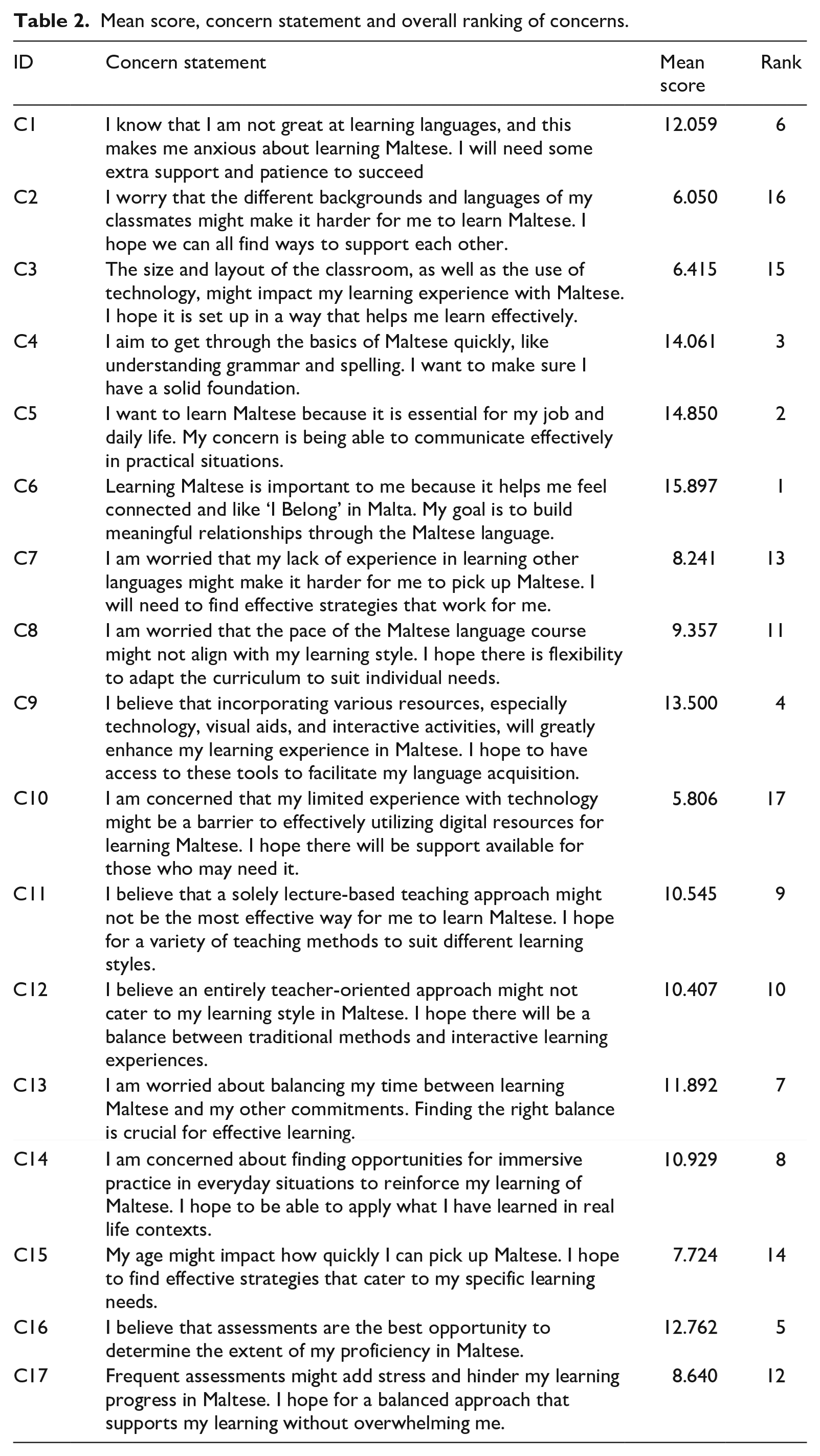
To establish if the differences in the ranking on concerns were statistically significant, the Wilcoxon Signed Rank (W) test was performed for each pair of concerns. The results disclosed in Table 3, show several instances where there were statistically significant differences in the rankings provided. It should be noted that the differences in ranking between C6 and C5 were not considered to be statistically significant. However, both C6 and C5 had several statistically significant differences from the other statements as shown by Table 3. In addition, the ranking of C4 about the statement C3 was also statistically significant. Given the ranking of concerns and the identification of several statistically significant differences, our attention shifted towards the emotional experience of students learning ML2.
Wilcoxon signed rank (W).
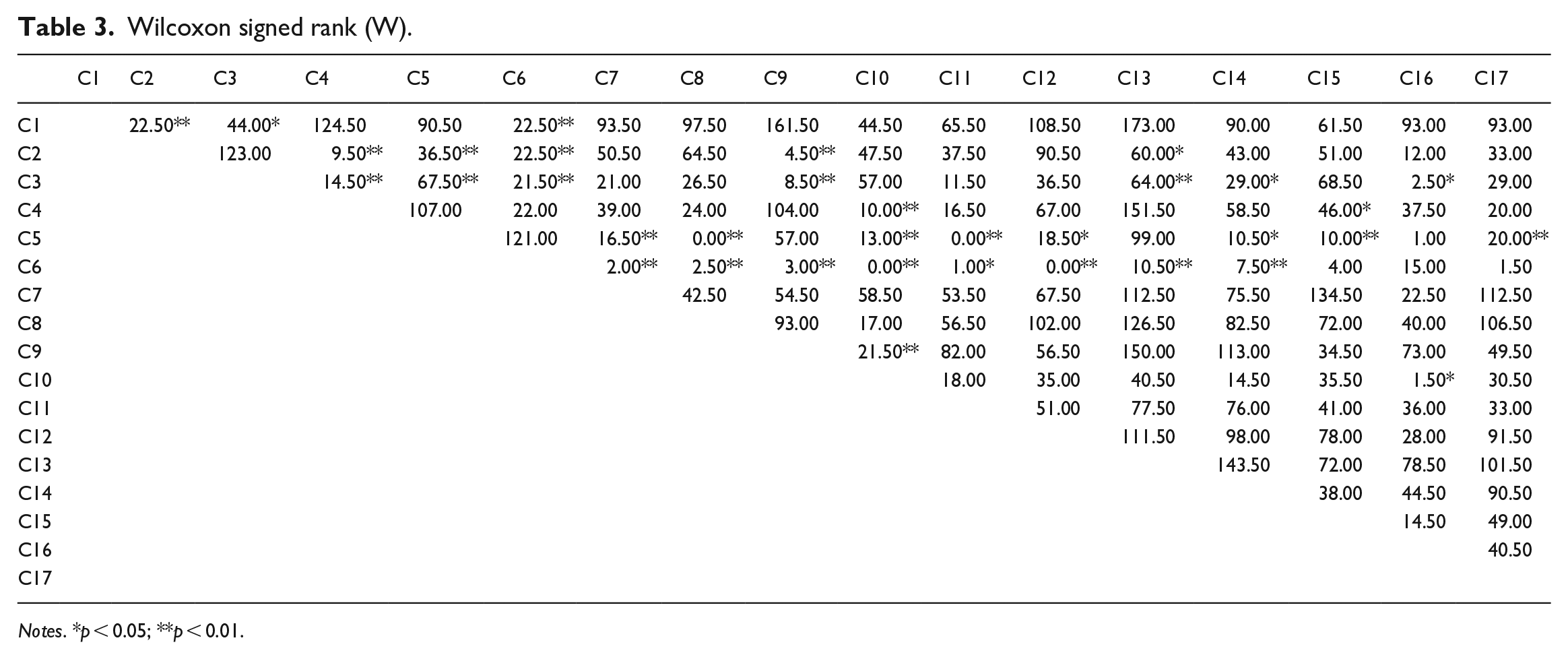
Notes. *p < 0.05; **p < 0.01.
b ML2 students’ emotions
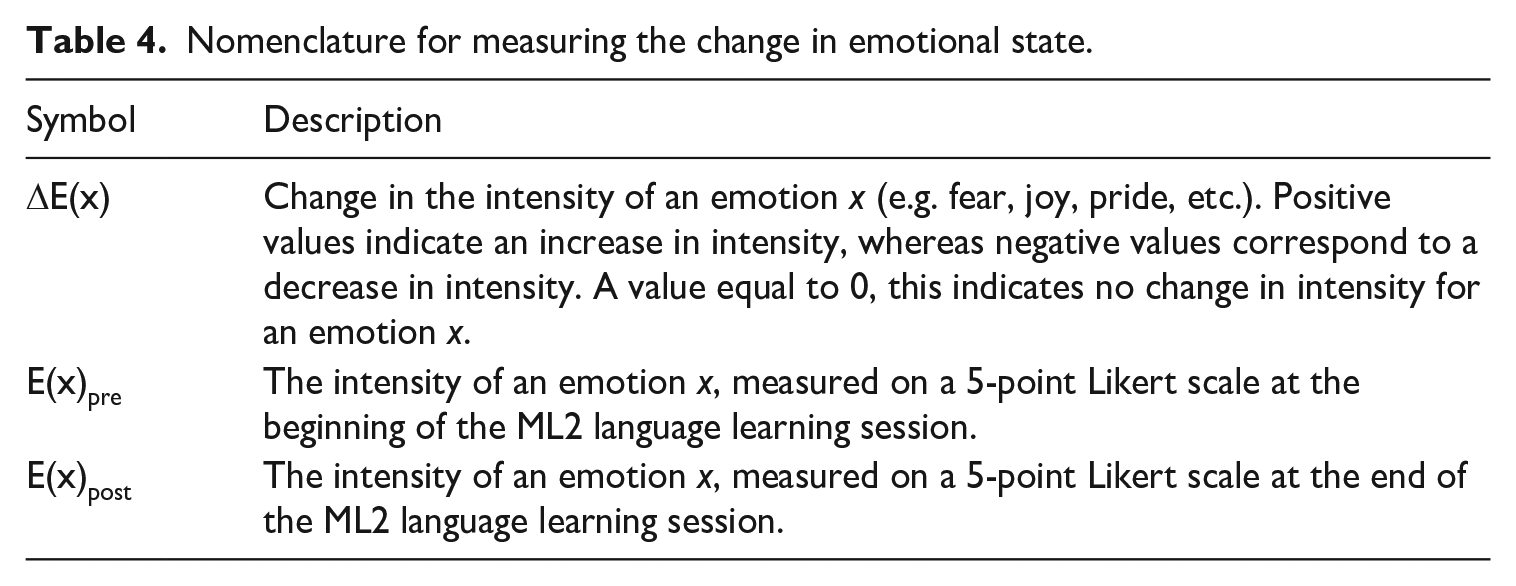
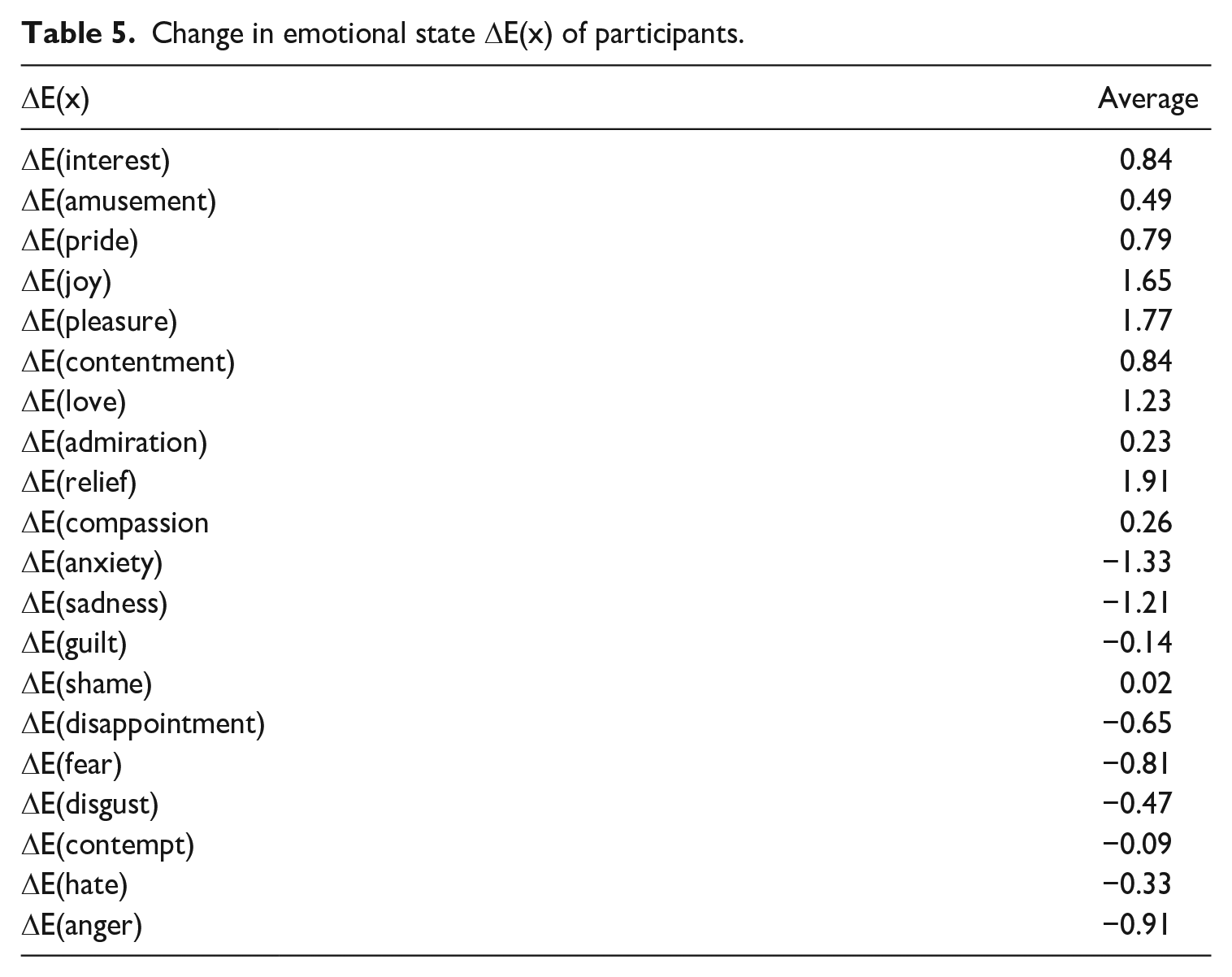
The change in L2 students’ emotional state during the ML2 learning session, was calculated by comparing the scores obtained from the two GEWs deployed at the beginning and end of the session. The change in the intensity (ΔE(x)) of 20 emotions, throughout the ML2 learning session was calculated using equation 1.

The nomenclature for equation (1) is summarized in Table 4
Nomenclature for measuring the change in emotional state.
A summary of the change in emotions is presented in Table 5 and illustrated in Figure 1. Positive values indicate an increase in the intensity of a specific emotion over the course of the ML2 session, meaning participants felt more of that emotion by the end. Conversely, negative values represent a decrease in emotional intensity.
Change in emotional state ΔE(x) of participants.
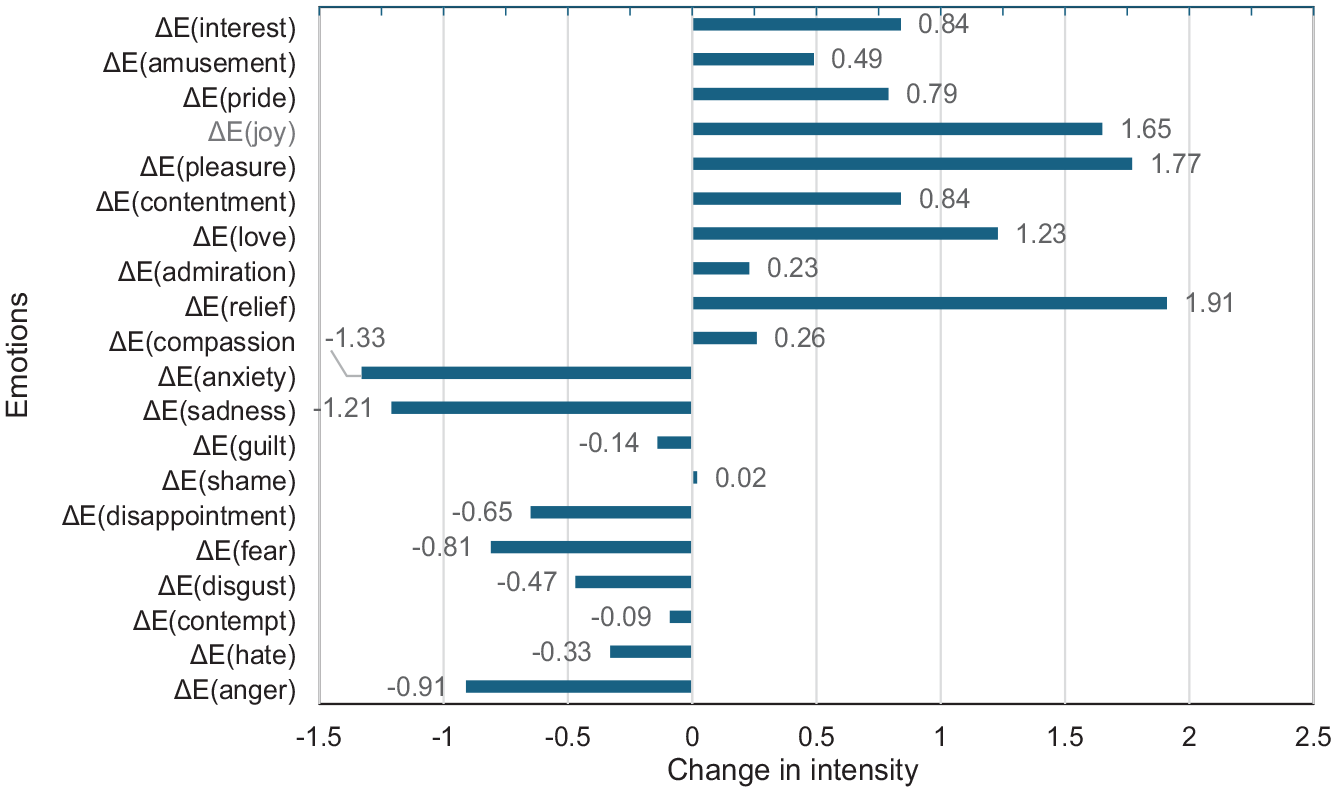
Average change in the intensity of emotions ΔE(x).
The findings from this study demonstrate a clear trend where participants in the ML2 language learning session experienced notable increases in positive emotions, such as joy, pleasure and relief. In addition, the results show an overall decrease in negative emotions, with changes in anxiety, sadness and anger being the most pronounced. These two trends confirm that the incorporation of technology in teaching are conducive to creating a more positive learning ML2 learning experience.
Our analysis confirms previous findings in the literature (Yu, 2022) that student emotions such as joy and anxiety are predominant in SLA. However, our results also reveal significant changes in emotions such as relief and fear, which tend to be overlooked in existing research. This complements the argument made by Dewaele et al. (2019) emphasizing the importance of a more nuanced understanding of both positive and negative emotions in the context of foreign language learning.
c Correlations between concerns (Cs) and emotions (ΔE(x))
An objective of this statistical analysis was to establish if there is a correlation between the participants’ concerns and changes in their emotional states. A summary of statistically significant results is presented below. In the context of this study, a positive Spearman correlation coefficient indicates that as the participants’ concern (Cs) increases (or decreases), then participants are more likely to experience an increase (or decrease) in the intensity of an emotion denoted ΔE(x). A negative Spearman correlation coefficient underlines the inverse relationship between the ranking of concerns (Cs) and the change in emotional state (ΔE(x)). The results in Table 2 showed that C6 and C5 were among the highest-ranked concerns with a mean score of 15.897 and 14.850 respectively. There were several statistically significant correlations identified between the measured emotions ΔE(x) and some highly ranked concerns (Cs).
Several moderate and statistically significant correlations were identified between concern C6 and changes in emotional states of joy ΔE(joy) (−0.41, 0.0097), pleasure ΔE (pleasure) (−0.49, 0.0014) and relief ΔE(relief) (−0.49, 0.0014). This means that students who are increasingly concerned about their ability to learn Maltese to achieve a sense of belonging are more likely to experience a decrease in these positive emotions. On the other hand, anger ΔE(anger) (0.50, 0.0013) had moderate positive correlation with the concern C6. These results indicate that as students become more concerned about their ability to learn Maltese to achieve a sense of belonging, they are more likely to experience a decrease in positive emotions and an increase in anger.
Two statistically significant, weak and negative correlations were identified between the concern C5 with ΔE (contentment) (−0.41, 0.0303) and disgust ΔE (disgust) (−0.36, 0.0234). This result indicates that as students become increasingly concerned about the utility of learning Maltese, they are more likely to experience a decrease in contentment and disgust.
Even though C4 was ranked highly, the results show that there was only a single statistically significant moderate negative correlation with hate ΔE(hate) (−0.41, 0.0187). This means that as students become increasingly concerned with learning Maltese quickly, they are more likely to experience a decrease in hate.
A remarkable result is related to the correlation between concern C9, representing the belief of incorporating various learning resources, especially technology, with various emotions. Our results show that this concern (C9) was negatively correlated with interest ΔE(interest) (−0.48, 0.0071). This was a surprising result, since this result indicates that students who experience an increase in interest, they are more likely to consider C9 as less important. In addition, concern C9 was positively correlated with ΔE(anger) (0.44, 0.0156). This statistically significant result underscores that as students become increasingly concerned with the use of technology, they are more likely to experience an increase in anger.
2 Participant beliefs and motivations in ML2 learning: Insights from interviews
The findings emerging from the interviews can provide important insights for educators and policymakers in designing effective ML2 learning strategies and interventions.
a Participants’ beliefs about ML2 learning
Thirty-seven participants expressed their beliefs about learning Maltese, with Participant 1 saying, ‘I thought it would be very difficult because Maltese is a unique language.’ Participant 6 believed it would be hard because ‘Maltese has a lot of sounds that don’t exist in my native language.’ However, Participant 5 thought it would be easy because ‘Maltese is a small language with fewer words to learn.’ Some participants believed their knowledge of other languages would influence their learning of Maltese. Participant 2 assumed it would be ‘similar to learning Italian or Arabic’, while Participant 9 assumed it would be similar to English because Malta is a former British colony; but later realized the uniqueness of Maltese.
The participants who believed learning Maltese would be difficult adopted a serious and dedicated approach, with Participant 1 saying, ‘Believing it would be difficult made me approach learning Maltese with a lot of seriousness and dedication.’ Participant 6 spent a lot of time on pronunciation exercises because she knew the sounds would be challenging. On the other hand, Participant 5 who initially thought it would be easy to learn Maltese, had to adjust his approach when he realized the effort required.
Prior knowledge and language experience also played a role, with participants drawing on existing linguistic knowledge to aid understanding. Twelve participants also had different beliefs about the resources and approaches needed to learn Maltese effectively. Some believed they would need a good teacher or a language partner, while others like Participant 16 believed ‘Immersion would be the best way to learn Maltese.’
Cultural connection and personal goals also motivated some participants to learn Maltese. Twenty-nine participants expressed positive emotions and interest in the cultural aspects of learning Maltese. Participant 7 believed it would be a fun and interesting experience because ‘I love learning new languages.’ Participant 11 thought it would be a great way to learn more about Maltese culture and history.
The participants’ beliefs about the rewards and challenges of learning Maltese influenced their motivation, with some remaining committed even during difficult moments. Personal motivations and resources played a crucial role in learning Maltese. Many participants used different learning resources and strategies based on their beliefs and motivations, such as pronunciation exercises, grammar tasks, immersion through music and TV shows, and seeking support from a teacher. Understanding these beliefs can help design interventions that cater to different motivations and learning styles, making language learning programs more effective. Participant 36 enjoyed learning Maltese because they love languages. Participant 15 found a Maltese partner to practice speaking with, while Participant 18 was motivated by their Maltese heritage. These diverse beliefs and approaches emphasize the importance of considering individual learners’ beliefs, experiences, motivations, and strategies in language learning research and practice.
b Alignment of the non-traditional intervention with the participants’ existing beliefs
Thirty-nine participants highlighted the Kahoot™ quiz and digital resources as engaging and interactive ways to learn Maltese. Participant 8 described the Kahoot™ quiz as ‘a fun and interactive way to learn’, while Participant 41 found the digital resources ‘comprehensive and easy to navigate’.
Both interventions provided immediate feedback, which participants found beneficial for reinforcing learning. Participant 5 mentioned that the Kahoot™ quiz’s ‘immediate feedback was very helpful’, while Participant 16 appreciated the digital resources’ ability to ‘revisit the material anytime’. The participants viewed both interventions as refreshing alternatives to traditional learning methods. Participant 3 described the Kahoot™ quiz as ‘a refreshing change’, while Participant 34 found using digital resources ‘allowed me to learn at my own pace’. Flexibility and independence were key advantages of both interventions. Participant 10 noted that the Kahoot™ quiz was ‘a fun and interactive way to learn’, while Participant 22 found the digital resources ‘useful’ for learning independently. Both interventions were praised for their comprehensiveness and accessibility.
Participant 30 highlighted the digital resources’ ‘extensive and easy-to-use’ nature, while Participant 8 found the Kahoot™ quiz’s ‘real-time leaderboard’ to be motivating. Convenience and ease of use were significant advantages of both interventions. Participant 20 noted the convenience of learning from home with digital resources, while Participant 12 found the Kahoot™ quiz’s ‘fun way to test my knowledge’ convenient for learning on the go. In general, the participants had positive experiences with both interventions, highlighting their unique benefits and contributions to the Maltese learning process.
c Alignment with beliefs
Some participants found the interventions to align with their existing beliefs about language learning. Participant 1 described the Kahoot™ quiz as ‘a fun and interactive way to learn Maltese’, while Participant 25 noted that the digital resources aligned with their belief that ‘technology can aid in learning’.
On the other hand, some participants found the interventions challenging to their traditional beliefs. Participant 11 mentioned that the Kahoot™ quiz challenged their belief in ‘textbook-based learning’, while Participant 23 stated that the digital resources challenged their ‘traditional approach to learning’.
Some participants initially had apprehensions but were pleasantly surprised by the interventions. Participant 21 found the digital resources ‘initially daunting but later found them comprehensive and useful’, while Participant 13 found the Kahoot quiz ‘a bit difficult’ at first but ultimately considered it a good experience.
The interventions reinforced some participants’ existing beliefs about language learning. Participant 18 noted that the digital resources aligned with their ‘belief in self-paced and personalized’ learning, while Participant 27 found the digital resources ‘instrumental’ in their learning process, affirming their belief in the technology’s role in education.
Consequently, the perceptions of the interventions varied among participants, with some aligning with existing beliefs and others challenging traditional notions of language learning. Despite initial apprehensions, all participants found the interventions effective for learning Maltese.
d Evolving perspectives
All participants found that interactive learning tools had a positive impact on their ML2 acquisition. Participant 4 enjoyed the Kahoot quiz, stating that it ‘made learning enjoyable’. Participant 37 appreciated the ‘comprehensive and easy-to-navigate’ digital resources.
Engaging with non-traditional learning methods caused participants to reconsider their views on language learning. Participant 12 ‘enjoyed the Kahoot quiz’, while Participant 17 realized that digital resources aligned with their belief in ‘self-paced and personalized learning’. The integration of technology-empowered participants to take ownership of their learning process. Participant 24 initially found navigating digital resources ‘challenging’ but acknowledged the ‘wealth of useful information they provided’. Participant 41 realized that she could ‘take charge of their learning process’ through technology. These non-traditional methods have proven to be invaluable tools in the quest for ML2 acquisition.
e Impact of non-traditional learning tools on motivation in ML2 acquisition
The use of non-traditional learning tools, such as Kahoot quizzes and digital resources, has had a significant impact on motivation in ML2 acquisition. Participant 5 expressed that the Kahoot quiz made them ‘look forward to Maltese lessons’, indicating a positive impact on motivation. Participant 7 also noted that the competitive aspect of the quiz increased their engagement in the lesson. However, opinions regarding digital resources varied among participants. Participant 18 found them beneficial for motivation, while Participant 25 struggled to stay motivated while using them. The combination of both the Kahoot quiz and digital resources showcased a nuanced impact on motivation, with some participants appreciating the convenience and engagement offered by digital resources, while others found traditional methods more effective. Participant 30 appreciated the digital resources, while Participant 43 preferred more conventional approaches. Understanding individual preferences and adapting learning approaches accordingly may be key to maximizing motivation in language learning contexts.
f Exploring new learning strategies through non-traditional language lessons
Thirty-eight participants reported adopting various interactive and engaging learning strategies through the use of gamified quizzes and digital resources. Participant 8 stated, ‘The Kahoot quiz made me look forward to Maltese lessons’, highlighting the motivational aspect of gamified quizzes. Participant 14 mentioned how digital resources ‘made learning Maltese more convenient and accessible’, emphasizing the flexibility and accessibility offered by online learning platforms.
The participants also explored a wide range of learning strategies, such as social learning and project-based learning, facilitated by the combination of Kahoot quizzes and digital resources. Participant 10 engaged in virtual study groups, while Participant 22 used project-based learning to reinforce their understanding of ML2 concepts. More examples of new learning strategies included spaced repetition learning and multimedia learning. Participant 4 utilized spaced repetition to reinforce vocabulary retention, while Participant 18 integrated educational videos for multimedia learning.
The integration of both Kahoot quizzes and digital resources encouraged participants to combine traditional and non-traditional learning strategies. For instance, Participant 9 combined active learning strategies with group quizzes, demonstrating the effectiveness of blending innovative tools with traditional methods. Therefore, this study shows that non-traditional language lessons, such as Kahoot quizzes and digital resources, prompted the participants to explore and adopt diverse learning strategies. This highlights the efficacy of incorporating innovative tools alongside traditional methods to cater to individual learning preferences and enhance ML2 acquisition.
g Perceived effectiveness of the intervention
Participant 11 emphasized the effectiveness of the Kahoot quiz in enhancing their grasp of Maltese. Participant 3 echoed this sentiment, stating that the quiz revolutionized their approach to learning. Participant 5 also noted the transformative impact of the quiz, sparking a transformation in their learning strategies. However, Participant 12 provided a contrasting view, suggesting a preference for supplementary materials beyond the quiz. Overall, the majority of participants acknowledged the transformative impact of the Kahoot quiz.
Participant 2 reported a shift in their learning approach, actively seeking out additional resources and practice opportunities. Participant 7 embraced competitiveness in ML2 learning, while Participant 12 became more resilient and saw setbacks as opportunities for growth. Participant 19 adopted a more interactive approach to learning through digital resources. Participant 26 mentioned becoming more proactive in seeking feedback on their language skills. These changes reflect a shift towards more proactive, reflective, and adaptable learning behaviours.
h Enhancing engagement in ML2 learning through non-traditional methods
Incorporating non-traditional elements like Kahoot quizzes or digital resources into ML2 learning has had a profound impact on participants’ engagement, proactivity, and motivation levels. Participant 6 noted a significant increase in engagement and motivation after experiencing the Kahoot quiz. He actively sought out opportunities to participate in quizzes and discussions, eager to deepen their understanding of ML2. Participant 7 shared a similar sentiment, expressing renewed enthusiasm and energy for each lesson, thanks to the interactive quizzes. Participant 24 highlighted how incorporating digital resources led to improvements in engagement, proactivity, and motivation levels. They found learning more enjoyable and rewarding, prompting them to take a more active role in their studies. Participant 19 echoed these sentiments, mentioning a transformative effect on engagement and motivation levels, attributing it to the interactive nature of the resources. Lastly, Participant 36 emphasized feeling more engaged, proactive, and motivated in learning Maltese, inspired by the hands-on approach facilitated by digital resources. Participant 36 mentioned, ‘The interactive nature of the resources has inspired me to take a more hands-on approach to my studies, actively seeking out opportunities to expand my knowledge.’ The introduction of these innovative tools has sparked a renewed enthusiasm for learning Maltese, inspiring the participants to take a more active role in their studies and paving the way for more dynamic and rewarding learning experiences.
Participant 11 highlighted a significant shift in their perception, stating, ‘Engaging with the Kahoot quiz in our Maltese class challenged my belief that language learning progress was solely determined by grades and assessments.’ Participant 14’s reflection provides insight into the impact of digital resources, stating, ‘Exploring digital resources in our Maltese class challenged my prior belief that Maltese learning was a one-size-fits-all endeavour. ‘Participant 13’s perspective emphasized the transformative effect of interactive learning tools’, noting, ‘Participating in the Kahoot quiz during our Maltese class challenged my belief that language learning progress was solely determined by traditional assessments.’ This study illustrated a paradigm shift among the participants, as they reconsidered their initial beliefs about language learning in light of their experiences with innovative teaching methods and digital resources.
i Embracing innovation
The participants found the Kahoot quiz and the digital resources to be engaging and enjoyable, fostering motivation and collaboration among learners. Thirty-one participants highlighted the importance of personalized learning pathways in learning Maltese. They recognized the value of tailoring learning experiences to individual needs and preferences. Participant 6 stated, ‘Experiencing digital resources in our Maltese class has highlighted the importance of personalized learning pathways.’
Thirty-seven participants acknowledged the diverse range of resources available for language learning. They expressed their appreciation for the variety of materials that can be integrated into different aspects of learning Maltese. Participant 12 stated, ‘Digital resources have provided me with a treasure trove of materials that I can integrate into various aspects of my Maltese learning journey.’
The participants demonstrated a readiness to embrace non-traditional learning methods and digital resources in their Maltese acquisition. They recognized the potential for interactive learning methods, the importance of personalized learning pathways, and the versatility of digital resources.
j Evaluating the effectiveness of non-traditional learning methods
The majority of the participants found digital resources to be highly beneficial in providing access to diverse learning materials. Participant 32 mentioned, ‘I found digital resources to be highly beneficial in providing access to diverse learning materials such as videos, audio recordings, and interactive exercises.’ However, the participants also identified areas for improvement, including the need for more in-depth explanations and better organization of resources. Participant 26 mentioned, ‘I found it lacked depth in explaining complex grammar concepts, which could be improved for a more comprehensive learning experience.’ There was also a trade-off between engagement and depth of learning, with concerns about the ability of gamified approaches like Kahoot to promote deeper understanding. Participant 13 expressed this sentiment, stating, ‘I found that it could be repetitive at times, diminishing its novelty and impact.’ Participants also desired more personalized learning experiences and better guidance in navigating digital resources. Participant 21 mentioned, ‘I wished it offered more opportunities for self-assessment and reflection to monitor my progress and identify areas for improvement.’ Therefore, while non-traditional learning methods have advantages in engagement, motivation and accessibility, there is a need for ongoing refinement to address issues related to depth of learning, organization of resources, and personalized support.
k The long-term impact of interactive learning on ML2 acquisition
The participants in the study believe that the interactive learning intervention, which included a Kahoot quiz and digital resources, has a long-term impact on their approach to learning Maltese. They mentioned a shift in their learning paradigm, embracing technology, the effectiveness of gamification and interactivity, ownership of learning, and maintaining motivation and enthusiasm. Participant 11 stated that the engaging nature of the Kahoot quiz has reshaped their approach to learning Maltese. Participant 14 highlighted the transformative role of digital resources in language learning. Participant 4 mentioned the effectiveness of gamification in language learning through the Kahoot quiz. Participant 26 expressed a sense of empowerment and autonomy in learning Maltese facilitated by digital resources. Participant 37 noted that the Kahoot quiz has reignited their passion for language learning. In general, the participants had a positive outlook towards continued language learning and a willingness to adapt and innovate in pursuit of linguistic proficiency.
V Discussion
This study focuses on the emotional and psychological experiences of adult learners acquiring ML2, highlighting the role of emotions, concerns, and teaching methods, especially digital tools, in shaping the learning experience. The results align and build on existing literature on SLA, emphasizing the interplay of emotional regulation, cultural integration, and practical communication needs while learning ML2.
The study identified a spectrum of emotions that the learners experienced during ML2 acquisition, resonating with theories such as the Component Process Model (CPM) by Scherer (2001). This study shows that positive emotions, such as joy, pride, and relief, increased during technology-enhanced learning, while negative emotions like anxiety decreased. This aligns with Elahi Shirvan et al. (2024), who emphasize the importance of emotion management techniques like mindfulness. Additionally, the study broadens the traditional focus on anxiety (Horwitz, 2001) and joy (Yu, 2022) to include emotions like fear, sadness, and relief, offering a more comprehensive view of the emotional landscape in SLA. The study also supports the idea that emotions influence learners’ strategies and attitudes toward ML2 learning. The results support Elahi Shirvan et al. (2024) by showing that emotion regulation plays a significant role in ML2 success. Teaching students mindfulness and cognitive reappraisal can help them manage the emotional challenges of learning ML2.
The learners’ concerns were shaped by both personal goals (e.g. a sense of belonging) and practical communication needs (Cs 4, 5, and 6). This mirrors broader SLA literature, such as Yim et al. (2019), which highlights motivation driven by real-life communication needs and cultural integration. The inclusion of personal goals (C6) also reflects the findings by McKay and Macomber (2021), suggesting that learners often seek to build relationships and immerse themselves in the local community. The study further confirms that practical communication needs (C4, C5) and personal goals drive learners’ motivation, highlighting the importance of integrating technology to enhance the learning experience.
This study’s findings build on Pavelescu (2023), who underscores the role of motivation and emotional engagement, particularly when tied to personal or professional goals. Addressing these concerns through Maltese curriculum design that focuses on real-life applications helps learners quickly acquire fundamentals for everyday communication. Incorporating cultural elements in ML2 instruction also aids learners in navigating social norms and enhancing their sense of belonging within the local community, as recommended by D. Kim (2020).
Non-traditional teaching methods like digital tools and gamified learning were shown to foster positive emotions, motivation, and learner autonomy in the current study. This aligns with Dewaele et al. (2019) and Pavelescu (2023), who argue for emotionally aware, technology-enhanced language instruction. Immediate feedback, offered through digital tools, reinforced learning by allowing students to correct mistakes promptly. This study corroborates existing research, extending findings from Alfaruqy and Setyawan (2021), who demonstrated that digital resources enhance motivation and engagement. It also builds on Cents-Boonstra et al. (2020), suggesting that project-based and inquiry-based learning can increase learner autonomy and engagement.
Concerns about navigating cultural norms and establishing a sense of belonging significantly influenced Ml2 learning outcomes. This aligns with Aguilar and Rebolla (2024), who emphasize the importance of cultural context in SLA. Incorporating cultural elements into ML2 instruction allows students to manage these challenges, fostering a sense of integration within the community. These results are consistent with Vygotsky’s (1978) sociocultural theory, which highlights the role of social interaction in learning. Fostering cultural integration alongside linguistic competence enhances learners’ emotional attachment to both ML2 and the Maltese community, thereby improving learning outcomes as stated by D. Kim (2020).
However, the implementation of digital resources requires careful consideration, particularly regarding the immediacy of feedback, which is critical for reinforcing learning. Timely feedback enables learners to correct ML2 mistakes and strengthen vocabulary and grammar retention, aligning with Pekrun and Stephens (2012), who emphasize the importance of timely feedback for academic performance and motivation. Furthermore, digital tools accommodate diverse learning styles, providing flexibility for international students with varied educational backgrounds. This echoes Bernacki et al. (2021), who stress the role of personalized learning environments. Similar to Bernacki et al., this study highlights the value of an inclusive Maltese curriculum that supports differentiation, a point also emphasized by Dewaele et al. (2019).
Building on prior research, this study contributes to a broader understanding of emotions in SLA by highlighting the importance of not just anxiety and joy, but also relief, interest, sadness, and fear. This supports Bećirović et al. (2021), who found that inquiry-based learning increases engagement. The current study extends their work by showing how such interventions can empower learners, renew motivation, and shift the learning paradigm. The findings suggest that teachers should be continuously trained in innovative methodologies and digital tools, reinforcing the broader literature’s call for robust teacher support systems. Continuous professional development opportunities for teachers are critical to staying updated with novel pedagogical approaches, as emphasized in the broader SLA literature (Bećirović et al., 2021).
The study substantiates the argument that emotions, particularly those tied to cultural integration and practical communication, are crucial in ML2 acquisition. Motivation, emotional regulation, and digital learning environments are central to successful ML2 learning. Teachers should design inclusive curricula that cater to diverse learning styles, ensuring that ML2 students’ emotional and practical needs are met while fostering a sense of belonging through cultural engagement activities. Additionally, a robust teacher support system, focused on ongoing professional development, will help educators stay abreast of innovative, personalized, and culturally aware methodologies, improving the overall ML2 learning experience.
1 Limitations
The study offers useful insights into the emotional experiences and concerns of international students learning Maltese, but it has a few limitations. The small sample size of 43 participants hinders the findings’ generalizability. A larger sample would have provided a more holistic perspective of the diverse experiences and concerns of this demographic.
The data collection methods, which included questionnaires and interviews, may be susceptible to bias. Participants might respond in socially desirable ways during interviews (Meisters et al., 2020), and their questionnaire responses might not fully reflect their genuine emotions and concerns (Einola & Alvesson, 2021).
The study posits that technological interventions like Kahoot, educational videos, podcasts, and digital vocabulary apps enhance learning. However, not all learners may respond positively to these interventions. Some might prefer conventional teaching methods, while others might lack access to the necessary technology. The effectiveness of these interventions might also depend on their integration into the lessons and the teacher’s skill in using them.
Furthermore, the study fails to consider the potential impact of other factors on Maltese acquisition, such as the students’ socio-economic status, educational background, or previous exposure to Maltese. These factors could significantly influence the students’ emotions and concerns, and their overall ML2 learning experience.
2 Further research
Further studies ought to broaden the scope of the study by incorporating a more extensive cohort of international students with diverse levels of proficiency in ML2 acquisition throughout various educational programs. This would improve comprehension of their emotional experiences and shared concerns.
Examining the effects of various teaching approaches on students’ ML2 acquisition could provide significant insights. An examination of conventional classroom teaching approaches in contrast to the cutting-edge technological interventions employed in this study could facilitate the identification of the most effective way for ML2 learning.
A comparative study of students’ acquisition of ML2 when compared to other languages could ascertain whether the difficulties and affective experiences encountered are exclusive to learning Maltese or are typical in the broader context of SLA. Examining specific aspects such as motivation, personal goals, and prior language proficiency may result in a more profound comprehension of the SLA process.
VI Conclusions
This study yielded significant insights into the emotional experiences and concerns of 43 international adult learners of Maltese, shedding light on feelings such as relief and sadness that are frequently disregarded in SLA literature. Gaining insight into learners’ objectives, convictions, anticipations, and presumptions regarding language acquisition is crucial, as these factors profoundly impact their approach to learning and their attitudes towards it. The study emphasized the significance of motivation and emotional engagement in the SLA process. The findings indicated that students are driven to acquire an L2 not only for utilitarian purposes but also to establish significant interpersonal connections. This study also demonstrated that the utilization of technology and unconventional learning aids improves students’ educational experience. Unconventional technological interventions such as Kahoot and digital resources proved to be beneficial in establishing a connection with learners’ beliefs and motivations, thereby enhancing their learning experience. These interventions provided adaptability, inclusiveness, and ease of use, fulfilling the participants’ desire for individualized and self-guided learning opportunities. Consequently, this study contributes to the wider academic SLA field and provides several pedagogical insights for the development of effective language teaching techniques.
