



Abstract
This systematic review examines existing empirical second language studies on the approaches to conceptualizing and measuring online second language learner engagement in technology-mediated second-language learning/teaching settings, identifying strengths and limitations of current measures and outlining potential improvements. Using the Preferred Reporting Items for Systematic Reviews and Meta-Analyses (PRISMA) procedure, we conducted a systematic review of empirical studies on online second language learner engagement. The review focused on several key areas, including the characteristics of second language research investigating online learner engagement, the ways in which the concept of online learner engagement is conceptualized, the indicators used to operationalize it, and the primary areas of focus and key findings emerging from this body of research. Our intent with this systematic review is to provide a comprehensive evaluation of existing empirical studies on online second language learner engagement and to offer suggestions not only for future research directions in this important area but also for implications regarding online teaching and learning practices in technology-mediated second language learning and teaching settings.
Keywords
I Introduction
The rapid growth of online learning modalities, such as intelligent tutoring systems, educational games, platform-based classes, and massive open online courses (MOOCs), has heightened the focus on learner engagement (Henrie et al., 2015; Stockwell, 2022). In second language (L2) learning, digital technology facilitates content delivery, learner interaction, and anytime, anywhere learning but poses challenges in maintaining engagement (Dao, 2024). Online L2 environments create unique interaction dynamics among learners, instructors, and content, mediated by technology (Stockwell, 2022 ; Reinders et al., 2022; Ziegler & González-Lloret, 2022). Designing and evaluating these environments to foster meaningful learning requires robust conceptualization and measurement of engagement (Doo & Kim, 2024; Hu & Xiao, 2025; Ogunyemi et al., 2022; Wang et al., 2022).
Learner engagement has recently gained prominence across disciplines (Egbert & Panday-Shukla, 2024). However, reviews in educational psychology, Edtech, and L2 research suggest that the concept remains conceptually and methodologically diffuse (e.g., Aoyama et al., 2024; Appleton et al., 2008; Christenson et al., 2012; Fredricks et al., 2004, 2019; Henrie et al., 2015; Hiver et al., 2024; Namkung & Kim, 2024; Sinatra et al., 2015). These reviews have highlighted a lack of clarity in defining and measuring engagement, which hinders progress and consensus in research and practice. Also, research has stressed the need for construct validity and psychometrically sound measures to ensure comparability across studies (Appleton et al., 2008; Zhou et al., 2021), a challenge intensified in tech-mediated learning, where clear engagement models are vital (Jimerson et al., 2003).
Beyond previous reviews, there are a number of unique insights that a systematic review of online L2 learner engagement research would contribute to the field. The present systematic review differs from and adds to prior systematic reviews (e.g., Henrie et al., 2015; Hiver et al., 2024), and synthetic work (e.g., Dao, 2024) in important ways. Firstly, across the domains of technology-mediated learning, the study of learner engagement remains fragmented. Although engagement holds promise for tech-mediated learning, its potential is hindered by conflicting definitions and methods (Henrie et al., 2015). Consequently, there is a need to integrate theoretical frameworks from language learning, educational psychology, and technology-assisted learning to provide a cohesive understanding of engagement in virtual learning contexts. In his book-length narrative review, Dao (2024) highlighted similar challenges in online L2 learning, stressing the need for clear definitions and reliable online L2 learner engagement measures. As online learning environments and their affordances rapidly evolve from basic learning management systems (LMS) to immersive environments (i.e., with AI tutors and agents, using virtual reality, etc.) the notion of what constitutes engagement must be critically examined.
Secondly, despite many recent reviews of digital learning environments (Doo & Kim, 2024; Hu & Xiao, 2025; Ogunyemi et al., 2022; R. Wang et al., 2022) and, separately, on language learner engagement (Hiver et al., 2024; Namkung & Kim, 2024), none focus specifically on online L2 contexts. This leaves gaps in understanding its conceptualization, research designs, measurements, and key links to learning outcomes. The rapid expansion of online learning and new types of virtual learning environments built on novel technological infrastructure has generated numerous new studies that need synthesis. Existing research shows inconsistent findings regarding effective engagement strategies across different demographics, subject areas, and course formats. Such studies have introduced new engagement dynamics that require systematic comparison with other instructional approaches.
Thirdly, regarding the methodology, as Dao (2024) noted, the field is in a period of innovation and exploration of rigorous mixed- and multi-method research designs. Research on online L2 engagement employs diverse measurement approaches and practices (e.g., eye-tracking, self-report, multimodal learning analytics, behavioral markers) that need critical comparison. As one of the first and most significant reviews of research on the topic of online L2 learner engagement, Dao (2024) identified key issues in this area, particularly the variation in how the construct is conceptualized, operationalized, and measured across studies. Although this book-length review offers initial insights into multiple conceptual, theoretical, and methodological aspects of online L2 learner engagement research, the narrative review approach used to examine these complex issues has limitations in systematizing research. In particular, it may be susceptible to researcher bias and the framing of the narrative review’s focus. Thus, arguably, a systematic review is best positioned to take stock of the validity and generalizability of this body of work and to reflect on the consistency of how online L2 engagement metrics are operationalized and measured.
Taken together, this systematic review addresses these gaps by analyzing and synthesizing empirical studies of online L2 learner engagement. Our aims in doing so go beyond simply consolidating evidence and bringing together findings from multiple studies; we additionally examine issues that have not yet been addressed in Dao’s (2024) narrative review. These include: (a) assessing the consistency of findings across different online learning contexts, diverse populations (i.e., adult versus young learners; English as a foreign language/English as a second language [EFL/ESL] versus other languages), and tensions and contradictions in methodologies); (b) identifying gaps where evidence is lacking and highlighting opportunities for future research in this growing area; (c) helping to clarify contradictions and conflicting results to determine which findings are most reliable and broadly transferable; (d) tracking research innovations and documenting developments in research methods; (e) documenting methodological standards and best practices in research design and measurement; and (f) providing evidence to guide research and practice recommendations for online L2 learning engagement research.
1 Online L2 learner engagement: conceptualization and dimensionality
Online L2 learner engagement has garnered significant attention as the intersection of language learning and technology-mediated education continues to expand (Dao et al., 2021, 2024). Defined broadly as the heightened involvement and interaction of language learners with instructors, peers, and content through digital platforms and technologies, online L2 learner engagement encompasses cognitive, behavioral, affective, social, and agentic dimensions. Despite its importance, substantial variation exists in how engagement is defined and operationalized within L2 research, which creates challenges for synthesizing findings and building a cohesive body of knowledge.
The construct of learner engagement has long been a subject of intense scrutiny. Numerous definitions of engagement have been proposed, often adapted from broader educational research without sufficient critique or contextual adjustment. Also, although specific dimensions are emphasized, a multidimensional understanding of engagement differs across definitions. For instance, some definitions focus on engagement as an active, goal-directed process (Lawson & Lawson, 2013; Skinner et al., 2009), whereas others highlight its emotional and relational aspects, such as enthusiasm and responses to the learning environment (Järvelä & Renninger, 2014). These varying perspectives underscore the complexity of conceptualizing engagement and its implications for engagement research.
In the sub-domain of L2 learning, engagement has been framed in diverse ways, often reflecting unique aspects of language acquisition. Definitions range from broad characterizations of involvement or language production (Dörnyei & Kormos, 2000) to specific interpretations, such as task engagement involving goal setting and resource utilization (Bygate & Samuda, 2008; Platt & Brooks, 2002). Oga-Baldwin and Nakata (2017) argue that engagement represents the operationalization of motivation, where learners channel energy and direction into concrete actions. This nuanced understanding is complemented by Mercer’s (2019) focus on participation in tangible language tasks, which emphasizes the practical and observable aspects of engagement. Two influential models in L2 engagement research—Svalberg’s (2012, 2017) “Engagement with Language” (EWL) and Philp and Duchesne’s (2016) “Task Engagement”—offer frameworks for understanding engagement’s multidimensionality. Svalberg conceptualizes EWL as involving cognitive, affective, and social dimensions, where language serves as both the object and vehicle of engagement. In contrast, Philp and Duchesne focus on task-level engagement, operationalizing it across cognitive, emotional, social, and behavioral domains. These models, however, feature relatively broad guidelines for operationalization, and behavioral engagement is considered distinct rather than reframed as a manifestation of other dimensions of engagement (see Dao, 2017; Yuan & Dao, 2025). Also, the layered nature of engagement, spanning task level to societal level, adds complexity and thus creates unclear boundaries and interrelations. These issues call for refining frameworks to ensure they are robust, context-sensitive, and empirically grounded for L2 learning.
2 Characteristics of L2 learner engagement
Learner engagement is fundamentally characterized by the notion of “action,” serving as a defining feature that underscores the active participation of students in their educational experiences (Lawson & Lawson, 2013). This engagement is highly situated and context-dependent, varying across diverse time scales and adapting to different learning environments and scenarios (Hiver et al., 2024). Central to engagement is the presence of an object, whether it be a task, a subject matter, or an interactive activity, which provides a focal point for learners’ attention and effort. Additionally, learner engagement is dynamic and malleable, capable of evolving in response to changes in context, motivation, and instructional strategies. Often, this engagement is overt and visible, manifesting through observable behaviors such as participation, enthusiasm, and persistence in learning activities. Despite these well-defined characteristics, there are several research issues regarding learner engagement. Not all studies adequately reflect the multifaceted and unobservable nature of engagement, often overlooking essential characteristics such as its dynamic and context-dependent aspects (Sulis, 2024). Also, the indicators used to measure engagement frequently do not seem to capture its full complexity, which leads to an incomplete understanding of how learners engage. Additionally, measurement tools often lack sensitivity to detect subtle engagement variations. Together with inconsistent measures and definitions, they hinder accurate assessment and complicate cross-study comparisons. Addressing these issues is, therefore, essential for developing a more comprehensive and nuanced understanding of learner engagement.
3 Operationalization and analysis of learner engagement
Learner engagement (including online and face-to-face engagement) has been studied at varying levels, from the granular level of engagement within a single activity to the broader level of a learner’s overall learning experience. Research has linked learner engagement to important educational outcomes, such as learners’ persistence in learning (Fredricks et al., 2004; Kuh et al., 2008), satisfaction ( Zimmerman & Kitsantas, 1997), and academic achievement (Fredricks et al., 2004 ). However, comparing findings across studies is challenging, often due to variations in engagement operationalizations. (Fredricks & McColskey, 2012; Janosz, 2012).
Moreover, in technology-mediated L2 learning experiences, learner engagement can take many forms, including anticipated, perceived, and actual engagement (Bikowski & Casal, 2018). Such variation complicates efforts to operationalize engagement. Furthermore, previous research has examined how innovative instructional practices impact learner engagement in technology-mediated experiences (Junco et al., 2011; Liang & Sedig, 2010). Yet ways to measure online L2 learner engagement in technology-mediated contexts remain insufficiently addressed. Existing measures of online L2 learner engagement do not seem to be adaptable to the unique challenges of distance or blended learning contexts. Observational measures used in classrooms where all students are present in one location are challenging to arrange for online courses in which students learn separately and at a distance. Additionally, technology offers scalable, non-disruptive ways to measure engagement, such as using user activity data (Aleven et al., 2016), but their use in online L2 engagement is unclear. Therefore, systematically reviewing empirical studies on online L2 learner engagement is needed to identify outstanding issues and guide future research.
4 The current study
This study aims to fill gaps by systematically reviewing online L2 learner engagement research, focusing on study characteristics, engagement conceptualizations, indicators, and key findings to enhance understanding of its role in technology-mediated L2 learning. Our aim is to analyze existing studies to address challenges in conceptualizing and measuring engagement, identify improvement opportunities, and synthesize recent findings on online L2 learner engagement. By analyzing the resulting studies, we aim to inform future research and suggest practical applications for fostering online L2 learner engagement in technology-mediated language learning.
II Research questions
RQ1. What are characteristics of L2 research that investigated online learner engagement?
RQ2. How is online learner engagement framed and conceptualized in L2 research?
RQ3. What indicators and measures of online learner engagement are operationalized and tested in L2 research?
RQ4. What are the areas of focus and key findings in online L2 learner engagement research?
III Method
1 Creating a pool of empirical studies
This study followed Preferred Reporting Items for Systematic Reviews and Meta-Analyses (PRISMA) guidelines (Moher et al., 2009) to compile journal articles on online L2 learner engagement. The process involved five phases: (a) selecting databases and ESCI/SSCI L2 journals; (b) conducting an automated search with relevant keywords; (c) screening abstracts, keywords, and titles for eligibility; (d) reviewing references to identify missed articles; and (e) evaluating selected articles against inclusion/exclusion criteria. To build the report pool, we conducted an extensive search across databases and Emerging Sources Citation Index/Social Sciences Citation Index (ESCI/SSCI) journals (Hiver et al., 2024; Vitta & Al-Hoorie, 2017; Zou et al., 2022) to identify empirical studies on online L2 learner engagement (see Supplemental materials for databases and L2 journals). The key search term was “engage
2 Inclusion and exclusion criteria
Articles containing the search terms in titles, abstracts, or keywords were screened against inclusion/exclusion criteria. Only empirical studies on online L2 learner engagement were included, whereas reviews, opinions, and meta-analyses were excluded. Although various methods exist for compiling reports for systematic review (Chong et al., 2022; Li & Wang, 2018; Norris & Ortega, 2000; Oswald & Plonsky, 2010; Siddaway et al., 2019), we followed recent L2 syntheses when delimiting the scope of this review (Andringa & Godfroid, 2020; Nguyen et al., 2024; Hiver et al., 2024). In line with many existing reviews and recent guidance in the field (Chong, 2025; Zou et al., 2022), we used a structured search strategy to focus on studies published in ESCI/SSCI and major applied linguistics journals, and edited book chapters. This search strategy reflects a tendency in L2 systematic reviews and research syntheses to capture research published in established L2 journals (Dao et al., 2024b: Nicklin & Plonsky, 2020; Zhang, 2020).
Although we acknowledge that unpublished studies (e.g., dissertations, gray literature) may contain valuable insights, we prioritized published articles and excluded others from our report pool for several reasons: published studies typically undergo more rigorous peer review, providing a baseline quality standard that unpublished sources may lack; published studies generally provide more comprehensive methodological details, making the findings more readily verifiable; gray literature often lacks standardized reporting formats and conventions, making systematic comparison more challenging; most unpublished studies have limited availability or restricted access, which can introduce selection bias into the review process. Consequently, our inclusion criteria focused on peer-reviewed publications to maintain methodological rigor, and to balance the need for consistent quality standards across included studies. Figure 1 illustrates the PRISMA procedure adopted in this study.
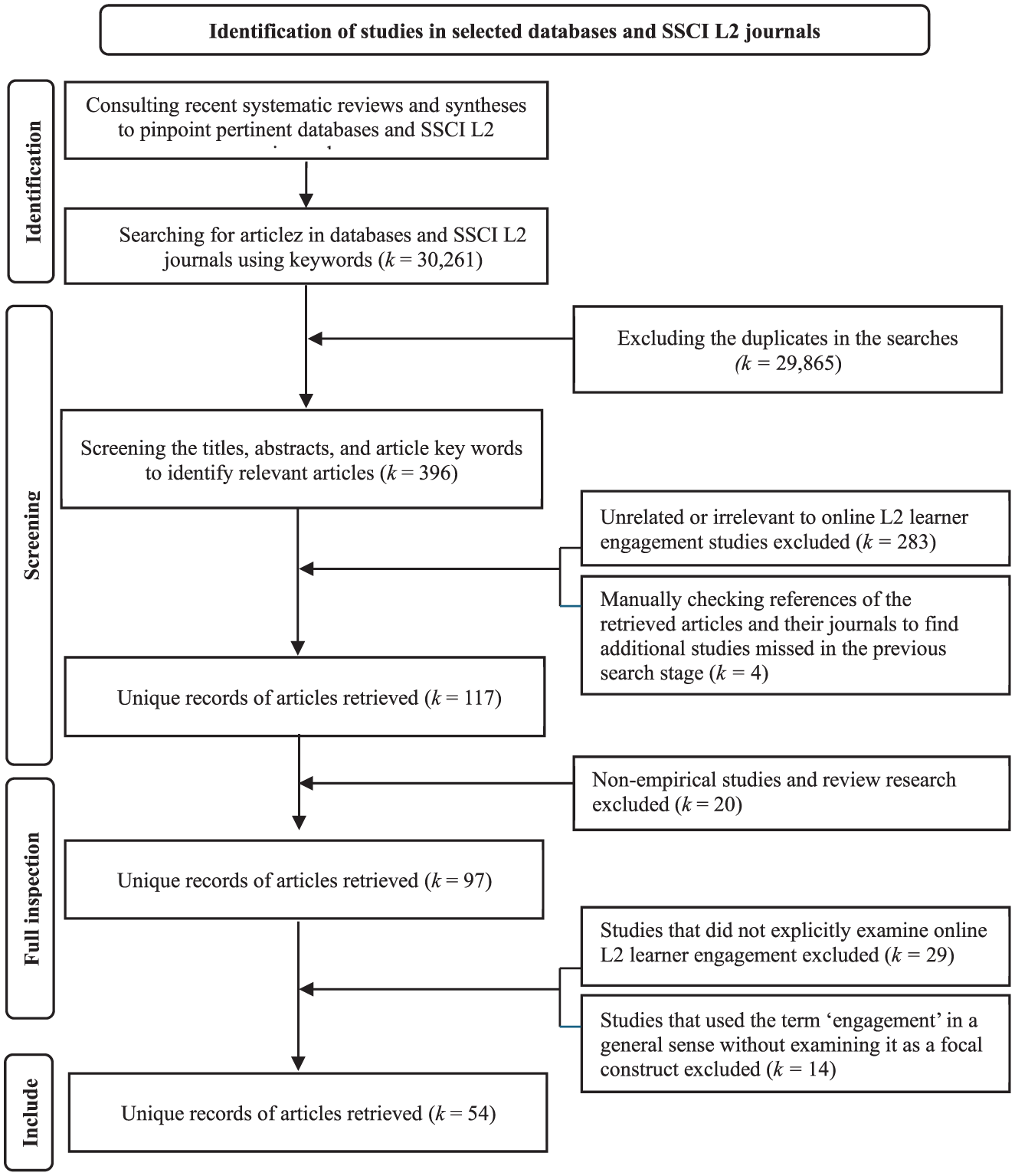
The Preferred Reporting Items for Systematic Reviews and Meta-Analyses (PRISMA) process for identifying articles and creating the corpus of reports.
3 Coding and analysis
In light of the research questions, a coding scheme was developed for the reviewed studies (Table 1).
Complete coding scheme.
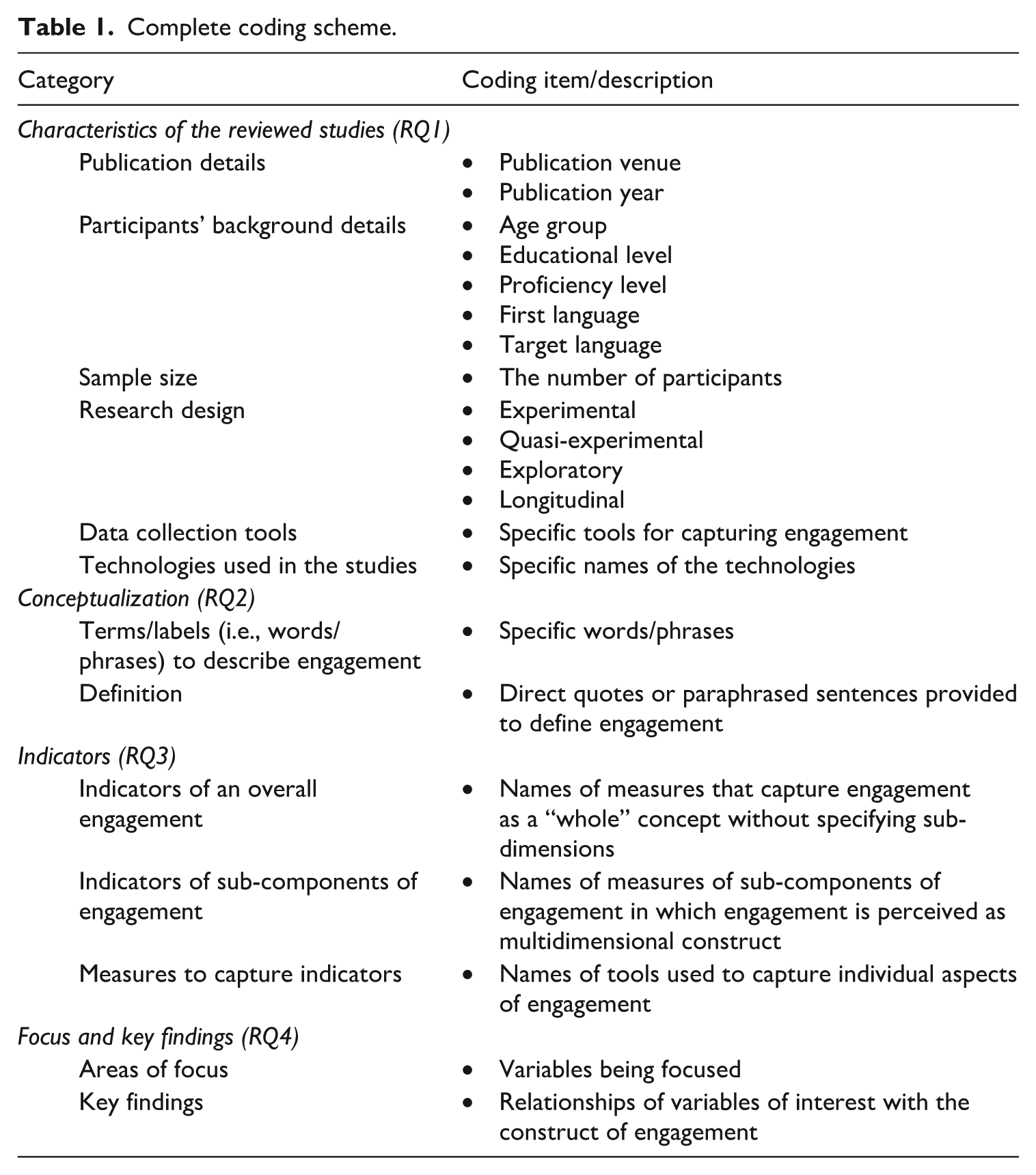
In Table 1, following previous reviews (e.g., Dao et al., 2024; Hiver et al., 2024), we coded study characteristics (RQ1) across six dimensions: (a) publication details; (b) participant background (age, education, proficiency, first and target languages); (c) sample size; (d) research design; (e) data collection tools; and (f) technologies used. For conceptualization of online L2 learner engagement (RQ2), studies were coded for: (a) engagement terms, and (b) provided, adopted, or adapted definitions. For indicators and methods of measuring online L2 learner engagement (RQ3), studies were coded for: (a) whether engagement was treated as a single concept without specifying sub-components or a multidimensional construct (e.g., cognitive, emotional, social); and (b) the indicators and measures. For areas of focus and key findings (RQ4), studies were coded for: (a) study focus, (b) examined variables, and (c) relationships between these variables and engagement. For inter-coder reliability, six studies (12% of the dataset) were randomly selected and coded by two independent coders (i.e., two authors), with agreement ranging from 86% to 94%. Discrepancies were resolved through discussion. A research assistant then independently coded the remaining studies, with the authors reviewing and discussing results to resolve ambiguities.
Coding results were recorded in Excel, with descriptive analyses (frequency counts and percentages) conducted for all categories. Content analysis identified themes in definitions, conceptualizations, indicators, and key findings. Although 54 studies were reviewed, some tables and text exceed this number due to studies fitting multiple categories, such as participant subgroups with varying proficiency, education, or age.
IV Results
1 RQ1: characteristics of online L2 learner engagement studies
The analysis revealed that despite appearing in various L2 journals, most studies were published in four journals: Computer-Assisted Language Learning (CALL), System, Language Learning & Technology, and RELC (Figure 2).
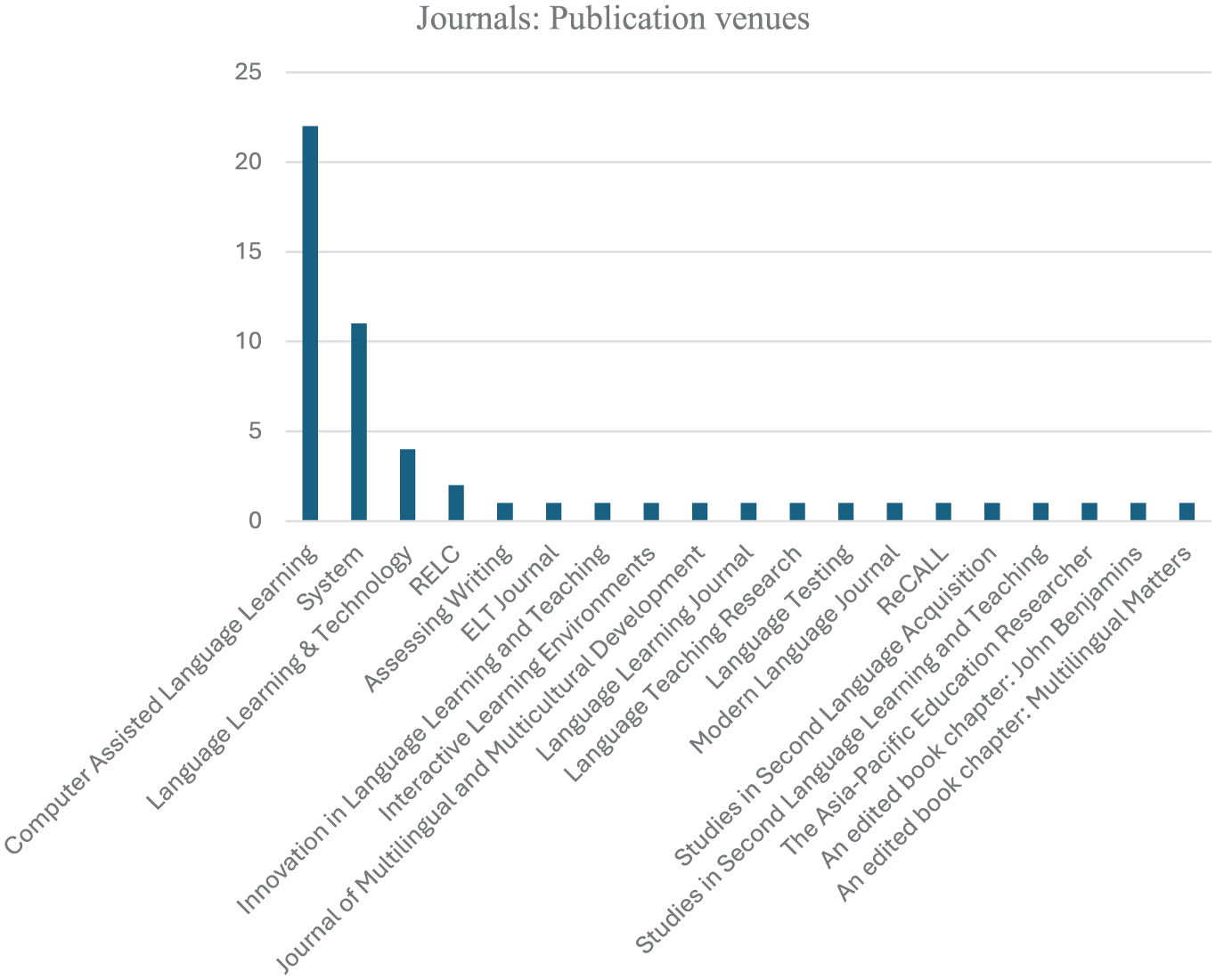
Publication venues.
The results also show that research on online L2 learner engagement has appeared in peer-reviewed journals for over a decade, with its volume increasing notably, surpassing 10 studies per year in recent years, such as 2022 and 2024 (Figure 3).
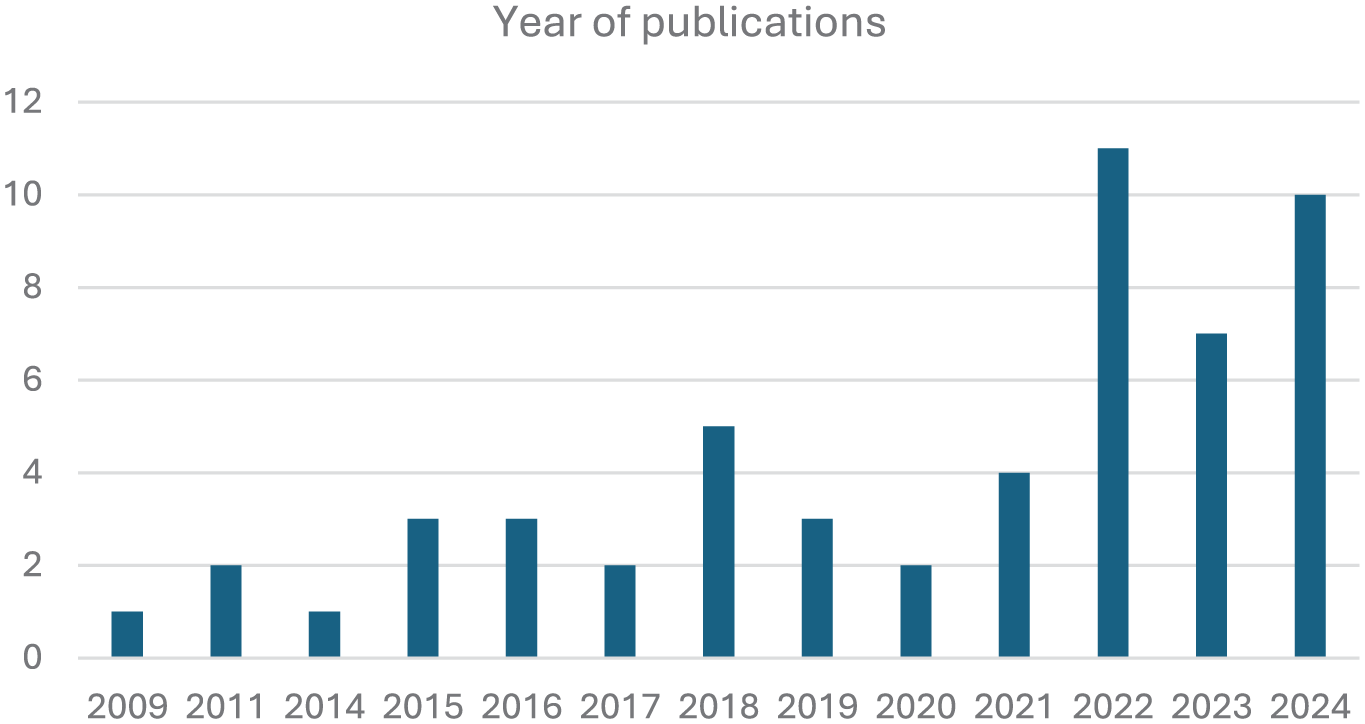
Publication years.
Regarding the demographics of the participants, Figure 4 indicates that 87% of studies focused on adult learners with university-level education, whereas studies on young learners in high school or elementary school were less common.
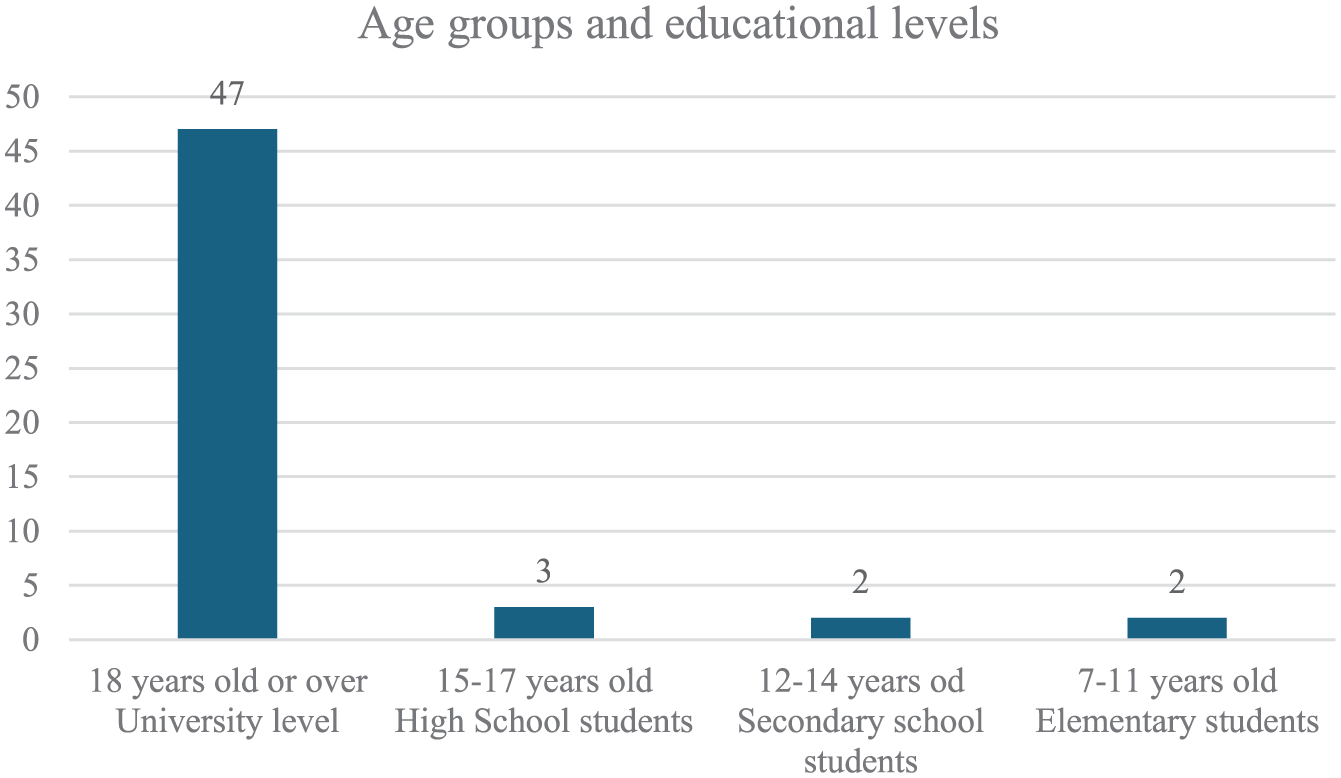
Participant demographics.
As for the participants’ proficiency levels, Figure 5 shows that 31.48% of studies (k = 17) targeted intermediate learners (equivalent to the Common European Framework of Reference for Languages [CEFR] B1–B2), 20.37% (k = 11) focused on learners with varied proficiency, and smaller percentages examined beginners—CEFR A1–A2 (k = 7, 12.96%)—and advanced learners—CEFR C1–C2 (k = 2, 3%). Notably, 31.48% (k = 17) of studies did not report proficiency level.
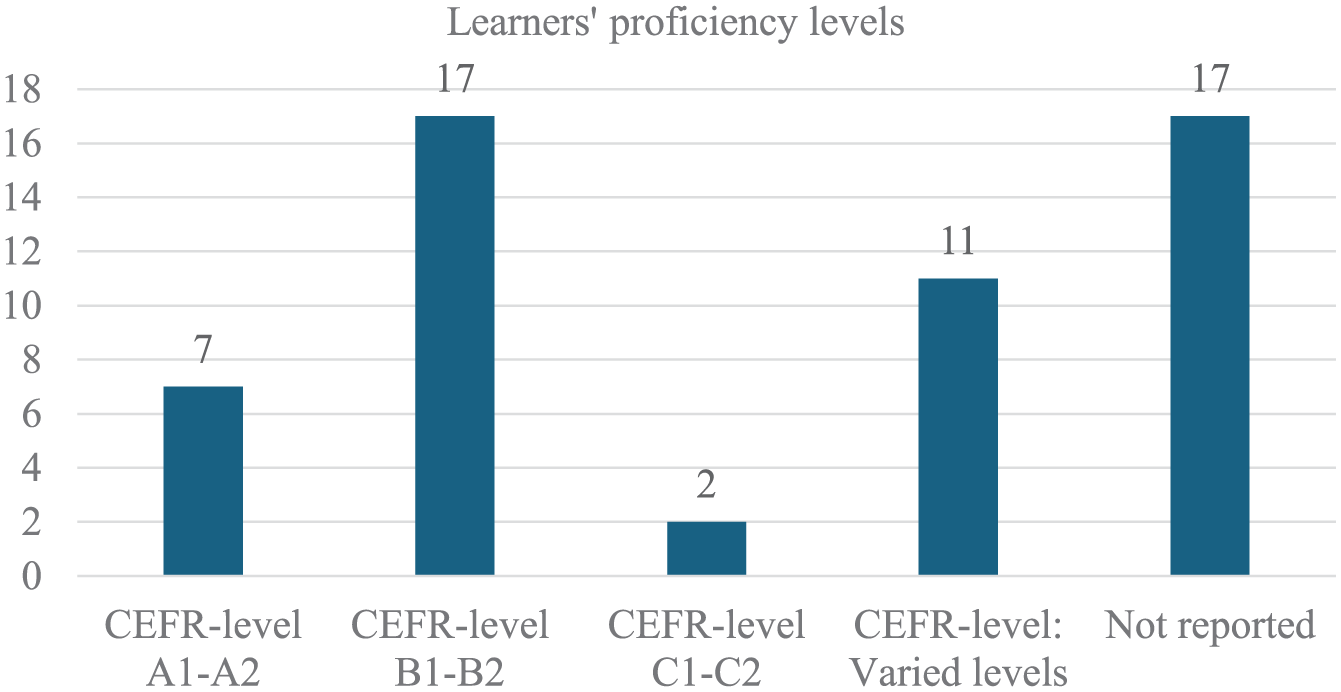
Learner participants’ proficiency level.
For sample size, Figure 6 shows that 42.59% of studies (k = 23) had 10 to 50 participants, with other categories ranging from 3 to 6 participants each in the studies. A few studies had over 200 participants, including 5 using learning analytics data with more than 1,000 participants.
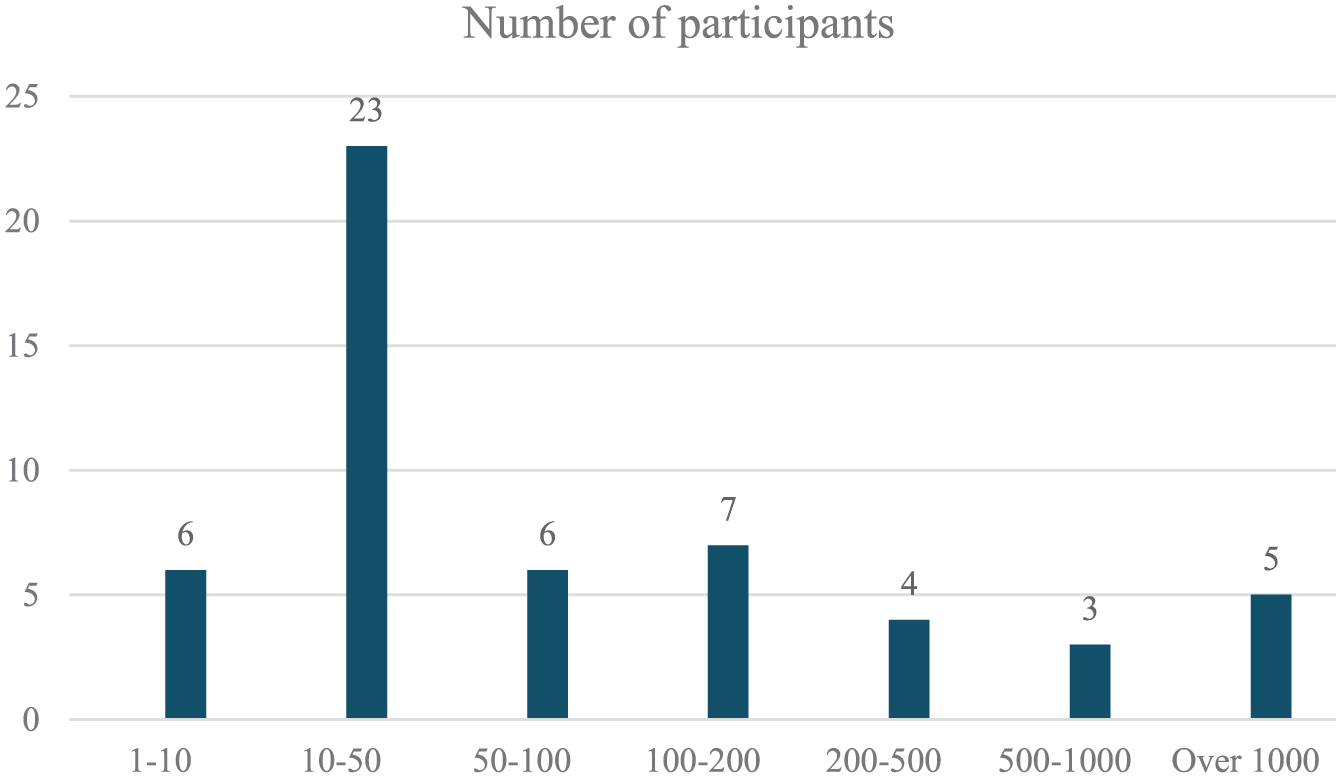
Sample size.
For participants’ first languages (L1s), Figure 7 shows most participants were L1 Mandarin speakers, with smaller numbers speaking English, Japanese, Spanish, Dutch, Korean, Arabic, and other languages.
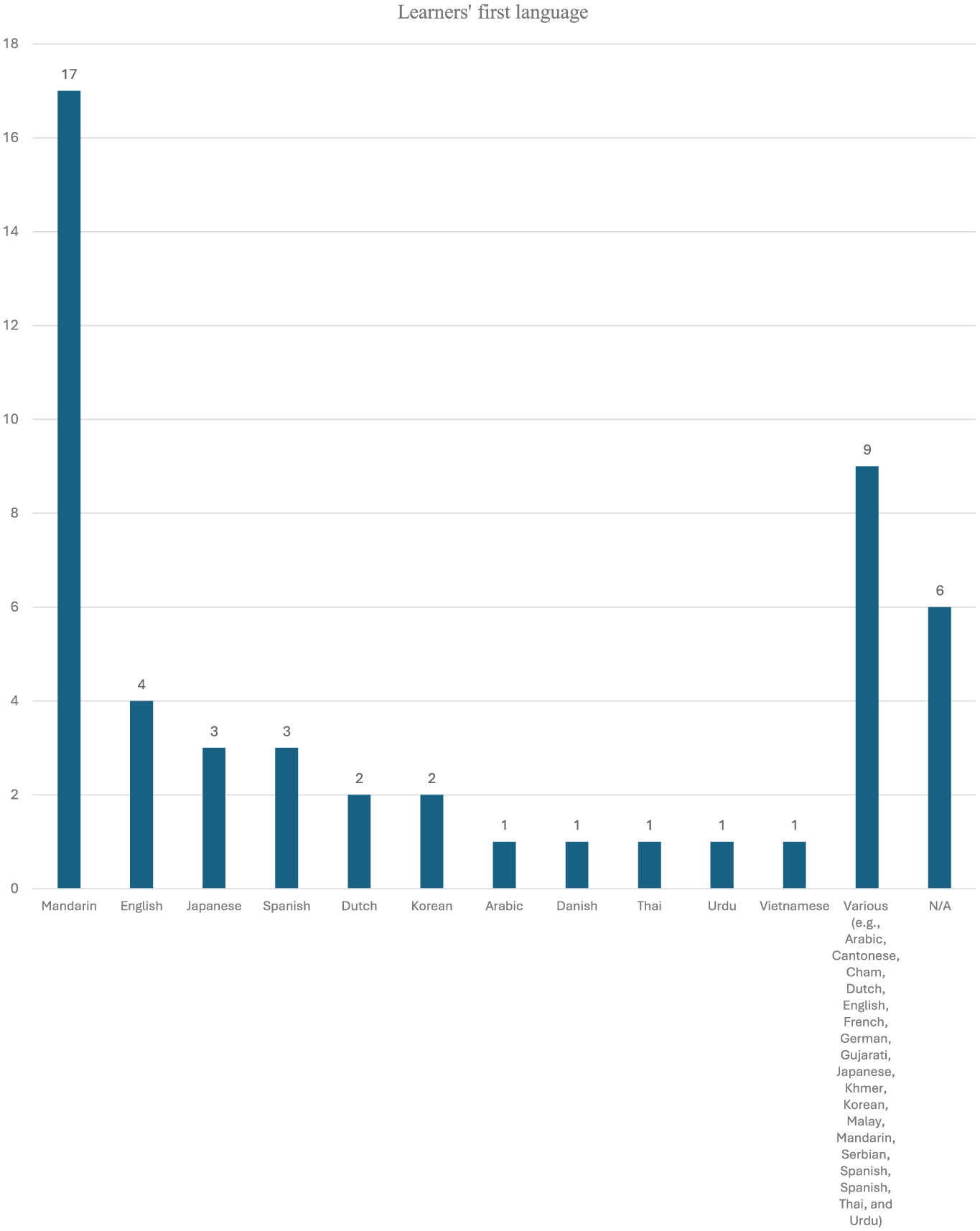
Learner participants’ first language (L1).
Figure 8 shows English as the target language in 85.18% (k = 46) of studies, followed by Spanish (k = 5) and Mandarin (k = 1). This finding reflects trends showing that L2 English is vastly over-represented in published research in language education (Andringa & Godfroid, 2020; Hiver et al., 2024). One survey study in the report pool included multiple target languages, such as Arabic, English, French, and German.
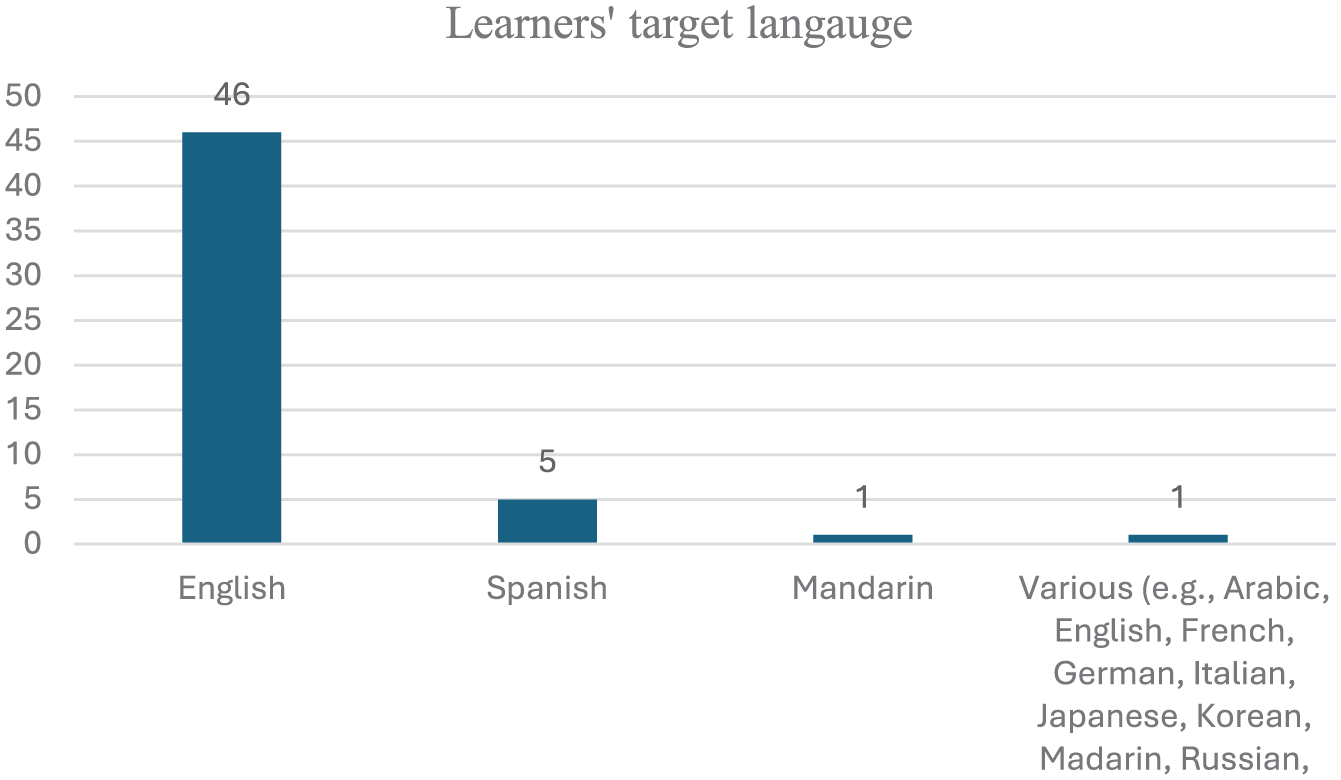
Learner participants’ target language.
Regarding the design adopted to investigate online learner engagement, Figure 9 shows that 57.40% (k = 31) of studies used experimental or quasi-experimental designs, 42.60% (k = 23) were exploratory, and notably 33.33% (k = 18) were longitudinal.
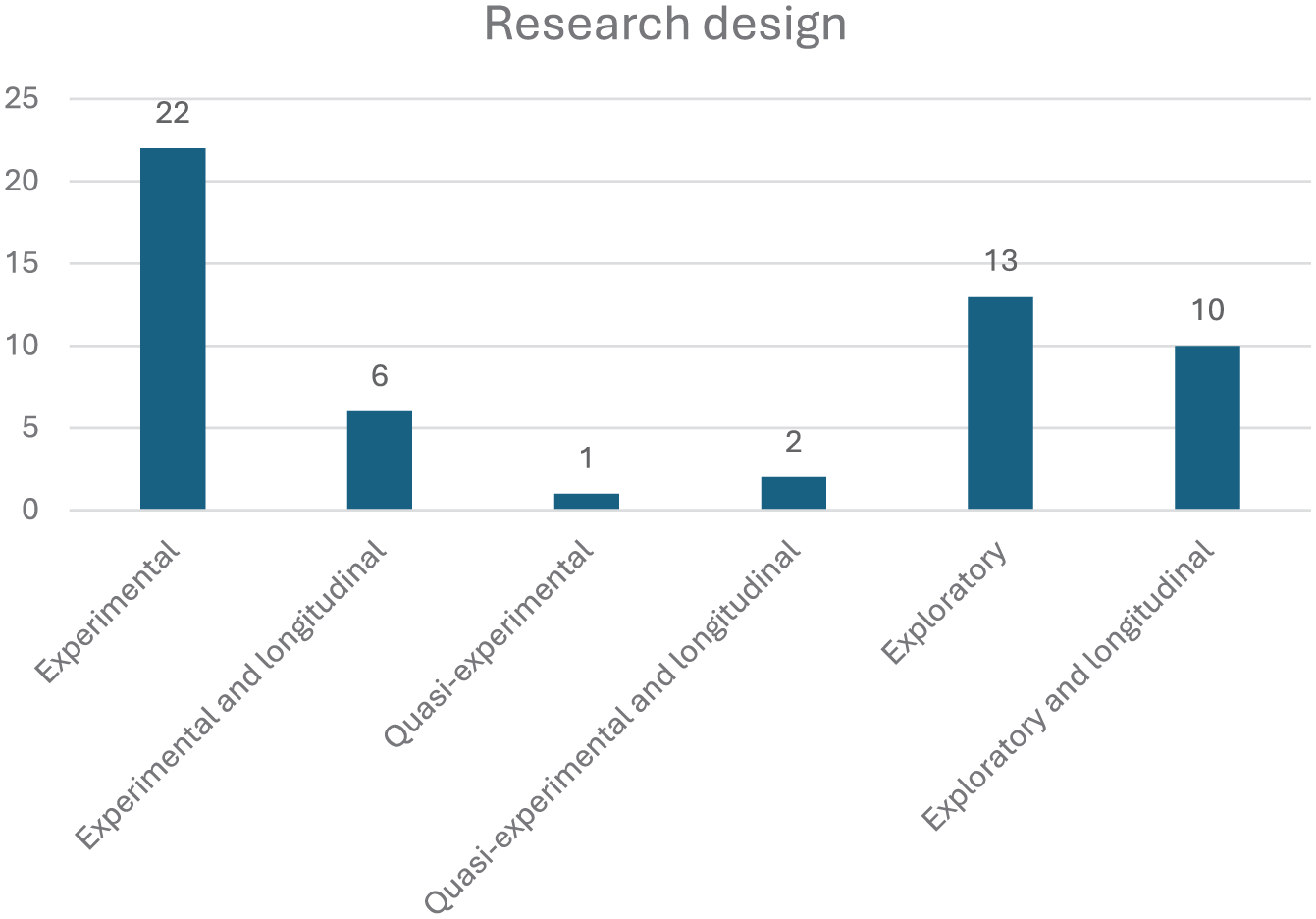
Designs of online second-language (L2) learner engagement research.
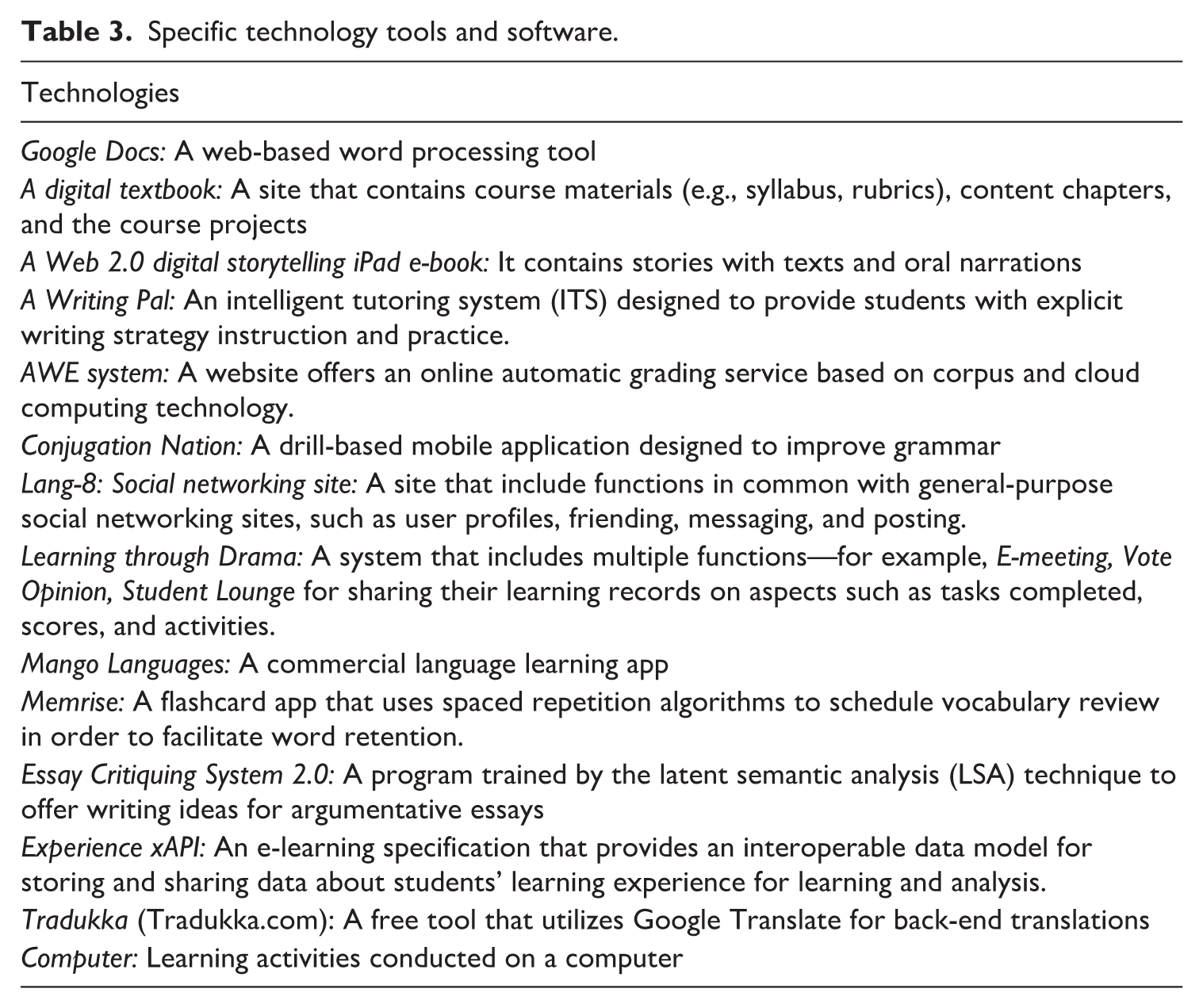
For technology use, the reviewed studies utilized various technologies, grouped into four categories: LMS and platforms, videoconferencing apps, social networking sites and messaging apps (Table 2), and course-specific tools or software (Table 3).
Technologies used in online second-language (L2) learner engagement research.
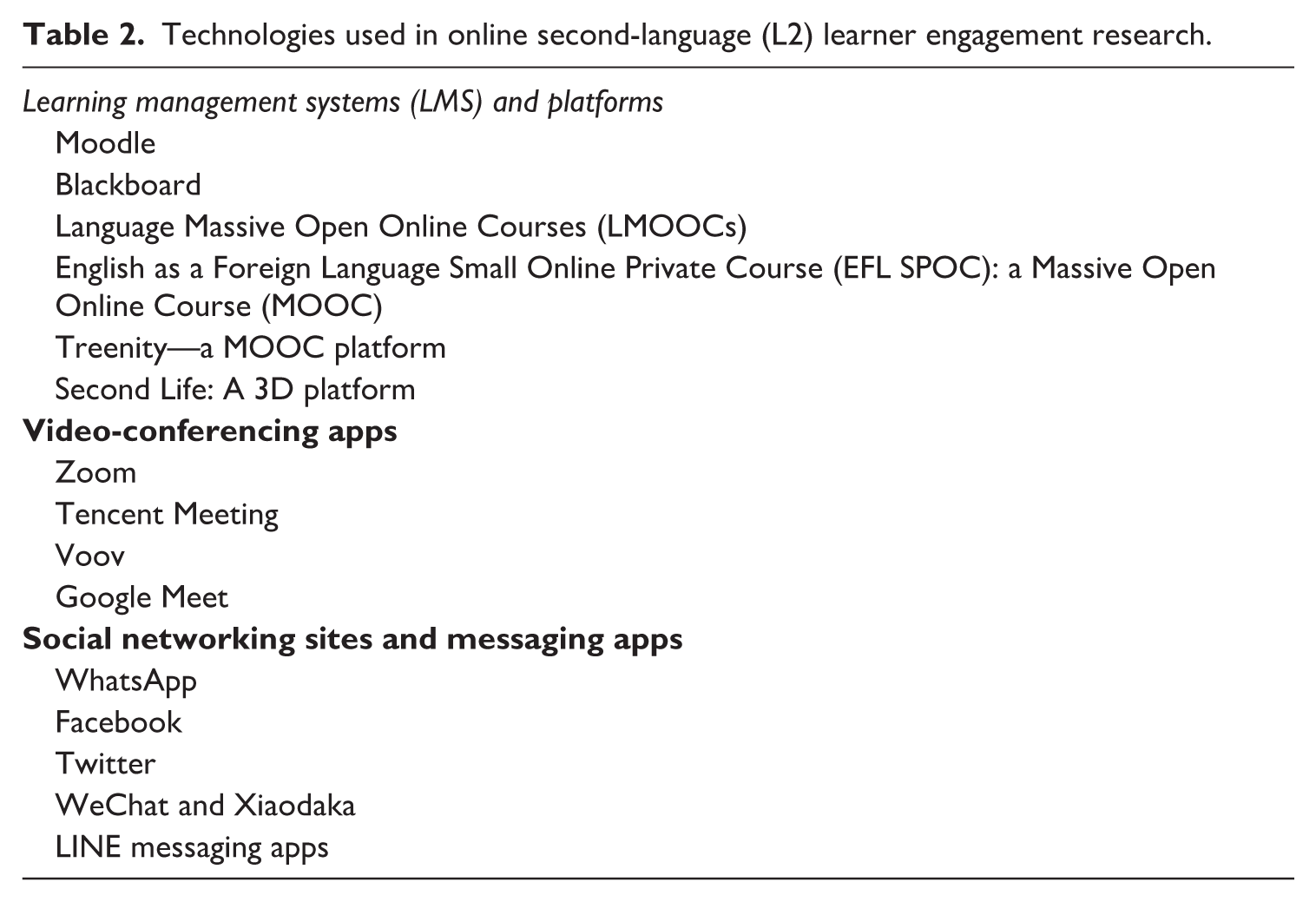
Specific technology tools and software.
For online learner engagement measures, Figure 10 shows that research often used multiple tools, with surveys (Likert-scale and open-ended) and interviews (individual, focus group, and stimulated recalls) being most common. Interactional data (e.g., task-based interactions) for discourse analysis, and learning analytics (e.g., user logs, posts, usage data) were also used. Less common measures included test scores, products (e.g., written assignments), reflection journals, observations, verbal reports (e.g., think-aloud reports), and eye-tracking data.
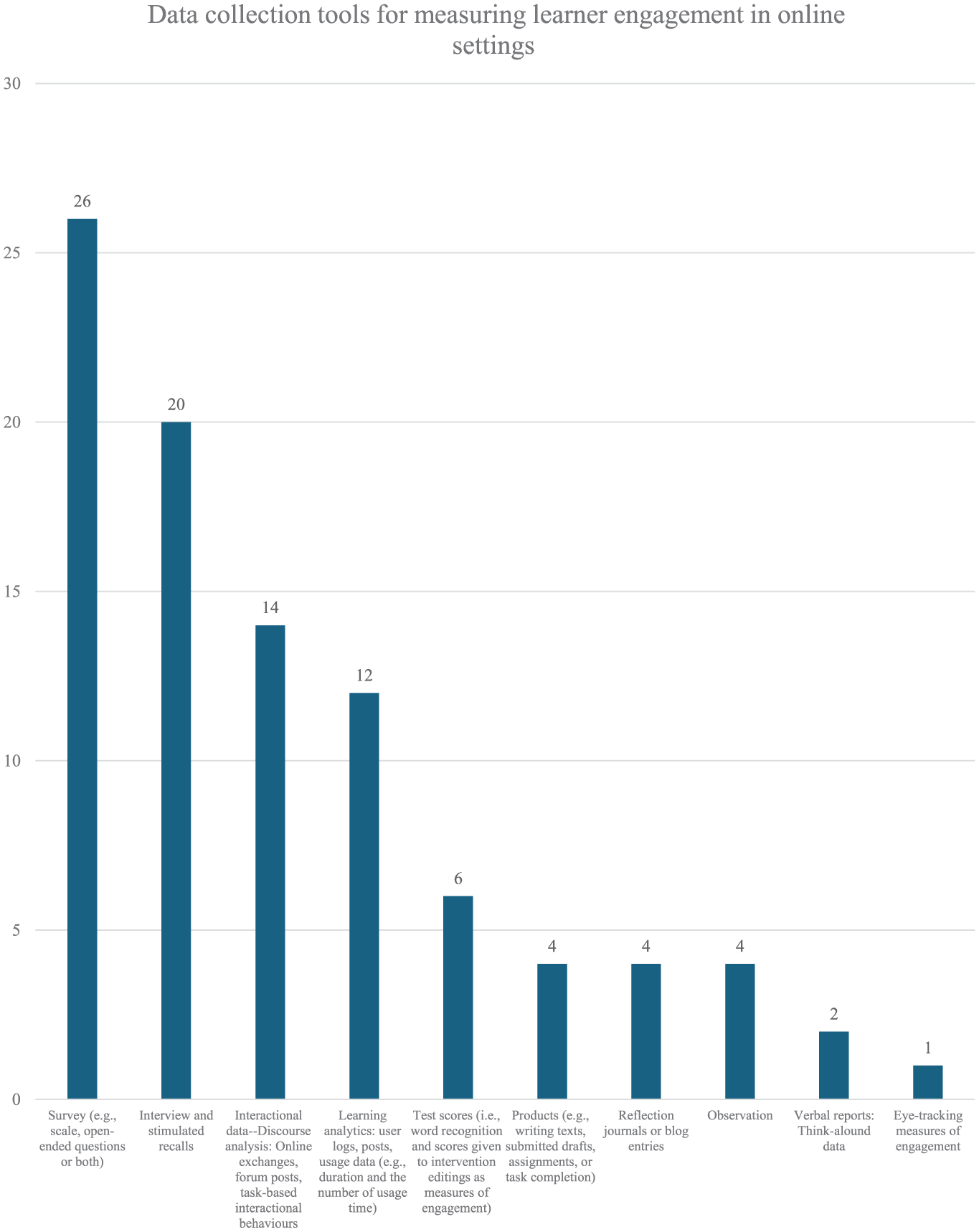
Tools for measuring learner engagement in online settings.
2 RQ2: conceptualizing and framing online L2 learner engagement
a Labels of the “engagement” construct
Before exploring definitional conceptualization, it is necessary to first gain an overview of the construct names L2 research has used for “online learner engagement” (Table 4).
Online second-language (L2) learner engagement: Construct names.
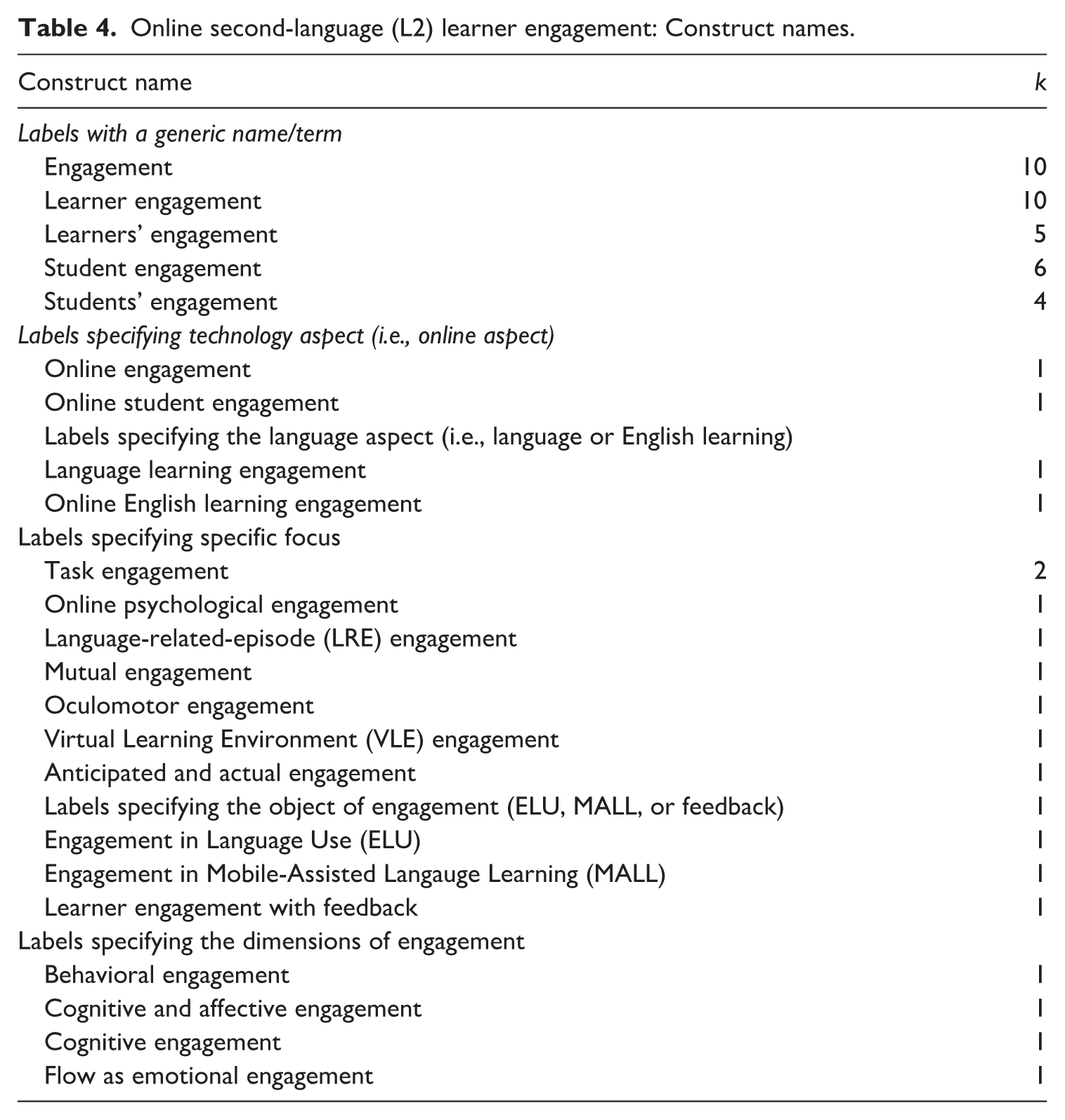
Table 4 shows that L2 research labelled the concept of online L2 learner engagement using various terms, classified into six categories: (a) generic terms; (b) technology-specific terms; (c) language-focused terms; (d) specialized terms (e.g., task, psychological, LRE, mutual, oculomotor, VLE, anticipated, actual engagement); (e) object-specific terms (e.g., Engagement in Language Use, Mobile Assisted Language Learning, feedback); and (f) dimension-specific terms (e.g., cognitive, affective/emotional, behavioral).
b Definitions of the “engagement” construct
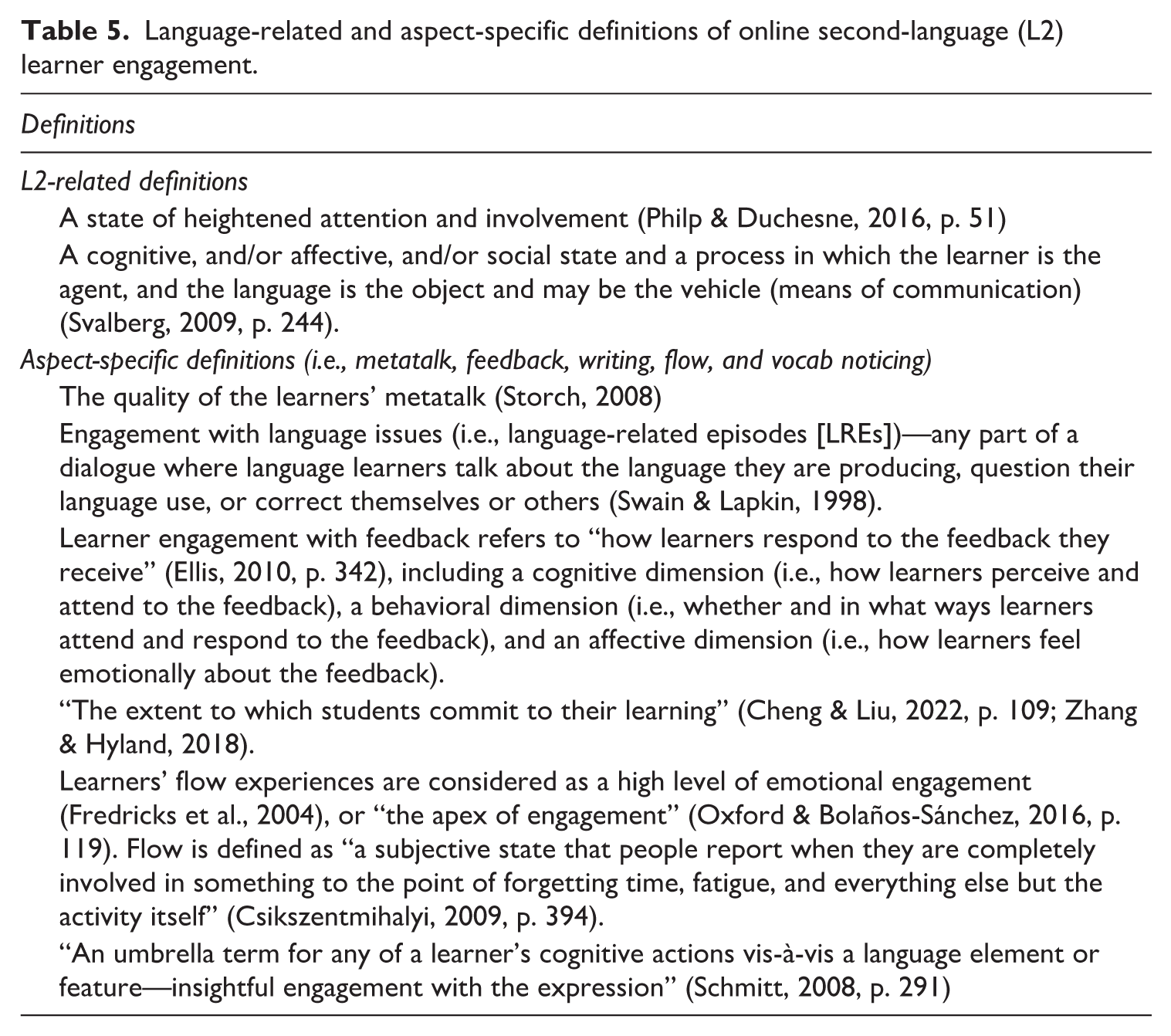
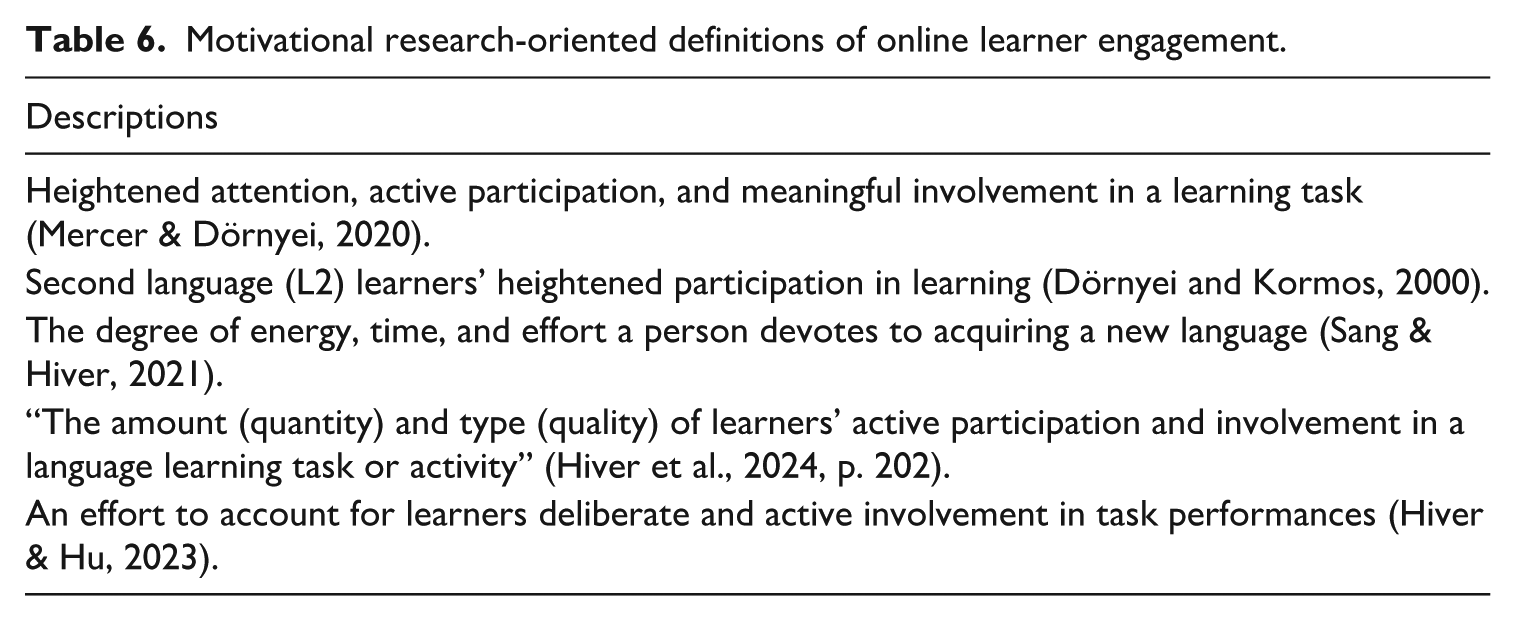
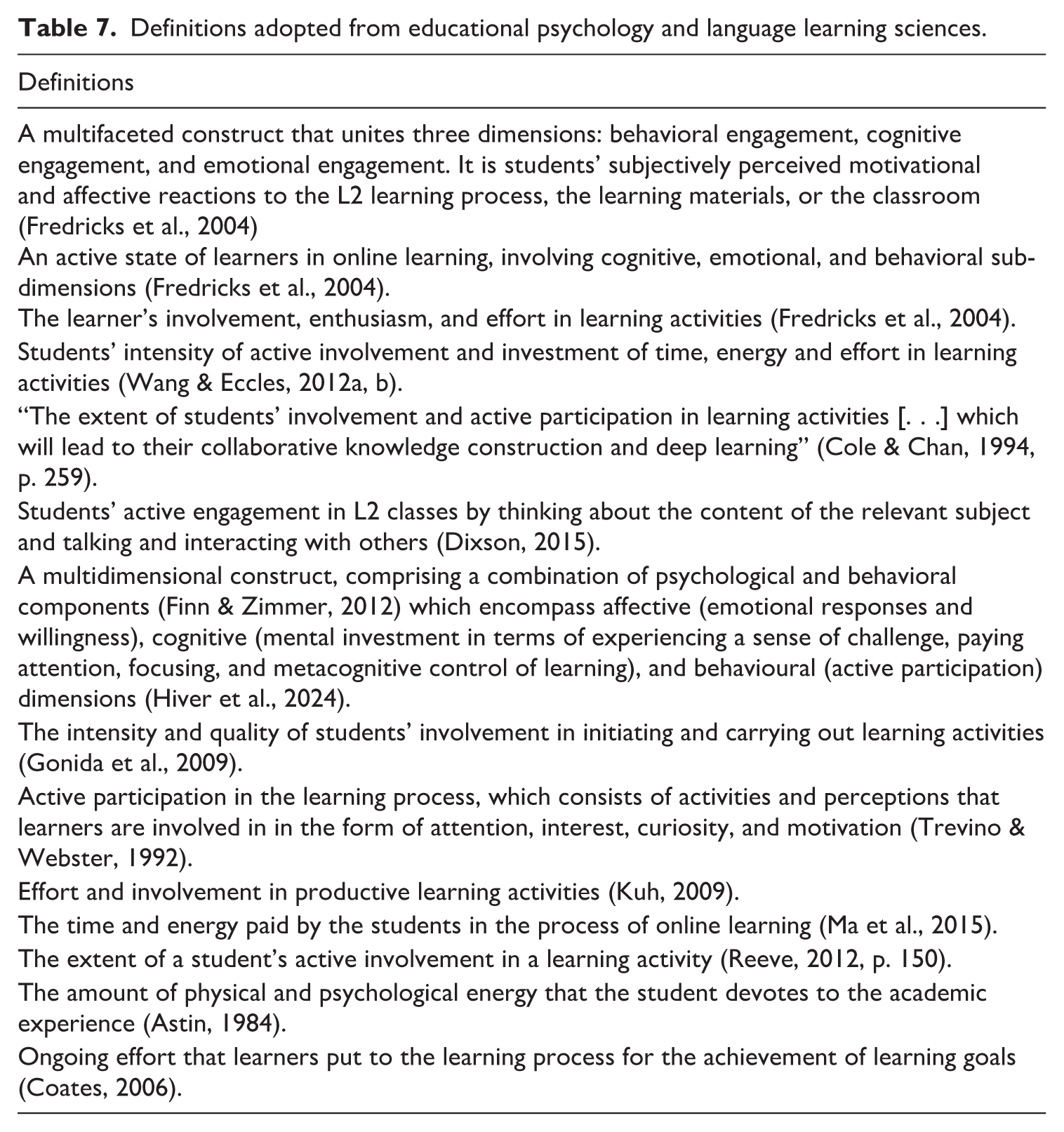
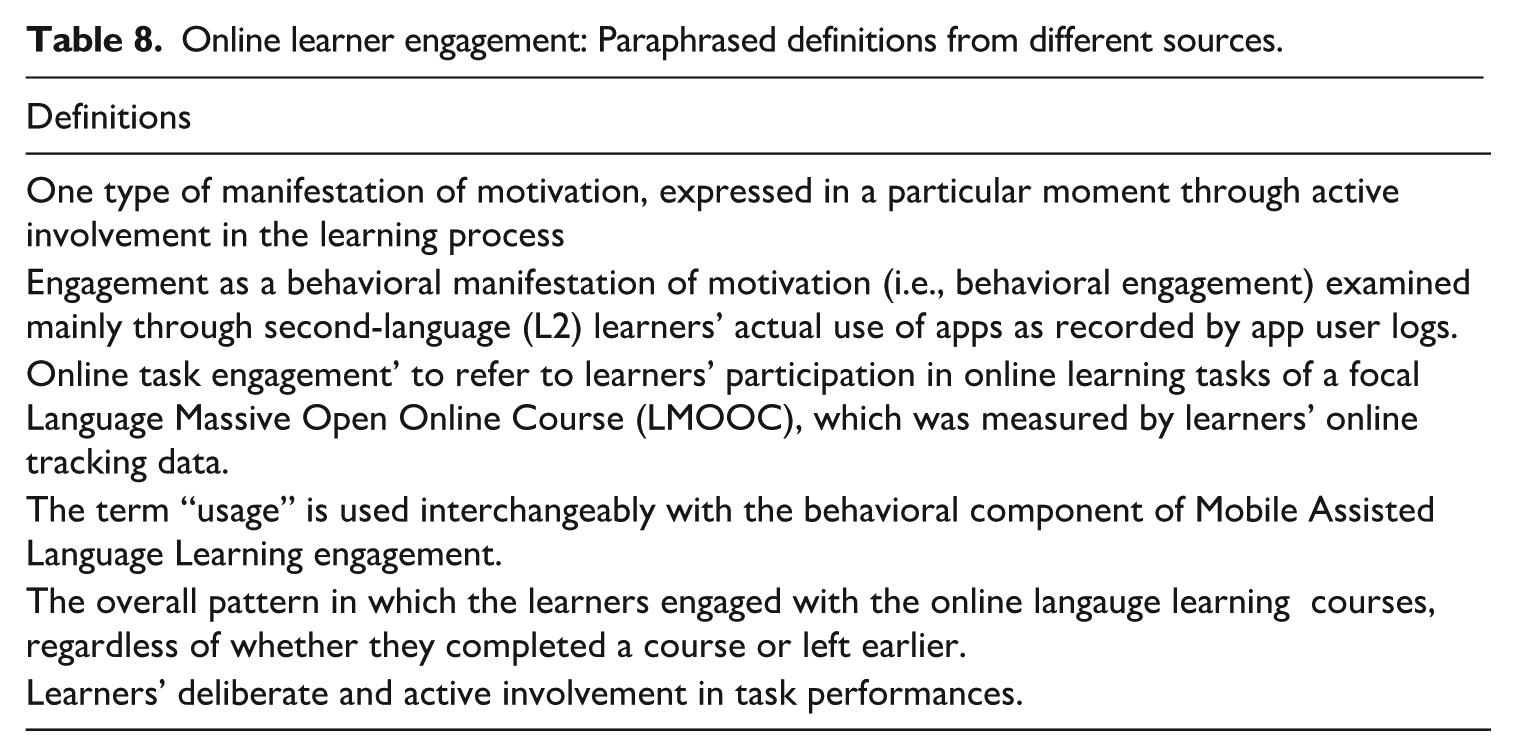
Studies not only used varied labels for online learner engagement but also adopted diverse definitions, grouped into five categories: (a) second-language-related, (b) aspect-specific, (c) motivation-focused, (d) educational psychology/language learning science-based, and (e) paraphrased from other sources (Table 5).
Tables 5–8 revealed variations in how researchers conceptualize “engagement”, despite focusing on the same construct. Notably, very few studies explicitly stated the “online” aspect in their definitions, often treating online engagement as synonymous with general engagement, regardless of the learning context (face-to-face or online).
Language-related and aspect-specific definitions of online second-language (L2) learner engagement.
Motivational research-oriented definitions of online learner engagement.
Definitions adopted from educational psychology and language learning sciences.
Online learner engagement: Paraphrased definitions from different sources.
c Targets or focus of online L2 learner engagement
Regarding the targets or focus of online learner engagement, the results identified four broad categories: (a) engagement in activity/task-based interaction, (b) engagement in general online language learning, (c) engagement with feedback, and (d) engagement in social networking sites and with others (e.g., digital books, word recognition apps, and game-based tutoring systems). Figure 11 shows the distribution of these focus areas.
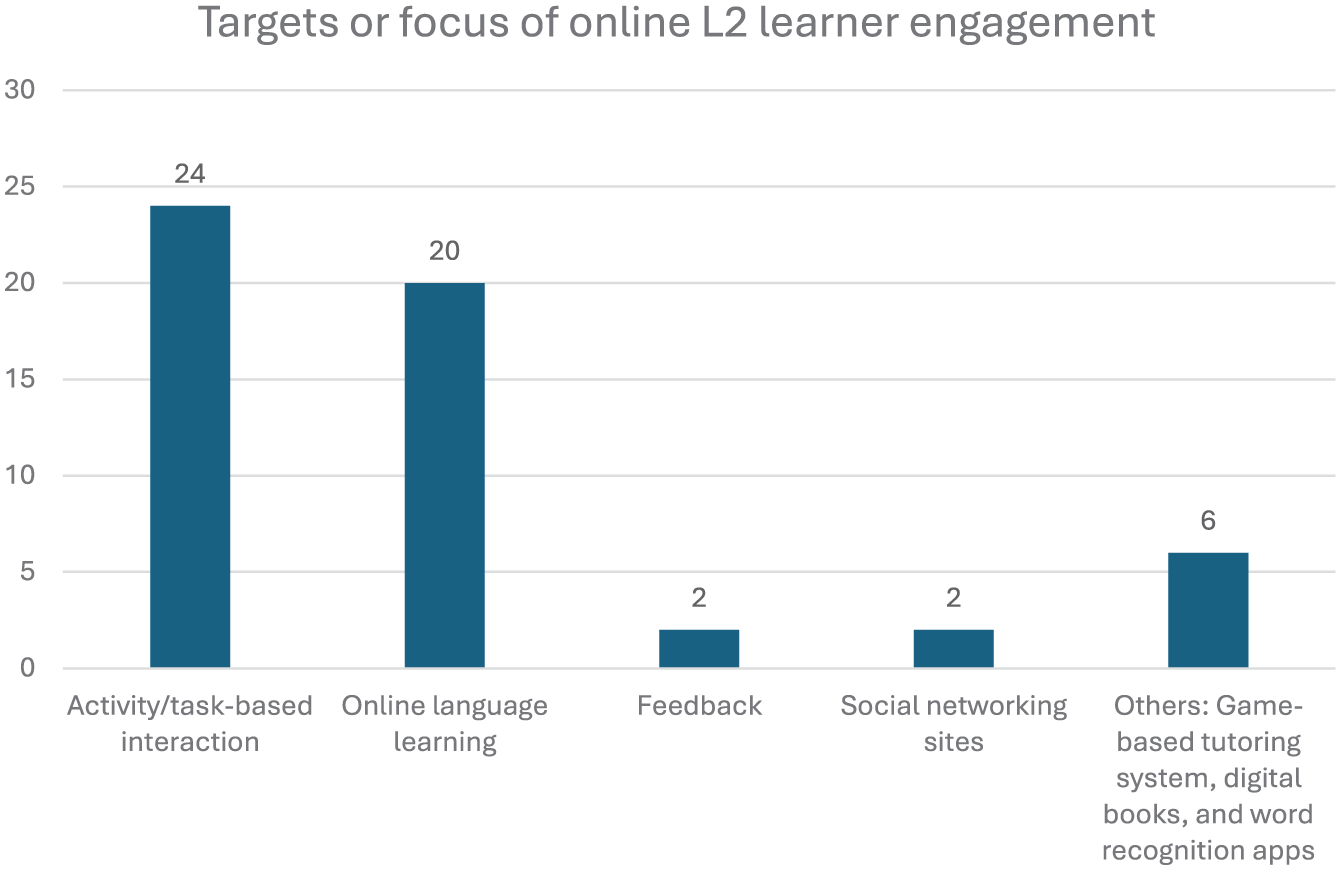
Targets or focus of online second-language (L2) learner engagement.
3 RQ3: indicators and methods used to capture online learner engagement
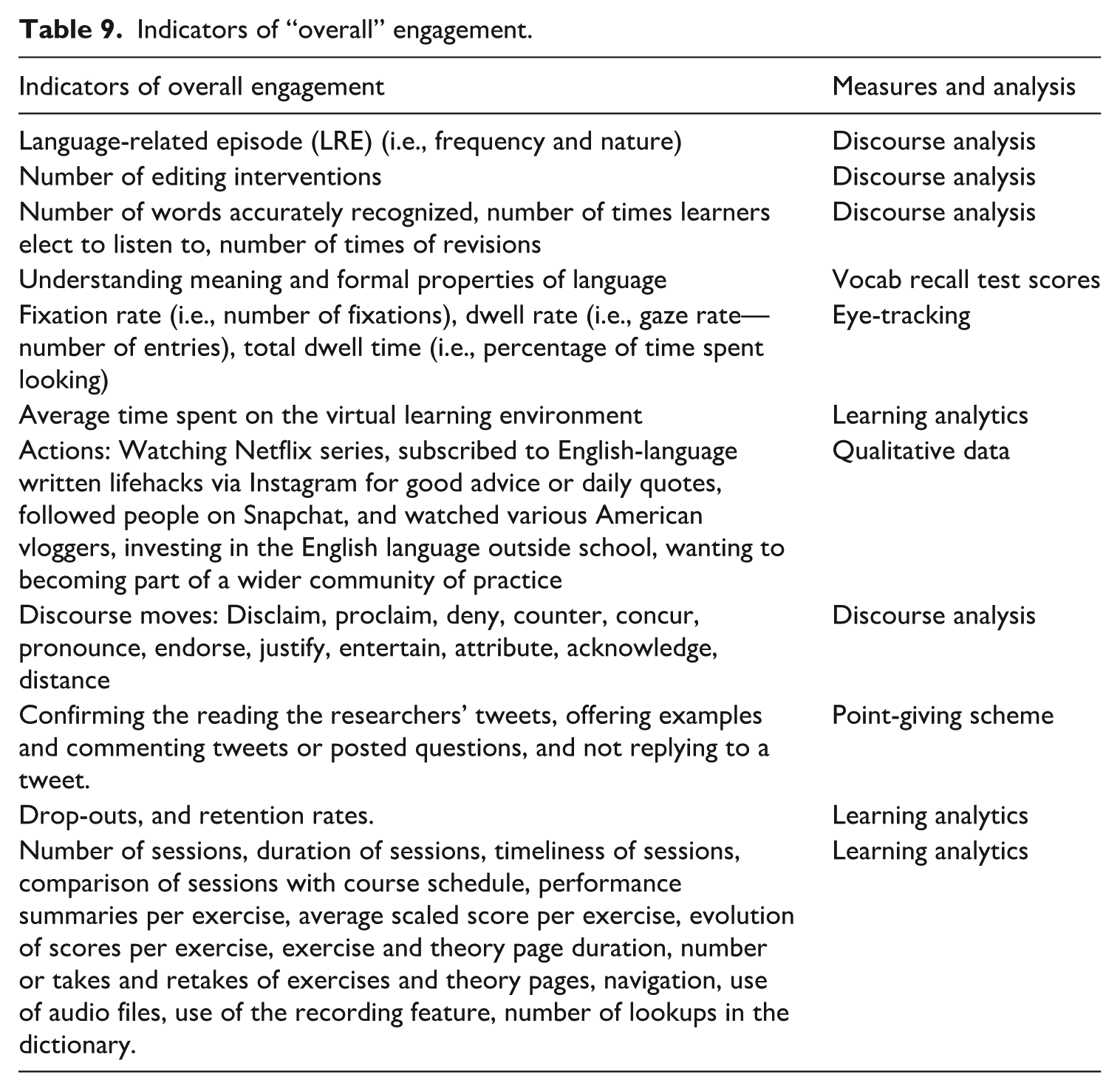
Regarding engagement indicators, the results revealed two distinct patterns. In the first pattern, engagement was treated as a unitary whole, without being separated into sub-types or dimensions; therefore, single distinct indicators were used to represent it as a whole rather than a componential construct (Table 9).
Indicators of “overall” engagement.
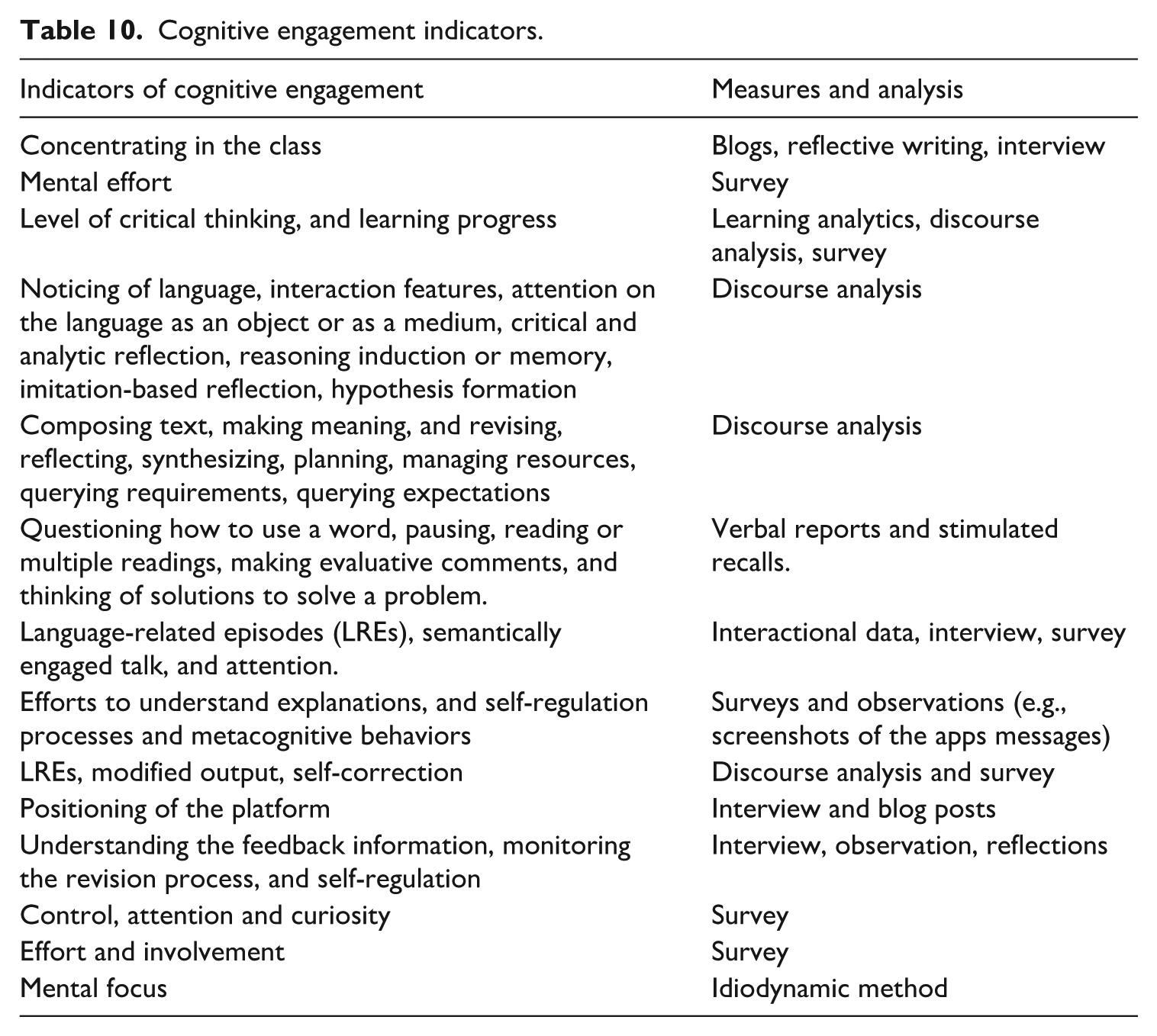
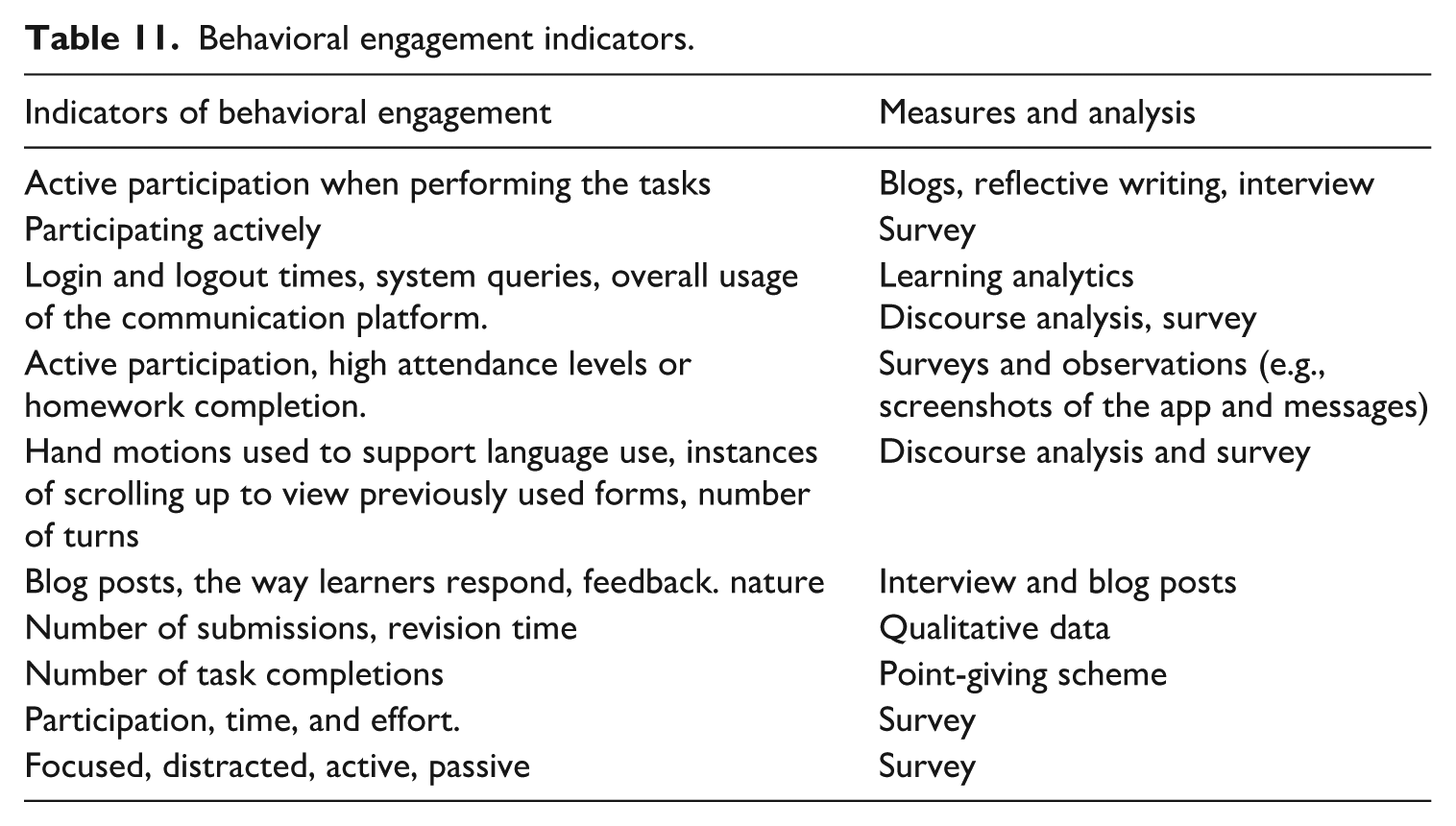
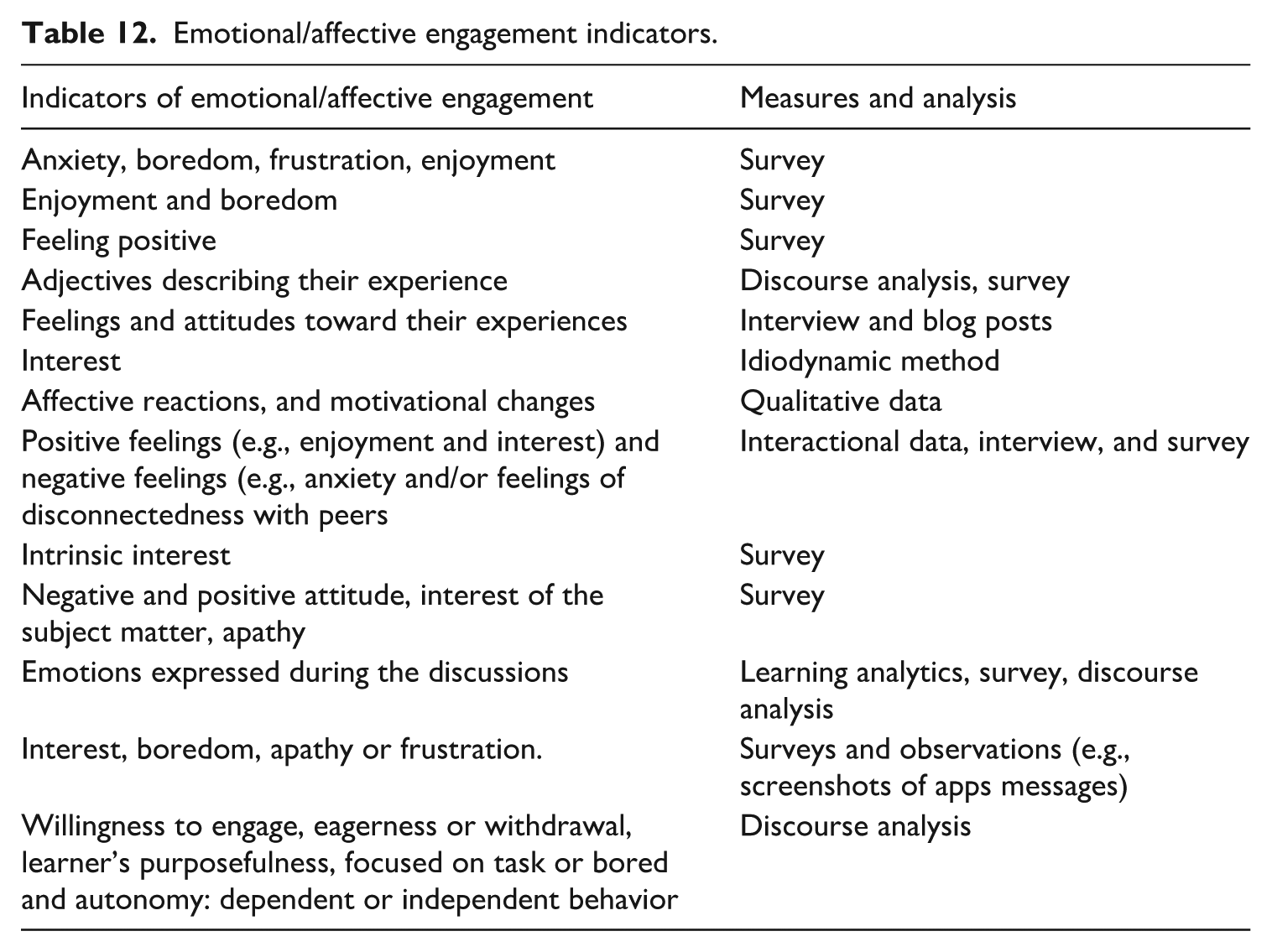
For the second pattern of indicators of engagement, the results showed the tendency of treating sub-types or dimensions of engagement separately and thus used distinct indicators for each sub-type or dimension (Tables 10–13).
Cognitive engagement indicators.
Behavioral engagement indicators.
Emotional/affective engagement indicators.
Social engagement indicators.
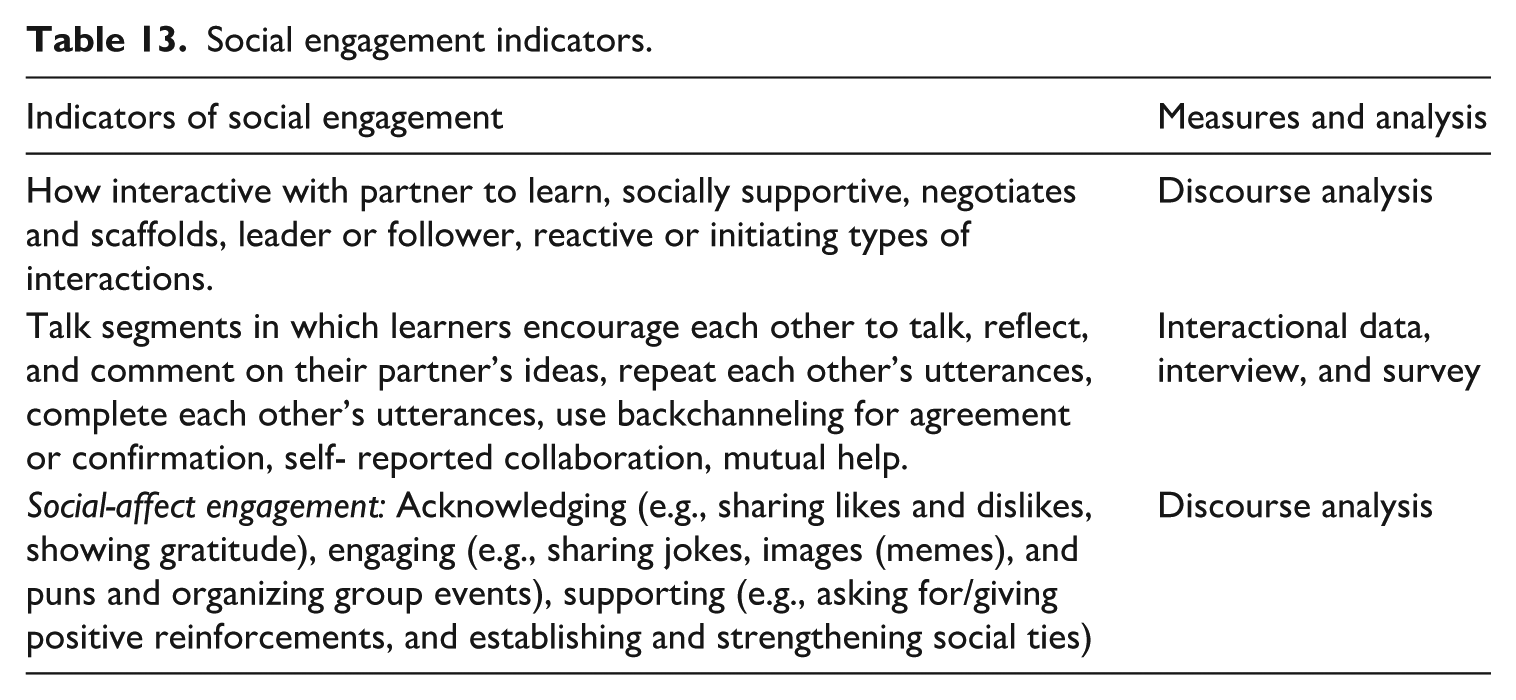
Additionally, although each dimension of online learner engagement had its own indicators, some studies combined dimensions and used shared indicators for more than one dimension, such as social-affective, cognitive-behavioral, or cognitive-affective (Table 13). In other words, although these studies acknowledged that each engagement dimension was distinct and had unique indicators, they also recognized overlaps, leading to indicators that capture the intertwined dimensions of online learner engagement.
4 RQ4: areas of focus and key findings in online L2 learner engagement research
The analysis revealed three focal areas: (a) understanding online L2 learner engagement, its manifestations, and characteristics; (b) exploring its link to learning and language production; and (c) examining factors influencing it.
a Area of focus 1: understanding online L2 learner engagement, its manifestation, and characteristics
As for the first focus, 37.04% of the studies (k = 20) explored the perceptions, manifestations, and characteristics of online L2 learner engagement. Regarding the understanding of the concept of online L2 learner engagement, three studies explicitly asked teachers to describe their understanding or conceptualization of the term. These studies reported that although teachers did not claim to be able to define the concept explicitly, they were able to describe how learners were cognitively, behaviorally, and emotionally engaged in online L2 classes. Additionally, these teachers specifically equated learners’ alertness as a synonym for online L2 learner engagement and viewed flow as the “apex of engagement.”
Regarding the manifestation of online L2 learner engagement, the exploratory and descriptive studies (k = 20) provided diverse accounts of what online L2 learner engagement entailed and how it was expressed in virtual L2 learning settings. Engagement was reflected in learners’ participation in text chat discussions, diverse language use (e.g., denying, justifying, endorsing), turn-taking, negotiating meaning, expressing ideas, revising texts, course retention, session attendance, completed exercises, platform visits, and actions like watching videos.
For instance, the manifestation of engagement was evident in learners’ level of participation in discussing language issues, diverse language use (e.g., denying, countering, justifying, acknowledging, expanding distance, endorsing, or concurring), and the degree of turn-taking, negotiation of meaning, expression of feelings and ideas, and revisions of texts or online discussion posts, attrition or drop-out rates in online L2 courses, time spent in online sessions, the number of sessions attended, exercises completed, course audios played, and platform visits, actions like watching videos, and the number of weekly student-initiated conversation episodes.
As for the characteristics of online L2 learner engagement, the results revealed three key features of online L2 learner engagement: its dynamic and fluctuating nature over time, diverse patterns and profiles of online learner engagement across different online settings, and the interconnection between its sub-components (emotional, cognitive, and behavioral), which influenced one another.
b Area of focus 2: online L2 learner engagement and L2 learning
The second focus of existing research on online L2 learner engagement was its link to language production and/or subsequent L2 learning. A small portion (9.26%, k = 5) of studies documented the link between online L2 learner engagement and language production or learning. These results indicate that online learner engagement affected and/or predicted: (a) academic achievement, (b) post-test L2 learning, (c) text quality, and (d) target language production improvement.
c Area of focus 3: online L2 learner engagement and influential factors
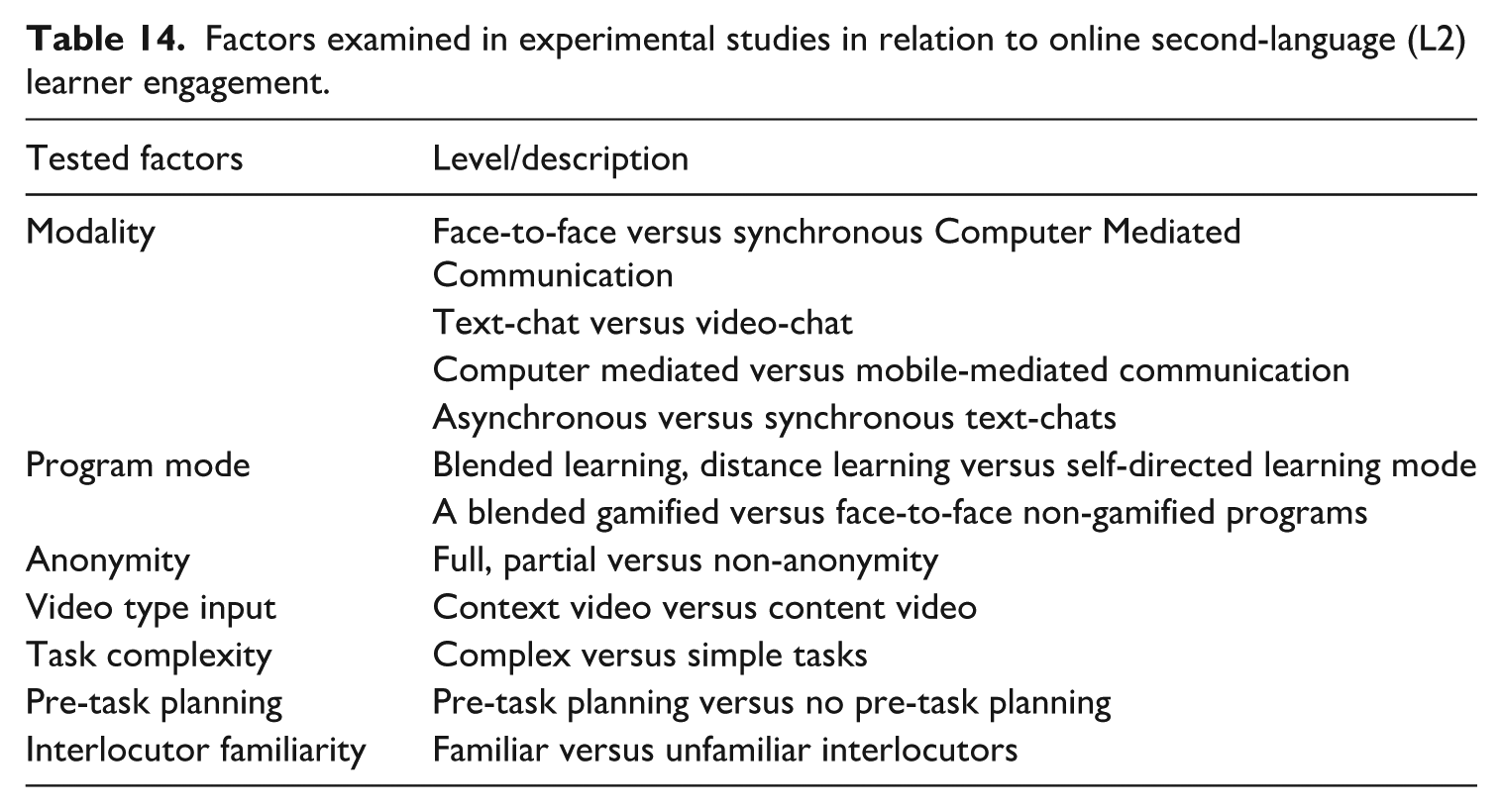
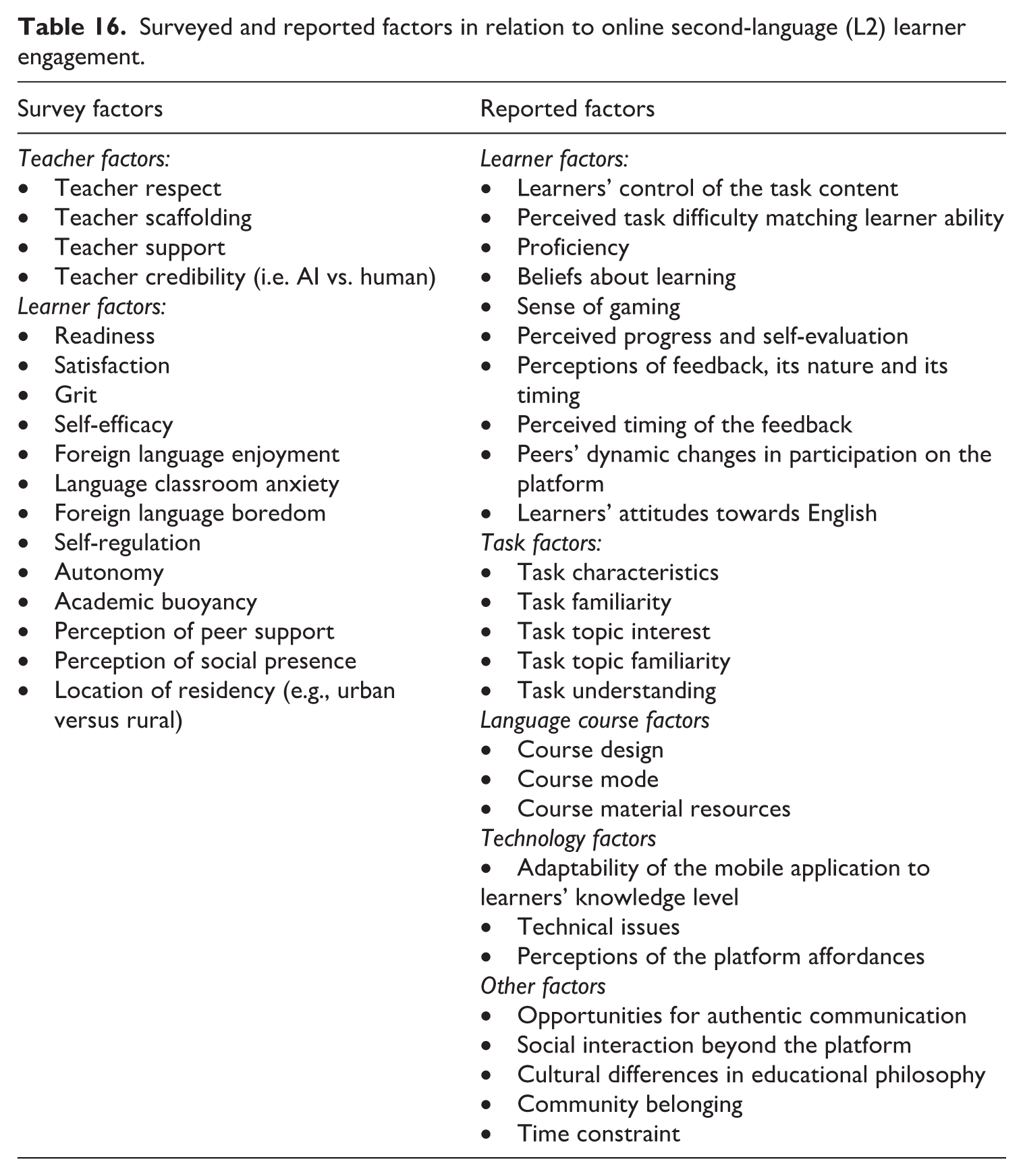
Regarding the final focus, 74.07% of the studies (k = 40) investigated the relationship between L2 online learner engagement and various variables. These variables are categorized into four groups (Tables 14 and 15): tested factors (i.e., factors examined through experimental study designs), interventionist factors (i.e., factors examined through interventionist design, focusing on describing learner engagement as a result of the intervention, often without a control group), surveyed factors (i.e., factors assessed using Likert-scale surveys), and reported factors (i.e., factors identified in qualitative data, such as interviews, stimulated recalls, and reflective writings).
Factors examined in experimental studies in relation to online second-language (L2) learner engagement.
Factors examined in interventionist and descriptive studies in relation to online second-language (L2) learner engagement.
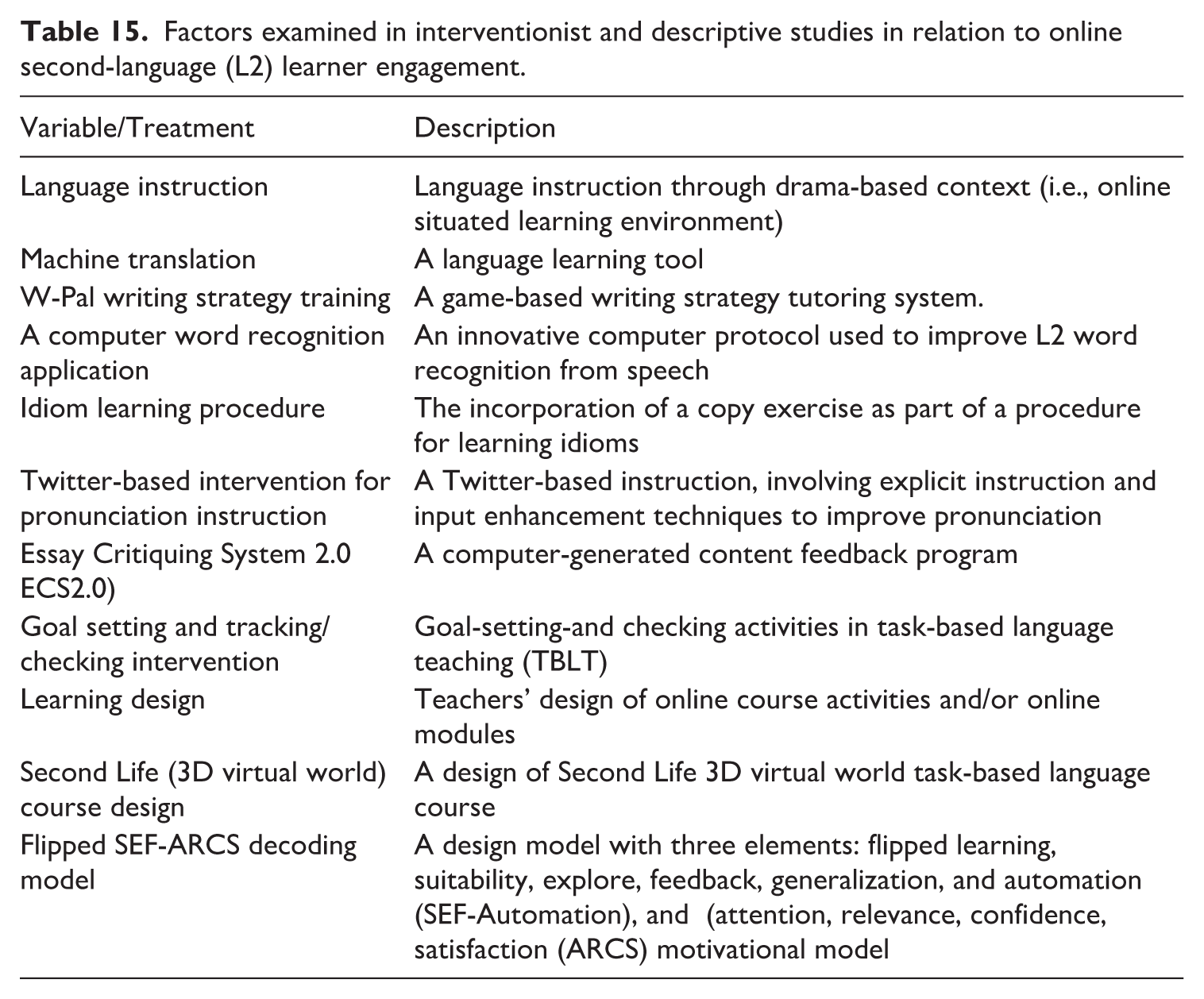
Table 14 shows seven factors tested in experimental studies on online L2 learner engagement, all of which significantly affected engagement, with varying impacts on its dimensions (cognitive, social, emotional, and behavioral).
In Table 15, a variety of interventions were conducted to explore their impact on online learner engagement. Although these studies were interventionist, their overall focus was on describing how online L2 learner engagement unfolded as a result of these interventions (often without a control group), rather than on manipulating a variable of interest and testing it within the classic experimental design that includes both a control group and a treatment group. The results of these studies show that all interventions positively impacted online L2 learner engagement, except for one study reporting no impact on learner engagement.
In Table 16, Likert-scale surveys were used to gauge multiple factors and examine their links to online L2 learner engagement. These factors appeared to concern two main aspects: teacher factors and learner factors. Regarding the teacher factors, the results overall indicate that teacher respect, scaffolding, and support significantly predicted online L2 learner engagement. Although teacher credibility (i.e., being AI or human teachers) was not observed to make direct differences, it mediated the impact of social presence on learner engagement. As for the learner factors, online L2 learner engagement was significantly correlated with and/or predicted by multiple factors, including learners’ self-efficacy, foreign language enjoyment, grit (indirectly), self-regulation autonomy, social presence, and academic buoyancy. Additionally, online L2 learner engagement was a significant predictor of learners’ satisfaction. Finally, learners and teachers reported a wide range of factors affecting online L2 learner engagement. These factors were classified into learner factors, task factors, language course factors, technology factors, and other factors (Table 16).
Surveyed and reported factors in relation to online second-language (L2) learner engagement.
V Discussion
1 Methodological issues in online learner engagement research
This section discusses methodological issues related to participant proficiency, sample size, research context, demographics, research designs, data collection tools for online L2 engagement, and technology use in teaching and learning contexts. Overall, the results revealed key strengths in various methodological aspects. For instance, the existing research included learners with varied proficiency levels, indicating its applicability across groups rather than being limited to specific proficiency levels. Also, the sample sizes varied significantly, ranging from a few to over 200 participants, suggesting that small sample size is not a prevalent issue in this research area, unlike in earlier L2 research. However, some limitations warrant attention. For instance, 87.04% of the research focused on university learners aged 18+, leaving younger learners under-represented—a trend also noted in L2 and educational research on technology-mediated engagement (Henrie et al., 2015). Additionally, 31.48% of participants were Chinese, and over 85.18% studied English as the target language. Although aligning with trends in some topical areas of L2 research (Dao et al., 2024), this skewed population limits insights into learners with diverse first or target languages. Greater diversity in age, L1, and target language is crucial for a fuller understanding of online L2 learner engagement. Taken together, given that online language education has become more prevalent for young learners (Dao et al., 2024; Tao & Xu, 2022; Yuan & Dao, 2025), the over-reliance on studies of English as an L2 or foreign language and the narrow focus on adult learners, with little attention to young learners (see Dao et al., 2024a), limit our understanding of online learner engagement and thus highlight the need for future research to encompass a broader range of learners and languages.
The results also show that online L2 learner engagement research employed a variety of designs, including lab-based experimental, quasi-experimental, exploratory, and descriptive studies. This methodological diversity reflects a pragmatic research paradigm that tailors the designs to specific study foci, which thus allows for addressing limitations, leveraging strengths, and enabling data triangulation (Creswell, 2013; Creswell & Clark, 2011). Notably, although longitudinal studies are relatively limited in L2 research, 33.33% of studies on online L2 learner engagement adopted a longitudinal design. This marks a positive trend, addressing the limitations of short-term investigations and providing valuable long-term insights into engagement over time—an approach widely recommended in L2 research.
Additionally, our results revealed the use of diverse tools for measuring online learner engagement and various technologies and teaching platforms for online L2 learning and teaching. This is a welcome finding as engagement may manifest differently across platforms. These results also align with educational technology (EdTech) research which also employs varied tools to measure technology-mediated engagement (Henrie et al., 2015). Also, consistent with the mixed-methods and pragmatist research paradigm, the use of diverse tools to collect both qualitative and quantitative data facilitated data triangulation and thus provided a comprehensive understanding of online L2 learner engagement—a practice strongly advocated in recent L2 research. However, diverse measures of online L2 engagement can pose challenges for cross-study comparisons (Fredricks & McColskey, 2012), which therefore requires clearer justification to address this potential issue. Using multiple tools also aligns with Sulis’ (2024) integrated approach, which triangulates data sources to address the temporal dimensions of engagement. This is crucial, as no single tool can fully capture the dynamic nature and multifaceted components of learner engagement ( Wang & Eccles, 2012b; Fredricks & McColskey, 2012). Additionally, aligned with EdTech research (Henrie et al., 2015), various technologies and platforms were used to deliver online L2 and foster learner engagement. These results highlight that online L2 education is rapidly evolving into an essential, rather than supplementary, alternative to face-to-face instruction (Dao, 2024; Stockwell, 2022; Ziegler & González-Lloret, 2022).
2 Conceptual and operationalization issues
The results revealed that the conceptualization of online L2 learner engagement varied significantly across studies, both in labeling and definition. Different studies used diverse terms (e.g., online engagement, English language learning engagement, task engagement, psychological engagement, engagement in MALL, engagement with feedback), reflecting varied focuses and interpretations of the construct. Similarly, definitions of online L2 learner engagement were adopted and/or adapted differently (Tables 5–8). Although the great variety in the ways that online L2 learner engagement was labeled, defined, and conceptualized was anticipated and consistent with EdTech research on technology-mediated engagement (Henrie et al., 2015), these results highlight contradictions and/or challenges for understanding the concept and comparing study findings. Without a unified framework for naming and defining online L2 learner engagement (see suggestions below), synthesizing research into a cohesive body of knowledge remains challenging. To advance the field, the results underscore the need for a more standardized and clearly defined conceptualization of online L2 learner engagement (Henrie et al., 2015). Otherwise, for instance, the results of two studies linking learner engagement to positive outcomes might yield conflicting results due to conceptual variations (Appleton et al., 2008).
Although advocating for consensus on labeling and defining online L2 learner engagement, this suggestion does not preclude diverse approaches to study this multifaceted online L2 learner engagement. The definitional variation observed in this systematic review reflects differing theoretical frameworks (Appleton et al., 2008; Fredricks et al., 2004), leading to diverse interpretations of findings. When treated as a meta-construct, such variation in theoretical perspectives and research designs is expected and valuable. Also, some studies applied face-to-face engagement to online settings without addressing the online dimension of learning settings. Arguably, if online L2 learner engagement pertains to online learning, L2 research needs to adopt definitions that reflect this online aspect (see Dao, 2024 for a comprehensive technology-related definition of online L2 learner engagement). Otherwise, the construct risks conflation with face-to-face engagement or definitions from fields such as educational psychology or EdTech where language learning is not focused. Additionally, our findings show that some research did not have a clear definitional statement of online L2 learner engagement; instead, they provided a generic discussion of the engagement concept. To enable cross-study comparison, it is essential for future research to have at least a clear statement of the definition of the concept and specify its label/name, even if consensus on definitions, models, and measurements may be unlikely, “not possible or even desirable” (Christenson et al., 2012, p. 814).
Notably, the results revealed diversity in the levels at which online L2 learner engagement is manifested or the primary targets that learners direct their engagement and learning efforts toward, which were primarily categorized as: (a) engagement in activities, tasks, or through interactions; (b) engagement in online language learning; (c) engagement with feedback; (d) engagement in social networking sites; and (e) engagement with technologies (e.g., digital textbooks). Although these varying levels of online L2 learner engagement align with engagement frameworks suggesting that engagement can be examined at various levels or different grain sizes, such as micro-level (e.g., individual engagement in learning activities) and macro-level (e.g., school or community engagement) (Sinatra et al., 2015; Skinner & Pitzer, 2012), the results highlight a critical research issue. That is, the operationalization of these engagement levels likely varies significantly based on the focal objects that capture and maintain learners’ attention and involvement (“engagement + in/with/through + object”). Additionally, depending on the level of engagement, the learning outcomes for these types of engagement (e.g., task engagement vs. engagement with feedback vs. engagement with technologies) are different. Therefore, not specifying the level of engagement can reduce measurement accuracy, complicate interpretation of findings, and hinder cross-study comparisons. Moreover, the results show that, although the labels and definitions of online L2 learner engagement focus on certain aspects, the measurement and operationalization often target different ones. These discrepancies are reflected in the diverse levels or objects of engagement. Although the levels of engagement may overlap or nest within each other (e.g., task, classroom, course, school, or societal engagement), they remain distinct. Thus, definitions and operationalizations must account for these differences to ensure consistency and clarity in research (see Appleton et al., 2008; Sinatra et al., 2015).
Regarding the operationalization of online L2 learner engagement, the results indicate that the construct has been treated both as a unified concept and as a componential meta-construct. However, recent L2 research shows a growing consensus on treating engagement as a multifaceted construct with distinct sub-components rather than a unified and single-dimensional construct (Dao, 2024; Hiver et al., 2024). This approach is promising as it facilitates cross-study comparisons and provides more comprehensive and nuanced insights into various dimensions of online L2 learner engagement. Another result, which is a positive development, was the emphasis on technology-related indicators and technology-assisted methods for measuring online L2 learner engagement, distinguishing it from face-to-face engagement. Although online L2 learner engagement and face-to-face engagement may overlap, they are fundamentally different, particularly in their manifestations. Also, tools used to measure face-to-face engagement in some cases can only be applied to face-to-face rather than online L2 learning contexts (Henrie et al., 2015). Just as online language instruction does not attempt to recreate a face-to-face classroom environment in an online delivery format but extends beyond that with the new affordances that EdTech tools provide, research on online L2 learner engagement needs to account for its technology-related aspects.
Furthermore, a key finding of this systematic review was that each dimension of online L2 learner engagement has distinct indicators. These results suggest that it is feasible to isolate and measure individual dimensions of online L2 learner engagement. However, caution is needed, particularly with certain indicators, especially behavioral ones that might reflect multiple engagement dimensions (Yuan & Dao, 2025). Although it is necessary to consider online L2 learner engagement as a componential meta-construct, it is essential to acknowledge that its dimensions can overlap to some extent. Therefore, the operationalization and measurement of these dimensions require justification to avoid conflating the sub-constructs.
3 Key findings about online L2 learner engagement: insights and implications for research and practice
One key finding from the analysis of the reviewed studies was that, although participants (e.g., teachers) did not define online L2 learner engagement in succinct and concrete terms, they were able to describe whether and how learners were engaged. However, their descriptions varied, which highlights different manifestations or indicators of engagement. These findings suggest some consensus among teachers on what online L2 learner engagement entails but reveal differences in how it manifests across various online settings or platforms. The variations in teachers’ perceptions align with the diversity in how researchers conceptualize and operationalize online L2 learner engagement, as discussed earlier. Together, these results support the argument that engagement is interpreted and manifested differently across contexts and individuals (Sulis, 2024). Although not new, this reinforces the need for multiple measures to capture online L2 learner engagement’s multifaceted nature rather than relying on a single metric (Zhou et al., 2021).
Another key finding of this systematic review was the dynamic nature of online L2 learner engagement, marked by varying trajectories over time, diverse individual engagement patterns, and the interconnectedness of its sub-components (e.g., cognitive, emotional, social, and agentic). These results confirm findings regarding variance in learner engagement over time, including both online engagement (Henrie et al., 2015) and face-to-face engagement (Aubrey et al., 2022; Dao & Sato, 2021;Sulis, 2022, 2024; I.K.-H. Wang & Mercer, 2021). The results also highlight the importance of conceptualizing and understanding online L2 learner engagement with nuance, as it cannot be treated as a stable, single-dimensional construct with uniform patterns across different time scales. This insight has significant implications for both pedagogical practice and research.
Pedagogically, the dynamic and fluctuating nature of online L2 learner engagement suggests that teachers can possibly enhance engagement even if learners begin with low engagement levels. However, sustaining engagement over time is crucial, as high initial engagement may not persist throughout learning activities. Additionally, the interconnectedness of engagement sub-components highlights the need for a holistic approach in which strategies should aim to enhance all components comprehensively. A recommended holistic approach that teachers might adopt to enhance and sustain online learner engagement can follow Dao’s (2024) six pedagogical guidelines: (a) raise teachers’ awareness of engagement’s multidimensional nature, (b) build ability to recognize key indicators in online settings, (c) become fully aware of the complex factors influencing engagement, (d) apply engagement strategies creatively, (e) build real-time evaluation skills to address up-and-down of engagement, and (f) design L2 activities with engagement as the central goal (see also Dao’s (2024) engagement-based pedagogy (EBP) for more pedagogical guidelines on designing engagement-oriented L2 instruction).
Regarding research implications, the dynamic nature and diverse individual engagement patterns of online L2 learners, along with the interplay among engagement sub-components, highlight the need for future studies to incorporate these characteristics into their designs. Currently, few studies address these unique features, which limits our understanding of online L2 learner engagement. Expanding research to focus on these aspects is, therefore, essential for a more comprehensive understanding of online L2 learner engagement.
Another significant finding in this systematic review was the established link between online learner engagement and various L2 learning outcomes which include, for example, academic achievement, subsequent L2 learning gains, text quality, and target language feature production. These finding are noteworthy, as Dao (2024) noted that the connection between engagement and L2 learning outcomes has often been tacitly assumed rather than empirically validated in L2 research. However, only a few studies have directly examined this relationship, which warrants the need for further research to strengthen the evidence base. Additionally, L2 learning outcomes were operationalized in diverse ways (e.g., academic achievement, subsequent L2 learning, text quality, and production of target features). This creates challenges for cross-study comparisons. Although such diversity is valuable, reaching a consensus on operational definitions of key L2 learning outcomes would facilitate comparisons and enhance our understanding of the relationship between online L2 learner engagement and learning outcomes.
A substantial number of studies have also empirically established the relationship between online L2 learner engagement and its influential factors, including facilitators and antecedents (Tables 14–16). These factors were explored using various research designs: experimental (tested factors), interventionist and quasi-experimental (interventionist factors), and survey and descriptive (surveyed and reported factors). Our findings suggest that online L2 learner engagement is influenced by a broad range of factors, regardless of the research design used. These results have important pedagogical implications. Teachers can consider these factors to enhance and sustain engagement in teaching and learning activities. Additionally, leveraging these facilitators and antecedents can be a viable strategy for improving engagement, as evidence supports their positive impact on online L2 learner engagement which is linked directly to subsequent L2 learning outcomes.
From a research perspective, factors identified in descriptive studies could be re-examined through experimental designs to ensure triangulation and address potential biases from participants. Reported factors may not fully capture actual influences, as they can vary across different participants, contexts, and settings of online L2 learning. Additionally, the results align with Dao’s (2024) argument that much of L2 learner engagement research assumes a linear relationship between influencing factors and learner engagement. Although plausible, this view is limited in its assumption of stable, one-directional effects. Dao (2024) instead proposes a three-dimensional ecological model to examine the complex relationship between influential factors and online learner engagement, focusing on three parameters: (a) nested levels, (b) dynamic interactions, and (c) temporality. This model specifically captures: (a) how factors are nested across micro (individual, pedagogical, classroom), meso (institutional, organizational), and macro (policy, sociocultural) levels; (b) how they interact dynamically and bidirectionally; and (c) how they shift over time, especially in response to technological developments. Arguably, moving beyond linear assumptions, this model offers a more comprehensive framework for understanding nuances of online L2 learner engagement and suggests a promising path for future research on online L2 learner engagement.
4 Addressing salient conceptual and methodological issues in online L2 learner engagement
In this section, we summarize and reiterate some salient conceptual and theoretical issues in online L2 learner engagement research and offer some suggestions to address these issues to advance this important line of inquiry. These issues are outlined in 12 points:
One of the key conceptual issues identified in this systematic review—and discussed but not yet resolved in the extant literature—is the variation in the conceptualization and/or definition of online L2 learner engagement. To address this fundamental issue, we propose several suggestions aimed at promoting conceptual clarity and enabling meaningful cross-study comparisons. First, the primary level of engagement needs to be explicitly specified and stated in each empirical study. Examples of these engagement levels or targets include: online task engagement (task level), online classroom engagement (classroom level), online learner engagement (general learning level), synchronous versus asynchronous learner engagement (online learning mode level), inside- versus outside-classroom online learner engagement (context level), formal versus informal online learner engagement (technology and context level), computer-based versus app/mobile-based learner engagement (technology-assisted form level), and online engagement with/in/through specific targets (e.g., with feedback, in tasks, through interaction). Specifying the level of online L2 learner engagement is also emphasized by Martin and Borup (2022), who argue that it is necessary to conceptualize online learner engagement in terms of interactions with others (e.g., peers, instructors), with materials (e.g., courseware, technologies), and through communication and experience. Once the engagement level is clearly identified, an appropriate term/label of engagement (e.g., online task engagement, online classroom engagement, mobile learner engagement, etc.) needs to be adopted accordingly. This will, in turn, determine the most suitable indicators to reflect that specific type of online learner engagement.
Once the issue related to levels of engagement is determined, the next step is to provide a clear definitional statement of online learner engagement. For instance, Dao (2024, p. 34) proposes a definition of synchronous online learner engagement (SOLE) at the task level: “Learners’ intense or heightened multimodal involvement (which can be both observable and unobservable) in L2 online synchronous task-based interaction that is generated by technology-mediated L2 learning tasks or non-task activities, in which their cognitive, emotional, social, and agentic aspects of engagement can be outwardly manifested in verbal and/or non-verbal online behaviours”. This definition specifies the level of engagement (i.e., task), the learning mode (i.e., synchronous), the target (i.e., engagement in task-based interaction), and the focus (i.e., engagement for L2 learning). If empirical research examines engagement at other levels, it is recommended that a clear, updated definitional statement of engagement at that level be provided. It would be problematic if the definition of SOLE were used to describe engagement at the classroom, school, or community level. Thus, providing a clear definition of online L2 learner engagement is critically important, as it determines the indicators and measures that need to be used to capture this particular type of engagement. Without a definitional statement, there is a risk of inconsistency between the conceptualization of the construct and the operationalization and measures employed.
Another key conceptual and methodological issue identified in this systematic review was the use of multiple indicators and measures for the different dimensions of the multidimensional construct of engagement. Although it may not be possible to provide a definitive list of standard measures, some common indicators for each dimension of online engagement appear to have been used across studies (see Tables 8–13 in the results section). Therefore, we argue that for every empirical study on online L2 learner engagement, the indicators and measures for each dimension needs to include: (a) common indicators/measures used across studies, and (b) indicators/measures specific to the type of engagement being examined. This approach allows for cross-study comparison—due to the use of similar measures—and provides a more nuanced understanding when specific or novel measures of engagement are proposed and applied in a given study.
Apart from explicitly stating the indicators and measures used in an empirical study, it is critically important to provide clear definitional statements for each sub-dimension of engagement (e.g., cognitive, social, emotional, and agentic). These definitional statements need to align with the overall definition of the concept of online L2 learner engagement provided earlier. As documented in this systematic review, there were inconsistencies between the definitions of the overall construct of engagement and its components, and the measures used to capture these aspects. Thus, providing clear definitional statements with justifications for each type of engagement helps address these inconsistencies.
Arguably, simply borrowing definitions of engagement from other disciplines without refining them to fit the focus of L2 learning in technology-enhanced settings would be problematic—an issue that has not yet been addressed in the extant literature. We therefore suggest that given that online L2 learner engagement is technology-related, the definition and the operationalization of this construct need to account for this technological aspect. Additionally, Dao (2017, 2024) proposes that L2 learner engagement is language domain-specific; therefore, the conceptualization of this construct need also to reflect a language-focused perspective. Taken together, the definition of online L2 learner engagement needs to incorporate both language-focused and technology-related elements (see the SOLE definition provided above, which addresses this issue). Accordingly, indicators and measures of online L2 learner engagement should also reflect these two dimensions. Examples of language-focused engagement measures include: (a) language-related episodes (LREs)—that is, attention to and explicit discussion of language features; and (b) semantically engaged talk (SET), and a Likert-scale survey that taps into language aspects (see Dao et al., 2021). Additionally, examples of technology-related indicators of engagement include multimodal SET and non-verbal signals such as emojis, virtual high fives, likes, and memes (see Yuan & Dao, 2025). The use of these language-focused and technology-related indicators and measures is strongly recommended for future research on online L2 learner engagement.
Measuring online L2 learner engagement requires methodological innovations, and, as documented in this systematic review, technological advances make this possible. It is strongly recommended that innovative measures of online L2 learner engagement (e.g., eye tracking, multimodal learning analytics, behavioral markers, keystrokes, log-in number and time, mouse movement) be adopted more widely in future research. Additionally, technology offers scalable, non-disruptive ways to measure engagement, such as using user activity data (Aleven et al., 2016; Baker et al., 2012; D’Mello & Graesser, 2012), so we suggest greater use of these tools in future online L2 learner engagement studies.
The individual-specific, context-dependent, and longitudinally dynamic nature of online L2 learner engagement was documented in this systematic review. To date, online L2 research has not fully addressed this salient issue. Thus, we suggest adopting an integrated approach in which multiple measures of online L2 learner engagement are designed to capture these key characteristics. Sulis (2024) provides a useful example of how an integrated approach can capture the individual-specific, context-dependent, and longitudinally dynamic nature of online L2 learner engagement through the use of multiple tools, such as the experience sampling method (ESM), video enhanced observation (VEO), and stimulated recall. Additionally, due to the individual-specific and context-dependent nature of online L2 learner engagement, Hiver et al. (2025), in their opinion piece on a research agenda for task engagement, suggest the need to document profiles of individual and group engagement, as well as their variations within and across learners and groups over time and across contexts. Therefore, we also suggest that research on online L2 learner engagement will need to uncover within/between-learner engagement profiles and identify commonalities in how individual learners engage in diverse contexts and across tasks. This means that the analysis of online learner engagement needs to be conducted at both individual and group levels across time and context.
As documented in this systematic review, the consensus is that online L2 learner engagement is multifaceted. Thus, we suggest that empirical research focusing on a single aspect of online learner engagement should clearly specify this focus in the title and research objectives to avoid confusion between studies that examine single aspects versus multiple aspects of online L2 learner engagement. Another point related to this issue is that, although it is common to treat each component of online L2 learner engagement as a distinct aspect to allow for a more nuanced understanding, it is also plausible to treat online L2 learner engagement as a unified construct by combining measures of all components into a single composite score—especially in quantitative engagement research where composite scores enable more appropriate statistical analyses.
Another characteristic aspect of online L2 learner engagement is that it is both covert and overt. Engagement is often perceived primarily as actions, emphasizing the overt manifestation of behaviors. However, as documented in this systematic review, the covert aspect of online L2 learner engagement is also salient. Therefore, measures such as self-reports and physical response assessments are useful for uncovering these covert aspects of engagement, as opposed to discourse-analytical measures of engagement behaviors. From this perspective, it is possible to argue that online L2 learner engagement can comprise both perceived engagement and actual engagement. This distinction is important to explicitly state in empirical research, especially since recent studies show that different measures of engagement yield varying results regarding the relationship between engagement and other variables of interest (Hiver & Dao, 2025).
As documented in this systematic review, simply capturing the impact of factors on online L2 learner engagement from a linear relationship perspective does not provide fine-grained insights into the complexity of this impact. As mentioned earlier, Dao’s (2024) proposal of a three-dimensional ecological model to examine the complex effects of influential factors on online L2 learner engagement seems promising for unveiling the intricate nature of this relationship and, thus, potentially addressing issues associated with the perception of a unidirectional relationship between engagement and variables of interest.
Part of the issue with variation in the conceptualization of online L2 learner engagement stems from borrowing frameworks from multiple disciplines such as educational psychology, general learning sciences, socio-cognitive psychology, and EdTech. Although diversity in theoretical lenses is important, it creates consistency issues when translating insights from these disciplines into the domain of online L2 learning and teaching. One possible way to address this is to specify and state explicitly in empirical research what informs the conceptualization and theoretical frameworks of the study. This would enable cross-study comparisons regarding whether and how the adoption of multiple theoretical lenses of online L2 learner engagement leads to potential similarities and differences, thereby allowing for a deeper and more nuanced understanding of issues related to online L2 learner engagement.
A final key issue in existing research on online L2 learner engagement is the limited number of studies that link online L2 learner engagement directly to L2 learning—an issue common in L2 research. Although there are a few studies that have examined this link, their measures of L2 learning are diverse. Therefore, we suggest that online L2 learner engagement research needs to clearly specify what constitutes L2 learning and how it is operationalized and measured in specific empirical studies. For instance, Dao et al. (2021) use text quality as a measure of L2 learning-related evidence, whereas other studies have used tailor-made tests of language features to capture learning and development (Hiver & Dao, 2025a, 2025b; see also Qahl & Lambert, 2025 for measures of L2 learning examined in relation to engagement). The variation in L2 learning measures is expected, but to enable more insightful comparisons, L2 learning that occurs as a result of online learner engagement in L2 research might adopt some of the measures used in previous research alongside other measures. This approach would allow for cross-study comparison while still enabling nuanced understanding. Otherwise, claims regarding the direct or indirect link between online learner engagement and L2 learning can be contradictory or conflicting due to the variation in or use of very different measures of L2 learning (i.e., the specific type of L2 learning being measured).
VI Conclusion
Online L2 learner engagement reflects learners’ heightened and multifaceted involvement not only in activities and/or tasks but also with instructors, peers, and learning content in virtual settings or through technology. The rapid increase in online L2 learner engagement research has demonstrated that this construct not only attracts teachers’ attention but also researchers’ efforts to better understand this construct, which can then provide implications for learning and teaching practices. However, the results of this systematic review revealed multiple methodological and conceptual issues that need to be addressed to advance research and deepen understanding of this critical construct. Based on these results, some key points are suggested as guidelines for future research. Conceptually, it is necessary to: (a) clearly define online learner engagement that involves technology and language foci; (b) detail its theoretical foundation and ensure consistency between its label, definition, and scope; (c) specify the level or object of engagement by providing a clear statement of definition to avoid conflation with related concepts; and (d) contextualize engagement relative to the measurement point (e.g., a specific event, lesson, time, situation, and/or context) to enhance accuracy and clarity. Methodologically, it is important to articulate how definitions inform operationalization and measurement, maintaining alignment throughout. A multi-method approach is essential to capture the multidimensional, dynamic, and context-dependent nature of engagement, with particular emphasis on incorporating technology-enhanced tools appropriate for online environments. Analyses also need to explicitly address the level of granularity to ensure clarity in interpreting findings. Arguably, when these conceptual and methodological issues are addressed, research findings will not only better unlock the full potential of online L2 learner engagement in L2 virtual learning settings but also offer valuable insights and practical implications for improving teaching practices.
Supplemental Material
sj-docx-1-ltr-10.1177_13621688251367856 – Supplemental material for Online second language learner engagement: A systematic review of conceptual frameworks, research methods, and key findings
Supplemental material, sj-docx-1-ltr-10.1177_13621688251367856 for Online second language learner engagement: A systematic review of conceptual frameworks, research methods, and key findings by Phung Dao, Phil Hiver, Mai Xuan Nhat Chi Nguyen, Jianing E and Zehui Yang in Language Teaching Research
Footnotes

References
Supplementary Material
Please find the following supplemental material available below.
For Open Access articles published under a Creative Commons License, all supplemental material carries the same license as the article it is associated with.
For non-Open Access articles published, all supplemental material carries a non-exclusive license, and permission requests for re-use of supplemental material or any part of supplemental material shall be sent directly to the copyright owner as specified in the copyright notice associated with the article.
