




Abstract
After the COVID-19 pandemic, the appeal for online or hybrid modes of teaching has steadily increased. In particular, this study examines the relatively novel notion of psychological engagement for the language learner in online contexts. The study is set in a university language centre with a team of five academic English teachers sharing direct insights through observations and interviews. In particular, this paper highlights several implications for teacher education and professional development in relation to online learner engagement. There is a need for students to be ‘alert’ and involved in an active ‘quest’ for knowledge. However, teachers need to distinguish between actual engagement and ‘shallow engagement’. Diversity and variety in task design as well as the use of multiple digital tools may captivate students’ attention. Also, teachers may need to infuse task design with emotions that will support learning. This goes hand in hand with fostering a sense of curiosity, which is particularly important in an online context where there may be a degree of human distance. Finally, teachers need to strike a balanced sense of challenge and perhaps revisit this in light of students’ added difficulties posed by online technologies. Overall, this study suggests that online teaching, despite its barriers, presents unique opportunities for enhancing learner engagement that are not present in traditional face-to-face classroom settings.
Keywords
Introduction
After the COVID-19 pandemic, the appeal for online or hybrid modes of teaching has steadily increased (e.g. Besser et al., 2022 Watermeyer et al., 2020). This, however, has not been without challenges. For instance, Watermeyer et al. (2020) signal the potential lack of (pedagogical) control, dysfunctionality as well as resistance and distrust in digital pedagogies from certain teachers. Through a comparative perspective, including students in the US, South Korea and Colombia, Zapata-Cuervo et al. (2021) highlight the severe levels of anxiety which impacted their self-efficacy and satisfaction with learning and teaching. Moorhouse (2021) points to the shortcomings which newly qualified language teachers may experience in the unique context of online teaching, namely lack of technological proficiency, pedagogical compatibility, and social awareness. Furthermore, Moorhouse et al. (2023) examine language teachers’ ability to communicate with learners throughout online instruction and spotlight the construct of classroom interactional competence (CIC) to signal the need for better online teacher–student and student–student interactions. Crucially, they unearth a demand for technological competencies, online environment management competencies and online teacher interactional competencies. Similarly, Harsch et al. (2021) report that successful online interactions are limited by the fact that fewer students are satisfied with the student–student interactions in online modalities. This suggests that instructors need to play closer attention to creating meaningful opportunities for student–student interactions in online language learning spaces.
Despite the numerous challenges listed above, digital education, with online or hybrid approaches, remains an appealing option in several education sectors. This is substantiated by arguments that online education was not all bad during the COVID-19 years and there are some advantageous dimensions of online teaching and learning that may have potential for the future (Kohnke and Moorhouse, 2020). For instance, Ji et al. (2022) maintain that recent advances in high-speed internet and the development of collaborative software have made online learning more feasible and engaging. Crucially, the studies mentioned above highlight the importance of the teacher's presence in the creation and maintenance of learner engagement, a concept which has become more and more prominent in the recent years of digital learning. This study therefore aims to explore the nuances of learner engagement, within online English-language teaching environments at a Hong Kong university. Employing a qualitative methodology, we conducted detailed observations and interviews with academic English teachers to capture the complexity of engagement dynamics in digital settings. The significance of this research lies in its focus on psychological engagement, a relatively underexplored area in the context of English as a medium of instruction (EMI) institutions. By integrating empirical insights with existing literature, this study not only addresses a gap in current academic discourse, but also offers practical implications for enhancing instructional strategies in online language education. Such insights are crucial for developing effective engagement practices that can be implemented in similar online educational settings worldwide.
What is Language Learner Engagement?
An early attempt to define engagement for language education suggested that it concerns second language (L2) learners’ heightened participation in learning (Dörnyei and Kormos, 2000). More recently, engagement has been described as multifaceted and complex (Hiver et al., 2021). Seen against the field of educational psychology, language education researchers are still lagging in the ability to comprehend the nature of engagement and how it manifests in practice. Therefore, we must draw on mainstream education research to identify the core dimensions of the construct. First, engagement concerns the notion of action. Skinner et al. (2009) describe engagement as ‘energized, directed, and sustained actions’ (225). Significantly, action is the critical feature which differentiates engagement from the related, and often confused, construct of motivation: ‘motivation represents [the initial] intention and engagement is [the subsequent] action’ (Reschly and Christenson, 2012: 14). In other words, a learner may be fully motivated (i.e. desire to act) but still not engaged in learning, unless they subsequently apply the energy of motivation and become involved (or engaged). Engagement thus puts the focus on how actively a student participates in learning (Christenson et al., 2012).
Another core dimension of engagement concerns its situated and context-bound nature. This means that a student's engagement does not manifest in a vacuum but is anchored in spatio-temporal contexts. Accordingly, Reschly and Christenson (2012: 13) encourage us to investigate the ‘person–environment fit’ of learners in their specific educational settings to account more holistically for how learner engagement emerges and how it can be enhanced or sustained. A third feature of the construct relates to its malleability – this dimension of engagement is critical for educators as it suggests that learners can become more engaged provided that the suitable behavioural, cognitive and affective conditions are in place (Fredricks et al., 2004: 61). Engagement can therefore be regarded as a psychological quality measured on a temporal spectrum which may span from high and low engagement, or even turn into disengagement. The aim of this study is to demonstrate the intricate nature of language learner engagement and the ways in which it can be influenced to enhance the language learning processes.
The Theoretical Framework
Mercer and Dörnyei (2020) conceptualise learner engagement as a tripartite process-model, with emphasis on how teachers create the conditions for active participation and the roles learners play in shaping the way they learn. This framework is divided into six dimensions, each identifying clear principles and practical strategies for engagement: (a) the contexts of learner engagement; (b) the facilitative learner mindset; (c) teacher–student rapport; (d) positive classroom dynamics; (e) initiating engagement; (f) sustaining engagement. This study focused on dimensions 5 and 6, as there is a lack of empirical research into these two specific dimensions and the others have already been addressed by the language education research community (e.g. Dörnyei et al., 2016). Also, given the central emphasis of this study on the novel concept of engagement, we wish to determine what principles and actions help teachers initiate and sustain engagement, a major gap in the language education literature (Hiver et al., 2021). It is worth noting that although this framework offers some pedagogical guidance informed by theory, the authors point out that the principles and strategies to initiate and sustain engagement (focus of this study) require empirical validation grounded in classroom practice.
The Study
The setting of this study is an English Language Centre at a Hong Kong University where they provide a range of compulsory and credit-bearing English for academic purposes (EAP) courses. Although the English language has always enjoyed a prominent status in Hong Kong universities, numerous policies and shifts have led to the decline of English-language proficiency amongst secondary school students who then transition to university with several academic literacies difficulties (Choi and Adamson, 2020). Therefore, to promote good academic standards of tertiary education through the medium of English, universities have instituted English Language Centres to offer language and study skills programmes which are compulsory and credit-bearing for most students (Poon, 2021). In Hong Kong, universities predominantly use EMI (Poon, 2021). This policy plays a crucial role in shaping the academic landscape, particularly for students transitioning from local education systems where Chinese (Cantonese or Mandarin) may be the primary language of instruction. The English Language Centre at the university, therefore, serves a pivotal role in supporting students to meet the English proficiency requirements necessary for academic success. This context underscores the importance of the initiatives and observations reported in this study, highlighting the English Language Centre's efforts to enhance comprehensive language support and learner engagement within an EMI environment. At the time of this study, the academic English-language provision was executed through synchronous online teaching via video-conferencing software. This study focuses on how teachers initiate and sustain engagement in the context of EAP pedagogies. To do so, we addressed the following research questions (RQs). These RQs emphasize the individualized and observable experiences of teachers as well as their own reported understandings of language learner engagement. This study thus offers a ‘small-lens’ (Ushioda, 2016) perspective on engagement whereby we focus on a smaller group of teachers to gain a nuanced and richly insightful understanding of the answers to the following questions:
Research Design
Participants
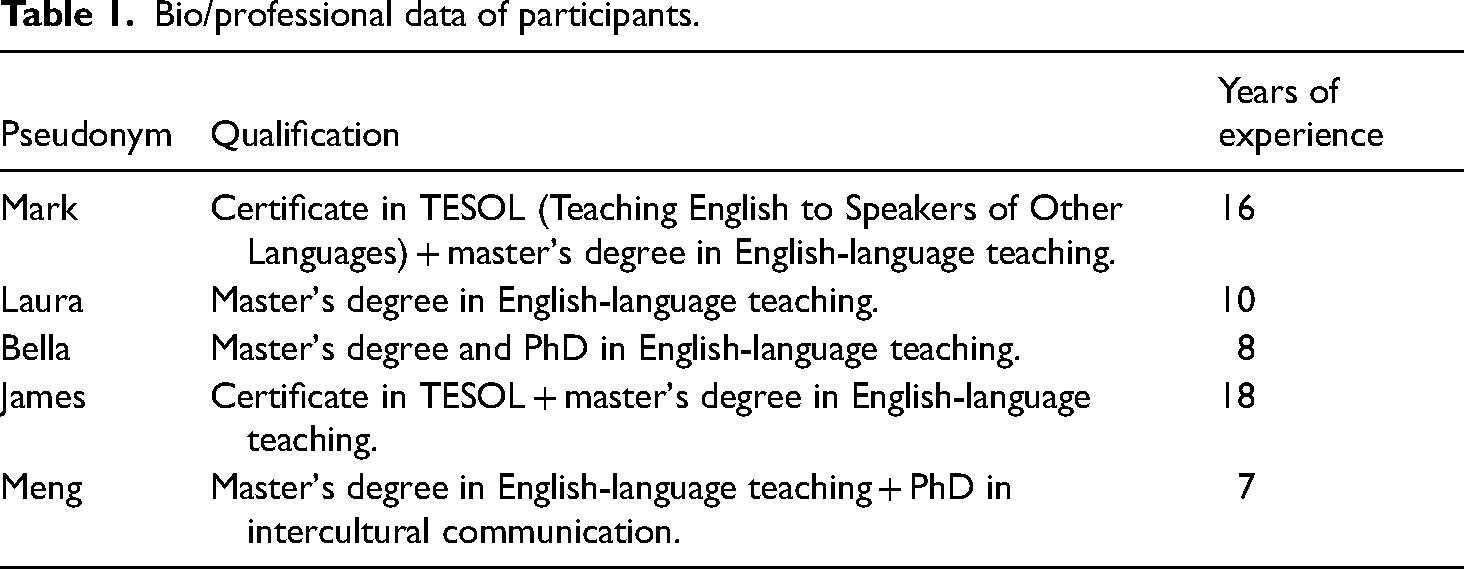
We opted for purposive sampling in that the chosen teachers were specifically sought out as able to describe principles and strategies for language learner engagement through their own idiosyncratic experiences. The specific criteria we followed included being academic English-language teachers at the same university and conducting online synchronous classes at the time of the data collection. Five teachers volunteered to take part in the study. Crucially, this population is not representative of the teaching population at the university. However, as Stake (1995: 4) notes in relation to the selection of participants, ‘[t]he first criterion should be to maximize what we can learn’. Therefore, echoing Mercer (2023), the participants’ willingness to discuss the notion of learner engagement in light of their own experiences made these participants ideal candidates to understand practical ways in which engagement may be enacted in digital language education settings. Participants in this study were recruited via email and provided with detailed information and consent sheets regarding their involvement and data handling. They gave explicit permission through signed consent forms. The following teachers’ pseudonyms are used throughout: Mark, Laura, Bella, James and Meng (Table 1).
Bio/professional data of participants.
Data Collection
In phase 1, each teacher shared 3 videos of 3 classes which they chose randomly from a 10-week teaching period. In total, we observed 45 hours of online teaching (i.e. 9 hours per teacher). These observations offered snapshots of real online language education as this unfolded naturally for these teachers and their students. However, we were unable to collect consent from all students, and therefore we will not share data directly related to them but focus solely on the teachers’ data. It should be noted that the video-recordings were not generated purposefully for this project but were produced in line with a university policy which required teachers to record their lessons and post these on the Virtual Learning Environment (VLE) platform. We used an observation protocol which captures dimensions 5 and 6 of Mercer and Dörnyei's (2020) model of engagement (see Figure 1). Specifically, these observations allowed us to establish if teachers’ behaviour reflected the principles suggested by the theoretical model and, if so, which specific actions. As such, these observations served as a basis to inform the interactions between the first author (Author 1) and the teachers in the following phase of the study. In phase 2, Author 1 conducted a series of one-to-one semi-structured interviews with each teacher after completing the analysis of the videos. These interviews were especially meaningful because they allowed us to unpack how these teachers experienced and perceived learner engagement and, ultimately, how they operationalised it. Although some suggest that researchers ought to put aside their conceptualisations and assumptions about the phenomenon being studied (Mertens, 2015), we value the co-constructive nature of interview data which draws on both the participants’ and the interviewers’ life capitals. The interview protocol (Appendix C) was divided into three parts to gain an in-depth understanding of: (a) the teacher's background and teaching context; (b) the teacher's conception of learner engagement; and (c) the teacher's repertoire of strategies to enact learner engagement. Author 1 piloted this interview protocol with two teachers from the same institution and then discussed the experience with Author 2 to ensure that the interview questions addressed the RQs and had face validity (Cohen et al., 2018).
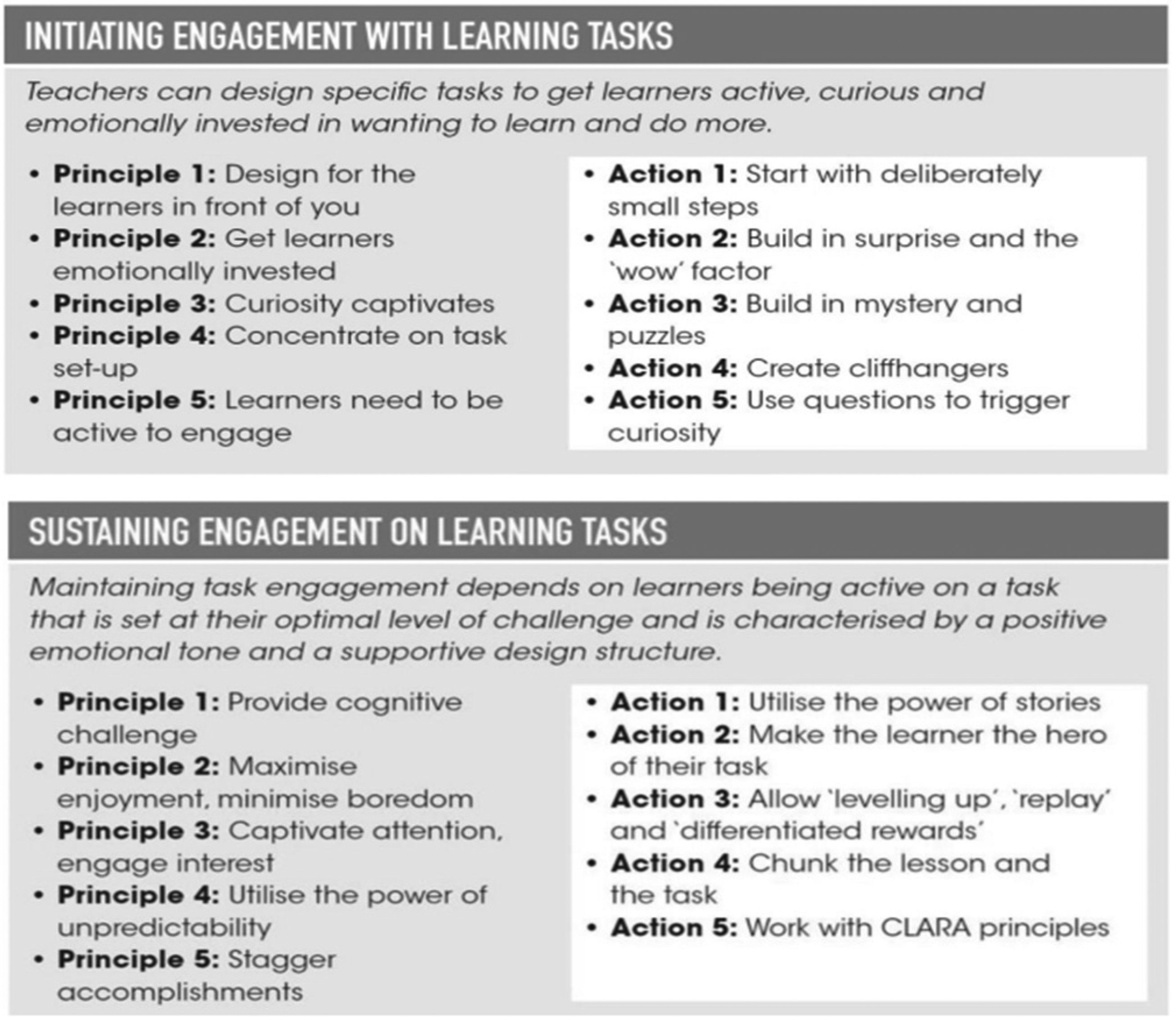
Dimensions 5 and 6 from Mercer and Dörnyei's (2020) model of engagement.
Data Analysis
The audio-recorded interviews were transcribed verbatim and analysed using MAXQDA, initially using deductive categories from Mercer and Dörnyei's (2020) learner engagement framework. This approach, flexible to emergent insights, particularly aided in exploring teachers’ perceptions of learner engagement in online classes (RQ1). Final themes were collaboratively refined by the authors. For the online classroom observation, the research team first developed a pilot observation protocol (see Appendix A). This protocol was applied to a selected sample of video data, focusing on key learner engagement categories. The aim was to identify which aspects of teachers’ behaviour fell into which category. Each team member followed the guidance document (Appendix B) to carry out the observations. The team remained open to identifying new and unexpected insights during this process. After the initial pilot coding, the researchers analysed the data independently.
Results and Discussion
Teachers’ Conceptualisations of Learner Engagement in Online Spaces
All the teachers in this study highlighted the need for students to be alert as a synonym of being engaged. This sense of alertness and being active emerged consistently throughout these teachers’ discussions of what it means to be an engaged learner during online classes. James, for instance, kept reiterating that for students to be engaged they should ‘be active, participate in the class rather than just listening to me’ (Interview 1). This is echoed by Mark, who points out that students may be motivated but to be engaged they have to be alert. Being alert is like being aware of what's going on. You could be very motivated and just not alert, like missing out on things happening in the classroom. (Interview1)
Laura supports this view adding that for engagement to happen, students need to ‘explore’ things for themselves, and suggests that instead of me telling the students answers, generally I want the students to do the exploration themselves. So, if I am teaching grammar, rather than telling them the rules, I ask them to look at some sentences and tell me what they can find in these and if they notice anything. (Interview 1)
Similarly, Bella argues that ‘they need to be searching for an answer, for a gap for something to achieve all the time’ (Interview 1). This notion of engaging students in a quest for answers seems to be even more relevant in online settings, with Meng stating: We have to take it as a new generation thing. Our students are multitasking, particularly in online teaching. You can't stop them. They are multitasking, and since you can't stop them, what you can do is you try to distract them from their multitasking so that they will pay more attention to you. There's no point in scolding them or whatever, it's not going to be useful. You must get them to look for something and then they must communicate that to you or their classmates. (Interview 2)
Barkley (2010: 4) points out that ‘engagement means different things to different people’ and this is because the term and its derivatives are used both in everyday language and as pedagogical lingo. However, from a research perspective, there is also the danger of many of us using the term ‘engagement’ and other sister concepts interchangeably (e.g. self-regulation and motivation). Mercer and Dörnyei (2020) recognize that for the domain of language education the main characteristic which is worth highlighting concerns the active participation or involvement where action is the key. However, they highlight the need for this involvement to satisfy both cognitive and affective dimensions of the learner's psychology as well as external behavioural aspects of participation. Since it has been demonstrated that the two do not always go hand in hand, we need to warn teachers against ‘shallow engagement’ (i.e. a minimal or superficial level of participation by students in learning activities). Mercer and Dörnyei further highlight that the process of learning a language entails several periods of practice whereby learners ought to be willing to challenge themselves through what may often appear as face-threatening acts. This is even greater a problem in the context of EAP as in this study. After all, these students and teachers are not necessarily concerned with language; the students may already have a solid working knowledge of English for general purposes. However, what an EAP course like in this study requires is the ability to become part of an academic (usually subject specific) community of practice. This involves more than engagement with language. This kind of learning requires students to engage in subject-‘.riven genres of written and spoken discourses which are oriented towards a specific academic department or industry. Therefore, engagement for EAP may entail, inter alia, learning how to deliver a presentation, learning to write a report rather than an argumentative academic essay. The important point here is that students learn through doing and that they do so with active participation which encompasses satisfying involvement both at emotional, cognitive and behavioural levels.
Personalizing Learning
This is one of the chief principles which Mercer and Dörnyei (2020) highlight to both initiate and maintain engagement. They echo Antonetti and Garver (2015) who argue that designing a task with specific learners in mind will facilitate the connection between the learners and the task. Mercer and Dörnyei unpack this principle into practical questions: What do learners need to learn? What are the learners’ current abilities? What do learners like to do? What do learners want? What are the learners’ lives like? These questions remind us of the need to understand what kind of support and subject needs each student presents and that they all rarely present the same needs. As such, for engagement to thrive, differentiation is required, which in turn entails getting to know your students better as far as humanly possible (Cowley, 2018). Some teachers in this study demonstrated much attention to this aspect in their own practice. For instance, it was clear in Meng's observations that at some point during the lesson she would ask her students to clarify how they relate to the topic in question – for example, if they were analysing a text about vegetarian dieting in Asia, then she would ask the students to submit their opinion and experiences in relation to this topic in the chatbox on Zoom or by raising their hands. One could argue that this analysis of students’ interests ought to happen prior to the actual lesson, as this would inform lesson planning. However, it is still commendable that teachers create opportunities to gain insights into students’ own perspectives.
It is said that the most effective learning happens when students work within their Zone of Proximal Development (ZPD; Vygotsky, 1978).
Nonetheless, it is important to know how far the students can be challenged and to what extent teachers are able to build upon the students’ strengths, not only their weaknesses. This was frequently reflected in these teachers’ practices. For example, at the end of each language task, Mark would usually ask his students to fill in a Google docs form where they would enter the aspects of that lesson that they felt confident about and those areas which may require further practice. As he said, ‘asking students’ own perspectives on their learning journey can prove much more fruitful than guessing what they’re learning and what is going through their minds without any actual academic impact’ (Interview 1).
Significantly, people like to learn in different ways and, for engagement to occur and thrive, a sense of variety is much needed. It is equally important to ensure learners engage with what they like. Therefore, finding out their interests is key to opening up engagement. In other words, learners may experience effort without feeling effortful if they have a keen interest in the subject of the task (Renninger and Hidi, 2016). The teachers in this study showed strong awareness of this principle. In particular, they constantly made the effort to design activities that drew on a wide variety of topics with the aim of captivating all students. They made sure that learning did not remain confined to the textbook or the Zoom screen. Rather, they tried to combine a range of modalities to explore the same topic(s) in depth and in a way that most (if not all) students could relate to. For instance, all teachers used Kahoot and some used Mentimeter to create alternative platforms where they may collect answers through quiz tasks and engage students beyond the Zoom platform – this was particularly useful for those times when the students were in breakout rooms. This is because having to engage with an additional digital platform, on top of Zoom, gave students a sense of direction. It was often noted that students would otherwise remain quiet in the breakout room if all they had to do was answering a question collectively or sharing opinions. As Meng reported: When I give students an activity to find the correct answer with multiple options in another place like Mentimeter, or they need to give a reflection on some task erm they actually seem more active and quick than say having to complete a textbook or handout in Word … It's like they wake up more and the new technology motivates them to do the work. It could be that it looks good or better or just something different than the usual chat on Zoom or the Word document. (Interview 2)
Crucially, we need not forget that learners’ lives are grounded in social contexts and, in turn, learning is affected by a complex range of social and contextual influences such as race, social class, ethnicity, age (e.g., Kessels et al., 2014). This argument connects with Consoli's (2022) attention to the notion of life capital – that is, the web of life experiences and resources embedded within our life story, which shape and influence our current and future behaviour, in this case towards learning. In particular, Mercer and Dörnyei (2020) highlight that understanding and valuing students’ linguistic heritage is particularly useful in the language classroom because capitalizing on one's linguistic resources to learn a new language will allow students to value diversity and connect better with the new discursive community.
Regrettably, the current study shows a strong and exclusive focus on the use of English without any space for other languages. This is probably due to the strict university policy to conduct academic instruction through the medium of English, which is a policy tutors must comply with since they are constantly evaluated by their students on the frequency of use of English in lessons. These contextual restrictions may explain why tutors would be reluctant to draw on any other language but English. However, it should be said that Mark sometimes made some jokes that are linked to his own knowledge of Cantonese, which, for local Hong Kong students, may be seen as a formidable strategy to connect with them and capture their attention through their home language. It should also be noted that drawing on students’ linguistic diversity is indeed a phenomenon that is gaining momentum within the EMI or EAP classroom – see, for example, Galante (2020).
Creating Emotionally Satisfying Learning
Emotions are now a well-established concept in language education, and this is widely reflected in the ‘affective turn’ in the field (Prior, 2015). Significantly, emotions are no longer viewed exclusively through the dichotomy of positive and negative but rather how they are construed and how an emotionally charged experience may support a person at a specific point in time (DeSteno, 2018). In this study, it became clear that anxiety about assessment was a driving motivational force for the students. As such, tutors would normally create fertile ground for engagement by making recurrent references to assignment design and requirements in most lessons. For example, Bella reports: [I]f I don’t make sure to tell them that what we are doing will serve a particular purpose for the future assignments, it won’t matter how exciting or interesting the topic is … the students want practical help to get good marks in the assignments. (Interview 2)
Therefore, emotions can be facilitative or inhibitive in the way they may influence our behaviour towards a task (Smith, 2018). The goal is for teachers to gain as full an understanding as possible of their students’ emotions to ignite and drive learning engagement. Mercer and Dörnyei (2020) suggest the notions of physical appeal, activity appeal and content appeal. Aesthetically pleasing material can be engaging but this has to be used with caution as it may also be distracting (Fisher et al., 2014). Several tutors in this study demonstrated commendable effort to create visually engaging materials or screen format. Most tutors would make use of the interactive board on Zoom to present feedback in writing, using different colours or even using emojis, which may have an impact on the students. Meng and Mark would often show the students provocative pictures to begin a class with a critical debate, which may not necessarily link up with the topic of the day, but would certainly invite the students to ‘wake up’ (if it was an early morning class), or simply warm up their thinking and speaking skills in preparation for the rest of the lesson.
This links with activity appeal and content appeal which concerns students’ ability to feel sufficiently capable of completing the task whilst maintaining a degree of interest in the specific activity. This may often invoke teachers’ attention to ensure a diverse range of tasks that may appeal to the full range of skillsets and talents in the classroom. Importantly, in an online environment, it becomes even more crucial to consider the mode of implementation of a task – that is, individual, pair or small-group work. Tutors in this study were constantly invested in designing tasks which took into consideration the students’ current skillset. For example, in an earlier class Meng exclusively focused on helping the students grasp the structure of an essay paragraph. She gave them jumbled up sentences that needed reorganising into a cohesive and coherent paragraph. In the following lesson, she taught the students how to incorporate in-text citations. This needed to be a two-part process because in the earlier lesson the students had little to no understanding of how to use in-text referencing. However, it is also important to note that although most tutors would constantly elicit feedback from students about how weak or strong they felt about certain tasks, there is no guarantee that students’ perceptions of their own skillset may exactly reflect their ‘actual’ abilities. Nonetheless, tutors often developed engaging strategies to check ‘live’ during a class to what extent the students were more or less capable. For example, teachers may use Mentimeter which offers students the opportunity to share reflections with the tutor during a lesson and while other activities are in progress. Other online forms of feedback and reflection were possible, too. For instance, Mark often asked the students to take a teacher's role and give each other feedback in breakout rooms. The students would then be asked to report to the teachers in writing, to outline areas for improvement, which may then help the tutors design the following class. Students seemed to respond well to these strategies, but it is important to remember that not every student likes to play ‘the role of the teacher’ and some students prefer feedback from the actual teacher rather than a classmate – this may explain why some students in a group of 17 would remain silent or show no reaction at all to these teacher requests.
Captivating Students
The arousal of curiosity-driven behaviour has long been documented as a critical factor to engage learners. Scholars distinguish between epistemic curiosity which concerns a general drive for the pleasure of learning and knowing and perceptual curiosity which concerns curiosity driven by a novel or surprising stimulus – that is, that mental itch that needs to be satisfied (Leslie, 2014). Many scholars such as Robinson (2013) have identified a problem with educational systems which are so obsessed with standardized testing, which ultimately stifles learners’ chances of developing a long-term thirst for knowledge (epistemic knowledge). Mercer and Dörnyei (2020) recommend identifying topics which can ignite a broad drive for knowledge for specific students and then finding ways to excite the students to strive for depth of knowledge – this can be done by letting students find out things for themselves rather than presenting information to them. The ‘discovery’ approach is crucial for fostering epistemic curiosity – this also means letting students work out rules for themselves. To arouse perceptual curiosity, teachers need to help their learners identify a gap – a ‘zone of curiosity’ (Leslie, 2014) which will point learners towards that ‘need or want’ to know more. Teachers in this study appeared fully aware of the need to cultivate a sense of curiosity. For instance, James would often begin a lesson by showing students a diagram or a piece of academic text that may not make much sense to the students at first, and tell them that by the end of the lesson they would get back to that image and students would be better able to understand it. This often sparked some reactions in students who share emojis in the Zoom chat box or volunteered some questions – this was, after all, James’ goal: I like to commence every lesson with a sense of adventure or mission to accomplish something difficult…erm I like to kind of impress the students with something that looks difficult at the start to then show them that with some effort they are more than a capable of dealing with it, like by the end of the lesson. (Interview 2)
Creating Appropriately Challenging Tasks
The notion of appropriate challenge, also known as ‘desirable difficulty’ (Bjork and Bjork, 2011), is conducive to learner engagement. Experienced teachers will know that tasks which are too easy or too difficult may result in learners becoming bored, frustrated or simply to disengage (Mercer and Dörnyei, 2020). All the teachers in this study seemed rather sensitive to the concept of challenge – they all demonstrated and reported thinking about striking a sense of appropriate difficulty when planning their lessons. For example: [W]hen I’m considering which activity to use I think carefully about the specific group I’m teaching. This is because the same task with different students will inevitably have different results and effects. So erm I think it's probably critical that we spend some time mulling over what levels of difficulty our students can handle […] but yes it's tricky for me to tell exactly how far I can go sometimes and with online teaching I feel we have to be extra careful not to overburden our students … they are already multitasking and dealing with so much at once. (Mark – Interview 2) I always think that challenging is good for the students but you know when you are teaching online there is so much you can’t control like the students don’t have good wifi connection or there are other technical issues … so I strongly believe it's our responsibility not to make thing too difficult and oh you see? When you are planning teaching online it's a lot more work for the teacher so I don’t want to complicate things more myself. (Meng – Interview 2)
These sample data excerpts show that although teachers are fully aware of the benefits associated with appropriately challenging tasks, there is a need to remain alert to the macro-ecosystem where the learner is situated. Teachers certainly appeared aware of Vygotsky's (1978) notion of the ZPD and the advantage of recognizing what a learner can do – the ‘inner zone’ – and what a learner cannot do, the ‘outer zone’. These teachers often drew on Mentimeter's reflective function to encourage students to share how confident they felt about certain tasks. However, teachers also recognized that it is quite challenging for them to fully ascertain the type of skillsets and confidence in each learner. This is unsurprising when on average these teachers have 17 students in each group they teach and each teacher teaches 4 to 7 groups each term. The added challenge here lies in the ‘distance’ which exists between the teacher and the students, given the online nature of these lessons. In other words, teachers may gain an approximate idea of students’ abilities to cope with tasks depending on how much is visible to the teacher on the other side of the computer – this is often further exacerbated by students not turning their cameras on or not responding to teachers’ requests to say whether they are on track with their work. On the other hand, however, Bella reported that students’ use of emojis in the chatbox was an advantage that she did not experience in face-to-face lessons, and this allowed her to check in with students’ progress and overall wellbeing more directly than in-person classes. Finally, judging from the full range of activities described in the above sections, it is fair to say that these teachers’ design of learning often targeted higher-order thinking skills (HOTS) from Bloom's (1956) classic taxonomy of various facets of thinking, thereby aiming for a stimulating kind of challenge and levels of difficulty.
Conclusion
This study has explored the dynamics of learner engagement in an online English Language Centre at a Hong Kong university, applying Mercer and Dörnyei's (2020) framework to assess how different engagement strategies are initiated and sustained. Although our investigation was exploratory with a small, localized sample, which may limit the generalizability of the findings, it nonetheless offers substantial insights into the application of digital tools and strategies that promote engagement in online learning environments. We focused primarily on the behavioural aspects of engagement, with only tangential exploration of the affective and cognitive dimensions. This focus was shaped by the constraints of our methodology, particularly our limited direct interaction with students, which restricted deeper investigation into these other dimensions.
Key insights from our study highlight the crucial role of teacher practices in fostering not just participation but deep, meaningful engagement. Teachers are pivotal in distinguishing between superficial (‘shallow’) and substantial (‘actual’) engagement, using techniques such as real-time assessments, reflective student feedback and diverse, emotionally rich task designs. These practices are essential for captivating students’ attention and maintaining their curiosity, which is especially challenging in the absence of physical classroom interactions.
The implications of our findings extend to teacher education and professional development, emphasizing the need for training in digital engagement strategies and tools that can overcome the barriers of online education. The study underscores the unique opportunities online platforms offer, such as personalized and flexible learning experiences that can adapt to individual students’ needs, which are not typically available in traditional face-to-face settings.
To conclude, embracing these online educational affordances can significantly enhance learner engagement by providing varied, challenging and emotionally supportive learning environments. Future research should aim to expand on these preliminary findings with larger, more diverse samples and explore in greater depth the interplay between affective, cognitive, and behavioural engagement in online settings.
Footnotes
Author's note
Samantha Curle, Khazar University.
Funding
The authors disclosed receipt of the following financial support for the research, authorship and/or publication of this article: This work was supported by the GRF Pilot Study,
Interview Schedule

Appendix A
Appendix B
Appendix C
1. Can you tell me a little bit about how you came to be teaching in this setting? 2. Can you describe your current teaching responsibilities? 3. How have you found the switch to online teaching? 4. Our focus in this study is on understanding learner engagement. Can you tell me how you understand engagement? 5. How do you recognise when your learners are engaged? 6. In what ways do you consider learner engagement in planning your classes? 7. To what extent has your teaching changed in respect to learner engagement in the online context? 8. In what ways do you feel learner engagement has changed over the past year during online teaching? 9. What specific strategies have you used to foster engagement in online teaching? 10. When planning your online teaching, in what ways do you design classes with engagement in mind? 11. What do you do to create a positive learning climate in the online setting? 12. How do you personalise learning for your specific group of students? 13. To what extent do you consider enjoyment in preparing tasks? 14. How important is it for you to ensure learners are active during your classes? 15. What role do learning goals play in your teaching? 16. What do you do to keep learners’ attention online? 17. What aspects of your classes do you feel are especially engaging? And why? 18. Any other questions for us or comments about learner engagement in online teaching?