




Abstract
Engaging in productive forms of classroom talk has been shown to positively impact students’ thinking and language exposure. To maximize the effects of classroom talk on students who learn English as a second language (ESL) and to create more learning opportunities by leveraging the affordances of dialogic teaching in enabling interthinking, this study set out to explore the influence of asynchronous online talk on students’ thinking through a micro-blogging tool, Padlet. Twenty-five students from a local secondary school were recruited. They were asked to post their views on current news articles and conduct dialogues with one another through the commenting function. After the discussion, the students were invited to self-evaluate the process of the discussion. Five students were also invited to participate in semi-structured interviews. Results indicated that the asynchronous online talk had the potential to broaden and deepen students’ thinking through the creation and maintenance of their intermental development zone (IDZ). The talk also facilitated the internalization of co-constructed ideas for individual production. Drawing from these findings, it is recommended that the conceptualization of interthinking could capitalize on students’ self-evaluation and that the evaluative stage could be structured in interactive tasks in future instructional practices.
Keywords
I Introduction
Dialogic teaching, which promotes the cultivation of learners’ skills to co-construct knowledge through respectful communication, negotiation, and reasoning, has been one of the burgeoning fields in relation to classroom talk in recent decades (Teo, 2019). In view of the rapidly changing societal, cultural, and technological landscapes, it is worth exploring ways to better utilize technology in English as a second language (ESL) education to capitalize on their affordances in facilitating language and cognitive development. Hence, understanding how talk mediates ESL learners’ thinking in the online context and how students internalize intermental experiences for future independent replications and productions may inform future pedagogical instructions to nurture students with the capacity to become autonomous life-long learners.
Against this backdrop, this study aimed to investigate how Hong Kong (HK) ESL students use classroom talk to mediate their thinking in an asynchronous online environment to achieve talking beyond the classroom. The asynchronous context of the study brings innovation to the field as talk traditionally centres around the classroom environment, focusing on the immediate face-to-face verbal exchanges between teachers and students. The study argues that with the affordances of technology, classroom talk may be conducted in a virtual context and such talk may offer opportunities for the internalization of learning as facilitated by joint thinking and knowledge construction (e.g. Farrokhnia et al., 2019; Li, 2018).
It is noted that our identities as ESL learners and educators of HK have positioned us as both insiders and outsiders when interpreting the asynchronous online talk conducted by ESL learners. As students’ talk may be influenced by contextual, social, and cultural factors like language proficiency, expectations of teachers or group dynamics, guiding students to reflect and articulate their thoughts for disentangling all these factors while not imposing these views on them requires extra caution. Our experiences in teaching ESL students in the local setting allowed us to ask poignant questions to make sense of their expressions and probe deeper into their thinking processes, especially when the students may not have the awareness themselves.
1 Classroom talk and learning
Classroom talk differs from spontaneous, informal conversations that do not involve planning or deliberations (Edwards-Groves et al., 2014). Although it encompasses different forms of dialogue that vary in their productivity, nature or quality (Littleton & Howe, 2010), it specifically refers to those that promote disciplinary understanding and intellectual development of learners in the classroom context (Khong et al., 2019), acting as cognitive, social or cultural, and pedagogical tools for processing information, sharing knowledge, and offering intellectual guidance respectively (Mercer et al., 1999). It also seems to consider learning as a reconstruction of preconceptions to accommodate additional information and a reinterpretation of previous experiences (Barnes & Todd, 2021), both of which may entail a change in one’s intramental thinking. Reconstructing preconceptions assumes that individuals’ understandings are continuously shaped in light of new experiences. Learning occurs when additional information causes them to modify their pre-set, implicit judgements, as constructed by their previous, unique experiences, that guide their interpretation and participation (Barnes & Todd, 2021). Another type of learning emerges when talk induces learners to reconsider their existing knowledge when presented with new evidence or ideas to gain insights and clarity (Barnes & Todd, 2021). Thus, thinking may be seen as a prerequisite for learning to take place since learners have to evaluate the new information presented to fit or expand their preconceptions using talk. Through interacting with others, one utilizes language to express, explain, and confront ideas, hence, sharpening their intramental thinking and abstract reasoning skills (Khong et al., 2019). In this sense, for classroom talk to be productive, students are to be encouraged to respect and consider each other’s ideas, think together, and extend the boundaries of their current understandings (van der Veen et al., 2015).
Since the quality of classroom talk has a huge impact on learning, previous research has investigated the types of talk that may be more conducive to learning. Mercer categorized classroom talk into three types, namely disputational, cumulative, and exploratory (Littleton & Mercer, 2013; Mercer, 1996, 2019). While disputational talk is dominated by disagreement, cumulative talk is characterized by a positive but uncritical accumulation of ideas. Participants in these two types of talk make little effort in providing evidence or reason to support their stance. It seems that to him, exploratory talk is the most preferred style of talking, since students undertake critical but constructive exploration of ideas (Mercer, 1996), making reasoning transparent and publicly accountable (Wegerif & Mercer, 2019). This goes in the same vein as accountable talk proposed by Michaels et al. (2002), which is marked by three facets: accountability to knowledge, community, and reasoning. As asserted by Michaels et al. (2008), accountable talk is a productive classroom talk due to its emphasis on the accuracy of information discussed, the respectful and collaborative environment in which discussions take place, and the logical line of thought for establishing arguments to ensure the quality of talk respectively. To visualize features of productive talk, talk moves, which could be seen as a skilful use of talk tool or strategy to create and sustain talk, such as ‘revoicing’, ‘press for reasoning’, and ‘say more’ have been detailed by O’Connor and Michaels (2019). Although accountable talk, like exploratory talk, promotes reasoning and grounded, constructive discussions, it seems that its ultimate goal is to equip students with the competence to participate in reasoned, democratic, civic deliberation (Michaels et al., 2008). Moreover, it appears to favour argumentation over other talk types (Kim & Wilkinson, 2019), which may narrow the diversity of dialogues in the classroom and restrict the development of talk.
Based on the productive forms of classroom talk, a number of pedagogies have been developed, including dialogic instruction (Nystrand & Gamoran, 1997) and dialogic teaching (Alexander, 2020), a pedagogy that maximizes talk for the stimulation and extension of thinking, learning, and problem solving. Among these pedagogies, dialogic teaching has gained increasing attention. Dialogic teaching is influenced by Bakhtin’s dialogism, which postulates that human consciousness is inherently dialogic and learning or understanding arises only from interaction since meaning is relative and negotiable (Bakhtin, 1981). Thus, dialogic teaching advocates the careful structuring of talk that highlights ‘the nature, extent and use of a teacher’s repertoire’ to facilitate thinking (Alexander, 2020, p. 18), and readjusting classroom dynamics and relationships (Teo, 2019). Since then, the concept of dialogue has been further developed and refined by Mercer and Howe (2012) to specifically refer to talk that respects, takes up, and considers different voices in conjunction, which may be best represented by exploratory talk.
2 Classroom talk and thinking
A Interthinking
Mercer’s (2002) typology of classroom talk appears to be the manifestation of ‘interthinking’ in which interlocutors ‘use language to think collectively . . . with their activity encapsulated in an intermental zone of their own construction’ (p. 151). It seems to him that talk is a mediating tool for creating a shared understanding, which he coined the ‘intermental development zone’ (IDZ) (p. 143). This idea of individuals engaging in joint intellectual activities appears to follow the line of thought of Bakhtin (1981), which asserts that meaning-making depends on the dynamic formation and reformation of conceptions between interlocutors, and that of Vygotsky (1978) which views talk as a mediational tool for higher mental functions. Thus, it seems that the quality of learning in IDZ relies highly on the knowledge, competence, and motivations of interlocutors (Mercer, 2000).
Interthinking captures the essence of exploratory talk as represented by the creation and maintenance of the IDZ. The IDZ focuses on the dynamical and progressive nature of learning and conceptual development as dialogue advances between interlocutors, who share as well as shaping and reshaping their intramental thinking as talk progresses (Mercer, 2000). In this sense, the IDZ seems to recognize students’ individual contributions to their own development (Fernández et al., 2001). It also captures the collaborative intellectual endeavor undertaken by learners, since it denotes the constant development of thinking shaped by mutual contributions. As such, the concept of IDZ is regarded as the backbone of the present study, as the study’s aim is to explore and appraise the use of talk among students for collective intellectual activity.
As changes of individual thoughts are not perceivable, other indicators which characterize mutual problem-solving, knowledge creation, and negotiation for shared understanding have to be adopted to understand intramental and intermental thinking (Mercer, 2001). For instance, descriptions of communicative strategies utilized by learners and observations of contributions have to be used to assess the effectiveness or presence of interthinking (Mercer, 2001), or a nuanced analytical framework that examines talk at both the move and exchange levels for portraying how talk can be sustained productively (Wotring et al., 2024). Based on this premise, previous studies (e.g. Lin et al., 2016; Ludvigsen et al., 2020) which explore interaction and thinking highlighted the benefits of explicit reasoning on thinking. They found that making reasoning visible revealed different ways of thinking and promoted students’ learning. However, others like Rojas-Drummond et al. (2010) contend that thoughts can be stimulated even though explicit articulation of reasons or deliberation is absent, as learners could engage in what they coined ‘co-constructive talk’, linking, elaborating, and reconstructing each other’s contributions to work out meanings and find solutions. Due to these dissimilar results, this study sought to investigate how learners engage in collective thinking through asynchronous online discussions as a type of classroom talk, namely asynchronous online talk. In view of how learning could be reflected through learners’ reconstruction or re-evaluation of thoughts and preconceptions, learners’ contributions which could showcase changes or shifts in their understanding of either the reading content or previous knowledge were taken into consideration in the study’s analysis of interthinking.
B Self-evaluation as a facilitative tool for internalization
In addition to interthinking, the exploratory style of talk seems to facilitate self-evaluation. McGuinness et al. (2007) discovered that encouraging students to talk and contemplate their thinking boosted their abilities to co-regulate their joint inquiry and reasoning skills. They were also found to be more eager to evaluate their own learning. Similarly, Sutherland (2010) found that asking students to critically reflect on how they utilized exploratory talk could not only elevate its overall quality, but also facilitate their understanding of aspects of talk that aid their learning. For instance, through the use of precise and carefully considered questions, students were able to set targets to improve their talk in future participation. Mercer and Howe (2012) further contend that heightening students’ awareness of how collaborative talk affects their learning may enable them to use language to learn and solve problems jointly and individually. These studies seem to point out the need to encourage students’ self-evaluation alongside productive classroom talk so as to benefit students individually.
Denoting the transference of shared understanding developed in interpersonal activities to the intrapersonal space, the above studies appear to suggest that self-evaluation may facilitate Vygotsky’s concept of internalization. Internalization signifies the transformation of ‘interpersonal’ or ‘interpsychological’ processes to intrapersonal ones (Vygotsky, 1978, p. 57), which is essential for children to learn independently in the future. Since Vygotsky (1978) asserts that this process may be facilitated by the creation of Zone of Proximal Development (ZPD), the current study set to explore whether the same could be produced by the IDZ. In other words, the core of the study lies in whether interthinking as mediated by asynchronous online talk facilitates self-evaluation, which in turn aids students’ internalization.
3 Classroom talk in the asynchronous context
Over the years, technology has extended and blurred the distinction of classroom talk from the spoken to the written language (Thornbury, 2006). It seems possible for classroom talk to be conducted solely in the asynchronous context where participants may not be physically present in the same space. Researchers like Howe and Abedin (2013) maintain that dialogue encompasses textual exchanges. Delahunty (2018) further argues that asynchronous discussion should be regarded as a ‘hybrid mode of text’ as it not only inherits the dynamic and progressive nature of speech, but also remains as a written artefact that can be re-read, evaluated, and imitated (p. 14). This may point to an opportunity for classroom talk to transcend and sustain in a virtual space.
However, despite the possibility for classroom instruction to extend its influence through the online medium, past research that inspected the facilitation of knowledge co-construction with digital technologies are mostly conducted in the face-to-face setting with technology as a supportive tool for classroom talk (e.g. Hennessy et al., 2007; Rasmussen & Hagen, 2015). In particular, Frøytlog and Rasmussen (2020) investigated how Talkwall, a micro-blogging tool could assist teachers in promoting productive and distributed dialogues among students in the classroom. Mercer et al. (2010) reported that the multimodality of interactive whiteboards (IWB), which supported the use of visuals, audio and texts, stimulated reasoning among students in the class. The researchers also found that the digital representations on the IWB, which were visible to all participants, were able to aid collective thinking since it allowed annotation, modification, and manipulation such that the product could be continuously shaped as a result of students’ dialogues. While these studies may shed light on how technology aids talk in the face-to-face setting, students’ successes seem to revolve around the tool under investigation. In other words, whether such effects depended on the tools themselves or the talk behavior as stimulated by the tools remains unclear.
In contrast, even though there are prevailing studies on classroom talk and thinking in the asynchronous mode, mixed findings are yielded (Major et al., 2018). On the one hand, Pifarré and Kleine Staarman (2011) found that primary students were able to actively engage in the mutual exploration of ideas by providing reasons and constructively adding on ideas in a shared wiki. They asserted that the characteristics are manifestations of interthinking. Sins et al. (2011) revealed that dyads in asynchronous chats were more involved in inductive reasoning than those in face-to-face chats though it did not seem to impact the overall quality of the output. On the other hand, Wegerif (2007) uncovered that uncritical cumulative talk is the most prevalent in online discussions despite some instances of students engaging in explorative talk. Brierton et al. (2016) adopted Bloom’s taxonomy to analyze discussants’ comments and reported that none of them showed higher-order thinking depicted by abilities to analyze, synthesize, and evaluate. These contrasting results in the literature point to the need to reinvestigate the impacts of talk on discussants’ intramental thinking and interthinking.
4 ESL learners in HK
Though previous studies have demonstrated the effects of dialogic teaching on learners’ academic attainment such as literacy and comprehension (e.g. Wilkinson et al., 2015), affective or behavioral domains (e.g. Chen et al., 2020), or critical thinking (Hajhosseiny, 2012), as recognized by Chow et al. (2023), few studies have detailed how dialogues could be manifested in ESL contexts. The complex nature of teaching renders it insensible to assume that the same features and effects would be resulted in ESL classrooms of different contexts, with diverse historical, cultural, social, and educational influences (Chen & Chan, 2022; Haneda, 2017). For instance, Lin and Lo (2017) contend that HK ESL teachers are presented with a dual challenge of teaching subject knowledge and using a second language, not to mention students’ varying second language (L2) proficiency and constraints like a packed syllabus and the exam-oriented culture. Chan (2016) also found that HK students did not have adequate opportunities to learn and practise using English. They were also found to seldomly engage in ESL activities actively (Chan, 2016). This observation is also backed by Shea (2019), which asserts that learners in Asian countries are used to ‘overwhelmingly receptive, teacher-centered’ classrooms and ‘struggl[e] with culturally situated reluctance to express opinions in front of class’ (p. 789). In view of the abovementioned limited exposure to L2, restricted by lesson time at school, as well as learners’ reluctance to actively produce language output, chances to capitalize on collective thinking facilitated by transparent reasoning in talk are further impeded. Hence, it is deemed important to explore ways to reinforce talks that exhibit the exploratory style in the asynchronous context, in addition to that in the face-to-face setting, for improving ESL teaching and learning in HK.
5 Conceptual framework
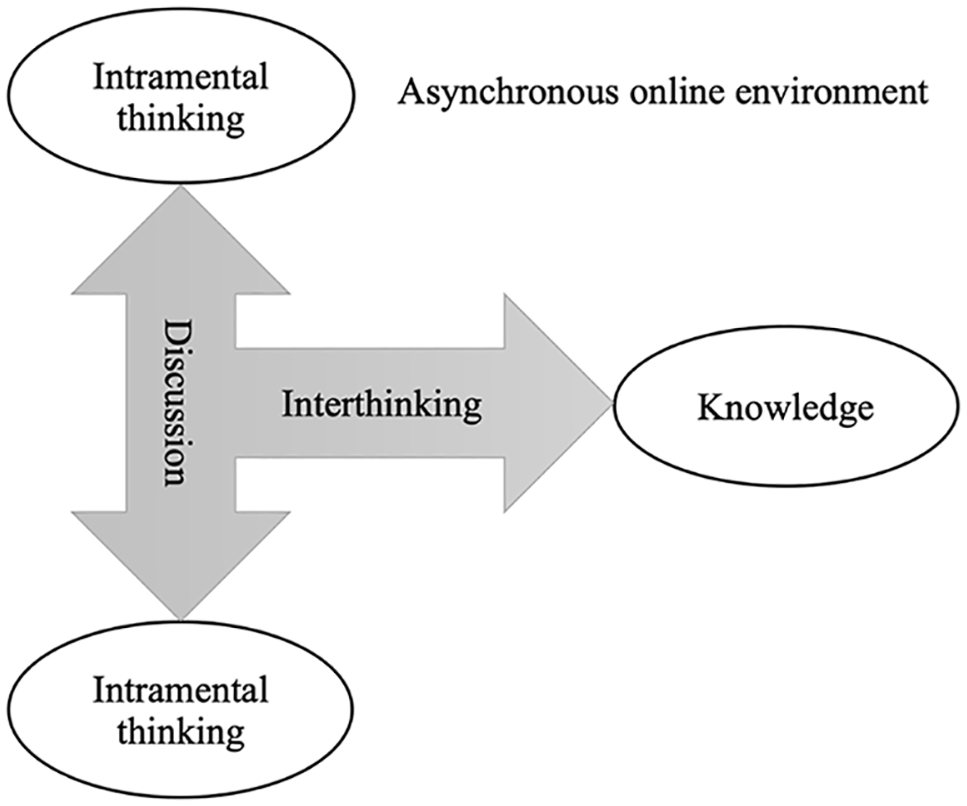
As noted, interthinking that is conceptualized by the IDZ depends on interlocutors’ maintenance of an exploratory style of talk that allows for the co-construction of meaning. The study treats the asynchronous environment as a mediational means for collective thinking endeavors as it recognizes the possibility for classroom talk to transcend from a physical environment to an online medium where students and teachers continue their discussions as they were in face-to-face settings. It also views the computer as a mediational means to support collaborative encounters as opposed to it being a tutor or merely a tool (Crook, 1994).
The study draws on Mercer’s conceptualization of classroom talk, particularly interthinking brought about by exploratory talks that allow for constructive criticisms and the building of knowledge. It also builds upon the assumption that classroom talk in the asynchronous context mediates interthinking in the IDZ. Figure 1 shows the conceptual framework for the study.
Theoretical framework.
The above framework is useful for understanding how ESL learners could co-construct knowledge in the asynchronous context with an extended temporal element in which students can access and contribute to the asynchronous discussions at their convenience, which may mitigate some of their reluctance to share their ideas in a spontaneous manner. The enhanced flexibility in maintaining the discussions may create more chances for interthinking to take place, in turn, the co-construction of knowledge.
The following research question guided the study: How does talk mediate thinking in an asynchronous online setting?
II Methods
A qualitative orientation was adopted for the study. As the discussions took place in a completely virtual setting, it was assumed to be inherently different than the traditional classroom set up, which might impose changes to students’ talk behaviors. Second, since the study set out to investigate the way talk is conducted in the asynchronous context and how interthinking, a process that is sometimes not overtly observable, may be manifested in such context, a qualitative approach is deemed appropriate to elucidate and uncover these otherwise hidden processes (Johnson & Christensen, 2019).
Exploring the potential of interthinking over the asynchronous online medium in the HK ESL context, the study was administered in a local secondary school. The sampling method was non-random and purposive so that they may better represent the majority of schools in the territory. The school is a mixed-gendered, mainstream school with students of average abilities as reflected by their banding (Band 1–2), allocated by arranging students’ academic results in accordance to their merit (Education Bureau, 2022). Also, the school uses English as their medium of instruction for all subjects other than Chinese. The aim of finding a mixed-gendered, mainstream school in HK was to increase the transferability of the research by providing empirical data to illustrate how productive classroom talk can be maintained in other ESL classrooms of a similar context. It also helps to maximize the potential for the results of the study to be indicative for other studies under similar contexts.
Twenty-nine participants, including 28 Key Stage 3 (KS3) students and a teacher, were recruited. Data was only collected from 25 students for analysis as three students withdrew due to health reasons and family issues. All participants’ first language was either Cantonese or Mandarin Chinese and took ESL classes following the local English curriculum outlined by the Curriculum Development Council (CDC) in HK. The students were reported to have an average English proficiency by their teacher with reference to their subject rankings across the cohort.
The age range of KS3 students was between 12 and 15 years. This age group was chosen since the study’s objectives go particularly in line with their key learning targets, as they are expected to ‘exchange points of view about feelings, interests, preferences, ideas, experiences and plans’ and to ‘[express] one’s reactions to issues’ (Curriculum Development Council [CDC], 2017, p. A9). The study shed light on the way they discussed with each other and promoted ways for them to achieve the learning targets not only in the face-to-face setting, but also in online platforms, to maximize their learning opportunities. Moreover, since the study investigated how discussants think together during discussions, it is deemed important that students are roughly at the same cognitive developmental stage, as denoted by their age, such that valid comparisons could be made in the data analysis stage.
Other than the students, their English teacher, Sarah, 1 who assisted in assigning the discussion tasks and self-evaluation question prompts, was viewed as one of the participants as she could choose to interact with students as one of the contributors, given that this study would not introduce an intervention. Specific instructions regarding her role in the asynchronous discussion were not given and productive forms of talk were not introduced to Sarah to reduce the Hawthorne effect in which her participation or responses are altered due to her awareness of being investigated (Rozsahegyi, 2019). It was expected that the records of how Sarah interacted with the students were solely based on her pedagogical decisions and judgements as no instructions on how the discussion should be hosted were given. Sarah had three years of teaching experience and had taught the students for more than four months at the time of the study. She had worked in the school after undergoing formal teacher training in English studies and education at a local university. Although she had not pursued further tertiary education, she had regularly engaged in continuous professional development on supporting ESL students’ learning and innovative pedagogies. Same as the students, Sarah was also an ESL learner, whose first language was Cantonese and received ESL education in HK. At the time of the study, she had been reading a text about pollution and the environment with the students. As a post-reading extension, encouraging students to react and connect what they have learnt in class and current issues happening in the world, Sarah assigned the Padlet task to students, which will be detailed in Section II.1.
Adopting the research guidelines proposed by BERA (2018), informed consent was obtained from all participants before conducting the study. Since teachers and students were involved, consent was obtained from the above parties as well as the school principal. In particular, as the students surveyed had yet to reach legal age, consent was obtained from their parents or guardians to ensure that they were well-informed of their rights.
1 Procedures
Students were given two days to choose a news article related to the theme, pollution and the environment. Each of them posted the hyperlink to the news article together with a summary and their views on the article on Padlet. The theme was set to make sure students had a common topic to facilitate discussion and it was introduced in their English module at school. After each student had contributed to the Padlet, an open floor discussion was conducted. Students were encouraged to comment under each other’s posts. They were given three days to read each other’s contributions, ask questions related to their comments and the news articles, and respond to each other. Students then wrote a short self-evaluation describing what they had learnt in the discussion four days after its completion. To end their self-evaluation, they were asked to come up with a question they wanted the whole class to address.
A point to note was that deadlines were deemed especially important in this study due to the asynchronous nature of the tasks. Since students were free to browse the comments and discuss with each other at any time, setting a time limit helped facilitate the discussions. Sarah was invited to assign the topic of the discussions but was not instructed to give responses. Her contribution in the discussions was solely based on her pedagogical decisions.
2 Data collection methods
To shed light on the conditions that facilitate students’ discussions and inform teaching practices that can promote and support interthinking in the online context, written contributions, self-evaluations, and interview transcripts were collected (Table 1).
Relationship between participants and data collected.
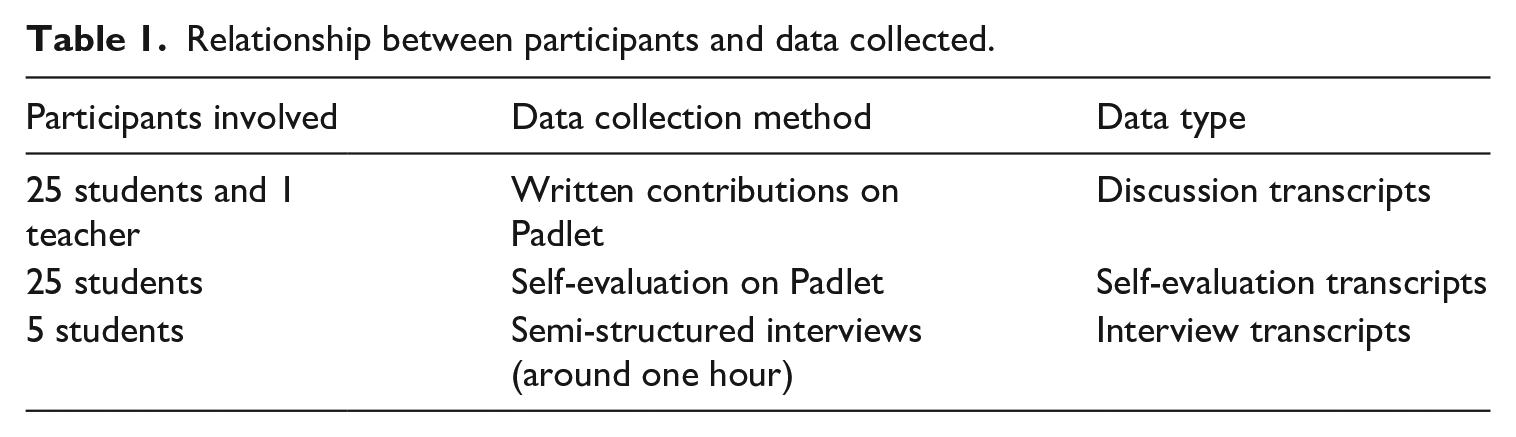
First, written contributions, which included students’ news reviews and their series of responses, were collected from a micro-blogging tool, Padlet. Padlet affords collaboration with text, photos, videos, and external links (Kharis et al., 2020), which enables students to see all their classmates’ contributions at once as well as to comment and respond under any thread. It was deemed more suitable than other micro-blogging tools due to teachers and students’ familiarity with the platform as the teacher had been using it since the start of the school term for other classroom activities. Hence, no prior training was needed, and it was expected that students would be less likely to encounter technological difficulties. Since the aim of the study is not to evaluate the effectiveness of the tool on discussion, the functions of Padlet were not compared with other online platforms. The instrument is merely an illustration of the possibility of conducting talk with micro-blogging tools.
In addition, self-evaluations were also collected from students. After the completion of the online discussions, students were asked to complete a short self-evaluation by responding to a question prompt. This allowed participants to share their thoughts and reflections on participating in the asynchronous online discussions. To aid in triangulation regarding students’ thinking and interaction process, all students were invited to participate in individual one-hour interviews to gauge their learning processes during the asynchronous online talk. Unfortunately, only five students showed interest and availability. Hence, individual interviews which lasted for 60 to 90 minutes were conducted online via Microsoft Teams with these students. The interviews also incorporated elements of stimulated recall, where snapshots of the students’ discussions were shown through the screensharing function. The purpose was to help students refresh their memories on the learning process (Gass & Mackey, 2017) so that they could accurately recall and verbalize what they learnt in the asynchronous online discussions and whether they believe collective thinking took place. Since the students were unable to participate in the interview right after they finished the online discussion, a delayed recall was adopted. The interview was conducted within a week after the students finished the online discussion to prevent them from compensating for their ‘lack of memory by filling in the memory gap’ for a higher reliability (Gass & Mackey, 2017, p. 46).
3 Data analysis methods
Although the study did not situate itself under the grounded theory approach, techniques common to this approach were also applied to facilitate the data analysis and triangulation process. Initial inductive coding, where preliminary patterns are observed and highlighted through careful scrutiny (Charmaz, 2014), was carried out to analyze the self-evaluations and semi-structured interviews. Axial coding was then applied, where the different codes were grouped to shed light on how talk may aid in understanding thinking and other cognitive functions in relation to classroom talk while preserving its ‘contextualized, dynamic’ and heuristic nature (Mercer, 2005, p. 146).
The semi-structured interviews were transcribed verbatim to ensure that the transcripts were ‘faithful representation[s] of what [were] actually said’ (Mercer, 2005, p. 147). Through careful coding, students’ perceptions and attitudes towards interthinking and joint construction of knowledge in online discussion platforms were made evident. To safeguard reliability, an external reviewer was solicited. The coders were able to reach 84% agreement based on the coding scheme. In cases of discrepancies, the two coders negotiated until consensus was reached.
III Findings
1 Overview of effects of talk on thinking
The results indicated that asynchronous online talk could broaden and deepen students’ thinking, promote interthinking, and facilitate their internalization. In the following sections, examples of the asynchronous online talk, quotes from students’ self-evaluation and semi-structured interviews were interweaved to facilitate a holistic understanding of the results. Table 2 shows the main recurring themes of the effects of talk on thinking found in students’ self-evaluations and semi-structured interviews:
Recurring themes in semi-structured interviews and self-evaluations.
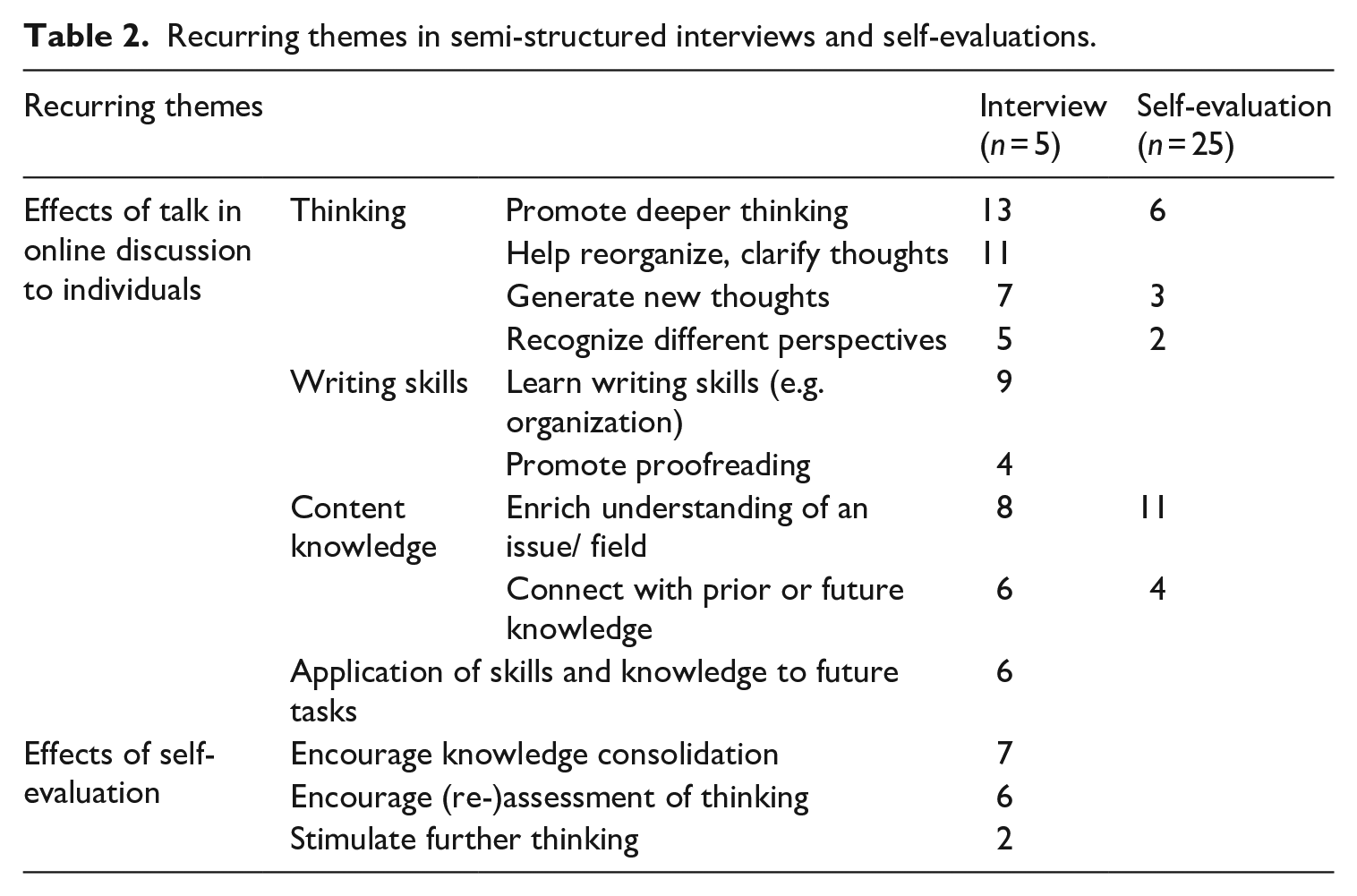
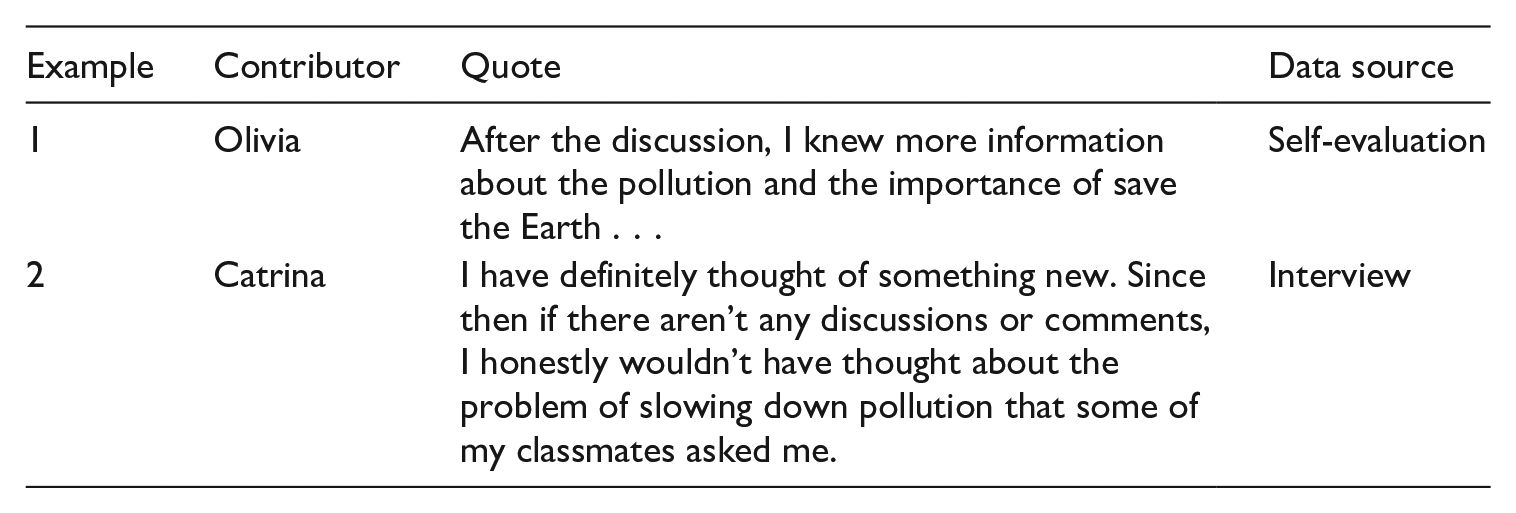
As indicated in Table 2, most students mentioned that they had an enriched understanding of an issue or the theme of pollution and the environment in their self-evaluation (Example 1), followed by the promotion of deeper thinking (Example 2). A point to note is that enriched understanding was grouped under content knowledge because students usually expressed what they had known more about in terms of the issues in discussion, rather than focusing on abstract concepts. Thus, a distinction was made between the codes generate new thoughts and enrich understanding of an issue/ field in the coding process: if the students did not explicitly express thinking and described the knowledge they learnt instead, it would be categorized under content knowledge, rather than thinking.
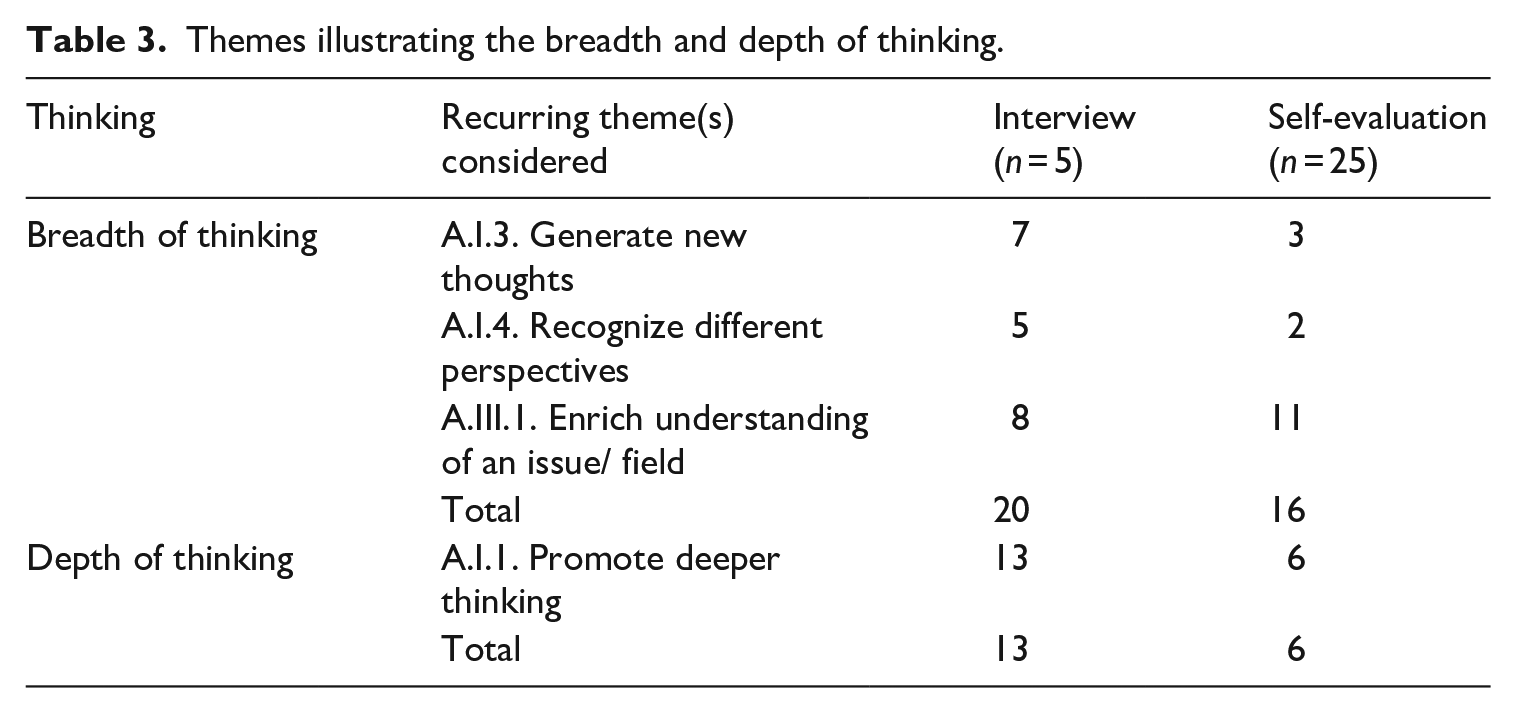
However, for the analysis, we contend that the codes illustrated in Table 2 should be considered together for a more comprehensive understanding of the breadth and depth of thinking (Table 3). By breadth of thinking, we refer to the range, scope, or multitude of perspectives or ideas being taken into consideration, while depth refers to the complexity of thoughts, or higher-order thinking displayed, such as analysis, synthesis, or evaluation.
Themes illustrating the breadth and depth of thinking.
2 Promoting the breadth of thinking
Excerpt 1 shows how Marion’s thinking has been expanded after talking with other contributors.
Excerpt 1: Asynchronous online talk under Marion’s Padlet post:
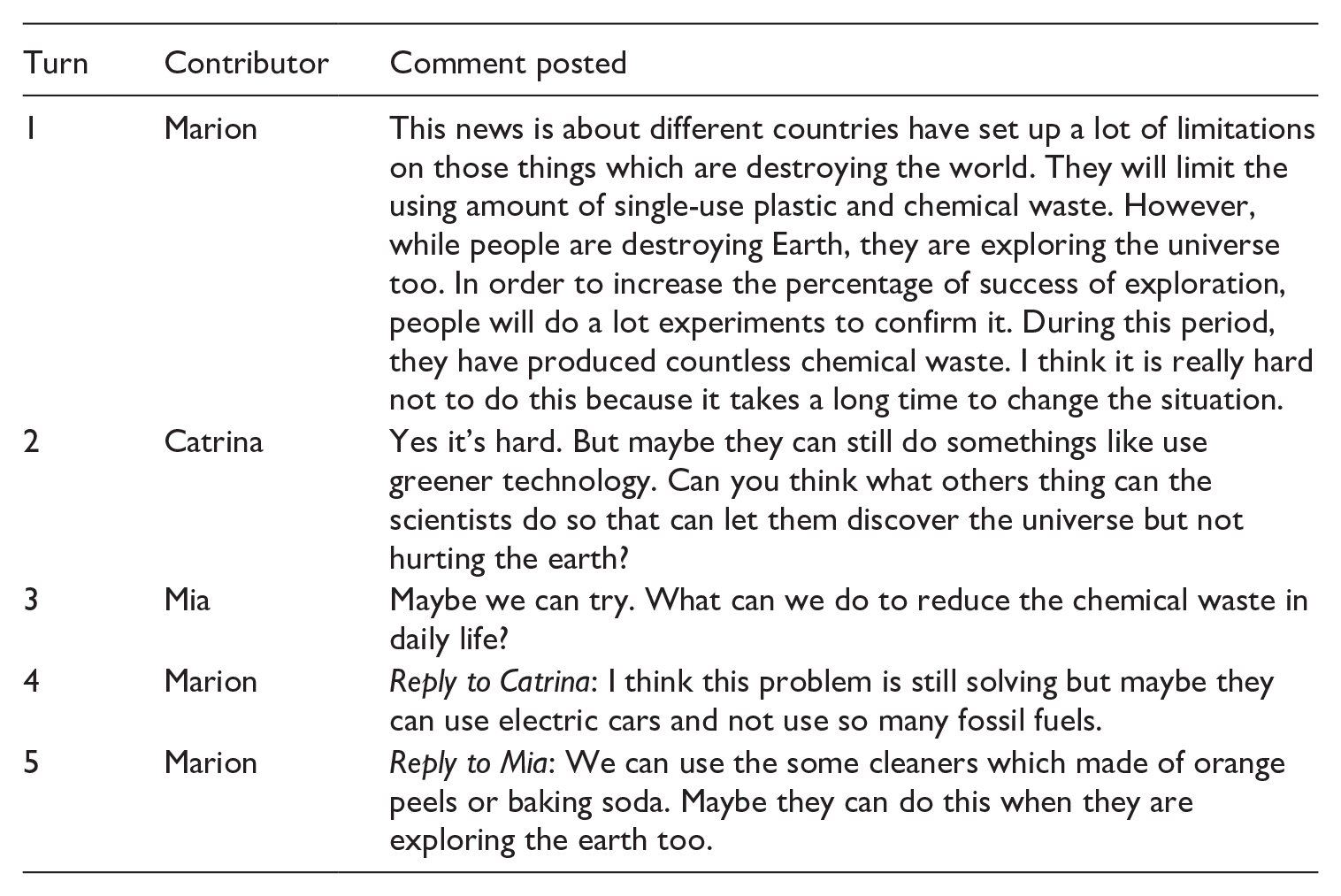
Marion expressed reservations in some countries’ efforts to minimize waste produced by scientific endeavors, as she recognized the importance of experiments in increasing the chances of success for explorations. She merely highlighted that reducing chemical waste in the process could be hard since an extensive amount of time is needed. However, Catrina’s question led her to think of other plausible methods for scientists to reduce pollution during exploration, expanding her understanding of how scientific activities can be more environmentally friendly. This shift also indicates her consideration of a new perspective.
Moreover, Mia’s contribution has proffered her another insight. By pointing out the possibility of reducing chemical waste in daily life, Marion was prompted to think of examples of green household cleaners and how the scientists could use them in their endeavors. This has broadened the scope of the discussion from large-scale scientific endeavors to everyday practices, adding another layer to her understanding as she connects the simpler actions she could take to what scientists can do. This has shifted her thought from simply recognizing the difficulty to alter the current situation to exploring practical solutions.
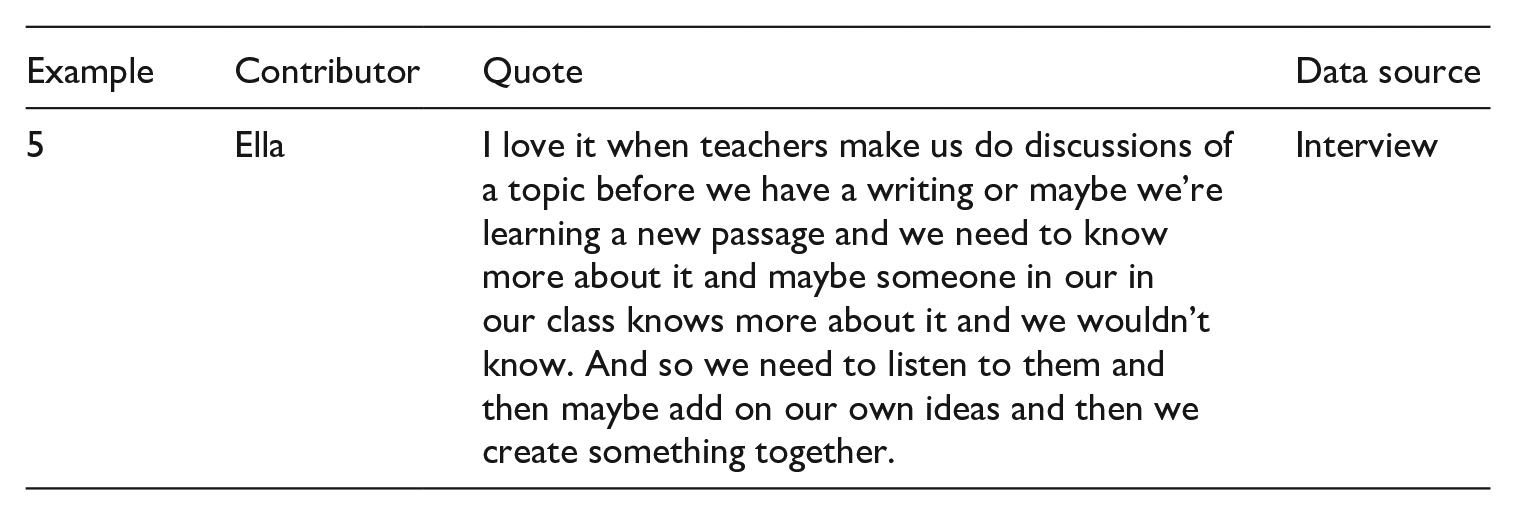
With reference to the interviews and self-evaluations, the most iterated theme was the extended breadth of thinking (Table 3). The students contended that the online discussions were able to extend or broaden their knowledge (A.I.3. Generate new thoughts & A.III.1. Enrich understanding of an issue/ field) and expose them to different perspectives on an issue (A.I.4. Recognize different perspectives) (Table 3). This may have been promoted by the use of questioning and reasoning in the asynchronous online talk, as exemplified by Examples 3 to 5 below:
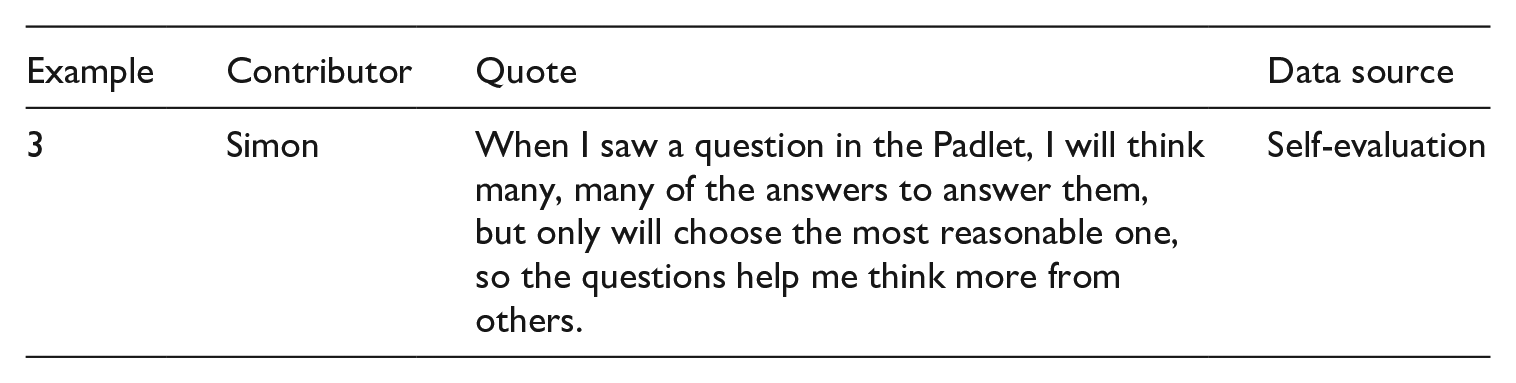
For Simon, it seems that the questions acted as a stimulant for new thoughts and self-evaluation as he not only actively thought of answers, but also tried to assess which one was more reasonable for including in his responses. This enabled him to explore different possibilities, extending his ideas.
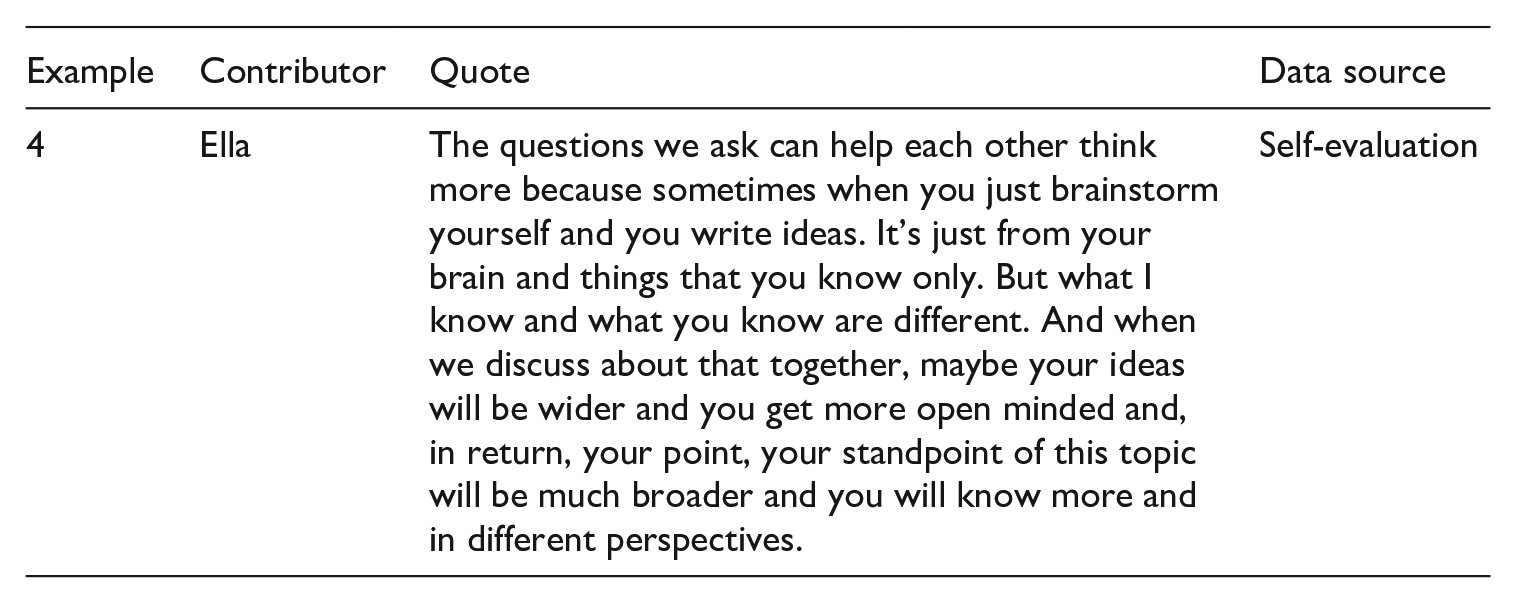
For Ella, the questions or the discussion itself enabled her to understand a variety of perspectives and opinions and this seems to have helped her develop more comprehensive views and make informed decisions. She even contended in the interview that this was ‘the wonder of discussions’:
3 Promoting the depth of thinking
Excerpt 2 showcases how Olivia’s thinking has been deepened by the talk with her peers.
Excerpt 2: Asynchronous online talk under Olivia’s Padlet post:
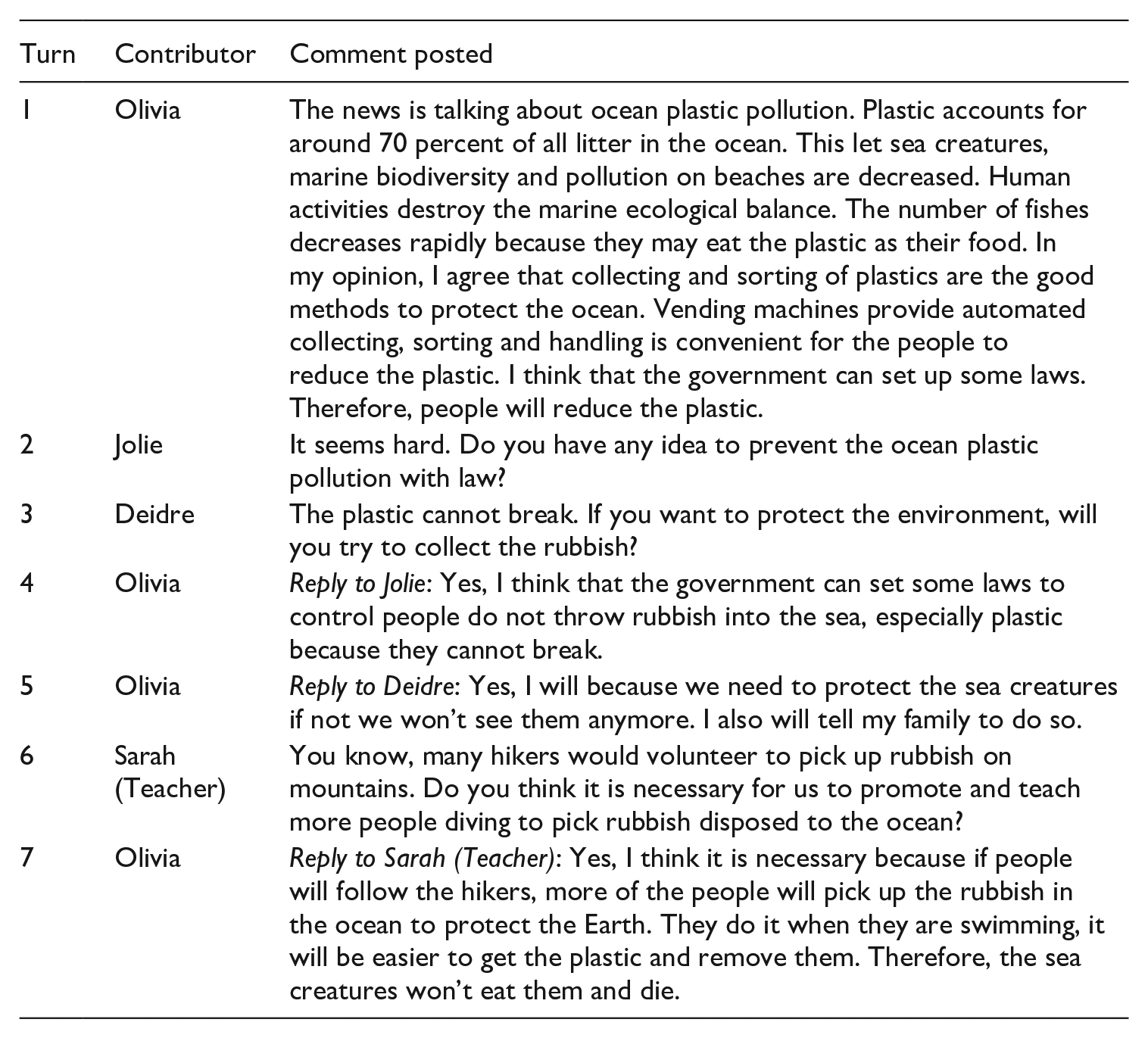
Olivia’s proposal of legislation was not elaborated initially. Following Jolie’s question about how laws could ease ocean pollution and picking up on Deidre’s contribution that ‘plastic cannot break [decompose]’, Olivia’s idea of setting up laws had been expanded. Jolie’s question challenged Olivia to think more deeply about her proposed solution, leading her to elucidate that the law she mentioned was to monitor rubbish being thrown into the sea due to its inability to decompose, showing the development of a more complex thought. Also, in response to Deidre, Olivia’s thought on why protecting sea creatures was essential had been further explained. Beyond merely stating its importance, she developed the idea that there was a possibility of extinction if help was not offered, implying a deeper analysis into the consequences of human actions on the matter.
Another example can be seen when Olivia responded to the teacher, Sarah’s question of whether asking divers to pick ocean litter was necessary. Building upon Sarah’s prompt about hikers volunteering to pick up rubbish on mountains, she expressed that if more people followed the practice, the ocean would be cleaner, thereby protecting the Earth by reducing sea creatures’ mortality due to plastic ingestion. This demonstrates an increased depth of thinking since her original post simply highlighted collecting plastic as a ‘good practice’ without elaboration. Moreover, it also showcases her analytical thinking by drawing parallels between how hikers remove litter while hiking and how swimmers do the same during their swim, pointing to increased depth of thinking.
The increased depth of thinking (A.I.1. Promote deeper thinking) was also recognized by the interviewees and the other students as it is the second most iterated theme in the interviews and self-evaluations (Table 3). Again, one of the possible reasons could be the questions posed by the other contributors.
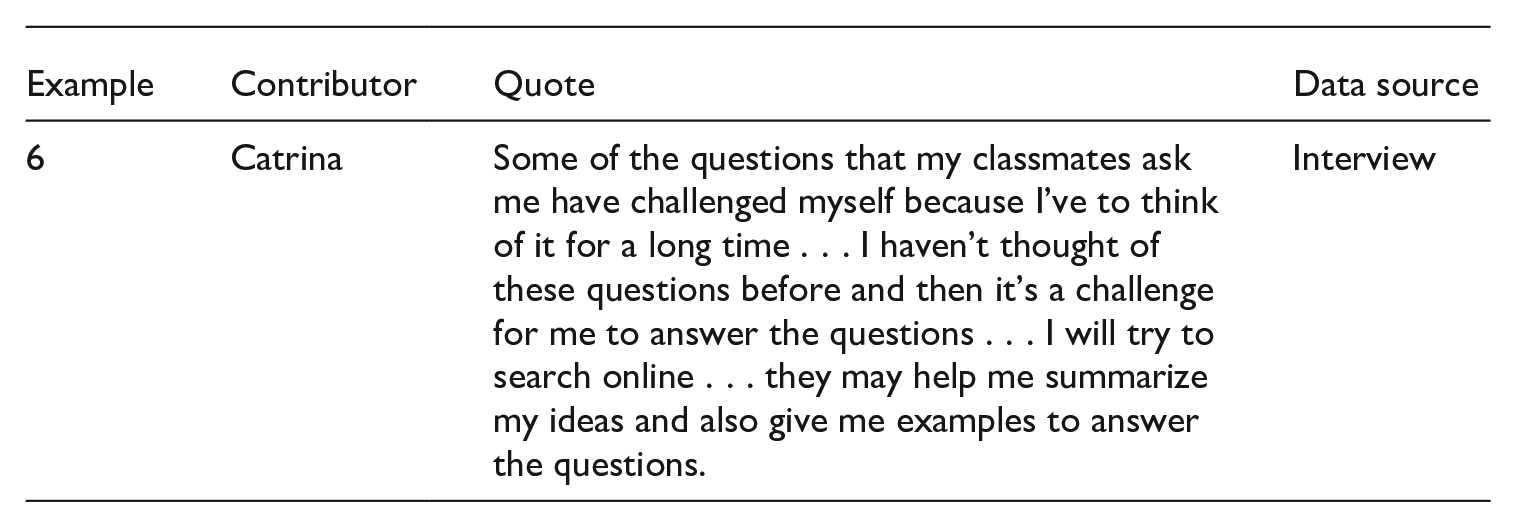
From Catrina’s quote, it can be speculated that questions allowed her to think more about an issue in perspectives she had not considered before. It also seems that the questions may initiate her active search for more information about the topic, deepening her understanding. Although it is unclear whether it applies to other learners, Example 7 also illustrates the effect brought about by questioning.
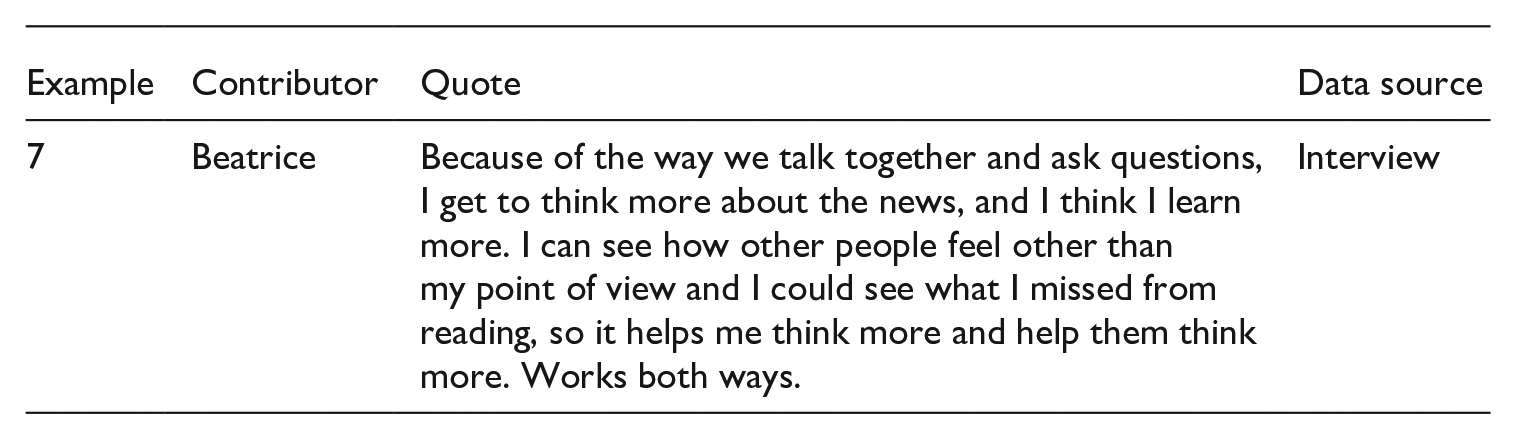
In addition to questioning, reasoning also promoted the depth of thinking, which may be due to the clear logical development displayed in explicit reasoning. This has been demonstrated in Excerpt 2, where Olivia was trying to elaborate her responses to her peers. This is also epitomized in Example 8.
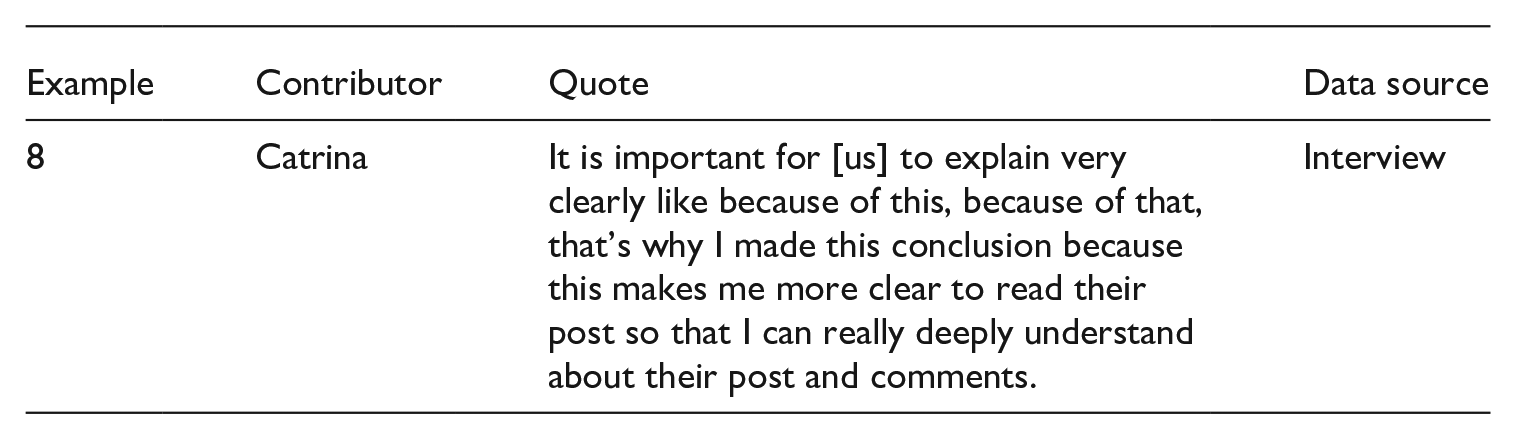
Other students also expected their peers to include explanations in their responses automatically, as well as taking the initiative to provide extra information to avoid misunderstandings.
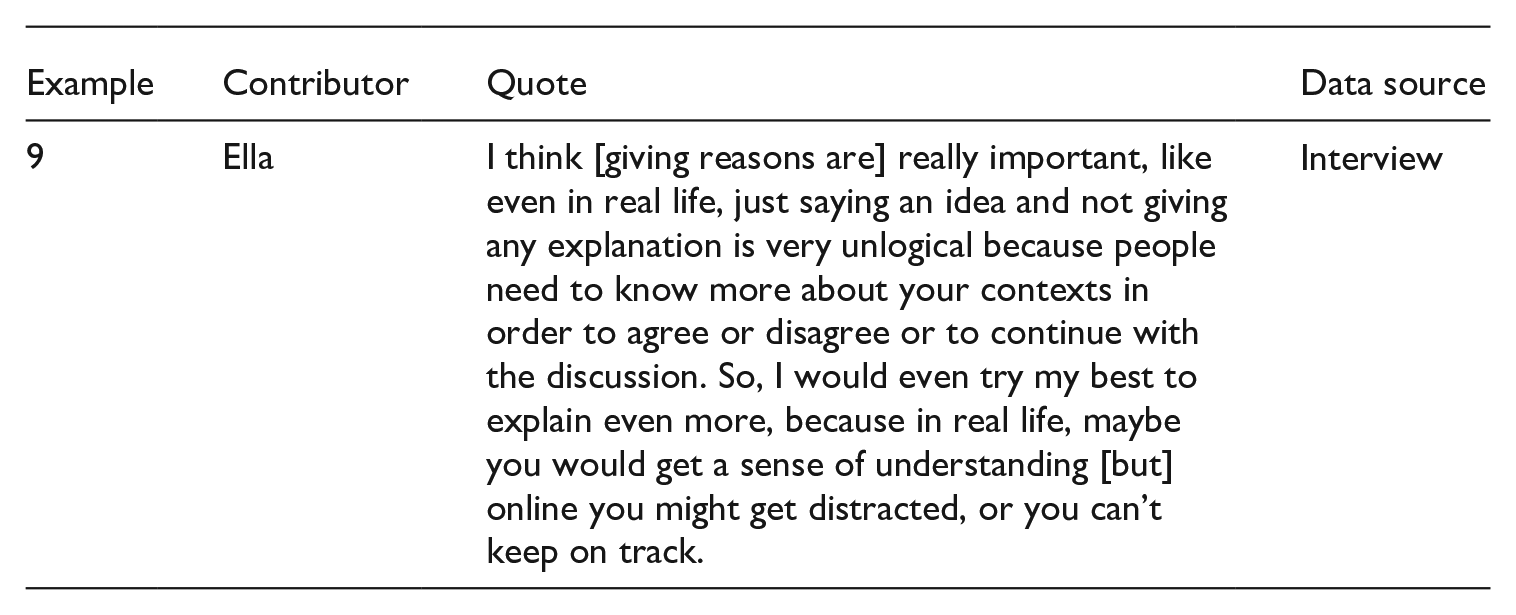
Ella’s response may indicate that, first, reasoning allows other respondents to know more information conducive to the sustenance of talk; second, students are aware, and perhaps, intentionally supplying more reasons in online discussions to substantiate their responses to compensate for the lack of real-time interaction, which may explain the observation of the rich use of reasoning in the asynchronous talk.
4 Facilitation of internalization
Although the coding of transcripts revealed that metacognitive talk or reflective dialogues in the online discussions were absent, this does not suggest that students did not engage in any forms of self-evaluation and reflection. First, it may be due to the fact that students were not asked to explicitly comment on their talk during the discussion as a task requirement. Second, the process may be obscured by the asynchronous online environment which allowed students to monitor and evaluate their own learning as they were typing the responses.
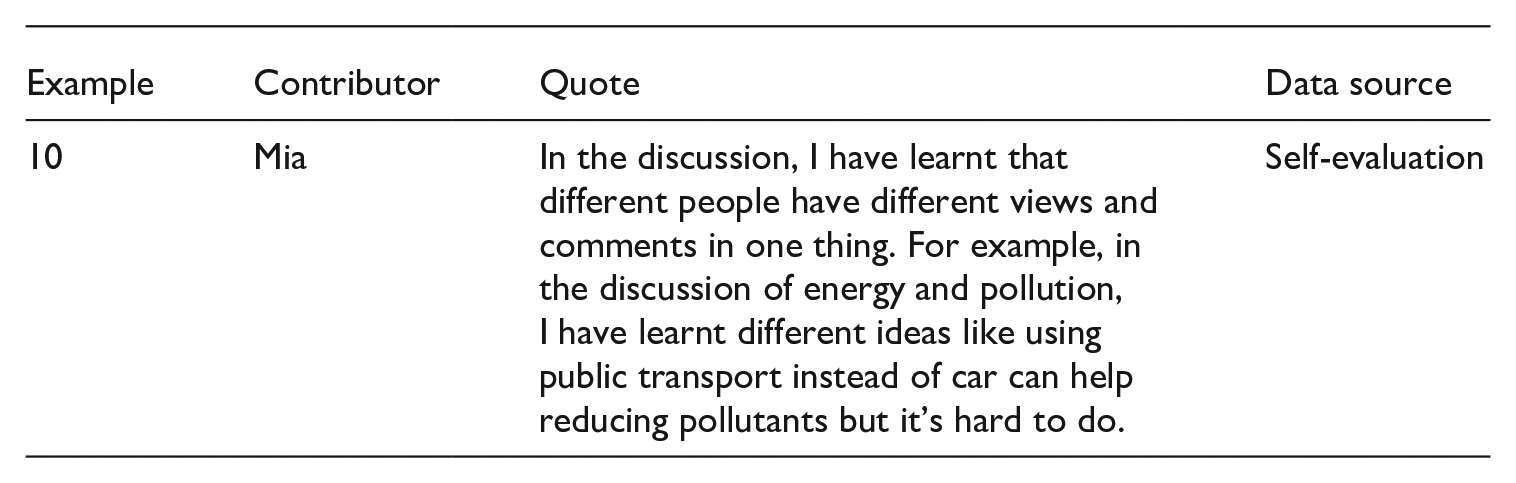
Drawing from the evidence from the self-evaluation entries, the presence of peripheral participation in the asynchronous online setting was shown to facilitate uptake and internalization. In 4 of the 25 self-evaluations, students used examples or ideas written in posts that they had not commented on:
A more obvious example can be drawn from Ella’s self-evaluation in which she synthesized Beatrice and Winnie’s posts though she did not comment on their posts:
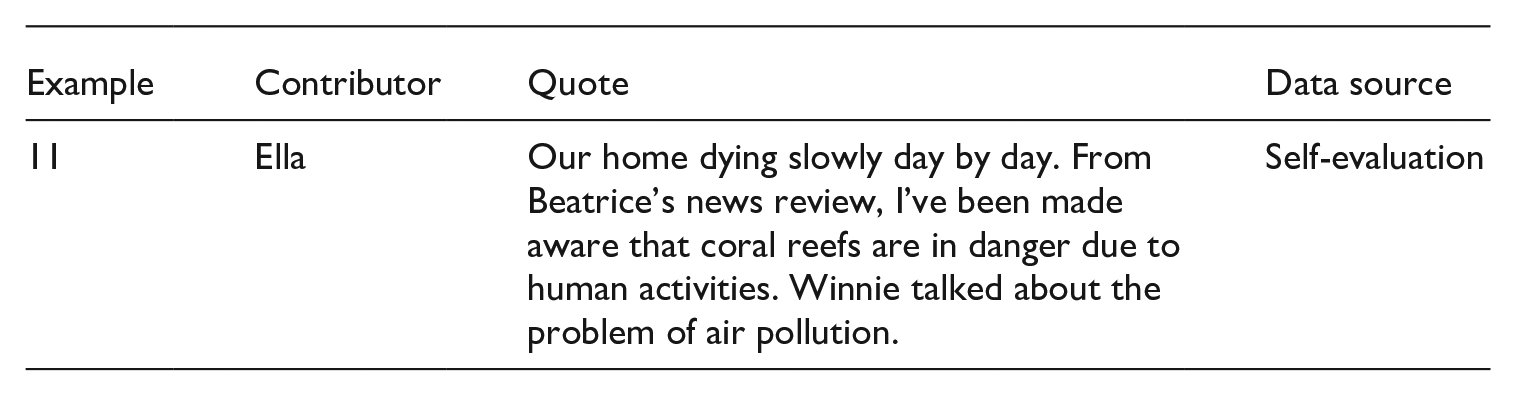
The uptake of ideas demonstrated peripheral participation in which students may have learnt and picked up ideas from observing others’ discussions or reading their contributions. Although the students did not explicitly state that they learnt the ideas from other students’ contributions in their self-evaluations, they may have some awareness of learning through observation.
Moreover, the participants may have demonstrated an ongoing self-evaluation process during peripheral participation. As noted by all the interviewees, they believed that they had learnt from reading others’ posts. For instance, Faye stated that reading others’ posts allowed them to better express their ideas, which may be the result of peer modelling (Example 12); while Beatrice would compare ideas they read and review their own views (Example 13).
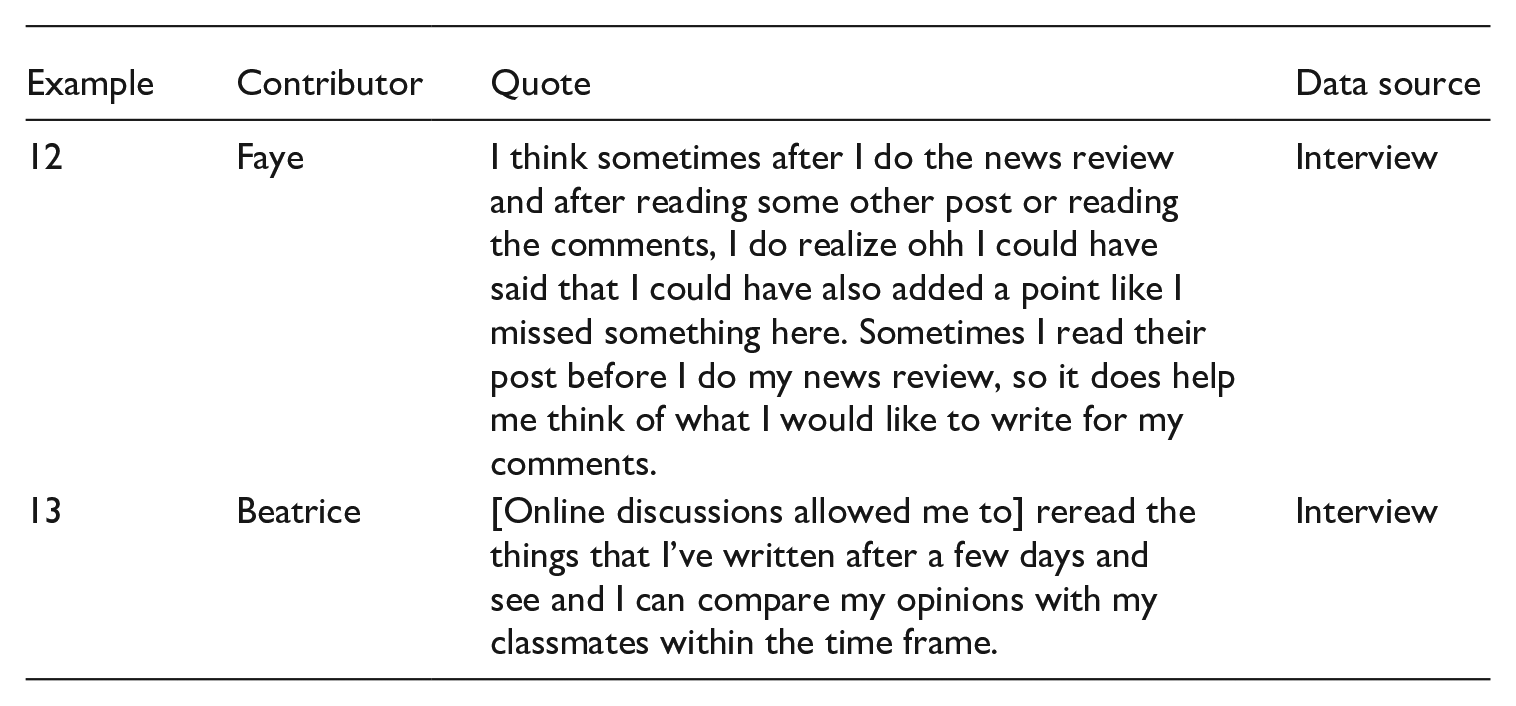
These examples highlight that asynchronous online discussions were able to provide space for students to enrich their immediate thinking and learning either through the co-construction of knowledge or through assimilating others’ ideas into their original thoughts. They were shown to provide the means for students to evaluate their existing knowledge and thinking as they acquire and internalize collective ideas into their own productions.
On top of the imperceivable on-going self-evaluation, the interview results indicated that students may have benefitted from the delayed self-evaluation. All interviewees asserted that the self-evaluation conducted four days after the online discussions encouraged knowledge consolidation. They claimed that this practice enabled them to review their work and recall information learnt. This indicates that the practice of self-evaluation may have prompted students to actively evaluate and be more aware of their learning processes.
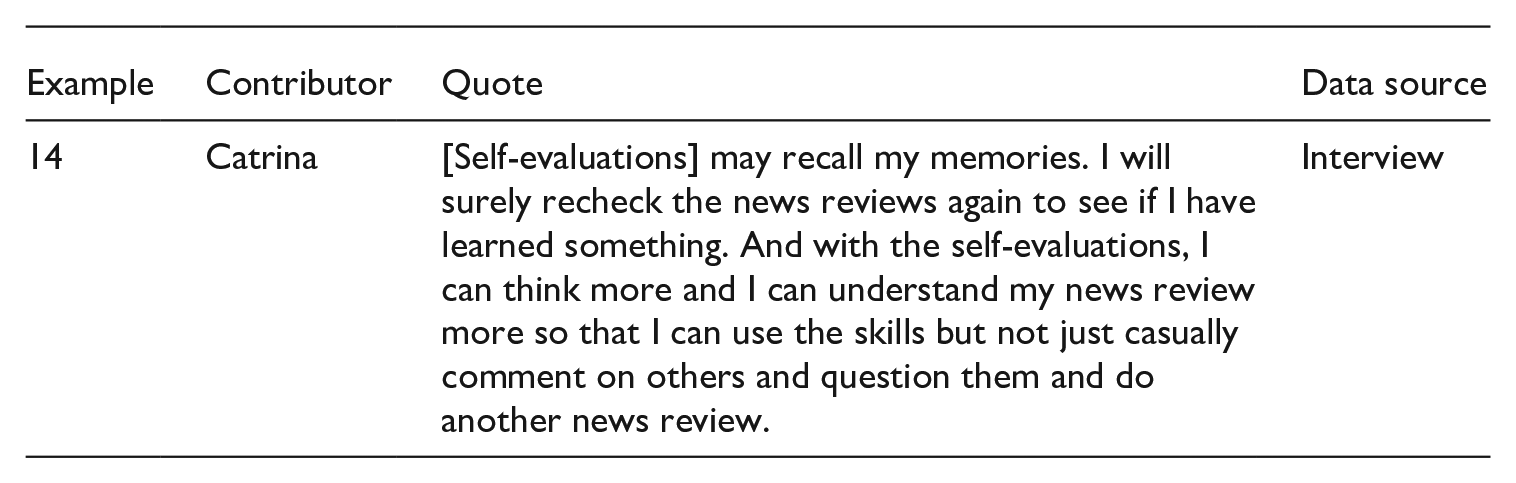
This was also supported by the interviewees’ statements that the recollection of skills and content learnt during the interaction with peers prompted them to re-read, re-think, and re-evaluate all the contributions and opinions in the online discussions. This shows that students conducted self-introspection during the process.
The above data showed that students were able to ‘interthink’ through asynchronous online discussions as they were able to draw from their peers’ ideas and formulate and deepen their own understanding of the subject matter. Hence, the IDZ(s) created from the asynchronous online discussions promoted students’ internalization of their own learning processes through retrospection and self-evaluation.
IV Discussion: Coalescence of intermental and intramental thinking
The current study set out to explore whether the IDZ created by interthinking is present in the asynchronous context and how it is mediated by talk. Results presented above indicated that students engaged in interthinking through their online discussions.
Figure 2 captures the chances for students to be involved in various IDZ by engaging with different interlocutors in the online discussion. Even if the students did not ask follow-up questions according to each other’s comments, the IDZ may be created between two interlocutors in the group discussion. Moreover, although the talk was not sustained for a long period, the IDZ may still be present due to the promotion of breadth and depth of thinking among students. For instance, in Excerpt 2, although Deidre’s contribution did not seem to correspond to Jolie’s question of how ocean plastic pollution could be prevented, it played a vital role in the collaborative construction of ideas. By pointing out that plastic would not decompose and asking whether Olivia would collect them instead, Deidre implicitly suggested that legislation could facilitate the collection of existing plastic waste based on Jolie’s response. Taking this a step further, Olivia explained that laws could be implemented to prevent plastic disposal. This interthinking process enabled Olivia to refine her thoughts to formulate more comprehensive solutions based on a deepened understanding. With reference to Wegerif (2007), ‘[t]he dialogic spark of understanding is a moment in time arcing out between voices or perspectives separated in time as well as space’ (p. 259). In other words, the IDZ may be created in the moment when students have a new insight, realize dissonance in the information presented and their prior knowledge, or recognize a need to reformulate their conceptualizations in light of new evidence, all of which are realizations of thinking and learning (Barnes & Todd, 2021). On this basis, the results may infer the successful creation of IDZ among participants, indicating their collective thinking due to the characteristics of productive discussions displayed, like rich questioning and reasoning.
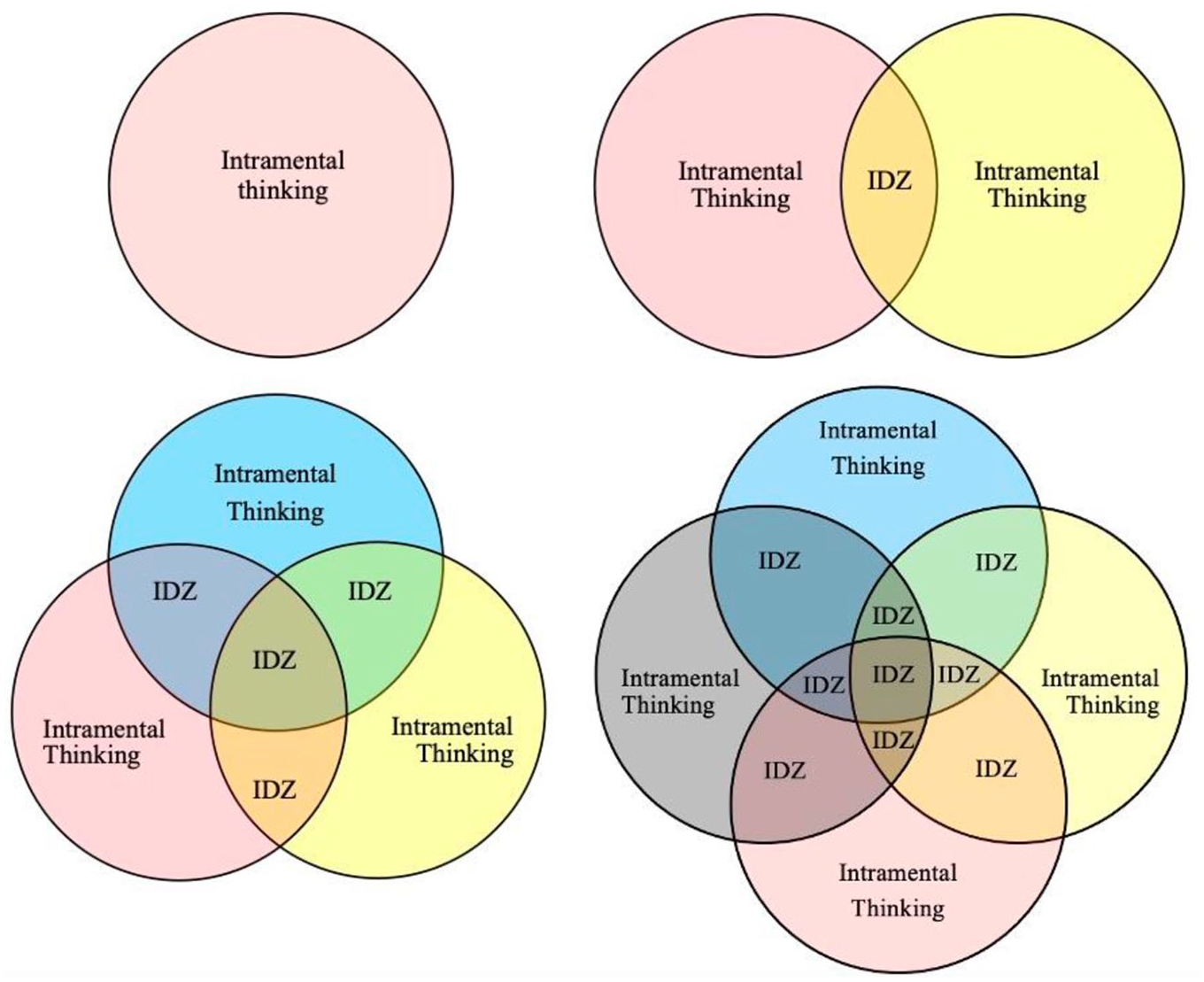
Creation of intermental development zone (IDZ) from individual to group discussion.
Also, notwithstanding the absence of metacognitive and reflective dialogues in the asynchronous online talk, on-going and delayed self-evaluation may trigger the integration or promotion of interpersonal and intrapersonal thinking. As supported by students’ statements, they read others’ opinions while constructing and reformulating their own ideas at the same time. The interviewees also stated that the delayed self-evaluation allowed for a review of co-constructed products of talk and a reconsideration of their own opinions based on the products, suggesting that the comments and questions acted as tools to stimulate further introspection, triggering a re-evaluation of thoughts.
The elements of introspection and evaluation of ideas were supported by the affordances of the asynchronous discussions such as its timelessness that increased the students’ thinking and processing time, and peripheral participation. As contended by the learners, they were better able to re-read, re-assess, and re-organize their own thoughts, and that they were able to compare what others had posted and review their own productions. Also, these may indicate that the hybrid text in asynchronous talk, which progresses dialogues and embodies qualities of written artefacts (Delahunty, 2018), created opportunities for students to exercise their introspection, and in turn, facilitated internalization.
Both the on-going and delayed self-evaluation entail students’ use of higher cognitive skills to think about the thinking displayed in the texts and regulate their learning. As mentioned, Vygotsky (1978) asserts that internalization is promoted by creating the ZPD. In this study, it seems that self-evaluation may advance internalization, bridging interlocutors’ IDZ and intrapersonal thinking, instead of just encapsulating within the IDZ as Mercer (2000) contends. Thus, this study argues that the concept of internalization should be incorporated to the notion of IDZ to form a cycle of interaction between the intermental and intrapersonal planes (Figure 3).
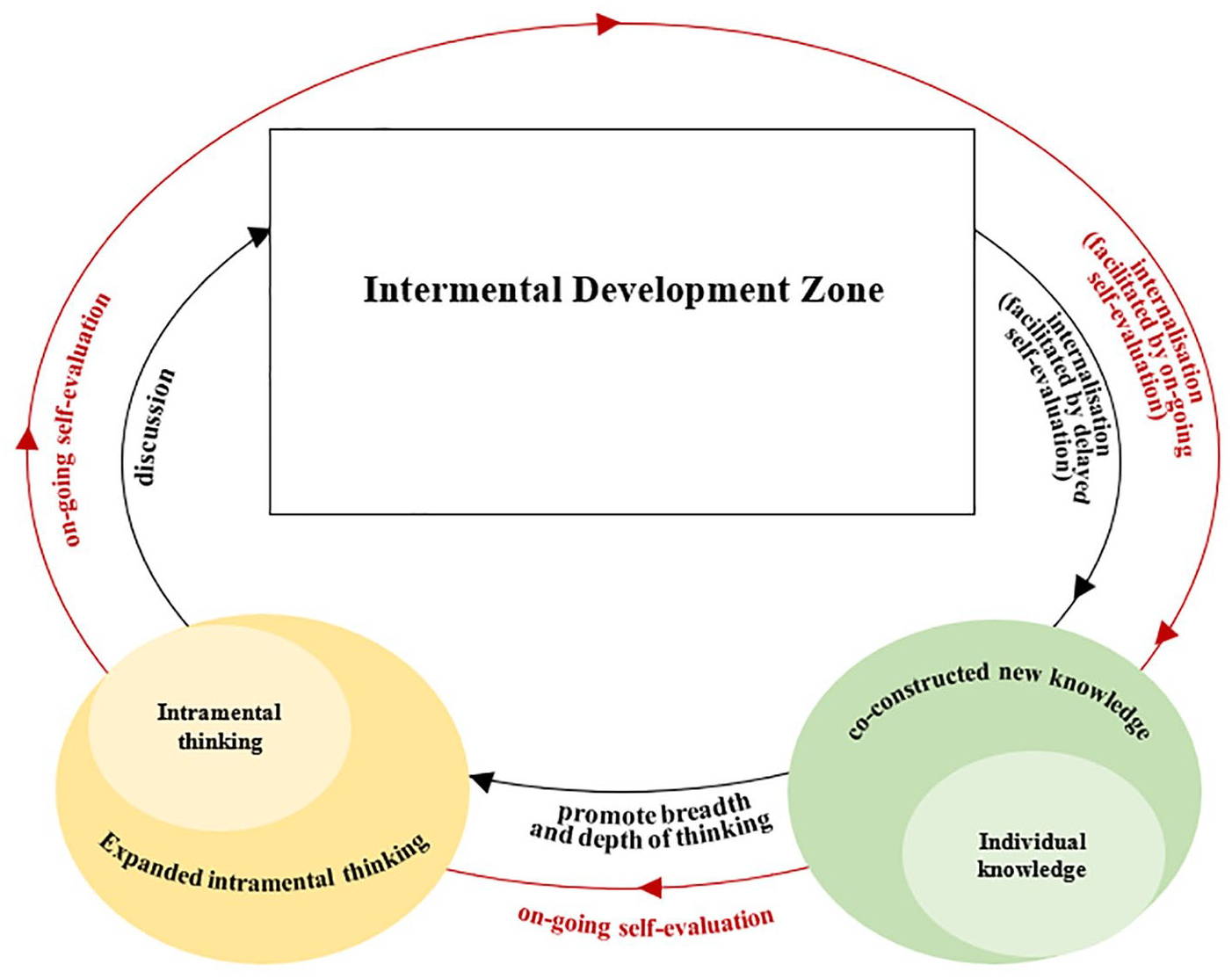
Proposed theoretical model.
The above model shows the dynamic and spiral development of an individual’s thinking promoted by the creation of IDZ and internalization facilitated by self-evaluation. Through discussion, one externalizes intramental thinking and creates an IDZ sustained by the turn-taking of interlocutors and characteristics of productive discussions. The co-constructed product may then be internalized with the help of a delayed self-evaluation as a regulatory strategy, or the on-going self-evaluation undertaken throughout the whole discussion, supported by the asynchronous online setting in which students can constantly re-read and reformulate their understanding and production. With the new knowledge incorporated into one’s knowledge base, intramental thinking is expanded in breadth and depth, forming new intramental thinking and the cycle may restart with asynchronous online discussions. For example, in the delayed self-evaluation, as influenced by her peers (Example 11), Ella concluded that ‘conservation measures aren’t useful if we don’t give up certain ways of living that harm the environment, including the air, the sea, and the ground’. This demonstrates an internalized expanded thinking as she only expressed frustration towards human’s reliance on fossil fuels in her original contribution. Her knowledge about the devastating impacts on coral reefs, air quality, and technology are the result of internalization and co-construction with other contributors. The proposed model explicates the dynamic relationship among discussion, intramental and intermental planes, and self-evaluation for ESL learners.
V Conclusions
In conclusion, the study has shown that talk in the asynchronous online discussions was found to promote the breadth and depth of thinking, which indicated the presence of interthinking through the creation of IDZ. The practice of self-evaluation facilitated the internalization of skills and content learned in the asynchronous online discussions to individual productions, which helped bridge the intermental thinking to intrapersonal thinking. These proved that talk mediated students’ thinking both during and after the discussions.
In line with the findings, this research has advanced the field of classroom talk by highlighting the affordances of asynchronous online talk in mediating and expanding student thinking in terms of breadth and depth, which point to the importance of structuring group discussions within teaching practices. It also leads to the successful creation of different IDZs for individuals through intramental and intermental thinking. In addition, as self-evaluation may facilitate internalization, it should be incorporated after group discussions for consolidation in instructional practices. Furthermore, other metacognitive strategies like reflections can be developed and promoted in student learning to nurture autonomous learners.
It is also acknowledged that this study is not without limitations. First, due to access and time constraints, only a class of 25 students from a selected secondary school was solicited to take part in the study. Also, in-depth interviews were conducted with only five of the participants, which may not include the myriads of perspectives of the entire class, so interpretations drawn may not capture the full range of student experiences. Thus, the evidence presented may only reflect a snapshot of the thinking processes of ESL students in HK at the time of the study. Care should be taken when generalizing these findings to a wider population or a different context since learners’ prior experiences in online discussions, familiarity or interest in technology could affect their engagement and participation. Furthermore, even though the researchers attempted to minimize the Hawthorne effect in the study, factors that are out of the researchers’ control may have impacted the data collected. For instance, the relationship and power dynamics of the teacher participant and the students may have affected the development of talk. Even though participants were reminded that their opinions would not be judged or evaluated and that their interview responses would not be disclosed to their teacher, they may still obscure their real thoughts.
Building on the study’s insights into harnessing asynchronous online talk, further studies could consider exploring the teacher’s role in facilitating the creation and maintenance of IDZ in the asynchronous context. Also, the structuring of asynchronous online talk and its effects on students’ academic attainment could be further explored. From a student learning perspective, while this study has explored how asynchronous online talk mediated students’ thinking, future studies may delve into the specific characteristics and nuances of such talk. By analyzing these classroom talks from a linguistic and/or sociolinguistic perspective, the features, as well as similarities and differences with classroom talk could be further delineated. Statistical tools may also be employed to determine the correlation between asynchronous online talk and students’ cognitive development. As self-evaluation was not the primary focus of the study, more direct evidence can be collected in future research to substantiate and measure the significance of its effect in aiding the transference of intermental thinking to the intramental plane. Moreover, the effects of student motivation and engagement, together with other pertinent constructs, such as students’ gender, levels of English proficiency, and technological competence, should also be investigated to paint a more holistic picture of student learning through asynchronous online talk.
