



Abstract
Despite the widespread use of mobile digital devices such as iPads in teaching and learning, there is little research on the ways in which content teachers make use of the technological affordances of the iPad to achieve pedagogical goals in bilingual/multilingual classrooms. This article adopts translanguaging as an analytical perspective to explore how the use of the iPad extends the semiotic and spatial repertoires for enabling the English Medium Instruction (EMI) teacher to create a translanguaging space for supporting multilingual students’ learning of new academic knowledge. The data for this article is based on a linguistic ethnographic project in an EMI mathematics classroom in a secondary school in Hong Kong. Multimodal Conversation Analysis is used to analyse the classroom interactional data, triangulated with the video-stimulated-recall-interviews that are analysed using Interpretative Phenomenological Analysis. The article argues that the iPad provides opportunities for the EMI teacher to fully exploit the semiotic and spatial resources for creating a technology-mediated space in the classroom. Such a space in turn allows the teacher to accomplish content teaching and build a more engaging environment for learning.
I Introduction
There has been a surge of interest in recent years exploring the use of mobile digital devices, such as iPads, smartphones and tablets, for facilitating student’s language learning processes and how teachers integrate such devices into the pedagogical practices in order to maximize the students’ learning opportunities and engagement (e.g. Liu & Chao, 2017). Some argue that the use of mobile digital devices makes students’ learning “more meaningful, motivating, and rooted in the personal interests of students” (Warschauer & Cook, 1999: 32). Moreover, teachers employ different strategies of using mobile digital devices in different classroom contexts for different purposes (Warschauer, 1999). Understanding the teachers’ pedagogical strategies in utilizing such devices in the particular context is therefore very important.
In the second language teaching and learning field, research has shown that mobile devices can facilitate students’ L2 reading and listening skills, increase students’ motivation in learning an L2 (Oberg & Daniels, 2013) and enhance their L2 oral proficiency (Lys, 2013). Additionally, studies have explored examples of how one specific type of technology can support teaching and students’ learning (e.g. Chao, 2006; Roush & Song, 2013). Most of the existing studies focus on the students’ use of mobile devices in or outside the L2 classrooms for developing their L2 proficiency. There is a clear need for empirical studies that investigate how teachers utilize mobile devices to maximize learning opportunities and construct engaging learning experiences for students.
As the term indicates, English Medium Instruction (EMI) means that teaching and learning are done through the medium of English, and it is a pedagogical policy and practice in countries and regions where English is not usually spoken by the majority of the population. A persistent issue in EMI has been how to balance content and language learning, particularly when the students are still developing their academic literacies as well as their English proficiency and the contents that are being taught are abstract (e.g. in science and mathematics in particular) and unfamiliar (Lo, 2015). Recent studies of translanguaging as a pedagogy and as a theory of language and communication highlight the benefits of maximizing language users’ full linguistic and semiotic resources in knowledge construction (e.g. Li, 2014; Lin & He, 2017; Tai & Li, 2020a, 2020b, 2021). At the same time, translanguaging seems to be at odds with the one-language-only and one-language-at-a-time EMI policy and practice. Translanguaging embraces multimodality; translanguaging pedagogies include the use of digital technologies as part of the meaning-making repertoire. The present study aims to expand the existing literature on the role of mobile digital devices, such as iPads, to facilitate content teaching and learning by investigating an under-explored research context, namely English Medium Instruction (EMI) mathematics secondary classes in Hong Kong (HK). It focuses on how the use of the iPad extends the semiotic and spatial repertoires to enable the EMI teacher in constructing a translanguaging space for supporting students’ content learning and participation. The study is a four-week linguistic ethnographic investigation which involves the researchers collecting field notes, ethnographic interviews with the teacher and students, and classroom video recordings. The classroom interactional data is analysed using Multimodal Conversation Analysis (MCA). The analyses of the classroom interactional data are triangulated with the video-stimulated-recall-interview data which are analysed using Interpretative Phenomenological Analysis (IPA).
1 Use of mobile devices in second language classrooms
The integration of mobile digital technologies in language classrooms for promoting L2 teaching and learning has been well documented in the existing literature. This includes the application of technological devices as instant response systems (e.g. Rodriguez & Shepard, 2013) and mobile devices like iPad, mobile phones and tablets (Engin & Donanci, 2015). Within this broader context, the field of mobile-technology-assisted language learning has attracted the applied linguists’ attention (e.g. Godwin-Jones, 2011; Kukulska-Hulme & Shield, 2008). Researchers are interested to explore the affordances of mobile technology and how students can benefit from these affordances to enhance their L2 proficiency (e.g. Harmon, 2012; Kinash et al., 2012; Lys, 2013; McClanahan et al., 2012; Oberg & Daniels, 2013). For instance, Lys (2013) examines the impact of the use and integration of the iPad for facilitating the L2 German students’ oral proficiency. The findings reveal that the iPads are useful for providing additional speaking practices for advanced level students. This results in an increase in the amount and quality of the students’ oral production.
A significant number of studies on mobile-assisted language learning has been focusing on how mobile devices foster students’ agency and autonomy, i.e. learning L2 on their own without direct instruction of teachers. To date, there is little empirical work that qualitatively examines how mobile devices are used by the teachers and learners in the classrooms for achieving L2 teaching and learning. Engin and Donanci (2015) examine the impact of the use of the iPad in promoting dialogic teaching in the English for Academic Purposes classes in an EMI university in the United Arab Emirates. The findings illustrate that the iPad both affords and restricts opportunities for the teacher in engaging in dialogic teaching. The authors argue that the creations of dialogic teaching depend on the teacher’s and students’ attitudes to the iPad as a pedagogical device. However, the author does not provide a detailed analysis of the classroom interaction which prevents the readers from understanding how iPads can create or hinder opportunities for dialogic teaching. Liu and Chao (2017) investigate the English teacher’s practices of using various technological tools, including computers, projection screens and mobile phones, in fostering learner agency in a university English-as-a-second-language class. The analysis reveals that the teacher’s use of technological tools creates an equal and non-threatening classroom environment for the students to participate and exert their agency in class. The authors emphasize the importance of the teacher’s role in orchestrating the technological affordances for maximizing learning opportunities and encouraging student agency.
2 Medium-of-instruction in Hong Kong
The choice of medium-of-instruction in the educational system has been a highly controversial issue for decades in HK, where the majority of the citizens speak Cantonese as their L1. Whilst the medium-of-instruction policies are broadly set for primary and university education, the medium-of-instruction policy at the secondary level has gone through immense changes (Poon, 2010). HK’s secondary schools have witnessed three key stages in the development with regard to medium-of-instruction policies, including (1) the laissez-faire policy prior to 1994; (2) the compulsory CMI (Chinese Medium Instruction) policy during 1998–2010 which allowed 114 secondary schools to use EMI to teach content subjects while the remaining 307 schools were mandated to use CMI; and (3) the fine-tuning medium-of-instruction policy since 2010. The policy is in part responding to the parental desire for their children to be educated in EMI settings. Under the fine-tuning policy, secondary schools are allowed to offer EMI classes, partial-English-Medium classes (i.e. one or two subjects conducted in EMI) and/or CMI classes. CMI schools have the autonomy in selecting their medium-of-instruction for content subjects if they have met certain criteria (Education Bureau, 2009).
Some schools recruit students from a range of racial and ethnic backgrounds due to an increasing number of South Asian (SA) students in HK. Several EMI classes at each secondary level are initiated based on the students’ English proficiency and academic ability. As a result, those secondary schools with a significant number of SA students may have EMI classes in order to accommodate their learning needs (e.g. Lin & He, 2017). According to the Legislative Council (2017), the number of ethnic minority students in HK schools has increased from 7,136 in 2005/06 to 18,200 in 2016/17, which is a 155% increase over the decade. Research has shown that although many SA students have grown up in HK or migrated to HK as a child and they are familiar with colloquial spoken Cantonese, they confront racial discrimination in the HK society, struggle to integrate into the Cantonese-speaking cultures and adapt into an educational system which does not honour their community languages and identities (Lin & He, 2017; Pérez-Milans, 2016). Hence, the monolingual EMI policy, which only allows the use of English in content classrooms, is not compatible with the multicultural and multilingual environment that the SA students have previously experienced during their childhood. This may prevent them from participating in the EMI classroom and learning the content knowledge with the teacher. To date, there is a lack of research that explores the reality of the HK EMI classroom with teachers and students who share different linguistic and cultural backgrounds.
3 Translanguaging in EMI classrooms
The Welsh-inspired term translanguaging was coined to describe a pedagogical practice of switching between different input and output languages in bilingual classrooms (Williams, 1994). Li (2018) further shapes the concept of translanguaging as a process of knowledge construction which involves going beyond different linguistic structures and systems (i.e. not only different languages and dialects, but also styles, registers and other variations in language use) and different modalities (e.g. switching between speaking and writing, or coordinating gestures, body movements, facial expressions, visual images). In other words, translanguaging does not only encourage teachers and students to deploy their available multilingual and multimodal resources within the limits and boundaries that are set up by the role sets, particular tasks and lesson objectives. Translanguaging also aims at transcending the boundaries named languages and challenging the traditional configurations, categories, and power structures and equalizing the hierarchy of languages in the classrooms. This can potentially allow teachers and students to construct new meanings and new configurations of language practices. By doing so, it creates a translanguaging space (Li, 2011) for meaning-making and social justice. As Li (2018) argues, “translanguaging underscores multilinguals’ creativity – their abilities to push and break boundaries between named language and between language varieties, and to flout norms of behaviour including linguistic behaviour, and criticality – the ability to use evidence to question, problematise, and articulate views” (p. 23).
Methodologically, adopting translanguaging as an analytical perspective allows researchers to go beyond from doing structural analysis for identifying the frequent and regular linguistic patterns. This redirects the researchers in focusing on how language users break boundaries between named languages and non-linguistic semiotic systems in particular moments of classroom interaction (Li, 2011, 2018). Moment Analysis is proposed by Li (2011) for investigating the spontaneous acts of creativity and criticality in everyday social interactions. It focuses on what prompts a particular social action at a particular moment of the interaction and the consequence of the action. In this sense, the researcher is concerned with how specific moment of the use of various linguistic, multimodal and multi-semiotic resources is being noticed or remarked upon by the participants and what may have resulted in a particular action at a specific moment of the interaction (Li & Zhu, 2013).
In the EMI setting, there is a need for constructing opportunities for target language use in EMI lessons (Turnbull et al., 2011). However, it is equally important to allow students to draw on their full linguistic and semiotic repertoires in EMI classrooms in order to achieve particular pedagogical goals, such as alleviating the language barriers to learning academic concepts, counteracting students’ linguistic insecurity in the classroom and facilitating the learning of content subjects. There is a small but growing body of literature which investigates translanguaging practices in EMI classrooms (e.g. Lin & Lo, 2017; Lin & Wu, 2015; Tai & Li, 2020a, 2020b, 2021). A recent ethnographic study by Lin and He (2017) investigates how an EMI science teacher uses translanguaging to motivate SA ethnic minorities to draw upon their multilingual repertoires. The findings indicate that the teacher and learners’ willingness to learn from one another creates a space where learners are motivated to use the L2 and develop their linguistic repertoires. On the other hand, Sah and Li (2020) conduct a critical discourse analysis of teachers’ and students’ language use in two EMI classrooms (social studies and health and population classrooms) in a multilingual public school in Nepal. The authors argue that the teachers’ and students’ uncritical adoption of translanguaging practices reproduces the hierarchy of named languages by privileging the national languages (e.g. Nepali) above the indigenous languages for minoritized students (e.g. Newari). It is further argued that “unequal languaging practices create a discriminatory learning space for linguistic minoritized children” (p.17). The study provides useful pedagogical implications for teachers and it reinforces the need for EMI teachers to be critical when engaging in translanguaging and have an awareness for promoting equal integration of minoritized languages, beyond the mixing of dominant languages. Wu and Lin (2019) conduct a detailed discourse analysis of an EMI science teachers’ classroom interaction in HK and they find out that the teacher draws on translanguaging practices to connect between the students’ familiar everyday semiotic and cultural patterns (e.g. their daily life experience) and the school-defined semiotic and cultural patterns (e.g. sequential scientific explanations). Alternatively, Tai and Li (2020a) adopt a translanguaging perspective in order to understand how the teacher brings outside knowledge into the HK EMI secondary mathematics classroom. We argue that drawing on students’ familiar linguistic and multimodal resources and funds of knowledge through translanguaging enables the teacher to integrate the everyday life space into the EMI classroom learning space for promoting content learning. Similarly, Tai and Li (2020b) investigate how the EMI teacher constructs playful talk in a HK EMI secondary mathematics classroom. We argue that playful talk creates a translanguaging space in the EMI classroom which allows classroom participants to bring in a range of linguistic and multimodal resources and different kinds of knowledge into the lessons to promote student participation and facilitate content learning.
The present study aims to contribute to the current literature on translanguaging and EMI teaching and learning by investigating the role of the iPad in creating a translanguaging space for achieving the teacher’s pedagogical goals. As argued by Ho and Li (2019), the ways in which individuals strategically mobilize diverse resources for achieving their desired learning outcomes have to be better accounted for in order to allow researchers to understand the impact of mobile devices on learning. Hence, this reinforces the need for analysts to focus on how technological tools impact the action and activities in classroom interactions.
II Methodology
The secondary school in the present study is classified as a designated school which receives funding from the Education Bureau to deliver a mediated Chinese curriculum for helping SA students in learning Chinese as an L2. The choice of this school as the site of this research is due to the fact that this school has a typical high concentration designated school as 80% of the students are classified as SA students and the school has been educating SA students for an extensive period of time. The school principal is well known for promoting multicultural education at his school through giving public lectures and presenting research findings in academic conferences. The majority of the students are from Southeast Asia and the school has recruited a small group of local and mainland Chinese students. The school provides education from secondary one to six based on the curriculum guides set by the HK Education Bureau. The school offers two types of classes: (1) EMI classes for SA students only in order to cater for the needs of this group of students, and (2) a mixed class for both SA and Chinese students in order to promote intercultural communication between these two groups of students. In the EMI classes for SA students, since the teachers and students do not share a common L1, the school adopts a monolingual EMI policy where teachers and SA students are encouraged to speak English during EMI lessons to facilitate the learning processes.
The EMI teacher in the present study has at least seven years’ experience in teaching mathematics and science in English and he serves as the Head of Mathematics and Science at the school. The teacher was interested in the concept of translanguaging and research on EMI education and he wished to learn more about it. Therefore, he was willing to participate in this study when I initiated it. He is a Pakistani and he has lived in HK for most of his lifetime. He is an L1 speaker of Urdu and Punjabi. Arabic, English, Cantonese and Mandarin are his additional languages. He previously attended EMI schools for his early childhood, primary and secondary education. Although English is his L2, he considers English as his most proficient language, after Cantonese, Urdu and Punjabi. Based on the first author’s observation, the teacher is highly proficient in spoken and written English. The teacher’s spoken English proficiency is also reflected in the analysis of the classroom interactions. He acknowledges that he has limited proficiency in Mandarin and Arabic. His bachelor’s degree in chemistry and a post-graduate diploma of education were obtained from two top-ranked universities in HK. These universities also use EMI.
A semi-structured interview was conducted with the teacher in order to understand his perceptions of best practices and his attitudes towards using multiple languages in the EMI mathematics classrooms. The first author carried out classroom observation in the school for a month in June 2020, when face-to-face teaching was resumed after months of online teaching from January to May 2020. During the fieldwork period, he observed a year 10 mathematics class, which was taught by the EMI teacher. There were 40 students in the class and this class was an EMI class for SA students only. This class was chosen as the students were willing to give consent to the first author which allowed him to video-record their classroom learning processes for a month. The ethnic and cultural backgrounds of the SA students include Pakistani, Nepalese, Indian, Filipino, Yemeni and Russian. During the lessons, the teacher and all students were required to wear surgical masks for self-protection due to the Covid-19 pandemic. All SA students in the class were 16-year-olds and they spoke English and Cantonese as their L2s. All students have received at least six years of primary education. SA students typically attended primary schools where English was used as the medium-of-instruction. The SA students’ English proficiency were deemed as satisfactory by the EMI teacher. Many of the SA students in the class have grown up in HK or migrated to HK as a child and they could all understand or speak Cantonese. Eleven 40-minute lessons were observed and video-recorded. Ethnographic interviews were also conducted with the teacher and students during the 4-week observational period. A one-hour post-video-stimulated-recall-interview was conducted with the teacher in order to understand his pedagogical practices and his interpretations of his practices. Before conducting the interviews, video-clips which reveal salient features of teachers’ translanguaging practices were chosen by the first author as the stimulus. The teacher was asked to watch the selected video-clips and explain why he employed translanguaging practices in that particular EMI classroom moments. This provides the teacher with a chance to reflect on his own pedagogical practices and offer me an opportunity to verify certain things that are not clear from the observation alone. In the analysis below, the interview data will be discussed after the analysis of each classroom interactional extract.
III Analysis
1 Combining multimodal conversation analysis with interpretative phenomenological analysis
Multimodal Conversation Analysis (MCA) is used to analyse the classroom interaction data. The data are transcribed using Jefferson’s (2004) and Mondada’s (2018) transcription conventions (see Appendix 1). MCA “focuses on how social order is co-constructed by the members of a social group” (Brouwer & Wagner, 2004: 30) through fine-grained analysis of the social interaction. It takes an emic/participant-relevant approach (Markee & Kasper, 2004) in order to explicate the detailed process of how social actions, such as learning, are co-organized and achieved through talk-in-interaction. Adopting the emic perspective in analysing the classroom interaction requires the researchers to ground the research focus based on the recordings of the interactions without referring to the external factors unacknowledged by the participants in order to develop an emic understanding of the classroom interaction (i.e. an understanding which draws upon the participants’ own understanding of the ongoing talk rather than researcher-imposed). In other words, the identifications of the translanguaging instances are derived from the examination of the corpus of EMI lessons and they are not in any sense defined a priori. Furthermore, screenshots from the video recordings were included to reveal multimodal interactions in the EMI lessons.
We also draw on the analytical approach of Interpretative Phenomenological Analysis (IPA) to analyse the video-stimulated-recall-interviews. This allows us to investigate how the teacher makes sense of his own pedagogical practices at particular moments in the interaction. IPA follows a dual interpretation process called “double hermeneutic”. This requires researchers to try to make sense of the participants trying to make sense of their world (Smith et al., 2013). This allows analysts to adopt an emic approach for understanding the participants’ personal experience.
We now analyse examples of the teacher’s use of the iPad for facilitating content learning (Extracts 1 and 2) and constructing a humorous classroom environment for promoting student engagement (Extracts 3 and 4).
2 Use of iPad for facilitating content learning
In the dataset, 50 instances are identified which demonstrate how the teacher utilizes the iPad for explaining the mathematical concepts. Extracts 1 and 2 are typical examples that illustrate this interactional phenomenon.
Extract 1
Prior to the extract, the teacher (T) requested the class to complete a mathematical question which required them to solve the value of “v”. After a short while, T took an image of student 1’s (S1) work as well as S1’s appearance via his iPad. T then projected S1’s appearance to the screen in front of the whole class (will be analysed in Extract 3). This led to students’ laughter in the class and T later uploaded S1’s work to the screen through his iPad and asked students to keep quiet so that they could attend to T’s instruction. In this extract, T is evaluating the accuracy of S1’s work.
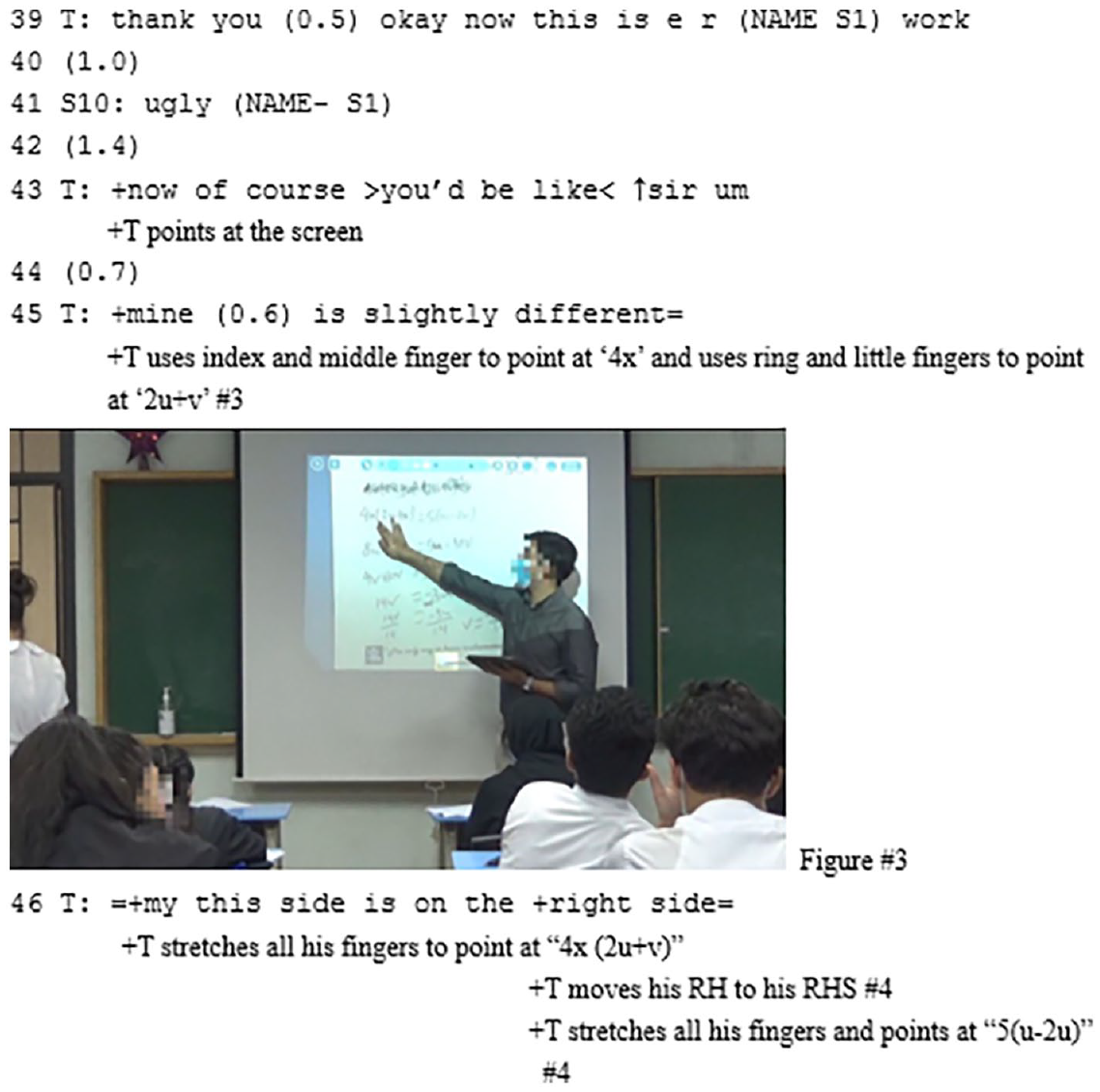
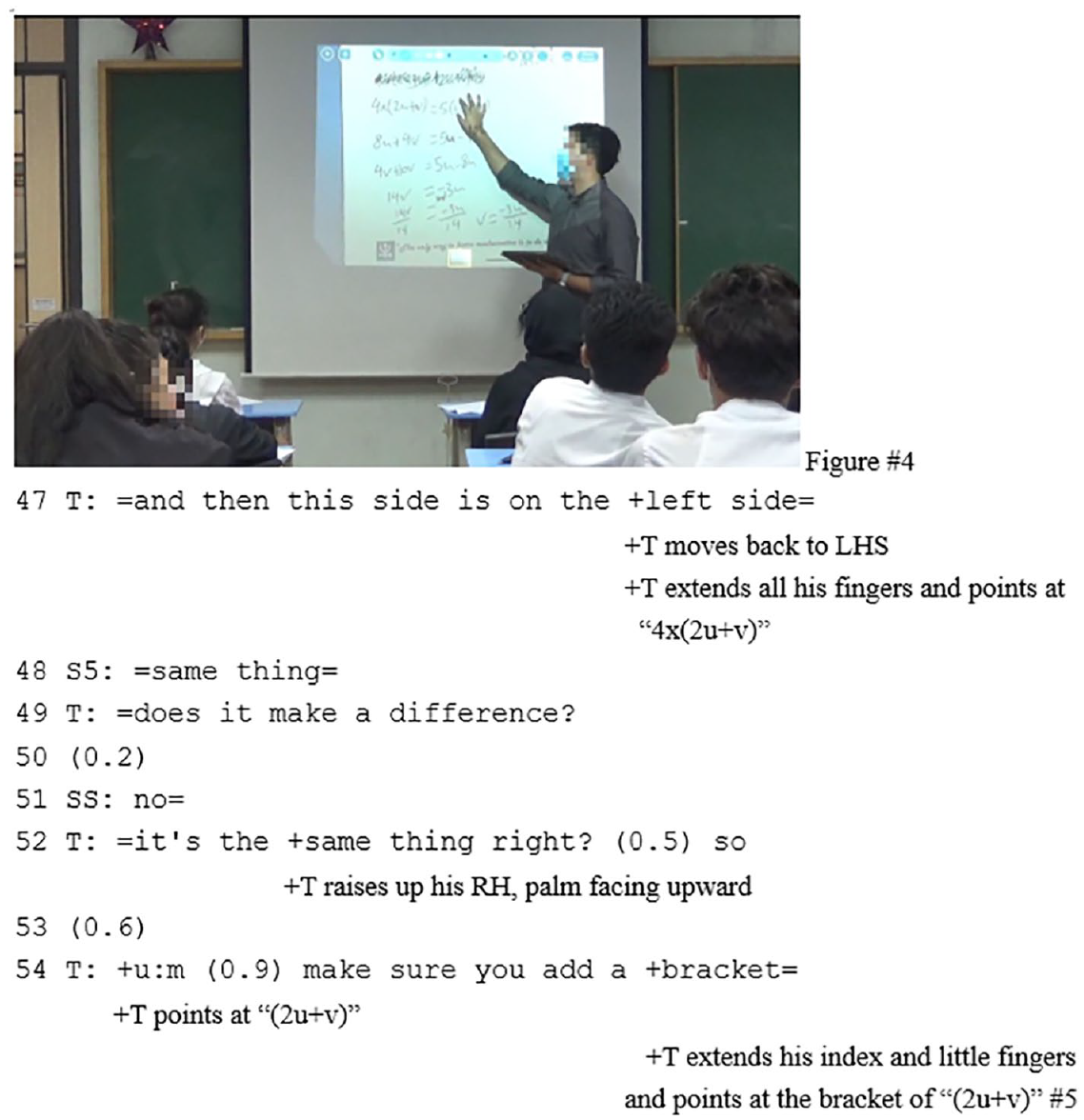
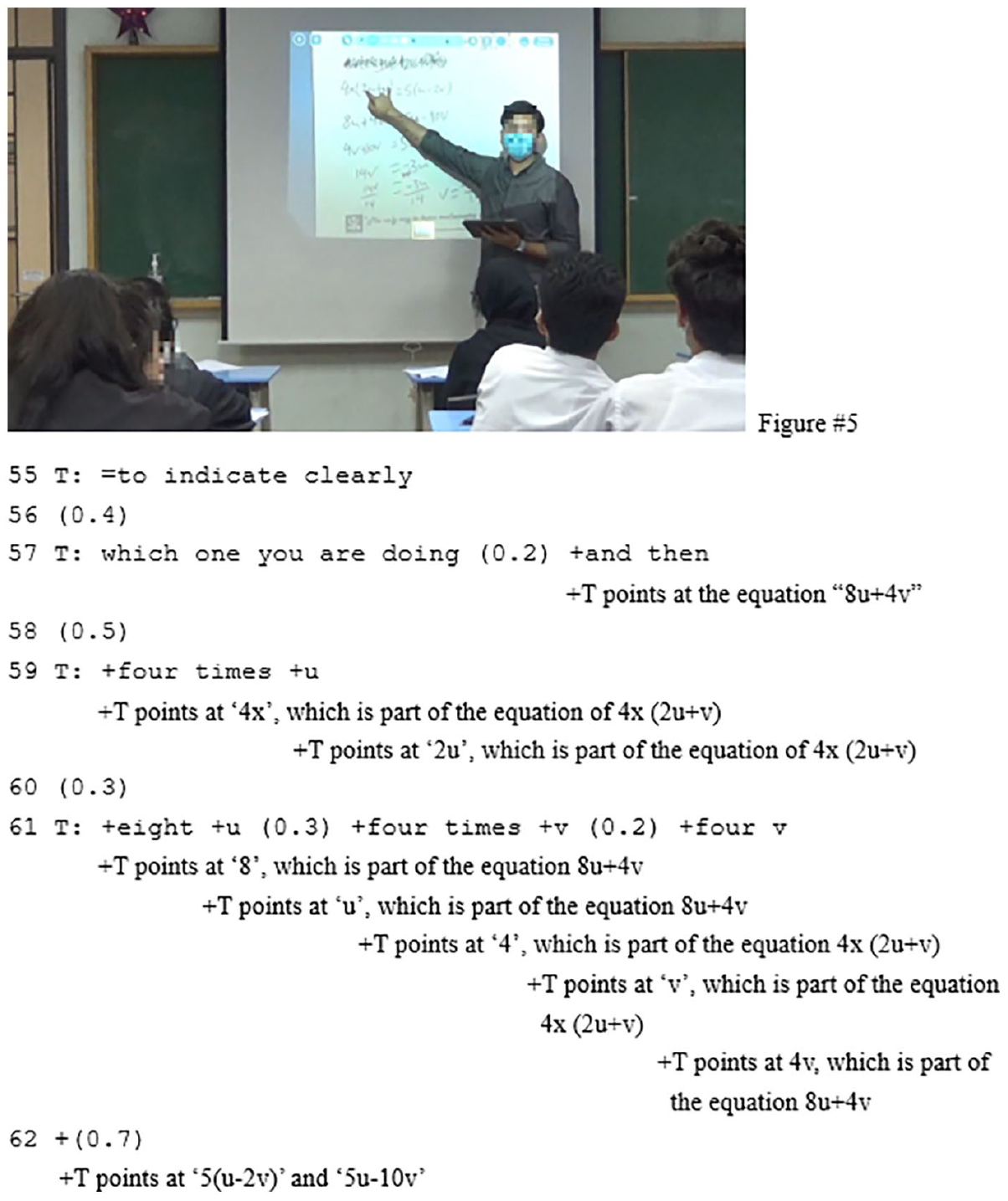
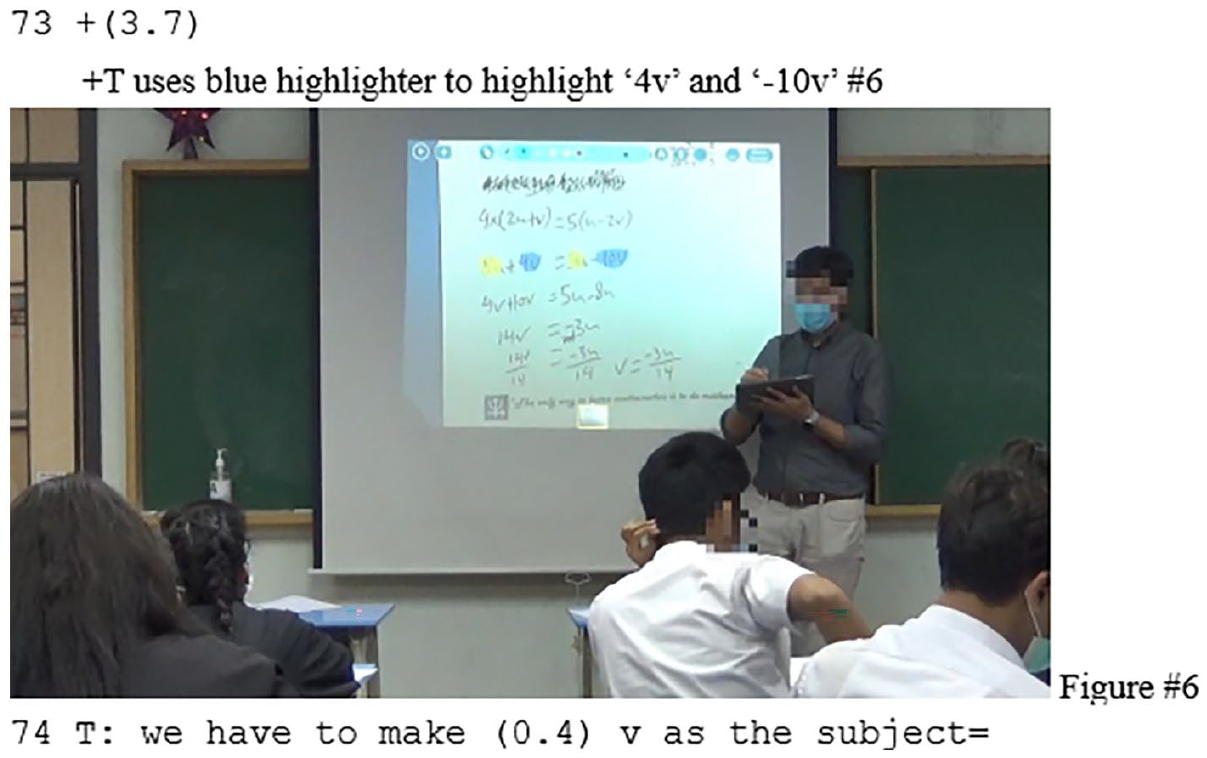

In line 43, T draws students’ attention by pointing at S1’s work, which is projected on the screen in front of the whole class. At the same time, T is adopting a student’s voice by imagining himself as a student who initiates a question. Such a student voice is created as he utters in a quick pace and places high intonation on the word “sir”: “>you’d be like< ↑sir um”. He continues to enact the student voice as he utters: “mine (0.6) is slightly different” (line 45). T’s imitation of a student’s voice appears that he is trying to predict the problem that students may face when working on this mathematical question. In lines 46 and 47, T points out the potential issue that students may face: “my this side is on the right side=“ “=and then this side is on the left side”. Particularly, T first points at “4×(2u+v)” and then moves his right hand to his right-hand side (Figure 4), pointing at “5(u–2u)”, as he explains the situation when “4×(2u+v)” is positioned on the right-side in line 47. T then moves his right-hand back to LHS, pointing at “4×(2u+v)”, as he explains that the formula “5(u–2u)” is positioned on the left-side. Here, T attempts to create a hypothetical situation where the students may have placed the two formulas in different directions.
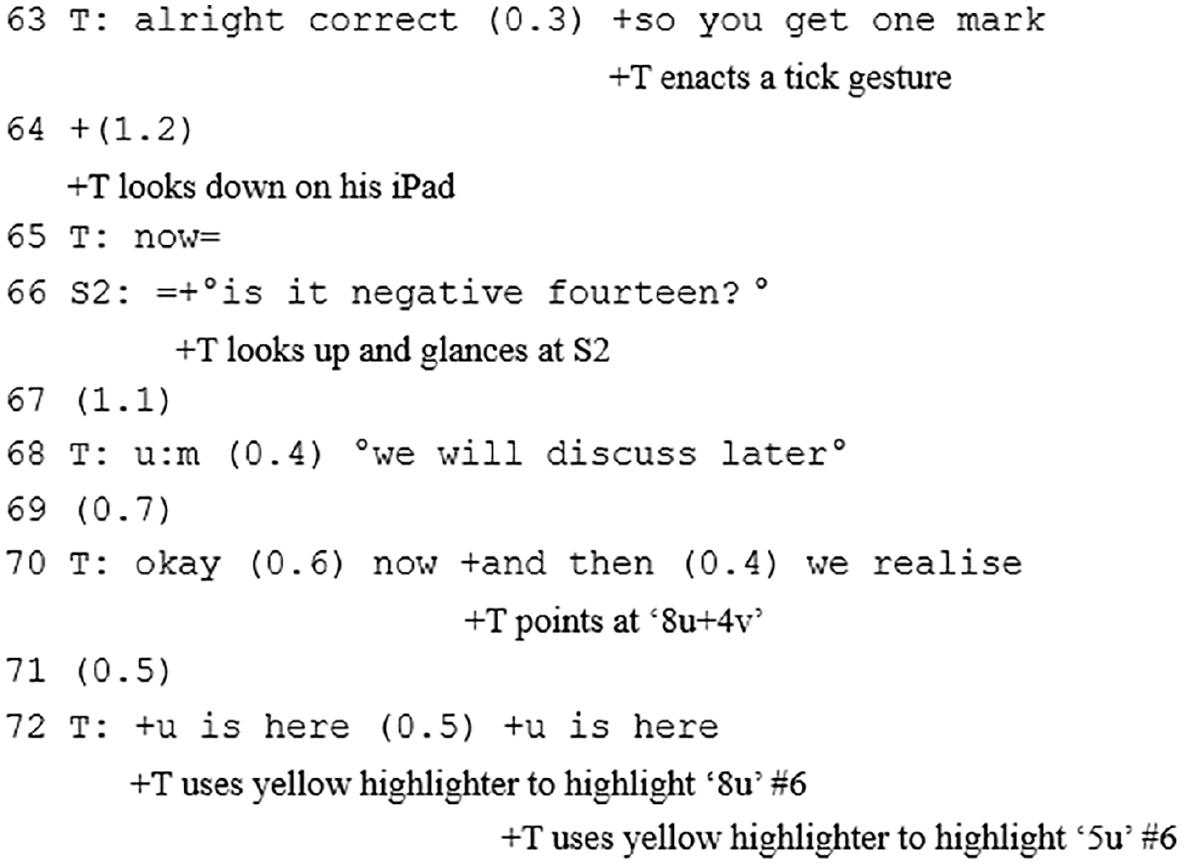
In lines 54–69, T is going through S1’s mathematical solution step by step with the students. In line 70, T opens a new sequence and draws the students’ attention to the second step of S1’s solution by pointing at “8u+4v” in line 70. T then deploys the yellow highlighter function on his iPad to highlight the value “8u” on the right-side, while he utters “u is here” in line 72. T then repeats the same sentence and highlights the value “5u” on the left-side (Figure 6). By doing so, T is emphasizing the positions of the value of “u” on both right and left sides since the goal is to mathematically remove “u” in order to find out the value of “v”. This interactional phenomenon is similar to the observation made by Majlesi (2018) where the teacher projects the material on the screen through the viewgraph. By using the yellow highlighter, all students can see how the teacher highlights the key part under focus at the time of the interaction. During the 3.7-second pause, T switches the highlighter colour from yellow to blue via his iPad and highlights “4v” and “–10v” on the right and left sides respectively (Figure 6). Unlike line 72, it is interesting to note that T does not verbally mention the position of “v” in this case, such as uttering “v is here”. It is possible that the students are now paying attention to T’s highlighting on the screen. In fact, T makes it clear to the students that “we have to make (0.4) v as the subject”, which helps students to understand why the mathematical values, “4v” and “–10v”, are highlighted in a different colour.
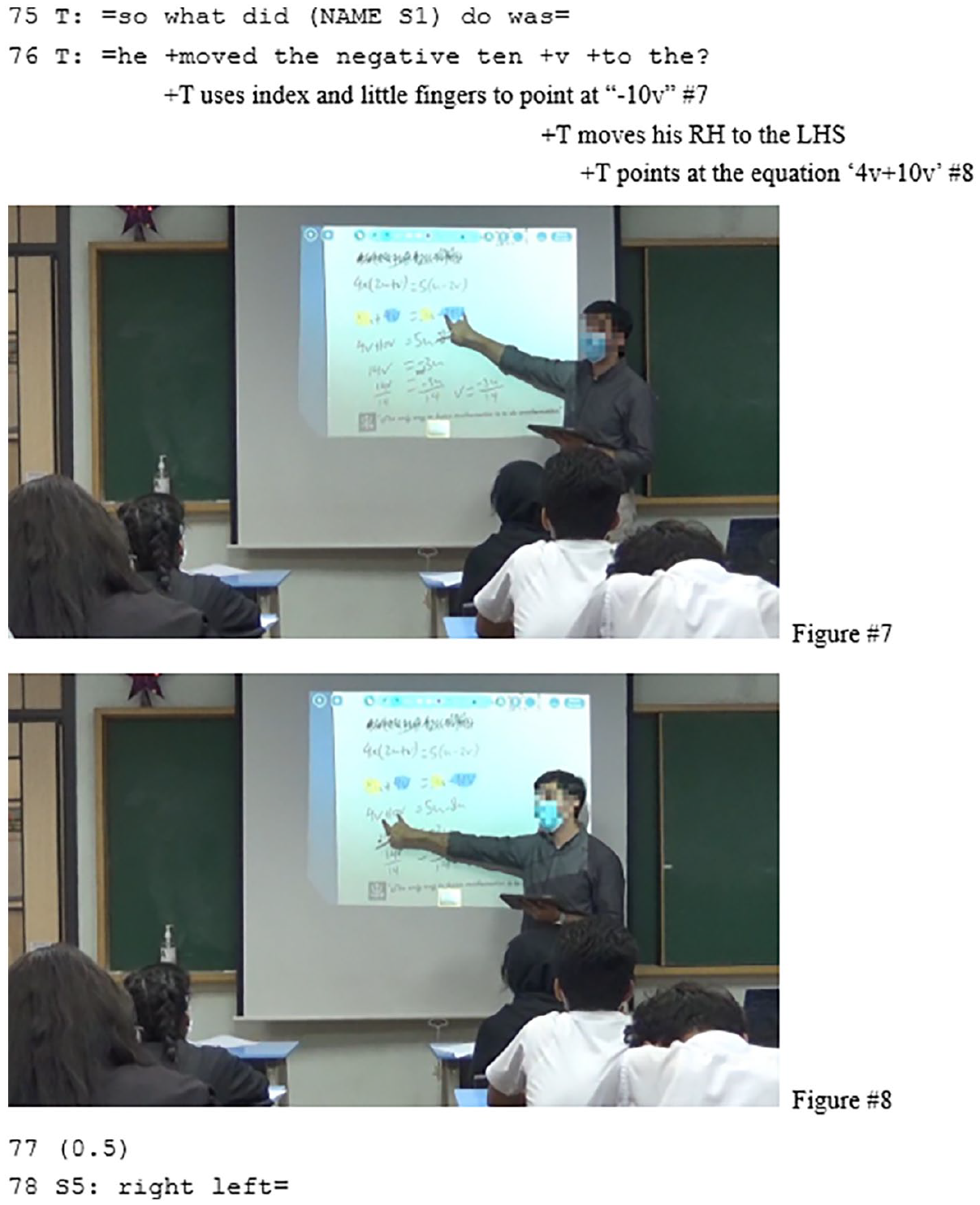
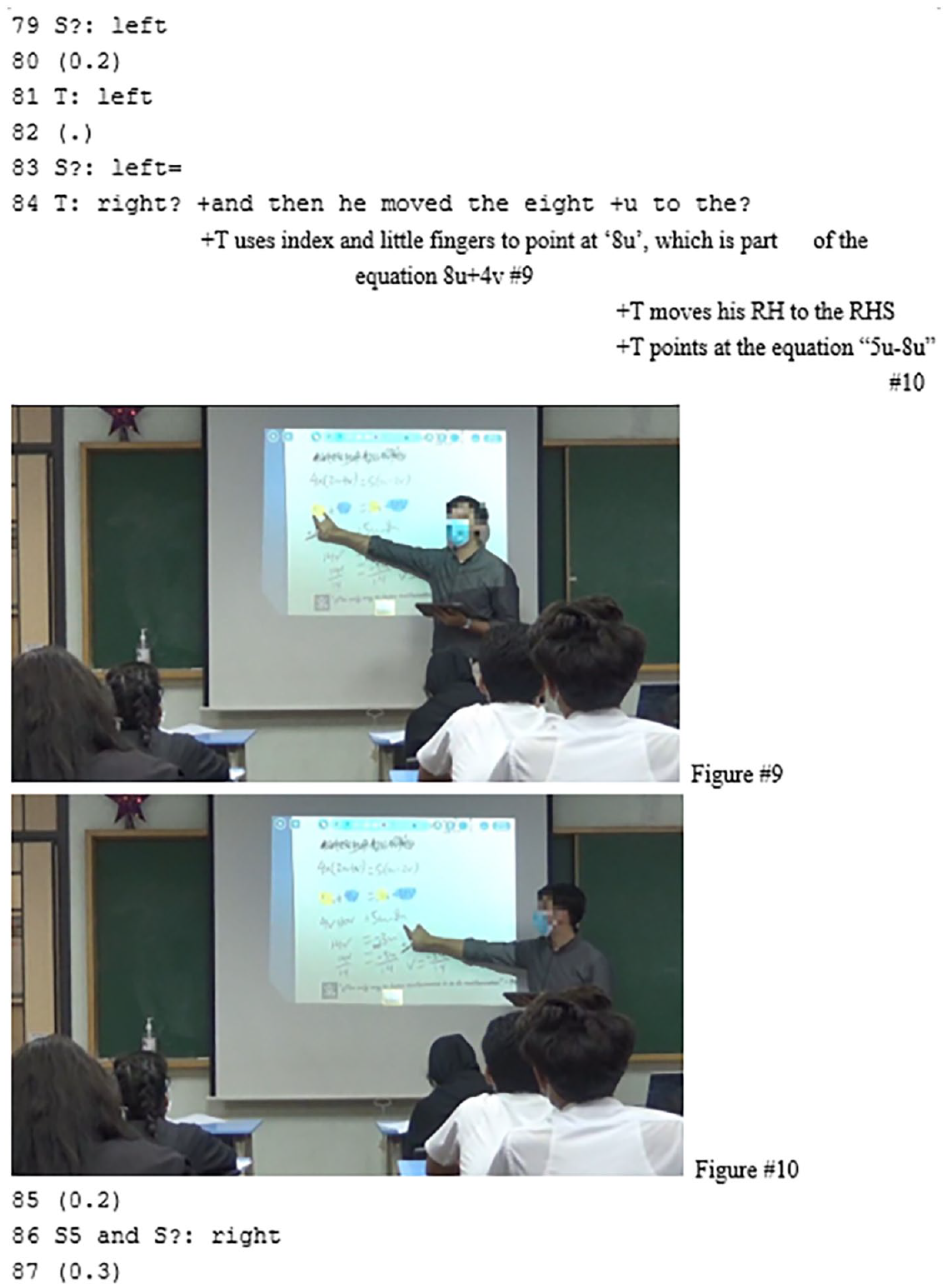
From lines 75–88, T relies on the use of gestures and points at the relevant parts of S1’s mathematical solution which are projected on the screen via the iPad. In line 75, T initiates a designedly incomplete utterance (DIU) (Koshik, 2002) in line 76, “he moved the negative ten v to the?” When T utters the word “move”, T points at “–10v” that is highlighted in blue colour (Figure 7). He then moves his right-hand to the left-hand side, pointing at the equation “4v+10v”, as he constructs the DIU (Figure 8). By doing so, T’s prior highlighting in line 73 allows T to provide a hint for students through his hand movement and also inviting students to complete the utterance for T so that they can work out how the mathematical value “–10v” can be made as a subject by moving it to the left-hand-side. Although S5 displays his uncertainty of the answer in line 78, a couple of other students enunciate “left” in line 79. Such a response is being acknowledged by T as he repeats the correct answer in line 81. Similar to line 76, T first initiates a DIU by stating, “and then he moves the eight u to the?” (line 84). As T utters the word “and”, he repeats the same gestures. T first points at “8u”, which is highlighted in yellow colour (Figure 9), and subsequently moves his right-hand to the right-hand side and points at the equation “5u–8u” (Figure 10) to offer a hint for the students so that they will realize that the value “8u” has to be moved to the right-hand-side. T’s self-repeated gesture (Hauser, 2019) eventually motivates a number of students in uttering “right” in line 86. The student’s responses are confirmed by T as he first repeats the correct answer and provides a verbal positive assessment “correct” in line 88.
In this extract, it is revealed that T exploits the iPad as a projector which allows him to take a photo of S1’s work and upload it on a big screen where students can witness the way S1 attempts to solve the mathematical formula. T is also given the opportunity to make use of gestural resources to point at the screen for drawing the students’ attention to the content of the lesson. The iPad whiteboard app also allows T to highlight parts of S1’s work in different colours so that students can pay attention to the mathematical part under focus at the time of speaking (Goodwin, 1994; Majlesi, 2018). These pedagogical strategies result in students’ uptake, as evidenced in the accurate student responses in lines 79, 83 and 86. During the video-stimulated-recall-interview, T is invited to comment on the affordances that the iPad provides (see Table 1).
Video-stimulated-recall-interview (extract 1).
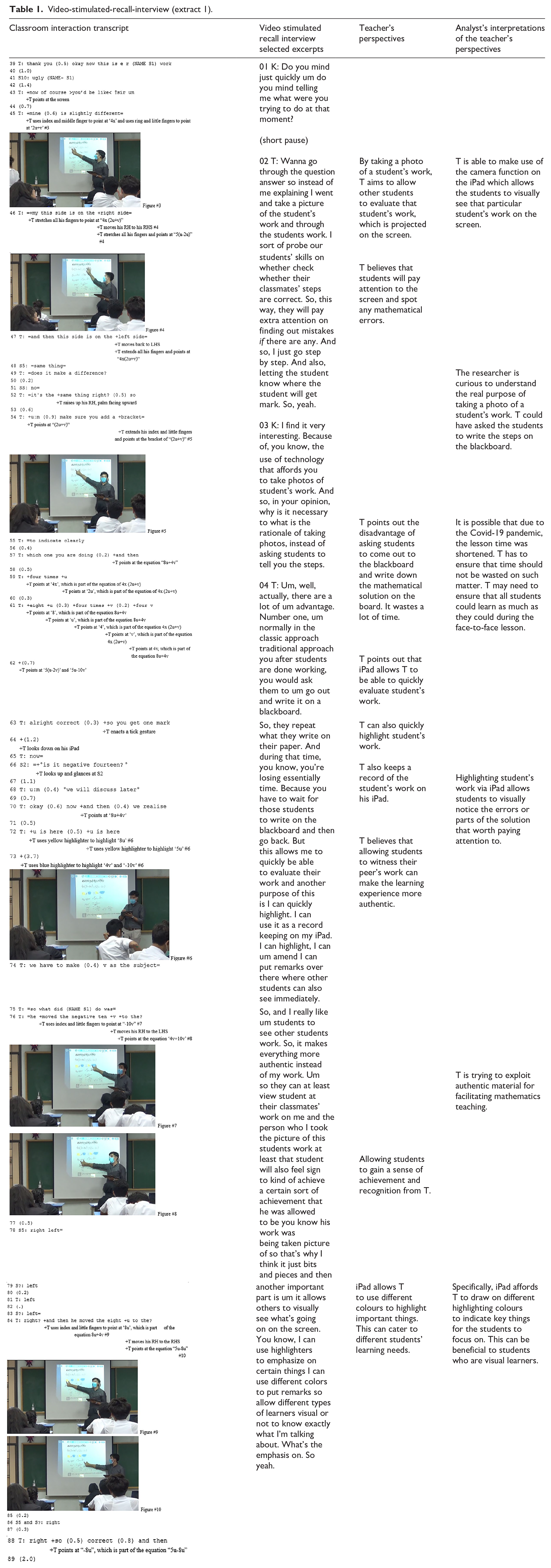
After watching the video-clip, T comments on the rationale for him to take a photo of S1’s work via his iPad. By utilizing the camera function afforded by the iPad, T is able to provide an opportunity for other students to evaluate S1’s work, which is subsequently projected on the screen in front of the students. Students can visually see S1’s work on the screen and T believes that this can encourage students to spot any mathematical errors made by S1. This, in turn, creates a learning environment where students can interact with authentic material.
It is possible that T could have asked S1 to write the steps on the blackboard and other students could still be able to view S1’s step-by-step mathematical solution on the blackboard. In line 3, T justifies that it will waste a lot of teaching time if T asks students to come out and write down the mathematical solution on the board. It is important to note that due to the Covid-19 pandemic, the HK government announced that teachers and students were only allowed back on campus for half-day classes in June 2020. Due to the school suspension from January to May 2020, T had to rely on Zoom for conducting mathematics teaching and a lot of teaching content could not be covered in great detail with the year 10 students. In order to save face-to-face lesson time, T decides to publicly display S1’s work through projecting it on the screen so that he can quickly assess, highlight, amend, put remarks and save a record of the student’s work.
Additionally, T believes that allowing students to witness their peer’s work on the screen can make the learning experience more authentic (line 4). It can be argued that the iPad affords T to exploit authentic material for facilitating mathematics teaching. Through taking a picture of S1’s work, it offers a sense of recognition for S1 and it also gives an opportunity for T to use different colours to highlight important things. This illustrates that the iPad affords T to draw on different highlighting colours to indicate key things for the students to focus on, which can potentially be beneficial to students who are visual learners.
Extract 2
Prior to this extract, T required students to solve a mathematical equation and after a short while, a couple of the students yelled out the answer. However, student 4 (S4) uttered “I got ten” and T questioned whether S4 copied his answer from other students. After S4 denied T’s accusation, T took a photo of S4’s work and projected it on the screen. In this extract, T invites other students to evaluate S4’s solution and identify any errors (lines 27 and 29).
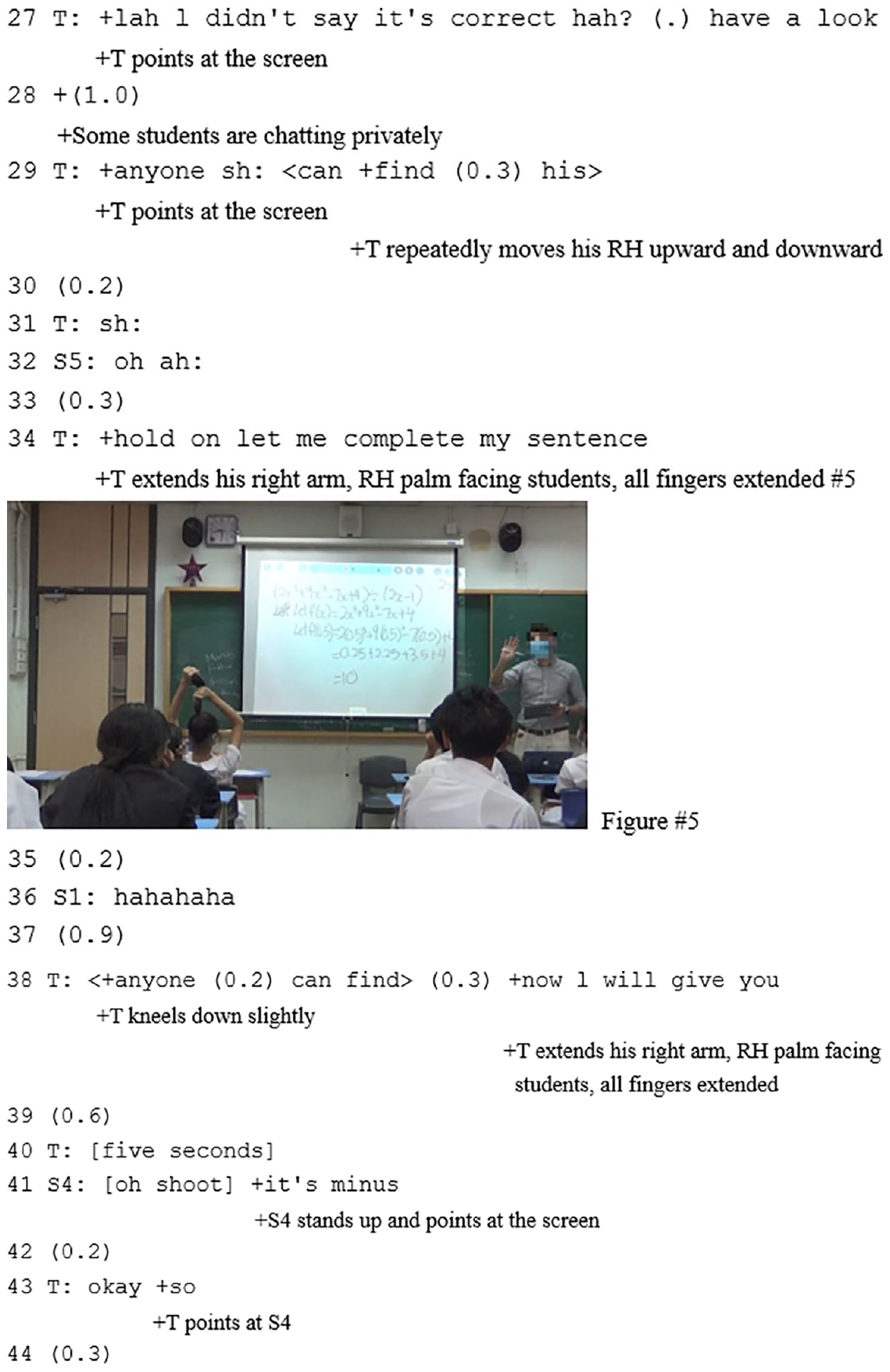
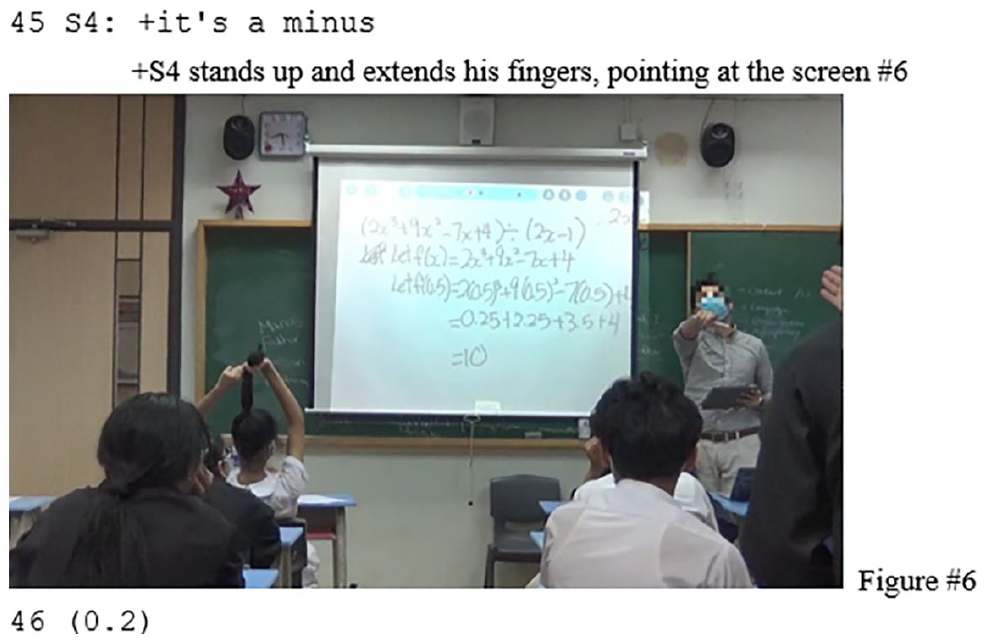
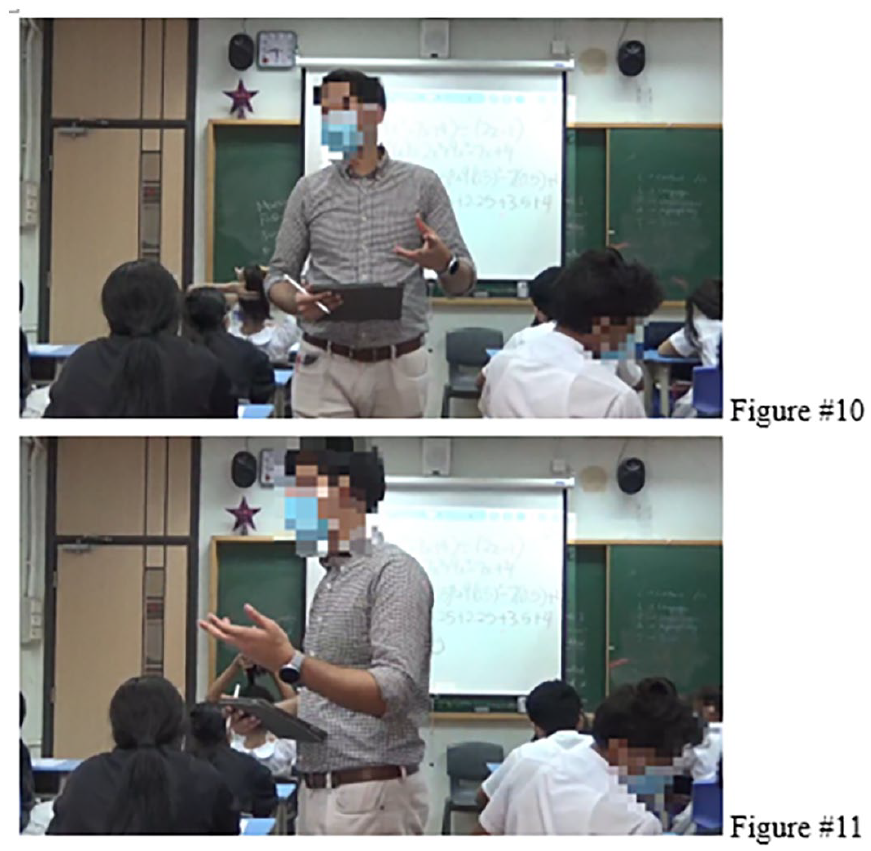
In line 29, T is constructing a sentence which aims to invite students to search for mistakes in S4’s work. However, T’s utterance is being interrupted by several student’s private chats. T repairs his utterance and decides to give an instruction to students, “now I will give you (0.6) five seconds” (lines 38–40).
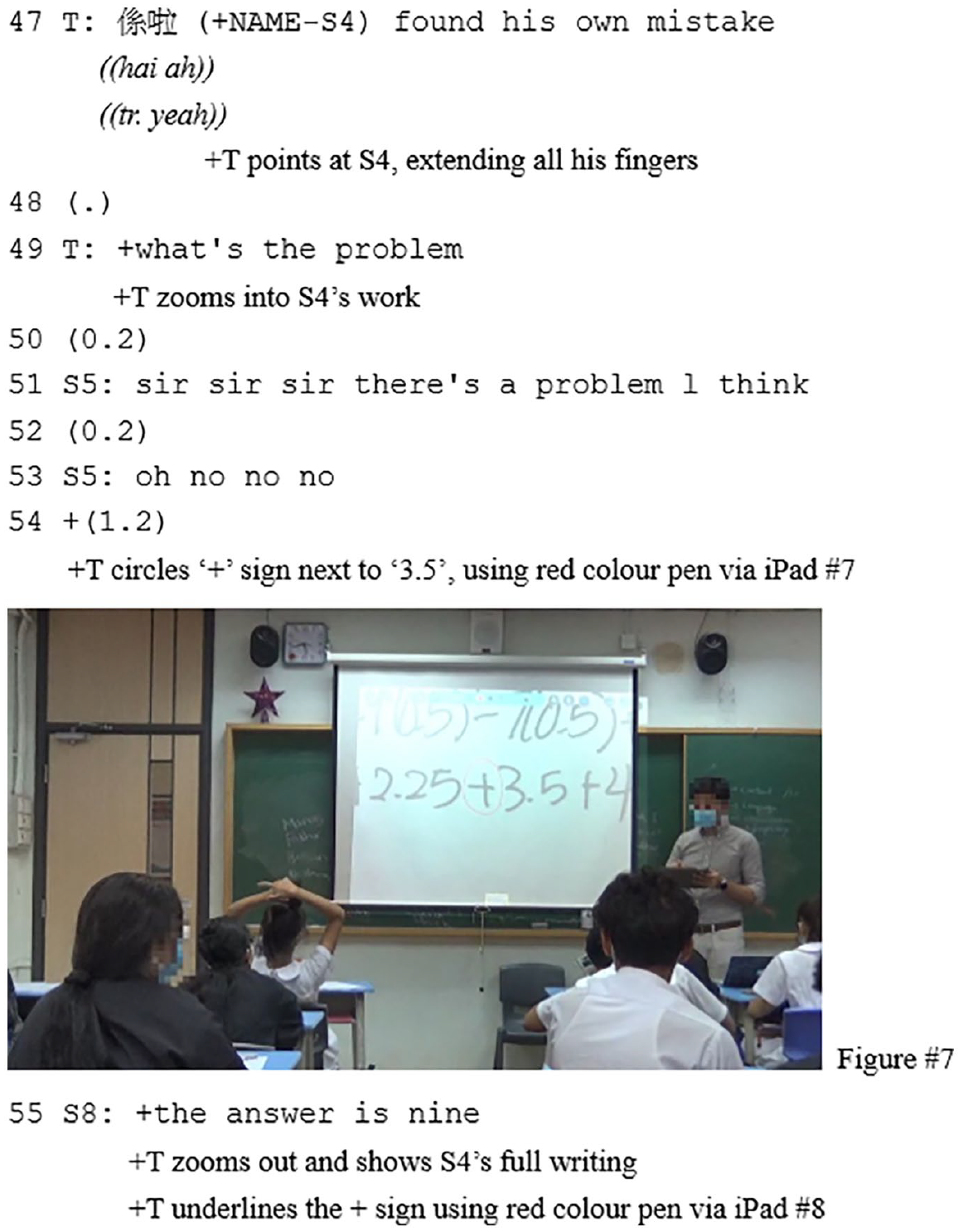
In line 41, S4 suddenly interrupts T’s talk by uttering an informal expression, “oh shoot” to express his realization. S4 then stands up and points at his work on the screen while explaining that “it’s minus”. In line 47, T first acknowledges S4’s answer by offering a positive assessment in Cantonese, “係啦” (yeah). T then switches back to English, “(NAME-S4) found his own mistake”, as well as pointing at S4, to recognize his response. T then initiates a question, “what’s the problem” and zooms into S4’s work via his iPad in order to give a hint to students so that they can easily identify S4’s error (line 49). Despite offering such a hint, students in the class fail to offer any responses to T’s question. This is shown through student 5’s (S5) self-realization of his inaccurate response (line 53) and a long pause in line 54. During the 1.2-second pause, T circles the “+” sign in red colour via his iPad (Figure 7) in order to give an additional hint to students to guess the error that S4 has made. Possibly because of the visual hints offered by T, this motivates student 8 in offering an answer to T, as he says, “the answer is nine” (line 55). While S8 is speaking, T zooms out the screen and displays S4’s full solution to the students via the iPad. Simultaneously, T uses his Apple pencil to underline the “+” sign in red colour (Figure 8) to visually indicate the mistake that S4 has made. After a long pause, T offers a positive assessment by saying, “okay very good”, in line 57 which possibly provides feedback to S8’s response.
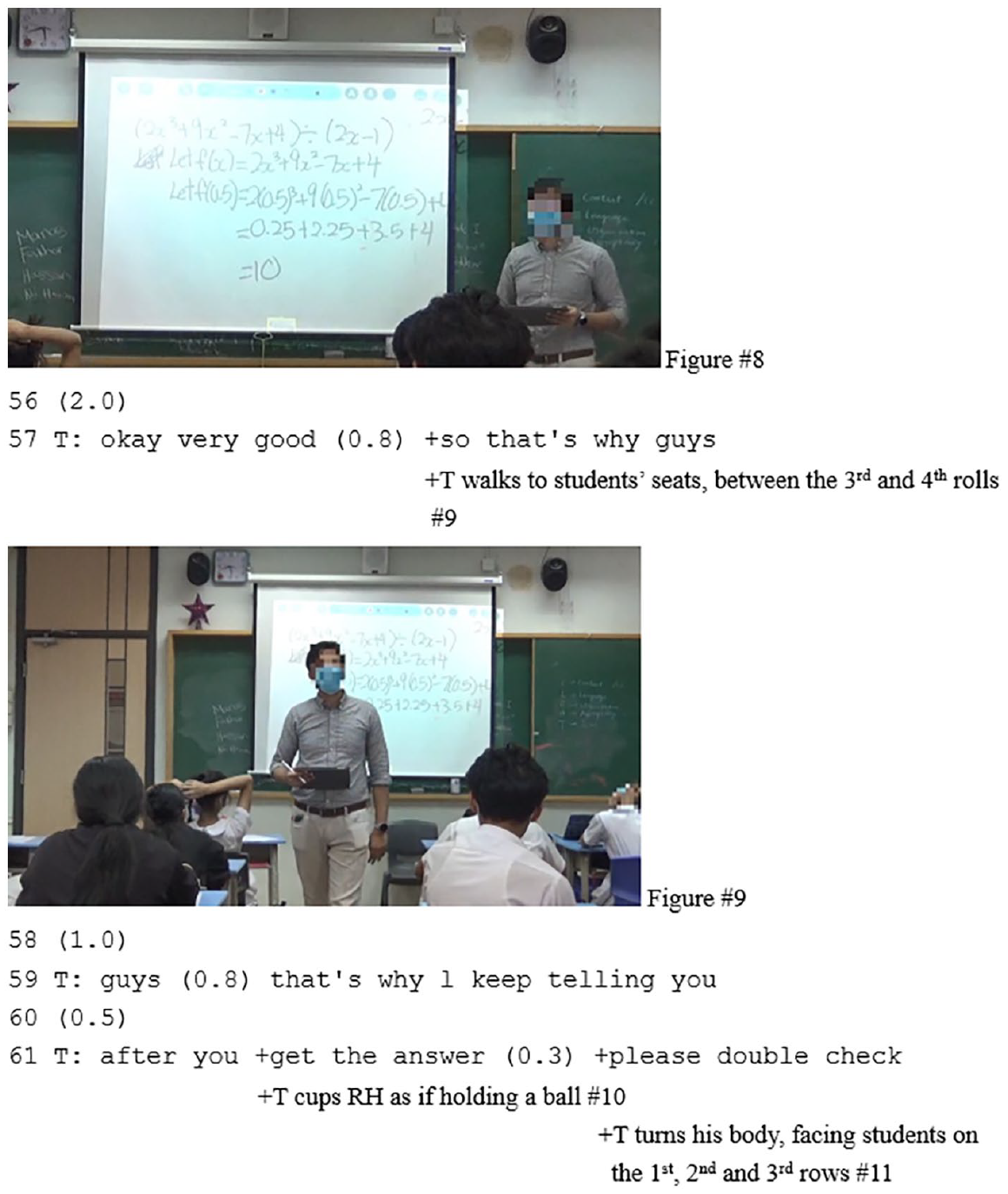
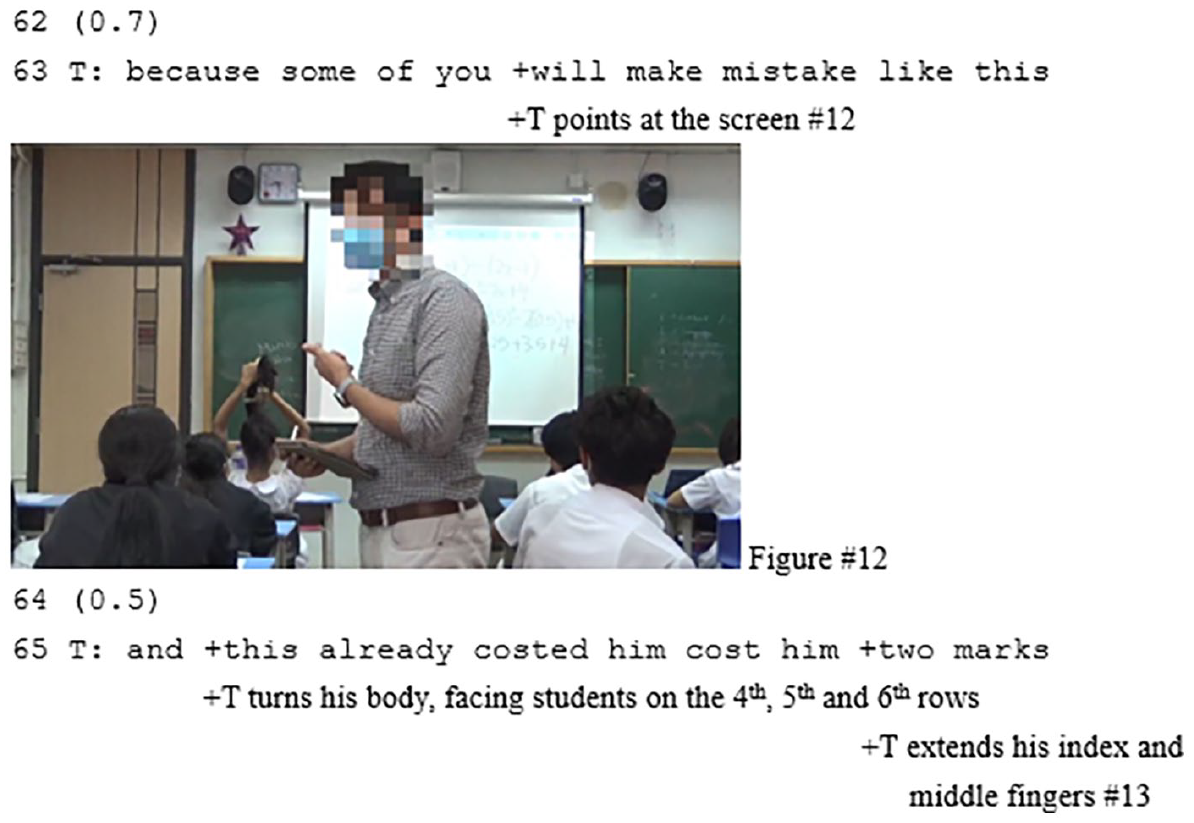
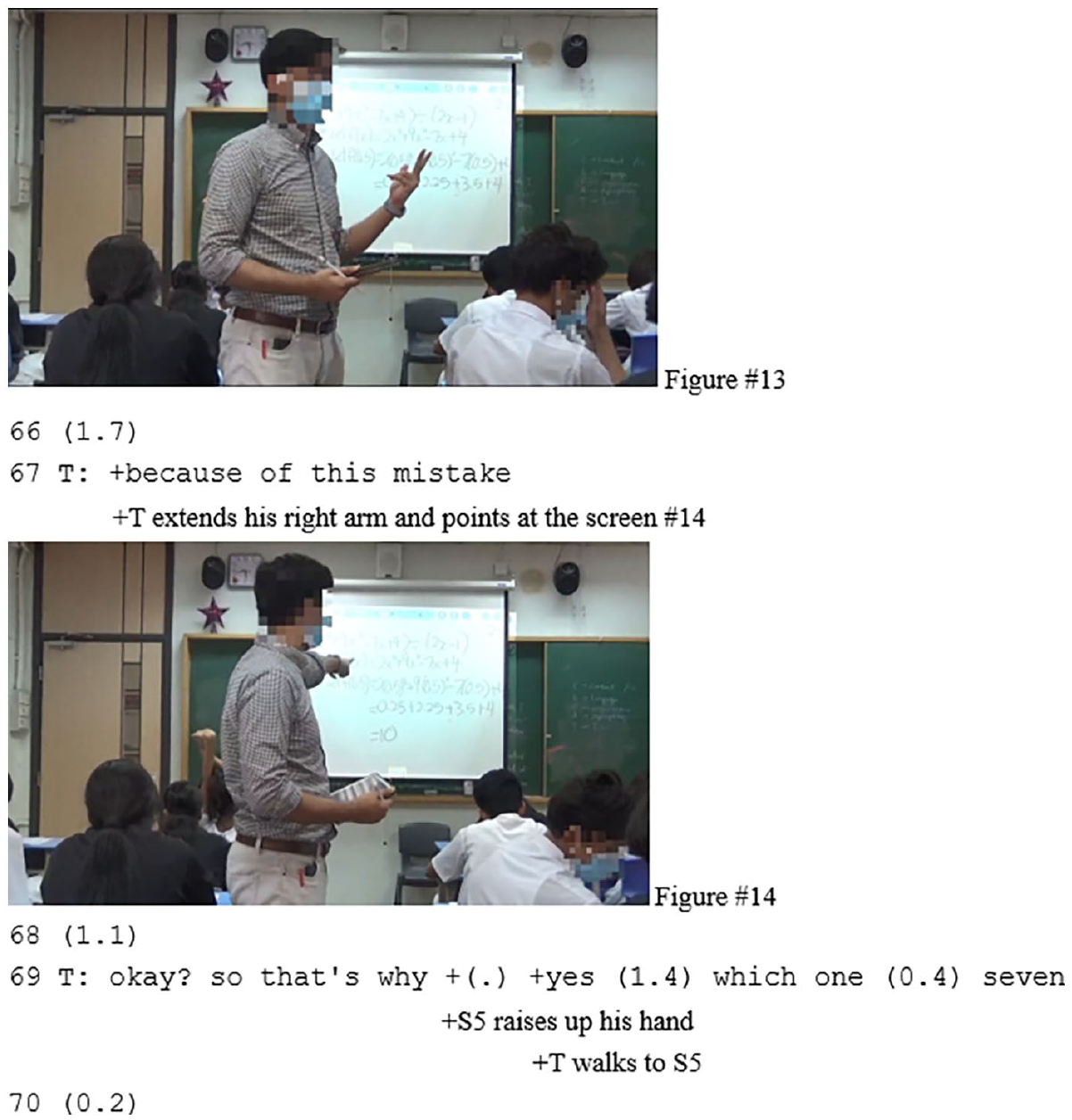
When T pre-empts the provision of advice for students, as he enunciates “so that’s why guys” (line 57), T walks along the short pathway which is located between the 3rd and 4th rows of the students’ seats (Figure 9). While T is walking, T continues to offer advice to students in line 59. Particularly, T cups his right-hand, as if holding a ball, when he utters “get the answer”. Such an iconic gesture allows students to imagine T is holding an “answer” on his right-hand (Figure 10). T then turns his body, facing students sitting on the 1st, 2nd and 3rd rows (Figure 11), as he reminds students to “double check” (line 61) their work. By doing so, T is potentially establishing eye contact with students who are sitting on the back of the teacher’s left-hand-side of the classroom so that students will potentially attend to T’s talk. In line 63, T further elaborates on the need for students to check their work. As he utters the word “will”, T points at the screen while gazing at the students in order to indicate that there is a chance for students to make a similar careless mistake like S4, as displayed on the screen. Interestingly, T turns his body and this time he is facing students on the 4th, 5th and 6th rows (Figure 13) while he emphasizes the fact that such a mistake has cost S4 two marks. Here, T is possibly trying to engage students who are sitting on the back of the right-hand-side of the classroom. T reiterates the consequence of losing marks in line 67 by extending his right arm and pointing at the screen again to point at S4’s mistake (Figure 14).
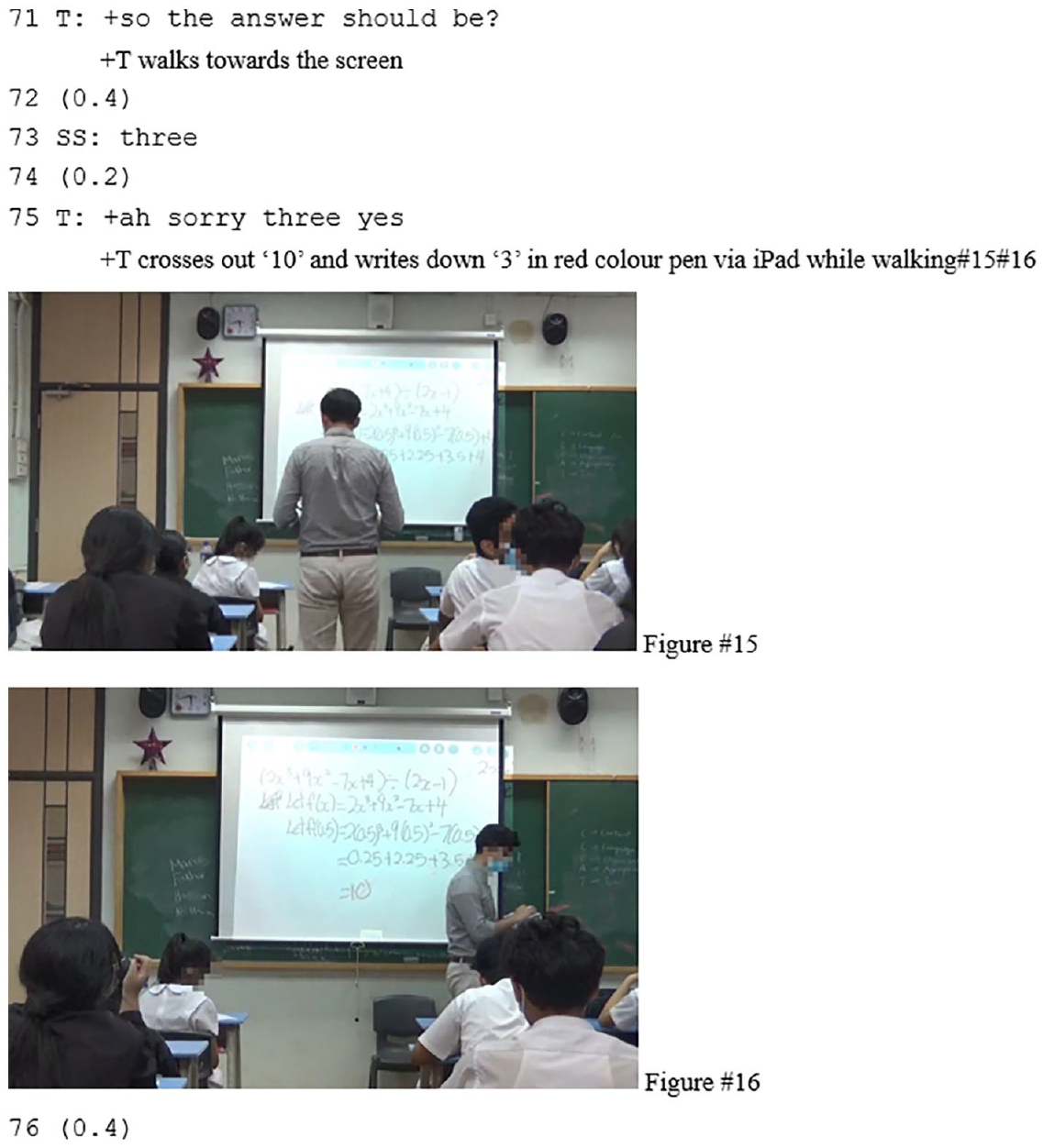
After the provision of the mathematical advice to students, T checks the correct answer with S5 in line 69. As T receives a wrong answer from S5, this motivates T to first apologize to the students and repair his answer, “ah sorry three yes” (line 75). While he is speaking, T continues to walk towards the screen, and he uses his Apple pencil to cross out “10” and write down “3” in red colour (Figures 15 and 16). This allows students to notice the correct answer which is projected on the screen.
Similar to Extract 1, T makes use of his iPad to project student’s work on the screen and allow students to notice T’s annotations on the screen. However, in this extract, it is evidenced that T deploys additional semiotic features that the iPad affords, including using a red colour pen to circle and underline key mathematical values, crossing out the wrong answer and using the pinch gesture to zoom in and out on specific parts of student’s work in order to encourage students to work out the answers by themselves. Importantly, this extract also illustrates the potential of the iPad for facilitating T’s walking trajectories since T is able to annotate student’s work via his iPad while he is walking around the classroom to ensure that all students are paying attention to T’s mathematical advice. During the video-stimulated-recall-interview, T is asked to make sense of his pedagogical actions at this moment of interaction (see Table 2).
Video-stimulated-recall-interview (extract 2).
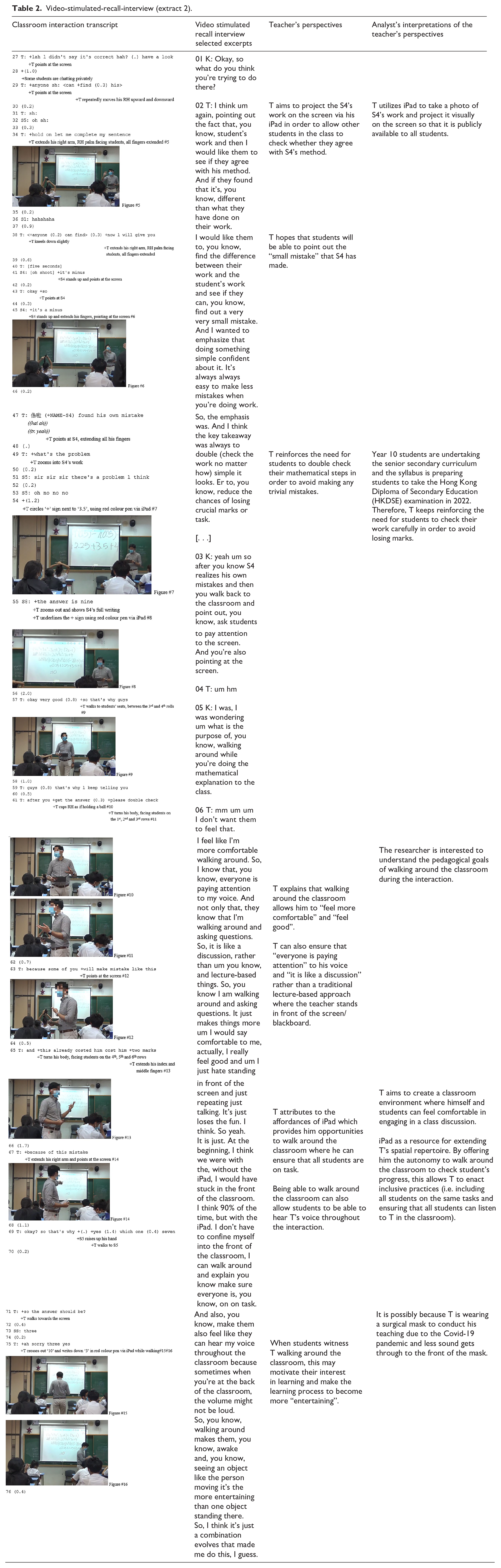
In line 6, T explains that walking around the classroom allows him to transform the interaction into a classroom discussion instead of a traditional lecture-based approach where the teacher typically stands in front of the screen/blackboard during the lecturing. Such a traditional pedagogical approach will potentially demotivate students’ interest in learning as T explains that: “it’s just loses the fun”. T then attributes to the affordance of the iPad which provides him opportunities to walk around the classroom. This, in turn, enables him to ensure that all students are “on task” and allow students to be able to hear T’s voice throughout the interaction. It is possibly because T is wearing a surgical mask to conduct his teaching due to the Covid-19 pandemic and less sound gets through to the front of the mask. Throughout the classroom observation period, the researcher notices that T needs to speak loudly in the class in order to ensure that all students can hear his voice (field notes).
Hence, it can be argued that the iPad plays a role in extending T’s spatial repertoire as T is able to walk around the classroom to monitor the student’s progress while he is carrying his iPad with him. This also allows T to enact inclusive practices (Trussler & Robinson, 2015) as he can include all students into the classroom interaction through ensuring that all students can hear the volume of his voice. He can also immediately mark down the correct answer on the iPad for ensuring that all students can notice the answer on the screen.
3 Use of iPad for constructing a humorous classroom environment for promoting student engagement
In this study, three instances are identified which demonstrate how the iPad extends T’s semiotic repertoire by allowing him to create a humorous classroom atmosphere for encouraging student engagement. Extracts 3 and 4 are typical cases that illustrate this feature.
Extract 3
This extract occurs approximately two minutes before Extract 1. Prior to his extract, T requested students to solve a mathematical equation independently. T supervised students’ progress while students were individually completing the set task. After a short while, T decided to move on and provide feedback to the class. In this extract, T first takes a photo of S1’s appearance and projects the photo on the screen, which leads to a series of playful talk in the classroom interaction.
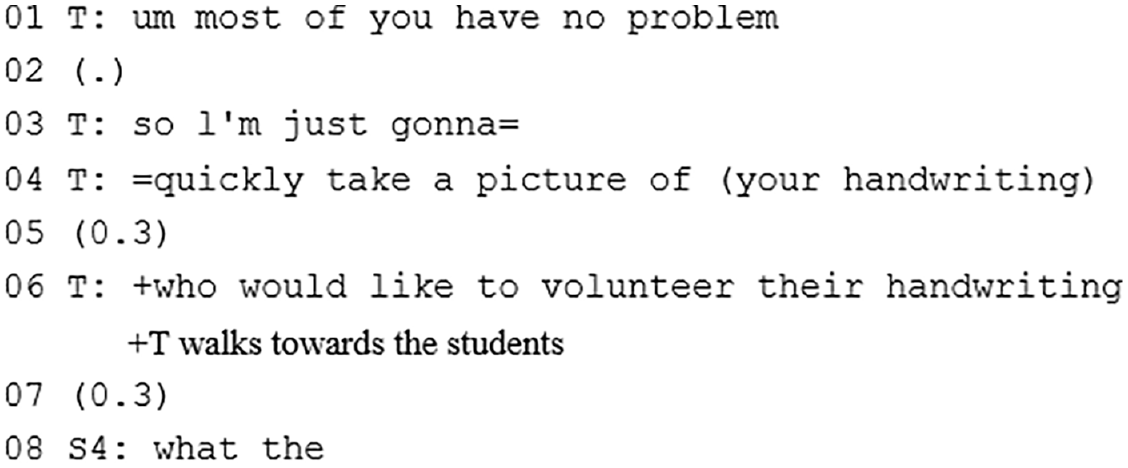
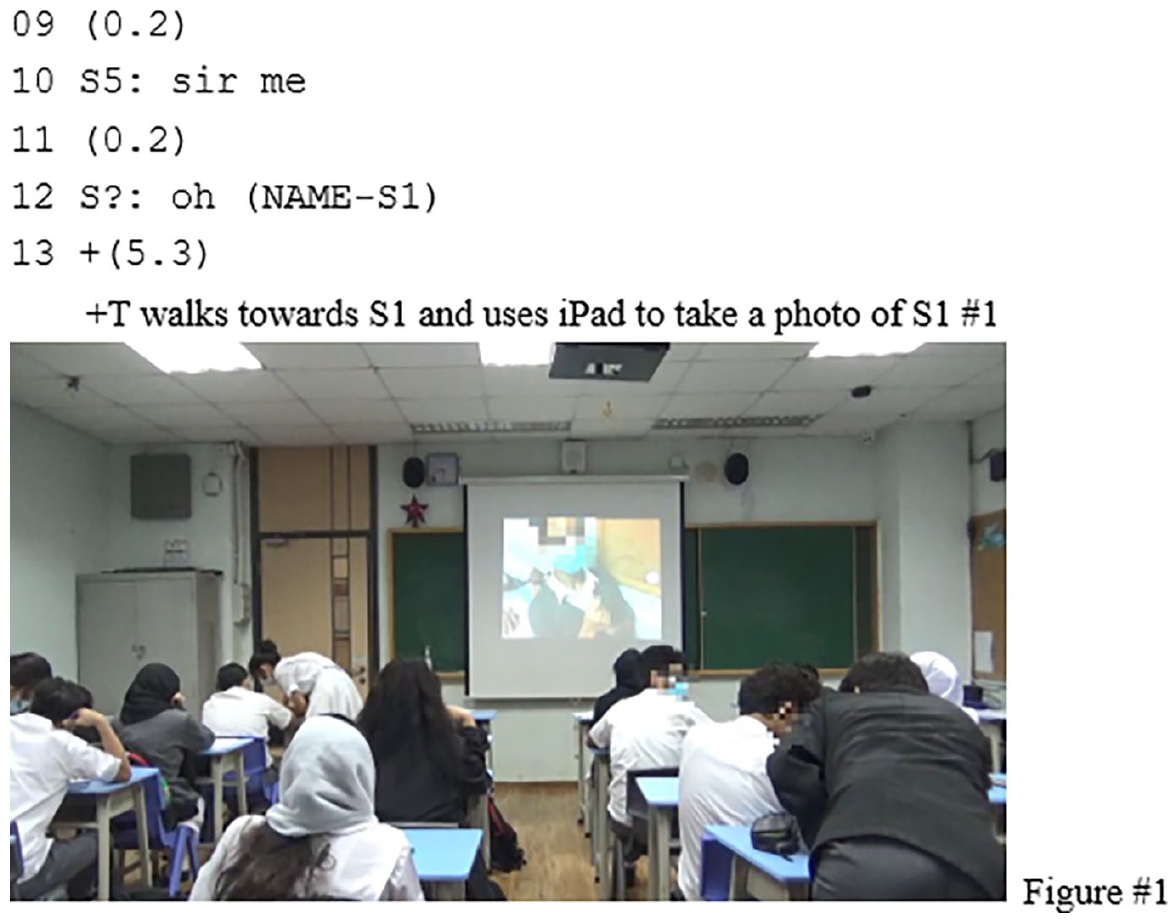
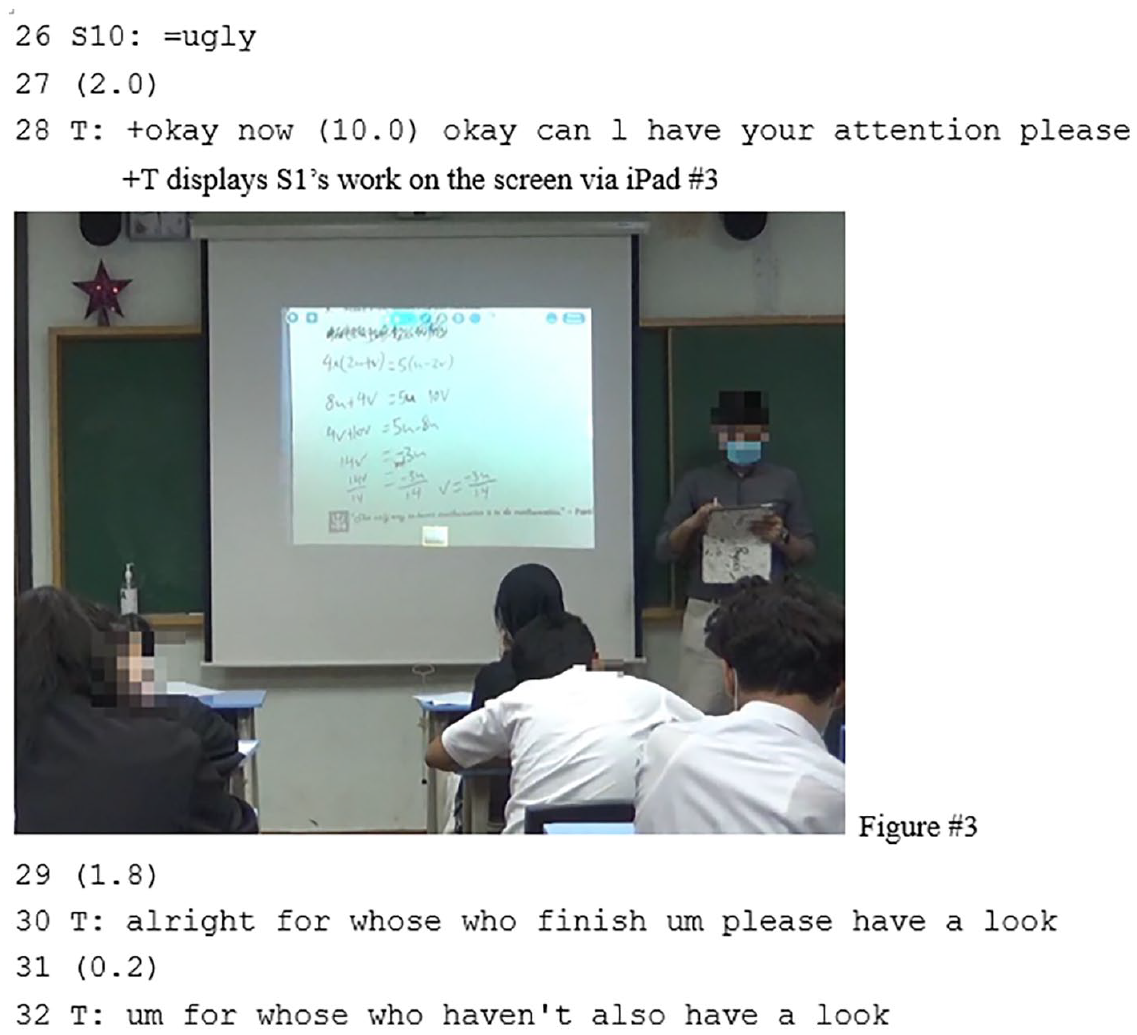
In lines 1–4, T reveals his aim to provide feedback on the set task and he decides to do so by taking a photo of a student’s work via his iPad. In line 6, T walks towards the students and initiates a question in order to invite students to volunteer their work to be shared with the class. Although S5 self-nominates himself (line 10), a student in the class utters S1’s name in line 12. This motivates T to walk towards S1. Presumably, T will take a photo of S1’s work. Instead, T uses his iPad to take a photo of S1’s appearance and it is visually projected on the screen (line 13, Figure 1). T’s unexpected action has led to a number of student responses, including an exclamation from a student saying “oh my god” (line 14) and laughter from other students (lines 16–17) in order to acknowledge the funniness of T’s action.
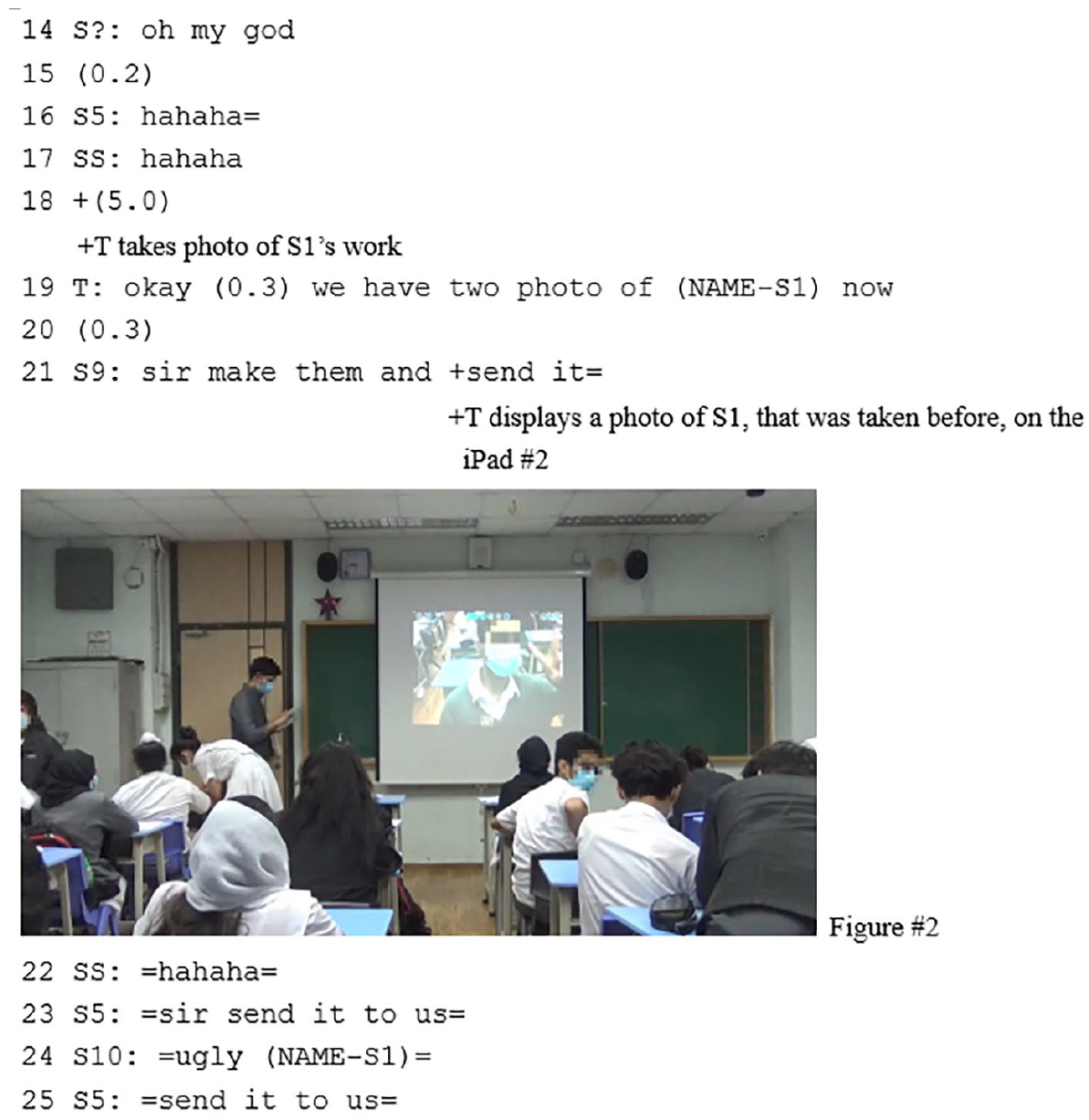
During the 5.0-second pause, T takes this moment to take a photo of S1’s work (line 18) and T recognizes that “we have two photo of (NAME-S1) now” (line 19). T’s response motivates S9 to playfully ask T to share S1’s photo (line 21), but S9 stops finishing his sentence as T displays S1’s appearance on the screen through his iPad (Figure 2). As shown in line 22, T’s action is immediately received with laughter from students. This also results in a couple of playful comments initiated by students. This is illustrated in lines 23 and 25 when S5 asks T to send the photo to the students and also in lines 24 and 26 when student 10 (S10) repeats the adjective ‘ugly’ to playfully criticize S1’s facial appearance. In line 28, T attempts to end the playful talk by asking students to pay attention to S1’s mathematical solution which is displayed on the screen (Figure 3).
As demonstrated in Extract 3, T uses the iPad’s camera function to take photos of S1’s appearance and his mathematical solution. As T publicly displays S1’s appearance on the screen, such an action is considered as playful, which is signalled by student’s reactions (e.g. laughers in lines 16–17 and 22, playful comments in lines 21, 23–26). During the video-stimulated-recall-interview, T comments on the reasons for taking a photo of S1 via his iPad (see Table 3).
Video-stimulated-recall-interview (extract 3).
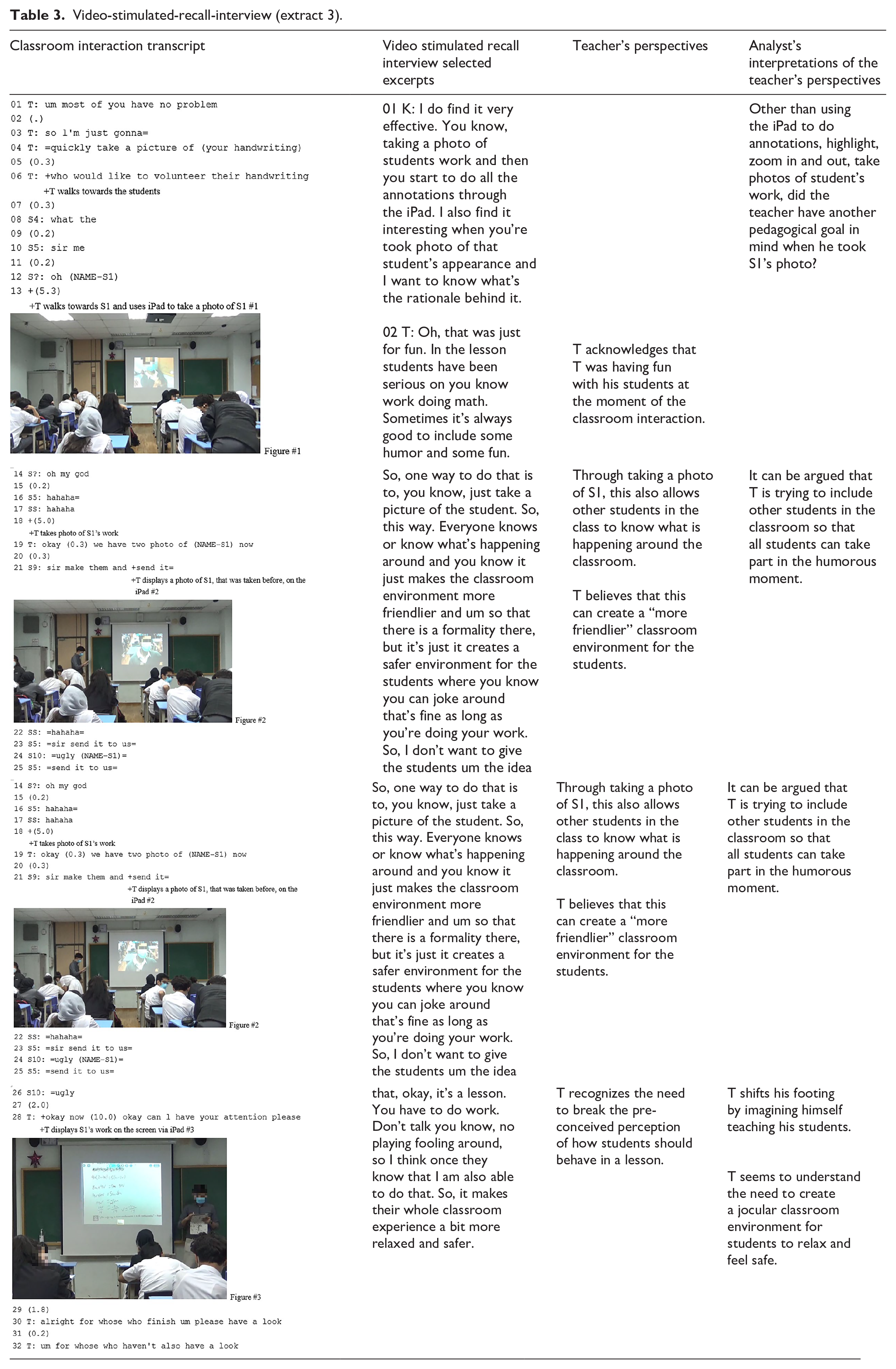
T comments that he is having fun with the students and he believes that it is a good idea for students to momentarily move away from mathematics and engage in humorous interactions. This resonates with Tai and Li’s (2020b) findings which display how the teacher creates a translanguaging space for students to engage in playful talk and promote a jocular classroom atmosphere. By doing so, T chooses to utilize the iPad’s camera function in order to take a photo of S1 so that other students in the class will know what is happening around the classroom. It can be argued that T is trying to include other students in the classroom so that all students can take part in the humorous moment. Hence, it is evidenced that T’s use of the iPad extends his semiotic repertoire by making use of the camera function to take a photo of S1 and projecting it on the screen. Such an action allows him to fulfil his motivation in constructing a playful environment for all students to “joke around” and relax.
Extract 4
Prior to this extract, T was going through a mathematical solution with the class which involved factorization. T pointed out that doing factorization could be time-consuming and it would be risky to make careless mistakes. In this extract, T suggests students to use the calculator to check the correct answer.
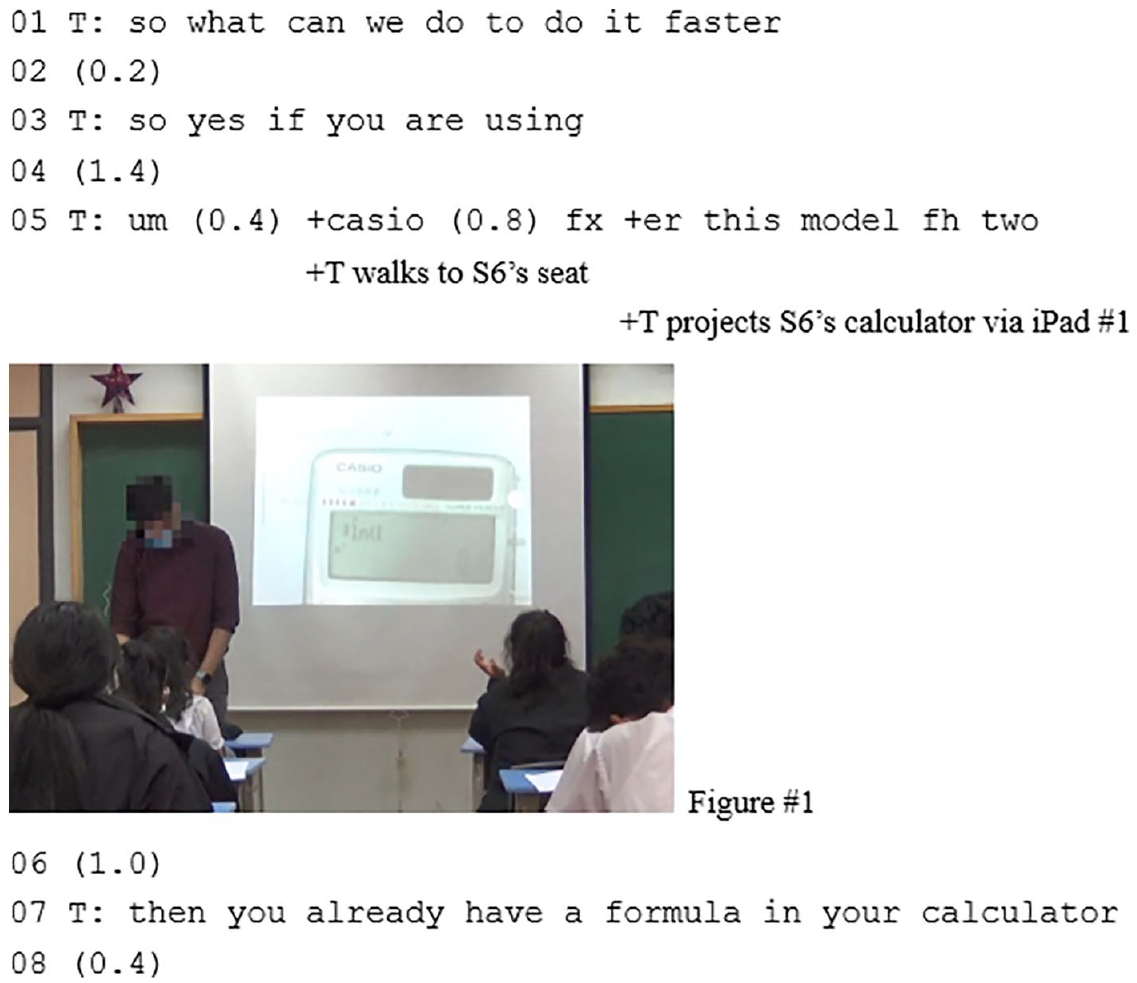
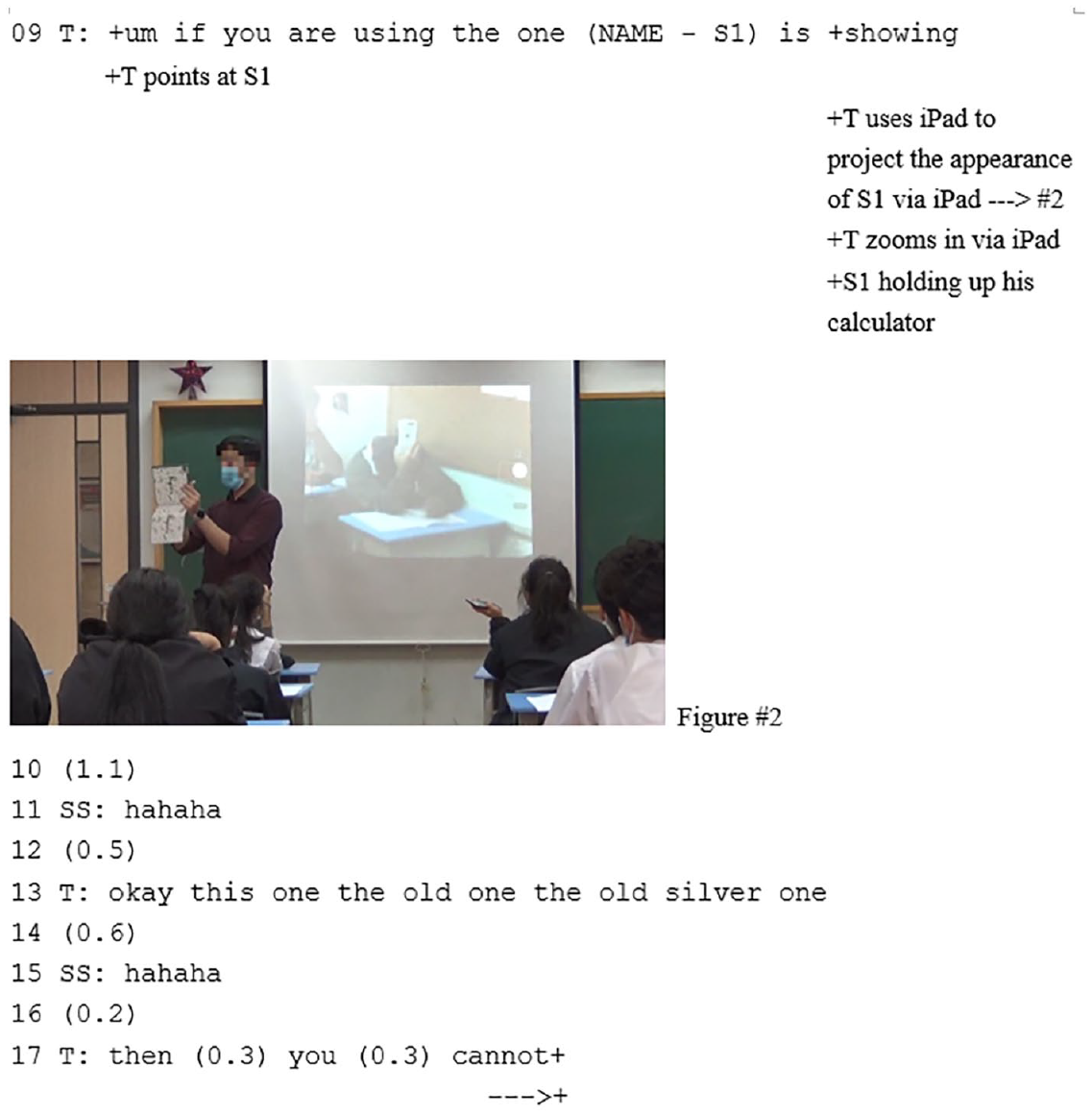
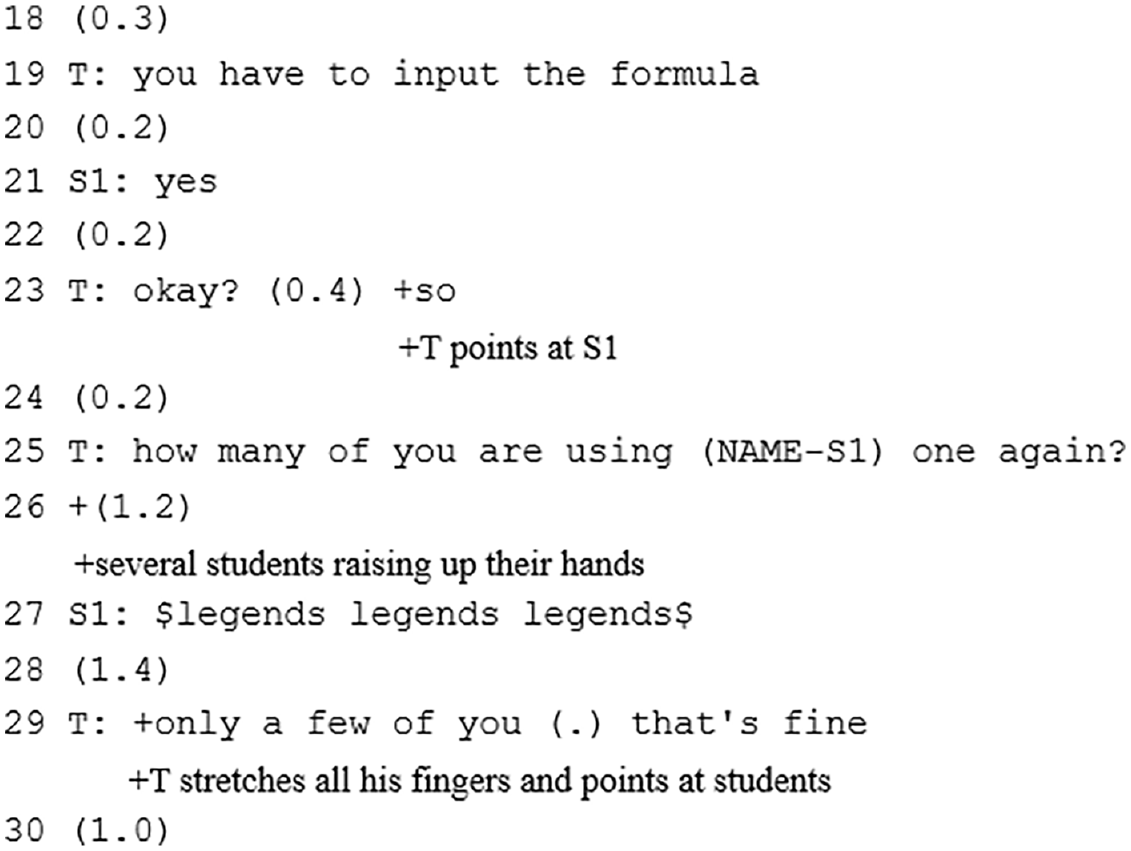
In lines 1–3, T pre-empts what students can do to quickly look for the answer. T then turns on his camera function and projects student 6’s (S6) calculator on the screen (Figure 1). At the same time, T verbally draws the student’s attention to S6’s calculator which is the Casio FX model (line 5) and the calculator has pre-set a formula for solving factorization (line 6). However, T points at S1 and invites students to attend to S1’s calculator which is a different model, “um if you are using the one (NAME-S1) is showing”. Note that when T utters “showing”, T deploys his iPad to project the appearance of S1 as S1 holds up his calculator on the screen. T deliberately zooms in the screen so that the screen will only project S1 rather than other students in the class (Figure 2). While T is projecting S1’s appearance and his calculator from a distance, T describes the features of S1’s calculator as “the old one the old silver one” (line 13). T’s actions are received with laugher from the students in lines 11 and 15. Nevertheless, T does not respond to student’s laughter and he carries on with his teaching by explaining that “you have to input the formula” if students are using the old calculator model (line 19).
After S1 produces an acknowledgement token “yeah” to recognize T’s explanation (line 21), T initiates a new sequence in line 23. He first points at S1 (line 23) and initiates a question, “how many of you are using (NAME-S1) one again?” (line 25). Several students raise up their hands in response to T’s question during the 1.2-second pause (line 26) and S1 self-initiates a response by repeating the word “legends” three times in a smiley voice. Here, S1’s use of the word “legend” is considered as a slang to playfully refer to the awesomeness of the students who are using the old calculator model like himself. In line 29, T ignores S1’s utterance and carries on counting the number of students who are using the old model (line 29).
Similar to Extract 3, this extract demonstrates the way T deploys the camera function afforded by the iPad to project S1 and S6’s calculator and S1’s appearance on the screen. Such actions result in laughter in the classroom (lines 11 and 15) and a playful comment initiated by S1 in a smiley voice. During the video-stimulated-recall-interview, T is asked to explain why he chooses to project students’ calculators and S1’s appearance on the screen (see Table 4).
Video-stimulated-recall-interview (extract 4).
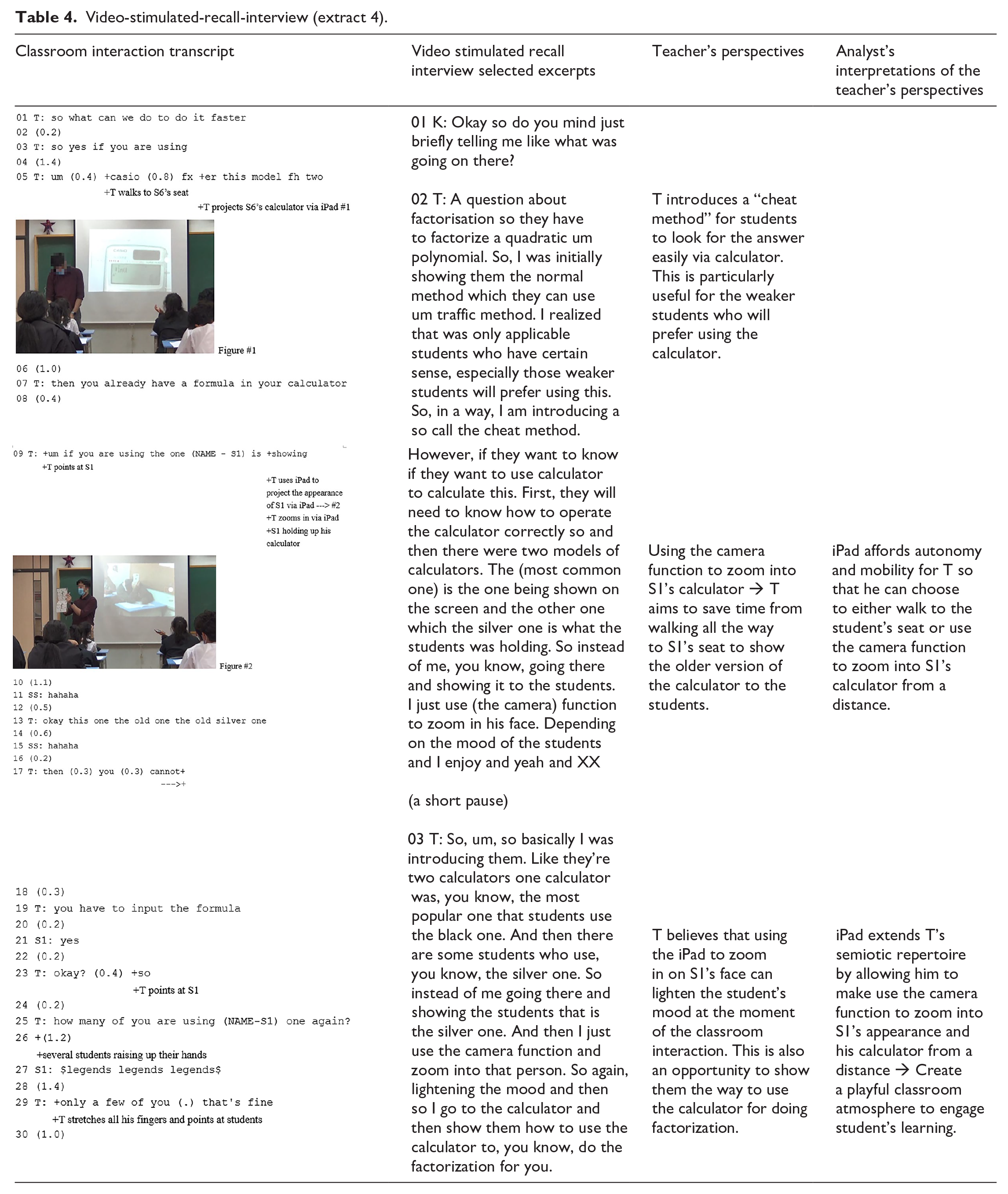
In the interview, T explains that he deliberately uses the iPad’s camera function to zoom into S1’s calculator so that he can save time from walking towards S1’s seat in order to show his older calculator model to the whole class. T further elaborates on the rationale of doing so and he claims that by utilizing the camera and zoom in functions, this can allow him to lighten the student’s mood and illustrate the way to use the calculator for doing factorization. It can be argued that by exploiting these iPad functions, T creates a playful classroom atmosphere in order to motivate students’ interest in learning mathematics with him. This is also exemplified in the MCA analysis which shows that T’s action (projecting S1’s appearance and his calculator) on the screen leads to student’s laughter and students’ understanding of the differences between the old and the most common models of the calculators (line 21). Hence, it is evidenced that the iPad extends T’s semiotic repertoire by allowing him to make use of the iPad’s camera and zoom in functions for creating a humorous classroom context, facilitating student engagement in mathematics learning and lightening student’s mood.
IV Discussion and conclusions
The aim of this article is to reveal the affordance of the iPad in the EMI classroom in HK. Specifically, it deploys translanguaging as an analytical perspective to examine how the use of the iPad extends the teacher’s semiotic and spatial repertoires for allowing him to achieve his pedagogical goals. In all the extracts, the MCA analysis reveals that the teacher is engaging in translanguaging practices despite only using English as the linguistic code. It is shown that the teacher is engaging in translanguaging practices as he synchronizes his English verbal utterances with his use of the iPad which affords opportunities for him to utilize various semiotic resources (e.g. highlighting, zooming in and out, annotations, photo-taking) to facilitate the meaning-making processes in the classroom. In Extract 1, it is shown that the iPad affords the teacher to take a photo of a student’s work, project the student’s work on the screen to invite students to evaluate the accuracy of the student’s mathematical solution. Concurrently, the teacher is able to deploy different colours from the highlighting tool in order to draw students’ attention to the key mathematical variables. This allows the teacher to stimulate students’ thinking and encourage them to work out the mathematical steps by themselves. In Extract 2, the use of the iPad allows the teacher to make use of additional semiotic features, including annotating the student’s work through using the virtual colour pen and enlarging student’s work through using the zoom-in function so that all students can visually see the teacher’s annotations on the screen. iPad also extends the teacher’s spatial repertoire since the teacher is given the autonomy to walk around the classroom while carrying the iPad and annotating student’s work at his own will. This allows students to notice the teacher’s annotations on the screen. Walking around the classroom also allows the teacher to make his voice audibly loud and clear to all students, particularly students sitting at the back of the classroom, which enables students to attend to the teacher’s mathematical advice, hence enhancing their mathematics learning. In Extract 3, it is evidenced that the teacher makes use of the iPad’s camera function to take a photo of a student and project it on the screen which creates a playful classroom atmosphere for students to engage in laugher and initiate playful comments. Similarly, in Extract 4, the teacher also utilizes the camera and zoom in functions to project student 1’s appearance and his calculator on the screen in order to lighten the student’s mood and draw the student’s attention to the older version of student 1’s calculator. Although both Extracts 3 and 4 illustrate that interactions between the teacher and students may not directly relevant to content learning, the pedagogical goals in these two extracts aim to promote communication with the students so that the interaction can be a safe space for students to relax and lighten their mood. Potentially, it can foster a better relationship between the teacher and students so that the students will be engaged to learn mathematics with the teacher.
This article demonstrates that the iPad allows the EMI teacher in extending his semiotic and spatial repertoires which enables him to create a translanguaging space (Li, 2011, 2018; Tai & Li, 2020a, 2020b, 2021) to configure the provision of content instruction. This technology-mediated translanguaging space does not only allow the teacher to utilize multiple linguistic and embodied resources, such as gestures (e.g. Ho & Li, 2019; Lin & Wu, 2015; Sah & Li, 2020; Wu & Lin, 2019). Such a space offers flexibility for the teacher to marshal a variety of iPad functions to enhance the quality of students’ learning experience. This is reflected in the post-video-stimulated-recall-interview data which illustrates that the iPad opens up new kinds of opportunities for the teacher to publicly share, explain, reformulate, evaluate ideas in order to bridge the learning gap, facilitate the meaning-making processes and create a playful classroom context in the classroom (Tables 1–4). The affordance of the iPad also shapes the teacher’s walking trajectories in the classroom, and it can be a useful resource for the teacher to achieve his pedagogical goals (Jakonen, 2020). The teacher clearly articulates that the ability for him to walk around the classroom while using his iPad allows him to enable all students, particularly the ones who are sitting at the back of the classroom, to hear his voice clearly (Table 2). This demonstrates that the technology-mediated space allows the teacher to orchestrate his spatial repertoire, which subsequently affords the teacher to enact inclusive pedagogical practice for addressing students’ learning needs.
Although iPad, with its various functions and applications, can bring diversity to the classroom and create new facets of content teaching, it is important to note that the iPad must be used with a pedagogical intention (e.g. Engin & Donanci, 2015; Mercer et al., 2010; Liu & Chao, 2015). After all, it is the pedagogy that is paramount for creating a translanguaging space for facilitating the student’s content learning processes, not the technology. Thus, opportunities for constructing a technology-mediated space eventually depend on the EMI teacher’s use of the iPad and his/her ability to harness the available semiotic and spatial repertoires afforded by the iPad in order to achieve his/her pedagogical goals.
Furthermore, although the study has suggested that the use of the iPad can facilitate the creation of a humorous and safe space for the students, it is possible that such a technology-mediated space may not be always perceived as a safe atmosphere in the classroom. It can be argued that the student the teacher’s use of the iPad’s camera function and student’s laughter in Extracts 3 and 4 is creating an unsafe space for the student whose picture is being taken (Extract 3) or whose older calculator is being shown on the project (Extract 4). This is because such a humorous atmosphere may potentially hurt the student’s feelings or dampen his self-esteem which may trigger fear, stress and/or depression. As Loomans and Kolberg (1993) argue, “misuse of humour creates a hostile learning environment that stifles rapidly communication and self-esteem.” Although the particular student in Extracts 3 and 4 does not display any discomfort or feel offended by the teacher’s actions, it is vital for teachers to be aware of the students’ and their own appropriate laughter and humour in the classroom. Engaging in sarcasm, humiliating remarks or insults dissimulated in the playful talk can create situations which can make students feel embarrassed or insulted (Herbert, 1991). Importantly, although how particular actions or utterances are treated as laughable or humorous are negotiated by classroom participants on a moment-by-moment basis (Matsumoto et al., 2021; Tai & Li, 2020b; Waring, 2013), it can be argued that teachers need to create a safe space for all students to engage in laughing moments in an appropriate manner, within ethical limits. Any teachers need to be cognizant of the classroom norms and the students’ personality traits before engaging in playful talk. Having the assumption or belief that engaging in humorous moments can construct a safe translanguaging space for students to engage in classroom learning can be problematic and it may fail to build rapport between teachers and students. Therefore, it is worth studying how the creation of such a humorous environment, which is facilitated by technological devices, can potentially exclude students who find themselves unable to participate or feel humiliated during the playful interaction for various reasons.
The findings contribute to the current literature on translanguaging and EMI teaching and learning in several ways. Methodologically, this study highlights how adopting the translanguaging perspective can help us to focus on the way that EMI teacher utilizes iPad for creating diverse multimodal, multi-semiotic and multisensory sign-making practices for making learning accessible for all in a multilingual EMI classroom (Li, 2018, 2020). Adopting a translanguaging perspective in analysing the classroom data enables us to illuminate that the EMI classroom can be transformed into a technology-mediated space where technological tools can extend teacher’s semiotic and spatial repertoires which can potentially create new configurations of pedagogical practices. The findings also draw attention to the significance of raising EMI teacher’s practical understanding of the various possibilities that the iPad or other mobile technologies provides in order to encourage teachers to create new ways of teaching in their own professional contexts.
Footnotes
Appendix 1
Multimodal Conversation Analysis (MCA) transcription conventions
Acknowledgements
First and foremost, we would like to thank the EMI mathematics teacher and students who participated in this study. Thanks must also be given to the anonymous reviewers who took time to give feedback on our work.
Funding
The author(s) disclosed receipt of the following financial support for the research, authorship, and/or publication of this article: The work described in this paper was supported by the UK Economic and Social Research Council (Grant Reference: ES/P000592/1).
