




Abstract
Pragmatic competence is an essential element of communicative competence, which makes it relevant for speakers of all ages, including young language learners (YLLs). Despite the recognized importance of pragmatics, research of textbooks for adult second language (L2) learners to date has found them lacking in their approach to this key aspect of language. However, there is very little research of pragmatics in textbooks for YLLs, which would provide insight into the extent to which these materials can support teachers in including elements of pragmatic competence into their language classes. The present study aims to fill this gap by determining how much pragmatic content is included in 18 textbooks used in Croatian primary schools with learners aged 9–12 years. The textbooks are compared in regard to the percentage of pages with pragmatic content as well as the different speech acts that receive explicit attention in them. The main finding of the study is the great amount of inconsistency when it comes to the scope and treatment of pragmatic content, with some textbooks proving extremely lacking. The results present a concerning picture as all of the students using these diverse textbooks should be following the same curriculum which emphasizes the development of communicative competence.
I Introduction
Pragmatic competence refers to the speaker’s ability to communicate and interpret meanings and intentions appropriately within a specific (social and cultural) context of communication (Nguyen, 2011; Taguchi, 2011). It is an essential element of wider communicative competence (Bachman & Palmer, 2010), generally recognized as the main aim of most language learning programmes (Savignon, 2017), including those for young language learners (YLLs). Children are taught foreign languages from an increasingly earlier age worldwide; however, there is concern that the rising popularity of early language learning and teaching is still not supported by adequate research in all areas, an example of which is the pragmatic competence of YLLs (García Mayo & Lázaro Ibarrola, 2015). Studies in the area of pragmatics have largely focused on adults, resulting in teachers working with YLLs often being left without guidance regarding the teaching of pragmatics (Ishihara, 2013). This is especially worrying as research has shown that learners benefit from explicit instruction in pragmatics (Taguchi, 2011). As pragmatic competence refers to the actual use of language in context, it may seem counter-intuitive to expect a great deal of pragmatic content in textbooks. Nevertheless, teachers cannot be expected to be aware of the necessity of focusing on this component of language if it is not included in the teaching materials, and they may need ideas and guidance on how to introduce certain concepts and decide which are appropriate for specific age groups (Glaser, 2018). Finally, even though learners are exposed to English in a variety of ways nowadays, and teachers similarly have a broad range of readily available materials and media to supplement their lessons, the textbook can still be considered ‘the backbone’ of most language courses (Diepenbroek & Derwing, 2013, p. 1). Existing research in the area of pragmatics in foreign language textbooks has focused almost exclusively on textbooks for adults, and it has found that they often do not incorporate pragmatic topics in an adequate or logical manner (see, for example, Diepenbroek & Derwing, 2013; Nguyen, 2011). However, there is a scarcity of research which would provide insight into the pragmatic content of YLL textbooks. Given the importance of pragmatic competence for broader communicative competence, programmes for YLLs cannot afford to neglect learners’ pragmatic skills. To address this gap, the present study focuses on textbooks for teaching English as a foreign language (EFL) used in Croatian schools with YLLs aged 9–12 with a view to determining the extent to which they contain pragmatic features of the English language.
II Literature review
1 Pragmatic competence and L2 learning and teaching
In the context of learning an L2, pragmatic competence is the skill of applying the knowledge of words and structures of an L2 in actual communication with the aim of understanding others and making yourself understood, keeping the conversation going and establishing and maintaining social rapport (Glaser, 2018). As opposed to linguistic competence, which is abstract, i.e. independent of context, pragmatic competence is context-sensitive as it regards the production and comprehension of language in social situations (Sickinger & Schneider, 2014). This might make pragmatic competence more difficult for L2 learners to master, and this issue has inspired a wealth of publications dealing with targeting pragmatic features in the second language classroom (e.g. Cohen, 2017; Ishihara & Cohen, 2010; Ishihara & Paller, 2016; O’Keeffe, Clancy & Adolphs, 2011; Taguchi, 2015; Taguchi & Kim, 2018).
With the advent of communicative competence models, pragmatic competence became a key part of L2 proficiency, viewed distinctly from grammatical, discourse and social competencies (Taguchi, 2011). Inadequate pragmatic competence can be a source of intercultural misunderstanding, as first language (L1) speakers often expect learners to observe the same pragmatic norms. Unlike learners’ lexical and grammatical mistakes which are often tolerated by proficient speakers, violations of pragmatic norms can be interpreted on a personal level, as rude behaviour, or even attributed to personality flaws (Bardovi-Harlig & Mahan-Taylor, 2003; Crandall & Basturkmen, 2004). Therefore, in L2 teaching and learning, pragmatics should not be considered as ‘extra or ornamental, like the icing on the cake’; it should not be seen inferior to knowledge of grammar and text organization but equal to it (Kasper, 1997, paragraph 6).
The difficulty of mastering pragmatic language stems from, among other things, the differing cultural norms, variation, linguistic complexity and the many subtleties of these forms (Ishihara, 2010). Research has shown that L2 learners generally benefit from explicit instruction in pragmatics, which has been demonstrated in a wide range of learner contexts and levels of proficiency (Plonsky & Zhuang, 2019 1 ). All of this leads to the conclusion that increased awareness about pragmatic norms in a specific context is beneficial for both L2 teachers and learners (Ren & Han, 2016). Pragmatics should be a key component of the syllabus, and teachers need to be trained in how to teach pragmatics to their students as the knowledge and skills needed to teach L2 pragmatics might not come naturally to all language teachers (Glaser, 2018; Ishihara & Cohen, 2010).
2 Pragmatic competence of young language learners
Despite the rising popularity of research in the area of pragmatics and L2 learners, little is known about the pragmatic competence of language learners at younger ages (Plonsky & Zhuang, 2019). When it comes to EFL programmes for YLLs, it seems that pragmatic competence has been neglected to date (Ishihara, 2013). A possible reason for this might be precisely the inherent context-sensitivity of these forms which may make them seem more difficult to integrate into curricula, with teachers and curriculum developers preferring to focus on more clear-cut aspects of language (Glaser, 2018). In addition, there seems to be a certain level of uncertainty regarding whether YLLs could cope with the complexities involved in using a language in a pragmatically appropriate manner (Ishihara, 2013). However, research has shown that instruction in pragmatics is both necessary and feasible from the beginning stages of L2 learning, and beginners can be successfully instructed in selected pragmatic areas keeping in mind the learners’ level of language command (Kasper, 1997). Moreover, although research of YLLs’ pragmatic competence has been scarce, results largely emphasize that YLLs are indeed able to cope with L2 pragmatics. For example, Llinares García (2006) found that preschool children can use the L2 with similar communicative purposes to those in their L1, with the regulatory function (e.g. calling attention) being the most frequent function in both L1 and L2 classroom contexts. The author points out that this is also possible in low-immersion contexts (classrooms where English is used only one hour per day or less) if appropriate tasks are used to support the children’s use of different functions in the L2, thus emphasizing the importance of instruction. Furthermore, Butler and Zeng (2015) compared two groups of Chinese YLLs (9–10-year-olds and 11–12-year-olds), focusing on their interaction development in task-based paired-assessment. The authors found that the older group utilized a greater range of communicative functions (such as reasoning for persuasion, seeking reasons from their interlocutors, giving orders, suggesting, etc.) and showed an increase in collaborative patterns, while also developing topics more extensively and using more dynamic turn-taking patterns. The patterns found were similar for the children’s L1 and L2, which led the authors to conclude that the differences are influenced by age, not linguistic resource availability. The ability of YLLs to deal with pragmatic language despite linguistic constraints was further confirmed in Schauer’s (2019) comprehensive study, in which 43 young learners of English in Germany (aged 9) were given written (e.g. matching images and words, illustrated discourse completion task) and spoken tasks (e.g. responding to greetings, making requests). The results showed that, despite being only in the second year of learning English, the learners could comprehend and react to simple requests and translate basic expressions, although they struggled with producing grammatically correct sentences when responding to requests and forming indirect requests. In the Croatian context, Jakupčević (2019) found that Croatian YLLs of English are able to use discourse markers (DMs) to structure their narratives and make their intention clearer. Although the 9–10-year-olds in the study used a limited range of discourse markers (predominately and, then, because and but), they used them not only to structure their narratives but also strategically, to gain thinking time and keep their turn.
To sum up, existing research has confirmed that YLLs can acquire elements of L2 pragmatic competence from an early age. It has also pointed to the importance of instruction and exposure to pragmatic forms in order to provide learners with an opportunity to acquire functional language from the beginning of language learning. The importance of the acquisition of pragmatic skills from the early phases of learning is also emphasized by the Common European Framework of Reference (Council of Europe, 2001), which sets out pragmatic competence as one of the three components of communicative language competence (together with linguistic and sociolinguistic competence) and defines it as the functional use of linguistic resources (language functions, speech acts) and discourse (cohesion, coherence). However, this document provides little guidance for practitioners, as concluded by Sickinger and Schneider (2014) in their analysis of the document. The case seems to be similar in the Croatian context, where the Croatian Curriculum for English (Ministry of Science and Education, 2019), although never specifically mentioning pragmatic competence, includes certain pragmatic elements (e.g. individual speech acts and conversational management devices) under the domains of communicative and intercultural competence, but with no specific guidance for teachers on how to achieve these outcomes.
3 Pragmatics in EFL textbooks
Considering that textbooks often represent the basis of the curriculum for foreign language teachers (Ishihara, 2010), there is a great need to investigate to what extent these textbooks incorporate pragmatic elements of language (Ren & Han, 2016). Generally speaking, corpus studies have emphasized the inconsistencies between the language found in textbooks, often based on author intuition, and the language which occurs in corpora (O’Keeffe et al., 2011). Research over the years seems to point to the same trend when it comes to pragmatic content (e.g. Diepenbroek & Derwing, 2013; Limberg, 2016; Ren & Han, 2016; Vellenga, 2004).
Textbook research to date has focused mostly on textbooks for adults, which have largely been found lacking with regard to the frequency and authenticity of content related to pragmatics. Ren and Han (2016) provide a summary of research of pragmatics in textbooks, noting that issues include under-representation of pragmatic use of the target language, insufficient context, stereotypical characterization of norms, and limited range of speech acts. The problem may stem from the wish to simplify materials for learners by presenting them with fewer choices or streamlined lists of expressions. However, pragmatic competence often requires subtlety, so this practice of simplification might have negative consequences and leave learners with incomplete knowledge of pragmatic forms (Diepenbroek & Derwing, 2013).
Issues with the presentation of pragmatic content in textbooks were highlighted in a study conducted by Diepenbroek and Derwing (2013), who surveyed 48 ESL textbooks ranging from beginner to advanced levels of proficiency with the aim of determining the presence of oral pragmatic and fluency activities in these materials. The authors emphasized a lack of consistency as a major problem, as the textbooks varied to a great extent in the frequency of pragmatic occurrences (maximum 112, minimum 0). Another issue was the fact that pragmatic content, specifically speech acts, were most commonly presented in isolation, without contextual information. Similarly, Ren and Han (2016) looked into the presentation of pragmatic content in ten textbooks targeted at university-level students, examining them for information about pragmatics, speech act instruction and the explicit mention of intralingual pragmatic variation. The authors found that the textbooks differed significantly in the amount of pragmatic information included (minimum 0%, maximum 42.74%, average 17.09% pages with pragmatic content), with two of them lacking any pragmatic content. The range of speech acts found in the textbooks was quite limited, and the variation among the textbooks points to a lack of any guiding principle in the coverage of speech acts in these materials. Similar inadequacies in the presentation of speech acts in textbooks for teenagers and adults are also discussed by Limberg (2016), Nguyen (2011), Petraki and Bayes (2013), and Vellenga (2004), always with the conclusion that EFL textbooks should offer more systematic guidance and contextualized language. It seems that textbooks writers tend to assume that learners know in which situation a specific speech act is most appropriate, leading to learners being presented with lists of expressions without information on when to use them (Crandall & Basturkmen, 2004). While learners probably know when to apologize, they might end up using their L1 pragmatic norms in doing so, which may lead to a misunderstanding, e.g. over-apologizing (O’Keeffe et al., 2011).
There is a general lack of analyses of textbooks directed at YLLs (Butler et al., 2018), even more so when it comes to the pragmatic content in these textbooks. An exception is the already mentioned recent study by Schauer (2019), who examined speech acts (requests and responses to requests, greetings, leave-takings, expressions of gratitude and responses, apologies, suggestions and responses to suggestions, expressions of mental and physical states) in four textbook series (8 textbooks in total) for young EFL learners in Germany at two levels (Years 3 and 4). Most of the analysed textbooks contained either 10 or 9 of the speech acts; however, the overall distribution of speech act occurrences varied considerably across the speech act categories. Most speech acts were under-represented in the textbooks, while requests represented 74% and responses to requests another 11% of all speech act instances in the textbooks. The author emphasized such discrepancies in the inclusion of speech act pairs (e.g. requests and responses to requests) as evidence of inauthenticity of the language the children are exposed to, leading to a lack of input which would enable EFL learners to notice patterns reflective of natural language use.
In conclusion, the scarce research on YLL textbooks seems to be in line with similar studies of textbooks for teenage and adult learners, pointing to inadequacies in the quantity and the quality of the pragmatic content within them. A possible reason for the issues with pragmatic content in YLL textbooks is that the most important aim for teachers at this stage is to help YLLs master the basic structures and that pragmatics is perceived by teachers as something extra, as the fine-tuning that will come later (Glaser, 2018). However, as research has shown, this fine-tuning does not necessarily come automatically. For this reason, it is necessary for teaching materials for YLLs to reflect actual language use, in this way supporting teachers in imparting this knowledge from the very beginning of learning.
III The present study
1 Research questions
Given the importance of the development of pragmatic skills from the beginning stages of language learning, as well as the described scarcity of studies focusing on the pragmatic content in materials for YLLs, the overall aim of the present study was to investigate to what extent pragmatic features of the English language are included in EFL textbooks used in Croatian primary schools with YLLs aged 9–12 (in Years 4–6).
More specifically, the present study aims to answer the following research questions:
To what extent is pragmatic content included in EFL textbooks used with YLLs in Years 4–6 in Croatian schools?
Which speech acts receive an explicit focus in the analysed textbooks?
What are the attitudes of Croatian primary school teachers to the teaching of pragmatics to YLLs and pragmatic content in YLL textbooks?
For that purpose, a total of 18 textbooks were analysed by counting pages with implicit and explicit pragmatic content (research question 1), in line with a similar study conducted by Ren and Han (2016). An overview of different speech acts explicitly focused on in the textbooks was given for each year (research question 2). Finally, a short questionnaire was completed by a small sample of ten Croatian primary school teachers to complement the results of the textbook analyses (research question 3).
2 Context of the study
Instruction of foreign languages (most commonly English) in Croatian primary schools is obligatory from the first year of formal education (age 6–7 years). In the first four years, primary school students have two 45-minute lessons of English a week, mostly taught by non-native (L1 Croatian) teachers who are required to hold a university teaching degree. The content of the learning programmes is governed by the Croatian National Curriculum for English (Ministry of Science and Education, 2019). The textbooks used in formal education programmes must be aligned with the Curriculum and approved by the Ministry of Science and Education. The ministry publishes a catalogue of all the available approved textbooks, and the individual teachers (for Years 1–4) or schools (for Years 5–8) choose textbooks from the catalogue. There are different textbooks available for each year, from those written by Croatian authors and published by the biggest Croatian textbook publishers (Školska knjiga, Profil Klett, Alfa), to those published by international publishing houses such as Oxford University Press and Pearson Education.
3 Methodology
The present study was based on a corpus of 18 different textbooks used with learners in Grades 4–6 in Croatian primary schools, all approved for use in the academic year 2019/20 by the Croatian Ministry of Science and Education. The analysed textbooks (Table 1) were published by five different publishers, two Croatian (7 textbooks) and three international ones (11 textbooks). Three Year 4, seven Year 5 and eight Year 6 textbooks were analysed. A total of 2,253 pages of material were examined.
Textbooks and pages.

Note. The textbooks by Croatian publishers are marked in bold.
The analysis included only the content that is easily accessible to the learners regardless of their teachers’ decision on what material to use in the lessons. For that reason, recorded songs or stories were not included in the analysis. The same was true for additional material that is not obligatory and might not be accessible to all learners such as workbooks and online materials. In this, we followed a logic similar to that applied by Schauer (2019) in her study, and we analysed only speech-oriented materials available in the class books (e.g. dialogues, prompts, etc.). This simplification also enabled us to focus on a larger number of textbooks.
All of the textbooks were analysed independently by two raters (the two authors) following a predetermined coding scheme which consisted of six elements of pragmatic content, in line with similar studies on textbooks for adult learners (Diepenbroek & Derwing, 2013; Ren & Han, 2016; Vellenga, 2004): speech acts (e.g. advice, recommending, apologizing, refusing, etc.), discourse markers (e.g. well, anyway, okay, yeah, etc.), social expressions, interjections, exclamations, and different conversation management devices (e.g. hesitating, small talk, turn-taking devices, etc.). The pragmatic content identified in the textbooks was also coded for whether it represented an explicit inclusion (examples will be provided later). The analyses by the two raters were checked for consistency, and inter-rater reliability was calculated at 90% and deemed satisfactory. All disagreements were resolved by mutual agreement between the raters.
To answer the first research question, pages including any type of exposure to pragmatic content were counted (step one) and coded for whether they represented an explicit focus on such content (step two). In the first step, any occurrence of pragmatic features counted as pragmatic content on that specific page. The pages without an explicit focus on pragmatic features usually included dialogues aimed at presenting lexico-grammatical topics, such as the one in Figure 1. The example dialogue from a Year 4 textbook contains a wealth of speech acts, among others greeting, thanking, complaining, asking for help and making suggestions. However, the activities that follow this dialogue contain no focus on these features; instead, the children are required to ask and answer questions about the dialogue, do vocabulary tasks and practice the present simple negative form with the auxiliary verb don’t.
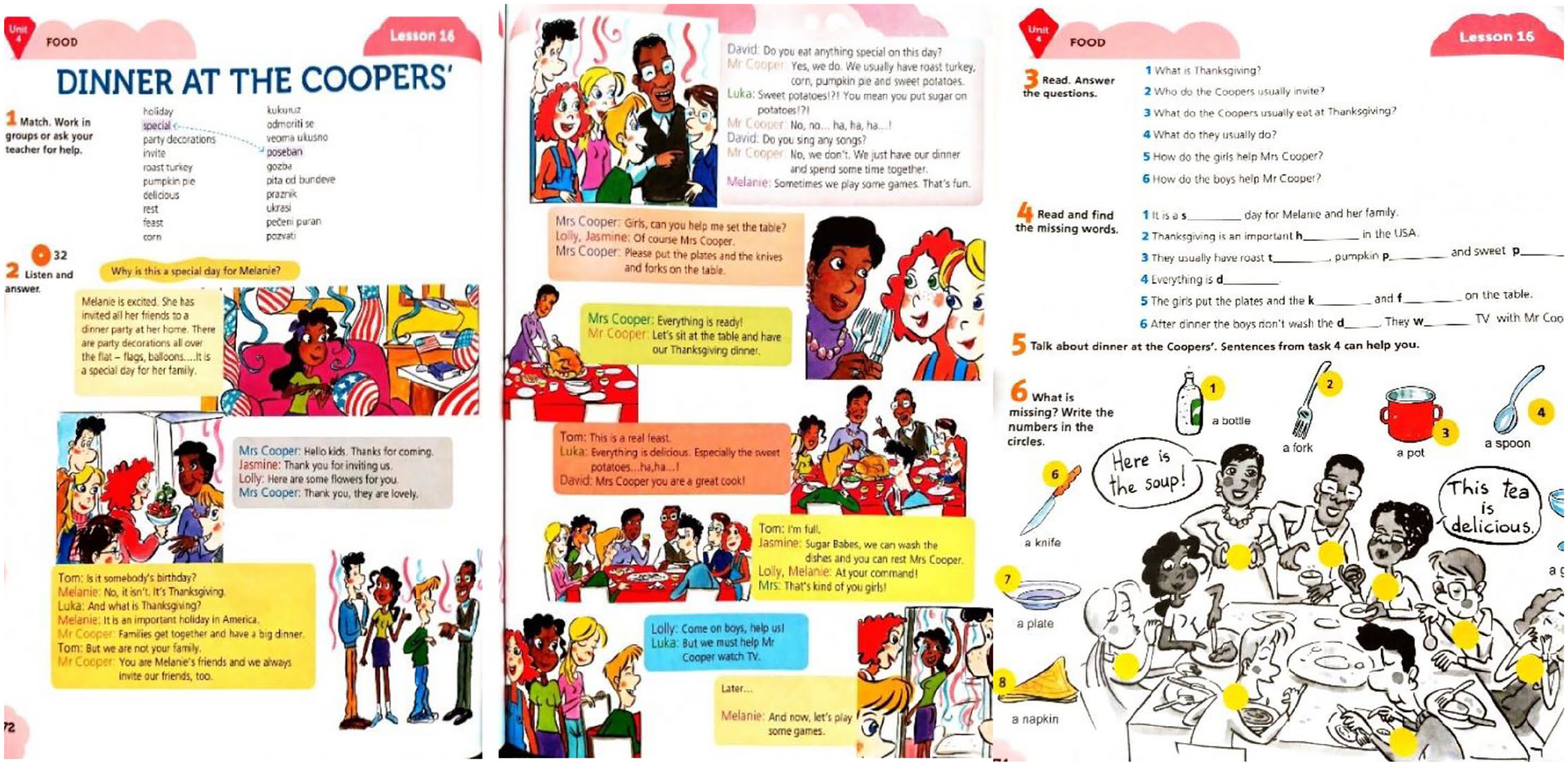
Excerpt from the Year 4 textbook Dip in 4.
In the second step, pages with explicit pragmatic content were counted. Such content encompassed any activity that directed learners in the use of a pragmatic feature, e.g. lists of expressions or tasks requiring learners to use pragmatic language features. In some cases, this included very short tasks in which students are, for example, asked to discuss a topic and are provided with a list of phrases to use, but with no contextualized examples (see, for example, Figure 5 below). Other textbooks contained more extensive ‘Everyday English’ boxes with phrases that are contextualized in short dialogues, and several had pages dedicated to speaking skills in every unit, which usually presented pragmatic language in context with a short dialogue, followed by a list of phrases for a specific function and, finally, tasks requiring students to use this language in pair or group work (Figure 2).
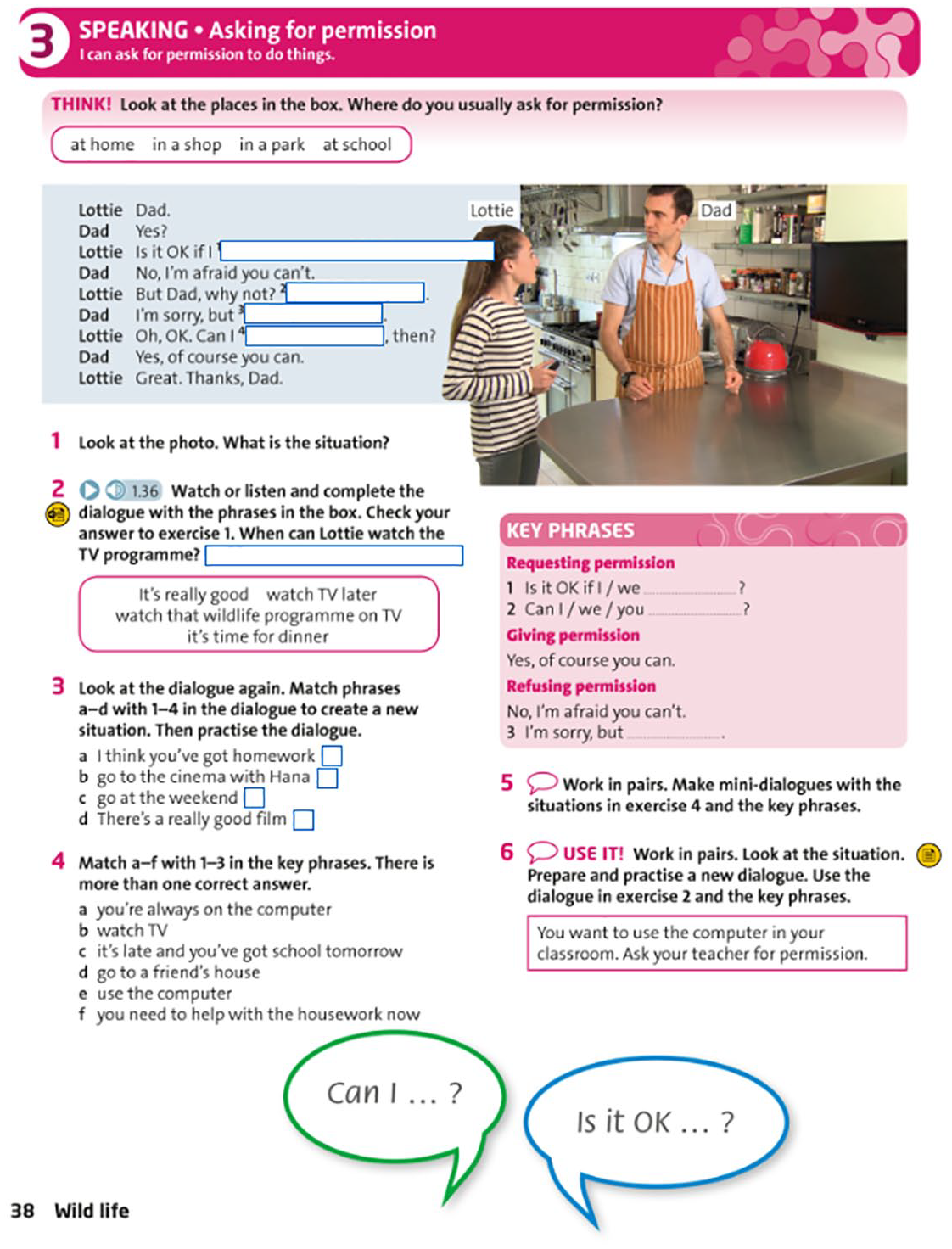
Excerpt from the Year 5 textbook English Plus 1.
Some activities included metapragmatic information, i.e. explicit information on how to use a specific pragmatic form or how to choose between similar pragmatic forms. An example of this can be found in the Year 6 textbook in Figure 3, where learners are presented with simple metapragmatic information about the relative formality of forms that can be used to make offers.
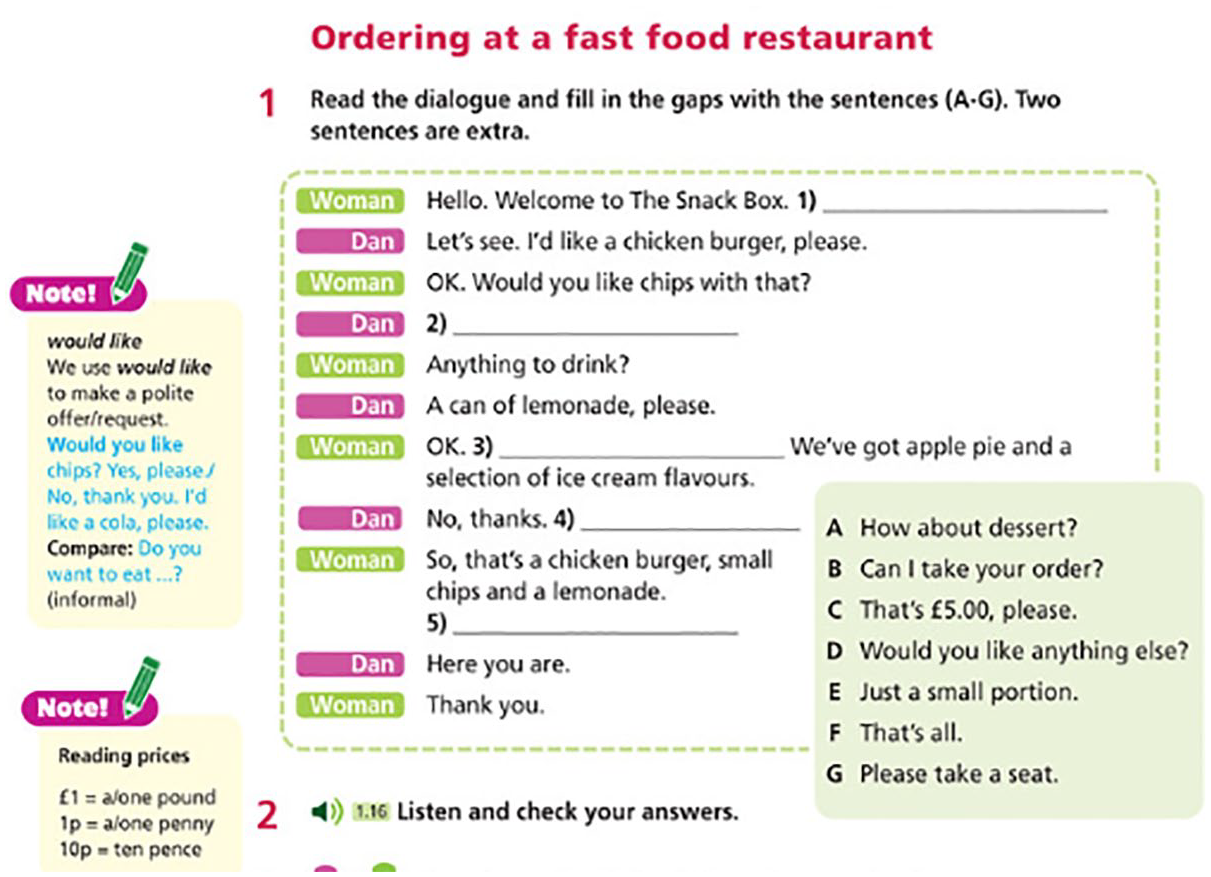
Excerpt from the Year 6 textbook Right on 2.
The number of pages with pragmatic content (all content/explicit focus) was then divided by the total number of pages in the textbook and multiplied by 100, providing us with the percentage of pages exposing learners to pragmatic content in the textbook. Simple descriptive statistics (standard deviations, maximum and minimum values) were also calculated for textbooks for each year and category (all content/explicit focus).
To answer the second research question, a list of different speech acts which received explicit attention in the textbooks was created for each grade and textbook. The number of textbooks which included an explicit focus on a speech act was calculated for each of the three years with the aim of determining if there was any consistency regarding what speech acts are presented to learners on a specific level. Speech acts were chosen as the focus of this analysis to facilitate the comparison between the different textbooks and levels. They are also commonly the focus of similar studies to date (e.g. Limberg, 2016; Nguyen, 2011; Petraki & Bayes, 2013; Schauer, 2019) as they are often considered especially useful for language learners, who tend to rely on formulaic chunks which can facilitate pragmatic ability while other aspects of language are still developing (Diepenbroek & Derwing, 2013).
Finally, to answer the third research question, short questionnaires were sent out to a small sample of ten Croatian primary school EFL teachers (T1–T10, a convenience sample of the authors’ acquaintances). All of the teachers had over 10 years of experience working with young learners of English and had worked with at least one of the textbooks analysed in the present study, five of them (T1–T5) with EFL textbooks by Croatian publishers, and five (T6–T10) with international textbooks. The teachers were asked the following questions:
In your view, should pragmatic elements be included in EFL textbooks for young language learners? Why (not)? How important is this content for this age group?
In your experience, to what extent are pragmatic elements present in the textbooks you use with young learners?
To what extent do you find the pragmatic content in the textbooks authentic?
Do you include pragmatic elements in your teaching in some other way?
The questionnaires were analysed by determining the general themes of the teachers’ answers to the questions listed above and by extracting example responses.
IV Results
1 To what extent is pragmatic content included in EFL textbooks used with YLLs in Years 4–6 in Croatian schools?
Of all analysed pages, 19.64% (minimum 4.4%, maximum 39.08%, SD = 10.38) included exposure to some type of pragmatic content. The overall percentage of pages with pragmatic content (Table 2) was highest in Year 4 (20.06%), followed by Year 6 (19.6%) and, finally, a somewhat lower percentage in Year 5 (17.53%). The textbooks included 10.81% (minimum 1.67%, maximum 27.59%, SD = 8.29) of pages with an explicit focus on pragmatic features on average. This percentage was more than twice as high in Year 5 (10.2%) in comparison to Year 4 (4.19%), and higher still in Year 6 textbooks (13.81%).
The prevalence of pragmatic content per textbook per year.

Notes. The textbooks by Croatian publishers are marked in bold.
The percentages of pages with any type of exposure to pragmatic content in individual textbooks varied to a great extent. The greatest range is observable in Year 5 (SD = 12.59), where the textbook with the lowest percentage of pages with pragmatic content contained only 4.4%, while the one with the highest percentage contained 38.95%, which is almost ten times more. It is interesting to note that three of the textbooks with the lowest percentages of pragmatic content overall were Year 5 textbooks, two of them published by Croatian publishers. Year 6 textbooks feature the greatest diversity when it comes to pages with an explicit focus on pragmatic content, with the minimum percentage of just 2.03%, while the maximum was 27.59%, which is a more than tenfold difference (SD = 8.85).
A brief qualitative insight shows some similarities between the textbooks with the highest proportion of pages with explicit pragmatic content (15% more), such as those from the English Plus, Project Explore and Wider World series. They share a clear and repetitive structure of units and a focus on spoken language throughout. For example, Project Explore 2, the textbook with the highest proportion of both overall and explicit pragmatic content, contains a speaking lesson in each unit structured in a way similar to the example from English Plus 1 provided in Figure 2. However, the other dialogues in the textbooks, those used to introduce lexico-grammatical points, are also accompanied by ‘Spoken English’ boxes emphasizing different phrases and expressions and role-play tasks requiring students to use the language in interaction. In other words, the opportunities for the production of pragmatic language are maximized in this textbook. For example, a lesson dedicated to the definite and indefinite articles contains dialogues in a tourist office followed by a role-play task requiring the students to make similar dialogues asking about different attractions and using polite phrases to do so (Figure 4).
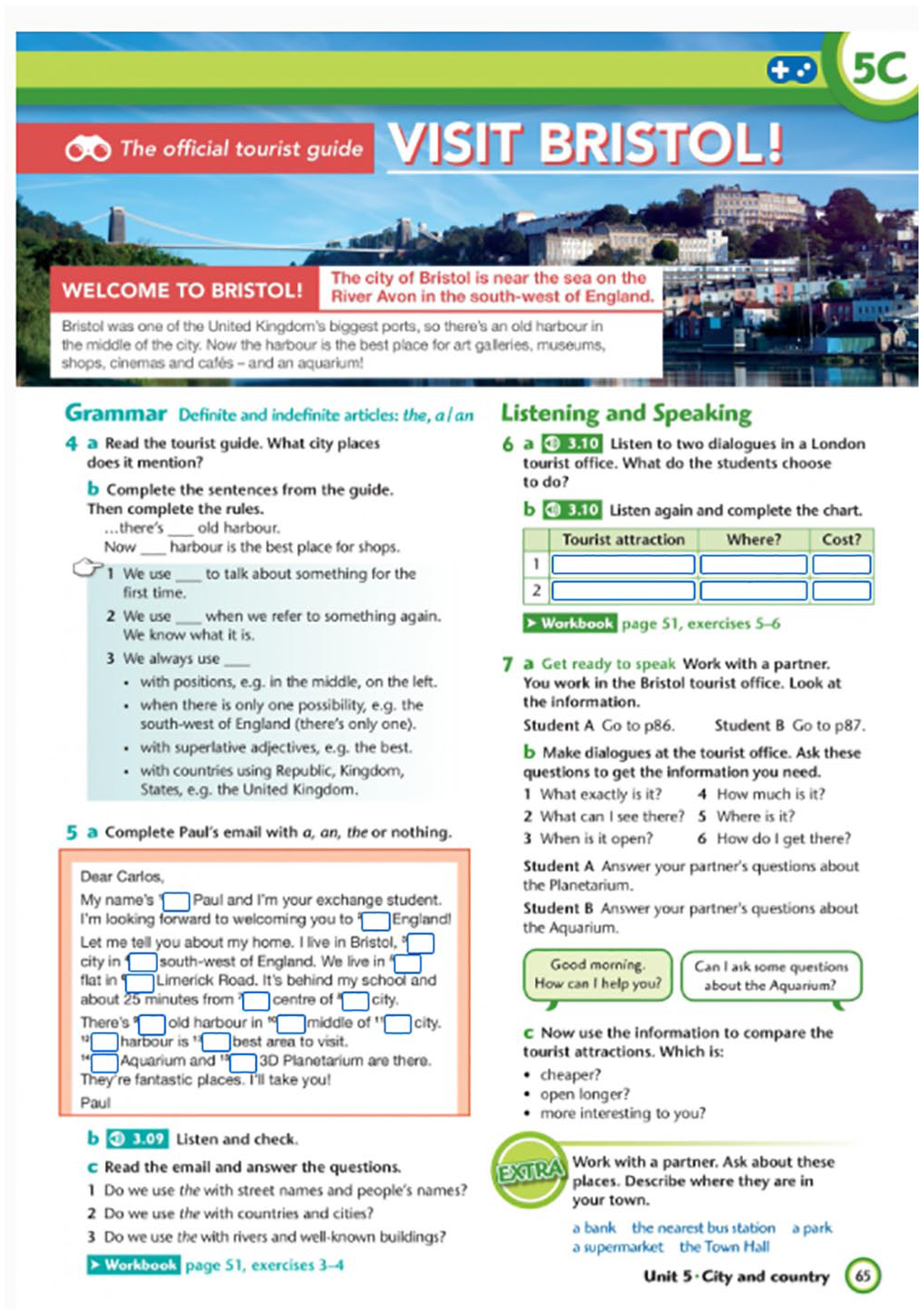
Excerpt from the Year 6 textbook Project Explore 2.
The lowest-scoring textbooks, those with 5% or less pages with explicit pragmatic content, are all Croatian textbooks. These textbooks are usually more loosely organized and generally do not feature dedicated speaking lessons. Speaking tasks usually entail question-answer sequences which do not require the students to use any pragmatic forms in interaction. A typical example from New Building Bridges 6, one of the lowest-scoring textbooks overall with only eight pages (2.03%) with an explicit pragmatic focus, can be seen in Figure 5. These pages contain short dialogues and a box with phrases for expressing opinions and (dis)agreement. However, the speaking tasks that follow require the students to express opinions without working in pairs or using the listed phrases for agreeing and disagreeing.
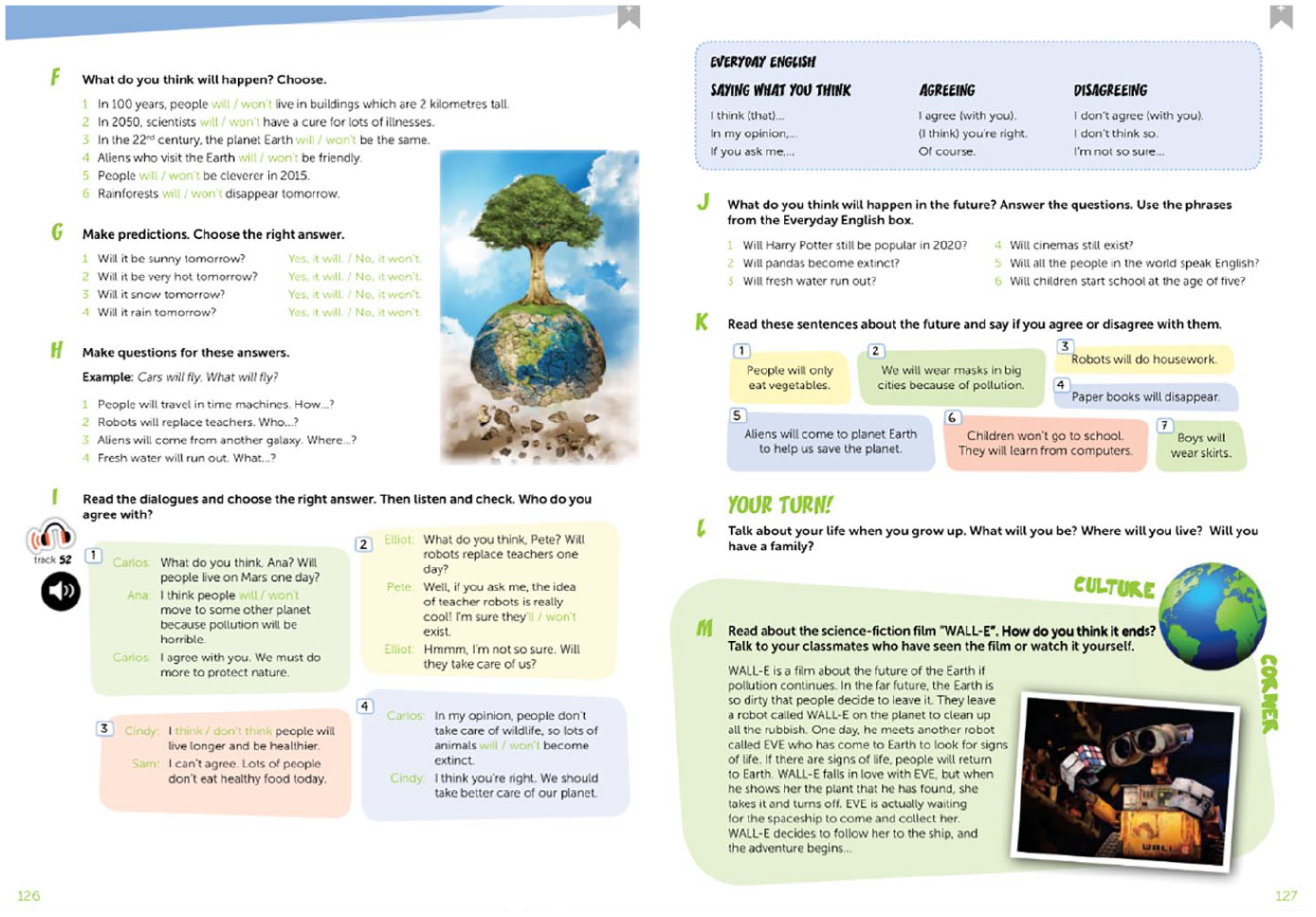
Excerpt from the Year 6 textbook New Building Bridges 6.
2 Which speech acts receive an explicit focus in the analysed textbooks?
The analysed textbooks contained activities which explicitly focused on a total of 24 speech acts, ten of which were only covered in one textbook each (Table 3). With the exception of greetings, covered in two out of the three analysed Year 4 textbooks, there was no direct focus on any other speech act in Year 4 textbooks. Furthermore, less than half of both Year 5 and Year 6 textbooks contained an explicit focus on any given speech act, except for making suggestions (covered in 6/8 Year 6 textbooks), asking for/expressing opinions (covered in 4/7 Year 5 textbooks) and inviting/accepting/refusing (covered in 4/8 Year 6 textbooks). Overall, Year 6 textbooks contained the greatest range of speech acts with an explicit focus (22); however, only one speech act, making suggestions, appeared in the majority of the Year 6 textbooks (6/8). Table 3 also shows that only 8 of the 24 encountered speech acts received an explicit focus in Croatian textbooks, mostly in just one of the 7 textbooks with the exception of asking for/expression opinions and obligation/prohibition.
The number of textbooks for each year with an explicit focus on speech acts.

The speech act that most frequently received an explicit focus in the textbooks was making suggestions (8/18 textbooks), most commonly as part of a speaking or ‘Everyday English’ lesson. Examples of phrases presented in these contexts in four of the textbooks are provided in Table 4. Along with phrases for making suggestions (and invitations), all four textbooks provided examples of positive and negative responses. Some basic phrases like Why don’t we . . ., How/What about . . .? and the responses I don’t think so and Great idea! could be found in several textbooks, while other phrases differed among the textbooks.
Phases for making suggestions in the textbooks.

3 What are the attitudes of Croatian primary school teachers to pragmatic content included in EFL textbooks?
The first question in the questionnaire was aimed at determining the teachers’ attitudes on the usefulness of including pragmatic elements in EFL textbooks for young language learners. The teachers overwhelmingly agreed that these elements should be included, stating that ‘the usage of language in real, everyday situations consist of pragmatic elements’ (T3) and that ‘these expressions are the most frequent and sometimes primary in communication with others and are of great importance for opening up conversations to other topics’ (T4). They also recognized that pragmatic elements ‘contribute to the better understanding of speakers’ (T5). The teachers emphasized that ‘language is acquired by using it actively in everyday situations’ (T8) and that this is relevant because teachers should ‘prepare learners for life in every sense’ (T10).
The second question referred to the teachers’ experience with pragmatic content in the textbooks they have used with young learners, and it prompted diverse responses from the teachers. While teacher T10 said they were present in speaking activities, and teacher T5 stated that the ones she used did not contain any pragmatic material, most other teachers responded that these elements are partially present but that there should be more (T1, T2, T3, T6, T8, T9). Teacher T7 emphasized that pragmatic elements are more present in textbooks by foreign publishers, such as Oxford. These responses reflect the fact that the interviewed teachers used a variety of textbooks in their classes, with half of them mostly using those by Croatian publishers.
The third question touched upon the teachers’ perception of the authenticity of the textbooks. Three of the teachers responded that the content is partially authentic (T1, T2, T3), and only one said that it did not seem at all authentic (T4). Three teachers (T7, T8, T9) stated that the content seemed authentic to them. Teacher T9 emphasized that this is because she used textbooks printed in Great Britain. T6 added that textbooks should still aim to include more expressions students can use in actual conversation, while T10 emphasized that the dialogues sometimes seemed forced and should have a more natural flow.
Finally, the fourth question was aimed at determining whether the teachers include pragmatic elements in their teaching in some other way. Out of the ten teachers, only two replied that they did not include any extra materials to teach pragmatic forms (T5, T9), with one of them (T9) adding that she might change this practice. Other teachers said that they did so by finding online resources that include native speakers (T3, T9) or just in everyday communication with their students (T6, T10).
V Discussion
The general aim of the study was to examine the extent of exposure to pragmatic features of language offered by the YLL textbooks in Croatia and determine how much they explicitly direct learners in the use of these features in speech. The results of our analysis have brought to light a serious lack of uniformity among the analysed textbooks, which ranged from 4.4% to 39.08% of pages with any type of exposure to pragmatic content, and the results were similarly inconsistent when it came to pages with an explicit focus on these language features (ranging from 1.69% to 27.59%). These results are in line with the discrepancies found in similar studies (e.g. Diepenbroek & Derwing, 2013; Ren & Han, 2016; Vellenga, 2004). In fact, the intermediate-level textbooks in Ren and Han’s (2016) study contained an even wider range of pages with (explicit) pragmatic information (0%–42.74%). As opposed to this study, our results did not find any textbooks without pragmatic information, although the overall frequency of 10.81% of pages with explicit pragmatic information in the textbooks analysed in our study is lower than the 17.09% pages in Ren and Han’s (2016) study. However, so is the students’ age and level of proficiency (with Year 6 students in Croatia only embarking upon the A2 level).
At any rate, it is obvious that the amount of pragmatic content Croatian YLLs are exposed to in their textbooks differs to a great extent depending on the specific textbooks they use. To illustrate this with an example, one of the Year 5 textbooks, Footsteps 1, had only 7 (out of 159) pages with any type of pragmatic content, while the textbook Project Explore 1 for the same year had 37 (out of 95) pages. The fact that there is so much variety in the amount and type of pragmatic content included in the textbooks for a given year is concerning as all of the learners of English in Croatian schools should be following the same curriculum, which advocates a strong focus on communicative language skills and functions. For example, according to the Croatian National Curriculum (Ministry of Science and Education, 2019), Year 5 students should be able to plan the structure of a spoken text based on a template, link text elements using very simple language structures, plan a conversation, participate in a conversation and recognize turn-taking opportunities. They should master describing, asking for and giving instructions and telling the time. They should be able to apply appropriate social conventions in a short and simple conversation, notice avoidance strategies, ask for clarifications and check understanding. Although the alignment of the textbooks with the guidelines provided by the Curriculum is beyond the scope of the present study, it seems unlikely that a textbook can direct learners in the use of all of these forms with only a few pages dedicated to such content. All Croatian textbooks seriously lag behind international ones when it comes to the quantity of explicit pragmatic content, which has not always been the case with local textbooks in research to date (e.g. Meihami & Khanlarzadeh, 2015). In any case, the relevance of these results should be examined in a more detailed qualitative study, which could provide insight needed to interpret the reasons behind them. However, the brief qualitative insight we offered through some examples from the textbooks indicates that while the international textbook series such as Project Explore or Wider World feature a more consistent approach through structured units with dedicated speaking lessons, Croatian textbooks seem to be less structured, and speaking tasks largely revolve around questions and are not aimed at achieving interaction or using key pragmatic phrases.
When examining the textbooks for each individual year, it is interesting to note that Year 4 textbooks contained a higher percentage of pragmatic content in comparison to Year 5 and Year 6 textbooks (20.06%, 17,53% and 19.6%, respectively). At the same time, Year 4 textbooks had the lowest percentage of pages with explicit pragmatic content (4.19%), which increased in Year 5 (10.20%) and more still in Year 6 (13.81%). This progression seems logical because, as Plonsky and Zhuang (2019) note, L2 proficiency is positively associated with pragmatic instruction, i.e. the more the young learners know, the easier it is to teach them about pragmatics. A possible explanation for the high percentage of pages with pragmatic content in Year 4 textbooks is that they were less focused on topics such as grammar and extensive reading and more speech-oriented. Examples of pragmatic forms in Year 4 textbooks were most commonly incidentally contained in dialogues with a lexico-grammatical focus (see Figure 1). The lack of pragmatic focus in Year 4 textbooks is further evidenced in the low overall percentage (only 4.19%) of pages explicitly directing learners in the use of pragmatic features, as well as the fact that, with the exception of greetings, there was no explicit mention of any other speech act in any of the Year 4 textbooks. The tasks in these textbooks still provided exposure and examples of certain pragmatic elements in context, but a lack of an explicit focus which would entail directions for the use of pragmatic features means that Year 4 learners were given fewer opportunities for the correct use of these forms.
The scarcity of content with an explicit focus on pragmatic forms was not an issue exclusive to Year 4 textbooks. Although the textbooks with the highest percentages had about 25% of pages with such content, the lowest percentages for Years 4, 5 and 6 were 1.7%, 2.5% and 4.9%, respectively, which means that at least one of the textbooks for each year (in all three cases, those published in Croatia) contained only a few pages with content explicitly dedicated to the use of pragmatic features of language. Similarly, Limberg (2016) found that apologies in German EFL textbooks for learners aged 10–16 year are mainly presented as input via dialogues and narrative texts, not intended for the production of pragmatic language. According to the author, this kind of presentation cannot guarantee that this information is noticed or transformed into active speech production, which is exacerbated by the fact that speech acts are often presented without supplementary pragmatic information. As Diepenbroek and Derwing (2013) have noted, pragmatic material presented without contextual information is less useful for learners as they might not know when it is appropriate to use a specific form or how to adapt it to fit their own needs. Other studies have also often found pragmatic content to be presented without sufficient description of contextual variables or metapragmatic information (e.g. Diepenbroek & Derwing, 2013; Nguyen, 2011; Petraki & Bayes, 2013). Metapragmatic content, such as that exemplified by Figure 3, was also rare in our corpus, with only a few such instances found in all of the analysed textbooks. Learners and teachers would benefit from this type of information which would guide them in their choice of a specific phrase or form. The scarcity of metapragmatic information in our textbooks might reflect the misconception that YLLs are unable to deal with the complexities of pragmatics in general. In our view, metapragmatic information can be adapted to the level of the learners, and can, for example, entail simple explanations that still provide YLLs with information on when or with whom it is appropriate to use a specific pragmatic form in a particular context (Nguyen, 2011), just like in the example provided in Figure 3.
Our second question was aimed at determining whether there was consistency between the textbooks for each of the years regarding what speech acts were presented at what level. A wide range of speech acts (24) received an explicit focus in the textbooks overall; however, there was no uniformity within any of the three years as to which speech acts were included in the curricula. No single speech act was covered in every textbook for any given year, and a large majority of them were covered in fewer than half of the textbooks for a given year. This indicates that there is no agreement as to which type of pragmatic content should be covered in which year of learning, which is in line with previous research which found that speech acts were commonly presented without a logical sequential pattern between the levels (e.g. Diepenbroek & Derwing, 2013; Ren & Han, 2016; Vellenga, 2004). Schauer (2019) also found YLL textbooks in Germany to be inconsistent in both the number of different speech acts they included and the number of their occurrences in a textbook. Although our brief analysis of phrases for making suggestions in four different textbooks showed similarities between them, these were outweighed by the differences in the speech acts that are included in different textbooks. If we compare this to a typical grammar topic such as the contrast between the present simple and continuous, we can note that the latter is consistently presented in all of the analysed textbooks. On the other hand, it is obvious that there is no such agreement or guidance for pragmatic content. In that respect, the Croatian National Curriculum for English (Ministry of Science and Education, 2019) is not of much use as it gives only basic guidelines relating to pragmatic content. The textbooks published in Croatia were shown to contain a very narrow range of speech acts across a small number of textbooks in addition to the consistently lower percentage of explicit pragmatic content, and the vagueness of the Curriculum could be one of the reasons for this situation. However, this should, once again, be further examined in a future study dedicated to the reasons behind these emphasized differences.
Finally, the short questionnaire completed by ten Croatian primary school teachers in line with our third research question substantiated our results. When asked about the pragmatic content in the textbooks, the teachers provided varying accounts, and in a few cases the teachers pointed out textbooks printed in the UK as a more reliable source of pragmatic information in comparison to Croatian textbooks, which is consistent with our results. All of the teachers agreed that pragmatic elements should be included in the materials, pointing out the importance of learning how to use language in real, everyday situations, teaching learners how to communicate and understand their interlocutors better. Schauer (2019) obtained similar results with 27 EFL teachers in Germany who reported that they consider pragmatic routines, such as polite language, very important. According to Glaser (2018), such awareness of the importance of pragmatics is one of the prerequisites for teachers to be able to include these elements in their classes with young learners, with textbooks being another. The fact that some of our participants perceive textbooks as lacking in that regard must serve as a further warning that more consistency is urgently needed. Although most teachers reported that they use additional materials, given the complexities of primary school classrooms, teachers would benefit from a good textbook that would provide appropriate and frequent input of pragmatic forms.
To sum up, our results show that among the analysed textbooks for YLLs, there are those that offer insufficient opportunities for learners to encounter, notice, and use the pragmatic forms of the English language. The great diversity in the amount of content provided, as well as the lack of consistency in the presentation of pragmatic features, present a worrying picture. As all of the analysed textbooks have been approved for use in Croatian primary schools with the aim of reaching the aims set out in the curriculum, the level of heterogeneity of the textbooks regarding the quantity and the presentation of pragmatic elements raises questions regarding the basis on which these textbooks are assessed.
VI Limitations and suggestions for further research
The limitations of the present study lie in the fact that it offers only a preliminary overview of the pragmatic information available to YLL in Croatian classrooms. To provide a more complete picture, further research should include a wider examination of the different materials used by the teachers, from workbooks to supplementary materials, as well as an analysis of teacher input in the classroom. Furthermore, our results give a preliminary, largely quantitative, insight into the textbooks. Therefore, to elucidate the relevance of the results, further research is needed which would provide a more detailed look into the quality of the content, focusing on whether the language presented is authentic and whether the context provided is sufficient to guide learners in using the language appropriately. Together with the present study, this research would hopefully provide better guidance for teachers, as well as the Croatian Ministry of Science and Education when it comes to assessing and choosing textbooks which would help learners achieved the outcomes set out in the curriculum.
VII Conclusions and implications
The overall aim of the present study was to provide much-needed insight into the pragmatic content available in EFL textbooks for YLLs aged 9–12 in Croatia. The main finding of the present study is the inconsistency in the scope and type of pragmatic content included in EFL textbooks used in Years 4–6. Our results point to the fact that although all Croatian young learners are taught on the basis of the same curriculum, the EFL materials they are exposed to differ greatly in the quantity of pragmatic content. Furthermore, it was evident from the results that Croatian EFL textbooks lag behind international ones when it comes to the quantity of content explicitly directing learners in the use of pragmatic features of English, which is a concern. Moreover, as opposed to the general agreement when it comes to the overall order of presentation of lexico-grammatical content, there is obviously no such agreement about the order of presenting pragmatic content (specifically, speech acts) in EFL textbooks for YLLs.
As Cameron (2001, p. 50) notes, ‘learning and use are tightly interconnected – when a child uses English, adapting his or her oral skills to the task in hand, a micro-level instance occurs of learning in action.’ YLLs need to be motivated with activities that lead them in the use of the L2 for a particular purpose, which is especially true in low-immersion EFL contexts (Llinares García, 2007), such as the Croatian context. Thus, it is important for YLL textbooks to provide materials that would guide teachers in making sure that learners have opportunities for the focused use of pragmatic language. According to Vellenga (2004), a pragmatically-friendly textbook could include pragmatic awareness-raising activities that would provide contextual information, variety of forms and cultural information needed to make the appropriate pragmalinguistic and sociopragmatic choices. Although not all of these elements would necessarily be appropriate for textbooks for YLLs, they should still be exposed to contextualized examples of pragmatic forms and should be directed in making conscious choices about what language to use in specific situations.
Textbooks are by no means the only source of input in the classroom, especially when it comes to pragmatic forms of a language. However, as we have emphasized earlier, they represent an important source of information and inspiration for many teachers. The overall impression stemming from this study is that there is very little thought given to pragmatics in YLLs textbooks, and this is exacerbated by the fact that there seems to be no agreement as to the order or the method in which this should be done. The key implication of the present study is thus that awareness must be raised among textbook authors and practitioners of the importance of including pragmatic content in textbooks for YLLs, thus supporting them in their acquisition of language which can be used in real-life communication. This needs to be supported by research which would indicate the most logical order of acquisition of these forms, and the best way for teachers to help their students achieve pragmatic competence, which is necessary for their broader communicative competence.
