




Abstract

I know smoking causes lung cancer, but are there other risks of smoking?
On average, smokers die 10 years earlier than non-smokers, and smoking causes almost one in every five deaths in the United States. 1 Smoking is linked to many cancers, heart disease, vascular disease, macular degeneration, osteoporosis, diabetes, stroke, and chronic obstructive pulmonary disease (COPD). Quitting smoking is hard, but it is far and away the most important action you can take to improve your overall health.
What does smoking have to do with vascular disease?
Smoking and vascular disease go hand in hand. Smoking is more closely associated with the risk of peripheral artery disease (PAD; or blockages in the leg arteries) than it is with heart disease. 2 In fact, most people with PAD are either current or former smokers. Smokers with PAD develop leg pain with walking (‘claudication’) more quickly than non-smokers, and the leg pain takes longer to subside. Smoking is the most important risk factor linked to worsening of PAD, and amputation rates are much higher in smokers than non-smokers. 3 Smoking after leg bypass surgery increases the risk that the bypass graft will fail. Similarly, smoking is linked to recurrence of carotid artery disease (‘restenosis’) after carotid artery surgery and after carotid stents. Smoking increases the rate of expansion of abdominal aortic aneurysms (‘triple A’ or AAA), increases the risk of blood clots in the veins, and interferes with the body’s ability to heal sores or wounds.
What are the vascular benefits of quitting smoking?
Quitting smoking improves the health and function of blood vessels. For people with PAD, quitting smoking may improve leg pain symptoms and improve walking ability. Quitting smoking will also reduce the chances of progression of all types of cardiovascular disease. It will reduce the chances of needing a stent or bypass in the arteries and reduce the chances of stents or bypasses closing up. It will also decrease the risk of amputation.
What are the risks with cigars? How about snuff or chew?
The idea that cigars are safer is simply a myth. Less research is available on the dangers of cigars and smokeless tobacco (such as snuff, chew, or snus), as compared to cigarette smoking. However, cigars and smokeless tobacco are clearly linked to cardiovascular disease and cancers of the mouth, esophagus, and pancreas. Cigar smoke may even be more toxic than cigarette smoke. Smokeless tobacco is thought to be somewhat less risky than cigarettes, but tobacco is not safe in any form.
Is secondhand smoke actually dangerous?
Absolutely. Secondhand smoke contains the exact same harmful chemicals that smokers inhale. Up to 7000 chemicals can be found in cigarette smoke. Secondhand smoke includes both the smoke exhaled by the smoker as well as the smoke released from the burning tobacco product (cigar, cigarette, or pipe). It causes heart and vascular disease, stroke, and lung cancer, even in people who have never smoked. Children are especially vulnerable to the effects of secondhand smoke, which puts them at higher risk for many health problems including ear infections and asthma. There is no safe level of exposure for secondhand smoke. Keeping your home and your car smoke-free is one of the most important actions you can take for the health of your family and friends.
What about electronic cigarettes (e-cigarettes)?
Electronic cigarettes are operated by a battery that turns nicotine into a vapor that is inhaled. Electronic cigarettes are not regulated by the United States Food and Drug Administration (FDA), but they will be soon. Until then, we cannot be certain what chemicals are contained in the vapor. Each brand on the market may contain vastly different ingredients; there are currently no regulations to require standardization or quality control for electronic cigarettes. Brands vary in terms of the additives and flavors, the nicotine solution strength, the heating element, and potential toxins. Electronic cigarettes may turn out to be less harmful than regular cigarettes, but at this time we do not know. The medical community has not reached a consensus as to whether electronic cigarettes are helpful for quitting smoking.
What are the next steps to take after making the decision to quit?
First, seek advice from your doctor regarding which medications to help quit smoking may be right for you. Pick a quit date. Identify and avoid your triggers. What habits are linked to smoking for you? Do you smoke while driving or while drinking coffee or alcohol? Do you smoke after meals or when under stress? It is often easier to substitute one habit for another than it is to eliminate a habit altogether, particularly if that habit has been part of your life for a long time. As an analogy, if you are used to eating dessert after dinner, you may have a hard time eliminating dessert completely. But you will have a better chance of success if you find a healthy substitute for the dessert (e.g. having fruit instead of cake). Thus, if you always smoke at certain times, you should look for a healthy substitute to fill that void (e.g. going for a walk or talking to a friend on the phone or chewing gum).
Quitting smoking is extremely difficult. Many people will say it is the hardest thing they have ever done. If you slip and have a cigarette when trying to quit, feeling guilty will only make you more likely to continue smoking. Research shows that you will be more successful if you avoid guilt and treat the experience as a learning opportunity. You will learn something about why you slipped and then be less likely to do so in the future.
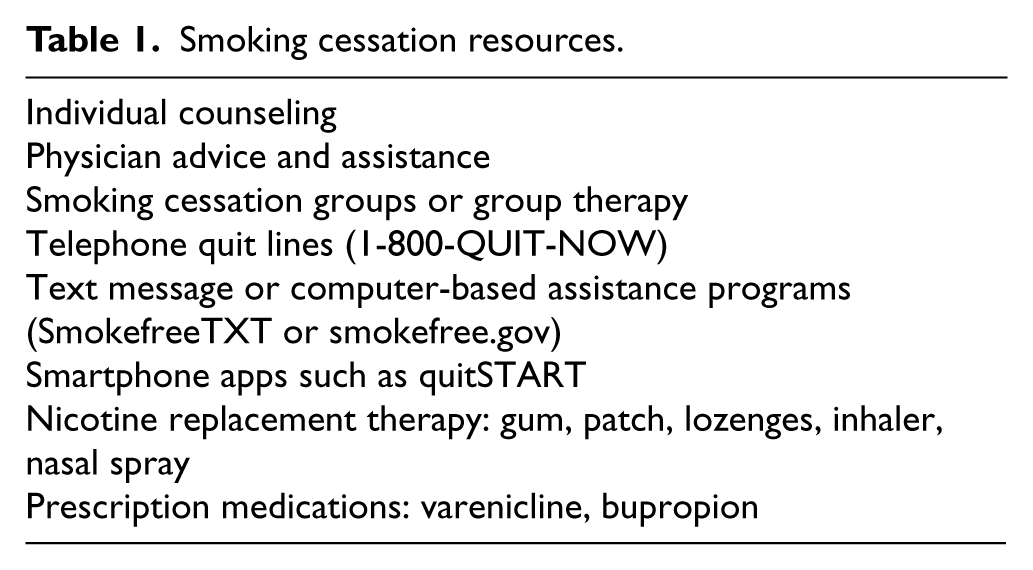
Counseling helps with quitting smoking; you may choose individual counseling or group sessions with other people trying to quit. Many helpful resources are available to assist you, as shown in Table 1. The free hotline 1-800-QUIT-NOW (1-800-784-8669) provides phone support, practical advice, and information on local programs in the United States. SmokefreeTXT is a mobile text-messaging service designed to help people who are trying to quit smoking. Check out the website http://www.smokefree.gov.
Smoking cessation resources.
Will I gain weight if I quit?
A little weight gain is common with quitting smoking, but the dangers of continuing to smoke are far worse. Studies have shown that the risks of smoking 10 cigarettes per day would be equal to a weight gain of over 88 pounds (40 kg). 4 Trying to lose weight or trying not to gain any weight while trying to quit smoking has been shown to lower success rates with quitting. However, weight gain may be less with some of the medications often prescribed for smoking cessation.
The heart and vascular risks of smoking are enormous, and any weight gain seen with quitting is a minor problem compared to the smoking itself. Exercise can help reduce the chances of weight gain and provides multiple health benefits. Everyone needs a minimum of 30 minutes per day of brisk exercise based on current guidelines. Maintaining this daily exercise regimen is important, particularly while quitting smoking.
Is the nicotine patch safe? What are the other options for nicotine replacement therapy?
Nicotine is the ingredient in tobacco that makes smoking addictive. But nicotine is not the primary cause of the health risks associated with smoking, which makes nicotine replacement therapy (NRT) a relatively safe alternative to cigarettes. The nicotine levels in NRT are regulated by the FDA and help to reduce the withdrawal symptoms you may experience from quitting smoking. Nicotine withdrawal symptoms include irritability, anxiety, hunger, and restlessness. When people are unable to cope with these symptoms, they may relapse and smoke again. Nicotine replacement therapy can help reduce the severity of these withdrawal symptoms and help prevent relapse.
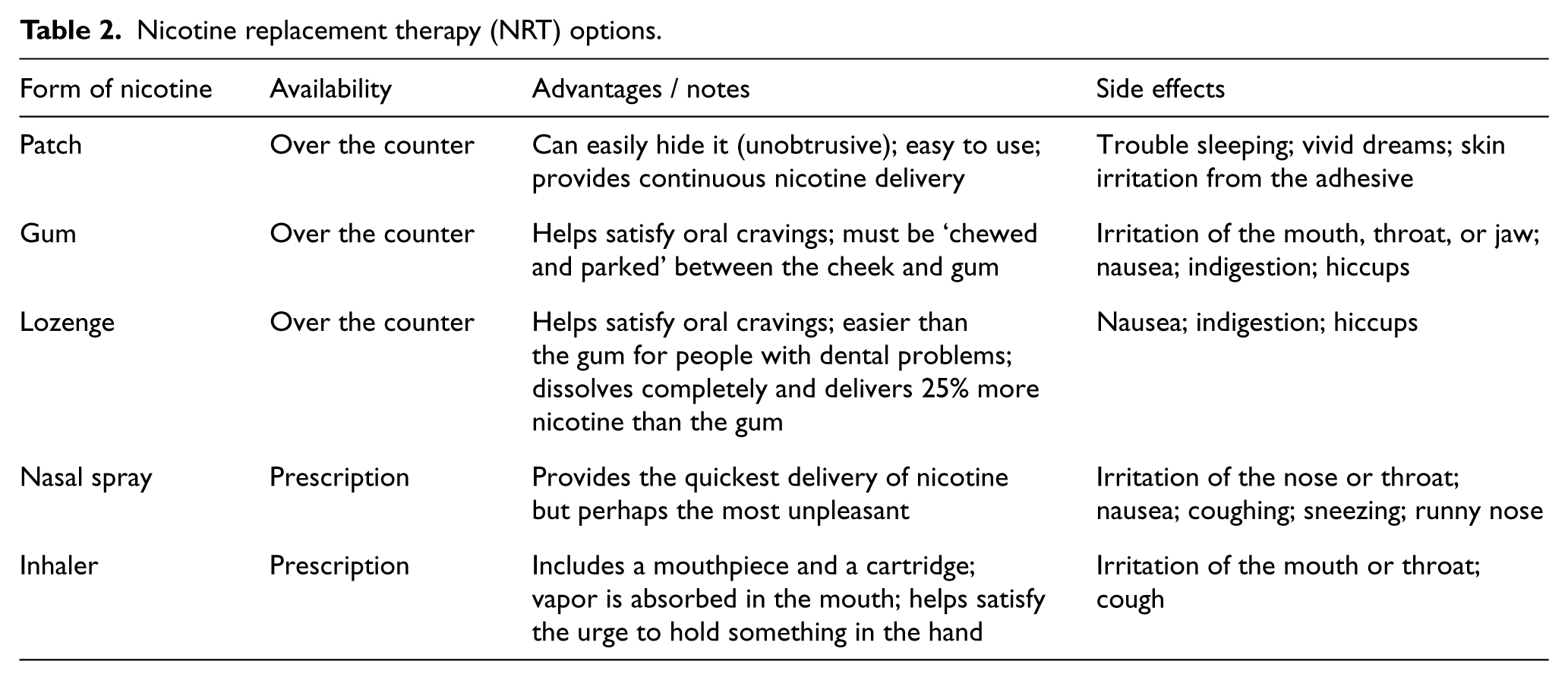
The most common form of NRT is the nicotine patch. Other effective options for nicotine replacement include nicotine gum, lozenges, nasal spray, and inhalers. The advantages and side effects of each formulation are shown in Table 2. Using nicotine replacement products can double your chances of success with quitting smoking. It is also possible to combine different nicotine replacement products together (e.g. the patch plus the lozenge) to increase the likelihood of success. Using NRT is also significantly less expensive than cigarettes.
Nicotine replacement therapy (NRT) options.
What are the pill options for quitting smoking?
Varenicline (Chantix®) and bupropion (Zyban® or Wellbutrin®) are safe, effective, and FDA-approved prescription medications that can be used to help you quit smoking. Both are generally considered safe for people with cardiovascular disease. They should not be taken by people with a history of seizures. The FDA has issued warnings for both medications about the risk of psychiatric side effects and suicidal thoughts, which have been reported in a small number of people who have taken these medications. However, the benefits of quitting smoking almost always outweigh any potential risks. Family and friends should be on the lookout for any changes in behavior, hostility, depression, or agitation. Even though such side effects have been reported, they are quite rare. In a recent study, there was no increase in neuropsychiatric side effects with varenicline or bupropion compared to the nicotine patch or placebo. 5
Varenicline appears to be the most effective medication on the market for quitting smoking. It binds to a nicotine receptor in the brain. By doing so, it helps treat some of the nicotine withdrawal symptoms. At the same time, varenicline also prevents additional nicotine (that you might get from smoking) from binding to that brain receptor, which makes smoking less pleasurable. Possible side effects of varenicline include nausea, constipation, difficulty sleeping, odd dreams, dry mouth, headache, and rash. Varenicline may change how people react to alcohol. You should reduce the amount of alcohol you drink while taking varenicline until you know whether it affects your tolerance for alcohol.
Bupropion has been on the market as an antidepressant since the 1980s, and it has been on the market for smoking cessation in the extended-release form since 1997. It affects neurotransmitters in the brain in a way that makes quitting smoking easier. It may also decrease the chances of gaining weight while you are quitting smoking. Studies show that bupropion is even more effective when it is combined with the nicotine patch or inhaler. The main side effects of bupropion include difficulty sleeping and a dry mouth.
Summary
Smoking leads to a host of health issues, and is particularly dangerous for people with vascular disease. There are several effective prescription and over-the-counter medications available to help you stop smoking. The risks of these medications are minimal, especially when compared to the health risks of continuing to smoke. You can work with your physician to find the product or combination of products that will work best for you.
Footnotes
Declaration of conflicting interests
The authors declared no potential conflicts of interest with respect to the research, authorship, and/or publication of this article.
Funding
The authors received no financial support for the research, authorship, and/or publication of this article.