




Abstract
Hotel businesses focus on diversifying the tools on their hotel web and mobile sites to drive higher returns, conversions, and profit. This orientation has also converged with the pandemic effects. In response to these challenges and opportunities, this study aims to propose a model for assessing the direct online booking competence of hotel businesses via their web and mobile sites. Designed as a multiple case study including 22 hotels, the study proposes an assessment framework (web and mobile site-based direct online booking competence) with an extensive checklist of 107 items in six dimensions (informative and experiential content, user interface, promotional, mobile, and crisis communication). The framework is also effective to classify hotels according to their web and mobile site-based direct online booking competence such as optimal, effective, functional, dynamic, and practical performers with reference to their strengths and weaknesses. The framework serves as a comprehensive assessment tool for hotel businesses to evaluate their position in relation to their competitors and improve their direct online booking competence. Potential customers also consider the necessity of all the index items in hotel web and mobile sites; however, promotional competence followed by mobile and crisis communication is regarded as the most critical dimension.
Introduction
Internet has diversified the distribution systems for hotels and increased the prevalence of online travel agencies (OTAs) with remarkably higher costs (Green and Lomanno, 2018). The prevalence of OTAs in online sales of hotels continued to increase by 10% between 2013 and 2019, whereas the share of direct booking decreased by 12% in European countries (Schegg, 2020). The trend was similar in the USA between 2011 and 2015 with a 40% drop in direct bookings and a 9% decrease in related revenues, leading to higher customer acquisition costs (Green and Lomanno, 2016). As a result, hoteliers feel the pressure of OTAs regarding terms and conditions and increased commissions (Schegg, 2022), prompting them to try to boost direct bookings through their own websites.
Since the late 1990s and early 2000s, there has been a large body of research analysing hotel websites by focusing on various features along with their relationships with efficiency or performance (Hashim et al., 2007; Law, 2019). Diverse and sophisticated methods were used in the following decades; however, there is still a need for additional research on website performance improvement (Law, 2019; Le et al., 2020). Recent trends such as increase in direct booking orientation, importance of crisis communication in case of uncertainties such as COVID-19, emergence of mobile technologies, and website analysis methods reveal the need for a comprehensive assessment framework for direct online booking (DOB) competence of hotels’ web/mobile sites (WMS). Such extended research is also required to produce a practical tool for hotels as a way of implementation and transfer of current theoretical knowledge on sectoral issues. Given those requirements, BenchDirect has been introduced by The Hotels Network (2021) as a practical tool to measure the direct booking index score for hotels based on their members’ website analytics. This solution includes 30 metrics such as bookings, conversions, traffic, rates, and user behaviours. BenchDirect offers a competitive measure for hotels; however the framework is limited to the outcome of DOB efforts without analysing the content and functionality of the websites.
In regard for the necessity to enhance hotels’ WMS based on the conditions explained above, the aim of the current study addresses at proposing a model for assessing the DOB competence of hotel businesses via their WMS. The study has been formulated to construct a comprehensive framework (WMS-based DOB competence) for hotels so that managers can identify their position and areas for improvement to increase their WMS effectiveness leading to higher DOB competence. Such a framework will also help hotel managers for decision-making on DOB-related issues as a part of their marketing strategies as DOB competence is a vital responsibility based on the teamwork of various bodies in a hotel organisation, including digital marketing and technical support.
The study was conducted as a multiple case study including 22 hotels from Istanbul and Izmir, major tourism destinations of Türkiye. Sample hotels’ WMS were examined using a checklist. That checklist was first generated based on prior academic and sectoral research and refined by expert review and authors’ check in the sample hotels’ WMS. Examination of the WMS continued with dendrogram and Ward's linkage method and six clusters were found to classify hotels based on their WMS-based DOB competence. At the end of the research, a WMS-based DOB competence assessment framework with a checklist of six dimensions and 107 items has been developed. The framework offers a promising methodology for hotel businesses to identify their position and plan necessary works for improvement. The second study as a complementary insight to understand customer view on the proposed model revealed the necessity of all the dimensions and items in the model. Notwithstanding, potential customers attach slightly higher importance to promotional competence followed by mobile and crisis communication than other dimensions.
As per its scope and content, the current study differs in various ways from the previous research (Amin et al., 2021; Baek and Ok, 2017; Baloglu and Pekcan, 2006; Hashim et al., 2007; Koronios et al., 2021; Morrison et al., 1999; Sriphaew and Katkaeo, 2017; Wang and Law, 2020; Wen, 2009; Wong et al., 2020; Xue et al., 2020; Yeung and Law, 2004). Firstly, the study proposes a model where data collection occurs independently and objectively based on the current state of the hotels’ WMS to create an indexing method to assess, score, and classify the hotels based on their DOB competence. Secondly, hotels’ mobile sites were also incorporated for a holistic assessment considering various devices which individuals may use to access hotels WMS. Thirdly, hotels’ WMS were monitored for several weeks (4 weeks in late spring and summer 2021, 1 week of New Year 2021, 1 week in summer 2022) to check the dynamism and content update during the COVID-19 recovery period. Fourthly, the framework also includes a crisis communication dimension to assess hotel businesses’ timeliness and responsiveness. Fifthly, hotels’ WMS were monitored from three different cities to identify any potential content differences and determine whether any geo-targeting action was undertaken. Assessment of the dynamic content based on monitoring at various times and geo-targeting orientation based on monitoring from different locations is another critical contribution of the current research to measure the DOB competence of hotels leading to higher returns. Finally, the study included both objective and subjective evaluation of the DOB competence model. Following the establishment of the model, customer view on the DOB competence index was also collected to enhance the reliability of the framework for hotels and potential customers.
Literature review
Internet has revolutionised the structure of the hotel industry (Law et al., 2014) and created a hyper-competitive environment for hotel businesses with intensive changes in the business models and industry structures (O’Connor, 2020); therefore, adaptation to those new dynamics has become inevitable for hotels (O’Connor, 2023). Emergence of new intermediaries (OTAs and metasearch engines) has significantly depleted the marketing power of hotels (Oskam and Zandberg, 2016) as OTAs and hotel websites compete for customers’ visits (Chang et al., 2019). Therefore, it is inevitable for hoteliers to use their websites as a marketing tool (Purani and Jeesha, 2023; Wang et al., 2015) and invest in technology for higher profitability from this ‘low cost-high touch’ channel (Green and Lomanno, 2016). Hotel websites serve as platforms for increasing the duration of customer stays and the rate of advance bookings in hotels (Masiero and Law, 2016). They contribute to lower customer acquisition costs by enhancing booking profitability, fostering direct connections between hotels and customers for increased returns, additional revenues, higher satisfaction and review scores, and seamless, differentiated, and personalised experiences at the purchase and stay stages (Green and Lomanno, 2016).
Based on several benefits of hotel websites, DOB stands out as a significant contributor to the bottom line across various hotel classes, providing easy and flexible access to hotel information and reservations for upscale, midscale, and limited-service hotels (Green and Lomanno, 2018; Law, 2019). Customers can self-serve bookings, secure payments, special offers, detailed information, and make discreet requests through this channel (HOTREC, 2021; Siteminder, 2021). Consequently, compelling website content, including descriptions, visual tools, and value propositions, plays a crucial role in engaging visitors throughout the booking journey, ensuring higher conversion rates for hotel room sales (Green and Lomanno, 2016). Moreover, hotel WMS features are effective to create signals for long-term repurchase intentions (Pee et al., 2018). Therefore, encouraging DOB through hotel websites with exclusive offers and personalised customer service has been a major measure undertaken by hotel managers (Garrido-Moreno et al., 2021). On the other hand, revenue manager executives have engaged to improve the content of their hotel websites in relation to their business analysis, pricing, demand modelling, and forecasting actions (Guillet and Chu, 2021).
Prior research on hotel websites
Tourism and hospitality literature include extensive content on the factors to evaluate the performance of hotel websites. The proliferation of those studies has also elicited the use of various concepts to address the evaluation of the attributes that hotel websites should have. Law (2019) classifies some of those terms as website features/characteristics, website functionality (information and content), website usability (perceptions of users), and website quality/service quality (users’ evaluation to meet needs). Some studies have utilised web effectiveness (Lee and Morrison, 2010; Maier, 2012), whereas others have employed web usability or web performance (Chung and Law, 2003; Lee and Morrison, 2010; Morrison et al., 1999) to evaluate the features of the hotel websites. Website quality (Hashim et al., 2007; Wang and Law, 2020) or website design (Hashim et al., 2007; Law et al., 2010) are also terms coined in previous studies. Yeung and Law (2004) explicate website quality with two dimensions, namely website usability (efficiency of the system to promote the product/service) and website functionality (information quality as the degree of the information provision about the product/service). Lei and Law (2019) classified design, user interface, and aesthetics’ under website usability and referred to website usefulness based on information quality. Sriphaew and Katkaeo (2017) defined website usability as pertaining to the factors of user experience (aesthetic attributes), functionality (appropriate functions), and user interface (interface design and easy-to-use website). More recently, Koronios et al. (2021) proposed website persuasiveness, which includes informativeness, usability (easy-to-use), credibility (security), inspiration (visuals), involvement (interactivity), and reciprocity (relationship). In addition, Le et al. (2020) developed the hotel website service quality model and introduced new items such as interactivity, online comments, and online payment functions.
The main structure of the earlier analyses is based on two major constructs: technical-functional matters with reservation tools and design-content features including informative and communicative aspects (Baloglu and Pekcan, 2006; Hashim et al., 2007; Morrison et al., 1999: Yeung and Law, 2004). Website evaluation studies in hospitality and tourism in the following years have focused on the user interface, marketing effectiveness, and website quality, in addition to considering websites as a relationship-building tool and diversified and sophisticated evaluation methods enhanced by psychological aspects (Law, 2019). This psychological orientation is critical as hotel websites have many associations with customer-related aspects as well such as consumer intentions to book (Amin et al., 2021; Baek and Ok, 2017; Wang and Law, 2020; Wen, 2009; Xue et al., 2020), consumer intentions or revisit (Essawy, 2006), and e-trust (Wang et al., 2015). On the other hand, comparative studies of website performances of hotels from various classes or destinations are also available in the literature (Díaz and Koutra, 2013; Koronios et al., 2021; Lee and Morrison, 2010). Notwithstanding, several sectoral reports from hotel software companies have pointed out various items required on the hotel websites (Green and Lomanno, 2016; Hotel Tech Report, 2021; Siteminder, 2021; Skift and Sojern, 2021).
Prior research on hotel mobile sites
As pointed out in academic and sectoral literature explicated above, the online booking process has become more complex in accordance with the use of multiple devices in time (Murphy et al., 2016). One major reason for this complexity is that mobile websites have appeared as an important source of information for smartphone users’ purchasing decisions. The importance of mobile sites is evident given the number of mobile users reaching up to 5.2 billion people (66.6% of the population) globally in 2021 (Datareportal, 2021). DOB by mobile devices had steadily increased in 2020 reaching 41% of hotels (The Hotels Network, 2020c) leading the hotel businesses to invest in mobile applications (Green and Lomanno, 2016). Mobile sites have been established as an essential source of information for smartphone users’ purchasing decisions as hotel mobile app design engages customers by fulfilling their needs (Lee, 2018). Given the necessity of consistent information between devices for hotel businesses (Green and Lomanno, 2016), the content and usability of mobile sites require a distinct design and functionality to enhance the user experience on multiple devices (Fraiss et al., 2017). Accordingly, mobile app and mobile site evaluation has drawn the attention of scholars (Lei and Law, 2019; Stringam and Gerdes, 2019; Wong et al., 2020).
Crisis communication on hotel WMS: Pandemic case
Challenges posed by OTAs converged with the negative consequences of the pandemic leading to the digitalisation initiatives in hotels to improve direct booking performance, reduce reliance on OTAs, and assist recovery following the pandemic (HOTREC, 2021). Therefore, building a high-quality hotel website has become among the primary activities of digital transformation in hotels especially during the pandemic (HOTREC, 2021). The pandemic period was critical in reshaping the global online distribution environment for hotel businesses, with a significant increase in direct booking share up to 28%–36% versus a decline in OTA share (Mauguin, 2021). The shares of OTAs and DOB have reversed with a higher share of DOB during the pandemic given higher flexibility of DOB for customer concerns, questions, and confusion (Skift and Sojern, 2021). The share of DOB via hotel WMS, especially through loyalty programmes, has increased remarkably compared to the share of OTAs (Kalibri Labs, 2022). Hotels in Europe continue to rely on OTAs with a share of 28.8%; however, direct bookings have increased dramatically with a share of 55.2% compared to the pre-pandemic period in 2019. The highest increase was recorded in the DOB via hotel websites, from 7.4% in 2013, to 7.6% and 12.1% in 2019 and 2021 (Schegg, 2022).
During the pandemic, websites took on a pivotal role as the primary communication platform for sharing relevant content (Smart et al., 2021). Notably, an increase in DOB and enhanced conversion rates from WMS with upgraded technological features and personalised content proved instrumental in addressing challenges such as low occupancy, reduced website traffic, and budget constraints (The Hotels Network, 2020b). Travellers’ growing preference for direct bookings, influenced by limited support from OTAs in terms of reservation flexibility and detailed information about safety measures, prompted hotel enterprises to intensify efforts in improving the website experience and increasing conversion rates from online interactions (Siteminder, 2021). The strategic focus of hotel businesses has amplified DOB efforts to deploy technological tools like booking engines, offer added value, execute targeted campaigns, focus on local markets, provide reliable information, and implement flexible policies (Antonowicz, 2020). The impact of these efforts, particularly in the context of COVID-19, has been a litmus test with increased shares for DOB. Hotels, constrained by limited advertising budgets and governmental measures, explored innovative ways to connect with customers (Skift and Sojern, 2021; The Hotels Network, 2020a). Therefore, the pandemic has acted as a catalyst for the hotel industry's transition towards digitalisation, especially for small, micro, and family owned hotels, with the development of high-quality websites being a primary focus (HOTREC, 2021) and a critical component of an effective website marketing strategy (Li et al., 2015).
Research framework
This study aims to propose a framework to evaluate the DOB competence of hotel businesses based on their WMS. The principal part of the research (Study 1) focuses on the development of this framework. An additional survey was included (Study 2) to understand the perspective of potential customers. Figure 1 shows the research framework which is explained in the following sections.
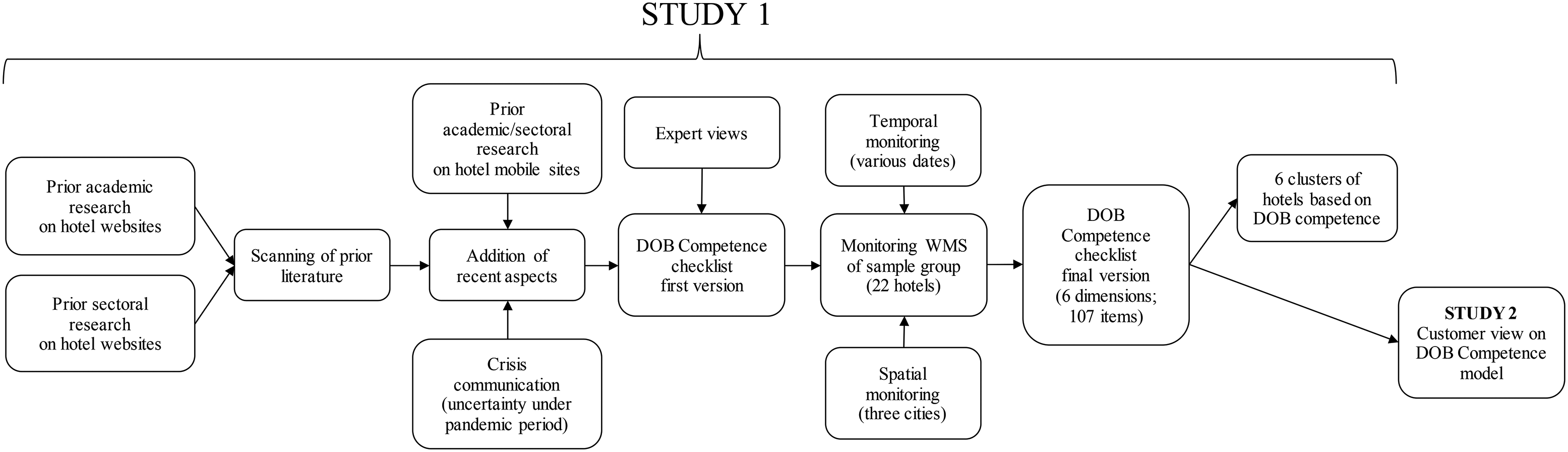
Research framework.
Study 1: Development of WMS-based DOB competence model
Study 1 refers to the principal part of the research to develop WMS-based DOB competence model. This process included three phases to create a comprehensive assessment framework.
Study 1 methodology
With reference to a variety of attributes including content, functionality, design, studies in the literature propose various terms of website evaluation such as website usability (Law, 2019; Sriphaew and Katkaeo, 2017), web effectiveness (Lee and Morrison, 2010; Maier, 2012), web performance (Lee and Morrison, 2010; Morrison et al., 1999), and website quality (Hashim et al., 2007; Wang and Law, 2020). The current study offers the term ‘competence’ as per the term's biological context regarding the ability or capability to differentiate or transform, as indicated in the Merriam Webster online dictionary (Merriam Webster, 2022) as this study assessed the DOB competence of hotel businesses via their WMS. Maier (2012) also underlined hotel competence in relation to online presence and website effectiveness.
Although earlier investigations were carried out in a lab setting (Law et al., 2010), this study, with its aim to propose a model to be tested in future research, was designed as a multiple case study which is considered effective for theory building with enhanced external validity including variety of cases in research (Eisenhardt, 1989). Purposeful (theoretical) sampling is a method used in multiple case design to compare different cases by key attributes (Patton, 2002). A total of 22 hotels in two distinct cities, Istanbul and Izmir, major tourism destinations in Türkiye, were determined to examine their WMS (see Phase 2 section for details of the sample group). Data collection and analysis processes were carried out in three phases explained in the following sections.
Phase 1: Development of the model items
This study used the structured conceptualisation method (Hashim et al., 2007) to identify a wide range of hotel WMS features. Such methods require a well-prepared checklist that includes items from prior models (Law et al., 2010). Relevant literature and sectoral reports were scanned for features that could be included in the indexing model:
Academic resources: Baki (2020); Bufquin et al. (2020); Fraiss et al. (2017); Hashim et al. (2007); Kirillova and Chan (2018); Law (2019); Le et al. (2020); Lei and Law (2019); Maier (2012); Sriphaew and Katkaeo (2017); Stringam and Gerdes (2019); Wang and Law (2020); Wong et al. (2020). Sectoral reports and resources: Colaco (2019); Duffy (2019); Green and Lomanno (2016); Hotel Tech Report (2021); Hotelogix (2019); Siteminder (2021); Skift and Sojern (2021); The Hotels Network (2020a).
The final checklist of the indexing model included numerous items classified in six dimensions of WMS-based DOB competence: Informative content (ICC), experiential content (ECC), user interface (UIC), promotional (PC), mobile (MC), and crisis communication in the example of COVID-19 (CCC). Verification by expert evaluations is a frequent method used in website analysis (Baki, 2020; Hashim et al., 2007; Le et al., 2020; Lei and Law, 2019). Nine specialists in total including four revenue/digital marketing managers/executives from five-star hotels, two professionals from hotel software companies, and three academics from revenue field were invited to validate the index items. They were also asked to note their proposed weight for each dimension and the importance of each item on a scale of one to five (1 = not at all important; 5 = very important).
Phase 2: Final version of the model
The current study, like previous studies (Baki, 2020; Lee and Morrison, 2010; Morrison et al., 1999), included a certain number of hotel businesses to assess the determined competence items in the proposed model. Five-star hotels were chosen because they profit from online marketing and offer booking services on their website (Amin et al., 2021). As a sample group, 22 five-star hotels (11 in each city) were determined including:
international hotels with common brands (six in each city) national hotels with different brands (two in each city) independent five-star hotels (two in each city) luxury five-star hotels (one in each city)
As the study field included two major tourism destinations of the country, a bundle of five-star hotels with similar attributes in both destinations were selected as samples to assess DOB competence to compare hotels of similar quality levels. Since the number and quality of five-star hotels differ in both cities, the most relevant hotels in both destinations were selected to be included in the sample group. Two authors from the research fields and one from another city in the country scored hotel WMS features in the checklist (Phase 1) by noting 0 (unavailable-No) and 1 (available-Yes) to indicate whether the subject feature is present or not, as used in previous studies (Baloglu and Pekcan, 2006; Koronios et al., 2021; Maier, 2012). The reason for monitoring the hotel WMS from different cities was to see if the geotargeting is effective and WMS content differs by connecting from various locations.
This monitoring process by all the authors was carried out in a specific week in June 2022 to ensure consistency of data collection at a specific time without any changes in the WMS content. The authors checked the scores for each item and removed the infrequent ones (78 items) from the checklist. Items on the remaining checklist with varying scores between authors were evaluated again using the expert evaluations’ average importance scale (minimum 4 out of 1–5 scale). Finally, the latest version of the checklist was obtained including 107 items with average recommended weight for each dimension: informative content (21%) with 25 items, experiential content (17%) with nine items, user interface (18%) with 34 items, promotional competence (14%) with eight items, mobile competence (22%) with 28 items, and crisis communication (8%) with three items (see Table A1 in the Appendix for the complete list of items). Those items were used to compute the WMS-based DOB competence of hotel businesses by calculating the aggregated points which then were analysed in Python 3 software using the Colab notebook for collaborative work. Hierarchical cluster analysis (HCA) and principal component analysis (PCA) were performed. Six hotel clusters were generated and named based on analyses of the distributed Yes and No values of each hotel in six WMS-based DOB competence dimensions.
Phase 3: Assessment of spatiotemporal aspects
The proposed WMS-based DOB competence model also included items to test the dynamic nature, geo-targeting orientation, and COVID-19-related content. Therefore, additional monitoring of hotels’ WMS was conducted at various times by two authors from the study fields. Those assessments included screenshots taken from WMS of 22 hotels in different periods (4 weeks in May and June 2021, 1 week in December 2021–New Year period, and 1 week in June 2022). Those time periods were determined as per the first summer season in the recovery phase and the second summer season with higher recovery levels upon pandemic and a special holiday week for international travel (New Year). The reason for multiple monitoring in 2021 was because of the first summer season upon pandemic with increased focus on DOB by hotels to stimulate the demand by additional special offers and packages and recover their losses from previous year. Besides, summer and special holiday weeks are periods for hotels to publish special offers or packages which affect the dynamic content of their WMS. Two authors from Istanbul and Izmir conducted six observations. A total of 384 images were analysed to assess the orientation for dynamic nature (temporal dimension covering various months/weeks) and geo-targeting (spatial dimension from two cities). All images were compared to report findings.
Study 1 findings
This study offers a comprehensive framework of WMS-based DOB competence for five-star hotels. In Phase 1, the checklist was generated to score competence of hotels as explained in the Study 1 Phase 1 section above. This section summarises the findings of the following Phases (2 and 3) to evaluate the competence of sample hotels and position them according to their index scores.
Phase 2 findings
The primary findings of the hotel scores calculated regarding the weight of each dimension show that mobile competence is the leading dimension (84%), followed by user interface (80%) and informative content (78%). Other dimensions also record high values: crisis communication (68%), experiential content (56%), and promotional competence (45%). Hence, the study revealed that the sample hotels implemented mobile, user interface and informative content as the most important aspects. Figure 2 illustrates the situation of hotels in the model based on the distribution of Yes and No values for each hotel.
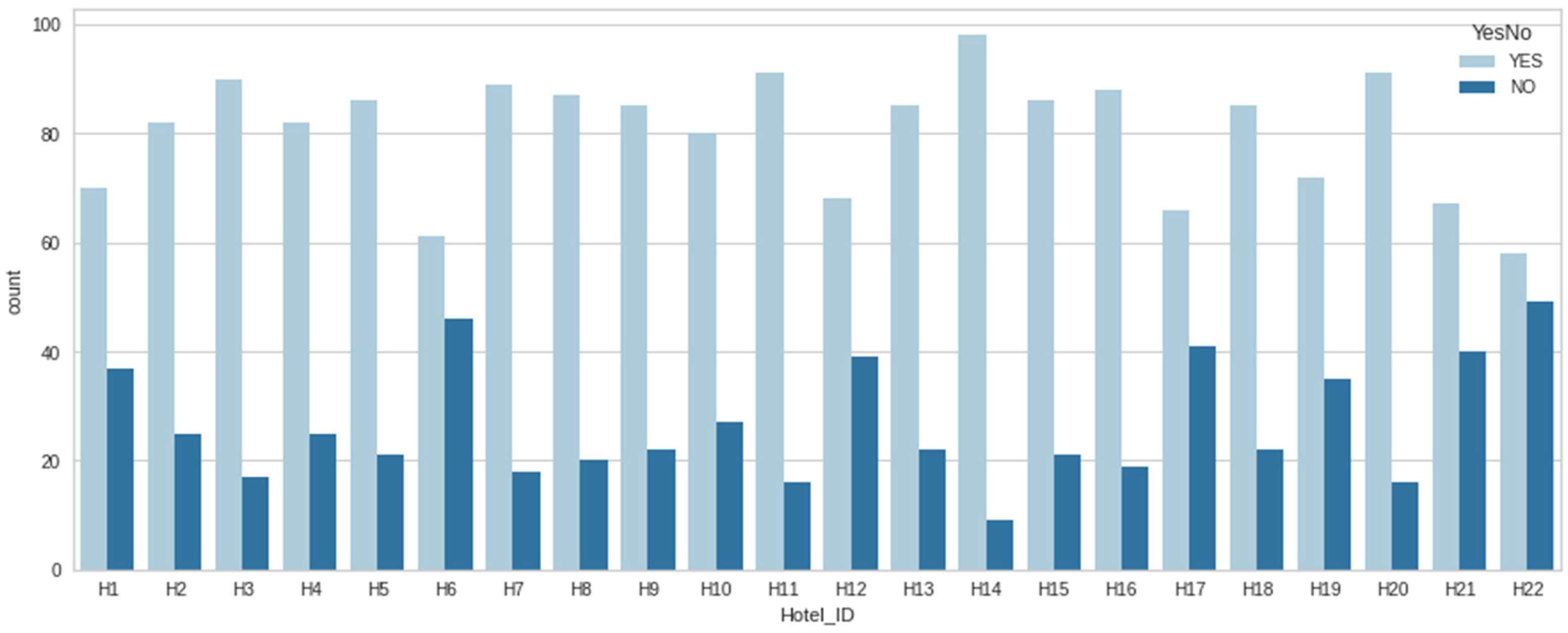
Frequency of WMS-based DOB competence items implemented by hotels.
The analysis in Figure 2 shows that three hotels (H11, H14, and H20) had the highest level of competence with the most items available on their WMS. H11 is an independent hotel in Istanbul, while the other two hotels are in Izmir (H14 is a member of an international hotel chain and H20 is an independent hotel). Aside from those businesses, 11 hotels (seven in Istanbul and four in Izmir) recorded higher values (above 80 items) representing H18 independent (H18), national hotel chains in Istanbul (H8 and H9), and international hotel chains. Hotels with lower values (below 70) include H1 (Istanbul) and H12 (Izmir), which are international hotels of the same chain, as well as two representatives of the same national hotel group (H6 and H17) and independent hotels in the country. The one with the lowest value is an independent hotel in Izmir (H22).
Following a situational analysis of sample hotels’ competence, a dendrogram was created, and Ward's linkage method was applied to create clusters. Figure 3 displays the dendrogram.
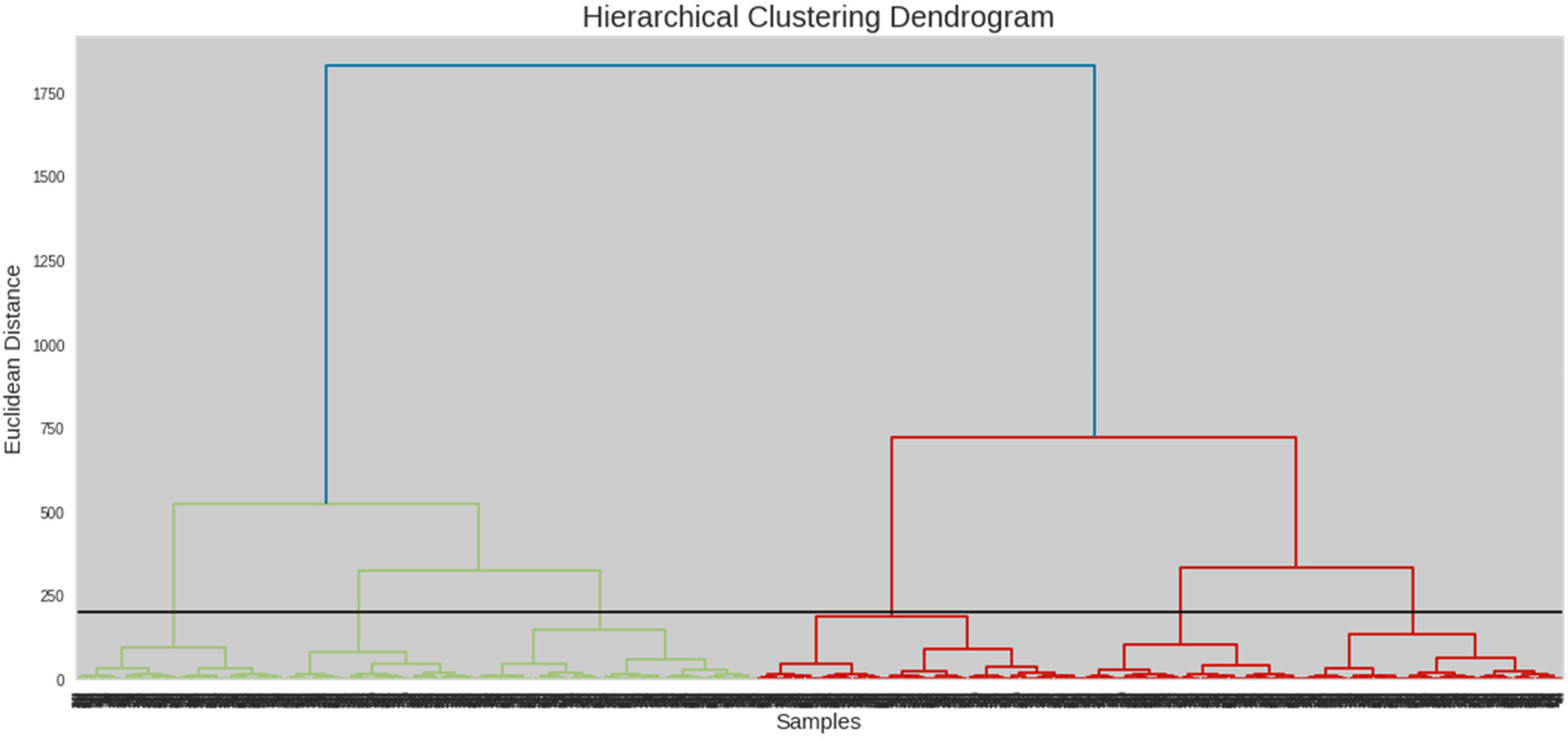
Dendrogram of WMS-based DOB competence clusters.
The calculations generated a model of six clusters with a silhouette score of 0.51 (Figure 3), confirming an acceptable model. A 3D PCA graph was produced to visualise the distribution of the index items within those six clusters (Figure 4).
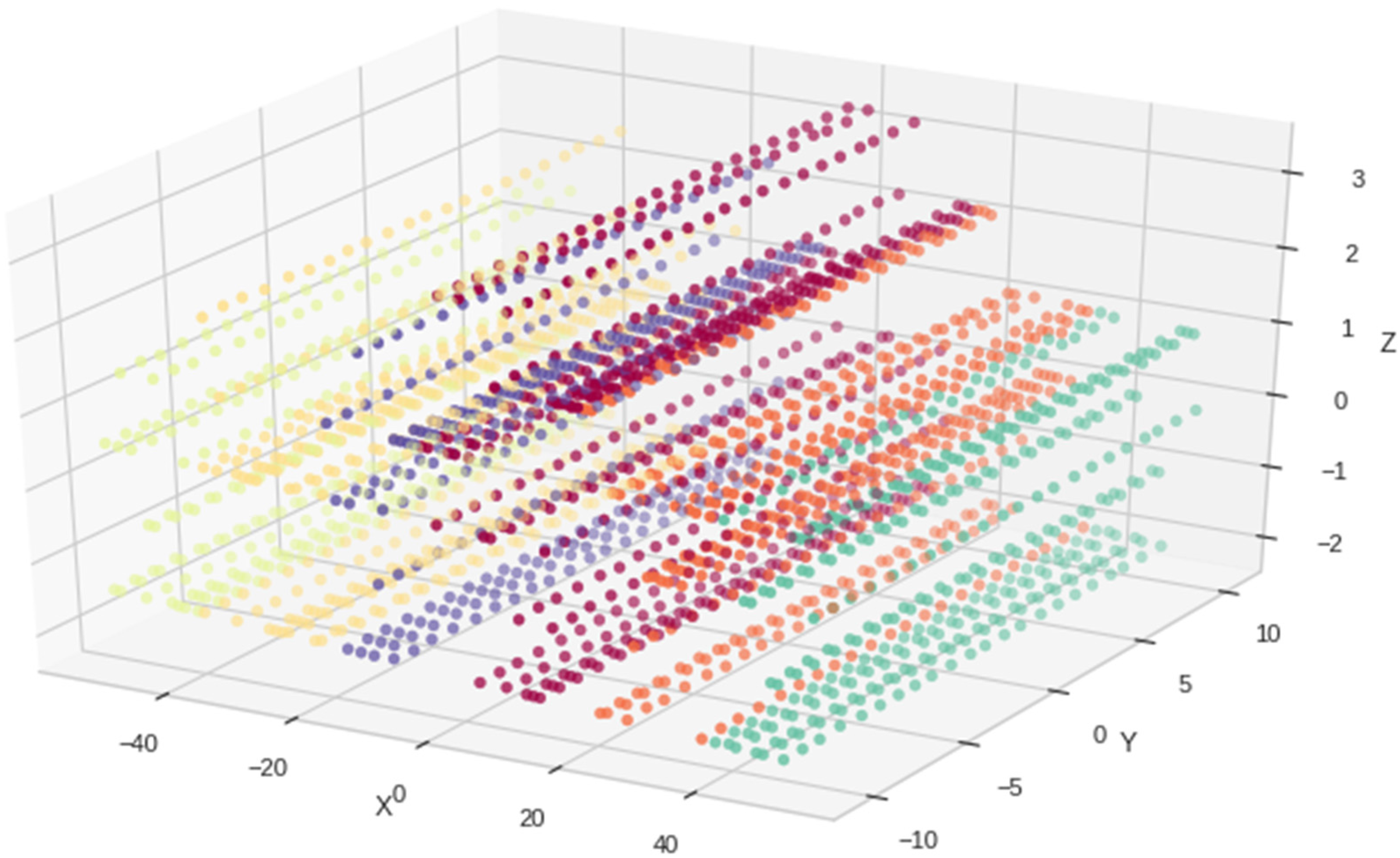
WMS-based DOB competence clusters with the distribution of index items.
Figure 4 was created using 3D PCA rather than K-means for more detailed visualisation of the clusters (Ding and He, 2004). HCA produced similar results as the K-means; therefore, HCA was used for analysis and PCA was used for visualisation, as applied by Ding and He (2004). The reference values for clusters are given in Table 1.
Cluster values.
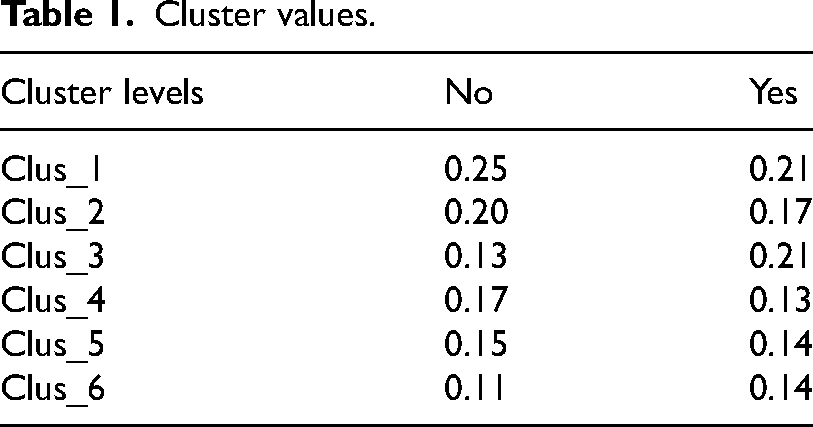
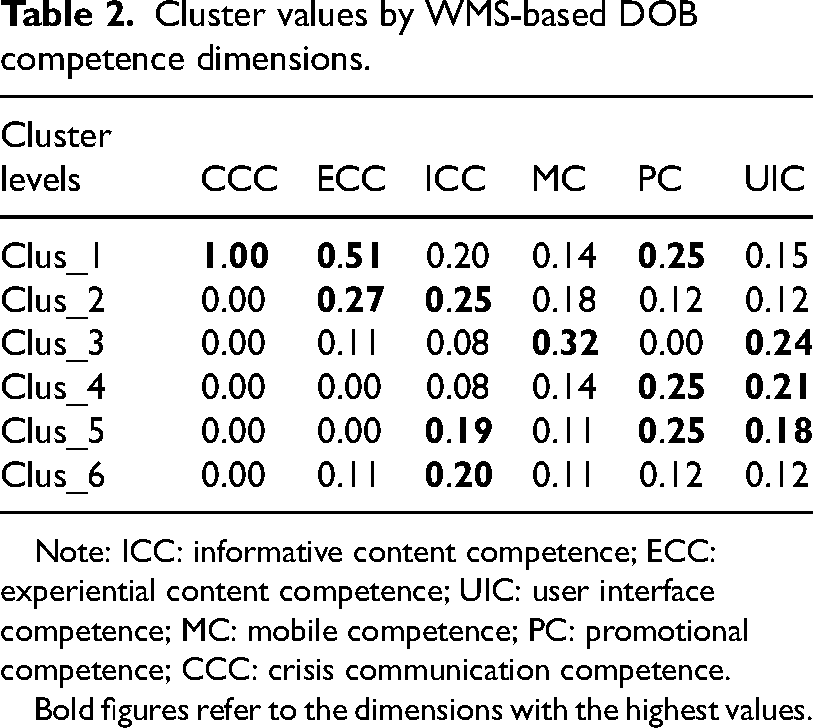
The values presented in Table 1 effectively identified the hotels for each cluster which incorporates hotels for each dimension to demonstrate competence of the sample group based on the distribution of their Yes and No values (Table 2).
Cluster values by WMS-based DOB competence dimensions.
Note: ICC: informative content competence; ECC: experiential content competence; UIC: user interface competence; MC: mobile competence; PC: promotional competence; CCC: crisis communication competence.
Bold figures refer to the dimensions with the highest values.
Table 2 demonstrates remarkable distinctions of the clusters with various levels of competence values. Cluster 1, optimal performers, represents hotels with higher values in crisis communication, experiential content, promotional competence followed by informative content. However, those hotels also exhibit other essential aspects of competence. This is the only cluster to include some specific content to acknowledge their customers about the current crisis. Cluster 2, effective performers, includes hotels with a balanced distribution of values in experiential content and informative content dimensions followed by slightly lower mobile competence. Therefore, those hotels exhibit the most effective and essential aspects of the model.
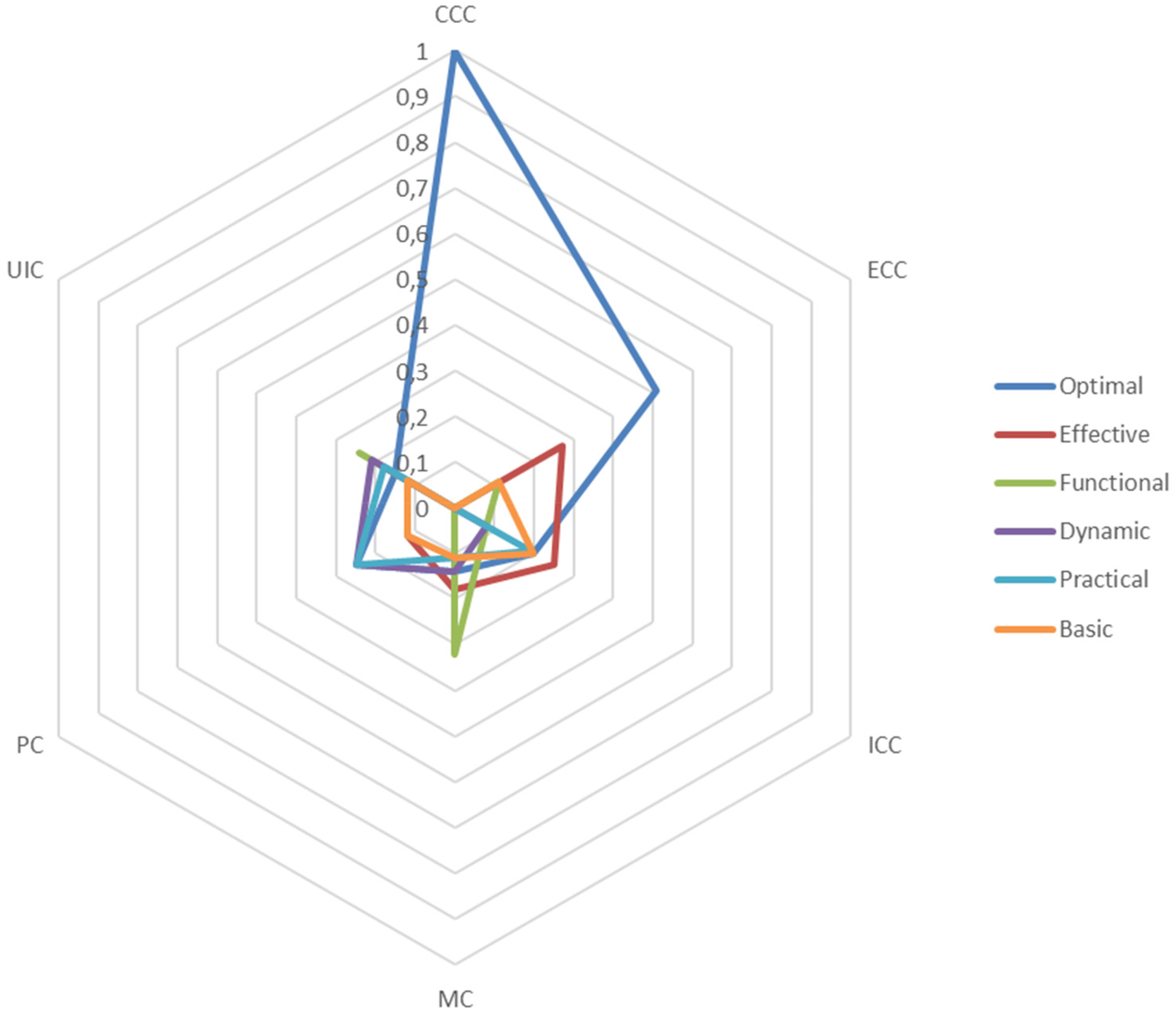
Hotels in Cluster 3, functional performers, have higher competence in mobile competence and user interface. Although those hotels seem to apply the best tools on their WMS, they may not reap the benefits of DOB with higher engagement and acknowledgement of their target market. Cluster 4, dynamic performers, performs better in promotional competence and user interface, followed by slightly lower mobile competence. Those hotels seem to update their packages and offers to attract their target market with an enhanced level of functionality and accessibility. Cluster 5, practical performers, records a remarkable level of promotional competence with a slightly lower but balanced distribution of values in the informative content and user interface dimensions. This cluster is like Cluster 4; however, its informative content is more effective. Nevertheless, hotels in Cluster 5 seem to offer the adequate levels through promotional competence and informative content followed by user interface so that visitors easily find what they wish from a hotel in a functional setting. Finally, Cluster 6, basic performers, includes hotels with a relatively higher level of only informative content. Apparently, those hotels use their WMS only as a one-way information source for their target markets and do not benefit from the extensive opportunities of the DOB channel. Figure 5 demonstrates the position of each cluster based on their features in the WMS-based DOB competence model.
Hotels’ WMS-based DOB competence.
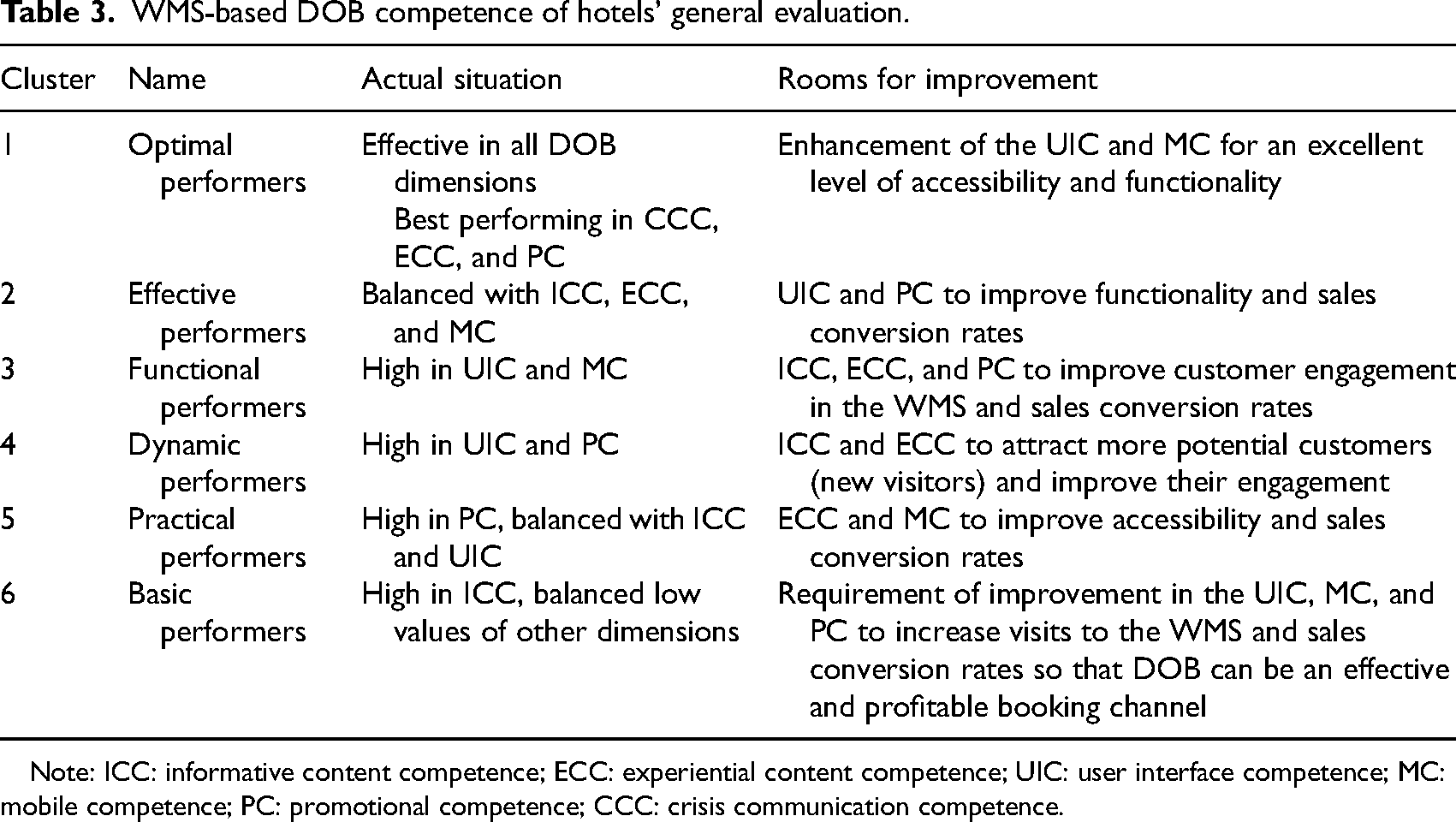
The radar map in Figure 5 identifies the strengths and weaknesses of each cluster to take the required actions for the WMS improvement. Based on those aspects, Table 3 summarises the actual situation with recommended actions.
WMS-based DOB competence of hotels’ general evaluation.
Note: ICC: informative content competence; ECC: experiential content competence; UIC: user interface competence; MC: mobile competence; PC: promotional competence; CCC: crisis communication competence.
The summary in Table 3 shows areas for improvement for all hotels in clusters. Findings also show the necessity for hotel businesses to include a minimum content related to crisis communication including regulations and emergency measures to earn the trust of their actual or potential customers, enhance their reputation, and convince them to book (Atasoy et al. 2022). In addition, basic performers appear to have a very low level of awareness of the benefits and profitability of DOB. Therefore, those hotels need to establish a strategic view of their sales and marketing plans to keep up with the emerging trends in the industry in normal and crisis periods.
Phase 3 findings
Other features of hotel WMS regarding COVID-19, spatial (two different cities) and temporal (various weekly periods in spring and New Year 2021 and summer 2022) dimensions were evaluated to check the dynamic nature and geo-targeting orientation. In terms of COVID-19-related content, except for three hotels (one national hotel in Istanbul, one international hotel in Istanbul, and one independent five-star hotel in Izmir), all other hotels included relevant content in the evaluated periods. The content mainly focused on the safety and hygiene measures taken, which were highlighted by pop-ups, video film, logos, and icons and smart notes as well as info links at the top of their opening page. Only two international hotels in Istanbul shared the limitation of some services and facilities; one national and one international hotel in Istanbul announced COVID-19 special products (digital meetings and hybrid rooms) on their websites. Easy or flexible cancellation policies were another pandemic-related content of great concern due to the uncertainties and six hotels (five international hotels and one national) made the process clear on their websites. However, June 2022, the authors noted that most hotels had stopped emphasising pandemic-related content, which can be attributed to the pandemic's slowness.
Regarding the spatial dimension, all the hotels’ WMS were monitored from both Istanbul and Izmir. This analysis did not reveal many differences in the WMS of the hotels with access from two different cities. However, the authors recognised that some of the hotels’ WMS language was surprisingly English even though Turkish is the official and spoken language (three hotels including two international hotels). Besides, some content of those hotel websites such as guest reviews was in Turkish. Thus, there were consistency problems with language in the WMS. One international hotel in two cities also failed to provide any information under the heading of the best deals offered in the WMS. The authors also identified several differences in access from Istanbul and Izmir such as the sharing of the promotional discounts of some attractions offered by the property, pop-up benefits, and loyalty benefits.
The results of the analysis in the temporal dimension indicate that the properties updated some of the WMS regularly. This content mainly focuses on special offers and discounts, guest reviews (automatically updated), and visual content such as images and photos and videos. The properties also use pop-up welcome page messages to promote upcoming special day promotions such as the New Year programme (two international hotels in Istanbul, one independent five-star hotel in Izmir, and one luxury five-star hotel in Izmir). While some hotels make small changes such as the change of banner image and layers, five hotels (four international hotels in both cities and one independent five-star hotel in Izmir) completely renewed their websites with images and content. Smart notes and pop-up messages were also used for the latest information such as the closing of the hotel and the start of the summer as well (one international hotel in Izmir and one luxury five-star hotel in Izmir).
Findings reveal that hotels utilise user interface-related functions quite successfully, especially local hotel groups or independent hotels. International hotels, however, show an inconsistency with their content mainly based on their affiliations with the hotel group (management company or franchise). Notwithstanding, this finding cannot be generalised as another group of franchise hotels appears to have established a well-managed DOB system with updated content and enhanced booking facilities. Enhanced booking functions such as rate filters, loyalty point conversion, currency calculator, online check-in integration, calendar with rates, and booking engine loading messages are not used by the hotels. Loyalty programmes have become a major source and motivator for DOB in international groups and need to be considered more by local hotel groups and independent hotels.
This detailed monitoring of the hotel WMS disclosed two critical aspects requiring further attention from hotel managers. First, international hotel groups serve two different WMS for one single hotel; one is the hotel's own WMS, and the other is the corporate WMS. The coexistence of two different WMS for the same property may result in inefficient use of the digital marketing budget, in addition to potential customer confusion. Furthermore, some international hotels provide WMS in Turkish, which is routed to the corporate WMS in English at the time of booking. Inconsistencies or disconnectedness caused by the complicated management structure of international groups may be the source of potential direct business loss. In any case, such situations do not reflect the professional corporate image of the hotel company.
The second critical aspect is related to the lack of sustainability-related content in the WMS. Sustainability is currently a major concern for all businesses; however, none of the hotels, both international and national, as well as group and independent, reflected their understanding, commitment, or activities in this regard. International hotel groups include such content generally in their corporate WMS content; however, there is a need to integrate a link to those content to raise awareness of tourists. Hotels are principal components of the tourism industry with a substantial impact on the environment, community, and local destination. Therefore, sustainability-related content is an indispensable element of WMS for hotels at all scales.
Study 2: User perceptions on the WMS-based DOB competence model
Once the WMS-based DOB competence model was established with the final list of index items leading to hotels’ DOB competence scores and clusters, a survey following the complete Study 1 process was conducted to collect the view of potential customers on the proposed model. Two reasons were effective for that additional study. First, a reliability assessment on the framework was conducted regarding the views of potential customers as end-users of hotel WMS. Second, the first version of the checklist created upon the scan of prior research and the collection of expert view included approximately 200 items which included mostly technical WMS terms. Therefore, the final version of the WMS-based DOB competence model checklist was used to eliminate the effects of probable difficulty to read and understand survey questions for potential customers.
Study 2 methodology
The survey was prepared as an online form and included all the 107 items of the model. The survey was sent to potential customers who had the experience of booking hotels via WMS. The participants were asked to rate the importance of each item on a scale of 1–5 points (1 for not that important; 5 for very important). Although a total of 177 forms returned, 113 completely filled-out surveys were taken into analysis. Despite the group of knowledgeable participants on WMS, this return rate also reflects the possible complexity of the survey with highly technical terms of WMS and confirms the correct action of sending out the final version of the checklist in the survey to the end-users.
Study 2 findings
A total of 113 surveys were taken into analysis in the Microsoft Excel to understand how potential customers evaluate the importance of DOB competence index dimensions and items. Figure 6 demonstrates the customer view of all the dimensions in a radar graph.
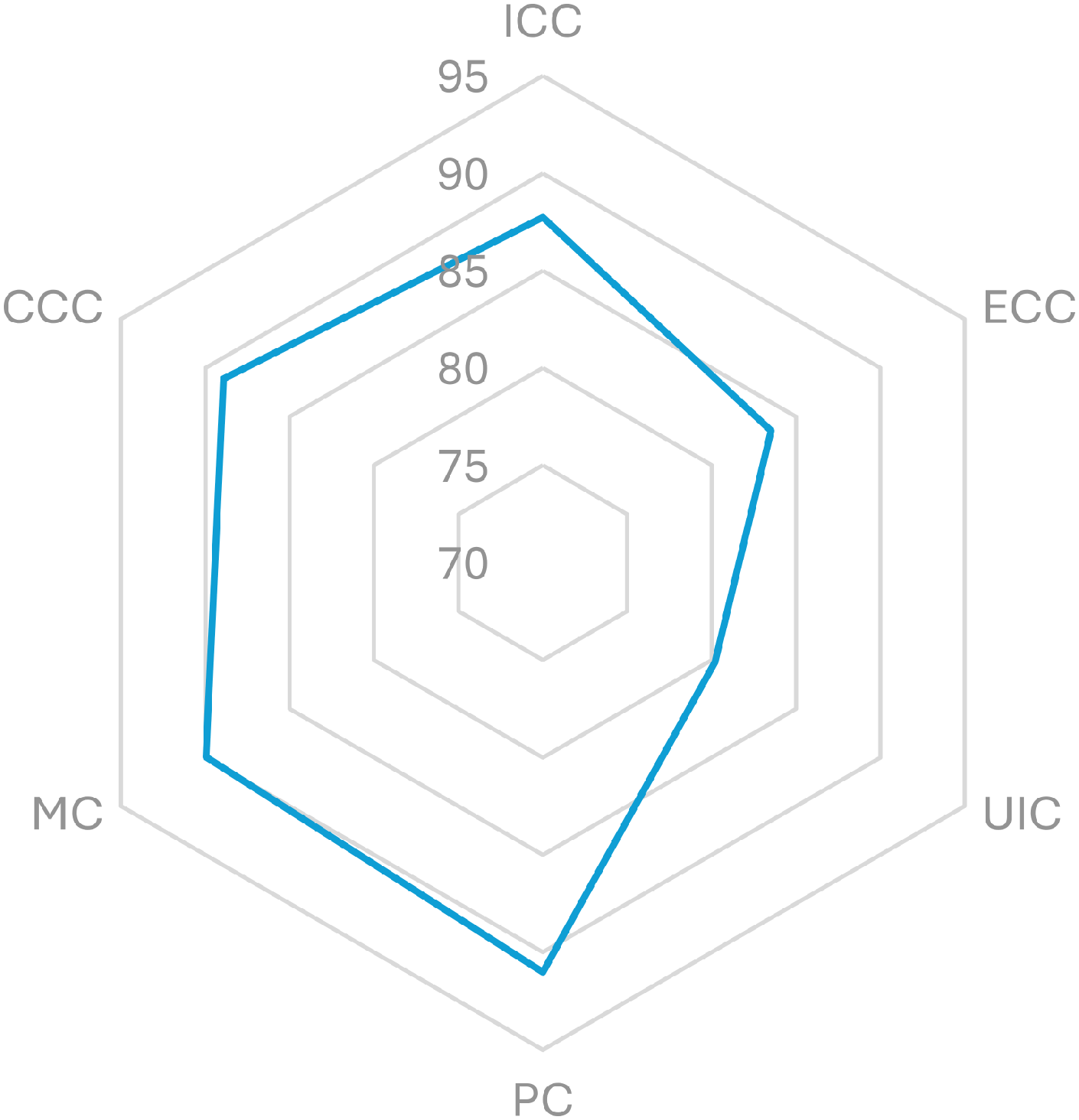
Customer view on the WMS-based DOB competence.
As seen in Figure 6, all the respondents attach high importance to all the dimensions of the model. According to the average rates of dimensions on a scale of 1–5 points, promotional competence (4.55) recorded the most critical dimension followed by mobile competence (4.50) and CCC (4.45) dimensions. Other dimensions are also considered as critical as seen in high average rates: informative content 4.39, experiential content 4.18, and user interface 4.01. Although there is not a huge difference between the dimensions, Study 2 revealed the importance of promotional content and mobile responsiveness as the major factors for the success of hotel WMS from customer perspective.
Discussion
Given the critical role of high-quality websites in effective digital marketing strategy especially for three or more star hotels from customer perspective (Law and Hsu, 2006), the current study yielded insightful findings that can greatly assist hotel managers in leveraging their DOB competence (Law et al., 2010; Leung et al., 2016; Li et al., 2015). The findings of the study reveal various competence levels of five-star hotels in two tourism destinations of Türkiye. Those levels vary according to the scores of hotels in the six DOB competence dimensions, namely informative content, experiential content, user interface, mobile, promotional, and crisis communication. The multi-dimensionality of the model confirms the proposition of prior studies (Koronios et al., 2021; Lee and Morrison, 2010; Lei and Law, 2019; Sriphaew and Katkaeo, 2017; Wang and Law, 2020) and highlights the complicated structure of the hotel WMS. This complexity requires continuous and dynamic research and methods to keep up with the recent trends and emerging needs of customers and businesses. Therefore, the DOB competence model offers an assessment and classification framework dedicated to the hotel industry as a theoretical requirement (Law et al., 2010).
The proposed model in the current study enhances earlier WMS research based on website quality (Baloglu and Pekcan, 2006; Hashim et al., 2007; Morrison et al., 1999: Yeung and Law, 2004) with plenty of up-to-date aspects such as mobile competence, experiential content, crisis communication in addition to various user interface and promotional items. The current model also incorporates mobile competence which was not included in the prior website-based research extensively discussed in the literature part but examined as a separate online platform (Lei and Law, 2019; Wong et al., 2020). Literature offers extensive research one website-related perceptions of users (such as Amin et al., 2021; Baek and Ok, 2017; Essawy, 2006; Le et al., 2020; Wang et al., 2015; Wang and Law, 2020; Wen, 2009; Xue et al., 2020). However, the current research has been formulated using objective data collection process focusing on the current states of the hotel WMS. As a result of the assessment based on the scores of the sample hotels, clusters which are different from segmentation in the prior research (Díaz and Koutra, 2013; Koronios et al., 2021; Lee and Morrison, 2010) have been obtained to point out strengths and weaknesses of hotel businesses to improve their WMS-based DOB competence. Notwithstanding, both earlier and latter studies accessed and examined during the literature review of the current research include only one-time data collection process from websites or users. The current research reflects the findings from data collection at various times and spaces to assess probable spatio-temporal changes in the hotel WMS. Therefore, the proposed model in the current study appears to be a promising comprehensive assessment tool for WMS-based DOB competence of hotel businesses of various scales.
From another point of view, regardless of distribution structure or strategy, hotels need to improve their DOB competence through tool optimisation and differentiation of content and information from other channels (Lee et al., 2013). In this regard, the proposed model contributes to the research field by providing a comprehensive checklist that includes contemporary fundamental elements (e.g. mobile, compelling visual elements, value propositions, and relational function) to classify hotels based on their DOB competence, allowing hotel businesses to evaluate their strengths and weaknesses and improve their performance and returns (Bufquin et al., 2020; Green and Lomanno, 2016; Kirillova and Chan, 2018; Law, 2019; Le et al., 2020).
Furthermore, in order to reap the benefits of DOB, hotel managers must be able to manage this complex structure dynamically. Therefore, this study proposes the term ‘competence’ to address the hotel managers’ capability while assessing the hotel WMS quality. This competence is crucial given the continuous struggle between OTAs and hotel WMS for customer visits (Chang et al., 2019). Hotel managers should first identify their position in one of the clusters defined in this study, namely optimal, effective, functional, dynamic, practical, and basic performers. Next, managers should identify the areas for improvement of their position with reference to their competitors’ places in the clusters and take effective and efficient action to increase their competitive advantage leading to higher profit contribution (Green and Lomanno, 2018).
The classification of different classes depending on DOB competence is consistent with earlier research results relating distinct WMS quality levels (Lei and Law, 2019). Those findings related to five-star hotels demonstrate various competence levels of hotel businesses although they represent similar segments as reported in some other studies (Díaz and Koutra, 2013; Koronios et al., 2021; Lee and Morrison, 2010). Moreover, study findings underline the importance of emerging WMS trends and current happenings to affect DOB competence. As shown in Table 3, mobile competence and user interface including the applicability of loyalty programmes (best rate guarantee, special offers) and promotional content are major contributors to the DOB competence of hotel WMS (Garrido-Moreno et al., 2021; Green and Lomanno, 2016; Wong et al., 2020). The availability of COVID-19 content is an effective distinction for optimal performers as a major digital content dedicated to the current happenings globally with a remarkable impact on the hotel industry (Skift and Sojern, 2021).
Finally, the evaluation of potential customers on a tested model discloses the most critical dimensions of the DOB competence from customer view. The relatively higher importance of promotional competence explains the orientation of customers to look for exclusive offers on hotel WMS (Garrido-Moreno et al., 2021). In addition, given the exponential increase in the use of smart phones to drive the importance of mobile bookings, this study supports the prior findings on mobile bookings and apps (Fraiss et al., 2017; Lei and Law, 2019; Stringam and Gerdes, 2019; Wong et al., 2020) as mobile competence, the second highest dimension, appears to be a critical aspect of WMS-based DOB competence.
Conclusion
The assessment of hotels’ DOB competence is a promising and dynamic field of research. The study's aim was to propose a comprehensive model to evaluate the WMS-based DOB competence of hotel businesses in the example of five-star hotels. The research was designed in a way to incorporate recent hotel industry and online environment dynamics such as the pandemic, mobile technologies, and the development of new website analysis methods. As a result of the study, the model shown in Figure 7 was obtained.
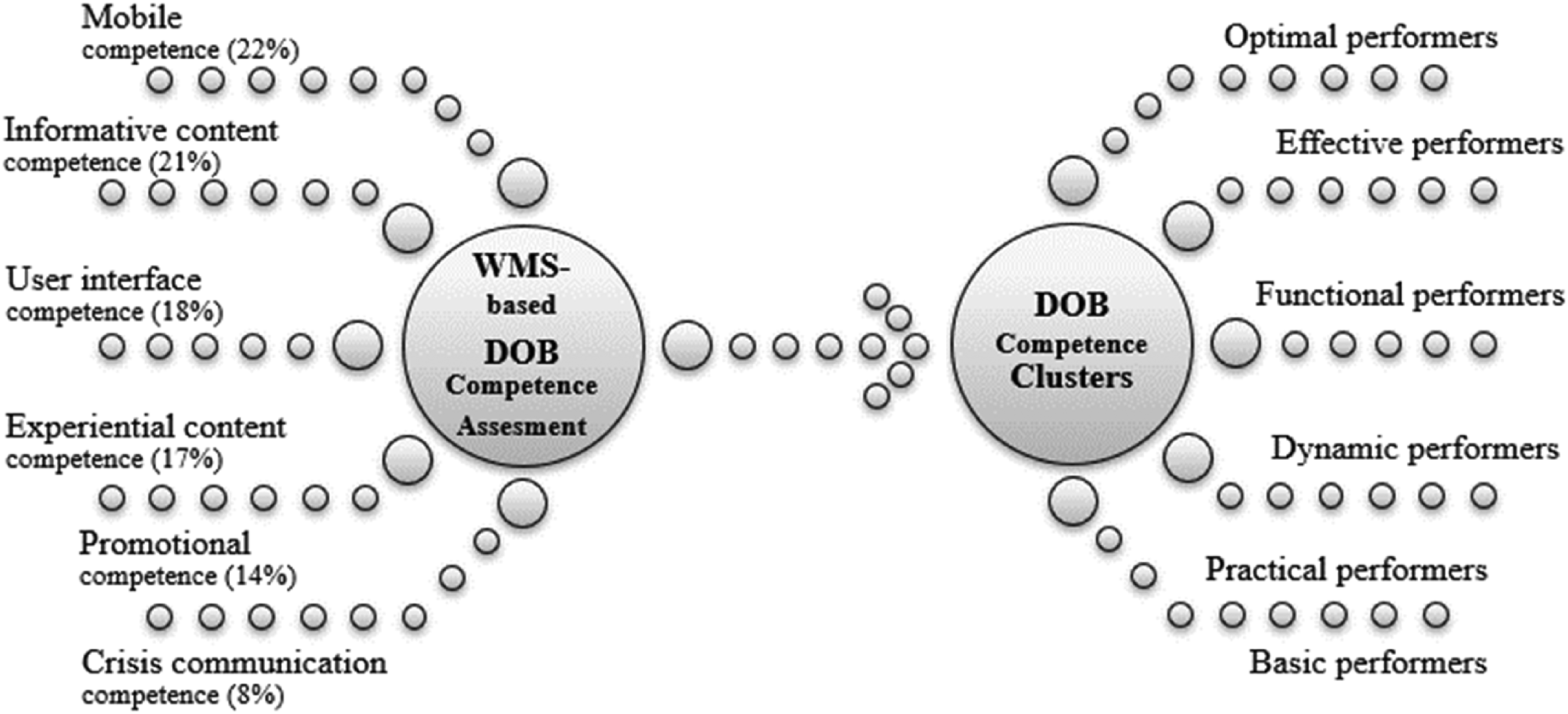
WMS-based DOB competence assessment model.
The developed assessment model is based on a comprehensive review of the prior academic research and sectoral reports and therefore, includes a wide range of items which were not available in the previous models. As seen in the figure, the novel model expands on previous research by including mobile, experiential content, and crisis communication as additional dimensions. The assessment on the WMS of five-star hotels positions each hotel business in one of the clusters depending on their performances for each dimension so that not only actual situation can be evaluated but also actions for improvement can also be taken by the hotel management (Table 3). Other findings including those at Phase 3 underline the necessity to create an assessment model to help hotel businesses excel in their WMS content and functionality leading to higher DOB competence and competitive advantage resulting in higher financial returns.
Theoretical impacts
Current study contributes to the existing literature with several aspects. First, it proposes a model which is free from participants to score and where data collection takes place independently based on the current situation of the hotels’ WMS. Based on those data, an indexing method is presented to assess, score, and classify the hotels according to their WMS-based DOB competence through objective monitoring of their sites. Second, hotels’ mobile sites were also incorporated into the study because mobile responsiveness is a critical feature of DOB. Third, the study combines independent assessment of hotel WMS with customer view on the proposed model to enhance the reliability and usability of the framework. Fourth, hotels’ WMS were monitored from two different cities to detect any possible differences in content and assess whether any geo-targeting action was undertaken.
Fifth, monitoring of the hotels’ WMS was carried out during different time periods to check the dynamism and update of the content in relation to reopening during the COVID-19 recovery period. Therefore, an additional dimension of crisis communication was included in the index to assess the competence, timeliness, and responsiveness of hotel businesses during the example of COVID-19 pandemic. Sixth, in addition to crisis communication and mobile competence, the framework also distinguishes informative, experiential, promotional, and user interface dimensions to assess WMS-based DOB competence. As a result, the study identifies six clusters of hotels (optimal, effective, functional, dynamic, practical, and basic performers) with varying competence levels of six dimensions so that further comparable research projects can be conducted to lead the industry for a more comprehensive look at their performance.
On the other hand, internet-based data may reflect online booking behaviour more accurately than self-reported data in surveys (Morosan and Bowen, 2018). Online booking including WMS of hotels is a source of big data for analytical purposes (Lyu et al., 2022) and hotels’ WMS can be optimised through customer data mining (Lee et al., 2013). Therefore, the proposed framework including six dimensions (107 items) is adjustable to systems based on artificial intelligence (AI), data analytics, and machine learning technologies to create novel and effective benchmarking tools for the industry to assess and improve competitive advantage as a new horizon to enhance AI-based understanding in the field (Saydam et al., 2022). Tracking of online behavioural (length of stay, purpose of travel, distance to origin, purchase intention, bounce rate) and subjective (e.g. attitudes, perceived playfulness, locus of control) aspects, usage patterns and browsing activities can be integrated to support management, marketing, and distribution strategies and decisions (Boto-García et al., 2021; Chan et al., 2021). In this regard, the proposed model based on practical data extends the AI-related research beyond conceptual and robotics-based studies in the tourism and hospitality domain (Cheng et al., 2023; Saydam et al., 2022).
Other additional dimensions applied in this research are spatial and temporal, which allow the DOB competence to be monitored regarding the availability of dynamic content of hotels’ WMS based on access from different locations at different periods. Therefore, by emphasising the promising potential of temporal- and spatial-driven big data for value co-creation (Stylos et al., 2021), this study introduces a new field where online big data tracking and collection are applicable for analytical research on decision-making systems as part of hotel business intelligence (Mariani et al., 2018). These propositions highlight the fact that DOB competence is a highly interdisciplinary field capable of providing fruitful perspectives, solutions, and methodologies.
Practical impacts
The current study developed a multi-dimensional assessment framework to measure WMS-based DOB competence of hotels. This framework is expected to be effective to create dedicated software solutions based on AI and machine learning technologies. Therefore, a new solution would be offered to hotel managers enabling them to assess their DOB competence, understand their position in relation to their competitors, and improve their competitiveness by enhancing their WMS. As a matter of fact, the framework proposed in this study is currently used for an academic project to develop a DOB competence solution for hotels. That kind of solutions can be extended to include other web and booking metrics such as traffic, conversion rates, pick-up reservations, reservations on the book, revenues generated for a holistic assessment of WMS-based DOB competence. Such solutions promise several benefits for hotel managers such as compare their competitive competence and take necessary actions to improve their WMS-based DOB competence by identifying their strengths and weaknesses. As part of their digital transformation efforts in a hyper-competitive environment, hotels will benefit from using resources efficiently to generate higher returns and earnings from the most profitable distribution channel (O’Connor, 2020) by enhancing the WMS effectiveness. With this orientation, study findings and the proposed model meet the needs of the industry, as stated in the call for action HOTREC to help digitalisation of the hotel businesses. Additionally, the development of this framework as an analytical tool supported by big data sources will enable hotel managers to benefit from the potential of their hotels’ WMS to respond timely with dynamic forecasting and pricing decisions and increase their competitiveness (Buhalis and Leong, 2018).
Limitations and recommendations for future research
The current study is subject to several limitations to inspire further research in the field to support the sustainable development of the hotel industry. The first direct limitation of the study is that some items with high importance as stated by experts were eliminated as they were not available in the WMS of the sample group. Future studies may focus on the application of those items and test their effects (i.e. with A/B tests to improve DOB competence). Future research focusing on larger sample sizes including hotels from various scales, classes, and destinations (resort, city) may also yield useful findings to assist the industry on a broader scale. Geo-targeting and dynamic content may also be examined in such studies with more concrete results. Future studies may also be designed in a more integrated framework to assess the DOB competence with its possible outcomes such as conversion rates, DOB revenues and profit, room nights, bounce rates, visit length, number of visitors/traffic, and click-through-rates. Furthermore, design features with respect to communication design principles including UX tests and metrics such as visitor location, visitor path, top pages, and aesthetic aspects. Moreover, DOB competence of the entire WMS experience of customers may also be evaluated from the access to WMS through social media, search engines, or other media to the completion of the booking process including security aspects and payment procedures. This analysis process may also include think-aloud protocols with customers to understand the customer's cognitive, emotional, psychological, and behavioural responses.
Footnotes
Acknowledgements
We are grateful to Ege University Planning and Monitoring Coordination of Organizational Development and Directorate of Library and Documentation for their support in editing and proofreading service of this study. We are thankful to Leyla Atabay (Ph.D. candidate) for her support in the use of Python 3 software. The preliminary version of the submitted article was presented in EuroCHRIE 2022 Conference and published in the proceeding book.
Declaration of conflicting interests
The authors declared no potential conflicts of interest with respect to the research, authorship, and/or publication of this article.
Funding
The authors received no financial support for the research, authorship, and/or publication of this article.
Notes on contributors
All the authors contributed equally to the overall process of the research and writing the paper.

Appendix
WMS-based DOB competence index items. Note: Rec. weight = recommended weight; Visuals = photos, images and video films.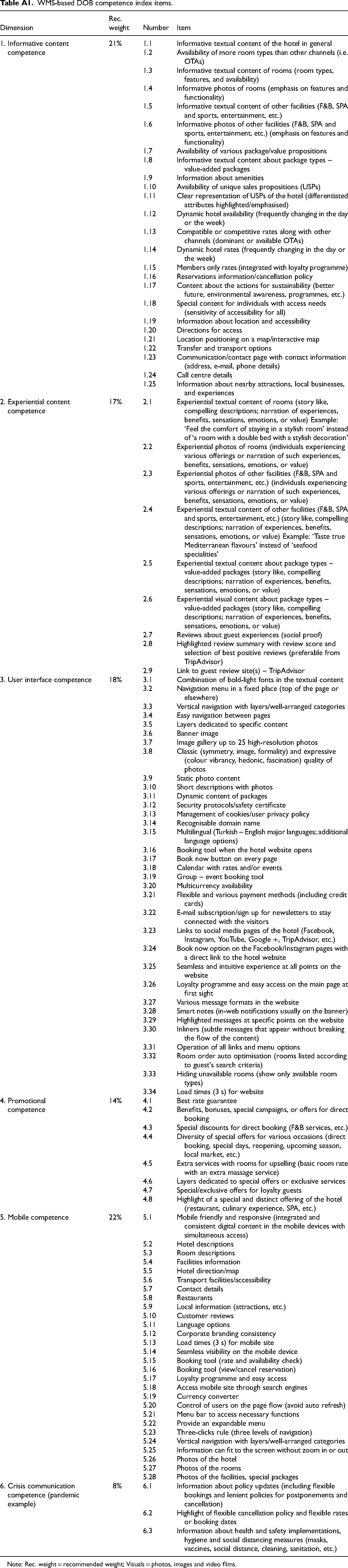
Dimension
Rec. weight
Number
Item
1. Informative content competence
21%
1.1
Informative textual content of the hotel in general
1.2
Availability of more room types than other channels (i.e. OTAs)
1.3
Informative textual content of rooms (room types, features, and availability)
1.4
Informative photos of rooms (emphasis on features and functionality)
1.5
Informative textual content of other facilities (F&B, SPA and sports, entertainment, etc.)
1.6
Informative photos of other facilities (F&B, SPA and sports, entertainment, etc.) (emphasis on features and functionality)
1.7
Availability of various package/value propositions
1.8
Informative textual content about package types – value-added packages
1.9
Information about amenities
1.10
Availability of unique sales propositions (USPs)
1.11
Clear representation of USPs of the hotel (differentiated attributes highlighted/emphasised)
1.12
Dynamic hotel availability (frequently changing in the day or the week)
1.13
Compatible or competitive rates along with other channels (dominant or available OTAs)
1.14
Dynamic hotel rates (frequently changing in the day or the week)
1.15
Members only rates (integrated with loyalty programme)
1.16
Reservations information/cancellation policy
1.17
Content about the actions for sustainability (better future, environmental awareness, programmes, etc.)
1.18
Special content for individuals with access needs (sensitivity of accessibility for all)
1.19
Information about location and accessibility
1.20
Directions for access
1.21
Location positioning on a map/interactive map
1.22
Transfer and transport options
1.23
Communication/contact page with contact information (address, e-mail, phone details)
1.24
Call centre details
1.25
Information about nearby attractions, local businesses, and experiences
2. Experiential content competence
17%
2.1
Experiential textual content of rooms (story like, compelling descriptions; narration of experiences, benefits, sensations, emotions, or value) Example: ‘Feel the comfort of staying in a stylish room’ instead of ‘a room with a double bed with a stylish decoration’
2.2
Experiential photos of rooms (individuals experiencing various offerings or narration of such experiences, benefits, sensations, emotions, or value)
2.3
Experiential photos of other facilities (F&B, SPA and sports, entertainment, etc.) (individuals experiencing various offerings or narration of such experiences, benefits, sensations, emotions, or value)
2.4
Experiential textual content of other facilities (F&B, SPA and sports, entertainment, etc.) (story like, compelling descriptions; narration of experiences, benefits, sensations, emotions, or value) Example: ‘Taste true Mediterranean flavours’ instead of ‘seafood specialities’
2.5
Experiential textual content about package types – value-added packages (story like, compelling descriptions; narration of experiences, benefits, sensations, emotions, or value)
2.6
Experiential visual content about package types – value-added packages (story like, compelling descriptions; narration of experiences, benefits, sensations, emotions, or value)
2.7
Reviews about guest experiences (social proof)
2.8
Highlighted review summary with review score and selection of best positive reviews (preferable from TripAdvisor)
2.9
Link to guest review site(s) – TripAdvisor
3. User interface competence
18%
3.1
Combination of bold-light fonts in the textual content
3.2
Navigation menu in a fixed place (top of the page or elsewhere)
3.3
Vertical navigation with layers/well-arranged categories
3.4
Easy navigation between pages
3.5
Layers dedicated to specific content
3.6
Banner image
3.7
Image gallery up to 25 high-resolution photos
3.8
Classic (symmetry, image, formality) and expressive (colour vibrancy, hedonic, fascination) quality of photos
3.9
Static photo content
3.10
Short descriptions with photos
3.11
Dynamic content of packages
3.12
Security protocols/safety certificate
3.13
Management of cookies/user privacy policy
3.14
Recognisable domain name
3.15
Multilingual (Turkish – English major languages; additional language options)
3.16
Booking tool when the hotel website opens
3.17
Book now button on every page
3.18
Calendar with rates and/or events
3.19
Group – event booking tool
3.20
Multicurrency availability
3.21
Flexible and various payment methods (including credit cards)
3.22
E-mail subscription/sign up for newsletters to stay connected with the visitors
3.23
Links to social media pages of the hotel (Facebook, Instagram, YouTube, Google +, TripAdvisor, etc.)
3.24
Book now option on the Facebook/Instagram pages with a direct link to the hotel website
3.25
Seamless and intuitive experience at all points on the website
3.26
Loyalty programme and easy access on the main page at first sight
3.27
Various message formats in the website
3.28
Smart notes (in-web notifications usually on the banner)
3.29
Highlighted messages at specific points on the website
3.30
Inliners (subtle messages that appear without breaking the flow of the content)
3.31
Operation of all links and menu options
3.32
Room order auto optimisation (rooms listed according to guest's search criteria)
3.33
Hiding unavailable rooms (show only available room types)
3.34
Load times (3 s) for website
4. Promotional
competence14%
4.1
Best rate guarantee
4.2
Benefits, bonuses, special campaigns, or offers for direct booking
4.3
Special discounts for direct booking (F&B services, etc.)
4.4
Diversity of special offers for various occasions (direct booking, special days, reopening, upcoming season, local market, etc.)
4.5
Extra services with rooms for upselling (basic room rate with an extra massage service)
4.6
Layers dedicated to special offers or exclusive services
4.7
Special/exclusive offers for loyalty guests
4.8
Highlight of a special and distinct offering of the hotel (restaurant, culinary experience, SPA, etc.)
5. Mobile competence
22%
5.1
Mobile friendly and responsive (integrated and consistent digital content in the mobile devices with simultaneous access)
5.2
Hotel descriptions
5.3
Room descriptions
5.4
Facilities information
5.5
Hotel direction/map
5.6
Transport facilities/accessibility
5.7
Contact details
5.8
Restaurants
5.9
Local information (attractions, etc.)
5.10
Customer reviews
5.11
Language options
5.12
Corporate branding consistency
5.13
Load times (3 s) for mobile site
5.14
Seamless visibility on the mobile device
5.15
Booking tool (rate and availability check)
5.16
Booking tool (view/cancel reservation)
5.17
Loyalty programme and easy access
5.18
Access mobile site through search engines
5.19
Currency converter
5.20
Control of users on the page flow (avoid auto refresh)
5.21
Menu bar to access necessary functions
5.22
Provide an expandable menu
5.23
Three-clicks rule (three levels of navigation)
5.24
Vertical navigation with layers/well-arranged categories
5.25
Information can fit to the screen without zoom in or out
5.26
Photos of the hotel
5.27
Photos of the rooms
5.28
Photos of the facilities, special packages
6. Crisis communication competence (pandemic example)
8%
6.1
Information about policy updates (including flexible bookings and lenient policies for postponements and cancellation)
6.2
Highlight of flexible cancellation policy and flexible rates or booking dates
6.3
Information about health and safety implementations, hygiene and social distancing measures (masks, vaccines, social distance, cleaning, sanitation, etc.)