




Abstract
This study seeks to understand how vlogger attributes, as defined in parasocial interaction (PSI) theory, can be used to create a successful travel vlog and assist in destination vacation marketing. Using social media content analysis, validated by the nominal group technique, the study found that the vlogger's physical attractiveness is important, however, other factors including social, task, and destination attractiveness also influence the attractiveness of the vlog to the viewer. The vlogger's credibility, attitude homophily, and technology skills can also make the vlog more attractive. The study also shows that travel vloggers can employ PSIs to arouse viewers’ intentions to travel. The COVID-19 pandemic context elaborates more PSI attributes in the travel vlog and makes travel vloggers explore external social interaction with the host society.
Introduction
Social media influencers are increasingly visible in vacation marketing as advocates of tourism and hospitality experiences (Nguyen et al., 2023). Hence, the term ‘travel vlogger’ has emerged for this specialist area of social media influencing. Travel vloggers concentrate on creating videos and disseminating them through social media platforms (Xu, Chen, Pearce et al., 2021) to educate and entertain viewers about travel and tourism. The travelling lifestyle, as well as vacation travel adventures, activities, and accommodation options are often featured in travel vlogs. Vloggers want to repeat viewership and seek to expand their influence (network) by building a relationship with their viewers and encouraging them to share the vlog (Nguyen et al., 2023; Xu, Chen, Pearce et al., 2021). Modern travel vloggers aim at successful collaboration with the tourism sector to promote destinations and experiences. To succeed, however, travel vloggers must maintain and improve their interaction with their viewers (Hsu, 2020; Le and Hancer, 2021). The parasocial interaction (PSI) theory can be used to understand the relationship building between vloggers and views.
PSI was first described by Horton and Wohl (1956), decades before the internet was invented. It is a term that describes a psychological interaction between viewers and media figures. Accordingly, PSI theory and associated research are rooted in traditional media, most notably broadcast television media given its popularity in the 1950s and 1960s. PSI research showed that viewers trust media figures when PSI occurs, seeing them as attractive and credible (Sokolova and Kefi, 2020). When the figure's credibility increases, the viewer's trust in the brand also espouses it (Jarzyna, 2021; Liu et al., 2019). Research suggests that PSI appears not only as an interaction from viewer to vlogger but also as a viewer's trust in the recommended content. Given the prominence of digital social media in guiding contemporary consumer behaviour, vloggers are influential modern-day media figures. Thus, this study proposes that PSI is important to a vlogger's success and, accordingly, studying the attributes of this theory in terms of vlogging is pertinent and timely.
While the use of social media as the primary source of experiences, opinions, and thoughts has been increasing globally (Nguyen et al., 2023), this study seeks to use PSI theory to understand how travel vloggers build better interactions with their viewers. The application of PSI theory to travel vlogging is justified for two reasons. First, PSI can enable better engagement and connectivity between travel vloggers and viewers. Second, PSI can bring significance to destination marketers to find out if PSI can influence viewers’ decision. For these reasons, this study has adopted the theory of PSI to extend knowledge on contemporary vacation marketing using travel vlogs.
This study proposes that PSI for vloggers can be used to establish better engagement, connectivity, and loyalty to the viewers. This study thus aims to elaborate the PSI attributes and how it influences the viewers’ intention. PSI also brings significance to marketers to understand the current behaviour of travellers shown in this interaction. This article concludes by proposing a model from our empirical research to help understand how PSI theory can be explored in vlogs which can be used to market holiday experiences and destinations. The theoretical development of PSI in this study provides an excellent framework to understand the role of vlogs in vacation marketing.
Literature review
PSI and attributes
PSI has been used to describe the unique interaction between viewers and famous media figures in conventional media. In the modern era, technology has also brought several new forms of digital media, most notably individual journalism communication, such as blogs (text-based commentary) and vlogs (video-based commentary). This new media differs from one-directional communication (Liu et al., 2019) and can now be bi-directional (Deng et al., 2022; Hsu, 2020). Interactive experience also can be created with new technology, such as real-time messaging, virtual reality, and gamification. Accordingly, there is an emerging scholarship on PSI implementation in new media, such as blogs (Sokolova and Kefi, 2020), websites (Zhou et al., 2021), and vlogs (Liu et al., 2019; Sakib et al., 2020). Attributes delivering PSI have been identified in different studies, including physical, social, and task attraction, credibility, and attitude homophily.
Physical attractiveness describes how attractive or pleasing a person's physical and aesthetic features are, based on their body proportions, how fashionable and elegant they are in their dress, and how photogenic they are (Ellis et al., 2019; Lee and Watkins, 2016). Liu et al. (2019) argue that people are physically attractive with an aesthetically pleasing appearance. In digital technology, Cyr et al. (2009) state that physical attraction refers to visual qualities that lend a pleasant appearance or attractiveness to a website. Lee and Watkins (2016) argue that physical attraction positively impacts forming of PSI relationships through social media. Meanwhile, a lack of physical appeal can reduce the credibility of a travel vlogger (Sokolova and Kefi, 2020).
The social attraction attribute refers to the attractiveness of the social aspects of a media figure. Social attractiveness can be viewed from the point of view of behaviour, attitude, communication, speaking style, and self-confidence when the media figure is interacting with the audience (Schweitzer et al., 2017). Social attractiveness also relates to the ability of a media persona to be liked (Frederick et al., 2012). Zheng et al. (2020) argue that social attraction relates to how well a platform or website enables individual interactions. These findings align with Islam et al.’s (2021) earlier study that found social attraction as the most significant factor in developing PSI. Compared with other attributes in PSI, viewers tend to be more attracted by the travel vlogger's warmth and friendliness (Islam et al., 2021; Xu, Chen and Mohammadi, 2021). Xu, Chen and Mohammadi (2021) argue that social attractiveness is also associated with users’ friendships and affinity.
Task attraction is described as favourable judgement through opinion about others’ abilities regarding task completion (Stever and Lawson, 2013). Stever and Lawson (2013) reveal that interest in vloggers shows task attraction based on their talent, knowledge, and reliability in informing topics of interest to viewers. Cheng et al. (2019) argue that task attraction will occur if viewers obtain efficient and valuable information from the media. Cheng et al. (2019) study revealed that task attraction significantly influences PSI. Zheng et al. (2020) suggest that the role of task attraction on websites or social media has evolved as viewers have increasingly come to believe in its utility. Task attraction is determined by how well these digital platforms help users finish their daily tasks (Cheng et al., 2019). Zheng et al. (2020) convey that viewers can depend on vloggers when they want to carry out some of their activities through task attraction.
Attitude homophily is a personal tendency to interact and bond with others recognised as having affinity and similar characteristics (Fu et al., 2017; Hsu, 2020). Homophily is the degree to which people interact based on beliefs, interests, social status, and education similarities (Hsu, 2020; Sokolova and Kefi, 2020). For example, a travel vlogger keen to interact with a community of similar travellers can leverage this mutual interest to connect with the audience to increase viewership, viewer engagement, and interaction (Zhang et al., 2018). Attitude homophily is the substantial stimulus of PSI before physical and social attractiveness (Frederick et al., 2012). Vloggers’ attitude homophily affects viewers’ PSI and sense of belonging and addiction to YouTube (Frederick et al., 2012; Hsu, 2020; Lee and Watkins, 2016).
Vloggers’ credibility determines the delivery of published information to the audience. Ohanian (1990) argues that credibility can be achieved by fulfilling three attributes: trustworthiness, expertise, and attractiveness. Expertise relates to a specific area of knowledge possessed by vloggers, and references can illustrate trustworthiness (Choi et al., 2019; Xiao et al., 2018). Xiao et al. (2018) also state that a media figure's credibility is determined by competence or expertise, goodwill, and trustworthiness. Sakib et al. (2020) propose that a vlogger's credibility is a salient source characteristic influencing PSI, reinforcing compliance intention. It aligns with Le and Hancer's (2021) research, which found that credibility has the most decisive impact on the physical and social attractiveness of travel vloggers’ wishful identification. Furthermore, Choi et al. (2019) found that credibility as a component of trust influenced by honesty, benevolence, and competence positively affects PSI to predict travel and community satisfaction. Moreover, viewers perceive credibility on YouTube's vlogs as influenced by information involvement, argument quality, social influence, and trustworthiness (Xiao et al., 2018).
Research objectives and contribution
Although research on PSI and its relevance to contemporary digital media increases, this research area is still underexplored, especially in the area of vloggers. The introduction of the new media enables bi-directional communication between vloggers and viewers. This study aims to explore the role of PSI in the new media environment by exploring the PSI attributes generated by vloggers and how these attributes form a PSI (Objective 1). Furthermore, this study occurred during a unique period of history – the COVID-19 pandemic – with data collected in 2021. Given this timing, this research seeks to understand how travel vloggers interacted with their viewers during travel restrictions and how PSI can influence travel intention from vacation marketing perspective (Objective 2). Understanding unique PSI during the COVID-19 pandemic is essential as more people stay home and watch the travel vlog (Jarzyna, 2021). The content created by travel vloggers is also different due to country border closure. Some new content, such as health protocol, quarantine, and reopening destinations, becomes viral (Ketter and Avraham, 2021). Therefore, it is interesting to know what kind of PSI attributes are arousing, which one more appears, and if a new attribute is created. By achieving these two objectives, this study intends to expand PSI theory to inform theory and practical contemporary vacation marketing using social media communication.
Methodology
This study adopts an interpretative approach that involves two steps. In step one, the researcher selected travel vlogs, and analysed the video content, the script, and the comments and derived a PSI attributes framework which served as a research instrument. In step two, the nominal group technique (NGT) was employed to validate the PSI attributes framework developed by the researcher and explore the relationship between PSI attributes and vacation/travel intention from different group perspectives, namely researcher, destination marketer, and young consumers.
Research context and sample
Bali, Indonesia, was selected as the focal destination for this study because it is a prominent international vacation destination. Three groups of samples were included in the study, namely academics in marketing, destination marketers, and young vacation consumers. Marketing academics who have academic perspectives in understanding youth consumers and destination marketers who focus with the youth Australian market were selected. They also had expert knowledge of marketing Bali as a vacation destination. Australian youth were selected as they fit in with the study. Australia was Bali's most prominent visitor market prior to the COVID-19 pandemic, with 1.25 million Australians visiting Bali in 2019 (Statistics Indonesia, 2021). This study also focuses on the youth tourism market, aged 18–34 years, for two reasons. Firstly, young people are more engaged in social media than older people. Australian Government AC and MA (2021) found that 83% of consumers aged 18 to 34 years old connected to YouTube vlogs for around 29.9 h a week. Secondly, youth travellers are a large potential market for Bali. According to the Ministry of Tourism and Creative Economy (2021), 51% of all international visitors to Indonesia in 2021 were aged 25–35 years. Thus, young Australians (aged 18–35 years) were selected for this study and the vlogs selected featured Bali as the travel destination.
Vlog selection
YouTube is one of the most popular and credible vlog platforms for youth customer and has been used in other vlog studies (e.g., Gerhards, 2019; Trinh & Nguyen, 2019). It was therefore the source for the vlogs for this study. As mentioned previously, Bali, Indonesia, was chosen as the focal destination for this study. Three keywords were used to select the vlogs: ‘travel vlog Bali’, ‘vlog trip to Bali’, and ‘holiday vlog to Bali’. Only content posted and published in English was included in this study because it is the official language of the Australian vlog viewers.
Once the vlogs were identified based on the keywords, a selection process was performed according to five criteria. According to Wood (2019), the average vlogging time ideally reaches nine minutes and 43 s, with a maximum length of 14 min and 44 s. Meanwhile, other studies propose that vlogs should be 5–15 min (Bhatia, 2018; Rosenbusch et al., 2019). Therefore, this study selected between 9 and 15-min vlogs as its first criterion. The second criterion was that the travel vlog must be published by an individual, truthful, and not a video published by a government agency, destination marketer, or other private institution. The third criterion was that only travel vlogs published during the pandemic were captured – that is, the time range for vlog publication was from January 2019 to July 2022, with data collected in July 2022. The study selected this range to see the existence of travel vlogs and how they built their performance during the pandemic. There was a growth in vlog consumption during this period (Ketter and Avraham, 2021; Rasoolimanesh et al., 2021). The study aimed to focus on popular vloggers, so the fourth criterion was that the travel vlogger had at least 200,000 subscribers, consistent with Rasmussen's (2018) study. The fifth criterion was that the travel vlog contained content about the focal destination, Bali. Figure 1 summarises the criteria for selecting the vlogs for this study.
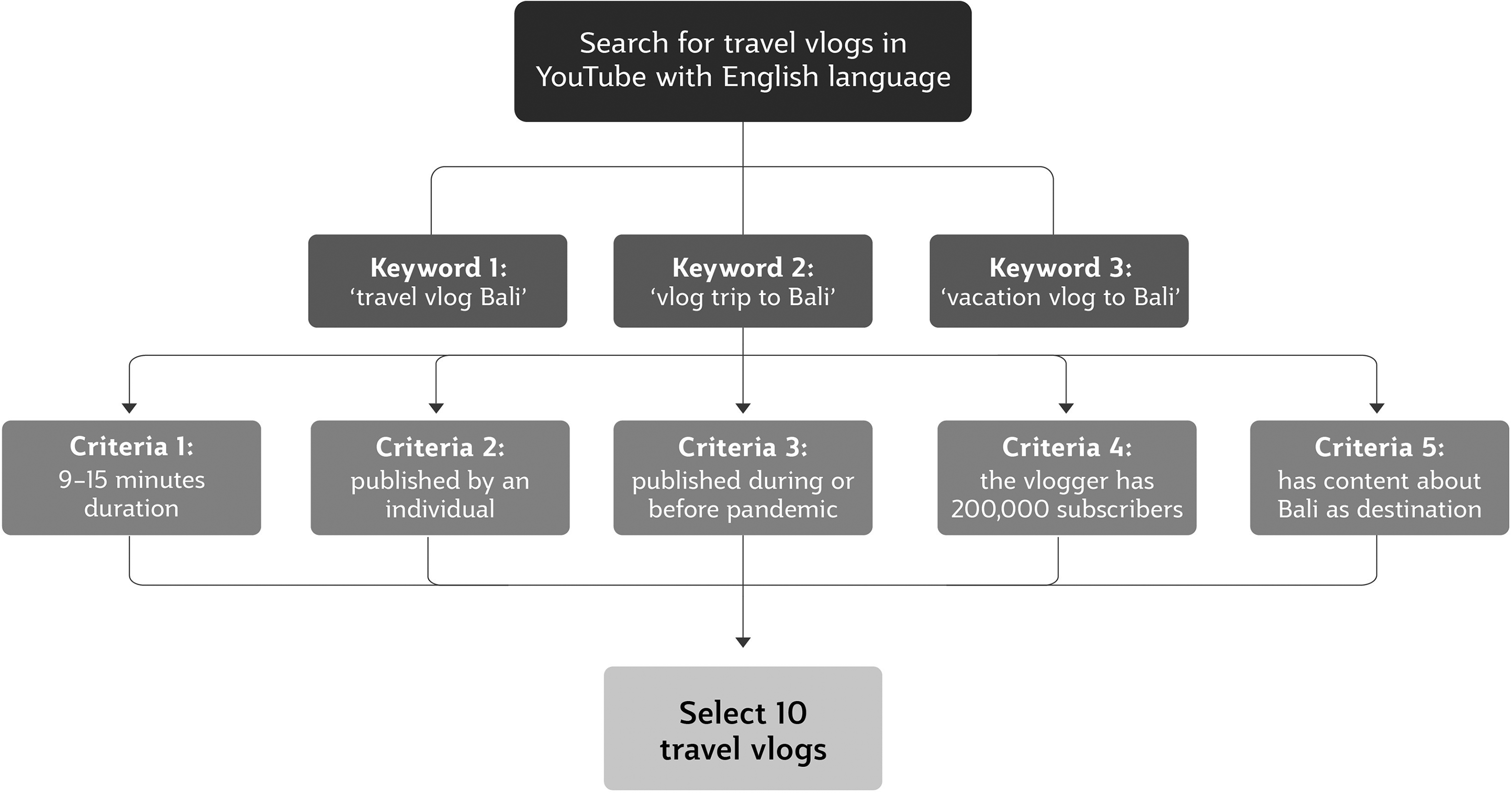
Vlog pre-screening process.
PSI attributes identification
Ten travel vlogs were selected that met the five selection criteria. Data were collected manually from YouTube which included viewers’ comments, vlog content (including subtitles and visualization), and recorded in a table. Based on the literature review, a PSI coding framework was developed to assess the presence of PSI attributes in these vlogs. Each vlog was analysed according to this framework. The results of the content analysis were also recorded in the table. One vlog with the most PSI attributes was selected for the next step of the research, namely NGT.
Nominal group technique
NGT panel was recruited based on their expert knowledge or relevance to the study objective which is consistent with Falardeau et al.’s (2022) recommendations. Twelve participants have been invited based on three criteria: marketing academicians, destination marketers from Bali, and Australian youth. Table 1 detailed information on 12 NGT participants. Each participant was provided the PSI attribute coding framework and asked to watch the selected vlog and analyse the vlog content according to the PSI attribute coding framework. They were asked to rate each attribute from 1 (lowest attribute found in the vlog) to 10 (highest) and were allowed to submit new PSI attributes or items by adding comments at the row at the end of the table. After the PSI questions, the participants were also asked whether the travel vlog had influenced their intention to travel to Bali.
Detailed information of study 2 participants.
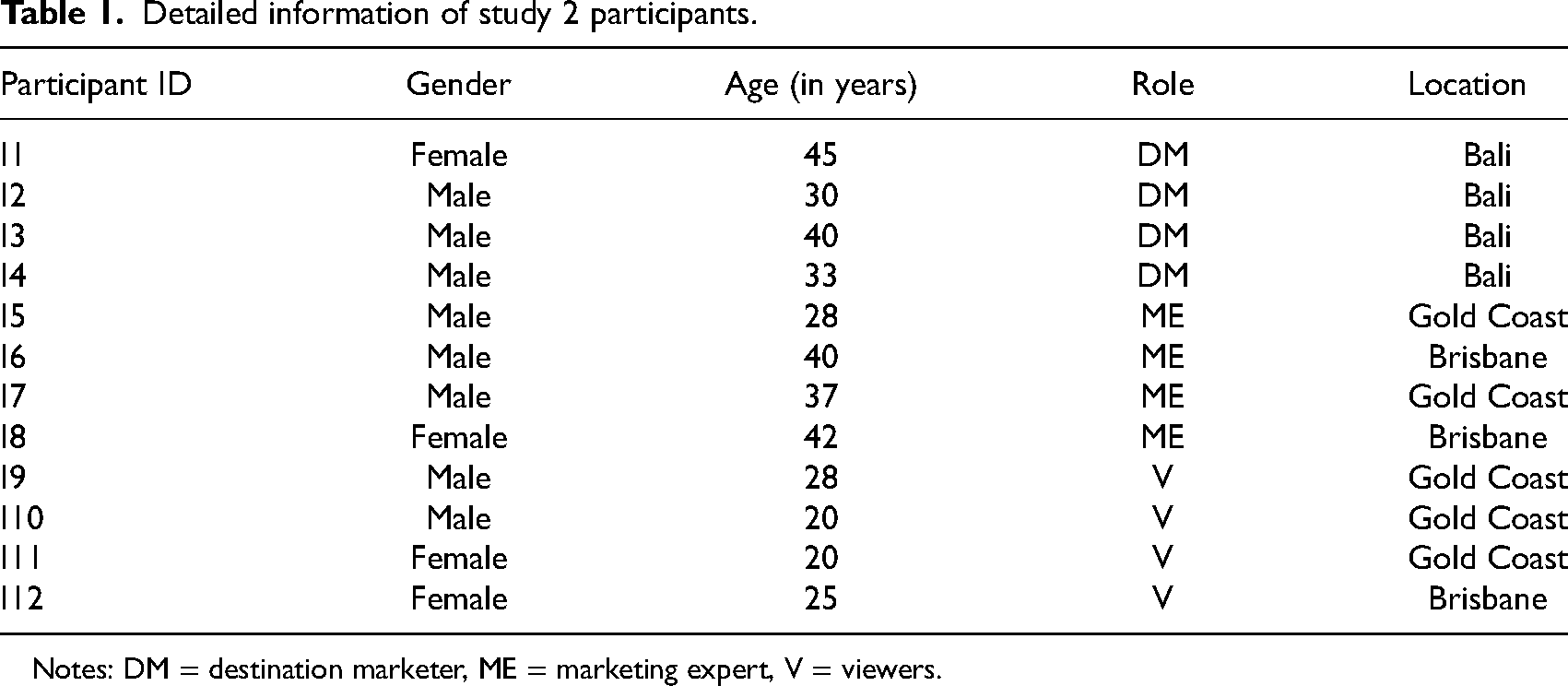
Notes: DM = destination marketer, ME = marketing expert, V = viewers.
Then, three focus groups were conducted online, each consisting of four participants from the same profile. Questions were asked by the researcher to facilitate discussion on PSI attributes and their influence on intention to travel. The duration of each session was 90 min. The sessions were transcribed using Microsoft Teams. Overall, the selection of participants for NGT considered the diversity of information obtained from three perspectives (researchers, marketers, and consumers) and achieved data saturation. NGT allowed participants to prioritise solutions and vote on them privately before sharing their views in a group setting.
Analyses of vlog content and focus group results
Thematic analysis is employed. According to Yang et al. (2021), thematic analysis employs repeated patterns and codes across a qualitative data set. The coding framework developed by the researcher had definitions. First, thematic analysis was conducted to analyse the vlog content. All themes were ensured that it is coherent, supported by the previous data, and, if necessary, provided by sub-themes. After defining all the themes, we allocated all the qualitative data that emerged from the NGT. The analysis follows a similar procedure proposed by Cranwell et al. (2017). First, after 10 vlogs were found, transcripts and comments from all vlogs were collected. The number of comments collected varies from 150 to 350 comments. Second, the transcripts and comments were coded using themes of coding framework found in the literature review. For example, if the viewer relates themselves to the travel vlogger as shown in the comment, it is categorised in the ‘attitude homophily’ theme. Third, any scene containing the vlogger's attraction and visual content was systematically coded. For example, if the travel vlogger looks confident and socially appealing, we categorise it in the ‘social attractiveness’ theme. And finally, three researchers were then validating the categorisation and allocated the codes into themes.
The data from one vlog was examined and validated using the NGT. And then, the transcripts from the focus group session were thematically analysed. Thematic analysis with NVivo 12 was also employed to analyse all the data we found through the NGT.
The methodology includes several validations to achieve the credibility of data. The vlogs are selected through a systematic and rigourous process. The data was first generated from YouTube content analysis by seeing 10 vlog content and viewers’ comments. Three researchers also discussed selecting the vlog that will be validated in study 2. NGT with twelve participants was then used to validate and extend these results. Thus, the systematic methodology sequence shows trustworthiness, confirmability, and transferability.
Findings and discussion
The findings are presented in two parts to reflect the two studies. Study 1 discusses vlog content analysis for 10 vlogs to identify PSI attributes and find a vlog that demonstrates comprehensive PSI attributes. Study 2 discusses PSI attributes validation and its connection to travel intention/destination marketing via NGT approach.
Study 1: vlog content analysis to identify a high PSI vlog
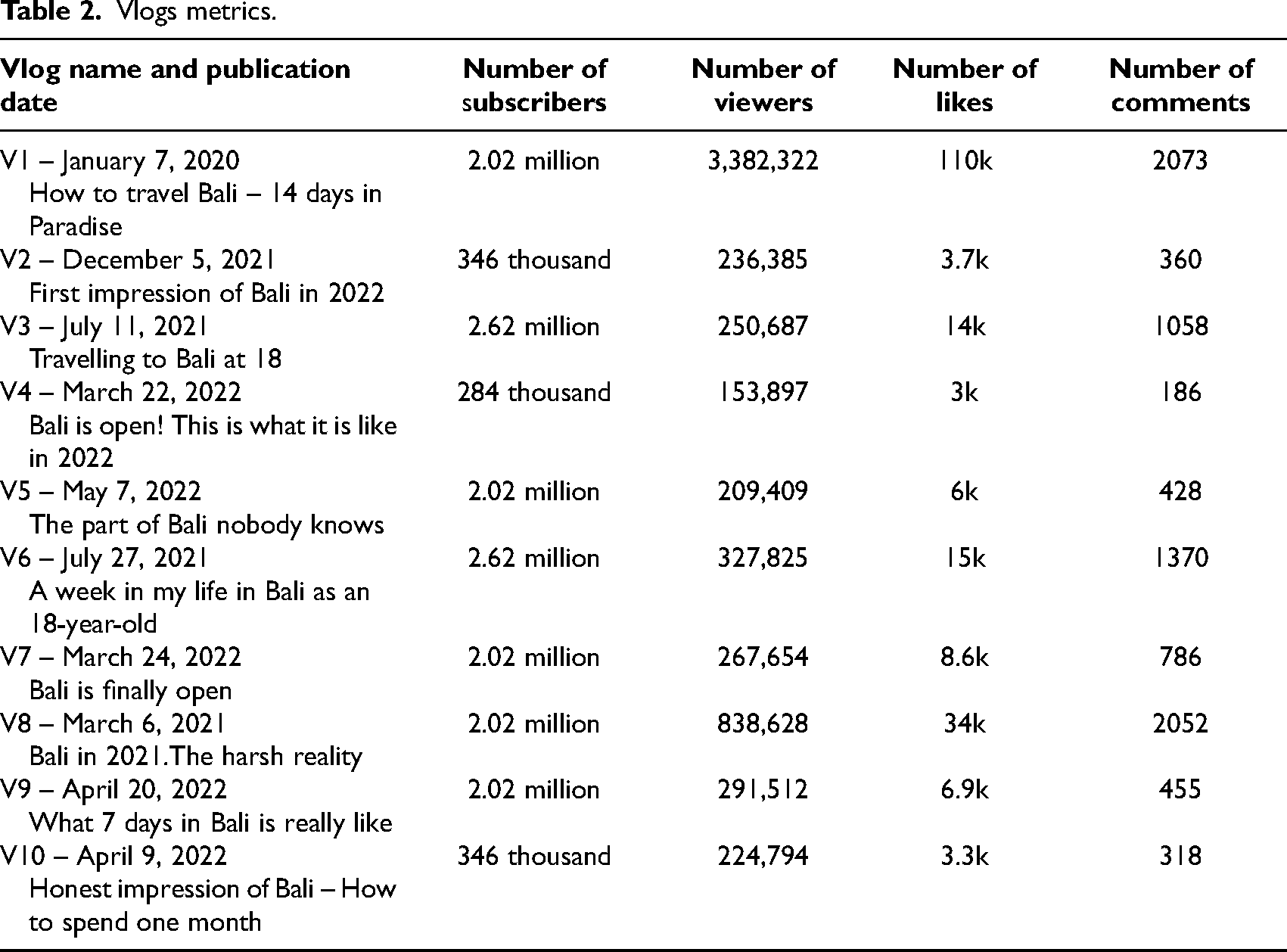
Table 2 reports the findings of Study 1. These 10 vlogs come from 4 vloggers, with subscribers ranging from 284,000 to 2.62 million. All metrics reported are as of September 12, 2022. These metrics are impressive, considering these vlogs were published during a pandemic and are still popular 2 years after it was produced.
Vlogs metrics.
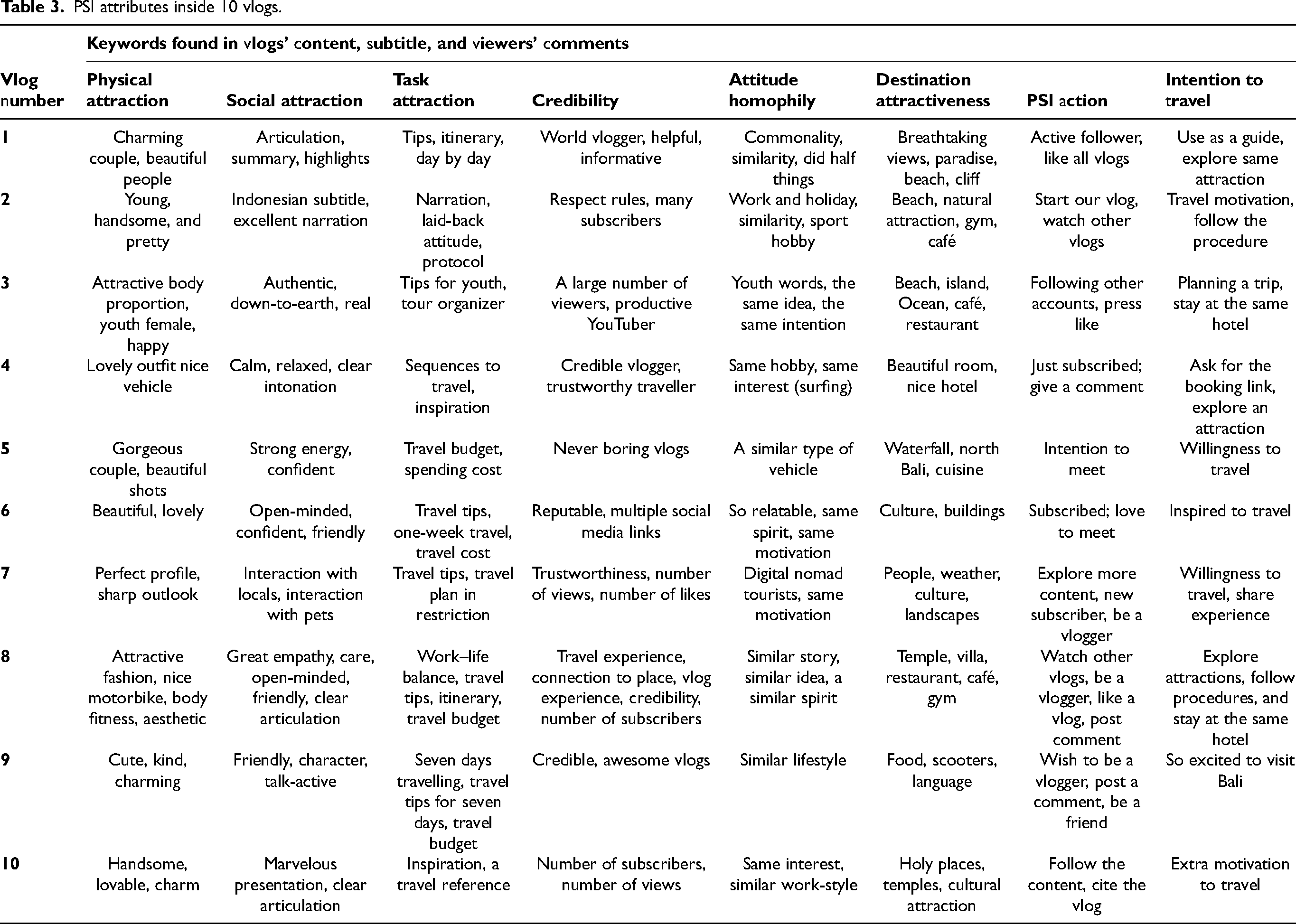
After finding the 10 travel vlogs based on pre-screening results, information from the vlog content and viewers’ comments were analysed. The content analysis uses the definitions and meanings of the six attributes of PSI (physical attraction, social attraction, task attraction, attitude homophily, credibility, and destination attractiveness), PSI, and intention to travel. The study found the attributes of the PSI attribute inside the comments published by vlog viewers, which is reported in Table 3. The table elaborates on all attributes that were evident from all 10 vlogs. Vlog 8 had the highest scores in terms of demonstrating PSI attributes among the vlogs. The result indicates that engagement with vlog viewers was high, and viewers follow the journey of the travel vlogger to obtain information about Bali and the tourist attractions due to travel restrictions, empathy to the local destination host, and the willingness of viewers to travel and learn about what occurred in Bali during the border closure.
PSI attributes inside 10 vlogs.
Study 2: NGT
Based on the NGT, Study 2 found two additional PSI attributes: destination attractiveness and technological skill. Table 4 shows the attributes, items, and the participants’ ratings of the PSI attributes they found after reviewing vlog 8. Study 2 also found several new items to support the existing PSI attributes. NGT results show four main attributes in Study 2: technological skills, destination attractiveness, task attraction, and social connection. Discussion about how PSI attributes could arouse travel intention is also being discussed. Based on the findings, Figure 2 was developed to sum up all PSI attributes and its connection to destination/vacation marketing.
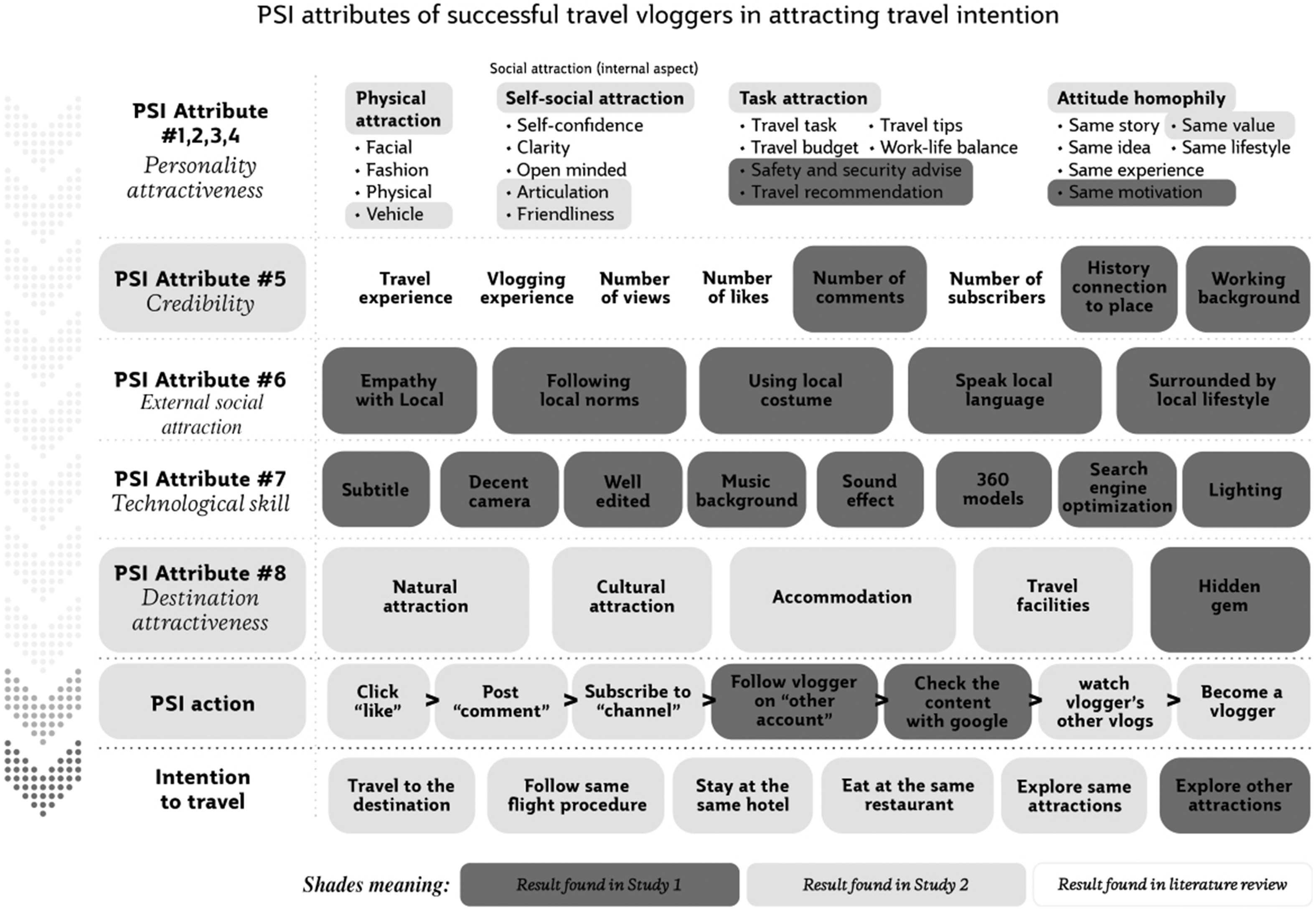
PSI attributes of successful travel vloggers in attracting travel intention.
Result of NGT.
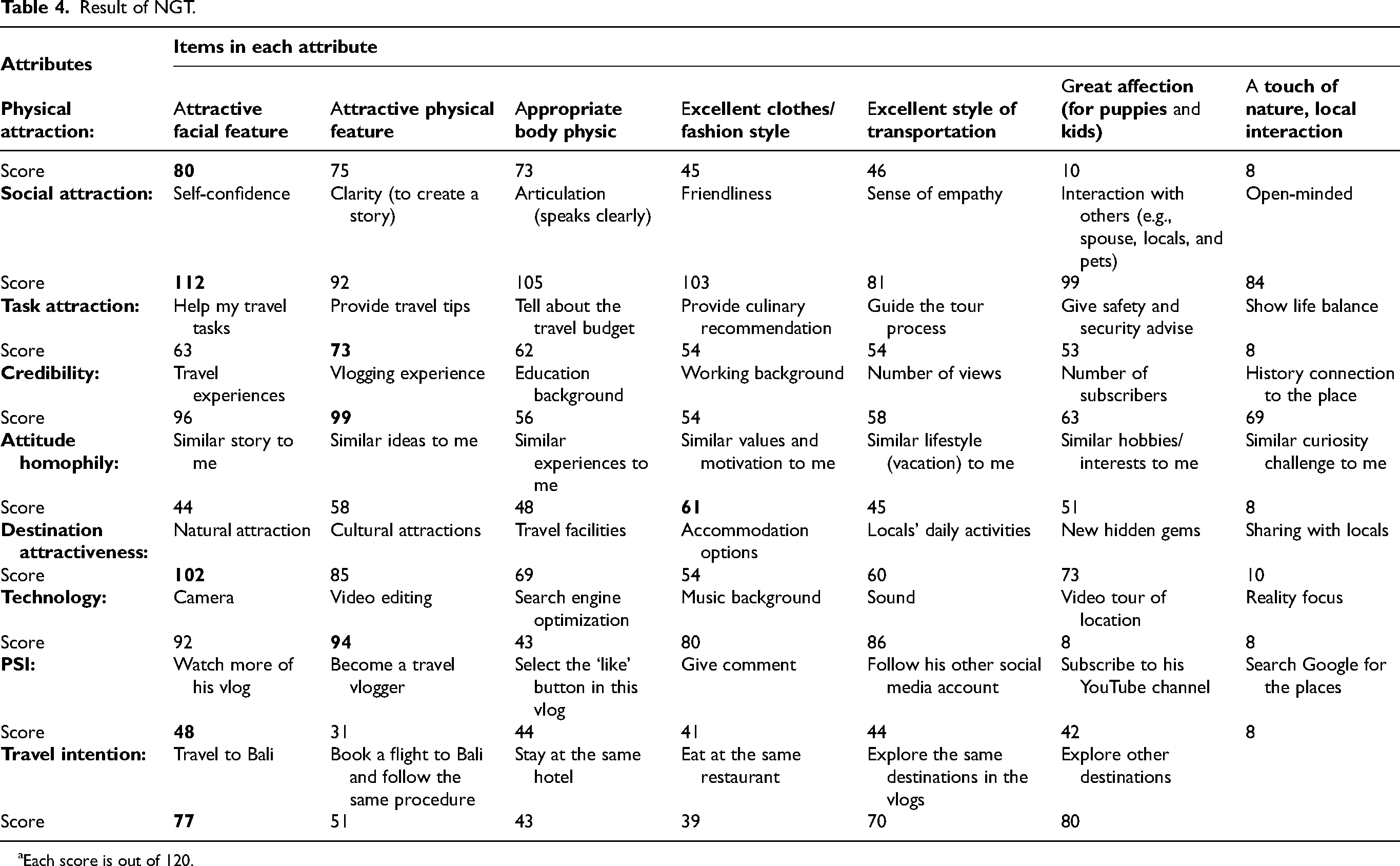
Each score is out of 120.
Physical attraction
Participants generally agreed that the travel vlogger's physical attractiveness was important. Features mentioned included facial attractiveness, physical features, appropriate body physique, excellent clothes/fashion style, and excellent style of transportation. Facial and physical feature attractiveness was the item with the most ratings in this attribute. The Study 2 results also show that physical features are easy to see from video thumbnails on YouTube. One participant comments on the attractiveness of the vloggers, stating, ‘Everyone in nice clips was really attractive and good-looking’ (I8). Similarly, another participant comments, ‘The standard amount of attractive with the standard amount of fitness by structure body structure like’ (I9).
These results align with previous research that describes how viewers perceived physical attraction (Ellis et al., 2019; Lee and Watkins, 2016). Physical attraction is the first thing that comes to viewers when they see a vlog on YouTube (Lee and Watkins, 2016). According to our research, viewers easily identify physical attraction compared with other PSI attributes due to the presence of thumbnails. Lee and Watkins (2016) argue that viewers usually evaluate and physically assess any vlogger. Furthermore, Frederick et al. (2012) demonstrate that physical attractiveness from vloggers through PSI affects viewers’ enjoyment. For instance, a travel vlogger with an engaging facial expression, a beautiful physical look, and pleasant and positive characteristics could easily attract new subscribers (Le and Hancer, 2021).
Social attraction
Social attraction has been found in this study. This attribute is divided into two different aspects. First is self-social attraction, which comes from the self-development of travel vlogger internally. Second is external social attraction, which refers to how travel vloggers interact with their surroundings. Participants thought this attribute is built from the vlogger's self-confidence, clarity (i.e., the ability to create a story and its flow), articulation (how the vlogger speaks clearly), and sense of friendliness in front of the camera. A participant comments on the self-social attractiveness of the vloggers, stating, ‘You know, like an eloquent speaker. And he seems confident’ (I7). Similarly, another participant comments, ‘I would say that he was friendly. He seemed approachable. So, from that side, I would say that I could engage with his content’ (I12) and ‘I want to like this vlog because of his empathy for the locals’ (I11).
The results reveal external social attraction inside PSI to extend the study (Schweitzer et al., 2017). This connection is built from the vlogger's friendliness with local society and other tourists, empathy, interaction with others (e.g., spouse, locals, and pets), and open attitude towards local norms and traditions. Study 2 proves external social attraction differs from self-social attraction because travel vloggers must build social relationships and interactions with local communities, local culture, norms, and traditions. For example, one participant comments on the external social attraction performed by the vlogger, stating, ‘Not all influencers pay attention to local norms, but he showed how the influencer should behave’ (I2). Similarly, another participant comments, ‘Clothes and language as well. Obviously, that kind of connects with the destination too’ (I6).
Previous research reports how travel vloggers build confidence by adjusting their speaking style and touch techniques (Lee and Watkins, 2016; Sokolova and Kefi, 2020). This study extends this literature by showing that building confidence can be done by improving clarity and articulation. Participants agreed that a confident vlogger could attract them to watch more of their vlogs. These findings align with a previous study by Sokolova and Kefi (2020), who mention that socially attractive vloggers can change users’ media attitudes. Vloggers can attract specific brands to collaborate with them by showing their confidence. This result extends the previous research by Liu et al. (2019) on how social attractiveness and the audience's viewing motives can increase audience evaluations of brands endorsed and promoted by vloggers.
Participants state that recent travel vloggers should focus on local traditions, norms, and regulations to gain more trust from viewers and destination marketers. This is a new finding as it has never been found in the social attraction context of travel vloggers. These findings extend the previous literature that travels vloggers need to be warm and friendly to their audiences (Islam et al., 2021; Xu, Chen, Pearce et al., 2021). This finding aligns with previous literature from Xu, Chen and Mohammadi (2021), who include friendliness and affinity as essential attributes for being a successful travel vlogger. The study conducted during the pandemic crisis also impacted the emergence of travel vlog content with activities full of empathy for locals.
Task attraction
This study found attributes influencing task attraction that could attract more interaction between travel vloggers and viewers. Several attributes can describe the ability to perform task attraction, including the ability to help travellers’ travel tasks, the ability to provide travel tips, and the ability to talk about travel budget arrangements. Other tasks informed by travel vloggers are providing hotel or culinary recommendations, safety and security advice, and information about work–life balance. Participants believed that providing travel tips and helping with tasks were these attributes’ most critical items. Prospective travellers to Bali seek three primary tips: quarantine regulations, pre-travel COVID tests, and vaccine regulations (Jarzyna, 2021). For example, one participant comments on the vlogger's task attraction stating, ‘The whole COVID issue, the memories, I guess, to the very restricted travel times that we had to face, particularly as Australians, it is very helpful’ (I6). Similarly, another participant commented, ‘This vlog contains tips for buying groceries in Bali with a certain budget. Especially when he bought rice for the orphanage’ (I2).
Current research reveals that task attraction is performed by researching what the viewers need. Study findings show that travel vloggers understand and discover current travellers’ needs. These results align with previous research by Stever and Lawson (2013), which showed that task attraction relates to a vlogger's ability to cover the viewer's needs. Recent literature shows that providing tips and insight into travel vloggers is influential in creating interaction with their viewers (Nguyen et al., 2023; Trinh and Nguyen, 2019). There are several trends on YouTube whereby vloggers integrate daily tasks and more informative content into their vlogs, according to a YouTube report (Levin, 2020). It refers to how the content assists viewers during travel activities such as the booking process, finding an affordable price, quarantine procedure during the pandemic, obtaining a visa, considering accommodation and restaurants, and discovering exciting tourist attractions.
Attitude homophily
This study found six items influencing attitude homophily as PSI attributes between travel vloggers and viewers. The similarity of story, value, idea, travel experience, lifestyle, and motivation influence this attribute. The findings suggest that viewers are looking for vloggers who have something in common with themselves. This similarity (homophily) will encourage viewers to find the following content that suits their needs. The pandemic affects the emergence of new values and motivations from tourists to travel when border restrictions are applied. One participant comments on the attitude of homophily performed by a travel vlogger, stating, ‘Was that a little puppy dog? That was cute. So that stuck out for me, and I feel a similarity with him’ (I6). Similarly, another participant comments, ‘As a 20 or 30-year-old female who's going looks at me. I am healthy, fit, and happy. It is the same sort of thing as me’ (I1).
In the travel sector, attitude homophily can be linked to destination congruence, associated with a cognitive match between travellers’ self-concept (value, social self, or ideal self) and destination image (Fu et al., 2017). For instance, if viewers feel they have several things in common with a travel vlogger regarding destination or attraction preferences, this may encourage them to watch the vlog more. This result extends previous research that suggests attitude homophily is a similarity between viewers and vloggers and could boost relationships among them (Ladhari et al., 2020). Furthermore, Ladhari et al. (2020) believe several items that construct attitude homophily, including idea and feeling. Findings confirm the previous literature by exploring more items inside attitude homophily, which now includes the travel value.
Destination attractiveness
Destination attractiveness refers to destination resources, including natural, cultural, and anthropogenic resources (Nasir et al., 2020). Participants generally agreed that Bali is one of the most attractive destinations in the world. This research found several items that affect perceived destination attractiveness, including natural attractions and ambiance of the place, cultural attractions, travel facilities, accommodation options, locals’ daily activities, and new hidden gems. Several participants were able to recognise famous destinations informed by travel vloggers such as Canggu, Batur volcano, and Kuta. One participant comments on the destination attractiveness inside the vlog by stating, ‘I guess our love of the natural, the natural resources, that's probably the reason I’d want to go’ (I10). Similarly, another participant comments, ‘I think when this travel vlogger visits a remote village, they will see the real Balinese how they live. This is an interesting part that future travelers could see’ (I3).
This result aligns with a previous study from Sanders et al. (2016) showing that Bali is well known for its natural attractions, such as beaches, mountains, and the ocean. It also confirms research from Sobocinska (2011), who mentioned that Australians visit Bali for natural adventure motivation. Several items, such as natural, cultural, and historical attractions (Fadda and Sørensen, 2017), influence this ability and other aspects, such as infrastructure, service facilities, travel costs, and how destination operators manage their offers (Nasir et al., 2020). Destination attractiveness inside the media covers natural and cultural attractions and travel facilities (Fadda and Sørensen, 2017; Nasir et al., 2020). The results expand the previous item by including locals’ daily activities and new hidden gems to measure this attribute.
Credibility
This study reveals multiple pieces of information showing vloggers’ credibility. Viewers measure the vlogger's credibility from their travel experience, vlogging experience, multiple metrics inside their vlog (such as the number of likes, comments, views, and subscribers), working background, and historical connection with the place. However, participants pay more attention to vlogging and travel experience as the essential item determining the vlogger's credibility. The easiest way to see a travel vlogger's credibility is through the vlog's metrics. One participant comments on the credibility of the vloggers, stating, ‘It looks vlog-like vlogger level. Like it is not Hollywood sort of level incredible, but it is still above average level if that makes sense’ (I7). Similarly, another participant comments, ‘His education and work experience or something like that, which I almost wanted to take that influencing credibility’ (I5).
Yılmazdoğan et al. (2021) point out that vloggers’ credibility significantly impacts viewers’ self-congruity and arouses the travel intention constructed from their trustworthiness and expertise. Once vloggers’ credibility increases, they will attract more attention to interacting with their audiences, and the intensity of their interactions will increase. Yilmaz and Johnson (2016) explored online credibility and found that it is often determined by personalised and depersonalised language posted on social media and modalities. Research from Rasmussen (2018) states that millennials (between 20 and 30 years of age) think YouTube is a credible source of information by identifying those knowledgeable vloggers without considering their popularity level. Savage and Spence (2014) argue that contradictory to the previous opinion, social media negatively affects a person's credibility compared with radio media. The present study extends this research and finds a change in perceived credibility that will continue to grow, determined by the intensity of interaction, gender, and technology innovation. The results also contradict Savage and Spence's (2014) study, where the travel vlogger's credibility increased when posting multiple pieces of social media content.
Technology skills
This research discovered a new attribute involved in PSI between travel vloggers and viewers: digital innovation or technology skills performed by the vlogger. This new attribute is determined by multiple items, including the quality of the camera, the editing process, music background, sound effects, 360-degree cameras, subtitles, search engine optimisation (SEO), and lighting. In addition, viewers pay considerable attention to video editing skills and camera quality, enabling them to engage better with the vlog. For example, one participant comments on the technological skills performed by the vloggers, stating, ‘He was a good video editor; his technology skills influence the experience and engagement with the viewer’ (I5). Similarly, another participant comments, ‘He puts some subtitles, which might be more helpful if he adds to the entire vlog content’ (I12).
Participants are concerned about search engine optimization (SEO), which travel vloggers perform to increase their vlogs’ visibility when viewers search for the video on YouTube (Cyr et al., 2009; He et al., 2022). Findings show that the more visibility a vlog has on search engines, the more likely it appears on top of the list. Vloggers run SEO through multiple channels, such as blogs or social media posts. Supported by current social media technology, travel vlogs offer more authenticity, interactivity, and efficiency in unlimited space than previous conventional media (He et al., 2022). Findings confirm He et al. (2022) study, which states that technological skills have been considered essential variables to improve the quality of travel vlogs. Moreover, findings extend a study by Cyr et al. (2009), which mentioned the involvement of visual quality in electronic media to improve vlogger attractiveness. Thus, this finding expands previous literature by adding more items to this attribute that relate to the destination, such as traditional music or local's sound.
PSI action
All these attributes and items will decide the PSI actions performed by viewers, such as watching other vlogs, clicking ‘like’, posting ‘comments’, and subscribing to ‘channel’. The most popular actions are watching other vlogs, selecting like, and following other social media accounts. Participants also felt they were part of a travel vlogger. Study participants are also interested in exploring more about the content. Searches for travel vlog content are also done through Google to obtain different information on other websites. One participant comments on how they perform PSI, stating, ‘After watching this video, I tried to look at his other video, his other vlog, and it is quite interesting’ (I1). Similarly, another participant comments, ‘I feel that I am connected to this travel vlogger and want to explore his social media’ (I10).
The actions performed by the viewers align with previous research by Pan and Zeng (2018), who include online reactions (such as giving likes, comments, and subscriptions) as part of PSI. Giving likes and comments and subscribing to a vlog's content are also viewed as active interactions by viewers once they feel the travel vloggers create PSI with them (Padmavathi, 2020; Roy and Sharma, 2021). This study extends previous research from Roy and Sharma (2021), who suggest active action from viewers due to the pandemic lifestyle. Our study also found that the viewers show other actions, such as following other vloggers’ social media accounts, as part of their interaction. They also check the content through Google to verify and validate it. Findings also show that PSI leads to an action where viewers are interested in becoming travel vloggers. When the participants agree that they will watch more travel vloggers vlog, it confirms the previous study by Sakib et al. (2020). A study by Kim and Sintas (2021) explores PSI action in a TV celebrity context by expressing emotion, empathy, and behaviour. On the other hand, previous literature only discusses several digital interactions executed inside the vlog's portal as part of PSI actions (Pan and Zeng, 2018; Rasmussen, 2018). This study thus expands previous research to include additional activities the viewers perform to interact closely with the vlogger.
Arousing intention to visit
Study 2 found the outcome of PSI and all its attributes to arouse the intention to travel. The viewers perform several actions to show their intention to travel, including travelling to the destination, following similar procedures, staying at the same hotel, eating at the same restaurant, or exploring similar attractions. Potential travellers show multiple ways to show their intention to travel. Most participants (including eight of Australian viewers) became more interested in travelling to Bali and exploring other destinations that were shown after watching the vlog. One participant comments on how PSI aroused his intention to travel, stating, ‘I want to go to Bali. Pretty much everything he did’ (I7). Similarly, another participant comments, ‘Yes, I wanted much on Valley; there was one temple, one or two views’ (I9).
Findings confirm previous literature on how travel intention can be performed and aroused from social media consumption. The first intention is how they book or make the reservation, accommodation, and transportation (Padmavathi, 2020). Potential travellers will then be interested in exploring the destination through local culinary and natural attractions (Padmavathi, 2020; Yılmazdoğan et al., 2021). This research expands previous literature whereby the potential traveller will not only make the reservation to visit but also follow procedures like those suggested by the travel vlogger. For example, a previous (Tercia et al., 2020) study suggests that pre-visit experience through media consumption arouses a traveller's destination decision. Potential outcomes such as word-of-mouth marketing, direct reviews, or finding common travel values can be proven. PSI also can produce other outcomes, such as promoting important messages, including pro-environmental activities, sustainability campaigns, and wellness travel.
This study can also be expanded for future research directions to measure travel behaviour. Social media consumption and interaction with travel vloggers can impact potential travellers’ travel purchases (Sokolova and Kefi, 2020). By better understanding PSI, destination marketers can better understand travellers’ attitudes, preferences, and emotions while consuming travel products (Zhang et al., 2018). It can then help destination marketers understand the desires and want of travellers. Importantly, by seeing attributes in PSI, destination marketers can measure factors considered when choosing travel products, such as budget, type of experience, timing, and curiosity (Fu et al., 2017; Hsu, 2020).
Conclusion
This study aimed to identify key attributes of PSI and assess its role in vacation and destination marketing. The results produced eight categories of PSI attributes between travel vlog viewers and vloggers. These are physical, social, and task attraction, attitude homophily, credibility, social connection, destination attractiveness, and technology skill. These attributes influence the illusory interactions between viewers and vloggers, shown in numerous ways, such as following the vlogger's account or actively acting towards the vlog. The self-social attraction was the most vital attribute influencing travel vloggers’ ability to interact with viewers, while attitude homophily is the weakest. In addition, PSI can lead to arousing viewers’ attention to travel.
In general, this study contributes to the current research agenda on vacation marketing context in the vlog ecosystem. According to Dewantara et al. (2022), three steps of the viewer's interaction with a vlog can be measured following PSI actions, including measuring top-of-mind awareness, cognitive and affective image, and visit intention. Furthermore, destination marketing outcomes that will be further impacted by PSI action include viewers’ brand salience, image, and loyalty (Dewantara et al., 2022; Pike and Page, 2014). Moreover, pre-visit experience through social media consumption can also influence information needs fulfilment, electronic word-of-mouth, and destination congruity (Dewantara et al., 2022; Tercia et al., 2020). Vloggers can deliver branding messages via social media (Levin, 2020), thereby building loyalty through a long-term interactive profitable, mutual relationship between the destination (object) and their viewers (Lim et al., 2012; Özsaçmacı and Dursun, 2020).
This study extends previous research by measuring the attributes of PSI in travel vlog to extend the understanding of this theory to vacation marketing. Specifically, the findings highlight the importance of travel vlogs in achieving brand salience. That is, the unique interactions between viewers and travel vloggers result in brand salience. Furthermore, the congruity between viewer (consumer) and the destination displayed in the travel vlog enhances destination attractiveness.
This study provides several practical contributions for vacation marketing. First, the study results suggest that destination marketers should assess travel vloggers. PSI and then select the vlogger with the most PSI attributes to work with to maximise vacation marketing outcomes, most notably brand salience. Currently, destination marketers only assess quantitative metrics such as likes, comments, or number of subscribers to find out travel vlogger that they want to work with. This study suggests that destination marketers must look at other aspects of travel vloggers, such as its content and how they build engagement through PSI with the viewers. This study also recommends destination marketers to do sufficient content analysis of travel vloggers before having collaboration with them. Therefore, it is beneficial for destination marketers to work with attractive travel vloggers for marketing effect and cost. As compared with traditional celebrities, travel vloggers will be less effective.
Second, this study can also help travel vloggers to build better interactions with their viewers, which will make them more successful as a vlogger. Specifically, it will make them more attractive to destination marketers and, as a result, they will gain more sponsorship and support to undertake this work.
Study limitations and future research
Three limitations in this study can be the context of future research agenda. First, it was conducted during the COVID-19 pandemic. Therefore, further study should explore potential attributes influencing successful travel vloggers after the pandemic as part of destination image recovery. Second, this study developed a framework for testing PSI based upon expert opinion using NGT. This framework should be tested on a larger consumer-based sample to capture the consumer perspective on PSI attributes. Consumer testing on one and then eventually multiple travel vlogs is recommended to more fully develop this framework and compare PSI attributes across multiple vlogs. This will also determine which attributes are the most and least significant. Future research also could employ biometric-based research to elaborate on every attribute in travel vlogs.
Third, our research used famous travel vloggers and a famous vacation destination as the main case study. Further research directions could attempt to compare how famous and less famous travel vloggers build their PSI attributes in non-popular destinations. Likewise, testing PSI attributes on different types of vacation destinations could also be insightful to extend understanding of PSI and its role in vacation marketing. Moving forward, as technology advances and new modes of communication are invented, PSI will continue to evolve. Continuing to understand this evolution and adapting vacation marketing accordingly is important to ensure vacation marketers remain at the forefront of digital communication innovations.
Footnotes
Acknowledgements
The authors would like to acknowledge the research funding support from LPDP (Indonesia Endowment Funds for Education) and the publication support from the GIFT (Griffith Institute for Tourism).
Authors contribution
Made Handijaya Dewantara was involved in conceptualisation, data collection and analysis, principal writer of the paper, and funding acquisition for copy editing support. Xin Jin was involved in supervision, conceptualisation, and reviewing and editing the paper. Sarah Gardiner was involved in supervision, conceptualisation, and reviewing and editing the paper.
Declaration of conflicting interests
The author(s) declared no potential conflicts of interest with respect to the research, authorship, and/or publication of this article.
Funding
The author(s) received no financial support for the research, authorship, and/or publication of this article.
