



Abstract
In physical education teacher education (PETE), supporting preservice teachers’ (PSTs') immersion into school communities is critical to fostering their professional learning. However, this socially situated process, where PSTs must gain legitimacy, engage with institutional practices, and navigate professional identities, remains underexplored in the PETE literature. Drawing on social learning theories, this representative case study investigated how experienced cooperating teachers (CTs) enacted facilitation strategies to mediate PSTs’ immersion into the educational community. The study was framed by the concepts of legitimate peripheral participation, landscapes of practice, and the developmental stages of communities of practice (CoPs), including the PSTs-CT CoP and other CoPs within the broader school landscape. Participants included 15 PSTs placed in five schools, five CTs, one university supervisor, and one participant-observer. Data were collected over a full academic year through focus group interviews, the university supervisor's yearlong log, and field notes from the participant-observer. Findings suggest that CTs employed a phased and intentional approach to facilitation, aligned with the evolution of CoPs. Key strategies included (i) presenting the landscape, (ii) legitimising participation and creating perceived value, (iii) gradually expanding leadership roles, and (iv) supporting contributions that ‘give back’ to the school community. This study highlights how CTs’ facilitation supported not only immersion but also the development of PSTs’ knowledgeability (i.e. their capacity to be recognised across multiple professional contexts), thus reinforcing the CoP's role and visibility within the educational community.
Keywords
Introduction
Physical education (PE) teacher education (PETE) programmes, and school placements in particular, are crucial for preparing preservice teachers (PSTs) to navigate the profession and integrate into school communities. Investigating PSTs’ professional learning 1 during school placement is especially relevant because: (i) it marks their first authentic contact with teaching – actual schools, pupils, and challenges – when they grasp its complexity; (ii) it is when they build conceptual, pedagogical, and practical foundations, alongside a developing professional identity; (iii) it can act as a site of pedagogical renewal in PE, offering novel and student-centred learning opportunities (Calderón and Tannehill, 2021); and (iv) it is pivotal for teacher retention, as the quality of placement experiences – positive or negative, inclusive or marginalising – strongly influences PSTs’ desire to remain in the profession (MacPhail and Tannehill, 2012).
Accordingly, extensive research has examined PETE pedagogies that are central to PSTs’ professional learning. For example, Hordvik and Beni (2024) recently mapped three major domains of study and understanding within PETE: (a) the use of (auto)biographical pedagogies, where PSTs reflect on their personal learning experiences; (b) experiential pedagogies, grounded in practice-based learning approaches such as micro-teaching and school placement; and (c) professional learning pedagogies, which explore collaboration, peer learning, and, fundamentally, the process of becoming a teacher as socially mediated and embedded within professional communities of practice (CoPs). In relation to this final domain, there is broad consensus that learning to be – and becoming – a teacher is fundamentally a social learning process (Lave and Wenger, 1991). In this view, the concept of legitimate peripheral participation helps explain how PSTs, as newcomers, move towards fuller immersion and membership within the professional CoP during school placement. Through daily immersion in school life, they gradually acquire the skills, perspectives, identities, and ways of acting expected of teachers. Legitimacy denotes the forms of belonging that allow PSTs to be recognised as part of the profession, while capturing the shifting positions they occupy as their trajectories of community participation unfold. Professional learning reflects a negotiation of identities, practices, and relationships within the sociocultural fabric of the school community (Lave and Wenger, 1991; Wenger, 1998).
Professional learning through CoPs
Becoming a teacher requires active engagement with the professional community, where PSTs internalise norms and gradually establish membership (Valério et al., 2024). This process, explained by legitimate peripheral participation (Lave and Wenger, 1991), entails their transition from newcomers to contributing members of the school community (Azevedo et al., 2023). Legitimacy is negotiated throughout, shaping how PSTs assume more central roles, such as leading valued school events.
School placement requires PSTs to engage in a CoP with their peers and a cooperating teacher (CT), forming what we term the PSTs-CT CoP. CoPs are groups of individuals who share a concern or passion for a domain (Wenger et al., 2002). They are defined by three core dimensions: (i) a community whose members care about that domain; (ii) a domain of knowledge that unites the group; and (iii) a shared practice they develop together. In school placement, the community usually comprises small clusters of PSTs (three to four) working with a CT, who acts as mentor and primary link to the school. The domain is their developmental journey as teachers, while the shared practice entails negotiating professional routines, repertoires, and power relations with peers and CTs. Evidence shows that PSTs’ engagement in CoPs fosters trust, non-hierarchical relationships, collaborative reflection, and greater professional agency (Ferreira et al., 2023). Such participation can help them become more proactive, autonomous, and resilient teachers (Chambers et al., 2011), and professional learning is nurtured through dialogue, shared challenges, and collective reflection (Calderón and Tannehill, 2021).
However, PSTs’ effective professional learning depends on the development of the PSTs-CT CoP and is characterised by an ongoing process of mutual engagement and shared repertoires, ultimately a joint enterprise among members. Wenger et al. (2002) identified five stages of CoP evolution – potential, coalescence, maturing, stewardship, and transformation – that reflect growing cohesion around shared knowledge, pedagogical alignment, and mutual support (see Table 1). These stages have been theorised and empirically examined across diverse professional and educational settings, but remain underexplored in PETE. One exception is Parker et al. (2012), whose study of Irish in-service PE teachers showed a continuum of CoP development, from loosely connected groups sharing ideas to fully fledged communities with a collective purpose (caretakers of good PE teaching), enhanced problem-solving, and a sustained sense of ownership reflected in autonomous practices.
Community of practice stages of development, description and core functions.
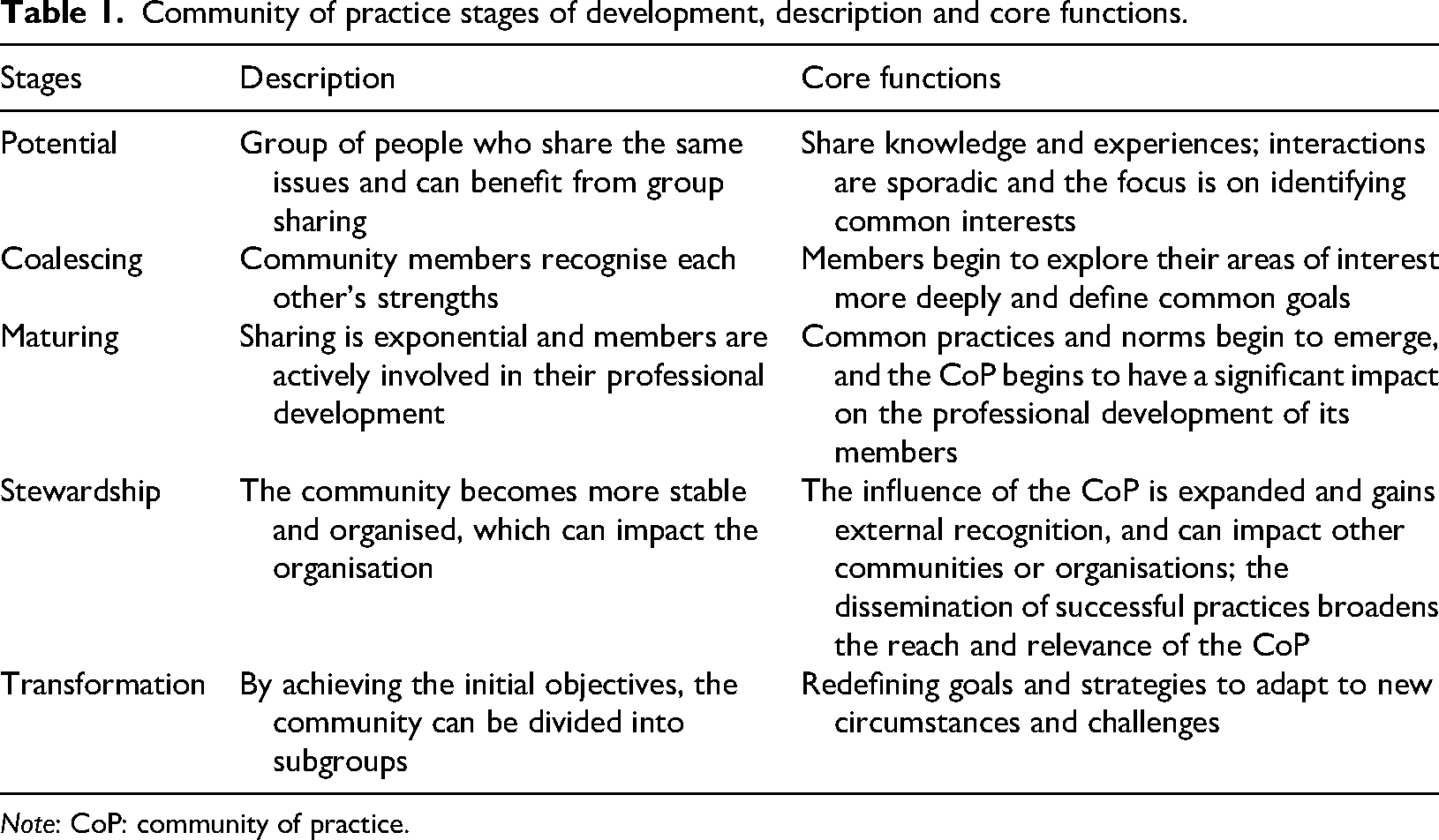
Note: CoP: community of practice.
Efforts to deepen the understanding of the multiple layers of professional learning as a social process have expanded to examine the negotiations between CoPs within broader landscapes of practice (LoPs) (Wenger-Trayner et al., 2015). This perspective rests on the premise that the development of any given CoP is both dependent on and shaped by its interactions with other CoPs within a specific LoP. These inter-community dynamics, in turn, influence and are influenced by broader professional structures and play a critical role in shaping members’ trajectories towards legitimate participation in school communities (Wenger-Trayner et al., 2015).
The evolution of CoPs within LoPs
In school placement, a CoP often refers to a specific group (e.g. PSTs with their CTs), while LoPs encompass the broader professional field (e.g. all teachers in the school) and its collective knowledge, such as shared understandings of what it means to be a teacher (Culver et al., 2019). LoPs involve boundary interactions between coexisting CoPs (e.g. PSTs-CT CoP and resident PE teachers) (Wenger-Trayner et al., 2015). These boundaries present both challenges and opportunities, as PSTs must navigate practices, values, and expectations across communities. Learning within an LoP requires not only competence in particular CoPs but also knowledgeability – the ability to recognise, value, and participate across multiple communities (Farnsworth et al., 2016). PSTs’ legitimacy in the school community therefore depends on how they navigate relationships with other CoPs, including PE teachers, departments, and school boards. In this respect, Wenger-Trayner et al. (2015) identified three modes of identification that influence how individuals position themselves (i.e. experience belonging) within an LoP: alignment, which entails understanding and adapting to the school's structures, values, and expectations (e.g. interactions with school boards or staff); engagement, as active participation in the daily practices of different CoPs (e.g. collaboration with PE teachers or other school departments); and imagination, which involves constructing one's professional identity through daily interactions with peers and mentors (as in the PSTs-CT CoP).
Although CoP development has been studied and recognised as central to PSTs’ learning (e.g. Armour and Yelling, 2007; Parker et al., 2012), little is known about how CoPs (e.g. PSTs-CT CoP) evolve within the LoPs where they are embedded. We still lack an understanding of how PSTs engage with other stakeholders as they seek immersion and membership in school communities. Moreover, despite the emphasis in social learning theory (Lave and Wenger, 1991; Wenger, 1998; Wenger et al., 2002; Wenger-Trayner et al., 2015) on the role of facilitators in fostering CoPs, PETE research has largely overlooked this mediating function, often assuming that effective CoPs emerge naturally from prolonged participation (Gonçalves et al., 2022).
CTs as community immersion facilitators
As established members of school communities, CTs provide key role modelling for PSTs and act as links to the wider educational community (McEntyre et al., 2018). Their role is especially critical in the early stages of PSTs-CT CoP development, when interests are defined, roles clarified, and communication networks established (Wenger et al., 2002). By balancing support with the gradual transfer of responsibility, CTs create conditions for PSTs’ immersion to evolve into sustained participation in the school community (Valério et al., 2024).
Research highlights CTs’ facilitative role across PETE contexts. For example, they have been shown to shape PSTs’ teaching competence, identity, and pedagogical repertoires (Meegan et al., 2013), provide essential pedagogical support for effective practice (Silva et al., 2021), and oversee school-based practice while supporting the translation of theory into practice (Moen and Standal, 2016). However, while existing research sheds some light on CTs’ mentoring practices within functional PSTs-CT CoPs, little is known about how they mediate PSTs’ immersion in the broader educational community, whether this is an explicit concern, and which deliberate or implicit processes they use to help newcomers navigate LoP boundaries. Building on this gap, during a year-long PETE school placement, this study aimed to examine the facilitation processes by which CTs supported PSTs’ immersion into school communities as a component of their professional learning. Specifically, it focused on CTs’ mediation towards: (i) cultivating the PSTs-CT CoP as an avenue for PSTs’ progressive immersion and fuller participation in the lives of their school communities; and (ii) facilitating PSTs’ navigation across the LoP boundaries of their school communities.
Methods
Study design
The study followed a representative case study approach (Bryman, 2012) to capture the specific circumstances and conditions of a typical situation within a PETE programme. It explores how CTs facilitate PSTs’ immersion into school communities by identifying the key facilitative processes they employ. The PETE programme under study was developed by a well-established sports faculty in northern Portugal, recognised internationally for its contributions to teacher education research and innovation (Azevedo et al., 2023; Farias et al., 2018, 2023; Valério et al., 2024). This design was selected because: (i) it shares structural and pedagogical features with other PETE programmes and provides a suitable context in which broader questions of CT involvement can be explored; (ii) it integrates CTs as core teacher education agents through clearly defined roles; and (iii) it supports a research-informed, reflective approach to PETE, aligning with the objectives of this study.
Context and participants
The study was conducted during the professional school placement year of a two-year PETE programme (see Supplemental material 1). In the first year, PSTs engaged in experiential learning through micro-teaching, peer teaching, and teaching in local schools, supported by course units focused on pedagogy, identity development, and participation in educational communities. The second year involved a year-long school placement in cooperating schools, where PSTs were placed in groups of three and assigned to a resident class 2 under the joint guidance of a CT and a university supervisor. PSTs were responsible for planning, teaching, and assessing PE activities, as well as teaching units in primary schools. Their development was assessed through three key domains defined in the official placement regulations of the PETE programme 3 : (1) organisation and management of teaching and learning; (2) school participation, immersion, and community work; and (3) professional development. The school year was divided into three terms: September–December (term 1), January–April (term 2), and April–June (term 3) – providing a consistent structure for data collection and analysis.
Participants were 15 PSTs (eight male, seven female; M = 24 ± 1.8 years), five CTs (three male, two female; M = 51 years; M experience = 22 years), and one university supervisor, an experienced faculty member in sports pedagogy. The first author, a PhD candidate, also participated as a participant-observer. Participants were selected using purposive and convenience sampling. PSTs had to be placed at one of the five cooperating schools and had completed at least 90% of their first-year coursework. CTs were chosen for their recognised expertise in mentoring and school-based teacher education. All participants provided informed consent, and the study received ethical approval from the host institution [CEFADE 27_2024].
The research team included the PhD student (first author), who conducted all fieldwork and observations, and his two PhD supervisors. Although not involved in data collection, the supervisors contributed to methodological planning, development of interview protocols, and continuous reflection throughout the research process.
CTs played a central role in guiding PSTs throughout the school placement. They supervised day-to-day teaching, supported PSTs’ immersion into the school context, and mentored them through pedagogical and institutional challenges. Their in-depth understanding of the placement's goals and structure, along with extensive prior experience in supervising placements, enabled them to foster PSTs’ development as reflective and competent professionals (see Table 2 for a breakdown of CTs’ teaching and mentoring experience).
Demographic and professional background of the cooperating teachers, including gender, age, job position, coaching and teaching experience, and training institution.
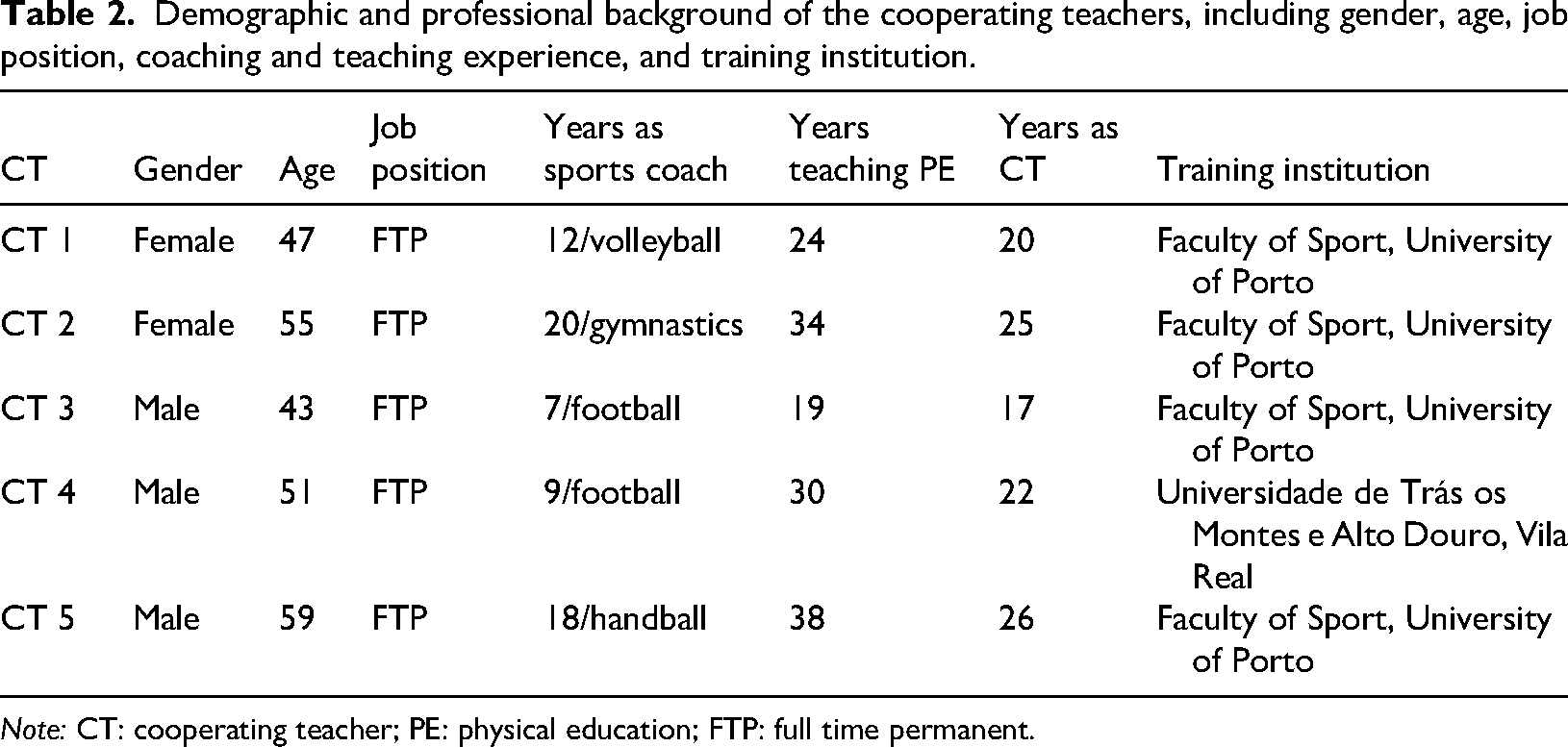
Note: CT: cooperating teacher; PE: physical education; FTP: full time permanent.
The university supervisor coordinated the overall supervision process and collaborated closely with CTs to align institutional expectations about the PSTs’ training process. In addition to conducting lesson observations, the university supervisor led monthly sessions with both PSTs and CTs to support reflective practice and pedagogical refinement (see Supplemental material 2).
Data collection
The study utilised focus group (FG) interviews with CTs and PSTs, a reflexive log of the university supervisor, and field notes from the first author's participant observations to provide a realistic view of PSTs’ daily interactions with the educational community, enabling comparisons across school contexts and CTs’ facilitative actions.
FG interviews
Twelve FG interviews were conducted with CTs and PSTs at three points during the school year: at the start (September) to understand CTs’ initial strategies and gather PSTs’ perceptions; mid-year (February) to assess the evolution of CTs’ approaches and PSTs’ school roles; and at the end (June) to evaluate the CTs’ strategies that most aided PSTs’ immersion into the educational community and their acquired status. Three 90-minute FG interviews were conducted with all five CTs. Nine 60-minute FG interviews were held with PSTs, divided into three groups of five (each group included one PST from each of the five cooperating schools), once per school term. The FG interviews were conducted by the first author. Before each session, the first author explained the study's purpose. Interviews followed themes aligned with the study's objective but remained open to emerging topics. Sample questions for CTs included: ‘How do you mediate PSTs’ initial welcome in the school and introduce them to its various bodies?’. For PSTs, sample questions were: ‘How did you experience your arrival at the school in terms of interpersonal interactions? Did CTs use any strategies to support your immersion, or did this happen informally?’. To encourage openness and minimise the risk of inhibiting critical or sensitive input, the interviews were conducted separately. All interviews were audio-recorded and subsequently transcribed verbatim for analysis.
University supervisor log
Throughout the year, the university supervisor collected reflective notes on their supervision and shared them with the research team for analysis. These notes focused primarily on observations of PSTs’ lessons during the school placement, with occasional reflections on their school immersion, professional practice, and CTs’ facilitative actions. This documentation supported the triangulation of data on PSTs’ evolving engagement within the school communities and the mentoring strategies employed by CTs.
Participant-observer field notes and reflective diary
During the professional school placement, the first author conducted 30 field observations, equally distributed across the five cooperating schools (six observations per school throughout the school year). Each visit lasted a full school day, during which PSTs’ teaching was observed and the author participated in formal settings such as meetings, collaborative sessions between PSTs and CTs, and reflective discussions with PSTs, CTs, and the university supervisor. Informal moments, like breaks and casual conversations, were also engaged in to capture subtleties of daily life and interactions among CTs, PSTs, and other school community members. These interactions were occasionally complemented by informal questioning (e.g. ‘Why is your practicum group organising this activity?’), which helped explore the reasoning behind PSTs’ actions. Handwritten field notes were taken during all observations to capture immediate impressions, contextual details, and key interactions. These notes were later revisited and expanded in a reflective diary to support more analytical and systematic data treatment (Farias et al., 2018). The first author also attended all 18 work meetings and nine workshops (see Supplemental material 2) led by the university supervisor at the host institution, recording only events and interactions relevant to the study.
Data analysis
All FG interview audio recordings were transcribed verbatim. Interviews were originally conducted in Portuguese and translated into English by the first author, with translation decisions discussed within the research team to ensure conceptual accuracy and preserve intended meaning. Data analysis followed a mixed inductive–deductive reflexive thematic approach (Braun and Clarke, 2006, 2019). This method enabled the identification of patterned meanings related to how CTs facilitated PSTs’ engagement in school-based professional learning, considering both relational dynamics and structural aspects of each educational setting.
The analysis unfolded in three interconnected stages: the first phase involved data familiarisation and coding, during which the research team immersed themselves in the data through repeated readings of the transcripts. Each FG transcript, along with the participant-observer field notes and diary (FN/D) and the university supervisor's log, was reviewed in depth, and initial codes were generated inductively, capturing meaningful actions and recurring patterns across data sources. Codes focused on facilitative practices such as introducing PSTs to socialisation routines or creating networking opportunities. These early codes reflected practical strategies used by CTs to support PSTs’ entry into the professional community. The second phase corresponded to category formation and theme development. The initial codes were collaboratively reviewed and grouped into broader categories, using cross-case comparison to identify commonalities, tensions, and contrasts. For example, some categories reflected efforts to increase PSTs’ responsibilities (e.g. Extended responsibility, which included actions like delegating leadership tasks: ‘I had the opportunity to organise an orienteering course during a field trip to Porto’). These categories were further refined into preliminary themes that captured both relational and structural mediators of professional learning (e.g. Evolving participation and responsibility in the school community). In the third phase, the categories and themes were revisited through a semi-deductive lens, drawing on social learning theory (e.g. Wenger et al., 2002). The dialogue between the data and the theoretical lens added analytic depth to our interpretation of the findings. For example, the concepts of potential, coalescence, and maturing allowed for the identification of properties in the data that might not have been detected in the earlier analysis, helping to situate and make sense of a possible progression in the narrative. For instance, Evolving participation and responsibility in the school community evolved into Responsibility transfer and leadership readiness. As another example, Transformation, the final theoretical stage of CoP evolution, was excluded from the analysis, as it refers to long-term structural changes within the CoP that were not observed in the data.
The four final themes were developed through iterative discussions within the research team and represent a nuanced understanding of CTs’ facilitative strategies across diverse school contexts. Importantly, a deliberate effort was made to let the data ‘tell the story’ and to use the CoP-related theoretical concepts to enhance understanding of the ‘story's properties’, without forcing the data to fit the theory (Braun and Clarke, 2006, 2019).
Trustworthiness
Several trustworthiness criteria ensured research quality: prolonged engagement, data triangulation, respondent validation, and peer-checking analysis. The first author's prolonged engagement enhanced the study's credibility and internal validity (Bryman, 2012). It built trust with participants, allowing access to formal and informal settings and deeper insight into PSTs’ experiences and CTs’ actions. It also ensured observed behaviours matched theoretical interpretations, grounding findings in real school dynamics. Data triangulation captured different accounts of the social reality to describe the phenomenon from different participant perspectives. Respondent validation involved sharing results with CTs to ensure alignment between interpretations and real-life experiences (credibility). Finally, the second and third authors (the two PhD supervisors) independently analysed the transcripts during the initial phase of coding. In a second phase, peer debriefing sessions were held within the research team to resolve analytic discrepancies through discussion and, where necessary, refine category labels and theme definitions (Braun and Clarke, 2019).
Results
The data collected throughout the school year revealed a dynamic progression in the PSTs-CT CoPs, as CTs enacted a range of facilitation strategies to support PSTs’ engagement within the broader school landscape and their trajectories of immersion and participation in the life of the school communities.
Throughout the analysis, four broad phases in the development of the PSTs-CT CoPs were identified. Across all phases, community interactions were grasped through the three modes of identification within the LoP. These modes were navigated in response to context-specific demands, relational dynamics, and emerging opportunities that shaped PSTs’ participation. The CTs’ facilitation of PSTs’ immersion into school communities were considered with reference to three dimensions: (i) formal interactions with the school board, other specific groups of school teachers, and PE facility staff (alignment); (ii) active participation in the PE teachers’ group, the wider student community, and students’ legal guardians (engagement); and (iii) the internal dynamics of the PSTs-CT CoPs, together with interactions with PE students (imagination). Table 3 outlines the boundary interactions encountered during PSTs’ navigation of the LoPs, while Figure 1 provides a complementary overview of how CTs’ facilitation strategies evolved over the school year, illustrating the progression of PSTs’ immersion through different stages of CoP development and across multiple layers of the educational LoP. The categories in each subtheme are embedded in the narrative and denoted in italics.
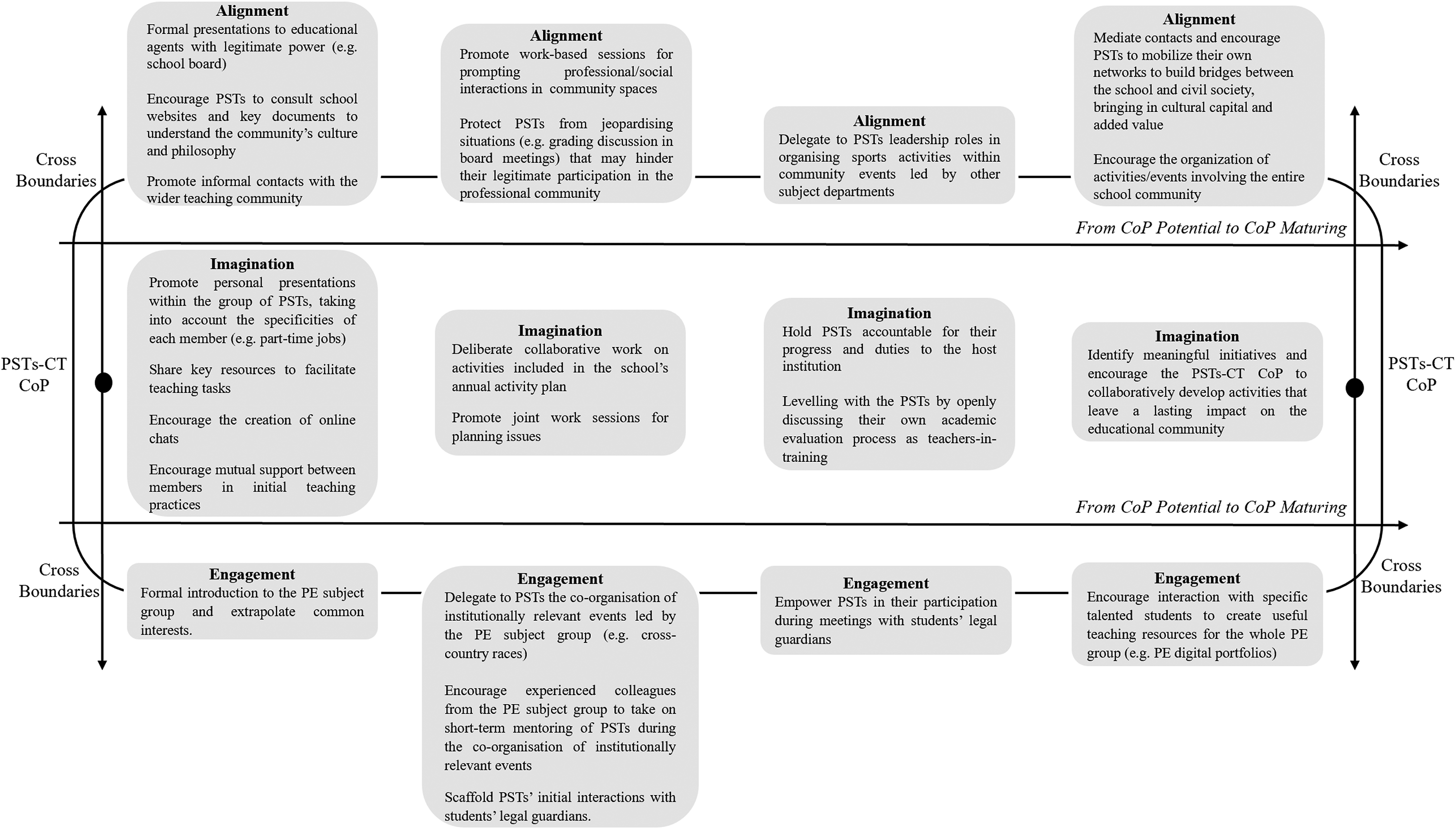
CTs’ facilitation strategies to support PSTs’ immersion into school communities, mapped across the evolving dynamics of the PSTs-CT CoP and the three modes of identification.
Communities of practice within the educational community: examples of interactions between the PSTs-CT CoP and other communities, illustrating different identification modes.
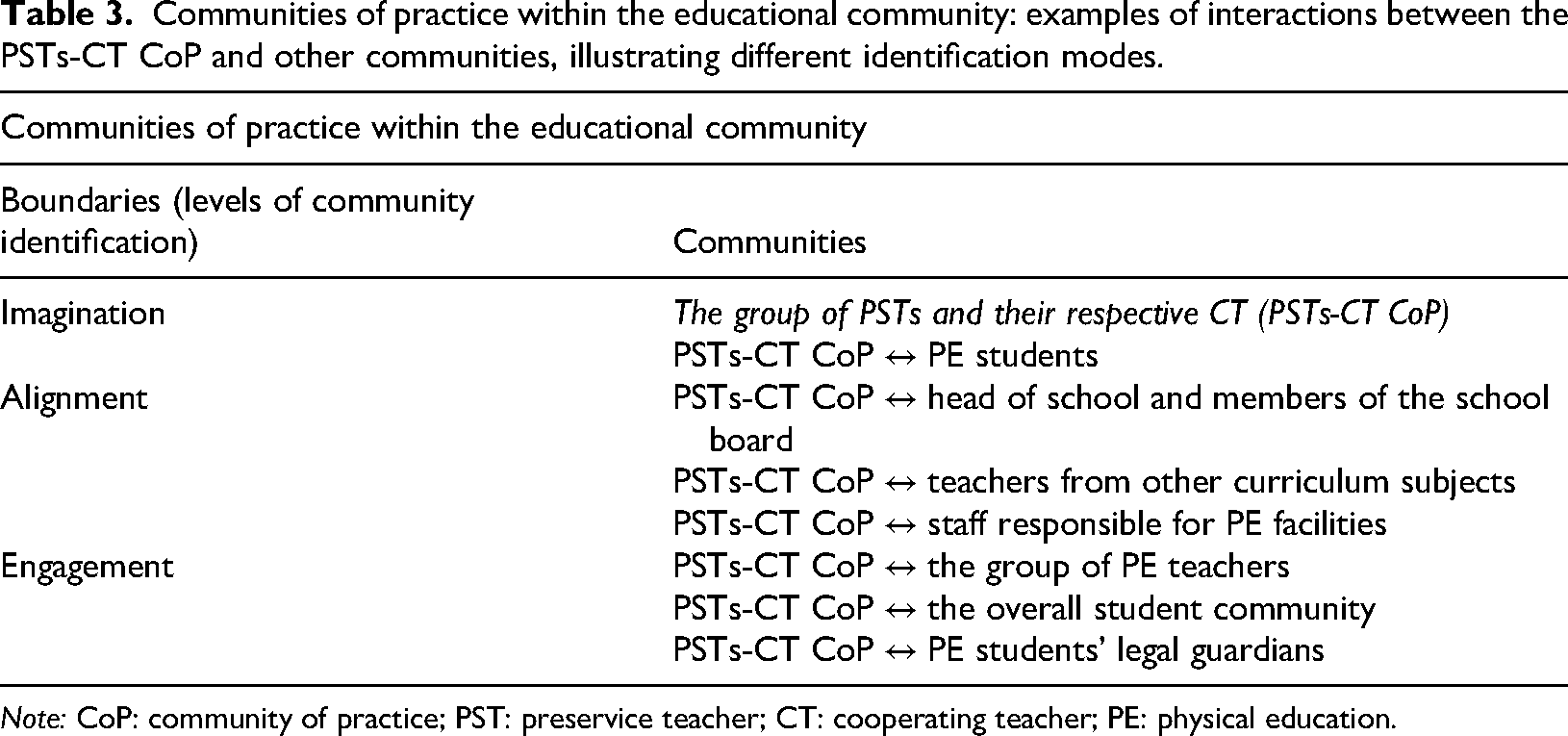
Note: CoP: community of practice; PST: preservice teacher; CT: cooperating teacher; PE: physical education.
Laying the groundwork for participation in the community
At the outset of the school placement, CTs took deliberate steps to support PSTs’ immersion, ranging from formal introductions to fostering early familiarity with schools’ routines and values. Some strategies centred on visibility and recognition within the institution, while others nurtured belonging through peer interaction and informal engagement. Three subthemes were generated through the analytic process: Formalised presentation, Cultural and social induction, and CoP ‘activation’.
Formalised presentation
In welcoming the PSTs, all CTs expressed their intention to become acquainted with the PSTs’ personal circumstances, to encourage them to present themselves, and to facilitate communication channels with other relevant stakeholders. An initial strategy shared by all CTs was the facilitation of formal presentations aimed at ensuring that PSTs were immediately recognised as members of the community: I always escort them and formally introduce them to the head of school. Also, to the operational staff in the printing office, and to the staff managing the PE facilities. These people will greatly facilitate PSTs’ work. (CT4; 1st FG)
The formal presentation was extended to the CoP of PE teachers: ‘In the initial meetings of the PE group and other departments, the CT placed us centre-stage; we had to formally introduce ourselves to the other teachers’ (PST2; 1st FG). Three of the CTs were concerned with understanding the PSTs’ personal circumstances in order to better tailor the demands placed upon them (e.g. the volume of activities in which PSTs were expected to participate) to the expectations of the school and other teachers regarding the work to be undertaken by the PSTs: The CT sent us an email asking us to prepare a brief presentation about our personal attributes, sports experience, teaching curriculum vitae, and professional duties outside the school. (PST1; 1st FG) By experience, I know some of the PSTs accumulate school placement duties with external part-time jobs. I like to articulate this information right away and distribute their workload to ensure that all PSTs will be available to meet all the professional school placement's demands. (CT2; 1st FG)
The intention was to create a flexible work plan that simultaneously clarified professional ethics and expectations regarding the PSTs’ work, established a minimal baseline with which they had to comply, and mitigated potential conflicts with the expectations of those who might demand more from them.
Cultural and social induction
Facilitating PSTs’ rapid appropriation of each school's specific culture was an early concern frequently noted by the CTs. Four CTs deliberately asked the PSTs to access information on the schools’ websites and organisation guidelines: The CT suggested we visit the website and research the school's patron to “absorb” cultural and philosophical aspects. I have been here all my life and didn’t know this. (PST2; 1st FG)
All CTs undertook deliberate initiatives to liaise between the PSTs and other school communities (PE teachers and those from other departments). One strategy consisted of integrating the PSTs into existing social routines (e.g. informal social events within the broader teaching community): The ‘cake day’ initiative contributed to a quicker integration, as we started to meet with teachers from all departments (the teachers brought a cake each week on a rotating basis for teatime). Some of the PE group teachers still talk about the chocolate cake I brought. (PST4; 1st FG)
Regarding the pedagogical work of the PSTs within the PSTs-CT CoPs, the CTs established a link with the legacy left by PSTs from previous years, ‘showing them concrete examples of the work they were expected to produce’ (CT1; 1st FG): Our CT supported us with lots of pedagogical resources from previous years: teaching units, lesson plans, and assessment sheets. This allowed us to analyse and understand what was expected from us. (PST6; 1st FG)
CoP ‘activation’
Within the PST-CT CoP level, the CTs sought to foster the building of a group identity in different ways, with the CoP logo being exemplary: Despite coming from the same faculty's course, several PSTs don’t know each other. I always ask them to create a logo for their group that is different from the logos of past PST groups. All resources (unit plans, etc.) will have their “stamp”. (CT5; 1st FG)
Three CTs took deliberate actions to diminish the potential hierarchical power relations between mentors and mentees, encouraging open communication channels from the outset: ‘A WhatsApp group is immediately created [with PSTs and their CTs as members]’ (CT5; 1st FG); ‘I want PSTs to know that although they are still in training, for me they are like the other teachers. I give them my personal phone number and they can call me at any time’ (CT4; 1st FG).
Another strategy used by all CTs during PSTs’ teaching practice in the first school term was the structuring of lesson delivery through collaborative dynamics among the PSTs: Our CT asked us to attend each other's classes and to step in to help our peers [fellow PSTs] if needed – whether by giving feedback to a student or helping set up activities. Everyone felt more confident knowing we could count on each other's support. (PST3; 1st FG) They realise that everyone needs help, they accept criticism more readily, and they become more open to relationships with their fellow PSTs. (CT3; 1st FG)
Overall, data from the early stages of the school placement pointed to CTs’ efforts to build familiarity, foster communication, and support the initial integration of PSTs into the school setting, where newcomers began to access shared and social practices within the community.
Earning a place in the school community
As the school placement progressed, CTs adopted new strategies aimed at reinforcing PSTs’ involvement across the school community. This facilitation included efforts to increase PSTs’ visibility, build trust, and expand their interactions with other members of staff. Three subthemes were identified: Legitimising newcomers’ place in the community, Recruiting mentoring teams, and Balancing protection and professional exposure.
Legitimising newcomers’ place in the community
A common concern among CTs was to positively shape the impressions that other school teachers would form about the newcomers. CT4, in particular, promoted work sessions in community spaces, aiming to publicly highlight the PSTs’ work ethic and professionalism to the broader teaching community. In the university supervisor's words: In the school visit, the CT and PSTs were working in the teachers’ common lounge. The CT later told me he was strengthening the PE status in the school. A message was sent to the teacher community that the PSTs’ PE lessons were soundly planned beforehand. (University supervisor's log)
A strategy also common to CTs was the ‘use’ of the schools’ annual activity plans to strengthen the skills and institutional position of PSTs in the community: ‘During the cross-country athletics event, we felt like real teachers because we were involved in the event organisation. As the other PE teachers placed their trust, the students saw us as leaders too’ (PST5; 2nd FG). There was a clear and deliberate intention to position PSTs as active contributors within the PE department: Involving PSTs in events organisation led by the PE group allows them to interact with various educational agents (students, parents, other teachers), enhancing their sense of belonging to the school. (CT3; 2nd FG)
Recruiting mentoring teams
Two CTs reported that they created opportunities for other social agents to take on responsibility for PSTs’ immersion into the school community: In the mega athletics event organisation, Alice, an experienced teacher of the PE group was in charge. She monitored the PSTs’ input in the event and was very impressed; they helped in students’ recruitment phase and in taking records. (Participant-observer FN/D)
In keeping with another formal procedure in the school placement duties (teaching PE in primary classes), the PSTs also had the opportunity to teach in other partner schools. In these cases, CTs reached out to their senior PE colleagues from partner schools, inviting them to share in the mentoring of PSTs as part of a collaborative approach to their training experience. CT4 (2nd FG) reported the benefits of these cross-community interactions: They [PSTs] have the chance to get advice from another senior teacher. They get to see different teaching styles and pick up what they think will be useful for their future teaching.
An important recognition within the community at this stage of the school placement, highlighted by two groups of PSTs, was the emergence of closer professional relationships with other senior PE teachers, especially those involved in their temporary co-mentoring: Two 5th-grade teachers from the partner school asked us for some examples of the QR-code resources we used, as well as the content sequence we followed in handball. (PST10; 3rd FG)
Balancing protection and professional exposure
All CTs took protective measures to shield PSTs from situations that could potentially compromise their position within the school community, particularly in their interactions with key stakeholders (e.g. students’ legal guardians). Two CTs also assumed responsibility for potentially sensitive aspects of PSTs’ teaching roles, such as student assessment and grading. Several PSTs valued the CTs’ active role in addressing these issues and, in particular, in providing the necessary justification during formal end-of-term grading meetings, where teachers from different subject areas collectively evaluated students’ performance – a demanding responsibility that PSTs did not yet feel prepared to fully assume: It was mainly for protection. We also think the CT may feel we are not yet fully prepared to lead the assessment process. Student assessment is a sensitive matter that can easily create tensions with parents and other class teachers. (PST8; 2nd FG) In the first school-term assessment with the group of class teachers, the CT did all the talking; we were encouraged to take notes for subsequent group debate. (PST11; 3rd FG)
Channelling PSTs' use of digital platforms available in schools to mediate communication with students and their legal guardians served as a means of assigning them some responsibility in managing critical professional elements, while simultaneously maintaining a cautious distance – a kind of protective shield – from tasks involving very high responsibility and impact on the school community (CT3; 2nd FG). PSTs can interact indirectly with students and their parents through the Google Classroom. They upload resources, videos, and pedagogical feedback; the students know in advance what the next lesson's content will be. (CT4; 2nd FG)
By balancing protection, guidance, and the transfer of responsibility, CTs enabled PSTs to contribute more fully to teachers’ tasks, fostering more reciprocal relationships within the school community.
Responsibility transfer and leadership readiness
As the school year progressed, PSTs were gradually entrusted with responsibilities of greater institutional weight, particularly tasks that implied leading roles within the institutional practices of the school community. The CTs shifted to a less directive supervision style that allowed PSTs to carry out their roles with greater autonomy. Two subthemes were analytically constructed: Delegating extended responsibility, and Managing responsibility and expectations.
Delegating extended responsibility
Particularly from the second school term onwards, there was a widespread tendency for CTs to delegate to PSTs the responsibility of leading the organisation of school events. In two schools, this delegation also extended to cross-institutional interactions, with CTs mediating PSTs’ engagement with external partners: ‘We had the opportunity to organise an orienteering workshop during a field trip to Porto’ (PST4; 3rd FG). A PST in another group added: ‘We were guided [by the CT] on how to establish institutional contacts with the city council to request sponsorships; we had no idea of the level of formality involved’ (PST6; 3rd FG).
With regard to PSTs’ teaching practice, a notable step forward was their more active participation in the assessment of PE students, including face-to-face interactions with legal guardians during formal parent–teacher meetings: In the second school term, although we didn’t do the main talking, the CT asked us to handle a part of the presentation of the students' grades to their parents. We took full charge in the third term. (PST11; 3rd FG)
In contrast, in one school, PST12 (3rd FG) reported ‘having little or no involvement in class board meetings for student assessment’, a situation the respective CT5 explained as ‘the way I usually do things; as a rule, I only let PSTs speak in the meetings later in the school year’ (3rd FG).
Managing responsibility and expectations
As CTs delegated greater responsibility to PSTs, they simultaneously tightened accountability, keeping PSTs in a ‘state of full readiness’ (CT1; 3rd FG). One mechanism of accountability, mentioned by all CTs, was the routine monitoring of PSTs’ professional portfolios – a mandatory resource documenting all teaching activities – which ensured compliance with the formal obligations required by school placement regulations: Midway through the process, I start going through their professional portfolio with them, pointing out underdeveloped items and areas for improvement, making sure it conveys some kind of professional identity – who the PST is as a teacher, a description of the school, what lesson plans and activities they’re applying, and their reflective diary. (CT1; 3rd FG)
The beginning of the third school term brought unexpected tensions within the PSTs-CT CoPs, which CTs could not directly control. Through continued contact with their peer networks of PSTs placed in other schools, some PSTs reported imbalances in the demands placed by different CTs and school management. As one PST explained: We often chat with colleagues in other placements, so we know the load of activities we’re asked to take on at my school is huge compared to theirs; we just hope all this effort will eventually make a difference in our grading. (PST8; 3rd FG)
In response, three CTs expressed the need to address the issue of PSTs’ grading. Their concern was that, without open discussion and clear management of expectations about a fair workload–reward balance, this risked breaking the momentum of PSTs’ professional contribution to the school community: The PSTs are students themselves, so halfway through the third term we started to discuss their school placement grading. They had to make an honest self- and peer-assessment, were encouraged to justify their appraisals, and I added my own observations. To prevent tensions over who was graded higher and whether this was fair, the meeting was held before it could become an issue. I made it clear that, right up to the end of the placement, they still had the chance to improve their grade. (CT4; 3rd FG)
As the school placement drew to a close, and with the PSTs-CT CoPs functioning as a continually productive community, PSTs reached a more mature stage of belonging and contributing more fully to the school community. At this stage, CTs began to take steps to ensure that the PSTs’ contribution would leave a lasting mark on the school.
Returning value to the community
The final school term was marked by several self-initiated initiatives by PSTs aimed at adding value to their school communities. Two subthemes were generated: Preserving legacies and Enriching the school community.
Preserving legacies
One CT encouraged her PSTs to find ways of leaving an indelible mark on the community, suggesting the creation of tangible pedagogical resources as a potential way to do so. Building on this general guideline, the PSTs created multimedia portfolios with sequences of technical actions and learning progressions in roller skating and handball for use by the PE department and by future cohorts of PSTs in the following school year: It's a tribute to this PSTs’ group. They contribute to the teaching resources available to the PE department while leaving a legacy for future cohorts of PSTs. All teachers will know who built these portfolios. (CT1; 3rd FG)
Enriching the school community
Extending PSTs’ interactions with communities beyond the school represented a significant step in caring for the community's interests. In one school: We organized a health-related activity by partnering with a local pharmacy and creating promotional videos about healthy eating and physical activity habits. A nurse also came in, to screen for diabetes and hypertension. (PST9; 3rd FG)
In addition, one of the PSTs in another school tapped into his personal social network to bring in local council resources for future projects at his school: It was a huge achievement; the county's sports senator himself came to the school to give a talk to our students. PST7 told me he was his brother-in-law and had almost “forced” him to involve the council in organising the school seminar. (Participant-observer FN/D)
Overall, not all PSTs reported engaging in boundary-crossing initiatives, but the examples above illustrate the potential for broader community impact when PSTs acted under facilitative conditions (i.e. their CTs’ mediation).
Discussion
This study examined how CTs facilitated PSTs’ immersion in the educational community during a year-long PETE school placement. Specifically, it explored how CTs’ mediation unfolded through the evolving dynamics of the PSTs-CT CoPs and the facilitation of PSTs’ boundary-crossing within their LoPs as they became immersed in the school communities.
The study revealed a complex web of facilitation processes. CTs mediated PSTs’ access to professional experiences (e.g. collaborative learning with fellow PSTs during PE lessons or engagement with key stakeholders such as students’ legal guardians), enabling their progression towards more central roles, such as leading institutional events (Lave and Wenger, 1991). This encompassed both the internal evolution of the PSTs-CT CoPs and interactions with other CoPs across the LoPs. This dual focus aligns with Wenger's (1998) view of CoPs as inward-looking, developing practices and identities, and outward-facing, requiring boundary-crossing to engage with other communities and legitimise newcomers’ participation (Wenger-Trayner et al., 2015). Although professional learning was not the direct focus, immersion was considered an enabler of learning, and the processes observed implicitly created favourable conditions for PSTs' development. For instance, mentoring teams worked to legitimise PSTs as members of the pre-existing school communities, while also exposing them to alternative professional practices that could be adopted, adapted, or rejected—interactions known to contribute to novice teachers' pedagogical development (Silva et al., 2021).
In addition, CTs enacted versatile and differentiated mediation processes. These included: (i) facilitating initial legitimacy through tasks such as engaging with school policy, regulations, and professional routines (Parker et al., 2012; Wenger et al., 2002); (ii) protecting PSTs from prematurely assuming full responsibility in sensitive functions such as student assessment, with CTs temporarily retaining those tasks before gradually transferring responsibilities such as liaising with guardians or external institutions (Clarke et al., 2014; Valério et al., 2024; Wenger et al., 2002); and (iii) managing expectations about balancing PSTs’ professional investment in school life with their final placement grading (Armour and Yelling, 2007).
PETE research has consistently documented the ‘reality shock’ PSTs face at the outset of school placement. Beyond technical challenges, this shock is often triggered by uncertainty regarding institutional expectations (Alves et al., 2019; MacPhail and Tannehill, 2012). In this study, CTs mitigated that initial impact by laying the groundwork for legitimate participation through formal introductions, integration into existing professional routines, and consideration of PSTs’ personal circumstances beyond the work setting. Such immersion processes are critical to ensuring that assigned responsibilities (and PSTs’ levels of active participation) are realistically aligned with their capacity to meet professional expectations (Alves et al., 2019; Armour and Yelling, 2007). Efforts to soften hierarchies were also key, as resident PE teachers sometimes claimed superior status, hindering PSTs’ acceptance as full members of the school community (MacPhail and Tannehill, 2012; Parker et al., 2012). Hierarchical levelling can be pivotal, as it opens communication channels between newcomers and senior members, fosters a collective sense of purpose (domain), supports the development of shared repertoires and mutual engagement (Wenger et al., 2002; Wenger-Trayner et al., 2015), and enhances PSTs’ professional identity development, possibly shaping their immersion and sense of belonging within the school community (Valério et al., 2024).
Ensuring that PSTs secured a place within the school community became the next focus of CTs’ facilitation. PSTs were included in annual activity plans, initially with tasks of lower responsibility (e.g. sporting events). This provided visibility to their contributions and strengthened their identity as community members (Lave and Wenger, 1991; Wenger et al., 2002). CTs also facilitated liaison with senior teachers, engaging them in the mentoring of PSTs through partnerships with other schools or by providing them direct supervision during events (e.g. inter-school athletics meetings). By acting as community brokers, CTs mediated cross-boundary interactions, expanding PSTs’ learning networks and opening access to broader repertoires of practice (Clarke et al., 2014; Wenger et al., 2002; Wenger-Trayner et al., 2015; Young and MacPhail, 2015). A broker connects CoPs by translating and transferring meanings across boundaries, enabling the circulation of knowledge and practice (Wenger et al., 2002). Such mediation expanded PSTs’ agency, offering multiple ways of acting and being within shared community norms, and helping them balance collective belonging with individual identity (Valério et al., 2024).
Another central component of CTs’ facilitation concerned the dynamic interplay between gradually transferring professional responsibilities to PSTs (e.g. growing leadership of institutionally significant activities) and scaffolding these interventions by balancing professional exposure with protective measures. This dynamic was particularly evident in sensitive institutional tasks involving cross-boundary interactions with other educational stakeholders, such as student assessment or communication with students’ legal guardians (Vinson et al., 2021). Rather than excluding PSTs from sensitive responsibilities, CTs channelled their participation into safer and temporarily peripheral roles. Multimedia platforms mediated this process, allowing PSTs to remain engaged in tasks that might otherwise have been beyond their reach (Farias et al., 2023). Likewise, balancing scaffolding with increased accountability through portfolio monitoring and structured peer/self-assessment of PSTs’ performance aimed to ease tensions within the PSTs-CT CoPs, enabling them to mature further. This dual role positioned CTs as both facilitators of immersion and gatekeepers of certification, as in this PETE context the grades they awarded to PSTs contributed significantly to the overall evaluation determining their eligibility to teach (Valério et al., 2024). Thus, CTs’ scaffolding not only supported PSTs’ progression but also preserved trust and cohesion, ensuring the CoP was functional as a safe site of professional learning. Such facilitation is critical to sustaining community wellbeing and fostering members’ mutual engagement, aimed both at professional learning within the CoP and at meaningful contributions to the life of the wider community (Wenger et al., 2002).
Returning value to the community became evident towards the end of the school placement, as CTs’ intervention grew less directive and PSTs exercised greater agency and initiative. As PSTs appeared to gain wider recognition as contributing members (e.g. senior teachers adopted the professional resources they created), some began to act as community caretakers – what Wenger et al. (2002) describe as stewards of the domain – reflecting emerging professional worth and identity. Creating digital portfolios with pedagogical resources was one way they signalled a willingness to support future cohorts. Another case involved a PST drawing on his personal network to bring external resources into the school, showing how social capital may be mobilised in service of the community (Vinson et al., 2021; Wenger-Trayner et al., 2015). From an LoP perspective, such initiatives suggest that boundary-crossing can generate added value (Wenger-Trayner et al., 2015). Dialogical learning (i.e. through coordination, reflection, and mutual recognition) seemed to underpin these processes, supporting both PSTs’ legitimacy and the community's capacity to engage across boundaries. While modest in scope, these instances show how PSTs may enrich their CoP and its positioning in the wider school landscape.
Final considerations
This study uncovered the intricate web of mediation processes enacted by CTs to facilitate PSTs’ immersion in educational communities during school placements in a PETE programme. It highlighted how immersion was shaped by the interplay between the internal development of the PSTs-CT CoPs and their boundary-crossing interactions with other agents and CoPs within the LoP.
As a case study, our aim was to foreground effective facilitation practices that may inform teacher educators and researchers. However, we did not fully examine the power dynamics that often shape PSTs’ professional learning, including hierarchical tensions, resistance from established members, or the uneven acceptance of PSTs as legitimate participants. Such factors could have offered deeper insight into how community belonging contributes to the development of the professional competencies required for competent teaching. Future studies could extend this work by examining these challenges and their implications for PSTs’ learning in greater depth.
Future research would benefit from prolonged and immersive qualitative fieldwork, such as ethnographic approaches. With their sustained presence in daily school life, ethnographers are well placed to capture the dynamic and often inconsistent nature of professional learning, while also offering a proximal understanding of the relationships, interactions, and emotions through which PSTs and school members negotiate belonging and participation. Such depth could generate richer insight into the interplay of facilitation, power, and identity across CoPs. At the same time, the facilitation strategies identified here offer a practical basis for mentor training within PETE programmes. Strengthening university–school collaboration, alongside investment in the professional development of teacher educators, university supervisors, and CTs, remains essential: effective mediation depends on these actors working in concert, aligning academic preparation with the lived realities of school practice. Such coherence can enhance the consistency, depth, and sustainability of PSTs’ immersion and professional growth across placement settings.
Supplemental Material
sj-docx-1-epe-10.1177_1356336X251399869 - Supplemental material for Cooperating teachers as facilitators of preservice teachers’ immersion in the educational community: A physical education teacher education case study
Supplemental material, sj-docx-1-epe-10.1177_1356336X251399869 for Cooperating teachers as facilitators of preservice teachers’ immersion in the educational community: A physical education teacher education case study by Joaquim Teixeira, Isabel Mesquita and Cláudio Farias in European Physical Education Review
Supplemental Material
sj-docx-2-epe-10.1177_1356336X251399869 - Supplemental material for Cooperating teachers as facilitators of preservice teachers’ immersion in the educational community: A physical education teacher education case study
Supplemental material, sj-docx-2-epe-10.1177_1356336X251399869 for Cooperating teachers as facilitators of preservice teachers’ immersion in the educational community: A physical education teacher education case study by Joaquim Teixeira, Isabel Mesquita and Cláudio Farias in European Physical Education Review
Footnotes

Funding
The authors disclosed receipt of the following financial support for the research, authorship, and/or publication of this article: This work was supported by the Portuguese Foundation for Science and Technology (Grant No. 2022.14024.BD) (DOI: https://doi.org/10.54499/2022.14024.BD)
Declaration of conflicting interests
The authors declared no potential conflicts of interest with respect to the research, authorship, and/or publication of this article.
Supplemental material
Supplemental material for this article is available online.
Notes
Author biographies
References
Supplementary Material
Please find the following supplemental material available below.
For Open Access articles published under a Creative Commons License, all supplemental material carries the same license as the article it is associated with.
For non-Open Access articles published, all supplemental material carries a non-exclusive license, and permission requests for re-use of supplemental material or any part of supplemental material shall be sent directly to the copyright owner as specified in the copyright notice associated with the article.
