



Abstract
Although young children generally enjoy physical education (PE), little is known about what they enjoy and why. The aim of this study was to qualitatively explore what 5- to 6-year-old children like and dislike about PE. Seventy-seven children drew pictures of what they both liked and disliked about PE and were then interviewed to explore their reasons. Content analysis of the drawings and reflexive thematic analysis of their transcript data revealed common themes across both positive and negative perspectives, including movement skills, sports, playground-based games, use of equipment, and social interactions. Differences emerged in the sub-themes; for example, under the theme of sport, children expressed liking both individual and team sports, citing fun and perceived benefits, while team sport was only disliked most prevalently due to lack of competency. Children provided explanations of their likes and dislikes in PE, along with the reasons behind them, resulting in five recommendations for practice: (1) clearly and consistently outline the benefits of PE to children, (2) ensure activities provide an optimal level of challenge, (3) foster socially safe environments, (4) incorporate equipment within activities wherever possible, and (5) shift the focus away from sport and knock-out games to more inclusive and fundamental movement skill activities. Children's voices around their PE experiences revealed perceived facilitators and barriers to their enjoyment. A deeper understanding of young children's enjoyment in PE offers valuable guidance for researchers and practitioners to design high-quality, meaningful PE programmes that prioritise enjoyment and positive experiences to foster beneficial outcomes.
Introduction
A key aim of physical education (PE) is to provide children with opportunities to develop competence, supporting their long-term health (Department for Education, 2013a; United Nations Educational, Scientific and Cultural Organisation, 2013). While physical competence is essential for activity, early positive experiences in PE are crucial for sustained participation (Hills et al., 2015; Kirk, 2005). Enjoyment significantly influences physical activity (PA) and engagement in PE (Domville et al., 2019; Eberline et al., 2018). However, enjoyment is not explicitly addressed in the English National Curriculum (Department for Education, 2013a) as a pathway to positive outcomes. Nonetheless, effective teaching, a range of activities, and both competitive and non-competitive formats can enhance primary pupils’ engagement and enjoyment (Department for Education, 2013b). Enjoyment is a key motivator for PA (Bajamal et al., 2024) and is linked to increased self-esteem (Lohbeck et al., 2016).
Enjoyment has been defined in various ways, with this study adopting Scanlan and Simons’ (1992) definition: a positive affective response to the sport experience, reflecting feelings and perceptions like pleasure, liking, and experiencing fun. This aligns with how young children perceive enjoyment in PE: fun, interesting, and exciting (Cairney et al., 2012; Moore et al., 2009, cited in Adank et al., 2024: 284). Enjoyment in PE is positively linked to motivation (Navarro-Patón et al., 2019; Yli-Piipari et al., 2009) and participation in PA outside school (Bungum et al., 2000; Sanchez-Oliva et al., 2014). According to self-determination theory, intrinsic motivation, an innate drive in all of us from birth, is nurtured or diminished by social factors (Ryan and Deci, 2000). Specifically, intrinsically motivating activities are seen as fun and enjoyable (Ryan and Patrick, 2009). Fun is central to meaningful PE experiences (Beni et al., 2017), while its absence can reduce participation (Koekoek et al., 2009) and negatively impact lifelong PA (Simonton et al., 2022). Promoting enjoyment in PE early on is therefore essential.
Quantitative research shows nearly half of children aged 5–14 rate PE as their favourite subject (Coulter and Woods, 2011), with a more recent study highlighting high levels of enjoyment in primary PE (Simonton and Shiver, 2021). In one study, among 11- to 12-year-olds, girls valued approval and competition, while boys enjoyed challenge (Oya and Ishihara, 2022). However, PE enjoyment tends to decline from late childhood to early adolescence, especially among girls (Cairney et al., 2012; Huhtiniemi et al., 2019). Navarro-Patón et al. (2024) found that the primary school children in their sample enjoyed PE significantly more than secondary students, and boys reported greater enjoyment than girls at both levels.
Qualitative studies indicate that early adolescents’ enjoyment depends on perceived competency, autonomy in activity choices, appropriate exertion levels, and the PE uniform (Lewis, 2014). Adank et al. (2024) conducted focus groups with 10- to 12-year-old children where 10 dimensions were reported by the children that made PE enjoyable: exploratory learning, tasks, communication, instructions, rules and expectations, PA time, grouping, learning process, learning together, and limited performance comparisons. Domville et al. (2019) identified three themes in focus groups with 7- to 11-year-olds: individual preferences (e.g. lesson duration and activity choices), peer interactions (e.g. conflicts and team fairness), and instructor behaviour (e.g. teacher involvement). This qualitative work is valuable; however, there are limited data on PE enjoyment among children under seven, and little is known about what factors younger children consider important for enjoyment (Domville et al., 2019).
It is essential to give young children opportunities to be heard, especially in important decisions regarding PE. Research has largely overlooked this age group, highlighting the need for creative methods that could provide new insights and inform future PE practices, fostering enjoyment at all school levels, and encouraging lifelong PA. Since enjoyment is a key factor in children's engagement, with little guidance in the National Curriculum (Department for Education, 2013a) on fostering enjoyment, this study aimed to explore young children's PE enjoyment using the Write, Draw, and Tell method – a developmentally appropriate participatory approach to qualitative enquiry (Angell et al., 2015; Knowles et al., 2013). Research questions guiding this study were: (1) What do 5- to 6-year-old children like and dislike about PE? (2) Why do they feel this way about these aspects of PE?
Methods
Study design
This study formed part of a larger cluster randomised controlled trial (RCT) called the Skill Acquisition Methods Fostering Physical Literacy in Early-Physical Education (SAMPLE-PE; for more information, see Rudd et al., 2020). This trial investigated the efficacy of linear and nonlinear pedagogies within PE to improve motor competence – enjoyment was not a focus of the intervention. Ethical approval was granted by the university research ethics committee (Ref. 17/SPS/031). The data presented here were collected at baseline from intervention and control schools (January 2018), before the delivery of the intervention arms and after approximately half a school year of PE teaching by their usual Year 1 class teacher. All children participated in the Write and Draw procedure. A sub-sample was asked to participate in the Motivation Assessment Tool for Physical Education (MAT-PE; Davies et al., 2021) and provided interview data alongside their drawings; both were used in the analyses for this study.
Participants
Informed written head teacher and parent/guardian consent was obtained for 360 children, as well as child assent (Rudd et al., 2020). Children were from 18 Year 1 classes (ages 5–6) across 12 schools located within a large city in Northwest England. A sub-sample of 77 children (Mage = 5.96 years, SD = 0.31, 51.95% girls, 58.44% White British), approximately two to five children per class, were selected from the main sample to participate in the MAT-PE (Davies et al., 2021). Most children (92.20%) were from the most disadvantaged areas of the city. Due to a high proportion of children in these schools having English as a second (or even third) language, children were selected based on whether their respective class teachers deemed them able to speak and listen in English to an adult visitor to the school.
Measures and procedures
Listening to young children's voices and involving them in decisions that affect their lives is essential (Harcourt and Einarsdottir, 2011; United Nations, 1989). Nonetheless, collecting data on young children's enjoyment of PE presents methodological challenges, as they may struggle with the questions and formats of quantitative tools. Focus groups also face issues related to group size and children's social and language skills (Gibson, 2007; Knowles et al., 2013). Creative methods can effectively engage younger children in qualitative research (Hennessy and Heary, 2005). The Write, Draw, and Tell method is a developmentally appropriate participatory approach, allowing children to convey their experiences to adults (Angell et al., 2015; Knowles et al., 2013). This technique positions children as experts and gives them time to reflect and construct ideas, rather than immediate answers (Gauntlett and Holzwarth, 2006). Building on this, the MAT-PE (Davies et al., 2021) uses the Write, Draw, and Tell method to capture motivational perceptions, including enjoyment, among 5- to 7-year-olds in PE.
The MAT-PE is a pragmatic, mixed-method tool, created to capture richer insights of young children's motivational experiences in PE. The lead author administered the MAT-PE, which includes seven stages. However, for this study and its focus on enjoyment, only stages 1–3 are relevant and outlined below (for the entire MAT-PE procedure, please see Davies et al., 2021). The first stage consisted of the Write and Draw activity and was conducted after morning registration on the first day of data collection to minimise the influence of other assessments. Children were asked to draw what they liked and disliked about PE on separate sides of an A4 paper. They could add labels, sentences, and use colours if they wished. Teachers and teaching assistants were instructed not to influence responses but to note any verbal explanations. Children had 30 minutes to complete the task; only drawings from those with consent were analysed. A sub-sample of children from each class (∼5 children) participated in the remainder of MAT-PE, where the set-up was more akin to a one-to-one interview. Each child was individually escorted to a quiet and safe interview space. Teachers and teaching assistants were not present in the interview space; only the child and the interviewer were. During stage 2, children were introduced to a Dictaphone, recorded their names for familiarity, and had a microphone clipped to their collar or jumper. A PE-themed card-matching game was used to build rapport before the main discussion. This rapport-building stage took approximately 5–10 minutes, the length of time it took for the child to start conversing with the interviewer via the pair-matching game. For stage 3, children were shown their own drawing and asked to describe it. The interviewer asked follow-up questions to clarify meanings and explore the reasons behind their likes/dislikes. This third stage lasted 5–10 minutes, depending on how much the child talked about their drawing. After completing the MAT-PE, children received a sticker and were accompanied back to their classroom. The process aimed to gather authentic insights into children's experiences of PE while minimising external influence.
Data analysis
Children's drawings were coded deductively through content analysis (outlined in the next section). Interview transcripts were coded inductively to best represent the meanings communicated by participants (Clarke and Braun, 2013) and semantically (i.e. a descriptive analysis of the data) to present the content as communicated by children. Analytical decisions evolved over time (2018–2022) and were shaped by various influences (see Supplementary Material A).
Content analysis
Content analysis systematically evaluates the symbolic content of recorded communication, including text and images (Kolbe and Burnett, 1991; Stemler, 2015). Given the number of drawings to be analysed (n = 154; two per child), content analysis was deemed appropriate for analysing the children's drawings. The QSR NVivo 12 software package was used for coding. An example of the content analysis process is provided below:
The image below (Figure 1) includes text and drawings, depicting two individuals and two triangles. Prior to coding, the following exchange was noted in the transcript: Researcher: I asked you to draw a picture of what you like about PE – so what have you drawn here? 5-year-old female child: That's when I'm running and that's when I'm skipping.
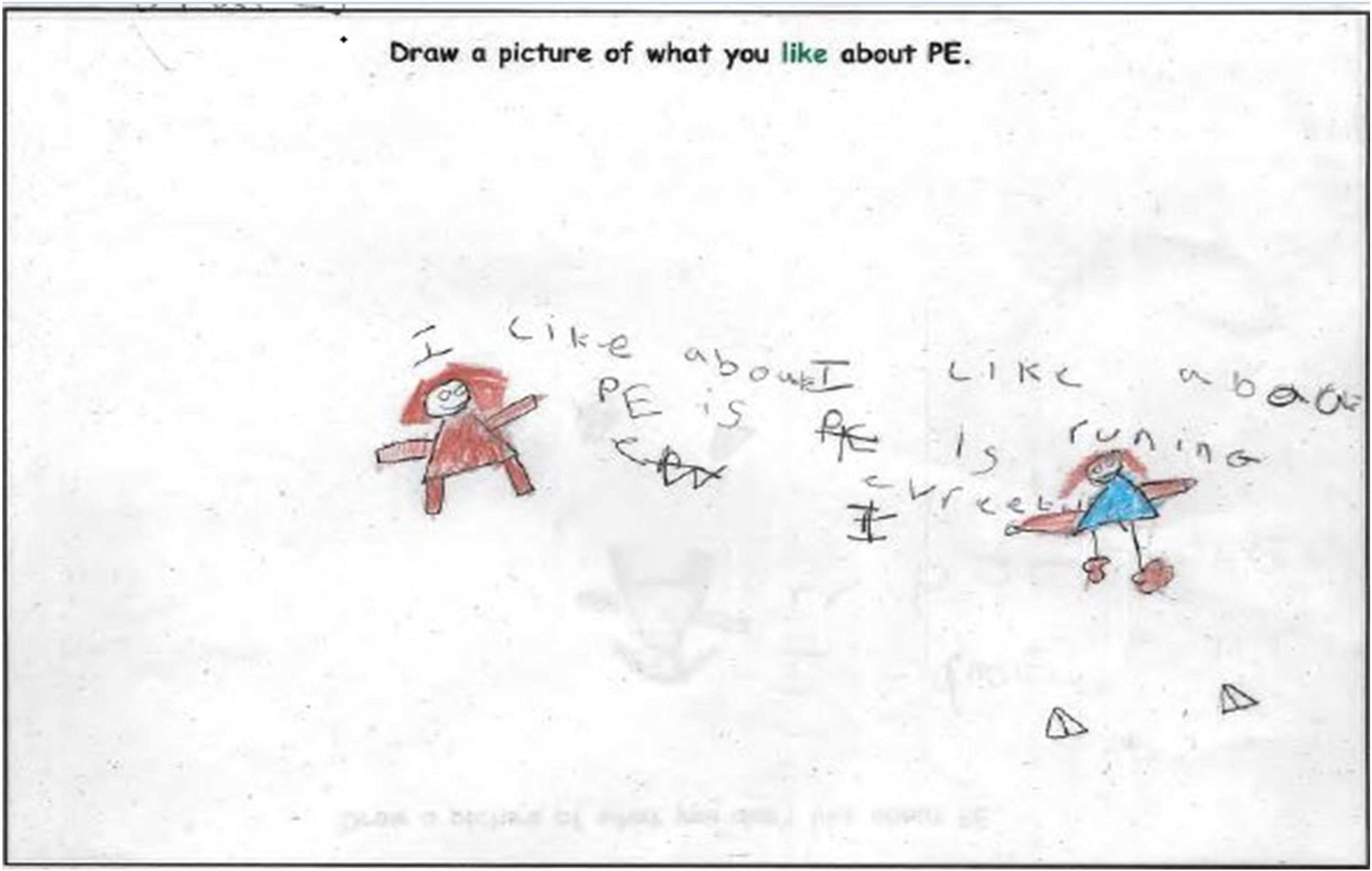
A 5-year-old girl's drawing of what she likes about PE.
Although the transcript does not mention the triangles, the child referred to herself using ‘I’ in both the transcript and drawing. Therefore, it was inferred that both figures represent the same child and were coded as ‘self’, rather than ‘self’ and ‘other child’. The activities are coded as ‘running’ and ‘skipping’.
Across the drawings (n = 154), additional codes included ‘football’, ‘bench’, ‘kicking’, ‘swimming’, ‘basketball’, ‘exercising’, ‘catching’, ‘balancing’, ‘getting hurt’, ‘everyone shouting’, and ‘having to listen’. This list is not exhaustive but illustrates the variety of codes generated. Codes were categorised under either ‘like about PE’ or ‘dislike about PE’, depending on the side of the paper on which they were drawn. Coding strategies and labels were discussed reflexively with a co-author (ZK; for her positionality statement, please see Supplementary Material B) to ensure comprehensive analysis.
Following coding, data were organised into pen profiles by the first author (see Supplementary Material B for author positionality statement). Pen profiles are diagrammatic representations used to summarise large amounts of information clearly and concisely, displaying themes, sub-themes, and the frequency of mentioned or drawn objects (MacKintosh et al., 2011). For an object to be coded, verification through drawing text and/or transcript data was required to reduce the risk of misinterpretation. This method has been used in previous studies on primary school children's playground experiences (Knowles et al., 2013), attitudes towards fitness (Parnell et al., 2021), and PA (Nally et al., 2022).
Reflexive thematic analysis
Analysis assumed an essentialist epistemology whereby interpretation of children's meaning is minimal and largely uninterrogated by the researcher. Byrne (2022) reports a comprehensive way to present qualitative analysis, spanning epistemology, orientation, and coding. This framework of presentation is used here. When coding reasons why children liked or disliked aspects of PE, the researcher noted what was present and its frequency, rather than considering both frequency and meaningfulness (i.e. a constructionist epistemology). Analysis also adopted an experiential orientation, recognising that participants’ thoughts, feelings, and experiences reflect internal, personal states. The researcher was interested only in the meanings provided by the children, not the socio-cultural factors underpinning their experiences (i.e. a critical orientation). Data familiarisation was conducted first, through transcribing the audio recordings and reading through the transcripts. Systematic data coding and generating initial themes were conducted inductively by the first author, then discussed with a co-author (EB) to enhance trustworthiness, i.e. developing and reviewing themes (see Supplementary Material B for author positioning). For example, the initial code ‘falling’ (e.g. children falling over in PE) was revised to ‘lack of competency’ following discussion, reflecting that falling was interpreted as a result of limited skill rather than an isolated incident. Similarly, ‘falling’ was originally coded as ‘pain’, but unless the child explicitly referred to pain (e.g. ‘it hurts’), it was re-coded as ‘lack of competency’. The full coding process, from pen profiles to refined codes, was shared with the wider research team via a video presentation. Feedback was gathered on coding decisions, including one suggestion to adopt labels from self-determination theory. However, the inductive approach was maintained, with self-determination theory considerations acknowledged in the discussion. This process enhanced transparency and rigour and aimed to further refine, define and name the themes.
The findings section presents an analytic commentary (i.e. writing the report), using participant quotes to illustrate why children liked or disliked aspects of PE. Quotations are labelled by participant gender (boy = B, girl = G), ID number (1–77), and school (1–12); for example, G51/7 refers to girl 51 from school 7. Reasons for liking or disliking aspects of PE mentioned fewer than three times were excluded from the main findings but are included in Supplementary Material C to ensure all voices are represented.
Findings
This study explored young children's enjoyment of PE by addressing two research questions: (1) What do children like and dislike about PE? and (2) Why do they feel this way?
Content analysis of the children's drawings is presented through two pen profiles: ‘Likes about PE’ (Figure 2) and ‘Dislikes about PE’ (Figure 3). Five themes were shared across both (movement skills, social, use of equipment, playground-influenced games, sport), with ‘Dislikes about PE’ featuring an additional theme (pain). Notably, 18 children (23.4%) reported no dislikes, even when prompted. In contrast, every child drew at least one aspect they liked about PE, and only two (2.6%) reported liking everything.
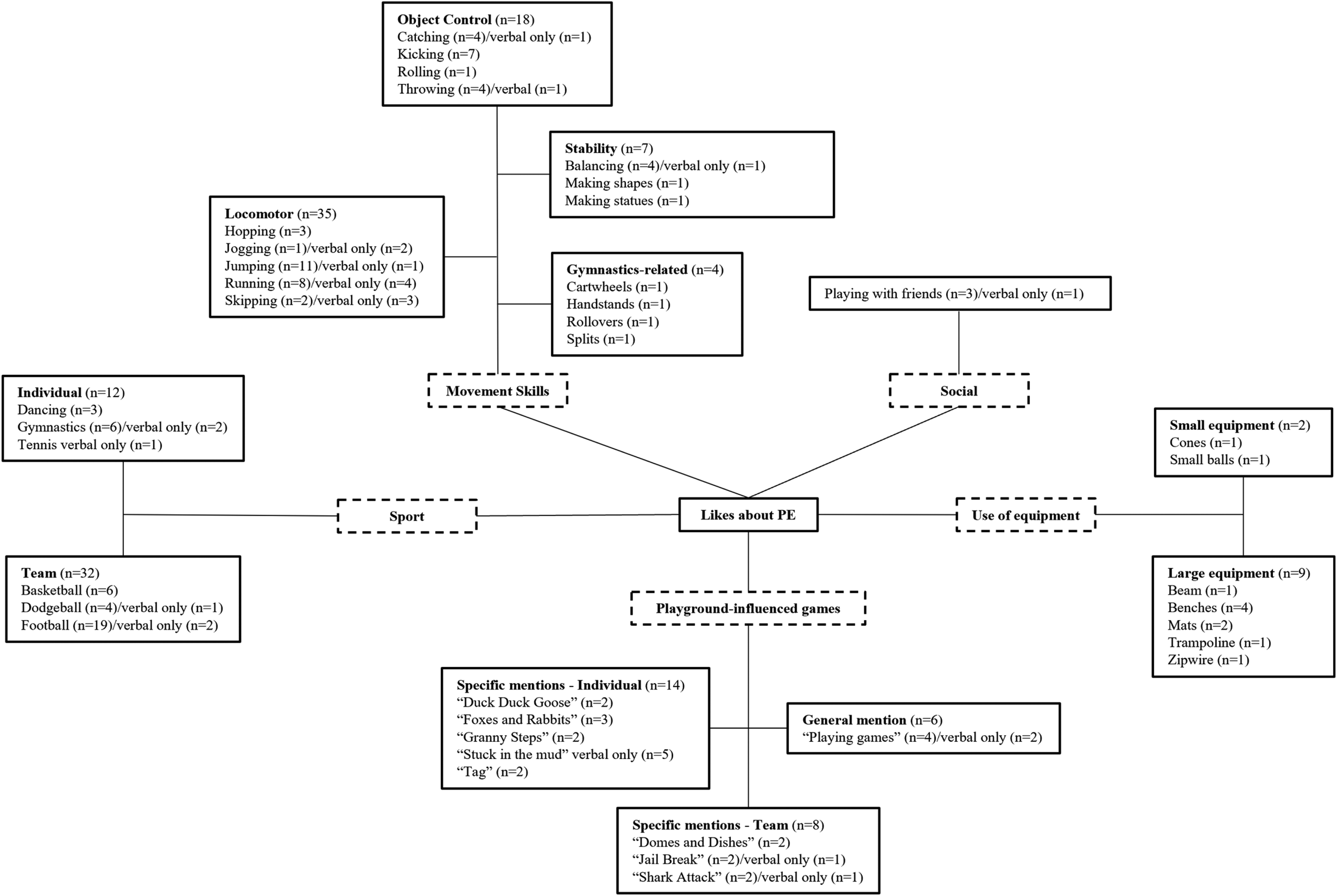
Themes and sub-themes identified through children's drawings about what they like about PE.
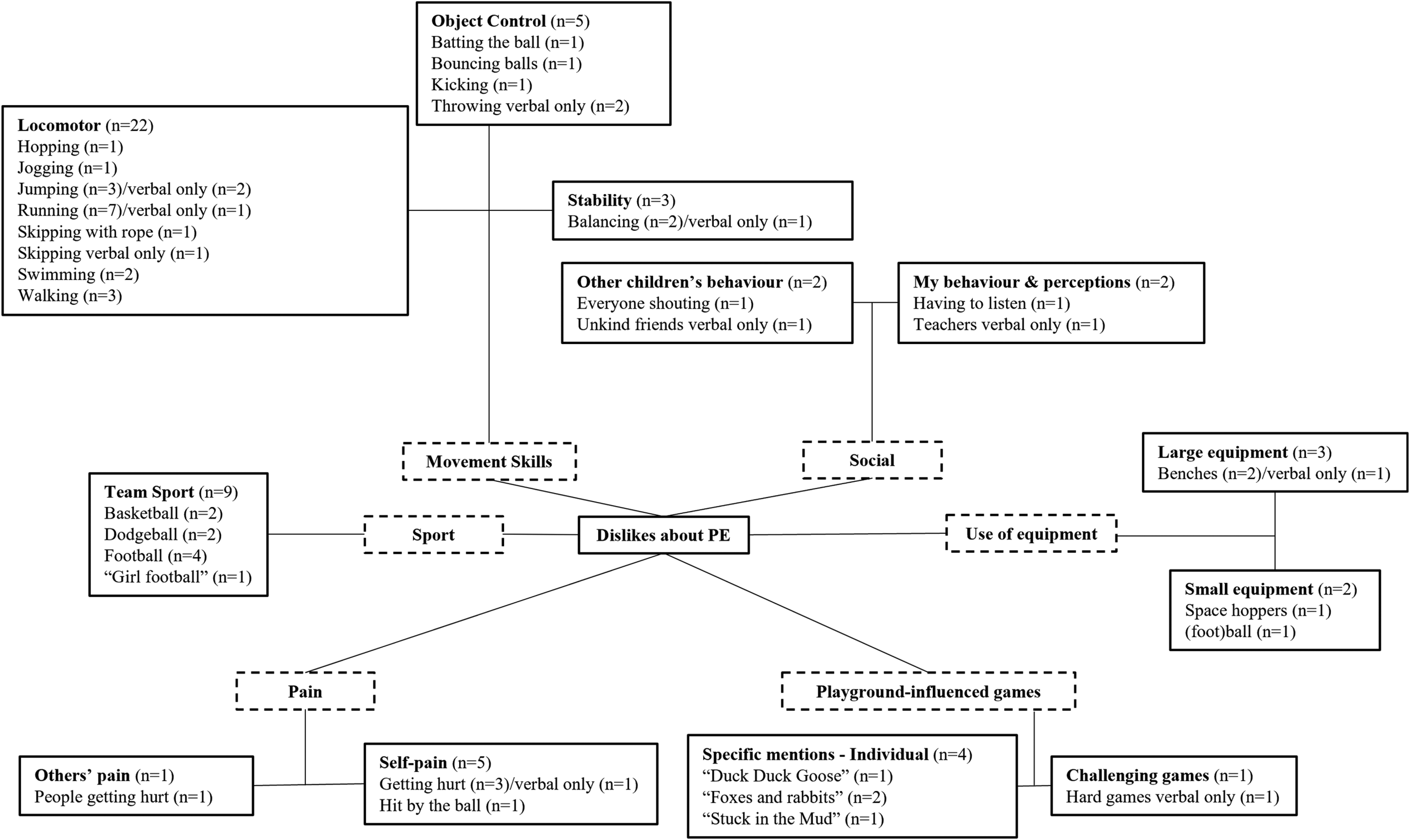
Themes and sub-themes identified through children's drawings about what they dislike about PE.
These findings highlight the importance of exploring both enjoyment and dissatisfaction to understand the full range of children's experiences. As most themes appeared across both categories, the results are presented thematically, beginning with movement skills and ending with pain.
Movement skills
Locomotion
Children liked five locomotor movements and disliked seven, with all five liked movements also appearing in the disliked data. Common reasons for liking locomotor movements were: goals (n = 3; e.g. ‘I want to learn how to skip to 100’ (G73/12)), speed (n = 4; e.g. (running) ‘Because I like to go super fast’ (B39/6)), fun (n = 8), and seeing the benefit (n = 8).
Some children reported having goals in PE, supporting Palmer and Wehmeyer's (2003) finding that children as young as five years old can set goals. With proper support, children can set goals from an early age (Lysyuk, 1998; Pritchard-Wiart et al., 2019). They can set achievable goals, comparable to those set by parents (Vroland-Nordstrand et al., 2016). Mastery motivation, driven by their internal desire to improve, supports this process (Rudisill, 2016). Setting SMART goals (Locke and Latham, 1990) positively influences PE enjoyment in 11- to 12-year-old children (Gerani et al., 2020). Teachers who foster a task-oriented climate may boost children's enjoyment of PE (Rudisill, 2016).
Of the eight children who reported movement skills were fun, one child described mirroring (an activity in PE) as being ‘funny’ because ‘one person does something and the other person copies you’ (G63/10). Eight children recognised various benefits of PE. Some linked it to health, saying it is ‘exercise and exercise is good for you’ (G52/8). Another said it ‘makes you learn more’ (G46/7), while one child reflected more deeply, saying it helps you ‘get more out of life’ (B2/1). The ‘learn more’ comment was linked to a drawing of three identical-looking girls doing different activities: ‘playing dodgeball’, ‘kicking the ball’, and ‘having fun’ (see Figure 4). The child elaborated that weaving in and out of cones and kicking a ball helps them learn, particularly because they ‘wanna play football’ (G46/7), suggesting either personal motivation or effective teaching alignment with their interest (Ahmadi et al., 2023). By contrast, the child who said PE helps you ‘get more out of life’ drew a simple self-portrait (Figure 5). Though the figure appeared to be still, the child explained he enjoys running, sees it as exercise, and associates it with fitness and a fuller life (B2/1).
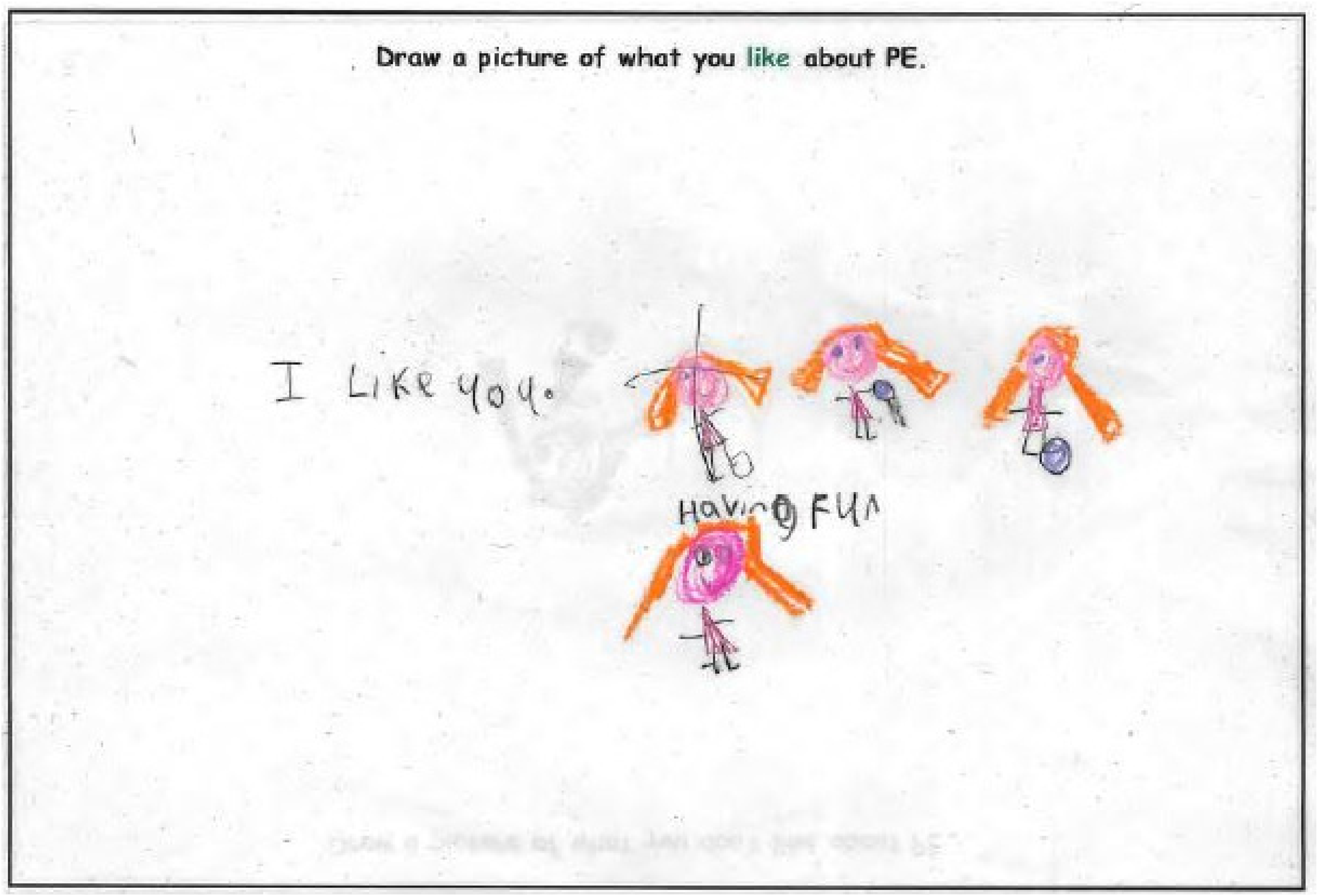
Drawing from a 5-year-old girl depicting herself doing multiple skills in PE.
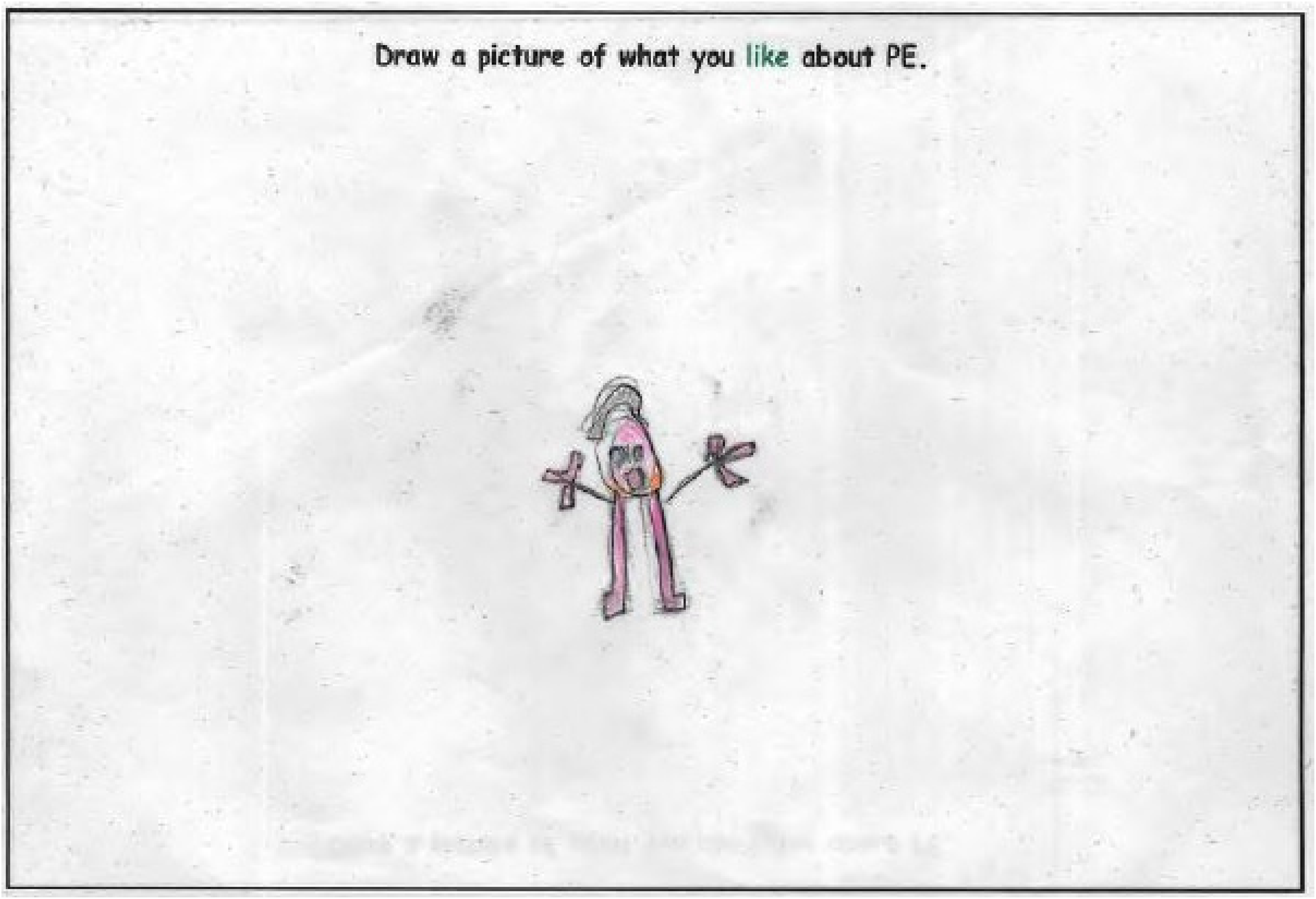
A self-portrait in PE from a 5-year-old boy.
From a self-determination theory perspective, identified regulation in PE (recognising its benefits; Ryan and Deci, 2017) positively relates to intrinsic motivation, effort, and intention to exercise, while reducing boredom (Deci, 1971; Ntoumanis, 2001). Children who seek challenges, like learning to kick a ball, are said to be more likely to persevere in PE (Ferkel et al., 2017), supporting holistic development (Bailey, 2006; Bailey et al., 2009). Teachers can enhance this by making activities enjoyable and briefly highlighting their benefits (e.g. physical, social, and emotional) or involving children in discussions about them.
Children reported disliking locomotor movements due to lack of competency (n = 3; e.g. ‘because I keep falling down in the water’ (B39/6)), fear (n = 3; ‘I’m afraid (of diving)’ (B35/6)), bad sensations (n = 3; e.g. ‘because it (skipping) makes me dizzy’ (G51/7)), pain (n = 4; e.g. ‘because it (star jumps) hurts my shoulders’ (G44/7)), and tiredness (n = 6), the most common reason. The child who mentioned ‘falling down in the water’ (B39/6) drew himself swimming on his back (Figure 6) and noted this was the only aspect of PE he disliked. Notably, this was the only school in the sample with an on-site swimming pool. Another child also drew a pool in their dislike image (B35/6), and no swimming pools appeared in any of the ‘like’ drawings from that school.
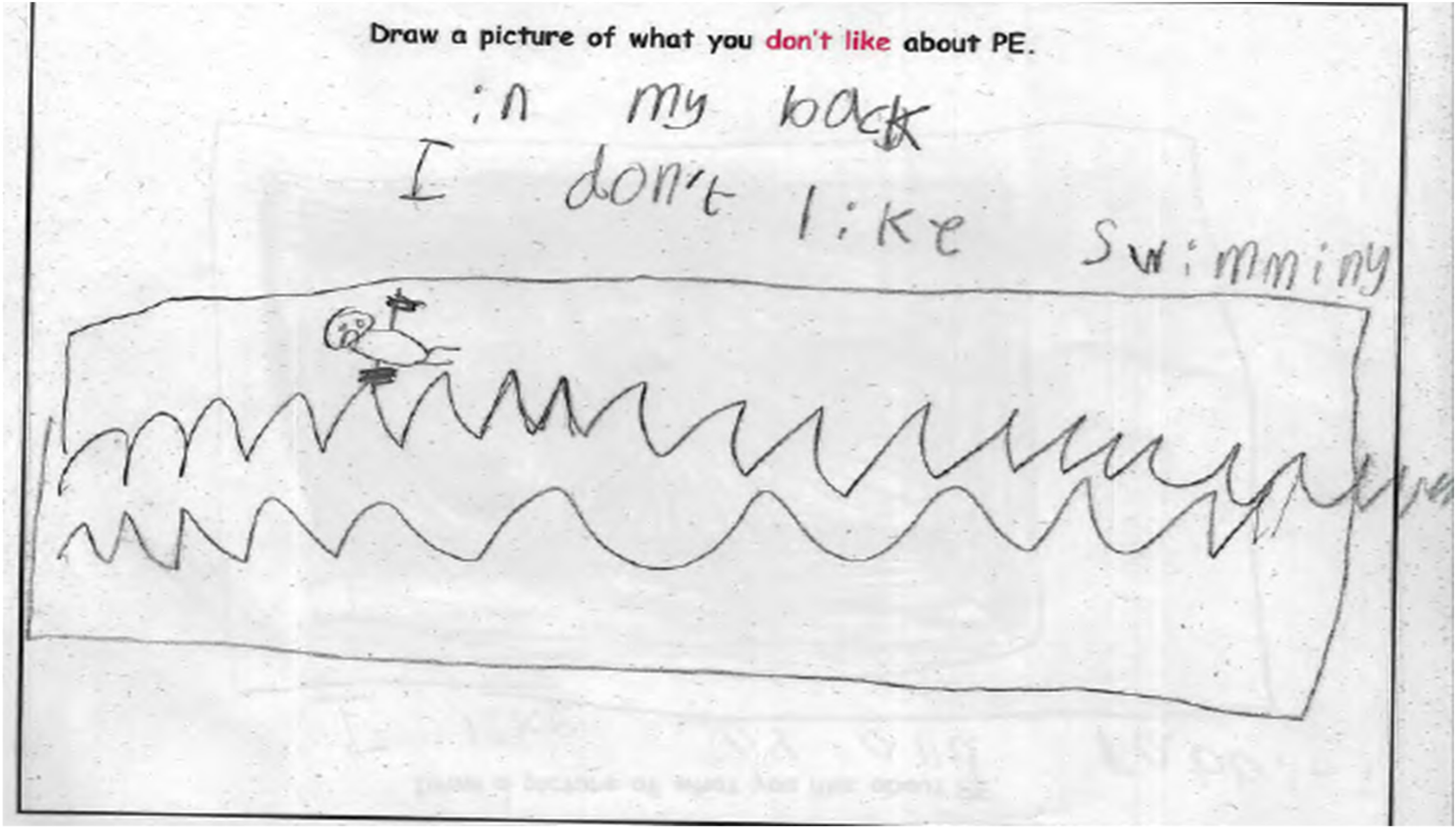
A drawing from a 5-year-old boy swimming on his back.
Young children, like those in this study, often confuse effort with ability (Nicholls, 1978), which consequently means children remain engaged in activities regardless of skill level (Harter, 1988). Young children often have an inflated sense of competence (Spessato et al., 2013). However, some children in this sample recognised their lack of ability, which negatively impacted their engagement.
Bad sensations, such as dizziness from running or skipping, were distinct from pain, as children did not report being injured. Pain was described in relation to head, shoulder, leg, or foot discomfort from activities like running and jumping. A study by Sollerhed et al. (2013) found that 8- to 12-year-olds engaging in higher levels of PA and fitness reported less pain, suggesting they had learned to cope with it. These children, being older, had more PA experience than those in this current study. Though pain was mentioned by only a few children (n = 4) in this sample, it also appeared in sub-themes like stability (n = 1), team sport (n = 2), and equipment (n = 1), as well as in general pain (n = 6) unrelated to PE activities. Over time, children may report less pain in relation to PE dislikes, but further longitudinal research is needed.
Tiredness was the most common reason for disliking locomotor movements. Heemskerk et al. (2023) found that more physically active children report less tiredness. As children mature and gain more PA experience, they may feel less tired. Additionally, if PE lessons are enjoyable, children may perceive less fatigue, engage for longer, and demonstrate more on-task behaviour after PE (Heemskerk et al., 2023).
Object control
Four object control skills were reported to be liked and disliked, with ‘kicking’ and ‘throwing’ appearing across both. Reasons for liking object control skills were coded as: rewards (n = 3; ‘cos … you can get a trophy (by scoring goals)’ (G74/12)), and most commonly fun (n = 7), with children explaining that ‘fun’ meant it was their favourite thing, it made them happy, and for one child, because ‘it's easy’ (B61/9). An example of how a drawing may only reveal part of the picture comes from G74/12 (Figure 7). Her drawing depicted two children playing, with the caption ‘I like to play with my friends’. She explained they were playing football, that she enjoys practising with her brother at home. When asked why she likes playing with her friend in PE, she said, ‘you can get new friends’, but added that she enjoys scoring goals because ‘you can get a trophy’. This highlights the importance of discussing children's drawings, as it could have been interpreted as purely a social reason for enjoying PE, when in fact, it involved multiple factors, including extrinsic motivation (rewards) (Ryan and Deci, 2017). Extrinsic rewards, such as gold stars, are common in education (Bear, 2015; Deci et al., 2001), but they can undermine intrinsic motivation and reduce enjoyment (Deci et al., 2001).
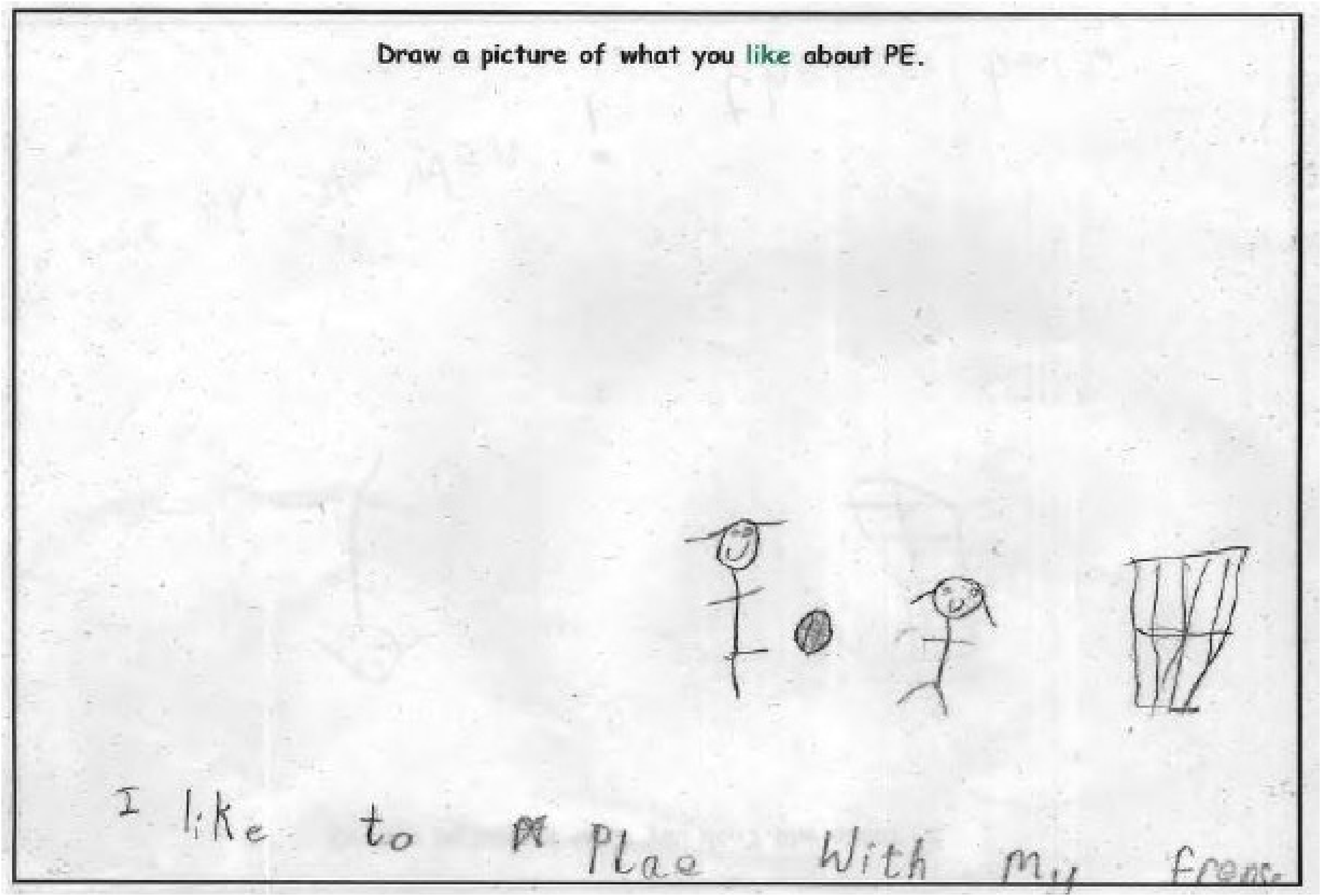
A drawing from a 5-year-old girl of what she likes about PE.
Children's reasons for disliking object control movements did not meet the n = 3 threshold and are in Supplementary Material C. However, their responses often linked dislikes to tasks being too easy or too hard, indicating a need for balanced task difficulty to engage all learners effectively (Shernoff, 2013). Pedagogical approaches that allow children to self-select and switch difficulty levels, such as nonlinear pedagogy (Chow et al., 2007) or gamification (Arufe-Giráldez et al., 2022), could help achieve this balance and reduce negative perceptions of PE.
Stability
Children's reported reasons for liking stability movements did not meet the n = 3 threshold, and therefore are included in Supplementary Material C for the readers’ interest. Children's responses to disliking stability-based movements were coded as: it's tricky (n = 3) and lack of competency (n = 3; e.g. ‘because I always fall (balancing on one leg)’ (B57/9)). Although stability skills are considered foundational for other movement skills (Newell, 2020), they remain the least studied (Rudd et al., 2015). Existing research shows low competency in both 4- to 5-year-olds (Davies et al., 2024) and 6- to 10-year-olds (Rudd et al., 2015). Findings on gender differences are mixed: girls tend to outperform boys in static and dynamic balance tasks (Engel-Yeger et al., 2010), while boys tend to perform better in postural control (Vlachos et al., 2014).
Interestingly, it was predominantly boys who disliked stability-based movements in the current study. Although young children tend to have inflated perceptions of physical competence (Goodway and Rudisill, 1997; Spessato et al., 2013), this study highlights that even young children, as young as five years old, make judgements on their competence and translate it into a dislike for certain activities. As mentioned earlier, ‘fun’ is a key element of meaningful PE. Meaningful PE encompasses four other aspects: social interaction, challenge, motor competence, and personally relevant learning (Beni et al., 2017). If children find stability activities unenjoyable due to low motor competence and do not perceive them as challenging, it can hinder meaningful PE and threaten enrichment (Beni et al., 2017). When tasks are too difficult, challenge and competence are not effectively addressed. Allowing children to choose and manage task difficulty increases the likelihood of success and persistence, regardless of self-assessed competence. This approach supports both actual and perceived competence, which are positively linked to moderate to vigorous PA (Jaakkola et al., 2019).
Gymnastics-related
As the reasons for liking gymnastics-related movements did not meet the n = 3 threshold, their responses can be found in Supplementary Material C and will not be discussed fully. However, of note, only girls reported enjoying gymnastics-related movements. This finding is supported by previous quantitative work that found that 7- to 12-year-old girls enjoyed gymnastics and dance more than boys (Baron and Downey, 2007). It is notable that gymnastics-related movements infrequently featured in children's drawings. It may be that either gymnastics was not taught, or children neither liked nor disliked it enough to feature in their drawings.
Social
Playing with others was the main social reason for liking PE (n = 3). However, some children had other social reasons for disliking PE. For example, one child did not like their teachers ‘because they have to tell you what to do’ (G19/3). Other children cited others’ behaviour as a reason they disliked PE. For example, one child did not appreciate the noise other children make (‘like everyone is shouting and making me a headache’ (B34/6)), while another told of unkind behaviour during a game (‘when some friends push me, like, being unkind to me … people get the ball off you, they just like hate you’ (G74/12)).
While children enjoy playing with friends in PE, they may lack understanding of the competitive aspects of certain activities. Similarly, competitive children might not fully recognise the impact of their actions on others. Teachers indeed play a key role in fostering positive social connections and healthy competition to minimise conflicts. For example, Adank et al. (2024) found that teachers who support intra- or inter-team rivalry diminished children's enjoyment. Enjoyment and relatedness are positively linked (Mandigo et al., 2008), highlighting the need to support relatedness in PE, not thwart it.
Use of equipment
Many children's drawings featured a piece of PE equipment. The reasons for liking equipment that did not meet the n = 3 threshold can be found in Supplementary Material C. Interestingly, PE kit appeared in both liked and disliked aspects of PE, highlighting that even small details, like PE kit, can create negative associations, starting as young as age five. Three children cited lack of competency, particularly disliking moving along benches because they fall off, which may also reflect an aversion to risk. Teachers should encourage appropriate risk-taking to help children transfer these skills beyond PE (Jerebine et al., 2022a, 2022b).
Children's drawings depicted enjoying balance beams, mats, trampolines, zip wires, cones, and small balls, though some disliked ‘wobbly’ benches (GB65/10) or having to sit and listen (on benches; G22/4). While space hoppers and footballs were disliked, they were rarely mentioned. Equipment availability positively affects motor (Iivonen and Sääkslahti, 2014), cognitive and social activity (Zoghi et al., 2019). Scaled equipment enhances engagement, self-efficacy, skill performance, and faster skill acquisition (Buszard et al., 2016), as well as functional movement variability (Buszard et al., 2020). Mobile equipment has also shown positive impacts on PA levels (Gubbels et al., 2012; Verstraete et al., 2006). As children source enjoyment from equipment, use of equipment leads to positive outcomes for children and helps teach them about reasonable risk; PE lessons should include as much equipment as feasible.
Playground-influenced games
This theme was influenced by playground activities, categorised into three groups: working alone (individual, e.g. ‘stuck in the mud’), working with others (team, e.g. ‘domes and dishes’) and a general mention (e.g. ‘playing games’). These games emphasised imagination and play rather than skill mastery.
Reasons for liking the different games overlapped somewhat, with individual, team, and general mention games all sharing fun (n = 16) as a reason. Individual and team games shared: thrill of the chase (n = 3; e.g. [which bit do you like the most (‘stuck in the mud')] ‘when the monsters get them’ [which one do you like being?] ‘the monster’ (G72/12) and winning (n = 5; e.g. ‘…because I’m never ever get tagged’ (B9/1)). Children were imaginative in their drawings of playground games as they would draw animals for games such as ‘Foxes and Rabbits’. Please see Figures 8 and 9 for the children's drawings.
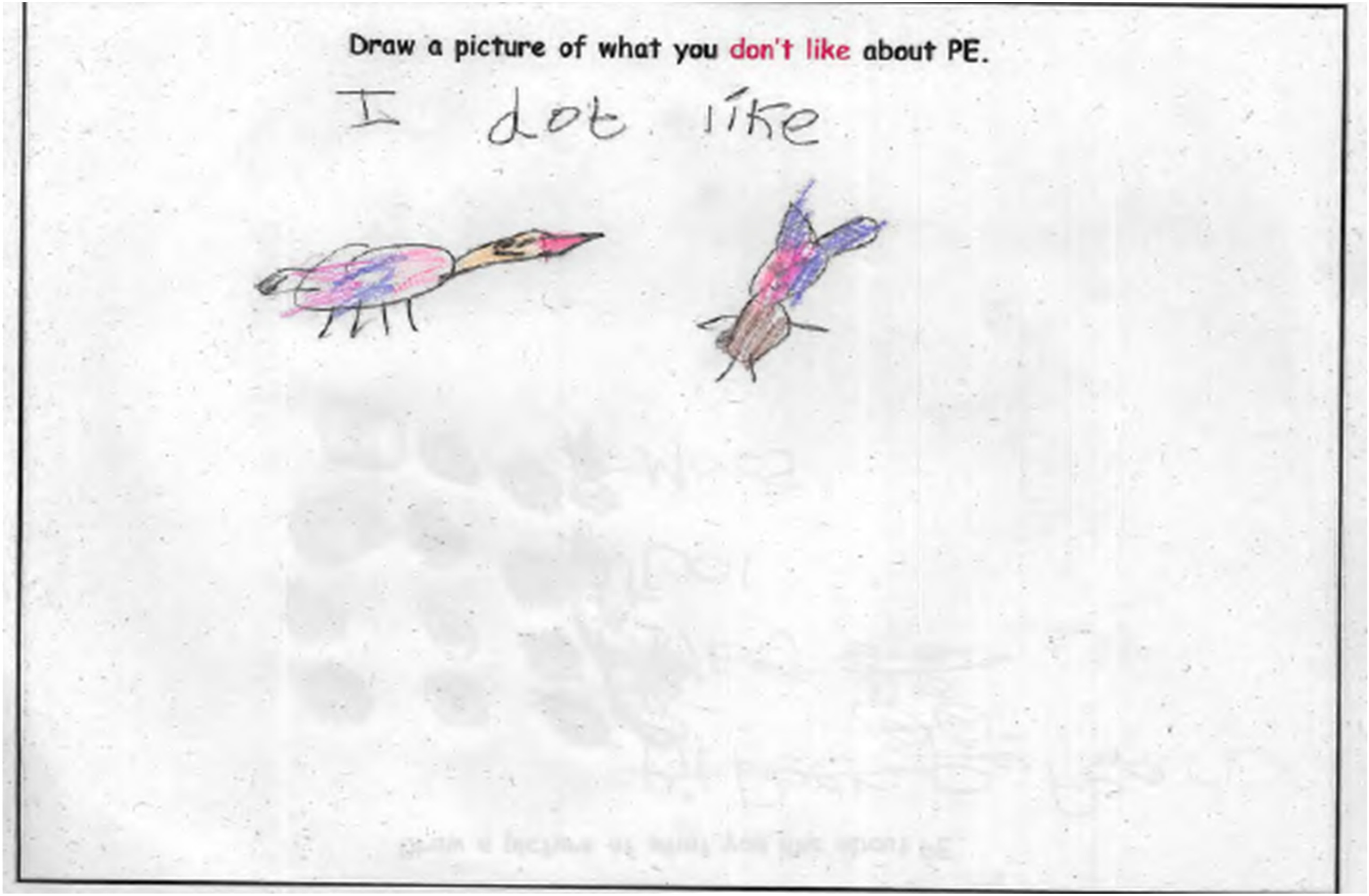
A 5-year-old girl's drawing of the ‘Foxes and Rabbits’ game.
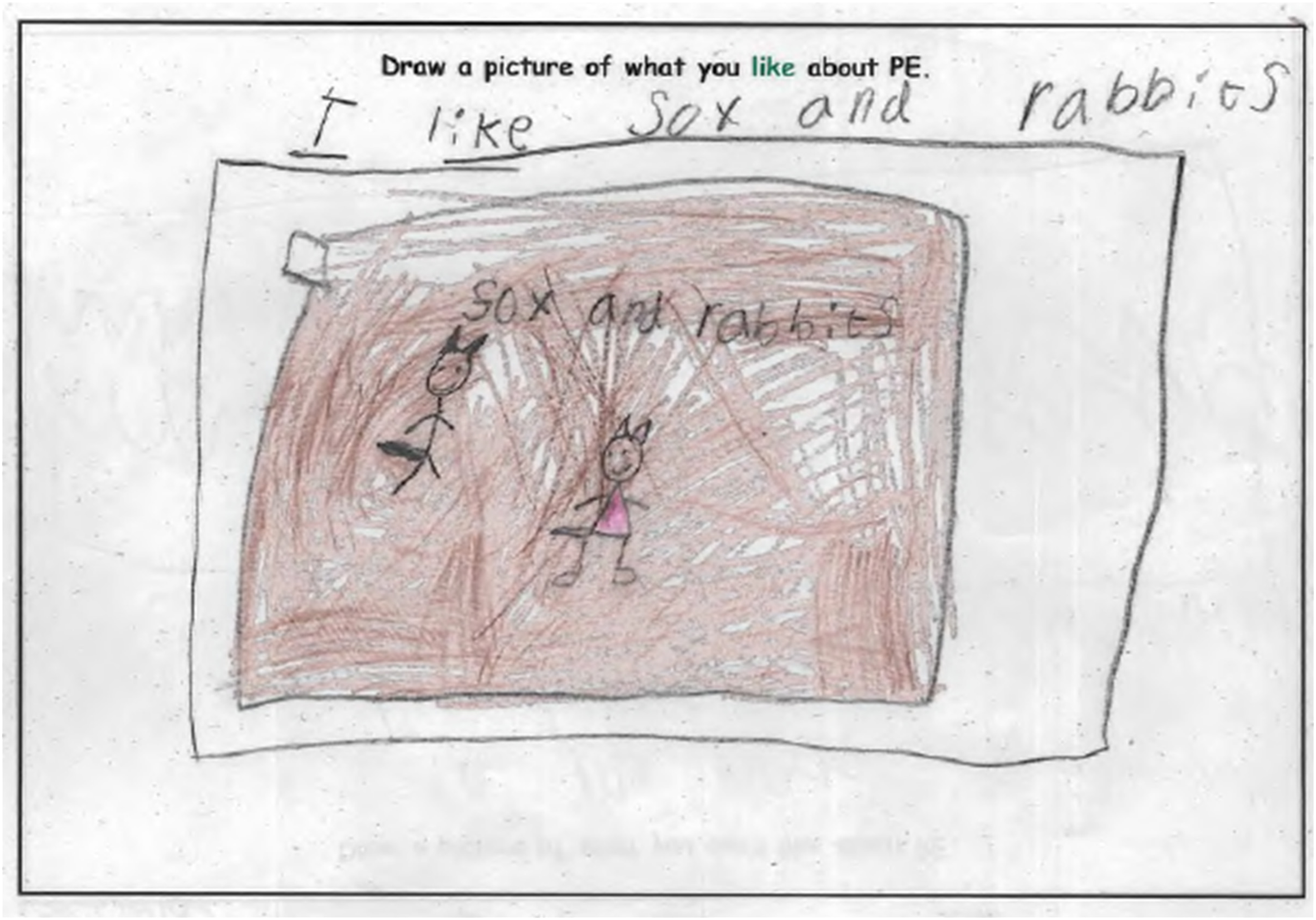
A 5-year-old boy's drawing of the ‘Foxes and Rabbits’ game.
Being still was the reason why three children did not like individual games. The explanation for this, which resonated and echoed with the first author's thoughts about this particular game (‘Foxes and Rabbits'), went as follows: G40/6: …I don’t like this game because I don’t want to, it's just boring. Researcher: Why is it boring? G40/6: Cos it's only catching tail … and you sit on the bench if you lose. Researcher: Ah ok, do you end up sitting on the bench? G40/6: Yeah.
Teachers should modify games to ensure lower-skilled children are not excluded, or create rules that allow them to rejoin, particularly in competitive scenarios (e.g. knock-out games). While competition is a key component of the National Curriculum (Department for Education, 2013a), it is essential that lower-skilled children still have opportunities for skill development.
Sport
Sport was split into two categories: individual and team. Some similarities existed across both categories as to why children enjoyed them. For example, both shared fun (n = 9), achievement (n = 4), seeing the benefit (n = 4), and a scaffold (n = 4). Team sport was also enjoyed because children like the fundamentals (n = 6; ‘cos it you you get to throw balls …’ (G47/7)) and winning (n = 3; ‘cos I win all the time' (B48/7)). Winning and rewards were only mentioned as reasons for enjoyment in relation to team sports, with football as the team sport most drawn (n = 19). Competitive team sports like football often form early in schools and grassroots programmes, which may explain their frequent appearance in children's drawings. From an achievement goal theory perspective (Nicholls, 1984), children drawn to these sports may have a performance-approach orientation, motivated by outperforming others and gaining extrinsic rewards. However, self-determination theory suggests such rewards can undermine intrinsic motivation (Ryan and Deci, 2000). That said, when provided in environments that support autonomy, competence, and relatedness, rewards are less likely to have this negative effect (Gagné and Deci, 2005).
The only type of sport reported to be disliked was team sports. Most reasons for disliking team sports fell under the n = 3 threshold and have been included in Supplementary Material C. The most prevalent reason for disliking team sport was due to lack of competency (n = 8; ‘Yeah when I end up trying to tell something to somebody I just like get hit by the ball and whenever I'm in here (goal) and here I keep getting hit by that ball here and there … cos then it goes through like when it hits me and then it goes through me’ (G5/1)).
Mastering basic movements is crucial for more complex activities like sports (Hulteen et al., 2018). Given that many children struggle with these skills at a young age (Bolger et al., 2021), it is not surprising that some have difficulty with sports, affecting their enjoyment. To address this, games that develop fundamental movement skills (FMS) while incorporating teamwork and competition are recommended. This approach aligns with pedagogies like gamification, which uses game design elements in non-game contexts (Arufe-Giráldez et al., 2022; Deterding et al., 2011).
Pain
Reasons for including pain as a dislike of PE fell under the n = 3 threshold and have been included in Supplementary Material C. While previous sections included pain in the context of specific activities, these examples are more general and not tied to any activity.
Strean (2009) reports Cary's (2004) worrying sport-related statistics from the United States (US), stating that 45% of children were verbally abused, 22% of children were pressured to play while injured, and 18% had been physically abused (e.g. hit, kicked). These reports led to a 70% dropout rate from sport. While these statistics were collated from US-based sport and not PE, and the children in the current study did not report such extreme experiences, two did mention disliking PE due to being hit by peers (see Supplementary Material C). Similarly, a qualitative study of older Australian boys found some boys avoided activities that risked injury, while others accepted pain as part of the game if it occurred within the rules (Gard and Meyenn, 2000). Regardless of perspectives on pain, teachers play a key role in creating a safe physical and emotional environment that fosters positive social connections and healthy competition.
Practical implications
Informed by the children in this study, practical planning and teaching examples are put forward in Table 1. Possible consequences of enacting these elements on children's affective (e.g. motivation), physical (i.e. PA and motor competence), social (i.e. relatedness) and cognitive (i.e. learning) outcomes (Bailey, 2006; Bailey et al., 2009) are also included. These teaching examples are not limited to practitioners but are applicable to teacher educators and parents as well.
Practical planning and delivery options with examples.
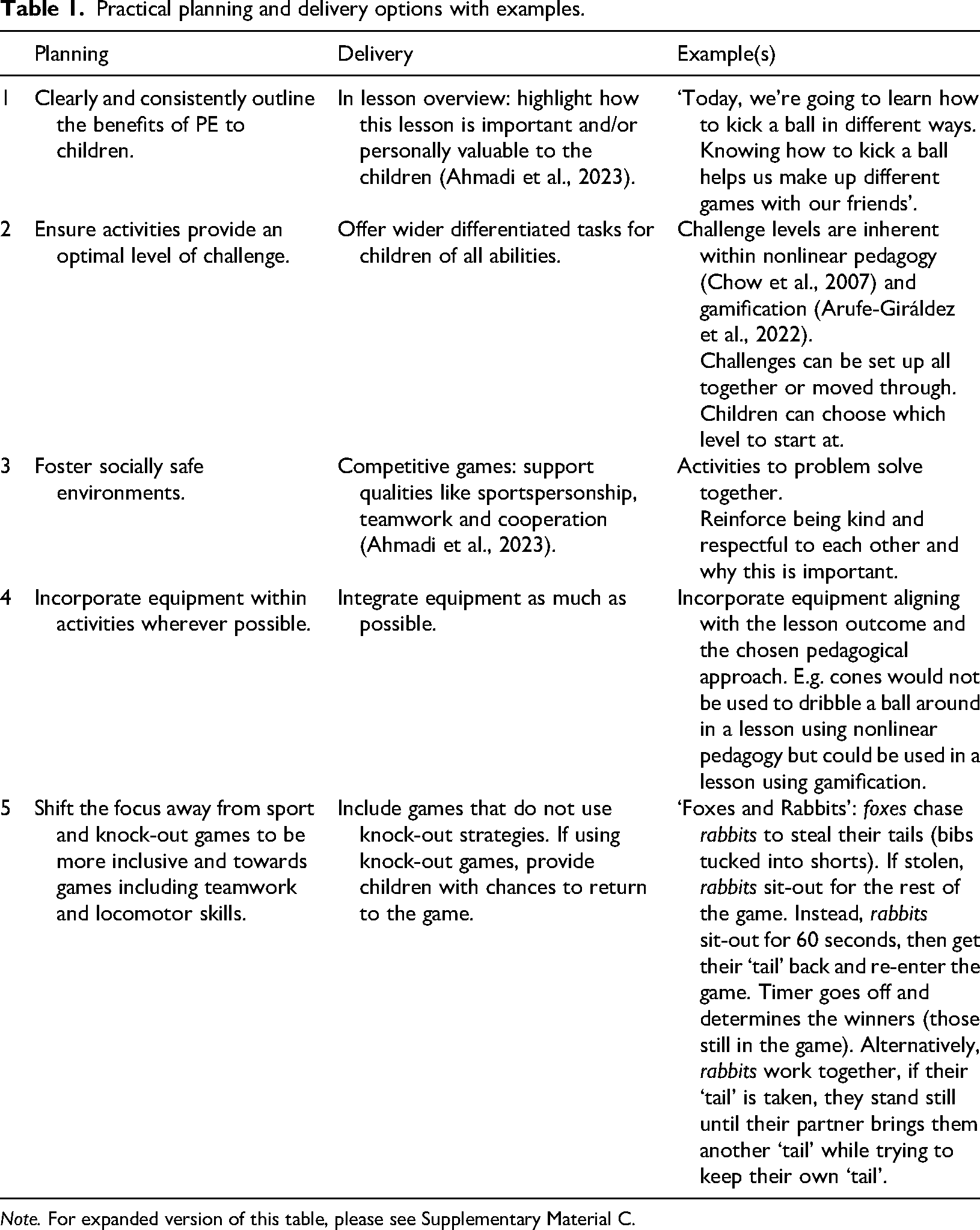
Note. For expanded version of this table, please see Supplementary Material C.
Strengths, limitations, and future research
The strengths of this study include a rigorous coding process, with reflexive conversations among the first author, second author, and last author, and the entire authorship team to ensure transparency and trustworthiness in the data using unique elements. For example, the coding process was presented in a recorded PowerPoint and shared with the author team. This allowed the author team to view the information and reflect, before providing their written feedback. Another strength is the inclusion of young children's voices, as their input is still lacking in research.
Limitations include limited follow-up questions to children as to what was in their drawings and why they liked or disliked them. This was an opportunity missed in hindsight. Some children had utterances that could not be transcribed, which may have limited the data to be coded. Future research should ensure interviewers are mindful of microphone placement and children's speech clarity, prompting repetitions or summarising responses when needed. Having teachers nominate participants may have introduced bias (e.g. choosing children who enjoy PE); however, given that many children in the wider project spoke English as a second or third language, teachers were best positioned to choose those able to engage with the qualitative process. In future studies, researchers might request a list of English-speaking children and randomly select from that list. Additionally, for children who are second- or third-language English speakers, translation of questions into their native language prior to data collection may help collect wider perspectives. The recommendations based on children's voices in this study can help better inform future PE interventions that aim to explore children's enjoyment and how it relates to other child-level outcomes, such as PA, cognition, and motivation.
Conclusion
Children's voices are often underrepresented in research. Using a creative method, we elicited young children's enjoyment experiences to identify ways to enhance their PE engagement. This work signifies that even 5-year-olds can share insights that influence future practices. We developed five practical recommendations for practitioners: (1) clearly and consistently outline the benefits of PE to children, (2) ensure activities provide an optimal level of challenge, (3) foster socially safe environments, (4) incorporate equipment within activities wherever possible, and (5) shift the focus away from sport and knock-out games to more inclusive and FMS activities. These recommendations aim to improve children's enjoyment of PE, maintain engagement, and support holistic development.
Supplemental Material
sj-docx-1-epe-10.1177_1356336X251388626 - Supplemental material for Exploring young children's enjoyment of physical education using the Write, Draw, and Tell method
Supplemental material, sj-docx-1-epe-10.1177_1356336X251388626 for Exploring young children's enjoyment of physical education using the Write, Draw, and Tell method by Katie Fitton Davies, Emma Ball, Farid Bardid, Lawrence Foweather, James R Rudd and Zoe Knowles in European Physical Education Review
Footnotes
Acknowledgements
The authors would like to thank all participating schools and children who contributed to this study.

Ethical approval
Ethics was granted by the Liverpool John Moores University Research Ethics Committee (Ref. 17/SPS/031).
Informed consent
Written parental consent and child assent were obtained prior to participation in the write, draw, and tell activities. Children were reminded that participation was voluntary and that they could stop at any point.
Consent for publication
Parents were informed that anonymised extracts from children's drawings and interview transcripts might be used in academic publications and presentations. All identifying information was removed prior to publication, and consent for the use of anonymised data was obtained through the informed consent process.
Author contributions
KFD: conceptualisation, data curation, formal analysis, investigation, methodology, project administration, visualisation, writing – original draft, and writing – review and editing. EB: formal analysis and writing – review and editing. FB: conceptualisation, methodology, and writing – review and editing. LF: conceptualisation, methodology, supervision, and writing – review and editing. JR: conceptualisation, methodology, supervision, and writing – review and editing. ZK: conceptualisation, methodology, supervision, and writing – review and editing.
Funding
The authors received no financial support for the research, authorship, and/or publication of this article.
Declaration of conflicting interests
The authors declared no potential conflicts of interest with respect to the research, authorship, and/or publication of this article.
Supplemental material
Supplemental material for this article is available online.
Author biographies
References
Supplementary Material
Please find the following supplemental material available below.
For Open Access articles published under a Creative Commons License, all supplemental material carries the same license as the article it is associated with.
For non-Open Access articles published, all supplemental material carries a non-exclusive license, and permission requests for re-use of supplemental material or any part of supplemental material shall be sent directly to the copyright owner as specified in the copyright notice associated with the article.
