




Abstract
Previous research has revealed that physical education (PE) teachers and their subject are often perceived as undervalued. However, examining the contributing factors and relationships to improve this situation is critical. This study focused on the associations among PE teachers’ perceptions of marginalisation, perceived mattering, and role stress factors. We recruited 208 PE teachers from various regions of Turkey, with a mean age of 36.67 ± 8.18 and a mean teaching experience of 11.34 ± 8.22 years. The data were collected using the Physical Education – Marginalisation and Isolation Scale, the Perceived Mattering Questionnaire – Physical Education, and the Teacher Role Stressors Survey. The findings indicate that role stress factors do not directly predict perceived mattering but exacerbate feelings of marginalisation, which, in turn, negatively predict perceived mattering. The results shed light on the intricate relationships among various factors contributing to marginalisation and suggest potential avenues for improvement. Our findings demonstrate that role stress factors positively and directly predict marginalisation, which, in turn, is negatively related to both teacher mattering and PE mattering. The results also reveal that role stress factors significantly and indirectly predict perceived mattering through the mediating role of marginalisation. The model results indicate that the marginalisation of teachers is a significant predictor of both PE mattering and teacher mattering, and it plays a mediating role in the relationship between role stress factors and teachers’ perceived mattering.
Introduction
International research that focuses on enhancing the professional development of physical education (PE) teachers has revealed that both teachers and their subject are marginalised (Beddoes et al., 2014; Ferry and Westerlund, 2023; Kougioumtzis et al., 2011; Richards et al., 2018b; Simonton et al., 2021). Marginalisation refers to a social phenomenon in which a person or group is given a low status or position outside the central focus or functioning of a culture or social group (Lux and McCullick, 2011). In PE, marginalisation occurs when school structures prioritise traditional cognitive subjects like science, mathematics, and language. Consequently, subjects that require physical effort and creativity, such as PE, art, and music, are considered less important and, therefore, marginalised (Kougioumtzis et al., 2011; Richards et al., 2014).
Marginalisation is perpetuated by various factors, such as unclear teacher–coach roles (Steinhardt, 1992), large class sizes (Barroso et al., 2005), inadequate facilities (Barroso et al., 2005; Laureano et al., 2014), a lack of clear program goals in the profession, insufficient teacher preparation for real-world situations (Rink, 1993), a lack of support from school administrators (Stroot et al., 1994) and low priority relative to other academic subjects (Barroso et al., 2005; Beddoes et al., 2014; Hendry, 1975; Norris et al., 2017; Sparkes et al., 1993; Steinhardt, 1992). PE teachers may also experience physical and intellectual isolation from their colleagues, contributing to their feelings of marginalisation (Curtner-Smith, 2001; Stroot and Ko, 2006).
Role stressors associated with teaching responsibilities are significant contributors to marginalisation. These stressors include role ambiguity, overload, and conflict (Hindin, 2007). Role ambiguity refers to a lack of clarity or understanding about how a job role should be carried out, such as uncertainty regarding the standards used to assess an individual's performance (Zeng et al., 2023). Incompatibility between job demands and the time available to meet those demands characterises role overload (Abramis, 1985). Finally, role conflict is characterised by conflicting expectations about how an individual should behave with the different groups they interact with (Rizzo et al., 1970).
Role socialisation theory (RST; Richards, 2015) addresses how PE teachers’ expectations of their roles are socially constructed and contextually linked to the school environment. PE teachers may experience role ambiguity when school administrators neglect to provide clear guidelines for evaluation (Washburn et al., 2020) and role overload when their responsibilities are too numerous to account for during the school day (Richards et al., 2018a). Role conflict occurs when teachers receive insufficient support from their principals and colleagues and is associated with feelings of marginalisation (Blankenship and Coleman, 2009). When experienced colleagues expect PE teachers to use traditional teaching methods rather than more innovative practices they learned in their physical education teacher education (PETE) programs, it is also associated with role conflict (Washburn et al., 2020). In addition, contextual factors foster teacher–coach role conflict (Konukman et al., 2010). Perceptions of marginalisation due to the increased probability of experiencing conflicts between expected roles can be linked to role-related stress. These implications are significant for PE teachers because their subject has been regarded as less important than other subjects (Lux and McCullick, 2011). PE teachers may experience role conflict due to multiple expectations, such as providing quality education in suboptimal work conditions and teaching students with varying abilities (Stroot and Ko, 2006). Richards et al. (2016) found that perceived mattering negatively correlated with role conflict and ambiguity. Reducing role ambiguity and role conflict would increase teacher satisfaction and commitment (Conley and You, 2009).
PE teachers may internalise the feeling of being marginalised by others in the school environment when they are constantly told they do not matter (Richards et al., 2016). The psychological inclination to consider oneself valuable or important to specific individuals is defined as perceived mattering (Marshall, 2001). Perceived mattering is characterised by a person's feeling of being valued and important by others in the group (Richards et al., 2016). Gaudreault et al. (2018) suggest that various role groups, including school administrators, colleagues, parents, and students – essential stakeholders in the field of education – all play a crucial role in shaping teachers’ sense of perceived mattering. Also, social status and professional experiences provide opportunities that increase perceived mattering (Schieman and Taylor, 2001). Research shows that perceptions of PE mattering are strongly related to perceived teacher mattering (Simonton et al., 2023). Also, it is crucial to consider socio-political factors in school settings when analysing teachers’ experiences of marginalisation or perceived mattering (Richards et al., 2016) because these two constructs are at opposite ends of a continuum (Gaudreault et al., 2018; Richards et al., 2017a). Gaudreault et al. (2017) found that among PE teachers, isolation and marginalisation were positively related to each other and negatively associated with perceived mattering.
As this research marks the first exploration among Turkish educators, it is particularly significant in explaining how these dynamics manifest within the context of PETE programs in Turkey. Marginalisation and isolation in PE are relatively new research areas in Turkey, and studies on the marginalisation and isolation of teachers are limited (Erbaş, 2021; Şenel et al., 2019; Taş, 2022; Ulaş and Şenel, 2020). As school administrators, teachers from other subject areas, and parents may view PE as a low-status profession (Şenel et al., 2019), marginalisation and isolation may be widespread among Turkish PE teachers. Among these limited studies, Taş (2022) found that PE teachers are marginalised due to cultural reasons and the perceived lack of importance of the subject. In his research, the interviews with the PE teachers show that the absence of PE from national examinations and a lack of complete understanding of the subject's importance and objectives contribute to the perception of PE as unimportant. Furthermore, the fact that many girls’ parents do not want them to attend PE constitutes the cultural reasons for marginalisation.
PETE programs in Turkey consist of pre-service education, candidate teacher education, and in-service education processes. Pre-service education includes the 4-year undergraduate education that PE teacher candidates receive to become certified PE teachers in public or private schools. Standard curricula designed by the Council of Higher Education (CoHE) (2018) are used in these education programs. After graduation, PE teachers are appointed according to the Public Personnel Selection Examination results. After appointment, the candidate teacher education process begins with the orientation process and is completed by preparing the Candidate Teacher File. This process is designed to best prepare teachers for the profession, the civil service, the institution they work for, and their social environment (Ministry of National Education–MoNE, 2022). PE teachers teach at the secondary (5th–8th grade) and high school level (9th–12th grade). The ‘PE and Sports’ course is compulsory in secondary and high school and is offered for 2 hours per week. In addition, students can participate in an additional ‘Sports and Physical Activities’ course for 2 or 4 hours a week at the secondary level and for 2 hours per week in high school (MoNE, 2018).
The substantial increase in Turkey's school-age population after the 1960s and rapid urbanisation heightened the demand for physical facilities and an expanded teacher workforce, leading to overcrowded classrooms and a need for additional facilities and equipment (Ince, 2019). Although students have a positive attitude towards PE, their attitudes become less positive as they age (Yaldız and Özbek, 2018). Some of the problems PE teachers face in Turkey are that school administrators consider the subject unimportant, and parents and female students do not show much interest in it (Demirhan et al., 2014).
Several studies have independently investigated the relationships among marginalisation, perceived mattering, and role stressors (Richards et al., 2016; Washburn et al., 2020). The role of marginalisation has never been investigated in a Turkish school context. Furthermore, limited research has examined the role of marginalisation in the connection between role stressors and perceived mattering in PE. This study makes an important contribution to existing marginalisation studies as it is the first study that examines the relationships between role conflict, marginalisation, and perceived mattering. This study investigates the relationships between PE teachers’ perceptions of marginalisation, isolation, perceived mattering, and role stressors by testing whether (a) role ambiguity, role conflict, and role overload have indirect effects on perceived mattering via marginalisation, (b) marginalisation has negative direct effects on perceived mattering, (c) role ambiguity, role conflict, and role overload have positive direct effects on marginalisation (see Figure 1).
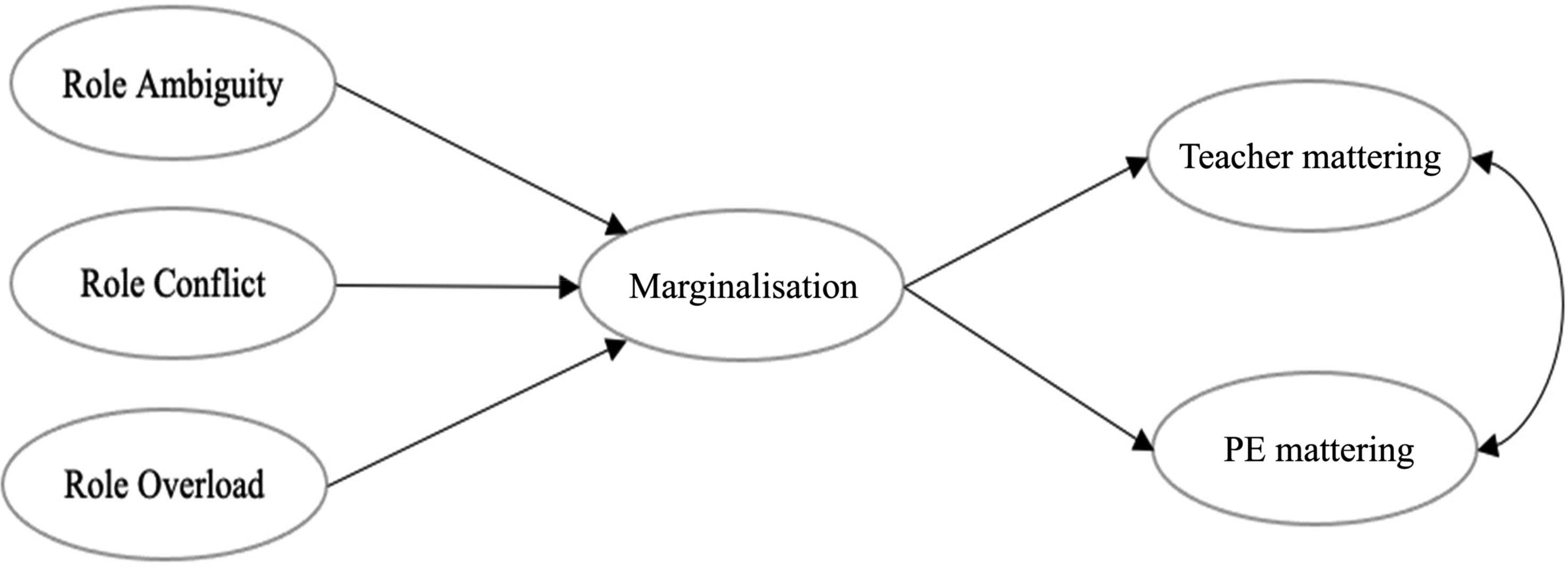
Hypothesised model for the indirect effects of role stressors on perceived mattering in PE via marginalisation.
Methods
Participants
The study surveyed 208 PE teachers from various regions of Turkey, with a mean age of 36.67 ± 8.18 and a mean of 11.34 ± 8.22 years of teaching experience. The sample included 67 female teachers (32.2%) and 141 male teachers (67.8%). The teachers were distributed across different areas, with 13% serving in villages, 36.5% in districts, 23.62% in city centres, and 26.9% in metropolitan areas. The majority of teachers (64.9%) did not possess postgraduate qualifications, with 16.8% indicating attainment of a master's degree and a mere 0.5% having completed a doctoral program. Furthermore, 13% of the teachers reported active enrolment in a master's program, while 4.8% were currently pursuing doctoral studies.
Procedure
Before collecting data, we obtained institutional ethical approval with decision number 220123/102 on 05.07.2022. Participants for this study were recruited from a pool of PE teachers through online platforms, primarily social media. To identify potential participants, we employed targeted searches on popular social media platforms, including Instagram, Facebook, Twitter, and LinkedIn. We utilised specific keywords related to PE teaching to identify individuals who fit the criteria for participation. Identified individuals were contacted via direct messages, introducing them to the research's purpose and objectives. They were invited to take part in the study voluntarily. Upon expressing interest in participating, prospective participants were provided with a detailed information sheet outlining the study's goals, procedures, potential risks, and benefits. They were also informed about their rights as research participants, including the right to withdraw from the study without consequences. To ensure complete understanding and voluntary participation, participants were required to provide explicit consent by sending a confirmation message stating their willingness to participate.
Survey instrumentation
The Physical Education – Marginalisation and Isolation Scale (PE-MAIS) is a tool used to measure PE teachers’ perceived marginalisation (e.g. ‘As a PE teacher, my opinions are valued in my school’) and isolation (e.g. ‘I feel mostly alone in my school because I don’t see other adults during the school day’). It was developed by Gaudreault et al. (2017) and adapted into Turkish by Şenel et al. (2019). The scale has two sub-dimensions, marginalisation and isolation, each comprising five items. Participants rate their agreement with each item on a Likert-type scale ranging from one (completely disagree) to seven (completely agree). The internal consistency coefficients of the scale were found to be 0.74 for marginalisation and 0.70 for isolation, indicating acceptable levels of reliability (Şenel et al., 2019).
The Perceived Mattering Questionnaire – Physical Education (PMQ-PE) is a measurement tool developed by Richards et al. (2016) that assesses PE mattering (e.g. ‘How interested are people, generally, in PE at your school?’) and teacher mattering (e.g. ‘How important do you feel you are to other people at school?’). The scale includes two factors, each consisting of four items. The Likert-type scale ranges from one (not at all) to four (very). The internal consistency coefficients of the scale were found to be 0.87 for the importance of PE teachers and 0.86 for the importance of PE classes (Richards et al., 2016). Since the Turkish version of PMQ-PE has yet to be validated, we adapted it into Turkish by examining its content and construct validity. After translating the items into Turkish, we asked experts to rate items between one and four. To test the fit of our measurements, we used Confirmatory Factor Analysis (CFA) procedures with the maximum likelihood method, adopting cut-off criteria suggested by Hu and Bentler (1999) for evaluating model fit indexes, including x2/df ≤ 3, Comparative Fit Index (CFI) and Tucker–Lewis Index (TLI) ≥ 0.95, Root Mean Square Error of Approximation (RMSEA) ≤ 0.06, and Standardised Root Mean Square Residuals (SRMR) ≤ 0.08. The results showed that PMQ-PE has content validity [Item Level Content Validity Index (I-CVI): 0.83–1.00 and Scale Level Content Validity Index/Universal Agreement (S-CVI/UA): 0.62 with S-CVIave: 0.94; see Polit and Beck, 2004; Polit et al., 2007 for the cut-offs] and construct validity [Average Variance Extracted (AVE) of teacher mattering and PE mattering: 0.56 with Composite Reliability (CR): 0.83 and 0.51 with CR: 0.80, x2 = 21.46, df = 28, p < .001, Non-Normed Fit Index (NNFI): 0.99, CFI: 0.99, RMSEA: 0.03, SRMR: 0.02] in the Turkish sample. To obtain item-level and scale-level content validity indexes, we employed expert ratings following the universal agreement calculation method recommended in the literature (Lynn, 1986; Waltz and Bausell, 1981).
The Teacher Role Stressors Survey (TRSS) was developed by Conley and You (2009) to measure the stressors experienced by teachers resulting from role conflict (e.g. ‘I often work under incompatible policies and procedures’), role ambiguity (e.g. ‘I feel certain about how much authority I have’), and role overload (e.g. ‘I am rushed in doing my job’). The measurement comprises nine items and three sub-dimensions. Participants are asked to rate their agreement with each item on a Likert-type survey ranging from one (very untrue) to seven (very true). It is important to note that all items relating to role ambiguity are reverse-scored, meaning that higher scores indicate higher levels of role ambiguity. The internal consistency coefficients of the TRSS were found to be 0.85 for role ambiguity, 0.78 for role conflict, and 0.80 for excessive role demands. The process applied for the PMQ-PE was followed exactly to ensure the content and construct validity of the TRSS. These findings suggest that the TRSS is a reliable instrument for measuring teachers’ stressors in their roles and has content (I-CVI = 0.83–1.00 and S-CVI/UA = 0.50 with S-CVIave = 0.93) and construct (AVE of RA, RC, and RO = 0.58 with CR = 0.84, 0.54 with CR = 0.77, and 0.55 with CR = 0.70; x2 = 49.57, df = 24, p < .001, NNFI = 0.94, CFI = 0.96, RMSEA = 0.07, SRMR = 0.05) validity in the Turkish sample (see Fornell and Larcker, 1981; Hair et al., 2018 for cut-offs).
Data analysis
To ensure the integrity of our study, we conducted a comprehensive examination of our data. This included analysing patterns of missing data and assessing the normality of our data by scrutinising skewness and kurtosis scores. Furthermore, we reported Pearson correlation coefficients among study variables, which are essential to show the relationship between variables in the mediation model. The study utilised a mediation model to investigate the relationship between role stressors, marginalisation, and perceived mattering. The proposed model explored how role stressors indirectly predicted perceived mattering through marginalisation. The study adopted a two-index presentation method that Hu and Bentler (1999) recommend for assessing the model fit. This method involved reporting SRMR, CFI, and Incremental Fit Index (IFI). CFI and IFI values close to or exceeding 0.95 indicated a perfect model fit, while SRMR values close to 0.08 suggested a well-specified model. Additionally, the study reported 95% confidence intervals for parameter estimates using the bias-corrected percentile method with two-tailed significance.
Since we formulated specific hypotheses for our study, we took necessary measures to avoid Type I and Type II errors. Specifically, we selected our study group based on suitable inclusion criteria to mitigate the likelihood of errors. In addition, to prevent Type II errors, we deemed it inappropriate to increase the significance level disproportionately, which could lead to a higher probability of Type I errors. Therefore, we accepted .05 as our significance level for hypothesis testing.
Results
Preliminary analyses
There were no missing data. All variables were examined for skewness and kurtosis, and the results showed univariate normality based on the cut-off values of skewness <3.0 and kurtosis <10.0 (Kline, 2016) (see Table 1).
Bivariate correlations, means, standard deviations, skewness, and kurtosis.
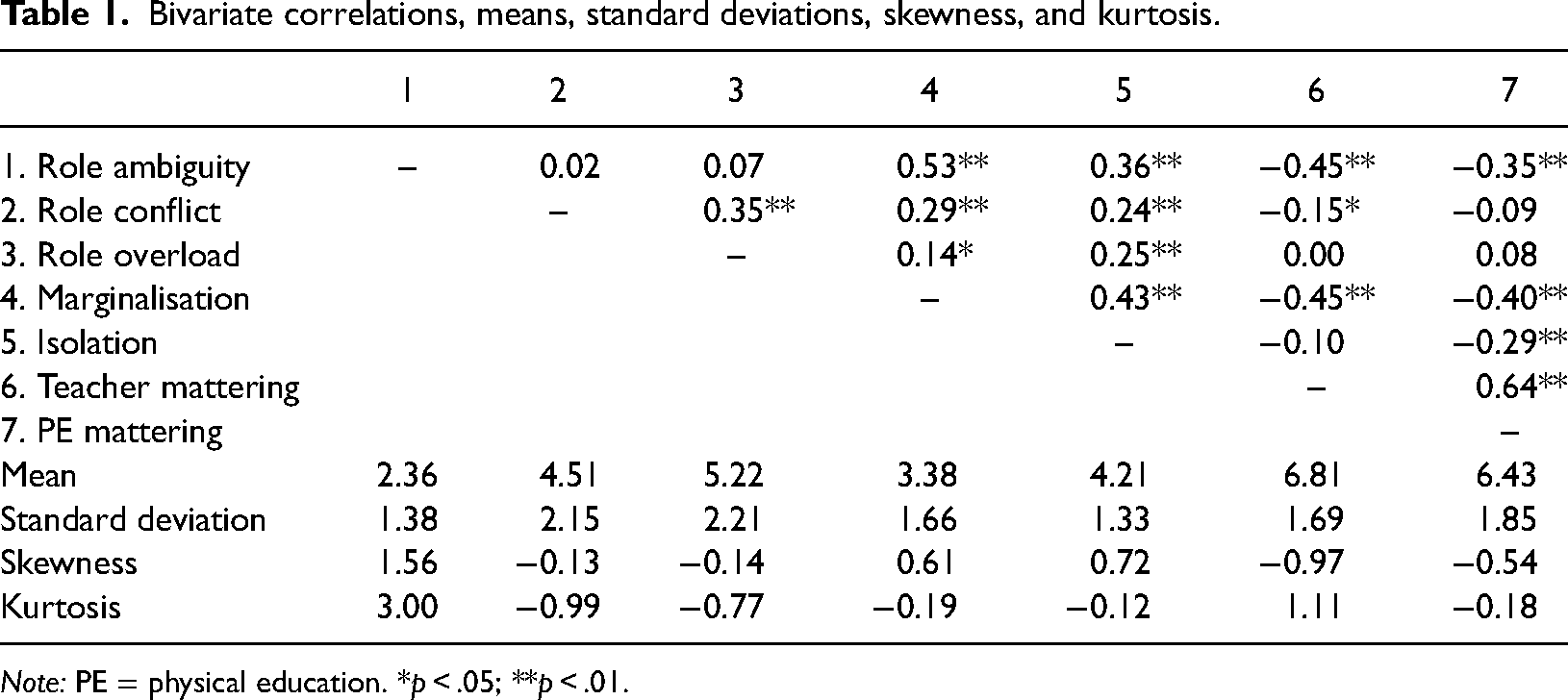
Note: PE = physical education. *p < .05; **p < .01.
Descriptive statistics and correlational analyses
Measurement and structural fit analyses
First, we examined a CFA mediation model to assess the relationship between the variables analysed and their respective latent factors. The results revealed perfect fit indices for the measurement model in Table 2. Figure 2 displays the path diagram for the unstandardised coefficients of the mediation model.
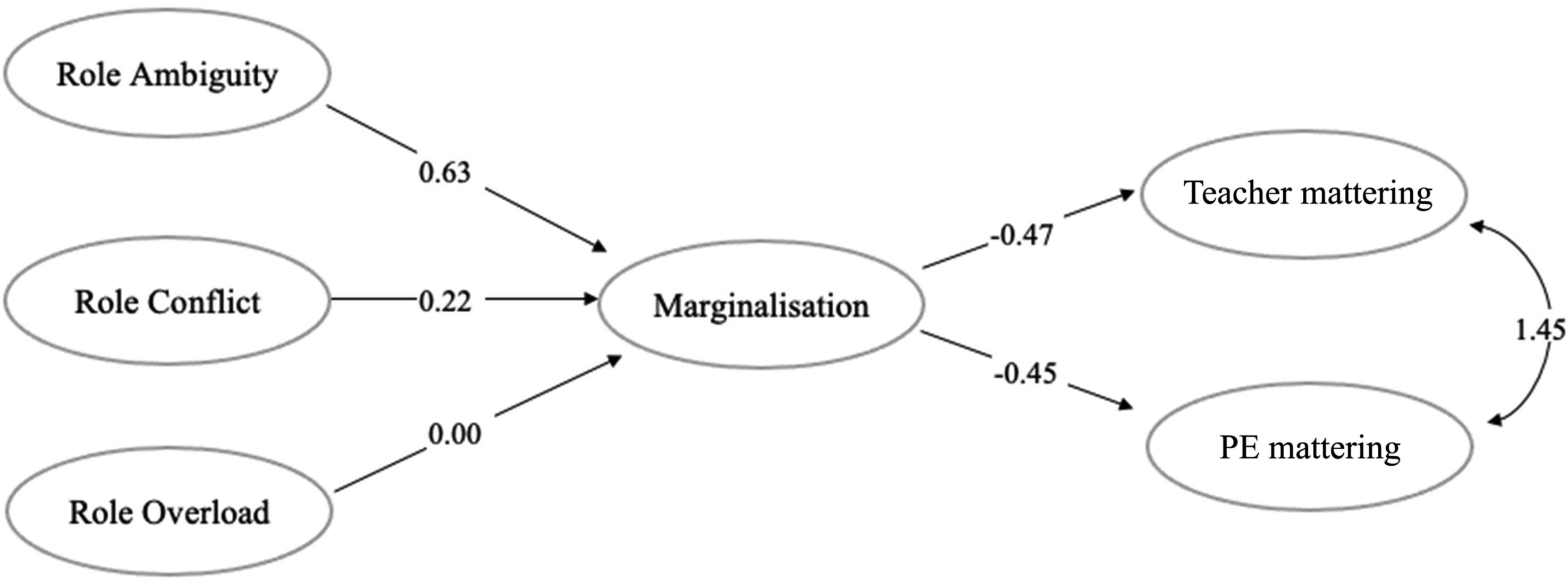
Path diagram for unstandardised coefficients of the mediation model 1.
Fit indices, parameter estimates for direct and indirect effect of the model.
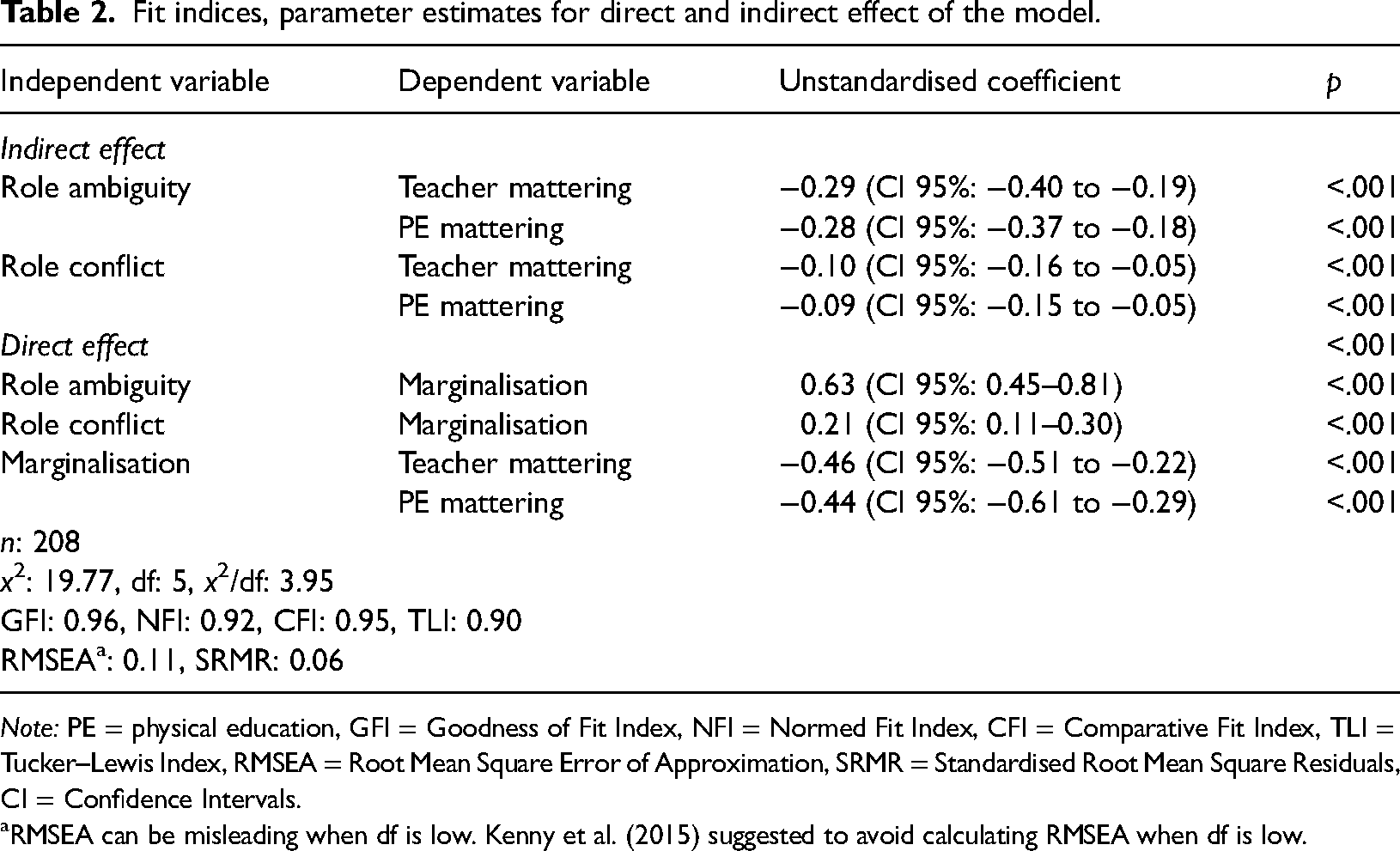
Note: PE = physical education, GFI = Goodness of Fit Index, NFI = Normed Fit Index, CFI = Comparative Fit Index, TLI = Tucker–Lewis Index, RMSEA = Root Mean Square Error of Approximation, SRMR = Standardised Root Mean Square Residuals, CI = Confidence Intervals.
RMSEA can be misleading when df is low. Kenny et al. (2015) suggested to avoid calculating RMSEA when df is low.
After running the CFA to confirm the latent model, we investigated the direct and indirect effects among the variables as hypothesised. The results showed that role overload was not a significant predictor in the hypothesised model and did not yield a statistically significant indirect effect. We omitted role overload from the model and redesigned the model before we reran the analysis (see Figure 3).
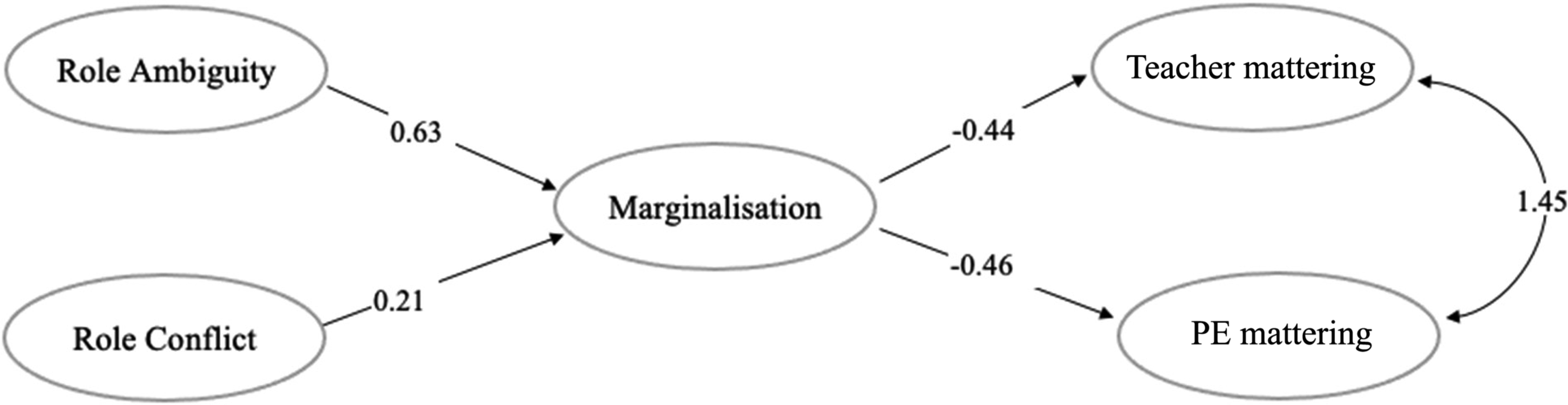
Path diagram for unstandardised coefficients of the mediation model 2.
Our results showed significant direct and indirect effects. Specifically, we found that role stressors had a positive direct impact on marginalisation (β1 = 0.63; β2 = 0.21), which, in turn, had a negative direct effect on teacher mattering (β3 = −0.46) and PE mattering (β4 = −0.44). The results revealed that role stressors significantly and indirectly predicted perceived mattering through the mediating role of marginalisation (see Table 2).
The model results suggest that teacher marginalisation was a significant predictor of both PE mattering and teacher mattering. It also played a mediating role in the relationship between role stressors and teachers’ perceived mattering.
Discussion
This study used structural equation modelling to investigate the relationships between marginalisation, isolation, perceived mattering, and role stressors among PE teachers. The focus is specifically on the perception of marginalisation among PE teachers. Findings showed that role stressors statistically and positively predicted marginalisation, marginalisation negatively predicted PE mattering and teacher mattering, and marginalisation mediates between role stressors and perceived mattering. The results will be discussed more precisely according to each finding in the following sections.
First, the interaction between role stressors and marginalisation was examined. Our findings indicated a positive regression coefficient between marginalisation, role ambiguity (0.63), and role conflict (0.21). We found that heightened role ambiguity and role conflict heightened the sense of marginalisation. Our hypothesis (c), that role ambiguity, role conflict, and role overload had positive direct effects on marginalisation, was partially confirmed because role overload was not a significant predictor of marginalisation in our model.
No research has examined the relationship between PE teachers’ role stressors and marginalisation in Turkey. However, some studies indicated a negative relationship between role-related expectations and marginalisation (Richards and Hemphill, 2017). Indeed, PE teachers encounter many role stressors in their work environment, including the curriculum and inadequate facilities/equipment. The significant stressors for PE teachers were the curriculum, inadequate facilities/equipment, the low status of PE, and students’ discipline problems (von Haaren-Mack et al., 2020). People frequently have multiple social roles and hold various social statuses simultaneously. Take, for instance, a person who functions as a teacher and fulfils roles such as a mother, wife, Girl Scout troop leader, and basketball coach. The roles that hold the utmost significance in an individual's hierarchy of importance are the ones that most accurately predict their behaviour. In contrast, roles perceived as less significant are prone to being marginalised. To illustrate, if someone prioritises their role as a spouse over that of a teacher, they are more inclined to excel in the spousal role while downplaying their commitment to the teaching role (Richards et al., 2013). Koustelios et al. (2004) found that PE teachers experience high role ambiguity and moderate levels of role conflict.
Research has reported that role stressors are directly and positively associated with marginalisation, given the psychological distraction and discomfort they engender (Michaels et al., 1988). Moreover, the stress and complexities of teaching can contribute to early exits from the profession (Iannucci and Richards, 2022). PE teachers are particularly vulnerable to extreme marginalisation, resulting in burnout and exclusion from their professional environment (Adiloğulları et al., 2014; Laureano et al., 2014). Additionally, role stressors negatively affect professional life, as shown by Zhaoyong and Baoya's (2009) study, which found that role conflict negatively predicts job satisfaction for PE teachers. Mitevska and Byuylekova (2021) discovered a strong correlation between alienation and role conflict. Finally, Chiaburu et al. (2014) established that role ambiguity was positively associated with marginalisation and role conflict.
We found a moderate negative correlation between isolation and teacher mattering and a slight correlation between isolation and PE mattering. These findings suggest that isolation is more related to teacher mattering in the school context than PE mattering. Despite limited comprehensive studies in Turkey on the isolation and marginalisation of PE teachers, a few studies have reported that PE teachers experience moderate marginalisation and isolation (Erbaş, 2021; Şenel et al., 2019; Ulaş and Şenel, 2020). However, Taş (2022) noted that PE teachers tend to be marginalised rather than isolated. The environments in which PE are taught in Turkey are typically indoors, within school buildings, and close to other classrooms. As a result, PE teachers have ample opportunity to interact with other teachers and to become an integral part of the school community, which makes them less likely to feel isolated. However, despite this, certain factors such as the characteristics of the subject, the dress code for PE teachers (which is different from that of other subject teachers, who usually wear formal clothing such as suits), and their physical appearance (body shape, fitness level, or adherence to societal beauty standards) may still lead to their marginalisation.
Next, we examined the relationship between marginalisation and perceived mattering. Our findings suggest that marginalisation is negatively associated with PE mattering (−0.44) and teacher mattering (−0.35). Our hypothesis (b), that marginalisation had negative direct effects on perceived mattering, was confirmed. These results are consistent with previous research (Gaudreault et al., 2017, 2018) that also found a strong negative correlation between marginalisation and perceived mattering (PE mattering and teacher mattering). Richards et al. (2018a) stated that marginalisation and perceived mattering are considered two opposing structures. However, studies have examined the association of perceived mattering with marginalisation (Richards et al., 2017a). According to these studies, one effective way to reduce marginalisation is to make PE teachers feel that they and their subject are essential in the school environment. Research suggests that compared to their colleagues working in supportive and nurturing environments, marginalised and isolated PE teachers may be less effective in teaching and more likely to leave the profession (Gaudreault et al., 2017). Richards et al. (2018b) emphasised that social interactions with colleagues, school administrators, and students in the school setting primarily influence marginalisation and perceived mattering. In Turkey, Taş (2022) also found that PE teachers experienced marginalisation due to the school administration and other teachers’ lack of importance given to the subject and the teachers. Taş's results have shown that PE is not considered important because it does not include national examinations, and the importance and purpose of the subject are not understood. Our research brings a new perspective on the relationship between feelings of marginalisation and perceived mattering to the literature. In addition to the information in the literature that perceived mattering predicts marginalisation, according to the data obtained from the current study, marginalisation also explains perceived importance.
In this study, it was determined that there was a negative and indirect association between role stressors and perceived mattering (role ambiguity – teacher mattering: −0.29, role ambiguity – PE mattering: −0.28, role conflict – teacher mattering: −0.10, role conflict – PE mattering: −0.09). This finding coincides with studies showing a negative relationship between perceived mattering and role stressors (Richards et al., 2016, 2017b; Washburn et al., 2020). Also, our results indicate that marginalisation is a mediator between role stressors and PE mattering and teacher mattering. Our hypothesis that role ambiguity, role conflict, and role overload indirectly predicted perceived mattering through marginalisation was partially confirmed since role ambiguity was not a significant predictor of marginalisation. Specifically, role conflict did not directly predict the perceived mattering of PE teachers. Still, we found that teachers who experience role stressors are more likely to feel marginalised, negatively predicting their perceived mattering. This is a notable finding because although role conflict related to teachers’ roles does not directly predict PE mattering, teachers may perceive their class as less valued as marginalisation increases. Therefore, it is essential to address the issue of marginalisation in PE teaching, as stress plays a crucial role in teacher performance and student outcomes. Although regression analysis did not significantly predict PE mattering by role conflict, the mediation model revealed that role stressors significantly and indirectly predicted PE mattering with the mediating role of marginalisation. Washburn et al. (2020) found that perceived mattering predicted role ambiguity, suggesting that elevating teacher mattering may reduce role stress. Additionally, Richards et al. (2017b) indicated that improving perceived mattering can minimise teacher stress.
Limitations
Despite its significant contributions, the study also has several limitations. The sample may only represent some PE teachers in Turkey, as only intrinsically motivated teachers may have participated in the study. Future research may benefit from using different sampling methods to address this limitation. Additionally, although the study recruited participants from various regions of Turkey, the sample size was relatively small, which may limit the generalisability of the findings. Therefore, it is recommended that future studies involve larger samples and diverse participant demographics.
Moreover, it is imperative to recognise a significant limitation in our research stemming from the absence of an investigation into the effects through longitudinal and time-series analyses. The reliance on cross-sectional data in the current study hinders our ability to capture the dynamic and evolving nature of the observed impact over time. To address this limitation, it is essential to undertake studies spanning different time points. This approach would afford a more nuanced understanding of the intricate relationship between role stressors, the marginalisation and isolation of PE teachers, and their perceived importance. The inclusion of such longitudinal and time-series analyses is anticipated to enhance the robustness and depth of our findings, contributing to a more comprehensive insight into the complex dynamics inherent in the work environments of PE teachers.
Conclusions
In conclusion, this study not only introduces a valid measurement tool for assessing perceived mattering and role stressors among PE teachers in Turkey, but also explores the mediating role of marginalisation in the complex relationship between role stressors and perceived mattering. By highlighting this underexplored aspect of PE teachers’ professional lives, the research makes a considerable contribution to the field. Furthermore, its unique perspective on the interplay between marginalisation, perceived mattering and role stressors opens avenues for valuable insights in international comparative studies.
The implications of this research are many. Teachers should receive training to enhance their ability to cope with role stressors, supported by proactive measures from school administrators to alleviate unnecessary pressures. Fostering a focused environment for PE teachers, free from unrelated tasks, may increase their impact on student participation. Regular communication channels between teachers and school management are essential for collaborative problem-solving. Allocating additional resources to PE can prevent marginalisation, so future studies will be crucial in identifying strategies to reduce negative effects through improved interactions, mentoring programmes and resource allocation.
Transparent information about roles can reduce role confusion, which can be addressed through training and development opportunities to manage role conflict and role overload. Administrative support can create an environment where teachers can cope effectively with stressors, emphasising open communication and recognising their opinions and experiences. Reducing role overload and role conflict may be achieved by considering teacher feedback. Implementing reward schemes may help to reduce stress but also combats marginalisation and promotes a sense of value among teachers. Future research directions should explore the effectiveness of support systems, mentoring programmes, professional development, and mental health services in reducing stress and marginalisation among PE teachers.
Footnotes
Declaration of conflicting interests
The authors declared no potential conflicts of interest with respect to the research, authorship, and/or publication of this article.
Funding
The authors received no financial support for the research, authorship, and/or publication of this article.
