




Abstract
The integration of digital technology into educational settings is expanding rapidly. One emerging didactical approach is flipped learning (FL), which leverages digital, internet-based technologies to deliver key instructions prior to classes. It then uses active learning opportunities during face-to-face meetings that encourage students to apply what they previously learned online. The format of FL naturally expands active learning during classes, which aligns well with the movement-based foundations of physical education (PE). Given the relative novelty of the approach within this subject, however, the purpose of this scoping review was to identify existing research, offer an initial FL approach for PE, and suggest directions for future study. Preferred Reporting Items for Systematic Reviews and Meta-Analyses for Scoping Reviews guidelines directed this review, and four databases were searched. A total of 16 studies qualified for inclusion. Study contexts and methods varied widely, but a majority focused on motivation and learning as the primary outcome measures. Ten studies reported how the use of FL positively impacted student motivation, while nine studies illustrated how FL might be able to support student learning. Other studies indicated the potential of FL to increase motor skill development opportunities and autonomy during classes, although further research is necessary. Overall, FL in PE appears to have a positive impact on student variables. Research on the design and implementation of both the digital and in-class instructional components will be necessary to guide best practice more appropriately. Further, rigorous research is also necessary to extend understanding of the influence of FL on student outcomes.
Introduction
Digital technology has become omnipresent in society, and this has permeated into educational settings (Collins and Halverson, 2018), including the physical education (PE) context (Koekoek and van Hilvoorde, 2018). For example, in the United Kingdom, 94% of primary and 97% of secondary school headteachers indicated that their schools had introduced, increased, or upgraded technology since the COVID-19 pandemic (Department for Education, 2021). More broadly, the Programme for International Student Assessment (PISA) 2021 Information and Communications Technology (ICT) Framework highlights the greater usage of technologies for learning through homework-related activities and leisure through aspects such as social media (OECD, 2019). This permeation in education creates a challenge in questioning whether the increasing use of these technologies enhances the desired educational outcomes. The growing number of available digital tools (e.g. iPads, smartwatches, or video games) and applications are accompanied by didactical or learning frameworks that can guide those learning processes. For example, the Technological Pedagogical Content Knowledge (TPACK; Mishra and Koehler, 2006) framework or the Digital Learning Framework (DLF; Butler et al., 2018) can function as guiding frameworks and analytic tools for researchers and teachers seeking to use digital technology in educational settings. One example of a didactical approach, or a learning framework, which includes the use of digital technology is flipped learning (FL; Bergmann and Sams, 2012). FL is also commonly named flipped classroom or inverted teaching/learning. This article names FL as a didactical approach, and the definition of FL that we use is: Flipped Learning is a framework that enables educators to reach every student. The flipped approach inverts the traditional classroom model by introducing course concepts before class, allowing educators to use class time to guide each student through active, practical, innovative applications of the course principles (Academy of Active Learning Arts and Sciences [AALAS], 2018).
This definition was endorsed by international delegates from 49 countries in response to the need for a globally understood definition due to the increase in international collaboration among FL practitioners. There has been a rapidly growing interest in FL, and the use and understanding of FL have developed simultaneously. In seeking to characterise the defining features of FL, the approach makes it possible to apply the time teachers have with students in a different way. Where the teacher formerly would spend time in class to ‘deliver’ basic knowledge and the students would construct the knowledge around the same topic at home, this process is inverted in an FL approach (i.e. certain learning occurs at home rather than in the classroom). The FL approach promotes this idea that basic knowledge is presented outside class (e.g. in the form of a video). Students, together with their peers and the teacher, undertake more student-centred activities in class to understand, apply and reflect on the knowledge gained outside of the classroom. The reflection in class is strengthened by the preflection which starts as students watch the prescribed homework videos, especially if they contain some sort of interaction such as a quiz or a reflection question. Jones and Bjelland (2004) proposed that preflection ‘increases the readiness capacity of students to learn from their experiences, thereby increasing their capacity to reflect upon the concrete experience and increasing the overall learning by the student’ (p. 963). In general, the FL approach has been demonstrated to make a positive contribution in various educational contexts and levels (Akçayır and Akçayır, 2018; Birgili et al., 2021; Chen, 2016; Cheng et al., 2018; Han and Røkenes, 2020; Karabulut-Ilgu et al., 2018; Låg and Sæle, 2019; Li et al., 2021). This also applies to the context of PE, although the number of studies is sparse (Sargent and Casey, 2020).
Flipped learning in PE
The FL approach originated in the sciences such as mathematics and chemistry. Both the use of FL and critical inquiry into these subjects exists today. This occurs in elementary, high school, and university level settings. The increased interest in applying the FL approach to practical subjects such as PE brings a need for a different approach and understanding (Østerlie, 2020). As PE is already viewed as a practically-oriented learning environment (e.g. hands-on learning), it may be difficult to understand how an FL approach could increase activity or student-centred learning. However, FL in PE adds learning opportunities by providing detailed and technical instruction prior to class. Nevertheless, by the very definition of FL, one cannot just assign preparation homework for students and give no thought to the in-class content. Furthermore, the use of FL in PE would also involve students preparing work prior to class. As homework has not traditionally been used in PE, this might raise challenges (Devrilmez et al., 2018; Mitchell et al., 2000; Smith and Claxton, 2003).
While a general framework or description of FL has been used, there is a need to understand how FL would be applied in PE. This view is supported by Killian et al. (2019), who concluded that systematic research related to how online and blended instruction in PE is designed, adapted, and implemented is needed to understand how good teaching can be supported and (deep) learning can be encouraged in PE. Against this backdrop, the purpose of this scoping review is to present an overview of relevant literature by examining the scope of current research, summarising the empirical findings, and recognising possible gaps in this research area alongside searching for common factors that constitute FL in PE. We argue that this is necessary work that will facilitate the charting of future research agendas on the topic, and possibly give rise to new theoretical, pragmatic, and interdisciplinary knowledge about FL in PE.
Methods
Scoping reviews can be especially useful to ‘identify key characteristics or factors related to a concept’, and ‘to identify and analyze gaps in the knowledge base’ (Munn et al., 2018: 4). Given that these are the two main aims of this project, a scoping review was deemed appropriate. In this study, the Preferred Reporting Items for Systematic Reviews and Meta-Analyses for Scoping Reviews (PRISMA-ScR) framework proposed by Tricco et al. (2018) for scoping reviews, which is a development of the Arksey and O’Malley (2005) framework, guided the work. This resulted in the following methodological structure for this paper: (1) identifying the research question, (2) identifying relevant studies, (3) study selection, (4) data charting and collation, and (5) summarising, reporting, and discussion of findings. These stages are addressed in the following subsections, providing a transparent description of the study to enhance its overall trustworthiness.
Identifying the research question
The following two research questions guided the review:
What are the research findings of the included studies on FL in PE in primary, secondary, and higher education? What factors in the included studies constitute the FL approach in PE?
Identifying relevant studies
The concept of FL is diverse in the literature. This diversity impacted the choices of search terms. The researchers’ preliminary knowledge of FL literature in various languages resulted in the use of diverse terms of FL (as demonstrated in Table 1). The concept of PE is, in various countries, named in ways that include ‘physical education’, ‘sports’, and ‘health’ in some combination, but the notation of ‘physical education’ is always present. Hence, the mere notation of ‘physical education’ was applied in the searching process. As the researchers conducting this present project consisted of natives from English-, Spanish-, and Norwegian-speaking countries, all these terms were applied in all three languages adjusted to context. Table 1 outlines the search terms developed and used to identify studies that could best support the researchers to find answers to the two research questions. To narrow the search within the field of FL in PE, each search term was separated by the Boolean OR operator and each dimension was separated by the Boolean AND operator.
Notations to describe the concepts of ‘Flipped Learning’ and ‘Physical Education’ in the literature search.
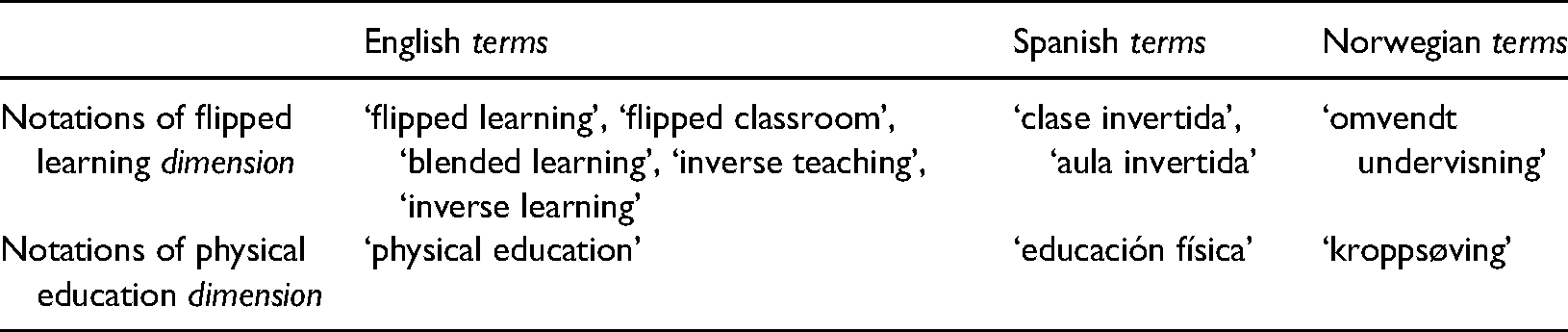
The final searches were conducted in July 2021 using the databases Google Scholar, Scopus, Web of Science, and Oria. No time limitations were applied. All works with the identified keywords in the title and/or abstract were further reviewed. The first author downloaded full versions of all possible relevant works and shared these with the author group through an OneDrive folder. A table of preliminary information for the possible relevant works, including author, year, type of work, research question, framework, data analysis, and key findings was also shared among the authors.
Study selection
Table 2 contains the inclusion and exclusion criteria applied in the selection of relevant literature for further analysis. School/university PE and PE teacher education (PETE) have major discrepancies in content, context, and objectives. This led to the exclusion of studies conducted within the PETE context.
Inclusion and exclusion criteria.
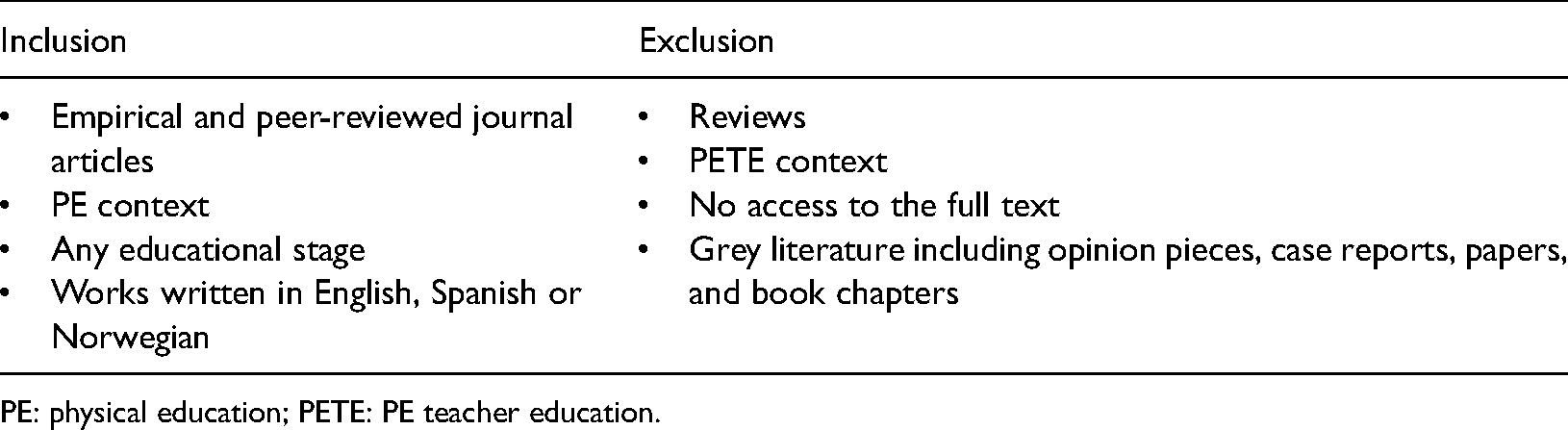
PE: physical education; PETE: PE teacher education.
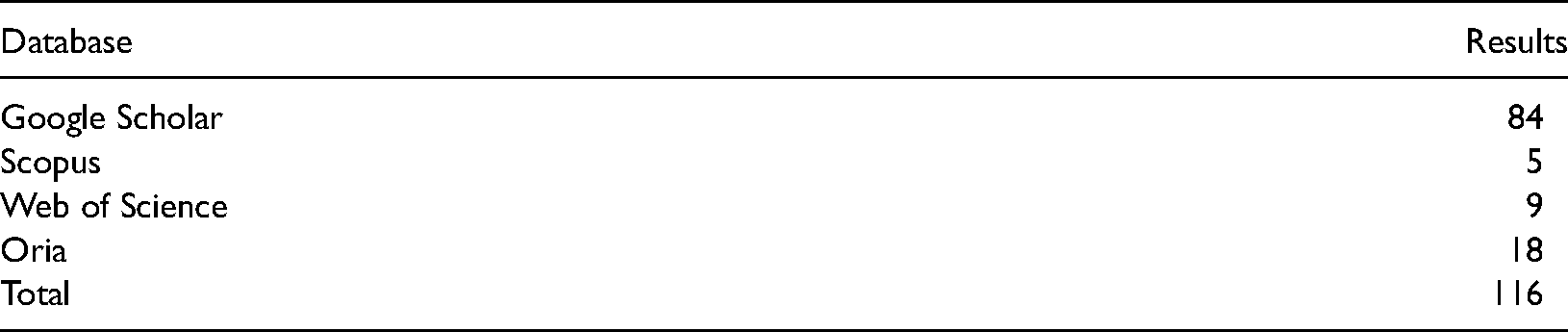
Table 3 comprises the results of the database searches. In all databases, the search string described in Table 1 was used.
Records identified through database searching.
Based on the Preferred Reporting Items for Systematic Reviews and Meta-Analyses (PRISMA) statement (Moher et al., 2015), Figure 1 shows the study selection process. This includes the procedures for searching databases, manual searching, screening titles and abstracts, screening full texts, and selecting eligible articles for inclusion.
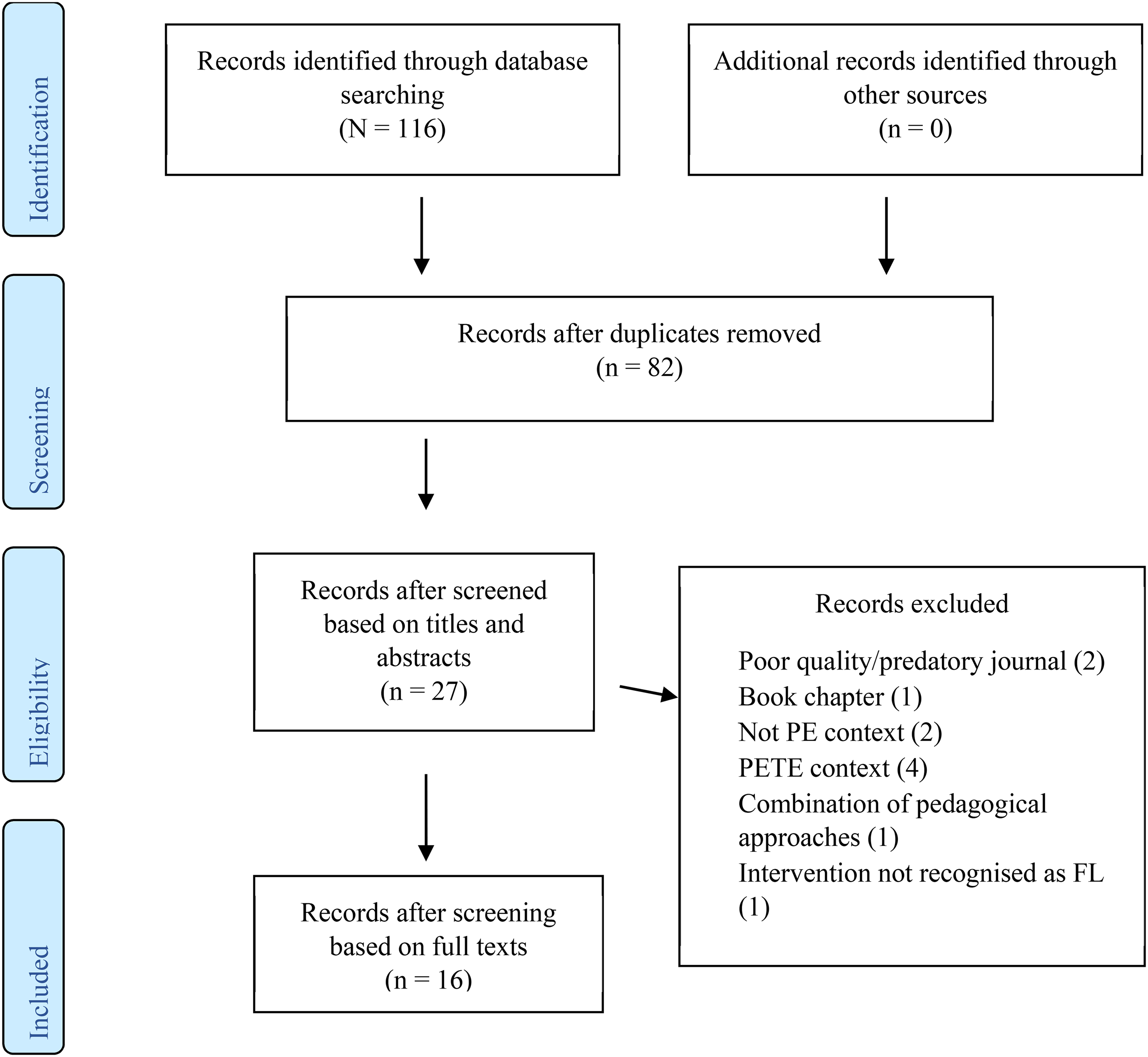
PRISMA flowchart of the study selection process (Moher et al., 2015).
Among the 116 records identified in the database search, a total of 34 duplicates were removed. In addition, all the potentially relevant articles went through a two-step screening process. Firstly, irrelevant articles were excluded based on screening of titles and abstracts, followed by the exclusion of unrelated articles based on screening of the full texts. Secondly, all exclusions were done based on the criteria listed in Table 2. Finally, 16 articles were included for further analysis.
Data charting and collation
Summaries of each study were developed based on indicators including author(s), year of publication, country location, research design, methodology, study population and sample size, and brief descriptions of outcomes. These are presented in Table 4. Next, results from the included studies were further analysed using a coding and categorisation strategy described by Saldaña (2021: 9) to enable us to ‘organise and group similarly coded data into categories or “families” because they share some characteristic – the beginning of a pattern’.
Overview of included studies.
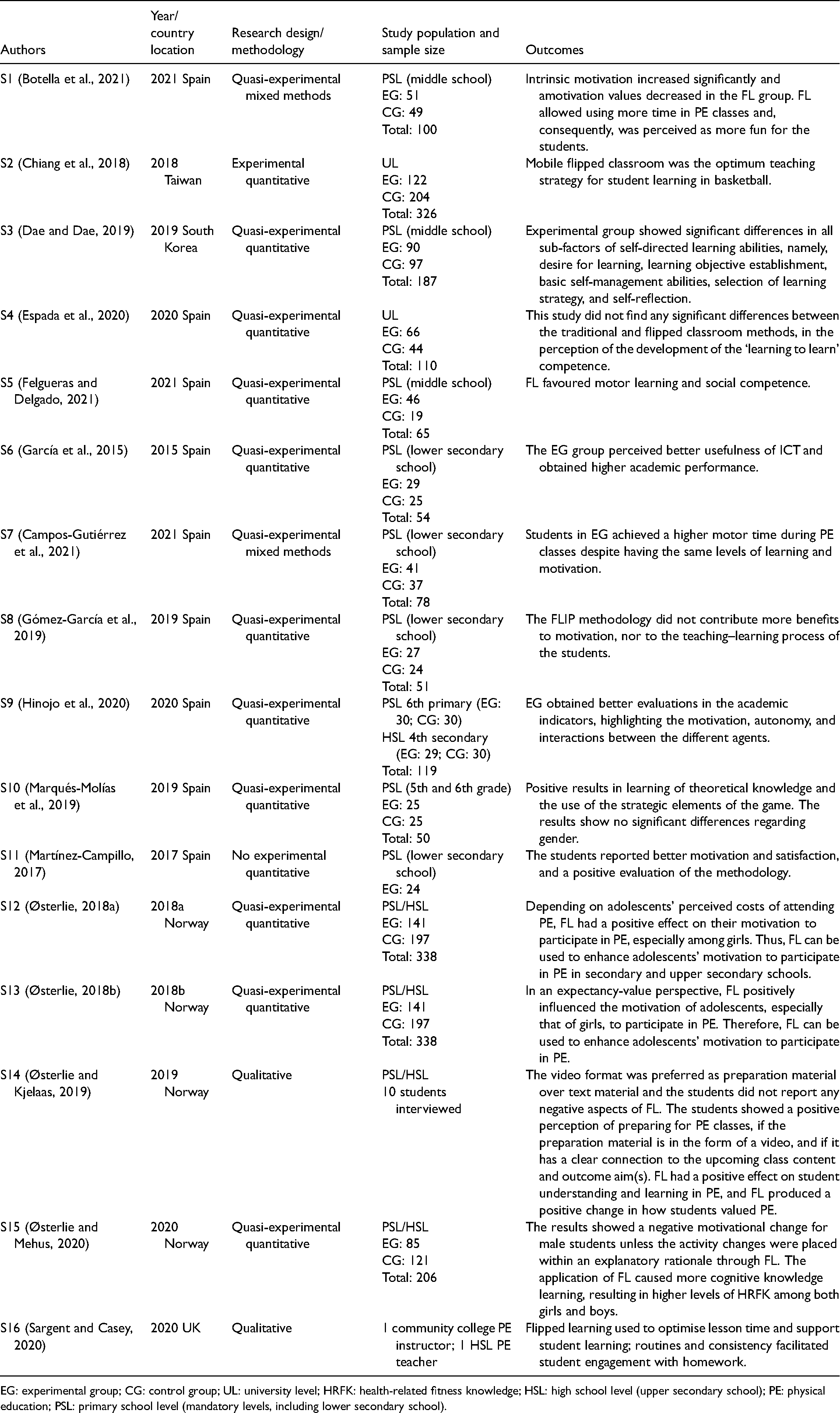
EG: experimental group; CG: control group; UL: university level; HRFK: health-related fitness knowledge; HSL: high school level (upper secondary school); PE: physical education; PSL: primary school level (mandatory levels, including lower secondary school).
Summarising, reporting, and discussion of findings
Finally, in this scoping review, 16 studies were selected to examine the scope of current research. This section is divided into four main sections (with subsections) to best present results on the research aims of the present study: general characteristics of included studies; research methods of included studies; foci and findings in the included studies; and characteristics of the interventions in the included studies.
General characteristics of included studies
Distribution by year of publication. By assessing the included studies, it was revealed that the range of publication years spanned from 2015 to 2021, with a peak of studies published in 2019/2020 (Figure 2).
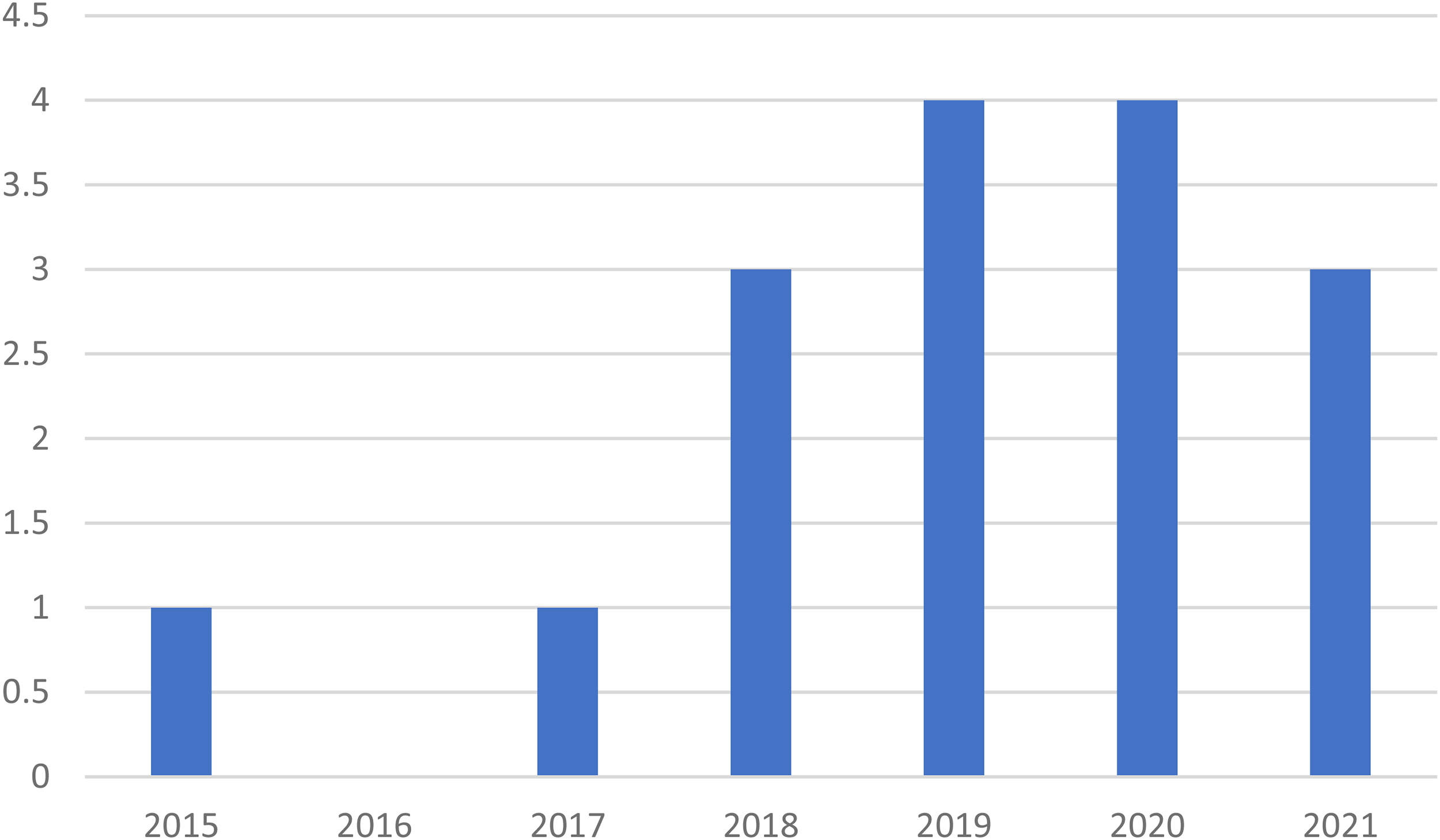
Distribution of publications by year in included studies.
Distribution by country. Figure 3 shows that most of the included studies were conducted in Spain, while Norway, the United Kingdom, Taiwan, and South Korea were represented to a lesser degree.
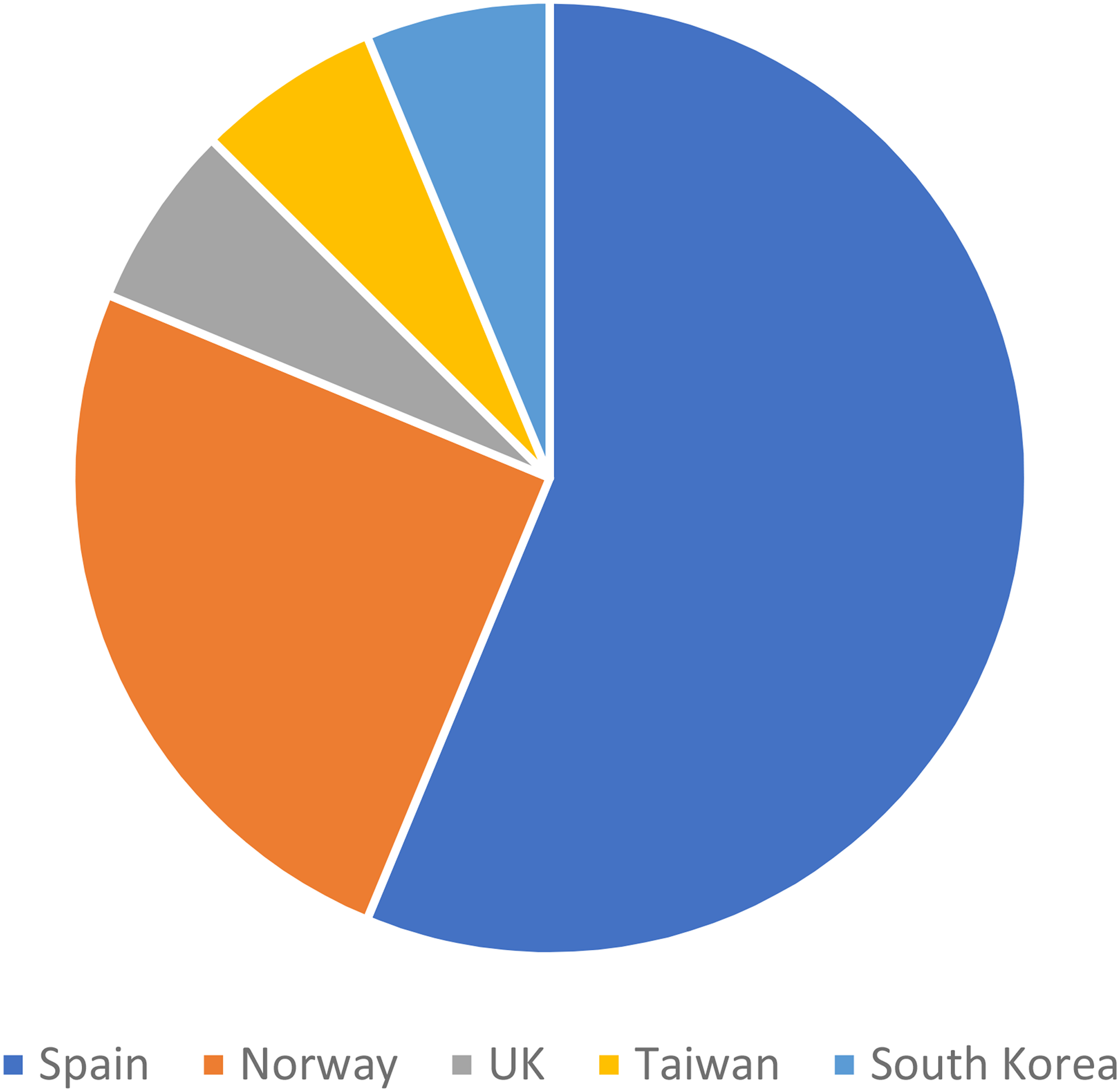
Distribution of publications by country in included studies.
Research methods of included studies
Methodological paradigm. The methodological paradigms that the included studies used were assessed by descriptions in the method sections. This was because none of the studies explicitly stated their methodological paradigm. Two (12.5%) of the studies used mixed methods for data collection, 12 (75%) used quantitative methods, and two (12.5%) used qualitative methods (see Table 4).
Participants involved. The characteristics of the selected sample are presented in Table 4. The sample sizes of all the studies had a wide range, from two to 338 participants (including both experimental group (EG) and control group (CG)). The total sample was 2056 participants from primary, secondary education, and/or university levels. Two studies were conducted at the university level (Chiang et al., 2018; Espada et al., 2020) while the rest of the studies were conducted at PSL or HSL or a combination of those.
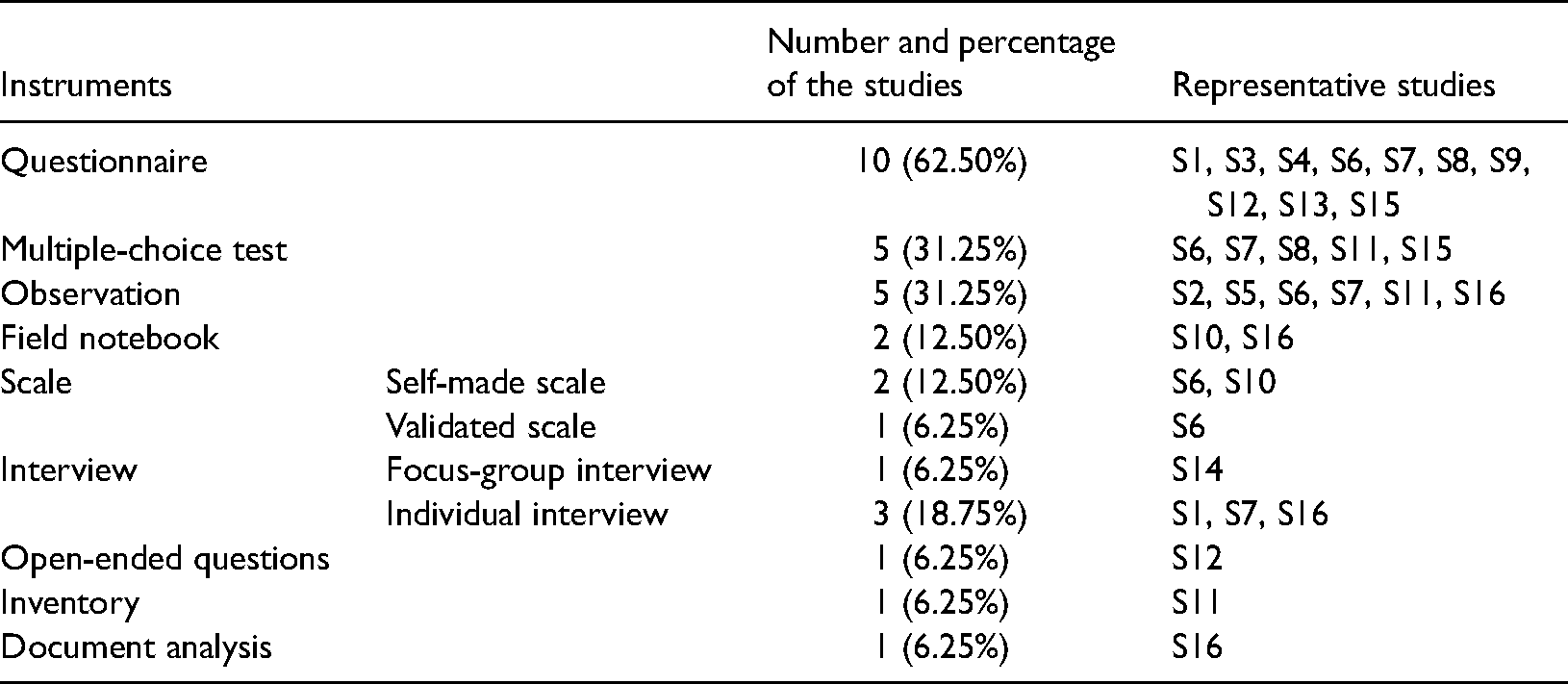
Instruments for data collection. Regarding the assessment instruments (Table 5), in most cases, questionnaires or multiple-choice tests were used. Motivation was evaluated by use of different questionnaires, some validated and some not. Often, complemented or adapted questionnaires from originals were employed. To determine the level of learning, objective tests of a multiple-choice type, or observations, were common approaches. A chronograph or stopwatch was used to measure time of motor commitment or motor practice. Scales, observations, or interviews were used to a lesser extent to collect other/different quantitative or qualitative data.
Instruments for data collection.
Foci and findings in the included studies
The variables evaluated in the included studies were diverse. Motivation and learning were the most common variables when analysing the included articles in this review. Motivation was the most analysed variable. Around 63% of the studies explored motivation, followed by learning, analysed in 56% of the studies. To a lesser extent, autonomy and motor commitment were analysed. Both were found to be included in about 19% of the studies. Finally, we mention variables analysed only once, such as student knowledge of ICT, student attitude towards PE, student interactions with teachers and peers, student satisfaction, social competence, and teacher assessment of student learning.
Motivation (10 studies). Motivation was the factor most often analysed in the studies included in this review (10 out of 16 articles). A majority of studies reported positive results related to the FL approach and motivation. In a primary school, Botella et al. (2021) found intrinsic motivation to increase significantly and amotivation values to decrease in the FL group. Hinojo et al. (2020) also found an increase in motivation, both in primary and secondary school students. This was found when comparing the FL environment to the CG. In the study by Martínez-Campillo (2017), motivation more than doubled (+69%) for lower secondary school students. There was greater motivation towards the participation and practice of PE using the FL approach, according to the research carried out by Østerlie and Kjelaas (2019) in a secondary school setting. Further, when female secondary school PE students were attending an FL learning environment, studies reported higher expectancy beliefs and attainment values (Østerlie, 2018b), and lower perceived costs of attending PE (Østerlie, 2018a). In a situational motivation context, Østerlie and Mehus (2020) found, when changing the nature of the PE content to be more play-like, a negative motivational change for male secondary students unless the activity changes were placed within an explanatory rationale through FL. In contrast, Campos-Gutiérrez et al. (2021) and Gómez-García et al. (2019) reported no significant increase in motivation despite students experiencing an FL approach compared to students in a non-FL learning environment. As part of student motivation for PE, Østerlie and Kjelaas (2019) and Sargent and Casey (2020) reported positive perceptions of preparation prior to PE classes within an FL approach where video was the format of the preparation material, and routines and consistency were in place.
As observed, the results of eight out of 10 articles showed a positive development of motivational variables using the FL approach. This supports the statements of previous studies on the increase in intrinsic and/or extrinsic motivation of students using FL in educational contexts (Akçayır and Akçayır, 2018; Bergmann and Sams, 2014; Zainuddin and Halili, 2016). In line with this, it is considered that students who feel enjoyment and satisfaction in what they are doing will increase their motivation towards these activities. This gives greater importance to PE, and consequently, an improvement in the quality of student learning (Granero-Gallegos et al., 2012).
Two studies demonstrated no improvement in the motivation variable. Campos-Gutiérrez et al. (2021) reported their results to be more favourable in the FL approach, but these were not significant. This was explained to perhaps be due to the duration of the FL intervention (5 weeks) and the short period of time that elapsed between the questionnaire before and after the intervention. Furthermore, Gómez-García et al. (2019) found no significant improvement in the motivational factor among students attending an FL approach in PE. They suggested that the results obtained regarding motivation were not expected due to the abrupt methodological change in the EG. Nevertheless, in general terms and by the prevalent positive observations regarding FL and motivation, the application of the FL approach seems to increase the motivation of students in both primary and secondary school PE.
Learning (9 studies). At university-level PE in Taiwan, Chiang et al. (2018) found that an FL approach significantly improved student learning performance in basketball. Furthermore, this was also deemed to be the case in secondary school students. Østerlie and Kjelaas (2019) affirmed that FL students obtained a better learning outcome compared to traditional classes. Through interviews, students put forward that it was easier to learn the conceptual content through a pedagogical approach such as FL, in contrast to a more traditional approach. Similarly, Østerlie and Mehus (2020) reported on a higher learning outcome, among secondary school PE students, on health-related fitness knowledge (HRFK) in the FL environment compared to the CG. When learning the game ‘korfball’ in primary PE, Marqués-Molías et al. (2019) found that the FL approach gave positive results in terms of the learning of theoretical knowledge, and the use of the strategic elements of the game. Further, in primary schools, Felgueras and Delgado (2021) reported positive results regarding how students learned or developed motor competence in handball through an FL approach.
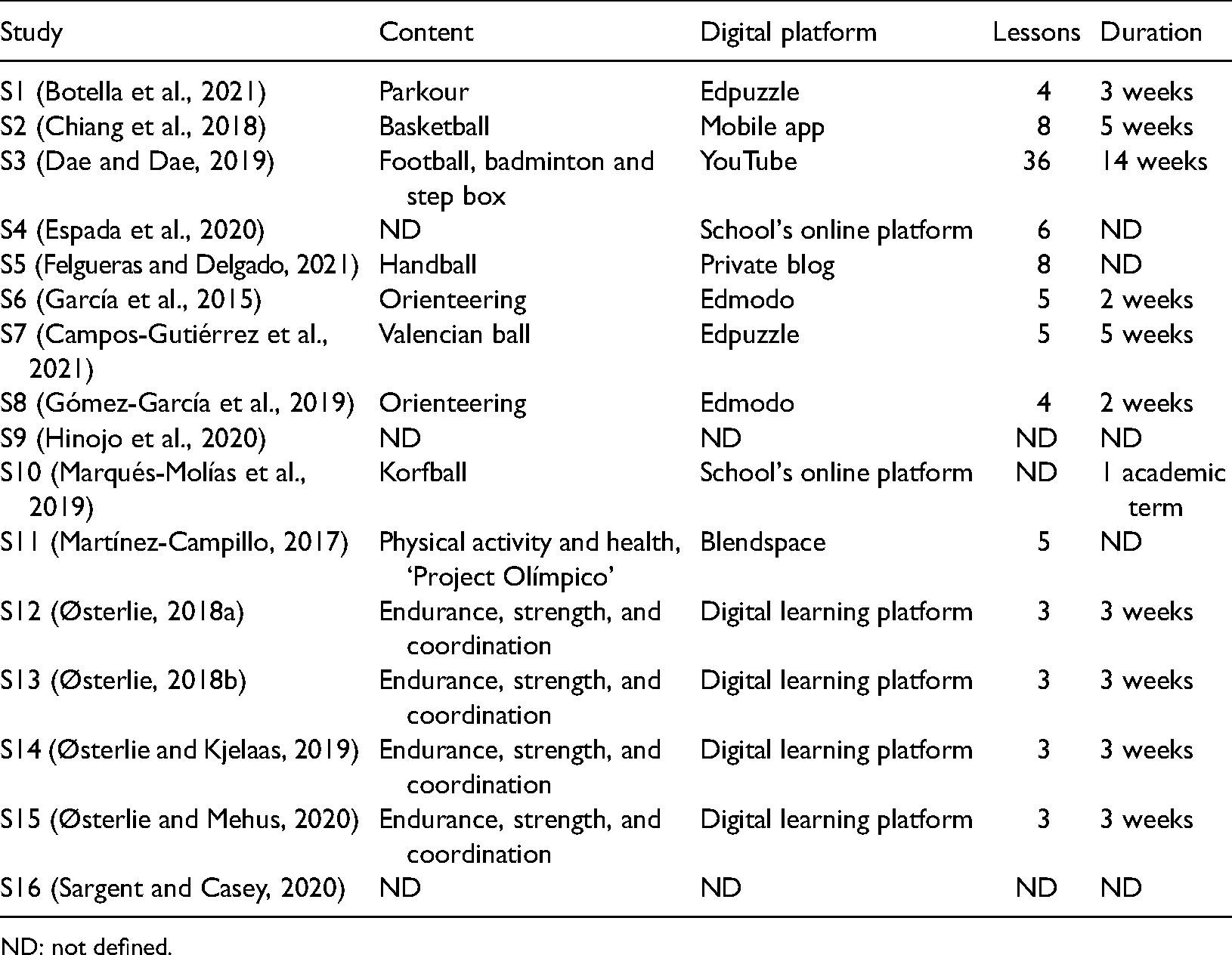
There are suggestions that in a traditional PE environment, students operate as passive learners. Conversely, in the FL approach, there is a focus on the student as an active, cognitive learner (Bergmann and Sams, 2014). Seven out of nine studies demonstrated a positive impact from applying the FL approach in PE to student learning. This development was observed in primary, secondary, and higher education within a variety of approaches, as demonstrated in Table 6. Nevertheless, the level of learning did not increase in the studies by Campos-Gutiérrez et al. (2021) and Gómez-García et al. (2019), who reported no improvement among secondary education students attending an FL class compared to the CGs. This may be connected to the observation of motivation not being positively influenced in the same two studies, as motivation and learning in school are dependent variables (Skaalvik and Skaalvik, 2015). One explanation for the increase in the level of learning through the FL model could be due to the increase in motivation for this type of class or the innovative nature of FL (González-Cutre and Sicilia, 2019). In higher education, Chiang et al. (2018) found the use of a mobile application in an FL approach positively affected students’ learning and interest suggesting that ‘presenting learning content in the mobile device form could be an effective way of promoting students’ learning motivation’ (p. 1103). This further supports the earlier suggestion in terms of the positive (or negative) connection between motivation and learning in an FL environment in PE.
Overview of key characteristics of the interventions.
ND: not defined.
When regarding learning as academic performance, the included studies report positive results. In the study by García et al. (2015) improvements were observed in students’ final grades, and therefore, improvement in academic performance in lower secondary PE. Hinojo et al. (2020) stated that with FL, better results were obtained in various academic indicators than with a traditional approach. These results are in line with similar studies of the same or different educational level (Akçayır and Akçayır, 2018; Cheng et al., 2018; McLaughlin et al., 2014; van Alten et al., 2019). Nevertheless, the inconsistency in observed results in the included studies in this review raises questions about how an FL approach affects learning in PE. This is due to the variety of definitions of the term learning in this subject as it spans from cognitive learning to learning of corporal movements and physical literacy (Kirk et al., 2006). Based on the above, we suggest that the FL approach seems to have a positive impact on student learning in PE.
Autonomy (3 studies). In secondary school PE, Hinojo et al. (2020) concluded that FL promoted student autonomy in the learning process, but the students’ ability regarding critical thinking did not improve. Further, Dae and Dae (2019) found PE classes based on FL supported increased self-directed learning abilities among middle school students, which suggests that ‘to foster the self-directed learning abilities evaluated as a key competency of the 21st century, it will be indispensable to apply Flipped Learning to physical education’ (p. 70). Together, these studies demonstrate that FL can have a positive impact on student autonomy in PE, reflecting earlier findings (Akçayır and Akçayır, 2018; Birgili et al., 2021; Zainuddin and Halili, 2016). Contrary to this, Espada et al. (2020) did not find any significant differences between the traditional and FL approach regarding university students’ learning autonomy. The inconsistency in our summary of findings on this variable makes it hard to conclude in either way.
Motor commitment (3 studies). The motor commitment or motor practice time increased in two studies in which it was analysed as the main variable. One study found contradictory and non-significant results. In secondary school, both Campos-Gutiérrez et al. (2021) and Sargent and Casey (2020) found an increase in time among those students experiencing an FL approach in PE. Taking into account a non-significant difference between the EG and CG, García et al. (2015) obtained positive results in most PE sessions during the intervention. The authors indicated no increase in the motor commitment time in some sessions may have been related to the design of those sessions, given the EG performed the assigned activities faster compared to the CG. Campos-Gutiérrez et al. (2021) observed a significant increase in this variable, but these results should be viewed with caution. There could be a possible bias regarding the results obtained from the motor time of the sample. This is because by simply applying the FL methodology to the EG, an advantage is obtained to develop more motor time in a session than the CG that followed a traditional methodology. The phenomenon of working autonomously with the content at home for the EG, gives a disadvantage to the CG, as they will have to dedicate that time to the teacher’s explanation in class.
Other variables. Regarding students’ prior knowledge of ICT, in the study by García et al. (2015), students demonstrated limited knowledge of the use of the digital platform used in the intervention. This data indicates that it may be valuable to carry out a session prior to the intervention of familiarisation with the tool to be used, where the digital content is explained in detail, as observed in the same study. In addition, it should be noted that the use of this pedagogical model entails a high dependence on new ICT. Therefore, educators should be aware that students might lack the proper competence to effectively use digital platforms (Moffett and Mill, 2014). The three different, but somewhat similar, free platforms used in five studies included in this review (Edmodo, Edpuzzle, and Blendspace) provide versatility in the creation of audio-visual content so that students can view the content at home (Singh et al., 2016). They also have a variety of functions such as adding comments, trimming, audio overlay, adding quizzes, etc. (Baker, 2016). For these reasons, these types of educational digital platforms seem to be suitable tools to support the implementation of FL in PE classes.
Regarding satisfaction and attitude towards PE in relation to FL, Dae and Dae (2019) reported positive results in five out of six sub-variables regarding attitude. Martínez-Campillo (2017) reported better satisfaction when primary school students evaluated the FL approach. Those findings are somewhat echoed in the results of Barao and Palau (2016) who stated that secondary school students’ interest and attitude improved after experiencing the FL model. Based on these findings, the observed improvements could be attributed to the fact that it is an innovative model and, therefore, something new and motivating. As a result, development of positive attitudes towards the subject could occur.
In the study by Felgueras and Delgado (2021), primary school students were observed and evaluated according to their ability to function as socially competent individuals when learning handball through an FL approach. The study revealed that FL was a successful approach for developing this variable in a PE context, connecting the positive results to a more autonomous (motivated) student and a better relationship between the student and the teacher. This study also found positive impacts on motor development in practising handball and suggests that FL promotes a synergetic effect between the development of motor and social competence, similar to what is suggested in other studies (Gómez-García et al., 2019; van Alten et al., 2019).
Finally, in relation to interactions and student assessment this review found positive results in two included studies. Hinojo et al. (2020) observed that FL promoted better student interactions with teachers and peers in secondary school. Similarly, Sargent and Casey (2020) argued that FL can support examination of PE students’ learning by supporting feedback, assessment, and student-centred learning. The positive outcome of looking into these other factors is that they seem to indicate that FL can make a positive contribution to PE. This might bring the subject, and approaches to teaching it, in new and more progressive directions, as we know that the subject is still bound by traditional pedagogies and approaches (Green, 2008; Kirk et al., 2006).
Characteristics of the interventions in the included studies
The characteristics of the interventions used in the studies are shown in Table 6 and, to some extent, in Table 4. In relation to the predefined groups in the interventions, most of them divide the sample into EGs and CGs. Nevertheless, Martínez-Campillo (2017) only included an EG. Neither Sargent and Casey (2020) nor Østerlie and Kjelaas (2019) featured EGs and CGs, as they analysed qualitative interviews.
The didactic or work units in which the interventions were developed included content on: parkour (Botella et al., 2021); handball (Felgueras and Delgado, 2021); basketball (Chiang et al., 2018); Valencian ball (Campos-Gutiérrez et al., 2021); orienteering (García et al., 2015; Gómez-García et al., 2019); physical activity and health (Martínez-Campillo, 2017); resistance, strength and coordination (Østerlie, 2018a, 2018b; Østerlie and Kjelaas, 2019; Østerlie and Mehus, 2020); football, badminton and step box (Dae and Dae, 2019); korfball (Marqués-Molías et al., 2019). Three of the investigations did not specify the content that the FL learning environment focused on (Espada et al., 2020; Hinojo et al., 2020; Sargent and Casey, 2020).
In relation to the platforms used for the development of the FL interventions, analysis of the included studies showed a variety of approaches using existing digital platforms for presenting videos and communication. The Edmodo, Edpuzzle, and Blendspace platforms were used in five studies (Botella et al., 2021; Campos-Gutiérrez et al., 2021; García et al., 2015; Gómez-García et al., 2019; Martínez-Campillo, 2017). Two studies used the school's or subject's existing online platform (Espada et al., 2020; Marqués-Molías et al., 2019). A platform dedicated to FL was also used (Østerlie, 2018a, 2018b; Østerlie and Kjelaas, 2019; Østerlie and Mehus, 2020). In one study, a mobile application was developed (Chiang et al., 2018). One study developed a blog for the intervention (Felgueras and Delgado, 2021) and one study used YouTube (Dae and Dae, 2019). Two of the studies did not specify the digital platform used (Hinojo et al., 2020; Sargent and Casey, 2020).
Finally, the number of sessions in most studies ranged between three and six while one study included 36 sessions (Dae and Dae, 2019). Three studies did not define the number of sessions used (Hinojo et al., 2020; Martínez-Campillo, 2017; Sargent and Casey, 2020). The duration of the intervention was observed to typically be between two and five weeks, except in the studies by Dae and Dae (2019) and Marqués-Molías et al. (2019) where the intervention lasted 14 weeks and an academic term, respectively.
Conclusion, study limitations, and future research
This scoping review examined 16 peer-reviewed studies on FL in PE within primary, secondary, and higher education contexts. The general characteristics, research methods, foci and findings, and characteristics of the interventions in the included studies were explored.
The results of this review suggest that the implementation of the FL approach in PE has many benefits for students compared to the use of a traditional methodology. These results, discussed above, affirm that the variable most analysed and susceptible to improvement is the motivation of the students. Further, this variable could condition an increase in the level of learning as it seems that this variable is also positively affected in an FL environment. This is particularly relevant as other studies in the PE field have sought to further explore motivation in relation to digital technology (e.g. Calderón et al., 2020) and different pedagogical approaches.
Regarding motor commitment and autonomy, there are too few studies involved in this review to make firm conclusions, but there is a positive tendency in how FL affects these variables. Other variables included in the 16 studies were student knowledge of ICT, satisfaction, attitude towards PE, interactions, social competence, and student assessment. All factors were only observed once across the included studies, so again, no firm conclusion can be made.
Regarding what constitutes FL in PE according to the observed studies there are some common factors. The number of lessons tends to extend between three and five, and they seem to be bound by periodical teaching units in specific sports or topics (e.g. orienteering or endurance). Teacher–student communication is typically done by commercial online platforms or school learning platforms and, to a lesser extent, blogs, YouTube, or mobile apps.
This review should be considered a novel effort to explore studies in this domain, as research related to FL in PE is still in its early stages. If other search criteria and other inclusion and exclusion criteria had been applied the results might have been different, and more than 16 items would have been included. For example, book chapters could have been a valuable resource to this review, enriching the results and conclusion. That being said, we seek to provide some practical recommendations from this review. For example, it would seem that using FL within small periods or chunks of a lesson and focusing on specific units or sports would be a useful starting point. Yet, in order to extend the current literature base, investigating aspects such as the role of social media for delivery and professional development within FL would be useful to explore. Further, we recommend exploring the forthcoming book ‘Flipped Learning in Physical Education’ 1 as it proposes a working definition of FL in PE.
Finally, this review has discovered a lack of knowledge regarding almost all variables investigated and indicates a need for more research to examine the relationship between learning and motivation in FL environments in PE at all educational levels.
Footnotes
Declaration of conflicting interests
The authors of the present study do not declare any conflict of interests with respect to the research, authorship, and/or publication of this article.
Funding
The authors received no financial support for the research, authorship, and/or publication of this article.
