



Abstract
Emotions-as-practices involve an open, embodied, and meaning-making process as digital technologies can shape and transform how emotions are enacted. This study uses the concepts of emotional affordances and affective practice in digital culture to investigate the online emotional experiences of Chinese left-behind women living in a rural location. From an analysis of Douyin (TikTok) video posts and interviews with 18 participants, the study develops a notion of ‘ambivalent positivity’ manifested by overt conviviality and the repressed negativity of distress and separation. Furthermore, rural women are obligated to maintain the norm of positivity that is deeply intertwined with their gender roles and social relations. These practices are evident in and through Douyin use, such as beauty filters, streamlined video editing, and background music. Responding to the ambivalence of positivity, we argue that social media empower rural women to achieve positive self-representation; however, they remain constrained within social-cultural conditions as left-behind rural women in a patriarchal society. Findings contribute to understanding how interactional offline-online contexts shape dynamic emotional experiences.
Keywords
Introduction
Emotions are understood as participatory experiences within specific contexts through which we can interpret the world, position ourselves and others in relationships, and shape our subjectivity (Barbalet, 2002). When humans have and make emotional experiences, emotional expression becomes a crucial component of emotion regulation, closely related to human mental health (Brandão et al., 2016), and could be influenced by cultural models (Köhl and Götzenbrucker, 2014).
In rural China, most women have lower levels of education than men and rely on their partners for their livelihood. The deprivation of authority and autonomy in their families and communities often leads to a disadvantaged situation for rural women, including low self-esteem, lack of self-affirmation, enduring neglect, verbal abuse, and physical violence (Lei, 2023; Luo et al., 2017). It is an unwritten rule for such women to conceal negative emotions in public, influenced by traditional rural culture and family-oriented values (Tse, 2012). Therefore, exploring women’s emotional experiences in their daily lives is important for promoting women’s mental health and building a more gender-inclusive and sustainable society.
As a set of multimodal tools, social media allow users to build connections, collaborate, and embody daily practices and ideologies (boyd, 2015; Ju et al., 2022). In particular, social media serve as a venue for expressing emotional responses in daily routines (Tettegah, 2016). Likewise, social media facilitate, shape, and expand traditional offline practices, and can challenge the traditional values of rural life (Sandel and Wangchuk, 2020). Yet, few have studied how rural women share their emotions online and how their emotional practices traverse online and offline spaces.
This study employs the concepts of emotional affordances (Bareither, 2019) and affective practice (Wetherell, 2012) to explore Chinese rural women’s online emotional experiences. It contributes to a line of digital emotions and affect studies by (1) developing a notion of ambivalent positivity manifested by overt conviviality and covert distress among left-behind women in rural China, (2) exemplifying the technological attributes of Douyin (抖音, the Chinese version of TikTok) in relation to emotional expressions, and (3) providing empirical insights for analysing mediatised emotions embedded in intersecting factors such as, geographical setting, social-cultural values, communicative modes, and users’ agency.
Literature review
Emotion and affect have been interpreted differently across diverse disciplines, viewed as separate entities – such as mental emotion versus bodily affect – thus embracing mind/body dualism, and as interactivity (e.g. the influence of emotions on reasoning) within neurocognitive evolution (Wehrs, 2017). Generally, the notion of feeling connotes both physiological sensations (affects) and psychological states (emotions) (Terada, 2001: 4). These distinctions could be elucidated by the body’s capability to affect or be affected.
In explicit opposition to emotion being described as a ‘subjective content, the sociolinguistic fixing of the quality of an experience’, affect concerns unbounded flows of bodily intensity or changes in experiencing, which are of ‘autonomic nature’ and ‘irreducibly’ to emotion (Massumi, 2021: 30). This differentiation delimits fully registered psychological states, and stresses the flexibility and vitality required to comprehend the social and the subjective in new ways (Koivunen, 2010). In certain contexts, emotion is defined as a relational and meaning-making process, contributing to the interchangeable use of emotion and affect (Ahmed, 2004; Wetherell, 2012).
Understanding affective practice and emotional affordances
Instead of drawing a thick line between emotion and affect, this study views their togetherness and becoming entangled with social-cultural encounters. The approach is more aligned with the concept of ‘affective practice’ highlighting participants’ routinised and dynamically represented emotions in social life (Wetherell, 2012: 19). The present study navigates Chinese rural women’s emotional experiences by understanding emotion/affect as an open, embodied, and meaning-making process. Emotions reflect what individuals care about and what they value and motivate their behavioural responses (Steinert and Dennis, 2022). Moreover, emotions are relational practices impacted by personal relationships, social interactions, and the environment (Skrbiš, 2008). Particularly, emotional patterning is enabled and negotiated by one’s positioning and established social-cultural formations (Wetherell et al., 2020).
Gibson’s ideas of affordances (1986), implicating the latent relationship between an object’s objective qualities and the users’ subjective interpretation, have inspired studies on human-technology relations, particularly digital media. Various social media affordances have been identified, such as replicability, editability, and visibility (boyd, 2011; Ellison and Vitak, 2015). Through addressing the complex and evolving social-technical relationships in social life, vernacular affordances (McVeigh-Schultz and Baym, 2015) have explained how possible actions are triggered by users’ experiences and perceptions, and imagined affordances (Nagy and Neff, 2015) further argue that users might project certain emotional content onto technology. For instance, in a study of mainland Chinese low-skilled labour migrants in Macao, it was found that they used WeChat, the most popular mobile multipurpose application in China, to seek communal solidarity and positive energy in their daily border-crossing (Ju et al., 2019).
Drawing on insights from practice and affordance theories, emotional affordances are defined as media technology’s ‘capacities to enable, prompt and restrict the enactment of particular emotional experiences unfolding in between the media technology and an actor’s practical sense for its use’ (Bareither, 2019: 15). And the emotional affordances of social media have been recognised to induce emotional conditions or related behaviours and may affect the users’ digital well-being through being expressible, shareable, consumable and evaluable (Steinert and Dennis, 2022: 12). These ideas have enriched the implications of affective practice mediated by digital platforms by demonstrating how emotional activities transcend structural forces and are relevant to subjective experiences.
Digital emotions, social media and networks
Information and Communication Technologies (ICTs) and online communication have complicated the meanings of emotions. Digital emotions are often conceptualised as mediatised and cultural practices where affect is characterised as a performative aspect that is ‘situational, contextual and relational’ with the ‘capability to form communities of practice’ (Döveling et al., 2018: 2). The convergence of personal, group and global spheres within the digital affect culture provides an overarching framework to scrutinise how online mediatisation shapes affective practices (e.g. belonging, alignment) that are specific and unique to communities.
The (dis)connections formed by digital media have reconfigured online users’ social relations. Within media networks involving human and nonhuman actors, and personal and collective affective economies (Ahmed, 2004), discussions on the networked affect have unveiled how interconnections manifest as the circulation and oscillation of intensities (Hillis et al., 2015). Furthermore, the ambiguous affect allows for understanding the ‘mutually conflicting meanings’ when intensities are registered differently in bodies (Paasonen, 2023: 86). The intricacies of digital culture have extended the understanding of emotions as more than a category or marker of feelings; instead, it represents a dynamic realm of heterogeneous, unpredictable and tensions among encounters (Paasonen, 2021, 2023; Wetherell, 2012). This perspective offers an insightful lens for the present study, enabling an exploration of how rural women’s online emotions interact with multiple actors across personal, societal and technological spheres. Our study will exemplify how rural Chinese women as left-behind groups enact their emotional patterns through every day social media use.
Digital media has allowed users to upregulate moods by building online communities, promoting feelings of belonging and closeness with others, and downregulating negative moods among adolescents (Blumberg et al., 2016). Although positive expressions were generally perceived as more appropriate than negative expressions across four social media platforms (Waterloo et al., 2018), platform differences were also found in emotional expressions and users’ gender. Female users expressed more negative emotions through the mobile Internet (Gilbert et al., 2003). However, when it came to public expression, women revealed fewer negative emotions, such as worry (Turner et al., 2008), and positive emotions as a form of online group support were stressed among women with breast cancer (Han et al., 2008). Built on the idea of networked publics (boyd, 2011) and affect’s unstructured intensity (Massumi, 2021), affective publics are rendered into being through expressions of sentiment among networked social media users and viral dissemination (Papacharissi, 2016). These mediated interactions echo the digital emotional contagion (Goldenberg and Gross, 2020), emphasising how exposure to online emotions impacts a perceiver’s emotions through expressed emotion, the network connections, the perceiver, and the platform.
As argued, affective practice and emotional affordances are relational and flexible, adapting to varying social-cultural circumstances. However, insufficient evidence exists to uncover how the affective dynamics of vulnerable groups are shaped in a social-technical environment and online-offline convolution. This pushes us to examine the patterned emotional activities that users experience on social media, and make sense of their conditions. Our study concerning rural women’s emotions on social media aims to deepen our understanding of their mental health, lived experiences, and, specifically, the role of digital technology in enacting emotional practices.
Chinese rural women’s emotional experiences
In traditional China, rural women’s emotional expression is oriented to develop towards the same sex by sitting together in the front yard to chat and share their thoughts (Fei, 1992/1947). They also communicated their emotions through physical artefacts, such as the use of ‘Nüshu’ (a writing system unique to women) in female storytelling to transform their isolation and powerlessness, and the folk songs reflecting their monologues on marriage (Friedman, 2005; Liu, 2004). Moving from offline to online spaces, rural women in China use social media for information retrieval, consultation services, commercial purposes, emotional expression, and social inclusion and equality. And they view mobile platforms as effective emotional interaction platforms, using various forms such as text and photos to express their thoughts and gain a sense of belonging and group identity (e.g. Wallis, 2018; Wang and Sandner, 2019).
Urbanisation and industrialisation since China’s reform and opening have resulted in large-scale rural-urban migration and reshaped rural societies. Due to rural-urban disparity and gender bias, female migrant workers have been impacted (e.g. fertility intentions) by their repeatedly amphibious rural-urban mobility (Jiang and Huang, 2023) and have felt inferior and isolated from urban life (Zhang, 2014). Chinese rural women’s online emotions also vary with their migratory experiences. Female domestic workers from rural areas often use social media as a healing tool to express negative emotions when they feel like a marginalised group in society (Wallis, 2018). For border-crossing migration, female migrant workers convey positive emotions to disseminate positive energy (Ju et al., 2019). Women in rural regions often implicitly express fragile affections by sharing selected WeChat articles on their experiences, especially spousal relationships (Wang and Sandner, 2019).
Most extant studies of Chinese women’s experiences are based on the WeChat platform, a multifunctional tool enabling various functions, including audio/video chatting, Moments sharing, money transfer and official subscription accounts (Ju et al., 2019). This study expands our knowledge of other platforms, by exploring rural women’s emotional practices via the digital platform Douyin, which has become one of China’s most successful social media platforms due to its low threshold of short video creation and easy-to-understand characteristics (Montag et al., 2021). Douyin is an online short video community platform where users can create personalised works, publish them on the platform, receive likes and interactions, and accumulate fans.
China’s left-behind women are a population that has grown as a result of China’s rural-urban migration (Lei, 2023). During long periods of separation from husbands who out-migrate for work in cities, these women take on multiple responsibilities in family care and agricultural production. The feminisation of agriculture (Chang et al., 2011) transformation has offered opportunities for rural women as female leaders in food sovereignty and obtain technological empowerment for poverty alleviation and increased household decision-making power and gender equality (Zheng and Lu, 2021). However, in most cases, the rural left-behind women are more vulnerable to exploitation and oppression, marked by unpaid and low-paid field of work and the pressure of taking care of families and marital relationship maintenance (Lei, 2023; Luo et al., 2017; Wu and Ye, 2016). To overcome mental problems (e.g. loneliness and boresome), the significance of family has been emphasised by providing emotional support (Kwok et al., 2015). Lacking timely care and support from their spouses, it is insufficient to understand the rural left-behind women’s mental health and how they respond to the challenges.
For rural Chinese women, social media platforms can serve as a window for emotional expression. Due to the influence of social-cultural and personal factors, their emotional expressions are somewhat limited. There are relatively few studies on rural women’s online emotions which investigate the social-cultural and technical dimensions underpinning their emotions, particularly for the rural left-behind women who are more bound up with traditional beliefs and patriarchy than women living in urban cities (Lei, 2023). Therefore, this study attempts to bridge this knowledge by exploring the online emotional experiences of Chinese left-behind women in rural areas.
What are the emotional practices among left-behind women in rural China via Douyin?
How are rural women’s online emotions shaped at the personal, sociocultural and technological levels?
Answers to these questions enrich our understanding of Chinese rural left-behind women’s mental well-being, and their tailored social media use as shaped by a wider environment intertwined with gender, class, and sociocultural circumstances in rural China.
Methods
Researching dynamic and mobile emotions and affect regarding relationality, sociality and situatedness has posed significant challenges (Kahl, 2019). This is especially true when attempting to capture the unqualified and not-yet-registered affect potentialities. Building upon the conceptualisation of emotions as embodied and meaning-making processes, our study adopts an interpretative approach to unfold the relational emotions embedded in participants’ online experiences. We conducted a field trip to village A, Fuzhou City, Fujian Province in 2022–2023. Our primary data were collected from ethnographic interviews and complemented by analyses of participants’ Douyin video posts (a total of 17) to better understand their online expressions and emotions. The village comprises 19 groups, with 753 households and a population of 2,892. Among them, the number of women is 1,333, and most men work in cities as migrant workers.
We operationalised face-to-face interviews with Chinese rural left-behind women as situated affective encounters (Ayata et al., 2019). Approaching interviews as a process, we attentively listened to participants by forming a ‘we’ scenario and attachment, and carefully observed their emotions, especially when they were encouraged to articulate distressful or ‘shameful’ memories and feelings. As most women had low levels of education and were unfamiliar with the standard interview format, interviews were adapted to local ways of speaking. To mitigate power relations between the interviewer and participants, we also conducted self-reflexibility to build trust based upon the researcher’s (third author) personal connections to the community, speaking in the local dialect and creating a semi-structured interview format that was comfortable for the participants. The interview protocol consisted of ten questions mainly centred around three topics: (1) attitudes towards and challenges of living in rural China; (2) use of Douyin in everyday life and emotional expression; (3) changes and challenges brought by using Douyin dynamic video posts. Also, during the interviews, the researchers and the contact person fully informed the participants, who were encouraged to showcase their Douyin use and lived experiences in rural areas.
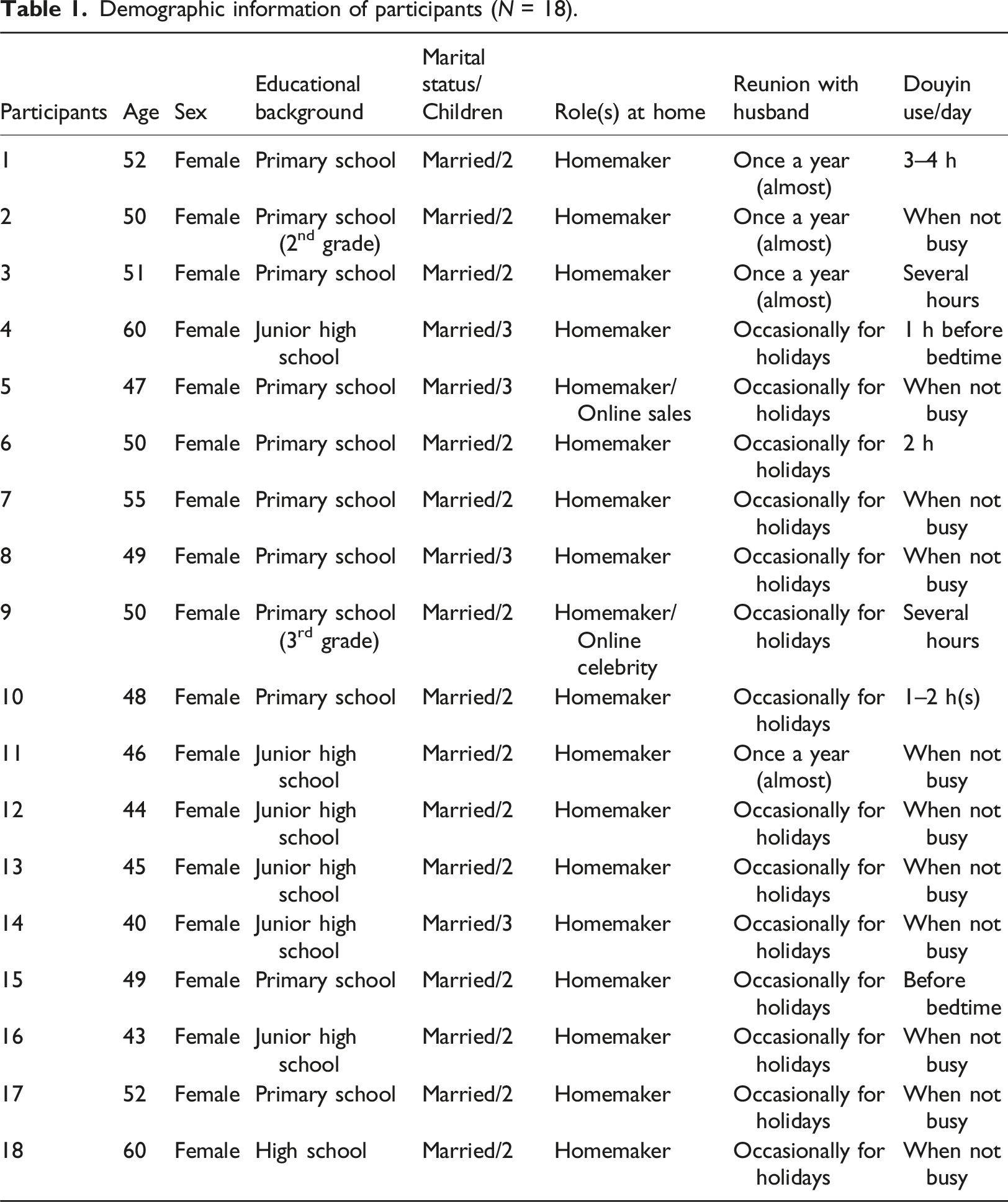
Demographic information of participants (N = 18).
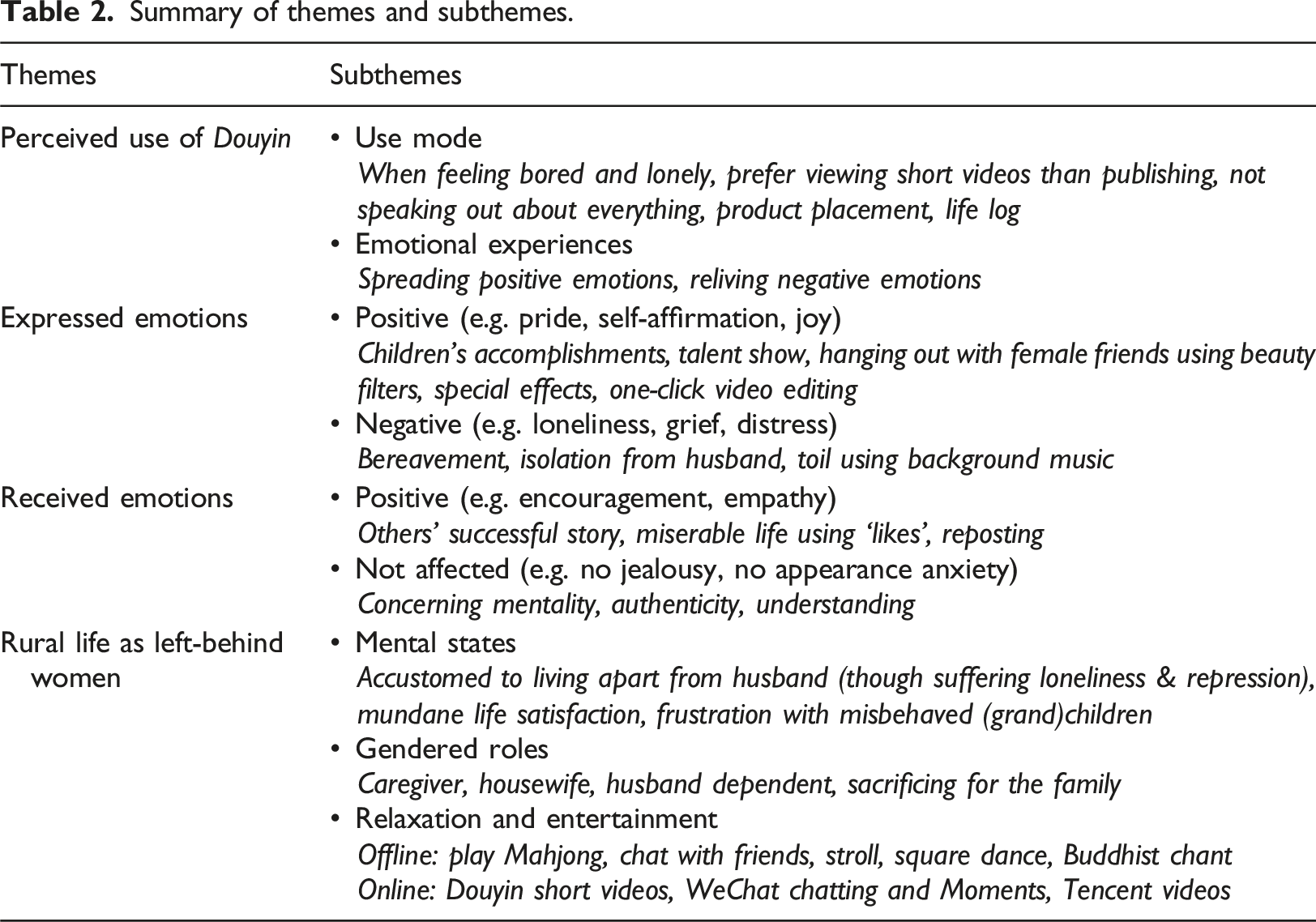
Summary of themes and subthemes.
Findings and analyses
As left-behind women in rural areas, participants acted mainly as caregivers and homemakers. They were accustomed to living apart from their husbands. Meanwhile, they found it challenging to confide in others, particularly when confronted with emotional issues within their families, and frequently opted to endure their struggles in silence.
They derived enjoyment from documenting real-life moments and portraying the beauty of their lives through online expressions. The positive role of Douyin is basically aligned with the affordances of TikTok identified to be a convenient tool of relief in everyday life (Schellewald, 2023). In contrast to explicitly disseminating positive emotions, participants covertly concealed the negative side and shared them through Douyin in an obscure way. These emotional characteristics were illustrated by the participants’ interview narratives and supplemented by their published short videos. It is also worth noting that the participants’ online emotional expressions were intertwined with the technological attributes afforded by Douyin (e.g. beauty filters, integrated background music, and streamlined video editing tools), which enabled and facilitated the participants to express themselves and present their emotions. Furthermore, participants mentioned that they had the opportunity to receive feedback and engage in online interactions through comments from viewers, which served as a source of emotional comfort.
Overt spreading of conviviality: Enabled by beauty filters and special effects
Left-behind women can have a subordinate position vis-à-vis their male partners, and suffer from discrimination and financial, marital, and emotional problems in their community (Lei, 2023). However, the participants in this study expressed self-affirmation derived from their talents and their (grand) children’s accomplishments (see Figure 1). Participants exhibited a strong affinity for sharing their selfies, energetic dance performances, and singing videos – enabled by Douyin’s beauty filters and special effects. These features not only facilitated the presentation of a more idealised image of their selves, but also instilled a sense of self-confidence, thereby enhancing their inclination for emotional expression and sharing. Participants’ posts on personal performance and grandchildren’s achievements.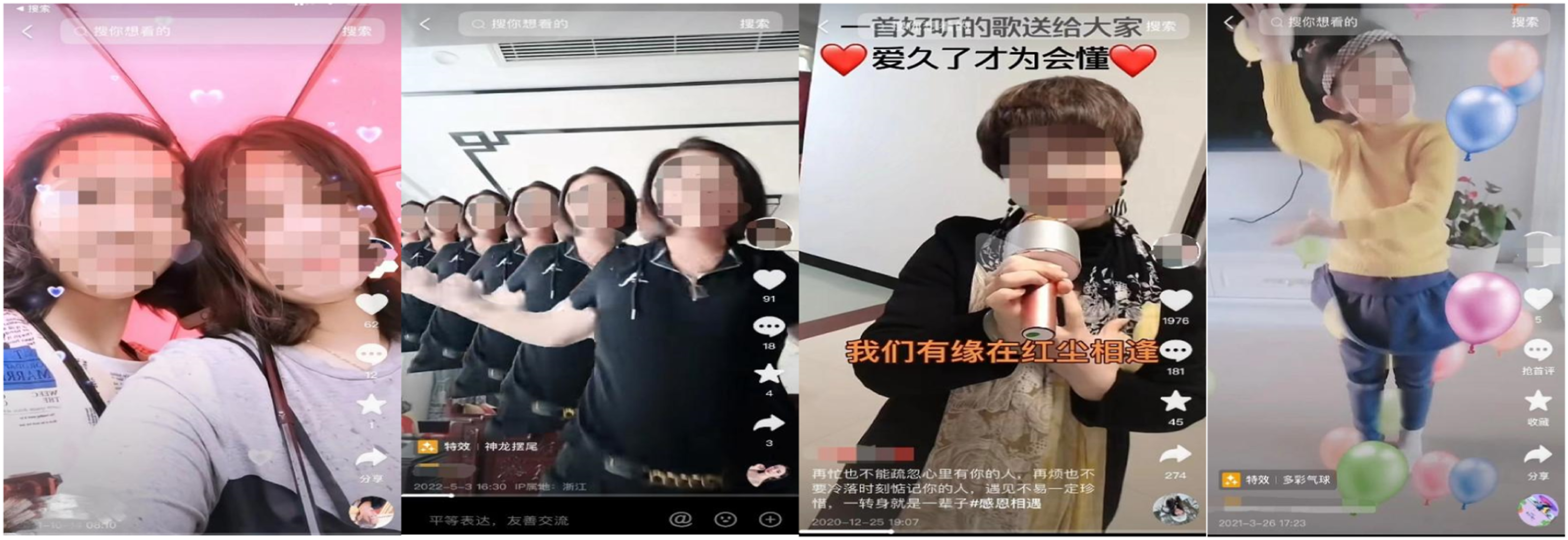
First, participants displayed great enthusiasm for utilising self-portraits as a means to represent themselves and invited their friends to participate in filming. They either appeared together or took turns in front of the camera, showcasing their smiling faces, confidence, and talents. Moreover, they adopted the roles of trendy dance enthusiasts or professional singers in their videos, skilfully swaying their bodies to the rhythm. During these joyful moments, the incorporation of special effects, such as video special effects and lip-syncing, provided them with readily available tools to enhance their presentations, resulting in a beautified image that demonstrated their talents. Some participants reported that they would repeatedly browse these short videos posted, and they experienced a sense of self-affirmation and a desire to share their creations with a wider audience. They also expressed that the melodious tunes and lyrics, which often depicted real-life situations, resonated with them on a personal level, often evoking personal associations as we see in the following interview responses.
After using the beauty filters on Douyin, I feel more beautiful and as if I have returned to my youthful days. Sometimes, after taking a Douyin selfie, I feel so beautiful that I get immersed in it and repeatedly admire myself. (P8)
I will post videos of my dancing. When I turn on the Douyin effects, it appears as if multiple versions of myself are dancing, which looks particularly cool… my dance becomes really good and energetic, so I want to share it. (P17)
Not only for themselves, participants derived satisfaction also from others who were closely connected to them. Particularly for rural left-behind women, as their husbands were absent, their children or grandchildren were most important as they meticulously documented milestones in their growth, such as birthdays and graduations. Participants placed their hopes and aspirations on their descendants, in which their honour and reputation became deeply intertwined. Employing beauty filters, participants frequently showcased their children’s achievements in universities. They expressed a sense of fulfilment in being able to provide care for their grandchildren. Such posts often garnered numerous ‘likes’ and positive comments, reflecting the appreciation and admiration of others.
My daughter has achieved high honours, and I am proud of her. I want to share it with everyone…But it’s not merely about ‘showing off’; it’s a sense of fulfilment, being satisfied with myself because I have raised such an excellent daughter. (P11)
Participants extended their satisfaction beyond themselves and their offspring by frequently posting collections of photos capturing outings with other rural women and celebrations of communal activities. These videos encompassed various subjects, including beautiful courtyards, lively goldfish, and flowing rockeries. Of note was their enthusiasm for group outings with their ‘sisters’ (close female friends), during which they would strike various poses in front of the camera. To share these experiences, participants simply needed to select their desired outgoing photos, as the one-click video editing feature automatically matched the chosen theme with suitable video templates, such as ‘every day of a wonderful life’, allowing them to express their excitement and joy. Moreover, participants mentioned that this type of posting occurred within groups, where multiple users simultaneously shared identical content in a screen-flooding style through Douyin. Notably, none of the participants’ lively video posts featured males. This aligns with their responses:
Nothing related to the males. We don’t play with the opposite sex either. We are all rural housewives and usually just sit together and chat about household chores. (P7)
Participants viewed happiness and joy as the key themes of Douyin’s posts and aimed to convey their positive and uplifting spirits to the audience. This notion of ‘positive energy’ is consistent with the online emotions disseminated by mainland Chinese labour migrants in their border-crossing life, as observed in WeChat Moments (Ju et al., 2019). Additionally, participants believed that embracing life with an optimistic attitude served as a foundation for them to reflect upon and cherish their memories as they aged, even in the face of setbacks.
Covert smoothing of loneliness and distress: Embedded in funny videos and background music
Though left-behind rural women have comparatively increased household decision-making power and gender equality (Chang et al., 2011; Zheng and Lu, 2021), most participants not only felt lonely and exhausted from their caregiving work but also experienced long-term sexual repression due to prolonged separation from their husbands (see Lei, 2023). Some participants even described their marriages as widow-like; over time, they had grown accustomed to this situation. To a large extent, the participants’ suspended agency has triggered the affective ambiguity or emotional negativity that indicates their structural powerlessness (Ngai, 2004). When asked about expressing negative emotions online, most participants voiced disbelief and said they would refrain. They perceived Douyin as a space for spreading positive energy and sharing happy content. They were hesitant to cause worry or shame in others and, as a result, rarely divulged their negative emotions to the public. Instead, they tended to internalise and keep such emotions to themselves.
I only share things that make me happy. In our rural area, we keep our unhappiness to ourselves. Sometimes, if I were to share negative things, it would also bring negativity to others, and that’s not good. Additionally, if there are people with bad intentions, they might comment negatively or exaggerate things.
(P13)
Most participants tended to associate negative emotions with ‘personal feelings’ and considered them as matters of personal privacy. They believed expressing negative emotions to the public through a media platform would cause them embarrassment. The conviviality of Douyin short video posts was unable to completely mask the participants’ negative emotional expressions. In an attempt to mitigate the negative emotions associated with rural life, they would share self-generated funny videos or subtly incorporate a sense of life’s hardships, loneliness, grief, and distress into the background music of their Douyin posts. Recognising their reluctance to openly display their negative emotional state online, they often created humorous situational videos in collaboration with like-minded friends, as depicted in Figure 2. Situational videos and expression of negative emotions.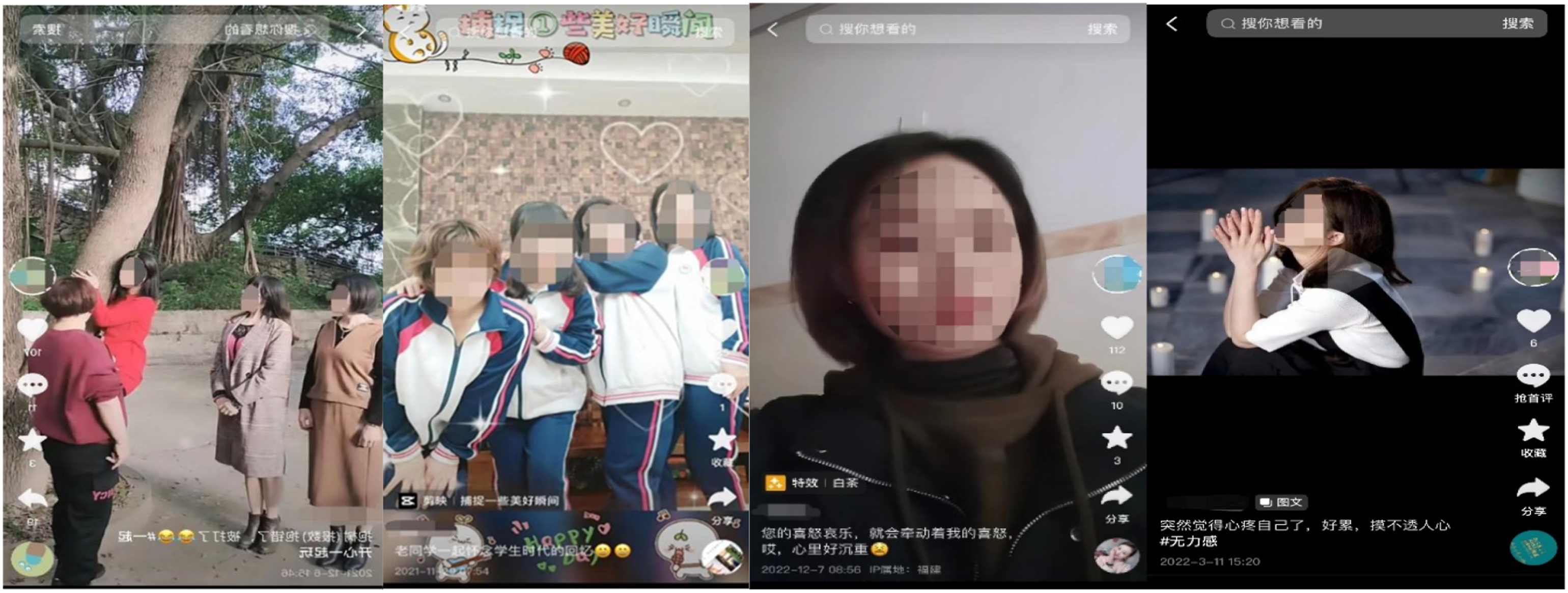
At times, they would dress up in their childhood school uniforms, aiming to relive their student days or engage in playful activities like pretending to row a boat using branches as oars. They found a way to release pent-up negative emotions by posting these videos. The choice of background music in these videos typically consisted of upbeat, fun, and joyful tunes, which helped them momentarily forget the hardships they faced in their daily lives.
I mostly post positive and happy videos, often about entertainment and comedy…We come up with our ideas for videos, find suitable background music templates, and create our moves/postures. The music is usually funny and cheerful, which helps me release my suppressed feelings. (P13)
The background music used in posts indeed served as an effective means for these left-behind rural women to express their inner emotional appeals obscurely. Figure 2 illustrates this, where one participant shared a self-portrait accompanied by a sentimental song as the background music. The lyrics of the song conveyed a sense of longing and nostalgia, with phrases such as ‘The past is like the wind, an infatuation is hard to fathom. We bid farewell with wine, but your shadow remains’. In the caption of the post, the participant expressed, ‘Your joys and sorrows will influence mine. Ah, my heart feels so heavy’. Participants mentioned that when the background music reverberated with their life experiences or conveyed concepts that deeply resonated with their understanding, they would incorporate such music into the videos they created to express emotions and seek emotional support and comfort. This idea extends our understanding of how background music impacts the users’ perceptions and behavioural intentions (Hwang and Oh, 2020).
When experiencing the loss of a loved one, most participants used melancholic and touching music embedded in posts to convey and alleviate their grief. Also, they received online greetings and warm care through the comment section of their Douyin posts.
My mother has passed away, and I feel so sad and heartbroken that I cry daily. At that time, my husband hadn’t returned yet. I was in so much pain, and feeling so oppressed, so I shared two songs (titled ‘Mom, I miss you’ and ‘Mom in my dreams’) to relieve the overwhelming grief. I also received a lot of comfort from others, who encouraged me to be strong and take care of myself. It felt really warm. (P4)
Some participants said they would deliberately block some acquaintances from seeing their video posts, making them accessible to strangers. This allowed them to create a private space to release their most genuine emotions. The background music in Douyin posts provided the participants with a channel to secretly reveal their vulnerable emotional status.
Deriving joy from social browsing through ‘likes’ and reposting
Overall, these left-behind rural women maintained a positive and contented attitude towards their rural, home life, despite being primarily engaged in the routine work of caregiving, while experiencing feelings of loneliness. In addition to expressing their positive emotions through sharing posts, they found social browsing, such as following others’ posts and gaining insights into their lives, to be another means of receiving positive emotions.
We do our thing, regardless of others. I will not be jealous, nor will I envy others. When we see other people’s beautiful (good) lives, we are also happy. There is no way to compare yourself with others, just be yourself. (P9)
Rural women are also very happy. After the meal is finished and things are done, I play with my friends. I sit there in the morning to talk, chat, nap, and come out to play mah-jong. It feels good to live like this. (P4)
They reported a preference for browsing short videos when feeling bored or having free time rather than creating and sharing their own content. They usually followed the videos on the topics of family issues, talent performances and friends’ dynamics. And they were willing to click ‘likes’ on the positive posts to express their interest, empathy and encouragement. Moreover, the happy lifestyles of other users, including residing in urban areas and possessing attractive physical appearances, did not evoke envy or anxiety among the participants. This finding contrasts with the admiration and envy experienced by US-based adolescents when they browse through others’ depictions of their lives on social media (Weinstein, 2018). The participants’ positive and unaffected mentality, to some extent, indicates their resilience to endure the hardships and challenges inherent in their rural lifestyle.
The participants’ online emotional experiences were mostly positive, contrasting their lived reality of being exploited and oppressed in their rural lives offline (Lei, 2023). Douyin, as a virtual space, is just like the public and quasi-public spaces (e.g. parks, supermarkets) that afford users self-encouragement and the capacity of endurance as they navigate the predicaments of their lives (Chan and Latham, 2022).
Discussion
This study has explored the Douyin use of left-behind women in rural China including the short video posts they browsed, reposted, and created. It was found that the participants used the online platform as an opportunity and space to share lived experiences and voice emotions. These findings align with previous studies on rural Chinese women (Wallis, 2018; Wang and Sandner, 2019), and indicate that online spaces such as WeChat and QQ (a chat, social networking, and gaming application) have provided rural women with an empowered capacity of self-expression, and achieve positive self-realisation. This may challenge prevailing gender stereotypes that depict rural women as a disadvantaged group.
However, participants’ positive online expressions cannot overcome gender power relations nor change their vulnerable and subordinate roles as rural women (Lei, 2023). The limited role of social media and the rural left-behind women’s online emotions have motivated us to navigate their emotional landscape within the intersecting realms of personal, sociocultural, and technological spaces. The discussion will illustrate the idea of ambivalent positivity and how the participants’ emotional practices transcend the boundaries between online and offline spaces.
Ambivalent positivity: Gendered roles and social networks of rural Chinese women
The complicated, conflicting and unpredictable emotions mediated by social media have been identified (Paasonen, 2023; Waterloo et al., 2018). Take a laugh as an example to understand the affective dynamics, laughter is an active means of emotional expression, releasing joy but also holding sadness, crying and shame, and further examined as networked humour in political contexts (Sundén and Paasonen, 2020). In our study, the participants’ ambivalent positivity online, featured as overt conviviality and converted unpleasantness, accentuates these affective dynamics. When having emotional relief through Douyin, left-behind rural women have to maintain positive norms that are deeply intertwined with their gender roles and hierarchies. The explicit positivity and repressed negativity are echoed by the vitality norms identified among young cancer patients’ engagements with social media through performing life-affirming as opposed to pessimistic accounts of their illness (Stage et al., 2020).
Straightforwardly, participants’ online emotional experiences are constrained by their materiality (e.g. gendered roles, social networks) and social-cultural conditions. Chinese women living in a patriarchal society are subject to traditional gender norms and restrictions (Lei, 2023) grounded in Confucian cultural values, often sacrificing themselves for their families. Gendered roles that are expressed in such traditional sayings as ‘men outside and women inside the home’ and ‘men tilling and women weaving’ especially apply to China’s rural regions. Besides, rural women usually have low levels of education, little or no employment outside the home, and work as homemakers. They are of low social status, sitting at the bottom of the social hierarchy, which is particularly common among rural left-behind women. Through their expression of positive emotions, participants can be seen as obsessed with posting selfies with beauty filters, trying to seek and gain self-affirmation through aesthetics (Townsend and Sood, 2012) and their excellent, caregiving work, rather than the satisfaction and joy triggered by the pursuit of personal development.
Participants are constantly subjected to the demands of the watchful community and social order, living in a patriarchal society rooted in Confucian cultural values (Zhang, 2014). Accordingly, their self-expressions via digital platforms must adhere to the principles of female virtue, marked by recognising gender differences without crossing boundaries. As argued by Fei (1992/1947), China’s traditional rural society is stabilised by avoiding disruptions of social relationships built upon kinship and geographic proximity; gender differentiation is the basic foundation for ensuring the society’s orderliness. This traditional concept of gender differentiation can explain why participants’ videos shared on Douyin have no scenes with opposite-sex friends, other than their husbands. Rural left-behind women – whose husbands are absent for extended periods – are disciplined to be vigilant about maintaining gender differences and to avoid perceived misunderstandings and potential stigmatisation. Therefore, the companionship and support from same-sex individuals or ‘sisters’ with identical backgrounds and life trajectories, can become a robust emotional pillar for these rural left-behind women. The gendered social networks of rural Chinese women, centred around their families and ‘sisters’, epitomise digital affect culture’s individual and collective dimensions (Döveling et al., 2018), without the influence of globalised affect flows.
Chinese rural women’s hidden expressions of unfavourable emotions are also influenced by their notions of family, face-saving, and gender differences in China’s agrarian society. Most participants perceive negative emotions as personal and private, due to the idea of keeping family problems private (Wu and Ye, 2016), and directly sharing them through the online space can be seen as a shameful act. Also, participants living in the community of acquaintances place great importance on the concepts of face and prestige, which are closely related to a deeply rooted culture of shame (Fung, 1999). Once their domestic affairs become known and spread rapidly, they will damage their cherished face and subject them to ridicule, bringing shame on themselves, their families, and their entire lineage. Hence, within a hierarchical rural society, it is a commonplace for women to suppress their negative emotions in their offline lives (Tse, 2012), and this tendency extends to their online emotional expressions.
Affective roles of social media afforded by Douyin
As Bareither (2019) claims, emotions are not discrete and isolated, but a complex process. Social media platforms have a range of emotional functionalities that encourage and allow users to express emotions efficiently (Davis and Chouinard, 2016; Steinert and Dennis, 2022), and the virtual space afforded by Douyin further enables them to construct their online emotions. The left-behind rural women in this study have experienced Douyin through personal, communal and social-cultural encounters. As illustrated, social media is a cultural space filled with ambiguous emotions, and rural women are obligated to adhere to the norms of ‘positivity’ reproduced. Beyond using Douyin as an individualised space for emotional relief, participants also shape it as a relational or networked public for support and comfort through posting customised videos within groups. More specifically, digital media not only act as a trigger or tool for emotional expressions, but influence how emotions are shaped, expressed and disseminated. In this study, the technological attributes of Douyin, including beauty filters and one-click video editing, are easy to use and adapt, and effectively facilitate and promote participants’ positive online emotions, which is reflected in the platform’s design, recommendation algorithm, and governance strategies (Yu et al., 2023).
Participants are capable of undergoing various types of emotional transformations through the Douyin platform (Mitchell, 2021). As they browse through short videos and come across posts that resonate with their own experiences and moods, it elicits emotional resonance and facilitates digital emotional contagion (Goldenberg and Gross, 2020), thereby intensifying the generation of similar emotions among participants. They also gain support and comfort through encounters with followers and reposting the videos. In moments of negative emotional states, they subtly regulate their emotions, particularly in circumstances where their sociocultural contexts offline do not support or accept these emotions (Brady et al., 2020). To avoid facing online attacks, participants often choose not to publish or reduce the publication of content with negative emotions. They generally have a low tolerance for negative comments and hope to receive positive feedback instead of criticism and condemnation.
Broadly speaking, Douyin is a newly emergent platform in China that is subject to strict scrutiny and regulation (Yu et al., 2023). The content propagated by Douyin is bound by socialist values and policies on social morality. It is also seen as a vital tool for social and cultural governance in China, as it needs to align with the platform mechanism that ensures social stability (Kaye et al., 2021). Hence, participants tend to publish videos that conform to social-cultural values. Yet, they can also demonstrate a certain level of autonomy, such as presenting a positive self-image and documenting positive aspects of their lives, thereby showcasing the positive image of rural left-behind women to the public.
Conclusion
Chinese rural left-behind women’s online emotional experiences are impacted by the offline-online nexus intersecting at the personal, social-cultural and technological landscape. In response to the ambivalence of positivity this study has mainly identified, the digital affective activities of rural women are formed through three layers: physical space (where, e.g. rural China and its social-cultural conditions), psychological space (what, e.g. real-life emotions perceived by left-behind rural women) and virtual space afforded by the digital technologies (how, e.g. technological attributes of Douyin). These three spaces are intersectional and co-constitutive in representing rural women’s emotional practices.
Digital media allow and shape the affective norms of rural left-behind women as expressed positivity and repressed negativity. More specifically, rural women have predominantly revolved around the direct positive expressions driven by gendered roles and social networks. These experiences primarily involve activities such as taking selfies, highlighting their (grand)children, and sharing homogeneous content related to outings with their ‘sisters’. Additionally, these women tend to subtly hint at negative emotions, which can be attributed to the deeply ingrained sociocultural values in patriarchal societies in rural China. In this society, men continue to wield dominance, while women consistently face the restrictions of traditional gender norms, and societal expectations of obedience to men and sacrifice for family. Responding to the ambivalence of positivity, we argue that social media empower rural women to achieve positive self-representation; however, they remain constrained within unequal power relations by holding a subordinate position as left-behind rural women in a patriarchal society.
Footnotes
Declaration of conflicting interests
The author(s) declared no potential conflicts of interest with respect to the research, authorship, and publication of this article.
Funding
The author(s) received no financial support for the research, authorship, and/or publication of this article.
