




Abstract
In times of crisis, the spread of conspiracy myths increases since people seek answers to complex questions. Besides societal aspects, social media platforms, especially messenger services, have been identified as a positive driver for spreading conspiracy myths. Much research focused on whether right-wing populist attitudes correlate with belief in conspiracy myths resulting in inconsistent findings. We show that different anti-system attitudes and corresponding digital media usage can promote the affinity towards conspiracy myths apart from right-wing attitudes. With this paper, we first want to sharpen the terminology on ‘conspiracy myths’ and develop a scale to measure affinity towards conspiracy myths in different dimensions. We second use this scale to investigate different mindsets of conspiracy in the Swiss population. Third, we want to find out how the dimensions correlate with messenger usage. Based on data from a representative population survey in Switzerland from November to December 2020, we investigated different affinities towards conspiracy myths, represented by far-left, far-right, populist, anti-elitism, general anti-system attitudes and science skepticism. We then used the six dimensions in a cluster analysis and identified five typological mindsets. About 30% of the population accordingly have higher affinities towards conspiracy myths than the rest. Our study also highlights the potential role of messenger services in spreading conspiracy myths. To a certain extent, Facebook Messenger and Telegram usage show a robust correlation with the different dimensions of the affinity towards conspiracy myths. In contrast, WhatsApp usage does not show a robust correlation.
Keywords
Introduction
In recent years, research on conspiracy theories or myths, as we call them in our paper, has increased strongly from a communication science perspective. Conspiracy myths assume that mostly elite groups secretly control social events and that these events are interconnected with each other (Castanho Castanho Silva et al., 2017; Clarke, 2002; Douglas et al., 2019). The reasons for their increasing popularity are threefold: First, the emergence of digital media and social media platforms has led to professional information media losing their gatekeeping function in preparing and distributing news content (Wallace, 2017). For instance, via social media, laypeople may create information themselves and spread it via digital platforms, without any external gatekeeper filtering. Consequently, there is no check as to whether the content is true or scientifically sound. Furthermore, social media are being used increasingly for news purposes, while using the press as the main source of news is in decline in Switzerland, especially among young people (Reuters Institute for the Study of Journalism, 2021). Second, during the COVID-19 pandemic, conspiracy myths have taken a serious increasing role in disseminating information about the virus (Bruns et al., 2020; Gemenis, 2021). From a sociological point of view, social change and especially crises in society impact the affinity towards conspiracy myths among the population. In times of crisis, people seek answers to complex questions which conspiracy myths promise to give (Van Prooijen and Douglas, 2017). Explanations of the political and media mainstream may no longer be satisfactory to certain segments of the population, resulting in increased affinity towards alternative interpretations of the world (see also Imhof, 1996). Third, while social media platforms like YouTube, Twitter, and Facebook have actively started to moderate content and even completely deplatform content creators such as Alex Jones, communication on semi-public messenger services or so-called alternative social media platforms have become a popular source for conspiracy myths (Walther and McCoy, 2021).
Even though research has made progress regarding the spread of conspiracy myths online, little is known about different affinities towards conspiracy belief––which we define as the subjective assessment that conspiracy myths are true––among populations. Current studies assume, for instance, that populist attitudes influence conspiracy belief (Eberl et al., 2021; Castanho Silva et al., 2017). Especially right-wing political attitudes have been associated with affinity towards conspiracy myths (Wood and Gray, 2019), and the use of politically far-right oriented media (Hollander, 2018). Conspiracy myths play an important role in the far-right online media ecosystem in the German-language area (Rauchfleisch and Kaiser, 2020). Other studies assume that conspiracy belief is distributed across all political attitudes or partisanship (Uscinski and Olivella, 2017). We assume that affinities towards conspiracy myths can occur in different ways and that conspiracy belief correspondingly can be pronounced differently among the population.
The goal of this paper is threefold. We first propose a conceptual shift from conspiracy theories towards conspiracy myths and introduce a scale to measure affinity towards conspiracy myths that is then validated with a nationally representative sample of the Swiss population. Second, in an exploratory analysis, we identify different types of segments (mindsets) concerning conspiracy beliefs. Third, we will specifically analyze the potential connection between semi-public messenger services and conspiracy beliefs.
Switzerland is an interesting case to investigate affinities towards conspiracy myths. Research on misinformation has so far focused predominantly on Anglo-Saxon countries, specifically the USA (e.g. Wang et al., 2019), in contrast to countries with a more moderate political consensus culture, such as Switzerland. Furthermore, our findings are relevant beyond the case of Switzerland. Like other Nordic and Western European Countries, Switzerland is characterized by a democratic-corporatist media system, great importance of public broadcasters, relatively high media and institutional trust, comparatively low audience fragmentation and low political polarization (Hallin and Mancini, 2004). In an international comparison, Switzerland is characterized by very high use of online websites and social media (Reuters Institute for the Study of Journalism, 2021). The importance of messenger services as a source of information has increased significantly in recent years.
Conceptual framework
Definitions: Conspiracy myths and conspiracy belief
Conspiracy theories or myths assume that societal events are interconnected and secretly controlled by elite groups (Castanho Silva et al., 2017; Clarke, 2002; Douglas et al., 2019). They stand in opposition to the public opinion regarding legacy media and political elites (Schwaiger, 2022). Certain conspiracy myths exist that have subsequently proven to be true––even if they are exceptions––but the veracity of conspiracy theories cannot always be scientifically disproved (or verified). This would be an essential part of a ‘theory’ (Spiegel et al., 2020). In line with Nitzke (Spiegel et al., 2020), we, therefore, prefer using the term ‘conspiracy myths’ within this paper. From a cultural studies perspective, myths are mainly shaped by narratives (Spiegel et al., 2020; Blumenberg, 2006). While theories represent verified explanations of phenomena, myths make events real through narratives and give explanations through alternative worldviews––which is also the case for conspiracy myths. In contrast to theories, myths can accordingly not be falsified since myths link narratively different phenomena, as we know it from films or literature (Spiegel et al., 2020). Myths can further be distinguished from fables or legends, as the narrators claim that myths are true and credible (Dyrendal et al., 2018). However, myths are not defined by factual false claims about certain events. Rather, they are of a paradigmatic character to give certain narratives their meaning (Dyrendal et al., 2018).
In recent years, conspiracy myths were mainly discussed in the context of misinformation. Misinformation can be defined as ‘information that is incorrect, possibly by accident’ (Scheufele and Krause, 2019: 7662) and must be distinguished from intentionally false disinformation, which is not necessarily the case for conspiracy myths. Accordingly, conspiracy myths can be one type of misinformation. In contrast to disinformation, people who spread conspiracy myths usually assume that these are true. We define the assumption of individuals that certain conspiracy myths are true accordingly as ‘conspiracy belief’. Even though conspiracy myths have always existed from a historical perspective, in recent years, the spread and belief in conspiracy myths have been mainly discussed as a result of digitalization (e.g. Konkes and Lester, 2015; Zollo et al., 2015). Furthermore, the COVID-19 pandemic has led to a rise of conspiracy myths (e.g. Srol et al., 2021; Pummerer et al., 2021). Both, we will discuss as follows.
Spread of conspiracy myths in digital media environments
Conspiracy myths gain in importance when official statements of political, economic or media actors are unsatisfactory for certain parts of the population, which can lead to criticism of the government and openness to alternative explanations of societal events (Konkes and Lester, 2015). This is often the case in times of crisis since people are confronted with feelings of insecurity, anxiety and loss of control (Van Prooijen and Douglas, 2017). Research further shows that pandemics––as health, social and economic crises––increase the spread of conspiracy myths, like, for instance, myths about the Zika virus in 2015 (e.g. Smallman, 2018), or the H1N1 influenza pandemic in 2009 (e.g. Pandey et al., 2010).
During the COVID-19 pandemic, individuals seek answers to complex questions, which cannot be answered unambiguously even by experts and media, or political actors. Current research points out that uncertainty exists regarding decisions by the governments, individual, social and economic consequences and appropriate protection measures (Bruns et al., 2020; Gemenis, 2021). Since official statements were partly contradictory, individuals tended to draw on further, unofficial information––for instance, alternative news media––with, in certain cases, misinformation in its content (Bruns et al., 2020). In addition, lower trust in official institutions goes hand in hand with the feeling of lack of control regarding the pandemic, which further leads to higher conspiracy belief (Srol et al., 2021). Vice versa, belief in conspiracy myths predicts lower institutional trust and less support of regulations of the governments (Pummerer et al., 2021; Stecula and Pickup, 2021). Therefore, conspiracy belief also influences the level of action and has consequences for society as a whole. For instance, empirical findings show that conspiracy belief correlates positively with lower willingness to adhere to the required measures or rules imposed by the governments (Pellegrini et al., 2021), or with the acceptance of xenophobic policies (Oleksy et al., 2021)
In parallel, digitalization led to an increased spread of conspiracy myths via digital platforms, which manifested itself in the pandemic. Via digital platforms, individuals can prepare and publish information content themselves and do not have to adhere, for instance, to journalistic standards like source transparency (Neuberger, 2018). Moreover, conspiracy myths mirror news values in terms of, for instance, scandalizing or emotionalizing news content (Konkes and Lester, 2015), which leads to higher user engagement on social media platforms compared to scientific news (Zollo et al., 2015). Also, research indicates that populist attitudes and mistrust in institutional measures against the COVID-19 pandemic lead to preference of social media as source of information and higher affinity towards conspiracy myths on the pandemic (Ferreira, 2021). However, while research on conspiracy myths on social media is very pronounced, there is little evidence on the role of private digital communication via messenger services in this context.
Internationally, messenger services like Telegram have always been important communication channels for fringe communities like ISIS or the far-right in different countries (Urman and Katz, 2020; Walther and McCoy, 2021). In recent years, a similar trend can be observed in the German-language area, including Switzerland, Germany and Austria. While YouTube has been for many years the home for different popular alternative media outlets and far-right activists (Rauchfleisch and Kaiser, 2020), some of the most popular channels such as ‘Ken FM’ have been deplatformed during the COVID-19 crisis as the Channel violated YouTube’s COVID-19 policies (AP News, 2021). Conspiracy myths have always been a core element of communication on YouTube (Rauchfleisch and Kaiser, 2020). Like their international counterparts (Rogers, 2020), German content creators also flocked to Telegram after being deplatformed by YouTube. Primarily the COVID-19 crisis increased the activity on Telegram (Willaert et al., 2021). One of the most prominent cases in Germany is the vegan celebrity cook Attila Hildmann, who runs a successful Telegram channel in which conspiracy myths play an important role (Becker et al., 2021). A survey study from Germany also showed that usage of messenger services is moderately correlated with vaccine conspiracy belief. In contrast, there was no correlation between vaccine conspiracy belief and Facebook as well as YouTube usage (Jensen et al., 2021). An international survey study during the COVID-19 pandemic shows that only Twitter usage has a negative effect on conspiracy belief, whereas usage of Facebook, YouTube, WhatsApp, and Facebook Messenger is positively correlated with conspiracy belief (Theocharis et al., 2021). The results indicate that affinity towards conspiracy myths is potentially dependent on the used social media platform or messenger service and that further research is needed.
Anti-System attitudes and affinities towards conspiracy myths
Empirical studies about conspiracy belief during the COVID-19 pandemic often focus on specific conspiracy myths to identify affinity towards myths or the spread of these online (e.g. Eberl et al., 2021; Balta et al., 2021), for instance, the supposed connection between COVID-19 and the 5G technology (Bruns et al., 2020), or that COVID-19 is a human-manufactured virus in terms of a bioweapon (Eberl et al., 2021; Imhoff and Lamberty, 2020). Current research further illustrates that the belief in one conspiracy myth is associated with belief in other myths––even if they are entirely fictional (Swami et al., 2011). This paper aims to broaden the perspective on conspiracy myths and empirically works with two approaches. On the one hand, we look at concrete conspiracy myths to find out the perceived truth about them among the Swiss population. On the other hand, we investigate their (negative) attitudes towards ‘the’ system and elites from a more general approach, which represents the core definition of conspiracy myths, focusing on broad narratives rather than concrete events. We see the added value in a scale based on affinities in identifying patterns of attitudes that go beyond concrete events in society and are thus also applicable to future phases of crisis. We therefore draw on recent studies that address attitudinal patterns as conditioning variables for conspiracy belief.
We assume that conspiracy belief can be pronounced in different dimensions which in sum reflect anti-system attitudes, on which we focus in this study (and not, for instance, psychological factors). In general, Imhoff and Bruder (2014: 25) define conspiracy mentality ‘as a generalized political attitude’ that has to be distinguished from other generalized political attitudes like right-wing authoritarianism, as conspiracy mentality is characterized by the perception that high-power actors are more threatening than low-power actors. However, this perception can manifest itself in different dimensions, as discussed as follows.
Populism and anti-elitism
Recent research in the context of COVID-19 addresses populism as a relevant attitude toward conspiracy belief (e.g. Balta et al., 2021; Eberl et al., 2021; Ferreira, 2021; Stecula and Pickup, 2021; van Prooijen et al., 2022). Citizens position themselves against political and societal elites (Hawkins and Kaltwasser, 2018; Stecula and Pickup, 2021), consistent with the overall narrative of conspiracy myths. Populism and conspiracy belief also both share anti-elitism attitudes (Castanho Castanho Silva et al., 2017; Imhoff and Bruder, 2014; Wuttke et al., 2020). Eberl, Huber, and Greussing (2021) illustrate that populist attitudes increase mistrust in political institutions and science, which both correlate with conspiracy belief. The authors argue that right-wing ideology plays only a minor role in the context of populist attitudes. Also, populism can have different nuances and manifest itself across the left-right spectrum (Eberl et al., 2021).
Far-right attitudes
Many studies on conspiracy belief particularly deal with right-wing and far-right attitudes (e.g. Becker et al., 2021; Hollander, 2018; Rauchfleisch and Kaiser, 2020; Wood and Gray, 2019). Studies indicate that conspiracy myths are part of far-right online communities (Rauchfleisch and Kaiser, 2020), showing that specific myths exist which represent far-right attitudes, such as the QAnon conspiracy myth (Cosentino, 2020). Also, in recent years, (far-)right populists, such as Donald Trump or Geert Wilders, made use of conspiracy myths in their communication on social media which––vice versa––can activate populist attitudes in society (Hameleers, 2021; Sawyer 2021).
Far-left attitudes
Besides much research on populist, right-wing and far-right attitudes correlating with conspiracy belief, research on left-wing or far-left attitudes in this context is rather rare, even though there is evidence that conspiracy belief exists both on the political right and left side (Drochon, 2018). Studies indicate that both extreme left-wing and right-wing attitudes can foster conspiracy belief, although conspiracy belief is more pronounced in the right-wing camp (Douglas et al., 2019; van Prooijen et al., 2015).
System criticism
Apart from a political classification, distrust of the system in general can lead to a stronger belief in conspiracy myths. Low levels of system confidence (e.g. the belief that the governing system is corrupt) then reflects higher conspiracy belief (Imhoff et al., 2020).
Science skepticism
Societal crises also illustrate that conspiracy belief can become apparent in science skepticism, as shown during the COVID-19 pandemic (Rutjens et al., 2021), or during the climate change discourse (Uscinski et al., 2017). Science skepticism can also be related to populist attitudes (Eberl et al., 2021; Hameleers and Van der Meer, 2021; Stecula and Pickup, 2021). Scientists are then regarded as part of ‘the corrupt elite’ (Hameleers and Van der Meer, 2021), which manifests itself in anti-science populist attitudes or science-related populism (Mede et al., 2021) that can be related to conspiracy belief.
Since conspiracy belief can be pronounced in different dimensions, we pose the following general research question: Which affinities towards conspiracy myths and corresponding mindsets exist in the Swiss population and how are they related to digital media consumption in terms of messenger usage?
Methods
Data
We conducted a representative population survey in Switzerland during the COVID-19 pandemic from 23 November to 7 December 2020. For developing our typology of different mindsets of conspiracy belief in Switzerland, we focused on standardized questions regarding the perceived truthfulness of certain (established as well as fictional) conspiracy myths, and individual attitudes, representing affinities towards conspiracy myths. Furthermore, to describe different conspiracy affinities in the digital media environment, we further asked about individual media usage, with special attention to digital (social) media usage (see Measures and Appendix 1).
To reach people of all the three language regions in Switzerland, the German questionnaire has been translated to French and Italian as well. The survey was conducted in cooperation with the field institute intervista in Switzerland, using their certified online access panel which counts over 100000 active panelists. People between 18 and 74 participated, yielding a total random quota sample of n = 1.212. We worked with a random quota sample to cover the three major Swiss language regions. Accordingly, participants from French- and Italian-speaking Switzerland were disproportionally recruited. Within the language regions, age and gender were interlocked according to the population structure. The proportional age and gender distribution within the language regions also leads to an education distribution of the sample which is comparable to that in the Swiss population (Federal Statistical Office, 2019). However, higher educated people tend to be somewhat underrepresented (see Appendix 2).
Measures
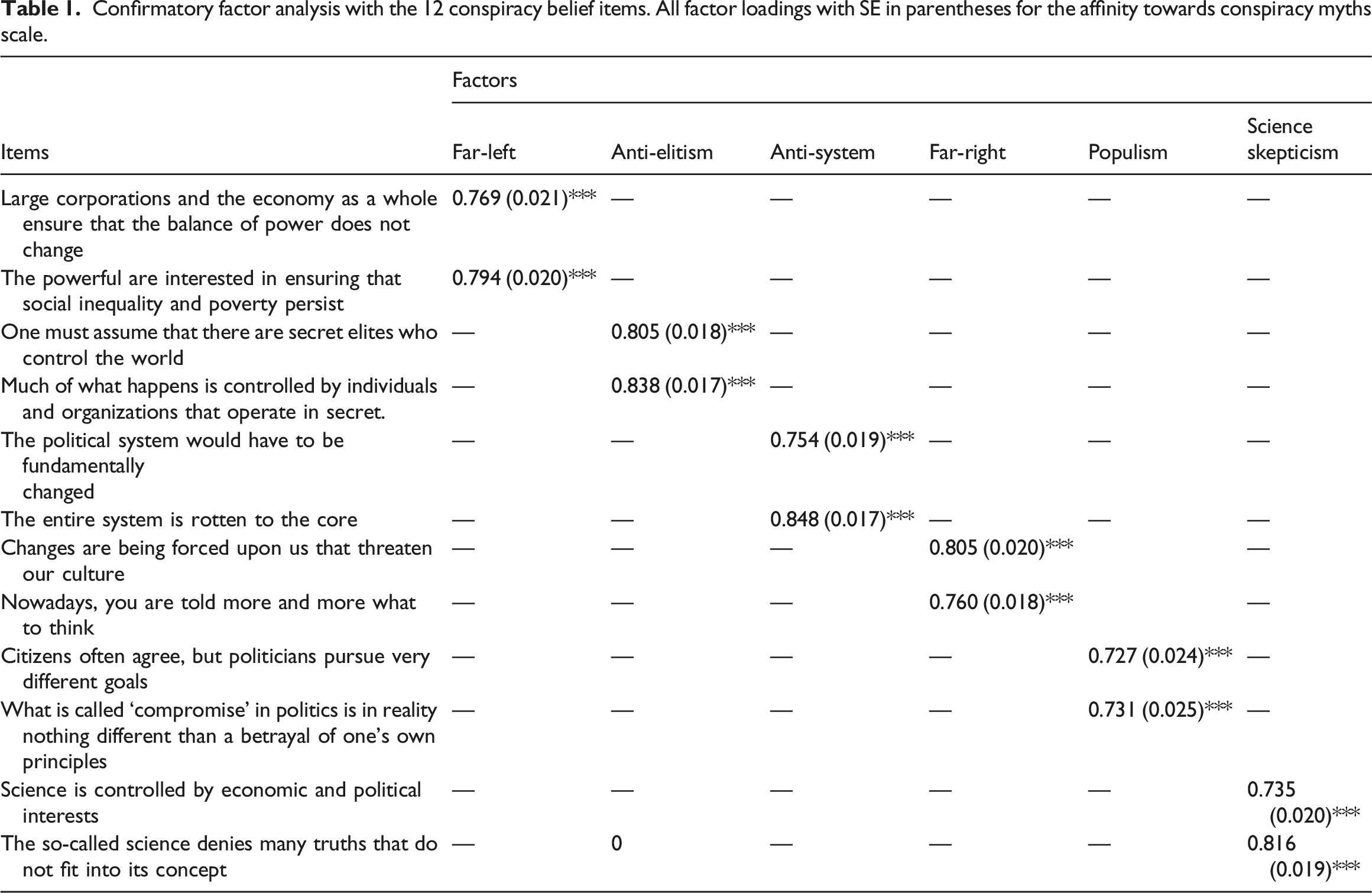
To measure the affinity towards conspiracy myths, we asked the participants about agreement regarding different anti-system attitudes as indicators for conspiracy belief on a 5-point scale (1=do not agree at all; 5=totally agree). Derived from the literature, we focused on different dimensions that are associated with conspiracy belief, like populism (e.g. Balta et al., 2021; Eberl et al., 2021; Ferreira, 2021; Stecula and Pickup, 2021), anti-elitism––which reflects the core definition of conspiracy myths but also can be part of populist attitudes––(e.g. Clarke, 2002; Castanho Silva et al., 2017; Imhoff and Bruder, 2014; Wuttke et al., 2020), science skepticism (e.g. Uscinski et al., 2017; Hameleers and Van der Meer, 2021), far-right attitudes (e.g. Cosentino, 2020; Hameleers, 2021), far-left attitudes (e.g. Drochon, 2018; van Prooijen et al., 2015), and criticism of the system as a whole (Imhoff et al., 2020). When developing the items, we further oriented on existing scales that measure conspiracy belief (Baier and Manzoni, 2020; Imhoff and Bruder, 2014). We adapted and supplemented them with additional items reflecting the dimensions from the literature which measure affinities in six dimensions as a precursor to conspiracy belief.
Confirmatory factor analysis with the 12 conspiracy belief items. All factor loadings with SE in parentheses for the affinity towards conspiracy myths scale.
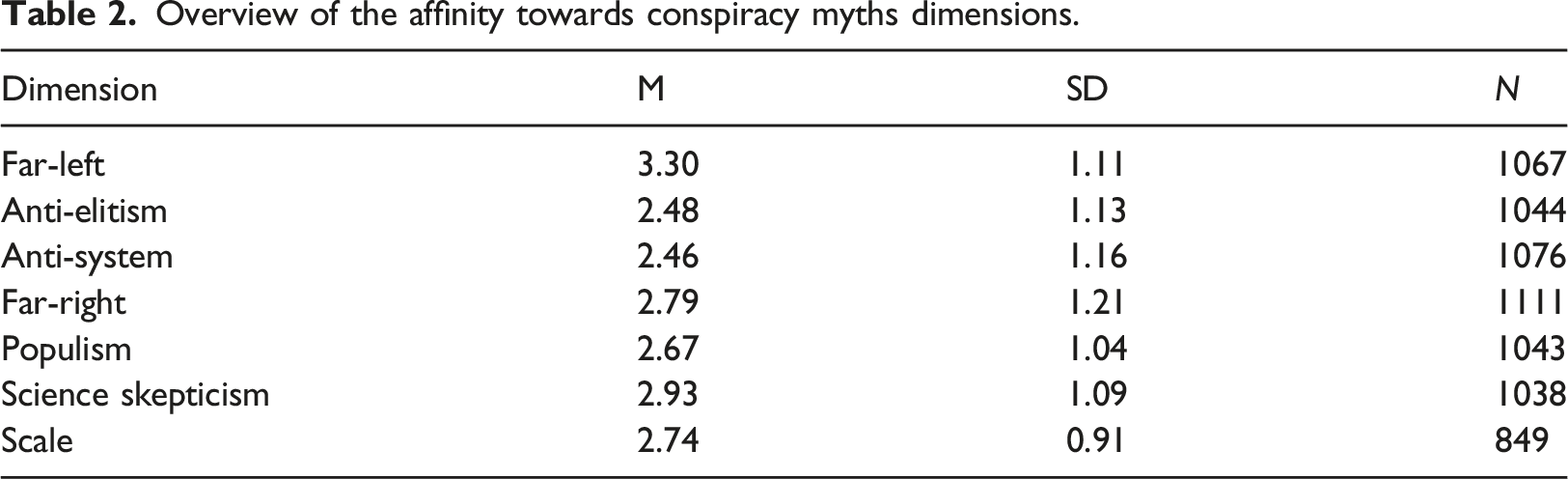
Overview of the affinity towards conspiracy myths dimensions.
Evaluation of specific conspiracy myths. Crypto AG is a real case and Prince Charles is an invented myth.
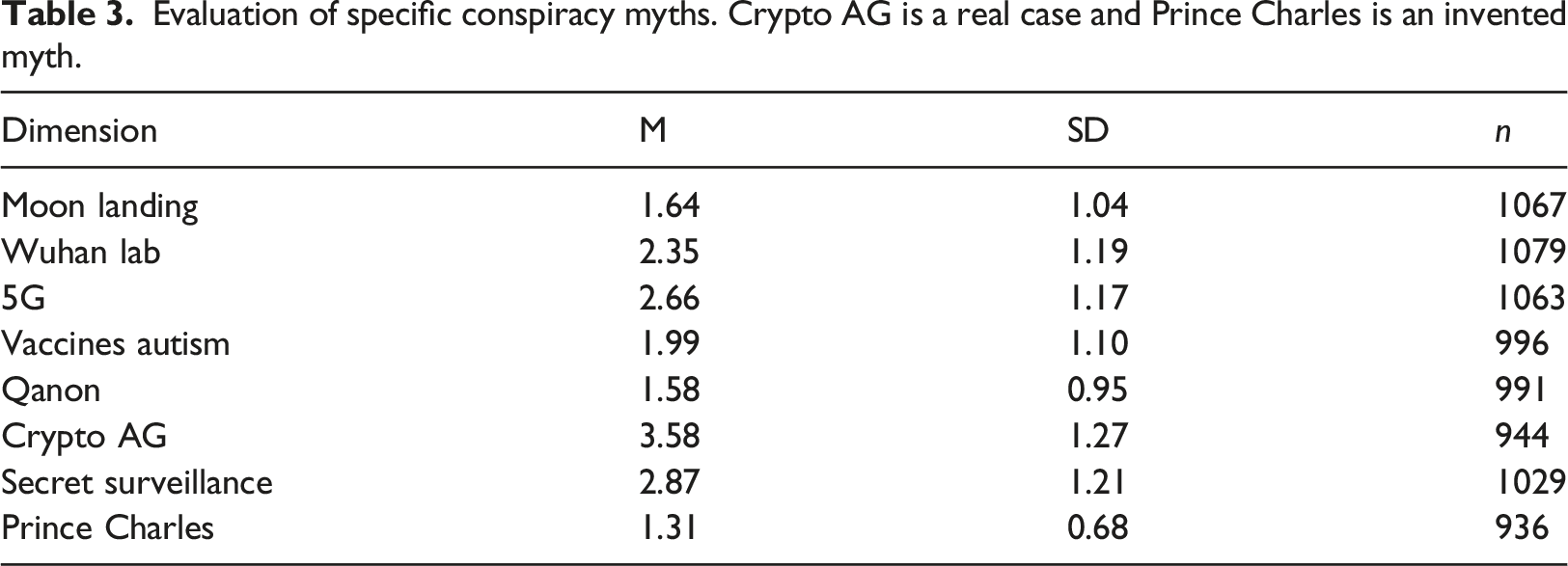
The analysis shows that the overall scale correlates with all specific conspiracy myths (see Figure 1). As identified in prior studies, a higher affinity towards conspiracy beliefs even correlates with our invented control conspiracy myth about Prince Charles. This confirms Swami et al. (2011) finding that the belief in one conspiracy myth is associated with belief in other myths––even if they are completely fictional. However, the real confirmed case of the Crypto AG in Switzerland does not correlate with the affinity towards conspiracy myths. However, there are still some nuances between the different dimensions. For example, respondents with strong scientific skepticism show a stronger correlation with the 5G conspiracy myth. The results also indicate that conspiracy myths concerning current issues that directly affect citizens (Secret surveillance, 5G, Wuhan lab) and which cannot be clearly and officially refuted, are attributed a higher truth content. In contrast, conspiracy myths which are clearly refuted (Moon landing, vaccines autism, QAnon) correlate highest with anti-elitism. Correlation coefficients between the affinity towards conspiracy beliefs (columns) and conspiracy myths (rows).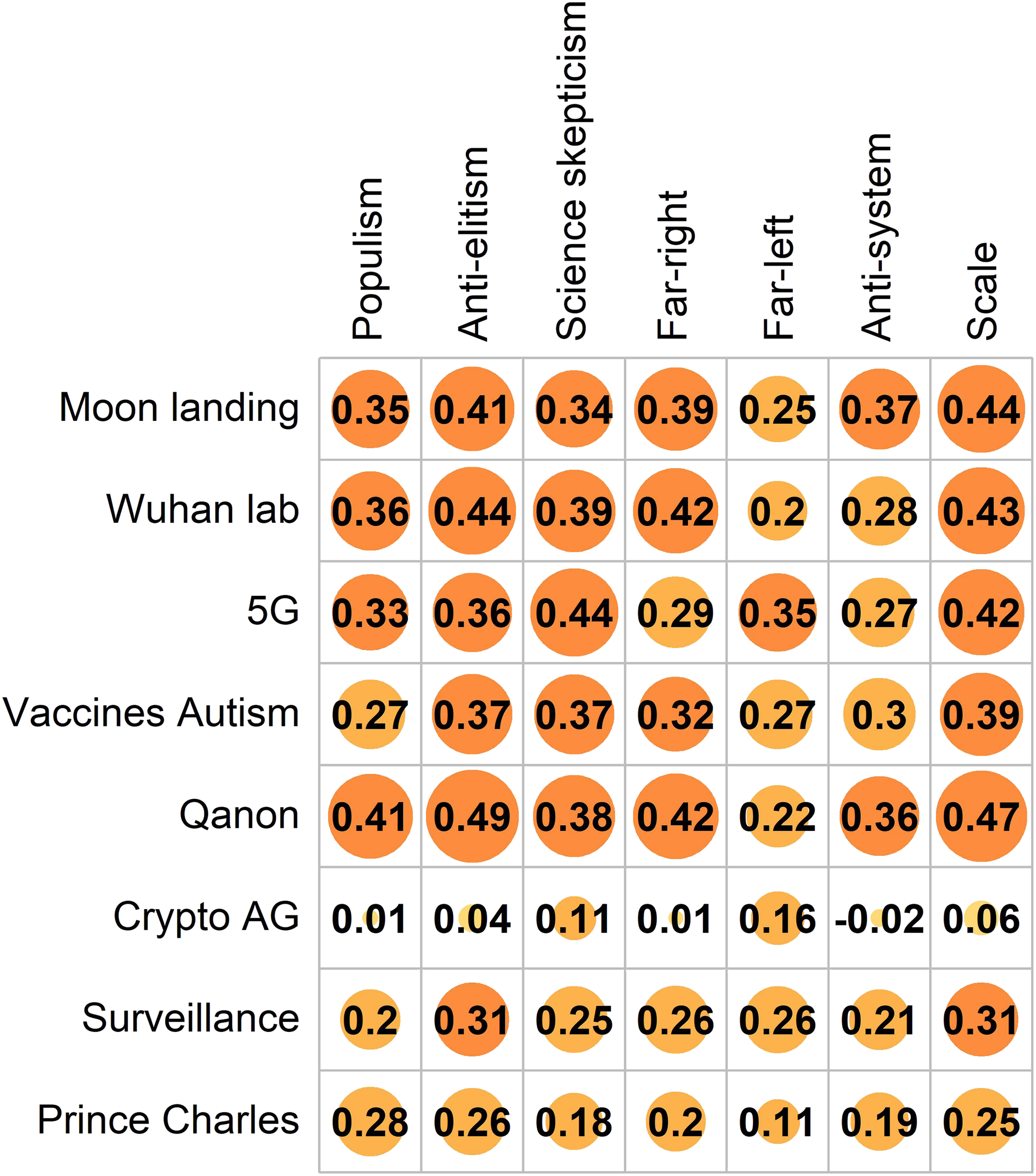
Messenger services and affinity towards conspiracy myths
To analyze the role of messenger services, we focused on Facebook Messenger, WhatsApp and Telegram as main predictors for the affinity towards conspiracy myths. Respondents had to indicate on a 5-point scale how often they (generally) use the platforms (1 = never; 5 = daily; see Appendix 1). Our survey shows that the messenger service Telegram (M = 1.41, SD = 0.99), as well as Facebook Messenger (M = 2.08, SD = 1.31), have a rather low mean score whereas WhatsApp is by far the most popular service in Switzerland (M = 4.53, SD = 1.04). As we have an observational study with a cross-sectional design, we risk getting biased estimates if we want to know how messenger service usage is connected to conspiracy beliefs. We thus use Imai and Ratkovic’s (2014) covariate balancing propensity score method to optimize the covariate balance in our models. As an outcome, we get a weight for every respondent that balances the covariates that none of them correlates anymore with our main predictor Facebook Messenger, WhatsApp and Telegram usage. For the balancing, we used variables that potentially influence messenger usage (see Appendix 1; education, age, sex, language region, settlement type, right-wing party support (SVP), left-wing party support (SP) and six different motivations for social media usage). For the three main predictors, we used three separate models and weights. We then ran weighted regressions in which we additionally included all covariates from the balancing and other relevant covariates such as media and social media usage (see Appendix 1 as an example for the models with the complete scale as outcome variable). The regression models were estimated with brms in R as Bayesian regression with weakly informative priors and four chains with 4000 samples each (1000 warm-up). All cases with completed data were used for this analysis (n = 725). All chains converged and all parameters reached an R-hat of 1. Additionally, we conducted a specification curve analysis with the R-package specr (Masur and Scharkow, 2019) as a robustness check (Simonsohn et al., 2020). In this type of analysis, any combination of covariates with the main predictor is tested, and it can be assessed how stable the estimate of the predictor is.
Identification of conspiracy mindsets in the Swiss population
We conducted an exploratory cluster analysis to identify mindsets that represent typical combinations of conspiracy beliefs. For this purpose, we calculated additive indices for the six dimensions resulting from the CFA by calculating the mean value from the two items per dimension (index range: 1–5). Missing values were replaced by the mean value of the total sample. Individual cases that did not have a score bigger than four on one dimension were defined as ‘Broad Population’ (70.4%) and were excluded from the cluster analysis, as they did not show a high affinity towards conspiracy myths on which we focus in this paper. The remaining sample of 29.6% was included in the cluster analysis using an iterative procedure based on the k-means algorithm (SPSS procedure Quick Cluster). The solution with four clusters proved to be stable, as the best values of internal cluster homogeneity and the greatest possible diversity between the clusters could be achieved. Also, the solution is plausible from a content perspective. To classify the entire sample, the cluster centers of the exploratively identified clusters and the subsample defined as ‘Broad Population’ were determined. Then, the individual cases were assigned to the closest cluster. In total, five clusters (including the ‘Broad Population’) were built, which we will further interpret as different mindsets of conspiracy belief in the Swiss population.
Results
Using the six developed dimensions representing different affinities towards conspiracy myths, we first show how prevalent they are in the Swiss population by describing different mindsets. Second, we interpret how digital media usage is pronounced among the six dimensions, focusing on messenger usage.
Mindsets
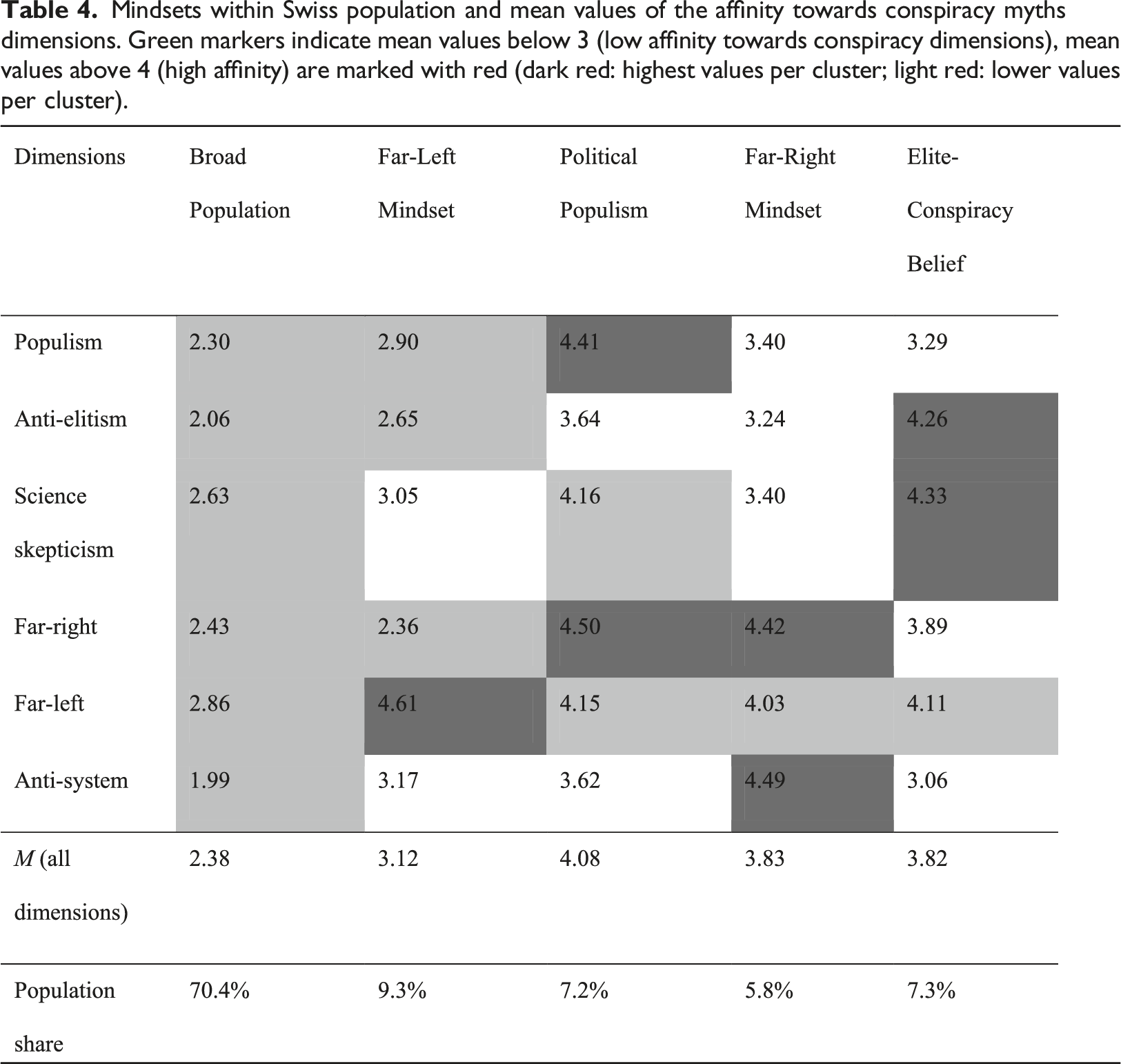
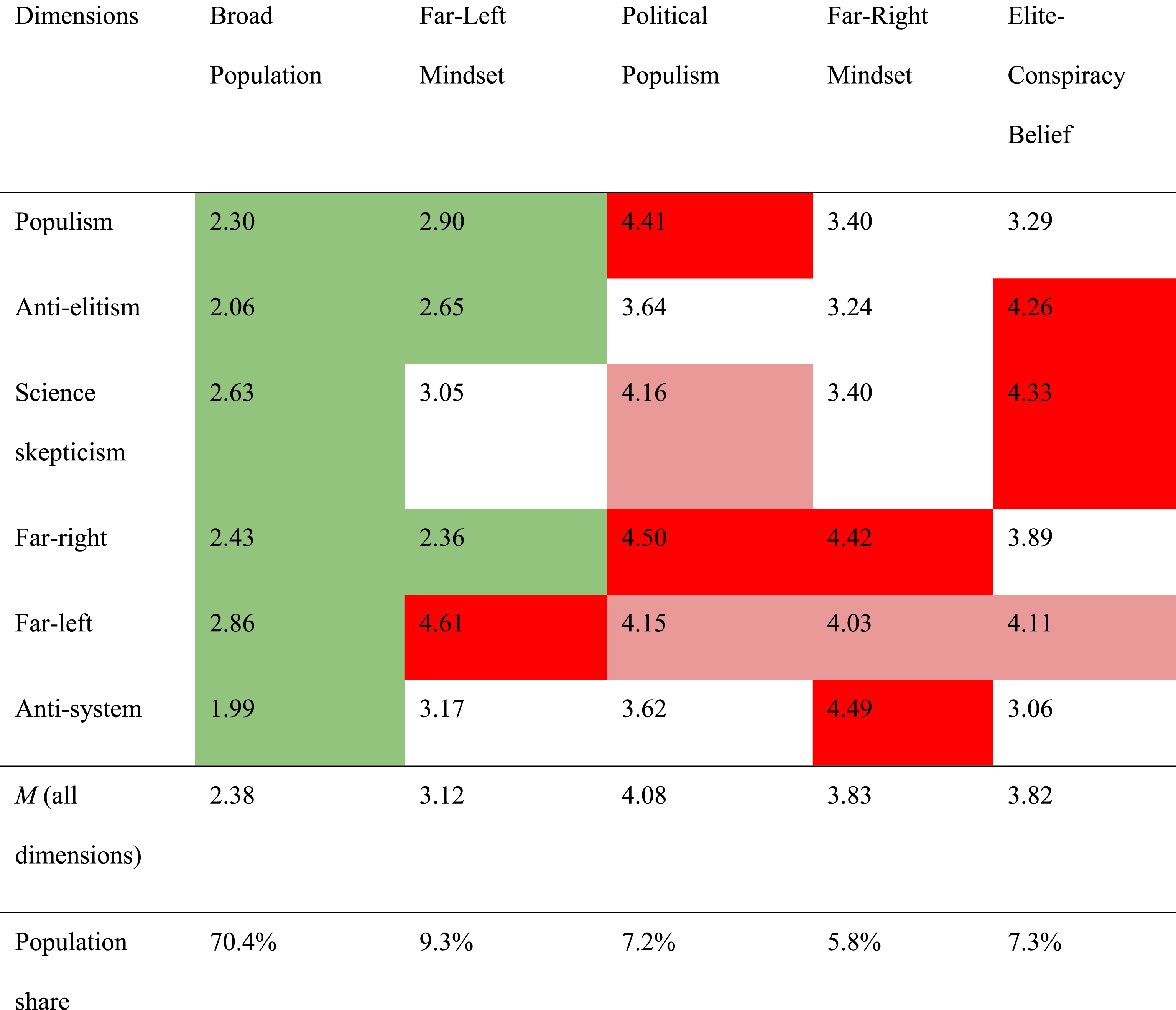
Mindsets within Swiss population and mean values of the affinity towards conspiracy myths dimensions. Green markers indicate mean values below 3 (low affinity towards conspiracy dimensions), mean values above 4 (high affinity) are marked with red (dark red: highest values per cluster; light red: lower values per cluster).
Broad population
Within the Swiss population, the mindset ‘Broad Population’ has the highest share (70.4%) and the lowest level of agreement for all six dimensions of conspiracy belief (M = 2.38), as well as for specific conspiracy myths, such as, for instance, the moon landing conspiracy (M = 1.45). This mindset is particularly pronounced among the 18–29-year-olds (77.6% of this age group counting to this mindset), people with low (76.1%), or higher (75.4%) level of education, and high income (82.3%), as well as people living in the city (74.4%).
Far-left mindset
9.3% of the Swiss population belong to the cluster ‘Far-Left Mindset’. Overall, the level of agreement for all six dimensions is low (M = 3.12) but higher than the ‘Broad Population,’ indicating a higher affinity towards conspiracy myths. Especially the ‘Far-left’ attitude is strong within the mindset (M = 4.61). Accordingly, the truth of conspiracy myths about the 5G network (M = 2.78) and the surveillance by the NSA (M = 3.28) is assessed highly. There are no significant age or sex differences, even though women tend to be more likely to belong to the ‘Far-Left Mindset’ (10.3% of all female participants) than men (8.4%). People with higher education (11.8%) are more likely to belong to this mindset and people located in the city (11.5%). The ‘Far-Left Mindset’ shows high approval of the left-wing parties ‘Die Grünen’ (M = 3.77), and ‘SP’ (M = 3.74).
Political populism
7.2% of our respondents are assigned to the mindset ‘Political Populism’, having the highest affinity towards conspiracy myths (M = 4.08). The mindset is characterized by exceptionally high affinities for the dimensions ‘Far-right’ (M = 4.50), ‘Populism’ (M = 4.41), ‘Science skepticism’ (M = 4.16), as well as ‘Far-left’ (M = 4.15). However, within this mindset, the Far-right dimension is more pronounced than the Far-left dimension. All of the questioned specific conspiracy myths achieve high agreement, especially about the Coronavirus (M=3.23), 5G (M = 3.42), and NSA surveillance (M = 3.49). The mindset is more prevalent under the 30- to 44-year-olds (9.7% of this age group), people with a low (7.0%) or middle level of education (9.9%), low income (12.4%) and respondents who are located in rural areas (10.4%). Compared to other mindsets, the populist party ‘SVP’ (M = 3.21) is rated the highest.
Far-right mindset
The ‘Far-Right Mindset’ has a total share of 5.8% in the Swiss population, with an overall affinity score of M = 3.83. The dimensions ‘Far-right’ (M = 4.42) and ‘Anti-system’ (M = 4.49) are particularly pronounced, indicating that a fundamental rejection of the system characterizes this mindset. The Far-right dimension is at a comparatively similar level for this cluster as for the ‘Political Populism’ mindset. However, criticism of the system is more pronounced. Taken the two mindsets with high far-right affinity together, the proportion is 13%, compared with 9.3% of the ‘Far-Left Mindset’. Like the mindset ‘Political Populism’, the agreement with specific conspiracy myths is comparable high, such as the myth about the Coronavirus (M = 3.00), 5G (M = 3.13) and the NSA surveillance (M = 3.30). People living in rural areas (9.1%) are more prevalent in this mindset. Among the political parties, all of the surveyed major political parties achieve mean values under 2.65, indicating criticism of system parties.
Elite-conspiracy beliefs
7.3% of all participants can be assigned to the mindset ‘Elite-Conspiracy Beliefs’. Affinity towards conspiracy myths is high, with an overall mean of 3.82. The dimensions ‘Anti-elitism” (M = 4.26) and ‘Science skepticism’ (M = 4.33) are particularly pronounced. Specific conspiracy myths are rated high, especially about 5G (M = 3.46), the Coronavirus (M = 3.03) and NSA surveillance (M = 3.34). People with low (9.6%) or medium income (8.1%) are more likely to belong to this mindset, as well as people living in rural areas (10.0%). There are no noticeable preferences regarding political parties.
Messenger usage
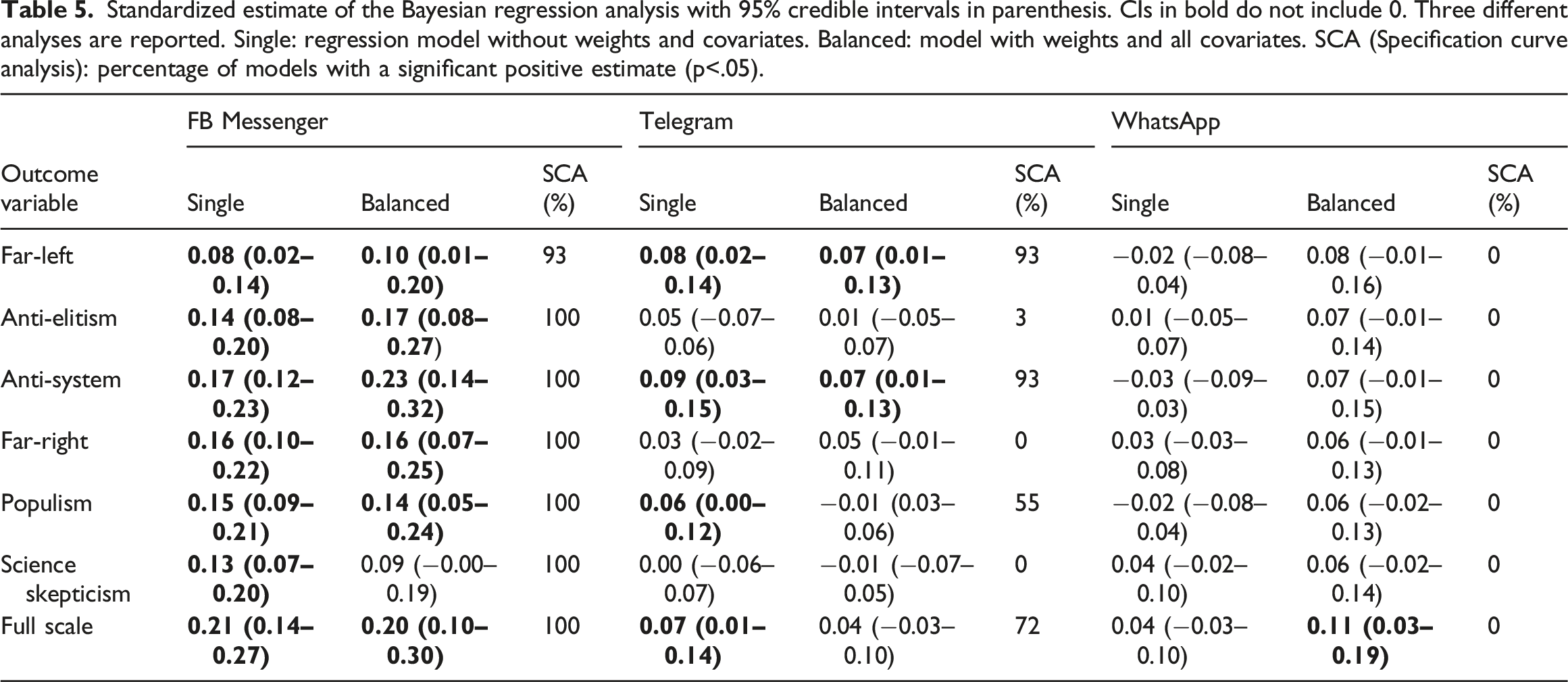
Standardized estimate of the Bayesian regression analysis with 95% credible intervals in parenthesis. CIs in bold do not include 0. Three different analyses are reported. Single: regression model without weights and covariates. Balanced: model with weights and all covariates. SCA (Specification curve analysis): percentage of models with a significant positive estimate (p<.05).
While we only focused on the messenger services as our main predictors, we also want to highlight the correlation between our covariates and the affinity towards conspiracy myths (see Appendix 4). Structural factors such as where people live (higher affinity if living in the agglomeration of cities or in a rural area) or traditional media consumption (lower affinity if high consumption) are strong predictors in the complete weighted models. Attitude towards the right-wing party SVP and non-mainstream online media are also strong predictors. Other social media platforms such as YouTube, Instagram or Facebook (even has a negative estimate) show no substantial estimate.
Discussion
The aim of this paper was threefold: We first wanted to elaborate the terminology on conspiracy myths since current research mainly focuses on using the term ‘conspiracy theory’, which can be criticized for different reasons. Accordingly, we developed a scale to measure the affinity towards conspiracy myths, considering the dimensions we empirically tested using CFA. Second, we used these six dimensions to investigate mindsets within the Swiss population, all of them having different affinities towards conspiracy myths, which we identified with cluster analysis. Third, we analyzed the connection between the usage of semi-public messenger services and different affinities towards conspiracy myths.
In line with Nitzke (Spiegel et al., 2020), we assume that the use of the term ‘conspiracy theories’ is misleading since ‘theories’ implement the condition to be verified or falsified which is not always the case for conspiracy narratives. Therefore, we suggest using the term ‘conspiracy myths’ instead, as it implies their narrative content in a more generalized way. We further used these generalized narratives instead of specific myths as a guide for the theoretical derivation of a scale that represents affinities towards conspiracy myths. Derived from the literature, we included different dimensions of conspiracy myths into the scale to not be limited, for instance, to populist, right-wing or far-right attitudes (e.g. Balta et al., 2021; Eberl et al., 2021; Ferreira, 2021; Stecula and Pickup, 2021; Hollander, 2018). Apart from that, we developed items that represent the core definition of conspiracy myths (‘Anti-elitism’; e.g. Clarke, 2002), but also science skepticism (e.g. Rutjens et al., 2021; Uscinski et al., 2017), far-left attitudes (Drochon, 2018), and general anti-system attitudes (e.g. Imhoff et al., 2020). The CFA confirmed our theoretical derivation, according to which six dimensions resulted. First, we used the developed dimensions to identify five mindsets of conspiracy within the Swiss population. Our approach made it possible to show nuances of conspiracy belief, resulting in one big cluster (70.4%) representing the ‘Broad Population’ with low affinities towards conspiracy myths. Even though the four other clusters represent only a comparatively small proportion of 29.6%, our results show that conspiracy belief is a relevant topic in the Swiss population, particularly for people with populist and far-right attitudes. Especially, times of crisis, such as the current COVID-19 pandemic, lead to increased affinity towards conspiracy myths, which manifested itself in strong approval of the myth about the Coronavirus, particularly in the mindsets ‘Political Populism’, ‘Far-Right Mindset’ and ‘Elite-Conspiracy Beliefs’. Overall, we could confirm that populist and far-right mindsets (e.g. Wood and Gray, 2019; Hollander, 2018) have the highest affinities towards conspiracy belief in general, besides the mindset ‘Elite-Conspiracy Beliefs’, which has high mean values above all six dimensions, and which does not have any significant political preferences. In current research, what is still underrepresented is the ‘Far-Left Mindset’ with the accordingly high approval of politically left-wing indicators that represent a different dimension of conspiracy affinity, namely based on power imbalances in society and corresponding criticism of the system. However, the ‘Far-Left Mindset’ has––with exception of the ‘Broad Population’––the lowest affinity towards conspiracy myths.
The analysis of the messenger services shows that Telegram, which is often mentioned in the literature as a vector for conspiracy myths (e.g. Becker et al., 2021), shows only for the more extreme dimensions of our conspiracy belief scale a substantial correlation. The findings for WhatsApp as the most popular messenger service are overall less robust. Facebook Messenger, however, is a robust predictor for all dimensions as well as the complete scale. These results indicate that deplatforming alone and other more technical solutions on major social media platforms probably cannot solve the problem of beliefs in conspiracy myths. Messenger services allow people to communicate in a semi-public setting directly. As content in these channels can in most cases not be directly observed by researchers, future studies should use qualitative methods that specifically analyze the segments in the population that have high beliefs and often communicate over messenger services.
Our study also has several limitations. First, we only have observational data and can thus not make any causal claims. We therefore tried to use different methods to at least test the robustness of our correlations. Second, we might not have accessed the most extreme segment of the population as they would not participate in such a survey, for instance, people with high anti-science attitudes. Thus, even though we identified people with a high affinity towards conspiracy myths in our sample, we might underestimate the extent of these beliefs in the Swiss population. Furthermore, the random quota sample which was used for this study is representative for the Swiss population regarding sex and age, but slightly different in regard to education. People with higher educational level are slightly underrepresented in our study. Third, future research should further investigate the different dimensions of our scale and how they are connected to other constructs. For example, it could be tested how the scale is related to science-related populism (Mede et al., 2021) as populist attitudes correlate with conspiratorial thinking (Wuttke et al., 2020). In general, it must be noted that our scale dimensions are strongly correlated to some extent. Nevertheless, it is important to show that nuances of affinities towards conspiracy myths exist, although a further development of the scale to include more items per dimension would be important. The added value of the scale therefore also results from the fact that general attitudes are queried, which interrogate latent affinities towards conspiracy myths. This is often not possible with scales that ask about specific events with conspirative content. Fourth, our study could only show that WhatsApp as a specific communication channel is not unique to people with a high affinity towards conspiracy myths. The lack of variation for WhatsApp can also be explained with our measurement as we were only asking about general platform usage and not specific news consumption on a specific channel. At the same time, this also means that the observed correlations between the other messenger services and the affinity towards conspiracy myths might be even stronger if a specific consumption of news and political content is measured. Therefore, future research focusing on conspiracy myths should still observe WhatsApp as almost everyone, including people with a high affinity towards conspiracy myths, use WhatsApp often.
Footnotes
Declaration of conflicting interests
The author(s) declared no potential conflicts of interest with respect to the research, authorship, and/or publication of this article.
Funding
The author(s) disclosed receipt of the following financial support for the research, authorship, and/or publication of this article: This work was supported by the Federal Office of Communications OFCOM Switzerland.

Author biographies
Lisa Schwaiger is Postdoctoral Researcher at the Department of Communication and Media Research (IKMZ) and the Research Center for the Public Sphere and Society (fög) at the University of Zurich. Her research focuses on the digital transformation of the public sphere, online counter-publics, sociology of media and religion, and qualitative methods. Within her dissertation, she dealt with online networks of alternative news media in the German-speaking DACH-region.
Jörg Schneider is Research Associate at the Research Center for the Public Sphere and Society (fög) at the University of Zurich and business owner of the market research company js_studien+analysen. He holds a Masters degree in sociology from the Philipps-University in Marburg. His research focuses on media, communication, and reputation research. Another focus of his scientific work is on qualitative and quantitative methods of empirical social research.
Adrian Rauchfleisch is an Associate Professor at the Graduate Institute of Journalism at the National Taiwan University. In his research, he focuses on the interplay of politics, the internet, and journalism. His recent research highlights the role of conspiracy theories in the online context for the far-right in Germany and the US.
Mark Eisenegger is Professor at the Department of Communication and Media Research and Chair of the “Public Sphere and Society” Division at the University of Zurich. He is also Director of the Research Center for the Public Sphere and Society (fög) at the University of Zurich. His research focuses on the digital transformation of the public sphere, changes in media quality, and the effects of digitalization on organizational communication.