




Abstract
Experimental research represents a significant yet underutilized methodological approach in tourism economics, offering robust tools designed to uncover causal relationships and isolate independent variable effects. Traditional approaches tend to rely on observational, administrative, and survey-based data collection, which limits the ability to advance the understanding of causality in phenomena within the field of tourism economics, such as stakeholder decision-making. This conceptual piece synthesizes critical insights from economics to propose a novel framework for integrating experimental methods designed to enhance data richness and methodological rigor in tourism economics. This manuscript contributes a dual-pathway roadmap advances discourse on experimental design’s efficacy in the field. This conceptual piece provides a platform for future research to deepen theoretical contributions and offers practical guidelines for researchers seeking to advance discourse through the implementation of experimental designs in tourism economics research.
Keywords
Introduction
Despite its growth and importance, methodologies in tourism economics have remained predominantly traditional, with a strong reliance on observational and secondary data sources (Song et al., 2012), such as surveys, administrative data, and communication audits. While these approaches have advanced knowledge in critical areas such as demand forecasting and policy evaluation, stagnation in methods limits the ability of the field to advance discourse on the underlying causes of human decision-making (Viglia and Dolnicar, 2020). As global challenges and consumer behaviors rapidly evolve, there is a pressing need for innovative methods that infer causality and unearth the psychological, organizational, or societal drivers across individual tourist stakeholders (Box-Steffensmeier et al., 2022).
Experimental research offers a unique and compelling opportunity to complement traditional methodologies and advance existing knowledge (Falk and Heckman, 2009). Theoretical underpinnings of the experimental method highlight its ability to isolate causal relationships and rigorously test and validate key assumptions and frameworks (Charness, 2010). Experimental designs are quite valuable in tourism economics, where understanding behavioral responses to interventions, such as price changes, marketing campaigns, or policy shifts, can inform both theoretical advancements and relevant practical applications (Hoyer et al., 2024). As Assaf and Scuderi (2023) argue, supplementing the findings from econometric modelling of observational data with insights from experimental designs can deepen their implications and enhance the generalizability of findings.
Recent years have witnessed a surge in interest in experimental methods in the tourism field (Kim et al., 2023). Studies in tourism psychology, marketing and consumer behavior are at the forefront of this movement (Li et al., 2022). The application of experiments in tourism economics remains limited, even though experimental designs have become central to advancing knowledge in economics (Weimann and Brosig-Koch, 2019). As a result, the field has yet to fully engage with experimental methods, despite their potential to deepen our understanding of economic decision-making in tourism (Assaf and Scuderi, 2023).
Subsequently, the aim of this manuscript is to integrate advances in experimental methods into the evolving domain of tourism economics. By conducting a critical review of existing research (Grant and Booth, 2009), we adopt an approach that builds on the idea that bridging disciplines fosters conceptual and methodological advancements (Kock et al., 2020). In doing so, this analytical framework integrates insights from experimental and behavioral economics into tourism economics, enhancing our understanding of tourism-related economic decisions (Camerer, 2003). Enhancing the understanding of how experimental designs can advance tourism economics will equip future researchers with robust frameworks and methodologies. These tools can address psychological drivers and the context-specific nature of tourism-related decisions (e.g., adverse weather on-site; Souza-Neto et al., 2025), thereby pushing the field’s conceptual and methodological boundaries (Kock et al., 2020).
The contribution of this paper lies in stimulating further constructive conversations on the potential of experimental research in tourism economics (Kim, 2024; Kim et al., 2023; Viglia and Dolnicar, 2020; Xiong et al., 2024; Zinn et al., 2024). Actionable guidelines are offered as a novel contribution to address challenges specific to implementing experimental and quasi-experimental methods, including cost constraints, data scarcity, and the need for rapid analysis under evolving research pressures (Schmitt et al., 2024). A framework is proposed that aligns with recent calls in conceptually related fields, such as consumer behavior, to enhance data richness in consumption sectors (Blanchard et al., 2022), including tourism (McCabe, 2024).
An initial assessment of the discipline-specific journal Tourism Economics reveals that, of the 1439 papers published in the field of tourism economics, only 40 employ experimental or quasi-experimental methods. The small number underscores a potential underutilization of experimental approaches in a field where their potential to advance knowledge is immense. This limited adoption may suggest potential perceived barriers and a lack of perceived usefulness of experimental approaches in the field. However, given their ability to advance knowledge, experimental designs hold significant promise for strengthening both theoretical and practical contributions to tourism economics research. This manuscript highlights the benefits of experimental designs and their role in strengthening both theoretical and practical contributions to tourism economics research. By addressing conceptual and methodological concerns, we aim to encourage scholars to integrate experimental methods in ways that deepen theoretical perspectives and enhance practical applications.
This article offers a roadmap for integrating experimental methods into tourism economics. The roadmap synthesizes key developments from experimental economics and tourism research to advance scholarly discourse on novel methodological applications. Within this framework are specific opportunities to use generative AI tools in academically appropriate ways—such as supporting human-led conceptualization and assisting in data collection and analysis (De Freitas et al., 2025; Yoo et al., 2025). Building on emerging discussions in the work of Viglia et al. (2024a) and Xiong et al. (2024). Generative AI can help address common challenges such as high costs and time pressures (Schmitt et al., 2024). In addition, these tools can also enhance data richness and provide recommender systems for analysis, offering solutions to longstanding methodological barriers. Ultimately, this roadmap is designed to inspire the next generation of tourism economists to embrace and apply experimental designs in future research.
The remainder of this paper is structured as follows. In Section 2, we explore the concept of causality, laying the foundation for understanding how experimental research can rigorously establish cause-effect relationships. Section 3 offers a detailed classification of experimental designs. Section 4 then critically examines the discussions of these designs within economics discipline and tourism economics. In Section 5, we present a roadmap that bridges experimental and observational studies that apply econometric approaches, outlining strategies to overcome methodological challenges. Finally, Section 6 discusses directions for future research and provides concluding insights into the evolving landscape of tourism economics research.
Causality
Causality, also referred to as causation or causal relationship, describes a specific type of association 1 between events. Causality is characterized by the interpretation that one event (the cause) produces or brings about another event (the effect) (Simon, 1970). Establishing causality requires moving beyond identifying correlations. It involves demonstrating that changes in one variable consistently lead to, and thus cause, changes in another variable. Causality has long been a central theme in the social sciences (Antonakis et al., 2010) and is receiving increasing attention in tourism research (Dolnicar et al., 2024). Within tourism economics, in particular, scholars are increasingly calling for robust causal analysis to address both theoretical and practical challenges (Assaf and Scuderi, 2023).
According to Hunt (2015), four conditions must be met to establish a causal relationship. These are: (1) the cause must happen before the effect (temporal sequentiality); (2) changes in the cause must be systematically associated with changes in the effect (associative variation 2 ); (3) the relationship must not be explained by other factors (non-spurious association); and (4) there must be a logical or scientific explanation for the connection (theoretical support). Meeting these conditions often requires isolating the cause-and-effect relationship through rigorous experimental designs (Roe and Just, 2009). To achieve this, researchers systematically manipulate the independent variable, providing a robust framework to test for causal inference. Associations verified through experiments are widely considered causal because they allow researchers to meet these axiomatic conditions, enabling the use of experimental designs capable of estimating causal effects with precision—as advocated by Hunt (2015) and grounded in early causal inference logic (Simon, 1970).
Causal inference is influenced by the research design selected, which often involves a trade-off between experimental control and real-world relevance (Dolnicar et al., 2024). Figure 1 illustrates this continuum, as adapted from List (2007), ranging from laboratory experiments to field experiments, natural experiments, and observational studies. In laboratory settings, strong control ensures robust causal inferences. However, as external validity increases along the continuum, the ability to definitively establish causality tends to diminish. For example, while laboratory experiments allow for strict control of variables, their artificial settings may limit generalizability to real-world tourism contexts (List, 2007). Conversely, observational studies provide greater ecological validity but are more susceptible to confounding variables and selection bias (LaLonde, 1986). Research designs along a spectrum of data control and causal inference (adapted from List, 2007).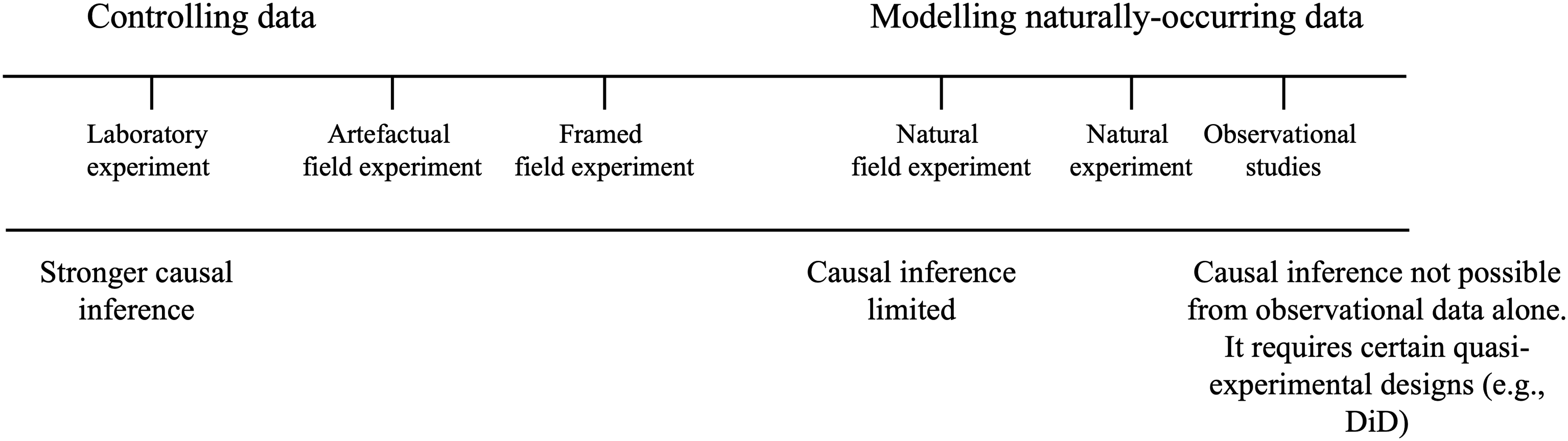
This continuum underscores the importance of selecting research designs that are consistent with the goals of causal inference in tourism economics. Given the methodological implications of these trade-offs, a systematic classification of experimental designs is warranted to guide their application in empirical research.
Classification of experiments
Classification by the type of experiment
Broadly, experimental designs are categorized into two main types, which are commonly termed true experiments and quasi-experiments. True experiments involve the random assignment of participants to predetermined experimental conditions. Randomization is critical as it minimizes the influence of confounding variables (extraneous factors that could otherwise affect the dependent and the independent variables). Randomization ensures that observed differences between groups can be attributed to the manipulation of the independent variable (Hoolican, 2024; Viglia and Dolnicar, 2020). Due to such rigorous control mechanisms, randomized 3 experimentation is widely regarded as the gold standard for causal inference in empirical research (Li et al., 2024). The Randomized Controlled Trial (RCT), an exemplar of true experimental design, applies strict randomization procedures and structured experimental protocols to ensure high internal validity. RCTs are extensively used across disciplines, particularly in medicine, economics, and social sciences, to establish causal relationships with minimal bias (Kawagoe and Takizawa, 2019).
In contrast, in situations where researchers are not able to randomly assign units to experimental groups, they can carry out quasi-experimental studies (Li et al., 2023). These designs rely on non-random assignment to groups (Greenstone and Gayer, 2009) They may also lack a true control group, often due to practical constraints or ethical considerations (Weimann and Brosig-Koch, 2019). While quasi-experiments provide insights into causal relationships, they are more vulnerable to confounding variables. This limitation makes it more challenging to attribute the observed effects solely to the manipulated independent variable (Viglia and Dolnicar, 2020).
True experiments prioritize internal validity, ensuring that observed effects are attributable to the manipulated independent variable rather than confounding factors (Viglia et al., 2021). However, their controlled conditions may limit external validity, meaning findings may not always be generalizable beyond the experimental setting. In contrast, studies using quasi-experimental designs lack random assignment but often take place in naturally occurring settings. This can enhance external validity but makes causal inference more challenging (Levitt and List, 2007). Researchers must carefully consider these trade-offs when selecting an experimental design, balancing the need for control with practical and ethical constraints 4 (Blanchard et al., 2022).
Classification by environment of application
Experiments can also be categorized based on the environment or settings in which they are conducted. Laboratory experiments are conducted in controlled settings designed to isolate variables and minimize external influences (Weimann and Brosig-Koch, 2019). These environments provide researchers with the precision necessary to manipulate independent variables while controlling extraneous variables. Such variables could otherwise influence the dependent variable, thereby confounding the results (Viglia and Dolnicar, 2020). The high level of control in laboratory experiments makes them especially effective for establishing causal relationships and ensuring internal validity (Falk and Heckman, 2009).
In contrast, field experiments are conducted in real-world environments, such as tourist destinations, hospitality venues, or other natural settings (Souza-Neto et al., 2023). These experiments involve the deliberate manipulation of an independent variable while maintaining a more naturalistic setting than lab experiments. By studying participants in their real-world contexts, field experiments provide an understanding of how causal relationships manifest in everyday situations (List, 2007). While field experiments excel in external validity, they are inherently more challenging to control. Field experiments pose challenges to internal validity due to multiple factors. Unpredictable environmental factors may introduce extraneous variables that are difficult to control. As a result, these confounding variables increase the likelihood of influencing observed outcomes (Weimann and Brosig-Koch, 2019). Additionally, logistical complexities, such as participant compliance, intervention consistency, and site-specific constraints, further complicate the experimental process (Weimann and Brosig-Koch, 2019). The research environment affects the balance between internal validity and the pursuit of external validity. Researchers must often navigate this trade-off with careful consideration.
Classification by subject design
Experimental designs can also be classified based on how the independent variable varies across subjects. The two primary approaches are between-subjects designs and within-subjects designs, with a hybrid approach known as mixed designs combining elements of both. In a between-subjects design, groups of participants are assigned to different experimental conditions (Charness et al., 2012). A between-subjects approach ensures that groups of participants experience only one condition. A key advantage of between-subjects designs is that they minimize the risk of carryover effects, where earlier exposure influences responses in subsequent conditions. For instance, Lee et al. (2021) used this method to examine the impact of pricing and non-pricing strategies on consumer perceptions. Participants were randomly assigned to scenarios representing specific combinations of these strategies. However, a key limitation of between-subjects designs is the requirement for larger sample sizes. Since each condition requires a separate group of participants, this can increase recruitment and testing efforts. The challenge is greater in studies with multiple conditions or complex designs, such as the Solomon four-group (Viglia and Dolnicar, 2020).
In a within-subjects design, the same participants are exposed to all experimental conditions (Charness et al., 2012). This approach allows researchers to directly compare participants’ responses across conditions, reducing variability caused by individual differences. For example, Li et al. (2022) used this design in an eye-tracking study. They examined how environmental factors influence tourists’ visual attention. Participants viewed images under various conditions, enabling researchers to assess differences in visual responses. While within-subjects designs are advantageous regarding sample size and control over individual variability, they are prone to carryover effects and sensitization. Participants may become increasingly aware of the study’s purpose or hypotheses due to repeated exposure. (Charness et al., 2012). To combat such potential limitations, researchers often take steps to deal with them. One common approach is counterbalancing the order of conditions to reduce potential bias.
In mixed designs, participants are exposed to different conditions, allowing researchers to explore between- and within-participants variability within a single study. Mixed experimental designs enable researchers to manipulate one independent variable between subjects while manipulating another within subjects. These designs are particularly useful for addressing complex research questions and balancing the strengths and limitations of the two primary approaches. Additionally, mixed designs are well-suited for investigating interactions, such as how the effects of one variable differ across levels of another. Finally, mixed designs may incorporate components of the within-subjects to reduce the overall number of participants required. Consequently, mixed designs represent a practical solution when participant recruitment or resources are constrained.
Classification by the number of factors
Factorial designs involve manipulating two or more independent variables simultaneously, making them a powerful tool for studying interactions between factors. For example, a 2 × 2 factorial design includes two independent variables, each with two levels, resulting in four experimental conditions. Mayer et al. (2022) offer a clear example of a factorial design. They employed a 2 × 2 factorial design to examine how cognitive resource availability moderates option framing in leisure travel service selection. The study manipulated option framing (upgrade vs downgrade) and cognitive load (low vs high) to identify causal links between package framing and cognitive resource availability.
Similarly, a 3 × 4 factorial design involves one independent variable with three levels and another with four levels, creating 12 experimental conditions. Factorial designs allow researchers to examine both the individual effects of each variable and their combined influence. However, as the number of factors increases, the complexity grows (Tabachnick and Fidell, 2007), requiring more resources, time, and participants. Figure 2 serves as a practical aid to guide researchers in selecting the most appropriate design based on methodological considerations. Flowchart for selecting the appropriate experimental design (original author work). Note. This figure is intended to depict a representational classification of experimental designs with conceptually distinct categories that do not follow a strict order.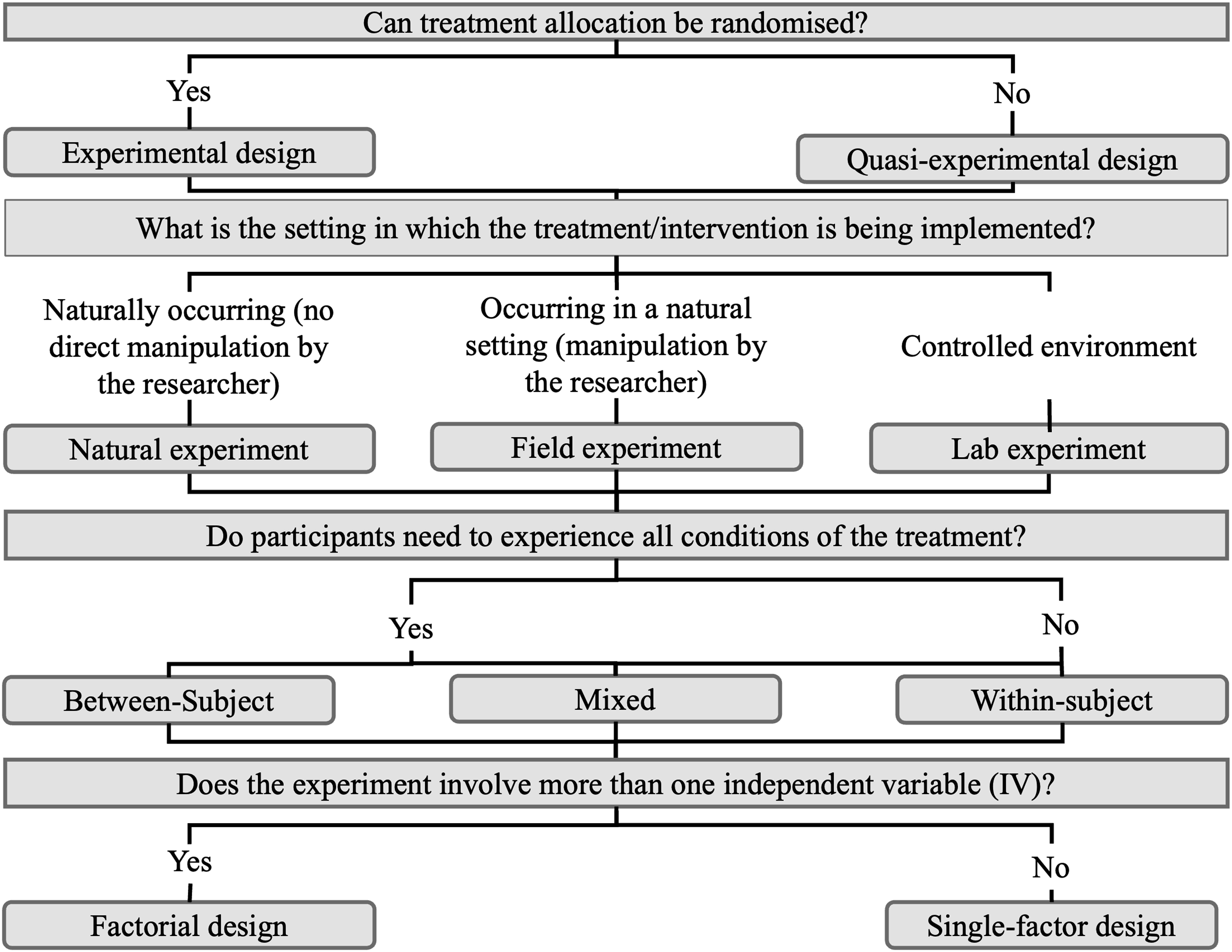
Classification by type of response variable
Experiments can also be classified by the type of response variable. Revealed choice experiments are those where the response variable is a behavior arising from a real setting (Kemperman, 2021). On the other hand, survey experiments ask participants to self-report, which usually implies some level of introspection biases (Dolnicar et al., 2024). A particular type of survey experiment is the stated choice experiment. In this approach, researchers present participants with hypothetical settings and ask them to state their probable behavior (Carlsson, 2010). The main problem with stated choice experiments, apart from introspection biases, is the lack of true compromise. Stated choice experiments are commonly used in tourism and consumer research. In these experiments, participants choose between alternatives with carefully manipulated attributes (e.g., Suresh et al., 2022).
Selecting statistical analyses on experimental design in tourism economics
The selection of appropriate statistical analysis is a topic tourism economists are recognized for their expertise across the globe. While it is outside the scope of this manuscript to explore statistical choices in depth, it is important to highlight a few key considerations. The appropriate analysis depends on several factors, such as the type of dependent variable (DV) and the number of levels in the independent variable (IV). Other considerations include the arrangement of IVs (e.g., between-subjects, within-subjects, or mixed designs), whether the IV is discrete or continuous, and the inclusion of potential covariates. Proper classification ensures the validity and reliability of results while aligning with the complexity of the research design. Based on the guidelines from Tabachnick and Fidell (2007), common statistical methods are categorized to address various scenarios.
Classification of Statistical analyses based on the characteristics of the variables.
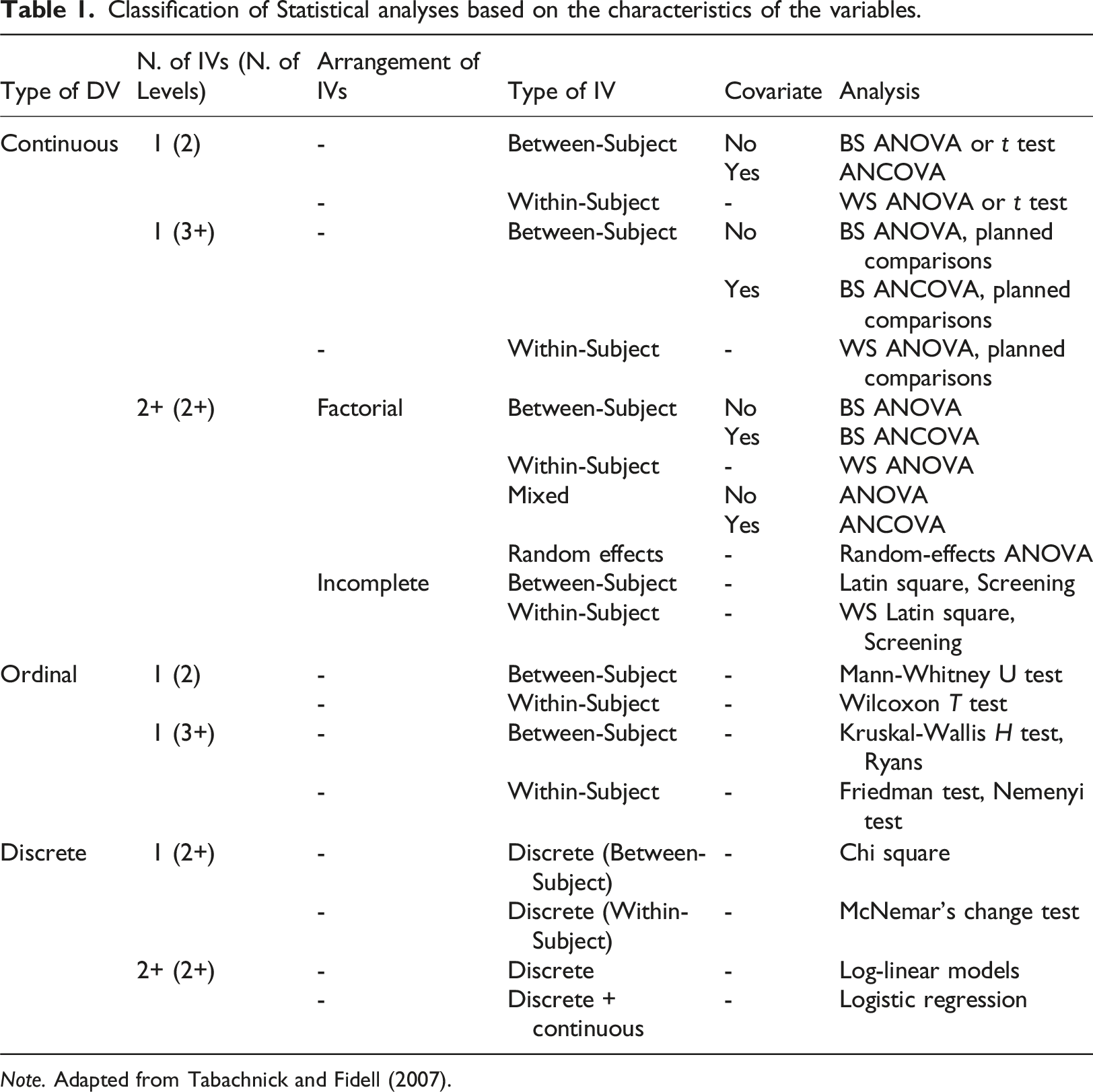
Note. Adapted from Tabachnick and Fidell (2007).
Experiment in economics and tourism research
Experiments in economics
The use of experiments in economic research represents a significant shift (Truc et al., 2021). Before Vernon Smith’s work, in 1956, economics was viewed as an observational science in a similar vein to astronomy, meteorology or geology (Smith, 2018). Smith opened a new chapter in economics by conducting experiments to study the dynamics of markets (Smith, 2018). In the 1970s, psychologists Daniel Kahneman and Amos Tversky began using experiments in psychology to study how individuals make economic decisions. Their work gave rise to what later became known as behavioral economics (Camerer and Loewenstein, 2003). In the 1980s, experimental methods extended further into economics to study individual behavior in strategic interactions. This work laid the foundation for developing behavioral game theory, which incorporates psychological insights and empirical findings into game-theoretic models (Camerer, 2003). The impact of experimental research was formally recognized in 2002. That year, Smith and Kahneman shared the Nobel Prize in Economic Sciences for their contributions to experimental and behavioral economics.
Building on these original contributions, experimental methods have experienced exponential growth across diverse areas of economic inquiry. Experiments provide a robust approach to understanding and testing a vast array of economic phenomena (Falk and Heckman, 2009). For instance, experiments have been pivotal in studying market mechanisms to illuminate decision-making related to aspects such as price convergence and auction behaviors (Kagel, 1995). In the realm of contracts, experiments offer insights into complex issues such as moral hazards and adverse selection (Fehr et al., 2011). Studies in experimental finance concentrate mostly on stock market dynamics (De Bondt and Thaler, 1985). More generally, experiments in economics have revealed how people’s decisions deviate from theoretical expectations, highlighting the complexity of human behavior and its consequences. Collectively, experimental economists have redefined the boundaries of economics research, driving transformative advances in institutional design, education, and policy evaluation.
As experimental outcomes became evident (Truc et al., 2021), theoretical discussions began to shift. Scholars turned their attention to concepts such as reference dependence, loss aversion, intertemporal choice, and social preferences. These ideas have since fundamentally reshaped core economic theories (Camerer, 2003). Insights from behavioral experiments have highlighted how individuals assess gains and losses relative to specific reference points (Lin et al., 2024). This finding has significantly enriched theories of decision-making under uncertainty. Research on intertemporal choice revealed how people discount future rewards (Thaler, 1985). Meanwhile, studies on fairness demonstrate how equity concerns and social behavior shape economic decisions (Kahneman et al., 1986). Such contributions, driven by the novel application of experimental design, systematically challenged the rational actor model 5 . In doing so, they increased the explanatory power of theories that underpin human economic behavior (Camerer, 2003).
Experimental research has had a major impact, earning recognition at the highest levels of academia. The significance of this shift is reflected in several recent Nobel Prizes awarded after Smith and Kahneman. In 2017, Richard Thaler was recognized for his pioneering work in behavioral economics. In 2019, Abhijit Banerjee, Esther Duflo, and Michael Kremer were honored for their experimental approach to addressing global poverty. More recently, in 2021, David Card, Joshua Angrist, and Guido Imbens were honored for their work on natural experiments and causal inference. These laureates’ contributions have cemented experimental research as a groundbreaking approach to economic discourse, reshaping economic theory, policy, and our understanding of human behavior.
Experiments in tourism economics
Experimental design in tourism, though emerging, remain in an embryonic stage. To examine the adoption of experimental design in Tourism Economics, following an approach by Souza-Neto et al. (2023), we accessed the Web of Science platform to retrieve metadata for all articles published in the journal from 2008 to 2024. We selected 2008 as the starting point because it marks the first year in which any of our Boolean search terms (experiment, quasi-experiment, “randomi?ed control trial”, or RCT) appeared in the journal’s metadata. Using these terms in the Topic field (title, abstract, and keywords), we initially identified 42 papers potentially employing experimental or quasi-experimental methods. After full-text screening, two papers were excluded for not meeting empirical or methodological criteria (e.g., meta-analysis; non-experimental time-series analysis). Our final sample comprises 40 papers, forming the basis for the subsequent analysis. Some experimental studies may not explicitly state their methodological approach, a limitation previously observed in systematic reviews of experimental research (e.g., Demeter et al., 2023).
While a detailed review is beyond the scope of this manuscript, we refer readers to Viglia and Dolnicar (2020) for further discussion. Experimental economists who note empirical studies in tourism often draw on approaches from psychology, behavioral economics, marketing, and technology sciences. These perspectives help explore the behavioral mechanisms of tourism stakeholders’ decision-making (Dolnicar et al., 2024). Despite the progress, experimental methods remain relatively uncommon in tourism economics. Fewer than 10% of articles in leading tourism journals use experimental approaches (Viglia and Dolnicar, 2020). Even fewer studies that apply experimental design are specifically embedded in the Tourism Economics journal (Figure 3). This underutilization of experiments limits the field’s ability to establish causal relationships and rigorously test theoretical perspectives. Total publications and (Quasi)Experimental designs in tourism economics. Note. The percentages in parentheses in the red series (Quasi-Experimental designs published in TE) represent the proportion of experimental and quasi-experimental studies relative to the total number of publications in Tourism Economics (TE) for each corresponding year (blue series).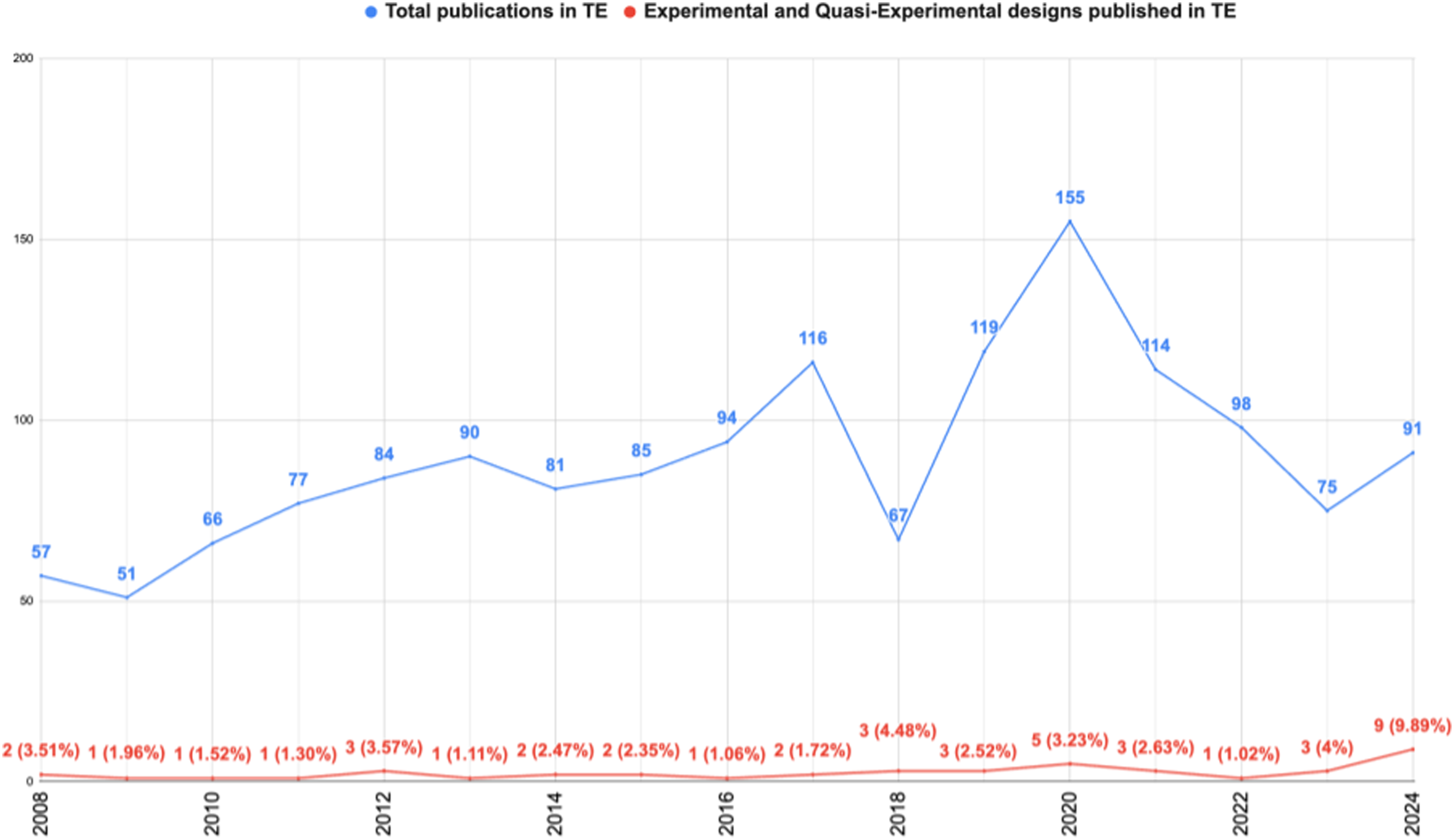
Summary of experimental designs in tourism economics (2008–2024).
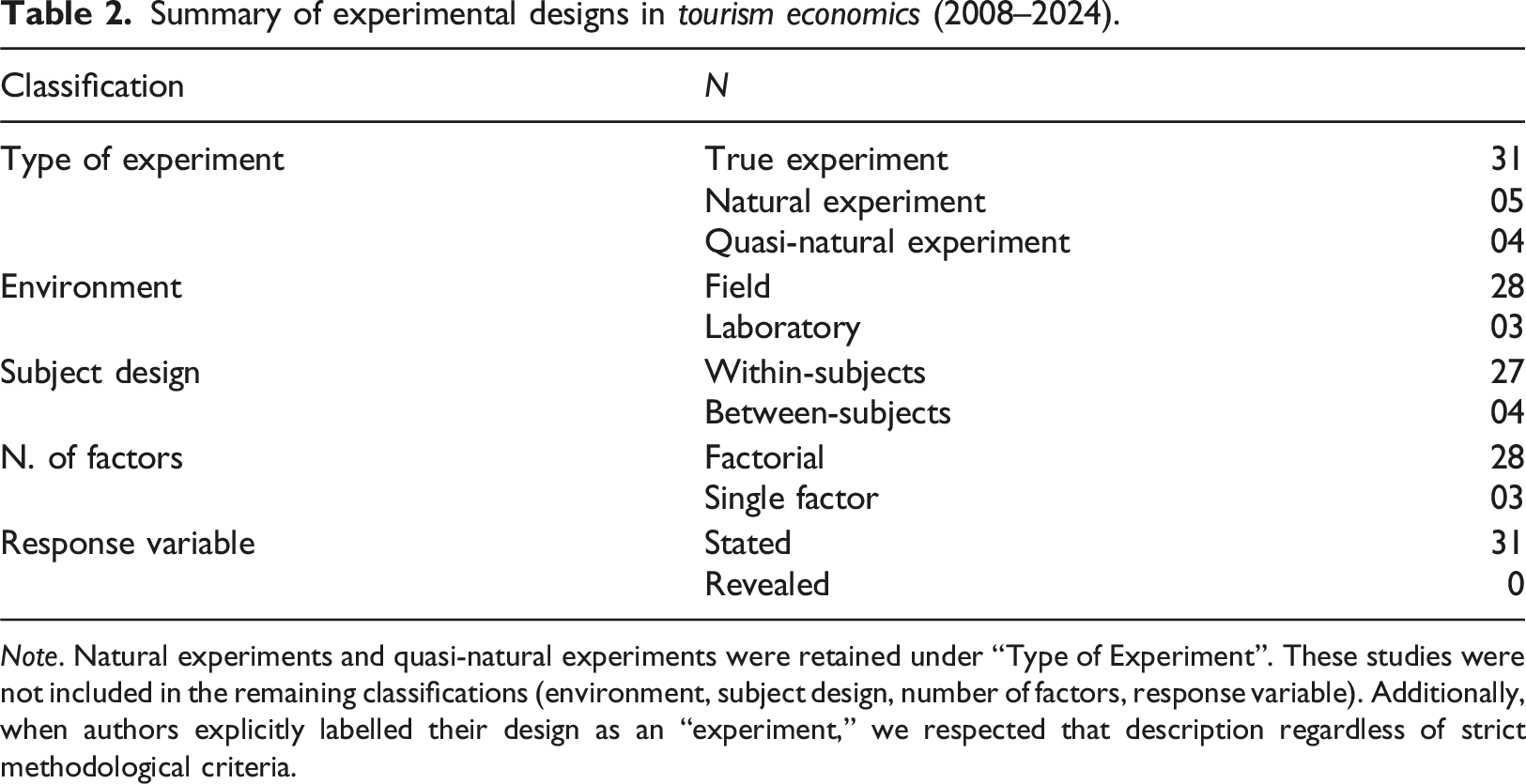
Note. Natural experiments and quasi-natural experiments were retained under “Type of Experiment”. These studies were not included in the remaining classifications (environment, subject design, number of factors, response variable). Additionally, when authors explicitly labelled their design as an “experiment,” we respected that description regardless of strict methodological criteria.
To address this limitation, some emergent studies in the Tourism Economics journal (25%) have adopted natural experiments. These studies leverage real-world events (Boto-Garcia et al., 2024) or policy changes (Du et al., 2024) to estimate causal effects. While these approaches improve external validity, they lack true experimental manipulation, limiting control over confounding factors. Despite representing progress, these methods merely offer a compromise between observational data and controlled experiments. They do not fully resolve the methodological challenges in tourism economics. Tourism economics as a field has historically prioritized observational over experimental approaches. The persistent focus on observational methods has slowed the adoption of experiments and reinforced methodological silos that sustain this research tradition. This insularity is often critiqued for limiting tourism’s interdisciplinary evolution and engagement with real-world systems (Buckley et al., 2025). Consequently, tourism economics becomes increasingly detached from methodological developments embraced by other foundational tourism fields. In contrast, the study of marketing and psychology in tourism has embraced experimental designs more readily (Scott et al., 2024). Additionally, the continued reliance on stated preference surveys rather than true experimental manipulations reflects several practical constraints. These include limited access to controlled settings, ethical concerns around manipulating economic conditions, and funding challenges for large-scale fieldwork. Such barriers limit opportunities to advance knowledge on actual behavior.
Beyond methodological concentration, validity concerns further challenge the robustness of experimental research in tourism economics. A four-validities framework was initially developed by Shadish et al. (2002) to explain key threats to causal inference in experimental and quasi-experimental designs. This framework was later adopted by Clarke et al. (2023) to categorize reported limitations, we can distinguish between threats to external, construct, internal, and statistical conclusion validity. To apply this framework, we manually reviewed and coded the reported limitations in each experimental study published in Tourism Economics, classifying them into one of the four validity categories. As part of this process, we adapt the coding process by Rathje et al. (2024). We initially ran an automated classification using ChatGPT API, which served as a preliminary coding layer. Manual checks were then performed to validate and refine the results, using the model as a proxy for inter-coder reliability (Blythe et al., 2025).
Our analysis, informed by this framework, reveals that external validity issues are the most frequently reported concern in experimental tourism research. They appear in 65% of the studies published in Tourism Economics. These often relate to concerns over unrepresentative samples or artificial study settings. Studies frequently rely on stated preference methods, which, although practical, face intense criticism when extrapolated to real-world behavior (Viglia and Dolnicar, 2020). Construct validity issues, found in 27.5% of studies, signal persistent challenges in ensuring that experimental manipulations accurately reflect the intended theoretical constructs. These issues often arise from the use of short, unvalidated, or overly self-reported measures. To address these concerns, scholars should diversify experimental approaches by adopting field experiments or more realistic laboratory settings. Researchers should also refine measurement techniques to strengthen construct validity. Following Assaf and Scuderi (2023), combining multiple methods can enhance both internal and external validity, supporting stronger causal inferences and broader applicability of results.
Expanding the scope of research questions by adding interdisciplinary perspectives will strengthen studies in siloed areas like Tourism Economics (Buckley et al., 2025). Broadening the field’s methodological and theoretical toolkit allows researchers to generate deeper, richer, and more actionable insights designed to advance discourse in tourism economics. To unlock the full potential of experimental methods, a well-defined roadmap is essential to stimulate future scholarship (Levitt and List, 2009). This roadmap must equip tourism economists and aspiring econometricians with the tools to navigate and integrate experimental designs into their research effectively. Doing so will foster a more rigorous and causal understanding of economic behavior in tourism. By bridging methodological divides, this approach has the potential to enhance debates that have arguably stagnated. It can also reshape the field by reinforcing its empirical foundations and expanding its analytical capabilities. The next section introduces a roadmap for integrating experimental and econometric approaches in tourism economics.
A roadmap experiments and econometrics in tourism economics research
Econometric methods alone are limited in uncovering the intricate psychological processes (Charness, 2010) tourists experience during their journeys, such as sensory perception, emotional responses, and cognitive mechanisms (Scott et al., 2024). These psychological processes often occur between the measurements captured in observational data, requiring the application of experiments to reveal underlying causal mechanisms (Blanchard et al., 2022). Experimental methods, when combined with advanced tools and deeply embedded econometric models, sometimes referred to as Experimetrics (Camerer, 2003), offer powerful means to address persistent challenges. Challenges include issues such as sample selection, data heterogeneity, and biases in interpretation (List and Rasul, 2011). By integrating rigorous design and econometric techniques, researchers can achieve a high degree of precision in isolating treatment effects and testing theoretical predictions.
Laboratory experiments offer greater internal validity compared to field data (Roe and Just, 2009). Combining them with observational and econometric methods helps ensure that findings accurately reflect cause-and-effect mechanisms. This strengthens theory testing while also improving internal validity and allowing for a broader generalization of results. Additionally, laboratory experiments help explore underlying processes that are difficult to observe in the field, further reinforcing their theoretical contributions (Blanchard et al., 2022). Concomitantly, econometric methods rely on observational, non-randomized data to improve external validity by demonstrating the generalizability of findings to real-world contexts. Researchers should explicitly articulate how observational data contributes to their goals. This may involve addressing ecological validity, exploring long-term behavioral patterns, or extending experimental findings to broader contexts. For example, in tourism economics, laboratory experiments can examine how loss aversion influences consumer decision-making in response to different pricing strategies. Econometric analysis can then assess the long-term impact on purchasing behavior using longitudinal data.
Comparison of approaches to experimental integration in tourism economics research.
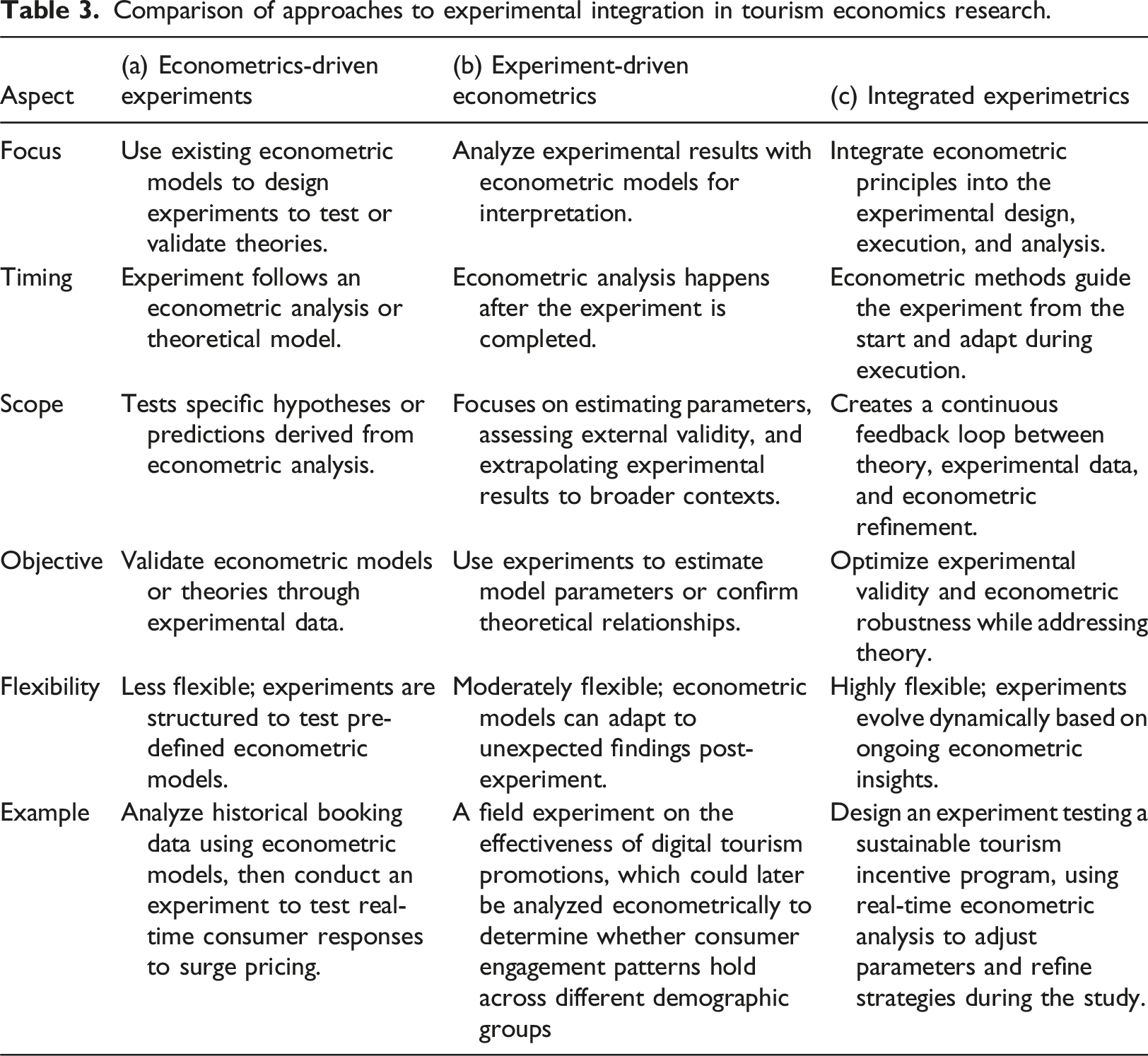
Each of these three approaches plays a vital role in tourism economics research. Econometrics-driven experiments ensure that experimental designs are grounded in robust theoretical models, enhancing the precision of hypothesis testing (Moffatt, 2020). Conversely, Experiment-Driven Econometrics allows researchers to derive insights from experimental findings and later refine econometric models for broader applicability. This approach strengthens external validity, ensuring findings are not confined to controlled settings but can inform industry practices. Lastly, Integrated Experimetrics 6 represents a continuous feedback loop between econometric models and experimental design.
Figure 4 presents a roadmap for integrating experimental research with econometric modelling, highlighting the iterative and complementary nature of these approaches. This roadmap can be applied within the (a) Econometrics-Driven Experiments and (b) Experiment-Driven Econometrics to provide a structured process for hypothesis generation, experimental design, and analysis. In an Econometrics-Driven Experiment, the ‘Econometric Modelling’ stage involves analyzing existing data, for example, using a Computable General Equilibrium Model, to identify a hypothesis. This hypothesis is then tested in the subsequent ‘Experimental Design’ stage. Conversely, in an Experiment-Driven Econometrics approach, the ‘Data Collection and Initial Analysis’ from the experiment feed into the ‘Application of the Econometric Modelling’ stage. The resulting integration enables a deeper understanding of the observed effects. A roadmap for integrating experimental designs into tourism economics research (original work by the authors).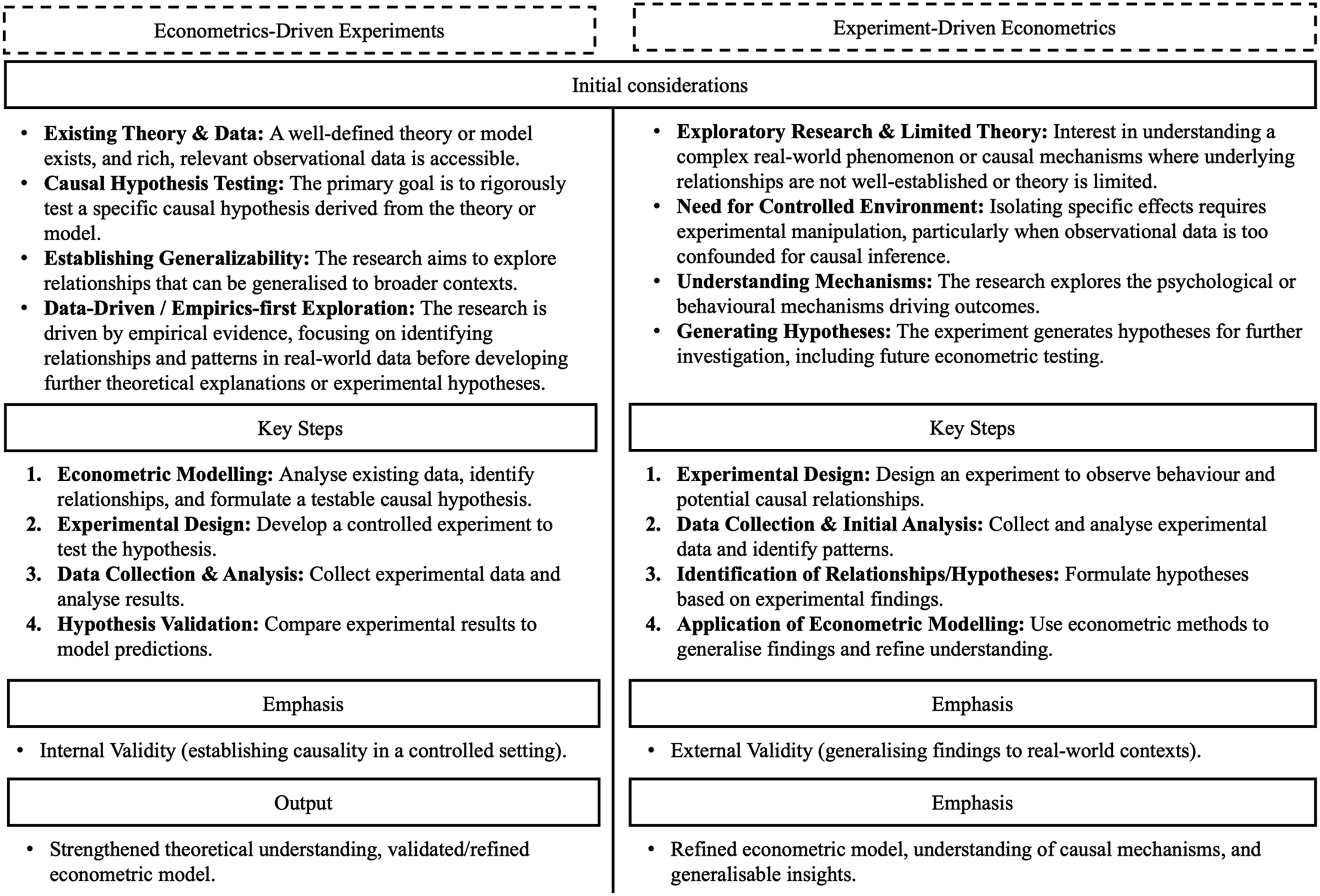
Conversely, there are mutual benefits of integrating both approaches, creating a symbiosis designed to advance economic discourse in tourism research. For example, experimental testing can validate causal hypotheses derived from econometric modelling, providing stronger theoretical grounding. Suppose an econometric model predicts that a specific type of tourism tax will reduce demand. An experiment can be designed to test this prediction in a controlled environment. The experimental results can then confirm (or refute) the model’s prediction, strengthening (or weakening) its theoretical foundation. On the other hand, experimental findings can inform and refine econometric models. For instance, an experiment might reveal the precise price elasticity of demand for a particular tourism product. The causal knowledge acquired from the experimental design can then be incorporated into a larger econometric model of the tourism market. Furthermore, experiments can uncover behavioral insights that are not readily apparent in observational data, such as the influence of psychological and contextual factors on tourist decision-making. These insights can then be used to develop detailed, nuanced and realistic econometric models.
The roadmap presented above highlights the dual contribution and potential of experimental research in tourism economics. The roadmap demonstrates how a transition from econometric analysis to behavioral insights can bridge the gap between quantitative outcomes and their underlying psychological mechanisms. Simultaneously, by starting with rigorous experimental design, the roadmap emphasizes the importance of internal validity for establishing causal effects. These effects can then be generalized to real-world settings, thereby strengthening external validity (Roe and Just, 2009). The integrated approach has substantive potential to push the field towards a robust understanding of tourism economic phenomena, combining the strengths of both econometric and experimental methods. The following section proposes directions for future research, where experimental designs offer opportunities which extend beyond methodological refinement. These areas highlight relevant economic behaviors and decision-making processes in tourism, offering fertile ground for impactful and applicable contributions to both academic and industry debates.
Directions for future research
The future of experiments in tourism economics research can be discussed from two perspectives. First, the field of research should incorporate advances that have already occurred in economics and tourism. Experiments are more common in other areas of economics and tourism than in tourism economics. Consequently, the field can benefit from a broader and more frequent use of the experimental method.Second, researchers should consider specific research areas within tourism that exhibit economically relevant behaviors and methodological opportunities for experimental inquiry. In this study, we have proposed an approach that integrates experimental designs into tourism economics research, highlighting how these methods complement traditional observational techniques. While researchers may adapt these methods to their specific areas of interest and needs, certain research domains stand out. We identify several key areas that would benefit from further experimental investigation. Below, we outline five promising directions for future research, along with relevant research questions.
Research area 1: Tourist choice
Tourist decision-making has been extensively studied across multiple disciplines, with economists frequently analyzing it through the lens of rational behavior models. Experimental studies provide an opportunity to validate economic theories while incorporating real-world behavioral observations, bridging the gap between behavioral economics and tourism research. Given that tourism is a hedonic consumption experience, distinct from traditional goods, future research could explore the following questions: RQ1.1. How do tourist decisions deviate from the rational-normative model? RQ1.2. How consistent are tourist preferences? RQ1.3. How do tourists search and incorporate information into their decisions? RQ1.3. How do heuristics and cognitive biases shape tourists’ choices? RQ1.4. Do the effects of heuristics and cognitive biases persist over repeated travel decisions? RQ1.5. What role does choice architecture (e.g., framing, defaults) play in influencing travel decisions? RQ1.6. How do tourist preferences evolve over time with repeated exposure to destinations or services? RQ1.7. How do situational factors (e.g., adverse weather, crowding) lead to preference reversals in tourist decision-making?
Research area 2: Managerial decision-making
Managerial decision-making in tourism remains a relatively underexplored research area. Just as consumers might deviate from rationality, managers are also prone to biases, which can influence strategic decisions. The interdependence between tourism products, services, locations, and people adds layers of complexity that traditional decision-making models may not fully capture. Future research could address questions such as: RQ2.1. How do tourism managers search and incorporate information into their decisions? RQ2.2. How do tourism managers combine self and organizational interests? RQ2.3. How do tourism managers balance short-term revenue maximization with long-term brand reputation and customer retention? RQ2.4. To what extent do cognitive biases influence pricing, investment, and marketing strategies in tourism? RQ2.5. Can behavioral nudges improve managerial decision-making in tourism firms?
Research area 3: Markets
Experimental research on market dynamics in tourism is still in its early stages, highlighting a significant gap in the literature. Investigating how tourism markets function under different conditions can enhance understanding of consumer behavior, competition, and policy interventions. Some of the research questions include: RQ3.1. How do different market mechanisms work for different types of tourism products? RQ3.2. How do price transparency and dynamic pricing models affect tourist purchasing behavior? RQ3.3. How do tourists and firms respond to market shocks, such as sudden changes in exchange rates, pandemics, or new regulations? RQ3.4. What experimental evidence can inform the effectiveness of sustainability incentives in tourism markets? RQ3.5. Which negotiation and pricing strategies emerge in dynamic tourism markets, and how do they develop and evolve over time?
Research area 4: Game theory & strategic interaction
The strategic interactions between stakeholders, businesses, policymakers, and local communities in tourism remain largely unexamined from an experimental perspective. Applying game theory to tourism could provide new insights into cooperation, competition, and conflict resolution among key players. Future research could explore: RQ4.1. How do destination stakeholders strategically interact to maximize individual outcomes? RQ4.2. How do communities bargain to maximize their own interests? RQ4.3. How do destination stakeholders (e.g., hotels, restaurants, government agencies) strategically collaborate or compete to maximize collective benefits? RQ4.4. How do tourists respond to strategic signaling and reputation mechanisms (e.g., online reviews, sustainability certifications, etc.)?
Research area 5: Methodological innovations in experimental tourism research
Experimental research in tourism economics stands to benefit significantly from recent methodological advancements, particularly in the integration of Generative AI, Virtual Reality (VR), Augmented Reality (AR), and enhanced field experimentation techniques. These innovations can improve the design, execution, and realism of experiments, ultimately enhancing internal and external validity.
Generative AI in experimental design
The design and execution of experiments in tourism economics can be enhanced through Generative Artificial Intelligence (GenAI) (Tomaino et al., 2025). AI-powered tools assist researchers in creating textual and visual stimuli, improving the realism and consistency of experimental materials (Dashkevych & Portnov, 2024; Van Berlo et al., 2024). Beyond stimulus generation, AI can simulate expected human behavior, allowing researchers to pre-test experimental designs by predicting participant responses and biases (Sarstedt et al., 2024). Furthermore, AI-generated synthetic samples, also known as silicon samples, have been found to exhibit similar social biases to human participants (Hu et al., 2024). Silicon samples have also been shown to replicate economic decision-making patterns observed in the real world (Viglia et al., 2024a). These capabilities position GenAI as a valued tool for refining experimental approaches in tourism economics research.
In addition to its role in designing experiments, GenAI can be integrated directly into experimental settings as a variable under study. For example, AI-generated content such as synthetic reviews, personalized travel recommendations, and automated customer service interactions can be used in experiments. These AI-generated elements offer novel capabilities (Assaf et al., 2025) and emergent applications that can reshape methodological and analytical practices (Tomaino et al., 2025) in tourism economics. Additionally, AI-powered synthetic consumers can be deployed in experimental markets to model competitive behaviors, pricing strategies, and consumer demand fluctuations in tourism settings. These expansive applications, limited only by researchers’ imagination, create new opportunities to examine the economic and behavioral dynamics of AI-mediated tourism environments. This is especially relevant in contexts where digital agents influence consumer choices and firm strategies. Important research questions to be followed are: RQ5.1. How do AI-generated travel reviews and recommendations influence consumer trust and decision-making in tourism bookings? RQ5.2. To what extent and in which contexts can synthetic or AI-generated participants effectively replace human participants in tourism experiments without compromising result validity? RQ5.3. What are the methodological challenges of using AI-generated content and recommendations as stimuli in experimental designs? RQ5.4. How does consumer behavior differ when interacting with AI-powered customer service agents versus human representatives in tourism services? RQ5.5. What are the implications of using AI-driven decision environments in tourism experiments for measuring behavioral responses and economic choices?
Virtual and augmented reality for enhanced realism
Tourism is highly experiential, making realism a key challenge for experiments. Virtual Reality (VR) allows researchers to simulate travel experiences, creating immersive environments where participants make decisions in lifelike settings (Liu et al., 2024). Additionally, Augmented Reality (AR) can transform real-world locations into dynamic experimental settings, enabling in situ manipulations of destinations, accommodations, or attractions (Du et al., 2024). Some questions researchers may pursue are: RQ5.5. How does VR realism influence the accuracy of willingness-to-pay (WTP) estimates in tourism demand models? RQ5.6. Can VR-based experiments improve the predictive validity of price elasticity measures in tourism economics? RQ5.7. Does the increase in realism due to the AR and VR technologies impact their perceived value? RQ5.8. Can VR-based experiments provide more reliable behavioral inputs for structural models of tourist decision-making?
Conclusions
This paper marks a pivotal shift in the methodological landscape of tourism economics by championing the integration of experimental designs as a fundamental tool for advancing causal inference. While tourism economics has traditionally relied on observational and econometric approaches, this work provides a roadmap that fuses experimental and econometric research. By combining these two strategies, the paper creates a clear pathway for more precise and reliable research. We advocate for data-rich approaches (Blanchard et al., 2022). The fusion of experimental and econometric methods is poised to reshape both the theoretical and applied frontiers of tourism economics. This integrated approach has the potential to redefine the discipline’s ability to model, test, and predict economic behaviors in tourism with unprecedented accuracy.
However, this paradigm shift will not occur passively. It requires bold action and a willingness to step beyond researchers’ comfort zones. The field can no longer afford to lag behind advances embedded in economics, marketing, and behavioral sciences in embracing experimentation. We call upon scholars to step beyond passive observation and actively engage in the controlled manipulation of economic variables in tourism settings. The methodological inertia that has confined tourism economics to indirect inference must be disrupted. We challenge researchers to innovate: to merge theory and experimental practice, to establish interdisciplinary collaborations (Kock et al., 2020), and to leverage technological advancements to design high-impact, policy-relevant experiments that move beyond the confines of academic discourse and into the realm of industry transformation (Buckley et al., 2025).
The impact of this new research approach goes beyond academic discussions. If widely adopted, experimental methods in tourism economics could reveal new insights into traveler behavior, market trends, and policy decisions. These findings could shape sustainable tourism, digital services, and industry growth. Tourism is changing rapidly due to technology, economic shifts, and global crises. Understanding cause and effect is no longer just for researchers—it is essential for the industry’s survival and success. Small steps are not enough, the field needs bold change now.
This manuscript adopts an economics-oriented lens that aligns with the scope of Tourism Economics. However, given the kaleidoscopic nature of tourism research (McCabe, 2024), engagement with related fields with a long-standing tradition of using experimental designs can significantly enrich ongoing discussions. Psychology, consumer research, marketing, neuroscience, and neuroeconomics offer both theoretical insights and methodological innovations that can inform future tourism research and advance the experimental study of tourism. This is an area that warrants further scholarly attention and holds considerable potential for cross-disciplinary contributions.
AI use declaration
This manuscript employed artificial intelligence tools in two specific instances. The ChatGPT API (model GPT-4o) was used exclusively as an initial coding layer for the classification of reported limitations in experimental studies. In a separate instance, the ChatGPT (GPT-4o) platform was used to assist with language refinement and proofreading to improve clarity and readability. All content, including interpretations and conclusions, remains the full responsibility of the authors.
Footnotes
Declaration of conflicting interests
The author(s) declared no potential conflicts of interest with respect to the research, authorship, and/or publication of this article.
Funding
The author(s) received no financial support for the research, authorship, and/or publication of this article.
