




Abstract
This study investigates how mobile exercise app-enabled gamified benefits (epistemic, personal integrative, and social integrative) independently and interactively influence economic outcomes from a nationwide perspective. Utilizing unique data on physical exercise and shopping activities collected from 7558 South Korean exercise app users over 3 years, we employed aspatial and spatial econometric models, along with visualization techniques, to examine the spatially varying relationships between gamified benefits and shopping behaviors at the municipality level. The results indicate that while social integrative benefits decreased shopping frequency and amount, the interaction terms of epistemic and social integrative benefits positively influenced shopping frequency. Furthermore, our spatial analysis suggests that the gamification–shopping relationship varied based on specific gamified benefits and across individual and clustered districts, cities, and counties across South Korea. These insights can guide local governments and tourism firms, suggesting opportunities to promote destination-specific gamified services for boosting the local economy.
Introduction
Mobile exercise apps have gained widespread popularity, enabling individuals to record their physical activities during leisure and travel. Current statistics (Gitnux, 2023) project the exercise app market to reach US$14.7 billion by 2026, with approximately 56% of active users accessing their exercise apps more than 10 times a week. Moreover, over 75% of app users open the app at least twice daily. Beyond tracking activities like walking, running, and hiking, exercise app users engage with gamified features before, during, and after their activities. Gamification, which refers to applying game elements and game design techniques to non-game contexts (Deterding et al., 2011), can enhance users’ overall value creation (Huotari and Hamari, 2017). Examples of gamification in the exercise setting include accumulating mileage points during activities, sharing post-activity trek routes with other users, and downloading others’ routes before embarking on new activities. Many exercise apps incorporate in-app gamification features to enhance users’ behavioral engagement in physical exercise and app usage (Jang et al., 2018; Kim and Hall, 2022; Pereira et al., 2014; Perez-Aranda et al., 2021).
Scholars have extensively investigated the application of gamification in product development, marketing, and tourism. While some researchers have empirically demonstrated gamification’s impact on behavioral engagement (Jang et al., 2018), others have predominantly used qualitative methods to explore motivating tourists with gamified features (Aebli, 2019) and gamifying tourism products and services (Shen et al., 2020). Notably, Jang and Kim (2022a, 2023) employed quantitative methods to examine the spatially varying relationships between visitors’ gamified experiences and exercise engagement on a tourist island. Prior studies collectively emphasize the importance of gamified designs in tourism offerings for enhancing customer engagement, satisfaction, and loyalty. However, most research has primarily focused on the effect of gamification on non-economic behaviors (e.g., gamified physical exercises) or individual-level economic behaviors (e.g., gamified e-commerce shopping) (Che et al., 2023; Jang et al., 2018). Less attention has been paid to examining the impact of mobile app-based gamification on national economic outcomes, indicating a need for investigations into how mobile (exercise) app-enabled gamification influences shopping behaviors within a country.
Although previous research argues that gamified experiences are influenced by specific contexts where gamification occurs as well as specific gamified features (Deterding, 2011), scholars have mainly focused on user-level characteristics affecting gamification outcomes. For instance, user responses to gamification benefits vary depending on exercise app users’ type, age, and experience level. (Jang et al., 2018; Spillers and Asimakopoulos, 2014). However, gamification has been actively used by destination marketing organizations for marketing purposes (Xu et al., 2017), which are closely combined with geospatial contexts for specific gamified experiences. Although scant evidence is available, extrinsic motivations such as incentives can influence app users’ activities across locations (Shoval et al., 2020). Despite the necessity of exploring spatial heterogeneity to predict users’ behavioral engagement with shopping (Xiang et al., 2021), gamification research has not extended its focus beyond individual psychological perceptions to uncover neighborhood-level behavioral outcomes using geospatial behavioral data.
To fill these gaps, we aim to investigate the influence of mobile exercise app-enabled gamification on app users’ economic behaviors within a country. Specifically, we empirically explore the spatially varying relationship between gamified benefits, both individually and interactively, and shopping behaviors across multiple municipalities in South Korea. Drawing from use and gratification (U&G) theory, which postulates that gamification experience can attract the user’s attention and interest and maintain interaction with others (Katz et al., 1973), we identify three types of gamified user benefits (epistemic, personal integrative, and social integrative) and two types of economic behaviors (shopping frequency and shopping amount within apps) (Che et al., 2023; Jang et al., 2018; Nambisan and Baron, 2009). We compile a dataset encompassing actual gamified experiences and shopping activities from 2013 to 2015 across 170 South Korean municipalities, generated by 7558 exercise app users who installed a leading exercise app. Our aspatial regression results reveal that social integrative benefits decreased shopping frequency and amount, but the interaction term of epistemic and social integrative benefits increased shopping frequency. Furthermore, our spatial regression results show that the gamification-shopping relationship varied spatially, depending on gamified benefits, independently and interactively across different districts, cities, and counties in South Korea.
Our research makes several contributions to the gamification literature. First, we extend the literature on gamification outcomes, which predominantly focuses on individuals’ psychological and behavioral responses to gamified features, by incorporating a geospatial examination of gamification-induced economic outcomes. Our study uncovers the spatially heterogenous effects of gamified benefits on neighborhood-level shopping behaviors from a nationwide perspective. Second, by identifying the independent and interactive perspectives of three types of U&G-derived gamified benefits (epistemic, personal integrative, and social integrative), we provide insights into how economic outcomes in certain areas may be enhanced by specific combinations of gamified benefits more than in others. Our findings advance the understanding of gamification from the perspective of contextual gamification, asserting that user experiences are influenced by both the use of gamified features and the specific contexts in which gamification takes place. Finally, the utilization of spatial econometrics and visualization methods can equip local tourism firms and policymakers to implement place-based approaches to gamified service offerings and communication management, thereby maximizing economic outcomes across nationwide municipalities.
Literature review
Mobile exercise apps and smart exercise travel
Mobile apps empower users to track and manage their exercise records during both leisure/recreational and travel activities (Jang and Kim, 2023). Building on previous research that explored the interconnectedness of tourism and leisure/recreation (Hall and Page, 1999), Jang and Kim (2023) introduced the concept of smart exercise travel, defining it as “a visitor’s activity with multiple purposes such as leisure/recreation and tourism empowered by smart technology” (p. 1). The integration of smart technology in travel and tourism settings, commonly referred to as smart travel, has become widespread and has expanded through platforms like travel-related websites, social media, and mobile travel apps (Huang et al., 2017). In addition, an increasing number of people engage with smart recreation activities by using exercise apps to monitor their daily physical activities, such as walking or jogging (Jang et al., 2018), and to access rich information sources during long-distance hikes (Rogers and Leung, 2023). Tourist activities undertaken in outdoor recreation/sport and tourism contexts may share characteristics with recreation travel, where tourists engage with natural environments through camping, hiking, and climbing (Gross and Brown, 2008). Prior research suggests that exercise travel can overlap with leisure, recreation, and tourism (Hall and Page, 1999). Furthermore, exercise travel exhibits similarities with green exercise, as visitors often participate in physical activities at increased intensities and/or for extended durations within natural environments (Pretty et al., 2007).
In contrast to mobile travel apps that mainly provide travel-related information, mobile exercise apps focus on monitoring and recording physical activities in any setting, including leisure, recreation, and travel (Jang and Kim, 2023; Kim and Hall, 2022). Exercise apps (e.g., Strava) often store location information for each activity, monitor activity goals, and provide browsable exercise trek routes; some users may share their trek information with others within an app. Hence, smart exercisers who are facilitated by exercise apps are likely to consume, cocreate, and share leisure- and travel-time exercise experiences through personalization, context awareness, location-based services, and real-time monitoring (Gajdošík, 2020). Research demonstrates that attitudinal factors (e.g., perceived enjoyment and perceived gamification) and norm-based factors (i.e. social influences) affect tourists’ continuance intention toward exercise apps (Perez-Aranda et al., 2021). Additionally, exercise apps encourage tourists to walk and cycle for personal health, climate change mitigation, and the use of public green spaces (Kim and Hall, 2022). Therefore, smart technologies such as exercise apps can help users shape their interactions with exercise environments, further contributing to positive experiences.
Gamification in marketing and tourism
The convergence of smartphones, augmented reality technologies, and the increasing proficiency of digital users has steadily laid the foundation for gamification (Tanouri et al., 2022). Gamification involves incorporating elements typically found in computer and online gaming experiences into non-game settings (Deterding et al., 2011). In services marketing, gamification has been recognized as the new industrial revolution fueled by play (Harwood and Garry, 2015). The utilization of game elements in non-gaming contexts has been widely adopted in several domains, such as mobile banking (Baptista and Oliveira, 2017), online travel platforms (Shi et al., 2022), and mobile fitness apps (Pizzo et al., 2020). Furthermore, brand managers strategically adopt gaming elements into various organizations’ platforms, including downloadable content, websites, and applications. Such integration of gamification into marketing strategies has been globally presented among leading companies, such as Amazon, Expedia, Starbucks, and Nike (Eisingerish et al., 2019).
Prior studies on tourism gamification have evolved into three specific areas. The first research stream concentrates on the gamified designs of tourism offerings. For instance, Liang et al. (2017) found that the superhost badge awarded by Airbnb positively impacted review volumes and ratings, implying the effectiveness of gamified incentives for Airbnb hosts. Shen et al. (2020) proposed 34 gamified travel motivations and categorized gamified travelers into six types (i.e., knowledge collectors, reward seekers, explorers, curiosity seekers, sensation seekers, and flow experiencers), highlighting the importance of designing different appeals to different market segments. The second stream of research focuses on the development of psychological outcomes induced by gamification in tourism contexts. Xu et al. (2017) indicated that both extrinsic and intrinsic gaming elements enhance tourism marketing efforts, including raising brand awareness, improving visitor experiences, and fostering customer loyalty. The third research stream studies the relationships between motivational affordances of gamified features and psychological outcomes. Aebli (2019) investigated how gamified performance-tracking features (e.g., points, badges, and leaderboards) motivate tourists in terms of achievement, social recognition, and positivity. These studies provide an understanding of the multifaceted impact of gamification in tourism, from its design principles and psychological effects to its motivational affordances and outcomes.
Furthermore, tourism firms and destination marketing organizations have increasingly employed gamification for marketing purposes. For example, Zhang et al. (2017) highlighted the active integration of gamification in the marketing activities of online travel agency platforms, such as Expedia. Kasurinen and Knutas (2018) noted the utilization of gamification by some museums to enhance visitors’ experiences. Eisingerich et al. (2019) observed that, with the widespread use of mobile technology, businesses are adopting gamification strategies to engage customers and boost sales. Abou-Shouk and Soliman (2021) found that tourism firms express the intention to embrace gamification as a means to enhance customer engagement and achieve brand awareness and loyalty related to tourist destinations. These studies highlight the increasing importance of gamification in tourism marketing to maximize customer engagement and loyalty related to brands and destinations.
Gamified benefits and economic behavior
According to the U&G theory, gamified benefits derived from exercise app usage can be classified into three categories: epistemic, personal integrative, and social integrative benefits (Jang et al., 2018; Nambisan and Baron, 2009). Epistemic benefits pertain to acquiring information to better understand the activity environment, driven by a curiosity reduction motive (Litman, 2007) and a desire to close knowledge gaps or increase understanding (Cho et al., 2019). Personal integrative benefits involve the enhancement of users’ social status in the community, associated with perceived gains in self-efficacy (Katz et al., 1973), reflecting one’s belief in their ability to overcome difficulties and perform specific tasks. Social integrative benefits relate to using media to build relationships and interact with others, exemplified by inviting friends to participate in gaming activities or using augmented reality smart glasses to fulfill socialization needs. Hence, these U&G-based three gamified benefits can explain the advantages users obtain from participating in mobile exercise app environments.
In the smart exercise travel setting, users are likely to engage with epistemic benefits before the exercise activity (e.g., downloading trek routes from exercise apps), personal integrative benefits during multiple activities (e.g., accumulating their activity records), and social integrative benefits after the activity (e.g., uploading a particular trek route experienced by a user) (Che et al., 2023; Jang et al., 2018; Jang and Kim, 2022a). Our study focuses on examining how these gamified benefits shape users’ economic outcomes, independently and interactively. Although prior studies have explained the individual effects of gamified benefits on user engagement (Jang et al., 2018; Jang and Kim, 2022a), they have provided little evidence on how gamified benefits lead to economic outcomes (e.g., mobile shopping behaviors) in the context of both leisure/recreation and travel. Hence, this study attempts to uncover the intricate relationship among three types of gamified benefits and users’ economic behaviors in the smart exercise travel context.
Geospatial perspective on gamification-induced economic behavior
Although gamified benefits have the potential to shape users’ economic outcomes, this study goes beyond individual-level gamification outcomes and incorporate a geospatial lens when examining the gamification-economic outcomes. Research suggests that gamification may influence social structures themselves (Thornton et al., 2012), such as the economic behaviors of gamified users at the municipality level. Smart exercise travelers may show spatially varying engagement behaviors depending on gamified benefits, such as exploring remote places or accumulating points (Shen et al., 2020; Shoval et al., 2020). Smart tourism research emphasizes the necessity of monitoring both individual-level and group-level experiences (Choe and Fesenmaier, 2017). However, empirical knowledge about the nationwide economic impact of gamification remains limited.
Given the uneven geography of socioeconomic characteristics, we employ spatial analytical techniques to investigate spatially heterogeneous relationships between gamified benefits and economic outcomes across municipalities. Spatial heterogeneity in our study context refers to the variation in relationships between independent variables (i.e., individual and combined gamified benefits) and the dependent variable (i.e., mobile shopping behaviors) across different locations (e.g., districts, cities, and counties) in geographic space (e.g., South Korea). This approach acknowledges that the associations between dependent and independent variables may not be constant over an entire study area but can change from one place to another. This approach is suitable for enhancing gamification-driven economic behaviors, considering the heterogeneous nature of neighborhood configurations (Jang and Kim, 2022a).
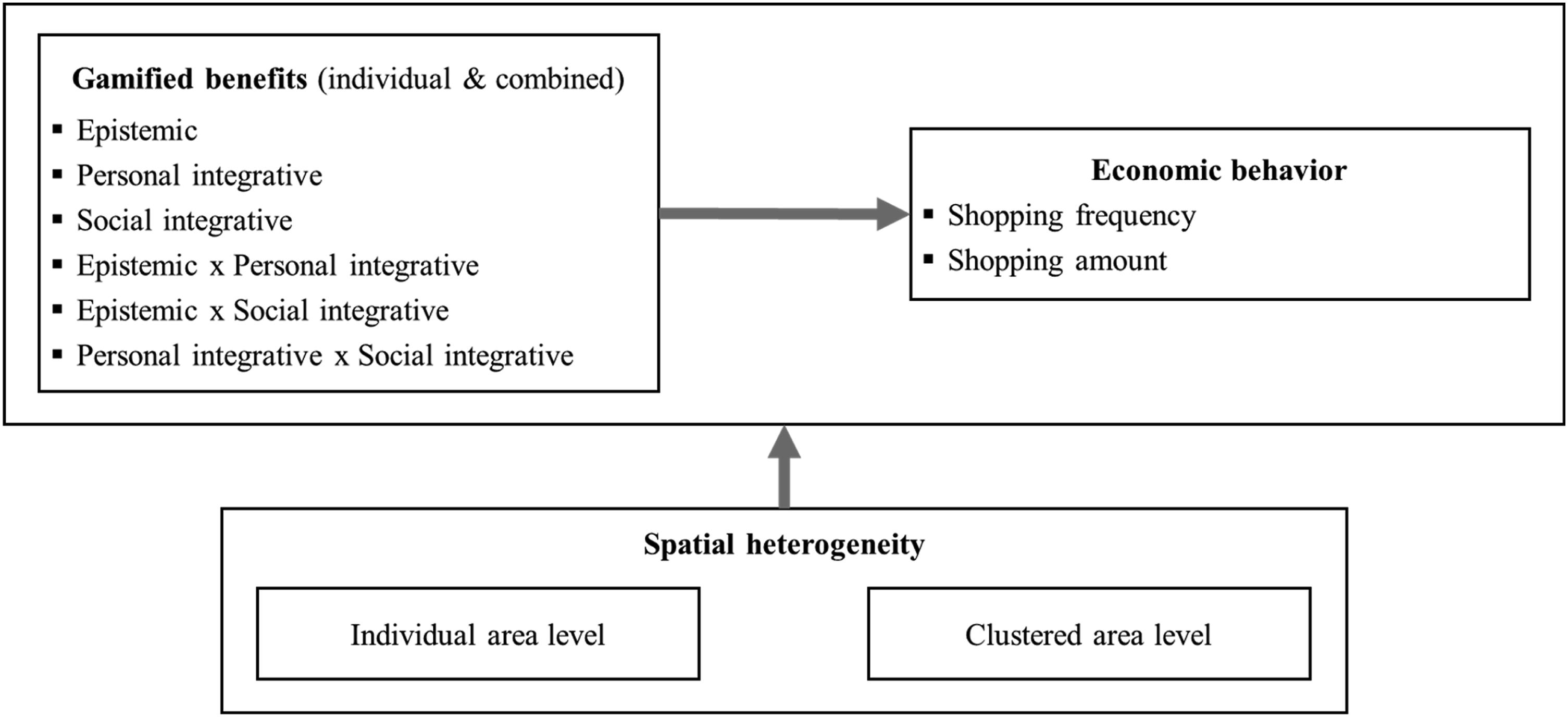
To explore the spatially varying effects of gamified benefits on economic behaviors across the study area, we capture spatial heterogeneity at both individual and clustered municipalities (Jang and Kim, 2022a; Lee et al., 2020). Figure 1 illustrates our research model, examining the independent and interactive effects of the three types of gamified benefits on economic behaviors within and across multiple areas. Thus, the guiding research questions (RQs) of the current study are: RQ1: How do three types of gamified benefits (i.e., epistemic, personal integrative, and social integrative) influence users’ shopping outcomes, both independently and interactively, irrespective of geographic location? RQ2: How do gamification-shopping relationships spatially vary across individual and clustered municipalities in a country? The research model.
Methods
Study area
We selected South Korea as our research area due to specific market environments, including a high smartphone penetration rate, rapid adoption of gamification in the industry, and swift technological advancements. In South Korea, gamification has emerged as a new opportunity to invigorate traditional industries, a trend accelerated even further by the Covid-19 pandemic. Major tech firms in South Korea are leveraging gamification to drive innovation in sectors such as healthcare, education, and finance (Hans Biz, 2023). To investigate the impact of gamification on exercise app users’ economic behaviors, we collaborated with a leading mobile exercise app operator in South Korea to gather unique data on exercises, gamified experiences, and in-app shopping activities. While prior research has extensively examined Western tourists’ physical activities (Hall et al., 2018), relatively little attention has given to the context of Asian mobile exercise app users (Kim and Hall, 2022).
Data collection
The exercise app meticulously tracks and records users’ exercise details, including type, time, location, distance, and duration, and in-app shopping transactions. In the in-app marketplace, manufacturers sell exercise goods to users, allowing us to monitor purchase transactions alongside exercise activities. Online stores often offer a broader range of products than physical stores, and in-app shopping allows users to easily compare prices and shop anytime, anywhere, without the need to travel to physical stores. Furthermore, mobile apps allow firms to realize a digital customer orientation and attain competitive advantages by providing superior customer experiences (Kopalle et al., 2020). Although in-app shopping behaviors may not fully represent broader shopping activities, our rich data of in-app shopping transactions enable us to measure the gamification-driven economic behaviors.
For our analysis, we obtained a comprehensive set of exercise and purchase data from 7558 app users residing in 170 areas (e.g., cities and counties) who made exercise-goods purchases at least once within the app from 2013 to 2015. This dataset was provided to us through an industry-university collaborative project. After the completion of the project, the company was merged with another major tech firm, which did not provide new data on physical exercises and in-app shopping transactions. Although the current dataset is outdated, its richness and uniqueness not only address two focal RQs but also offer insightful implications related to gamification outcomes.
Figure 2 displays the spatial distribution of average shopping frequency and shopping amount per user through the focal exercise app. Over the 3-year observation period, users in our sample recorded 1,082,151 exercise activities through the app, comprising hiking (42.96%), walking (32.92%), cycling (19.37%), running (4.67%), and rollerblading (0.08%). The average age of users in our sample was 47.66, ranging from 14 to 78, implying that relatively old users participated in this app platform and engage in various physical activities. Spatial distribution of dependent variables in the study area.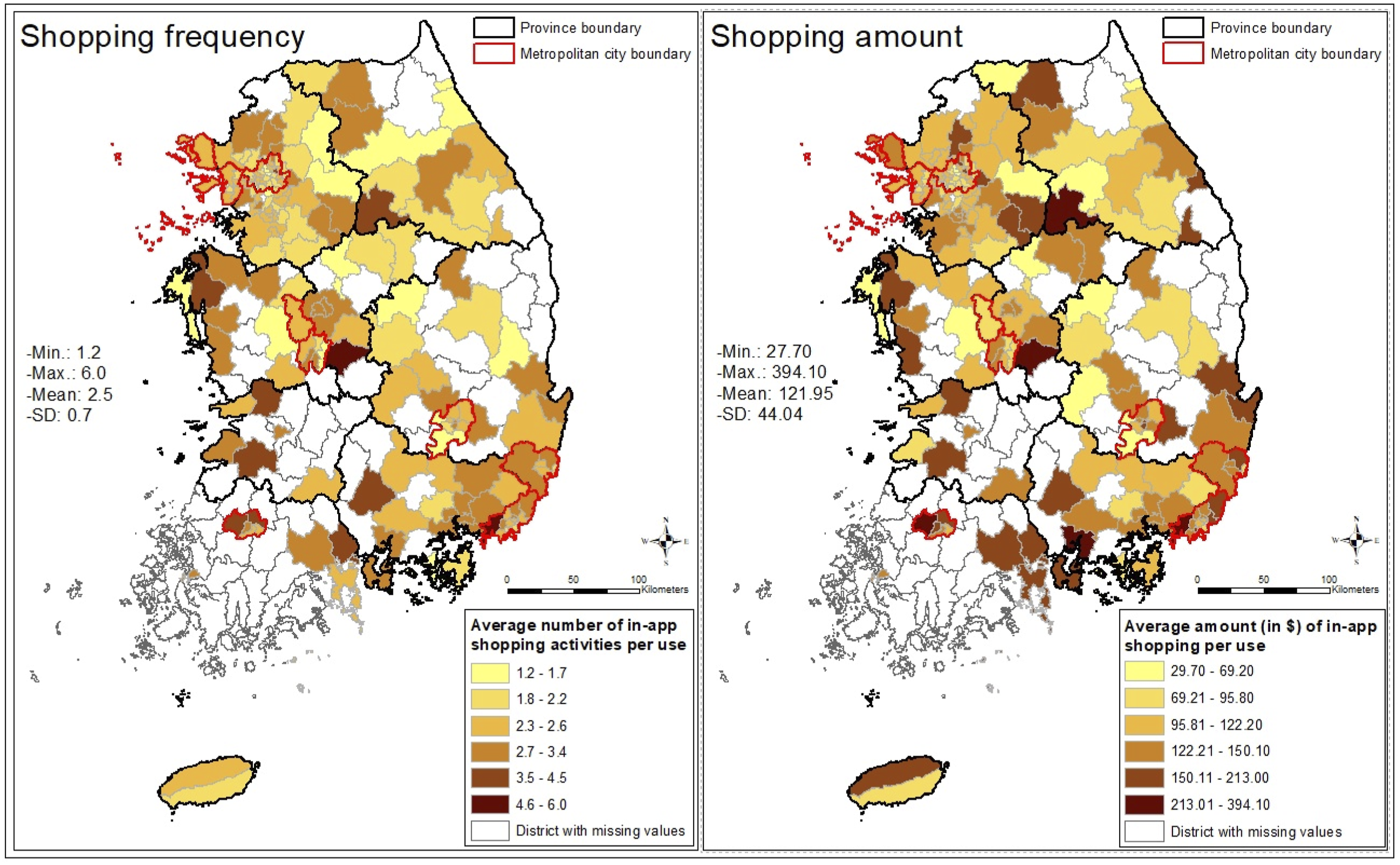
Variables
To operationalize economic behavior as the dependent variable, we utilized (1) the average number of in-app shopping activities per user in a particular area (city, town), and (2) the average amount (in US dollars) of in-app shopping per user in a particular area. As the primary independent variables representing gamified benefits, we assessed (1) epistemic benefits using the average number of trek-route downloads from the exercise app database per user in a particular area, (2) personal integrative benefits by the average number of accumulated exercise distances (in meters) per user in a particular area, and (3) social integrative benefits by the average number of trek-route uploads to the exercise app database per user in a particular area. This study is positioned as exploratory, aiming to provide initial insights into the relationship between gamified benefits and economic outcomes within the constraints of the single-item construct. The subset of gamified benefits was chosen based on theoretical frameworks and prior empirical evidence suggesting their significance in influencing economic outcomes (Che et al., 2023; Jang et al., 2018; Jang and Kim, 2022a; Nambisan and Baron, 2009).
Operationalization of variables.
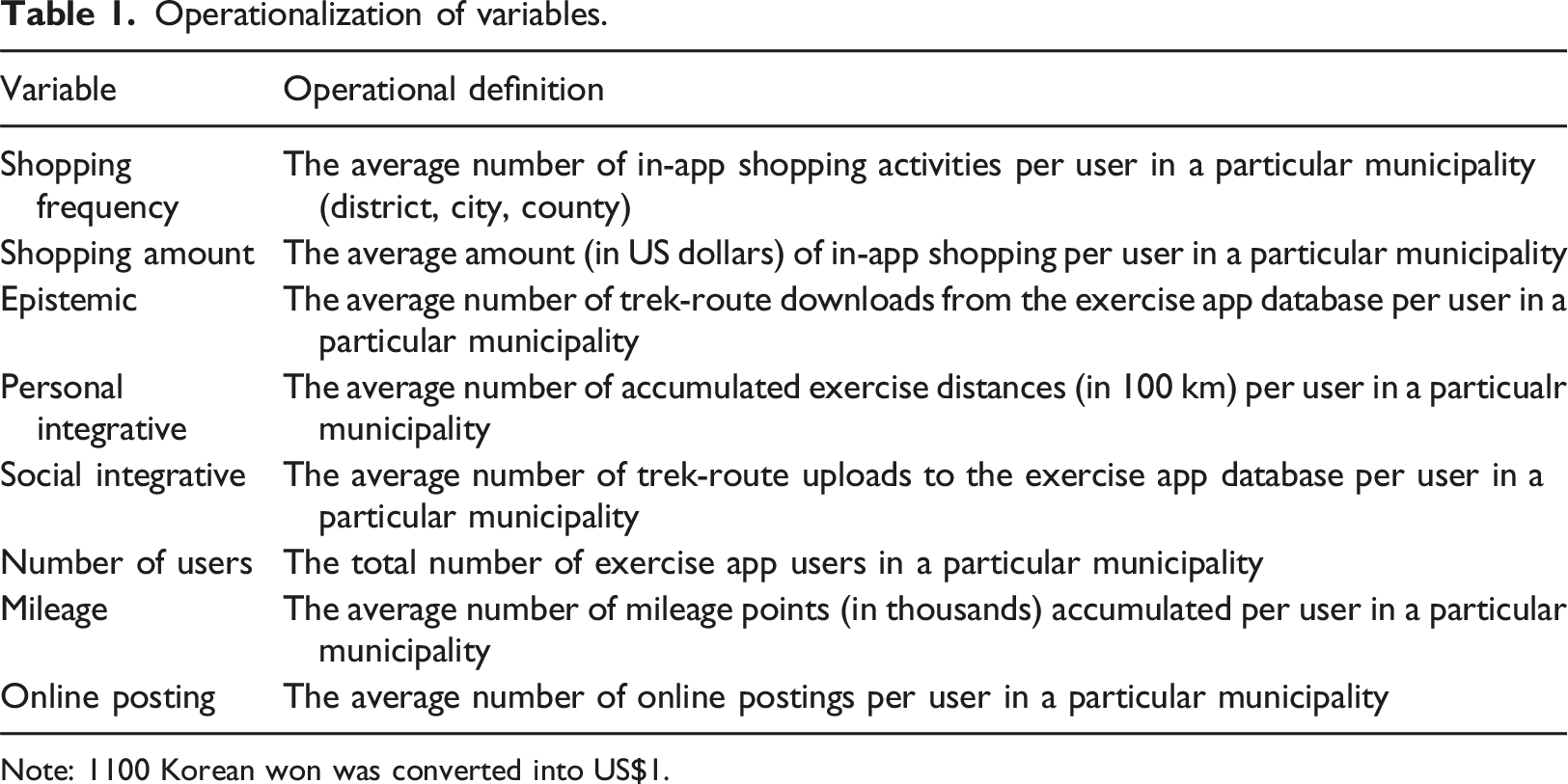
Note: 1100 Korean won was converted into US$1.
Data analysis
We investigated both aspatial and spatial models through ordinary least squares (OLS) regression and geographically weighted regression (GWR), respectively. Initially, the OLS regression examined the general relationships among variables, as illustrated in equation (1):

The proposed OLS models may encounter potential endogeneity issues that could result in biased estimates. To address this concern, a two-stage least squares (2SLS) method was utilized, incorporating two instrumental variables (IVs): the unemployment rate (Smith-Chandler and Swart, 2014) and the poverty rate (Baquero et al., 2021). The 2SLS regression analysis was performed for three independent variables – Epistemic, Personal integrative, and Social integrative – to prevent weakening the IVs.
While the 2SLS regression did not indicate endogeneity issues, the proposed OLS models might still lead to biased estimation results due to spatial autocorrelation among variables (Lee et al., 2020). Because OLS models failed to explore important local variations in the relationships among variables, we employed GWR, a spatial regression technique that handles spatial dependence between variables (Kim et al., 2024). GWR, in contrast to the OLS approach, explores the spatial heterogeneity inherent in the associations among georeferenced variables (Fotheringham et al., 2003). GWR has been utilized as an exploratory tool to discern spatial variability within the study area in research pertaining to tourism and hospitality (Jang and Kim, 2022b; Kim et al., 2020; Lee et al., 2020). Thus, we conducted GWR to investigate spatially varying effects of independent variables on the dependent variable. Equation (2) outlines the GWR model:

Finally, spatial clustering patterns of GWR-based local coefficients were explored by employing exploratory spatial data analysis (ESDA) using the global Moran’s I statistic and the local indicator of spatial association (LISA). The global Moran’s I measures the presence of spatial dependence among the coefficients of a focal area and those of neighboring areas (Li et al., 2007). The set of LISA clusters includes five formats: (1) hot spots (high-high), (2) spatial outliers (high-low), (3) spatial outliers (low-high), (4) cold spots (low-low), and (5) nonsignificant figures (Jang and Kim, 2018, 2022a; Kim et al., 2020). For the spatial analysis, we utilized diverse software programs, including Stata, GWR, and ArcGIS Pro.
Results
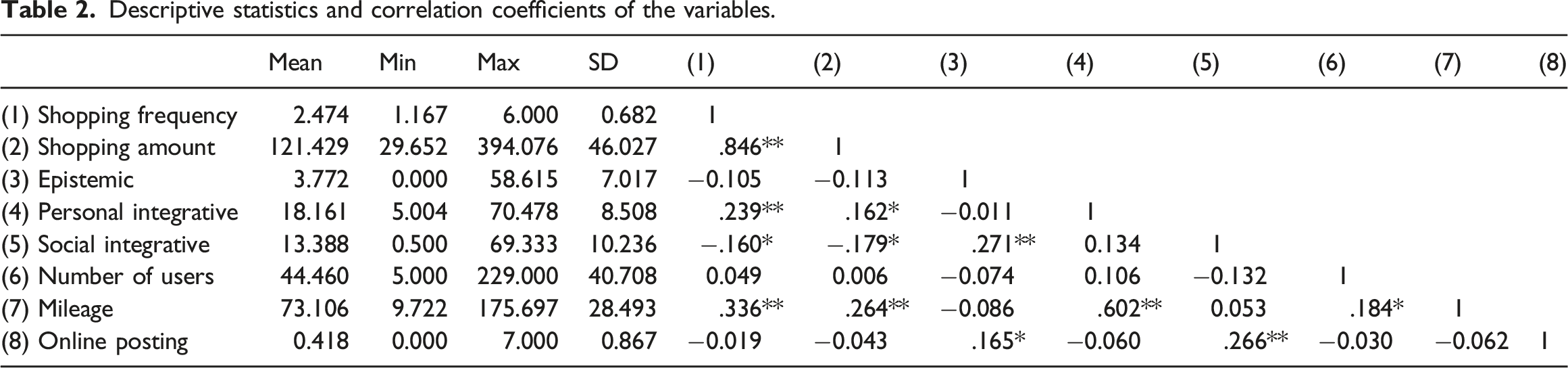
Descriptive statistics and correlation coefficients of the variables.
Estimates of OLS and GWR models using two dependent variables.
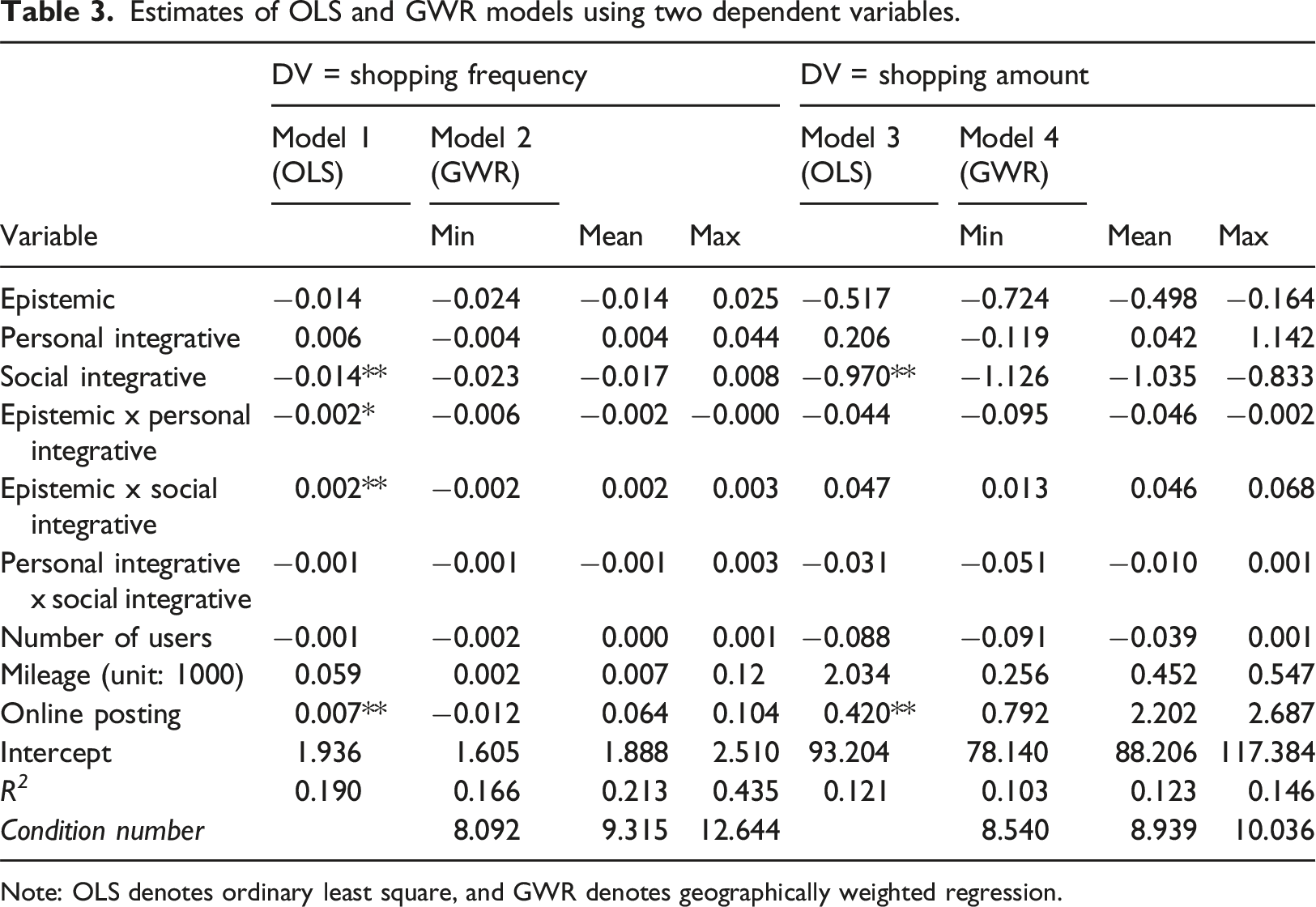
Note: OLS denotes ordinary least square, and GWR denotes geographically weighted regression.
The results of the GWR models reveal spatially varying relationships among gamified benefits and shopping outcomes. In the shopping frequency model (Model 2), on average, epistemic benefit was negatively related to shopping frequency ( Spatial distribution of local GWR coefficients (DV = Shopping frequency). Spatial distribution of local GWR coefficients (DV = Shopping amount).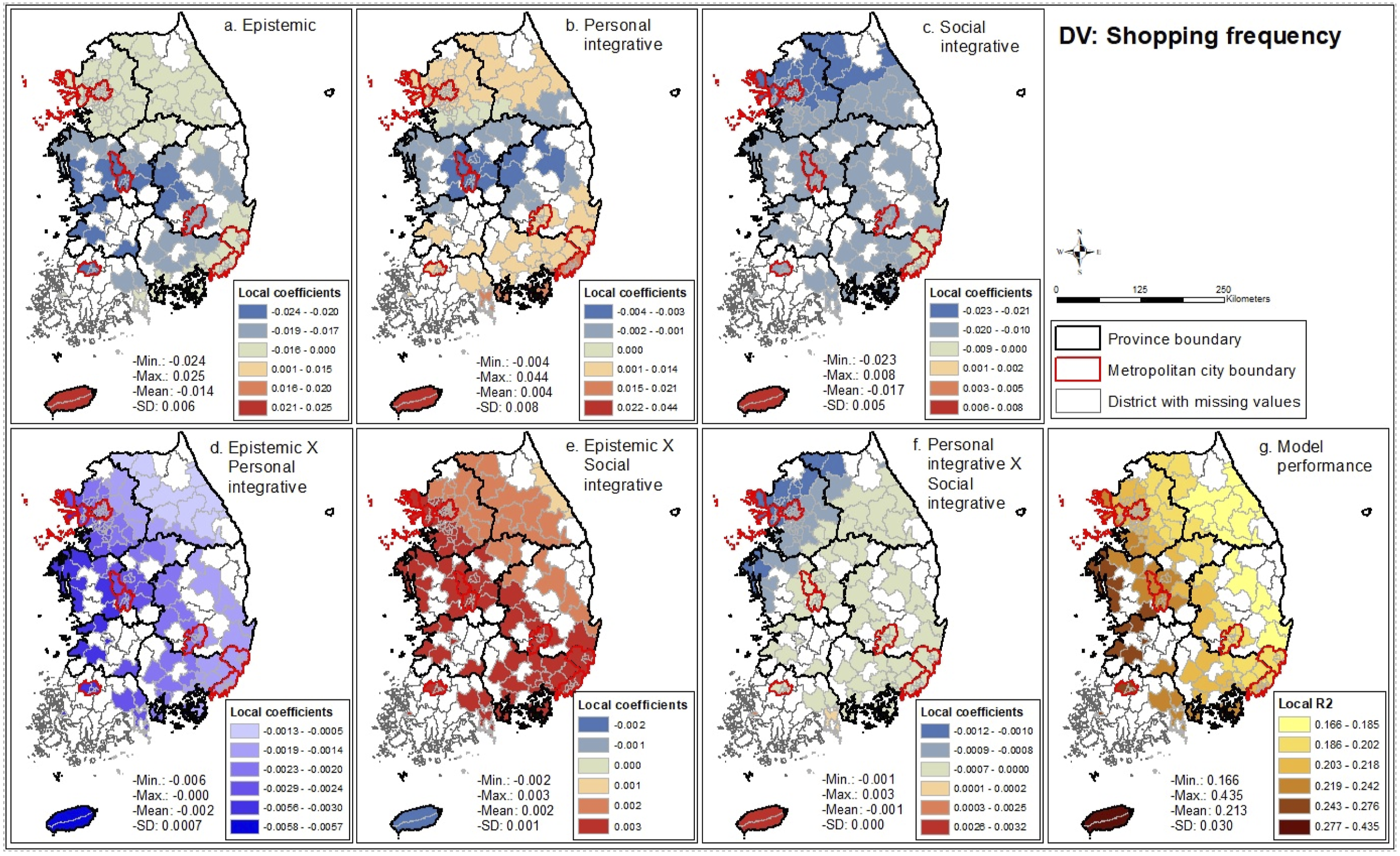
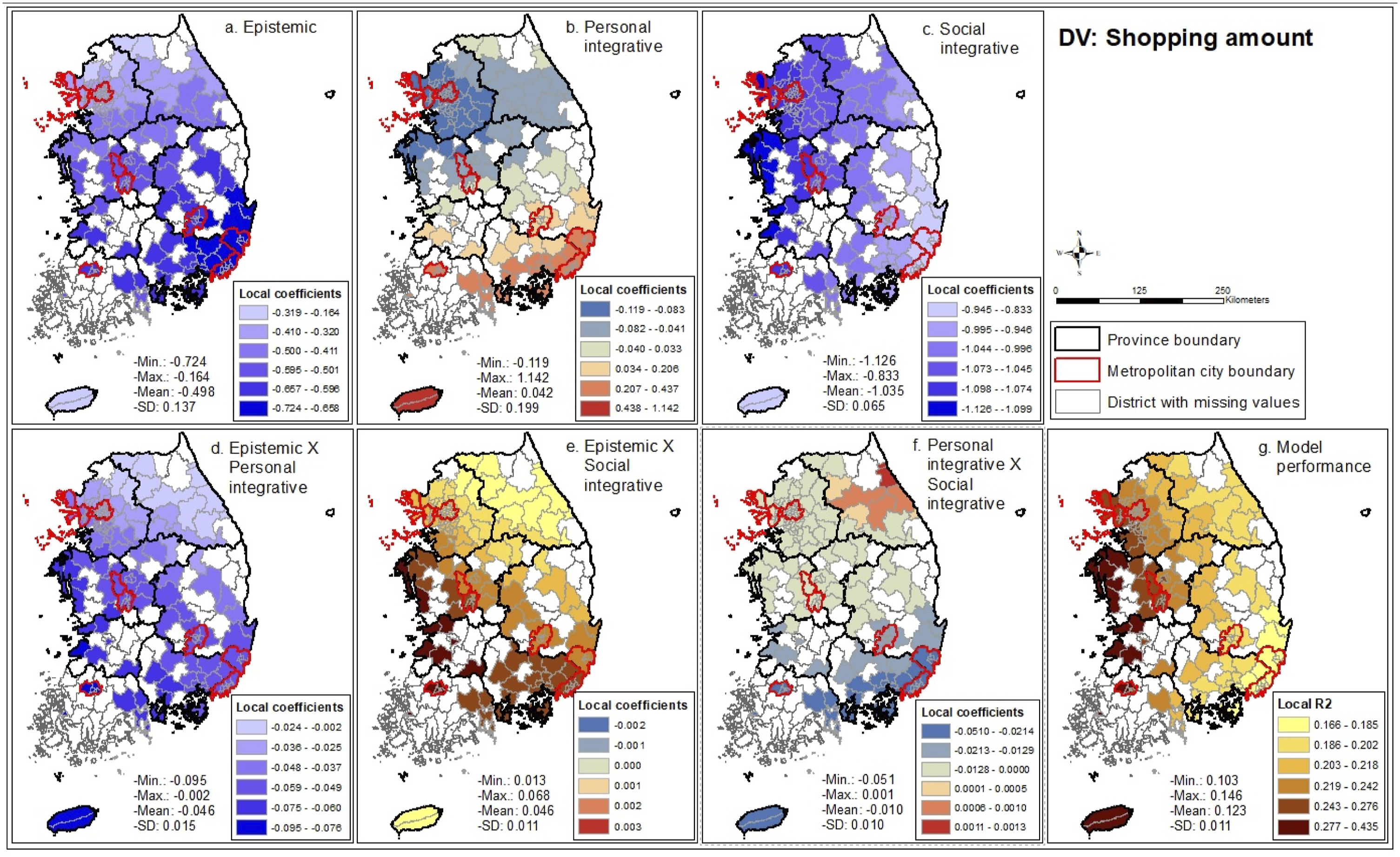
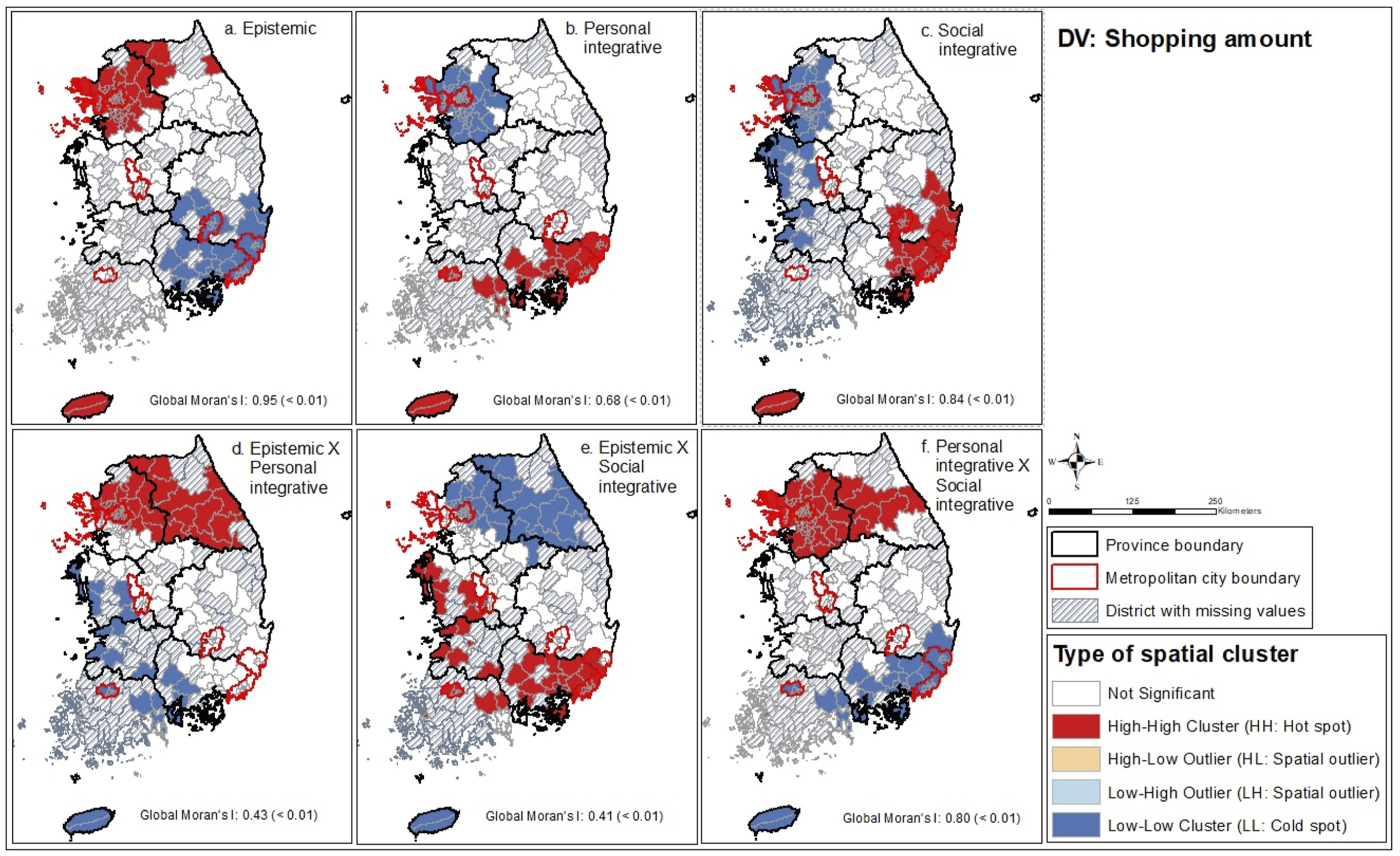
Furthermore, we examined the clustered relationship of gamified benefits and economic outcomes using two statistical measures: global Moran’s I and LISA. Figures 5 and 6 illustrate that greater epistemic benefits increased the shopping frequency (5-a; global Moran’s I: 0.35, p < 0.01) and shopping amount (6-a; global Moran’s I: 0.95, p < 0.01) of exercise app users residing in Seoul and northern (red-colored) areas. Conversely, social integrative benefits decreased the shopping frequency (5-c; global Moran’s I: 0.83, p < 0.01) and shopping amount (6-c; global Moran’s I: 0.84, p < 0.01) for users in those (blue-colored) areas. Interestingly, exercise app users in Busan and southeast areas exhibited an increase in shopping frequency (5-c) and shopping amount (6-c) due to greater social integrative benefits. Furthermore, users in northern areas increased their shopping frequency and shopping amount due to the combination of epistemic and personal integrative benefits (6-d; global Moran’s I: 0.43, p < 0.01) or personal integrative and social integrative benefits (6-f; global Moran’s I: 0.80, p < 0.01). The results of clustered local coefficients highlight that the relationship between gamified benefits and economic behavior varies based on the type of shopping behavior (frequency, amount), the type of gamified benefits (epistemic, personal integrative, social integrative), and clustered areas. Spatial distribution of clustered GWR coefficients (DV = Shopping frequency). Spatial distribution of clustered GWR coefficients (DV = Shopping amount).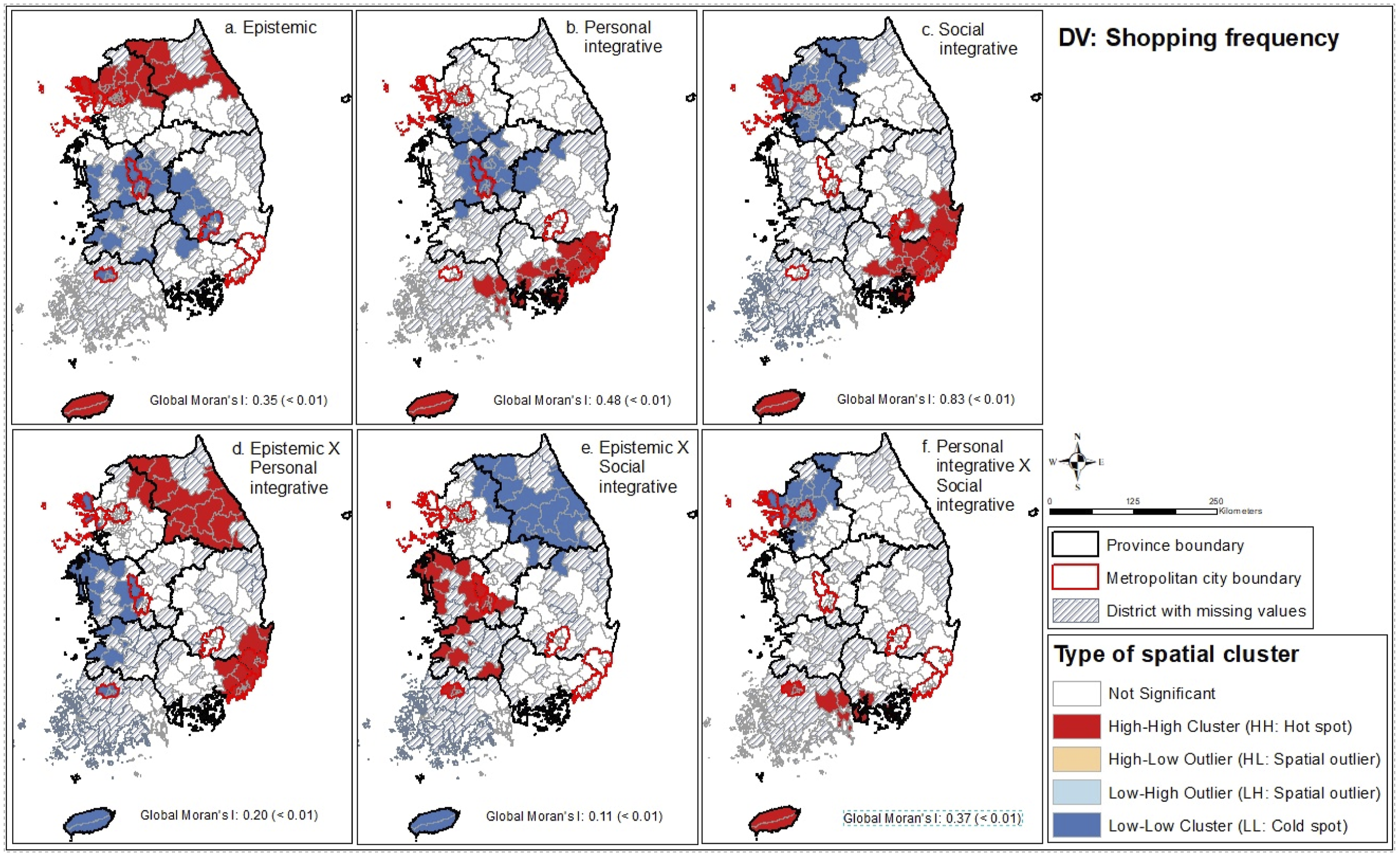
Discussion and implications
This research aimed to uncover the intricate impact of gamification on economic outcomes from a geospatial perspective. Specifically, we investigated the influence of three types of gamified benefits (i.e., epistemic, personal integrative, and social integrative) on users’ in-app shopping outcomes (i.e., frequency and amount), both independently and interactively. Utilizing unique data on mobile app-tracked exercise records and gamified experiences spanning 3 years in South Korea, we employed both aspatial and spatial analytical techniques to explore spatially varying gamification-shopping relationships.
OLS regression results revealed that social integrative benefits decreased shopping frequency and amount. Furthermore, although epistemic benefits showed no direct effect on shopping outcomes, the interaction term of epistemic and personal integrative benefits had a negative impact on both shopping frequency and shopping amount, while the interaction term of epistemic and social integrative benefits had a positive effect on shopping frequency. These findings provide insightful implications about the group-level effectiveness of gamification. Specifically, while social gratification may increase individuals’ exercise app usage and engagement (Jang et al., 2018), it tends to decrease neighborhood-level shopping outcomes. Interestingly, the combination of social integrative and epistemic benefits increases neighborhoods’ shopping frequency, implying the importance of designing and offering multiple gamified benefits from a municipality perspective.
Furthermore, GWR and visualization results offer more substantial implications because the gamification-shopping relationship varied spatially, depending on the type of gamified benefits. Independent and interactive effects of three types of gamified benefits on shopping frequency (Model 2 in Table 3) could be negative or positive across different districts, cities, and counties in South Korea. This finding implies that mobile exercise apps and in-app product sellers should build geospatial targeting strategies when offering and communicating gamified benefits. Specifically, the impact of gamification on in-app purchasing behavior exhibits spatially heterogeneous patterns, characterized as hot and cold spots. This spatial pattern indicates that economic outcomes from in-app activities are not uniformly distributed but exhibit spatial autocorrelation among neighboring regions (Figures 3-6). We will discuss detailed theoretical and managerial implications in subsequent sections.
Theoretical implications
This study contributes to the advancement of gamification-driven smart tourism design by discerning place-based economic behaviors within the context of mobile app-tracked gamified experiences. First, our work contributes to the growing literature on tourism gamification. Previous research has primarily focused on how to gamify tourism products (Liang et al., 2017) and what motivates tourists to engage with gamified technology (Aebli, 2019). However, most studies examining gamified elements emphasize extrinsic motivations, such as badges, points, and leaderboards (Aebli, 2019; Liang et al., 2017; Shoval et al., 2020), potentially overlooking the effects of intrinsic gamification elements, such as interacting with other people and places (Sharpley, 2014). Although some studies suggest how to design appealing gamified trips for different market segments (Shen et al., 2020), the influence of gamification on visitors’ behavioral outcomes across locations remains unexplored. Our study addresses this gap by examining three types of U&G-based gamified benefits (i.e., epistemic, personal integrative, social integrative) and their independent and interactive effects on users’ economic outcomes across different municipalities in South Kora. Thus, in contrast to prior studies focusing on the overall effectiveness of gamified benefits, our study sheds light on the spatially varying interrelationships among gamified benefits and economic outcomes, enabling place-based gamified tourism management.
Second, our study significantly contributes to the field of gamification-enabled user engagement. While user engagement typically encompasses cognitive, affective, and behavioral elements, scholarly attention has predominantly focused on cognitive and affective dimensions (Taheri et al., 2014), often neglecting the behavioral dimension. Recognizing that user engagement varies across actors and contexts (Brodie et al., 2011), our research specifically uncovers the behavioral dimension of app user engagement influenced by both past and current experiences with gamified features in the context of shopping activities. Investigating behavioral engagement is crucial within tourism and gamification research, as gamified features and experiences closely intertwine with app users’ behavioral engagement (Jang et al., 2018; Jang and Kim, 2022a). Consequently, leveraging actual behavioral data generated by mobile exercise apps enables the identification of users’ gamified experiences and their subsequent economic outcomes.
Finally, our research develops an integrated view of how gamified benefits influence health-conscious shopping behaviors with the use of mobile app-based big data (Xiang et al., 2021). Unlike previous studies that focus on smart technology in tourism and recreation settings, such as smart travel and smart recreation (Huang et al., 2017; Jang et al., 2018), our research integrates three elements (smart technology, tourism, and recreation) into an emerging research area (i.e., smart exercise travel) (Jang and Kim, 2023). With the wellness and exercise tourism industries rapidly expanding, this study paves the way for further research, as mobile exercise apps enable exercisers and tourists to experience gamified features in recreation and travel environments, thereby enhancing economic behaviors.
Managerial implications
Our study offers valuable implications for destination marketing and public health management. First, it underscores the importance of adopting a geospatial approach to understanding the link between gamification and shopping behaviors. By leveraging this approach, managers can gain deeper insights into the gamified user benefits and effectively communicate their gamified services, thereby enhancing economic outcomes. In South Korea’s rapidly evolving industrial landscape, where gamification is emerging as a tool to revitalize existing industries amidst the Covid-19 pandemic, our findings highlight the need to incorporate a location-based strategic component into gamification implementation stages This strategic approach adds the ‘where’ dimension to the existing elements of gamification implementation, including the why (purpose and target setting), what (experience and change), and how (implementation solutions and tools) (Forbes Korea, 2022). For example, destination marketers can collaborate closely with exercise app providers to monitor the engagement levels with both epistemic benefits (e.g., trek-route downloads) and social integrative benefits (e.g. trek-route uploads) across different destinations. By adopting this strategic approach, destinations can encourage tourists to engage more comprehensively with their shopping activities. Figures 5 and 6 illustrate how each city or county can optimize both trek uploads (social integrative benefit) and trek downloads (epistemic benefits) to maximize shopping frequency (Figure 5(e)) and amount (Figure 6(e)) among app users in the west and southeast areas, respectively.
Furthermore, our study offers valuable guidance for exercise-goods brands aiming to develop and implement geotargeting strategies when promoting their products through exercise apps. Both exercise app providers and brands share a common objective: to enhance customers’ exercise engagement and shopping outcomes in specific locations. For instance, while exercise-related trek-route information is considered a public good, where app users voluntarily upload and download it via the app, our study empirically suggests that local tourism organizations should actively encourage both residents and tourists to engage with specific gamified activities or a set of multiple activities. Specifically, app users in northern areas of South Korea, including the capital city of Seoul, who actively seek trek information demonstrate a tendency to purchase more exercise products. This implies that brands should target these information-seeking users for the promotion of their exercise products. In contrast, brands in southeastern areas, including the second largest city of Busan, should focus on promoting their products to app users who extensively share their trek information. Therefore, we propose that exercise apps’ gamified features not only enhance economic outcomes through in-app shopping but also contribute to physical health through gamified benefits.
Limitations and future research
This study acknowledges several limitations that offer directions for future research. First, the focus on in-app shopping behaviors, while insightful, may not fully capture the broader spectrum of shopping activities. Future studies could broaden the scope by including data on other forms of shopping, both online and offline, to comprehensively assess the impact of gamification on economic behavior. Second, our analysis utilized aggregated data from 2013 to 2015, which may not fully reflect contemporary gamification-shopping dynamics, especially considering potential changes in user behavior after Covid-19. Furthermore, our data-driven research can identify correlations but often struggles to establish causation, raising questions about the relevance and representativeness of the study’s results. Future research should gather more recent experimental data to validate and update the causal relationships in light of evolving circumstances. Third, this study did not explicitly distinguish between tourists and non-tourists when analyzing gamified benefits from mobile exercise apps. While mobile exercise app users engage in both leisure and travel activities, distinguishing between these contexts could provide deeper insights into the influence of gamification on shopping behaviors. Future studies could categorize activities based on their leisure or travel nature and examine their distinct impacts on shopping outcomes. Finally, our study focused on three types of gamified benefits, each operationalized by a single variable. Future research could explore a broader array of gamified benefits, including intrinsic and extrinsic elements, to capture the complexity of the relationship between gamification and economic outcomes. Addressing these limitations presents opportunities for further exploration of the role of information and communication technology in shaping economic behaviors within leisure and tourism contexts.
Footnotes
Declaration of conflicting interests
The author(s) declared no potential conflicts of interest with respect to the research, authorship, and/or publication of this article.
Funding
The author(s) received no financial support for the research, authorship, and/or publication of this article.
