




Abstract
This study investigates the interdependencies of commitments to Sustainable Development Goals as reported by travel and leisure firms active in the United Nations Global Compact Programme. Descriptive statistics reveal that SDG 8 ‘economic growth and decent jobs’ (88%), SDG 13 ‘climate action’ and SDG 5 ‘gender equality’ (SDG 5) (78% each) as well as SDG 12 sustainable production and consumption (75%) are the goals most commonly committed to. Estimation results from the multivariate probit model show that a firm committing to one SDG will likely also dedicate itself to another. Thus, there is a strong positive correlation between the commitments to SDGs 8 and 13, as well as between the SDGs 5 and 8. This indicates that SDG 8 and SDG 13, on the one hand and SDG 5 and SDG 8, on the other, are not seen as contradictory by the firms.
Keywords
Introduction
Following the launch of the United Nations Sustainable Development Goals (SDGs) in 2015, firms are more alert to these aspects and report their involvement or commitments (Datta and Goyal, 2022; Rosati and Faria, 2019). As part of SDG 12.6, large and international firms are explicitly targeted and encouraged to adopt sustainable practices and include information on achievements in their regular reporting (Datta and Goyal, 2022). Still, only a small group of firms really manage to report on these goals (Heras-Saizarbitoria et al., 2022; Rosati and Faria, 2019; Schramade, 2017). The United Nations Global Compact Programme stresses the importance of firms providing information on the commitments to the different goals (UN Global Compact, 2021).
Firms active within the fields of travel and tourism automatically face several of the SDGs (Dwyer, 2022; Rasoolimanesh et al., 2023). This includes SDG 8 that promotes sustained, inclusive and sustainable economic growth, full and productive employment as well as decent work for all (UNWTO, UNDP, 2017). Another related aspect is the empowerment of women and gender equality (SDG 5), as there are gender imbalances both among managers and in the low-skilled part of the tourism workforce, the former in favour of men and the latter with more women (Bolukoglu and Gozukucuk, 2024; Freund and Hernandez-Maskivker, 2021; Jeyacheya and Hampton, 2020).
Firms in the tourism industry are also strongly connected to goals 12 and 13, sustainable production, consumption and mitigation of climate change. The tourism sector contributes significantly to greenhouse gas emissions, primarily through air travel and other passenger transport (Lenzen et al., 2018). A common characteristic of the four goals mentioned is that tourism firms may have an opportunity to make a change. Different Sustainable Development Goals also tend to overlap or be linked to each other. Because of this, there are trade-offs (negative correlations) and synergies (positive correlations) (Pradhan et al., 2017).
This study investigates the interdependencies of commitments to different SDGs by firms active in the ‘tourism industry’ based on information from their Communication on Progress (COP) of the United Nations Global Compact Programme. In this sense, the tourism industry is defined in accordance with the travel and leisure industry and includes accommodations, airlines, tour operators and related activities.
The first step of the analysis explores if firms registered for the Global Compact Programme are still active and the second step investigates whether these active firms are also reporting their commitments to the various SDGs. In addition to this, the third step of the analysis identifies the commitments and their determinants. Focus is put on the four SDGs (SDGs 5, 8, 12 and 13) that the firms may be able to directly conform to. These four belong to the most commonly reported commitments by firms in general (UNWTO, UNDP, 2017). There are 925 leisure and travel firms in the Global Compact dataset. Among these, 228 are both active and report their commitments to the different SDGs. A seemingly unrelated multivariate probit model is used to examine the relationships. This kind of model accounts for presumptive correlations through the error terms that are otherwise not observable. The specification accounts for firm size, ownership, location, sub-sector as well as the year of entering the programme. In order to check the robustness of the results, a related industry (beverage and food retail companies) is also analysed.
Firms in the tourism industry are increasingly participating in international sustainability programmes and are also providing information on their commitment to different Sustainable Development Goals. One of these is the United Nations Global Compact Programme, where 900 tourism firms (accommodation, tour operators, amusement parks, et cetera and related industries such as airlines and rental cars, for instance) have participated since the instigation in 2000. Part of the programme covers the voluntary commitment to the various Sustainable Development Goals, which are addressed in the Communication on Progress (United Nations Global Compact, 2023). Another source for sustainability commitments is the corporate social responsibility reports or sustainability reports by firms. A study on 60 large international firms in the accommodation, transport and tour operator industries shows that their activities relate primarily to SDGs 12 ‘Responsible Consumption and Production’, SDG 13 ‘Climate Action’, SDG 1 ‘No Poverty’, SDG 4 ‘Quality Education’ and SDG 8 ‘Decent Work and Economic Growth’ (UNWTO, UNDP, 2017).
Among tourism firms, commitments to SDG 8 decent work and economic growth are the most commonly reported ones, followed by gender equality (SDG 5), SDG 12 (sustainable production and consumption) and SDG 13 (climate action) (Source: United Nations Global Compact and own calculations). Thus, this suggests that tourism firms take a broader view of what is important than the pure field of economic business.
This study is inspired by the work of Lenort et al. (2023) who investigate the commitment of automotive firms to the different Sustainable Development Goals as documented in the United Nations Global Compact sustainability report. Their results show that SDG 8 is the most commonly reported commitment followed by SDG 3, SDG 5, SDG 12 and SDG 13. However, this analysis takes some additional steps by adding the layer of econometric estimations.
Present study also contributes to the discussion on the role of the tourism sector in promoting economic growth and job creation (Brida et al., 2016; Comerio and Strozzi, 2019; Pulido-Fernández and Cárdenas-García, 2021) in several ways. This is the first empirical investigation of the determinants of commitments to SDG 8 and related goals using original firm-level data. The second novelty is the emphasis on pairs or combinations of goals that occur most frequently by estimating a multivariate probit model and tetrachoric correlations. Yet a third contribution of the study is the inclusion of both internal (firm-level) and external characteristics that may affect the sustainability reporting practices of tourism and hospitality firms (Hamrouni et al., 2023; Uyar et al., 2021).
Following this introduction are sections on conceptual background, empirical approach, results and conclusions.
Conceptual background
Firms may give Sustainable Development Goals different weights (Lenort et al., 2023; Schramade, 2017; Van der Waal and Thijssens, 2020). Schramade (2017) suggests that SDG 8 applies to nearly all firms with a viable business model, while Van der Waal and Thijssens (2020) mention that firms have difficulties in the adoption of goals relating to poverty (SDG 1), hunger (SDG (2) or peace and justice (SDG 17). The United Nations Global Compact strategy prioritises five SDGs that firms should seek to lead and shape: SDG 5, SDG 8, SDG 13, SDG 16 and SDG 17 (United Nations, 2021). Sustainable production and consumption, SDG 12, is not included while SDGs 16 and 17 are possibly far-fetched for many firms: promote peaceful societies and global partnerships for sustainability.
Most obviously linked to firms is SDG 8 which promotes sustained, inclusive and sustainable economic growth, full and productive employment and decent work for all (United Nations). There is also the sub-goal 8.9, relating to Agenda 2030: ‘devise and implement policies to promote sustainable tourism which creates jobs, promotes local culture and products’ (UNWTO, 2017). When tourism companies commit to SDG 8, especially the sub-goal of decent work, the reality of working conditions should be taken into account. Several studies show that the tourism sector is a low-skilled, low-wage industry with irregular work patterns, long working hours and high turnover, that predominantly employs women (Baum and Hai, 2019; Jeyacheya and Hampton 2020; Santos and Varejão, 2007).
Many other goals are important to firms in the tourism sector, such as sustainable production and consumption (SDG 12), climate change mitigation (SDG 13) and gender equality (SDG 5). Sustainable business strategies of travel and leisure companies can include many aspects, such as saving water, saving materials, switching to more environmentally friendly material suppliers, using locally sourced products, minimising waste, recycling and reusing materials or waste within the company. This is within the direct control of the firm.
SDG 13 includes commitments to carbon neutrality plans and investment in renewable energy sources, something that tourism firms can engage in in the form of energy saving (buildings and transportation, for instance). An example is carbon-neutral airports (Falk and Hagsten, 2020). Literature shows that certain actors in the tourism sector have a relatively high level of carbon footprint and difficulties to reduce it (Gössling et al., 2023; Lenzen et al., 2018).
SDG 5 is another goal that tourism companies have a direct impact on, as women dominate the workforce in this sector. The tourism sector traditionally employs a high proportion of women, although there are fewer women in senior positions (Freund and Hernandez-Maskivker, 2021; Santos and Varejão, 2007). Based on individual data for Portugal, Santos and Varejão (2007) show that there is a gender pay gap, more than half of which is due to discrimination.
As confirmed by several studies, the Sustainable Development Goals are commonly interlinked, and some of them are even strongly contradictory. Hickel (2019) suggests that continued economic growth as outlined in SDG 8 is not compatible with the environmental goals of SDGs 12 and 13. Using nonparametric Spearman rank correlations, Pradhan et al. (2017) find that there are significant trade-offs (negative correlations) between SDG 5 and SDG 12. The same authors also demonstrate that SDG 8 (decent work and economic growth) is negatively correlated with SDG 12 (sustainable production and consumption). Sustainable and responsible consumption and production as outlined in SDG 12 is most commonly associated with trade-offs. This suggests that the commitments of firms in the travel and leisure sector are not necessarily easily combined in a beneficial direction. Jeyacheya and Hampton (2020) mention that the tourism sector is characterised by irregular work patterns and long working hours, which usually has a negative impact on women, who make up a large part of the tourism sector workforce. This undermines the concept of ‘decent work for all’ mentioned in SDG 8.
Typical linkages between the different Sustainable Development Goals for the tourism sector are also mentioned (UNWTO, UNDP 2017). Maggi and Vroegop (2023) suggest that SDG 3 and SDG 8 are inextricably linked because decent work is related to employee well-being, while Alarcón and Cole (2021) find that in the tourism sector, sustainable economic growth and decent work are closely connected to gender equality. Similarly, the development of the tourism sector is also found to reduce poverty and improve gender equality (Bolukoglu and Gozukucuk, 2024; Croes, 2014). Birendra et al. (2021) take this even further and suggest that tourism potentially liaises with several SDGs, primarily decent work and economic growth (SDG 8), but also poverty reduction (SDG 1) as well as good health and well-being (SDG 3). Regardless of the sector, the vastest synergy effects are reported between SDG 11 and SDG 13 (Pradhan et al., 2017).
For tourism firms, a high correlation between SDG 8 and SDG 12 can be expected. The reason is that the sub-goal 8.9 explicitly refers to sustainable tourism which is also implicitly included in SDG 12 (sustainable production and consumption). In principle, sustainable tourism covers all actors including firms and visitors. Two important stakeholders (producers and consumers) are also targeted in SDG 12.
Rasoolimanesh et al. (2023) assert that studies on sustainable tourism indicators have primarily focused on SDG 8, since the economic impact of tourism businesses, particularly on job creation, is of specific interest, owing to the labour-intensive nature of the industry. These businesses also have sectoral spill-over effects on other industries.
Theoretically, the stakeholder (Hörisch et al., 2020) or the institutional theories (Hörisch et al., 2020; Di Maggio and Powell, 1983) may be used to identify factors that determine SDG commitments reported by the tourism firms. Studies using the institutional theory as a starting point find that private and large firms as well as those in advanced countries are more likely to adopt or disclose information on their commitments to different SDGs (see Datta and Goyal, 2022 for a review of the literature). This means that commitments may vary by location although more direct country-level variables, such as environmental regulations or governance variables, are needed to examine these effects.
According to Freeman (2010) ‘any group or individual who can affect or is affected by the achievement of the organization’s objectives’ can be defined as a stakeholder. In the case of the firm, this would, for instance, mean the actors in the supply chain, the clients as well as national and local governments.
Empirical model
Due to a certain degree of selection bias in the dataset, further detailed in the Data section, the empirical modelling consists of three parts: (i) whether the firm once registered for the Global Compact Programme is still active, (ii) if the active firm is also reporting on commitments to the different SDGs and (iii) the identity of these reported commitments. Unfortunately, information on commitments is no longer available for firms that have exited the United Nations Global Compact Programme.
A second source of selection bias is that not all companies that are active in the programme report their commitment to the SDGs as part of the progress report.
A probit model is formulated where steps i and ii are estimated. In the first step, the likelihood that a firm is active in the programme

The underlying dummy variable
The second step models the likelihood of non-reporting the SDGs given that they are active in the programme.

In this case, the dummy variable is defined as 1 if the firm is non-reporting on the SDGs and 0 otherwise. The explanatory variables
In the third step of the analysis, the determinants of the identified commitments are analysed. Since different commitments may be related to each other, the multivariate probit model developed by Ashford and Sowden (1970) is used for the estimations. This model allows an examination of the most frequently reported combinations of commitments through the correlation of the error terms. Given the SDGs (5, 8, 12 and 13) where the tourism firms are expected to at least have a certain possibility to affect the progress, a system of four equations is estimated using the multivariate probit model. This model generalises both the bi- and trivariate probit models. The latter is applied by Barros (2012), who analyses the correlation between three alternative transportation types, although the bivariate probit model is more often used in the tourism research literature (see Masiero and Zoltan, 2013 for an application). A multivariate probit model offers several testable hypotheses like the determinants of the different SDGs and also which of them are committed to in combination with each other. Thus, it enables the identification of synergies or trade-offs between the different commitments. The four-equation model explaining the commitments can be formulated as follows:



Data and descriptive statistics
Data for the analysis originate from the United Nations Global Compact firm-level database (United Nations Global Compact, n. d). This database contains information on firm size (number of employees), industry affiliation or sector, membership in a local United Nations Global Compact network, ownership characteristics, country of origin, year of inscription and active programme status. This set of variables refers to the year of registration to the programme. There is also information on the commitments to the 17 SDGs, available from the Web site of the programme or in the communication of progress (COP). Participating firms are expected to answer the following question: ‘Which SDGs are covered by the activities described in the COP?’ However, this information is only available for firms that are still active in the sustainability reporting programme implying that the dataset is affected by selection bias as large firms or firms listed on the stock exchange might have a higher likelihood to stay in the programme and are generally more active (Datta and Goyal, 2022). Another possible source for selection bias might be that firms in developed countries or those with high levels of control of corruption or good environmental performance are more prone to participate. Larger organisations and listed firms are also more likely than other firms to integrate Sustainable Development Goals into their reporting (Elalfy et al., 2021).
In this study, information from the latest available Communication of Progress report is used which mainly encompasses the years 2021 or 2022. In some cases, there are also reports for other periods. Firms included in the segment Travel and Leisure chosen for the analysis belong to a variety of industries (airlines, airports, aviation services, booking platforms, car rentals, car sharing services, casinos and gambling, consultancies, cruise ships, DMO Associations, entertainment, event services, leisure, passenger transportation, performing arts, restaurants, sport clubs and travel agency services). The industry affiliation given is compared with the Dun and Bradstreet (D&B) company register that uses standardised industry classifications and the sector is adjusted accordingly if necessary.
At the beginning of 2023, there are 925 firms included in the travel and leisure segment of the Global Compact database. Among the 40% of firms that are still active, 228 also report their commitments to the different SDGs. This is consistent with Schramade (2017), Heras-Saizarbitoria et al. (2022) and Rosati and Faria (2019) who find that only a minority of firms disclose information on their commitments to SDGs. The robustness dataset on beverages and food retailers consists of 600 firms of which 50% are still active. Out of these, 198 firms report their commitments.
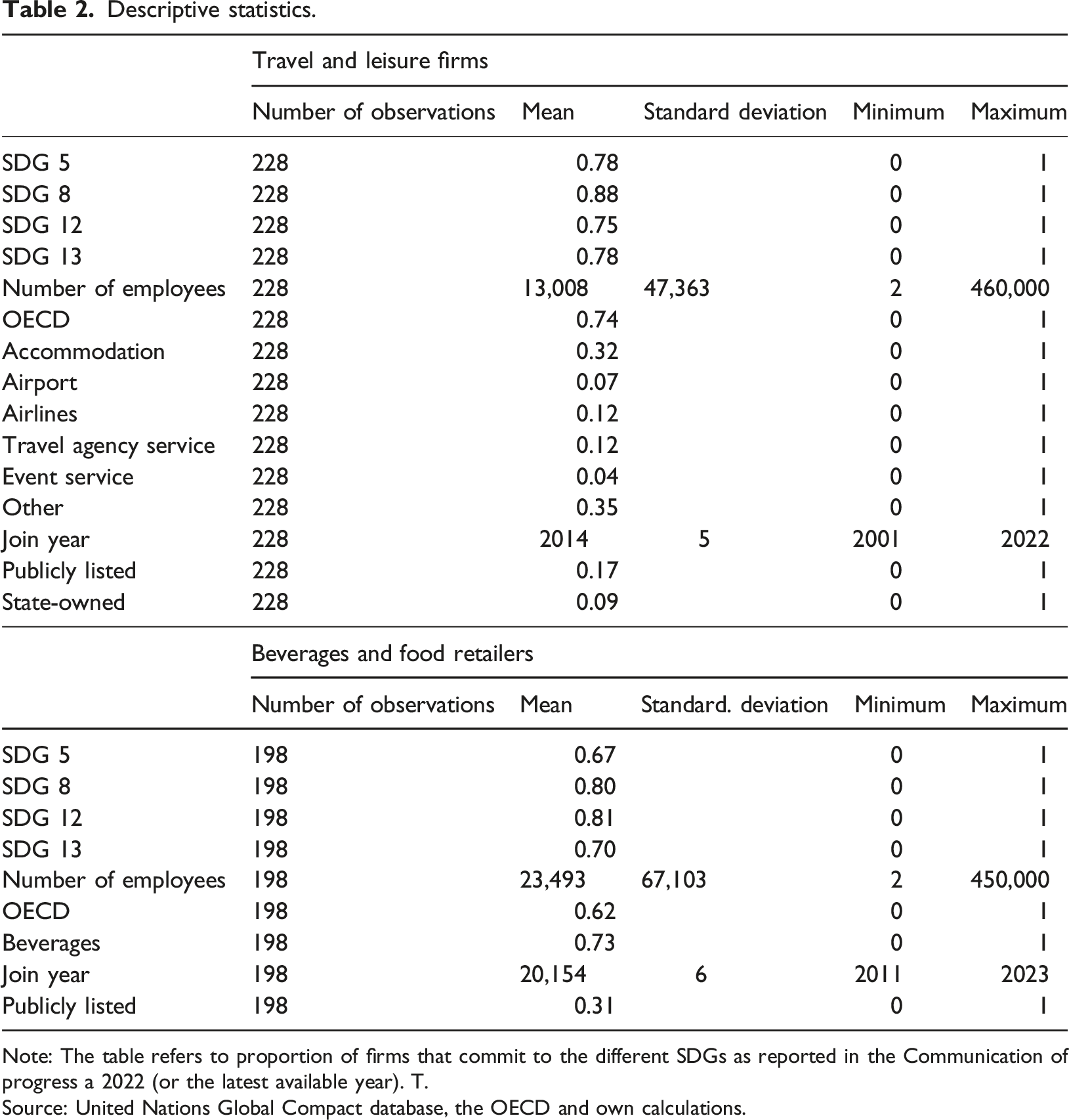
Gender equality (SDG 5), economic growth and employment (SDG 8), sustainable production and consumption (SDG 12) as well as climate change mitigation (SDG 13) receive the highest priorities among the reporting tourism and leisure firms (ranging between 75 and 88% of the firms) (Figure 1 and Tables 1 and 2). Beverage firms and food retailers exhibit an almost similar pattern: SDG 12 with 81%, SDG 8 with 80% and then SDG 3, SDG 13 and SDG 5. A seminal analysis of automotive firms reaches similar results where SDG 8 is the most common one, which 81% of the firms commit to (Lenort et al., 2023). The same study also finds high frequencies for SDG 5, 12 and 13. Another study where the SDG 8 is most commonly committed to by firms is the shipping industry (Wang et al., 2020). Proportion of firms that commit to specific Sustainable Development Goals (per cent). Note: The table refers to the proportion of firms that commit to the different SDGs as reported in the Communication of progress a 2022 (or the latest available year). The number of observations is 228 for the travel and leisure and 198 for the beverages and food retailers. Source: United Nations Global Compact database, own calculations. Commitment to Sustainable Development Goals by country group (per cent). Notes: The following countries are members of the OECD: Australia, Austria, Belgium, Canada, Chile, Colombia, Czech Republic, Denmark, Estonia, Finland, France, Germany, Greece, Hungary, Iceland, Ireland, Israel, Italy, Japan, Korea, Latvia, Lithuania, Luxembourg, Mexico, Netherlands, New Zealand, Norway, Poland, Portugal, Slovak Republic, Slovenia, Spain, Sweden, Switzerland, Turkey, United Kingdom and United States. Source: United Nations Global Compact database, https://www.oecd/ org and own calculations. Descriptive statistics. Note: The table refers to proportion of firms that commit to the different SDGs as reported in the Communication of progress a 2022 (or the latest available year). T. Source: United Nations Global Compact database, the OECD and own calculations.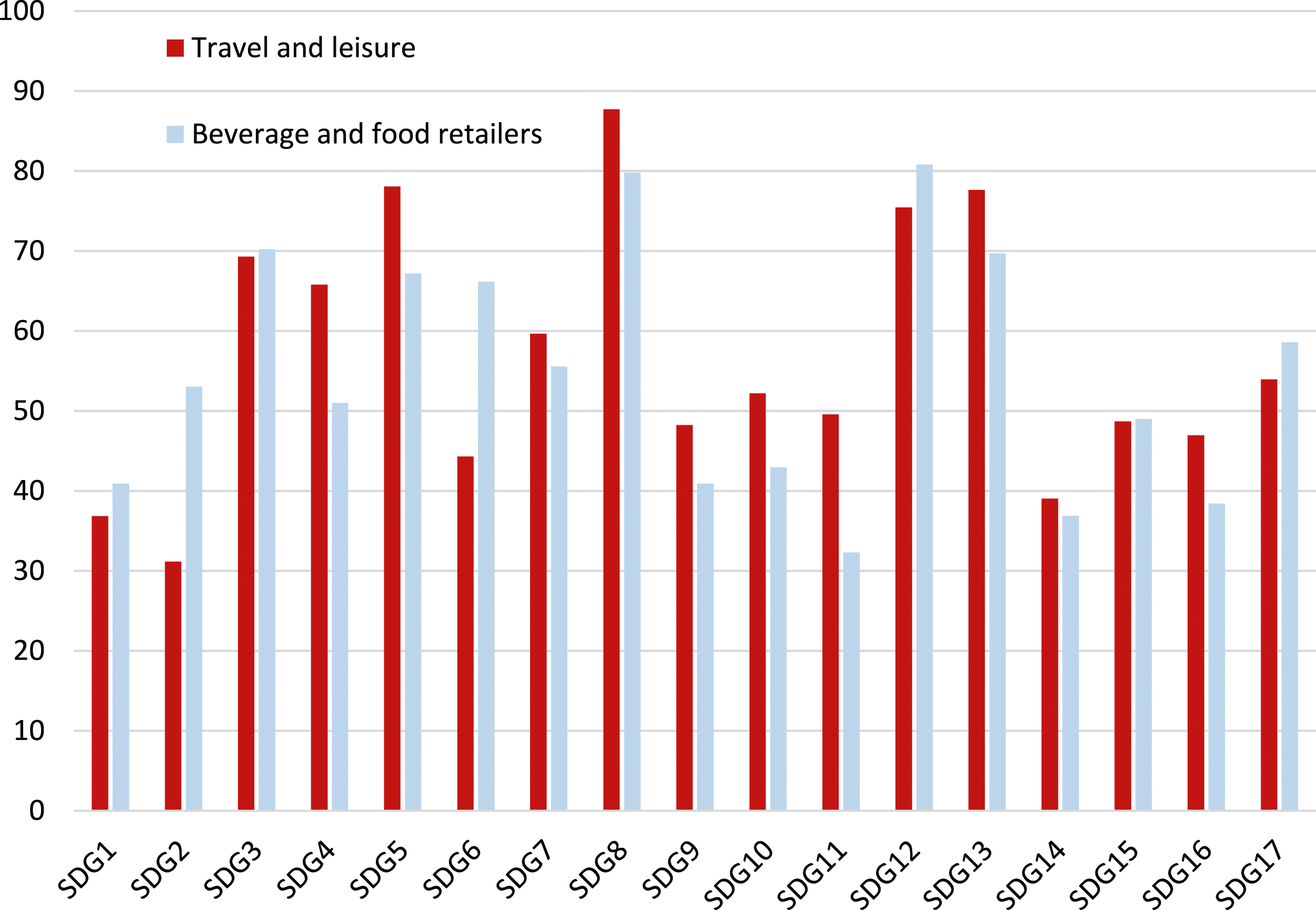
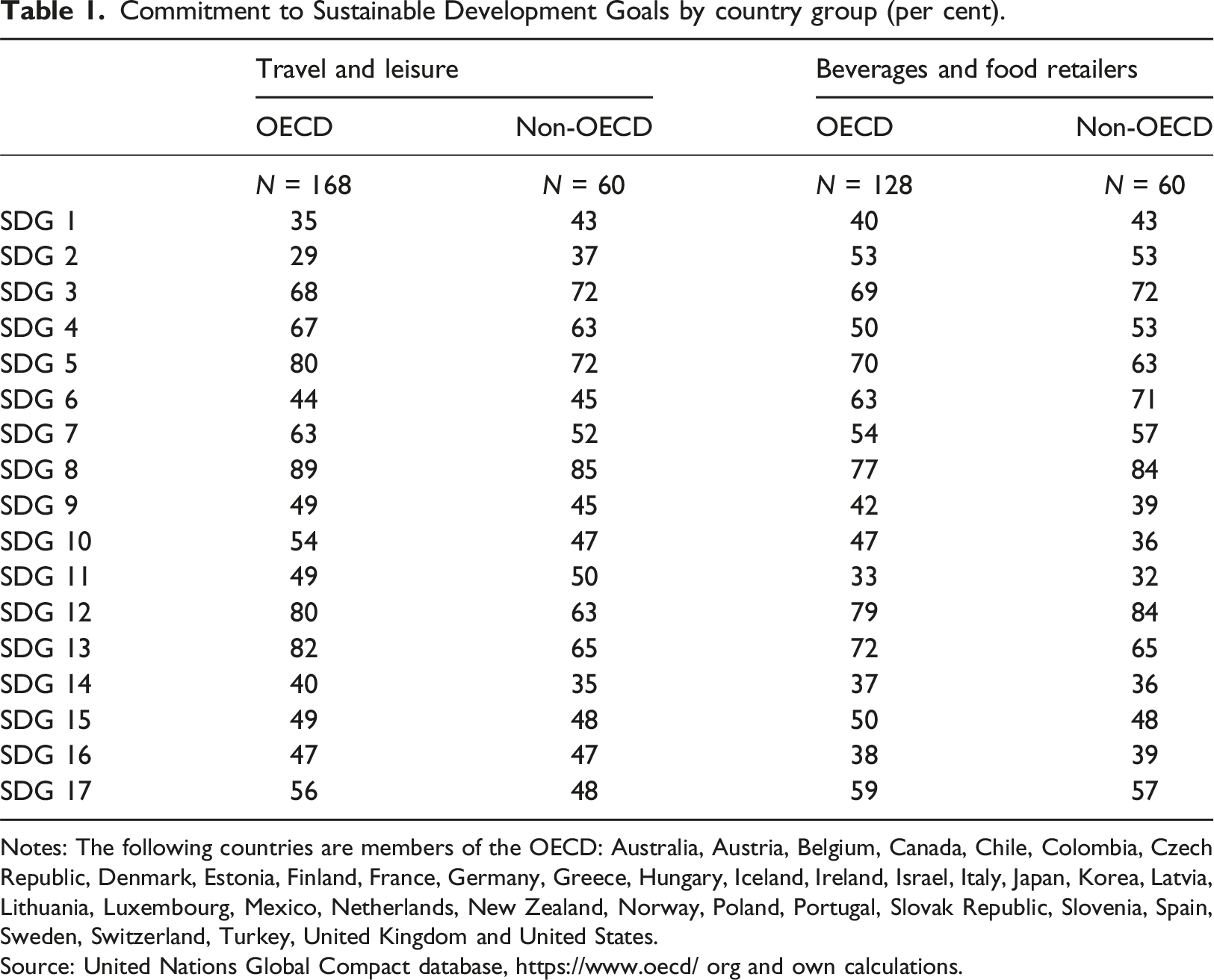
If the commitments to the different SDGs are distinguished by country group, it becomes evident that the goals 12 and 13 are more frequent in the OECD sphere (Table 1). Beverages and food retailers also exhibit clear differences relating to SDG 13 depending on country group.
Least commitments are given to goals 1, 2 and 14 by all firms, independent of region. SDGs 1 and 2 are certainly difficult for firms to have an impact on as they relate to over-arching societal aspects where the governments have a strong mandate. ‘Life below water’ in SDG 14 is also particularly challenging for tourism businesses to achieve, as they mainly operate on land.
The average number of employees in the tourism firms included in the analysis is 13,008, with a median of 575 (Table 2). This is larger than the universe of typical tourism firms, which is often characterised by many sole proprietors and micro enterprises. In this case, the average firm size is strongly influenced by some very large companies. The proportion of accommodation firms is 32% and there is 12% of travel agencies. Three fourths of the firms are located in an OECD country.
Preliminary correlations between the different SDGs may be obtained from a bivariate probit model without explanatory variables, scaled between minus and plus one, similar to the Pearson coefficient (Edwards and Edwards. 1994). This exercise reveals that the different SDGs often are correlated with a positive sign, indicating that they frequently occur in tandem with each other (Appendix Table A1). Out of the 136 possible bivariate correlation coefficients the 17 SDGs may render, 130 are significantly positive at the five per cent level. There is no significant correlation between SDG 8 and SDG 12. The pairwise correlations between SDG 5, 8, 12 and 13 are positive with the highest correlations between SDG 12 and SDG 13 (r = 0.50) and SDG 5 and 8 (r = 0.48), SDG 8 and SDG 13 (r = 0.47). However, bivariate correlations should be interpreted cautiously as commitments depend on many factors.
Empirical results
Based on the initial probit estimates, the first step of the analysis reveals that the probability of being active in the Global Compact Programme is significantly lower for those who entered early (Appendix Table A2, Specification ii). Firm size and location in OECD countries are also associated with the likelihood of being active in the programme.
Results of the binary probit model estimations in step two of the analyses show that the probability of non-reporting an SDG commitment, given that the firm is active in the Global Compact Programme, is lower for large firms and for those located in an OECD country (Appendix Table 6, Specification ii). Non-reporting on commitments to the SDGs is also significantly higher for firms that joined most recently (reflecting the fact that they are given one or two years for the preparation of their sustainability reports).
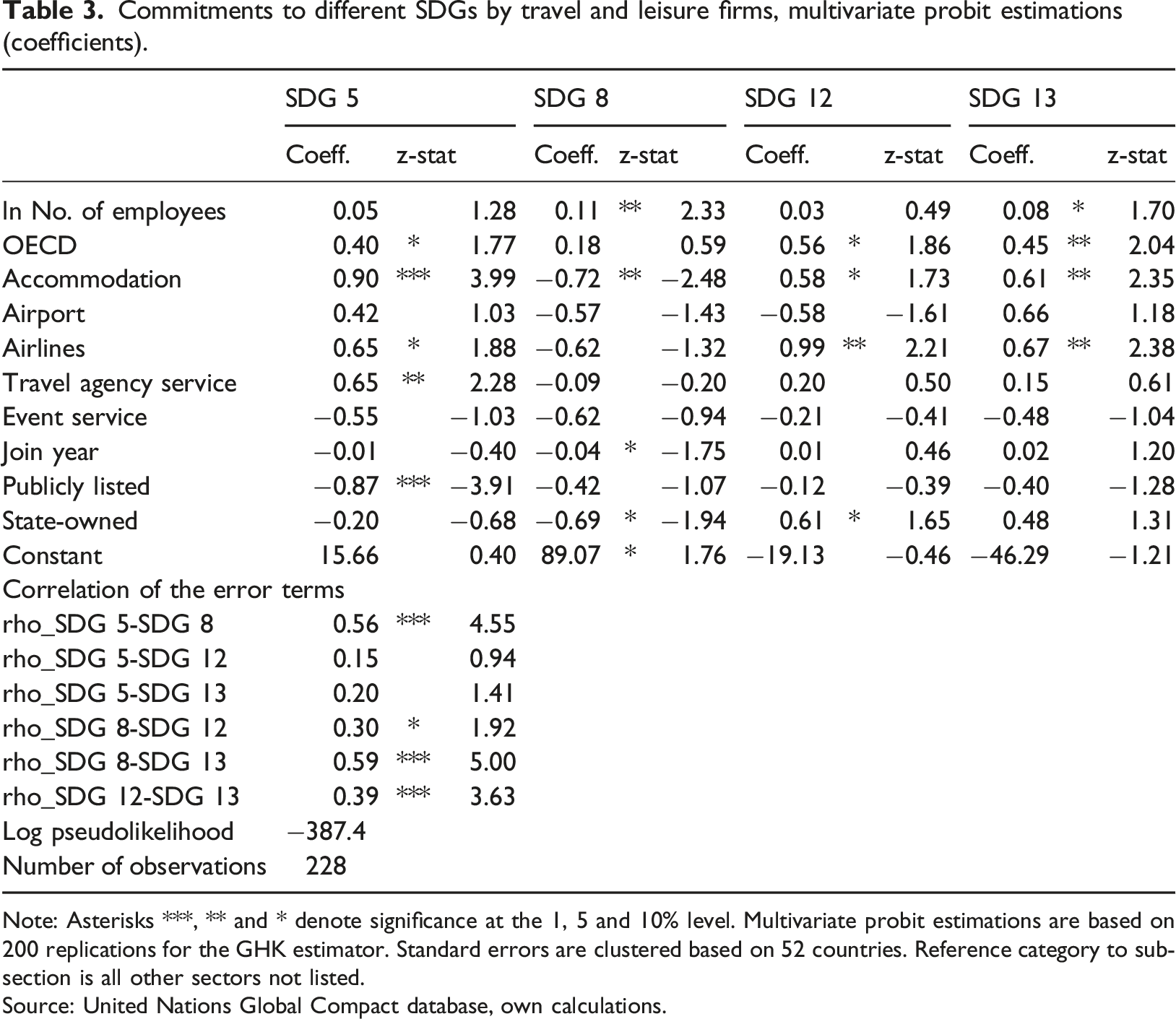
Commitments to different SDGs by travel and leisure firms, multivariate probit estimations (coefficients).
Note: Asterisks ***, ** and * denote significance at the 1, 5 and 10% level. Multivariate probit estimations are based on 200 replications for the GHK estimator. Standard errors are clustered based on 52 countries. Reference category to sub-section is all other sectors not listed.
Source: United Nations Global Compact database, own calculations.
Commitments to different SDGs by travel and leisure firms, multivariate probit estimations (marginal effects).
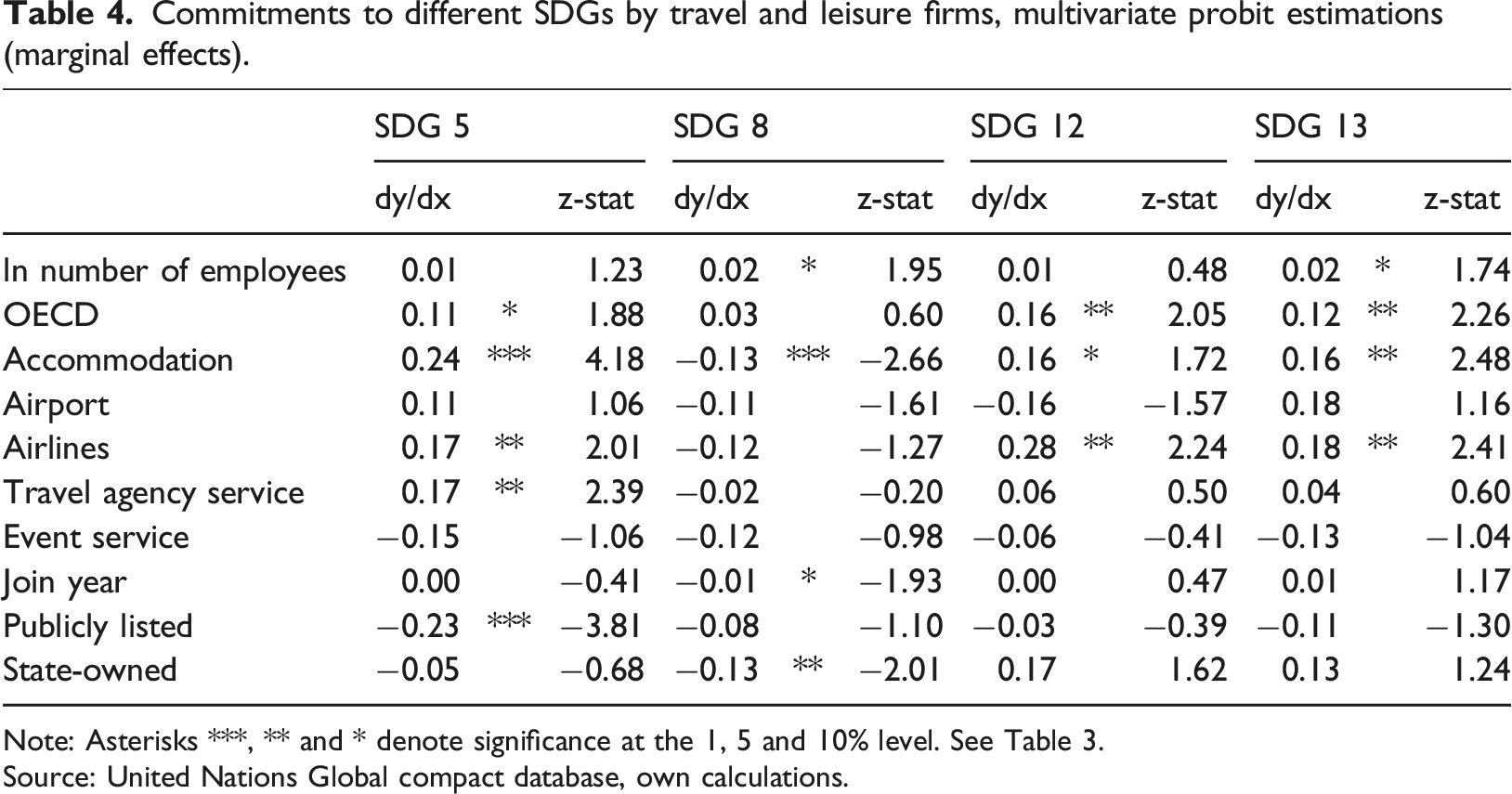
Note: Asterisks ***, ** and * denote significance at the 1, 5 and 10% level. See Table 3.
Source: United Nations Global compact database, own calculations.
Accommodation firms have a higher commitment to both SDG 5 and SDG 13 with marginal effects of 0.24 and 0.16, indicating that accommodations have a 24 and 16 percentage points higher probability of committing to SDG 5 and SDG 13. This is plausible, as accommodations employ many women. The same firms have a high probability of committing to SDG 13. A look at the UNGC sustainability reports shows that many accommodations emphasise carbon neutrality and invest in solar panels and energy-saving heating systems. Airlines and travel agencies also show an above-average commitment to SDG 5 with marginal effects of 0.17 in each case (Table 4).
Airlines not only have a relatively high probability of committing to SDG 5 but also exhibit the highest commitment to the two other SDGs sustainable production and climate action across all sub-sectors with marginal effects of 0.28 and 0.16, respectively. This shows that airlines are well aware of their environmentally damaging business model and their commitment to these SDGs signals that they are willing to act.
State-owned and listed companies are not more committed to SDG 13 than independent and other firms. This is surprising, as stakeholder theory predicts that more pressure will be exerted on these kinds of organisations and publicly listed firms. Firm size is also not significant at the 5% level. A possible explanation is that the sample is biased towards large firms.
For comparison purposes, multivariate probit estimations are carried out for the second database consisting of beverages and food retailers. The results confirm that the four SDGs are correlated (p-value <.01), with the highest values between SDG 12 and SDG 13 and SDG 8 and SDG 12 with (r = 0.84 and 0.79). Economic growth, decent jobs and climate protection measures are thus not seen as a contradiction in terms, but rather as a necessary combination (Appendix Table A3).
Concluding discussion
This study investigates the interdependencies and determinants of commitments to four different SDGs by firms active in the ‘tourism industry’ based on information from their Communication on Progress (COP) of the United Nations Global Compact Programme. These four SDGs are the ones that firms, at least in theory, might have an opportunity to target actively. The tourism industry includes accommodations, airlines, tour operators and related firms. As a benchmark, a closely related industry; beverages and food retailers is analysed.
Although the level is still low, firms increasingly disclose information on their commitment to different Sustainable Development Goals. The same pattern can be observed for the travel and leisure industry where slightly more than one out of five of the (925) firms once registered for the United Nations Global Compact Programme reports this information. However, not all SDGs are equally relevant to these firms. Most commonly identified are the goals for gender equality (5), economic growth and decent jobs (8), sustainable production and consumption (12) and climate change mitigation (13). These goals are reported by 78, 88, 75 and 78% of the firms, respectively. This means that firms are slightly more committed to economic growth and decent jobs than to other aspects, although several other proportions are also high.
Multivariate probit estimation results show that there is a strong positive and significant correlation between the commitments to SDGs 8 and 13, as well as between SDGs 5 and 13. This indicates that firms do not necessarily find that goals of economic growth and decent jobs contradict climate change mitigation. Nor does there seem to be an apparent conflict between the goals of gender equality and climate issues. These results stand in contrast to the view of many action groups and to empirical evidence at the cross-country level.
Besides the interdependencies, the determinants of the reported commitments to the SDGs are also investigated based on suggestions in literature and supported by the Stakeholder and Institutional theories. The latter stresses the importance of external non-economic factors such as country groups, where the OECD has a strong role in building norms and the different states have their own separate legal frameworks, for instance. Essence of the stakeholder theory can be found in firm characteristics such as size, ownership, sub-sector, location and year of entry into the programme.
The empirical results show that accommodation firms are the ones most committed to SDG 5 while publicly listed firms are less keen on this goal. On the contrary, the accommodation firms, airports, and tourism firms with public ownership are more likely to report their commitments to SDG 8.
Commitments to SDG 12 and SDG 13 are significantly higher for tourism firms in the developed part of the world (OECD countries) and for airlines. However, country is not important for the other SDGs. This is surprising, as the sustainability movement originated in the developed world.
Another interesting finding is that small firm size is not a barrier to SDG committment, although the results should be interpreted with caution because this group is underrepresented.
Several implications for stakeholders and research can be drawn from the analysis. First, commitments to the different SDGs by travel and leisure firms vary across goals. Possibly, this reflects that the firms commit to SDGs that are within the boundaries of their business. Several of the SDGs are difficult to target for a firm or can only be indirectly achievable. This means that firms that commit to few SDGs are maybe the most serious ones that intend to take real action, while a firm that commits to a large group of SDGs rather tries to put up a polished facade.
Some limitations have to be taken into account in the empirical analysis. First, the dataset is relatively small and not representative for all travel and leisure firms. With a median number of employees of 575, large enterprises are overrepresented. The majority of the firms in the database are from Europe while those from North America are underrepresented. Despite this, the direction of the results should not be underestimated. Large firms located in the Western world are commonly forerunners, implying that even if the SDG commitments by smaller firms are presently unknown, they may in due time follow the same path. Another limitation is that there can be a discrepancy between the reported intentions of the firms and what they actually do. There is no evaluation of the intentions available. However, it is possible to argue that a reported commitment most likely also reflects a prioritised intention by the firms although the implementation process might be long. Examples are climate actions towards carbon neutrality of firms that are dependent on the availability of green electricity nearby.
There are several ideas for future research. Commitment to the various SDGs also depends on additional contextual factors such as institutional environment (governance) and commitment to environmental performance at the national or regional level that are difficult to consider in a cross-sectional cross-country study. This means that the database needs to be expanded to a firm-level panel dataset. Secondly, the analysis focuses only on the four SDGs where the firms may be able to directly act. It would be possible to examine the determinants of all 17 SDGs simultaneously using a multivariate probit model. However, this again implies that a larger data set is required to identify the different combinations of Sustainable Development Goals.
Supplemental Material
Supplemental Material - Commitment of travel and leisure firms to sustainable development goals
Supplemental Material for Commitment of travel and leisure firms to sustainable development goals by Martin Thomas Falk and Eva Hagsten in Tourism Economics.
Footnotes
Acknowledgements
The authors would like to thank Bibiana Lanzilotta and the participants of the 15th Workshop Tourism: Economics and Management of Tourists as Consumers, Visitors and Travellers at the University of Jaén (Spain), October 2023, for helpful comments on earlier drafts of the study.
Declaration of conflicting interests
The author(s) declared no potential conflicts of interest with respect to the research, authorship, and/or publication of this article.
Funding
The author(s) received no financial support for the research, authorship, and/or publication of this article.

Data availability statement
All data originate from publicly available sources.
Supplemental Material
Supplemental material for this article is available online.
Author biographies
References
Supplementary Material
Please find the following supplemental material available below.
For Open Access articles published under a Creative Commons License, all supplemental material carries the same license as the article it is associated with.
For non-Open Access articles published, all supplemental material carries a non-exclusive license, and permission requests for re-use of supplemental material or any part of supplemental material shall be sent directly to the copyright owner as specified in the copyright notice associated with the article.
