




Abstract
This study examines the effects of tourism openness on climate change and circular economy outcomes within a Waste Kuznets Curve framework. Drawing on a newly compiled global panel dataset of circular economy indicators covering 64 countries over the period 1995–2022, we employ seemingly unrelated regression and dynamic panel data models to account for cross-equation dependence, persistence, and potential endogeneity. The results show that tourism openness, measured by tourism receipts and expenditures as a share of GDP, significantly promotes circular economy practices, supporting environmental sustainability. We further uncover a nonlinear relationship between income and recycling performance, whereby recycling rates initially decline with economic growth but increase once GDP per capita surpasses a threshold. While tourism openness contributes to improved circularity and partially offsets tourism-related environmental pressures, the findings indicate that gains in recycling alone are insufficient to achieve substantial climate change mitigation without complementary decarbonisation policies.
Keywords
Introduction
The intertwined issue of climate change and sustainable tourism has been the focal point of research in the climate and tourism literature (e.g., Becken et al., 2020; Khan et al., 2023; Sørensen and Grindsted, 2021). The impact that the tourism sector has on climate change and environmental sustainability is well-established with robust empirical evidence in recent studies, resonating urgent calls for rapid decarbonisation of the sector (see e.g., Becken, 2025; Sun et al., 2022; Tunçel et al., 2026).
While climate change is driven by a range of greenhouse gases and complex interacting processes, this study focuses specifically on carbon dioxide (CO2) emissions as an indicator of tourism-related climate impacts. This focus is motivated by the dominant role of CO2 in anthropogenic greenhouse gas emissions. According to the Intergovernmental Panel on Climate Change (IPCC) Sixth Assessment Report (AR6), CO2 accounts for approximately three-quarters (around 75%–76%) of total global anthropogenic greenhouse gas emissions when expressed in CO2-equivalent terms, with the remainder attributable primarily to methane, nitrous oxide, and fluorinated gases. This estimate is consistent with recent global emissions inventories by the Emissions Database for Global Atmospheric Research (Crippa et al., 2025) which shows that CO2 accounts for approximately 75% of total anthropogenic greenhouse gas emissions globally in 2024.
While tourism activities are proved to be significant contributing factors to CO2 emissions and climate change (e.g., Liu et al., 2022), little is known how tourism openness, measured by the proportion of tourism receipts relative to GDP, affects the transition to a circular economy (Rodriguez et al., 2020; Sørensen and Bærenholdt, 2020). Circular economy is defined as an economic system that is designed to maximise the use of extracted resources through recycling and minimising waste generations (Andersen, 2007).
As part of the fight against climate change and achieving environmental sustainability, policy makers and governments around the world emphasise the importance of rapid progress towards green and circular economy (Tunçel et al., 2026). As such, there is a growing interest in research on the role of the visitor economy in advancing the progress towards a circular economy (e.g., Gusmerotti et al., 2024; Inchausti-Sintes, 2023; Sørensen, and Bærenholdt, 2020). As pointed out by Inchausti-Sintes (2023), if the environment is integrated with a circular economy system, then tourism will not be a source of environmental degradation, instead it will be an essential contributor to its preservation. Despite the recognition that transition to a circular economy is key for sustainability, little is known how the tourism industry plays its fair share in the progress towards circular economy (Khan et al., 2023; Rodríguez et al., 2020). The lack of data on circular economy at the global level, especially for developing countries, has been the main constraint.
To fill this gap in the literature, the present study takes advantage of the newly compiled dataset on environmental performance index (EPI) including, measures of circular economy (Block et al., 2024) and estimates a joint statistical model of the roles of tourism openness on climate change and the progress towards a circular economy. Utilising panel data from a global sample of 64 countries for the period from 1995 to 2022 and employing seemingly unrelated regression (SUR) method under the Waste Kuznets Curve (WKC) framework, this study offers the first of its kind evidence on the role of the tourism industry on the progress towards a circular economy. The findings reveal that tourism openness is associated with an increase in CO2 emissions. Interestingly, tourism openness leads to a significant increase waste recovery rate. The results suggest that with appropriate policies in place to promote circular economy, visitor economies can insulate and mitigate the climate change impacts of the tourism sector by promoting circular economy practices.
The contribution of the present study to the literature is threefold. First, this study makes a significant contribution to the literature by utilising new and comprehensive data on waste recovery rates for global sample of countries, including developing countries from the EPI database. This enhances our understanding of transition to circular economy in the global economy unlike the existing literature that focuses on developed countries. By utilising the comprehensive recycling rate data for global sample of countries, this study fills a critical data gap in evaluating waste management efficiency and sustainability efforts in the tourism industry not only in developed countries but also in the Global South. The study offers a clearer picture of recycling performance across nations and provides empirical evidence on how openness to tourism can support circular economy transitions which is key to mitigate climate change risks.
Second, methodologically, we simultaneously model the interrelated equations of climate change and circular economy while accounting for potential correlation in the error terms using the SUR method. This is critical because tourism openness may increase emissions while also promoting circular economy initiatives, leading to correlated residuals. The SUR approach offers distinct advantages over standard regression methods in analysing the impacts of tourism openness on both emissions and the circular economy as it improves efficiency by capturing the correlations in the errors instead of imposing assumptions of independent errors.
Third, unlike the previous studies that use the number of tourist arrivals or hotel occupancy rates, we use tourism openness as our main variable of interest. This has several advantages. Similar to the standard measure of trade openness, tourism openness reflects how open a country is to tourism as a proportion of its economy which facilitates comparability across countries. Tourist arrivals, on the other hand, only captures the number of visitors regardless of the size of the economy or population of the countries. As such, our measure of tourism openness provides meaningful comparisons between countries by normalising the data grounded on well-founded approach in international economics (Fernandes et al., 2019; Managi et al., 2009).
Literature review
This section provides a brief overview of the existing related studies to identify and clearly depict the research gap in the existing literature on climate change, circular economy and sustainable tourism.
Tourism and climate change
The tourism industry constitutes a significant share of national economic outputs for many countries around the world, contributing to the global economic development. However, its impact on the environment through CO2 emissions and climate change have been increasingly scrutinised (see e.g., Cai, 2016; Zhou et al., 2024). This issue underscores the call for stronger tourism governance to create an enabling environment for the transition toward a low-carbon economy (Becken and Loehr, 2024).
The tourism industry is a major contributor to CO2 emissions, accounting for approximately 8% of global emissions (see e.g., Lenzen et al., 2018). By its nature, transportation is one of the dominant contributors to emissions in the sector. Air transportation is the single most important contributor of CO2 emissions, accounting for about 40% of emissions from activities related to tourism followed by car transport (32%) (Scott et al., 2010). Emissions from accommodations induced by tourism activities, such as energy consumption in hotels and lighting, accounts for around 20% of tourism-related emissions. Other services such as recreational activities and the infrastructure supporting tourism also contribute to emissions significantly (Scott et al., 2010).
Identifying the impact of tourism on carbon emissions empirically is complicated though the feedback effect. For example, degradation of natural attractions from climate change and natural disasters diminishes the appeal of destinations by damaging key sceneries, landscapes and loss of species (Arabadzhyan et al., 2021). Ahmad and Ma (2022) show that tourism development can lead to a significant reduction in CO2 emissions by promoting the use of renewable energy and replacing emission-intensive industries. A systematic review by Sun et al. (2022) highlights that the evidence on the relationship between tourism and national carbon emissions is mixed. Examining 81 studies on tourism-emissions nexus, they find that there is limited consensus in the literature, with conflicting evidence across regions, income groups, and varying levels of tourism’s economic significance. This intricacy and feedback effect underscores the need for robust causal identification strategies to provide evidence-based policies on the link between climate change and sustainable tourism practices.
Tourism and circular economy
Circular economy theory is a growing concept in the literature that emphasises business and solution-oriented approaches to the issue of sustainability (Sørensen and Bærenholdt, 2020). It refers to the transition from the traditional linear models of production and consumption processes by limiting the use of non-renewable resources and offering innovative frameworks to reduce resource use, minimise waste, encourage recycling and sustainable practices (e.g., Haas et al., 2015; Manniche et al., 2019). Using economy-wide material flow accounting, Haas et al. (2015) show that only a small fraction of global and European material inputs is recycled back into production.
Wiedenhofer et al. (2019) show that increasing material stocks continue to drive demand for energy and materials, limiting the scope for absolute decoupling. More recently, Haas et al. (2026) argue that transformative change requires reconceptualising material stocks as key leverage points within sustainability transitions, rather than treating them as passive outcomes of economic growth. This insight is particularly relevant for tourism, where long-lived capital stocks, such as transport infrastructure and hospitality facilities, lock in emission pathways over extended periods.
Despite the growing interest in circularity, particularly as a means of mitigating climate change and ensuring sustainability (e.g., Cantzler et al., 2020; Jain et al., 2024; Manniche et al., 2021), little is known about the interplay between circular economy and tourism openness. Theoretically, tourism openness can have both negative and positive effects on circular economy and sustainability. Some evidence in the literature suggest that tourism openness can enhance the uptake of circular economy principles and play a critical role in the sustainability of the sector and the environment (Chen and Liu, 2025). Tourism can have positive spillover effects that can support circular economy adoption by promoting eco-efficiency of resource use (Figge et al., 2022). However, it may also generate adverse spillover effects when carrying capacity constraints are binding, particularly through its interactions with waste generation and recycling systems (Sheng et al., 2017). Despite these competing channels, empirical evidence remains limited. Addressing the tourism-circular economy nexus has therefore been identified as a key research priority in the literature (Jain et al., 2024; Rodriguez et al., 2020).
The tourism industry utilises vast quantities of non-renewable natural resources related to accommodation, hospitality and transportation activities, traditionally in a linear take-make-use-dispose model (Manniche et al., 2021). This trend has surged globally in recent years in the tourism industry raising concerns of sustainability and climate change risks (Becken, 2025; Becken and Loehr, 2024; Gössling et al., 2023; Scott and Becken, 2010). As a result, the material flows related to tourism practices and the need for transition to a circular economy have been the focal point of research by academicians, policymakers and industry practitioners (Hailemariam and Erdiaw-Kwasie, 2023; Jain et al., 2024; Khan et al., 2023; MacArthur, 2013).
While the existing studies have extensively examined the nexus between tourism and carbon dioxide emissions, the complex interplay between tourism openness, emissions, and the circular economy has not been comprehensively analysed, especially in the context of recycling efforts. The availability of recently innovated dataset on waste recycling rates provides a unique opportunity to assess the role of the tourism industry in enhancing the progress towards a circular economy. In addition, most of the existing studies employ single-equation models, such as time-series and panel data analysis to examine the impacts of tourism on the environment resulting in conflicting results (see Sun et al., 2022). However, climate change outcomes and circular economy efforts are interdependent that can be influenced by unobserved common factors. The SUR method employed in this study allows for simultaneous estimation of equations of climate change and circular economy, accounting for the issues related to cross-equation correlations in residuals for emissions and recycling behaviour.
Materials and methods
Methodology
Our empirical approach is based on a well-founded framework for climate change, commonly known as the Environmental Kuznets Curve (EKC) and adapted to WKC (e.g., Madden et al., 2019; Mahadevan and Suardi, 2024; Mazzanti and Zoboli, 2009). We adopt seemingly unrelated regressions (SUR) model to estimate the impacts of tourism openness on climate change and circular economy progress simultaneously under the EKC and WKC frameworks. The SUR model has gained popularity in the study of pollution and climate change in recent years (e.g., Mulwa and Visser, 2020; Wagner et al., 2020; Wang et al., 2022).
We estimate random effects models for climate change represented by per capita CO2 emissions and circular economy using a two-equation SUR estimation strategy. Following the literature (e.g., Wagner et al., 2020), the two equation systems in our SUR model are specified as follows:



An important empirical challenge in the estimation of the β parameters in equations (1) and (2) is a potential issue of endogeneity. Specifically, simultaneity of emissions, recycling and tourism activities, as well as the confoundedness of unobserved factors influence both environmental performances and tourism openness, giving rise to endogeneity. To effectively address this important issue, we employ a three-stage least square (3SLS) approach under the SUR model. The 3SLS method uses internal instruments constructed from the predicted values following the regression of the endogenous variables on all exogeneous variables. This approach is a popular method for causal identification in the literature in the absence of suitable external instrumental variables (see e.g., Li et al., 2022). In the first stage, we construct instruments for all endogenous variables using the predicted values from the regression of each endogenous variable on all exogenous variables in the system. In the second stage, we compute consistent estimates of the variance-covariance matrix of the error terms for both equations. In the third stage, we estimate the structural parameters of interest using the constructed instruments for the endogenous variables and the covariance matrix obtained from the second stage.
Measures of goodness of fit
To ascertain the validity of the estimates from the SUR model, we use a series of post-estimation diagnostic tests. Similar to the ordinary least square, we use variants of R-squared as a measure of goodness-of-fit for the SUR model based on the correlations of residuals commonly adopted in the literature (Berndt, 1991; Judge et al., 1991; McElroy, 1977). The Berndt system R-squared is given by
To ensure the robustness of our empirical analysis, we also estimate a dynamic panel model using the Arellano–Bond Difference GMM estimator, which removes time-invariant unobserved heterogeneity by first-differencing and instruments the differenced lagged dependent variable and endogenous regressors with their suitably lagged levels. The basic econometric specification for the dynamic panel data model is given by:

Data
The study uses annual data from a global sample of 64 countries over the period from 1995 to 2022. These nations account for a substantial share of global economic activity and material demand, representing the majority of global GDP and international trade over the sample period. As such, while the dataset is not globally exhaustive, it captures the core economies driving global production, consumption, tourism flows, and material use. The list of countries used in the study is provided in Table A1 in the Appendix. The sample size is determined by the availability and consistency of data across space and over time.
Data on tourism openness, measured by the sum of tourism receipts and expenditures as a share of GDP, is sourced from the United Nations Tourism Organisation (UNWTO). Tourism openness is a useful measure of tourism performance because it captures the extent to which a country is integrated into global tourism flows, similar to how trade openness reflects a country’s integration into international markets (Fernandes et al., 2019). In international economics, trade openness (measured by the ratio of exports plus imports to GDP) is widely used as a proxy for a country’s exposure to and engagement with global economic activities (e.g., Managi et al., 2009).
Tourism openness captures the degree to which a destination both attracts international visitors and enables its citizens to participate in global mobility. High levels of tourism openness suggest a tourism system that is outward-looking, interconnected, and diversified, which are key aspects of sustainability. Specifically, tourism openness allows destinations to diversify markets, reduce overreliance on a narrow set of source countries, and stabilise revenue flows. The greater integration in global tourism networks often requires adherence to international environmental and sustainability standards, encouraging responsible practices. Thus, tourism openness is a key indicator of sustainable tourism, reflecting a country’s ability to balance growth opportunities with resilience and responsible integration into global tourism systems. The tourism openness indicator reflects the relative economic weight of tourism within a country’s economy.
The measure of progress towards a circular economy is proxied by the waste recycling rate of post-consumer material and obtained from the EPI database (Block et al., 2024). The indicator measures recycling rates as the proportion of recyclable materials, including paper, plastic, metal and glass, recycled by countries. The indicator is on a scale of 0 to 100, where 0 indicates that a country recycles no recyclable post-consumer material and 100 represents a full recycling of post-consumer material.
Data on per capita CO2 emissions in metric tonnes are sourced from the Emissions Database for Global Atmospheric Research (EDGAR). A limitation of this measure relates to the territorial definition of the CO2 data. EDGAR assigns emissions according to the territory where fuel is consumed for domestic flights, while emissions from international aviation are excluded from national totals to prevent double counting or misallocation between origin and destination countries, consistent with guidelines from the IPCC (Becken and Shuker, 2019). However, this is unlikely to be an issue in the current study since the aviation sector’s contribution to total global CO2 emissions is only about 2.8% (Le Quéré et al., 2020). The data on merchandise trade openness and all the control variables are obtained from the World Bank’s World Development Indicator (WDI) database.
Overview of basic summary statistics.
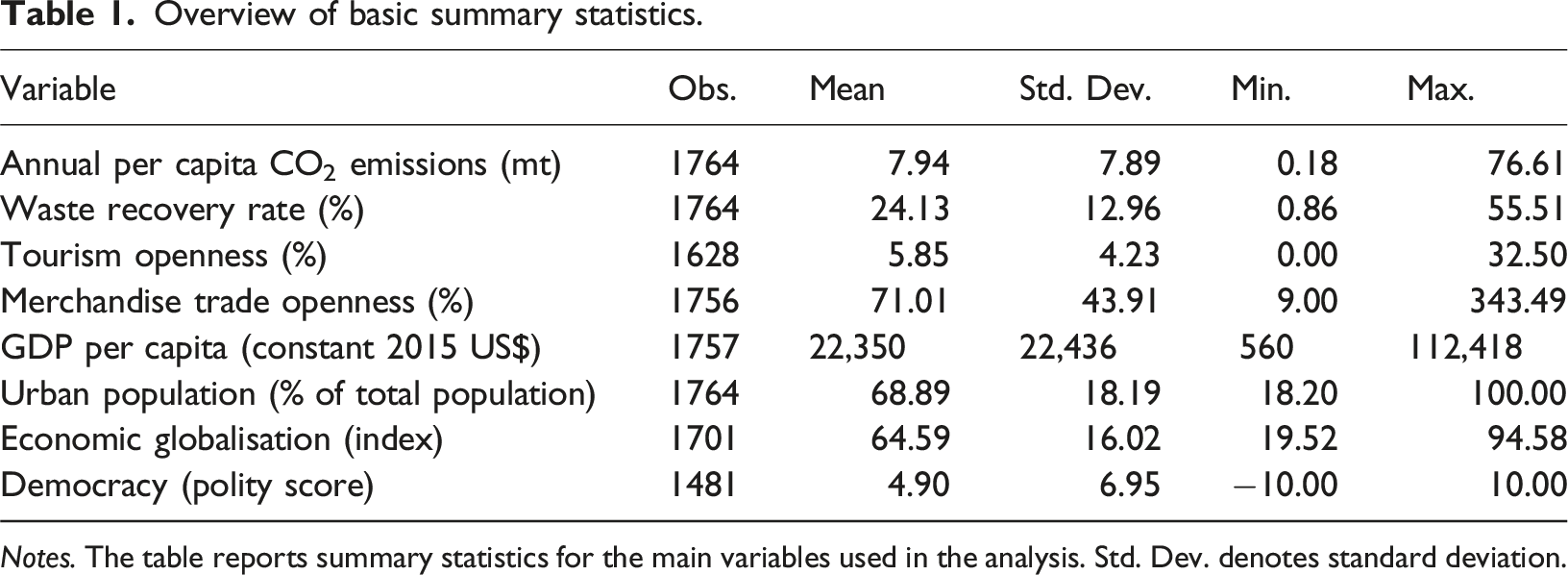
Notes. The table reports summary statistics for the main variables used in the analysis. Std. Dev. denotes standard deviation.
Empirical results
Preliminary results
We begin with the discussion of the observed simple cross-country correlations between tourism openness and per capita carbon emissions, as well as waste recycling rates. Figure 1 shows the correlation between average per capita CO2 emissions and tourism openness while Figure 2 represents the association between average recycling rates and tourism openness in a cross-section of countries. Consistent with expectations, Figure 1 shows that there is a positive association between tourism openness and per capita CO2 emissions, suggesting the negative impact of tourism on the environment through pollution. Cross-country correlations between average tourism openness and per capita CO2 emissions. Cross-country correlations between average tourism openness and waste recycling rates.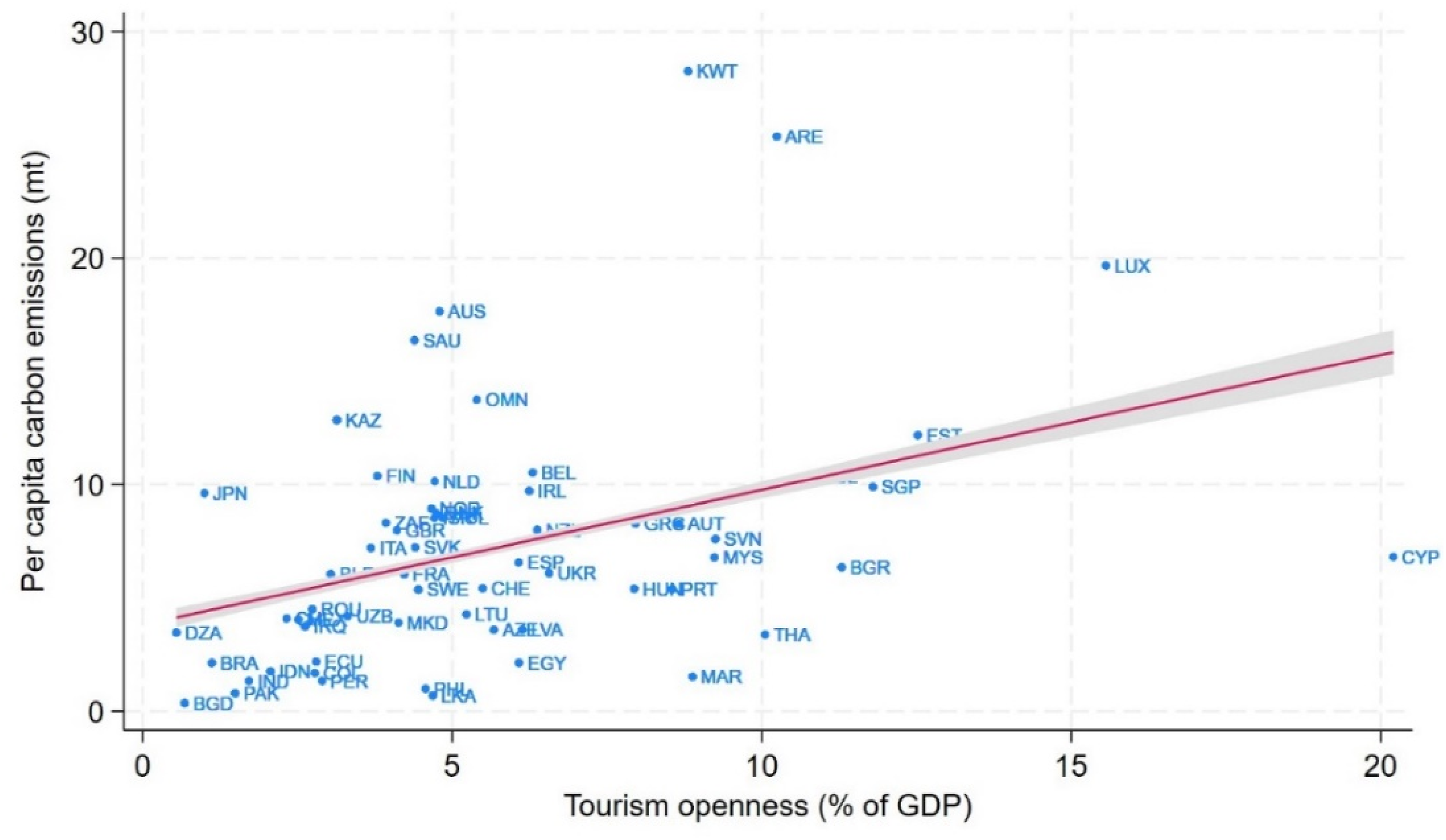
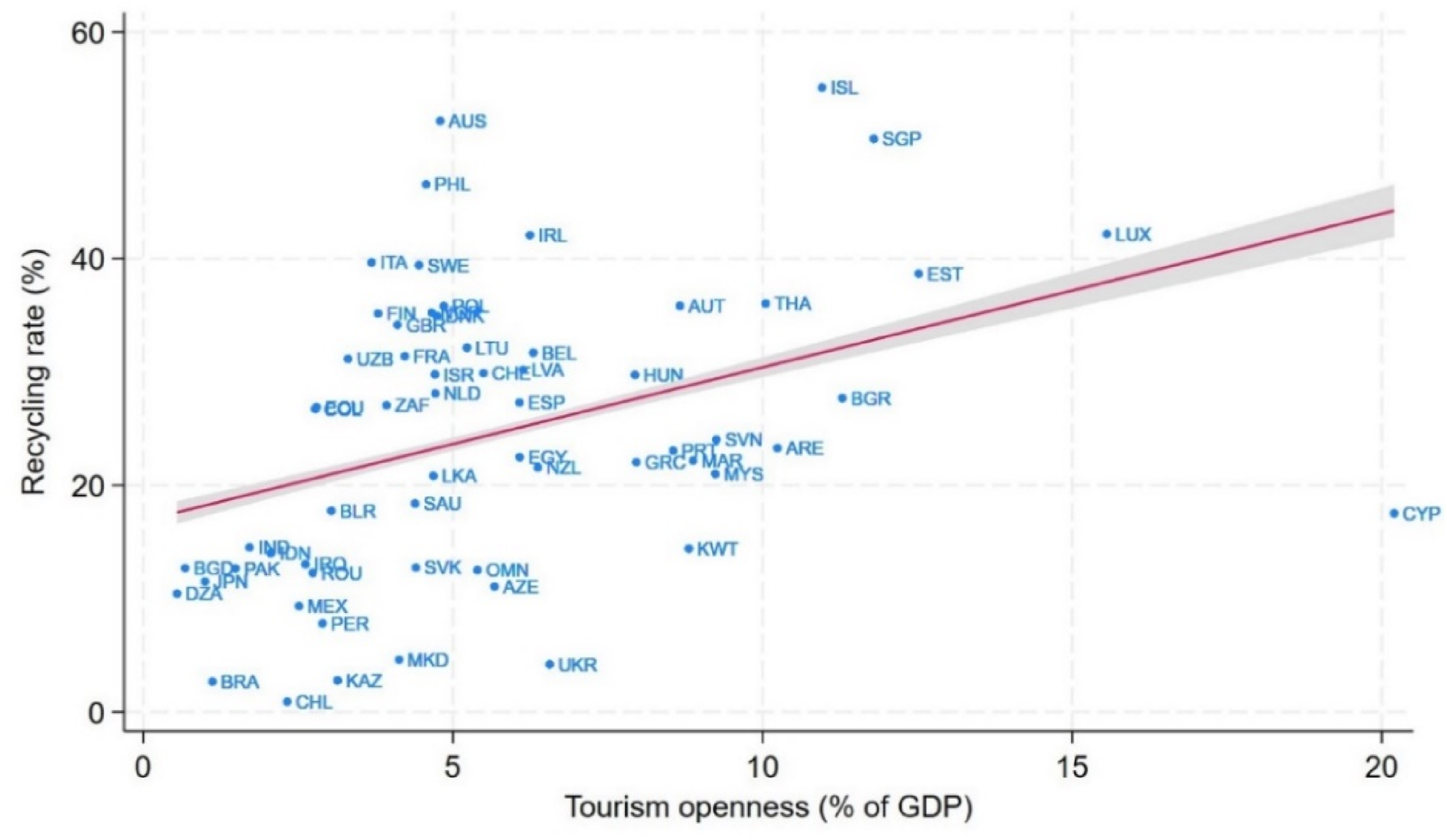
While the positive correlation between CO2 emissions and tourism activities is well established in the literature, little is known about the relationship between circular economy and tourism and how tourism openness affects the transition to circular economy. The preliminary result reported in Figure 2 clearly shows that tourism openness is positively associated with recycling rates, suggesting that tourism activities may promote the transition towards a circular economy that can insulate and mitigate the adverse effects of the sector’s emissions on the environment.
These observations, however, are pertaining to simple correlations and may not necessarily indicate causal relationships. In a more rigorous approach, the following section presents the causal impact of tourism openness on per capita CO2 emissions and the progress towards a circular economy by modelling the two outcome variables jointly in a seemingly unrelated regression approach using 3SLS instrumental variable estimation approach.
Main results
Main SUR estimates of the impact of openness to tourism on CO2 and CE.
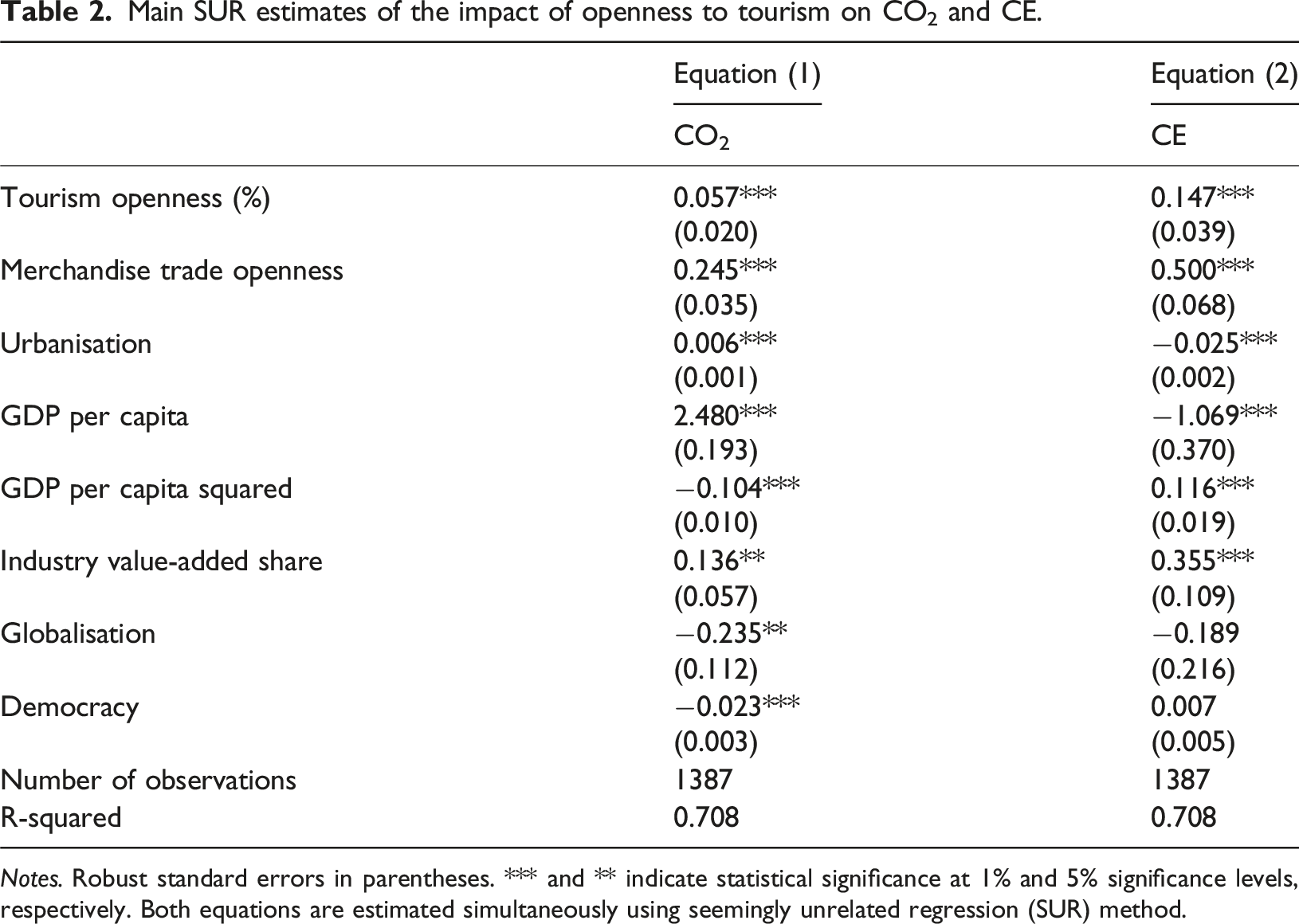
Notes. Robust standard errors in parentheses. *** and ** indicate statistical significance at 1% and 5% significance levels, respectively. Both equations are estimated simultaneously using seemingly unrelated regression (SUR) method.
Looking at the estimates for the control variables in equation (1), the results conform to the WKC hypothesis. That is, the estimated coefficient on real GDP per capita is positive and statistically significant while the coefficient on its squared term is negative and statistically significant, consistent with the WKC hypothesis. Meaning, economic development has a negative impact on the environment via increased waste generation at the early phases of development but has a favourable impact on the environment after a sufficiently higher level of economic development through waste reduction and recycling practices (Mazzanti and Zoboli, 2009). The estimates on other control variables have the expected sign and significance. Increases in urban population and merchandise trade openness are associated with higher levels of emissions while democracy has a favourable impact on the environment thereby reducing emissions.
Column (2) of Table 2 reports the results from the 3SLS estimates where circular economy performance, represented by waste recycling rate, is the dependent variable. Interestingly, the results show that tourism openness has a positive and statistically significant effect on waste recycling rates, suggesting the pivotal role of the visitor economy in advancing the progress towards a circular economy. Specifically, the results show that, on average, a 1% increase in tourism openness causes an increase in recycling rates by about 0.15%. The results suggest that the tourism industry has the potential to support the transition to a circular economy and contributes to the fight against change (Gusmerotti et al., 2024; Manniche et al., 2021).
The results suggest an inverted U-shaped relationship for CO2 and tourism openness, consistent with the EKC hypothesis. Following the standard procedure for quadratic specifications in under EKC framework, the turning point is calculated as
In Column (2), the signs and significance of the estimated coefficients on the control variables are as expected. Consistent with the WKC hypothesis, sufficiently high level of economic development is conducive to the environment via promoting circular economy as evident from the positive and statistically significant coefficient on the squared term of real GDP per capita. The results suggest a U-shaped relationship Circular Economy performance and economic development. Initially, economic growth may lead to increased consumption and waste that outpaces recycling infrastructure. However, once the turning point is reached, higher income levels facilitate investments in green technology and stricter waste management policies. Compared to the EKC turning point, the threshold level of GDP per capita in the WKC framework is very low.
Diagnostic test results for goodness-of-fit for the SUR model.
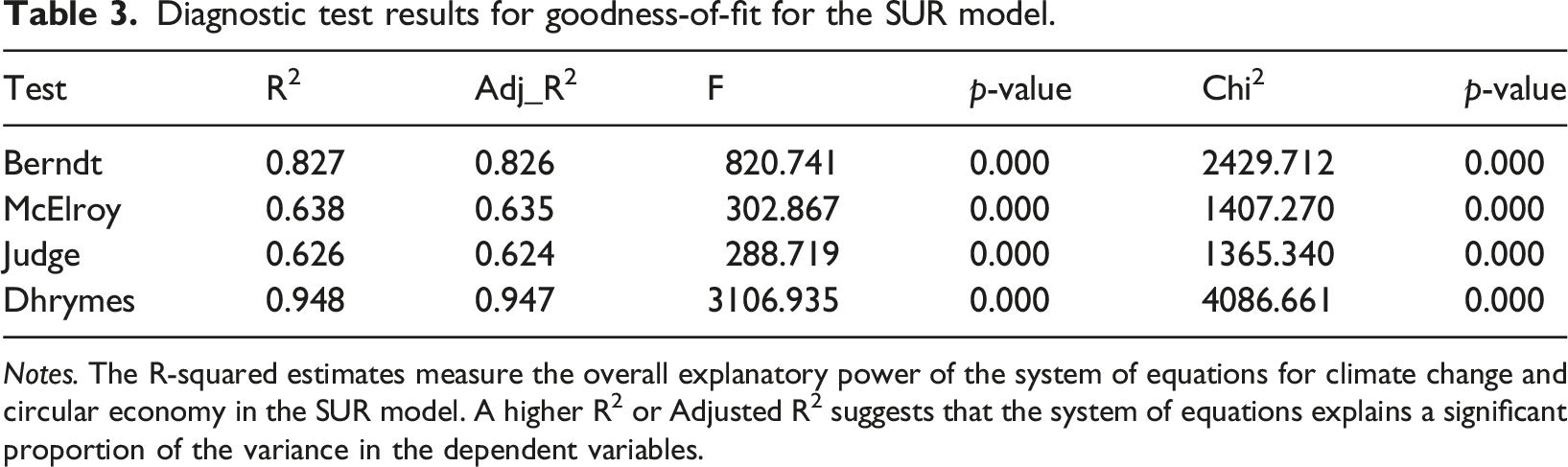
Notes. The R-squared estimates measure the overall explanatory power of the system of equations for climate change and circular economy in the SUR model. A higher R2 or Adjusted R2 suggests that the system of equations explains a significant proportion of the variance in the dependent variables.
We also use Breusch-Pagan’s Lagrange multiplier test to examine whether the SUR model provides efficiency gains against the null hypothesis of no efficiency gains. The p-value for the Chi-squared statistics and the associated p-values of the Lagrange Multiplier test show the rejection of the null hypothesis at 1% significance level, suggesting that the SUR technique improves the efficiency of the estimates. To sum up, the diagnostic test results confirm the relevance of the SUR model for efficient estimation of the coefficients.
Robustness check using dynamic panel data model
Dynamic panel data estimates- difference GMM.
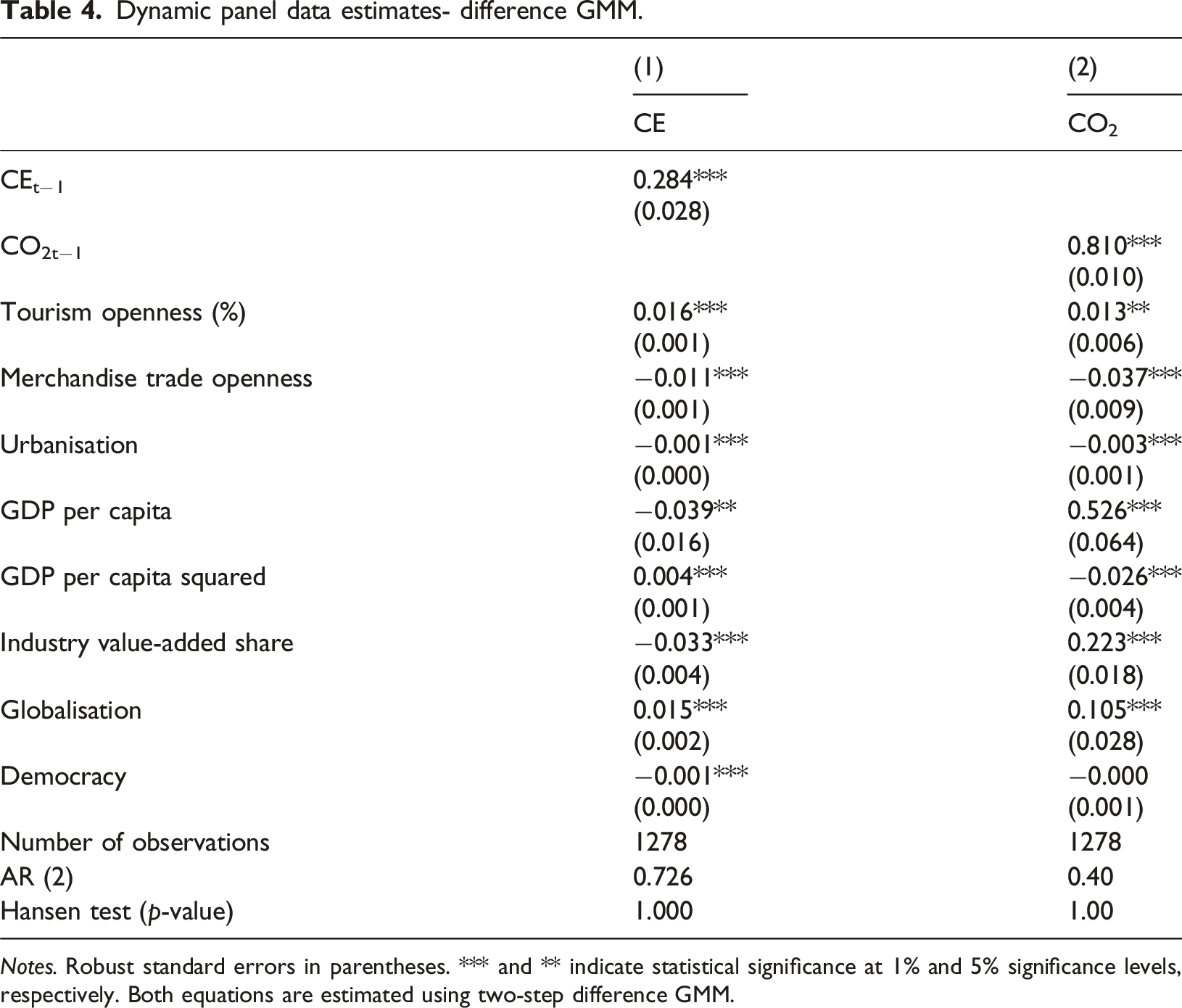
Notes. Robust standard errors in parentheses. *** and ** indicate statistical significance at 1% and 5% significance levels, respectively. Both equations are estimated using two-step difference GMM.
Tourism openness is positively associated with both CE performance and CO2 emissions. The positive coefficient in Column (1) suggests that greater exposure to international tourism may promote recycling and circular economy practices (Sørensen and Bærenholdt, 2020), potentially through increased environmental awareness, regulatory pressure, or infrastructure investments in waste management. However, the corresponding positive effect on emissions in Column (2) indicates that tourism simultaneously increases energy use and transport-related emissions. This highlights a policy trade-off, whereby tourism-driven growth can support circular economy outcomes while exacerbating carbon pressures.
The core finding of this study centres on the impact of tourism openness, which exhibits a dual role in the environmental landscape. Column (1) of Table 4 shows that tourism openness exerts a positive and significant influence on the circular economy indicator (0.016, p < 0.01). This suggests that greater integration into the global tourism market facilitates the adoption of circular practices, likely driven by the diffusion effect where international tourism demand incentivises destinations to upgrade recycling infrastructure and meet global sustainability benchmarks. However, Column 2 reveals that tourism openness simultaneously increases CO2 emissions (0.013, p < 0.05). This indicates a prevailing scale effect, where the energy demands of increased tourist arrivals and logistics still outpace the current rate of technological efficiency gains, leading to an overall expansion of the carbon footprint.
The results in Table 4 also provide robust evidence regarding the EKC hypothesis. For CO2 emissions, the positive coefficient for GDP per capita coupled with the negative coefficient for its squared term confirms an inverted U-shaped relationship. This implies that while initial economic development exacerbates pollution, subsequent income growth eventually leads to environmental improvement. Conversely, the circular economy model displays a U-shaped recovery; the negative coefficient for GDP and positive coefficient for GDP squared suggest that recycling rates may initially decline during rapid industrialisation phases before rebounding as the economy matures and shifts toward greener capital investments. The negative impact of industrial value-added on CE and its positive impact on CO2 further underscore the environmental challenges posed by traditional industrial structures compared to service-oriented tourism development.
The diagnostic tests support the validity of the Difference GMM specifications. The AR(2) test fails to reject the null of no second-order serial correlation in both models, satisfying a key identifying assumption. The Hansen test p-values of 1.000 indicate that the instrument sets are not rejected; while such high values may also suggest potential instrument proliferation, they nonetheless imply no evidence against instrument validity in these specifications.
The findings of the study highlight important asymmetries between circular economy performance and carbon emissions. They underscore that advancing circular economy objectives does not automatically translate into emissions reductions, and vice versa, reinforcing the need for integrated policy frameworks that jointly target recycling systems, industrial structure, and decarbonisation pathways. The results confirm the robustness of the main findings suggesting that while tourism activity can lead to climate change concerns via increased emissions, it can also offer benefits for environmental sustainability through its positive impact on advancing the transition to circular economy.
Heterogeneous impacts by income level
Heterogeneous impacts of tourism openness.
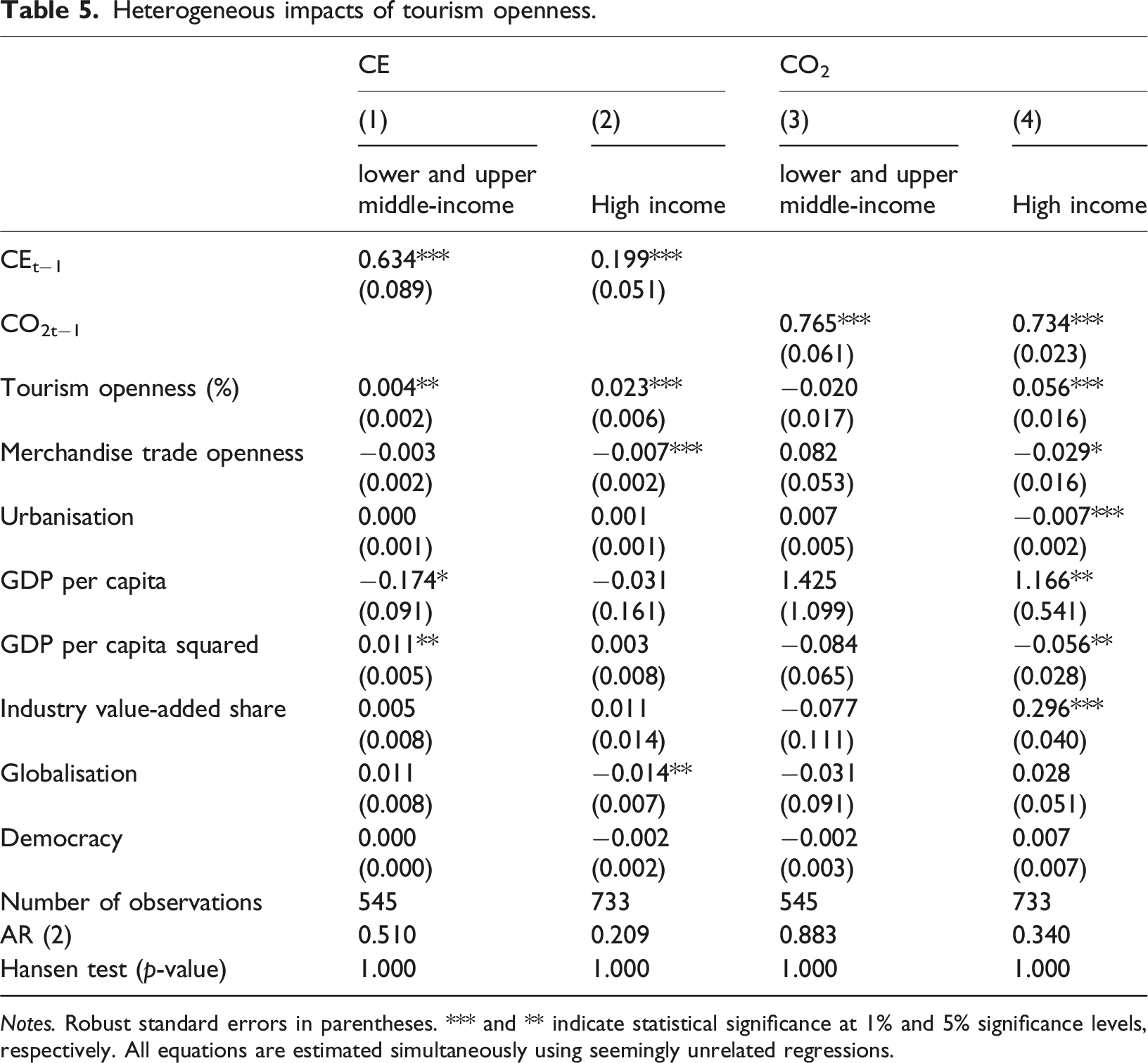
Notes. Robust standard errors in parentheses. *** and ** indicate statistical significance at 1% and 5% significance levels, respectively. All equations are estimated simultaneously using seemingly unrelated regressions.
The results reveal that, while tourism openness has a positive and significant impact in both groups of countries, the magnitude is substantially larger in high-income nations (0.023, p < 0.01) than in middle-income nations (0.004, p < 0.05). This difference likely reflects the institutional maturity, advanced waste management infrastructure, and strong socioeconomic foundations, including economic capacity, societal awareness and technological capability present in high-income economies (Duan et al., 2021). These conditions enable them to more effectively convert international tourism integration into circular outcomes, particularly in waste recycling.
Regarding environmental degradation (Column (2)), the impact of tourism openness on CO2 emissions exhibits a stark divergence based on development levels. In middle-income countries, the relationship is statistically insignificant. However, in high-income countries, tourism openness is associated with a significant increase in emissions (0.056, p < 0.01). This suggests that in advanced economies, the scale of tourism-related activities, particularly high-frequency air travel and luxury consumptions, continues to exert a heavy environmental toll (Herget et al., 2026; Kapferer and Michaut, 2015).
The results show that tourism openness is associated with higher levels recycling rates in high income countries, as well as in lower- and middle-income countries. However, quantitatively the estimated effect is stronger for high income countries, twice for recycling rates highlighting key structural differences. First, high income countries have greater access to finance for research and development (R&D) which is key for technological innovations in several areas such as, recycling, municipal waste management and sustainable manufacturing that supports circular economy models (Neves and Marques, 2022). Second, due to better institutional qualities, regulatory authorities in high income countries can enforce strict environmental laws and circular economy mandates (Ghisellini et al., 2016). A prime example is the Extended Producer Responsibility (EPR) policy aimed at promoting a circular economy in the EU that ensures the accountability of manufacturers for the environmental impacts caused by their products throughout their lifecycle, including recycling and waste disposal (Joltreau, 2022). Third, consumer awareness tends to be high in income countries leading to greater demand for sustainable products and the adoption of circular practices by businesses compared to that of developing economies (Kuah and Wang, 2020).
Discussion
The empirical analysis of this study provides strong support that although the tourism industry contributes to CO2 emissions, the sector can also play a significant role in fostering the transition from linear to circular economy. This in turn plays a pivotal role in mitigating climate change, contributing to the achievement of sustainable development goals (SDG13), lending support to the findings of earlier studies (Ghisellini et al., 2016; Hailemariam and Erdiaw-Kwasie, 2023). Circular economy enhances the adoption of innovative business models and management technique especially in small and medium enterprises operating in the tourism sector promoting sustainable practices (Manniche et al., 2019; Suchek et al., 2021).
Apart from the supply side, which is shaped by firms and operators, there is also evidence that behavioural traits of visitors, such as pro-environmental behaviours can play an instrumental role in promoting circular economy practices in the tourism industry by serving as a learning platform to local economies enhancing innovations in circularity of the tourism industry (Gusmerotti et al., 2024; Manniche et al., 2019, 2021; Sørensen and Bærenholdt, 2020). Moreover, tourism openness is closely linked to policy learning, international standards, and diffusion of best practices in waste management and circularity (European Commission, 2020; UNWTO, 2018).
Theoretical implications
The main theoretical implication of this paper is that the influence of tourism openness in enhancing the transition from linear to circular economy can be analysed through the lens of the WKC theory (Madden et al., 2019). That is, waste generation increases at the early stages of development without recycling activities but eventually declines as at higher level of development as economies adopt more sustainable business solutions, including circular economy practices (Mazzanti and Zoboli, 2009).
Economic incentives to promote tourism-driven demand for tourism products such as eco-friendly services, accommodations, and green certifications encourages businesses to adopt circular economy practices, positioning economies not only to transition to the downward sloping part of the WKC but also to reduce the threshold level beyond which waste starts declining (Neves and Marques, 2022; Tunçel et al., 2026).
The circular economy has gained prominence as a potential strategy for climate change mitigation by reducing material extraction, extending product lifetimes, and improving recycling and resource efficiency. However, recent comprehensive reviews caution that the climate benefits of circular economy strategies are context-dependent and often overstated when assessed at scale. Synthesising national to global evidence, Wiedenhofer et al. (2024) show that while circular practices can reduce emissions in specific sectors and countries, their aggregate mitigation potential is constrained by rebound effects, structural growth in material demand, and limited substitution between primary and secondary materials. Extending this assessment, Wiedenhofer et al. (2025) find that circular economy measures alone are insufficient to deliver deep decarbonisation, emphasising that meaningful climate gains require alignment with broader structural changes, including demand reduction, low-carbon energy transitions, and strong policy frameworks.
Practical implications
The findings of the study have several of practical implications that help policymakers and market participants to formulate effective strategy to enhance the openness of the tourism industry to effectively promote circular economy by encouraging a culture of innovation and entrepreneurship which eventually offers innovative solutions to environmental challenges. Policymakers can utilise the opportunity brought by openness to tourism through innovative regulatory approaches of the industry including incentives such as streamlined visas for visitors as this have significant implications for economic and destination marketing outcomes (Song et al., 2012).
For high-income countries, where the scale effect of tourism remains a significant driver of emissions, the focus should be on demand-side management, such as carbon labelling for travel packages and incentives for longer-stay, low-impact tourism. Conversely, for middle-income countries, the priority is technological leapfrogging, using international tourism partnerships to fund the adoption of green building standards and low-carbon hospitality technologies before carbon lock-in occurs. Through knowledge sharing, leadership and adoption of best business practices, policymakers can accelerate the adoption of circular economy practices that leads to a sustainable and resilient tourism industry, fostering environmental sustainability (Soni et al., 2023; Tunçel et al., 2026). As such, policymakers responsible for the development of the tourism industry can create more resilient and pro-environmental tourism industry by embracing tourism openness as a key driver of transition to circular economy.
Conclusion and policy implications
This paper examined the intricated relationship between tourism openness, climate change and circular economy utilising a unique global panel dataset sourced from the Environmental Performance Index database. Under the WKC framework and applying the SUR estimation technique, the findings of the study shade light into how tourism openness can play a crucial role in insulating the environmental effects attributed to emissions from the sector through advancing the transition from linear to circular economy practices.
The study employed a joint model for climate change and circular economy under the WKC framework that allows for cross-equation correlations as they are the jointly determined. The key findings from the empirical analysis suggest that openness to tourism provides a unique opportunity to offset the negative environmental effects of the tourism sector from emissions by promoting innovative circular economy practices. The findings of the study support the wake-up call for rapid decarbonisation and transition to circular economy models of the tourism industry (Becken, 2025; Gusmerotti et al., 2024; Jain et al., 2024; Manniche et al., 2019). Policymakers should pursue innovative regulatory approaches that enhances openness to tourism with integration of circular economy strategies to promote sustainability and circularity through knowledge spillovers and best practices. Through integration of circular economy principles with tourism management, the tourism industry can be transformed from being a significant contributor to climate challenges to a catalyst for sustainability.
A limitation of our empirical approach is the territorial nature of the measure of CO2 emissions from aviation as EDGAR database follows a territorial accounting principle, which includes domestic aviation but typically excludes international aviation from national totals. This may underestimate emissions in major international tourism hubs by excluding international aviation. However, according to Le Quéré et al. (2020), the aviation sector’s contribution to total global CO2 emissions is only approximately 2.8%. As such, the omission of international aviation is unlikely to shift the sign or significance of the estimates given this relatively small proportion of the global carbon budget. Nevertheless, the results should be interpreted as a lower-bound estimate of the total environmental impact in high-volume destination countries.
While this study provides the first evidence on the role of tourism openness on climate change and circular economy transition jointly using innovative data for a broad panel of global economies, its limitation includes the use of aggregate waste recycling data. Future research could benefit from more disaggregated analysis based on the type of material such as e-waste and metals may provide insight into the differential impacts of tourism openness on circularity in the tourism industry.
Supplemental material
Supplemental material - Tourism openness and circular economy adoption: Pathways to environmental sustainability
Supplemental material for Tourism openness and circular economy adoption: Pathways to environmental sustainability by Abebe Hailemariam in Tourism Economics
Footnotes

Funding
The author received no financial support for the research, authorship, and/or publication of this article.
Declaration of conflicting interests
The author declared no potential conflicts of interest with respect to the research, authorship, and/or publication of this article.
Supplemental material
Supplemental material for this article is available online.
Author biography
References
Supplementary Material
Please find the following supplemental material available below.
For Open Access articles published under a Creative Commons License, all supplemental material carries the same license as the article it is associated with.
For non-Open Access articles published, all supplemental material carries a non-exclusive license, and permission requests for re-use of supplemental material or any part of supplemental material shall be sent directly to the copyright owner as specified in the copyright notice associated with the article.
