



Abstract
Youth wings fulfil vital democratic functions. They connect parties with young people, socialise them into political life, and train future candidates and officials. Yet, youth wings have been largely overlooked by party scholars. In this article, we present the Youth Wing Membership Survey (YOUMEM) dataset. With responses from over 5000 members of 12 centre-left and centre-right youth wings in Australia, Austria, Germany, Italy, Spain, and Sweden, YOUMEM is the largest comparative study of youth wing members ever conducted. Using the dataset, we examine some basic questions about youth wing members: who they are, when and why they join. We find that youth wing members are primarily men and highly educated. Many have relatives who were party members, and most are extremely ambitious compared to senior party members. Beyond these commonalities, we also uncover differences across party families and countries. Our project provides a unique window on the young people in contemporary youth wings.
Youth wings fulfil a host of functions that are essential not only to a party’s present but also to its future. These include recruitment, campaigning, socialization of members, and training of prospective officials and candidates. Yet, apart from single-country studies of youth wings (e.g. Rainsford 2018; Ohmura and Bailer, 2022; Bolin et al., 2023), we know very little about who joins them and how their memberships resemble one another. To address this, we conducted the largest comparative youth wing project to date, the Youth Wing Membership Survey (YOUMEM), which gathered responses from over 5000 members of 12 centre-left and centre-right youth wings in six countries – Australia, Austria, Germany, Italy, Spain, and Sweden. The dataset with the results of this survey will be made freely available for researchers to access from January 2026. 1 In this overview article, we introduce the study and focus on the following fundamental questions: Who joins youth wings? When do they join? Why do they join?
The results presented here, in conjunction with the subsequent release of our YOUMEM dataset, offer an unparalleled depth and breadth of information on contemporary youth wing members, which will be extremely valuable to researchers of political parties and youth politics. They also provide insights that may be of use to parties and youth wings themselves if they wish to see how their memberships compare to those from other parties and countries (and understand better the areas in which they may need to make changes). Our survey reveals that youth wing members are predominantly men, highly educated, and many have a close relative who has been a party member. Within these overall findings, there are also several party family trends. Centre-right youth wings have (even) more men than centre-left ones and their members display higher levels of education, while more centre-left youth wing members have family members who have been in a party. Overwhelmingly, people join youth wings either while at school or at university, and almost never after they have completed their education (despite most youth wings allowing members to sign up when in their late 20s and beyond). Finally, although they resemble senior party members in joining mainly for purposive and social reasons, their exceptionally high levels of political ambition – especially on the centre-right – make youth wing members stand out from their older counterparts.
In the next section, we introduce our YOUMEM dataset and our cases. We then outline the theoretical background to the questions examined in this article – who the young people who join youth wings are according to their socio-demographic characteristics, at what life stage they do so, and which motivations they give for having signed up. In the results section, we present the findings of our empirical analysis, highlighting similarities and differences across party families and countries. We also, where relevant, contextualise our results by comparing them with the results of secondary literature on senior party memberships, including those of the parties of some of our youth wings (Demker et al., 2020; Van Haute and Gauja 2015). Finally, in the conclusion, we discuss some implications of our study and suggest areas for future research.
The YOUMEM project: Rationale, cases and data
Most political parties create youth wings, which are sub-organisations specifically for young people. 2 While the upper and lower age boundaries for youth wing membership vary across parties and countries, at a minimum, they are generally open to people between 16 and 26 years old. Parties create youth wings to fulfill a range of tasks relevant to both their present and future. These can be grouped into five broad categories: recruitment; legitimacy; socialization; campaigning; and elite training. First, youth wings are the key early entry point for political parties, bringing in members who will potentially remain for many years (De Roon 2022; Hooghe et al., 2004). Second, maintaining an active youth wing transmits the message to the public that parties care about young people (Trimithiotis 2015). Third, youth wings offer a space where young people can interact with likeminded peers, party officials and elected representatives, thus learning about the party and engaging in related political and social activities (De Roon 2022; Mycock and Tonge 2012; Rainsford 2018). Fourth, youth wings provide a supply of foot soldiers to help parties during election campaigns (Kefford 2021; Pickard 2019). Fifth, and finally, youth wings are a vital part of the pipeline to power in parliamentary democracies, with many current representatives, ministers and leaders having come through the youth wings of their parties (Binderkrantz et al., 2020; Hooghe et al., 2004; Ohmura et al., 2018). In sum, as Trimithiotis (2015: 167) puts it, youth wings ‘spearhead efforts to renew the membership base of their parties, by bringing young people into their fold, socialising and educating them in both ideological and practical terms, before promoting them to the party ranks’.
Despite their relevance for political parties, however, we know little about youth wings in general, and youth wing members in particular. Indeed, just two decades ago, Hooghe et al. (2004: 195) said that, ‘as far as we know, youth organisations of political parties have never before been studied in political science research’. 3 The situation has improved since then, but there is still much to learn about youth wings and those who join them. The most relevant comparative study is that by Bruter and Harrison (2009), who surveyed around 3000 young party members from France, Germany, Hungary, Norway, Spain, and the United Kingdom. Nonetheless, although very insightful, their focus was on young people who were party members rather than youth wing members (while partially overlapping, the two groups are of course not the same). 4 More recently, a small number of single-country studies of youth wing members (e.g. Kolltveit, 2022; Ohmura and Bailer 2022; Bolin et al., 2023) have been conducted, primarily looking at cases in northern Europe, as well as some studies of single youth wings in other European countries like Portugal and Hungary (Malafaia et al., 2018; Pirro and Róna 2019). 5 Although these have shed important light on the topic, we still lack a comparative perspective on who joins party youth wings in the current era. To address this, we have conducted the YOUMEM project.
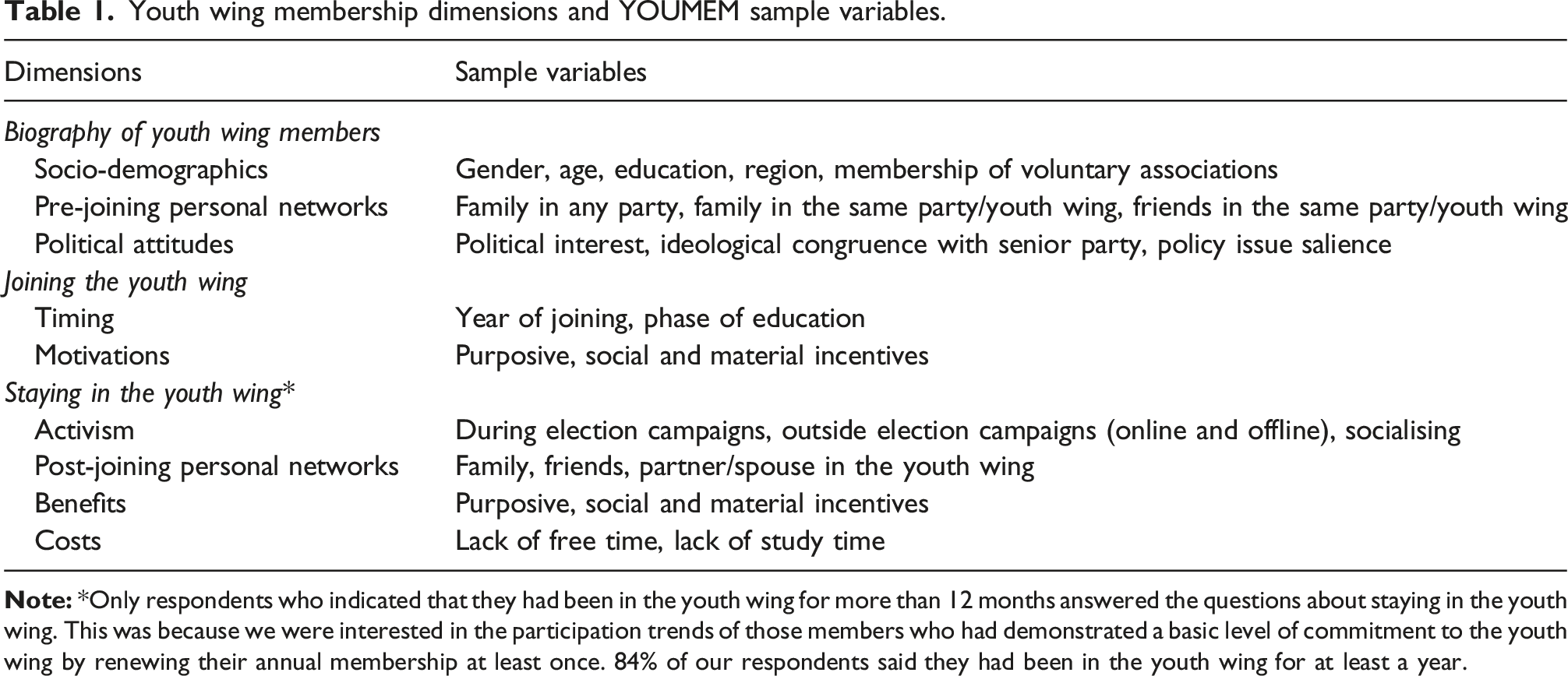
Youth wing membership dimensions and YOUMEM sample variables.
Youth wings surveyed.
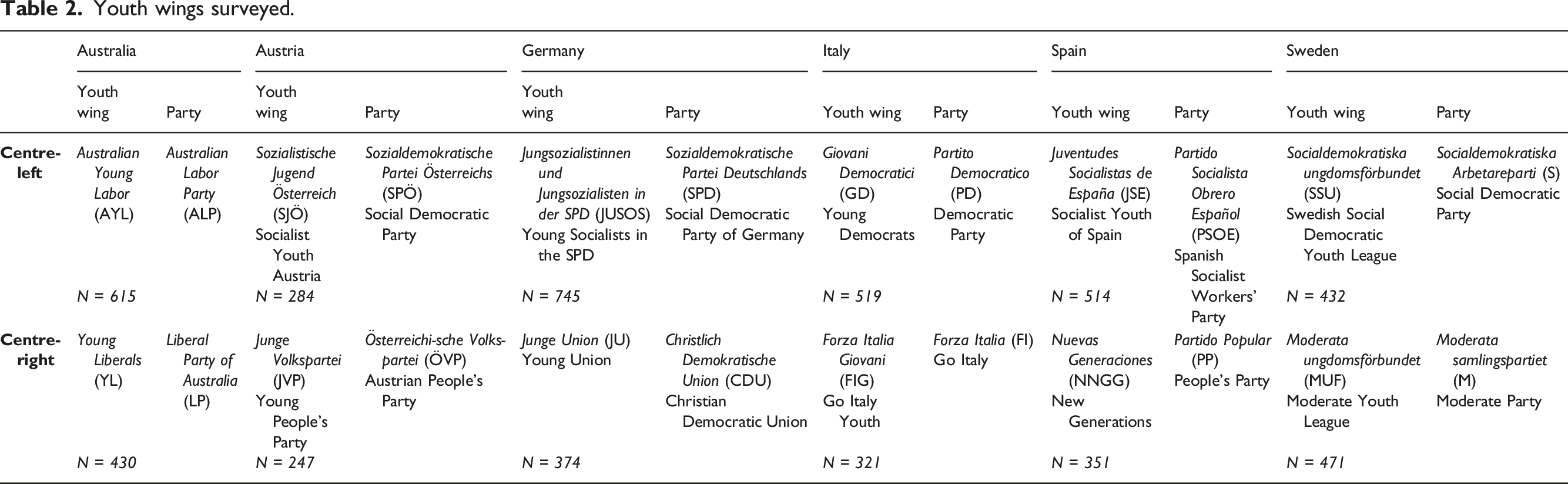
While YOUMEM is the largest study conducted to date on youth wing members, it is worth acknowledging a few inevitable limitations. First, as is common in party membership research, our youth wings were generally unwilling to share precise information about how many members they have (or how many received the survey link). Consequently, we do not know the proportions of young members that responded to our survey. 9 Second, ours is a non-random sample, and so we should be careful when generalising our findings. At the same time, we were able to secure good geographical coverage, with at least three quarters of all regions, states, and counties in each country being represented.
The fundamentals of youth wing membership
In this overview article, in addition to introducing our dataset, we examine some fundamental questions, namely who joins youth wings according to their socio-demographics, at which point in their young lives they do so, and what motivates them to sign up. 10 We also look at whether, and how, contemporary youth wing members in Western democracies resemble one another across party families and countries. In the remainder of this section, we draw on the youth wing and young party members’ literature, as well as senior party membership studies and research on youth political participation, to develop some expectations for these questions.
As regards the question of who joins, we look at gender, since it is an important predictor of party membership, as well as education and family background – two key resources for (young) people to participate in politics. Given that party members generally tend to be men (Bale et al., 2020; Heidar et al., 2020; Heidar and Wauters 2019; Van Haute and Gauja 2015), we would expect that imbalance to be replicated in youth wings. While one might imagine that younger generations of party members may be more representative, since the number of women in elected office who can act as ‘role models’ (Ponce et al., 2020) is increasing, the scarce evidence we have about young women members is mixed. In Norway, Kolltveit (2022: 7) finds a situation of youth wing gender parity in his survey. However, Ohmura and Bailer (2022) observe that men make up around three-quarters of youth wing members in Germany. Considering that Norway is one of the most gender equal countries in the world (World Economic Forum, 2020), it may be an outlier in this sense. We thus envisage that youth wings in most Western democracies will be composed of a majority of men. We also anticipate clear trends across party families. Namely, if youth wings mirror their parties, we should see a higher proportion of women in centre-left youth wings than in centre-right ones (Heidar and Wauters, 2019; Van Haute and Gauja, 2015). This would not be surprising, given that left-wing parties have traditionally promoted women’s participation within their ranks more than their counterparts on the right (Kittilson, 2013).
In addition to being predominantly men, we expect youth wing members to be well-resourced for political life in terms of their education and family background. We have long known that, due to the skills and confidence it provides, education is a strong predictor of political participation, including party membership (Brady et al., 1995; Heidar and Wauters, 2019). Again, this has been borne out by single-country case studies conducted in northern Europe (e.g. Ohmura and Bailer, 2022). Moreover, since education levels are generally rising in Western democracies (OECD, 2022), youth wing members should be even more educated than senior party members. 11 As regards family background, we would expect many among this group of young people to have close relatives who have themselves been members of political parties (Bruter and Harrison, 2009; Cross and Young, 2008). For example, parents who are politically engaged tend to transmit their political interest, knowledge, and sense of efficacy to their children (Jennings et al., 2009; Verba et al., 2005), in addition to their partisanship (Ventura, 2001; Zuckerman et al., 2007). Like education, family background thus provides information and networks that can make the decision to join a party less daunting and costly.
While we only know a little about who joins youth wings, we have even less information about when people join them. Many youth wings, including some of those we focus on in this article, are open to people spanning ages from their mid-teens to 30 years old, and even beyond. Thus, a range of life stages exists when someone might join a youth wing. The broader literature on youth political participation offers some useful pointers regarding what we might expect to find. First, there is a whole body of work on the ‘impressionable years’ (Sears, 1981) of adolescence and young adulthood, when individuals acquire the necessary cognitive skills and experiences to enable political learning. Based on this, we would expect a majority to join before their mid-20s. Second, the same body of work on youth participation has emphasised the importance of school as an agent of political socialisation (e.g. Galston, 2001). Given that, irrespective of lower age threshold differences among our 12 youth wings, it is possible to join all of them while still a minor, we expect most youth wing members to have signed up when in secondary school.
The third question we are interested in is why young people join youth wings. Building upon Clark and Wilson’s (1961) three incentives for joining an organisation, Bruter and Harrison (2009) classify young party members into three types: 1) ‘moral-minded’ members, who join primarily for purposive reasons: that is, they want to support the policies of the party in order to express their ideals and give meaning to their lives; 2) ‘social-minded’ members, who are motivated by the desire to meet like-minded people with whom they can talk about politics; and 3) ‘professional-minded’ members, who join youth wings for careerist reasons – either because they are interested in working in politics, or because they think they can improve their employment networks thanks to political activity. In their survey, Bruter and Harrison (2009: 32) found that about 40% of young party members were moral-minded, followed by those who were social-minded (34%) and professional-minded (26%). Although the order is the same, the respective strengths of these three reasons are in contrast with what we know about why people in general join parties. Studies from a variety of countries and parties show that individuals join parties first and foremost because of purposive reasons, while solidary are less important, and just a tiny proportion join for material ones (Van Haute and Gauja 2015; Bale et al., 2020; Heidar and Kosiara-Pedersen, 2020). The increased importance of material incentives for young people has been noted in single-country studies by Weber (2020) and Bolin et al. (2023), who suggest that the main motivational dividing line among these members is whether they join for professional reasons or not. Given the above, we would expect a significant minority of the young people who make up today’s youth wings to be driven by career incentives, although purposive and social reasons should still be more important.
The ‘who, when, and why’ of youth wing membership
In this section, we present some fundamental descriptive results of our survey, beginning with the question of who youth wing members are. We then look at when they join and why they do so.
Who joins?
We start by looking at the distribution of members in terms of gender. Figure 1 (below) shows that the party youth wings in our six countries are mostly composed of men. In total, two-thirds of members are men (67.4%), with the highest percentages (and thus gender imbalances) found in the centre-right youth wings FIG in Italy (81.9%), YL in Australia (77.2%) and JU in Germany (75.1%). In every country, it is the centre-left youth wing which has more women members. While there are evident party ideology trends across all our cases, there are fewer country ones. A clear outlier is Italy, where men make up at least three-quarters of the membership of both centre-left and centre-right youth wings. As a result, the two Italian young wings are in the ‘top 4’ for gender imbalance among our 12 cases. While not as skewed, Australia’s two youth wings also both have memberships that contain two-thirds majorities of men. By contrast – and recalling the findings from its neighbour Norway that we discussed earlier (Kolltveit, 2022) – Sweden does best in terms of general balance: SSU has the second highest percentage of women among all our youth wings (45%), while MUF is the centre-right youth wing with the highest share of women (33%). Distribution of men and women youth wing members, by youth wing.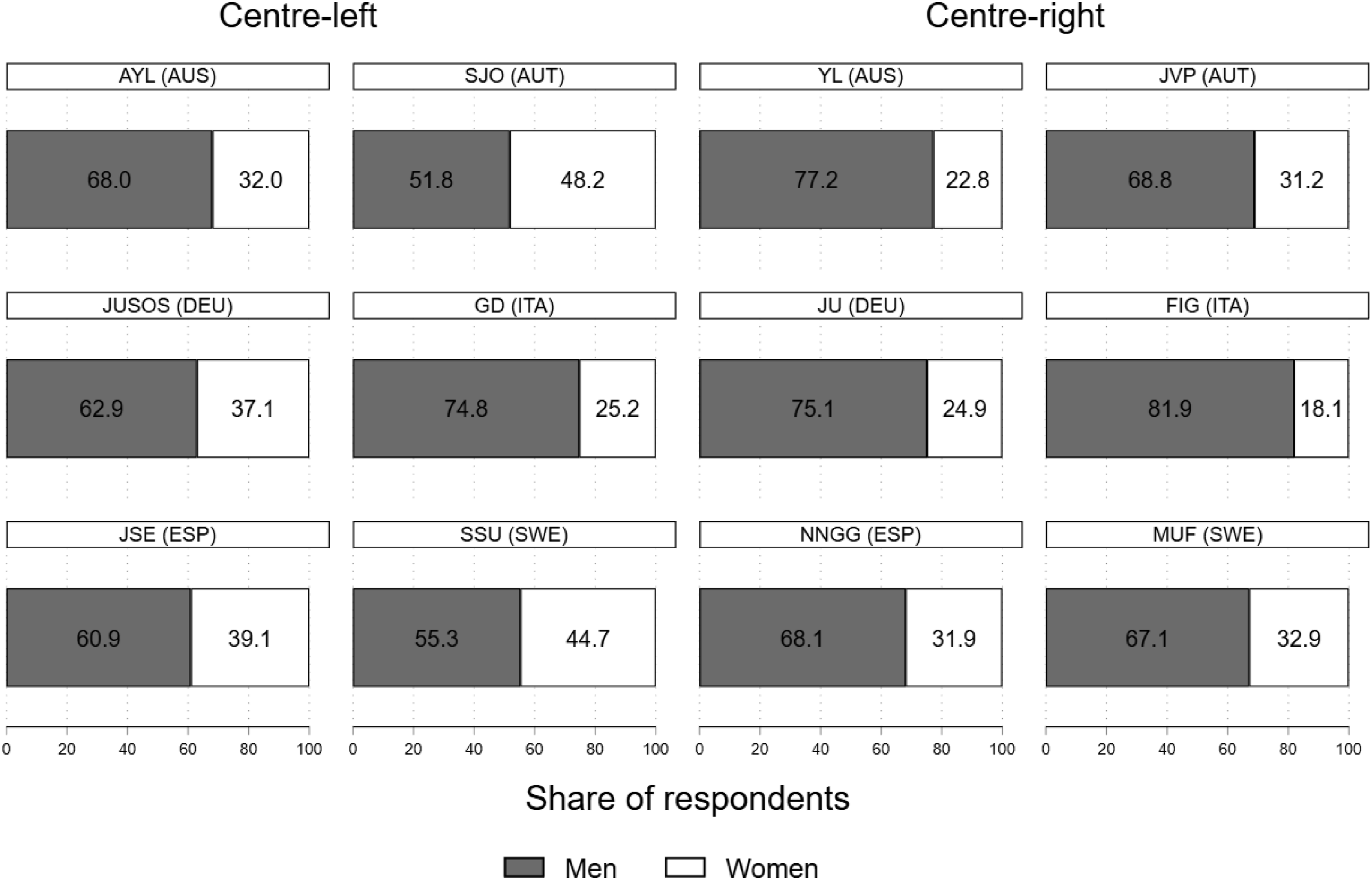
Strikingly, our overall figures for the gender composition of youth wings match perfectly with those reported in the Van Haute and Gauja (2015) volume on senior party memberships. Notwithstanding the fact that their authors look at a partially different selection of countries than us, they too find that the parties ‘count on average a third of female members’ (Gauja and Van Haute, 2015: 194). As regards the specific countries that our study and theirs have in common, our figure for men in the German JU (75%) is the exact same as theirs for its parent party, the CDU, while theirs for men in the SPD (70.5%) is a bit higher than the 63% we find for the Jusos (Spier and Klein, 2015: 94). By contrast, in the case of the Italian PD, Sandri et al. (2015: 128) report a slightly higher share of women (29.3%) than we do for the PD’s youth wing, the GD (25.2%). Finally, in their study of Nordic party members, Heidar et al. (2020: 80) observe that 60% of Swedish Social Democrat members are men, compared to our result of 55.3 for the youth wing. Such small differences aside, our results suggest that the younger cohorts who join youth wings today are no more representative in terms of their gender balance than other cohorts in senior parties.
We now move on to look at education levels. As expected, youth wing members are a highly educated group of people: three-quarters have a tertiary education or are currently enrolled in university. The remaining quarter has a secondary education, while less than 1% possess just a primary educational qualification.
12
Overall, as Figure 2 (below) details, members of the centre-right youth wings are more highly educated than their counterparts on the centre-left, with the centre-right youth wings in Australia, Austria, Spain, and Sweden having a greater percentage of members either with a degree or studying towards one. Amongst these, the Australian Young Liberals stand out, with almost 94% of their members in that position. There are also some apparent country trends. For example, in Australia and Spain, at least 80% of those in each youth wing have a degree or are at university. By contrast, in Austria, less than two-thirds of respondents can say the same.
13
Levels of education among youth wing memberships.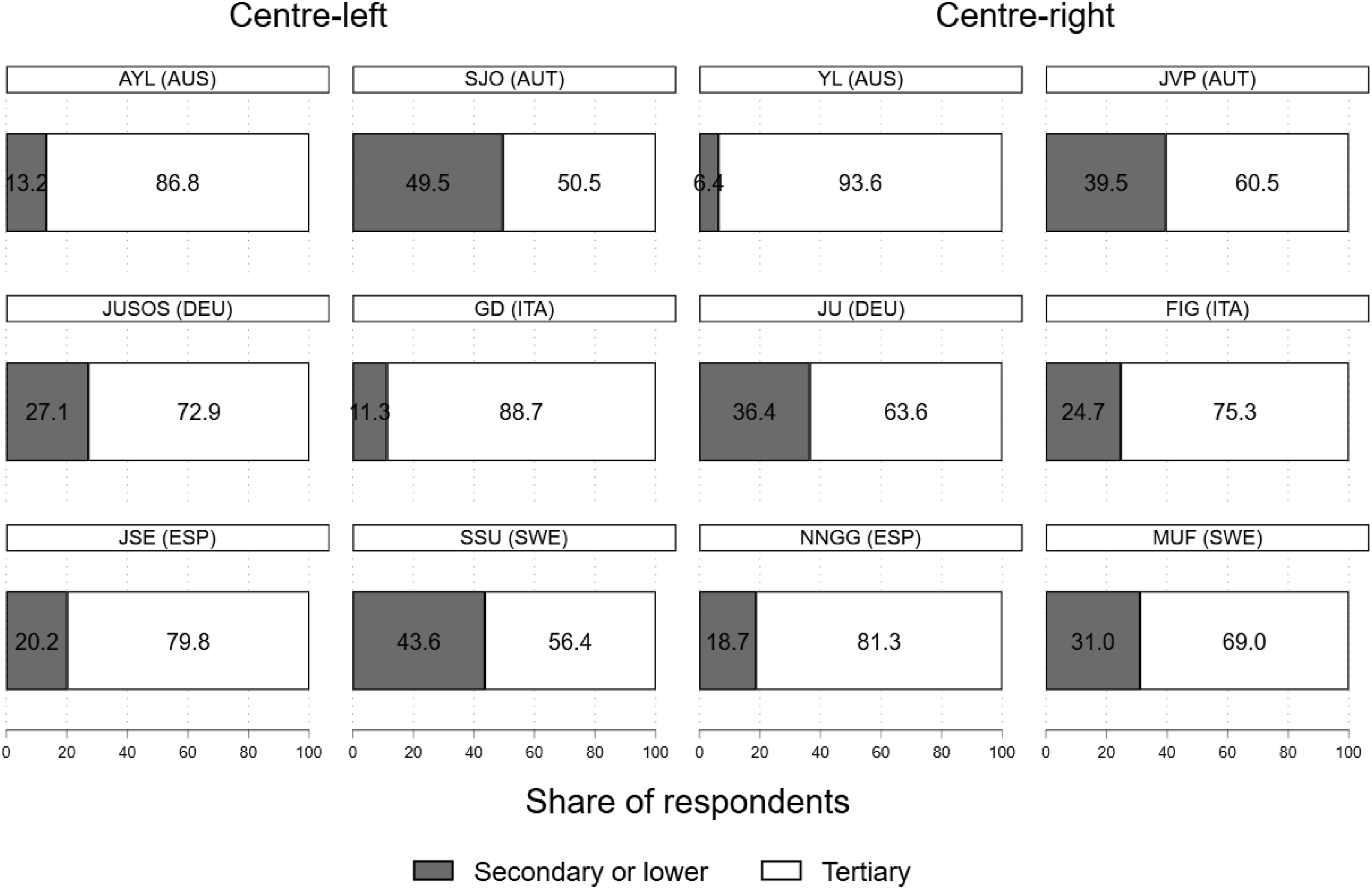
Although our results for gender balances among youth wings resembled those for senior parties in the study by Van Haute and Gauja (2015), the situation is quite different as regards education levels, with youth wing members appearing to be far more highly educated than their elders in the senior party. For example, while 37.6% of the German centre-right CDU’s members and 37% of the centre-left SPD’s members possessed a tertiary education (Spier and Klein, 2015: 94), 63.6% of our JU respondents and 73% of our Jusos ones were either in university or had gained their degree. Likewise, while 47% of PD members had a tertiary education (Sandri et al., 2015: 128), 89% of GD ones were in university or had graduated from it. Sweden appears something of an exception, with a much smaller disparity on the centre-left and, remarkably, none at all on the centre-right. According to Heidar et al. (2020: 88), 46% of Swedish Social Democrat members and 69% of Moderate ones had a degree, compared to the 56.4% of SSU and, exactly like its senior party, 69% of MUF members who were enrolled in tertiary education or had completed it.
Finally, as regards the question of ‘who joins’, we consider the family background of youth wing members. Overall, 41% of our respondents have had a parent or sibling who was a party member. As we can see from Figure 3 (below), half of the members in two youth wings, the Swedish centre-left SSU and Austrian centre-right JVP, had this type of background, while the figure is closer to a third in the Italian centre-right FIG, the German centre-right JU, and both Australian youth wings. With the exception of Austria, more centre-left youth wing members in all other countries have this partisan background than their counterparts on the centre-right. There are also some apparent country trends (see Figure D3 in the Appendix). Notably, in both Austria and Sweden, at least 47% of members in all youth wings have had people from their immediate family who were party members.
14
By contrast, in Australia, this figure is around a third for both Australian Young Labor and the Young Liberals, while in Germany it is only marginally higher for the Jusos and JU. Youth wing members whose parents or siblings have been members of a party/youth wing.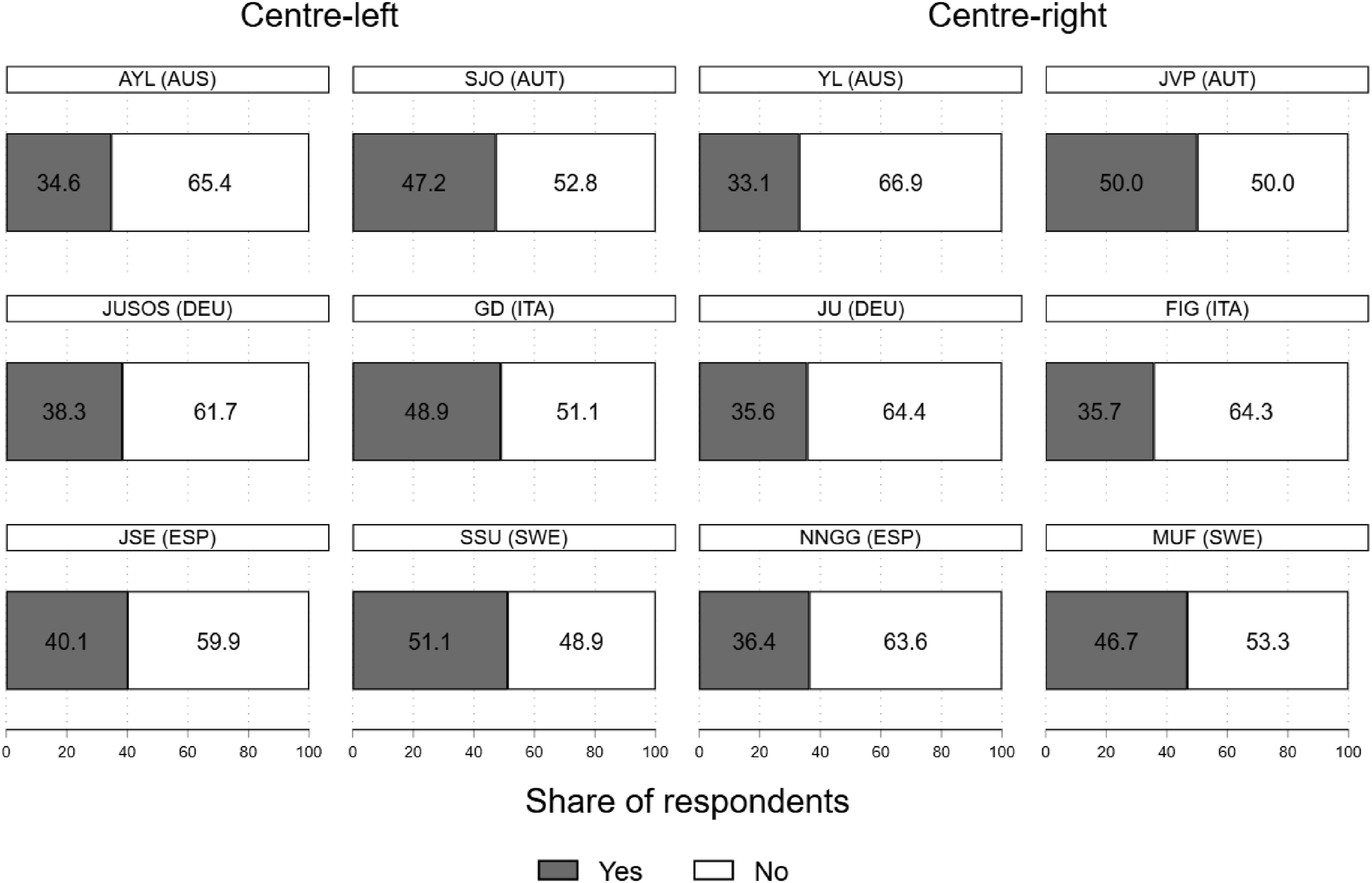
Although the Van Haute and Gauja (2015) volume does not look at members’ family background, Heidar and Kosiara-Pedersen (2020: 64) report that 39% of Danish party members and 50% of Norwegian ones had had a parent in the party. More strikingly, Cross and Young (2008: 353) found that 62% of young members of Canadian parties had a parent who had been a party member. Similarly, of the 519 young party members that Bruter and Harrison (2009: 41-42) interviewed, 53.4% mentioned that at least one family member was ‘connected with a political party’. 15 While our figures are lower than most of these, they still indicate that family ties remain an important feature of contemporary youth wing members.
When do they join?
We now consider at which stage of their lives young people join youth wings. As we envisaged, the majority of them signed up when at school (53.6%), followed by those who did so during university (41.3%). These account for almost all our respondents. In other words, even though the upper age limit for 11 of our 12 youth wings is 28 or over, and in some cases goes beyond 30 (see Appendix A), youth wings are organisations that people join earlier rather than later. 16
Beyond this general feature, we can see no common pattern distinguishing party families. Rather, the most notable trends are across countries. As Figure 4 (below) shows, while the two Spanish youth wings are almost perfectly balanced between school-joiners and university-joiners, our other five countries show clear tendencies of one or the other type. In Austria, Germany, and Sweden, members of both centre-right and centre-left youth wings usually sign up when still in school (see also Figure D4 in the Appendix). By contrast, in Australia and Italy, clear majorities of members in all youth wings join during university. This disparity does not seem to be due to party rules about minimum age limits: the four Australian and Italian youth wings’ lower limits are all between 14 and 16 years old (see Appendix A), which still leaves several years for people to join while at school. Rather, our results may reflect the different laws about political parties’ engagement with secondary schools. For example, while there has long been a tradition of Swedish parties and youth wings conducting school visits to inform students about their policies and recruit members (Bolin and Backlund 2021), Australian parties are not allowed to visit for such purposes and no party-political material can be distributed in schools – unless for educational purposes by teachers and, even then, it must be apolitically done (Government of Victoria 2024). Similarly, in Italy, it is prohibited to distribute electoral or other political material in schools (Fundarò 2024). When young people join youth wings.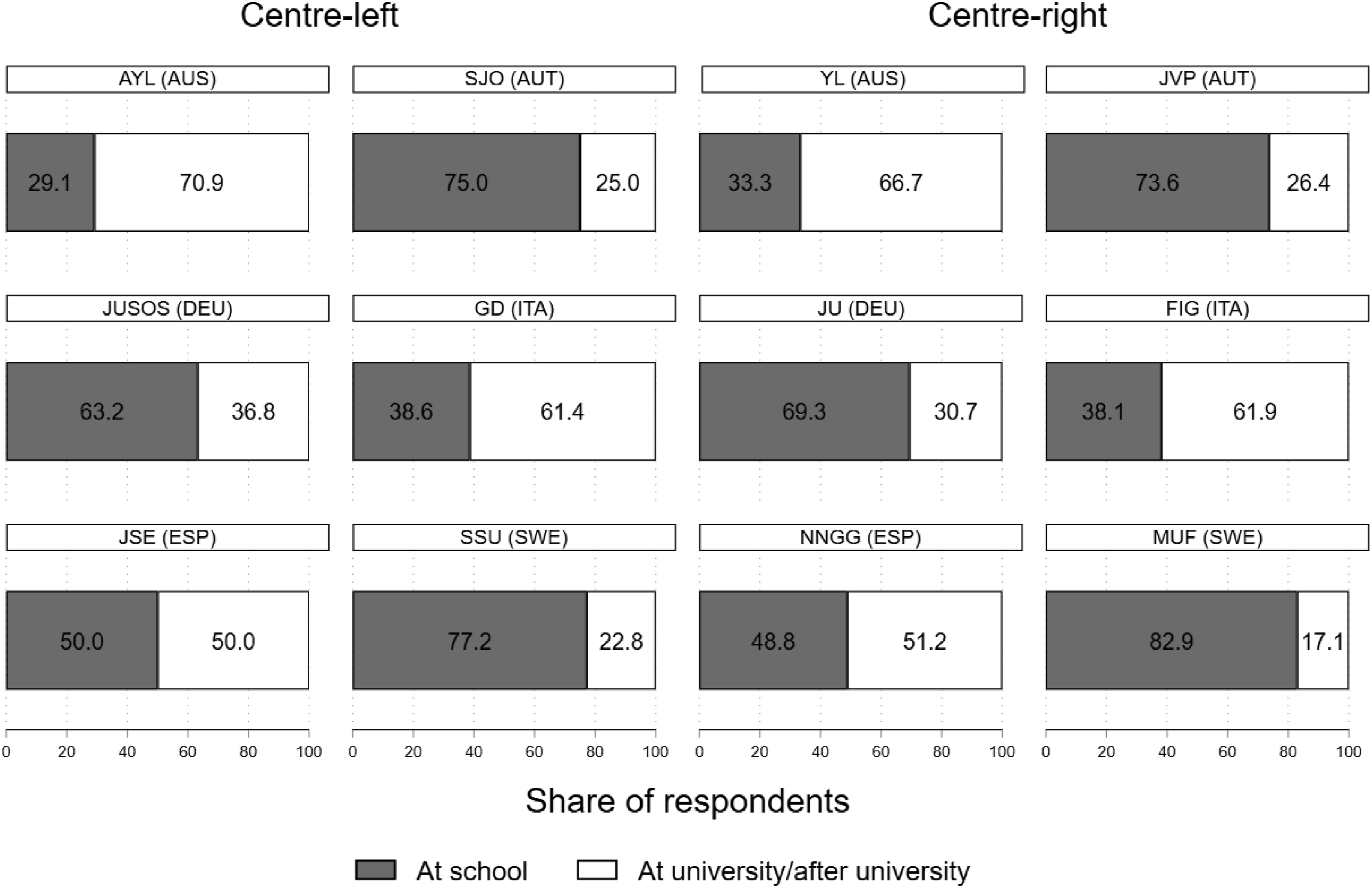
Why do they join?
Percentages of respondents who strongly agreed/agreed that they joined the youth wing for the listed reasons.
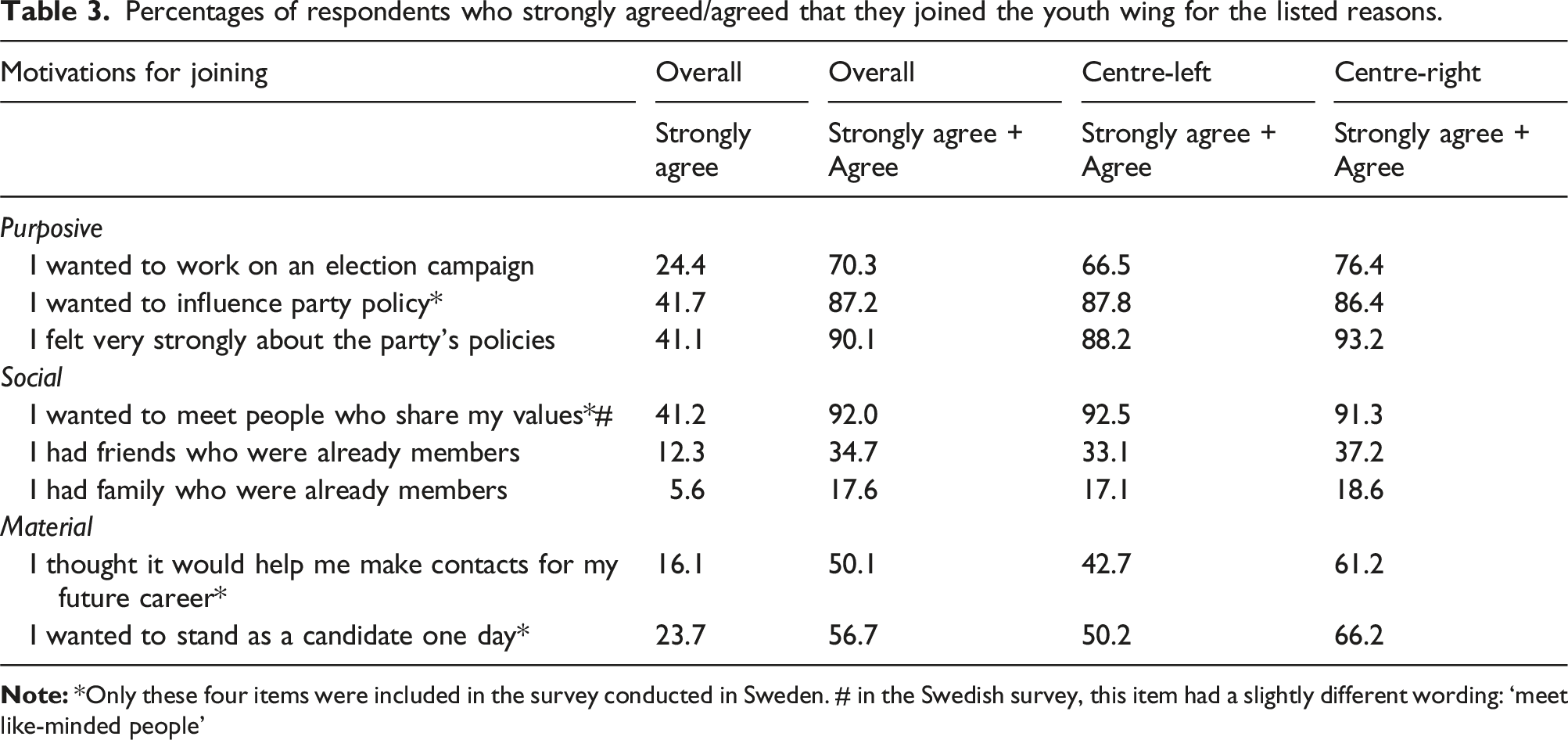
The most popular reason for joining youth wings is social and concerns meeting ‘people who share my values’, with over 90% of respondents strongly agreeing or agreeing that they signed up for this. In other words, the young people who join are partisan individuals who look for each other in youth wings. As we can see from the last two columns of Table 3, this holds true in both the centre-left and the centre-right. As regards the other social incentives, having family or friends who are already enrolled is far less relevant. Nonetheless, it is interesting to note that, of the two motivations, having had a friend who was already a member is more important than having had a family member – something that reflects the key role of peers in political mobilisation at that life stage, in line with existing research on youth political socialisation (Quintelier 2015). There are no striking differences between centre-left and centre-right on any of the three social reasons, but we do see some country disparities. Notably, in Austria, having had a friend who was already a member is cited as a reason for enrolling by half of both centre-left and centre-right respondents, which is over 10 percentage points more than any other youth wing (see Tables D1 and D2 in Appendix). By contrast, having had a family member in the youth wing or party is a lot more important for respondents from both Spanish wings, with again at least a 10-percentage points gap between them and all other youth wings (see Tables D1 and D2 in Appendix).
While the social incentive of meeting like-minded people receives slightly more support than any other, if we look at our three categories of incentives, purposive ones are those that, overall, elicit most agreement from our respondents. This is in line with what scholars have found is the case for senior party members (Gauja and Van Haute 2015: 193). The prospect of influencing policies and a strong feeling of identification with the party’s platform are two of the most prominent motivations for those who join youth wings (reported, respectively, by 87.2% and 90.1% of respondents). They are the two purposive incentives that receive ‘strong agreement’ from more than 40% of youth wing members. The third purposive incentive – the possibility of working on an election campaign – is less relevant, but still important for 70.3% of respondents. On this latter motivation, we find a noticeable difference between centre-left and centre-right youth wing members, with around 10 percentage points more of those on the centre-right citing campaign participation as a reason to join (76.4% vs 66.5%, respectively). There are also some clear divergences between countries: for example, 81% of Australian respondents cite working on a campaign as an incentive to sign up compared to 62% of German youth wing members (see Table D2 in Appendix). 17 While it would need to be investigated further, this may reflect the especially prominent involvement of youth wings at grassroots level in Australian federal and state campaigns (Kefford 2021), in addition to the short 3-year federal election cycle, which provides more frequent opportunities to participate.
Differences between party families and countries are particularly evident when we look at material incentives. The overall picture of youth wing members is of a very ambitious and career-driven group of young people, with half saying they joined to improve their networks, and almost 57% saying they did so in the hope of standing for election one day. Although it appears that material incentives are thus less important for joining youth wings than purposive and social ones, it is also true, as Ødegård puts it (2009: 144), that ‘ambition makes you look pretty ugly’ in political parties, and so some of our respondents may be reluctant to acknowledge it. In other words: while the levels of political ambition across our youth wings already appear extremely high, in reality they could well be higher. Notably, centre-right youth wing members appear even more motivated by these incentives. As Table 3 shows, there is a 16 percentage points gap between the party families as regards wanting to stand as a candidate in the future, and an 18.5 percentage points one as regards making contacts to benefit the respondent’s future career. Moreover, in every country, a higher proportion of centre-right members say they would like to stand as a candidate. In four cases (Australia, Austria, Germany, and Italy), the gap between the party families is at least 10 percentage points, while it is slightly lower in Spain and tiny in Sweden. There are also some country trends on these items. For example, while at least 60% of members in the Australian and Swedish youth wings agree or strongly agree that they joined to make contacts for their future careers, none of the youth wing memberships from Austria, Germany, and Spain reach 50% agreement for that statement (see Tables D1 and D2 in Appendix).
These differences notwithstanding, members of all youth wings are exponentially more inclined to say they have joined for material reasons than their counterparts in the senior party. For example, while 52.5% of members of the Italian centre-left youth wing, GD, enrolled to enhance their contacts and 57.2% did so with a view to running for election one day, just 1.7% of senior party PD members said they signed up for material reasons, according to Sandri et al. (2015: 127). Similarly, we find that 51.1% of Jusos members and 68.6% of JU ones joined because they thought they might like to stand for office in the future, but just 1.9% of SPD (centre-left) and 2.3% of CDU (centre-right) senior party members said they had joined for similar ‘selective outcome incentives’ (Spier and Klein, 2015: 93). 18 We observe the same gap in Sweden: 56.7% of SSU and 57% of MUF youth wing members agreed or strongly agreed that they had enrolled because they wanted to stand for office in the future, whereas just 1% of Social Democrats and 3% of Moderates members cited ‘political career opportunities’ as a reason (Heidar and Kosiara-Pedersen 2020: 60).
Conclusion
Youth wings fulfil vital functions for political parties but have long been an under-studied area of party politics research. To redress this, we conducted the Youth Wing Membership Survey (YOUMEM), which is the largest comparative study on members of party youth wings. Our YOUMEM dataset, which will be released in January 2026, allows party scholars to investigate key questions regarding the profiles, motivations, activism, and aspirations of the young people who make up the grassroots of centre-left and centre-right youth wings in Australia, Austria, Germany, Italy, Spain, and Sweden. In this article, we have used the dataset to provide an overview of who joins, when they join, and why. Taken together, the 12 youth wings in our six countries exhibit a number of common features, which point to how – rather than being a force for more inclusive participation – youth wings entrench existing inequalities. In short, they are boys' clubs, graduate clubs, family clubs and power clubs. Two-thirds of the members are men. Three-quarters are either attending university or already hold a degree. Many come from families with a background in party life. And a striking amount join with the aim of one day standing for elected office.
Beyond their similarities, we also find some important variations among our youth wing memberships. Notably, with the exception of when people join youth wings, party family differences tend to be more prominent than country ones. This speaks to debates on whether differences across party organisations follow first and foremost country-level (Scarrow et al., 2017) or party family trends (Demker et al., 2020). Some of the party family trends we found merit further reflection. In particular, why in each of the six countries we examined are centre-right youth wings even more dominated by men than is the case on the centre-left ? While this could be due to (young) women having leaned towards the left to a greater extent than (young) men in the past decades (Giger, 2009; The Economist, 2024), and to the greater presence of women among left-wing representatives (Keith and Verge, 2018; Kittilson, 2006), it would be worth investigating further the experiences of young women in youth wings. Our dataset can provide some insight into this, given that it contains considerable information about members’ backgrounds and activism, especially if combined with interviews and/or focus groups.
It is important also to bear in mind here that, irrespective of the different proportions of women in their youth wing memberships, this is evidently an issue for both centre-right and centre-left. As we have discussed, despite being in an era when women have greater opportunities for political careers, a large gender gap still remains in youth wings, and is the same as scholars have found in the past among senior party memberships. In other words: youth wings are not solving this problem. On the contrary, there is a significant imbalance at this crucial initial stage of the pipeline to future membership, candidatures, and senior positions. This should provide food for thought for senior representatives and officials in all mainstream parties. Moreover, given that, in parliamentary democracies, parties draw most of their candidates and officials from within their memberships (Hazan and Rahat, 2010; Karlsen and Staglie, 2017), a key issue they need to address is recruiting higher numbers of young women. Youth wings are a vital area on which to concentrate their efforts, especially since, as Hooghe et al. (2004: 207) argue, if such initiatives only begin in earnest when members are in the senior party, ‘patterns of inequality will already have been well established’.
Our striking results regarding the far higher education levels of youth wing members compared to members of their senior parties also spur ideas for further inquiry. While Sweden was an exception, overall, the findings on education are in line with the argument that contemporary democracies are taking on the features of a ‘diploma democracy’ (Bovens and Wille 2017), that is, a political regime ‘dominated by the citizens with the highest formal education qualification’ (ibid: 5). As with youth wing gender imbalances, this should be another cause for concern among party elites, especially at a time when the number of young people joining political parties is said to be in decline (Scarrow and Gezgor 2010). Broadening their recruitment efforts among adult youths beyond university campuses, for example, would be a good start. Future studies could explore this issue further by using the YOUMEM database in combination with other publicly available information such as census data, or the World Values Survey (WVS) to examine how youth wing members compare to the general public of young people (Cross and Young 2008). Based on our results so far, be it in terms of education, family background or career ambitions, such research would likely show that contemporary members of youth wings already form their own distinct ‘political class’.
Our dataset, we hope, is an important first step towards better understanding that emerging political class. It can be used on its own to test theories about young people’s participation in politics and about party members more generally, and it can be used in tandem with other datasets to answer long-standing questions in the party scholarship. For example, by combining the YOUMEM results with data from the Political Party Database (PPDB) (Poguntke et al., 2016), scholars could investigate how different organisational features of senior parties influence young members’ involvement in youth wings. Moreover, researchers could repeat our surveys not just in other countries and with other parties, but also with the same youth wings as we covered, in order to provide the wider scholarly community with valuable longitudinal data. Although, we should warn you, it is a long and often frustrating job chasing youth wing leaders to send out surveys!
Supplemental Material
Supplemental Material - Inside party youth wings: The YOUMEM project
Supplemental Material for Inside party youth wings: The YOUMEM project by Duncan McDonnel, Sofia Ammassari, Marco Valbruzzi, Niklas Bolin, Annika Werner, Reinhard Heinisch, Ann-Cathrine Jungar and Carsten Wegscheider in Party Politics
Footnotes
Acknowledgements
We would like to thank the participants at the 2024 UK PSA Conference in Glasgow and the 2024 ‘Young People and Politics’ AusPSA workshop in Brisbane for their comments on earlier versions of this paper.
Declaration of Conflicting Interests
The author(s) declared no potential conflicts of interest with respect to the research, authorship, and/or publication of this article.
Funding
The author(s) received no financial support for the research, authorship, and/or publication of this article.
Ethical statement
ORCID iDs

Supplemental Material
Supplemental material for this article is available online.
Notes
Author biographies
References
Supplementary Material
Please find the following supplemental material available below.
For Open Access articles published under a Creative Commons License, all supplemental material carries the same license as the article it is associated with.
For non-Open Access articles published, all supplemental material carries a non-exclusive license, and permission requests for re-use of supplemental material or any part of supplemental material shall be sent directly to the copyright owner as specified in the copyright notice associated with the article.
