




Abstract
This article introduces the new Party Ethics Self-Regulation database, covering 21 indicators on ethics self-regulation organised into three categories (norms, oversight and enforcement) across 200 political parties of 25 countries available in 2020. Internal self-regulatory efforts developed by political parties have been insufficiently addressed in the literature and remain a blind spot in existing databases on political parties. Our analyses indicate that Radical Right Parties have a lower probability of adopting codes of conduct/ethics when compared to any other party family. It also reveals the strongest effect of country-level factors, with party system institutionalization, political corruption or level of democracy shaping the adoption of at least one form of ethics regulation/body. These findings are relevant because they open the debate about the possibility of incrementing ethics self-regulation within political parties through ethics-targeted public funding and raise the need for further research on the effects of such measures on the parties’ ethical climate and public legitimation.
Introduction
During the last decades, political parties across Europe have consistently recorded the lowest share in trust in most cross-national surveys, regardless of a country’s party and electoral systems (CSPL, 2014: 20–21). Low trust in parties has coincided not only with an increase in scandals associated with the financial probity of parties, party officials and designated candidates but also a poor record in clarifying what those standards should be and how they ought to be enforced.
In response to mounting public opinion pressure, in fulfilment of legal obligations or as an effort to comply with international standards, political parties have recently engaged in a series of intra-party reforms ‘to restore public confidence in political forces and the whole democratic system as well as a precondition for real accountability and responsibility’ (Venice Commission, 2009: 23). Codes of conduct/ethics (CCE) have been increasingly adopted by many political parties. Internal conflict resolution bodies have seen the scope of their disciplinary competencies broadened to cover aspects related to the ethical conduct of their members and new ethics committees have been created and inserted into party statutes/constitutions. As much as other intra-party reforms, CCE is important to generating public legitimacy; for as institutionalists argue the behaviour of institutions and public officials ‘function as important signals to citizens about the moral standard of the society in which they live’ (Rothstein and Stolle, 2008: 446). Moreover, studies on private and public sector organisations reveal that codes of conduct positively impact employees’ behaviours (Thaler and Helmig, 2016), and a recent experimental study concludes that voters reward political parties’ self-regulation efforts ((Pereira et al., under review)).
Yet, despite their relevance, no single study or project has ever tried to map the mechanisms and processes through which parties set ethical standards for their members. When and why are ethics norms set? To whom do they apply? Which party bodies are responsible for oversight and enforcement? What factors explain variations in internal ethics frameworks? The Party Ethics Self-Regulation (PESR) database aims at answering these hitherto unexplored questions. It relies on a team of country experts, and researchers to code a wide set of indicators that chart the norms, oversight and enforcement mechanisms across a wide range of parties (200) and countries (25). This is the first-ever study to carry out an extensive survey on ethics regulations, and as such it offers key contributions to the field.
First, the role of internal jurisdictional bodies as regulators and guarantors of internal pluralism, due process and ethical conduct has been neglected for a long time within theories of party organization and change (Duverger, 1951; Katz and Mair, 1994; Michels, 1911; Ostrogorski, 1902). Second, most research focussing on intra-party reforms, privilege intra-party democracy (IPD), that is the rules and procedures adopted to enhance members’ participation in internal decision-making (Hazan and Rahat, 2010; Poguntke et al., 2016; Scarrow et al., 2017), but neglect ethics regulations and management and how this shapes the parties’ public image. Third, literature on corruption control (Batory, 2012; De Sousa, 2014; Hanna et al., 2011; Casal Bértoa et al., 2014) has vastly covered the nature and quality of ethics legislation enforced upon political parties and their elected officials by external oversight bodies, but little has been said about parties’ self-regulatory efforts. The PESR offers a unique opportunity to abridge this gap by clarifying the mechanisms and processes through which parties set ethical standards for their members. It also contributes to understanding how parties organize from a comparative perspective and to answering questions that have been so far neglected.
The article is organised as follows. First, we review existing research and find the blind spot that neglects ethics frameworks before laying out our approach to fix it. Second, we explain the dimensions of analysis in our database, their operationalisation and data collection methods. Next, we describe the scope of the database along two dimensions of variability (party family, party age). Finally, we explore potential contributions to major debates in the literature by examining the relationship between different types of ethics regulations/bodies and a series of explanatory variables, at the party (party family and party age) and country-level (public funding regulations, corruption, level of democracy and party systeminstitutionalization). Overall, we find evidence of the role of party family, and several country-level factors toexplain variation in ethics frameworks. Overall, we find evidence of the role of party family, and party system institutionalization to explain the presence of CCE across parties/countries.
Why should we bother?
In the last two decades, democracies have been adopting and reviewing comprehensive policy frameworks to regulate political ethics and ensure that officeholders act in the public interest through a complex mixture of hard and soft law approaches, internal and external regulations and supervision governing the ethical conduct of individual and collective political actors (Bolleyer et al., 2020; Bolleyer and Smirnova, 2017; Olsen, 2017). This move towards ethics regulation in political life has been driven by both internal (e.g. political crisis and corruption scandals) and external factors (e.g. increased international concern with ethics and transparency in politics) and affected ‘sensitive areas’ such as party laws and political financing (Casal Bértoa et al., 2014), lobbying (Chari et al., 2020), financial disclosure or gifts and hospitality (Bolleyer and Smirnova, 2017). The shift from meta- to self-regulation is partly influenced by developments taking place in the private sector and its expansion to the public sector. Parties were not immune to this trend and benefited from the general debate about ethics regulation taking place at the parliamentary and cabinet levels (de Sousa and Coroado, forthcoming), and started to adopt new guidelines and CCE to develop internal bodies trusted with disciplining the ethical conduct of their members, staff and elected officials, and improve a series of financial reporting procedures. Some of these measures have been imposed by law, as in Spain, others have resulted from parties’ initiative in reaction to internal and external pressures. Why is it important to study these developments?
First, because there is a reputational issue at stake. Trust in political parties has been severely damaged by recurrent scandals concerning the venality of its members, staff and elected officials and/or its illicit financing practices (e.g. Smilov and Toplak, 2016; Williams, 2000). People are increasingly concerned about the inefficacy of government efforts to combat political corruption and the insufficient transparency and supervision of the financing of political parties. 1 If parties are ‘to align their policies closely to those of the interests and opinions of the electorate’ (Ware, 1979: 43), they cannot ignore this increased importance of political corruption in people’s priorities and will need to respond to higher demands for improved ethical standards in party life through a series of internal reforms (Orr, 2001: 90). Studies have shown that such congruence exists as citizens’ value parties’ self-regulatory efforts (Pereira et al. forthcoming).
Second, system-level quality cannot be decoupled from the quality of its key components, political parties, whose performance depends on the quality of their internal governance. Although this is not a consensual view in the IPD literature ((von dem Berge and Pogunkte, 2017): 141), we believe the quality of party leaders, candidates and elected representatives and their contribution to the wider parliamentary and political processes cannot be disassociated from the quality of IPD-procedures (Hazan and Rahat, 2010), of which the capacity of party organisations to uphold higher ethical standards to their members’ and the party’s conduct is an important component. The focus of the fast-growing IPD literature (Hazan and Rahat, 2010; (von dem Berge and Pogunkte, 2017)) has primarily been on the level of inclusiveness of the party electorates, the responsiveness of party leadership to the base and deliberative aspects related to the framing of electoral platforms and coalitions; ethics regulations remain poorly covered 2 .
Lastly, most literature on the transformation of European political parties has focused on the crisis of representation (Hayward, 1995; Köchler, 1987), the distancing of parties from civil society and their proximity to the State (Katz and Mair, 1994), the decline in militancy, the expansion of party structures vertically and horizontally and their level of Europeanisation/internationalisation; but neglects the ethical framework in which party organisations operate. Briefly put, ethics regimes within political parties remain poorly conceptualised and as result, there is no comparative data available, as shown below.
Existing databases on political parties
The study of political parties has been systematized and enriched by many key databases. A cursory analysis of their goals and dimensions is needed to justify why we think a new database – focussing on ethical issues – is important and missing in the field. Janda’s Comparative Political Parties Data 3 was the first to comparatively analyse 158 political parties, operating in 53 countries, spanning all continents from 1950–62, over 111 indicators. Later on, in ‘Political Parties: A Cross-National Survey’ Janda (1980) updates the dataset up until 1978. The conceptual framework measures external relations (e.g. issue and goal orientation, governmental status and institutionalization and autonomy) and internal organization (degree of centralization, centralization of power, coherence and involvement). Within the latter variables such as administering discipline 4 and party purges 5 , somehow hint at how internal discipline is handled. However, there is no information on the norms and bodies that regulate and/or manage ethical issues.
Katz and Mair’s (1994) ‘Party organizational data’ 6 covers various aspects of party organizational development in 11 Western Democracies between 1960 and 1990 from membership and affiliation rules to candidate selection, policy formation and internal decision-making. Though the database also covers some issues related to members conduct, such as the obligation not to engage in ‘disreputable’ activities or to behave in ways that could damage the reputation of the party, it is less informative about the powers and functions of internal jurisdictional bodies and the norms and procedures to address deviant conducts.
The Party Law in Modern Europe 7 database offers information on the legal regulation of political parties in 33 post-war European democracies for the period between 1944 and 2013. It draws on party laws to map various aspects of party organisation, namely, internal procedures, members’ incompatibilities and organizational structure, party finance and external oversight; and IPD regulation that addresses the need for an internal jurisdictional body for internal dispute settlement. Yet it does not cover ethics self-regulatory efforts within political parties, such as the adoption of CCE or ethics management bodies.
Finally, the Political Party Database Project (PPDP) (Poguntke et al., 2016), the most recent comprehensive and extensive cross-national database on political party organizations, covers 280 parties in 53 countries for the period 2016–19. 8 Though some of the indicators covered touch on issues that are closely related to our research, there are some differences. Information on rules for expelling party members is primarily concerned with disagreeing with the party on fundamental issues of principle and not regarding the disciplining of the ethical conduct of party members, staff or elected officials. Party financing data is primarily focussed on externally imposed standards, such as expenditure caps, sources and amounts of funding, reporting obligations, but says little about internal financial auditing mechanisms and procedures. Indicators on membership include formal agreements with the party principles during entry, but do not cover vetting procedures during candidate selection. In short, there are no dedicated indicators to map recent trends in ethics self-regulation within political parties.
The party ethics self-regulation database: dimensions, operationalization and methodology
To fill in the gap regarding the availability and systematization of data on party ethics self-regulation, we have set up the PESR database, part of the ‘Ethics and Integrity in Politics’ (ETHICS) project. The PESR congregates data collected through a survey on ethics self-regulatory instruments and processes within political parties. It offers information on 200 political parties of 25 countries (21 European Union countries plus Albania, Canada, New Zealand and Ukraine) available in 2020 (Appendixes 1 and 2). These parties include most or all of those who had gained seats in the lower houses of their respective national parliaments at that time. In the case of electoral coalitions, only the largest member was considered. The number of parties per country varies considerably, due to the nature of each party system. In Malta, for instance, there are only two parties in parliament, while Croatia and Italy have almost 20 parties (see Appendix 2, Figure 4).
PESR database: Dimensions and Variables.

We started the data-gathering process by drafting a survey on party ethics self-regulation. The checklist questionnaire, consisting of 24 items, was constructed by the authors and reviewed by an external political party expert. 10 The data-gathering process was two-phased. First, we sent survey request emails to the political parties that had email addresses published online. This step proved rather unsuccessful, given the low return from parties, which we attribute mostly to timing, as the request was sent out between March and April 2020, amidst the generalized Covid-19 lockdowns. Only seven party officials replied to the survey, from Belgium, Portugal, Ireland, Greece, Luxembourg and Latvia. We then moved on to another phase and set up an international network of 19 country experts with the required language skills to extract data from parties’ original documents and websites and fill in the questionnaire. 13 When the data-gathering process was concluded by the country experts, we coded it to the PESR database and added the party features variables and data extracted from the PPDB.
The exercise has limitations. We are looking at formal regulations which may not capture the full complexity of the functioning of ethics frameworks, and our data does not account for statutory changes over time. That said, the PESR database offers unique data, a clear framework of analysis, which heightens the possibility of future improvements. As for the focus on formal powers and functions and not the actual practice, this is intentional. Our goal is to comparatively map the formal regulations using a common framework, so that future research can explore in more depth how these self-regulatory efforts come into being and how (un)stable party ethics regime are.
Exploring the database: Norm-setting, oversight and enforcement
This section examines patterns of norm-setting, oversight and enforcement by party family and party age, and where relevant we highlight country differences. Prior studies reveal that differentials in parties’ internal rules and organizational models are shaped by their origins, institutional contexts and ideological features and this informs our decision to explore these variables (Janda, 1980; Katz and Mair, 1994; Poguntke et al., 2016). The concept of party family is not easily defined as it implies establishing some level of functional equivalence between parties whose core features may change over time (Mair and Mudde, 1998; Kitschelt, 2018; Ware, 1996). Still, this concept is extremely useful for the comparative study of parties and party systems because it allows exploring the resemblances/differences between parties and how this relates to their internal and external functioning (Mair and Mudde, 1998). Party families share similarities in terms of their programmes, resources and modes of internal organization (Kitschelt, 2018; Poguntke et al., 2016) that, we argue, may also affect how ethical affairs are handled.
Left-libertarian parties distinguish themselves from social democratic or socialist parties for prioritising individual autonomy, participatory democracy, equality and inclusive IPD procedures and for placing a minor emphasis on party discipline (Kitschelt, 1988). Far-Right parties give ‘their leaders most formal power’ (Poguntke et al., 2016), which can turn discipline mechanisms rather more personal and ad hoc. Socialists, give the least power to their leaders, value internal discipline mechanisms more and are the least open to plebiscitary decision-making procedures – along with the Far Right (Poguntke et al., 2016). And finally, the Christian Democrats and the Social Democrats are the most established, wealthy and resourceful party families and often use IPD procedures that privilege members involvement in debates rather than in decision making (Poguntke et al., 2016). The relevant question is whether such similarities and differences explain the propensity to adopting ethics regulations? Our expectation is that Left Socialists – given their stronger emphasis on discipline and demonstrated high level of unity (Little and Farrell, 2017: 297) – will have more incentives for adopting CCE or bodies regulating ethical and disciplinary matters when compared to other party families.
We also consider the relevance of party age, not only as a metric for the level of party institutionalization (Janda, 1980; Mainwaring, 1999; Roberts and Wibbels, 1999) but also to understand temporal organizational transformations within political parties (Katz and Mair, 1994). We expect that ‘well-disciplined and organized working-class parties that sprouted and consolidated in the late 19th and early 20th’ will place a stronger emphasis on discipline mechanisms in order to foster party unity (Mainwaring, 1999: 66). Younger parties, instead, are known for being less susceptible to Michels’ iron law, for being more prone to adhering to IPD procedures (Bolin et al., 2017:1 65) and embracing new issues to distinguish themselves from traditional mainstream parties. Thus, we expect younger parties to be more open to adopting CCE while older parties will tend to have traditional disciplinary and ethics management bodies.
Norm-setting
The discussion on the need for political parties to adopt CCE and to bind their members to deter wrongdoing and to provide a benchmark for proper conduct is part of a broader effort to improve their internal governance is far from new and has partly been influenced by similar developments taking in place in other private and public sector organisations. In response to what was perceived as ‘a serious crisis in public confidence’, the Parliamentary Assembly of the Council of Europe urged political parties to ‘step up efforts aimed at developing intra-party democracy as well as the accountability and transparency of their decision-making bodies’. Political parties ought to develop internal rules to complement national legislation on political financing, asset and interest disclosure and corruption control in general, and set up ‘independent disciplinary bodies to investigate and sanction corruption within parties’ and to ensure ‘transparency, high standards of conduct and sound management in their public performance to maintain the trust and confidence of citizens’ (CoE, 2007: 2–4). More recently, the Venice Commission and OSCE/ODIHR Guidelines on Political Party Regulations suggested that CCE should be used to help raise awareness of appropriate behaviour of parliamentarians with respect to the use of public resources (Venice Commission and OSCE/ODIHR, 2020: 37). Thus, the adoption of CCE is part of a global concern towards the need to tackle issues of transparency, accountability and good conduct within and by political parties.
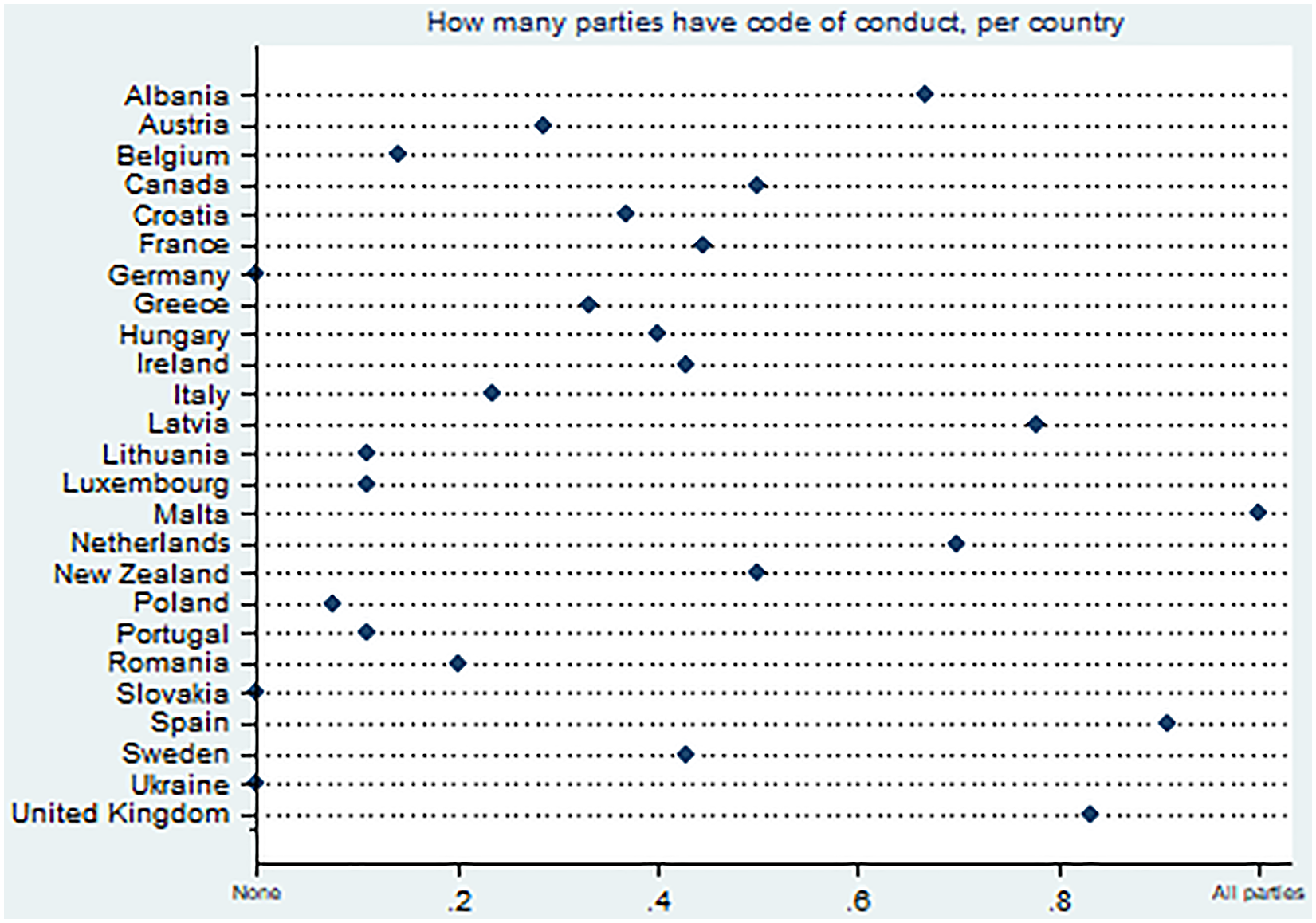
Our database reveals a strike variation in the presence of CCE within political parties. Out of the 200 parties surveyed, only 70 (35%) have CCE separate from the statutes and bylaws (Figure 1). New Zealand, Canada, Netherlands, Albania, Latvia, United Kingdom, Slovakia and Malta are the countries where more parties regulate ethical issues (Figure 2). In this cluster, more than half of the political parties included in the database have separate formal ethics regulations, which may not only contribute to institutionalizing good conduct but help foster an ethical culture at the party system level. In the United Kingdom, the Conservative Party, the Plaid Cymru, the Scottish National Party, the Green Party and Ourselves all have CCE. In Spain, 10 out of the 9 parties observed regulate ethical issues internally; including regionalist parties (e.g. Galician Nationalist Bloc, Basque Country Gather), new populist left-wing (We Can) and right-wing parties (VOX) and traditional mainstream parties (Popular Party and Spanish Socialist Workers’ Party). In contrast, in countries such as Austria, Romania, Lithuania, Luxemburg, Portugal, Slovenia, Ukraine and Germany, there is little if any regulation at all. This cluster is quite puzzling as it includes established but also younger democracies. Thus, all 10 German parties surveyed do not display internal ethics regulations (e.g. the Social Democratic Party of Germany, Free Democratic Party, Christian Social Union in Bavaria and Alternative for Germany). The same can be said about 8 Slovakian parties, 12 out of 13 Polish parties and 9 out of 10 Portuguese parties. To be fair, the lack of separate formal CCE does not mean, that parties do not care about good conduct and ethical issues. As later discussed, most parties have a body that deals with ethics and disciplinary matters. Ethics self-regulation: the presence of CCE, and reasons for its adoption. Notes: The questions used: Q6. Does the party have a code of conduct/ethics (CCE) separate from the statutes/bylaws? Q9: Why was it adopted? (Q9 is a multiple choice question, so the percentages exceed 100%). Parties with(out) CCE, per country. Notes: Country averages for Q6. Does the party have a code of conduct/ethics (CCE) separate from the statutes/bylaws?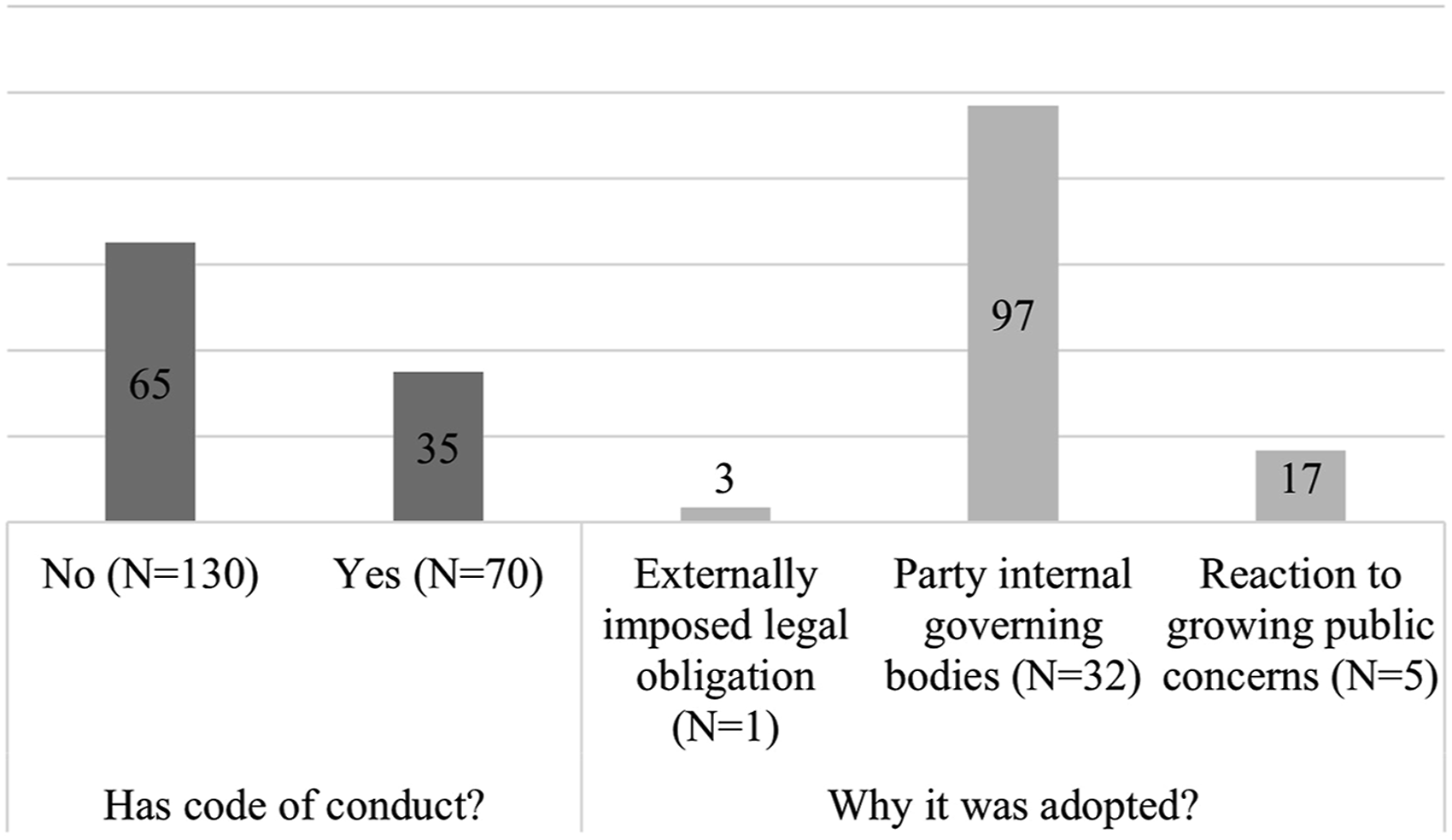
In virtually all cases, the decision to adopt CCE was primarily endogenous, in that it was adopted following the initiative of parties’ internal governing bodies (97%). Our data does not fully disentangle whether this decision followed internal or external pressures, but some parties officially admitted that the adoption of CCE was a response to mounting public concern about declining ethical standards in public life. The Democratic Left Alliance (Poland) adopted a CCE both to fulfil an external legal obligation and to react to growing public concern about party ethics. The need to protect the public image of the party was also a trigger for the adoption of CCE by the Forum for Democracy and the People’s Party for Freedom and Democracy (Netherlands), the Coalition of the Radical Left (Greece) and the Sinn Fein (Ireland).
In a study like this, we cannot fully explain the timing of these decisions, as our variables do not capture the specific contextual factors and inner party logics that account for them. Reality is more colourful and complex than we can explore here. What is officially stated as the result of a decision by the internal governing bodies may be imposed on a party through scandal and/or the mishandling of misconduct. This has been the case, for instance, with the adoption of sexual harassment provisions by Swedish parties. As a spill-over of the global #MeToo campaign (2017), several allegations of sexual misconduct were brought against male MPs. This has not only accentuated the adoption/revision of ethics codes and the introduction of whistleblowing mechanisms but it also led to a shift in focus from financial impropriety to sexual harassment. In the UK, the poor handling of antisemitic allegations combined with the absence of proper procedures and training led the Labour Party to be investigated by the Equality and Human Rights Commission and condemned for breaches of the Equality Act. This has pushed the party to the adoption of new CCE on anti-Semitism in 2018, which the party believed to be ‘detailed and comprehensive’, but the contesters described as ‘toothless’ guidelines. In Germany, Angela Merkel’s Christian Democrats (CDU), which at the time of the survey did not have CCE, has in the meantime (March 2021) adopted ethical rules following corruption scandals involving three members of the party, who subsequently stepped down as MPs 11 . Among other things the regulations stipulate that ‘politicians are prohibited from accepting financial contributions and must openly declare any relations they may have with foreign governments or businesses’; that ‘municipal politicians must recuse themselves from votes for projects that they may have ties to’ and ‘that party members must make a stark delineation between their work as representatives of the people and their activity within the party’ 12 .
CCE by party family and party age.
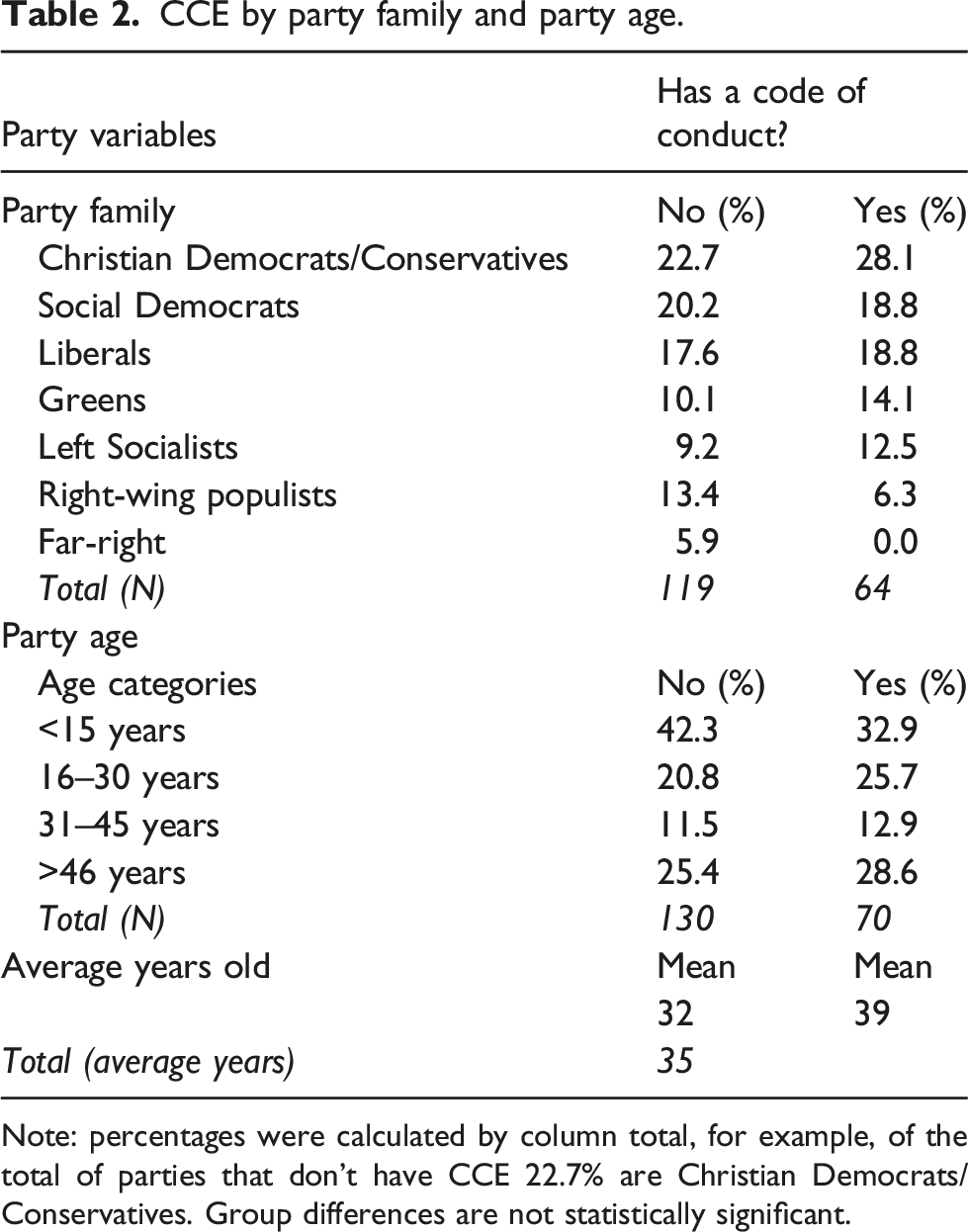
Note: percentages were calculated by column total, for example, of the total of parties that don’t have CCE 22.7% are Christian Democrats/Conservatives. Group differences are not statistically significant.
In terms of the addressees of the norms and procedures prescribed by CCE, the data (results not shown) reveal that in 70% of the cases, the rules concern more than one type of political actors: first and foremost, the conduct of party members (80%) and party officials (72%), followed by party representatives (62%), party candidates (33%) and third parties (22%).
Oversight
As public entities’ parties are to different degrees equipped with mechanisms and bodies that are responsible for tackling internal ethical issues, even if they do not dispose of a CCE separate from their statutes and bylaws. Both party statutes/bylaws and in more detail CCE prescribe established, accustomed or expected ways of behaving in the exercise of official duties to party members and in some cases, extend those obligations to specific conducts in the private domain. Since these are self-regulation instruments, they are enforced by internal bodies, which means that much of its success depends not only on its format, resources and competences, but also, if not primarily, on credible commitment from party leaderships and pressure from voters.
Party bodies responsible for the enforcement of ethical regulations.
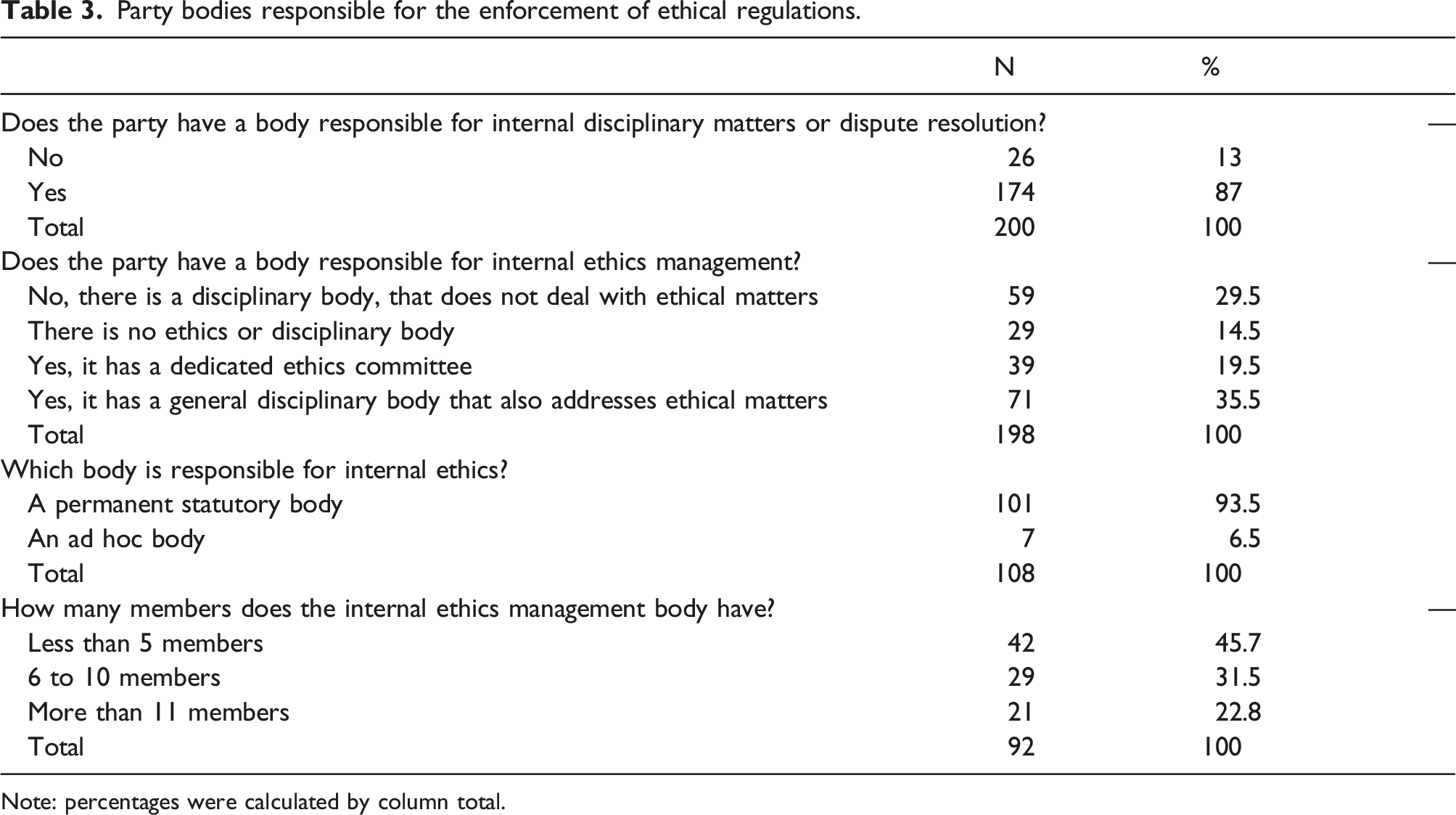
Note: percentages were calculated by column total.
The party bodies responsible for internal disciplinary matters address multiple issues, including violations of the statutes/bylaws (87.3%), membership issues (63.3%), bringing the name of the party into disrepute, unethical conduct of members/representatives (43.4%), members’ roles and responsibilities (43.4%), internal electoral disputes (38.7%) and internal electoral disputes (35.3%). The conviction of members/representatives for (non) political crimes is mentioned in only ¼ of the cases (results not shown). These issues reflect the provisions set under party statutes/bylaws and CCE.
Where a party body responsible for internal ethics exists, it is often a permanent statutory body (93.5%) and its size can vary from less than 5 members (e.g. New Zealand Labour Party and New Zealand National Party) to more than 11 members (e.g. Centre Party and Swedish Social Democratic Party) (Table 3). In most cases, the members of the internal ethics management body are appointed either by the party congress (61.7%) or the party executive (24.5%), whereas appointment by the party president/secretary-general (4.3%) or election by the party members (9.6%) is far less common (results not shown). Parties where the choice relies on the hand of the members include the Portuguese FREE and the Spanish We Can, both left-libertarian parties which are known for their participatory culture and higher levels of intra-party democracy (Rodríguez-Teruel et al., 2016; Sanches et al., 2018).
Party bodies responsible for the enforcement of ethic regulations by party family and party age.
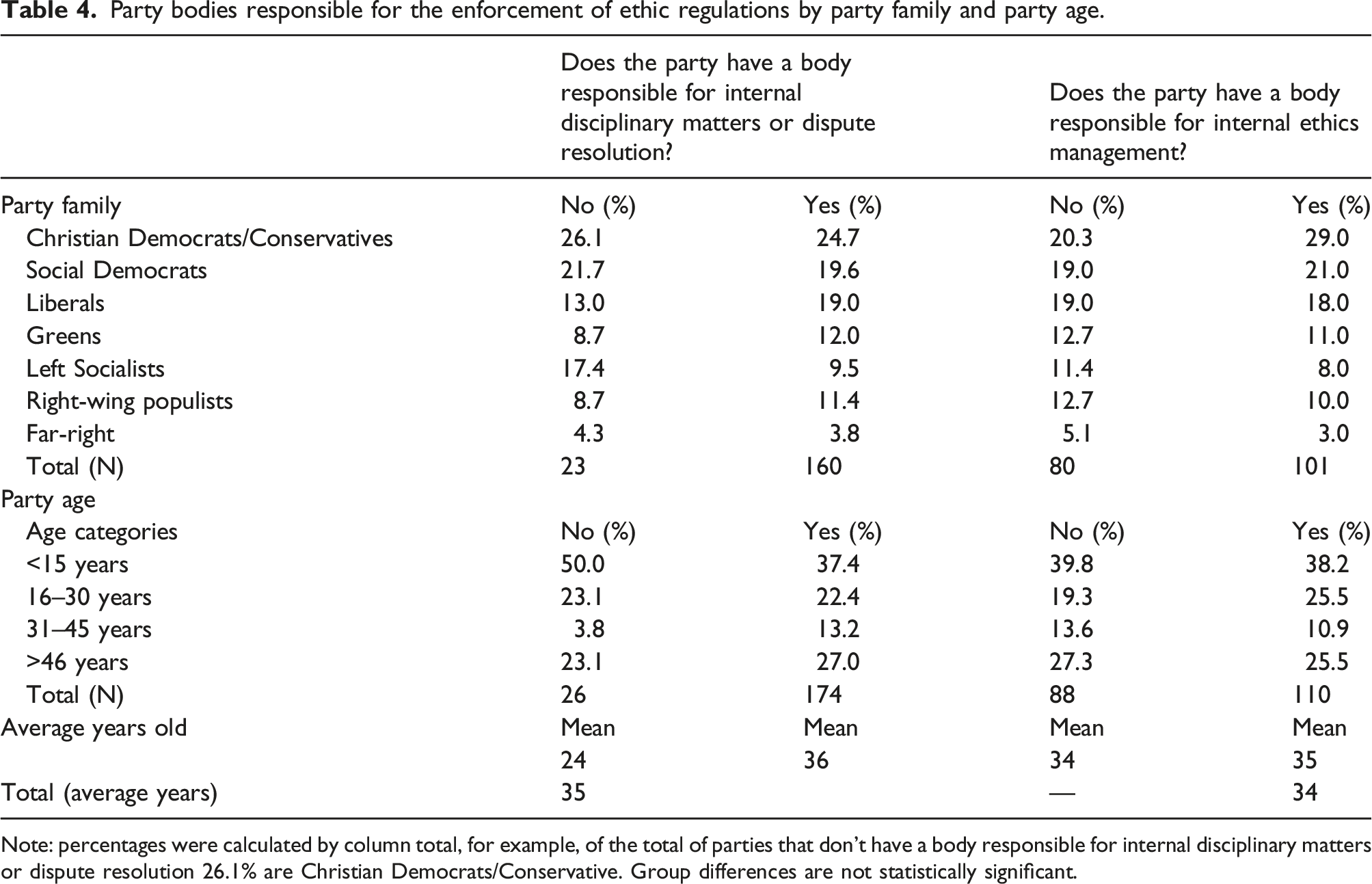
Note: percentages were calculated by column total, for example, of the total of parties that don’t have a body responsible for internal disciplinary matters or dispute resolution 26.1% are Christian Democrats/Conservative. Group differences are not statistically significant.
Enforcement
The body responsible for internal ethics management may open a proceeding against a member/representative acting on party members’ complaints (62.9%), by request of another internal governance body (67.0%), by its initiative (47.4%) or on external complaints (11.3%) (results not shown). Several disciplinary measures can be applied against the misconduct of party members/representatives (Figure 3). The strongest, but also the most prevailing form of sanction, is the expulsion from the party (89.2%), followed by temporary suspension from membership or office (71.1%), formal warning (64.7%) and reprimand (50%). Parties contemplating the wider range of sanctions include the Conservative Party, the Labour Party, Fianna Fáil, the Social Democratic Party of Austria and We Can. In contrast, the parties with the least extensive sanctioning framework include the Christian Democrats and the Croatian Social Liberal Party. Disciplinary measures that can be applied against the misconduct of a member/representative. Note: Q14 Which disciplinary measures can be applied against the misconduct of a member/representative? Please select all that apply.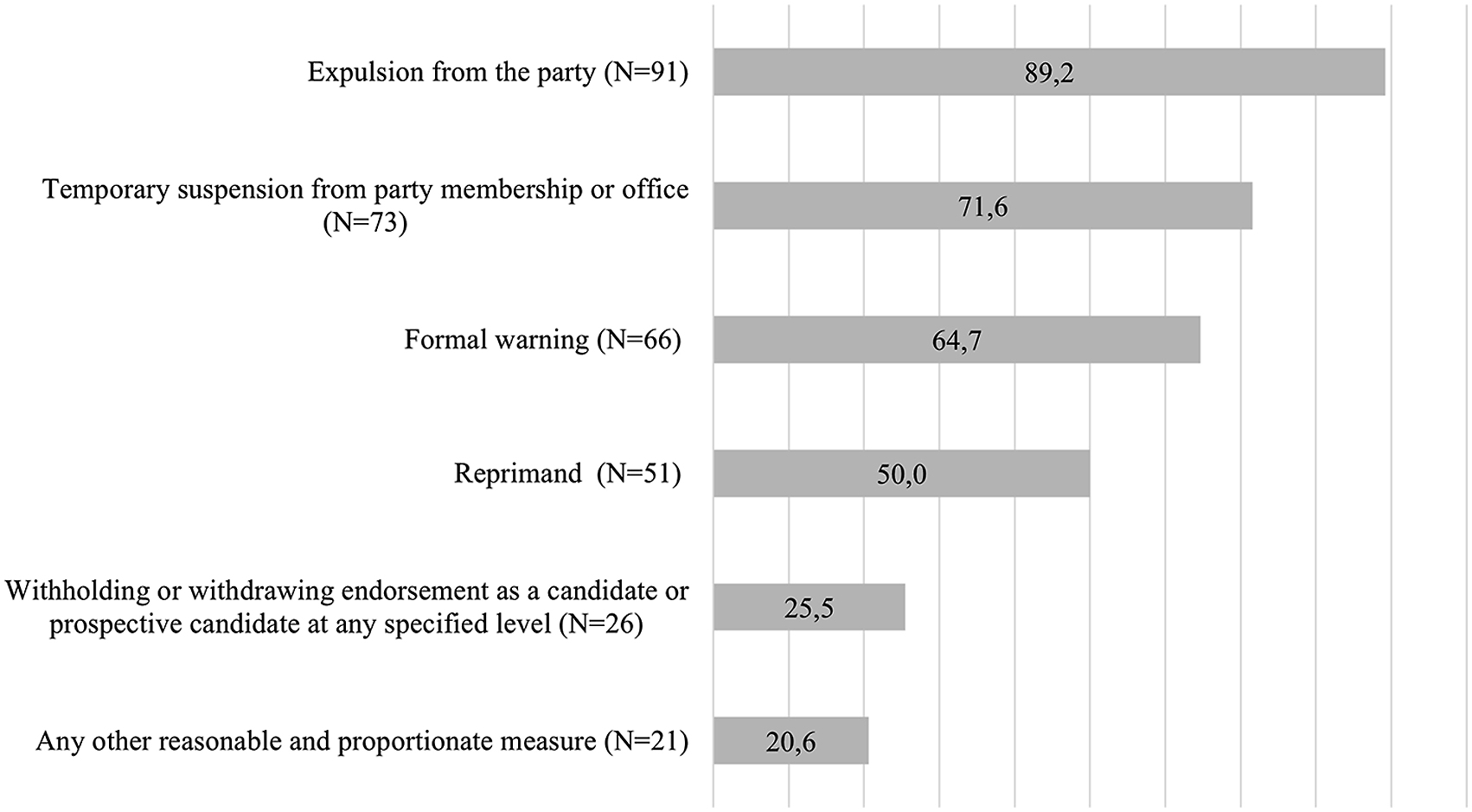
Disciplinary measures, per party family and party age.
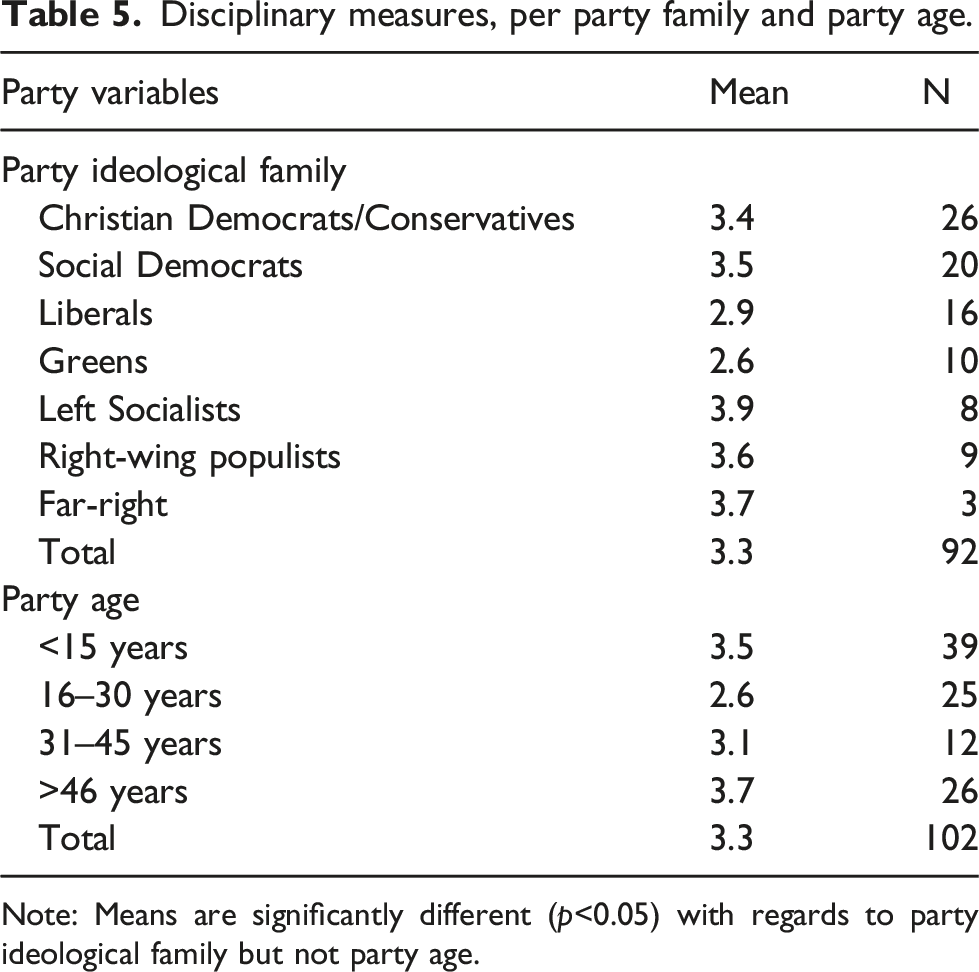
Note: Means are significantly different (p<0.05) with regards to party ideological family but not party age.
In terms of age, the results do not capture a linear relationship. More specifically, we find that both the youngest and the older parties display on average more disciplinary measures in their statutes than the parties between 15–30 and 31–45 years (however, the relationship is not statistically significant).
Finally, the decision of the internal ethics management body can be final (40.2%) or subject to review by another party body (33.3%), the party congress (3.9%) or the executive (22.5%).
Explaining variation in ethics frameworks
This section further explores the potentialities of this dataset, and more effectively tests the effects of both party and country-level variables on parties’ ethics regulations. We are aware of the limitation of this exercise, as our variables do not capture the contextual drivers behind parties’ decisions; but our goal is to shed deeper light into this phenomenon. In this exercise, we were inspired by studies which have shown that country-level factors often outperform party-level factors when it comes to explaining IPD levels (Little and Farrell, 2017). Thus, we wanted to test if the same applies concerning variation of ethics regimes within political parties: do party-related variables account for the variation found in the data, when controlling for unobserved country level variables? We argue that a country’s level of corruption, democracy, finance regulation and party system institutionalization may create different incentives for the adoption of ethics regulations at the party level.
For the sake of space, we can only briefly discuss the theoretical expectations linking country-level variables to parties’ ethical regulations. Parties operating in countries with higher levels of (perceived) corruption may be less inclined to adopt such regulations, as the political environment is more tolerant towards corruption. Although this association is yet to be empirically tested, the literature suggests that this may be the case, given that lower levels of (perceived) corruption are correlated with stricter financial disclosure rules for political parties (Ohman, 2012: 49). While the regulation of parties’ internal decision-making processes varies greatly across countries, partly as product of history, but also according to different legal/constitutional traditions that regard this type of regulation as an unnecessary interference in civil society (Gauja, 2006: 3), the regulation of political parties has become a key feature of democratisation and institution-building (Van Biezen and Piccio, 2013). The gradual process of party constitutionalization and internal jurisdiction that occurred in Europe in the post post-war period and later reached other regions in the course of more recent waves of democratization (Van Biezen and Piccio, 2013) suggests a connection between democracy and internal party regulations. Similarly, having more and detailed party financing regulations does not necessarily bear relationship to their effectiveness (Ohmar, 2012), where some degree of oversight and enforcement has been achieved, political parties have paid more attention as to how they operate internally and finance their activities (De Sousa, 2014). Some party financing laws not only impose both collective and individual financial responsibility they also require political parties to develop internal compliance frameworks, such as the adoption of specific internal accounting and reporting procedures and/or the creation of auditing committees and financial officers.
Finally, the level of institutionalization of party systems is likely to affect parties’ promptness to adopt ethics regulations. Institutionalized party systems usually have more stable and socially rooted parties that persist, among other things, due to their capacity to generate higher levels of discipline and cohesion (Mainwaring, 1999). These systems also have more organizational resources and tend to value ideologies and programmes more than personal attributes and resources. Weakly institutionalized party systems, in turn, are characterized by more fluid patterns of competition, more political clientelism and looser ties between the members and the party (Mainwaring, 1999). Plus, parties in some of these systems often avoid using disciplinary measures as they may drive members and their resources away (Mainwaring, 1999). Our expectation is that in institutionalized party systems parties will have more incentives and mechanisms to control their members’ behaviour within and outside the party than in weakly institutionalized party systems.
To test these expectations, we estimate logistic regression models where the dependent variables are whether the party: (1) has or not a code of conduct/ethnic (CCE), (2) has or not body responsible for internal ethics management (IEM); and has or not a body responsible for internal disciplinary matters or dispute resolution (IDM/DR).
The independent variables at the party level are party age, measured in years, and party family which originates five dummy variables one for each ideological group (Radical Right Parties, the reference category, clusters Far Right and Populist parties). At the country level, we contemplate four variables: Funding regulations which is and additive index made up of 44 variables of IDEA political finance database (covering sanctions, public funding, regulations and reporting issues), and three V-Dem variables; political corruption, measured by V2X_corr (ranges from ‘0’less to ‘1’ more corrupt), extent of liberal democracy, measured by V2X_libdem (ranges from ‘0’less to ‘1’ more democratic) and party system institutionalization, measured by V2Xps_party (ranges from ‘0’less to ‘1’ more institutionalized).
Explaining variation in ethic regulations.
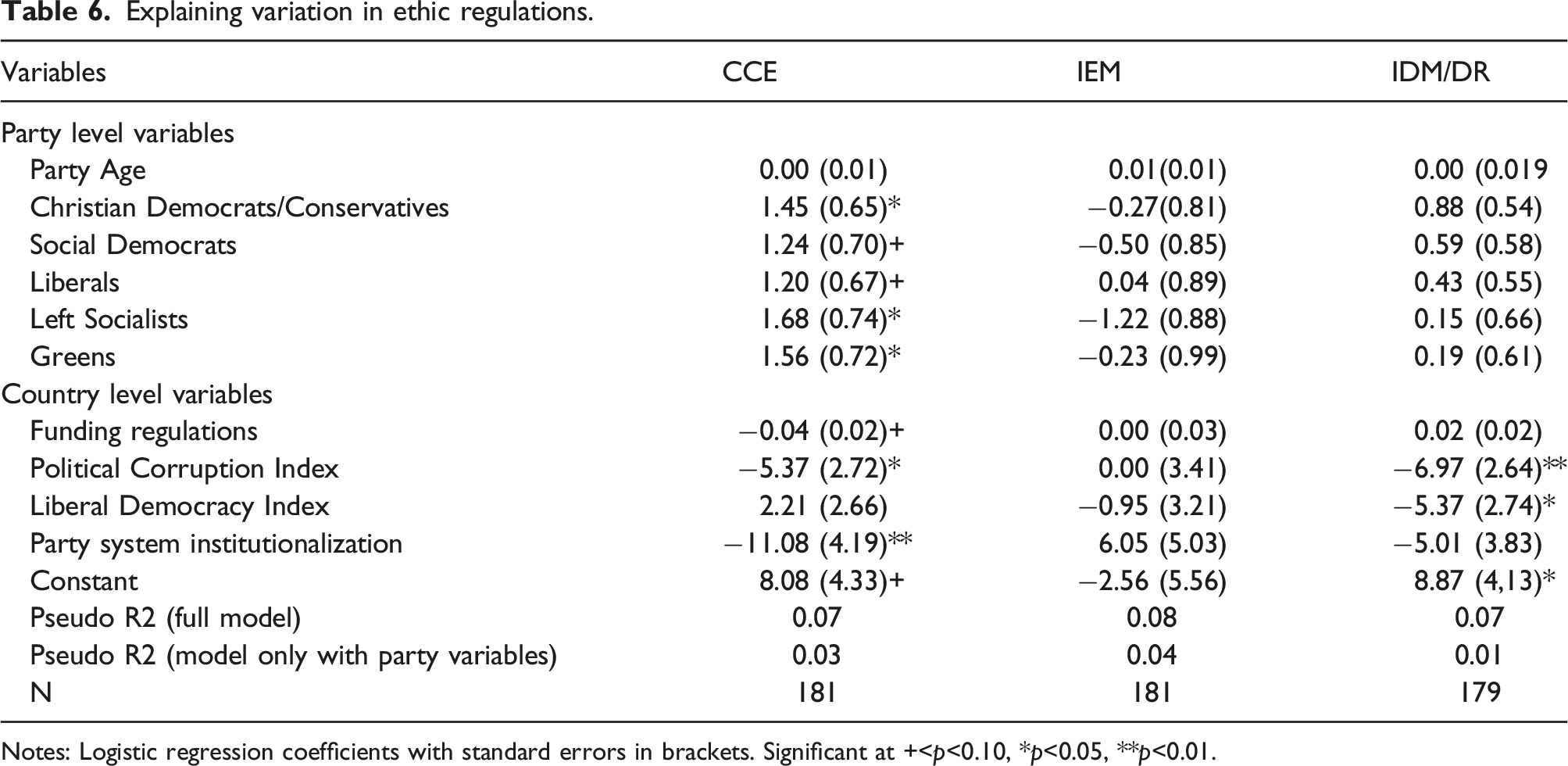
Notes: Logistic regression coefficients with standard errors in brackets. Significant at +<p<0.10, *p<0.05, **p<0.01.
These findings suggest that the factors that account for variance in ethics modalities is context-specific and sometimes blurs party family lines, not only because parties within this family change their posture over time but because the national dynamics of electoral politics and party competition, and the international transparency standards often propel party change that cross-cuts party family lines. More research is clearly needed to better explain these processes.
Conclusions
Parties are experiencing a profound crisis of legitimacy in the new millennium related not only with their policies and programmes (outcome legitimacy) but also with how fair, transparent and clean their procedures are (procedural legitimacy). While this is not new, but rather part of a long-term trend, it is disturbing that the quintessential actors of representative democratic are failing to connect to citizens; this can have important implications for the quality of representation and ultimately democracy. Research has shown that parties are reacting to these challenges by adopting new procedures of intra-party democracy; however, no research as assessed how parties are dealing with ethical issues and its implication for building legitimacy. Party efforts to put in place ethics bodies and regulations internal to their organisation is important to create a culture of integrity, restore the link with citizens, and elevate their public image.
The PESR database constitute an innovative and unprecedent contribution to map internal ethics framework form a comparative perspective. The data collected revealed important variation in three dimensions: norm-setting, oversight and enforcement. A first finding is that while a minority of parties have CCE, the great majority has internal bodies that are responsible for dealing with disciplinary matters/conflict resolution, and ethics management. Some of the variation found in the data is explained by party family; with the Left Socialists being the family is more likely to have CCE, but also internal bodies that deal with disciplinary and ethical issues. Across the board, Radical Right Parties are the family where those kind of norms and regulations are more absent. A second finding is that country level variables (party system institutionalization, political corruption or level of democracy) often outperform party level variables in terms of explaining the adoption ethics regulations.
These findings offer important contributions to the field. The great variance found in the data is a necessary point of departure for analysing the upholding of ethical standards in everyday party life. In this sense, we partake the general concern that the success of ethics self-regulation within political parties is not only contingent on design and embeddedness but also on standardized expectations from its members and supporters. In other words, the commitment to ethics regulation of a handful of well-intentioned reformers will have little effect, if party supporters and affiliated members are not strongly committed to higher ethical standards, if they do not demand their leaders and representatives to act according to those standards and if they tolerate or relativize improper conduct by their party and/or its members (Guterbock, 1980: (4)). Future research should continue to assess the origins, functioning and impacts of CCE and other disciplinary bodies within the parties. First, the PESR database should be updated with some periodicity. Growing international pressure around these issues, increased public scrutiny of politicians’ conduct and policy diffusion processes through mimicry may lead to changes in party ethics regimes in the future. These changes need to be accounted for not only to identify trends over time but also to assess the stability of these regimes. Second, more qualitative work, beyond formal aspects, is needed to depict the context and internal debates that shape the adoption of ethical regulations in each country, but also to depict the practical application of the regulations in everyday politics. Second, several questions can be researched following this first incursion, namely, what are the logics informing different modalities of ethics regulations? Does having more mechanisms to address ethical issues increase citizens trust in political parties? Does it impact public perceptions on political corruption?
Although we are unable to answer these questions in this article, we are led to believe that these changes taking place within party organisations are more than mere window-dressing operations amidst external pressure for higher ethical standards in political life, knee-jerk reactions to emerging scandals or even clean up acts by contested party leaderships. In principle, and in line with developments taking in place in other private and public sector organisations, the institutionalisation of codes of conduct has both a strategic and a symbolic impact. Not only help parties establish and clarify what are those values and ethical standards it stands for, by providing ‘a common frame of reference and serve as a unifying force’ across different functions, activities and groups within the organisation (Paine, 1994: 111); it also helps to build a trustworthy brand. Other than the party’s reputation for competence, the image of integrity and reliability is also important to the strategic management of political parties and consequently to voter support (Davies and Mian, 2010: 332). In practice, it is hard to decipher if these self-regulatory efforts are moulding the conduct of party members and the ethical climate in which party organisations operate, since these issues have received scant attention in the literature. As earlier stated, evidence from empirical studies on the importance of CCE within private and public sector organisations show that they have a positive impact on employees’ attitudes and behaviours (Thaler and Helmig, 2016); and this might also be the case with political parties. Finally, there is evidence that parties’ self-regulatory efforts are to varying degrees supported by the voters (Pereira et al., under review) in that both politicians and voters regard self-regulation efforts as a window of opportunity to restore trust in political parties and promote transparency in public office. Like other organisational domains, public or private, ethics self-regulation efforts within political parties are here to stay and therefore deserve further attention.
Footnotes
Acknowledgements
The authors are extremely grateful to the journal's Editors and three anonymous reviewers for their insightful comments and critiques. Thanks are also owed to the participants of the Panel Preventing Political Corruption in Parties and Parliaments (26th IPSA World Congress of Political Science), particularly Guillaume Fontaine and Eric Phélippeau, for providing comments on an earlier version of this paper. A workshop with scholars at FFMS was also an important source of feedback and improvement; we want to thank in particular Carlos Jalali and José Magone for their feedback. Finally, we would like to thank our external political party expert and all country experts/researchers for taking the time to code ethics regulations across a wide range of parties. This project could not have been done without their precious help. Needless to say, any mistakes or imprecisions cannot be blamed on anyone but the authors.
Declaration of conflicting interests
The author(s) declared no potential conflicts of interest with respect to the research, authorship, and/or publication of this article.
Funding
The author(s) disclosed receipt of the following financial support for the research, authorship, and/or publication of this article: This article was developed under the auspices of the research project ETHICS-Ethics and integrity in politics: perceptions, control and impact, coordinated by Luís de Sousa (

Notes
Authors Biographies
Luís de Sousa is a Research Fellow at the Instituto de Ciências Sociais, Universidade de Lisboa, Portugal. He works and publishes on corruption perceptions and control, political ethics regulation, regional integration, cross-border cooperation, local government and comparative politics in general. He also acts as an international consultant on corruption control policies.
Edalina Rodrigues Sanches is a Research Fellow at the Instituto de Ciências Sociais, Universidade de Lisboa, Portugal. Her research interests comprise democratization, political institutions, parties and party systems and political behaviour in new (African) democracies.
Susana Coroado is a Post-Doctoral Researcher at the Instituto de Ciências Sociais, Universidade de Lisboa, Portugal. Her research interests focus on corruption, ethics, lobbying, regulation and regulatory agencies. She is Chair of TI-Portugal and acts as an international consultant on corruption control policies.