




Abstract
This article tests the assumption that candidates’ attack behavior is a result of their rational consideration of potential benefits and likely risks. Based on candidate surveys from three German state elections, we demonstrate that (i) attacks are an important strategy; (ii) on balance, candidates regard attacking opponents as a costly instead of a beneficial strategy; (iii) the differential between benefits and costs is positively associated with attack behavior; nevertheless, most candidates attack at least sometimes even when costs exceed benefits; (iv) candidate characteristics and the electoral context are rarely reflected in benefit-cost calculations; and (v) the theoretically assumed mediating role of the benefit-cost differential on attack behavior applies only to some explanatory factors. While the findings provide some evidence for rational choice explanations of negative campaigning, they also challenge some central assumptions. As such, they demonstrate the need for more comprehensive theoretical explanations and measurements of negative campaigning.
Introduction
Negative campaigning, that is, “any criticism leveled by one candidate against another during a campaign” (Geer 2006: 23), is one of the key characteristics of today’s electoral competitions (e.g., Fridkin and Kenney 2012). But why do candidates attack their opponents instead of promoting themselves? Most scholars agree that the decision to “go negative” is a rational one, that is, candidates attack their opponents when the potential benefits outweigh likely costs (e.g., Lau and Pomper 2004: 31; Walter and Nai 2015a). The benefit of a successful negative message is to “reduce the opponent’s favorability” by “stressing his undesirable attributes or policy missteps” (Benoit 2007: 36; Pinkleton 1997). Thus, if the target’s reputation can be diminished while the own popularity does not change (or, in the best case, even improves), the sender’s “net favorability” (Benoit 2007: 36) increases. The potential costs of negative campaigning are that it is broadly disliked by the public at large (e.g., Fridkin and Kenney 2011). Therefore, attacks can create a backlash for the sender (e.g., Roese and Sande 1993). In this way, attacks can reduce the sender’s reputation while not changing (or, in the worst case, improving) the popularity of the target. In this case, the sender’s net favorability decreases.
Although this mechanism is widely accepted and the calculus underlying the decision to go negative has even been elaborated in formal models (e.g. Polborn and Yi 2006; Skaperdas and Grofman 1995), it is remarkable that, to the best of our knowledge, empirical studies have not tested the fundamental assumption whether candidates are really rational when it comes to negative campaigning. In addition, given the often large differences in the use of attacks, it is usually argued that incentives to go negative can vary, that is, that not all political actors reach the same conclusions when comparing benefits and costs. For instance, one of the most robust empirical findings in research on the use of negative campaigning is that challengers attack more than incumbents. This is usually explained by the fact that challengers have nothing to lose, but incumbents do (see, e.g., Lau and Pomper 2004: 31–33). Again, there are no empirical tests showing that the behavioral differences are actually related to varying benefit-cost calculations.
Although rational choice explanations for the (different) use of negative campaigning are intuitively convincing, the lack of empirical proof is surprising given the limited explanatory power of rational choice models for other types of political behavior (e.g., Green and Shapiro 1994). One reason why this key assumption has not been tested yet might be that existing research is primarily based on content analyses of campaign material, such as ads (e.g., Fowler et al. 2016), speeches (e.g., Benoit 2007), televised debates (e.g., Maier and Jansen, 2017), press releases (e.g., Dolezal et al. 2017), or social media posts (e.g., Evans et al. 2017). A more recent strand of research has used judgments from external observers—for example, voters (e.g., Donovan et al. 2016) or expert ratings from journalists (e.g., Patterson and Shea 2004), political consultants (e.g., Swint 1998), election agents (e.g., Walter and Van der Eijk 2019), and scholars (e.g., Nai 2018). Although all these approaches can measure the presence of negativity, they are not able to capture individual considerations behind the decision to attack. To do so, one needs to collect information directly from those who are responsible for “going negative”: the candidates themselves—an approach rarely used to analyze the drivers of negative campaigning (Maier and Nai, 2021; Nai et al., 2022) and, to the best of our knowledge, not applied so far to uncover the mechanisms behind the decision to attack.
Against this backdrop, our paper aims to systematically test this key rational choice assumption in negative campaigning. From extant research, it is still unclear (i) how well calculations of benefits and costs can explain negative campaigning and (ii) whether different candidate profiles and the conditions under which candidates compete translate into different perceptions of benefits and costs and associated tradeoffs. To test these assumptions, we use candidate surveys from three 2021 German state elections (Baden-Württemberg, Rhineland-Palatinate, Saxony-Anhalt) that include individual perceptions of the campaign and self-reports of candidate campaign behavior. Our results provide some evidence for rational choice explanations of negative campaigning, yet also challenge the general assumption that the decision to “go negative” is primarily a rational one. Although we find that the balance between benefits and costs is positively associated with attack behavior, our results provide only limited evidence that candidate profiles and the constraints under which candidates campaign are reflected in varying benefit-cost calculations. The suggested mediating role of the benefit-cost differential on the effects of candidate characteristics and the electoral context on attack behavior is more an exception than the rule.
Theory and hypotheses
Rational choice theory assumes that (political) actors approach “every situation with one eye on the gains to be had, the other side on the costs” (Downs 1957: 7). Since rational choice models usually describe political actors as utility maximizers (Green and Shapiro 1994: 13), candidates’ objective is “the maximation of the difference between expected support and the expected opponent’s support” (Skaperdas and Grofman 1995: 51). If negative campaigning is the result of a rational decision, candidates prefer attacks over other strategies because they consider this strategy as more effective than other options (e.g., self-appraisal) to “appear preferable to opponents,” or to increase “net favorability” (Benoit 2007: 36). Our review of the literature shows that this assumption behind the use of attacks is unanimously shared, including researchers studying negative campaigning outside the United States. Yet it is still unclear how candidates trade off the two competing dimensions against each other. Therefore, we pose the first research question which, due to the nature of our data, explicitly highlights the fact that we are analyzing perceptions and self-reported behavior: What is the balance of perceived benefits and costs associated with self-reported negative campaigning (RQ1)?
Lacking empirical evidence from candidate surveys, the underlying mechanisms behind perceptions of negative campaigning are still unclear. Yet, understanding the precise types of costs and benefits candidates associate with the strategic decision to attack their opponents is an important precondition to shed light on the boundary conditions of rational choice theory. For instance, considerations in favor of attacking could be the mobilization of own supporters (e.g., Ansolabehere and Iyengar 1995: 73–82) or gaining the attention of mass media which tend to give broader coverage to negative information (e.g., Maier and Nai, 2020). The downsides of attacking might be an activation of other parties’ supporters to become more engaged in campaigning for their party when facing a barrage of attacks from the opponent (e.g., Ansolabehere and Iyengar 1995: 73–82). Most importantly, many voters dislike attacks (e.g., Fridkin and Kenney 2011) and often even view them as an illegitimate political strategy (Fridkin and Kenney 2019: 45). Taken together, we ask: What are the underlying reasons for the perceived costs and benefits candidates associate with self-reported negative campaigning (RQ2)?
Ultimately, each individual candidate will weigh costs and benefits differently. At the very minimum, if the rational choice assumptions widespread in the literature bear some semblance of reality, the following hypothesis would have to be confirmed: The more the perceived benefits of negative campaigning outweigh the perceived costs of negative campaigning, the more likely is the self-reported use of negative campaigning (H1).
However, not all candidates attack to the same degree. There is ample empirical evidence that candidates differ in their use of negative campaigning and that their decision to go negative depends on a wide range of micro- and macro-level factors (for an overview see, e.g., Walter and Nai 2015a). To analyze whether differences in attack behavior are really a result of different benefit-cost calculations and whether the benefit-cost differential mediates the impact of “classic” drivers of negative campaigning, we focus in the following on a set of factors for which relatively consistent empirical findings have been shown in the existing literature.
Candidate characteristics as drivers of negative campaigning
Among the characteristics of the attacker himself, two bundles of factors show a robust significant relationship with negative campaigning. First, challengers go negative more frequently than incumbents (e.g., Benoit 2007; Nai 2018). From a rational choice perspective, this difference can be explained in two ways. On the one hand, incumbents can refer to their political record, which enables them to highlight positive information (Polborn and Yi 2006). Challengers usually do not have a record to showcase which makes negative campaigning the optimal strategy for them (Polborn and Yi 2006). On the other hand, challengers do not have an office to lose and thus are willing to take more risks and accept potential backlash effects stemming from the generally low popularity of negative campaigning among voters (e.g., Fridkin and Kenney 2011) but also from the fact that a negative campaign “provide[s] voters […] also indirectly with (unfavorable) information about the sponsor” (Polborn and Yi 2006: 352). Therefore, we expect that the perceived benefits outweigh the perceived costs of negative campaigning to a greater extent for challengers than for incumbents (H2a).
However, for the European context is has been argued that the distinction between incumbent and challenger is less obvious since election campaigns focus more on parties than on candidates (e.g., Hansen and Pedersen 2008). Although recent research presents evidence that European election campaigns have become increasingly personalized and thus less party-centered (e.g., Poguntke and Webb 2005), not least spurred by the opportunities to individualize campaigns provided by social media (e.g., Karlsen and Enjolras 2016), attack behavior in a multiparty system more strongly depends on whether a candidate is running for a governing or an opposition party. However, the considerations regarding government status should be similar to the argument outlined for incumbents and challenger. Therefore, we expect that the perceived benefits outweigh the perceived costs of negative campaigning to a greater extent for candidates running for an opposition party than for candidates running for a governing party (H2b).
Second, research in multiparty systems indicates that more ideologically extreme candidates attack more often than politically moderate actors (e.g., Elmelund-Præstekær 2010; Maier and Nai, 2021). The rational choice rationale is that extreme actors have a lower coalition potential, that is, are less likely to be considered for future coalition formation (Walter et al. 2014). Therefore, they do not have to demonstrate that they are a congenial or compliant partner (Nai and Walter 2015) and thus are willing to take more risks. In addition, it has been argued that political actors choosing extreme ideological positions can receive more support than actors holding moderate positions since the former provide a clearer signal of the intended policy and thus make a credible promise to the public to implement it if in office (e.g., Rabinowitz and Macdonald 1989). Therefore, we expect that the greater the ideological extremism of candidates, the more the perceived benefits exceed the perceived costs of negative campaigning (H3).
Electoral context as driver of negative campaigning
Among the constraints of the electoral context under which candidates compete, four factors show a robust significant relationship with negative campaigning. First, attacks are more likely during close races, at least in the US (e.g., Fowler et al. 2016: 56–57). From a rational choice perspective, close races incentivize candidates to take more risks. Although the findings are more mixed for Europe (see, e.g., Nai 2014; Walter, van Brug and van Praag 2013), we therefore expect that the closer the race, the more the perceived benefits exceed the perceived costs of negative campaigning (H4).
Second, there is evidence that candidates trailing in the polls attack more often than candidates who are leading in the polls (e.g., Maier and Jansen, 2017). From a rational choice perspective, leading candidates refrain from attacking the political opponent as there is no need to take the risk of backlash effects. Negative campaigning can reduce both, the support of one’s opponent and the support of the sponsor of an attack by turning current supporters into undecided voters (Skaperdas and Grofman 1995). In contrast, trailing candidates are more likely to attack to reap potential benefits as they do not have much to lose. Therefore, we expect that the perceived benefits exceed the perceived costs of negative campaigning to a greater extent for trailing than for leading candidates in an electoral competition (H5).
Third, the attention of the media is crucial for successful campaigns. However, some candidates have a harder time to attract the media than others (e.g., challengers tend to face a structural deficit when it comes to media visibility; see, e.g., Reinemann and Wilke 2007). Especially candidates who have difficulties attracting the attention of the media should therefore be particularly tempted to go negative. Therefore, we expect that the lower the media attention for a candidate, the more the perceived benefits exceed the perceived costs of negative campaigning (H6).
Fourth, research in the US indicates that candidates with fewer resources tend to go negative more frequently. The rationale behind this finding is that negativity can be a cheap way to attract public attention as they “need to get ‘more bang for the buck’” (Lau and Pomper 2004: 32). Hence, it is more likely that candidates go negative when the campaign resources at their disposal are small. Therefore, we expect that the lower the candidate’s campaign resources, the more the perceived benefits exceed the perceived costs of negative campaigning (H7).
Finally, in line with the predominant rational choice explanations of negative campaigning, we expect that the effects of the different drivers of negative campaigning are fully mediated by the actor’s benefit-cost calculation. Therefore, we should not expect significant direct effects but rather indirect effects of candidate characteristics and the electoral context on self-reported negative campaigning, with the perceived benefit-cost differential as a mediating factor (H8).
Data and methods
Context
This article analyzes candidates’ self-reported campaign behavior in three subnational elections in Germany: the 2021 Baden-Württemberg (BW) state election, the 2021 Rhineland-Palatinate (RLP) state election, and the 2021 Saxony-Anhalt state election (ST). Whereas the first two states are located in the Southwest, Saxony-Anhalt is a state in the East of Germany. To the best of our knowledge, this is the first data collection so far that inquires in detail about candidates’ negative campaign communication and captures the reasoning behind the use of this strategy. Although comparative analyses show differences in the use of negative campaigning across different levels of the political system (e.g., Benoit 2007), rational choice theory itself makes no constraints that it applies only to national elections. Rather, it is assumed that the mechanism behind the use of attacks is a general one and should also hold for lower levels of the political system.
Data
Our analyses are based on a post-election survey of candidates competing in the three state elections. Data were collected using a mixed-mode, starting the day after the election and ending 2 months later. All candidates, including candidates running for smaller parties, were asked to fill out a questionnaire. All candidates that provided an email address in their professional online contact details were invited via email to participate in our online survey (BW: 81.4%; RLP: 66.8%, ST: 58.5%). All candidates without online contact details were invited by mail including a paper-and-pencil questionnaire and a return envelope. Candidates invited by mail were also provided with a personalized link if they preferred to answer the survey online. IRB approval was obtained prior to data collection. 1 From the initially 2036 contacted candidates (BW: 824, RLP: 788, ST: 424) competing for 120 (BW), 101 (RLP), respectively 97 (ST) seats in the parliament, 49.3% participated in the study (BW: 59.3%, RLP: 45.9%, ST: 36.1%; for information on party-specific response rates, see Table A1 in Appendix A). 11.4% of the participating candidates ran for Christian Democrats (CDU), 12.9% for the Social Democrats (SPD), 12.3% for the Green Party (Bundnis 90/Die Grunen), 9.1% for the Left Party (Die Linke), 10.0% for the Liberal Party (FDP), 5.2% for the Alternative für Deutschland (AfD), and 39.0% for smaller parties not (yet) represented in the parliament.
For our analyses, we excluded candidates who rushed through the (online) survey by employing the procedure to filter out speeders described by Leiner (2019) (BW: N = 17, 3.5%; RLP: N = 8, 2.2%; ST: N = 2; 1.3%), which leaves us with N = 978 valid cases. In addition, we weighted our data for our descriptive analyses, that is, adjusted the distribution of the party affiliation of the candidates in our sample to the distribution of the party affiliation of all running candidates.
Dependent variables
To assess the use of negative campaigning we asked: “How often did you attack the political opponent, that is, criticize other parties or candidates?” on a 5-point scale ranging from 1 (“never”) to 5 (“very often”). To be sure, this measurement only focuses on the self-reported frequency of attacks in general and does not account for differences within negative campaign communication (i.e., focus, incivility; for a discussion on the opportunities to measure attack behavior see Haselmayer 2019). To assess the benefits of negative campaigning, we asked: “In your opinion, to what extent are advantages associated with attacking a political opponent?” To assess the costs of negative campaigning we asked: “In your opinion, to what extent are disadvantages associated with attacking a political opponent?” For both items, a 5-point scale ranging from 1 (“no advantages/disadvantages at all”) to 5 (“very large advantages/disadvantages”) was provided. To assess the benefit-cost calculus, we subtracted perceived costs from perceived benefits. Hence, a positive differential indicates that perceived benefits outweigh perceived costs. For descriptive information, see Table B1 in Appendix B.
Self-reports about the use of negative campaigning and the underlying calculus might suffer from validity issues. For instance, candidates might rationalize or downplay their past behavior ex post. As argued by Maier and Nai (2021), the fact that candidates provide us with their view of the world can actually be more of an advantage than a disadvantage since it has long been known that perceptions matters more than reality for attitudes and behavior (e.g., Lazarsfeld et al. 1944). Second, there are also good arguments to believe that in the context of our study this issue is less severe. More than other professions, political candidates—especially when they are running for office—have strong incentives to be sincere; honesty, sincerity, and integrity are perhaps the most important image traits that voters look for in competing candidates (Holian and Prysby 2014). Third, although other candidate studies indicate that politicians tend to put themselves in a positive light, the observed bias seems to be moderate. For instance, Schumacher and Zettler (2019) report that most differences between candidates’ and citizens’ self-assessments of personality traits are small. Even more important, it is not clear per se what qualities politicians themselves find desirable; for instance, candidates may consider high self-esteem, tactical skill, and a certain ruthlessness to be prerequisites for being truly successful in the political arena (Schumacher and Zettler 2019). Consequently, there are few reasons to assume that candidates systematically downplay attack behavior and its possible benefits. Finally, the use of objective data is also not without problems. For example, several studies critically discuss the operationalization of negative campaigning in content analyses, identifying major discrepancies between the definition of negative campaigning in academia and the perceptions of voters and candidates (Lipsitz and Geer 2017).
To validate self-reported attack behavior with external measures, we performed two comparisons with external benchmarks. First, we compared the self-reported level of candidates’ attacks, aggregated by party, with the use of negative campaigning of those same parties as assessed by an expert survey (for this approach, see Maier and Nai, 2021). 2 Results indicate that Spearman’s rank correlations are high (see Figure D1 in Appendix D). Second, we compared the self-reported use of negative campaigning to a randomly selected sample of approximately 12,000 posts on Facebook, Instagram and Twitter sent by 543 candidates during the last 8 weeks before the respective election. 3 A team of five paid student assistants coded negative campaigning in these posts (interrater agreement Krippendorffs’ α = .88). The resulting correlations again reveal a strong correlation between subjective and objective measures (see Figure D2 in Appendix D).
Independent variables
To measure whether a candidate is the incumbent or challenger, we simply measured whether the candidate is a member of parliament, coded as 0 for challengers and 1 for incumbents. Whether a candidate is running for a governing or an opposition party is also measured by a binary variable, coded 0 for opposition party and 1 for governing party. Both measures are based on data of the state returning officer (“Landeswahlleiter”). Self-reported ideology was measured on an 11-point scale ranging from 1 (“left”) to 11 (“right”). To measure ideological extremism, we folded the variable on itself, ranging from 0 (“low extremism”) to 5 (“high extremism”). To assess whether a candidate was leading or trailing, we asked the candidates how they perceived their chances shortly before election day to win a seat in parliament using a 5-point scale ranging from 1 (“very unlikely”) to 5 (“very likely”). We used the same variable to measure the closeness of the race, folding the variable on itself and reversing its codes; the result is a 3-point scale from 0 (“race was not close at all”) to 2 (“race was very close”). To measure media coverage, we asked the candidates how often the mass media has covered their election campaign using a 5-point scale from 1 (“never”) to 5 (“very often”). Finally, to assess the candidates’ campaign resources, we asked how much money they spent on their campaign. Descriptive statistics for all variables can be found in Table B1 in Appendix B.
Since most of independent variables are self-reports, the question is whether these measures are valid. We were able to cross-validate candidates’ responses with several objective measures. First, the correlation between our measure for whether a candidate is leading or trailing correlates with the difference of the respective candidate’s election result in the electoral district (first vote, “Erststimme”) and the election results of the winner of the district (or, if the interviewed candidate was the winner in the district, the election result of the candidate who achieved the second most votes) is r(840) = .58 (p<.001). Second, our measure for closeness and the absolute difference of the candidate’s share of first votes and the share of first votes of the winner of the district (or, if the interviewed candidate was the winner in the district: the first vote result of the candidate who achieved the second most votes) is r(840) = −.24 (p<.001).
Analysis strategy
We first provide several descriptive analyses on the candidates’ level of attacks and the perceptions of benefits and costs related to attack behavior. Afterward, we analyze how different candidate profiles and the constraints under which the candidates compete are linked to perceptions of benefits and costs of negative campaigning. To test our hypotheses, we then run mediation analyses using regressions; separately for each candidate characteristic studied and each electoral context variable. In these analyses, candidate characteristics and electoral context variables are on the one hand linked to negative campaigning through individual benefit-cost calculations (indirect effect). On the other hand, candidate characteristics and electoral context variables are linked to candidates’ self-reported attack behavior (direct effect). We decided to first run separated models for each independent variable to measure the direct and indirect effects of each independent variable as parsimoniously as possible, that is, without accounting for any potential effects of other variables. We consider this to be the most optimistic scenario for finding effects of rational considerations. However, we also provide a more conservative model simultaneously estimating the effect of all independent variables (for a discussion of the two approaches see Hayes 2018: 143). To reduce complexity, we refrain from including control variables (e.g., gender, age, party attachment), but provide such models as robustness checks (see Table C2 in Appendix C).
Results
Descriptive analysis
Candidates running in the 2021 Baden-Württemberg, 2021 Rhineland-Palatinate, or 2021 Saxony-Anhalt state election used a moderate level of negative campaigning (see Figure 1). Most of them (40%) attacked only occasionally, 26% attacked sometimes, 15% went negative often and only 4% very often. Only 14% stated that they have never attacked their political opponent. This finding supports other studies showing that the level of negative campaigning in Germany is more moderate than in other countries (e.g., Walter 2014). The reported level of negative campaigning also indicates that German campaigns are definitely not free of conflicts, which is in line with results from other candidate surveys (Maier and Nai, 2021; Nai et al., 2022). Hence, even in Germany, attacks are an indisputable part of most candidates’ campaign strategies. Levels of negative campaigning. Note: N = 867 candidates who ran in the 2021 Baden-Württemberg, the 2021 Rhineland-Palatinate, or the 2021 Saxony-Anhalt state election.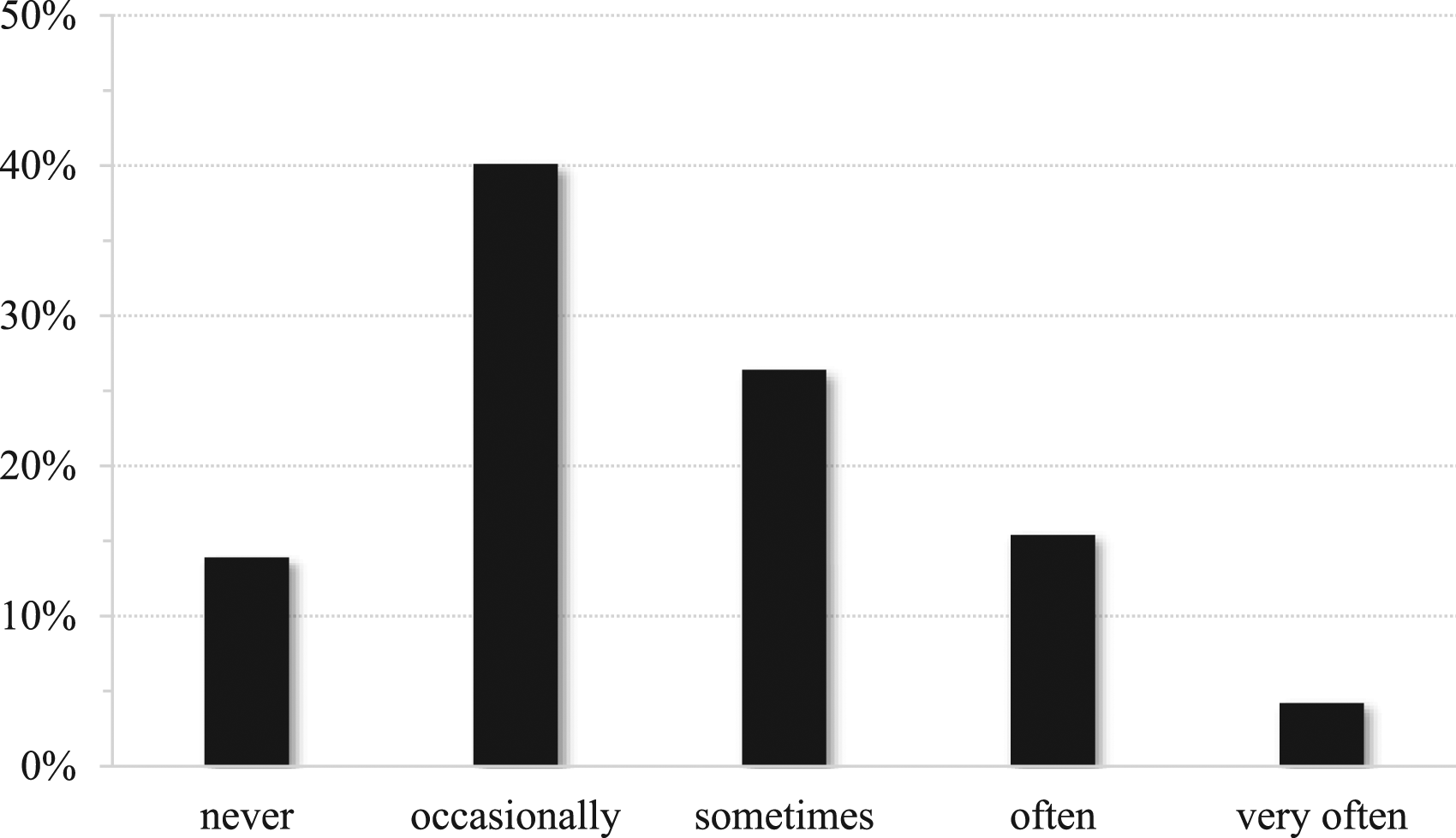
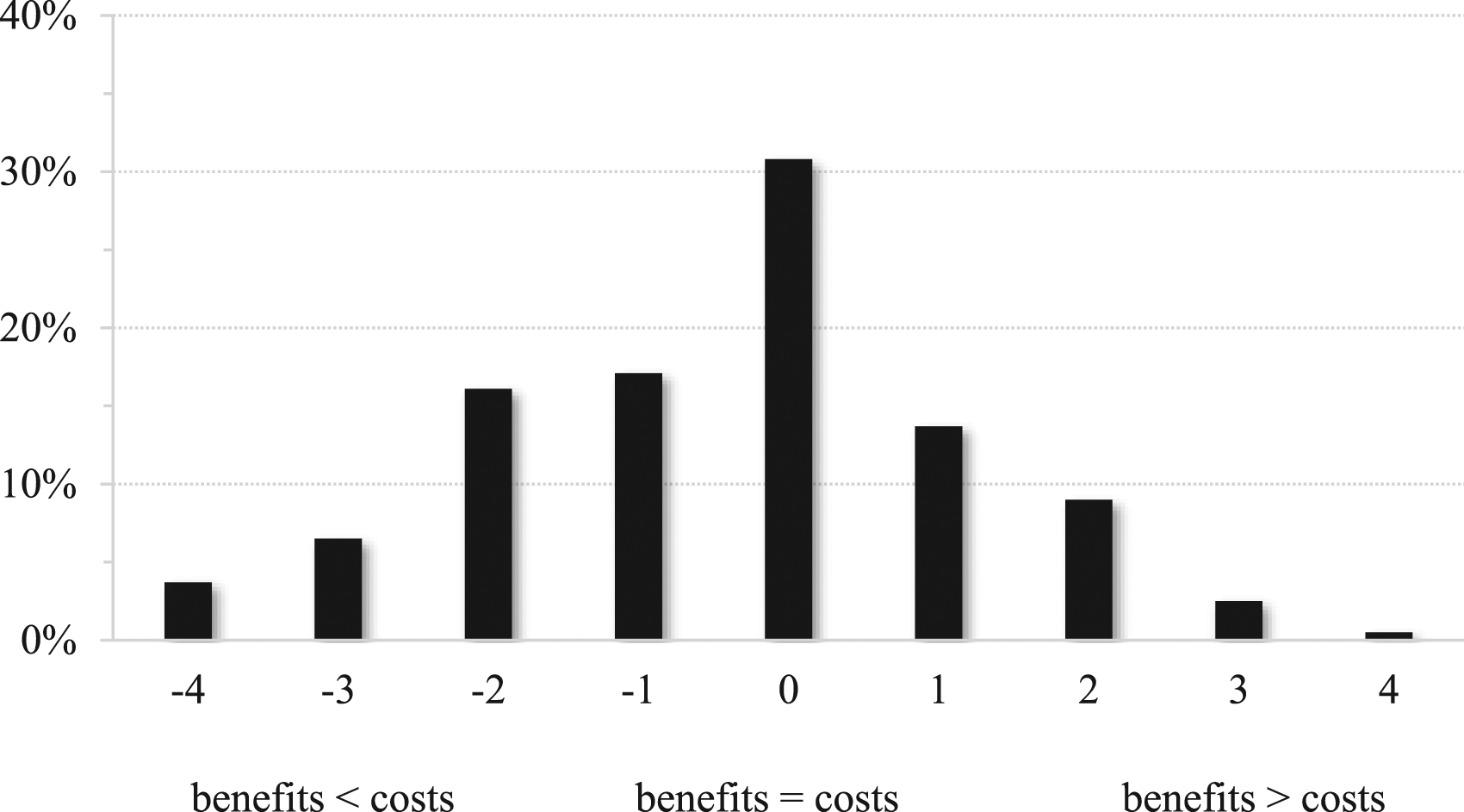
Following RQ1, our data supports the widely accepted assumption that negative campaigning comes with benefits, but also with costs (see Figure 2). Although perceived benefits and costs vary considerably across candidates, costs, on average weigh higher than benefits (M = 3.02, SD = .99 vs. M = 2.58, SD = 1.06). This is also supported by the differential of benefits and costs, that is, the difference score when we subtract candidates’ perceived costs from perceived benefits (Figure 3). The average difference is M = −.42 (SD = 1.62); 43% of the candidates indicate that perceived costs exceed potential benefits, 26% indicate that the opposite is the case, and 31% do not see any difference. Perceived benefits and perceived costs of attacking the political opponent. Note: N = 821 candidates (benefits) and N = 837 candidates (costs) who ran in the 2021 Baden-Württemberg, the 2021 Rhineland-Palatinate, or the 2021 Saxony-Anhalt state election. Balance between perceived benefits and perceived costs of attacking the political opponent. Note: N = 815 candidates who ran in the 2021 Baden-Württemberg, the 2021 Rhineland-Palatinate, or the 2021 Saxony-Anhalt state election.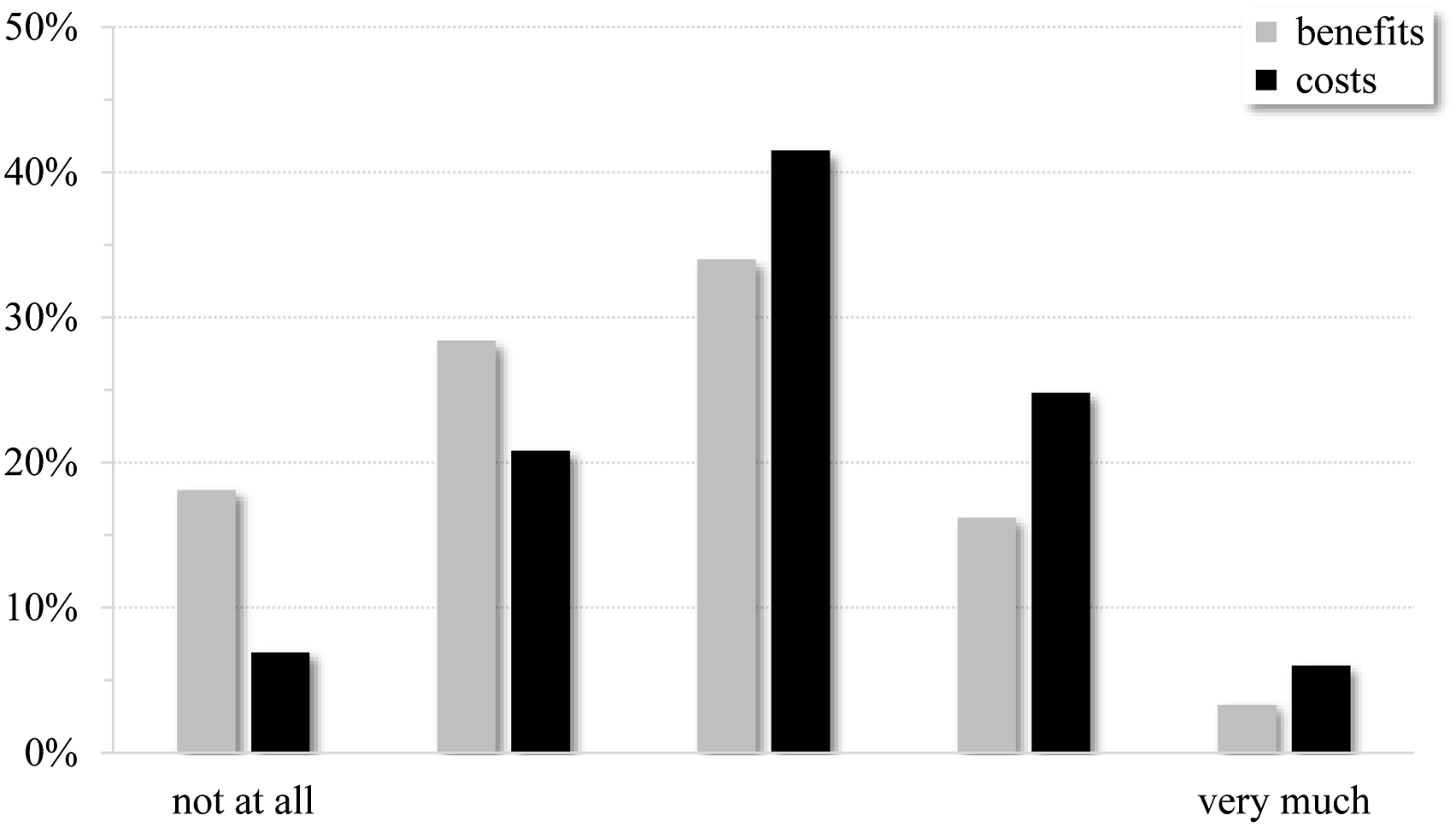
Investigating RQ2, we further explore the reasons for evaluating negative campaigning as costly or beneficial. In the eyes of the candidates, the most important benefit of attacks is to distinguish oneself from the political opponent by emphasizing policy and character differences (89%), followed by the persuasion of undecided voters (62%), the mobilization of own supporters (51%) and attracting the mass media (48%) (see Figure 4). Damaging the image of the political opponent (25%) and putting oneself in a favorable light are seen as minor benefits (16%). Alienating voters who do not like attacks is mentioned as the most important disadvantage of attacking the political opponent (64%), followed by the risk that attacks can put oneself in an unfavorable light (52%), that attacks can mobilize the opponent’s supporters (45%), the fear of possible counterattacks (37%) and negative media coverage (33%). Perceived benefits and perceived costs of attacking the political opponent (multiple responses possible). Note: N = 672 candidates (benefits) and N = 778 candidates (costs) who ran in the 2021 Baden-Württemberg, the 2021 Rhineland-Palatinate, or the 2021 Saxony-Anhalt state election.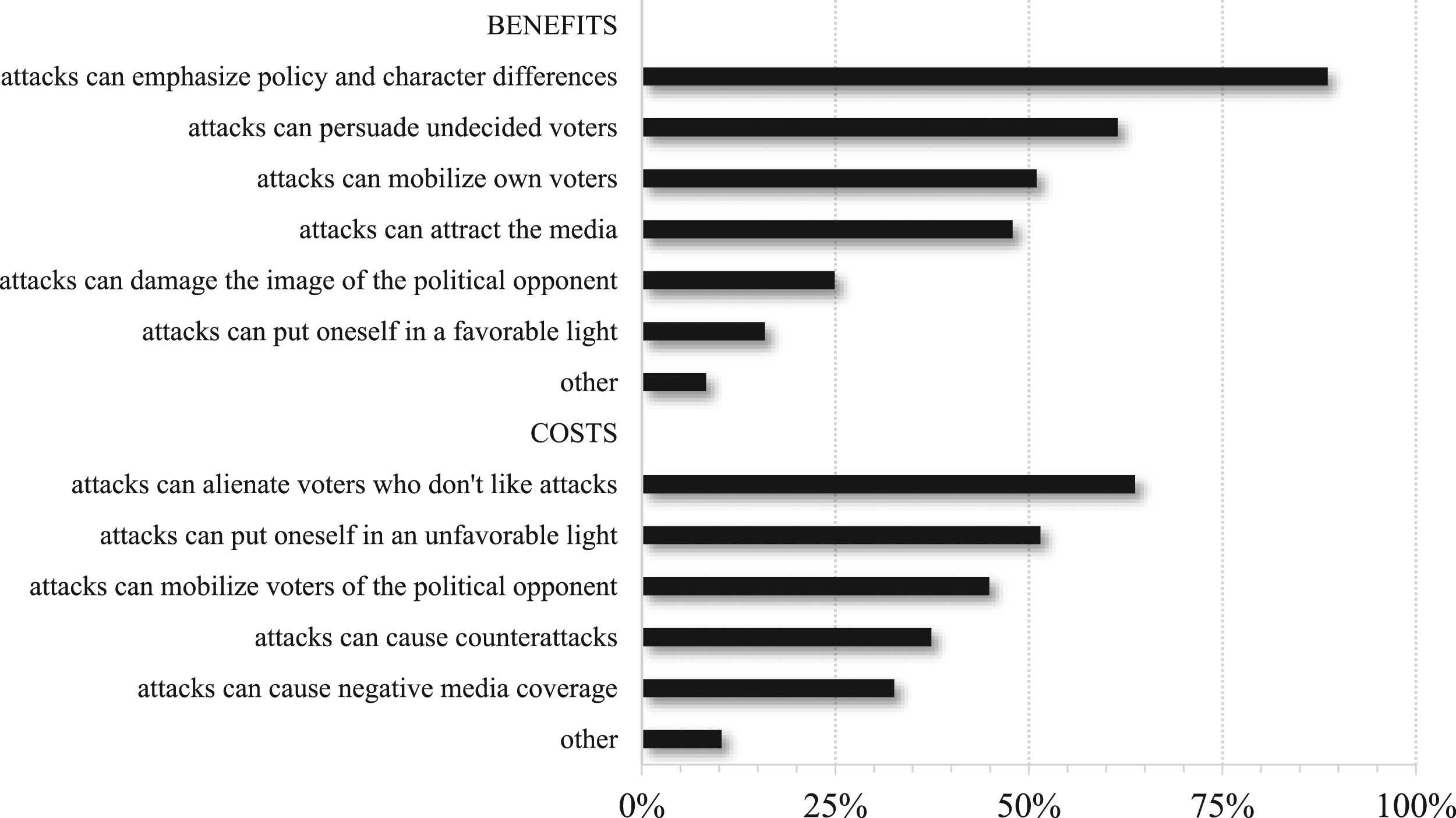
Hypotheses tests
We next start our hypotheses tests by first investigating the relationship between the benefit-cost differential and negative campaigning (H1). As expected, Figure 5 shows that perceived benefits of attacks (r(819) = .41, p<.001), perceived costs of going negative (r(835) = −.27, p<.001), and subsequent benefit-cost calculations (r(813) = .43, p<.001) correlate significantly and in a meaningful way with negative campaigning. However, rational considerations about the use of negative campaigning and actual attack behavior are far from deterministically related. For instance, among those who believe that possible costs outweigh potential benefits, only 22% refrained from attacks, but 78% went negative to some degree. In contrast, 96% of the candidates who associate more benefits than costs with negative campaigning attacked; only 4% did not criticize the political opponent. Association between the benefit-cost differential and negative campaigning. Note: N = 814 candidates who ran in the 2021 Baden-Württemberg, the 2021 Rhineland-Palatinate, or the Saxony-Anhalt state election. Cramer’s V = .30, p<.001.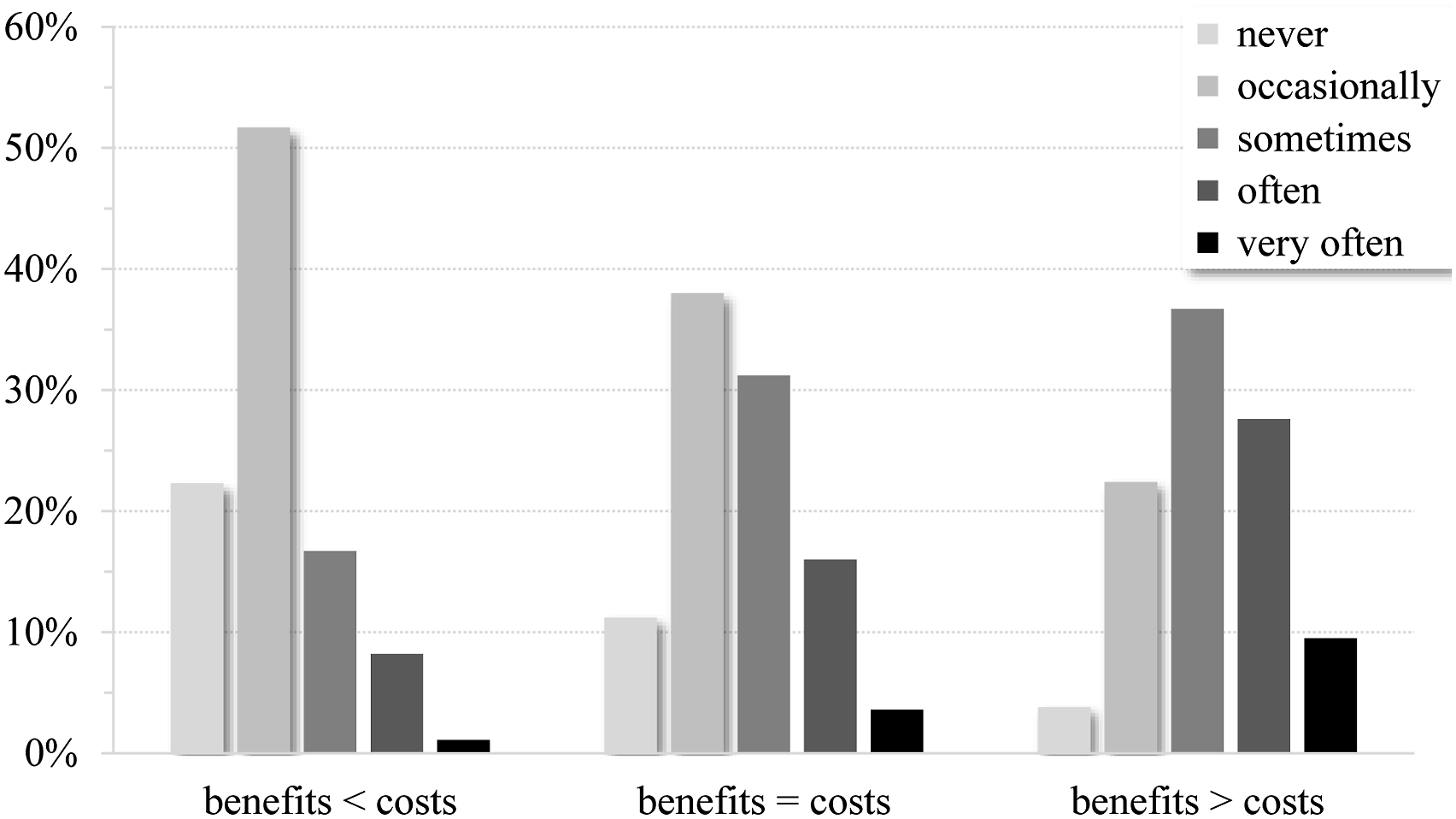
Correlations between candidate characteristics, characteristics of the race, and perceived benefits and perceived costs of attacking the political opponent.
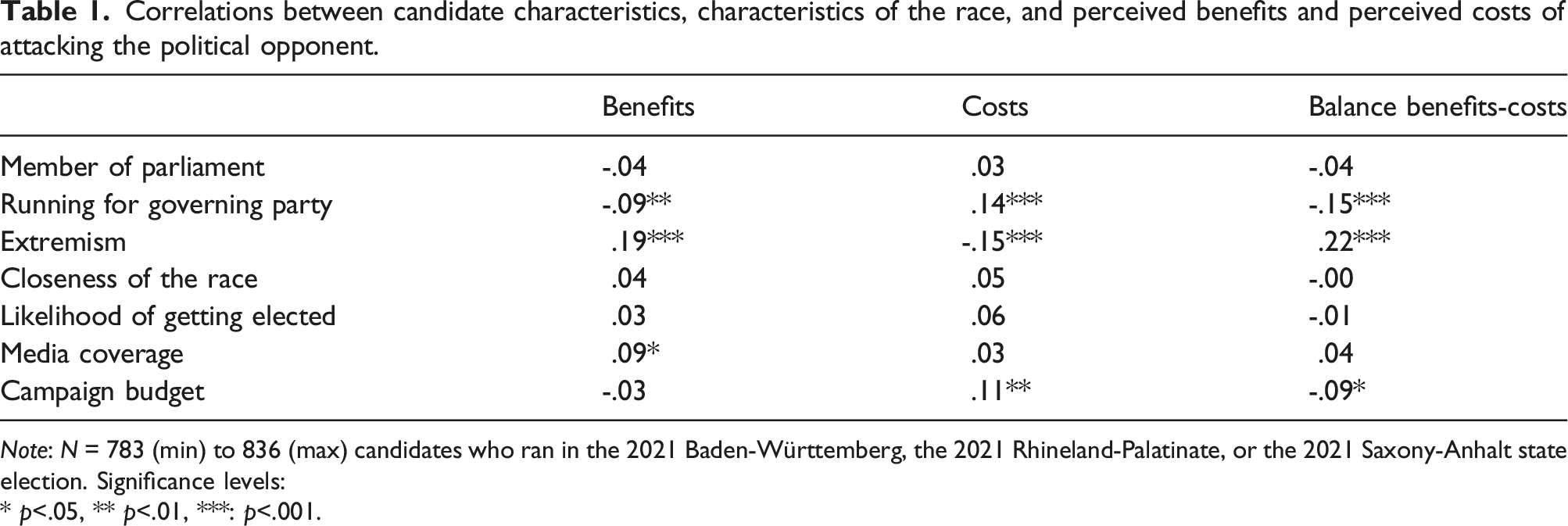
Note: N = 783 (min) to 836 (max) candidates who ran in the 2021 Baden-Württemberg, the 2021 Rhineland-Palatinate, or the 2021 Saxony-Anhalt state election. Significance levels: * p<.05, ** p<.01, ***: p<.001.
This picture is supported when we estimate mediation models with candidate characteristics or electoral context factors as independent variables, the level of attacks as dependent variable and the perceived differential of benefits and costs as mediator. The results in Figure 6 can be summarized as follows (for full results see Table C1 in Appendix C). First, all models indicate that the tradeoff between advantages and disadvantages significantly affects the decision to go negative (we refer to this as path b; see Figure 1). The more positive the balance between benefits and costs, the more likely it is that candidates are using negative campaigning (b
min
= .27; b
max
= .28, p<.001). This supports H1. Second, differences between candidates are rarely reflected in different assessments of the benefit-cost structure of attacks (we refer to this as path a). More precisely, candidates running for governing parties are more restrained than candidates running for opposition parties, which is in line with H2b (a = −.62, p<.001). In addition, the bootstrap confidence interval for the indirect effect (path a*b = −.17) based on 5000 bootstrap samples did not include zero (−.24 to −.10). However, we do not see a similar pattern for incumbents and challengers; therefore, there is no support for H2a. The candidates’ benefit-cost calculation on the use of negative campaigning increases with the level of ideological extremism, which supports H3 (a = .23, p<.001). The bootstrap confidence interval for the indirect effect (a*b = .06) did not include zero (.04 to .09). The tradeoff between benefits and costs is more positive when a lower campaign budget is available, lending support to H7 (b = −.11, p<.01). A bootstrap confidence interval for the indirect effect (a*b = −.03) was entirely below zero (−.05 to −.01). Finally, there is no evidence that the competitiveness of the race (H4), leading or trailing in the race (H5) and (lacking) attention of the mass media (H6) factor into rational assessments of benefits and costs of negative campaigning. Third, the majority of the specified independent variables show no significant relationship with the use of attacks; that is, there is no direct effect of these factors on negative campaigning (we refer to this a path c). However, for candidates running for governing versus opposition parties (c = −.36, p<.001), for extremism (c = .07, p<.01), and for campaign budget (c = −.06, p<.05), we see such a significant direct effect. These effects provide evidence that important independent variables are only partially mediated by rational choice considerations. In summary, the independent variables either also show a direct effect on attack behavior indicating that their effect on negative campaigning is only partly but not fully mediated or are completely unrelated to negative campaigning and considerations regarding its benefits and costs. This raises the question if rational choice considerations are really that central as often presumed, at least in a constellation with multiple competing candidates. Mediation model for candidate attacking behavior. N = 783 (min) to 812 (max) candidates running in the 2021 Baden-Württemberg state election, the 2021 Rhineland-Palatinate state election, or the 2021 Saxony-Anhalt state election. Models estimated using SPSS macro PROCESS, version 3.5.3, model 4 (Hayes 2018). Coefficients for the indirect effect of the dependent variable on attack behavior are bootstrapped unstandardized regression coefficients (in parentheses: standard error) (5000 iterations). The dashed arrow represents the indirect effect (in brackets: 95% bootstrap CI). Note that PROCESS does not provide a significance test for indirect effects, however, the confidence bounds in the figures above that do not include 0 were also marked as statistically significant when estimating the models in Stata using the command SEM. Dependent variable in all models is self-reported attack behavior. For full results, see Table C1 in Appendix C. Significance levels: *** p<.001, ** p<.01, * p<.05.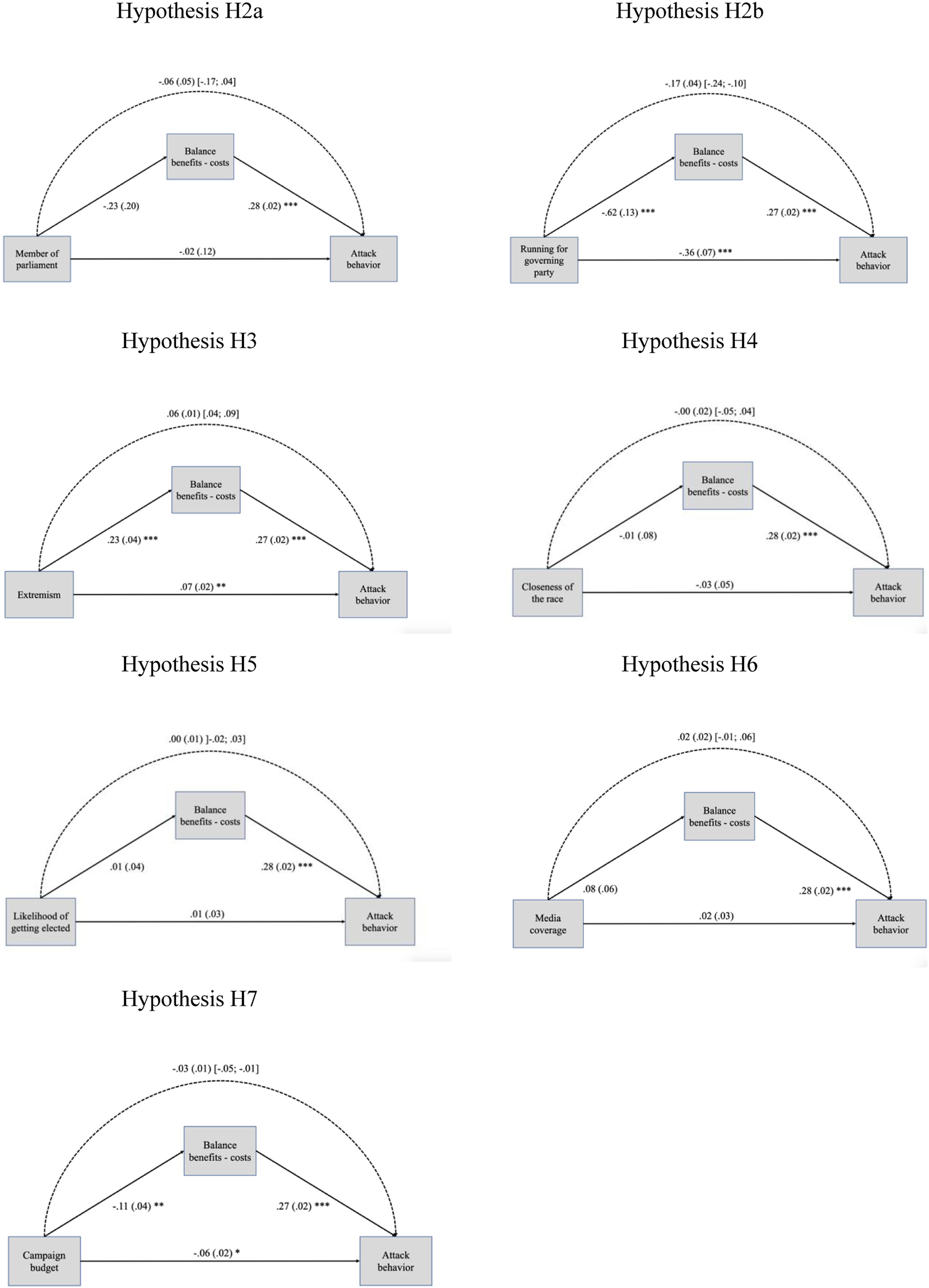
Mediation model for candidate attacking behavior (all independent variables simultaneously mediated by balance of benefits and costs).
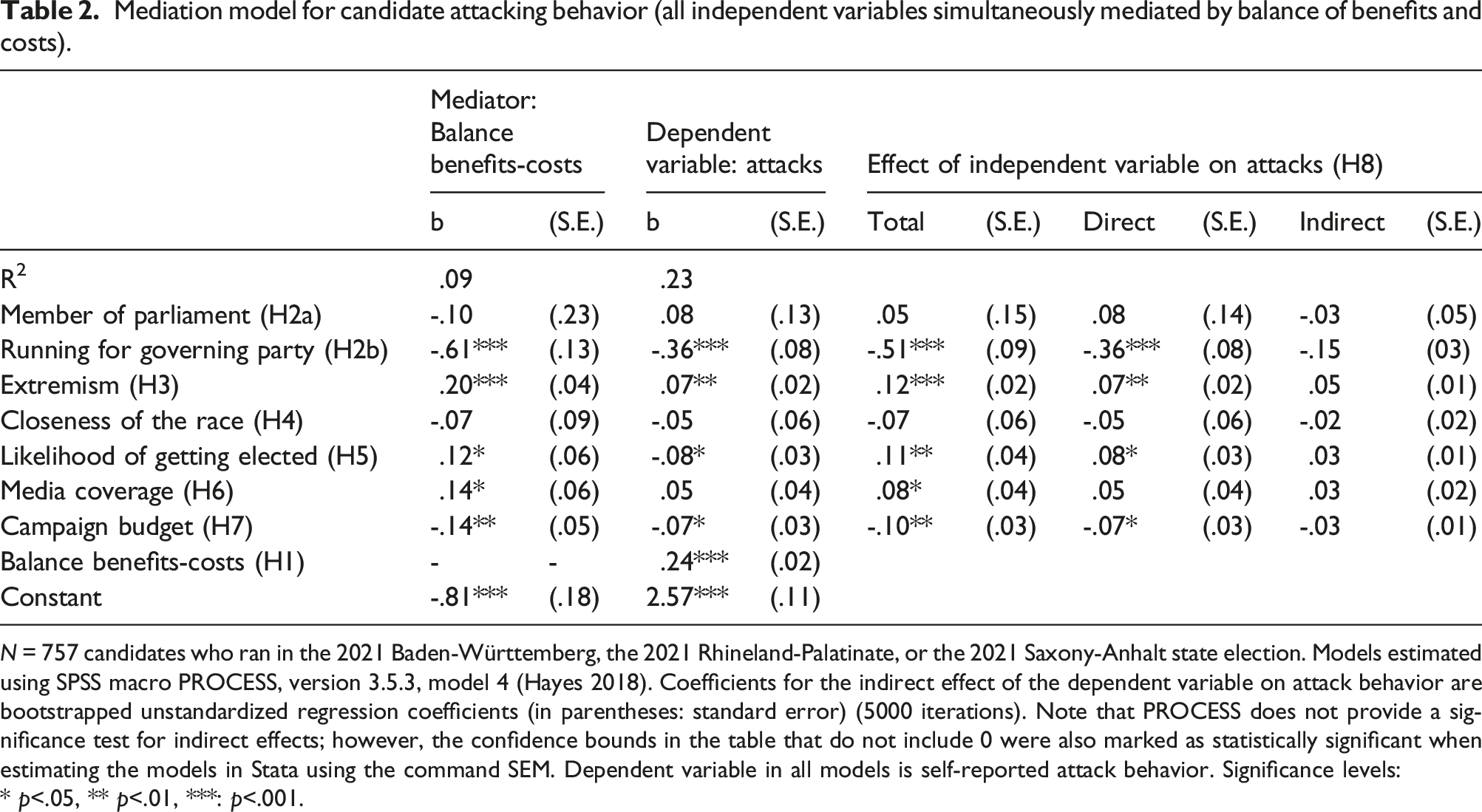
N = 757 candidates who ran in the 2021 Baden-Württemberg, the 2021 Rhineland-Palatinate, or the 2021 Saxony-Anhalt state election. Models estimated using SPSS macro PROCESS, version 3.5.3, model 4 (Hayes 2018). Coefficients for the indirect effect of the dependent variable on attack behavior are bootstrapped unstandardized regression coefficients (in parentheses: standard error) (5000 iterations). Note that PROCESS does not provide a significance test for indirect effects; however, the confidence bounds in the table that do not include 0 were also marked as statistically significant when estimating the models in Stata using the command SEM. Dependent variable in all models is self-reported attack behavior. Significance levels: * p<.05, ** p<.01, ***: p<.001.
Robustness checks
To back up our findings, we ran several robustness checks. By and large, the tests underline that there is sparse evidence that different characteristics of candidates or the electoral race in general translate into different calculations about benefits and costs of negative campaigning. Furthermore, our robustness checks provide further evidence that a full mediation of candidate profiles and campaign characteristics on attack behavior through a tradeoff between benefits and costs of negative campaigning is rare. First, we estimated all models including controls for candidate and campaign characteristics. The impact of the variables in focus on the perceived balance of benefits and costs as well as on attack behavior does not change (see Table C2 in Appendix C). Second, we estimated all models with an alternative measure for benefit-cost calculations. Instead of calculating the differential by subtracting perceived costs from benefits we directly asked whether attacks on the political opponent have, all in all, “exclusively disadvantages” (1) or “exclusively advantages” (5) for the own campaign. Both measures are, of course, significantly correlated (r(760) = .62, p<.001). All models are confirmed, expect for media coverage which is now fully mediated (a = .08, p<.01; b = .56, p<.001, c = −.02, p>.05; ab = .05, confidence interval between .01 and .08) and campaign budget, which still shows a direct impact on negative campaigning but no longer an indirect effect (a = −.04, p>.05; b = .54, p<.001, c = −.08, p<.01; ab = −.02, confidence interval between −.05 and −.00; see Table C3 in the Appendix C). Third, to exclude the possibility that candidates of minor parties might not think as strategically about campaigns than candidates of more important parties we ran all models only for candidates of the CDU, SPD, FDP, Bündnis 90/Die Grünen, Die Linke, and AfD (for Rhineland-Palatinate we also included the Freie Wähler who for the first time ever entered parliament). Our models were confirmed (see Table C4 in the Appendix C), except for campaign budget, which now is fully mediated (a = −.16, p<.01; b = .27, p<.001, c = −.03, p>.05; ab = −.04, confidence interval between −.07 and −.02). Fourth, we conducted separate analyses for Baden-Württemberg, Rhineland-Palatinate, and Saxony-Anhalt. Although there are slight differences across states which might reflect the very different electoral systems, the general picture is confirmed: there are only few pieces of evidence that candidate profiles and characteristics of the race affect the use of attacks and, importantly, that these are (fully) mediated by benefit-costs calculations (see Tables C5–C7 in Appendix C).
Discussion and conclusion
The key assumption of research on the use of negative campaigning is that candidates act rationally. Based on a tradeoff of possible gains and potential costs, candidates consider whether the use of negative campaigning can increase their “net favorability” (Benoit 2007: 36) or if a backlash is more likely. If benefits outscore costs candidates will attack. In line with this argument, differences in the actual use of negativity between candidates are usually explained by the influence of different incentives that shift individual calculations in one direction. Surprisingly, to the best of our knowledge, this assumption has not yet been tested empirically.
Based on candidate surveys from three recent German state elections, we have found that (i) attacks are an important strategy in election campaigns, even on the subnational level; and (ii) on balance, candidates regard attacking opponents as a costly instead of a beneficial strategy. Breaking open the hitherto unopened black box of rational choice calculations, our exploratory analysis revealed a complex constellation whereby most candidates clearly perceive specific strategic risks as well as benefits of negative campaigning. But even when costs exceeded benefits, candidates were still likely to at least attack their opponents occasionally. Furthermore, we have shown that (iii) there is a strong positive relationship when negative campaigning is perceived as more beneficial than costly and the likelihood to attack opponents, confirming one crucial pillar of rational choice theory.
However, two findings challenge central assumptions of research on negative campaigning: (iv) candidate profiles and the constraints under which they campaign are only weakly related to benefit-cost calculations. At the same time, the factors that are not associated with benefit-cost calculations are also not associated with attacks. In other words: for some variables previously described as important determinants, we neither find a direct nor an indirect effect on negative campaigning. This implies that some of the drivers of attack behavior predominantly identified in American election campaigns—for example, incumbency, closeness of the race, leading or trailing during the campaign—might not work similarly in non-US contexts, at least not in a comparable way (e.g., Elmelund-Præstekær 2010). This underscores the need for more comparative research to “understand better which contextual characteristics affect the use of negative campaigning” (Walter and Nai 2015a: 114). Finally, we have demonstrated that (v) the suggested mediating role of the benefit-cost differential on the effects of candidate profiles and campaign constellations on negative campaigning is definitely not the rule. Our data suggest that only for some variables there is a partly mediated effect of candidate profile or campaign constraints on negative campaigning. Furthermore, the explanatory power of cost-benefit calculations is limited. Our results show that the calculus of benefits and costs only explains about 22% (maximum) of the variance in candidates’ negative campaigning, which conversely means that 78% of the variance is still unexplained. Since we have included no or only very few control variables in our models, our models are rather optimistic estimations on the impact of rational considerations on negative campaigning. As political behavior usually has a variety of interrelated causes, this finding is no surprise. Against the backdrop that rational choice theory is still the predominant theory being used to explain attack behavior the question arises which other theories can serve as complements.
We believe that three strands of research can provide fruitful insights. First, there is evidence that negative campaigning depends on personality traits (e.g., Nai 2019). Personality, or “who we are as individuals” (Mondak 2010: 2), affects behavior. With respect to political leaders, it has been demonstrated that personality has consequences for, for example, their accomplishments once in office (e.g., Rubenzer et al. 2000), but also with respect to their campaign behavior (e.g., Nai 2019). Second, since social psychology has demonstrated that attitudes influence behavior, attitudes towards negative campaigning should explain attack behavior. For instance, a deeply felt attitude that attacks are unfair or unethical should hamper the likelihood to go negative even if candidates see a benefit in this strategy. On the other hand, deep dislike of the political opponent can escalate attack behavior, even when the tradeoff between benefits and costs is negative. Third, attitudes are often considered as the lower part of hierarchical organized belief systems (Peffley and Hurwitz 1985). Values, which are located at the upper level of such belief systems, help to structure our attitudes but also affect behavior. Therefore, some values should also have the potential to explain negative campaigning. We conclude that expanding the range of theoretical approaches to explain the use of negative campaigning should be an important step towards an extended or integrated model of negative campaign communication. This aligns well with similar calls by scholars in the field (e.g., Walter and Nai 2015a; 2015b). We, in addition, argue that such a general theory is urgently needed as our results indicate that the decision to go negative is only partially explained by rational choice theory—and thus a mechanism that has been taken for granted needs to be considered in a more nuanced way.
We were only able to arrive at these findings using a candidate survey that included novel items aimed at measuring the underlying motivations and the use of attacks on a fine-grained level. Despite significant advances, our study also comes with limitations. First, our results hold for a single country (Germany) and here for only three states. The literature is obviously full of examples in which only one country (usually the United States) has been studied. However, the question remains whether our findings are specific for this case or whether they can be generalized to the national level and other countries. Second, although there are good arguments that analyzing the perceptions of candidates has advantages, this approach also raises the problem that candidate responses can be tainted by social desirability or processes of rationalization. We, of course, cannot rule out that those processes are at play. However, triangulation with data from expert data (at the aggregate level) shows high correlations, which is in line with other research (Maier and Nai, 2021; Nai et al., 2022)—and indicates that what we measure by asking candidates directly is not off the mark. This impression is further strengthened when we link candidates’ self-reports with their online communication on social media platforms (aggregated by party) (for this approach see also Stier et al., 2020). Furthermore, validity checks of some of our independent variables point in the same direction since we find significant and meaningful correlations between self-reports and objective data. Third, our data is cross-sectional data. Due to the nature of the data, we can, of course, not delineate whether or not the causal process underlying a candidate’s decision to go negative is mediated by cost-benefit considerations. However, theory claims (based on formal models and post-hoc explanations of observed correlations between characteristics of the candidates and/or the race and negative campaigning) that this is the case. It is therefore an important finding that we only partially find (correlational) evidence for this pattern. Experimental studies of the calculus of candidates when going negative or panel surveys of political elites might be a solution for the future to shed some light on the underlying causal relationships. Fourth, the list of variables under investigation is by far not exhaustive. Future research should therefore expand the list of analyzed factors influencing attack behavior, for example, the influence of the characteristics (e.g., Ansolabehere and Iyengar 1995: 121–127; Maier and Renner, 2018) and the behavior of the target (e.g., Dolezal et al. 2016). Fifth, this article has examined some of the key factors that have been shown to influence the use of attacks and often serve as an ideal-type example to demonstrate the rationality behind this behavior. The rather weak evidence for this presupposed nexus does not necessarily mean that candidates are acting with limited rationality. Of course, they may have other “rational” reasons to refrain from negative campaigning, although their characteristics would actually suggest to go negative. Unfortunately, our research design does not allow to examine such heterogenous motivations in more detail. We hope, our article stimulates further research on the various drivers of negative campaigning, more detailed analyses on the rationality of this behavior, and the development of more comprehensive theoretical explanations.
Supplemental Material
Supplemental Material - Are candidates rational when it comes to negative campaigning? Empirical evidence from three German candidate surveys
Supplemental Material for Are candidates rational when it comes to negative campaigning? Empirical evidence from three German candidate surveys by Jürgen Maier, Sebastian Stier, and Corinna Oschatz in Party Politics
Footnotes
Declaration of conflicting interests
The author(s) declared no potential conflicts of interest with respect to the research, authorship, and/or publication of this article.
Funding
The author(s) disclosed receipt of the following financial support for the research, authorship, and/or publication of this article: This article was supported by Deutsche Forschungsgemeinschaft (grant no: 441574527).

Supplemental Material
Supplemental material for this article is available online.
Notes
Author biographies
References
Supplementary Material
Please find the following supplemental material available below.
For Open Access articles published under a Creative Commons License, all supplemental material carries the same license as the article it is associated with.
For non-Open Access articles published, all supplemental material carries a non-exclusive license, and permission requests for re-use of supplemental material or any part of supplemental material shall be sent directly to the copyright owner as specified in the copyright notice associated with the article.
