



Abstract
In this exploratory study, we documented the variety of meanings and range of experiences that people associate with the word “silence”. The research involved developing premises for a “qualitative-first” content analysis, based on the anonymous responses of 116 participants to six incomplete sentences prompts. If a participant described two or more features of silence in their response, we coded these entries separately. We analyzed 890 codes via social representations theory. The analysis of the data suggests that social representations of silence are not purely sensory but rather are constructed. In other words, they are mediated by specific activities, intentions, emotions, values, and interactions with others or the self. Regardless of whether moments of silence occur intentionally or unexpectedly, they appear to influence attention and focus on different tasks. These moments can also serve as a necessary contrast and variation during everyday life activities. One of the key aspects of the data concerns the relational dimensions of silence and their potential to deepen or jeopardize our relationship with the self, others, the environment, or even God for some. The value of contextual and sociocultural approaches to the study of silence in everyday life is further discussed considering these findings.
Keywords
What defines a moment as silent? Silence is often described in terms of its communicative intentions (e.g., Kurzon, 2007, 2009), its therapeutic effects (Levitt, 2001; Levitt & Morrill, 2023), or its sensory qualities that bring it in contrast with sound, noise or movement (Kurzon, 1998). However, few studies address the process of making meaning of silence in everyday life (Lehmann & Murakami, 2024). A great body of the literature about silence in psychology uses the word in connection to mindfulness research. Some scholars in the field of mindfulness studies have indicated that meditative practices play a central role in modulating our attention, intentions, and attitudes (Shapiro et al., 2006). Secular or religious practices of meditation, contemplation, or prayer can support one’s inner dialogue and give the practitioner a sense of calmness, peace, or insight associated with eudemonic happiness (Lehmann et al., 2019). It is thus no wonder that we tend to idealize states of stillness and “silence” as representing the possibility of achieving relaxation or insight or experiencing values such as loving kindness, forgiveness, compassion, and beauty, among others (Lehmann, 2022). From the perspective of sociocultural theory, such idealization of possible effects of silence in relation to human values could be understood as a process of social construction. Yet, to the best of our knowledge, no previous studies have explicitly addressed the sociocultural construction of the diverse understandings people give to the notion of “silence”.
Considering a broader perspective other than that of mindfulness research, several other experiences of silence provide an opportunity to redirect one’s attention, attitudes, and intentions. We intentionally or unexpectedly shift our attention when we perceive ourselves, others, or our environment as “silent” (Lehmann, 2022). These shifts help us to pay attention to either internal or external stimuli, listen to others, give us the opportunity to express ourselves in the hope of being heard and create space for deep instances of interconnectedness and community (Lehmann, 2016a). Silences have the potential to amplify the intensity of some experiences, such as conversations, focusing on specific activities, appreciating art, interacting with nature, meditation, and contemplation (Lehmann, 2016a, 2022). They can be seen as a container for experience that heightens our awareness of uncertainties and leads to ambivalence or ambiguity (Lehmann & Murakami, 2024). For instance, silences within a group dynamic or conversation can offer a space for self-exploration on whether our expressions in conversation stem from a desire to express ourselves or merely a desire to avoid the discomfort of a quiet moment (Lehmann & Murakami, 2024). Ironically, as a higher psychological function, attention has not been widely researched in sociocultural psychology either (Lehmann, 2022), in contrast to processes such as creativity (Glăveanu, 2015) or memory (Wagoner, 2018).
Honouring the significance that experiences of the quiet have in social interactions and their potential impact on well-being, a detailed understanding of our everyday understandings of silence is warranted. Therefore, the aim of this exploratory study is, precisely, to document the broadest diversity possible of social representations of silence. This follows from the idea that our experiences of silence are not purely sensory but are perceptions that are co-construct over time within a sociocultural milieu.
Social representation theory
While the above reviewed research looks at effects of silence, in this study we aim to explore how people make meaning of it within their everyday lives. We do so through the lens of social representations theory, which is concerned with “the contents of everyday thinking and the stock of ideas that gives coherence to our religious beliefs, political ideas and the connections we create as spontaneously as we breathe” (Moscovici, 1988, p. 214). Furthermore, a social representation is performative; by virtue of being shared, it defines a given situation . . . [and it] is constructive to the extent that it selects and relates persons, objects in such a way as to meet the stipulation of the group, enabling it to communicate and act in keeping with shared concepts and images. (Moscovici, 1988, p. 230)
Within social representation theory, there is no distinction between individual constructs and social constructs as such (Marková, 2017). A person’s expression of their own ideas, perceptions and beliefs are socially guided, and are embedded in the multiplicity of contexts where this person has been across their life course (Valsiner, 2012). This is why social representations tend to be unstable and change over time (Glăveanu, 2013; Klempe, 2013). In a nutshell, the theory recognizes the relational nature of the mind and how our minds are constituted by phenomena in the making (Marková, 2008; 2012).
Social representations are maintained and transformed over time through processes of anchoring and objectification (Moscovici, 2008). Anchoring describes how phenomena are named and categorized, thereby grounding them within a network of existing knowledge (Moscovici, 2008; Wagoner, 2012). This process is often strategically used by different social groups to advance a project they have set for themselves. Think of how Covid-19 situation was linked to the “1918 pandemic” by those pushing for government action and a “little Flu” by those resisting such action. Donald Trump called it “Kong Flu” to slot it into his tough rhetoric on China. Objectification, on the other hand, highlights the figurative nature of everyday thinking (Moscovici, 2008; Wagoner, 2012). In this process something abstract is transformed into a concrete image or metaphor, in so doing projecting something in the mind into the world. The public image of the coronavirus, for example, was early on objectified as a ball with spikes, though it looks quite different under the microscope. Before the pandemic, sneezing would not have raised an eyebrow, but it soon became an objectification of the virus afterward.
Silence as a process of social representation
Applying these processes to silence, bestselling books such as Silence: In the Age of Noise (Kagge, 2018) tend to conceptualize silence as the opposite of noise and a positive goal to pursue—as in the popular saying “silence is golden”. It is objectified in connections with images of mediation and lush nature. It is anchored in a variety of different contexts, such as religious traditions promoting meditative practices, psychologists or spiritual leaders marketing silent retreats as a source of relaxation, stress relief, or insight (Goleman & Davidson, 2017). In other contexts, violent offenders or cults promote silence—here understood as the absence of utterances or protests—as a form of respect for their rules or as a prerequisite for acceptance or inclusion (Williams, 2002). As the process of anchoring highlights, people use silence to pursue goals and ideologies, which are not always in the interests of the common good (Chachignon et al., 2024).
Both in our everyday life and the scientific literature, the word “silence” denotes a broad spectrum of social representations. Therefore, the first author of this paper often refers to silence phenomena to highlight the vast plurality of uses we give to this word in everyday life (e.g., Lehmann, 2016a, 2022; Lehmann & Murakami, 2024). A crucial distinction to begin with is between Silence (as profound interconnectedness), silencing (dynamics in which people exercise power over another), and silences (conversational aspects of social interactions) (Bruneau, 1973; Bruneau & Ishii, 1988; Lehmann, 2022). While some representations of silence are associated with human values such as wisdom or beauty, other experiences can be more traumatic, oppressive, and disempowering (Bruneau & Ishii, 1988; Lehmann, 2022). In the literature, the term silencing refers to the power dynamic that allows one person to “silence” another (Bruneau & Ishii, 1988). Williams’ (2002) work on ostracism, or why people are excluded and ignored, is one of social psychology’s most important contributions to understanding the dark side of silencing in social interactions. Regardless of the meaning we ascribe to a silent experience, these experiences are not isolated or pure in a strict sense. Silences are fleeting moments of our daily lives. We can cultivate them for short intervals, such as in a minute’s silence at a memorial service; interrupt them, as in the case of interrupting unpleasant pauses in conversation with an impulsive utterance; or extend them, as in the case of participating in a 10-day meditation course.
Quiet moments in social interactions are also associated with the potential experience of relational depth—moments in which the sense of connectedness and reciprocity between the parties involved is deep, genuine, attentive, and lively (Cooper, 2013; Di Malta et al., 2024). However, not all our experiences in silent environments are pleasant or helpful. Kurzon (2007, 2009), for example, distinguishes between thematic, conversational, textual, and situational silences. According to the author, in thematic silences, there is no actual silence that can be timed; the words used in communication serve to prevent certain topics from appearing in the conversation. Following Kurzon (2007, 2009), three other types of silences can be explicitly timed by specifying their expected length or ambiguously interpreting a social norm. During conversational silences, for instance, one of the parties does not respond with a verbal utterance. During textual silences, on the other hand, the person tends to engage silently with textual information such as books or inner speech, or during situational silences, the person instead engages in another activity while silent, such as at a memorial service. Other typologies consider whether conversational silence is an intentional concealment of information or an actual challenge to memory (Stone et al., 2012) or whether such silence becomes productive, obstructive, or neutral to an interaction, as in the case of psychotherapy (Levitt, 2001; Levitt & Morrill, 2023).
All silent experiences presuppose our interaction with and interpretation of signs as well as certain activities. Even our “non-doing” and sitting in stillness are activities that we may consciously pursue for a specific goal. Whether it is the mind or an environment that we perceive as still, such stillness likely directs our attention, intentions, and attitudes somewhere, even if we are not always aware of it (Lehmann, 2022; Lehmann & Murakami, 2024). Thus, making meaning of silence phenomena, as with any other meaning-making process, involves the interdependence of polarities of meaning—dyadic oppositions, also known as themata in the framework of social representations (Marková, 2000, 2003, 2008; 2015). The concept was first developed to show that scientific theories are constructed based on themata that typically have existed for centuries within a cultural tradition, such as complexity-simplicity, constancy-change, and reductionism-holism (Holton, 1975). In everyday thinking, themata are the shared distinctions out of which groups and communities construct social representations. The theoretical advantage of looking at silence phenomena in terms of themata, is that the tension between dyadic oppositions becomes evident. This was key to our methodology of targeted pairings of opposites in the incomplete sentences that we will describe below.
Methodologies for studying silence
Investigating silence phenomena as part of a meaning-making process requires methodological innovations. Retrospective analysis of textual data is one approach to addressing the topic without interfering with the silent experiences themselves (Lehmann et al., 2019; Lehmann & Murakami, 2024). One avenue for researching the relationality of silences is to consider them in opposition to or in simultaneous coexistence with, for example, language, movement, noise, or sound, sometimes in a relationship of contradiction or mutual exclusion (Kurzon, 1998; Lehmann, 2022). Another way to study silence is to examine the positionings of the self that are active or inactive in particular “silent” environments, as well as the action tendencies, meaning-making, and affective processing associated with these positionings of the self (Lehmann & Murakami, 2024).
In theory, people engage with the phenomena of silence by mapping whether silent moments are possible, probable, or a taboo and making decisions accordingly, even if they are sometimes biased or do not always experience what they or others expect from them (Lehmann, 2018). Studying silence phenomena as they unfold over time can yield insights into the positioning of the self, the feelings and emotions, and the internalization of social norms and values that mediate our experiences (Lehmann, 2016b, 2018; Lehmann & Murakami, 2024). The theoretical challenge is that the different typologies describing silence phenomena in the context of social interactions (Kurzon, 1998, 2009; Levitt, 2001) do not always account for dialogicality of the mind. Therefore, exploratory studies that collect data in a non-directive manner about the associations that people have with the word “silence” can serve as a stimulus for advancing theories and methodologies in future studies on a larger scale.
Given the wide range of experiences that people describe as “silent” and the impact that these experiences can have on the quality of our relationships, the main aim of this article is to expand the theoretical understanding of polarities of meaning (or themata) about silence phenomena by examining how people represent these in their daily life. To achieve this goal, we ask the following questions: How do people describe their associations with the word “silence”? What do people describe in contrast to “silence”? And what do these descriptions offer for the current theoretical models of silence phenomena in psychology?
Methods
The Silent Archive
The data analyzed here belongs to a pilot run in 2023 for The Silent Archive, an anonymous digital platform, currently under construction, for the study of silence in everyday life. As for the structure of the pilot project, people voluntarily answer seven incomplete sentences about their perceptions of silence, thirteen open-ended questions about silence in their everyday lives, as well as five sociodemographic questions. In this article, we focus on the responses to the six incomplete sentences as they targeted dyadic oppositions of meanings.
The six incomplete sentences analyzed in this paper are (a) “I would define silence as . . . ”; (b) “For me, the opposite of silence is . . . ”; (c) “I enjoy silence the most when . . .” ; (d) “I feel silence is the most uncomfortable when . . . ”; (e) “The most silent place I have ever been to is . . . and being there, I felt . . .” ; and (f) “The least silent place I have ever been to is . . . and being there, I felt . . . ” The reason for the incomplete sentences was to provide participants with non-directive prompts that describe a wide variety of meanings associated with silence phenomena, and especially meanings that oppose them. The pending incomplete sentence about people’s action tendencies when silences emerge in social interaction, as well as open-ended narrations about personal experiences with silence phenomena will be analysed narratively elsewhere, beyond the framework of social representation theory.
The questionnaire was available both in Spanish and English, and 43 participants answered to at least some of the questions in Spanish. In addition to these two languages, three people replied to at least some of the questions in Portuguese. Having Spanish as a mother tongue and being fluent in reading Portuguese, the first author translated the responses manually into English for presentation in this article. In appendix A, we provide a table with excerpts and translations, to illustrate the trustworthiness of the language used in this research project.
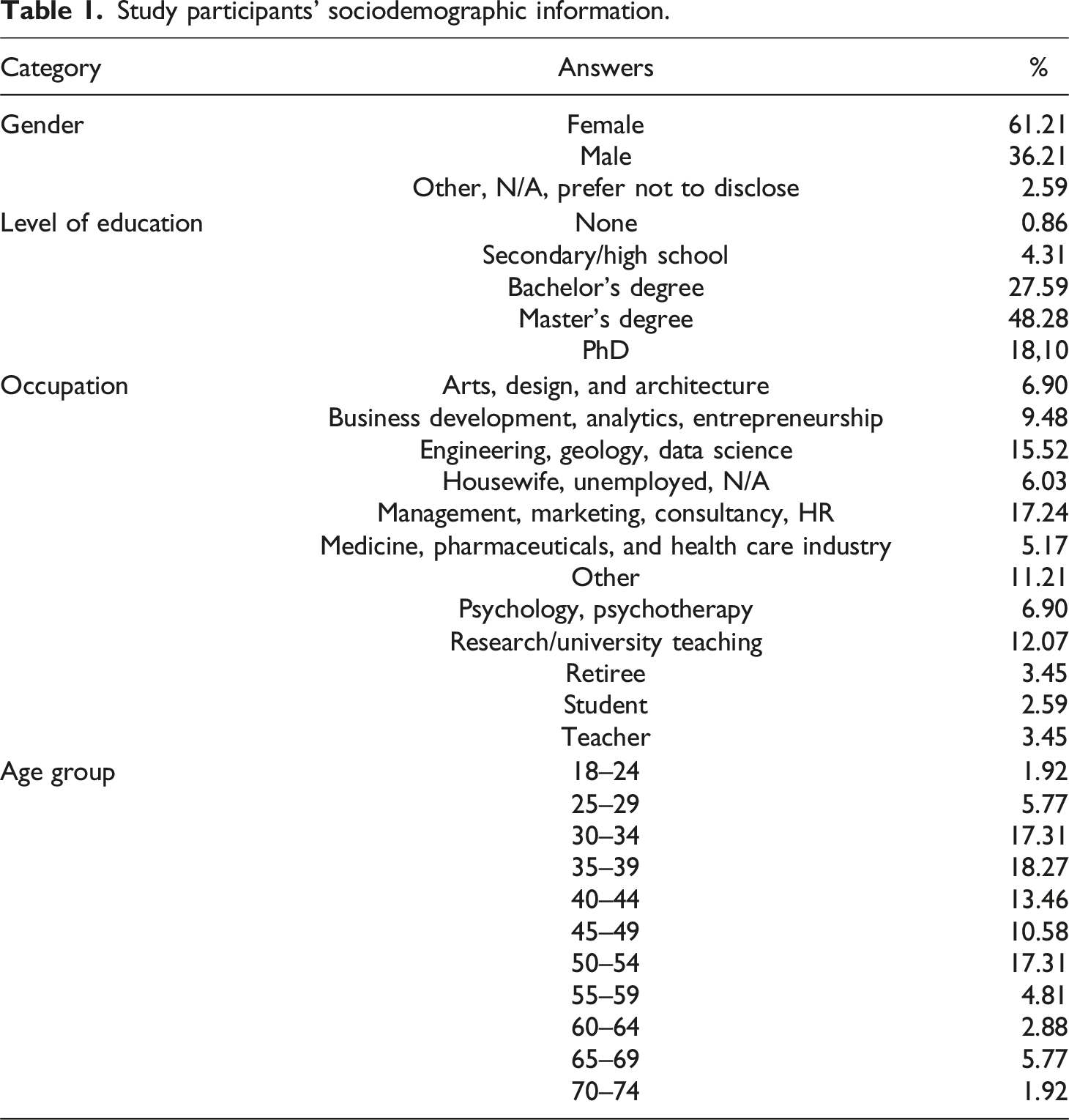
Study participants
Study participants’ sociodemographic information.
Study participants’ citizenship and country of residence.
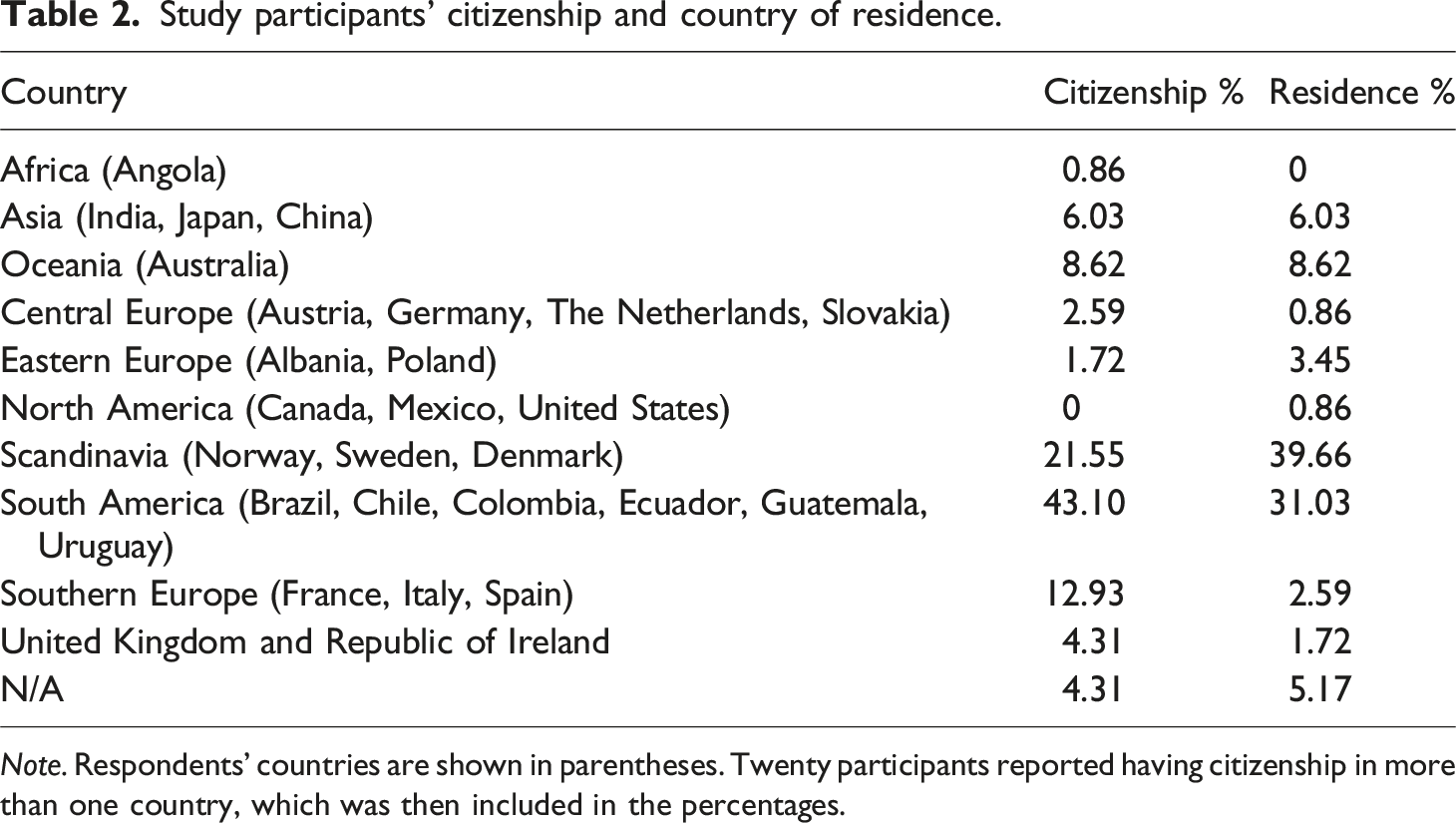
Note. Respondents’ countries are shown in parentheses. Twenty participants reported having citizenship in more than one country, which was then included in the percentages.
Data analysis
Scholars carrying content analysis define the sets of steps to use in their analyses differently (Assarroudi et al., 2018), influenced among other features, by the characteristics of the data, the research questions of a project, and the epistemological stances of the researchers (Graneheim et al., 2017). We took a pragmatic stance developing our own format for what we hereby call “qualitative-first” content analysis, informed by premises of abductive qualitative content analysis (Graneheim et al., 2017) but adapted to a socio-constructivist epistemological stance. Qualitative-first designs opt for rich descriptions of phenomena, in close connection with the framing of theoretical insights and possible explanations (Gillespie et al., 2024). Given the objective was to document the widest variety of representations of silence phenomena in the pilot data of The Silent Archive, we used both theoretically driven codes to deduct categories in the data, and inductive codes to pay attention to categories that could advance theory, as is common in directive qualitative content analysis (Assarroudi et al., 2018; Hsieh & Shannon, 2005). These are the premises we followed in conducting a “qualitative-first” content analysis of the data: (a) Stance on the manifest versus latent coding (Elo & Kyngäs, 2008). Given that data comes from anonymous qualitative questionnaires, we chose to focus primarily on the manifest contents of the participants’ responses to each incomplete sentence. (b) Clarifying the coding agenda (Mayring, 2000). The a priori codes that we looked for in the data regarded: (a) descriptions of silence as opposed to noise, sound, speech and movement (Kurzon, 1998); (b) descriptions of silence in terms of communicational pauses (Kurzon, 2009); (c) descriptions of silence in terms of practices of meditation, contemplation or prayer (Lehmann et al., 2019); (d) descriptions of silence in terms of attention and or distraction from activities, and in terms of a feeling of connection or detachment from our relationship with others, nature, ourselves, or God (Lehmann, 2018, 2022). (c) Feedback loops refining the coding process (Mayring, 2000). O.V.L analysed the responses per incomplete sentence and carried feedback loops in the coding within each incomplete sentence, and across them. Then, she read the responses to the questions several times and then coded the first six sets of data manually and independently in Microsoft Excel, paying attention to emergent themes. She completed at least three separate iterations of this coding process and compared these versions, remaining alert to potential inconsistencies, which we corrected as they were identified. At times, participants provided thorough responses to the incomplete sentences. When their words described more than one meaning associated with silence, they were coded separately. (d) Systematizing the data into themes (Elo et al., 2014). In total, we included 890 codes in the analysis (a = 180, b = 184, c = 144, d = 129, e = 126, f = 127) for the 696 responses that the 116 participants shared for the four incomplete sentences. The six incomplete sentences were designed to take the form of dyadic oppositions and therefore were paired accordingly. The first pairing, “What silence is and what silence is not,” was associated with the codes for the first two prompts in the questionnaire; for these, we identified 14 themata associated with the meanings of silence. We organized the second pairing, “What makes silence comfortable and uncomfortable” (Prompts 3 and 4), and the third pairing, “The least and most silent places one has been” (Prompts 5 and 6), descriptively and in a more exploratory sense. Seven themes relating to activities and settings that make silence comfortable or uncomfortable were identified, as well as 10 sets of places that people experience as silent or not silent. For this latter pairing, we also documented the participants’ descriptions of the emotions associated with such spaces. (e) A focus on trustworthiness (Elo et al., 2014). Participants from different countries, genders and educational backgrounds volunteered in this pilot, and the answers to the incomplete sentences were diverse enough to uncover emergent themes beyond the a priori themes drawn from previous theories. This was in alignment with the aim of this article: to document a broad spectrum of descriptions of silence phenomena to suggest possibilities for theoretical integration of social representations. Most of the participants in this pilot live in urban areas and almost half of them currently work in industry jobs. Therefore, the data in this pilot is centered on the experiences of people living in urban areas. The advantages and challenges of this are addressed in the discussion. Reporting this pilot data is therefore an effort of transparency that helps to tailor the further development of The Silent Archive platform, and other sampling strategies for the large-scale collection of data.
Results and discussion
In the following subsections, we present summaries of the data in three different tables, one for each dyadic opposition, or themata. We provide details on the number of codes found per theme, the percentage of these codes compared to the total codes per incomplete sentence, and examples of the content of participants’ responses. Although the quantitative data in these tables is certainly informative, here we focus on the qualitative aspects of the data. A central assumption in this context was that regardless of the frequency of occurrence of a meaning category, all responses point to possible individual differences or positionings of the self in relation to respondents’ perceptions of what silence phenomena are and what they do for us. The wider the range of differences documented in the research, the greater the possibilities for expanding existing theoretical frameworks.
What silence is and what it is not
Content analysis of incomplete sentences 1 and 2.
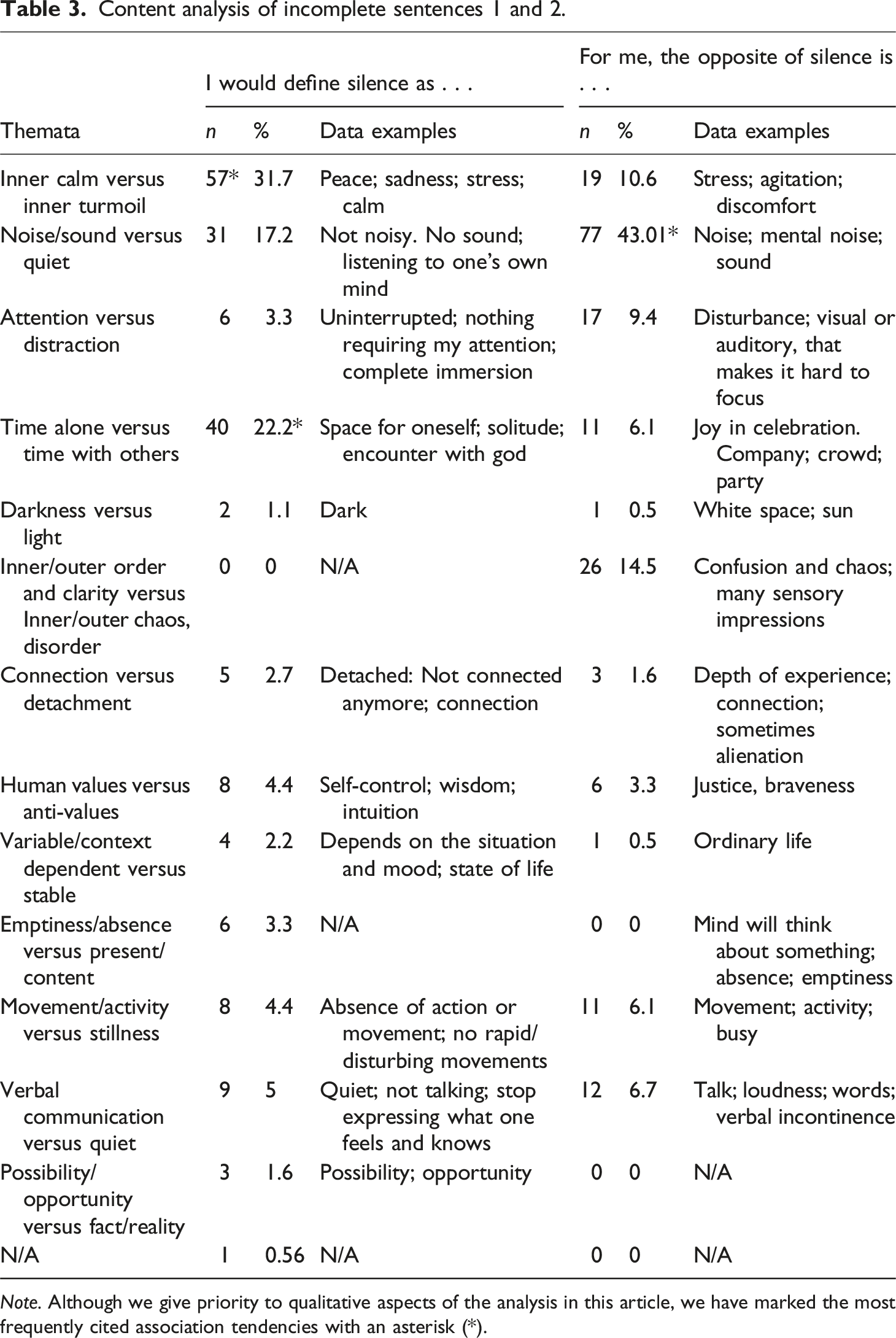
Note. Although we give priority to qualitative aspects of the analysis in this article, we have marked the most frequently cited association tendencies with an asterisk (*).
The polarities of inner quietness versus inner turmoil, time alone versus time with others, inner/outer order and clarity versus chaos and disorder, human values versus anti-values, and connection versus detachment illustrate the tension between the self and the other, which Marková (2015) sees as the fundamental themata in the social sciences. The association of silence with inner or outer chaos is of particular interest as it brings into play the idea of overstimulation, which in turn can affect our capacity for attention in urban areas. Furthermore, the polarities of attention versus distraction and possibility/opportunity versus fact/reality support more conceptual theories of silence phenomena that provide room for both the possible and the potential to increase creativity through attention (Lehmann, 2022; Lehmann & Murakami, 2024).
Perceptions of inner/outer quietness and inner/outer order are anchored in a sense of interconnectedness in silence and a perception of disappearing temporal and spatial boundaries in terms of, for example, beauty, love, or insight (Bruneau & Ishii, 1988; Lehmann, 2022). However, these values are more aspirations than states, and the process of seeking out such value experiences involves uncertainty and tension (Lehmann, 2022; Lehmann & Murakami, 2024).
In line with sociocultural and dialogical approaches to social representations (e.g., Marková, 2000, 2015), the descriptions of the participants indicated the situated nature of the meaning-making of silence phenomena. The responses concerning the polarities of inner peace versus inner turmoil and connection versus detachment highlight the need for a detailed focus on context. As shown in Table 3, some participants defined both silence and the opposite of silence in terms of connection and disconnection, or alienation, such as when stating that silence is “peace, quiet, sometimes alienation” (Participant 7) and that “connection” is both what describes silence (Participant 1) and its opposite (Participant 97).
Participants also referred to stress and tension when describing what stillness is (e.g., Participant 18) and what the opposite of silence is (e.g., Participant 2 and others). When coding the data, the main difference between the themes of turmoil and chaos was that the former was associated with emotions and moods, such as silence phenomena being “profound[ly] joyous” (Participant 96), while chaos indicated an excess of stimuli, as reflected in the statement that the opposite of silence phenomena is “untidy, messed up” (Participant 6). Related to these ideas, some participants described silence phenomena in terms of their emotional intensity. These aspects become even clearer in the data presented in the following section of the article.
What makes silence comfortable or uncomfortable?
Content analysis of incomplete sentences 3 and 4.
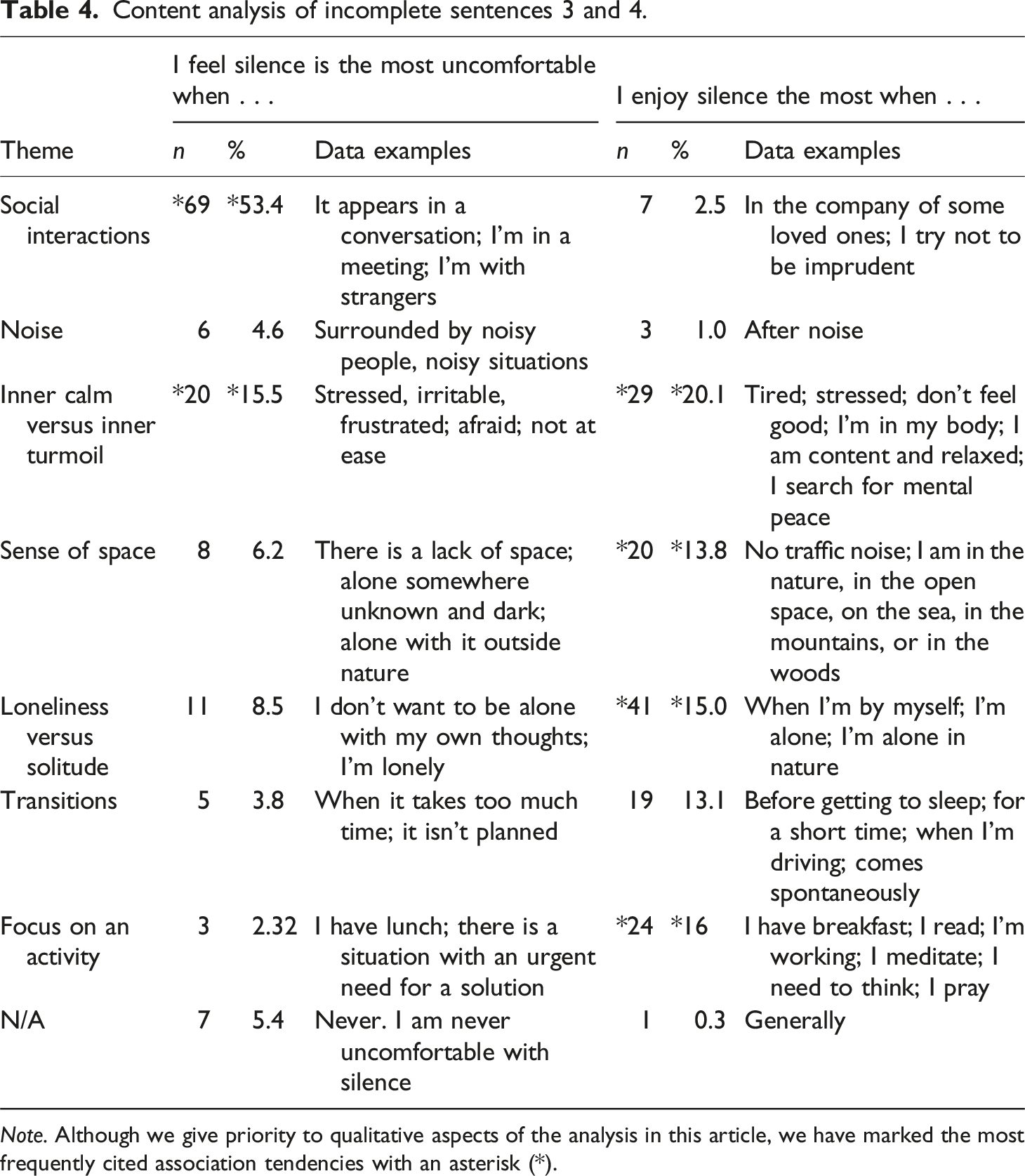
Note. Although we give priority to qualitative aspects of the analysis in this article, we have marked the most frequently cited association tendencies with an asterisk (*).
However, some participants did not seem to perceive a clear distinction between the polarities but rather perceived a complex composition of coexisting tensions. Bakhtin’s (1963/1999) notion of polyphony, widely used in dialogical self-theory, seems appropriate to describe the multiple directionalities and potential coexistence of tensions and positionings of the self (Hermans, 1999; Lehmann, 2022). For instance, participants said that they felt most comfortable in silence when “I feel inner peace and calm, when I sleep or am going to sleep, and when it leads to/allows for time for reflection and an open space for everyone to express themselves” (Participant 35) or when “I can be alone or with a few friends/family members—no traffic noise” (Participant 87).
In addition, some described the comfort of silent moments depending on the awareness of the need for it; for instance, one respondent felt that silence was the most comfortable when “my life is chaotic, and I need time for myself” (Participant 19). As for what makes silence phenomena uncomfortable, participants noted, among other things, “[when] the volume of background noise is extremely low, so my tinnitus becomes louder” (Participant 83); “when there is no other stimulation at all, like being in a noise-insulated room that is bare. When you have just had an uncomfortable discussion, and now no one is saying anything” (Participant 88), and “when the mind does not stop. When there is a deafening noise with a whistle in the background” (Participant 31).
From the content of participants’ responses to the questionnaire, it can be inferred that a balance is required between stimulation, emotional intensity, and thought, among others, and that what enables this balance may be unique to the individual, even if shaped by context. This argument is also consistent with the multidimensionality and dynamic nature of our constructions in relation to silence phenomena. In line with social representation theory (Moscovici, 1988), these constructions appear to be unstable, not only in relation to different individuals but also insofar as they are anchored in individuals’ everyday lives. In the open-ended box at the end of the qualitative questionnaire, one participant pointed to this context-situated meaning-making of silence phenomena: “Silence can help to create but also destroy, or at least it makes it evident when something is ending. You have to read silence and the context of silence; it can teach us more than we would think” (Participant 109).
This idea was also evident when participants described an apparent oppositional relationship between solitude and loneliness, unlike the contrast between time alone and time with others, which was clear in the responses to the first two incomplete sentences. Once again, the theme of the relationship between self and other was observed, presenting the phenomena of silence as a notion with the potential to catalyze the experience of values and decisions in line with those values (Lehmann, 2019, 2022). Solitude can be associated with focusing on activities such as reading, meditation, contemplation, or prayer. Many participants also associated solitude with a sense of space for oneself or spending time in nature. For example, participants commented, “I am alone, aligned with myself, in nature, meditating” (Participant 1) and “Contemplating the ocean or greenery. When I’m alone in the company of some loved ones. When praying” (Participant 47).
Recent studies on solitude and loneliness have recognized the polarized perspectives that lead us to assume that loneliness can be harmful and solitude can be healthy; the key questions are whether solitude is a matter of choice and whether activities are balanced with socializing (Weinstein et al., 2023). One participant summed it up as follows: This quiz put me in a corner [boxed me in]. Funny ). But when you don’t want to be alone and you need “love.” When you need someone to shear [share?] your experience with. Because we connected with everything, we can’t go on alone. That would build up anxiety in ourselves. (Participant 60)
Study participants described how silence affect human relationships, not only in terms of the relationship with themselves but also with others through social interactions. The relational nuances that participants highlighted when describing what is comfortable and uncomfortable about being quiet merit attention. While Kurzon (2007, 2009) has identified some typologies for silences that occur in conversation, he has not explicitly explored the implications of the occurrence of such silences in terms of the emotional impact these experiences can have on the quality of the relationships we form.
As for what the data suggest, the comfort or discomfort experienced in a silent moment depends not only on the quality of the relationship but also on the perceived depth of the relationship in that instance. Silent moments tend to be more comfortable in situations like the following: “I am with someone who I feel secure with” (Participant 27); “[I am] in [the] company of someone I care for” (Participant 111); or “[when] in the company of some loved ones. When praying” (Participant 47). However, they were evaluated as uncomfortable when “something feels unsaid or unresolved” (Participant 111); “a person uses silence as a “ruler technique” in a dialogue” (Participant 97); “I’m with strangers in an unfamiliar context” (Participant 76); and “you wait for someone else’s answer when there is no connection or flow” (Participant 43).
In a recent study, Di Malta et al. (2024) found that high levels of relational depth in close relationships can predict subjective well-being. Relational depth is often described as moments when both parties feel deeply connected and engaged in a relational task, such as psychotherapy (Mearns & Cooper, 2005). At the same time, while silence can help some people experience relational depth, it can also threaten it, especially during prolonged pauses in communication that lead to feelings of disconnection (Cooper, 2013; Mearns & Cooper, 2005).
Another critical aspect of our well-being is the feeling that we matter to each other and make valuable contributions to our relationships and communities (Prilleltensky, 2020). Being listened to or experiencing a genuine dialogue is crucial for us to experience emotional connectedness and relationship quality (Hermans & Hermans-Konopka, 2010). It can therefore be inferred that positive and negative experiences associated with silence in our social interactions can influence our mental health and well-being. As the data suggest, this can be the case with strangers but also with people close to them in conflict or when avoiding topics of conversation. In a recent study, we also looked at the feeling of insecurity that silence evokes in relationships with others or with ourselves (Lehmann & Murakami, 2024). Some of the findings from this study point to the activation of different positions of the self to cope with such uncertainty, which is difficult to address in detail in the data from the incomplete sentences, given the brevity of most of the responses.
The nurturing aspects of silence are to be practiced in a wide variety of ways, wherever individuals find themselves. This brings to the fore the importance of acknowledging our need for silent moments, pursuing them intentionally, and considering eudemonic pursuits of happiness, not just hedonistic ones (Lehmann et al., 2019). For example, for some participants, silent moments seem quite comfortable when providing a contrast aligned with a need: “[for instance, when I need] to recharge, take a break, be in touch with myself” (Participant 108). Another respondent gave an example: “I am alone, trying to relax or to be concentrated on stuff” (Participant 66). Here, the declaration of a need for a contrast, be it relaxation, a pause, or concentration, is a possible qualitative mediator.
Least and most silent places one has been to
Content analysis of incomplete sentences 5 and 6.
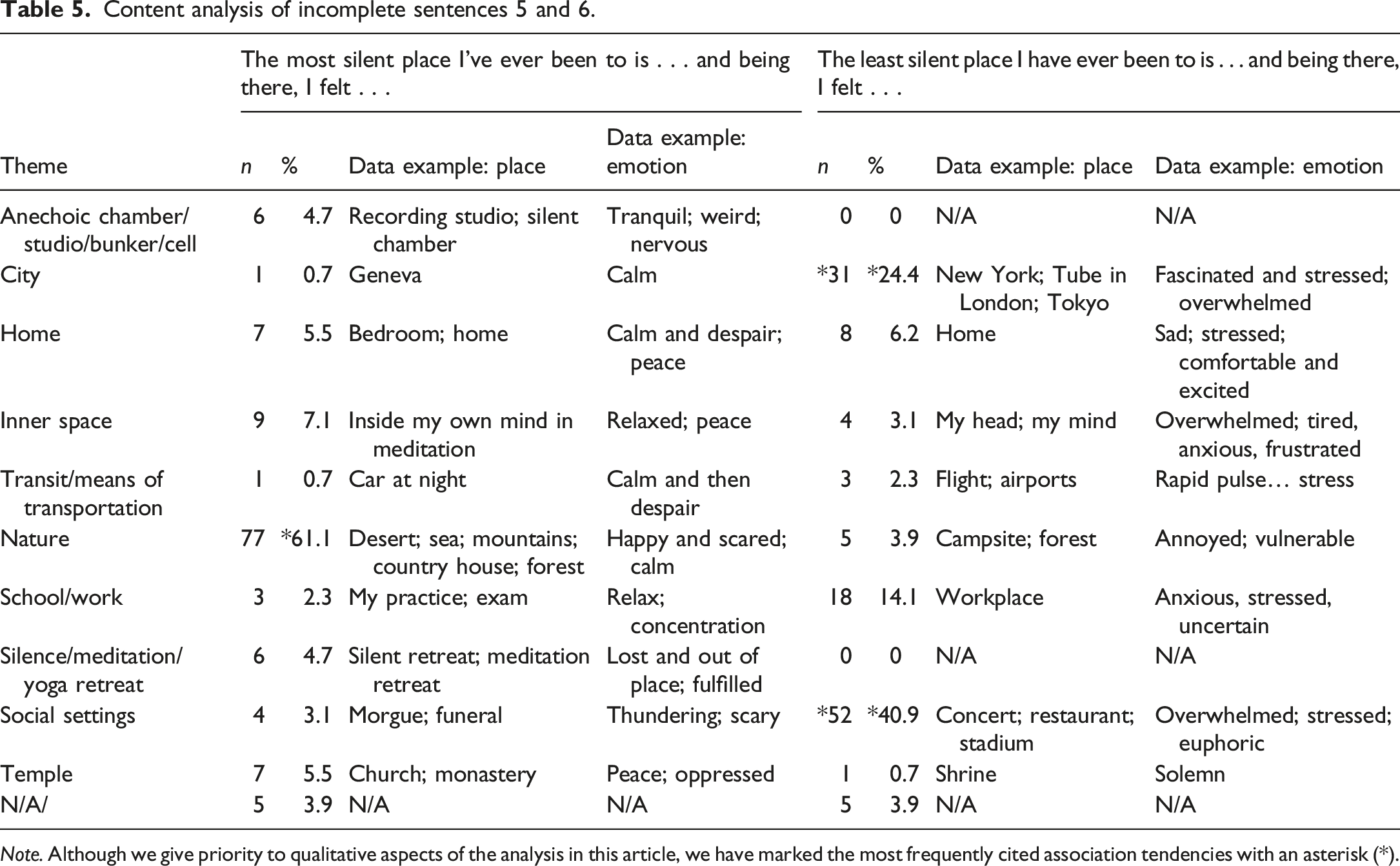
Note. Although we give priority to qualitative aspects of the analysis in this article, we have marked the most frequently cited association tendencies with an asterisk (*).
In describing some typologies of silences in social interactions, Kurzon (2009) emphasized their temporality. In the context of psychotherapy, silences can also be described as temporal phenomena, prolonged silences being difficult to navigate in some cases (Levitt & Morrill, 2023). For instance, Cooper (2013) also suggested that long pauses or silences can disrupt the depth of the relationship. Some excerpts from our data show the importance of both the sense of temporality and the sense of space in our perceptions of silence phenomena that coexist with noises and sounds in certain contexts. According to one participant, When you are alone in the mountains and the only thing you hear is the little birds. The feeling of peace . . . until the mind chooses to listen to the cicadas and you are not in silence any longer. (Participant 64)
In social representation theory, the notion of cognitive polyphasia points to the tension between coexisting modalities of common sense (Jovchelovitch, 2008). In addition to confirming that the construction of meanings about silence phenomena evokes the multiplicity of voices within the self and in the relationship between self and other, and gives an account of historical, social, and cultural orientations, the data point to the importance of examining these processes through a focus on temporality. The present study merely provides an exploratory basis for understanding what common sense tells us about the nature of silence phenomena.
The sociodemographic information shows that most of our participants come from urban areas, albeit from different countries. It is therefore not surprising that one of the most striking contrasts concerns the dyad of city and country/nature. This dyadic contrast between life in the city, life in the countryside, and access to nature has accompanied civilizations for centuries. There are several accounts of this dichotomy in our popular culture, just to name one of them, even Dostoevsky (1848/2017) describes it prosaically in his masterpiece White Nights. Here, too, silence phenomena bring with them a need for contrast, not only in terms of temporality but also in terms of spatiality, as the following participants illustrate when they name the most silent place they have visited and how they felt there: “A mountain close to where I live . . . I felt peace and managed to return to myself” (Participant 19). Another commented, “Far from the city, with nature, and then I felt calm, enjoying the moment and the place” (Participant 22).
Notably, the data also suggest the importance of the sense of temporality and space in instances of “non-silence,” which some participants described when referring to the least silent places they have ever been to: “New York—Manhattan . . . sleepless and restless, can be a good way for a short period of time” (Participant 110). Another commented, “[At a] concert—I felt happy, but after 1 hour, it was more than enough, and I needed to get out of it” (Participant 113). Again, the power of silence phenomena corresponds not only to a length or particular setting but also to the sense of contrast (Lehmann, 2019, 2022; Lehmann & Murakami, 2024) it brings to everyday life; people may intentionally seek out contrasts and variations, as one participant indicated when referring to the least silent place they have visited: “India (Asia in general), and being there, I felt, first, overwhelmed, but I got used to it; anyway, it was good to come back home ) or to my room and be alone )” (Participant 114).
Conclusion
This article aimed to illustrate the diversity of meanings of silence phenomena with respect to existing theories about them. In particular, the data shed light on the coexistence of silent moments with other domains of experience, not just language, noise, movement, and sound. Although these four are relevant and were mentioned by the participants in this study, they mainly evoke an auditory relationship between individuals and their environment. Dyadic oppositions were indicative of psychological processes and the theme of the relationship between self and other appeared central, such as in the case of participants’ descriptions of inner peace versus inner turmoil, connection versus detachment, time alone versus time with others, solitude versus loneliness, and inner/outer order versus inner/outer chaos. Based on the data analysis presented in this paper, it can be further argued that silent instances have a central function in the dialogicality of the self. Silence phenomena are part of our understanding and exploration of the relationality of the self in relation to others, the self, the environment, and, for some, God.
The data also illuminate the fact that silent moments can affect our experiences of relational depth. Silences influence the quality of our interactions. Some people tend to idealize the benefits of silence and undermine its challenges. Therefore, by consciously engaging with silent moments, we may be better able to tolerate them or use them for the common good. This, of course, would require that we understand and develop a certain granularity to distinguish between typologies of silence phenomena, and that we practice and/or develop rituals and habits that allow us to engage, reflect, and possibly speak openly about what silence means to us and to others. Qualities that promote meaningful, if not always pleasant, experiences of silence seem to include awareness of a need, an attempt to meet that need, the length of the silent moment, a focus on a preferred activity, a sense of safety and trust when interacting with certain stimuli or people, and a balance between solitary and social activities.
In addition, our participants described aspects related to the temporality, spatiality, and attentional function of silence. This suggests the need for contrasts related in different ways to temporality, or the need for a limited duration of silent and non-silent moments, and to spatiality, or the importance of movement in different social settings in our everyday lives to fulfill our needs or desires. Overall, the three data sets based on the six incomplete sentences confirmed our assumption that experiences of silence phenomena are not only sensory but also constructed perceptions, emphasizing the co-constructive nature of meaning-making and the affective processing surrounding it. Of course, it is difficult to understand the emotional impact of certain settings from some of the formulations, but this can be explored in further studies.
The study’s limitations include some constraints on content analysis based on incomplete sentences. For example, writing about silence phenomena may cause some ambiguity. Certain words, like “quiet,” can represent a variety of experiences, such as resisting external or internal stimuli that may be perceived as noisy or chaotic. For some other participants, “being quiet” means intentional reflection or praying. As we have acknowledged in this paper, there are a myriad of intentions, and the qualitative-first content analysis therefore only provides a foundation for further studies that can deepen the process-oriented nature of the meaning-making of silence phenomena. The results of this pilot study could serve as a basis for developing questions for in-depth interviews, focus groups, or directed journaling prompts in further research. Other approaches could include observations and fieldwork in some of the places mentioned by the participants.
Another limitation of this study is that, given the brevity of most responses, it was difficult to capture the positioning of the self that may have influenced participants’ responses. The wide variety of associations suggests that the silence phenomena are constructed perceptions, but the implications of this for the dialogical mind need to be explored in other studies. Considering their educational background and location, it can be assumed that most of the participants either grew up or worked in globalized and industrialized regions. Therefore, further research could target an even greater diversity of cultural perspectives—especially rural or indigenous ones. Further studies can take a closer look at personality, culture, and their interplay in a broad diversity of contexts.
Footnotes
Acknowledgements
We would like to thank Professors Jaan Valsiner, Hroar Klempe, for their comments and feedback on earlier drafts of this article. We would also like to thank Professor Morten Tønnessen for stimulating conversations during the initial stages of data analysis, and Cambridge Proofreading & Editing LLC for their thorough feedback and help in improving the English language of earlier versions of this manuscript.
Declaration of conflicting interests
The author(s) declared no potential conflicts of interest with respect to the research, authorship, and/or publication of this article.
Funding
The author(s) received no financial support for the research, authorship, and/or publication of this article.
Correction (March 2025):
This article has been updated with minor grammatical corrections since its original publication.
Ethical statement

Examples of translation of data
Incomplete sentence as written in the questionnaire
Data excerpt in original language
Data excerpt in English
English
I would define silence as…
Español
Yo definiría el silencio como…Spanish
Portuguese
N/A. All responses written in English
English
Spanish (n = 4)
English: I feel silence is the most uncomfortable when… //
Spanish
I´m afraid
English: I enjoy silence the most when…
Spanish
When I´m alone/In solitude
English: The most silent place I have ever been to is…. and being there I felt….
Spanish
Meditating… in peace
English: The most silent place I have ever been to is…. and being there I felt….
Spanish
When I´m alone/In solitude