



Abstract
The vulnerabilities of nonhuman animals in human–animal relationships have received scant attention in Organization Studies (OS). What could OS scholars learn about animal vulnerability and “humanimal” relationality by turning to the context of artmaking, where sensate animals, human artists, spaces, materialities, artworks, affects and critical audiences come together? Building on feminist vulnerability literature and insight from posthumanist affirmative ethics, we here analyze Finnish artists Terike Haapoja and Laura Gustafsson’s artmaking, works, and their exhibition Siat – Pigs in particular, where the agency and vulnerability of animals can be conceived in non-anthropocentric, immersive and affective ways. We contribute to OS research by demonstrating the affective power of posthumanist artmaking that comes with the radical repositioning of the human in relation to others, as well as political motivation to elicit empathy for the plight of animals in the factory-farming complex. Specifically, we show how these insights can illuminate what is currently not centered or discussed enough in OS, help us to better acknowledge co-constituted humanimal vulnerabilities, and extend discussions on empathy in OS to include (hyper-vulnerable) animals in the factory-farming complex. We contend that by extending vulnerability ascriptions to animals, caring with the unseen and silenced agents in society, acknowledging our shared vulnerability and by taking further action, we can gradually change the exploitive ways in which humans have treated other animals in our organized society, and more emphatically work for the well-being of the many unseen “others.”
Artmaking, animals, and vulnerability—an introduction
“What’s radical in the question of the animal for me is the way it forces us to think about vulnerability and the ways in which beings are made into things and things into beings” (Finnish artist Terike Haapoja).
While it is crucial to imagine a reality that is not based on domination and exploitation of nonhuman others, how can we, in fact, do that? We live in a world in multiple crises. Our ecosystems are vulnerable to mass destruction, biodiversity loss, global warming and toxic pollution, whilst multiple species on our shared planet are vulnerable to mass extinction. In our hu-man-centered world, sentient nonhuman animals (hereafter animals) are systemically violated, silenced and othered. Animal diseases, food crises and major problems in factory-farming (Porcher, 2011; Sayers, 2016; Tallberg et al., 2022b) reveal systematic human ignorance of animal agency, value, and interest. Such ignorance has resulted not only in severe ecological crises, socio-ecological system failures, animal suffering, and zoonotic viruses (Adams, 1997; Crary and Gruen, 2022; Ergene et al., 2021; Tallberg and Hamilton, 2022), but also, in upheld dualisms and oppressive power relations between human/nature, human/animal, nature/culture and self/other (Braidotti, 2019; Haraway, 2003; Phillips, 2014). In the Anthropocene, 1 a key aim for humanity should be to create more equal, caring and humane societies “in which we are all more attentive to the vulnerability of others” (Huzar and Woodford, 2021: 20). We must urgently reimagine and foster more responsible human behaviors by radically shifting perspective from the hu–man worker/organizer/agent to our relationality with multiple, often silenced and suppressed “more-than-human” others (Huopalainen, 2022; Jammaers and Huopalainen, 2023; Sayers et al., 2022; Tallberg et al., 2020). How could this be achieved in practice, and how could OS scholars think of relationality with other animals as other than exploitative or instrumental? What roles might the arts and artmaking play in inspiring OS scholars to consider more ethical relationships with other animals, including the most abused, exploited and unseen “others” in the factory-farming complex?
In this paper, we examine how humanimal 2 vulnerabilities are constituted within artmaking. Processual artmaking and aesthetic production play important parts in contemporary critical posthumanist thinking by fostering creativity, reimagination and new ways of articulating entanglements (Aloi and McHugh, 2021; Kallio-Tavin, 2020). Artmaking involves embodied-material and political processes of “worldmaking,” as artists tend to draw from varied formations to “craft new foundations for social thinking and action” (Aloi and McHugh, 2021: 2). These messy, material and affective processes are not (necessarily) human-led, although the art world has long focused on the human artist. Posthumanist artmaking moves beyond exploitative human/animal binaries (Pallesen, 2024; Sayers et al., 2022), providing a particularly suitable political context for knowing differently through the senses and the body, especially by “decentering” the human, inviting humans to perceive and sense anew (Suominen, 2023). Instead of focusing on differences, shared interdependences are recognized (Butler, 2012), also with the unseen, hyper-vulnerable animals (Sayers, 2016).
We build on arts-based methods (Boncori, 2023; Ward and Shortt, 2020) and embodied reading as an experiential process (Karkulehto and Schuurman, 2021) to attentively “read” artmaking that centers societally hyper-vulnerable, objectified animals in for-profit factory farming that possess high-level cognitive abilities (Sayers, 2016) but face disturbing conditions, abuse, and objectification. Through a sensorial lens (Boncori, 2023) that is critical of dominant power relations, we explore art-making dedicated to these non-represented others, commonly “de-animalized” in for-profit organizing (Hamilton and McCabe, 2016). In power structures such as industrial farming complexes, institutionalized violence, “contractual care” (Tallberg et al., 2022a) and dominance over animals intertwine but remain invisible to consumers. We elaborate on how art can “help sense and see,” through the lens of vulnerability, as discussed particularly by feminist philosopher Judith Butler (see Butler, 2012). Vulnerability might “provide the starting point for a powerful conception of ethics” (Huzar and Woodford, 2021: 20), in knowing and relating “differently” to other sensate (and hyper-vulnerable) animals, and in this way provide OS research with novel insights into relationality with the unseen animals through artmaking.
Empirically, we focus on the art exhibition Siat – Pigs of Finnish artists Terike Haapoja and Laura Gustafsson. Although our focus is on artmaking, historical reasons for the current treatment of factory-farmed animals must be considered to understand the kind of critique the studied artists and we, as authors, want to raise. We in this paper build on the critical work on animals and organizing, especially critiques of the anthropocentrism in OS (Sayers, 2016) and ideas around posthumanist affirmative ethics (Sayers et al., 2022). We respond to calls for fierce compassion through business education (Tallberg et al., 2022b), and for developing entangled empathy (Gruen, 2015) or interspecies solidarity (Coulter, 2016). We hope to inspire OS researchers to [stop] to sense, imagine and reflect on animal vulnerability and “humanimal” relationality in ways that go beyond ordinary anthropocentric and logico-rational thinking.
Theoretical background: From “humanimal” relationality to vulnerability theorizing
On human-animal relationality in OS
In OS, the ethical inclusion of nonhuman animals has been relatively limited. Although animals and human-animal relations are increasingly studied in OS, 3 humans’ joint history with other animals, power relations and species hierarchies explain why certain human-animal relations have received (much) more scholarly attention than others. Especially human relationality with the “higher-status” working (companion) animals proximate to humans, like companion dogs (Satama and Huopalainen, 2019), assistant dogs (Jammaers, 2023), first dogs (Skoglund and Redmalm, 2017), police dogs (Knight and Sang, 2020), and therapy dogs (Charles and Wolkowitz, 2023) have been studied, whilst the agency and relationality with hyper-vulnerable and unseen factory-farmed animals remain less addressed. “Food animals” bred for human consumption, like pigs or cows, are rarely, if ever, granted subjectivity (Cole and Stewart, 2014; Coulter, 2016; McLoughlin, 2019; Sayers, 2016; Sayers et al., 2019) which (partly) also explains their marginalized (and vulnerable) position and exclusion in OS. Pigs’ organized suffering and “place” in uneven power structures contributed to our explicit aim to examine artmaking dedicated to these unseen others. As Sayers (2016: 371) eloquently writes about the pig, “she is subjected to and silenced by so much ‘organisation’”.
Although companion animals are usually privileged above farmed animals (Coulter and Fitzgerald, 2019), all humanimal relationships are inherently complex and vulnerable to misuse. Humans’ paradoxical and shifting treatment of other animals reflects situatedness and inconsistency, where caring practices often blend with domination and violence. As Coulter (2016) reminds us, there is evidence of abuse and mistreatment of animals, but there are also examples of human–animal relationships characterized by care, love, and respect. Depending on the situation, animals may be hyper-vulnerable in one particular space or sociocultural context, but not necessarily in another, still revealing human domination and power over other animals. To understand the humanimal relation of factory-farmed pigs, one first needs to understand the historical emergence of industrial farming, the instrumental logic of industrial agriculture, and the complex (and situated) practices around how humans have lived with farmed animals throughout history (e.g. Coulter, 2016; Porcher, 2011, 2017; Sayers, 2016).
Different to relational animal husbandry, people in many parts of the world do not live with farmed animals anymore and do not participate in their care and killing. Only some decades ago, pigs moved from being “family members” (yet still killed) to “being radically decoupled from all human senses in space and time by having their entire life cycle managed in factory-farms” (Sayers, 2016: 373). Today, most people in Western cultures have spatial and emotional distance from farmed animals, like pigs, cows or hens, as the whole industrial process of meat production is hidden. “Cognitive dissonance” refers to the ignorance, or denial of animal suffering, and human use-abuse of other animals also entails many forms of negative effects on humans (Crary and Gruen, 2022). In for-profit industrial farming, the animals are furthest removed both from us humans and from their own, sensate worlds.
The overall aim of for-profit businesses is largely to utilize and instrumentalize animals, like for example “cows, hens, salmons and deer in the optimal fashion” (Aaltola, 2019: 194). Factory-farmed pork production remains “an archetype of animal production” (Porcher, 2011: 4) and of the organized killing of animals, even if many systems of modern farming co-exist today, ranging from technical-economic for-profit industrial farming to more local and ecological forms of animal husbandry (Labatut et al., 2016; Porcher, 2017). In general, all farmers are believed to develop some degree of affection for the animals, whilst they are often forced to negotiate between profitability pressures and emotional attachment with the animals. Despite differences between production systems and the “complexity of more-than-human agency on farms” (Kaarlenkaski and Lonkila, 2020: 48) revealing resistance, affection and humanimal collaboration, factory-farmed pigs and their piglets remain the unseen, highly organized and hyper-vulnerable “others.”
Paradoxically, as “food animals” they are culturally constructed to be of lower moral status than (many) other animals, their suffering is seen as “ethically justified” (Clarke and Knights, 2022) (sic) and they become detached from moral consideration in our larger society, as well as within OS research (Coulter, 2016; Sayers, 2016). And yet, scientific studies confirm how pigs are intelligent beings that are genetically similar to us humans (Sayers, 2016). Nussbaum (2022) discusses pigs as “extraordinarily intelligent,” who “clearly have a sense of temporal projects” (p. 167). How can humans justify the unethical treatment and suffering of these affectionate and intelligent animals? As humans are accustomed to focusing on human lived experiences or relationality with the (culturally constructed) “higher-status” animals proximate to us (who might meanwhile also be abused or exploited), systematic and hidden forms of vulnerability and suffering are rarely noticed (Tallberg et al., 2022b). This urges us to more firmly link the silenced animals in industrial food production systems to feminist vulnerability theorizing, which we will do as follows.
Toward a non-anthropocentric vulnerability theorizing
“Vulnerability includes all the various ways in which we are moved, entered, touched, or ways that ideas and others make an impression upon us. . . [vulnerability] is also a way of indicating one’s dependency on another, a set of institutions, or a circumambient world to be well, to be safe, to be acknowledged” (Butler, in Hark et al., 2011: 200).
Etymologically, vulnerability originates from the Latin vulnus (wound, injury or being wounded) and theoretically, vulnerability remains an ambivalent and sticky notion that comes with multiple meanings. Largely considered in negative terms as a gendered bodily weakness to be hidden or erased (Shildrick, 2002), vulnerability is felt, mediated and expressed in different forms across different, including organizational, contexts, and yet has been overlooked within mainstream OS 4 (Beyes et al., 2022). As a concept, vulnerability suggests openness and fragility at once (Masschelein et al., 2021) making it an intriguing theoretical notion. Here, we work from the assumption that vulnerability emerges through our corporeal dependency on and relatedness to other sensing bodies, making it a corporeal, relational and social concept, as well as an ethico-political and embodied matter (Pullen and Rhodes, 2014). We in particular acknowledge feminist philosopher Butler’s (2004, 2009) view of vulnerability as dependency, that is, that all life is precarious and all bodies are easily harmed. For Butler, we all are dependent upon our relationality with others so that corporeal vulnerability is shared among all human beings as founding sociality, “that is the source of the obligation to be non-violent toward one another” (Cover, 2014: 436). Our state of intersubjectivity, “wherein we respond to others and let the responses of those others change us, too,” as Aaltola (2021: page number not available) puts it, means it is (only) possible to be and feel vulnerable in relation to others. This embodied interdependency “constitutes us as more than thinking beings, indeed as social and embodied, vulnerable and passionate,” Butler (2012: 148) argues.
Importantly, Butlerian interdependency is not a “happy” but a contested notion, often an embodied struggle where ethical obligations emerge (Butler, 2012). In the embodied encounter with the other, we might affectively resonate or connect with them but power dynamics, agency and potential violence are always present. Researchers have largely assumed that these encounters are human or that vulnerability is a humane construct (Brown, 2010). We seek to challenge this dominant anthropocentrism by empathetically including our relationality with the (hyper-)vulnerable and unseen “food animals,” thus suggesting a move toward non-anthropocentric vulnerability theorizing. The fact that we are all vulnerable and dependent on others suggests the need for an entangled, posthuman worldview. All animals are indeed vulnerable in relation to human dominance yet some (farmed vs domesticated or wild animals) are subject to heightened vulnerability which emerges in abusive, exploitative, or violent relationships (Martin, 2021). Moreover, human and animal vulnerabilities are not categorically different, as “humanimal” vulnerabilities intertwine. For example, the links between violence against animals and the simultaneous abuse of women and children are well-established (Coulter, 2016; Fitzgerald, 2005).
The identifying and recognizing of animal vulnerability and suffering as inevitable and central part of embodied and affirmative ethics (Sayers et al., 2022), is part and parcel of posthumanist artmaking. Attuning to animal vulnerabilities through artmaking can foster what Gruen (2015: 3) calls “entangled empathy,” defined as “a type of caring perception focused on attending to another’s experience of wellbeing. An experimental process involving a blend of emotion and cognition in which we recognize we are in relationships with others and are called upon to be responsive and responsible in these relationships by attending to another’s needs, interests, desires, vulnerabilities, hopes, and sensitivities.” This process of recognizing and responding to the needs, vulnerabilities, interests and unique perspectives of animals, which goes beyond imagining being in the other’s position, is the understanding of empathy to which we attach the paper. Despite potential other ways of fostering powerful empathetic entangled encounters (see Tallberg et al., 2022b for an interesting business education experiment), we here examine artmaking as one potential political practice and avenue for opening up possibilities in OS.
Empirical material and methods
Research context: Posthumanist artmaking for creativity, reflection and reimagination
As process, movement, experimental mode and sensory form of cultural expression, art can challenge habitual ways of being, thinking, and feeling (Kontturi, 2018). Taking on “grand” or “small” ethical challenges as thoughtful attempts to rethink organization (Fotaki et al., 2020; Holt, 2023), or “imagining the unimaginable,” as artist Terike Haapoja says, is particularly crucial. Thus, the link between radical (re)imagination and artmaking is strong (see also Gustafsson and Haapoja 2020; Haapoja, 2011). As a spatial and embodied form-taking process, art continuously becomes (Holm and Beyes, 2022; Kontturi, 2018), so that many agents, institutions, spaces, audiences and moving, “messy” materialities, play a part in the continuously becoming of art (see also Huopalainen, 2023). Spectators or visitors, who gather around or immerse in exhibited artworks, always become part of them or their scenes relationally. Besides doing and making, art is also (about) being—being intimately and affectively open to the world (Haapoja, 2020a: 16): “You have to be present, to let the things of the world touch, disturb, and amaze you.”
Today, there is a growing critical interest in animal voices and perspectives in artmaking that challenge us to “feel with that intimacy” (Salmia, 2021: 63) of another species. In filmmaking, for example, recent documentaries have foregrounded the perspectives of sensate animals: Andrea Arnold’s Cow follows the life (and last breaths) of Luma the cow; Viktor Kossakovskij’s Gunda portrays the world from the perspective of an agential pig. Also in literary art, the “animal turn” has involved explorations of vulnerability, evident for example in Pick’s (2011) book Creaturely Poetics. Animality and vulnerability in literature and film. Sculpturing artist Patricia Piccinini is known for exploring posthumanist ethical responsibilities through artfully crafting ephemeral creatures as powerful metaphors for the excluded, othered or disenfranchised. 5 For example, her group of sculptures entitled The Young Family, is a creaturely family of transgenic hybrid animals which implicitly has evolved from pigs (see Lorek-Jezińska, 2022).
Methodological considerations—“reading” artmaking and artworks
In crafting this paper, we were “driven by exploratory criticality as well as deep reflection guided by sensitivity to arts and other epistemic traditions” (Suominen, 2023: 2). Methodologically, we turned to the growing literature on arts-based methods in OS (e.g. Boncori, 2023; Ward and Shortt, 2020) and multispecies ethnography (Hamilton and Taylor, 2017) for inspiration in paying close attention to animals’ vulnerabilities and mutual relationality, also critically reflecting on animal subjectivities in the political food industry complex. Following ideas of arts-based methods as “political tools and powerful feminist instruments” that enable to “link the individual to the plural” (Boncori, 2023: 105), whilst providing imagination and improvisation (Ward and Shortt, 2020), we experimented with the alternative method of affectively “reading” an art exhibition. The political process of affective and embodied reading derives from cultural studies and (queer) literary theory, and comes with a “non-representational attitude” (Cozza and Gherardi, 2022: 22) that is helpful in bringing us into meaningful critical dialogs as well as seeking to convey animal voices, perspectives and agencies in our analysis.
The exhibition was a “sticky” experience for the first author, and it stayed with her for long. In our literary process, we thus focused on “reading” works that strongly spoke to us, while exploring humanimal vulnerability emerging in affective interrelations. For us, “reading” combined theoretical reasoning with ethics, politics and interactive and emotional sensitivity in the intersectional space in-between “text” (or artwork) and the reader. To go beyond a traditional reading of textual materials or discourses and keep “an eye to the critical and creative concerns of how to live well with multiple others on this planet” (Åsberg and Braidotti, 2018: 4), we enhanced our sensory reading with two features: constant reflexivity and breathing. First, rather than assuming our “reading” was final, we kept an open regard to capturing the subtle signs of animal agency and communication “in a sensible and sensitive way” (Karkulehto and Schuurman, 2021: 113) as an ongoing process. Because we as humans frequently get animal communication wrong or impose our human categories upon animals (Birke, 2014; Jammaers and Huopalainen, 2023), thorough reflection on the danger that exists in reducing humanimal entanglements to human interpretation and projection became a key and recurring aspect of the “reading” process. Second, “relating with breathing” became another feature allowing us to disrupt the othering of animals, so typical for knowledge production, including in the social sciences. Enhancing the embodied character of our reading by relating affectively to both artworks and pigs (in the exhibition and our broader society) with techniques of breathing meant we could extend our observations with affectivity, mutuality and connectivity of corporeal bodies. In other words, our sensory “reading” of artmaking entailed a slow, back-and-forth process that merged with ethics, politics and cognition, centering “the histories of those involved” (Karkulehto and Schuurman, 2021: 122).
Introducing Siat – Pigs
Finnish artists Terike Haapoja (b. 1974) and Laura Gustafsson (b. 1983) are known for initiating fact-based and serious discussions about societal issues through the means of art, opening novel paths for inclusive and more diverse notions of society. In a posthumanist artmaking fashion, they explore history and society from the perspective of the animal “other,” seeking creative ways of considering and voicing animal storytelling. Their first such project, Museum of the History of Cattle, opened in 2013 and was followed by A History According to Cattle in 2015, and Museum of Nonhumanity in 2016. These projects invited humans to consider history through the eyes and experiences of cattle by considering colonial histories and uneven power relations.
“For thousands of years, history has been written from the perspective of a small minority, humans. Still, the world has always been shared by numerous species. For the first time in history a non-human form of life will have their own museum, an institution that makes their experience of this shared reality visible” (https://www.historyofcattle.org/). “Now, we live inside the factory. It has become impossible to pass on any heritage. Calves are taken from us immediately after being born, and family lines are scattered out of sight. We do so little that all our culture and habits have faded to nothing. We no longer learn from our mothers but from the machine that tells our bodies how to stand and how to eat. Stuck in the industrial process, we live in collective isolation, cut off from all relations that could anchor us in time, history, or culture” (Haapoja and Gustafsson, A History According to Cattle).
In 2021, a new exhibition Siat – Pigs opened in Seinäjoki, Finland, on which we will now exclusively elaborate to become more attuned and empathetic about silenced animals’ perspectives, agencies, and vulnerabilities. The Siat – Pigs (2021–2022) exhibition critically invited people to reflect upon the realities of the global and Finnish meat industry, including how and why living beings are made into things, but also, in a more hopeful spirit, “how the unimaginable could be made imaginable,” to emphasize Haapoja’s (2020a) words. “The scale of slaughter of pigs in factory-farms is mind-boggling,” Sayers (2016: 373) reminds us. In Finland alone, a relatively small European country of 5,5 million inhabitants, approximately 570,000 pigs are killed on a yearly basis. There are few, if any, ecological pig farms (Tuomivaara, 2008) and Finnish pig farms have only grown in size over time.
Instead of “looking away,” Siat – Pigs poses moral and ethical questions about the (un)ethical organizing of the mass-scale food industry, “a passionately debated topic” (Sayers, 2016: 374), as evidenced by the considerable media attention the exhibition gained in autumn 2021 as local farmers – who themselves feel vulnerable and threatened by the economic pressures and stigma around their “dirty” work (Coulter and Fitzgerald, 2019; Hamilton and McCabe, 2016)—loudly claimed that the exhibition had harmed them and their industry’s reputation. While defending their “right” to their living and profession, also defending agriculture and meat-eating in Finland, such protest against the exhibition can be read as an example of how masculinity, language and meat-eating entangle (Sayers, 2016) to silence animals, and those who seek to voice animal concerns.
Interestingly, at the municipal level in the surrounding area, the exhibition was constructed as “too opinionated.” It was even said that students at local schools should not visit it, 6 which we interpret as an attempt to silence different stories and voices that are constructed as “too radical or political” to be heard. Paradoxically, this refusal neglected important opportunities to teach critical thinking and entangled empathy to young people though art education. On social media, we could follow a discussion constructing something of a polarized gap between “the green urban citizens (vegan)” and “the agricultural, rural meat-eating Finland.” Next, we relate our embodied reading of relational artmaking and the exhibition to vulnerability theorizing, ethics and empathy, as well as the larger structural issues concerning the meat industry, perceived through our interacting senses and the body.
Exploring and reading the exhibition Siat – Pigs (2020)
The Gustafsson and Haapoja exhibition Siat – Pigs was exhibited in the Halli Exhibition space in Kunsthalle Seinäjoki, Finland (9/29/2021–1/8/2022), an interesting space and location. 7 “The exhibition Pigs examines the invisible pig. At the same time, the exhibition tries to express or center the experiences of a being who is reduced to a mere resource. How does a pig see us?” 8 The posthuman, relational perspective at the heart of the exhibition involves moving away from the dominant understanding of the animal as merely a resource, tool, or object for humans to exploit and consume (Sayers et al., 2022) toward critical posthumanist thinking that furthers particular, ethical forms of relating (Puig de la Bellacasa, 2017), co-being, learning to listen to nonhuman language, and thinking with animals.
Siat – Pigs comprises three works previously unseen in the Finnish context: one audio installation Waiting Room (12 minutes/loop) and two video installations: No Data and Untitled (Alive). Waiting Room is a 1:1 audio documentation of pigs in a Finnish production facility spending their last night alive. The work orders our senses, potentially disrupts our normal routines, and challenges comfort zones (Beyes et al., 2022) as human capacities to attune to animal voices and listen carefully, are activated. “Empathy is the first step in engaging with other species” consciousness. By just listening quietly’. . . “a start is being made,” Sayers (2016: 385) suggests, which reflects our attunement to this work. “How does the pig see us?” implies shifting perspective and acknowledging the shifting gazes, voices and agency of the other. More broadly, this shift includes acknowledging the silenced pig on different, more equal terms and linking “vulnerability to a politics of the body” (Butler, 2012: 147) that is different, but also similar to us. Through affectively attuning to the perspective of the “other,” we come into being through connectivity. Irreducible differences are acknowledged and responded to, while responses to them might come in unexpected forms.
“If we try to understand in concrete terms what it means to commit ourselves to preserving the life of the other, we are invariably confronted with the bodily conditions of life and so, a commitment not only to the other’s corporeal persistence but to all those environmental conditions that make life livable” (Butler, 2012: 147).
Waiting Room (Figure 1) invites visitors to listen reflexively to the soundscapes of pigs in production units, later transferred to closed facilities, their final destination, and the liminal space between life and death. The name includes references to dying and potentially evokes thoughts and sensations in the visitor. On average, pigs spend their entire lives in closed, crowded facilities in artificial light. They are transferred to “even more closed facilities for dying,” and sadly, this transfer from one location to a truck and onto their final destination can be the first time that pigs experience natural light. 9 The animals’ right to experience and express positive emotions and to be protected and free from fear, pain, distress, and suffering caused by humans does not exist in this case. The audio arrangements in the exhibition hall are similar to the recording situation. Immersion in the spatial sounds is likely to put the visitor in an affected, potentially uncomfortable, position of sensing relationality. The audio documentation affectively confronts humans with the voices, sounds and lives of fellow beings. Especially the sounds of breathing are powerful in inviting attunement and proximity to pigs as living beings, as the varied ethical practices, politics, and esthetics of opening up and reflexively listening to more-than-human agencies, voices and materialities. Attuning often involves becoming more open, perceptive, and present to the surrounding world (Aaltola, 2021), which directly connects with empathy (Gruen, 2015) and vulnerability. As attunement builds upon recognizing shared existence and relationality, it creates space for the ethics of caring. Sayers et al. (2022: 606) stated, “Vulnerability thereby engenders a heightened sense of responsiveness and response-ability to and with—rather than for—the other. It animates the potentia of affirmative ethical encounters.” What does response-ability entail to and with the pig in a posthuman repositioning of the human toward a more fluid subjectivity?
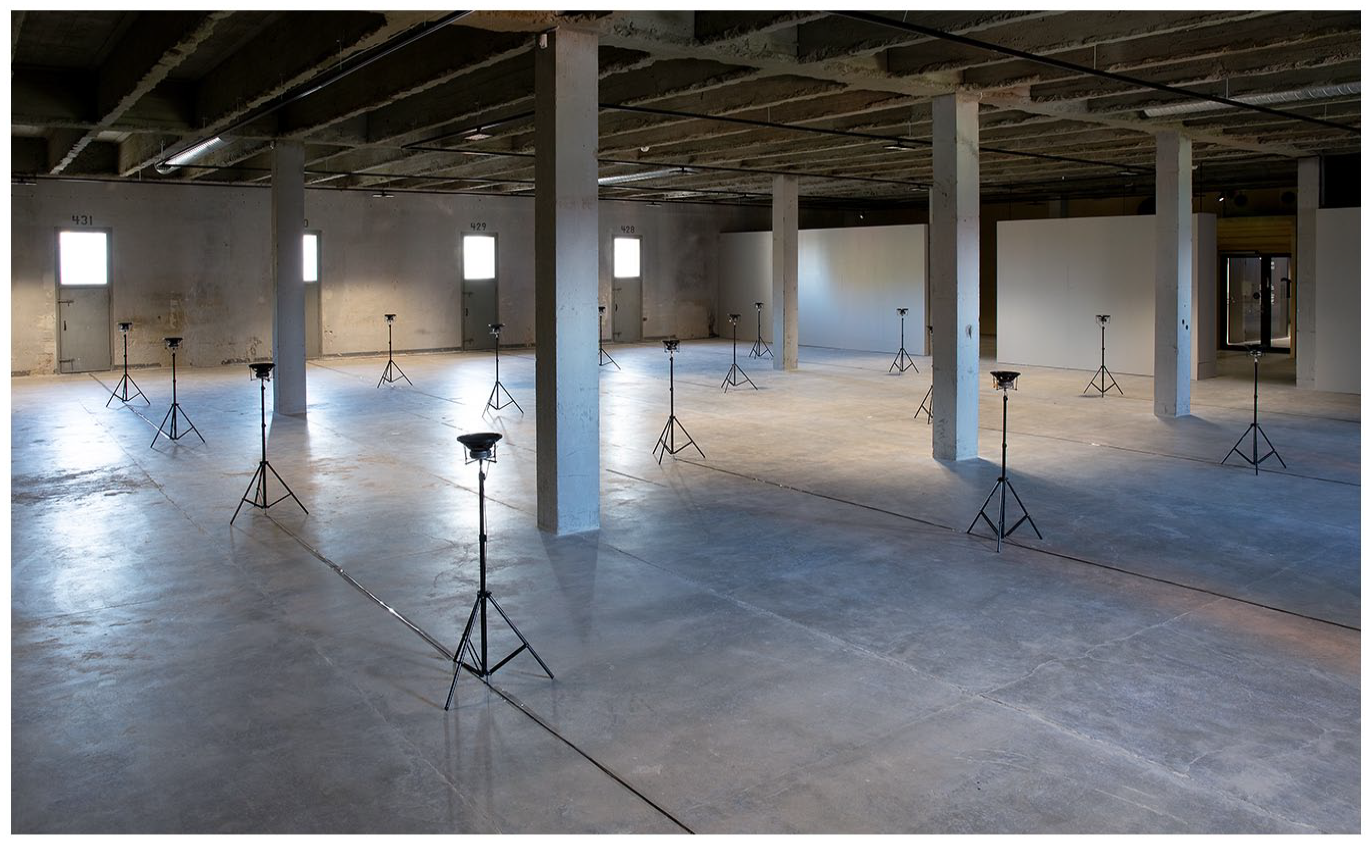
Odotustila—Waiting Room. Copyright: Jenni Latva. Courtesy of Kunsthalle Seinäjoki.
Breathing is enrolled into corporal, material, social, political, and cultural differences (Choy, 2012). The pigs are not silent. Through mediating the breathing sounds of othered individuals, Waiting Room powerfully addresses “the problem of trying to imagine and empathise what it must be like to live in an intensive factory environment and then be killed and eaten” (Sayers, 2016: 374). No shocking images of industrial farming are exposed or even needed here. The subtle, varied sounds of animals’ breathing feel enormously powerful in mediating an ethics of relationality that is felt in the body. For Astrid [first author], these sounds evoke connectivity, and her thoughts go to the soundscapes of Arnold’s Cow, where Luma’s breath is also closely felt, throughout the documentary. The sense of resonance and sounds rhythmically take hold in the body. Also, Butler’s (2012: 149) words resonate with the sensory experience: “When any of us are affected by the sufferings of others, it is not only that we put ourselves in their place or that they usurp our own place; perhaps it is the moment in which a certain chiasmic link comes to the fore and I become somehow implicated in lives that are clearly not the same as my own.”
The materiality of air remains unstable, elusive, and multiple. Listening to pigs’ breathing provides a powerful opportunity to pause for sensory reflection. Technologically mediated inhaled air, the sounds of animal communication, construct elements of relating in this humanimal interface. We don’t (need to) hear “the squeal of fright from a pig whose short brutal life ends violently in an intensive factory pork farm” (Sayers, 2016: 370) to further open our senses for animal realities and kinship, or to empathize with the unseen. But what does the pigs’ breathing, voice and communication mean to us in our world, and why can we not normally hear them? In encountering Waiting Room, the main material component of breathing—air—feels thick and difficult-to-breathe, as the artwork profoundly touches. With the breathing sounds, we are confronted with the “real” through sensory means. Astrid senses anxiety and entangled empathy by immersing herself in the work, although it remains difficult to interpret animal soundscapes without anthropomorphizing. Breathing is a vital life process (Shildrick, 1997). In the case of pigs, breathing is terminated by humans. The affective soundscapes craft responsiveness and connectivity to and with the vulnerable animal bodies. Human exhibitors inhale and exhale while listening to the sounds of pigs inhaling, exhaling, and communicating, trapped in small cages after having been moved from one unit to another. More broadly, we are embedded in complex human–animal–atmospheric relations with pigs, and the air we share affects our bodies in different ways. We have different access to crispy outdoor air.
By sensing the exhibition while moving through the concrete hall and listening closely to the sounds of animals, exhibition visitors might craft affective, entangled and embodied empathy with animals. Through affective means, it becomes possible to acknowledge the animals’ subjectivity and suffering and to attune to sensing and seeing the animal other “in a constant process of relating” (Pallesen, 2024: 1). With this approach, we might become open to becoming more attuned to animals (Gruen, 2014), potentially also feeling their suffering and fear (Aaltola, 2021), while reflexively acknowledging how we frequently get animal communication wrong (Birke, 2014).
The video work No Data (Figure 2, 18 minutes/loop) seeks to understand what kinds of realities the animal industry creates, with a focus on hog farming. “The video consists of anecdotal references to the use of pigs” bodies. The web of details includes fodder production, MRSA bacteria, employee’s working conditions, and industrial infrastructure. The overall picture is way too extensive and complex for one to grasp’. 10 In No Data, the artists gathered materials related to the use of pigs’ bodies to study in detail. “The overall picture is overwhelmed by the diverse networks of fodder production, bacteria, and worker conditions.” 11 Here, the imagery is dark, as the installation powerfully draws us into the complexities of the industrial food system. In a posthuman spirit, the work invites us to feel our becoming-part of this multiple system through affective resonance, being moved by the sounds and affective details passing. Especially the sounds of administered electric shocks to the pigs are affectively felt in the body (again, no visuals are exposed or needed), inviting deeper reflection and relationality. In becoming-part of a food system, what does justice, ethics, and sustainability mean, after all? “In light of [the] current knowledge, there is no moral justification for the use of sentient beings as mere production machines”, Haapoja stated in an interview. 12 “We took the gathering of evidence as a starting point for the video. We looked at the material as if we were conducting a criminal investigation. The whole picture is built of fragments and details,” Gustafsson further explained. 13 The fragments of moving images, animal sounds, and written words of the work all come together, move, and powerfully become “vibrant material elements in the shared-time space” (Elfving, 2020: 207). No Data reminds us about “our own bodies” openness and permeability’ (Pallesen, 2024: 3) and the limits of human language or disembodied understanding of ethics in addressing the corporeal vulnerability of animals (compare Sayers, 2016). Recognizing animal vulnerability involves intuitive, bodily felt relational ontology, pausing to sensing and seeing the unseen, silenced, or othered agent through “messy” assemblages or webs of relations, as well as acknowledging the other who does not speak to us in the same verbal language. “In artistic being, it is the work (both working on artworks and the artworks themselves) that produces a shelter under which it is possible to be vulnerable and to let the world touch you” (Haapoja, 2020b: 16). In Kunsthalle Seinäjoki, this kind of dialogical thinking is enhanced by sense perception that is technologically mediated or embedded in atmospheric media or technological “sensescapes” (Beyes et al., 2022).
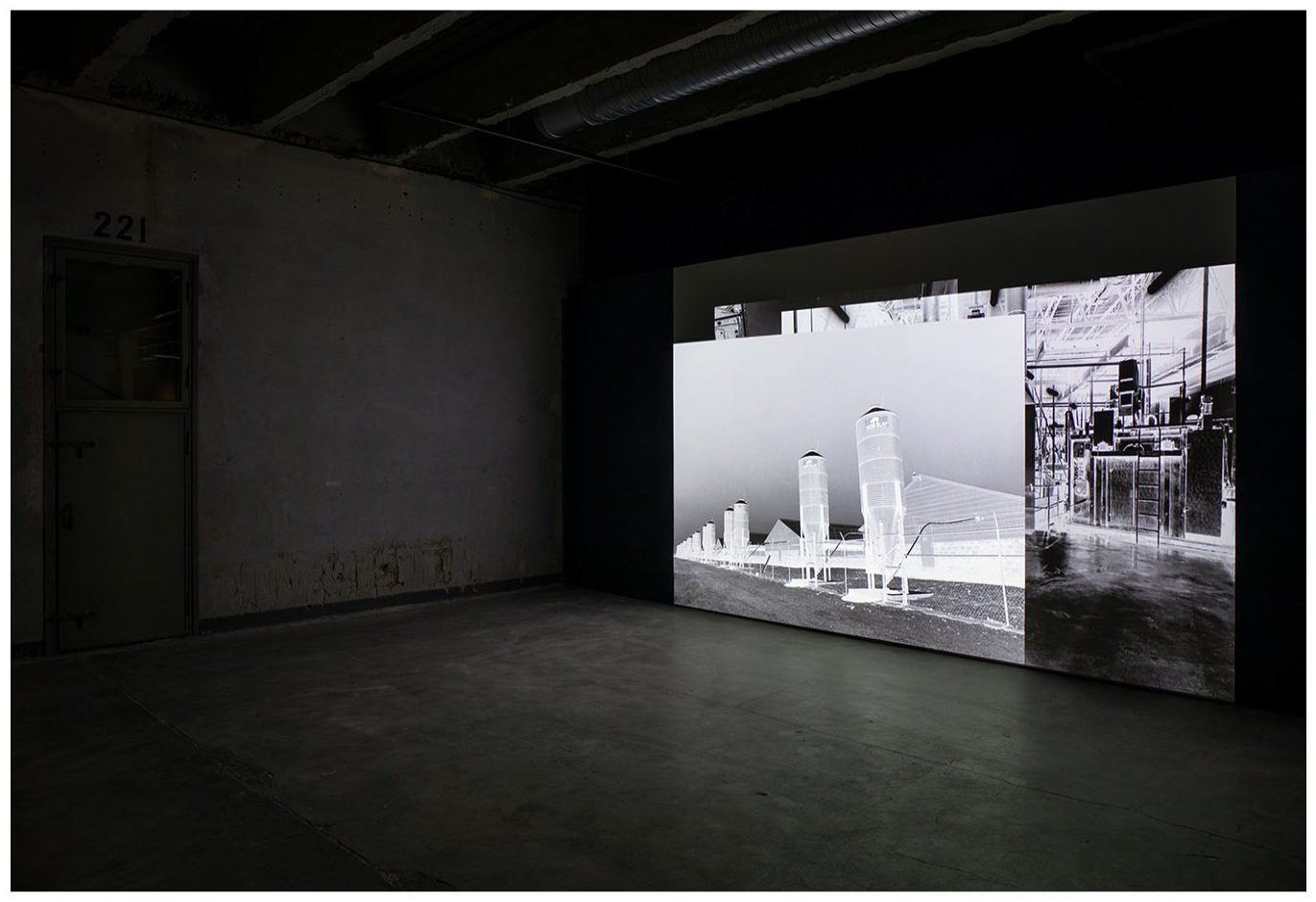
Ei tietoja—No Data. Copyright: Jenni Latva. Courtesy of Kunsthalle Seinäjoki.
Finally, the video Untitled (Alive) (Figure 3) has, according to our experience, a different, more hopeful affective mood. Untitled (Alive) explores life from the perspective of Paavo, a pig born in a meat production unit on 9/9/20 and later saved and brought to an animal shelter in Saparomäki. “Paavo (b. 2020) is an exceptional pig because he is alive. When Paavo’s siblings were transferred from the weaning department to the feedlot, the runt piglet Paavo, weighing no more than five kilos, was taken to the animal shelter in Saparomäki.” 14 In August 2021, the artists attached an unobtrusive animal video camera to Paavo following his activities on a daily basis doing “piggy things” like digging, eating, and relaxing. Here, the world emerges in the experience and activity of a pig, and we powerfully sense the posthuman decentering of the human subject. Meanwhile, we might still reflect upon the strangeness of affectively relating to a giant pig that is actually alive. We are not used to seeing giant pigs. Can we be with this otherness and multiplicity to reimagine things anew? Similar to Eija-Liisa Ahtila’s (2011) video installation Horizontal, where Ahtila anticipates the perhaps fairly unexpected experience of next-to-ness with moving and rhytmic trees (Pallesen, 2024), Untitled (Alive) problematizes the habitual position of the vulnerable other. Visitors can follow the different activities of a freely moving Paavo tapping the ground, grazing, and getting occasional cuddles. We encounter Paavo as a sensing body, deeply entangled with his environment, the grass, insects, food, wind, and light. We become affectively aware of how the freely moving Paavo contrasts the realities of factory-farmed pigs in for-profit units, who may spend their whole life fattened in tiny pens that prohibit movement and don’t allow the animals to turn around (Cole and Stewart, 2014). Video recording at the level of the animal powerfully foregrounds the animal gaze and perspective (compare Haanpää et al., 2021), disrupting the animal as object and dominant ways of relating.
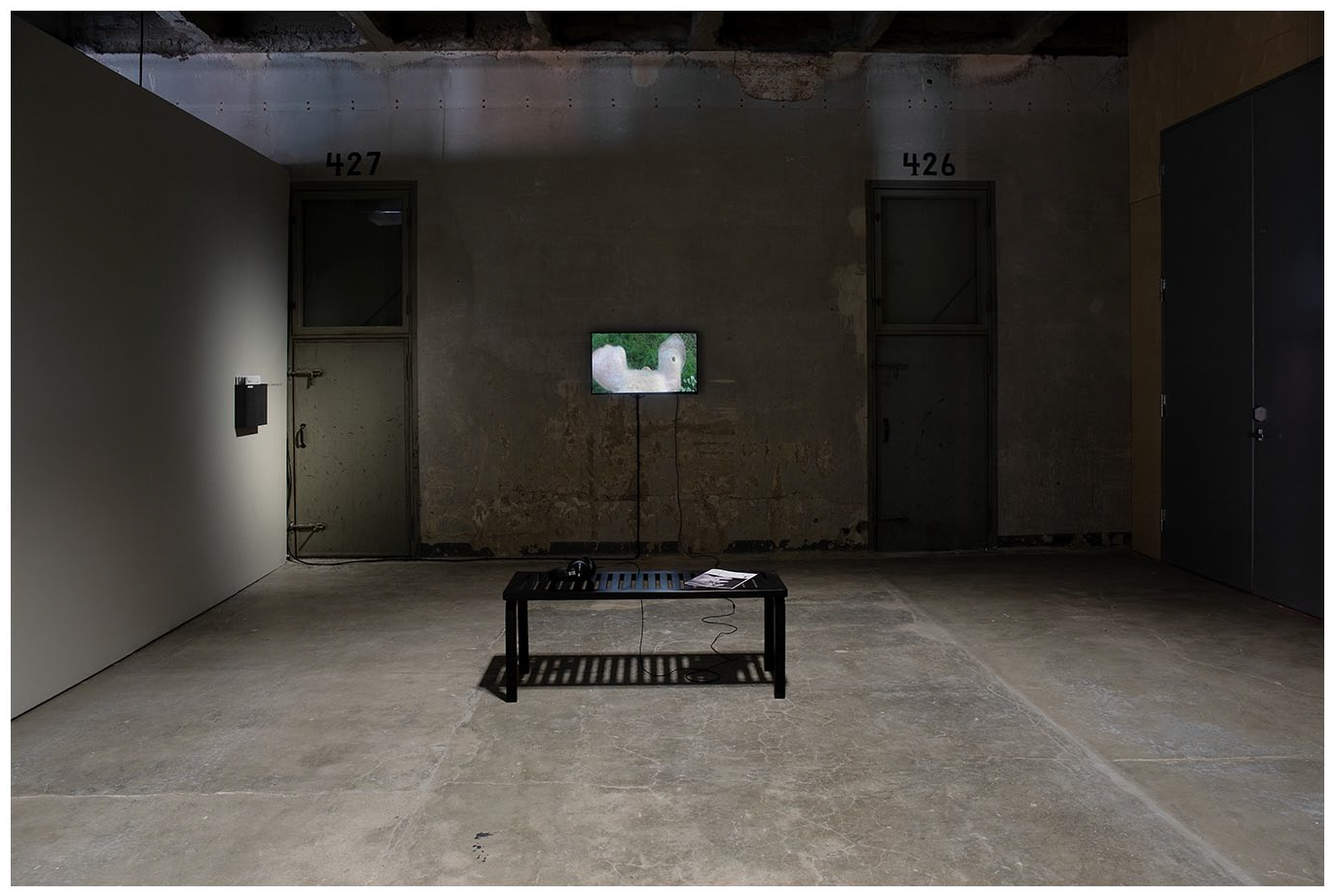
Nimetön (Elossa)—Untitled (Alive). Copyright: Jenni Latva. Courtesy of Kunsthalle Seinäjoki. Untitled (Alive) follows Paavo’s actions in an animal shelter.
Can we sense kinship and familiarity rather than strangeness? We are powerfully invited to “alternative ways of perceiving, experiencing, inhabiting, addressing and relating to the world and to other creatures of the world” (Staunæs and Raffnsøe, 2019: 59–60). Again, following Paavo as an expressive personality, largely contrasts the industrial treatment of pigs as numbered objects, agricultural “investments,” commodities or resources to exploit. Paavo is an affectionate companion and valued family member, but he is also a giant, intimidating body and has sharp teeth. He can be dangerous, choose when he wants to be outdoors or indoors, making his own decisions. Gustafsson said, “We wanted to see what the world looks like from a pig’s perspective.” 15 Throughout, Paavo is positioned as an agential subject with his own will. In this way, the work invites us to consider the human-mediated yet expressive way of Paavo’s individual being and doing. What does Paavo do, experience, and sense in the world, and how does Paavo relate to humans? Untitled (Alive) invites the exhibitor to craft connectedness and proximity with Paavo, getting closer to his world and experiences. Inevitably, the work also invites the question of how humans interpret or understand the experiences of Paavo. Inviting intersubjectivity and embodied empathy with Paavo, the work also reminds us of the suffering that pigs less fortunate than Paavo undergo.
Discussion and conclusions
“Art has the power to create and offer different viewpoints into reality to be experienced and thereby offer routes to finding out [what] it would be like to be someone or something else” (The Party of Others party platform).
Artmaking can empathetically bring us “into dialogue with the world” (Biesta, 2017: 37) by engaging us to reflect upon difficult moral, ethical, political and philosophical questions through affectively and intuitively sensing relational ontology (Pallesen, 2024). As such, artmaking and artworks constitute forms of empathetic encounters that come with political effects which also stretch across different levels of analysis. Artmaking might help us, as researchers and practitioners, to re-imagine small and larger ethical societal challenges through embodied, sensory, and emphatic means (Holt, 2023). Crafting a “better world for all,” animals and nature included, requires creative immersion, (re)imagination, critical insight and learning from the arts. Our concern for hyper-vulnerable animals, their (relative lack of) place, agency and subjectivity in OS, and the massive environmental, unethical, and work-related impacts of the human-centered world we inhabit, including a hugely problematic food industrial system, led us to explore the situatedness and multiplicity of humanimal relations through posthumanist artmaking. Specifically, we asked how could we be open to and attune to other species “in a world where subjection of other species is still an everyday norm” (Kallio-Tavin, 2020: 307). We analyzed artmaking that problematized shared vulnerabilities by identifying with the position of animals, by caring with them. Taken together, we brought together posthumanist artmaking and imagination, empathy through “imaging the unimaginable,” vulnerability (viewed as humanimal relationships), and non-human animals into conversation with each other. Aware of this complexity, we now seek to further a concluding conversation that we believe has important implications for OS theorizing.
Coming to the point of concluding this paper, we argue for the power, role and relevance of artmaking that comes with the political motivation to elicit empathy and develop an account of care ethics for the plight of hyper-vulnerable animals in the factory-farming complex, in this case, pigs. More broadly, posthumanist approaches invite us to rethink humanimal relationality through ontological interdependence and shared vulnerability by empathizing with and recognizing more-than-humans as subjects and victims of human domination, control, and violence. Vulnerability is part of being and remaining receptive and open to otherness. Ultimately, humanimal encounters are marked by the potential of “affirmative ethical encounters” (Sayers et al., 2022) and constitute “sites of learning and possibilities for developing ethical engagement with nonhuman animals” (Kallio-Tavin, 2020: 308). Thus, learning empathy is powerful and does not build upon the projection of one’s own feelings. It involves openness to existential and philosophical questions regarding differences across species and what Gruen (2015: 3) refers to as corresponding responsibilities and the recognition of relationships by “attending to another’s needs, interests, desires, vulnerabilities, hopes, and sensitivities.”
Artmaking, as we view it, is about working through corporeal vulnerability as a way of openly engaging with the world and its multiple other beings (compare with Haapoja, 2020b), both agentic and vulnerable, through all interacting senses. Given that arts’ sensory experiences “take effect (or affect) before words” (Beyes et al., 2022), we are moved in affective encounters with art, and while opening up to being moved, we might also open ourselves to reimagination and change. “In art and educational practices, fears, and hopes about current issues and the future are given space to be not only expressed, but also discussed, unfolded, and troubled”, Kallio-Tavin (2020: 299) further writes. Herein lies the power of art and artmaking. In crafting evocative and effective encounters (Rokka, 2022), art forces us to re-imagine, think and also to act. For the first author, the encounters with Haapoja’s and Gustafsson’s work and installations were so powerful that her consumption habits were changed for good. While the exhibition probably had the same effect on many other viewers, those who choose to come and watch it are often already of a certain sociocultural class. How could art impact none-exhibitions watchers? Can it foster change of the profession of factory-farming and the practices of slaughterhouse workers, and what would that take?
Posthumanist artmaking, including the works discussed in the present paper, powerfully questions established conventions, making us reflect upon the world from novel perspectives, the radically other’s perspective, and potentially relate to vulnerabilities differently. Animal activists put their bodies on the line and make themselves vulnerable to losing their liberty in order to protect animals. The invitation to “reimagine the unimaginable,” marked the works of Haapoja and Gustafsson. As academics, we have a special responsibility to attune and respond to marginalized voices. By offering viewpoints and empathetic routes into the experiences of others, artmaking has the power to invite openness to change, reimagining the world differently.
As a concept, vulnerability invites embodied intersubjectivity, an existential experience of being and becoming in the world with others (Shildrick, 2002), resonating affectively between bodies (Butler, 2012). Arguably, these insights and shared experiences matter in the Anthropocene. In our human-centered society, animals continue to be rendered voiceless and without agency, which implies that humans still largely equip most other animals with the “vulnerability associated with passivity” (Faulkner, 2011: 73). Vulnerability and embodied experiences in OS have traditionally remained anthropocentric concepts, leaving non-anthropocentric vulnerabilities largely undertheorized (see Sayers et al., 2022 for a notable exception) as only humans have been considered active and ethical subjects in organizational life. Animals mediate political and ethical change, and there is considerable potential in rethinking humanimal relationality by recognizing animal vulnerability and subjectivity. Deeper recognition might be achieved by dismantling the hierarchies built into the concepts of human and animal, which also insights from artmaking could help us to achieve. The normalization and acceptance of violence against “lower creatures” (Haapoja, 2020b) must be deconstructed, and artmaking provides powerful, sensory means for achieving that. As context, artmaking provides a powerful means of thinking with the concept of vulnerability and animals to imagine more ethically just forms of organizing and relatedness that could be achieved by critically extending these reflections to discussing in/exclusion in our society.
If we treat vulnerability as a predominantly human notion, we structurally continue to marginalize the vulnerability of animals. Discussing animal vulnerability urges us to radically shift our focus from human to “more-than-human” interdependencies in organizations. Animals’ vulnerabilities – and especially the hyper-vulnerable animals – have been predominantly neglected in OS. We simply cannot continue to ignore the animals’ vulnerability, structurally and systematically mistreated by humans. Given the complexity and heterogeneity of animal experiences, we must seek to avoid the traps of passivity, romanticization, and objectification of animals. We have asked how we might develop theoretical understanding of animal vulnerabilities and “humanimal” ethical relationships in OS by studying contemporary posthuman artists’ work and outcomes. Especially if we understand vulnerability as shared interdependency, embodiment, and relationality, vulnerability theorizing needs to include animals. We here argue for a reconsideration of the morally constructed, often stereotypical, simplistic, and passive vulnerability that animals have been equipped with in society and OS research. However, to develop theoretical understandings of vulnerability beyond anthropocentrism requires more work than this paper has accomplished. To further theorize animal vulnerabilities, Sayers et al. (2022) offer important insight from speculative fiction, and we add insight from another artistic context that invites us to ponder what vulnerability could become by taking a less human-centered position, thus opening OS to further posthuman knowledge development.
As our closest societal and organizational companions, caring and respectful relationality with animals is key to creating more responsible futures and ethical forms of organizing, where we constantly come into being through relational connectivity with others. At this time of mass extinction and planetary destruction, we urgently need to consider humanimal entanglements and animal interests “beyond the economic ‘bottom line’” (Tallberg et al., 2022b: 58, see also Ergene et al., 2021). Co-created understandings of humanimal vulnerability might also help us develop novel avenues for animal ethics, and insights into trans-species vulnerabilities (Braidotti, 2019) in OS. Vulnerability connects with embodied and affirmative ethics. Animal vulnerability is firmly rooted in shared bodily vulnerability and its recognition (see also Aaltola, 2012; Huth, 2020). Posthuman theories might cultivate emancipatory, empathetic attunement of “affirmative ethical encounters” (Sayers et al., 2022) and a willingness to do more for and with animals. In a similar way, the works of Haapoja and Gustafsson intertwine materialities, soundscapes, and moving images, which create novel spaces for humanimal encounters and possibilities for affirmative ethics to emerge. These critical developments, in addition to the growing interest in posthuman and feminist ethics of care (Fotaki et al., 2020; Sayers et al., 2022), posthuman ecologies, and organizational ethics of life and death, will hopefully also directly contribute to the greater future ethical inclusion of animals in OS. Shared vulnerability “with animals and other living matter that are routinely treated as disposable” (Sayers et al., 2022: 10) merits deeper moral and ethical consideration in OS research.
Finally, as human species, we simply must do better for the well-being of our shared planet, and for the many others upon which we depend. We must keep asking difficult questions, and provide meaningful, researched answers to critical world issues. The animal issue represents such an issue. Arts-based methods can help us address these matters further by inviting exploration, connectivity, and imagination. For example, in an essay analyzing the non-fiction film Leviathan critically exposing the practices in the fish industry, Rokka (2022) discusses the “affective powers” and potentiality of videography to open up radically novel ways of thinking and acting. Rokka’s (2022: 28) analysis of Leviathan, a poetic documentary, underlines how “the storytelling relies on unnerving, sensuous and visceral encounters of bodies, events, and their various interactions on the screen. It builds on alternative modes of understanding and engagement with the world that operates primarily through our bodies, and what we feel and know.” This appears close to Gustafsson’s and Haapoja’s process of “imagining the unimaginable.” As critical OS researchers, we have a responsibility to challenge “hegemonic humanism as a potential source of suffering and injustice” (Tallberg et al., 2022b: 59). In a position of privilege and power, we also have moral responsibilities toward others: “[R]esponse and respect are possible only in those knots, with actual animals and people looking back at each other, sticky with all their muddled histories” (Haraway, 2008: 42). In OS, we urgently need to develop more sophisticated and empathetic understandings of such relatedness and the impacts of human organizing on different species (Tallberg et al., 2022b). When we recognize animal subjectivity, their individuality, agency, and voice become crucial ethical and political matters. Animals in vulnerable positions would benefit directly from increased attention, societal and scholarly debate, and actions. Given how the mechanisms of speciesism, animalization, denigration, and objectification intertwine and operate in our society, we need to do much, much better.
Footnotes
Funding
The author(s) disclosed receipt of the following financial support for the research, authorship, and/or publication of this article: This research is funded by the Research Council of Finland for project PAWWS - People and Animal Wellbeing at Work and in Society (funding decision #355434).
