




Abstract
Despite growing interest in the use of moving images for representing management and organisation research, films are still widely considered as an addendum to the ‘proper’ textual work of the social sciences. Drawing on our own experience in social science film production, we consider the unique epistemological opportunities afforded by the production of moving images as compared to other methods rooted in the primacy of text. We discuss the techniques of eliciting and editing (by presenting actual editing decisions in detail) as a visual method for organisation studies and its theoretical and methodological implications. We demonstrate the ways in which the act of filming facilitates the production of contextually sensitive life accounts that place participants and viewers in the picture. The main contribution of the paper lies in its explanation of the ways in which film represents epistemic knowledge in itself – a particular way of seeing and relating – without recourse to written material. This includes the potential for film to elicit understanding that could not be accessed or represented in any other way. While not minimising the challenges involved in the production and assessment of social science films, we argue that such films warrant a status similar to that of the journal article.
Introduction
There is growing recognition of the potential for, and effects of, film production in the social sciences (Banks and Zeitlyn, 2015; Bell and Davison, 2013; Glisovic et al., 2016; Jarzabkowski et al., 2015; Linstead, 2018; Pink, 2007; Rose, 2014, 2016; Slutskaya et al., 2018; Vannini, 2015; Wood and Brown, 2011; Wood et al., 2018). Indeed, there are recent examples of films that present original research findings or theoretical concepts in organisation theory (e.g. Black Snow (Linstead, 2018); Children Navigating Borders: Transition Practises in Day Care Routine (Mohn, 2013); Leadership in Spaces and Places (Salovaara, 2014); Life off grid (Taggart, 2016) and Lines of Flight (Wood, 2014)).1 Yet there is still a sense in which film is framed as exotic, frivolous, or as an addendum to the proper textual work of social sciences. Where they have been produced or discussed in organisation studies (Hassard et al., 2018; Mengis et al., 2018; Slutskaya et al., 2018; Toraldo et al., 2018; Whiting et al., 2018), social science films are often assumed to be a secondary product compared to the gold standard of the journal article. This is because they are rarely understood to raise new or different epistemological opportunities in and of themselves (Buchanan and Bryman, 2007). In other words, social science films are seldom considered to be the primary output for the research itself. The relative neglect of film as a medium for producing and representing research means that films are unlikely to be seen as suitable for consideration in research assessments, for example. This is why we join Hietanen and Rokka (2018: 322) in arguing for a future in which ‘videographic research . . . is not immediately relegated to secondary positions, that is, in the sense that it can only be addressed in comparisons that privilege text and photography’.
Wood et al. (2018: 832) summarise the debate in an article recently published in this journal. They argue that ‘traditional paradigms and current standards in the field are potentially leading to the under-representation in submissions of research-led films produced by those researchers wanting to find their form in film’. In this article, we focus on one example (a social science film produced by Katharina) and discuss it both as an academic product and as an empirical method. Building on the work of Wood et al. (2018), we show how social science films can express things that cannot be expressed in written form. We argue that the emphasis on writing for journals has created a gap that can be filled by film. We therefore present a practical example of a film that aimed to develop social science knowledge. We explain how our film started as an expression of our social curiosity, was realised, produced and finally became (at least in terms of rankings) a very successful 60-minute documentary that aired on national television in Austria. In doing so, we outline many of the opportunities and challenges that researchers will face when producing their own social science films. We also want to address the fact that, in spite of their potential contribution, social science films are yet to have the standing, authority and prestige of the journal article in terms of being taken seriously as research in and of itself in organisation studies.
To be clear, we are talking about representing data, methods and results in film in ways that are not simply illustrative, or a supplementary ‘translation’ of a written argument. Rather, we are talking about projects in which film produces and presents knowledge in itself – and, furthermore, fully represents the knowledge it contains without recourse to written material. We are aware, of course, that there is a certain representational paradox involved in arguing the case for the social science film in the pages of a journal. We agree with Riach’s and Warren’s (2015: 806) concern, raised in their organisational study on the sense of smell: ‘We accept that to write about corporeal porosity is to ultimately limit it to a textual reduction that only offers a glimpse of the embodied processes at play’.
However, we feel that in order to introduce a community to new practices, it is necessary to engage them through established formats that are regarded as authoritative by that community. Our aim in this article is to encourage the readers and writers of journals to reflect on the possibility of alternative channels and, in order to be successful in this aim, we need to do so through formats they already trust. Wood et al. (2018: 832) referring to Bourdieu (1996) pointed to the ‘system-based logic of “hierarchisation”. For the most part, traditional paradigms and current standards in the field are potentially leading to the under-representation in submissions of research-led films. . .’. That said, with the use of YouTube links throughout the text, as recommended by Slutskaya et al. (2018), we are able to show as well as tell to such an extent in this piece that we hope ‘film’ and ‘text’ begin to overlap and interact, thereby problematising the conventional distinction between the two media.
This paper proceeds as follows: First, we present a note on the conventions we use in arguing about films and genre before detailing our case study – a synopsis of our social science film. After introducing an outline of our film, Queer Feelings. Four Love Stories from Austria (QFFLSA), we then use it to illustrate some key epistemological issues involved in making a social science film. Key to its epistemological contribution is that social science films are able to literally show the viewer a world beyond the written page. Wood et al. (2018: 830) summarised this ability as ‘doing research in a way more “cinematic” than merely recording a debate on a subject or simply illustrating a written discussion’. Hence, in what follows, we consider some of the key features of social science filmmaking, starting with the nature and effects of the camera, and Streeck’s (2017) distinction between showing and pointing. From here we stress the importance of restaging and editing as well as the temporal value of found film. We also present editing as a visual research method to show how organisation scholars can make theoretical arguments by editing a film as final output of a research process.
A note on conventions
Before we go too far, a word on terminology. General filmmakers would probably call the subject of this paper a ‘documentary film’. However, in our view, there are substantive differences between films produced for social science purposes 1 and general documentaries. First and foremost, a social science film is produced within an academic context, either to gather empirical material and conduct the analysis as a social process unfolds, or to enact and communicate the results of research to the social scientific community and beyond (we suspect that is why Wood et al. (2018) use the general term ‘film’ but contextualise it as academic film projects or film-based research). While ethnographic film is traditionally used in cultural and social anthropology (Heinze and Weber, 2017; Miko and Sardadvar, 2008; Smith, 1982; Vannini, 2015), sociological film (Kaczmarek, 2008; Miko, 2013) is used as a special label for research in sociology. While we consider both terms plausible, in what follows we prefer the broader term social science film as a more inclusive non-discipline specific label.
Like journal articles, social science films seek to further knowledge, challenge extant theory or make a social scientific argument. This social scientific argument requires attention to methodology and engagement with social science theory (Miko and Sardadvar, 2010; Kaczmarek, 2008) along with a concern for data collection and analysis. Produced in whole or in part by academics, such films do not ‘document’. Rather, they seek to retheorise aspects of our social world. The ways in which films as moving images can theorise and contribute to academic discourses are currently in debate (e.g. Hietanen and Rokka, 2018; Wood and Brown, 2011; Wood et al., 2018). Interestingly, these debates are often framed as dichotomies or as a first step: ‘enacting vs recording the argument’ (Wood et al., 2018: 829), ‘non-represential vs. represential (Hietanen and Rokka, 2018: 331), ‘recording experience vs. refracting the empirical world in order to create a filmic affect’ (Wood and Brown, 2011: 523). If we had to decide, we would define ourselves as non-represential organisational film scholars who work with methods that help to produce and enact the results of research by creating filmic affect. But we agree with Wood and Brown (2011: 522) that film ‘falls neatly either side of the presumed opposition between logical-deductive approaches to intellectual/explicit knowledge and sensory/aesthetic-based and embodied ways of knowing. That is, between the real and the poetic’. In this paper, we therefore show how we performed theory by introducing four key features of the social science film: (i) the conceptual importance of the camera, (ii) performing in front of a camera in an organisational situation, (iii) restaging a life event, and (iv) editing as a visual research method.
We should make it clear that we are not arguing that social science films can cover everything. We are not in any sense arguing against the need for written articles. We need both films and written material in the social sciences, in so far as each engage with material, theory and audiences in different ways. Film is not alone in having an ability to extend our intellectual reach further. For example, other writers point to the potential that lies in our senses outside sight (e.g. touch, taste, smell) to inform or enrich our understanding of organisational life (Pink, 2015; Riach and Warren, 2015). While we agree, our concern is with the ocular: with the potential for the visual to extend the range of tools organisational scholars may employ in understanding their subject.
That said, we are sensitive to concerns that contemporary life is already dominated by the ocular (Kavanagh, 2014) and that such reliance on a singular sense (Monthoux, 2014) threatens to constrain society. While this may be true of popular culture, and even the lived experience of organisational life, there is still a sense of the ‘visual as a necessary counterweight to redress the privileging of language in organisational research’ (Bell at al., 2014: 2). We are not concerned therefore with the passive experience of the ocular encountered by the television or smartphone ‘viewer’, but with the potential for the process of filming to realise ‘a whole different way of looking at things’ (Figgis, 2007: 3). Employing tools such as the film camera can offer researchers another means of eliciting critical and engaged commentary as part of a more inclusive exploration of that which constitutes ‘data’ (Mitchell, 2011) as organisation scholars seek to look at and see (Streeck, 2017) organisational aspects in a very direct, maybe even raw, form (we come back to the distinction between looking and seeing later in this paper).
A case study: Queer feelings. Four love stories from Austria
From the beginning of my professional life, I Katharina have always split my work between the media and academic research. Early on in my career, I worked at a TV station where I directed, edited and shot news and TV shows. During this period of my career, I was influenced by the academic studies I was conducting at the same time. My sociological training led me to believe that there are some stories better told in a written text, and some, better in film. I became more committed to this position as I explored the origins of ethnographic film going back to filmmakers such as Robert J. Flaherty (the filmmaker of Nanook, 1922) as well as anthropologist Jean Rouch and sociologist Edgar Morin (the filmmakers of Chronique d’un été, 1961), who sparked the first debates about the nature of social science film (e.g. how much is edited out? Is this really the life of the observed? What is the added academic value of making a film?). These debates remain relevant for the use of film as a form of communication in the social sciences generally and in organisation and management studies specifically (Figure 1).
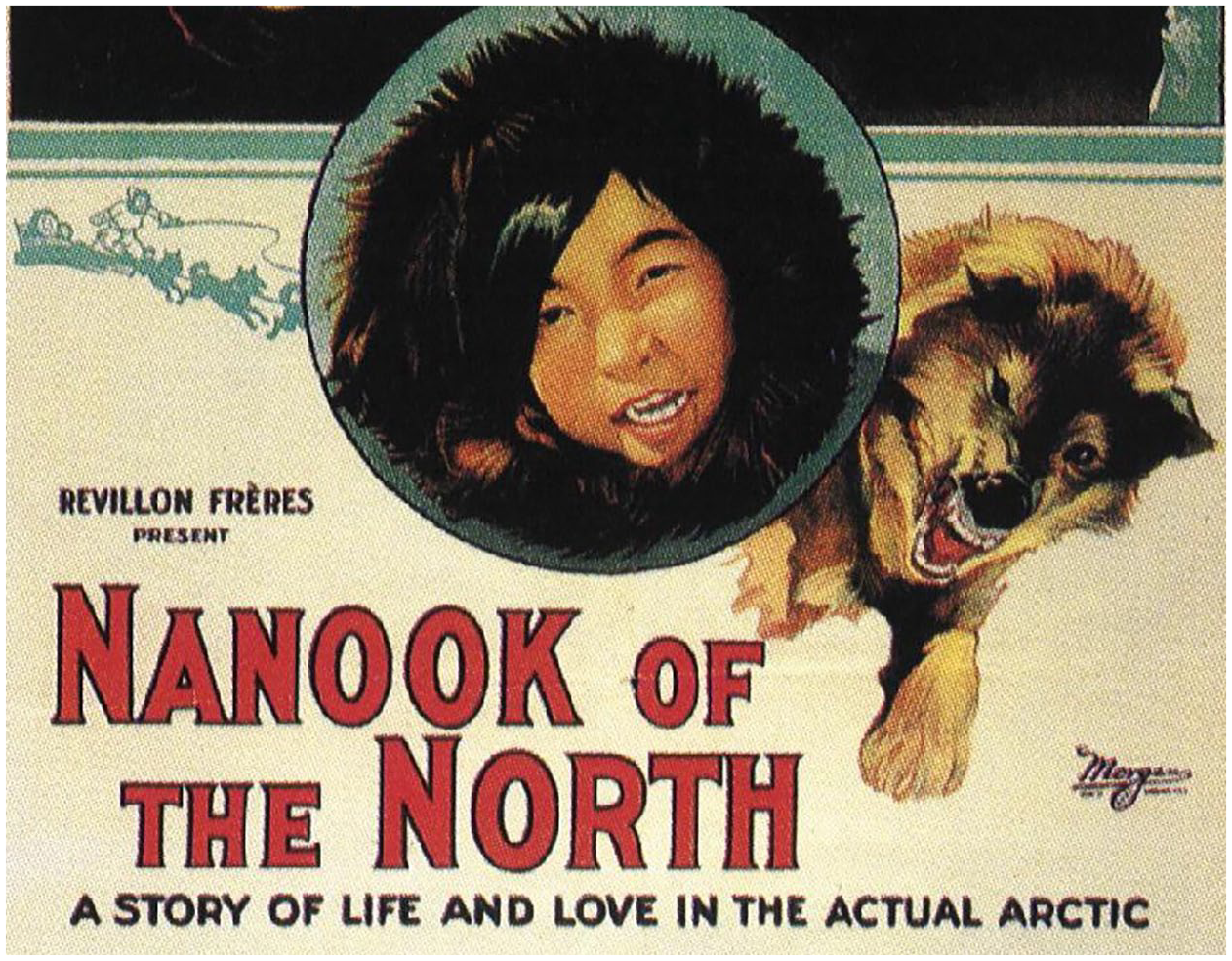
Nanook of the North.
Given my background, I was asked to edit some found footage (i.e. archived films) for a big exhibition held in 2010 in Vienna with the title ‘100 years of gay and lesbian history in Vienna’. By editing found footage from different decades, I became aware that there was a kind of ‘hidden’ gay movement, long before the sexual revolution of the 1960s.
You could probably call it an ‘in-the-closet’ movement, which was unsurprisingly also an untold story. Being a filmmaker and a sociologist, I decided that I wanted to tell this story and started to think about the best way to do so. The result was the film Queer Feelings. Four Love Stories from Austria (QFFLSA).
Synopsis of QFFLSA
In QFFLSA, we show biographical stories of two gay men and two lesbian women who were in their 20s and 30s in the 1950s. The preliminaries for the film were researched using audio-only recordings of qualitative interviews with 30 informants who fit this criterion. We started with theoretical sampling (Strauss and Corbin, 1992) by choosing the main criteria of difference we want to explore (e.g. age, race, education, etc.). All interviews were transcribed and analysed thematically for the key issues, concepts and concerns. After reaching theoretical saturation (Glaser and Strauss, 1967), we were able to produce ‘ideal types’ (in the Weberian sense) of gay and lesbian biographies in the 1950s. Gender was one of the core differentiations of these ideal types, because for women, a life decision against marriage was almost impossible or at least came with huge economic consequences. Herta, one of our informants and a protagonist in the film, told us that she could not have afforded a divorce at the time. Another main category was class, which could be seen in two more protagonists: Rudy, as part of the media elite, lived out his homosexuality without problems – as long as he did not talk about it – while Friedemann, a carpet weaver, ended up in jail.
The reason these rather obvious socio-structural categories were so fundamental lies in the specific nature of post-war Austrian (and German) society. Family sociology speaks of this era as the ‘Golden Age of Marriage’ (Therborn, 2004), when the ideal of a married woman or man was almost impossible to escape. In other words, biological sex was linked to a dominant discourse of how to live gendered roles. The only possibility for escape was (as we have already hinted) social status. These ideal types provided the storyline for the eventual film. It is important to note that these underpinning methodological discussions and decisions are not explicit in the film. Just as there are visual moments that cannot be adequately rendered in text, so there are certain methodological and conceptual concerns that are more readily explored though conference conversation or journal text – as we said, we are not arguing for the overthrow of the textual per se.
As a next step, we approached about half of the interviewees as possible protagonists to appear in the film based on how well their stories fit in with the ideal types. In the end, only four participants (Rudy, Friedemann, Hedi and Herta) from the original group of 30 interviewees actually appeared in QFFLSA, as many of the original interviewees did not wish to appear on film. As part of the filmmaking process, these four protagonists were then asked to go back to one life-changing event concerning their sexuality and coming out. Our process of making decisions collaboratively with the protagonists and our camera operator ‘shows the role of multiple parties in jointly planning, filming, and editing a condensed representation of particular social and organisational phenomena’ (Slutskaya et al., 2018: 344). This approach arose from the analysis of the interview data, which indicated that the participants typically identified with critical life-changing events. Therefore, in making QFFLSA, we asked our protagonists to go back to one situation or place that had really changed their lives – some situation or place that was deeply significant to them.
Friedemann chose the prison where he was incarcerated after being sentenced as one of the last gay men arrested in Austria for homosexuality before the law was repealed in 1971. The narration of his memory was very much about the facts he recalled, but physically going back to the prison – with the camera – seemed to make this memory plastic and he remembered what it meant to be a body behind a fence.
Rudy was the first US-based United Nations correspondent for Austrian television in the 1950s and 1960s. He decided to stay in the closet but, unlike Friedemann, had a 50-year relationship with another man – the photographer he worked with. Since they had a professional relationship that was socially accepted, they did not need to come out, even though they thought everybody knew they were a couple. When asked to go back to an important situation, Rudy decided to go back to the UN building in New York – a place where he often worked as journalist in the 1950s. Therefore, Friedemann’s prison and Rudy’s UN building were the scenes filmed for them.
The women’s stories were different from the male protagonists. Both married very early and found their way out of their marriages decades later. Hedi had four children and was the head of the Catholic Women’s Movement in Austria. It was in that capacity that she travelled to Israel, where she fell in love with her first girlfriend, Gerlind. Following that experience, Hedi came back to Vienna, divorced and became a central figure in the Austrian Woman’s Movement – a movement that is still, incidentally, in conflict with the Catholic Church.
Herta came from a working-class background, married very young as well and had two children. She stayed home with her children and lived a home-bound life. When her husband died, she started exploring her identity and finally started dating women. Her first girlfriend was a Hungarian dancer with whom she was very much in love, but the relationship did not last. Her children’s approval of her new identity meant a lot to Herta, with her son noting ‘What a beautiful girlfriend you brought home, Mum!’ For the film both women decided to be reunited with their first girlfriends. Hedi went back to Alpbach, a small village in the Austrian state of Tyrol, to relive their first holiday together. Herta and her first girlfriend went to a women-only café in Vienna where they had spent a lot of time together.
It is our contention that the resulting film served to enact the life stories of each of the four protagonists in ways that were qualitatively different in process and outputs from a textually directed rendering. To understand how and why this is the case, we focus on the four aforementioned key features of a social science film.
The conceptual importance of the camera
The fundamental starting point for films of any genre is the camera – a piece of equipment that is obviously necessary to create the images in the final film. From an academic perspective, the camera is a key methodological tool that touches on important epistemological questions. While all ethnographers might be said to look at their subjects through a certain lens, for filmmakers in organisation studies, this process is not just metaphorical. The filmmaker sees, re-presents and edits through the camera lens. Indeed, this act of producing begins with decisions on camera angle.
The decisions about camera angle start with the selection of a particular lens or camera. Each different piece of equipment has an impact on that which is seen or not seen. Wide angle, telephoto, fisheye and zoom lenses, as well as variations in depth of film and in the production qualities of the lens all help determine what is seen on location and, ultimately, on the screen. Decisions with respect to equipment determine what is in focus, what is sharp, what is backgrounded or what event is rendered as an abstract shape. As Figgis (2007:3) notes, when you have a camera, ‘suddenly you realise this is a whole different way of looking at things’. The choice of equipment becomes part of your vision for the research, shaping the questions that can be asked and the presentation of the results in much the same way as a choice of survey or focus group would offer very different analyses and presentations of experiences of, say, homophobia.
A similar consideration, recently discussed in organisation studies (Mengis et al., 2018: 19), deals with the fact that camera angles and movements have a major ‘influence on the ways in which organisational space becomes available for analysis in video research’. Any particular angle that the filmmaker chooses reveals something of her taken-for-granted values, as well as providing a particular perspective on the field. However, this aspect goes beyond the pure question of perspective. The camera produces different research foci: ‘Taken together, we can show that the combinations of camera angle and movement used to collect data (which we call video recording apparatuses) constitute a configuring device, which has a performative effect on the phenomenon of interest and does not simply record it’ (Mengis et al., 2018: 306). The same is true for the final film. The camera will also be part of a certain story, one that is selected from a multiplicity of possible stories in the final film. Mengis et al. (2018) point to the consequences of this discussion: different camera angles produce different organisational spaces (cf. Dale and Burrell, 2008) that become observable. Wood et al. (2018: 827) concluded in a similar direction when pointing to the danger of ‘telling the viewer what to think rather than underpinning what is happening on screen, forgetting that the apparent immediacy of the world has already passed through a production system’. This system often starts with the choice of camera angle.
In the case of QFFLSA, the camera operator and I had done a lot of TV shows together. When I said to him, ‘Don’t you see what I mean?’, I meant it literally. In our ten-year history of doing media work together, we knew each other’s – again literal – view on the world. So he was used to my academic perspective. However, there was a question important to the research team – and absolutely irrelevant (or even absurd) to the production team: should we hand over the camera to the protagonists themselves, so that they can find the perspective from which they want to be represented? In social science filmmaking there is a difference between when researchers themselves operate the camera and when they pass it on to the group being researched. If researchers do not hand over their camera, they lose what Shotter (2006, 2011) calls ‘withness’ – in our case, the withness between the filmmaker and the organisational participants. In other words, organisational filmmakers have to be careful that they do not systematically miss what is relevant from the point of view of those being filmed because of the researchers’ own culturally imprinted habits of viewing and understanding (Kurt, 2010). As Whiting et al. (2018: 4) note, who holds the camera is an issue of power relations between researchers and participants, drawing ‘attention to the role of the videocam in research relationships and the creation of research data as part of a reflexive paradox perspective’.
In another film that some of my students produced about graffiti sprayers in urban cities (Gruber et al., 2012), we handed the camera to the actual sprayers – they were ‘armed with their own digital technology’ (Hassard et al., 2018: 1415). It was also important in that case that the research team was not present. The camera was our mediator between the real spraying situation (in which a crime is committed) and us as researchers. The camera helped us to make this hidden process observable: How do sprayers organise their production – in their understanding – of ‘art’ when the law prohibits this production. (See https://www.youtube.com/watch?v=-l5c4MPSirg). The contents of this video are an example of what Hassard et al. (2018: 12) argue represents ‘“withness inquiry” for encouraging often disempowered or marginalised organisational actors’. Film allows us to see differently with research subjects whether we are present or not.
Working with an interdisciplinary team on QFFLSA, however, we agreed to try a middle way. We had no scene in which it would have been necessary to hand over the camera to our protagonists, but the locations and camera angles were carefully chosen by the protagonists themselves. The camera operator and I suggested certain motifs, but we always gave the final decision to the protagonists. Plus, my camera operator’s previous experience working with the subjects of an academic study turned out to be crucial for a fruitful cooperation between social scientists, filmmakers and the protagonists as we collaborated to say more than words. In this sense we enacted Slutskaya et al.’s (2018: 360) prescription ‘to involve the filmmaker in the research process as early as possible to help establish rapport and build trust with participants’. Referring to Denzin (2006), Hassard et al. (2018: 1415) consider this combination of different knowledge to be a ‘new form of “investigator triangulation”’ – or in their words: ‘The research philosophy is that filmmakers, organisation theorists and participants should come ideally to inhabit a common reflexive space for interpretative inquiry.’ We will come back to this reflexive space later in this paper, when arguing that, though we agree with the need for a ‘polyvocal’ approach to film, we also see a stronger role for social scientists in the editing process – something we will call ‘editing as a visual research method’.
Performing in front of a camera in an (organisational) situation
Social science films such as QFFLSA can be understood as a way of showing and reconstructing the organisational world around us. Streeck’s (2017) analogue between ‘looking and seeing’ and ‘pointing and showing’ using a camera is useful here. Let us illustrate what we mean about showing versus pointing with the example of Friedemann, one of QFFLSA’s protagonists. In Figure 2, we see a still from the film: Friedemann standing behind a fence on the prison grounds.
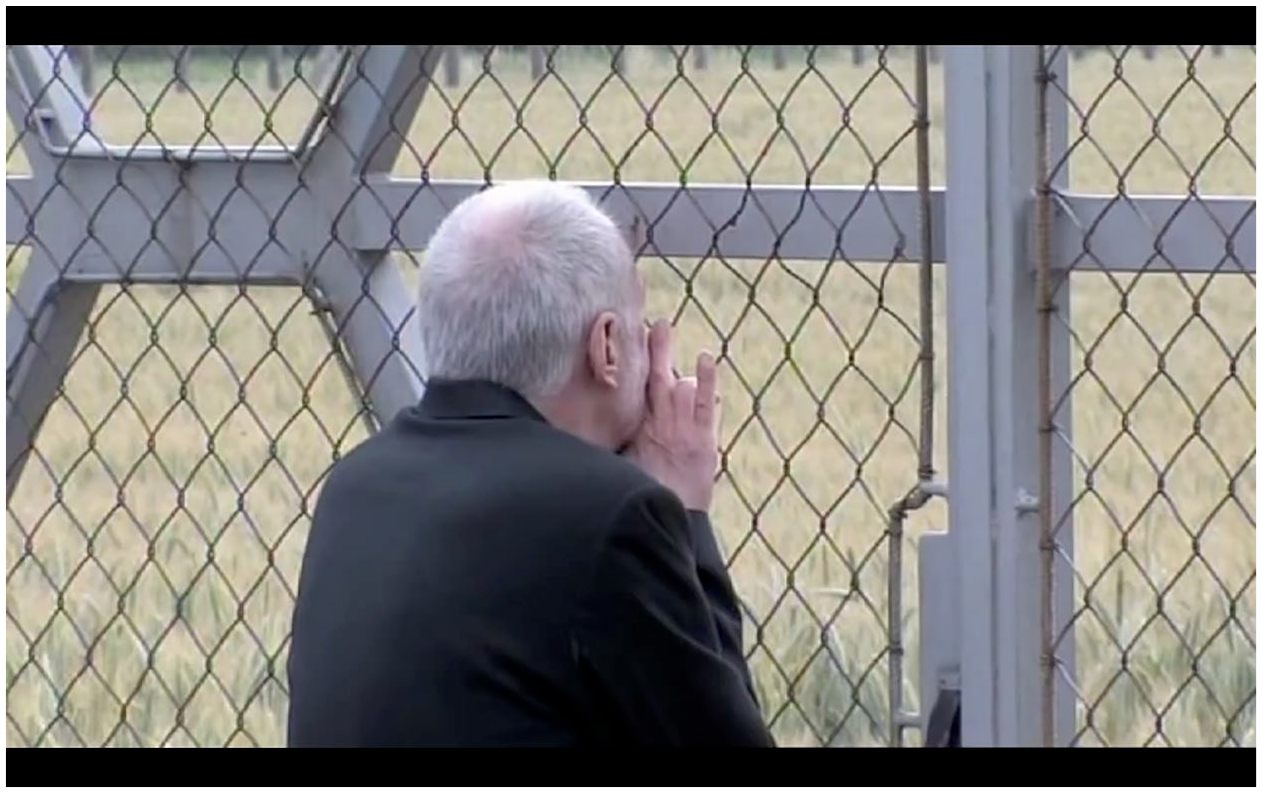
Friedemann behind the fence.
In the process of shooting, Friedemann told us to point the camera first towards the fence and, later, to the wider fields around the fence and the prison (see Figure 3). We did not see what he meant at first, but then Friedemann commented ‘Oh, you have to admit, seen from here it is beautiful. That is how I feel it today’. The camera, as a methodological tool, is thus used to look both in (at the prison) and out (at the fields beyond) as Friedemann invites us to see the world from his perspective at different times and places. Shooting became ‘a part of the unfolding of the world, not a descriptive act that records, but a generative act that produces actualities in-the-making’ (Hietanen and Rokka, 2018: 324). Viewers can literally see that he found, as it were, a new (camera) angle on his life. As he points to the fields, so the camera pans out in the same direction. Friedemann is inviting us to see what it was like to be held behind a fence as a gay man, looking out at the relative beauty beyond. He is showing us what it was like to be gay at a different time in history by looking at the scene from the here and now.
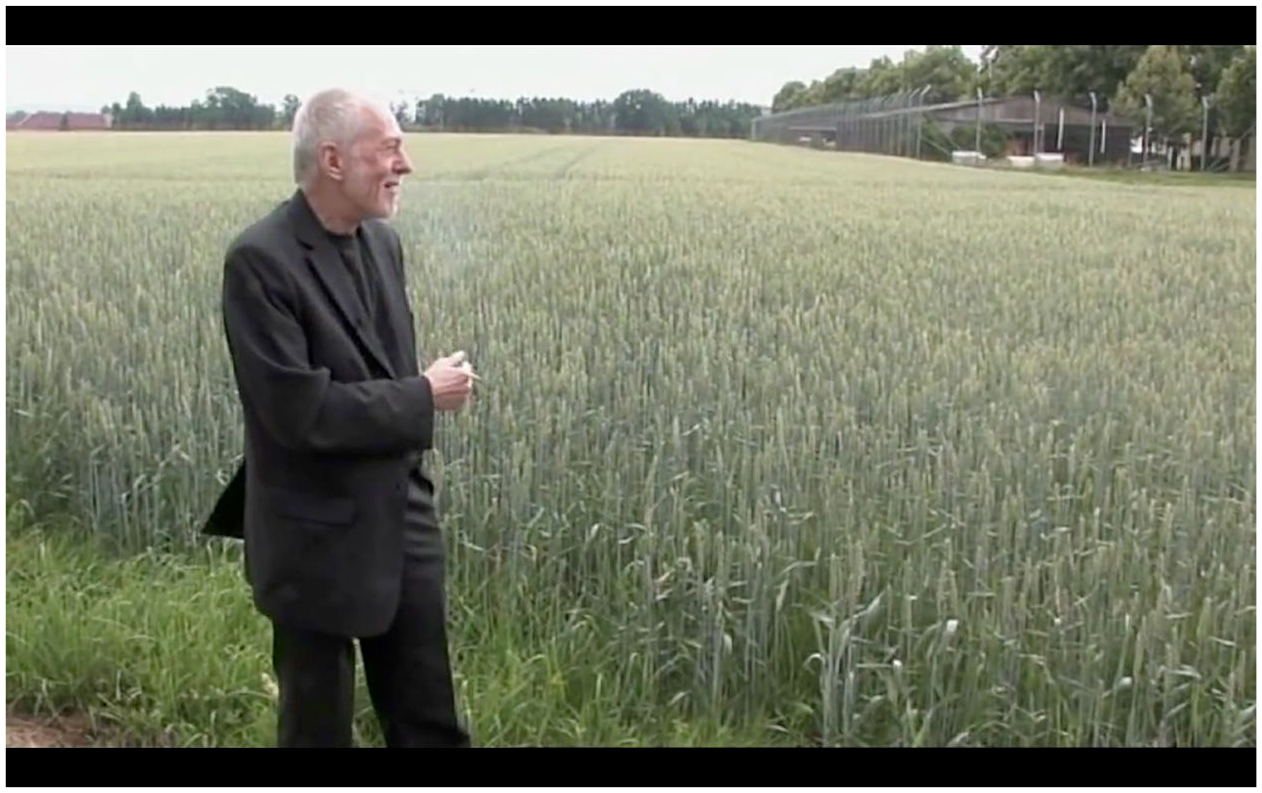
Friedemann behind the fence, different angle.
In such organisational contexts, social science films are particularly valuable when we want to show knowledge and results that are genuinely beyond spoken and written language. In order to make explicit and communicate ‘elusive knowledges’ (Toraldo et al., 2018), we require methods capable of conveying explicit, tacit, aesthetic and embodied aspects of social life. Accordingly, Hassard et al. (2018: 1411) argue for ‘a more nuanced sense of affect and embodiment in video-based research’. Filming with Friedemann allowed us to achieve this as he pointed out what it felt like to be physically confined while also contemplating the aesthetic experience of open fields beyond. If we had conducted a standard oral interview with him, without going with a camera to the prison, all we would have been left with would have been Friedemann’s words. Of course, going back without the camera could have been a methodological tool in a standard ethnography, too. What we did by making a film, however, was use the performing aspect (Goffman, 1974) of every social situation and intensify it – with the camera – as people tend to interact with the camera in order to present a certain self. In this sense, we aimed to achieve what Wood and Brown (2011: 523) accomplished in their film: ‘Lines of flight occupies the “interspace” where “art” and social “science” go together’.
In film, interpretation and knowledge production are inevitably selective, yet they produce a co-construction that goes beyond what the researcher could possibly have presented – or even known about – with a written account of an oral interview. By analysing Friedemann’s words together with the images, we were able to see and, later, show the audience what he meant: that his whole perspective on this event has changed. In so doing, we increase the possibility that ‘a viewer’s own affective reactions can become part of the investigative process’ as they are afforded an opportunity to get closer to embodied knowledge in the ‘life-worlds of workers and managers, producers and consumers’ (Hassard et al., 2018: 1413). In other words, in the final film, the prison and the fields were not only pictures of something Friedemann pointed to, they were illustrations of a wider story we were able to show. (See the whole scene https://www.youtube.com/watch?v=b_9-yVjtYXs)
In the film, we can see how Friedemann’s memories of being imprisoned changed with learning to see that fence again, and to reexperience what it can mean in a lifetime and what it does to a human body. Here, we refer again to Streeck’s (2017) differentiation between looking and seeing, on the one hand, and pointing and showing on the other. When Friedemann says to us: ‘Hey look, I want to show you something!’ it does not mean that the filmmaking research team already sees what he sees. Friedemann expressed his feelings just by pointing; his act of pointing led us as filmmakers to point the camera at the fence and to film whatever he wanted to show us. In this sense, the camera lens becomes a tool that directs and is directed towards audio-visual data that speak to the subject’s reembodied sense of what it is/was to be gay, condemned and confined. Filming thus opens up a new way of seeing what is of academic interest by creating ‘interactive encounters and performances between people – both characters and audience – and a local place’. (Wood and Brown, 2011: 529). In this understanding, Friedemann escaped his vulnerable status as prisoner by staging the event again.
Restaging a life-event
The methodological tool of physically going back to film the sites of significant life events brings different knowledge to the surface. It is not the same as conducting an oral interview, where the site (e.g. an office or coffee shop) is of marginal importance beyond concerns with confidentiality, safety and the need to be heard. In such an interview, the ‘place’ is rarely central to that which is being observed. In contrast, the process of shooting and editing the film on location plays a major role in the knowledge produced. Location filming, like that achieved in QFFLSA, offers the possibility of ‘space’ being shared in conceptual, temporal, geographic and relational terms.
Let us consider the example of Hedi. In order to film the restaging of a core event in Hedi’s coming out, she asked us to invite her former girlfriend, Gerlind, to Alpbach, where they first met after a trip to Israel and had (in her words) ‘a wonderful time’. Of course, it would have been possible to restage their meeting as an oral interview. However, being filmed – especially with the knowledge that the resultant images will end up in a publicly available social science film – is a very different emotional and embodied experience. There is a film crew, lighting and the research team around – and they are all there because of you! The protagonists are also walking around from place to place. 2
We filmed their meeting, the first time they had been back to Alpbach together since their trip there so many years ago. During the visit, both women were very funny and told us positive stories. At one point, however, we walked into the house where they first met, and it was here that the women interacted with us and with the camera in a strikingly different way (see Figure 4). Gerlind asked, ‘Did you remember that we were in the mountains? I always hated mountains, I only did it for you!’ Hedi answered: ‘I did not know that you hate mountains!’ Both laughed and turned to the camera. But then, surprisingly, the situation changed. Gerlind became serious and asked, ‘Did you ever regret leaving your husband for me?’ Hedi was lost for words; she could not answer; and sudden began to cry. After a time, she answered, ‘No, everything went better after the divorce’. (For the whole scene see https://www.youtube.com/watch?v=QpAtE3AVBWM)
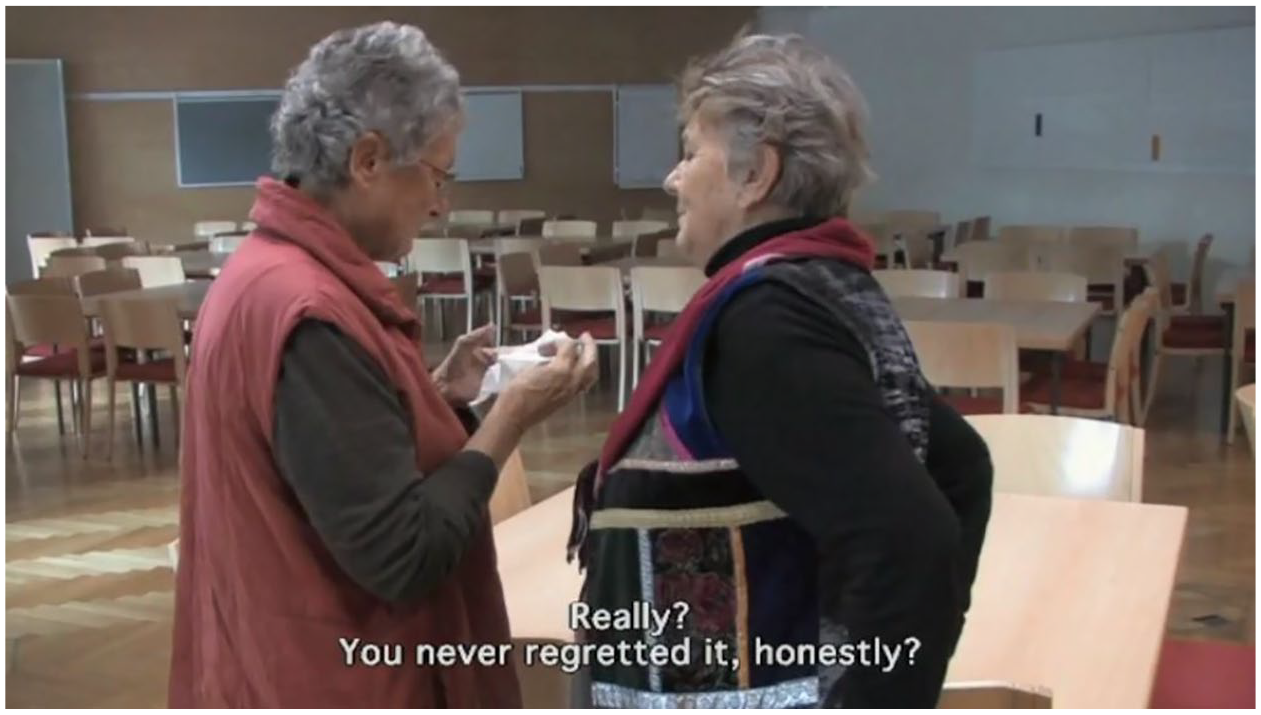
Hedi crying.
We analysed this sequence by watching it again and again, not least because we all were so surprised that the situation changed from very funny to very sad in a moment. Both participants explained to us, off camera, that they cried because they felt as they did at the time they originally met. In other words, this affective and bodily play with the camera (and all the paraphernalia involved with filming) elicited a kind of memory and body knowledge that was unlikely to be forthcoming in an interview. The result ‘is organisational research in which filmmakers, social theorists, participants and viewers alike are brought together in the same analytical space’ (Hassard et al., 2018: 1417). The above example shows what Slutskaya et al. (2018: 346) mean with their concept of collaborative ethnographic documentaries as an ‘investigative’ and ‘reflective’ tool. Shooting in the house where they first met drew our attention to the ‘unseen aspects of experience’, in this case, the huge influence of Gerlind on Hedi’s brave step into an unknown future. In that sense, shooting was investigative. But the emotion both felt in this special situation in the film was also a reflective tool, ‘a stimulus and frame of reference for participants’ self-reflections’.
Hassard et al. (2018: 1411) argue for ‘a more nuanced sense of affect and embodiment in video-based research’ by differentiating between the dramaturgical, the phenomenological, the semiotic and the narrative body. For our discussion about directing a film as a method for organisational scholars, the concept of the dramaturgical body is of greatest interest. The dramaturgical body is not a passive body that has to be observed in an ethnographic documentary; it is ‘embedded in social practices’.
Considered thus, the camera used in producing a social science film can play an essential part in the social scientific work of seeing what it is ‘that’s going on here’ as Goffman (1974: 8) once put it. When Gerlind asked her simple question, Hedi felt how difficult and frightening this (past) time was – although getting divorced was the right decision for her. We concluded that what happened was a restaging (staging in the understanding of Goffman, 1959) of the situation where Hedi decided to divorce – a decision that was much criticised at the time. She relived and reworked (as a dramaturgical body in Hassard’s et al. sense, 2018) this event for the camera – and for all the film crew who were there. 3 As Sandercock and Attili (2012:164) conclude, in theoretical terms, the act of filmmaking does not just produce a visual product, ‘but also the space in which this interaction can take place’ (p. 164).
To sum up, restaging a life event on film is not only going back with a certain protagonist to a certain location. It is the process of ‘actively presenting’ the body (which becomes a dramaturgical body because of its interactions with the camera: the camera elicits and strengthens the general principle of the dramaturgical body or self) and its history in a certain context (e.g. a jail). Restaging brings practical wisdom (how did I feel at this time? How do I feel today?) to the surface, something that cannot be asked or ethnographically be observed, but that emerged because we produced the situation and space through the whole filming (in Sandercock’s and Attili’s sense, 2012) such that some perspectives changed (or were added) and some emotions aired, clarified or healed. In that sense, film becomes academic research ‘if it is capable of . . .enacting meaning through gesture, body language and other sensory information rather than being an indexical sign pointing at what goes on in front of the camera’ (Wood et al., 2018: 830).
Editing as a visual research method
Whether we choose to represent social science findings in writing or on film, we will face a number of similar challenges. For example, neither a film nor a written text can capture a social situation as such (Hirschauer, 2002; Kalthoff, 2006) and the relationship between social ‘reality’ and the product of social science research, be it in writing or a film, is deeply problematical and contested. In both written and film-based social science, the ‘reality’ presented depends on that which we choose to see and convey. Indeed, there is a degree of selective interpretation (Alvesson and Skoldberg, 2000) as we decide which extracts from our scenes are to be explained and displayed. In the language of film, the notion of selective interpretation is an analogue for the need for editing. We therefore want to introduce the process of editing as a core tool for both (i) performing analysis at the end of the filmmaking process and (ii) telling a visual story with the resulting film.
It is probably because of selective interpretation that Hassard et al. (2018: 1404) call their work a ‘polyvocal approach to video-based organisational research’, meaning ‘to bring together the expertise of the filmmaker and the organisation theorist and unite them with participants and viewers in the same or very similar analytical space’. Even though we agree with this ‘withness thinking’ within the process of creating a film, we want to make it clear that organisation scholars can have a prominent role in the editing process. Editing a film is not only the process of ordering, formulating and communicating scientific results in a visual way; it is a methodological process in itself. In other words, ‘editing’ is fundamental, not just to ethnographic communication (in writing or on film) but to human perception as a whole. In the context of social science film production, to know how to edit means to know how to tell an organizationally relevant story via film. When Wood et al. (2018: 827) speak about the ‘danger . . . that the emotional meanings behind a film’s sign may be considered as a literal or denotative representation of the world rather than mediated for the screen’, we argue that this danger can be addressed best through carefully made editing decisions rooted in analysis.
To illustrate the importance of editing, let us look at Hedi’s case again and her visit to Israel with a delegation from the Catholic Church Women’s Movement. We (together with her) decided to reconstruct both her first love as well as her involvement in the Catholic Church. Her first girlfriend, Gerlind, was part of the delegation, but they did not know each other before the trip to Israel. They were both told during the trip that, as women, it was forbidden to go to the Wailing Wall. Nevertheless, both women separately decided to go anyway, and were surprised when they met there (see Figure 5). In our pre-film interview, Hedi said that picturing this first trip together would visualise their brave step into a new life – starting with their visit to the Wailing Wall.
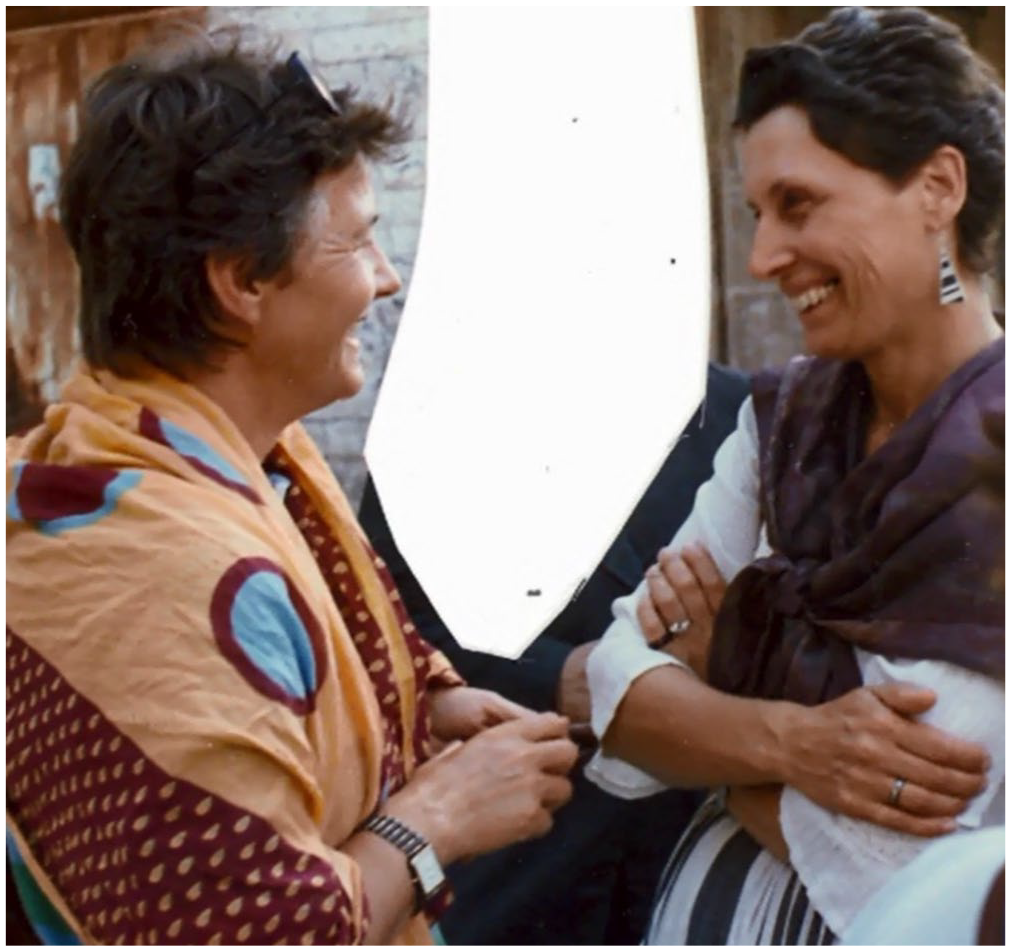
Meeting Gerlind at the Wailing Wall.
In QFFLSA, we cross-cut Hedi’s off-camera narration with archival material, including found footage of an Austrian ‘Best Housewife’ election. This was a competition held in the 1960s to determine the ‘best’ housewife in Austria in terms of her competence with such tasks as childcare and ironing. Seen with feminist eyes today, this material seems odd, to say the least, but it explains a lot of the social context in which both of the female protagonists made their life decisions (see the whole scene: https://www.youtube.com/watch?v=YjovYLTjeYw).
We also used a still picture of Hedi’s marriage, which was happy at that time. Hedi’s story is a biographic reconstruction of the woman’s movement from the 1960s, and the first part of her life as married woman is not understandable without this discursive framing explaining how narrow the possibilities for women had been at this time.
From the film, we get to know Hedi as a very strong woman who fought against powerful organisations with an indomitable attitude. We analysed (and later included in the final film) found footage of a broadcast show where Hedi met a conservative and powerful bishop (see the whole scene: https://www.youtube.com/watch?v=iFl1RjSSKT0). As she argued with him about changes concerning women rights in the Catholic Church, we see a self- aware woman who is a bodily part of the discursive framing of women’s rights in a specific institutional context. Hedi’s desire for change is juxtaposed with the bishop’s very dominant body language in the found film. In response to his resistance, we read no fear or anger on Hedi’s side. Editing the different kinds of audio-visual material we collected within the research process made it an academic story by reconstructing Hedi’s case as an ideal type of a lesbian biography of people socialised in the 1950s, as developed from a wider data set: a story both intimately personal as well as historically and organizationally rooted.
In the cases of both Friedemann and Rudy, the final version of the film was also informed by prior analysis, conversations and scene decisions. With both protagonists, the raw material in terms of subject, camera angle, priority and shots were influenced and directed by the people at the heart of the story and the lens of the camera. We were thus able to visualise a biography, which explains many of the later developments of the wider gay movement.
For example, when Rudy decided to restage his work as an UN correspondent in the 1950s and 1960s, he asked us to organise a film-shooting permit for the United Nations building in New York (see Figure 6). Back in the 1960s, as a correspondent, Rudy was regularly filmed inside the UN building – sometimes with the camera focusing on the Sputnik model that hangs inside the building. He also interviewed several politicians in front of this model, so we decided to get permission to shoot there again. We shot the Sputnik model and posed Rudy at the same point in the building where he stood in his professional life. The camera zooms from the Sputnik to Rudy in both the found-footage from the 1960s (see https://www.youtube.com/watch?v=n0HVtHjV2QQ) and in our scene in 2012. We also used archive material and cross edited it with new footage we shot in New York. Ultimately, there were 50 years between these images. Choosing this motif visualised how important his job was to him and why he decided against coming-out. Slutskaya et al. (2018: 358) pointed to the fact that ‘what can be immediately recognisable and accessible to researchers might be less obvious to participants and vice versa, since what is observable is often preconditioned by one’s framing of “normal” and “ordinary”’. The film research team did not see the importance of the Sputnik model, but by editing it with found footage of the young Rudy in the UN building, we started to see the model as a symbol for both the importance of the professional sphere and why he stayed in the closet. Again, the camera, combined with archival material and the editing process, helped us to travel across time and continents to get a ‘feel’ for what it meant to be gay in the very different context of Friedemann’s experiences.
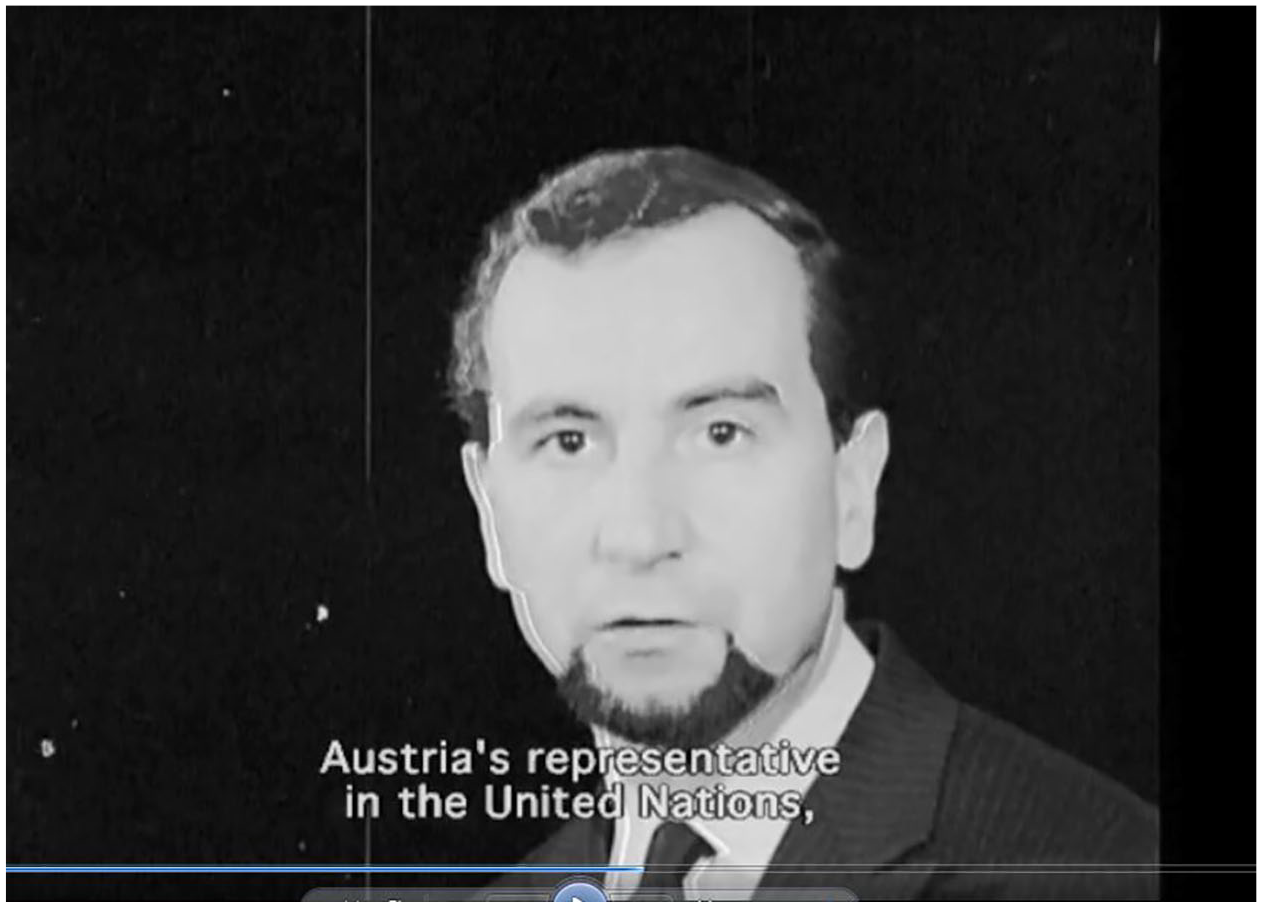
The young Rudy in the UN building in NY.
On several other occasions in QFFLSA, we edited in found footage (i.e. archive films) to give background knowledge of the special social and political time in which our protagonists experienced their coming-out. Using found footage needs academic, in our case sociological and historical, research. QFFLSA presented both typical yet very personal and particular life journeys that literally show how gay and lesbian people were received in the 1950s and 1960s. These life journeys emerged from an analysis of a broad range of textual, visual, auditory and in-situ materials that were juxtaposed against some of the political and media discourses of that era, including, for instance, the archive footage of parliamentary decisions on homosexuality, socialist demonstrations, competitions for the Best Housewife, dominant institutions and the preferred organisation of relations. The editing, assembly and focus of the film resulted in an analysis of the discursive political environment that framed these four love stories. These elements can also be seen as a visual equivalent to a discourse analytical approach in a written ethnography (Keller, 2011). The cross-cutting of Hedi’s story with the archive footage of the election of the Best Housewife (see Figure 7) showed this interaction between a social actor (Hedi) and the media arena that surrounded her and most women at that time. In other words, film allows us, in a sense, to travel through time; to focus on what was important to participants in an earlier era and represent these elements in a visual form.
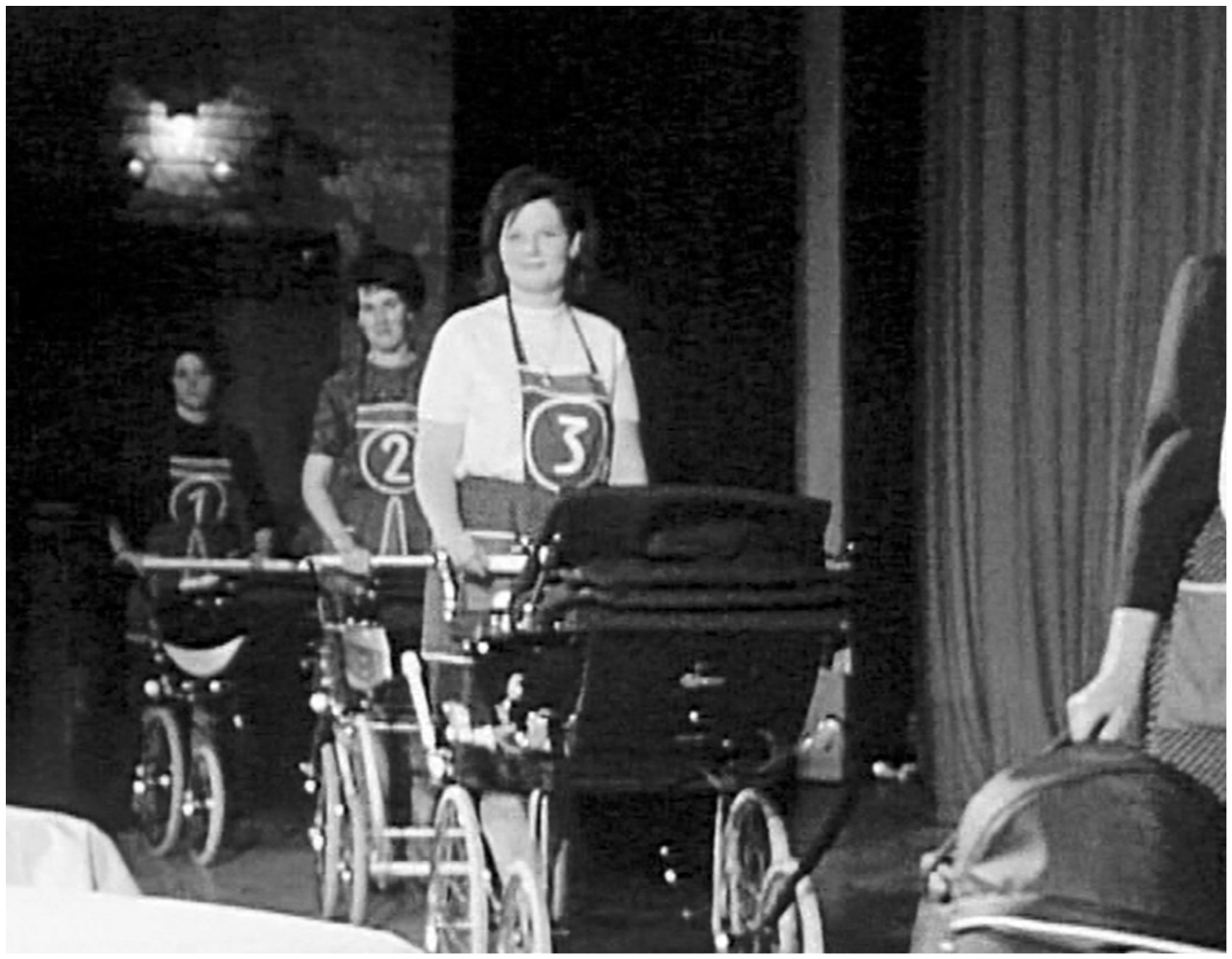
The Best Housewife competition.
In summary, social science film is especially productive when the aim is to tell an organisational story that needs to show the viewer explicitly something of the tacit, aesthetic and/or embodied (Thanem and Knights, 2019) aspect of the social – what Toraldo et al. (2018) call ‘elusive knowledges’. Textual material is unable to make this contribution alone. Furthermore, a typical social science film like QFFLSA is a product of the whole research process described above, including interviews, analysis and sampling. In the case of QFFLSA, this process brought to life and enabled us to see what the closeted nature that once typified homosexual relationships looked like – as well as what supposedly ‘normal’ relationships had to look like in the 1950s and 1960s.
Discussion and conclusion
In this paper, we have argued that social science films can express things that cannot be said in a journal article or book. Telling an organisational story through a social science film requires a social scientist to be behind the camera to frame arguments, construct audio visuals and edit the final film. A social science film needs a whole research process, not only to point the camera to the appropriate research field but also to enable the academic and wider community to see something that was invisible before. In this respect, film is an essential methodological means to produce, analyse and communicate this knowledge within (and beyond) academia. In this final section, we reflect on the four key features of a social science film: (i) the conceptual importance of the camera; (ii) performing in front of a camera in an organisational situation; (iii) restaging a life event; and (iv) editing as a visual research method. We use one incident from QFFLSA to show how all four factors are interdependent and how they interpenetrate one another. We end with some broader reflections about the significance of film for the study of organisations and how the use of film can be further promoted.
To demonstrate the importance of these four features, we refer once again to the incident in which Hedi turned abruptly from laughing to crying after Gerlind had asked her if she ever regretted her divorce. In a conventional documentary, it would be enough merely to document this moment, that is, to show the emotional outburst and to stay close with the camera. Pure voyeurism works for ratings! However, in a social science film, that kind of incident needs analysis via a canon of empirical, often qualitative research methods, including ethnography and interview studies, along with a consideration of our four key features. In QFFLSA, we still took this emotional moment, but we understood it in theoretical terms as a life event that was restaged in front of the camera, and juxtaposed it with the historical context of the social position of women at the time by editing found footage.
The conceptual importance of the camera can be illustrated by the fact that it stayed with the protagonists. Unlike in a conventional documentary, which might have zoomed in on the crying faces to emphasise the voyeuristic potential of the moment, we maintained a certain distance with the camera and captured the whole situation using a wide-angle lens. This gave us the opportunity to observe without being obtrusive. Furthermore, we did not simply point to this scene but showed the analytical themes that underpinned its context and that were embedded in the research project. For example, the scene showed the development of the protagonist and the interaction between her and her social context – in this case, the Catholic Church as well as her exit from an unhappy marriage. Furthermore, the whole scene was only possible because it was designed as a restaging of a life event, i.e. the meeting between Hedi and her first girlfriend, Gerlind, after many years apart. In terms of editing as an academic practice, we contextualised this visual sequence by contrasting it with the difficulties Hedi faced in her exit from the Catholic Church. This editing decision was analytical in nature and was theoretical in its underpinnings. It therefore contributed to our understanding and conceptualising the scene, rather than simply being voyeuristic. Editing is not banal or an act that can be outsourced only to filmmakers; rather, editing is core to the work of organisational scholars because ‘expressive visuals, including selected close-ups, pans, and transitions that add to the affective intensity of the videography are where traditional theorising is deterritorialised and this becomes the theoretical act of expressive videography itself’ (Hietanen and Rokka, 2018: 328). In other words, this kind of editing makes a social scientific story apparent and visible. This is why we consider editing to be a visual research method in itself – comparable to crafting a written journal article – as well as part of a process that produces and conveys unique knowledge. Understood as a set of interweaving processes, film emerges as epistemic knowledge in itself, offering particular ways of seeing and enacting management and organisation studies without recourse to written material.
Having positioned film as a valid and valuable tool, we are still left with the issues of how to make film more prominent within organisational research. We would argue that, if social science films are to be more than a supplementary way of disseminating what might conventionally be thought of as the primary output (that is, the written results), there is a need to establish ways of determining the quality of social science films. At present, there are no recognised processes, for example, of peer review to decide whether a social science film meets certain standards. Also, there are no searchable databases for accessing social science films. If we want to find out what films have been made on a certain topic we simply have to rely on word of mouth.
We are aware that there have been attempts to peer-review alternative modes of social scientific knowledge production, including film (see Wood et al., 2018). One example is the Sensory Ethnography Lab (SEL) at Harvard University and the peer-reviewed online Sensate Journal the SEL produces. The SEL is ‘an experimental laboratory at Harvard University that promotes innovative combinations of aesthetics and ethnography’ and the work ‘produced through SEL in film, video, photography, phonography, and installation has been presented in universities and academic conferences across the world’. The SEL combines art and research and seeks to establish something new that ‘is itself constitutively visual or acoustic – conducted through audiovisual media rather than purely verbal sign systems – and which may thus complement the human sciences’ and humanities’ almost exclusive reliance on the written word and quantification’ (SEL, 2019).
The SEL’s Sensate Journal is particularly interesting for any peer-review process that social science films might undergo. The mission of the journal clearly states that they want to publish contributions that lie beyond the written word: ‘Our mission is to provide a scholarly and artistic forum for experiments in critical media practices that expand academic discourse by taking us beyond the margins of the printed page’ (Sensate Journal, 2019). Each contribution goes through an internal and an external double-blind peer review. Such developments challenge the argument sometimes made anecdotally that films fundamentally do not fit into the academic review system.
It is clear, however, that further discussion is needed if social science film is to achieve its potential in organisation studies. We agree with Mondada’s (2006: 64) suggestion that ‘Video production as social practice . . . constitutes a perspicuous setting for the study of embodied seeing practices, namely for a praxeology of seeing with a camera’. Moreover, we see the camera as a tool that helps to ‘promote sensemaking around embodied actions, where members reflect on the meaning of what they are doing on the screen’ (Toraldo et al., 2018: 13). We can also envision social science film becoming an accepted and peer-reviewed part of a multimodal approach or a mixed-method study (cf. Berthod et al., 2016; Gibson, 2016).
Wood et al. (2018: 832) conclude that by now, ‘little rational reason exists to deny films can make a demonstrable contribution to organisation studies’. Our discussion of QFFSLA adds weight to Wood’s argument. Film can act as a rigorously informed research approach that provides protagonist, researcher and audience with new ways of seeing, analysing and making sense of the world – keeping in mind that ‘each must communicate in cinematic terms’ (Wood et al., 2018: 829). Film actively encourages interdisciplinary modes of working that present organisation and management studies to wider audiences. Its products are open to discussion and critique while also offering impact in terms of new research metrics. Perhaps we are only a few steps away from social science films making as comparable a contribution to organisation studies as the journal article has for many years.
